18. Dairy Nutrition 2
 Call Kai
 Learn
Learn Practice Test
 Spaced Repetition
 Match
Match Flashcards
 Knowt Play
1/84

There's no tags or description
Looks like no tags are added yet.
Name | Mastery | Learn | Test | Matching | Spaced | Call with Kai |
|---|
No analytics yet
Send a link to your students to track their progress
85 Terms
1. maximize DMI and energy intake
2. support high milk production at DMI 5x maintenance
3. maintain rumen health at a pH of 6-6.5
what are the dairy nutrition goals
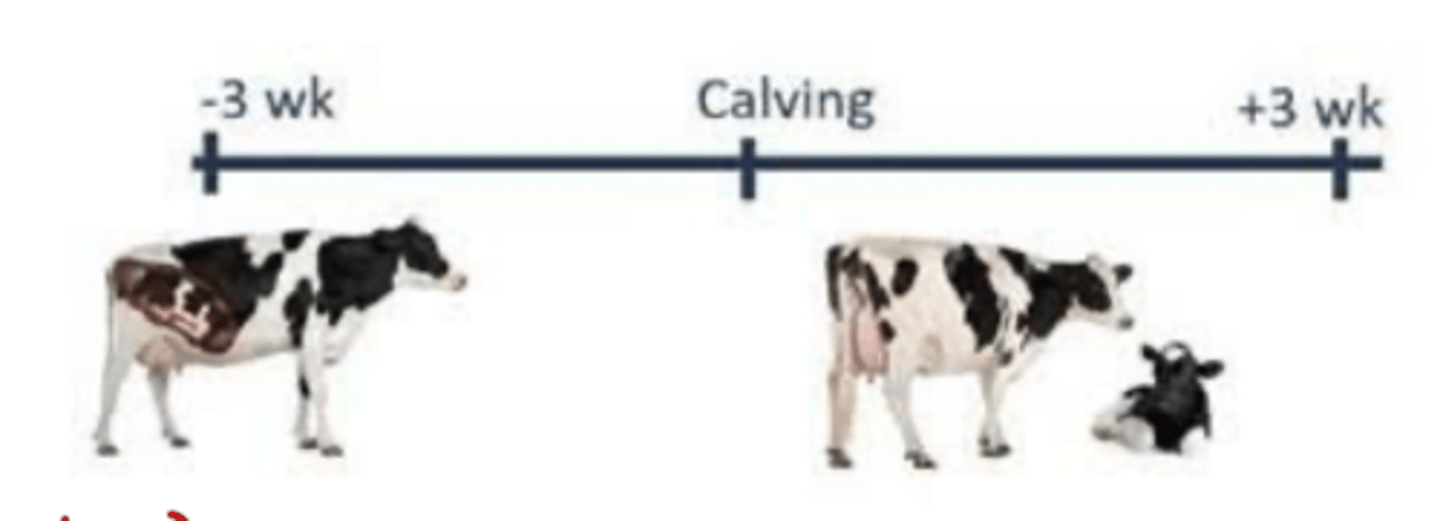
the 3wk pre to 3wk post calving period where we are adjusting the cow to a higher grain diet to combat the decreased intake + increased energy demand faced by lactating cows
what is the "transition cow"
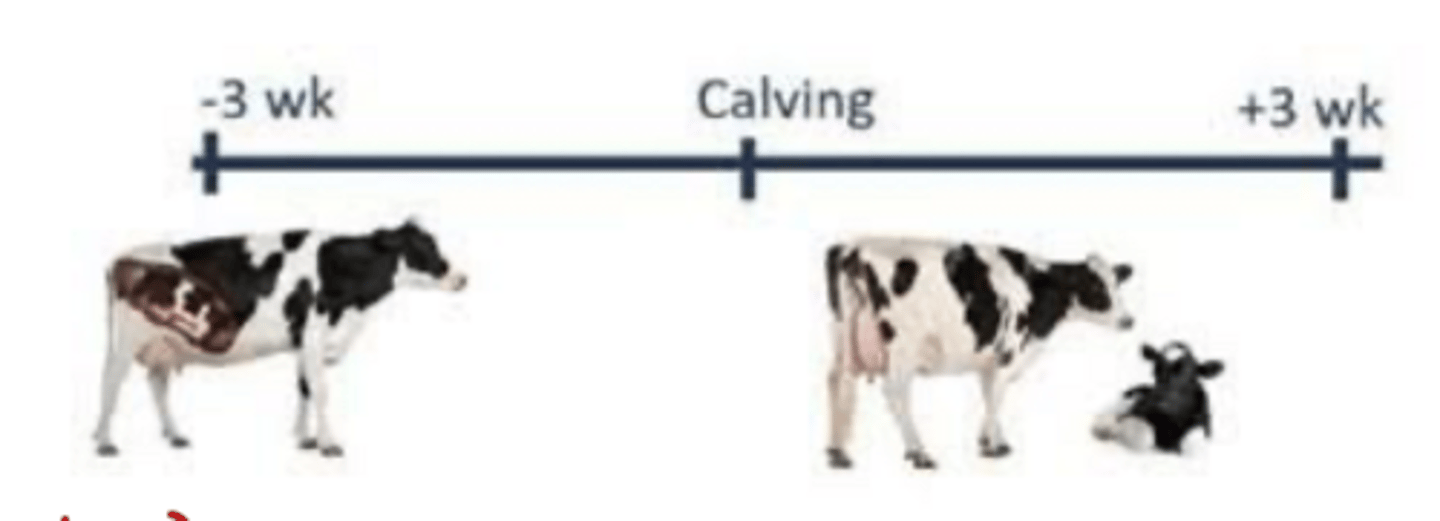
transition cow period
at what point is metabolic disease (ketosis and SARA) at highest risk
3.5-4% BW
what is the DMI of lactating cows
50 lb DM/day
what would be your rough DMI estimate (at 3.7% BW) for a 1350 lb lactating cow
1. stage of lactation
2. milk production
3. fiber digestibility
4. environmental conditions
what are some of the factors that affect DMI
ADF: cellulose + lignin
what are the lab estimates we use to measure digestibility of fiber
intake
rumen fill limits ____ on high fiber diets
intake
energy demand drives ____ for lactating cows
intake
diet energy density affects ____ in dry cows
DMI (%BW) = 120/NDF
what formula can we use to estimate DMI of feed based on consumption
3-5hr/d
what is the cow time budget for eating
7-10hr/dr
what is the cow time budget for ruminating
>10hr/d
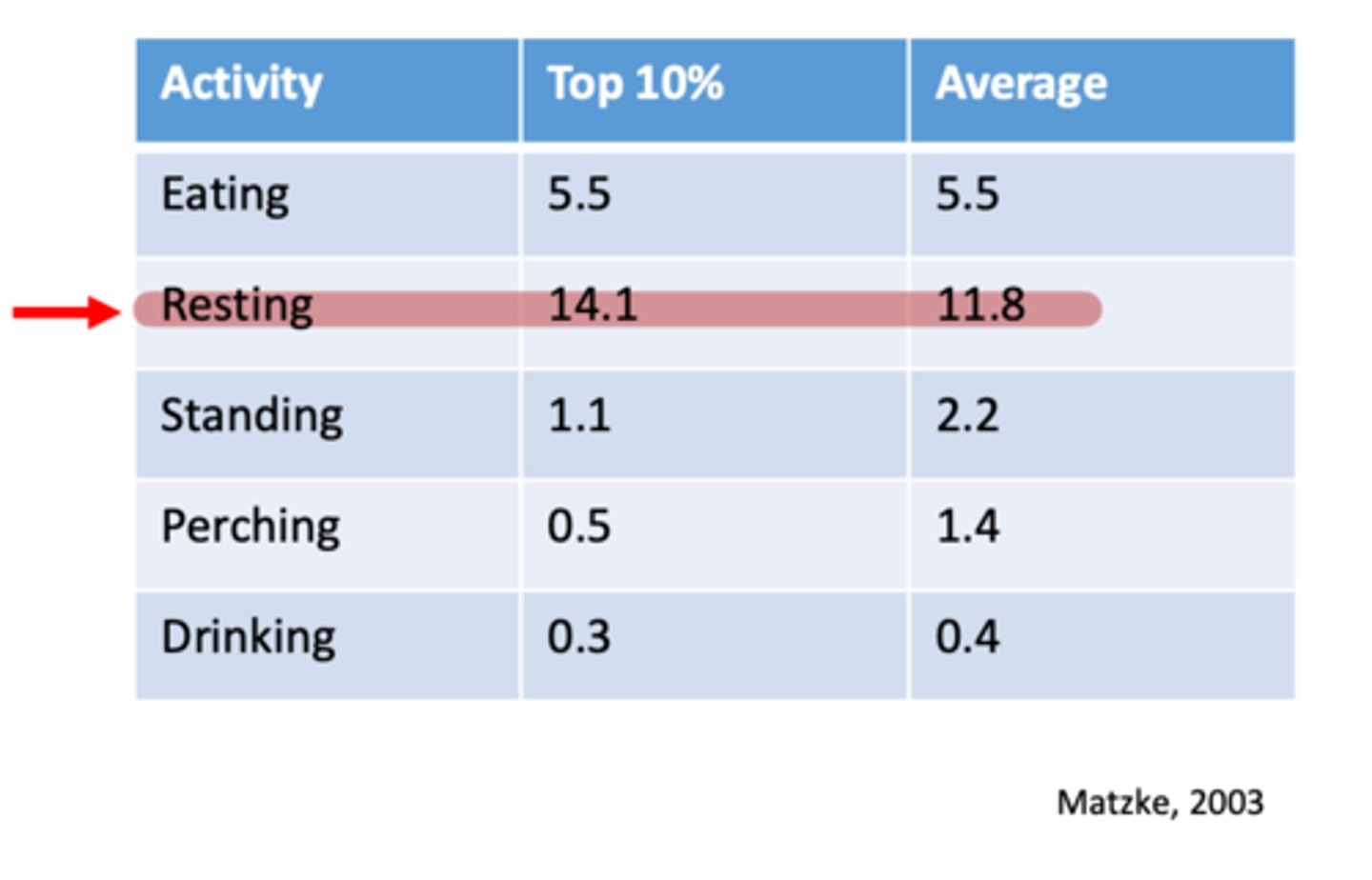
what is the cow time budget for resting...must be laying down
2-3hr/d
what is the cow time budget for milking
milk production
resting time affects....
decreases milk production
if cows get less than 10hr/d resting, what does that do
comfort
____ affects intake and health of cow
1. conserve energy
2. more rumination: buffering and increased intake
3. decreased lameness and stress on feet
4. increased blood flow to udder
what are the benefits of laying down
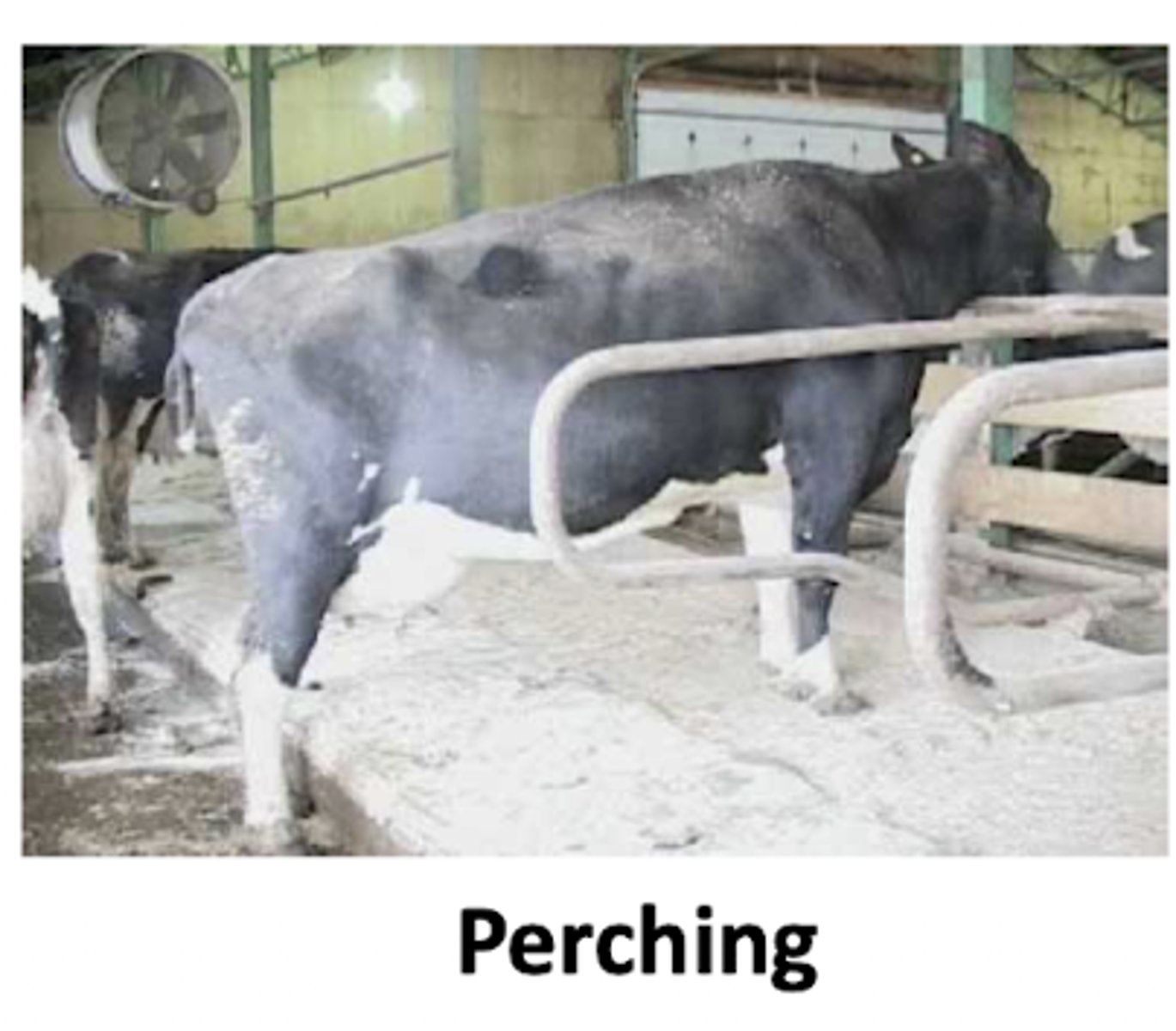
front feet in the stall, hind feet in alley, or laying partially in alley
what is perching behavior in cattle
poor stall comfort
what does perching behavior indicate
decreased intake increases lameness risk
what are the implications for perching behavior
18-30in
it is recommended to have ____ space/cow to decrease aggression and increase intake
+2.5-5lbs
+1lb DMI causes +_____ lbs of milk
acetate
what VFA is always made in the highest amount ~65%
milk fat and body fat synthesis
what is the function of acetate
propionate
which VFA is made in the second highest amount at 25%
glucose production...gluconeogenesis constant in cattle
what is the function of propionate
butyrate
which VFA is made in the lowest amount at 10%
ketone production
function of butyrate
VFAs
when microbes ferment carbs in the ruminant GIT, what is produced
starch
propionate mainly comes from what source
propionate
which VFA is considered the primary source of glucose
structural carbs such as cellulose and hemicellulose
what is the main source that acetate is produced from
acetate
which VFA is considered the primary fat source for milk (50% of milk fat) and adipose tissue
7-10hrs
what is the minimum time cows should ruminate each day
fat and acetoacetate (ketone)
acetate is the precursor for ______ and enters Krebs cycle at acetyl Co-A
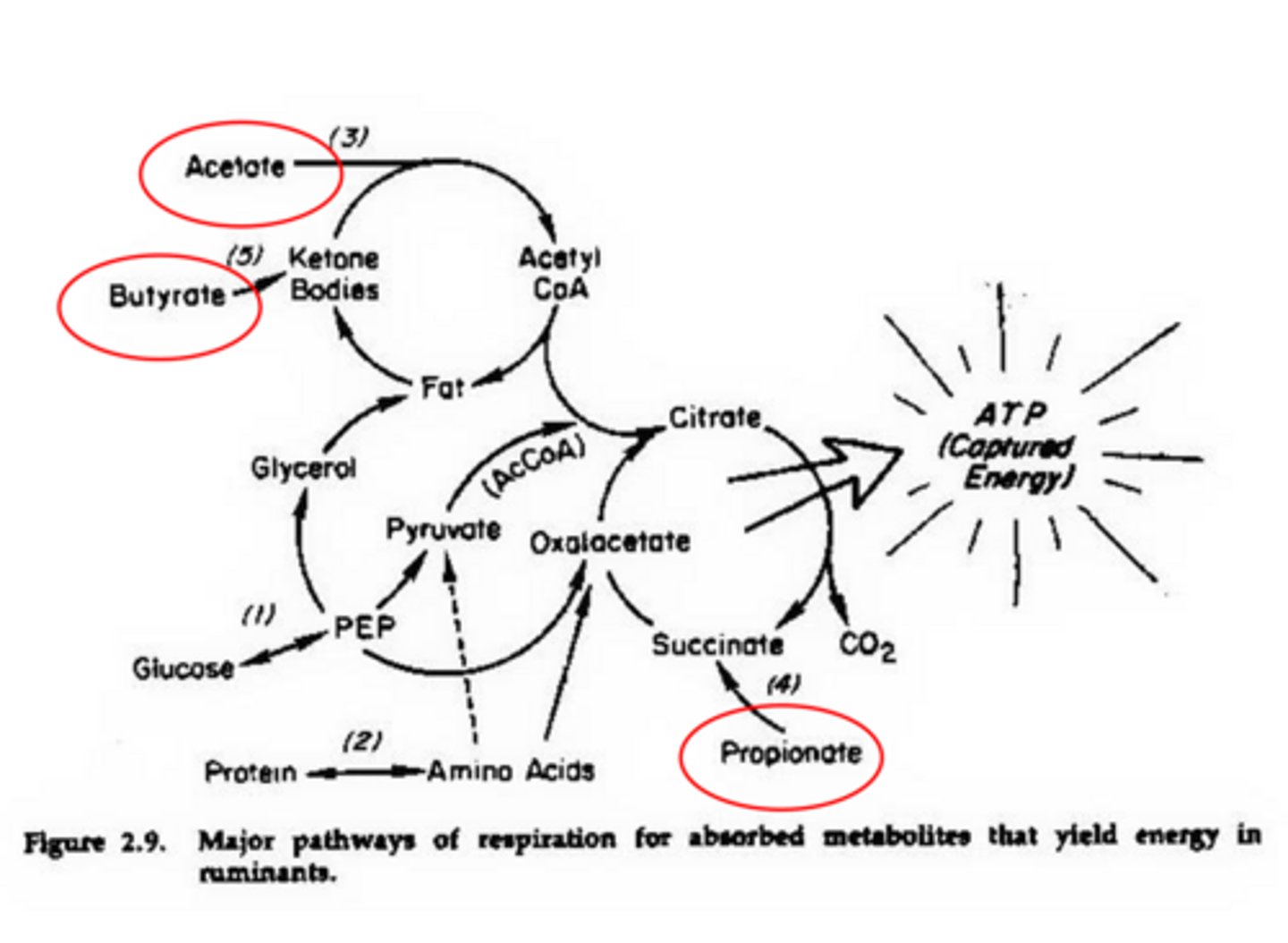
glucose
propionate is the precursor for ____ and enters Krebs at succinate
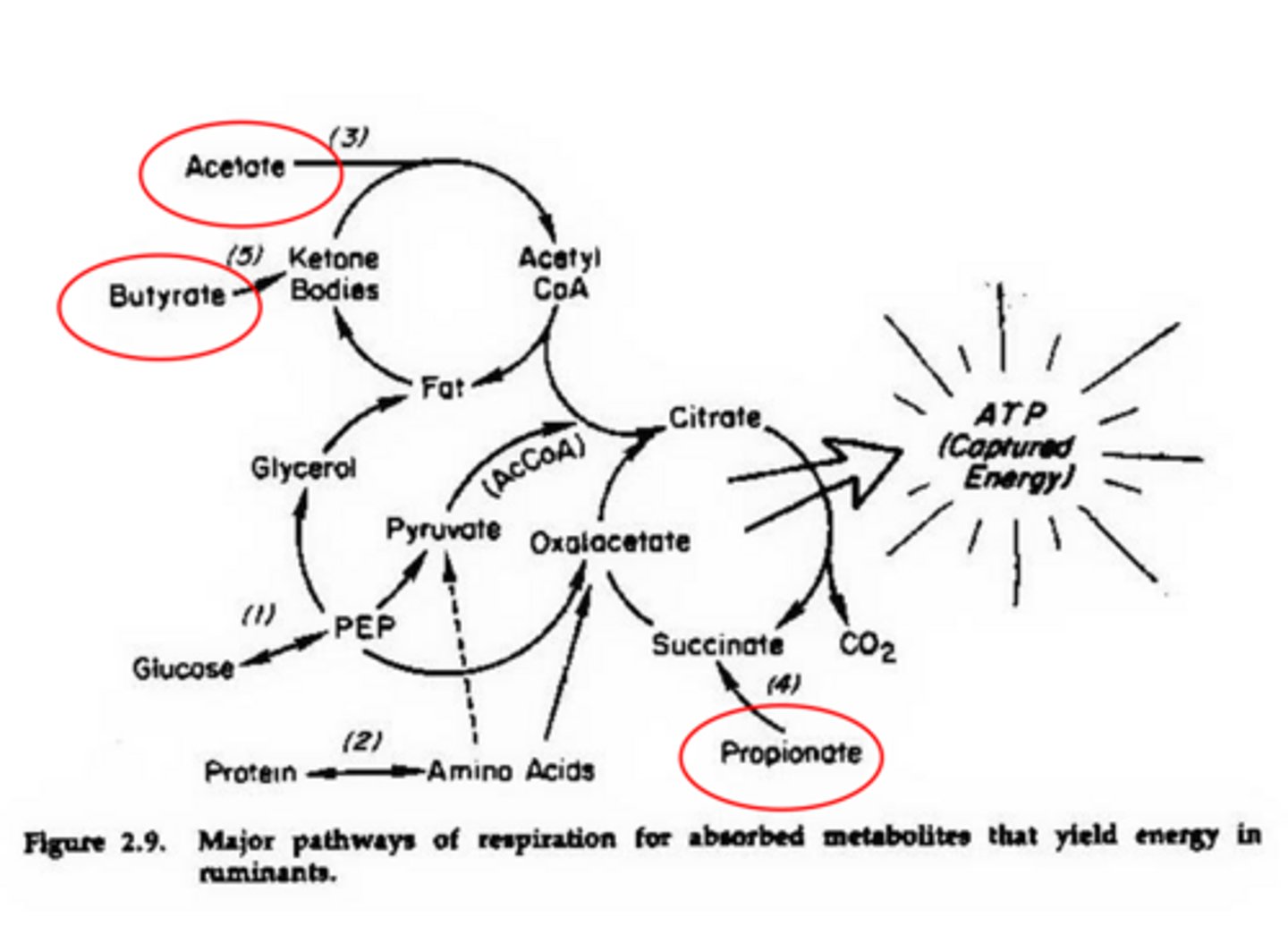
B-hydroxybutyrate (ketone)
butyrate is the precursor for ____ and enters Krebs at ketone bodies
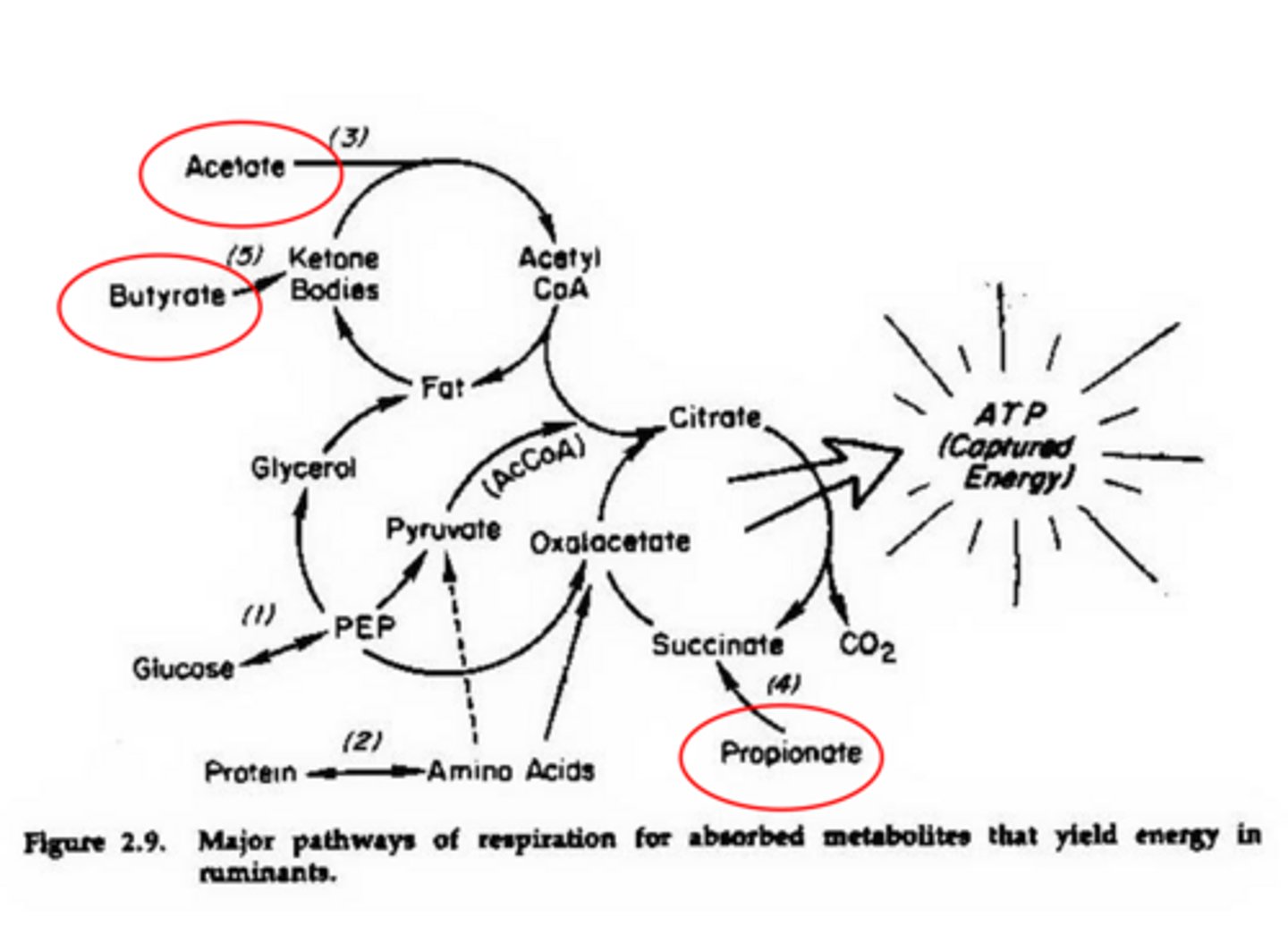
adipose tissue
____ provides FFA during lipolysis
1. acetyl CoA
2. acetoacetate
3. liver to produce triglyceride
what do the FFA from adipose tissue serve as precursors for
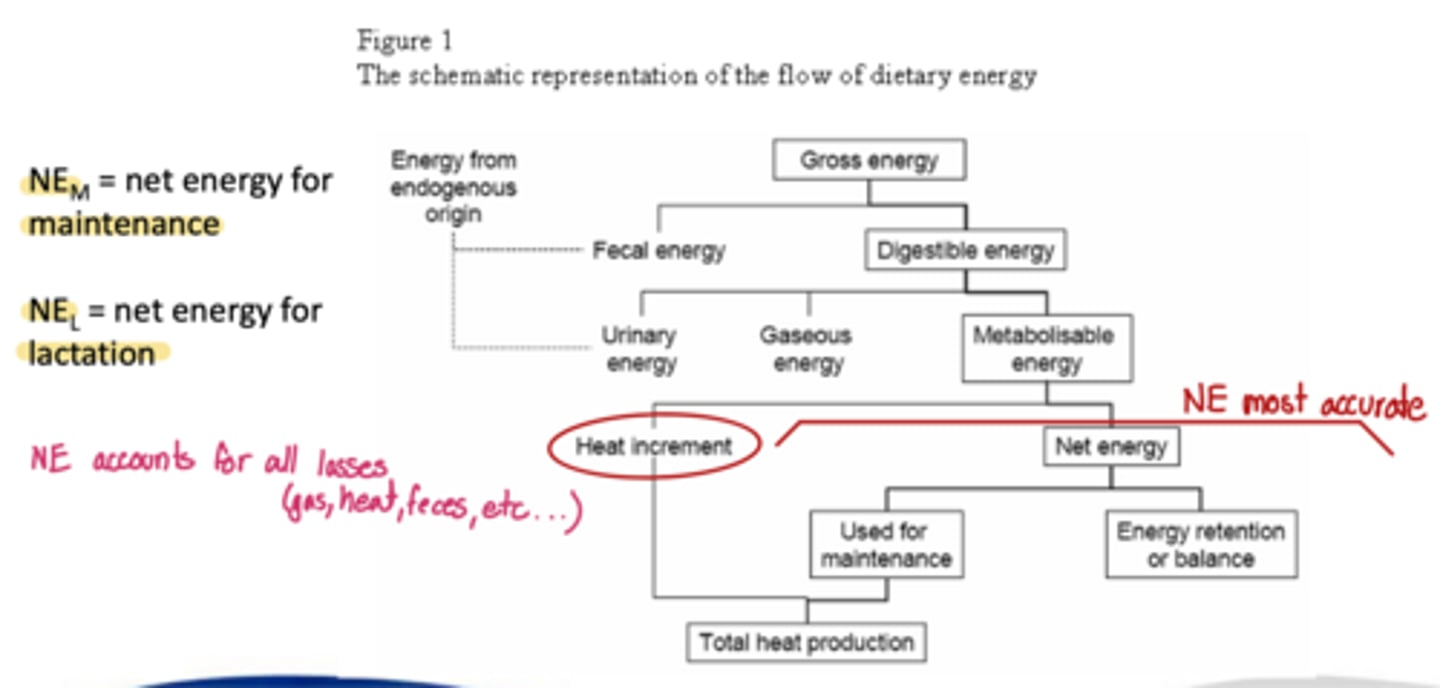
net energy
what is considered the most accurate energy system as it accounts for all losses in the forms of heat, gas, feces, etc...
1. maintains rumen pH
2. stimulate chewing and saliva
3. prevent acidosis
why does fiber matter
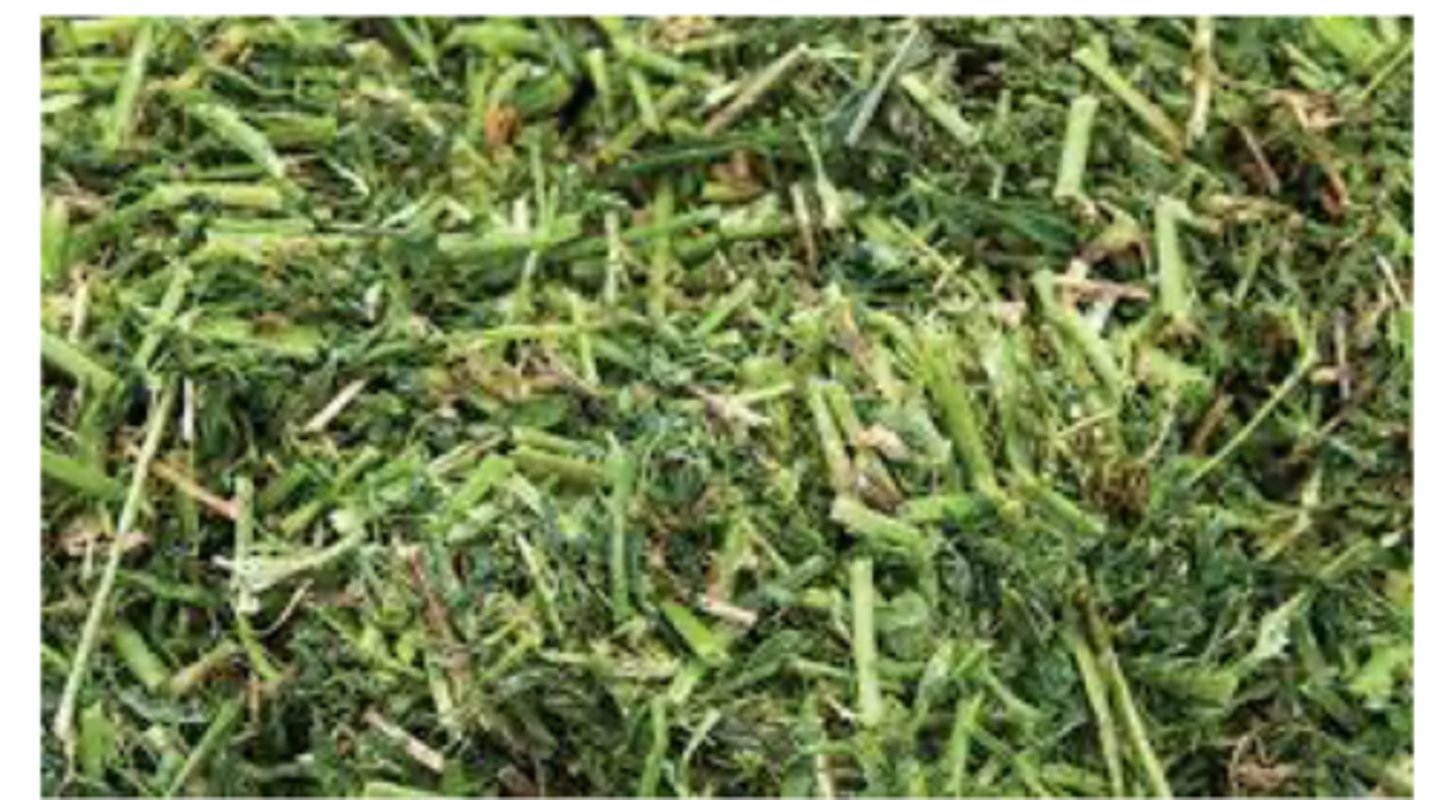
1. ADF > 18%
2. NDF >28%
3. forage NDF 20-24%
5. NFC 37-42%
list the fiber requirements during early lactation
NDF and forage NDF
which aspects of fiber actually stimulate rumination
starches, sugars, pectins
NFC are non-fiber carbs and are not super important but include what...
physically effective fiber length designed to require adequate particle length of >1.5in
what is peNDF
~22%
what is the minimum peNDF value for ruminants
drives rumination and buffering
what is the function of peNDF
NDF of ration + Penn state particle separator
what can we use to determine peNDF
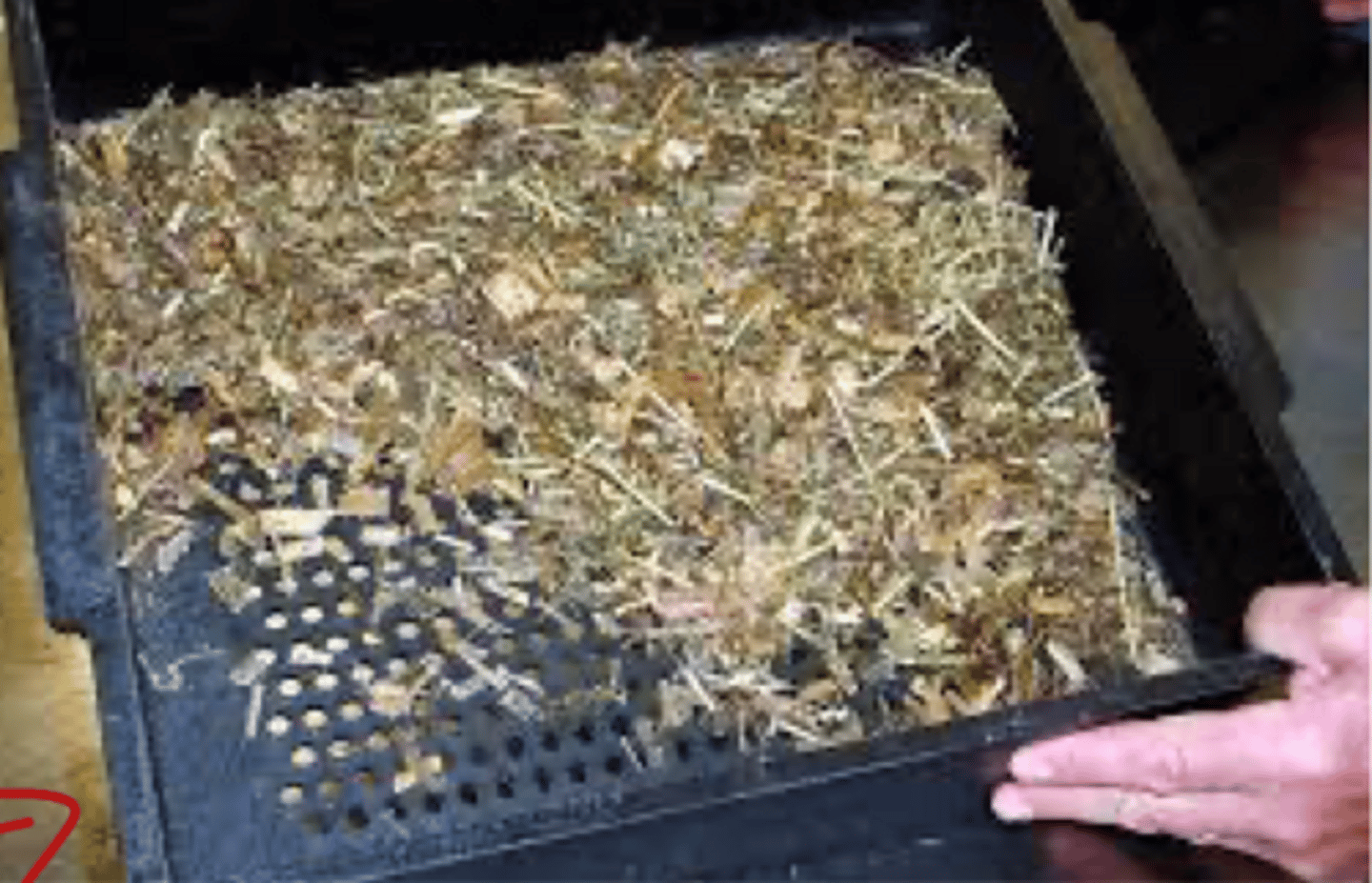
repeated, prolonged periods of depressed ruminal pH (5.2-5.6) causing VFAs to accumulate...NO lactic acid accumulation
what is SARA/subacute rumen acidosis
1. high grain diets: excess VFAs exceed absorption capacity of rumen
2. low fiber (low peNDF): decreased rumination will decrease buffering
what are the causes of SARA
1. decreased intake and milk fat
2. diarrhea and laminitis
what are the effects of SARA
ruminal pH will be closer to normal
what happens to SARA cows several hours after eating
transition cows
SARA is primarily an issue for what cows
0.5-1 unit/day
what is considered a normal ruminal pH fluctuation range
1. intake of fermentable carbs
2. buffering capacity of rumen
3. rate of VFA absorption from rumen
what doe ruminal pH depend on
decreased intake...likely protective
what happens when rumen pH drops below 5.5
rumen damage and bacterial translocation
what are the risks of rumen pH drops
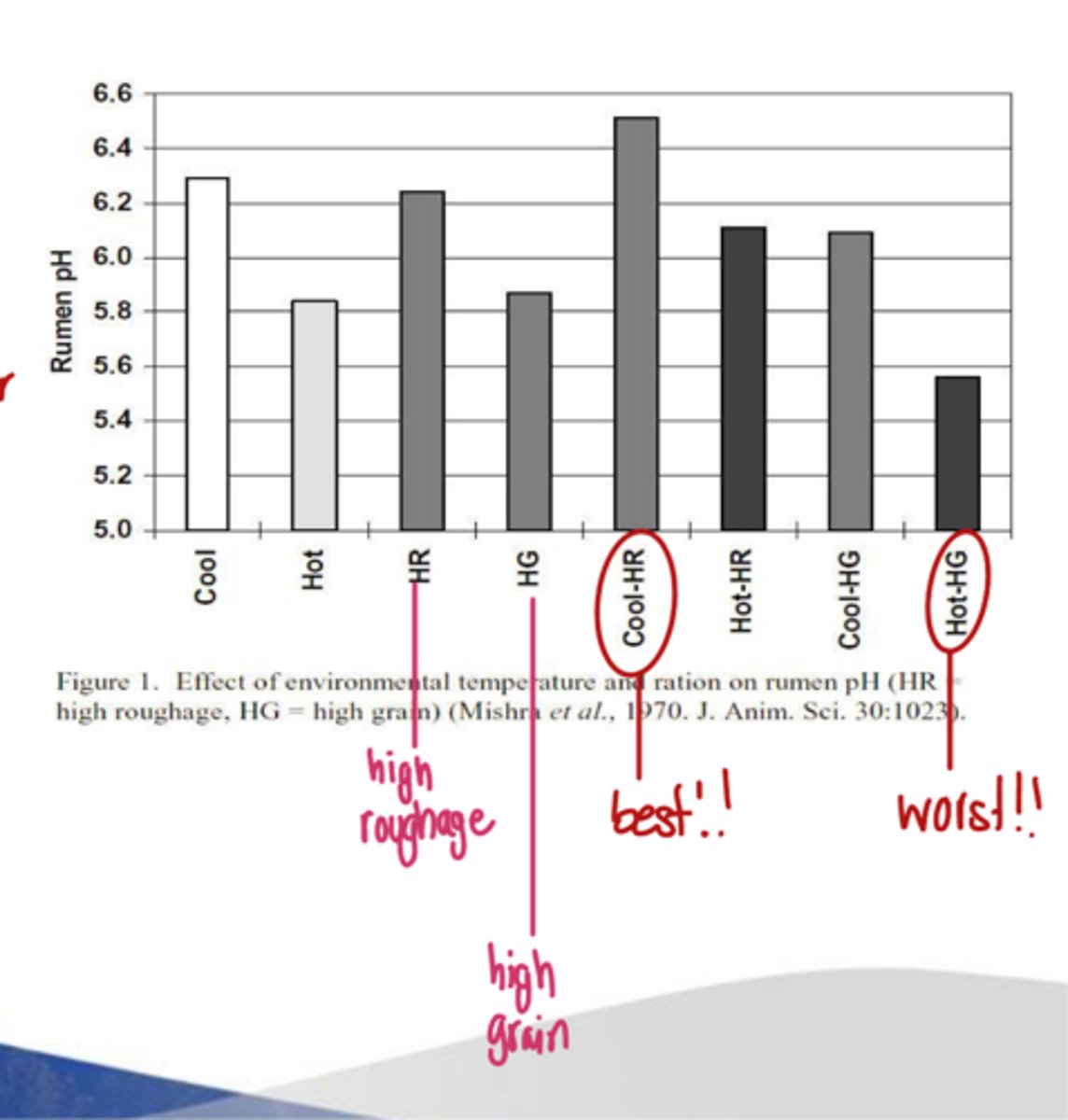
high ambient temp + high humidity
what makes up heat stress
1. decreased intake, rumination, and milk production
2. increased panting: less HCO3- in blood to buffer
what are the effects of heat stress...linking it to increased risk of acidosis
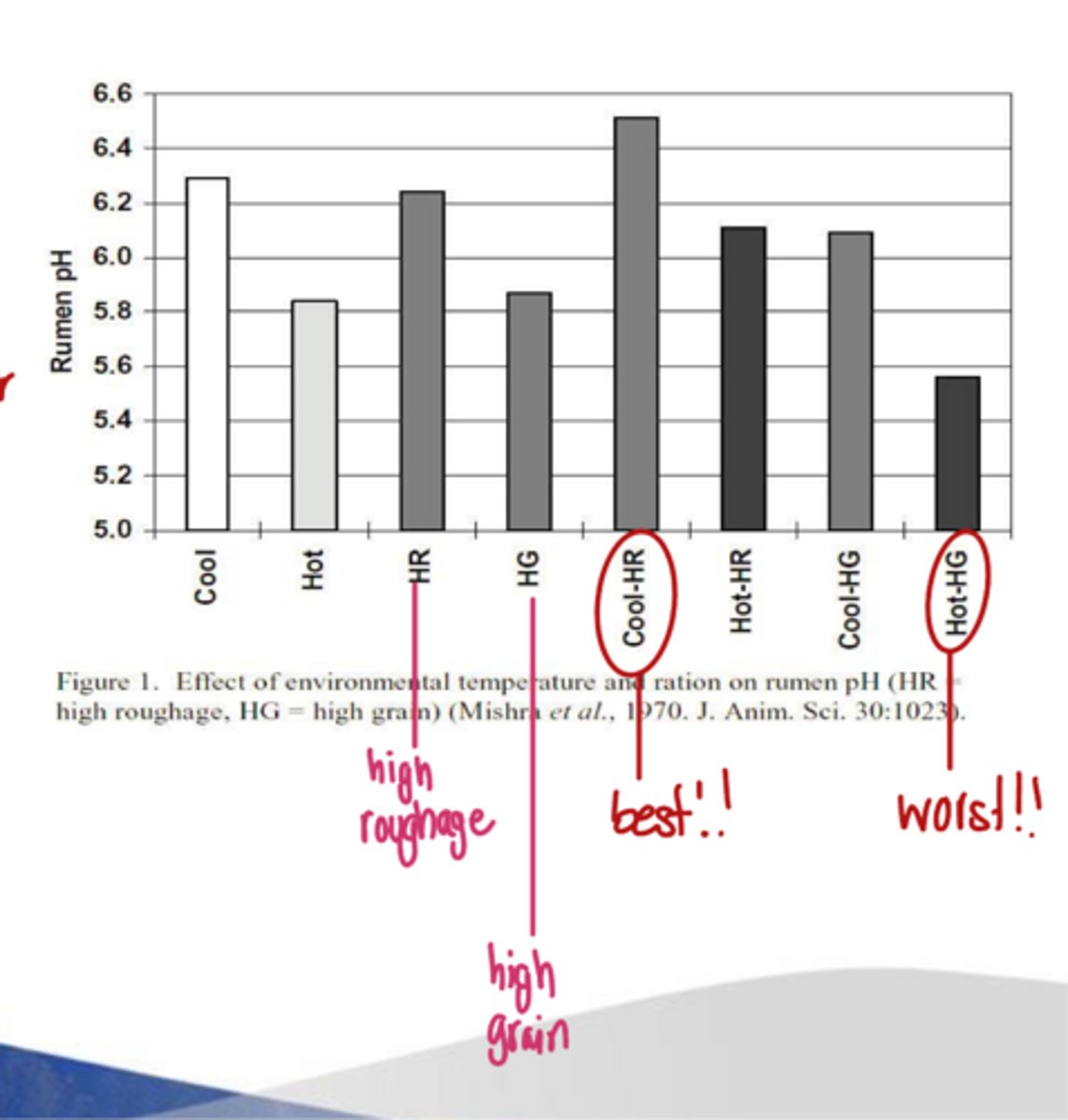
hot weather + high grain diet
what situation is the worst risk for rumen acidosis based on the chart
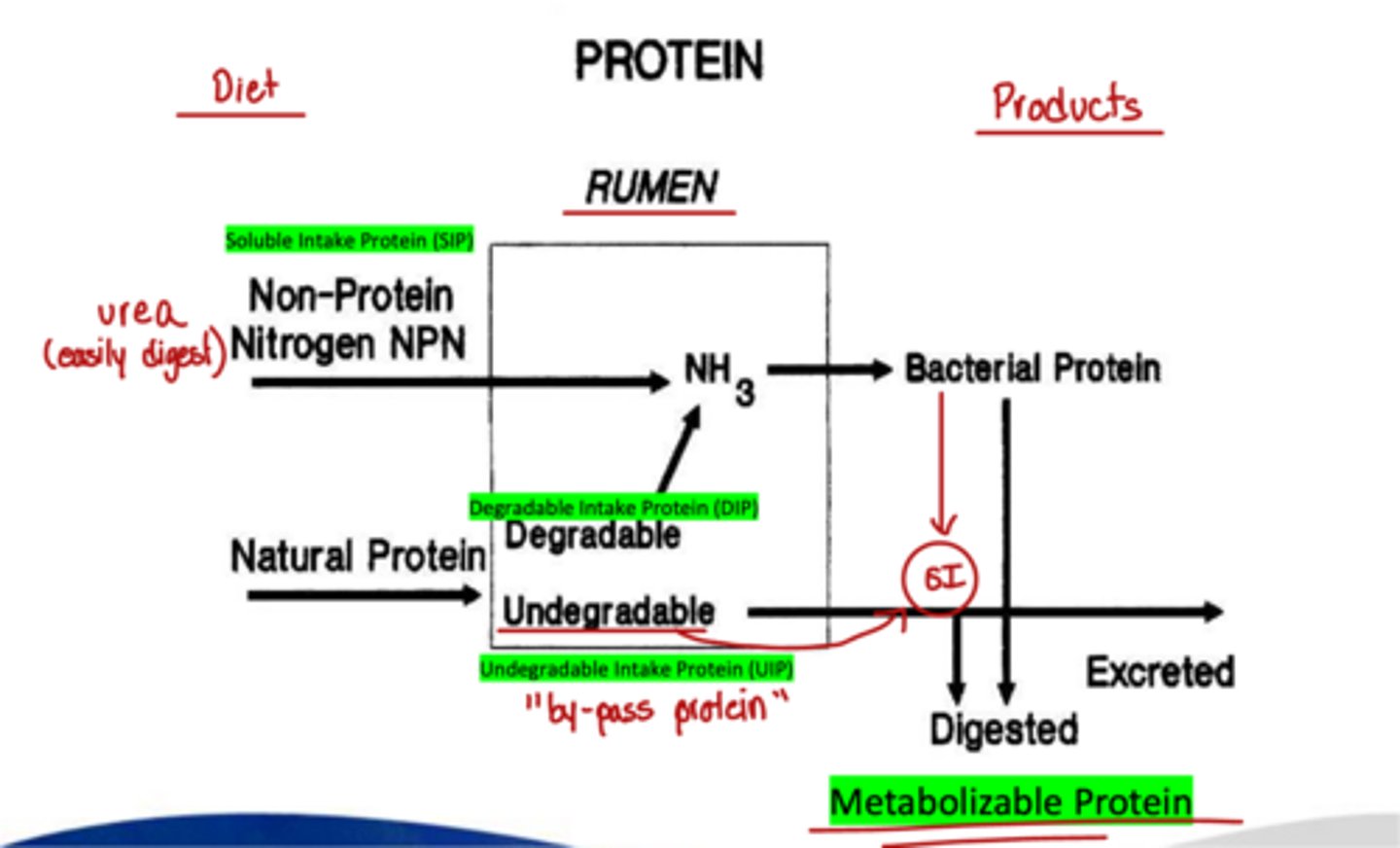
metabolizable protein
what aspect of protein actually ends up digested in the SI making it available for the animal to utilize to meet protein needs
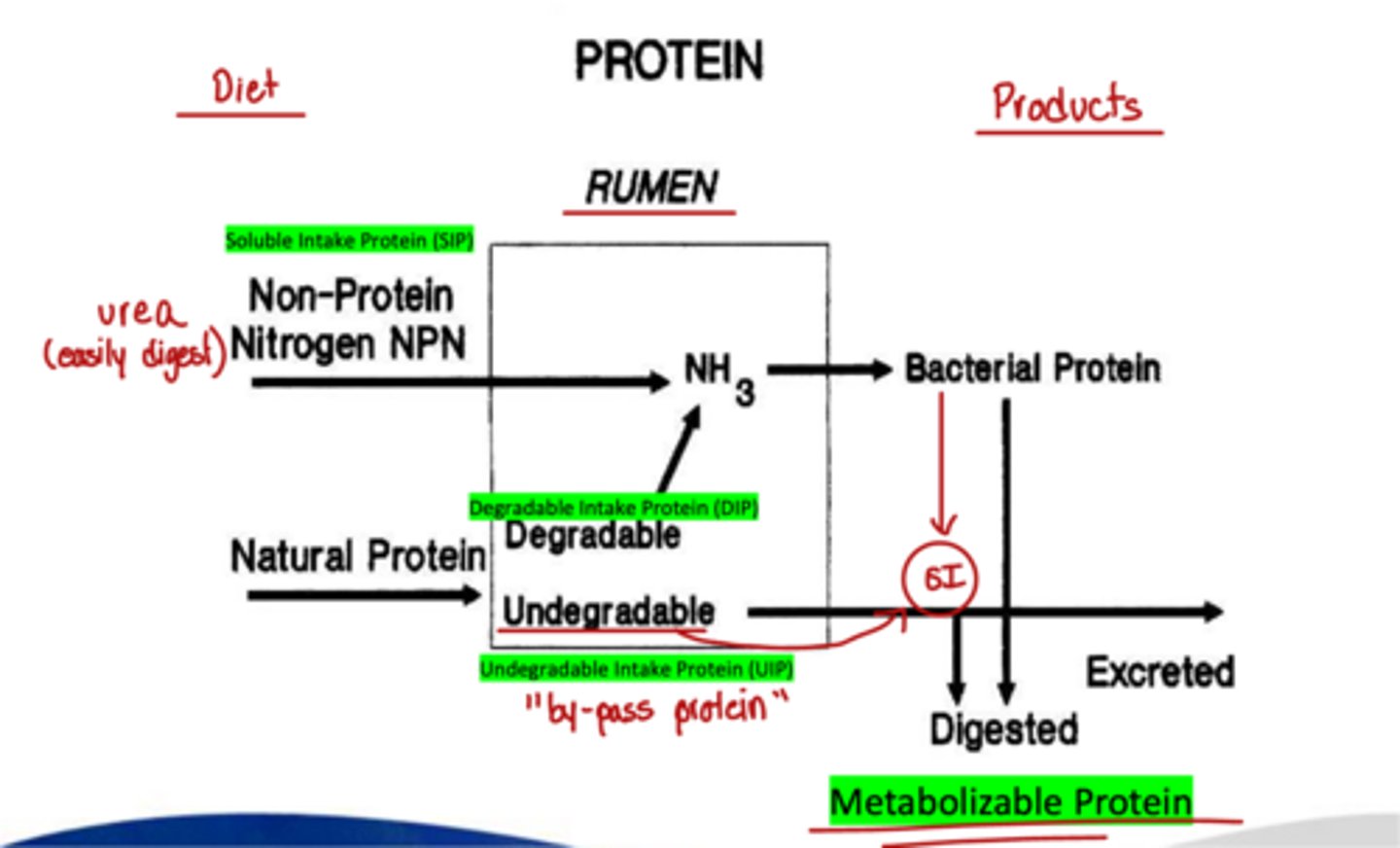
readily available nitrogen for microbes
what does soluble intake protein (SIP) provide
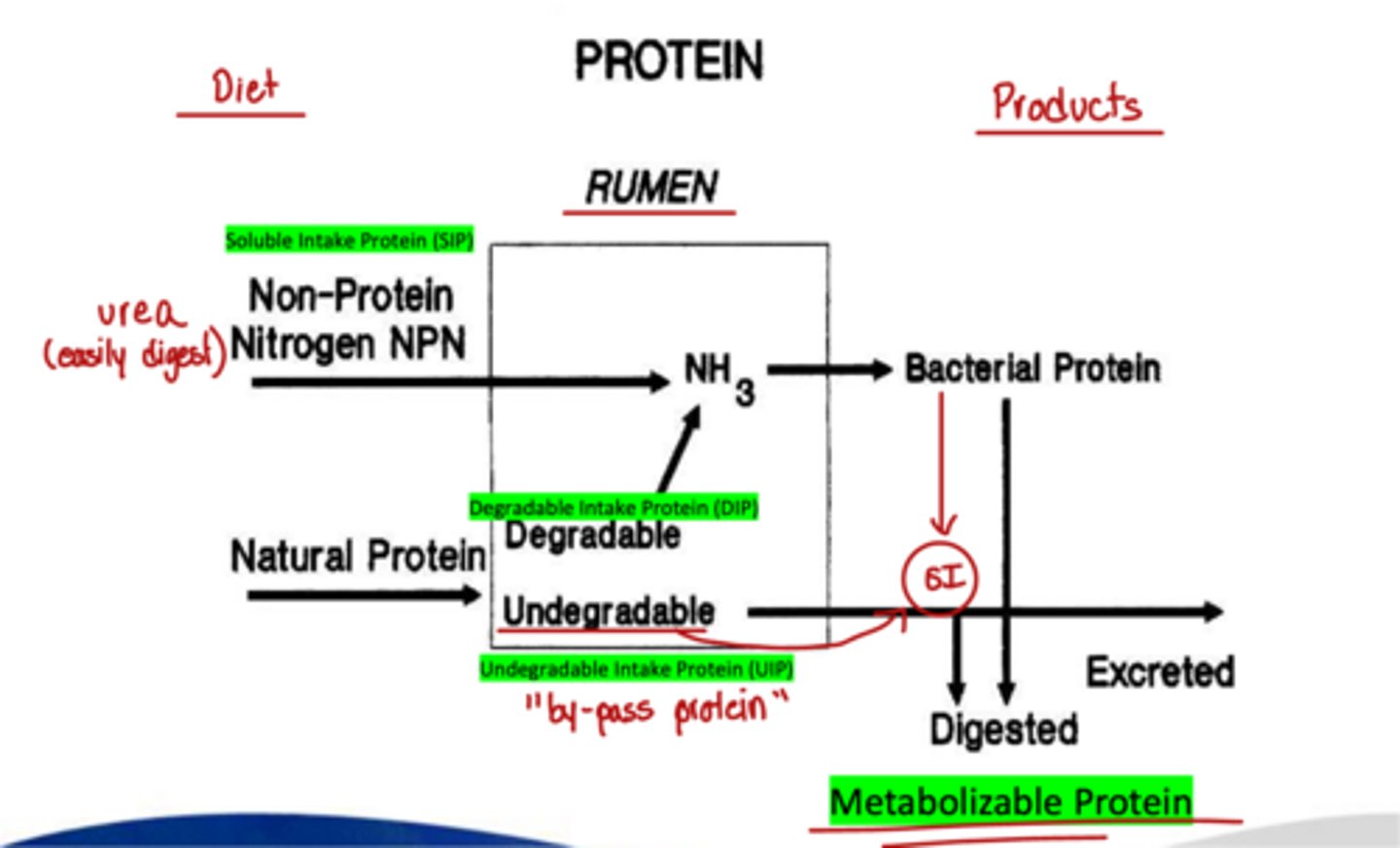
non-protein nitrogen source such as urea
how can we provide SIP in the diet for microbes
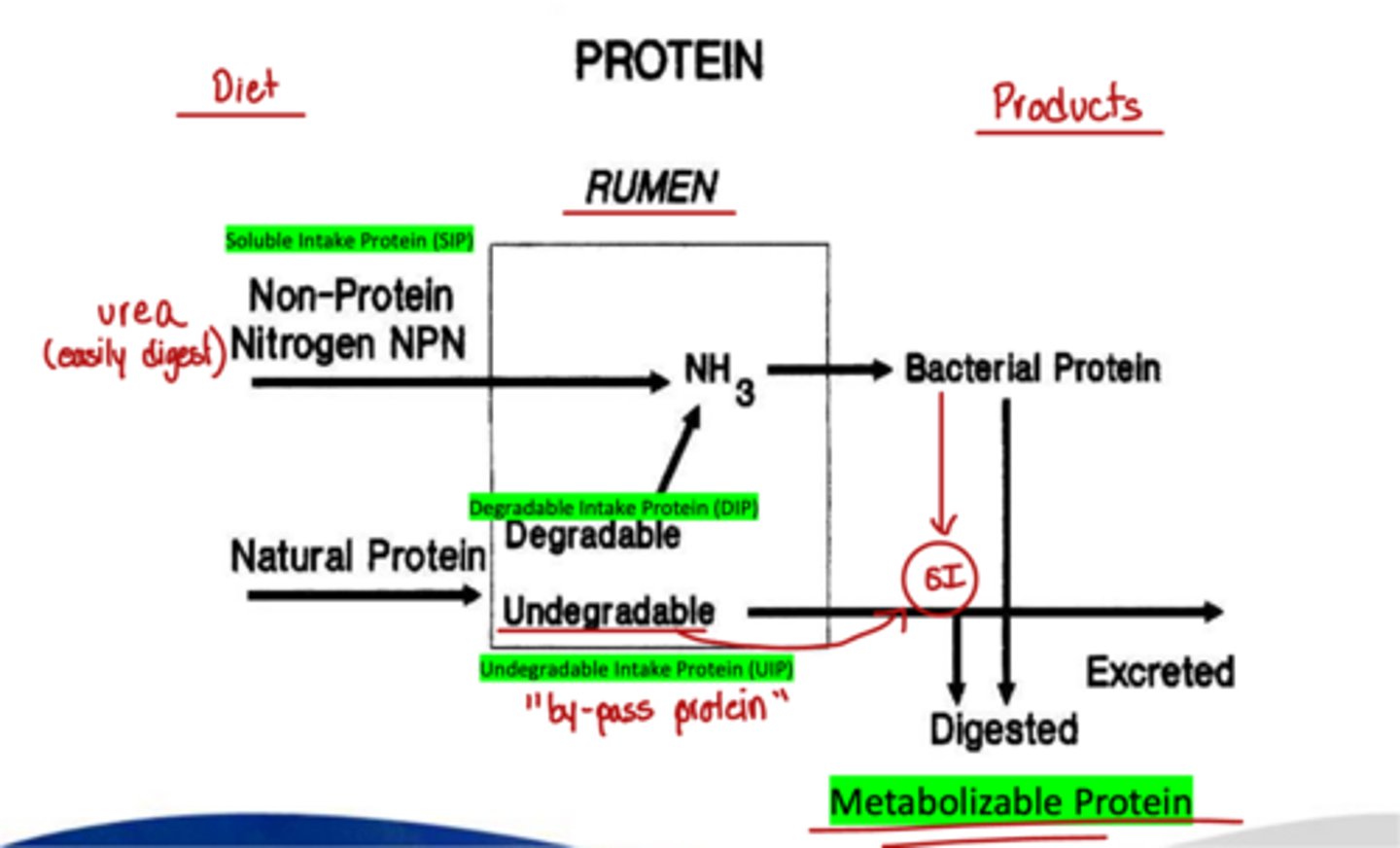
true proteins that are more slowly digested in rumen making them available to microbes over a longer period
significance of degradable intake protein (DIP)/rumen degradable protein (RDP)
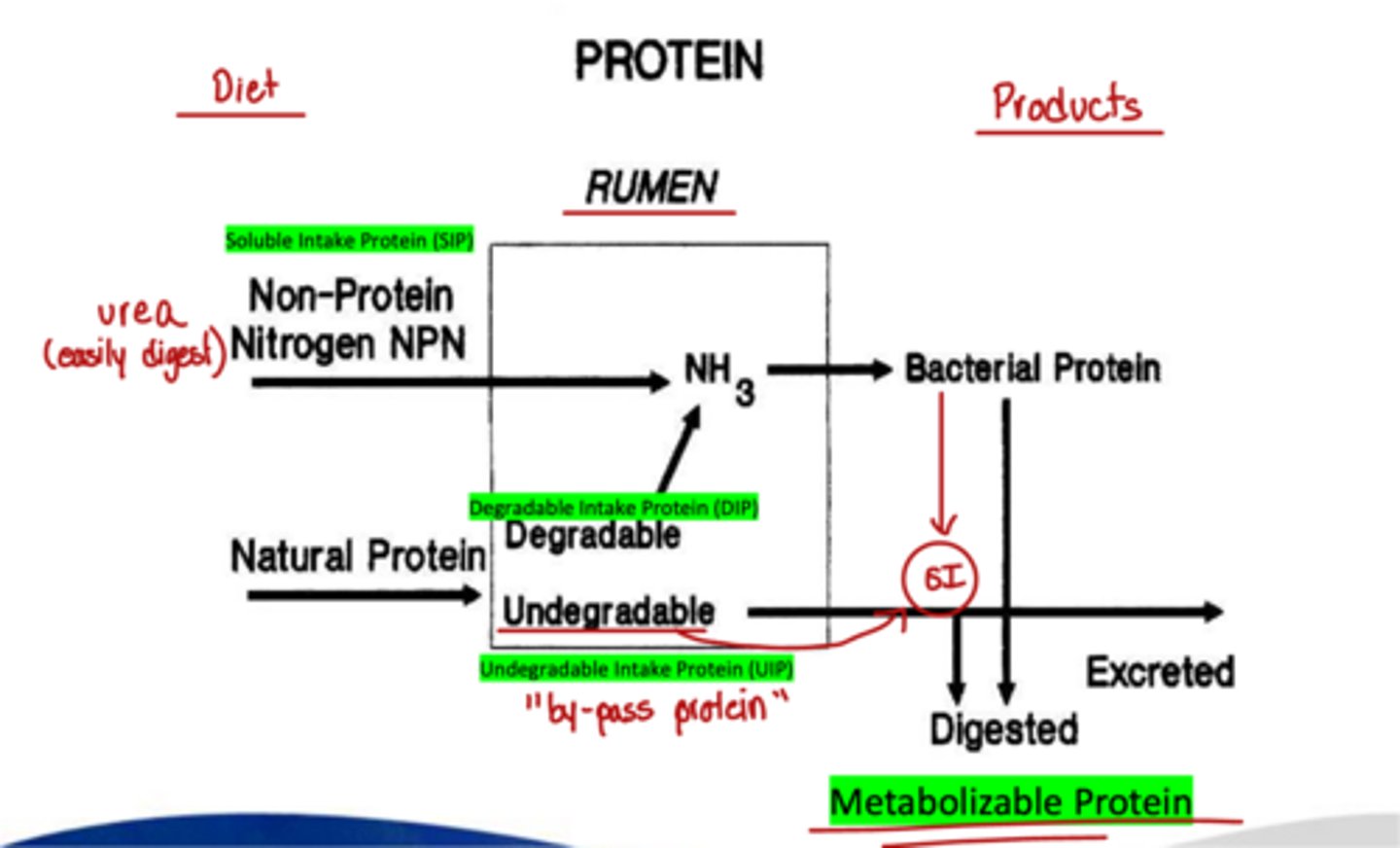
undegradable intake protein (UIP)/rumen undegradable protein (RUP)/by-pass protein
which type of protein is not rumen degradable allowing it to be digested in the SI
CHO (carbs) and RDP (rumen digestible protein)
we must carefully balance dietary ____ and ____ because microbial protein synthesis requires energy
nitrogen
___ is required by rumen microorganisms for protein synthesis
50%
microbial protein accounts for about ___ of protein supply to cow
rumen undegradable protein
cow needs ___ ____ ___ in ration to meet remaining protein requirements...common to use soybean meal to do this
16-18%
protein levels of ____% CP in dairy rations
12% CP
protein levels of ____% CP in dry cow requirments
2.25 lb corn
1 lb far has the equivalent of ___ lb corn
3%
base rations have about __% fat
7%
maximum fat in ration about ___% fat on DM basis
fat is un-degradable in rumen and excess causes less carbs and less energy availability for microbes
why does excess fat lead to decreased microbial activity
additional bypass protein
what may be required (in regards to protein) when there is more fat in the diet than needed
DMI
____ is the primary limiter of production
behavior and management
___ and ___ affect intake
fiber and pH
rumen health depends on ___ and ___
SARA
____ is a major production issue
energy, protein, and fiber
the diet must balance ____, ____, ___
ketosis and SARA
what are the primary risks during the transition period
intake, behavior, and milk fat
what can we monitor to assess dairy cow health