Psychology - Social influnce
 Call Kai
 Learn
Learn Practice Test
 Spaced Repetition
 Match
Match Flashcards
 Knowt Play
1/23

There's no tags or description
Looks like no tags are added yet.
Name | Mastery | Learn | Test | Matching | Spaced | Call with Kai |
|---|
No analytics yet
Send a link to your students to track their progress
24 Terms
What is conformity
type of soical influence
involves someone changing, adapting ot taking on new beahviours
To fit in with a group
also known as majority influnce (people tend to want to conform to larger groups)
minorty influnce does happen but it is less common
What is compliance
type of conformtiy
agreeing with or behavioing like the group publicly
but disagreeing or having differnt opinions privately
weakest type of conformtiy - only involves surface and superfical change - stops when not with group
What is internalisation
Type of conformtiy
accept and agree with the group publicly and privalty
internalise the group norms
Strongest form of conformity
leads to long term change
Explanations of conformtiy
Normative soical influence (NSI)
Informatioanl soical influence (ISI)
Normative soical influecne (NSI)
need to be liked/accepted by the group (fear of rejection)
occurs when individual is keen to adopt the soical norms of a specific group
more liekly to be effected by NSI if behaivour and attitudes do not align with those in the group (i stopped going to church years ago but the group goes every week)
lack of cohesion with the group may casue anxiety - leads to a adjustment in behaviour
may lead to individulas going aganist their inner beliefs, ideals or opinions in order to not be rejected by group
linked to conformity
emotioanl as ased on need to be liked
Informatioanl soical influecne (ISI)
takes place when indiviudal lacks knowledge or is unsure about hwat to do in a certain situation (eg first day of work)
fear of social disapproval/humiliation
occurs when individual looks to the group for guidance
or when there is a crisis and a decision needs to be made quickly (assume group knows what to do) - result in faulty descion making
mor elikely to be effected by ISI if they are insecure about what is deemd wrong and right
ISI is cogntive, based on information processing - may internlaise what they learn
linked to internlaisation
Evaluation for explanations for conformtiy: Strength
research support for ISI
Jenness asked ppts to individually estimate the number of beans contained in a jar
participants then discussed etiamtes in groups
then each participants made a second independent estiamte
findings showed that the second estaimte moved clser to the group estiamte
indicating theroy of ISI has validity
Evaluation for explanations for conformtiy: Strength 2
NSI = good application to real behaviour settings (high egological validity)
Schultz et al conducted series of feild experiments to test NSI
Guests exposed to signs providing descriptive normative messges (other guests reuse their towles)
findings showed that guests who recived normative messages where significanlty more likley to reuse towels
then those in control group (no sign)
demonstrates that NSI can influence real behaviour in everyday settings
Evaluation for explanations for conformtiy: Weakness
neither explanation for conformtiy explains why some people resist both NSI and ISI (freedom fighters, rebels, iconolasts)
both explanations cant be genralised to ebeyone
as it cannot account for individual differnces
Aschs study of conformity: Aim
extent to which group pressure could influece an indiviudal to go agasit what there eyes told them
Aschs study of conformity: Procedure
123 male students from the USA
each participants sat at a table with 6-8 other students who were confederates
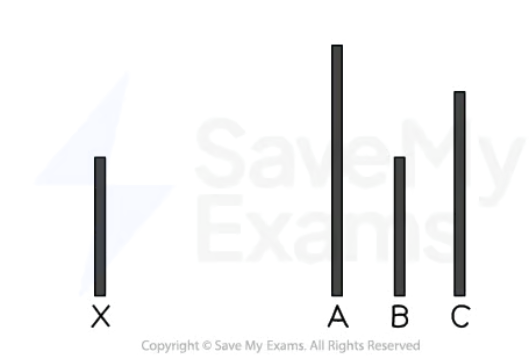
group was shown series of cards with lines
they had to say which of the 3 lines (A,B or C) on the right card was the samle length as X on the left card
each participants asked intern to say which line matched
cofederate gave right answer on first few trials (18 all togther)
12 of 18 trials where critical trials
this was when confederates would all give the same incorrect answer
Aschs study of conformity: Results
Participants gave the wring answer 36.8% of the critical trials
75% of the participants conformed at least once
Aschs study of conformity: Conclusion
Asch concluded that people will confrom to the majority even when the situation is unambigous (completly clear, no uncertaity)
Clear what the correct answer was
however some participants gave the wrong answer after hearing the confederates all give the same wrong answer
Aslo concluded that people confrom due to NSI and ISI
25% of participants did not conform showing resistance to sical influece in form of group pressure
Evaluation of Asch’s: Strengths
Asch used a standardised procedure (same group number per trial, same number of trials, same question asked)
Standerised procedure means that the study can be replicated many times over
repeeated replications should show consistent results, which equlas high reliabilty
Evaluation of Asch’s: Strengths
Replications of Aschs study (Smith and bond) have been used to identify cross - cultural differences in conformity
which gives validity to the idea that conformity is linked to group cohesion
highest rates of conformity in study were from collective cultures
cultures value needs of the group above individual needs
Evaluation: Limitations
research took place in 1940s/50s
this was when conformity was arguably higher
directly after World War II and before civil rights and feminist movement
this observation has led to the study being labelled “a child of its time”
Thus the study lacks temporal validity
Evaluation: Weakness
possible that some of the participants may have quessed the aim of the study due to ease of the task
if any participants had guessed the aim they they may simply have gone along with giving the wrong answer
this is what they thought was required of them (response bias/ demand characteristics)
response bias reduces the validity of the findings
Asch’s varaibles
Group size
unanimity
task difficulty
Group size
he conducted variations of his original line length procedure to test how conformity changes depending on the condition
group size: asch insitagted following procedure:
With one confederate ( Just one person giving the wrong answer) conformity dropped to just 3% of the critical trials
When group size increased to 2 confederates conformity was 12.8% of the critical trials
in group containing three confederates conformity rose to 31.8% of the critical trails
findings is same percentage as in Aschs originl experiment in which there were six to eight confederates
thus conformity peaks with three confederates once majority pressure is established
Unanimity
refers to the extent of agreemnt or consensus across a group
in Ashs original procedure the confederates all gave the same incoerrect anser on the critical trials (ie they were unanimous in the answer they gave)
to test effect of unanimity Ash asked one of the confederates to give the correct answer (eg non conforming answer) throughout resulting in conformity dropping to 5%
This shows that support from another person makes it easier to resist the pressure to conform to majority
In another varaion one of the confederates gave a differnt incorect answer to the majority, resulting in conformity dropping to 9%
Disrupting group unanimity is therefore one way to reduce conformtiy
Task difficulty
in original experiment the correct answer was obvious
to test effect of task difficulty, Asch instigated the following procedure
task was made more difficult by minimising the differnce between the length of the lines (eg not as easy to detect which line was longer or shorter - task becomes more ambigious)
Asch found the rate of conformtiy when faced with the ambigious task increased
Thus when a task is difficult (ambigious) and people confrom to the incorrect answer it can be explained by ISI
When a task is easy and people conform to the incorrect answer it can be explained by NSI
Explanation for obedince
agentic state
Agentic state
when an individual is in an agentic state
they feel removed from their actions
“i was just obeying orders“
Example: ignoring one of your friends beacuse the most popular person in your group told you to do so
indivudlas can be in denial and pass any blame onto the person who issued the order
agentic state allows people to minimise responsibilty and guilt about their actions because they are acting under someone esles command
agentic state made possible by the presnce of a legitimate authority figure who has status of position to issue demands or orders
Soical hierachies stand or fall according to whether people adhere to norms expected of them in soicety
further up the hierachy someone is the more they would expect obedince from those lower down
obeying someone further up hierchy means that personal respondibilty for actions can be shifted onto them
being part of a social heirachy is a bidning factor that may contribute to destrcutive obedice
milgrams study imposed a moral strain on the aprticipants
so being able to shift responsibilty for the shocks to the experimenter allowed them to ease burden of guilt/shame
Milgrams study: Procedure
volunteer sample of Amercian males were recruited (niave to the true aim of the study)
In the role ot ‘teacher‘ each participant administered electiracl shocks (where fake, although paritiapnts didnt know this)
to the ‘learner‘ for every incorrect answer given
Experimenter provided ‘prods‘ to encourage the participants to continue if they raised any objection to the procedure
65% of particpants went all the way to 450 volts
Milgrams work on obedience drew from the idea that people will obey an authority figure if specific situatioanl factors are present
even to the point of harming a stanger who has done them no worng (destrcutive obeidnce)