soc225 - c8-10
 Call Kai
 Learn
Learn Practice Test
 Spaced Repetition
 Match
Match Flashcards
 Knowt Play
1/36

There's no tags or description
Looks like no tags are added yet.
Name | Mastery | Learn | Test | Matching | Spaced | Call with Kai |
|---|
No analytics yet
Send a link to your students to track their progress
37 Terms
non government organization (NGO)
a non profit group that operates indepdendently of the government. In the justice system, often provide services like counseling, housing an legal advocacy
john howard soceity of canada
a national NGO that advocates for men and boys in the justice system. They focus in effective, human responses and help with reintegration
elizabeth fry society of canada
a national NGO that advocates for women and girls in the justice system. they focus n the specific needs of incarcerated womrn, such as mother-child programs and trauma support
social return on investment (SROI)
a method for measuring the extra financial value (like social, economic or environmental benefits) created by a program
Issues non-profits deal with:
administration
SROI
NGO qualities
Focus on long term solutions
Focus on changing behaviour
Focus on risk factors
Live in the now and the future
Process based
Goal is to reduce recidivism
Programs
Work with victims
Research
Super quick to change!
CJS qualities
Short term thinking
Focused on punishment, guilt etc
More focused on the specific criminal event (the crime)
COJ lives in the past boooo
Outcome based
Gov/coj increase crime (going to jail,
Punishment for deterrence
Coj ignores victims
politics/public
Severely slow to change
John howard society offices
2019 - 63 offices across canada - no hierarchy - flat family
840 employees and 1522 volunteers
whats the difference between john howard v elizabeth fry
E-fry is smaller – 1/10th of the size
The second reason – the biggest reason – they only work with FEMALE OFFENDERS (usually a smaller population ~20% the population)
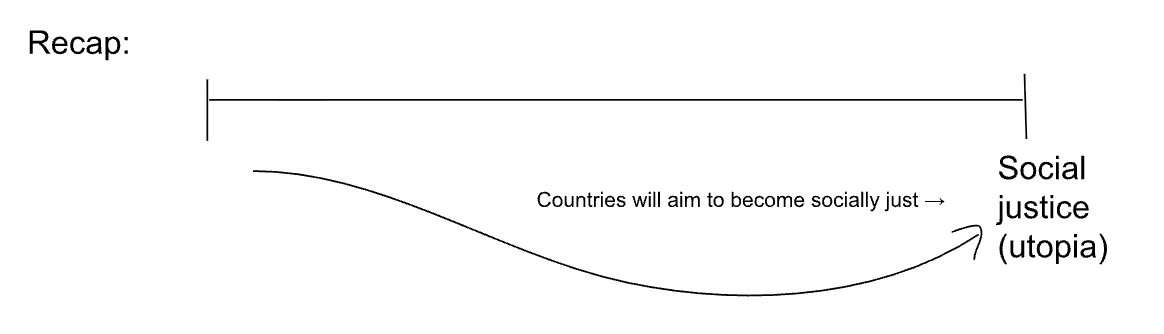
how to achieve a socially justice country
Human dignity is the ethical foundation of moral society – work toward human dignity for all people
Work towards: Community and common good
Rights and responsibilities are met – everyone has the Right to participate in the country – as well as the Responsibility in trying too make an effort in the country (eg. jury duty)
A socially just country will make priority for the poor and most vulnerable people in society – the true test of a strong society is how they treat their most vulnerable
Participation – everyone has the right to participate – in politics, social life, following trends etc
The dignity of your workers – capitalism will not take precedence over your workers
Solidarity – the recognition that we are all one human race regardless of anything
Stewardship
Promote peace – peace within nation, peace on the world stage
Governenance – if you want to be socially just,, you neendagovernment and law and the social strcuturesw all set up to promote points 1-9 – if you dont have a gov thast doesnt give a f about points 1-9 then you wont get anything done (this is a must)
our CJS focuses on the past
police tries to arest for something you did in the past
cjs ocuses on guilt and punishment
cjs focuses on guilt and punishment
the crime is against the state, not the victime
“r = vs…” = regina = government
the cjs is adversarial
the one with the better lawyer is most likely the winner
punishment is used for deterrence
punishment is used for deterrence
cjs does not hold the offender accountable
cjs is corrupt lol
cjs ignores victims
again, corrupt
municipal policing
police services that provide law engorcement withing a specific city or town
policing: provinical
law enforcement that operatesa t the provinical level, primarily in ruralareas and on provincial highways
key groups: OPP (ontario), SQ (quebec), RNC(Newfoundland)
policing: federal
matters of national interest that cross provincial or international borders
the RCMP
indigenous policing
first nations and inuit policing program (FNIPP)
to provide indigenous communities with policing that is effective, professional and culturally
what can the police do to you?
least severe - warning, (stop and questioning) ticket , search, (detain) arrest. - most severe
arrest
can include:
promise to appear in courth
jail
can keep you as a flight risl if it is not beneficial to public safety
police units
drugs, homicide, patrol, traffic
usually have around 10 people since its all they really need
50% of cops belong to patrol
1972 Kansas city preventative patrol experiment
The amount of random motorized patrol had no effect on crime rates, citizen fear, or police response time.
Significance: It proved that "randomly driving around" is not an effective way to prevent crime, leading to more targeted policing strategies.
conclusion: random patrol leads to random results — ie. patrol does nothing
father of patrol
sir robert peel
3 philosophies of doing justice
distributive
restorative
retributive
reactive justice
canada chose this
wait for a crime to happen → deal with a crime that occured in the past - lives 100% in the past
more expensive, does not deal with risk factors (biggest issue)
other countries are reactionary but they do it better (sweden, norway, netherlands, australia)
proactive justice
a philosophy of justice that uses data, community partnerships and environmental changes to precent crime before it occurs
trying to be better at reacting at crime (faster etc)
expensive and does. not deal with risk factors
preventative jusitce
it chagnes the environment or provides social support to ensure the crime never happens in the first place
might be financially suitable
however, not the best for political compaigsn as it offers benefits that take a while (10+ years)
reactive works best for political campaigns
restorative justice
to repair harm caused by crime by involving the victim, offender and the community in a process of healing and accountability
eg. canada and indigenous population
australia and indigenous population
considered hard to do
also invented by a white guy bro just stop
restorative
harm done to a person
make reparations
trying to restore the victim as they were prior to the event
retribution
harm done to the law
serve as a punishment found guilty
punishment is imposed because it is morally right for an offender to suffer for their crimes. the punishment must be proportional to the harm caused
good lives theory
strengths based rehab model that reduces crime by helping offender develop the skills and resources to achieve primary goods
relatedness, agency and excellence
un legal and healthy ways
primary goods
life
knowledge
excellence at work
excellence at play
excellence at agency - autonomy - ability to say no
inner peace
relatedness
community
spirituality
pleasure
creativity
Canadian model: risks, need, responsibility
the gold standard for offender rehab in canada and is used by the correctional service of canada
risk principle
the who : match the level of service to the offenders risk to reoffend
highrisk: receive intensive treatment and supervision
lowrisk: minimal interference
recidivism
differential association teory