Case studies
 Call Kai
 Learn
Learn Practice Test
 Spaced Repetition
 Match
Match Flashcards
 Knowt Play
1/6

There's no tags or description
Looks like no tags are added yet.
Name | Mastery | Learn | Test | Matching | Spaced | Call with Kai |
|---|
No analytics yet
Send a link to your students to track their progress
7 Terms
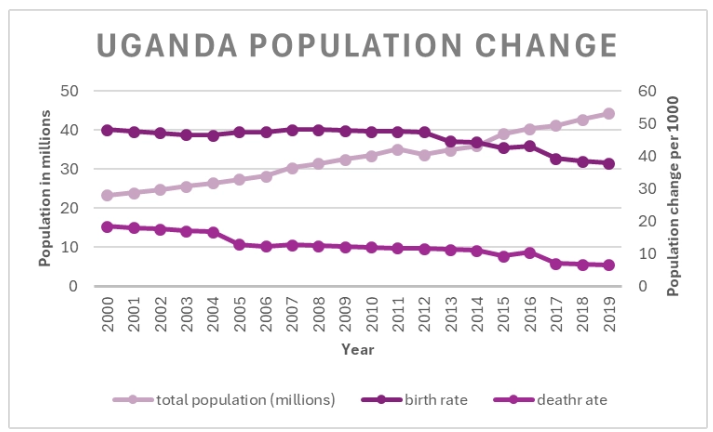
Describe population change in Uganda and which stage of the demographic population model it is in
Give statistics about improvements in health in Uganda
- Total health spending per person rises rapidly from $50 to $160 per year from 2004 to 2011, then back down to $120 per person in 2021. However, this is significantly lower than other countries such as the UK, where spending has increased from $2,673 in 2004 to $6,160 in 2021.
- The share of rural population with access to basic handwashing facilities has greatly increased from 0.8% in 2000 to 25.1% in 2022. Although this is still low, this could partly explain to decrease in death rate from around 15% in 2000 to around 5% in 2019.
Give statistics about improvements in education in Uganda
- Completion of primary education increases from around 35% to over 40% at its peak in 2008/2009. However, it then reduces to around 35% again for 2024. A low level of primary school education could contribute to low skilled jobs and therefore low economic productivity.
- The share of population with no formal education aged 15 to 64 decreased from 23.1% in 2000 to 5.7% in 2020, which could (contrastingly to the last figure) suggest more adults can go into more highly skilled employment.
Give statistics about improvements in economy in Uganda
Percentage of the economy living below the poverty line decreased from around 35% in the 2000s to 21% in 2019
GDP increased from $6 billion in 2000 to $34 billion in 2019
What are some sociable implications of population change in Uganda?
Could bring about social and/ or political change because young people make up nearly half of all registered voters in Uganda
Many people move to cities like Kampala in search of work; rapid urban growth often leads to slums, poor sanitation and overcrowding
Schools and hospitals become overcrowded
What are some economic implications of population change in Uganda?
Larger workforce, though not necessarily more jobs
700,000 young people reach working age every year, but only 75,000 jobs are annually created
What are some environmental implications of population change in Uganda?
More progressive in terms of climate change and 57% of young people in Uganda were concerned that climate change will have a strong impact on them and their families