data science quiz three
 Call Kai
 Learn
Learn Practice Test
 Spaced Repetition
 Match
Match Flashcards
 Knowt Play
1/49

There's no tags or description
Looks like no tags are added yet.
Name | Mastery | Learn | Test | Matching | Spaced | Call with Kai |
|---|
No analytics yet
Send a link to your students to track their progress
50 Terms
hypothesis test
a statistical technique used to evaluate competing claims using data
null hypothesis (Ho)
an assumption about the population. “there is nothing going on”
alternative hypothesis (Ha)
a research question about the population. “there is something going on”
what is the motivation behind a hypothesis test
decision
what is the motivation behind a confidence interval
estimation
one sided (one tailed) alternative hypothesis
the parameter is hypothesised to be less than or greater than the null value, < or >
two sided (two tailed) alternative hypothesis
the parameter is hypothesised to be not equal to the null value
what are two characteristics of two sided alternatives
calculated as two times the tail area beyond the observed sample statistic; more objective and hence more widely preferred
state the hypothesis for an independent case
null hypothesis, observed different in proportions is simply due to chance; Ho: p(treatment) - p(control) = 0
state the hypothesis for a dependent case
alternative hypothesis, observed difference in proportions is not due to chance; Ha: p(treatment) - p(control) /= 0
explain the randomisation process
randomly shuffle the rows in the data frame
split off the first 16 rows and set them aside - these represent the people in the control group
split of the final 34 rows and set them aside - these represent the people in the treatment group
calculate the proportion of people in both groups who yawned
calculate the difference in proportions of yawners (treatment - control) and plot it on the chart
write the code for simulation by computation

explain the steps for writing the code for simulation by computation
start with the data frame
specify the variables
state the null hypothesis
generate simulated differences via permutation
calculate the sample statistic of interest
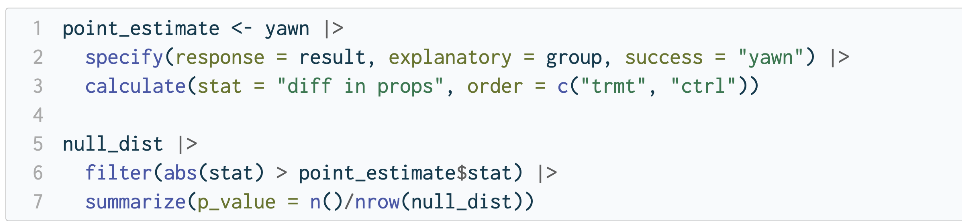
write the code for calculating the p value
significance level
the cutoff value for whether the p-value is low enough that the data are unlikely to have come from the null model
when is Ho rejected
if p-value < alpha, reject Ho in favour of Ha - the data provide convincing evidence for the alternative hypothesis
when is Ho not rejected
if p-value > alpha, fail to reject Ho in favour of Ha - the data do not provide convincing evidence for the alternative hypothesis
false positive
rejecting the null hypothesis when it is correct
false negative
failing to reject the null hypothesis when it is incorrect
assumptions of the central limit theorem
assumes sampling statistics adhere to a normal distribution
observations in the sample are independent
the sample size is sufficiently large
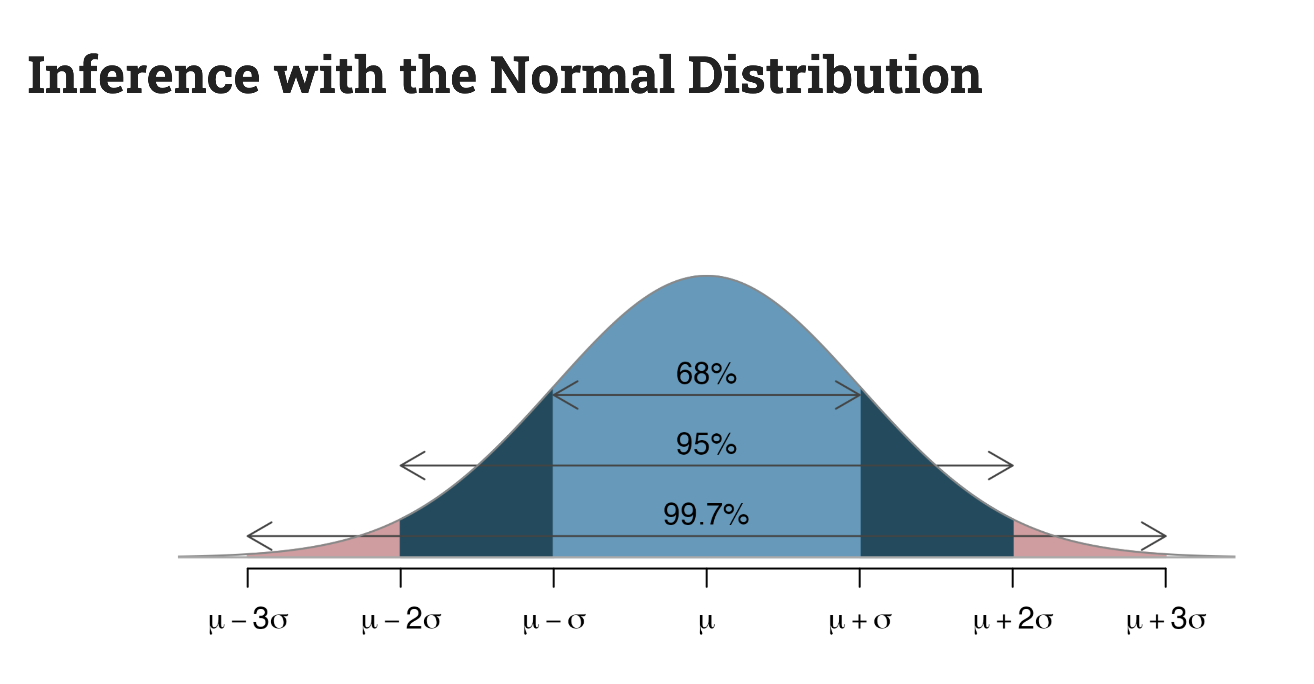
sketch the normal distribution curve
p-value
the probability of observing a test statistic as extreme as the one computed from the sample data, assuming the null hypothesis is true
why are permutation-based approaches used
they repeat simulations to estimate the distribution of the test statistic under the null hypothesis
code for generating the null distribution
set.seed(123)
what is the code for visualising a simulated p-value
visualize(null_dist) +
shade_p_value(obs_stat = d_hat, direction = "two-sided")
what is the code for calculating a simulated p-value
null_dist |>
get_p_value(obs_stat = d_hat, direction = "two-sided")
what function displays linear regression
fit()
statistical inference
the process of using sample data to make conclusions about the underlying population from which the sample came
estimation
uses data from samples to calculate sample statistics (mean, median, slope) which can then be used as estimates for population parameters
hypothesis testing
use data from samples to calculate p values which can then be used to evaluate competing claims about the population
confidence intervals
a plausible range of values for a population parameter; need to quantify the variability of the sample statistic in order to construct one
code for sampling without replacement
sample(x = 1:10, size = 10, replace = FALSE)
code for sampling with replacement
sample(x = 1:10, size = 10, replace = TRUE)
explain the bootstrapping scheme
take a bootstrap sample - a random sample taken with replacement from the original sample, of the same size as the original sample
calculate the bootstrap statistic - a statistic such as mean, median proportion, slope computed on the bootstrap samples
repeat steps 1 and 2 to create a bootstrap distribution
calculate the bounds of the confidence interval as the middle of the bootstrap distribution
code for taking a bootstrap sample
economy_boot_1 <- economy |>
slice_sample(n = nrow(economy), replace = TRUE)
explain the difference between confidence intervals and p values
confidence interval: range of plausible values for the population parameter; distribution centred around the observed sample statistic
p value: probability of observing the data, given the null hypothesis is true; distribution centred around the value from the null hypothesis
a 95% confidence interval in practice is a hypothesis test with alpha = 0.05
code for calculating mean
calculate(stat = “mean”)
code for obtaining the confidence interval
get_ci(x = boot_df, level = 0.95)
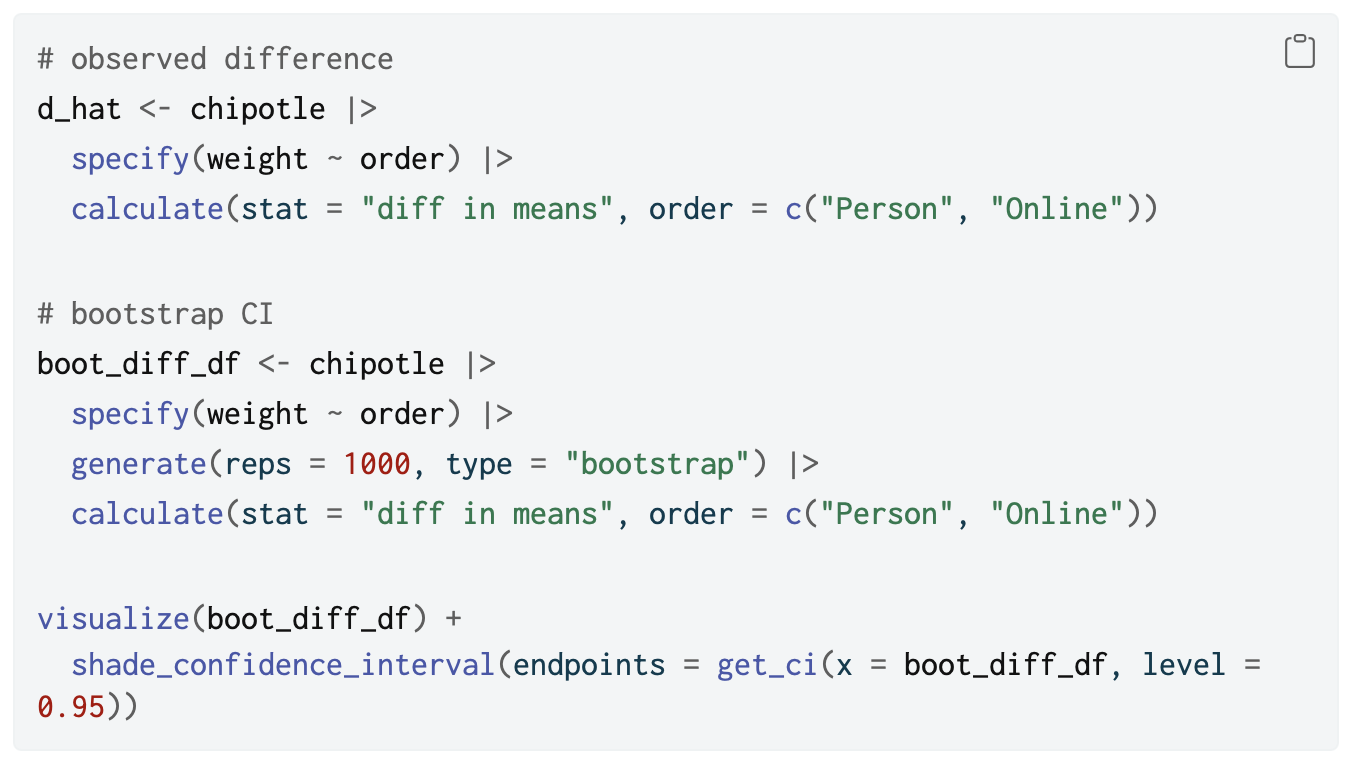
entire code for the chipotle confidence interval problem
modeling
the use of models to explain the relationship between variables and to make predictions
linear models
classic forms used for statistical inference
nonlinear models
much more common in machine learning for prediction
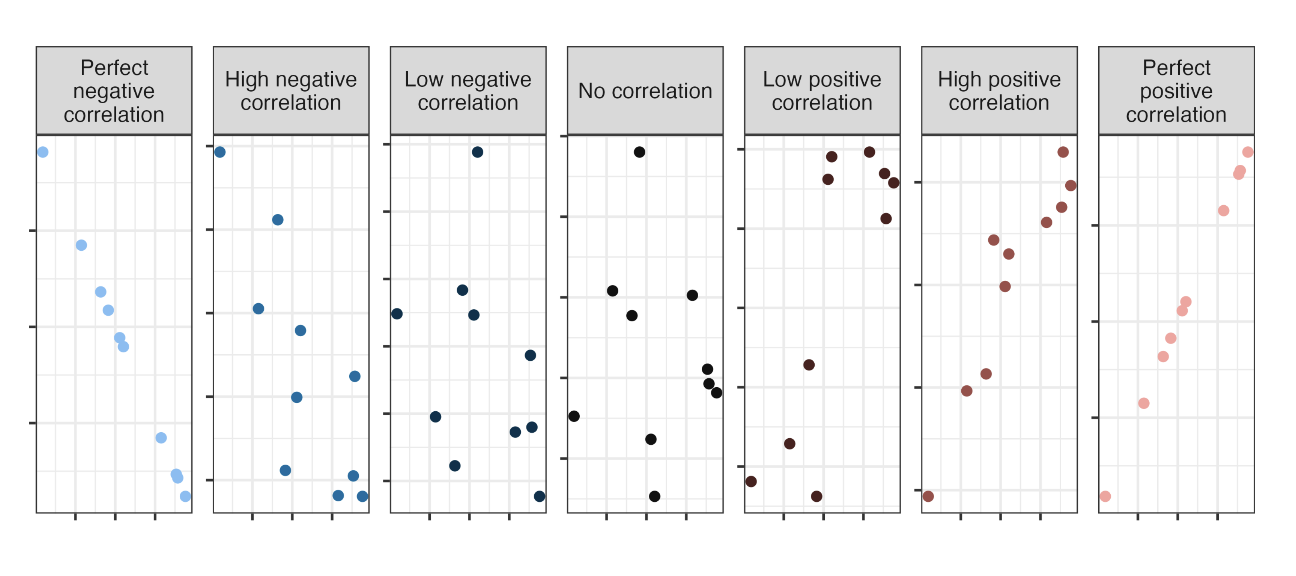
correlation
ranges between -1 and 1, same sign as the slope
regression model
a function that describes the relationship between the outcome and the predictor; Y =Model + Error
simple linear regression
used to model the relationship between a quantitative outcome and a single quantitative predictor
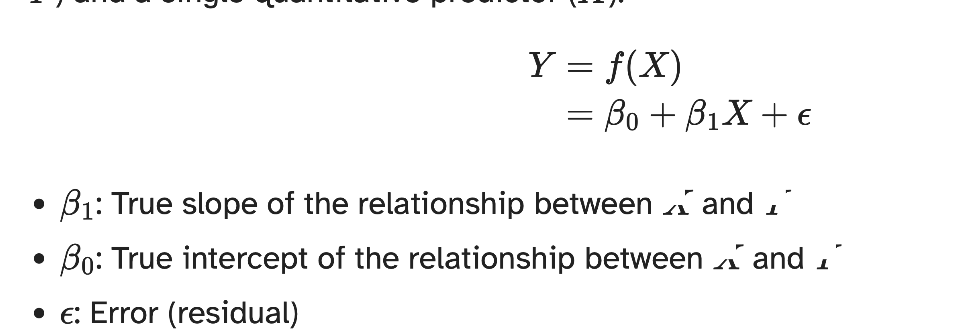
residual formula
observed - predicted
least square lines
minimises the sum of squared residuals
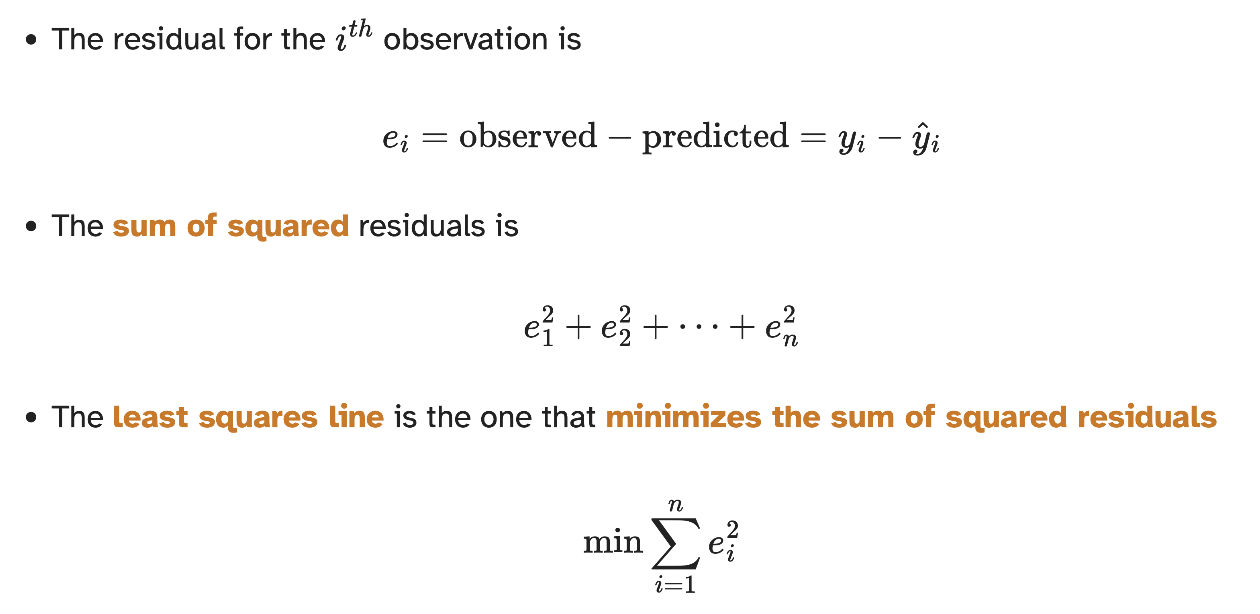
code for simple linear regression
movies_fit <- linear_reg() |>
fit(audience ~ critics, data = movie_scores)
tidy(movies_fit)
properties of least squares regression
The regression line goes through the center of mass point (the coordinates corresponding to average x and y coordinates)
Slope has the same sign as the correlation coefficient
Sum of the residuals is zero
Residuals and values are uncorrelated
in what context is the intercept meaningful
when the predictor has values near zero