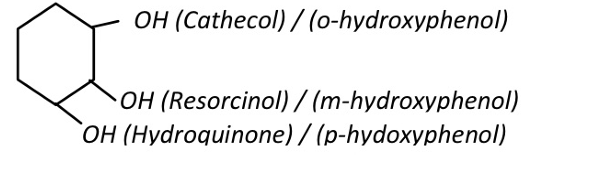
[MEDICINAL CHEMISTRY] Phenol and Its Derivatives
 Call Kai
 Learn
Learn Practice Test
 Spaced Repetition
 Match
Match Flashcards
 Knowt Play
1/45

There's no tags or description
Looks like no tags are added yet.
Name | Mastery | Learn | Test | Matching | Spaced | Call with Kai |
|---|
No analytics yet
Send a link to your students to track their progress
46 Terms
b. Phenol coefficient
Ratio of a dilution of a given test disinfectant to the dilution of phenol that is required to kill a strain of S. typhi under carefully controlled time and temperature.
a. Therapeutic index
b. Phenol coefficient
c. Zone of inhibition
d. Minimum inhibitory concentration (MIC)
b. Higher
↑ PC = ↑ antibacterial property
If the phenol coefficient is higher, the antibacterial property is _____
a. Lower
b. Higher
c. Unchanged
d. Unpredictable
b. Increased
Straight chain substitution with alkyl, aryl, and halogen in the para position results in _____ bactericidal property.
a. Decreased
b. Increased
c. No change
d. Complete loss of
b. Straight chain alkyl
📌Straight chain alkyl > branched
In terms of bactericidal activity of phenol derivatives, which is more active?
a. Branched chain alkyl
b. Straight chain alkyl
c. Cyclic alkyl
d. Aromatic alkyl
b. Denaturation of bacterial proteins
At low concentration, phenol exerts its antibacterial effect by _____
a. Lysis of cell membranes
b. Denaturation of bacterial proteins
c. Inhibition of nucleic acid synthesis
d. Blocking cell wall synthesis
b. Lysis of cell membranes
At high concentration, phenol exerts its antibacterial effect by _____
a. Denaturation of bacterial proteins
b. Lysis of cell membranes
c. Inhibition of protein synthesis
d. Interference with folate metabolism

Formula for Phenol Coefficient:
a. Phenol / Carbolic acid
C₆H₅OH.
a. Phenol / Carbolic acid
b. Hexachlorophene
c. p-chloro-m-xylenol
d. p-chlorophenol
b. Phenol / Carbolic acid
Introduced as a surgical antiseptic by Joseph Lister (now obsolete).
a. Hexachlorophene
b. Phenol / Carbolic acid
c. p-chloro-m-xylenol
d. Chlorhexidine
c. Phenol / Carbolic acid
The standard for germicides.
a. Hexachlorophene
b. p-chlorophenol
c. Phenol / Carbolic acid
d. p-chloro-m-xylenol
c. Para position
Phenol derivative where substitution at the_______ position increases bacterial activity.
a. Ortho position
b. Meta position
c. Para position
d. All positions equally
a. True for all phenols
Phenol derivative where straight chain alkyl substitution is more active than branched chain alkyl substitution.
a. True for all phenols
b. False for all phenols
c. Only applies to ortho substitution
d. Only applies to meta substitution
c. Phenol / Carbolic acid
Exhibits germicidal activity (general protoplasmic poison), caustic, local anesthetic
a. Hexachlorophene
b. p-chlorophenol
c. Phenol / Carbolic acid
d. p-chloro-m-xylenol
d. Systemic antibiotic
📌Phenol properties include:
Germicidal activity (general protoplasmic poison)
Caustic
Local anesthetic
Phenol exhibits the following properties except:
a. Germicidal activity (general protoplasmic poison)
b. Caustic
c. Local anesthetic
d. Systemic antibiotic
a. Liquefied Phenol
Phenol with 10% H2O
a. Liquefied Phenol
b. p-chlorophenol
c. p-chloro-m-xylenol
d. Hexachlorophene
b. 10%
Liquefied phenol is phenol with _____% H₂O.
a. 5%
b. 10%
c. 15%
d. 20%
b. p-chlorophenol
Used in combination with camphor in liquid petrolatum
a. Liquefied Phenol
b. p-chlorophenol
c. p-chloro-m-xylenol
d. Hexachlorophene
c. p-chloro-m-xylenol
Also known as:
PC-MX
Metasep
a. Liquefied Phenol
b. p-chlorophenol
c. p-chloro-m-xylenol
d. Hexachlorophene
c. p-chloro-m-xylenol
PC-MX
a. Liquefied Phenol
b. p-chlorophenol
c. p-chloro-m-xylenol
d. Hexachlorophene
c. p-chloro-m-xylenol
Metasep
a. Liquefied Phenol
b. p-chlorophenol
c. p-chloro-m-xylenol
d. Hexachlorophene
c. p-chloro-m-xylenol
Used as 2% shampoo for athlete's foot and jock itch.
a. Liquefied Phenol
b. p-chlorophenol
c. p-chloro-m-xylenol
d. Hexachlorophene
d. Hexachlorophene
Also known as pHisoHex
a. Liquefied Phenol
b. p-chlorophenol
c. p-chloro-m-xylenol
d. Hexachlorophene
d. Hexachlorophene
Easily adsorbed onto skin and enters sebaceous glands (neurotoxicity)
a. Liquefied Phenol
b. p-chlorophenol
c. p-chloro-m-xylenol
d. Hexachlorophene
c. Cresol / Methylphenol
Mixture of three isomeric methyl phenols.
a. Chlorocresol
b. Phenol
c. Cresol / Methylphenol
d. Hexachlorophene
b. Methylphenol
Cresol is also known as _____
a. Chlorocresol
b. Methylphenol
c. Hydroxytoluene
d. Carbolic acid
b. Cresol / Methylphenol
Obtained from coal tar or petrolatum by alkaline extraction.
a. Chlorocresol
b. Cresol / Methylphenol
c. p-chloro-m-xylenol
d. Hexachlorophene
b. Alkaline extraction
Cresol / Methylphenol is obtained from coal tar or petrolatum by _____
a. Acidic extraction
b. Alkaline extraction
c. Steam distillation
d. Solvent evaporation
d. Chlorocresol
Used as a Preservative.
a. Cresol
b. Phenol
c. Hexachlorophene
d. Chlorocresol
c. Thymol
Also known as Isopropyl m-cresol.
a. Phenol
b. Cresol
c. Thymol
d. Chlorocresol
a. Thymol
Meta cresol.
a. Thymol
b. Phenol
c. Hexachlorophene
d. p-chloro-m-xylenol
c. Thymol
Obtained from the oil of Thymus vulgaris (Thyme).
a. Cresol
b. Chlorocresol
c. Thymol
d. Phenol
b. Thymol
Mild fungicidal agent used for Tinea infections.
a. Hexachlorophene
b. Thymol
c. p-chlorophenol
d. Formaldehyde
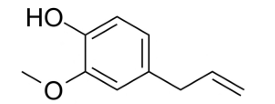
c. Eugenol
4-allyl-2-methoxyphenol.
a. Thymol
b. Cresol
c. Eugenol
d. Phenol
b. Thymol
Applied on cotton to relieve toothaches.
a. Phenol
b. Thymol
c. Hexachlorophene
d. Eugenol
b. Eugenol
Ingredient in mouthwashes.
a. Cresol
b. Eugenol
c. Formaldehyde
d. Chlorocresol
c. Resorcinol
m-dihydroxybenzene.
a. Catechol
b. Hydroquinone
c. Resorcinol
d. Phenol
d. Resorcinol
Weak antiseptic and keratolytic agent.
a. Eugenol
b. Thymol
c. Hexylresorcinol
d. Resorcinol
b. Hexylresorcinol
Produces numbness when applied to the tongue and this is an ingredient in lozenges.
a. Resorcinol
b. Hexylresorcinol
c. Phenol
d. Cresol
b. Hexylresorcinol
Ingredient in lozenges
a. Resorcinol
b. Hexylresorcinol
c. Phenol
d. Cresol
d. Resorcinol
Used in 1-3% solutions and 10-20% ointments and pastes for the treatment of skin conditions.
a. Eugenol
b. Thymol
c. Hexachlorophene
d. Resorcinol
a. 1-3% solutions, 10-20% ointments
Resorcinol is used in ____ % solutions and ____% ointments for the treatment of skin conditions.
a. 1-3% solutions, 10-20% ointments
b. 5-10% solutions, 20-30% ointments
c. 0.5-1% solutions, 5-10% ointments
d. 10-15% solutions, 1-3% ointments
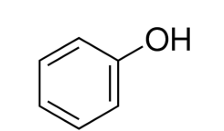
a. Phenol / Carbolic acid
a. Phenol / Carbolic acid
b. Cresol / Methylphenol
c. Thymol / Isopropyl m-cresol
d. Eugenol
e. Resorcinol
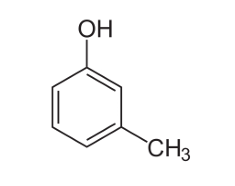
b. Cresol / Methylphenol
a. Phenol / Carbolic acid
b. Cresol / Methylphenol
c. Thymol / Isopropyl m-cresol
d. Eugenol
e. Resorcinol
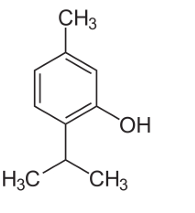
c. Thymol / Isopropyl m-cresol
a. Phenol / Carbolic acid
b. Cresol / Methylphenol
c. Thymol / Isopropyl m-cresol
d. Eugenol
e. Resorcinol
d. Eugenol
a. Phenol / Carbolic acid
b. Cresol / Methylphenol
c. Thymol / Isopropyl m-cresol
d. Eugenol
e. Resorcinol
e. Resorcinol
a. Phenol / Carbolic acid
b. Cresol / Methylphenol
c. Thymol / Isopropyl m-cresol
d. Eugenol
e. Resorcinol