CHM300 - Exam 3
 Call Kai
 Learn
 Practice Test
 Spaced Repetition
 Match
 Flashcards
 Knowt Play
1/64

Earn XP
Description and Tags
65 Terms
What is a quinone (and draw one)
Quinones are cyclic compounds with two double-bonded oxygens.
What is the main reactant in the oxidation of benzylic carbons?
A benzene compound (reaction occurs at a benzylic carbon with at least one hydrogen atom).
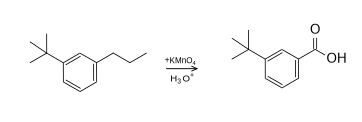
What are the reactants necessary for the oxidation of benzylic carbons to occur?
An oxidative reagent (KMnO4) + an acid (H3O+).
What is the product formed in the oxidation of a benzylic carbon?
A carboxylic acid group.
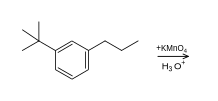
Complete the following reaction (predict the product)
Here’s the full answer.
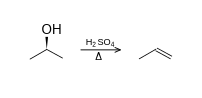
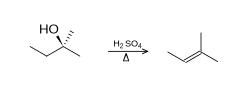
Dehydration of an alcohol requires which reactant (besides an alcohol)?
An acid (H3O+) with heat.
What are the products of dehydration of an alcohol reaction?
Alkene + Water

Predict the products of this reaction.
Dehydration of an alcohol reaction.

Predict the products of this reaction.
Dehydration of an alcohol reaction.
What is the main reactant in a Williamson Ether Synthesis?
An alkyl halide.
What are the reactants needed in a Williamson Ether Synthesis?
A strong nucleophile (Sodium ethoxide, methoxide, etc.) + ethanol solvent
What is the product of a Williamson Ether Synthesis
Obviously an ether
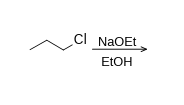
Complete the reaction.
Williamson Ether Synthesis.

What is a phenol (draw one)?
A benzene with an alcohol group.
What are the reactants for an ether synthesis with phenols?
NaH (Sodium hydride) + alkyl halide
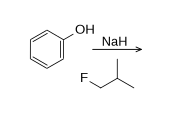
Complete the reaction.
Ether synthesis with phenols.

What are some important properties of ethers?
Not reactive, so they serve as a great solvent.
What is a thiol (draw)?
It is an alcohol, but instead of an oxygen it is a sulfer.
What is a thio ether?
It is an ether, but with sulfer instead.

Name the following alcohol.
5-methyl-2-hexanol
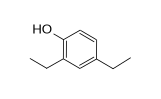
Name the following phenol.
2,4-diethylphenol
Which is more acidic: a phenol or an alcohol?
A phenol because the conjugate base of phenols are stabilized by resonance.
Is NaBH4 → H- a strong or weak nucleophile?
Strong (small and negative).
Is NaBH4 → H- a strong or weak reducing agent?
“Mild” reducing agent.
In reduction of carbonyls using Sodium borohydride (NaBH4), what is reduced?
Ketones or aldehydes ONLY.
Is LiAlH4 (LAH) → H- a strong or weak nucleophile?
Strong (small and negative).
Is NaBH4 → H- a strong or weak nuc?
Strong nuc.
In reduction of carbonyls using Sodium borohydride (NaBH4), what is reduced?
Ketones & aldehydes.
In the reduction of carbonyls, a ketone is reduced into what?
A secondary alcohol.
In the reduction of carbonyls, an aldehyde is reduced into what?
A primary alcohol.
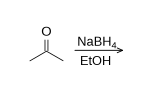
Complete the reaction.
Reduction of carbonyls—mild reducing agent (NaBH4).

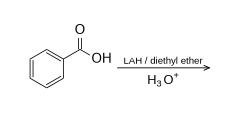
Complete the reaction.
Reduction of carbonyls—strong reducing agent (LAH).
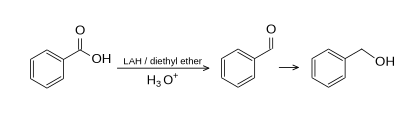
What is periodinane?
A mild oxidizing agent.
What is chromium oxide (CrO3)
Strong oxidizing agent.
Oxidation of alcohols with periodinane create…?
Aldehydes and ketones.
Oxidation of alcohols with CrO3 create …?
Carboxylic acids (after creating aldehydes).

Complete the reaction.
Oxidation of alcohols—mild oxidizing agent (Periodinane)
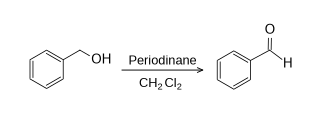

Complete the reaction.
Oxidation of alcohols—strong oxidizing agent (CrO3)

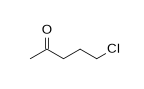
Name the ketone.
5-chloro-2-pentanone

Name the aldehyde.
3-chlorohexanal
In an addition to a ketone or aldehyde, what are the reactants needed?
A strong nucleophile (Sodium ethoxide; NaOEt) and an alcohol solvent such as ethanol.
What are the product(s) of an nucleophilic addition to a ketone or aldehyde?
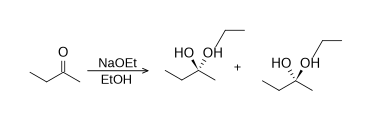
Two hemi-acetal products are possible due to chirality (alcohol and ether).
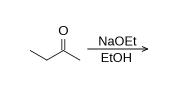
Complete the reaction.
Nucleophilic addition to a ketone.
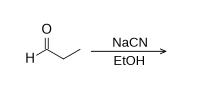
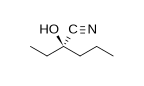
Complete the reaction.
Nucleophilic addition to an aldehyde.

What is an acetal?
An acetal is a functional group with a double (single bonded) oxygen on a carbon chain. H can be a different group.

What is a hemi acetal?
A hemi-acetal is an acetal with only one oxygen substituent on the carbon (see picture for clarification).
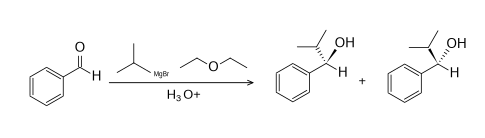
What are the main reactants in a Grignard reaction?
A carbonyl, a grignard reactant (MgBr-R) (with solvent diethyl ether), and and acid (H3O+).
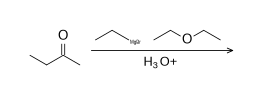
Complete the reaction.
Grignard reaction with a ketone.


Complete the reaction.
Grignard reaction with an aldehyde.
In an acetal formation, what is the intermediate?
A hemi-acetal product.
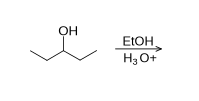
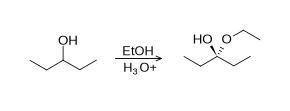
Complete the reaction.
An acetal formation from a ketone.
Describe a imine reaction.
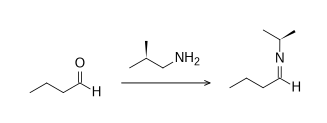
A ketone is reacted with a primary amine to create an imine.
What is an imine?
An imine is a functional group with a N single bonded to a carbon.
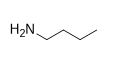
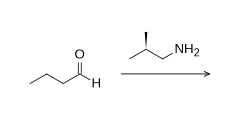
Complete the reaction.
An imine reaction with a ketone.
List the five carboxylic acid derivatives (non-ketone or aldehyde).
Carboxylic acid, acid chloride, ester, amide, and anhydride (double ester).
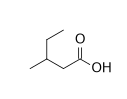
Name the following carboxylic acid.
3-methylpentanoic acid
How to name a carboxylic acid that has been deprotonated? Butanoic acid → ??
“ic” → “ate”. Butanoate ion.

Name this compound.
Benzoic acid.

Name this ion.
Benzoate ion.

Name the following compound.
Ethyl pentanoate.
In a Fischer esterification, what are the main reactants.
Carboxylic acid + alcohol with sulfuric acid.
What is the product of a Fischer esterification.
An ester, obviously.
Nucleophilic additions to carboxylic acid derivatives are categorized into which groups?
Hydrolysis (water as nuc), alcoholysis (alcohol as nuc), aminolysis (amine as nuc), and Grignard reaction with a carboxylic acid derivative.

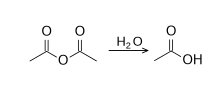
Complete the reaction.
Hydrolysis reaction (nucleophilic addition to a carboxylic derivative).

Complete the reaction.
Fisher esterification reaction.
