unit 1: biological bases of behavior
 Call Kai
 Learn
Learn Practice Test
 Spaced Repetition
 Match
Match Flashcards
 Knowt Play
1/161

There's no tags or description
Looks like no tags are added yet.
Name | Mastery | Learn | Test | Matching | Spaced | Call with Kai |
|---|
No analytics yet
Send a link to your students to track their progress
162 Terms
nature
genetic factors that influence human development and behaviors
nurture
environmental factors that influence human development and behaviors; nurture works on what nature provides
evolutionary psychology
focus mostly on what makes us so much alike as humans
natural selection
charles darwin theory of evolution; the stronger trait will be passed as weaker traits die off
eugenics
discriminatory selective breeding of humans to promote certain traits
heredity
genetic transfer of characteristics from parents to offsprin
genetic predisposition
an increased chance a person will develop a disease based upon their genetics
twin studies; how are identical (monozygotic) twins developed?
they develop from a single fertilized egg that splits
twin studies; how are fraternal (dizygotic) twins developed?
they develop from two separate fertilized eggs
adoption studies
from studies of hundreds of adoptive families that, apart from identical twins, people who grow up together, whether biologically related or not, do not much resemble one another in personality. for example, people who have been adopted are more similar to their biological parents than to their caregiving adoptive parents
nervous system hierarchy
look at image
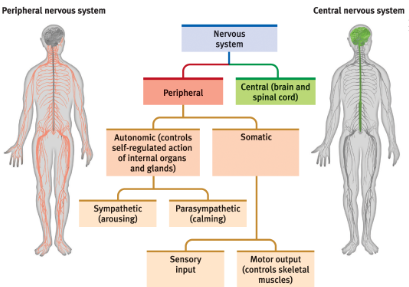
nervous system
contains interneurons; we have 5 kinds of nervous systems
peripheral nervous system
contains sensory and motor neurons; sensation and vision from the side and makes up the automatic and somatic nervous system
central nervous system (CNS)
our brain and spinal
automatic nervous system (ANS)
“self regulating”; controls self-regulated actions in body; the heart muscles, smooth muscle, and glands
somatic nervous system
motor output; controls our skeletal muscles which are volunteerly
sympathetic nervous system
arousal and expends energy; fight-or-flight
sympathetic response
pupils dilate, heartbeat accelerates, slows digestion, raises blood sugar, secretion epinephrine and norepinephrine (noradrenaline) → sweat increases, bladder relaxes, ready and alert
parasympathetic nervous system
conserving energy as it calms you (think “rest and digest”) The sympathetic and parasympathetic nervous systems work together to keep our bodies in a steady internal state called homeostasis.
what nervous system works together to keep our body in a steady internal state (homeostasis)?
the parasympathetic and sympathetic nervous system
parasympathetic responses
pupils contract, heartbeat slows, stimulates digestion, bladder contracts, allows blood flow
reflex arc
a simple spinal reflex pathway is composed of a single sensory neuron and a single motor neuron; these often communicate through a spinal cord interneuron
sensory neurons
carry messages from the body’s tissues and sensory receptors inward (afferent) to the brain and spinal cord for processing
motor neurons
(which are efferent) carry instructions from the CNS outward to the body’s muscles and glands
interneurons
between the sensory input and motor output, information is processed by our interneurons
neurons
known as nerves; transmit information and are the basic building blocks of the nervous system
multiple sclerosis
inability to control muscle and deteriorates the myelin sheathe; body's immune system mistakenly attacks and damages the myelin sheath (the fatty, insulating layer around axons)
glia(l) cells
supports out nerve cells; glia also plays a role in learning, thinking, and memory
neurotransmitters
chemical messengers that cross the synapse between neurons
action potential
a neural impulse; a brief electrical charge that travels down an axon
all-or-nothing response
a neuron's reaction of either firing or not firing
depolarization
a change in the inside/outside charge difference
refractory period
a brief resting pause that occurs after a neuron has fired; subsequent action potentials cannot occur until the axon returns to its resting state
resting potential
the electrical charge difference across a neuron's membrane when it is inactive and not firing an impulse
threshold
the level of stimulation required to trigger a neural impulse
reuptake
a neurotransmitter's reabsorption by the sending neuron
inhibitory neurotransmitter
a chemical messenger that reduces the likelihood of a neuron firing an action potential; (ex) serotonin and GABA —IN SJMPLE WORDS they reduce activity of neurons to prevent neurons to prevent over-excitation, anxiety, and stress; “calm” substance
excitatory neurotransmitter
glutamate; excites neurons
acetycholine (ACh)
enables learning, memory, and muscle action (through motor neurons); can cause alzheimer’s
dopamine
influences movement, learning, attention, and emotion; oversupply can lead to schizophrenia and undersupply can lead to tremors and immobility in parkinson’s disease
serotonin
affects hunger, mood, sleep, and arousal; undersupply leads to depression but drugs that raise serotonin levels are use to treat depression
norepineprine
helps control alertness and arousal; undersupply can depress mood
GABA
a major inhibitory neurotransmitter; undersupply links to seizures, tremors, and insomnia
glutamate
a major excitatory neurotransmitter; involved in memory; oversupply can overstimulate the brain, producing migraines to seizures
endorphins
neurotransmitter that influence the perception of pain or pleasure; oversupply with opioids can supress the body’s natural endorphins supply
substance p
involved in pain perception and immune response; oversupply can lead to chronic pain
myasthenia gravis
muscle cannot contract leading to weakness, paralysis, or difficulty with muscle control due to ACh being blocked
agonist
increase a neurotransmitter’s action; some agonists increase the production or release of neurotransmitters, or block synaptic reuptake. other agonists may be similar enough to a neurotransmitter to bind to its receptor and mimic its excitatory or inhibitory effects such as opiods
antagonist
decrease neurotransmitter’s action by blocking production or release
hormones
the endocrine system’s glands and fat tissue secrete hormones, which travel through the bloodstream and affect other tissues, including the brain
how is adrenaline produced?
ANS orders the adrenal glands on top of the kidneys to release epinephrine (adrenaline) and norepinephrine (noradrenaline)
oxytoxicin
in women, stimulates labor contractions and milk flow while nursing; also aids social support; promoting social bonding, oxytocin strengthens communities and enables them to act cooperatively against threats
psychoactive drugs
chemicals that alter the brain, producing changes in perceptions and moods
the 3 major categories of psychoactive drugs:
depressants
stimulants
hallucinogens
depressants
are drugs that calm neural activity and slow body functions; (ex) alcohol, barbiturates (tranquilizers), and opioids
alcohol
an equal-opportunity drug: it increases (disinhibits) helpful tendencies, as when tipsy restaurant patrons leave extravagant tips and social drinkers bond in groups; the urges you would feel if sober are the ones you will be more likely to act upon when intoxicated
opioids
also depress neural functioning; (ex) heroin
stimulants
excite neural activity and speed up body functions; pupils dilate, heart and breathing rates increase, and blood sugar levels rise, reducing appetite and energy and self-confidence also rise; (ex) caffeine and cocaine
cocaine
powerfully addictive stimulant derived from the coca plant
hallucinogens
distort perceptions and evoke sensory images in the absence of sensory input; (psychedelics, meaning “mind-manifesting”); (ex) marijuana, ecstasy, lsd
marijuana
leaves and flowers contain THC and amplifies sensitivity to colors, sounds, tastes, and smells
tolerance
your brains get used to these chemicals so you need more to get the same effects
addiction
constance use to drugs and body starts relying on it; substance abuse disorder
withdrawal
because your body relies on the drugs, your body will go through changes once off it
(neuro)plasticity
brain is constantly changing, building new pathways as it adjust to little mishap and new experience; greatest in childhood, but persists through life
lesion and its purpose
scientist selectively lesion (destroy) tiny clusters of normal or defective braincells, observing any effect on brain function
EEG
amplified readout of electrical waves
fMRI
reveal the brain’s functioning as well as its structure
brainstem
brains innermost region
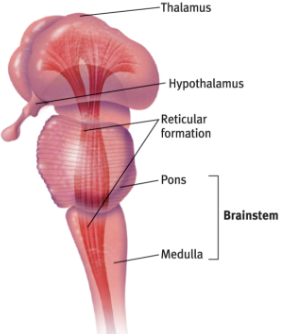
medulla
the base of the brainstem; controls the heartbeat and breathing
pons
coordinate movement and sleep
contralateral hemispheric organization
most nerves to and from each side of the brain connect with body’s opposite side
thalamus
brain sensory and control center
reticular activating system
governs the reticular formation which controls arousal (fight-or-flight)
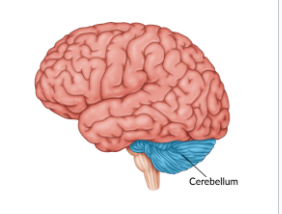
cerebellum
coordinate voluntary movement and enables nonverbal (motor) and all skill (procedure) learning; “little brain”; alcohol affects it
limbic system
associated with emotions, drives, and memory formation; contains amygdala, hypothalamus, hippocampus, and pituitary gland
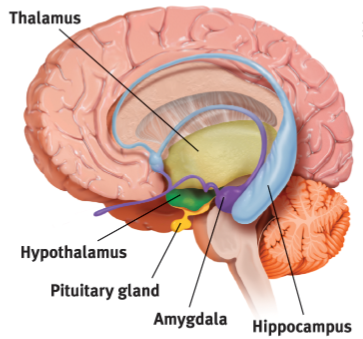
amygdala
enables aggression and fear
hypothalamus
influence hunger, thirst, body temperature, reward system, and sexual behavior; they help maintain a steady (homeostatic) internal state
hippocampus
process conscience and explicit memories (decrease as we age)
pituary gland
controlled by the hypothalamus; among the hormones released by the pituitary, is a growth hormone that stimulates physical development
what is known as the mastermind of the endocrine system?
pituary gland
cerebral cortex
the body’s ultimate control and information-processing center
the location of lobes
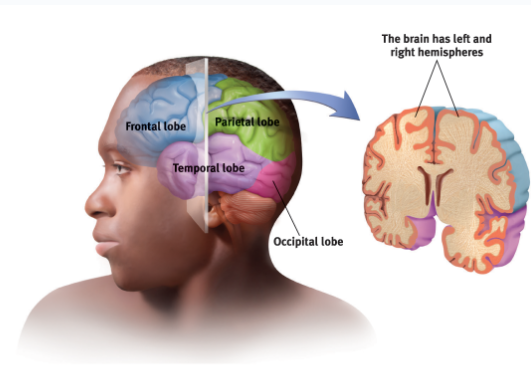
frontal lobe
located at front of brain; enables linguistic processing, muscle movement, high-order thinking, and executive functioning (such as making plans and judgement)
parietal lobe
located at the top and to the rear; receives sensory input for touch and body position
temporal lobe
located above the ears; includes auditory areas and enable language processing
occipital lobe
located at the back of brain; includes areas that receive information from visual fields
hemisphere specialization
somatosensory and motor hemisphere serves differing function; each hemisphere control the opposite of the body
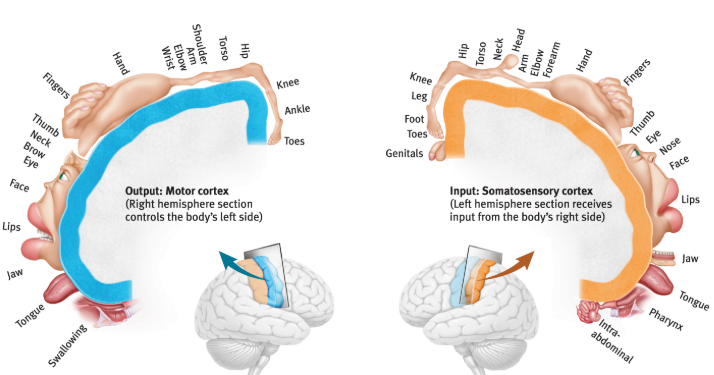
motor cortex
output; right hemisphere control the left side of the body such as voluntary movements
somatosensory cortex
input; left hemisphere control the right side of the body such a as the 5 senses
association area
neurons are busy with higher mental functions
prefrontal cortex
enables judgment, planning, social interactions, and processing of new memories
corpus callosum
wide band of axon fiber connecting the two hemisphere and carrying messages between them
split-brain research: how can we treat severe epilepsy?
by surgically severing the corpus callosum
split-brain research: what is the left hemisphere specialized in?
dominant for language and logic
split-brain research: what is the right hemisphere specialized in?
excels at visual-spatial tasks and facial recognition
consciousness
our subjective awareness of ourselves and our environment; helps us make sense of our life through cognition or mental process
blindsight
people can respond to visual stimuli without consciousness awareness of seeing them after damage to the primary visual cortex
circadian rhythm
our internal 24-hour cycle of day and night; affects us when we pull all-nighters or international travels, etc
NREM stage 1
may experience images resembling hallucinations; hypnagogic sensations occurs