CARBONATE SLOPE DEPOSITS; EVAPORITES; DOLOMITE AND DOLOMITIZATION
 Call Kai
 Learn
Learn Practice Test
 Spaced Repetition
 Match
Match Flashcards
 Knowt Play
1/50

There's no tags or description
Looks like no tags are added yet.
Name | Mastery | Learn | Test | Matching | Spaced | Call with Kai |
|---|
No analytics yet
Send a link to your students to track their progress
51 Terms
Attributes of Carbonate Slopes
Dumping ground for shallow water sediments
• Sediments deposited by various sediment gravity flow processes
• Forms foundation for platform margin progradation
• Rare setting for carbonate reservoirs
Slope models for Ramp to Rimmed Shelf Transition from low slope to high slope gradient
foreshore-shoreface
gullied slope
build-up slope
rim-debris flow
Slope Deposits/ Elements and Position
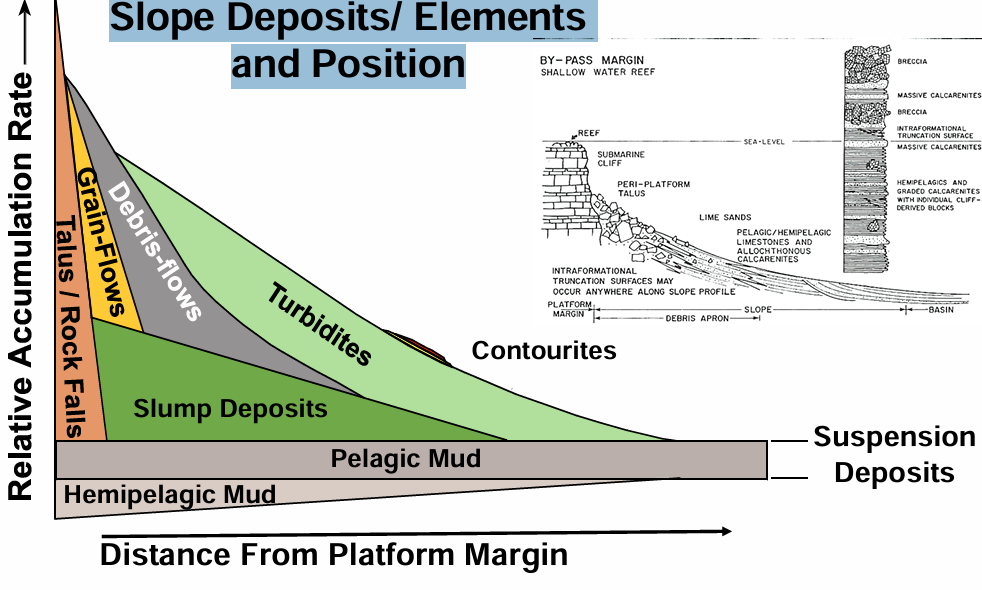
Sediment Gravity Flows
sediment (blocks, grains, mud) • water • gravity
rock fall/avalanche
freefalling single blocks and angular talus
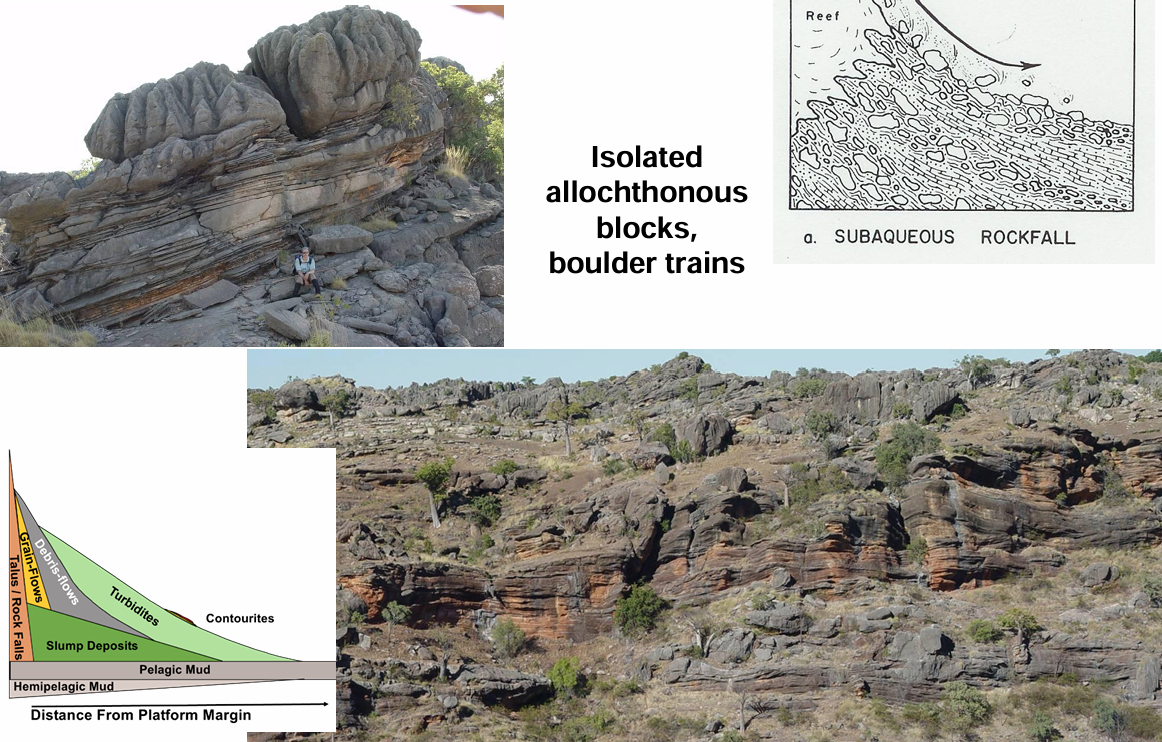
rock fall/avalanche
Rotational Slump
Shear failure along concave-up planes of rotation
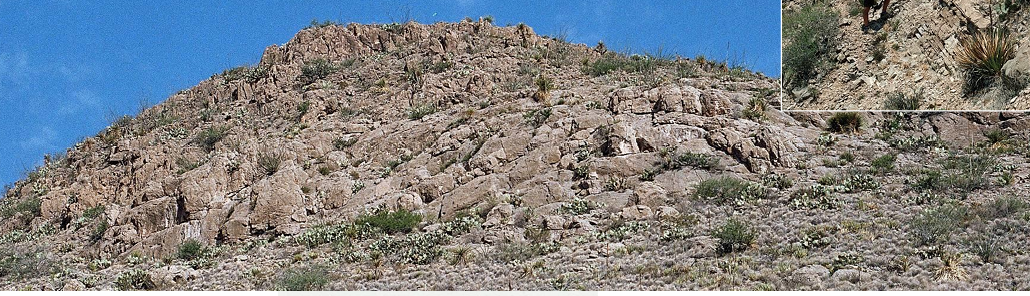
Rotational Slump
Grain Flow
Flow support from cohesionless grain dispersive pressure (grain-to-grain contact
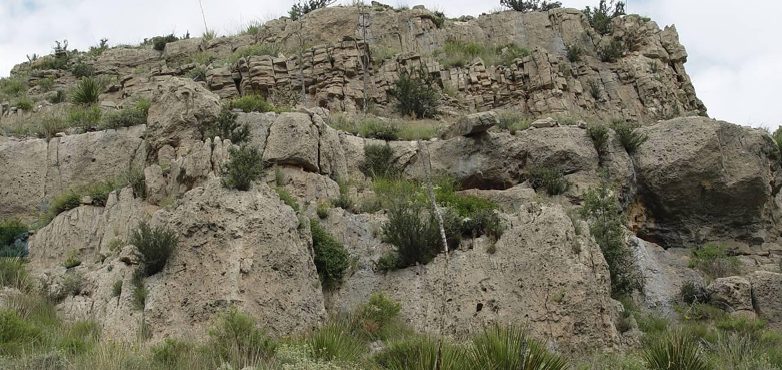
Grain Flow
Debris Flow
Flow support from matrix strength/cohesion and clast buoyancy
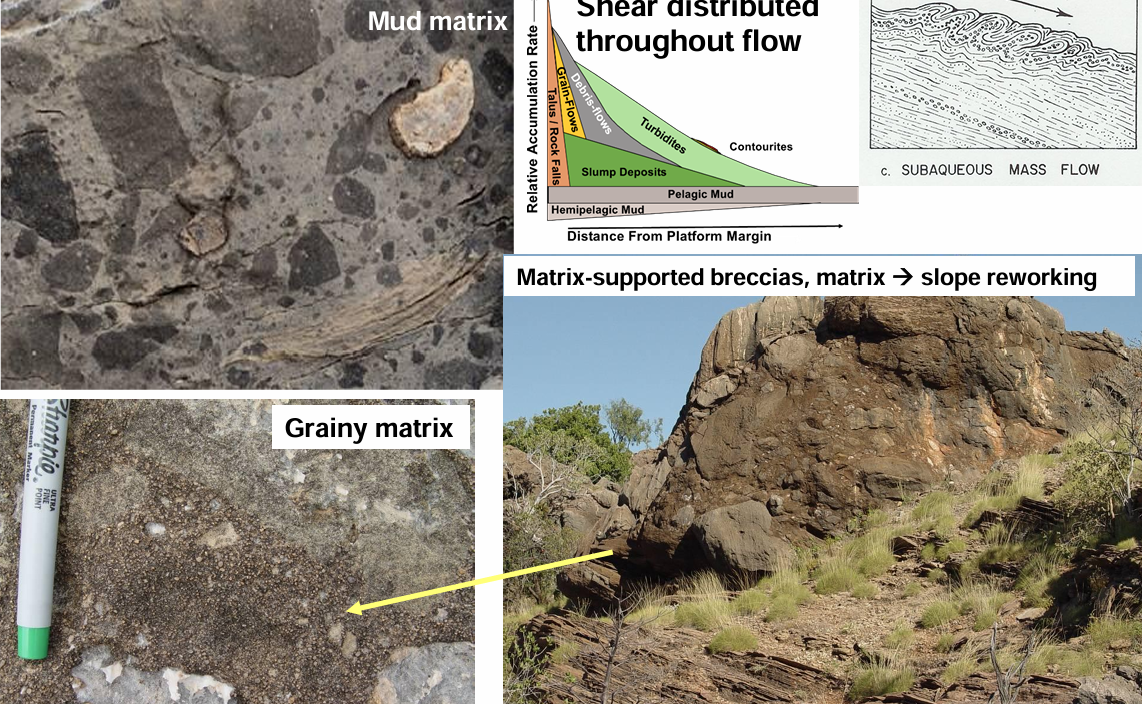
debris flow
Turbidites
Flow support from fluid turbulence
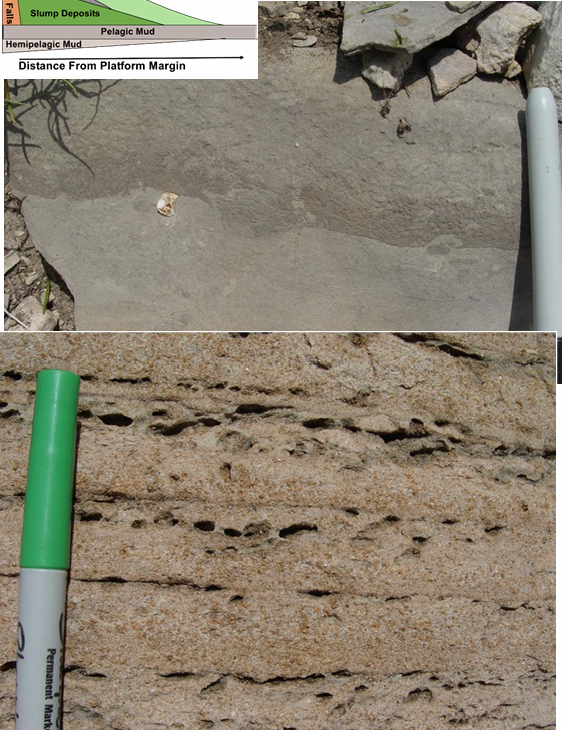
Turbidites
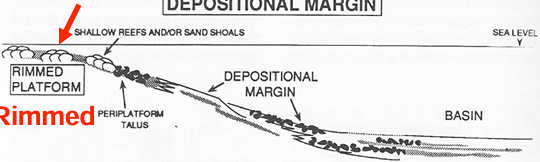
Depositional
shallow water reef/ shallow water lime sand shoals
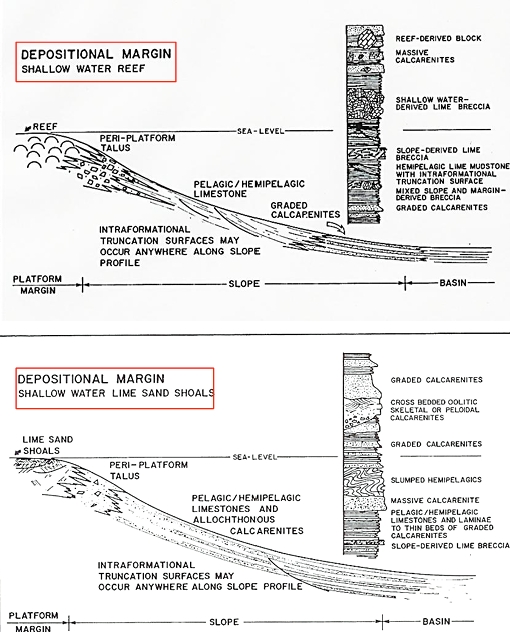
Bypass
shallow water reef/ shallow water lime sand shoals
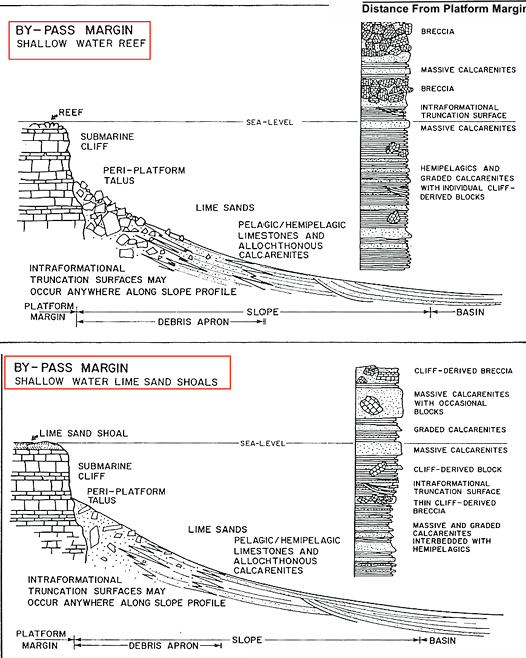
Rimmed
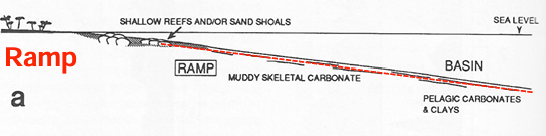
ramp
sediment dispersal pattern
point source rare; more common fine source from numerous shallow gullies in upper slope
slope angles
relatively high (avg.5-15) increases with height
potential for oversteepening
High- as slopes become steeper, they become more easily cemented in a marine environment
submarine cementation
common, allows oversteepening with resultant catastrophic collapse
slope profile
concave
constructions
base of slope aprons , slope aprons, next to rimmed or open platforms; rare submarine fans
slope types
ramp to rimmed shelf; by-pass to depositional
evaporites
•Controls on evaporite formation
•Environments/Facies Models
•Sedimentary Structures of Evaporite Deposits
Why are evaporites important?
classic evaporite systems as reservoir seals to world‘s large oil fields
increasing evaporation in brine concentration
caco3 - 1.8x
caso4 - 3.8x
nacl -10.6x
k salts - 70x
mud flat evaporites
formed by displacive evaporite growth in pre-excisting sediments
dry mud flat facies
evaporites non-accumulative, former presence revealed by modification to primary depositional and desiccation structure
saline water flat facies
evaporites persistent crystals; few sedimentary structures survive in host sediments
shallow water evaporites
formed by precipitation and/or sedimentation from shallow surface brine which are permanent or ephemeral features of the environment
deep water evaporites
precipitated or emplaced in brine generally deeper than 20-40 m. Characteristically they lack dissolution surfaces and bottom crusts.
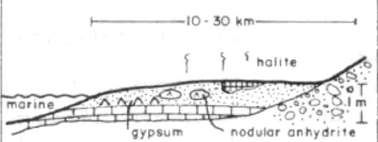
Sabkha
supratidal marine-marginal setting, subaerial evaporites, halite only as crust, thin progradation wedge geometry
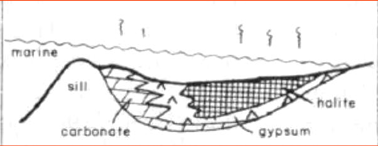
barred basin
deep-water, silled inlet subaqueous evaporites, large scale, geochemical profile well developed, marine geochemistry
dolomite problem
dolomite should precipitate regionally but this is rare becuz kinetic factors seem to be a critical issue
modern carbonates and dolomites
dolomite minerals in modern environments have been discovered relative recent 1950-1960 ( in between 30 degrees and 30 degrees- in the equator area)
requirements for models for dolomitization
source of mg
high mg/ca ratio
the dolomite ‘promise’
dolomite unit cell is smarter than calcite
then porosity increases due to the transformation of a rock with a loose atomic packing to a tighter packing
so many of the carbonate oil, and gas reservoirs are dolomitic
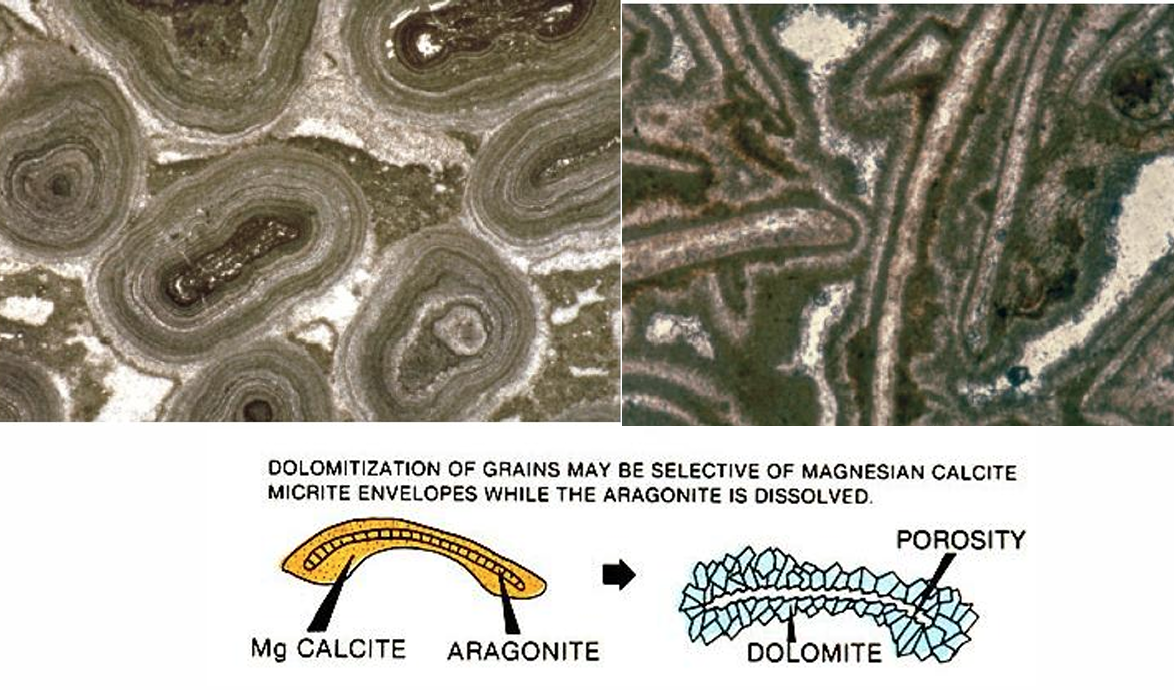
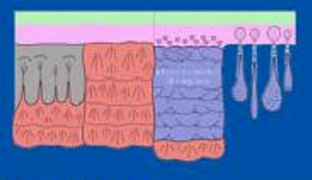
Replacement Textures (destructive)
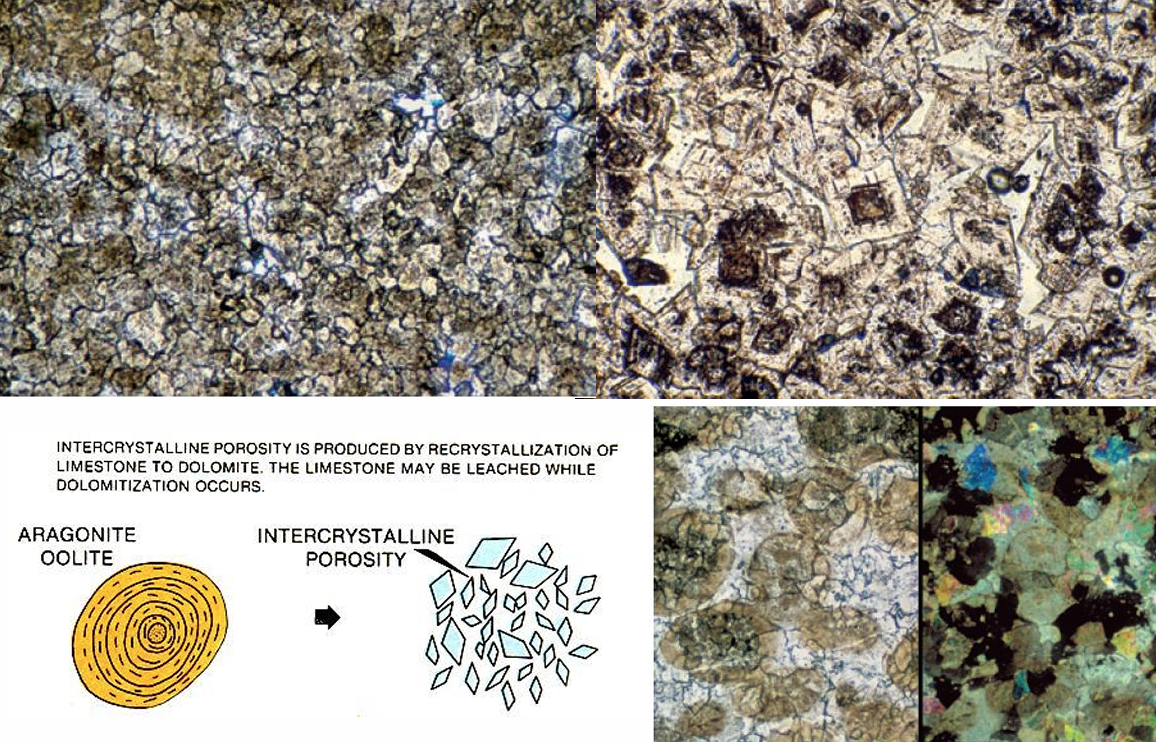
Mimetic Dolomite Textures (preservation of the structure)
cements
Simple rhombic rims
• Highly zoned cements
• Saddle dolomite rims
Dolomite Cements: Non-ferroan rim
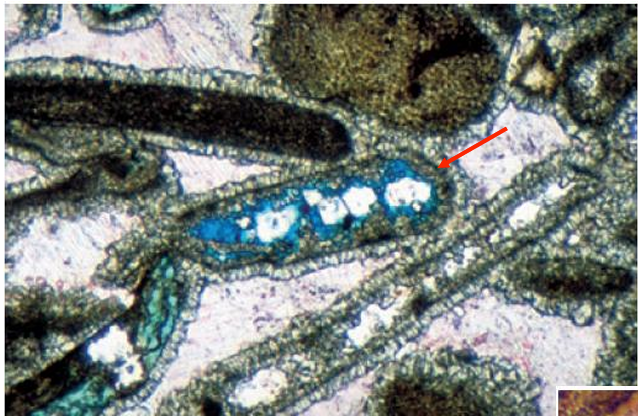
limpid (clear) dolomite
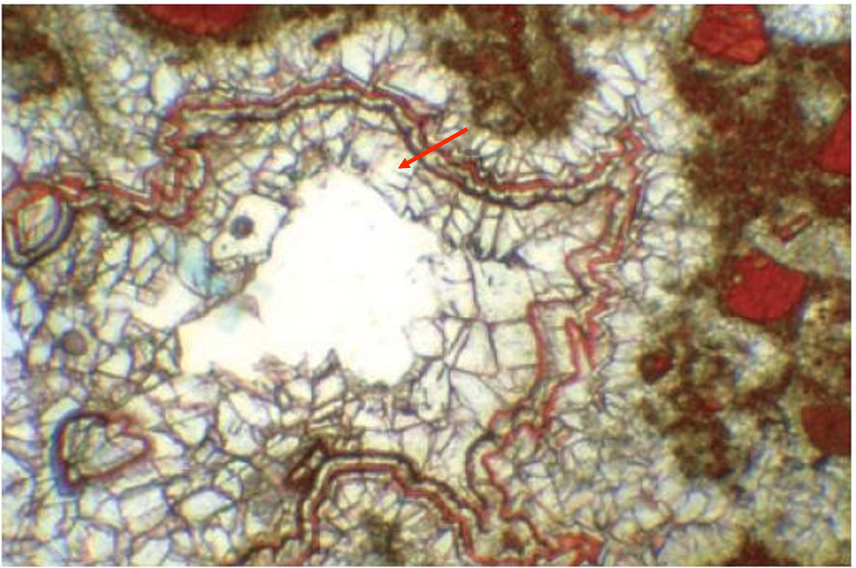
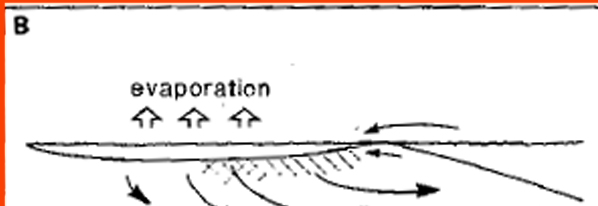
seepage-reflux
motivations (carbonate reservoir example)
Slope and basin reservoirs are common in clastic systems
few existing reservoirs: cretaceous( Mexico and Italy), Permian(US) and tertiary(Indonesia)
slope and basin plays are viable bc
grainy porous carbonate rocks exist on the slope, at the slope and basin( reservoir)
stratigraphic architecture allows traps that can be enhanced by structure
nearby basinal deposits can be both source and top seal
what’s the biggest issue with carbonate reservoir
lateral seal and upslope leaking are the biggest issues
deposit type classification
debris deposits
grained- dominated deposits
mud-dominated deposits

spatial architecture
strike extensive aprons
discontinuous geobodies
dip-view stratal architecture
accretionary vs escarpment margins