Bio 1b (ecology)
 Call Kai
 Learn
Learn Practice Test
 Spaced Repetition
 Match
Match Flashcards
 Knowt Play
1/152

There's no tags or description
Looks like no tags are added yet.
Name | Mastery | Learn | Test | Matching | Spaced | Call with Kai |
|---|
No analytics yet
Send a link to your students to track their progress
153 Terms
Population
Group of Organism's in the same species
Community
multiple populations in a particular place and time
Ecosystem
A community of organisms and their abiotic environment
Biosphere
the entirety of planet earth
life history
suite of traits related to a species' lifespan and the timing and pattern of reproduction
principle of allocation
Individual organims have limited amount of resources to invest in different activities and functions
Trade Off
resources invested in one function are not available for another
Survivorship
fraction of individuals surviving to a given age
Fast-slow continuum
a range of life history strategies from "fast", grow quickly, reproduce early, short life, to "slow" species, grow slowly, reproduce later, and long life
birth
the number of individuals added to a population through reproduction
death
the number of individuals that die in a population over a time period
immigration
movement of individuals into a population from another area
Emigration
movement of individuals out of a population to a new area
birth-death model (B-D)
a simple population model that looks at population change based only on births and deaths (IGNORES MIGRATION)
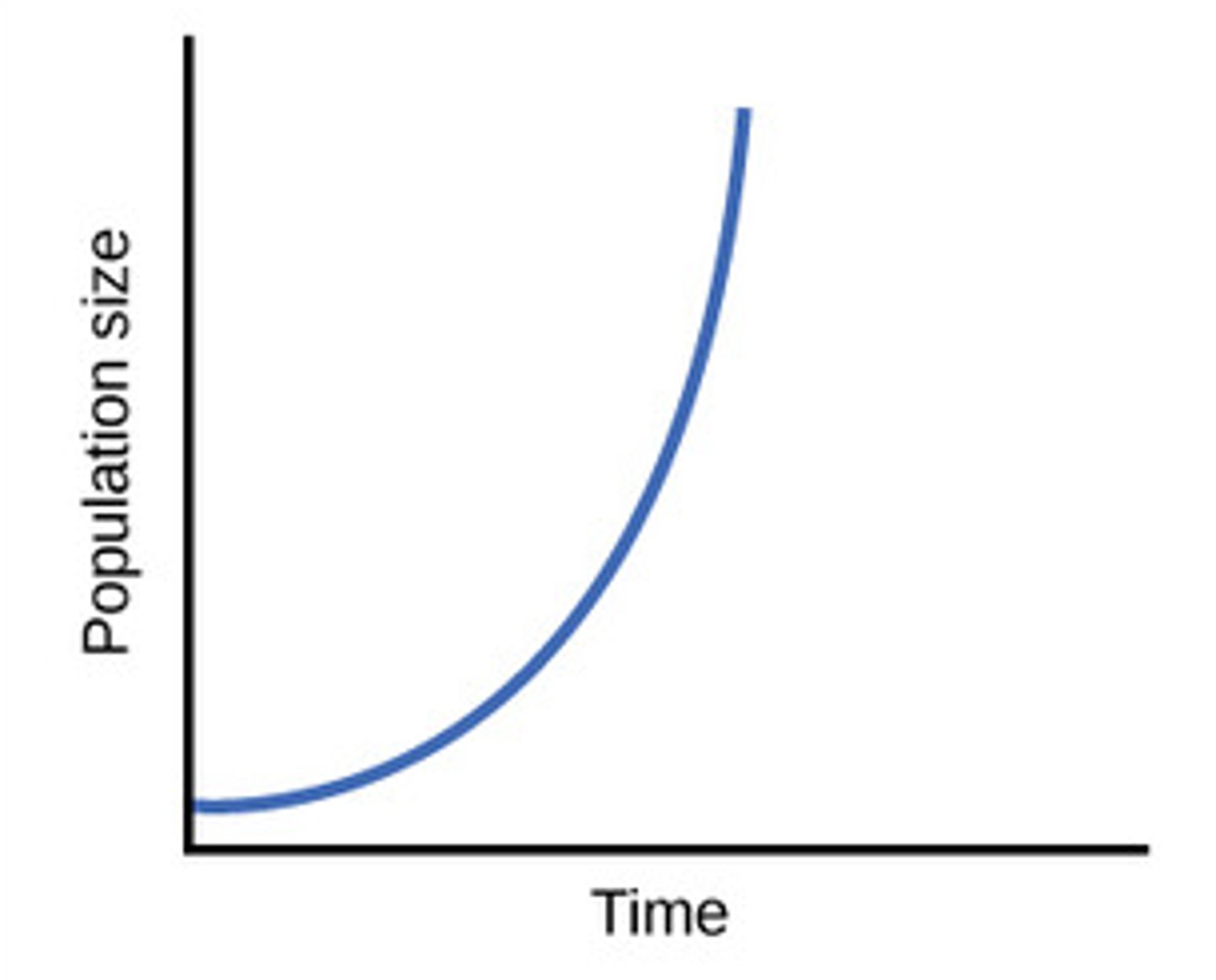
exponencial model
a model where population growth increases rapidly without limits, assuming unlimited resources
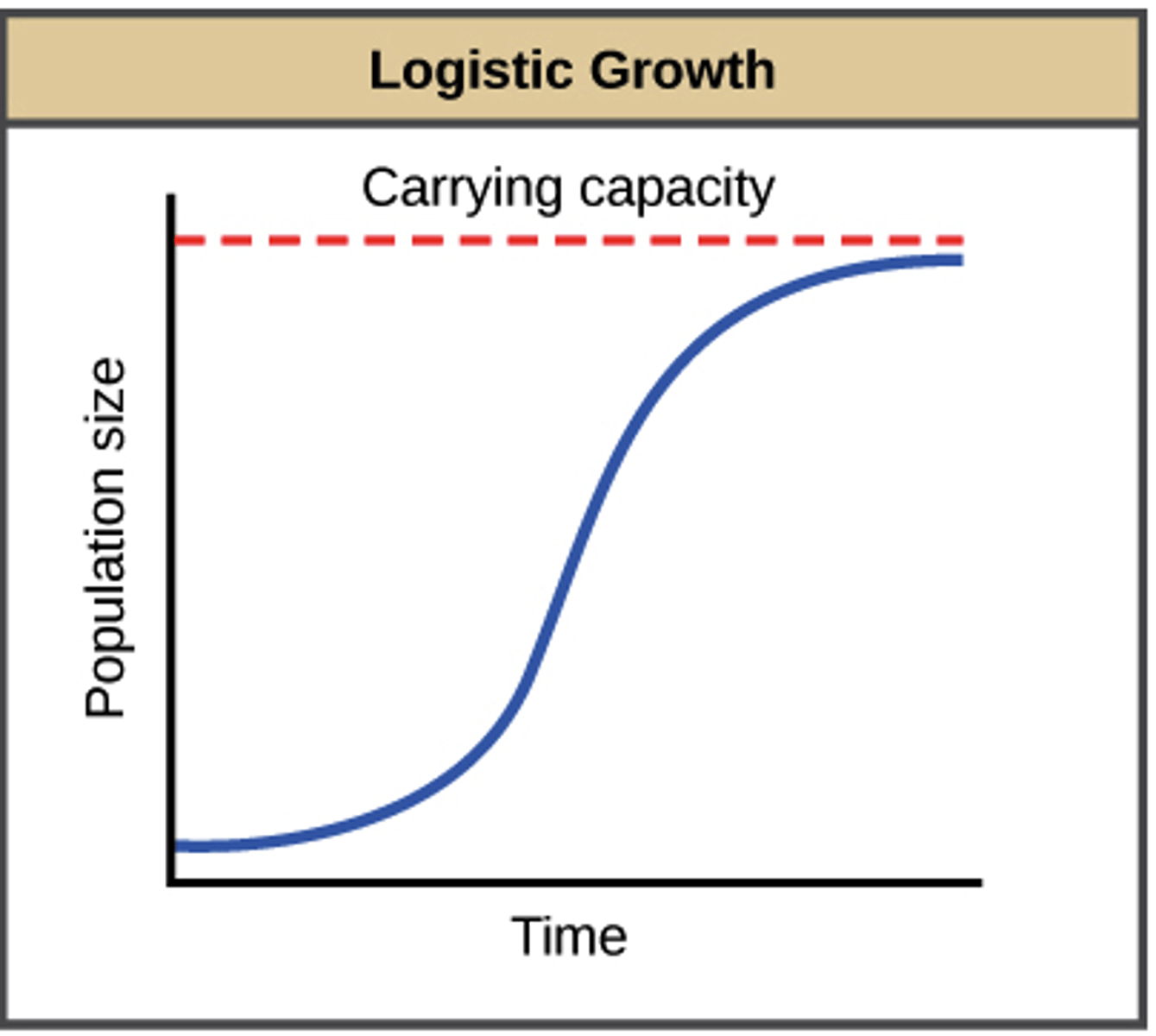
logistic model
a population model that includes resource limits, slowing growth as the population approaches carrying capacity ( S shaped curve)
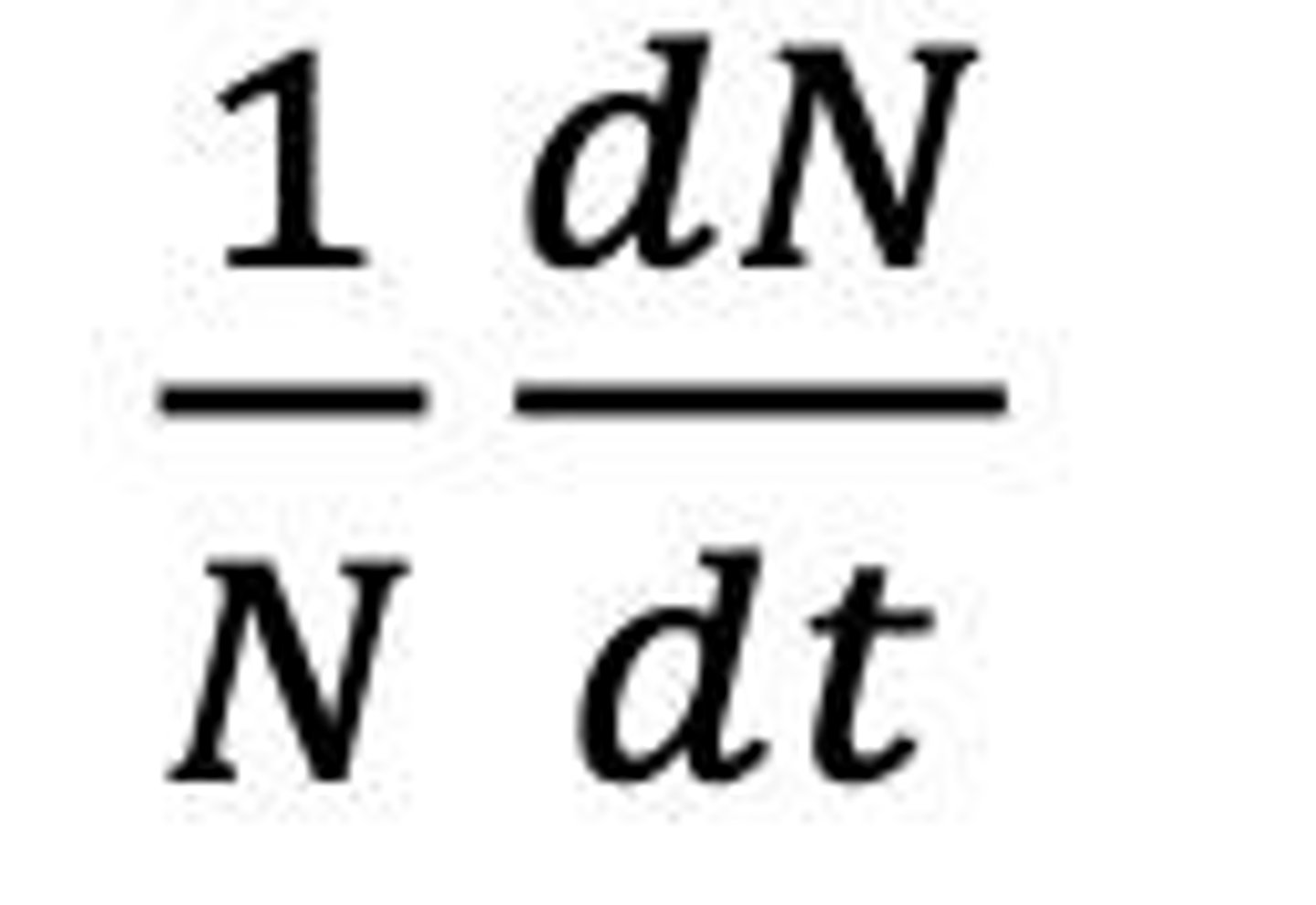
per capita population growth rate
the average contribution of each individual to population growth
(population growth/ population size)
density dependance
when population growth rate is affected by population density
- more individuals -> more competition, disease, etc
Equilibrium Population Size
when a population where growth stops
(births + immigration = deaths + emigration)
Carrying Capacity (K)
Maximum population size that a particular environment can sustain
Intrinsic Growth Rate (r)
the maximum potential for growth of a population under ideal conditions with unlimited resources
Population Fluctuation
changes in population size over time due to environmental factors
Competition
(-,-)
species each use a resource that limits the survival/ reproduction of the other
Intraspective competition
competition within the same species
interspective competition
competition between members of different species
predation
(+,-)
Interaction where predator eats prey (stabilizes population)
Hebivory
(+, -)
organisms eat parts of a plant, harming it but not killing it
Paratism
(+/-)
one organism lives on or in another and harms it
Mutualism
(+,+) Both organism benefit
-ex: bee pollinating a flower
Commensalism
(+, 0)
A relationship between two organisms in which one organism benefits and the other is unaffected
facilitation
one species improves the environment for another
- general term for mutualism and commensalism
defense
traits or behaviors that protect organisms from predator or herbivores
Honest mimicry
a species accurately signals something real ( like toxicity)
dishonest mimicry
a harmless species mimics a harmful one to avoid predation
exploitation competition
Indirect competition on where individuals use up shared resources reducing availability for others
indirect mutualism
two species benefit from each other through a third species
interaction network
a syste showing how multiple species in a community are connected through interactions ( like food webs)
coexistance
when multiple species live together in the same area over time without driving the other extinct
scarcity
Limited quantities of resources (food, water, space)
fundamental niche
the full range of conditions and resources a species could use without competition
realized niche
the ACTUAL conditions a species uses due to competition and other interactions
niche overlap
When two species share similar resources or environment
niche partitioning
when species divide resources to reduce competition and allow coexistance
predator-prey systems
interactions between predators and their prey that influence each others population sizes
cycle
regular, repeating changes in population size over time
spacial refuge
an area where prey are protected from predators
fluctuation
irregular (not perfectly predictable) change in population size or conditions
disturbance
an event that disrupts a community and changes resource availability or structure
primary succession
community development starting from bare, lifeless surface
secondary succession
following disturbance to an existing community populations decline or only individuals or some life stages survive
species richness
the number of different species in a community
species evenness
how evenly individuals are distributed among species
species composition
The identity of the species present in a community
alpha diversity
species diversity within a single local area
beta diversity
the difference in species between habitats (species turnover)
gamma diversity
total difference across a large region (multiple habitats combined)
spacial scale
the physical size of the area being studied
species- area relationship
large areas tend to have more species
island biography theory
species richness in islands depends on distance from mainland (immigration) and island size (extinction)
equilibrium richness
the stable number of species where immigration=extinction
luxury effect
areas with higher income often have greater biodiversity (especially plants)
latitudinal diversity gradient
species diversity is greater near the equator and decreases towards the poles
Species Distribution
multiple factors combine to determine where a species could be present or absent
dispersal
movement of individuals away from their birthplace or population
dispersal limitations
when a species cannot reach a suitable habitat due to barriers or distance
environment
all external conditions (living and nonliving) that affect an organism
biotic limit
limits caused by living components of the environment
abiotic limit
limits caused by NONliving components of the environment
behavior
actions or responses of organisms to their environment
environmental gradient
a gradual change in environment conditions over space
climate
long term average weather condition in an area
biome
a large ecological region defined by climate and dominant vegetation
temperature
measure of heat in an environment
precipitation
any form of water falling from the atmosphere
elevation
height above sea level
latitude
distance north vs south of the equator
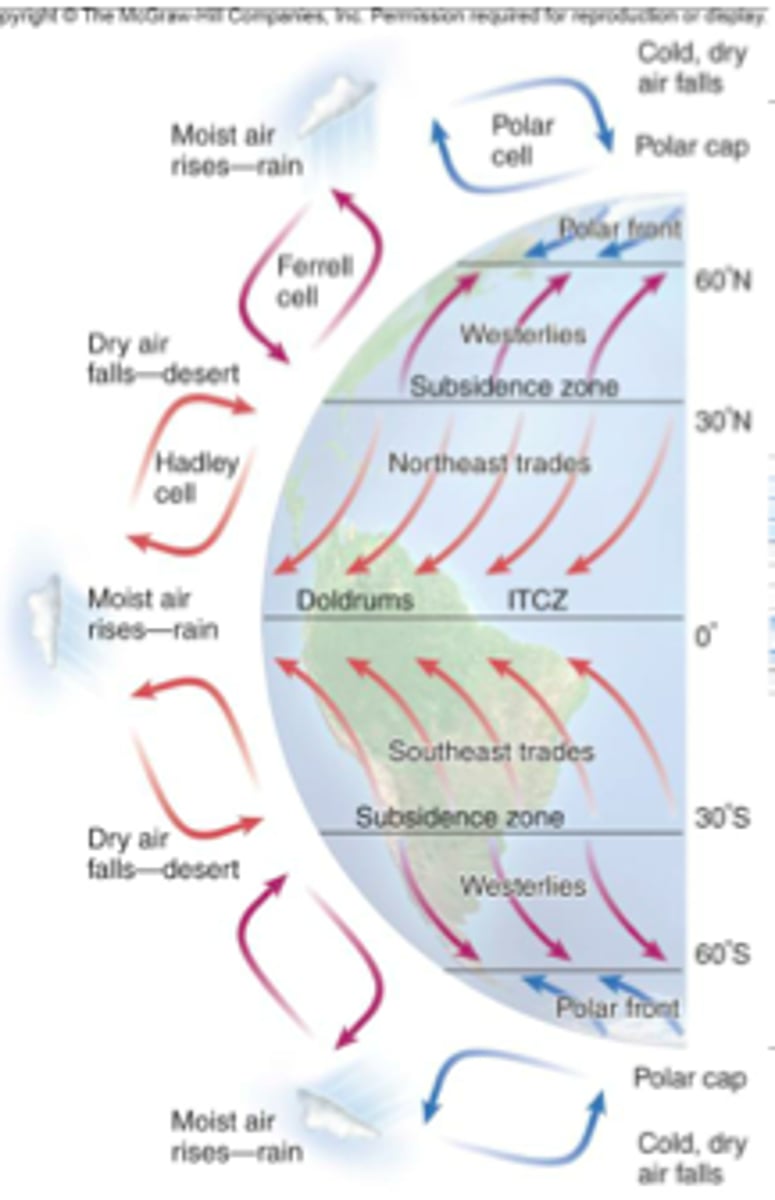
Hadley cell
a large scale atmospheric circulation pattern near the equator that drives climate patterns
maritime climate
influences by oceans (mild temperatures, more moisture)
continental climate
inland ( greater temperature extremes, less moisture)
photosynthesis
Process by which plants/algae use sunlight to convert CO₂ and water into glucose (food) and oxygen
respiration
Process by which organisms break down glucose using oxygen to release energy (ATP), producing CO₂ and water
Gross Primary Productivity (GPP)
Total energy captured by producers via photosynthesis
Net Primary Productivity (NPP)
Energy remaining after respiration (what's available to consumers)
Energy Flow
Movement of energy through an ecosystem from producers → consumers → decomposers
ecological efficiency
Percentage of energy transferred from one trophic level to the next (usually ~10%)
assimilation fraction
Portion of consumed energy that is actually absorbed and used by an organism (not lost as waste)
trophic pyramid
A diagram showing energy (or biomass) decreasing at higher trophic levels
trophic cascade
When changes at the top of the food chain affect multiple lower levels
Top-down control
Predators control ecosystem structure
Bottom-up control
Resources (like nutrients) control ecosystem structure
Sociometabolism
The flow of energy and materials through human societies (like an ecosystem, but for humans)
- ex: Cities using food, water, and fuel, then producing waste and pollution
Stock
Amount of a substance in a system at a given time
Flux
Rate at which that substance moves in or out
Netflux
The difference between inputs and outputs of a substance in a system
residence time
Average time a substance stays in a system
sink
Absorbs more of a substance than it releases
- ex: Forest = carbon sink (absorbs CO₂)
source
Releases more than it absorbs
- Burning fossil fuels = carbon source (releases CO₂)
Haber-Bosch Process
Industrial process that converts nitrogen gas (N₂) into ammonia (NH₃) for fertilizers
Nitrogen Fixation
conversions of atmospheric nitrogen (N2) into usable forms like ammonia by bacteria
Chemical fertilizer
human made substances that add nutrients (like nitrogen, phosphorus) to soil