Lecture 12- Rate and Sinus Rhythms
 Call Kai
 Learn
Learn Practice Test
 Spaced Repetition
 Match
Match Flashcards
 Knowt Play
1/14

There's no tags or description
Looks like no tags are added yet.
Name | Mastery | Learn | Test | Matching | Spaced | Call with Kai |
|---|
No analytics yet
Send a link to your students to track their progress
15 Terms
how to determine rate
recall that EKG paper should pass at a rate of 25mm/sec
300 large boxes /minute
each small box is 0.04sec; large box is 0.2sec
3 methods to determine rate (with regular rhythms)
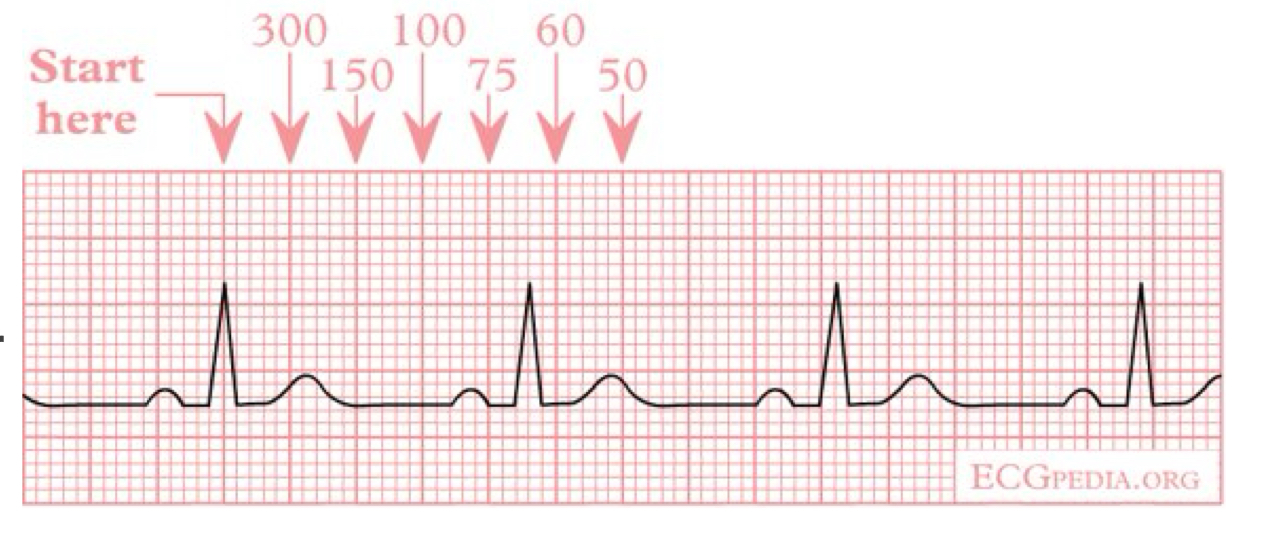
1) 300, 150, 100, 75, 60, 50
2) 300 divided by number of large boxes btwn cycles
3) 1500 divided by number of small boxes btwn cycles
rates for irregular or slow rhythms
6 second strip x10
10 sec strip x 6
(#Rs in 6 sec strip)
300, 150, 100, 75, 60, 50 method
find R wave most closely lies on dark line
recite numbers on each large box until get to the next R wave
doe NOT work foe irregular rhythms
300/large boxes vs 1500/small boxes
300 divided by number of large boxes btwn R-R interval
1500 divided by number of small boxes btwn R-R
more precise
ANS and HR variation
vagus nerve provides parasympathetic input to SA and AV nodes
sympathetic stimulation:
reduces vagal tone
increases HR
seek on EKG as sinus tachy
parasympathetic stimulation
increase vagal tone
slows heart rate, esp at rest
possible EKG presentation for increased vagal tone
sinus brady
sinus pauses
AV block
characteristics of normal sinus ryhythm
P wave: upright- indicates SA node is functioning properly
PR interval: <0.20 sec- normal conduction from SA node through AV node
QRS complex: narrow (<0.12sec)- impulse originates above bundle of his (supreventricular)
rate: 60-100bpm
rhythm: regular- consistent spacing btwn R waves
arrhythmia
any rhythm other than normal sinus
sinus bradycardia
P wave: upright- normal sinus origin
PR interval: 0.12-0.20 sec- normal conduction SA node-AV node
QRS complex: narrow (<0.12 sec)- normal impulse origin
RATE: <60 bpm- slower than normal resting HR
rhythm: normal
when might bradycardia be normal/non concerning
well trained athletes or during sleep
can also occur with meds or vagal stimulation
beta blockers
digoxin
sinus tachycardia
P wave: upright- normal sinus origin
PR interval: 0.12-0.20 sec- normal conduction SA node-AV node
QRS complex: narrow (<0.12 sec)- normal impulse origin
RATE: >100 bpm- faster than normal resting HR
rhythm: normal
when might tachycardia be normal/non concerning
normal physiological response to exercise, pain, fever, anxiety, o rhypovolemia
may also occur secondary to stimulants, anemia, or heart failure
sinus arrhythmia
P wave: upright- normal sinus origin
PR interval: 0.12-0.20 sec- normal conduction SA node-AV node
QRS complex: narrow (<0.12 sec)- normal impulse origin
rate: usually 60-100bpm- normal; may be slightly slower with respiratory variation
RHYTHM: irregular- R-R intervals vary, often INCREASING with inspiration and decreasing with expiration (respiratory sinus arrhythmia)
when might sinus arrhythmia be normal/non concerning
common in young, healthy individuals
considered normal physiological variation due to vagal tone changes with breathing