AP Biology: Cellular Reproduction
0.0(0)
Studied by 2 people Call Kai
 Learn
Learn Practice Test
 Spaced Repetition
 Match
Match Flashcards
 Knowt Play
Card Sorting
1/15

Last updated 8:45 PM on 1/1/23
Name | Mastery | Learn | Test | Matching | Spaced | Call with Kai | Chat |
|---|
No analytics yet
Send a link to your students to track their progress
16 Terms
1
New cards
Provide the differences between cell reproduction in eukaryotes and prokaryotes.
Eukaryotes: have linear chromosomes, have different means of cellular reproduction. Prokaryotes: only reproduce through fission, have circular DNA.
2
New cards
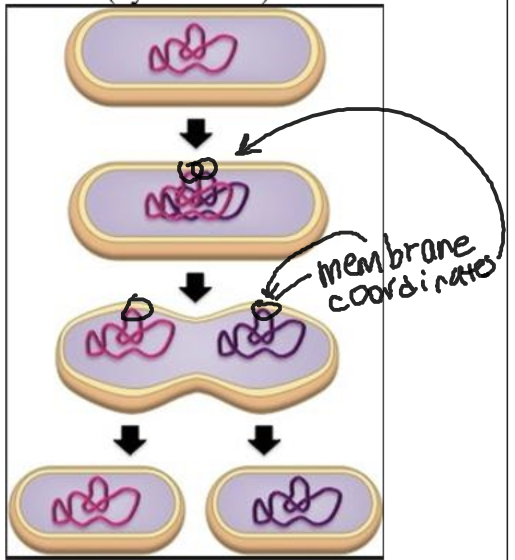
List the steps of prokaryotic (binary) fission.
First, the circular DNA replicates. Then, the size of the cell increases. Next, 2 copies of DNA separate. Finally, cytokinesis occurs.
3
New cards
List the steps of the most common way eukaryotic cells reproduce.
First, (linear) DNA gets duplicated. Next, the distribution of the DNA (in the form of chromosomes) occurs (mitosis). Finally, cytokinesis splits the two cells apart.
4
New cards
List all the phases of the cell cycle.
Interphase; G1 (G0), S, G2, Prophase, Metaphase, Anaphase, and Telophase.
5
New cards
What is the purpose of winding up DNA into chromosomes?
Chromosomes have evolved to package DNA during cell reproduction.
6
New cards
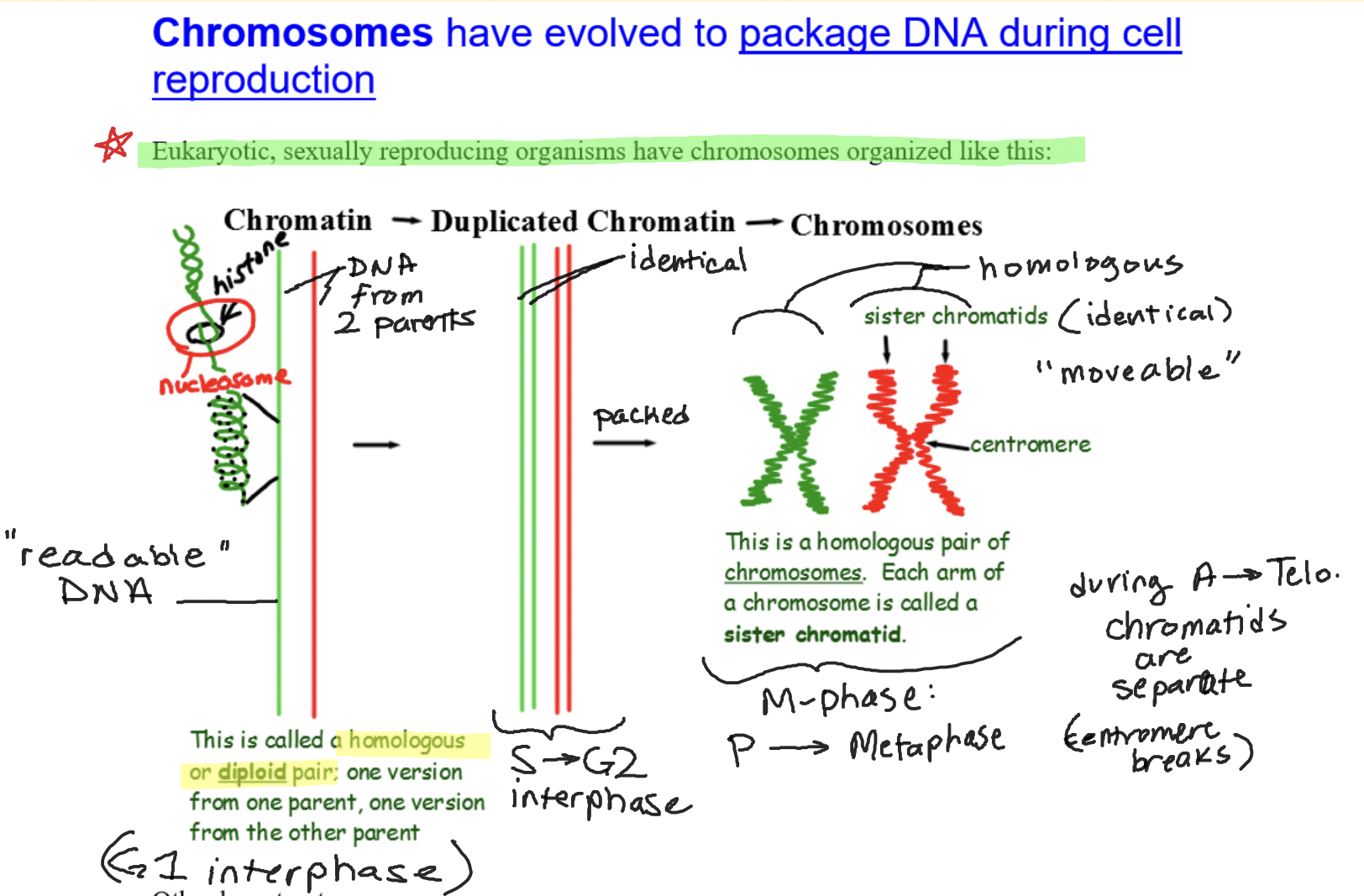
What form does DNA take throughout the phases?
G1: two strands of chromatin (diploid pair), S-G2: four strands of chromatin (two diploid pairs), Prophase-Metaphase: chromosomes, Anaphase-Telophase: 4 strands of chromatin.
7
New cards
Define kinetochores (spindle fibers).
The cytoskeletal elements responsible for moving the chromosomes during mitosis
8
New cards
Define centrometres.
The middle of a chromosome.
9
New cards
Define chromatids.
One of the two identical halves of a chromosome.v
10
New cards
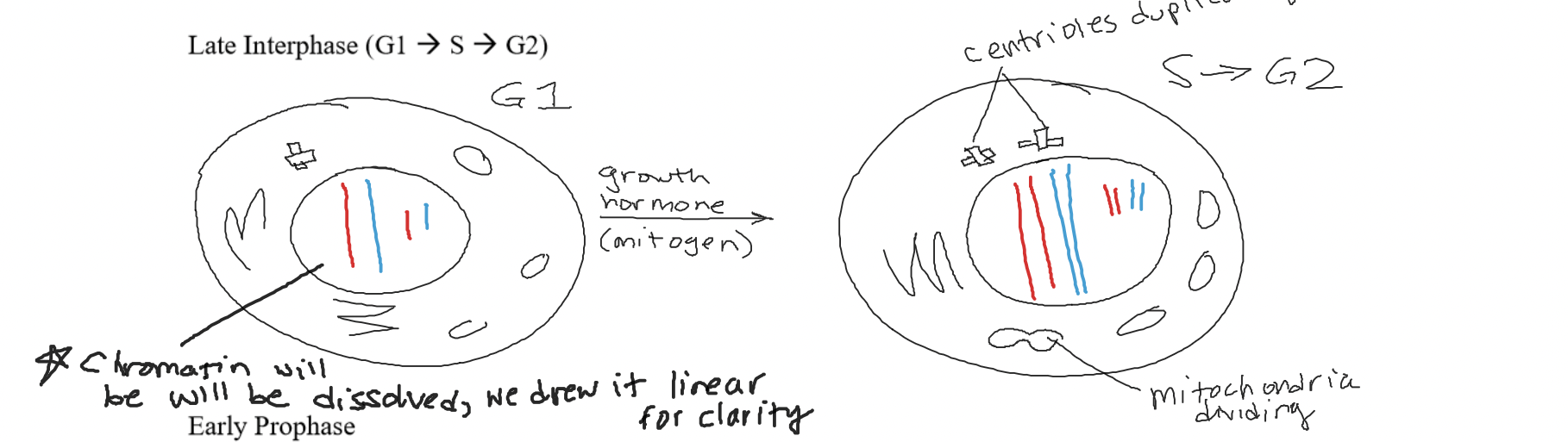
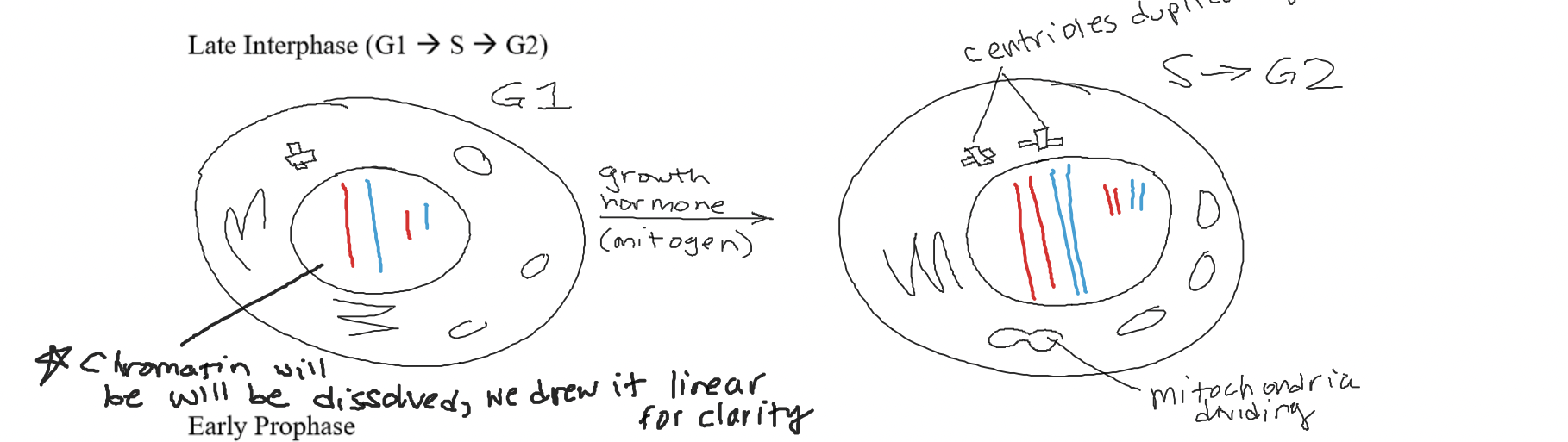
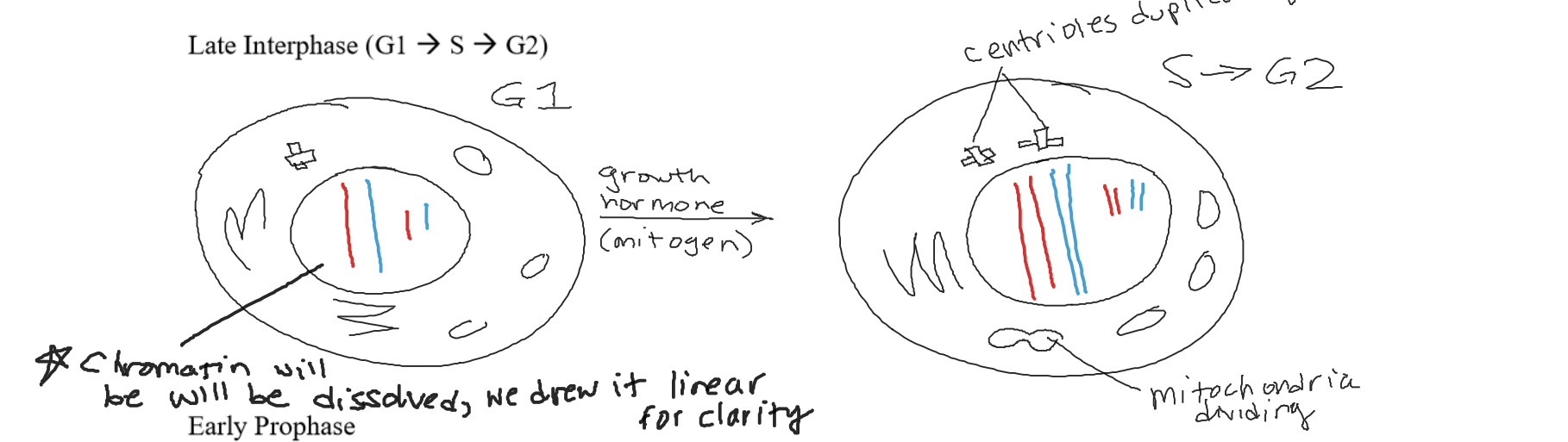
What occurs in G1?
This is when the cell matures and organelles begin replicating, DNA is in chromatin (the chromatin is dissolved).
11
New cards
What occurs in S?
This is when chromatin replicates (chromatin is dissolved).
12
New cards
What occurs in G2?
The cell prepares for mitosis, spindle fibers begin forming (during S-G2, centrioles duplicate and mitochondria divide).
13
New cards
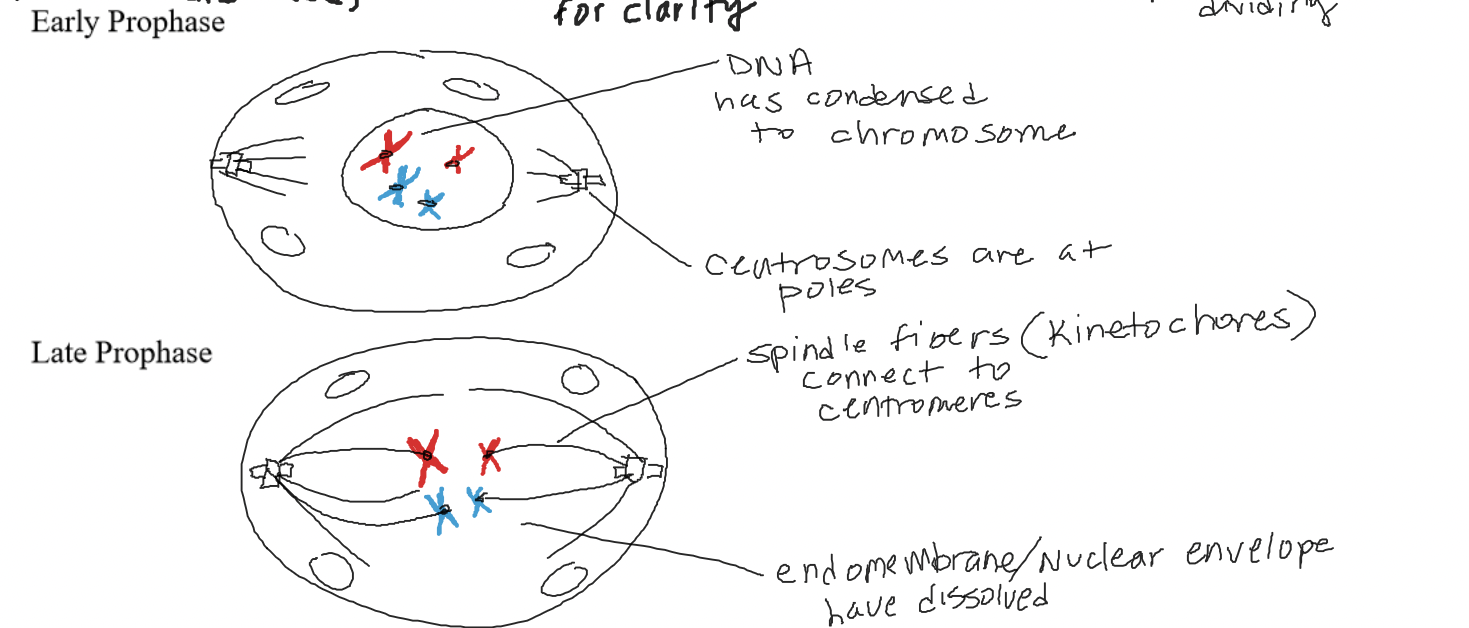
What occurs in prophase?
Chromatin condenses into chromosomes (early prophase) and becomes moveable (late prophase). The centrosomes are at opposite poles of the cell (early). The spindle fibers connect to the centromeres and the nuclear envelope dissolves (late).
14
New cards
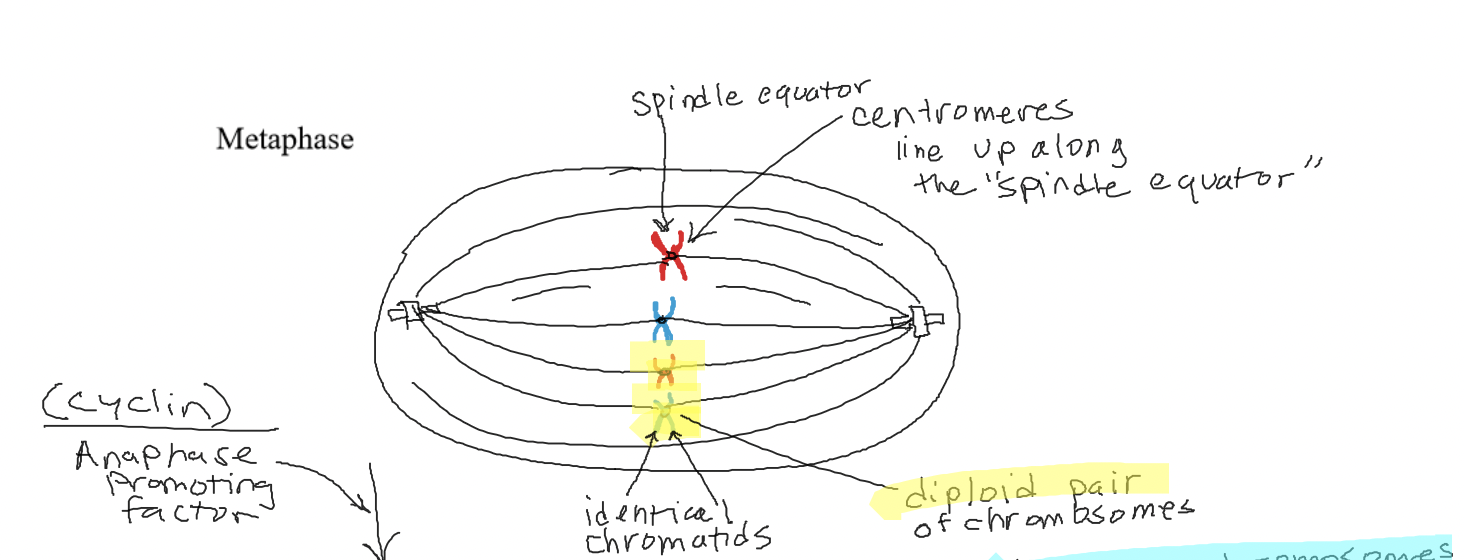
What occurs in metaphase?
The chromosomes line up at the spindle equator.
15
New cards
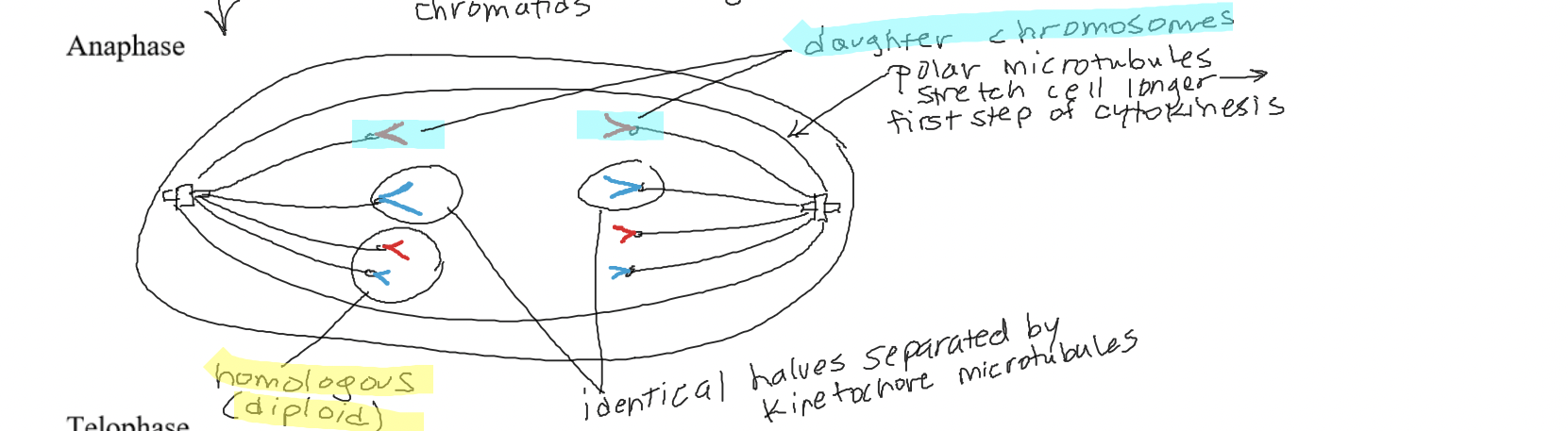
What occurs in anaphase?
The chromosomes separate at the centromere. Polar microtubules (cytoskeletal elements) stretch the cell longer (first part of cytokinesis).
16
New cards
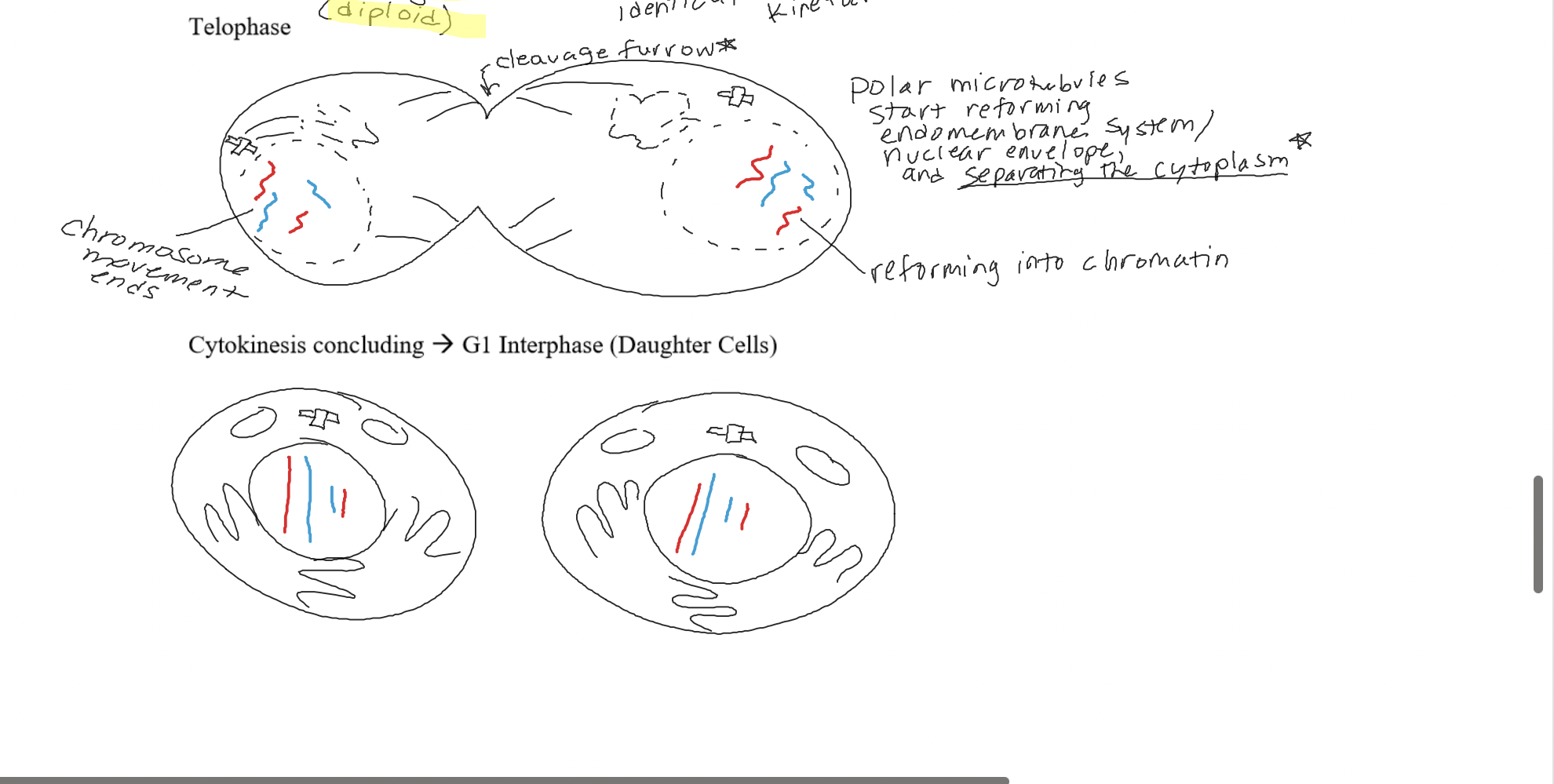
What occurs in telophase?
The daughter chromosomes are at separate poles. Polar microtubules start to rebuild the nuclear envelope, chromosomes go back to chromatin, and chromosome movement ends.