4.1 sexual reproduction in humans
 Call Kai
 Learn
Learn Practice Test
 Spaced Repetition
 Match
Match Flashcards
 Knowt Play
1/78

There's no tags or description
Looks like no tags are added yet.
Name | Mastery | Learn | Test | Matching | Spaced | Call with Kai |
|---|
No analytics yet
Send a link to your students to track their progress
79 Terms
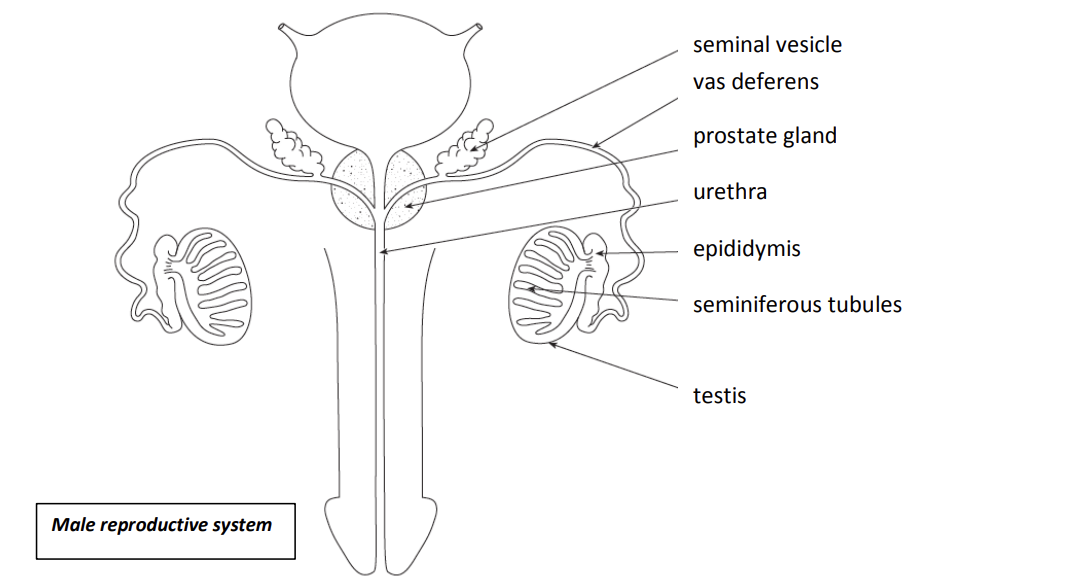
male reproductive system
k
scrotum
External sac of skin containing the testes.helps keep testes slightly cooler than body temperature, which matters for sperm production
testes
• Produce gametes (sperm formed by spermatogenesis), in seminiferous tubules
• Produce testosterone
epididymis
Sperm are stored here and mature to become fully mobile.
vas deferens
Carries sperm towards the penis during ejaculation.
seminal vesicle
1 Secretes a fluid into the vas deferens that make up approximately 60% of semen.
2 Seminal fluid provides nutrients such as fructose for respiration and amino acids.
3 Seminal fluid is alkaline which helps to neutralise the acidity of any urine remaining in the urethra and the acidity of the vaginal tract.
prostate gland
1 Secretes a fluid into the vas deferens that contains a mixture of chemicals
which make up approximately 30% of semen.
2Prostate fluid contains zinc ions and is also alkaline which helps to neutralise the acidity of any urine
remaining in the urethra and the acidity of the vaginal tract.
urethra
• Carries semen through the penis and out of the body.
• Carries urine from the bladder through the penis and out of the body.
penis
Specialised organ adapted to transfer semen to the vagina during sexual intercourse.
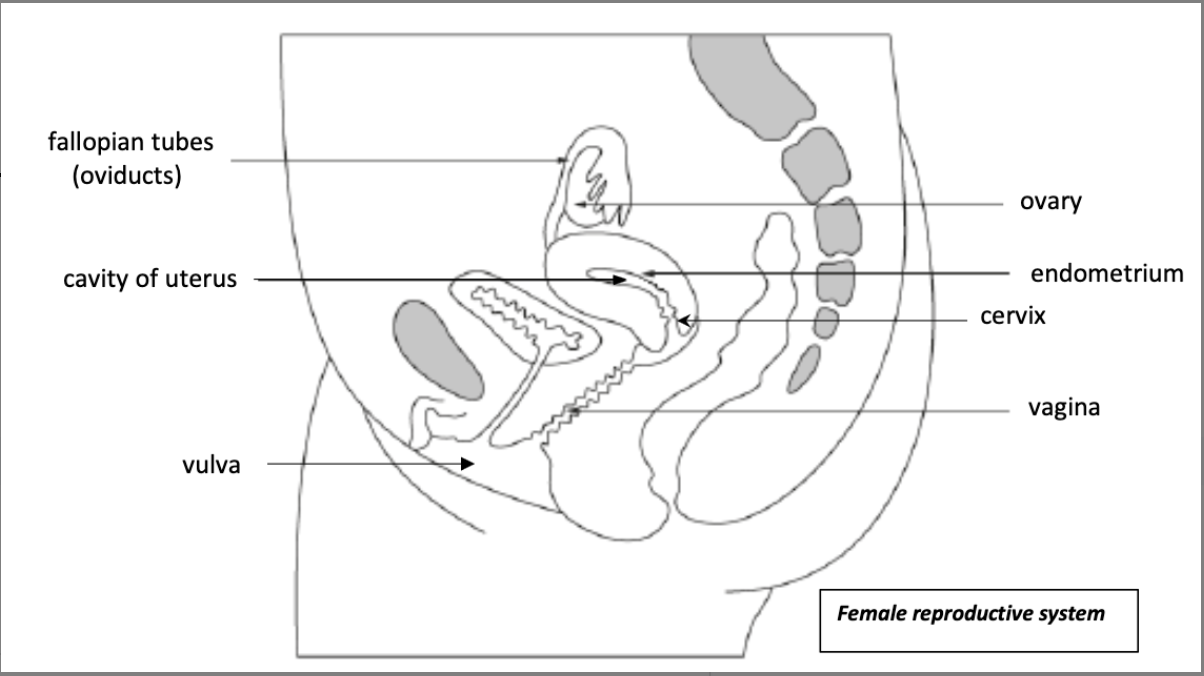
female reproductive system from side
k
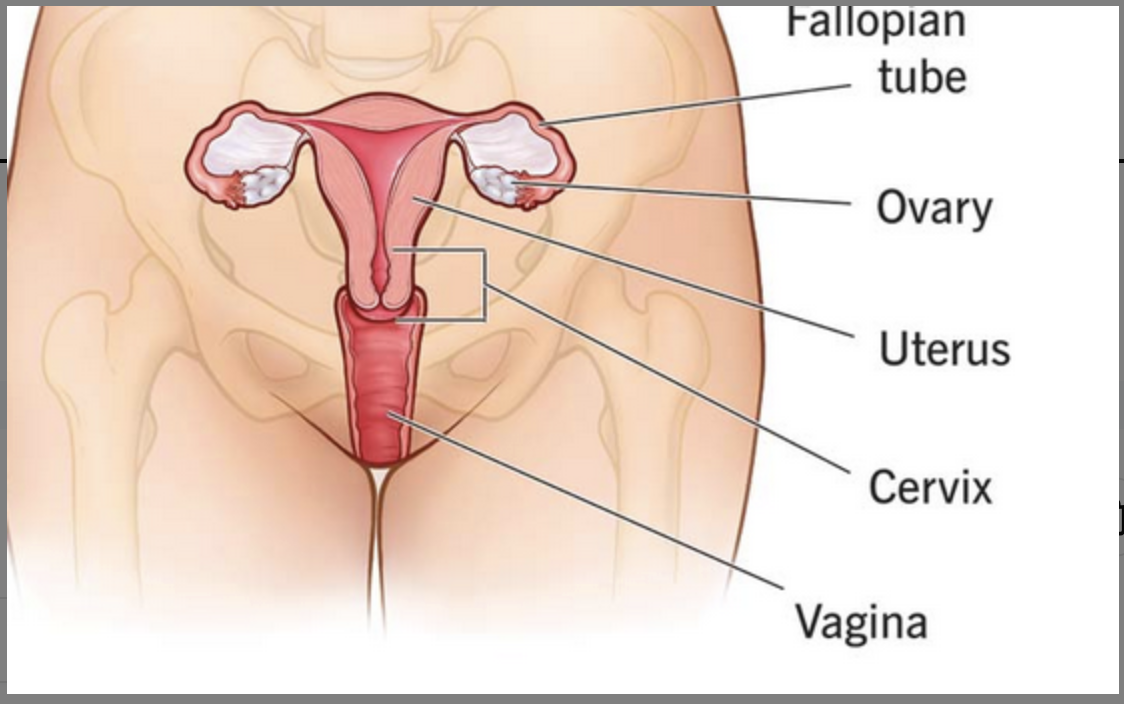
female reproductive system from front
k
Ovary
1 Production of gametes (secondary oocytes formed during oogenesis),
2 Produce oestrogen and progesterone.
fallopian tubes (oviducts)
They have a lining of ciliated epithelial cells which move the secondary oocyte to the uterus.
uterus
Holds the developing foetus until birth.
endometrium
1 The inner most layer of the uterus wall.
2 It has a good blood supply and builds up every month during the menstrual cycle.
3 If implantation of an embryo does not happen then the endometrium is shed during menstruation.
cervix
1 A narrow ring of connective tissue and muscle, it acts as a barrier between the uterus and the outside environment during pregnancy.
2 During pregnancy, a mucous plug forms in the cervix which helps prevent entry of pathogens.
vagina
1 It has muscular walls and opens at the vulva.
2 Semen is deposited in the vagina during sexual intercourse and the foetus is able to pass out from the uterus through the vagina during birth.
what is spermatogenesis
formation of sperm in testis
where does spermatogenesis take place
seminiferous tubules
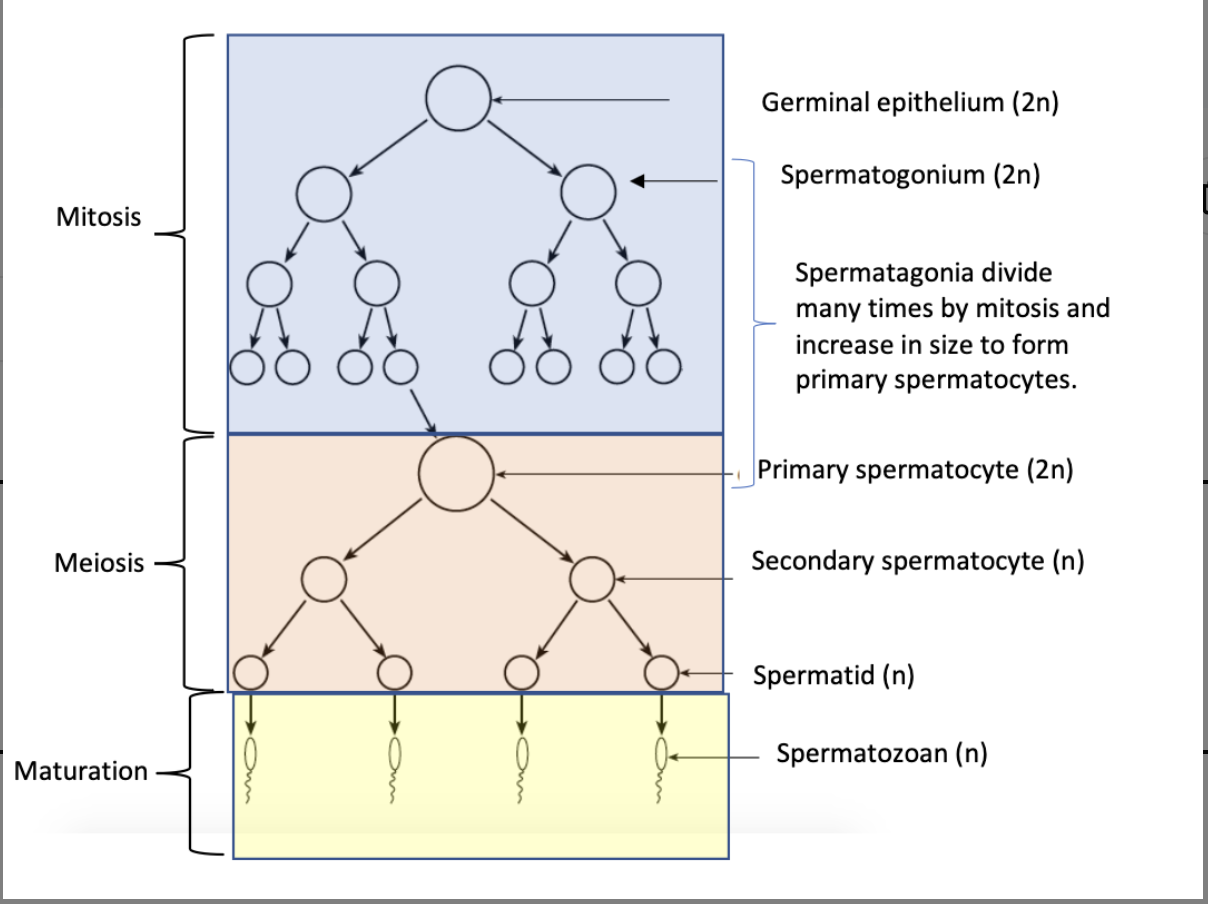
spermatogenesis
k
how does spermatogenesis take place
1 go under three stages of mitosis- 1 germinal epithelium(2n),2 spermatogonium,3 primary spermatocytes( 2n)
2 then two stages of meiosis-1primary spermatocyte,2 secondary spermatocyte(n),spermatid
3 then go under maturation where spermatids turn into spermatozoan (n0
what do spermatagonia do lots of to create primary spermatocytes
divide many times by mitosis and increase in size to form primary spermatocytes
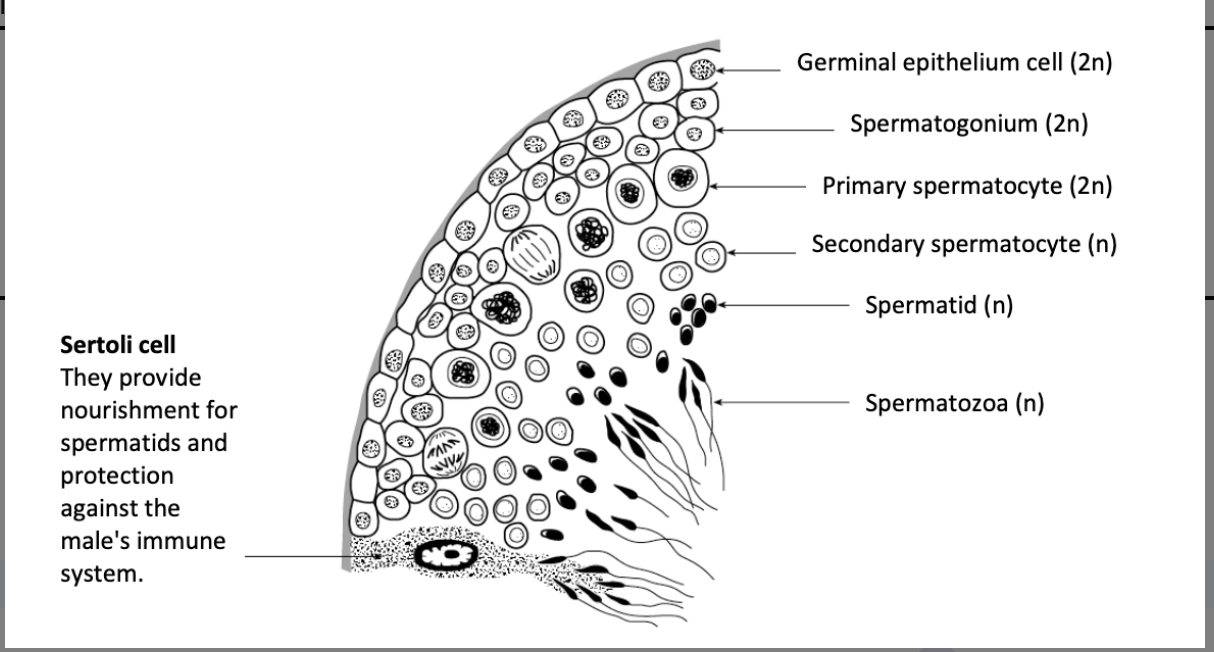
drawing of seminiferous tubule illustrating spermatogenesis
k
what does a sertoli cell do
provide nourishment for spermatids and protection against the males immune system
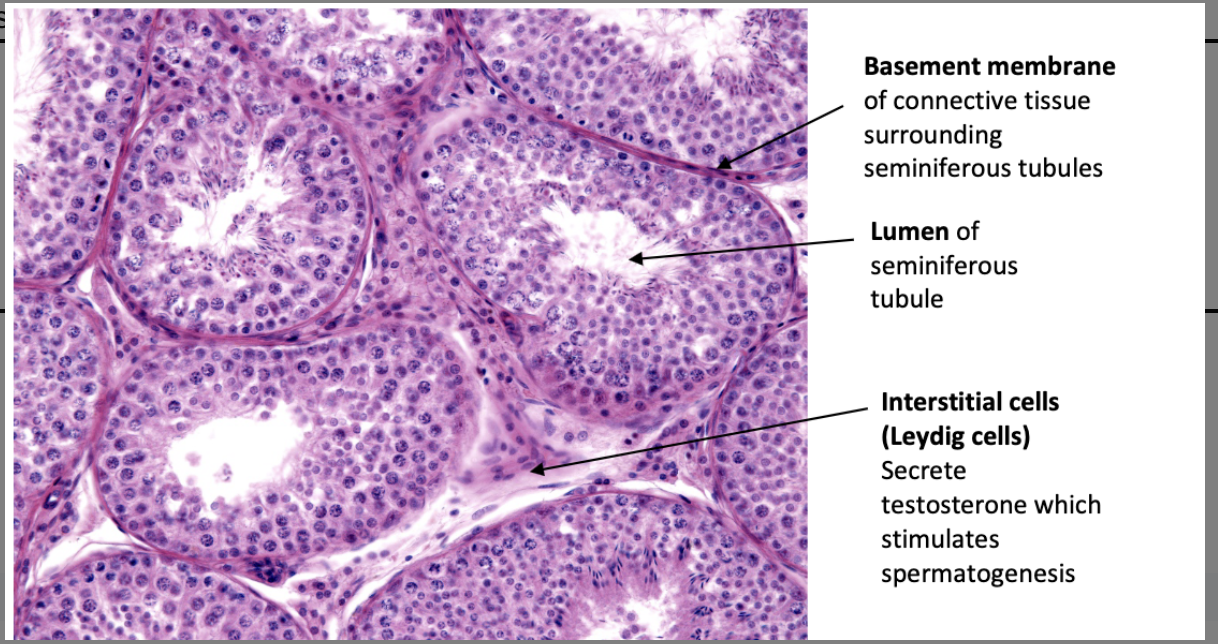
testis with several seminiferous tubules
k
what do seminiferous tubules contain
basement membrane,sertoli cells,and spermatogenic cells
what are inbetween seminiferous tubules and what do they do
leydig cells which secrete testosterone which stimulates spermatogenesis
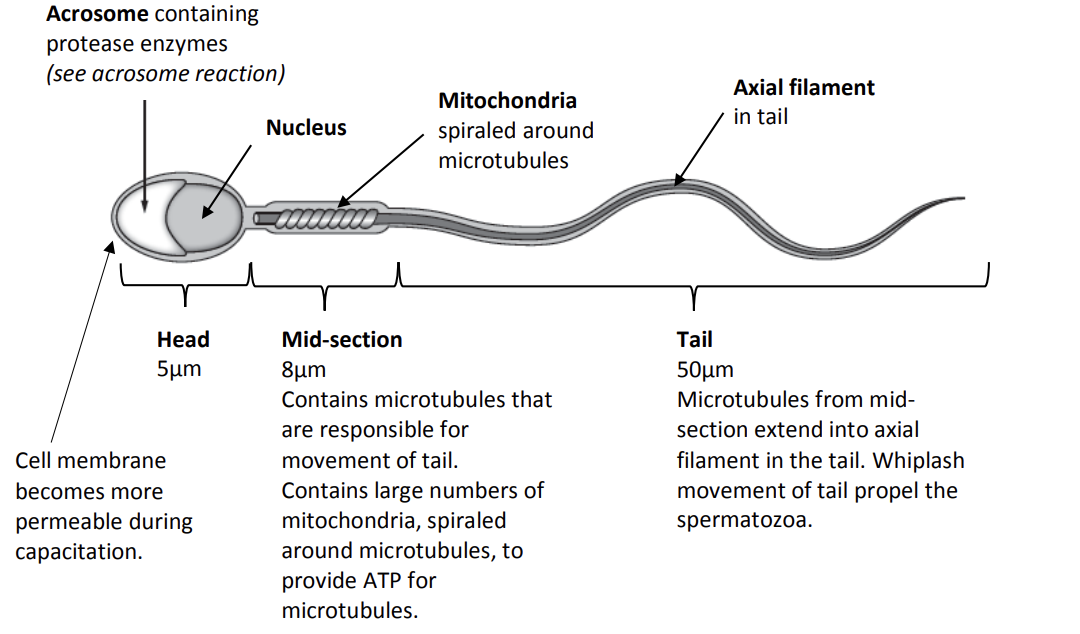
structure of sperm cell
k
cell membrane of sperm
becomes permeable during capacitation
what is the acrosome
contains protease enzymes
cell membrane
becomes more permeable during capacitation
midsection of sperm
1 contains microtubules that are responsible for movement of tail.
2 contains large numbers of mitochondria spiraled around microtubules so provide ATP for microtubules
tail
1 microtubules from mid section extend into axial filament in the tail.
2 whiplash movement of tail propel spermatozoa
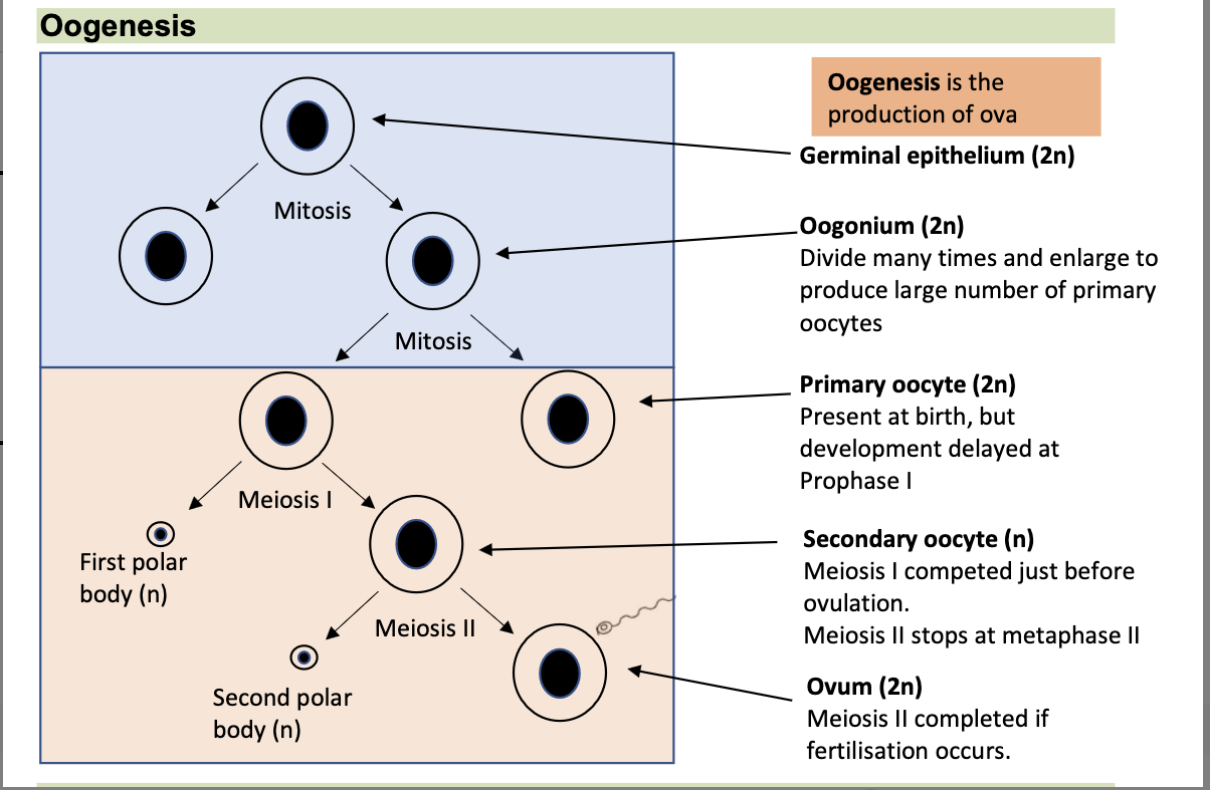
oogenesis
k
what is oogenesis
production of ova
how does oogenesis take place
1 two mitotic divisions-germinal epithelium(2n) to oogonium to primary oocyte
2 meiosis 1 - primary oocyte to secondary oocyte (n)
3 meiosis 2- secondary oocyte to ovum
oogonium
divide many times and enlarge to produce large number of primary oocytes
primary oocyte
present at birth but development delayed at prophase 1
secondary oocyte
meiosis 1 completeted just before ovulation.meiosis 2 stops at metaphase 2
ovum
meiosis 2 completed if fertilisation occurs
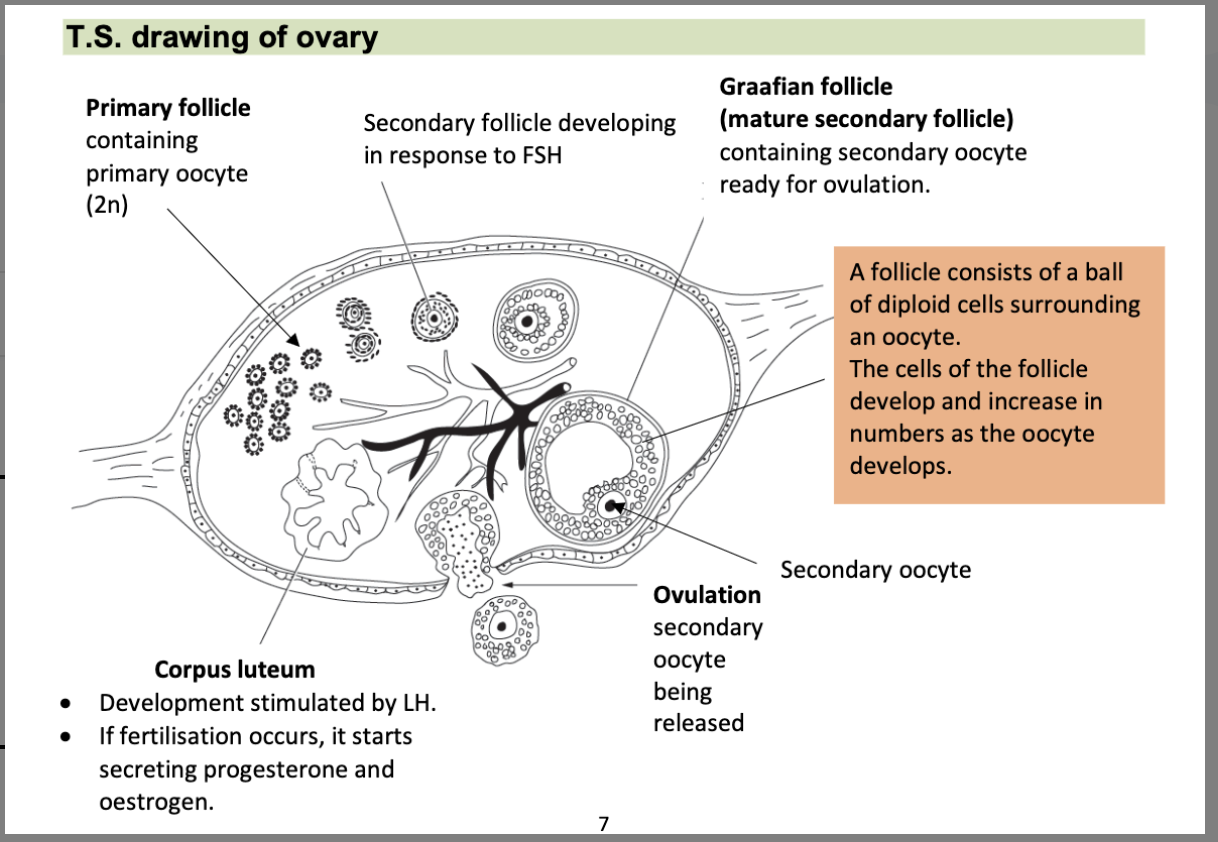
drawing of ovary
k
sequence of follicles
primary,graafian,ovulation,corpus luteum
what does primary follicle contain
primary oocyte
how does secondary follicle develop
in response to FSH
graafan follicle
contains secondary oocyte ready for ovulation
ovulation
secondary oocyte is released
corpus luteum
1 development stimulated by LH
2 if fertilisation occurs,it starts secreting progesterone and oestrogen
what does a follicle consist of and what does it do
1a ball of diploid cells surrounding an oocyte.
2 the cells of follicle develop and increase in numbers as oocyte develops
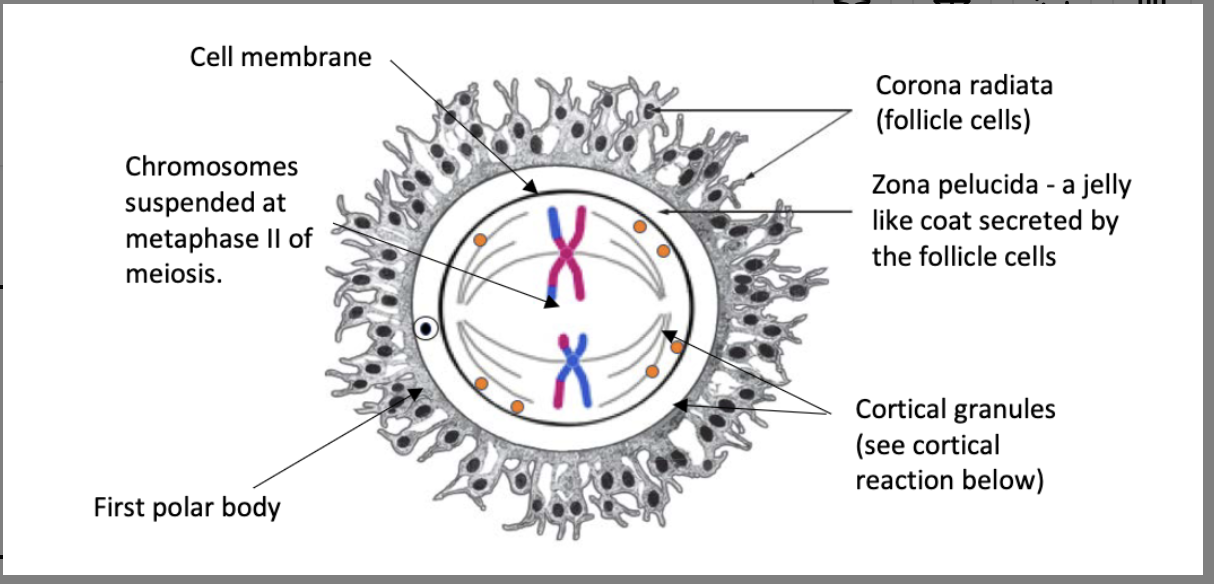
structure of secondary oocyte
k
when are chromosomes suspended in secondary oocyte
at metaphase 2 of meiosis
what is zona pelucida
a jelly like coat secreted by follicle cells
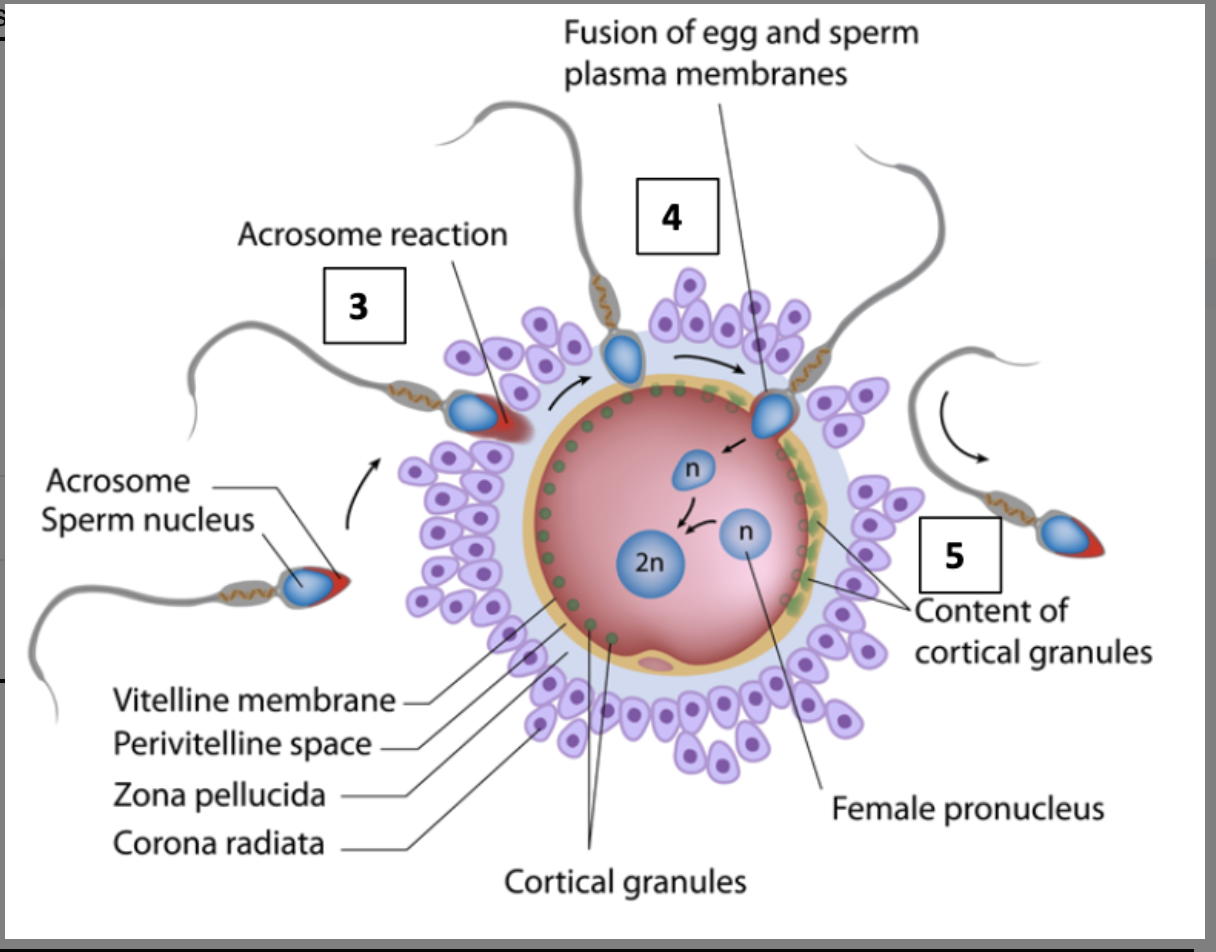
fertilisation
k
stages of fertilisation
1 following sexual intercourse,spermatozoa move into fallopian tubes
2 Capacitation increases permeability of cell membrane in the head of sperm above acrosome
3 acrosome reaction releases hydrolase enzymes which digest the zona pellucida
4 Fusion of sperm and secondary oocyte membranes leads to genetic material of sperm cell entering the secondary oocyte triggering completion of meiosis II and formation of ovum and a second polar body.
5 cortical reaction occurs where cortical granules fuse with cell membrane and modify zona pellucida to form the fertilisation membrane which prevents polyspermy
6 nuclei of sperm and ovum fuse to form a zygotic nucleus
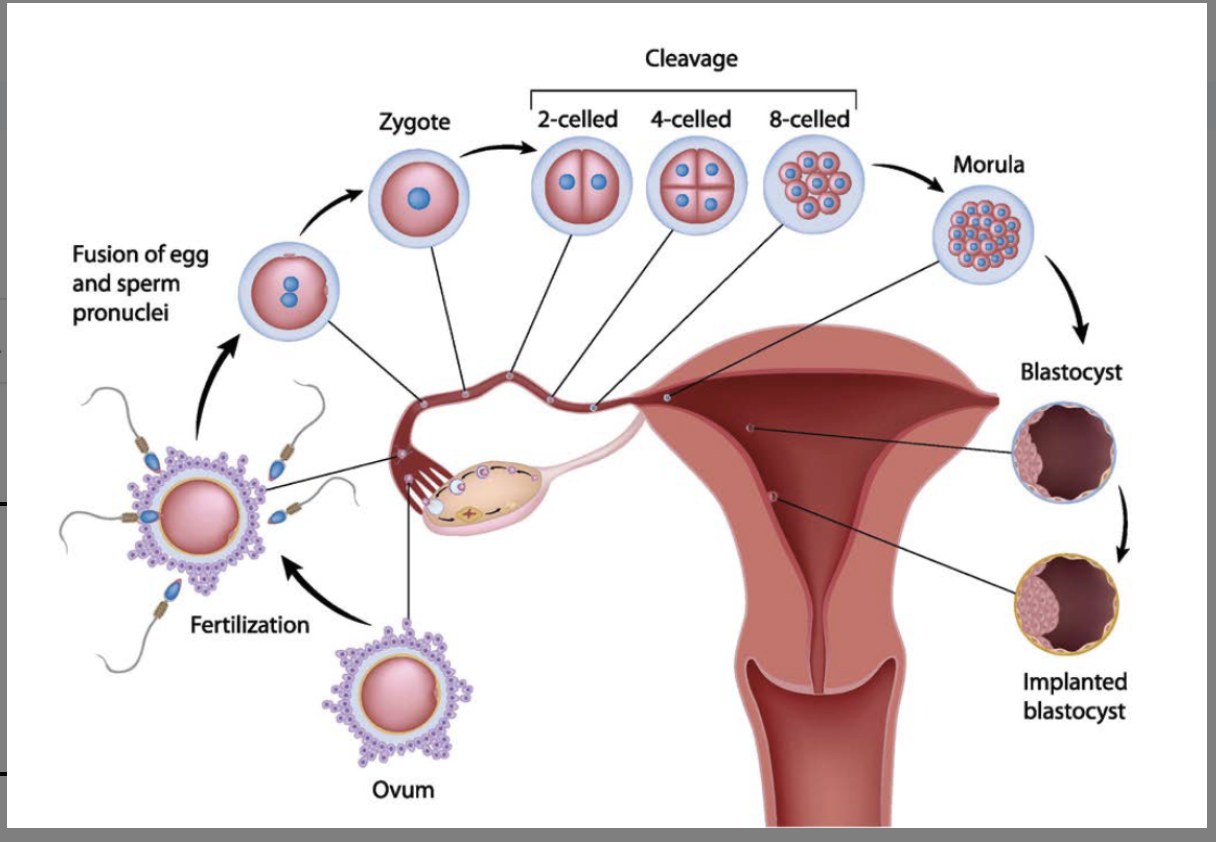
implantation
k
stages of implantation
1 ovum 2 fertilisation 3 fusion of egg and sperm nucleus 4 zygote 5 cleavage 6 morula 7 blastocyte 8 implanted blastocyte
what is cleavage first step in implantation
the zygote undergoes repeated mitotic divisions as it moves down the oviduct to form balls of cells called blastocyst
implantation second step
blastocyst moves into uterus where it attaches and sinks into endometrium.Cells on the outside of the blastocyst, the trophoblast cells, form trophoblastic villi that penetrate the endometrium. The villi increase the surface area for the absorption of nutrients from the endometrium
formation of placenta step 3
the placenta begins to develop from the trophoblast cells
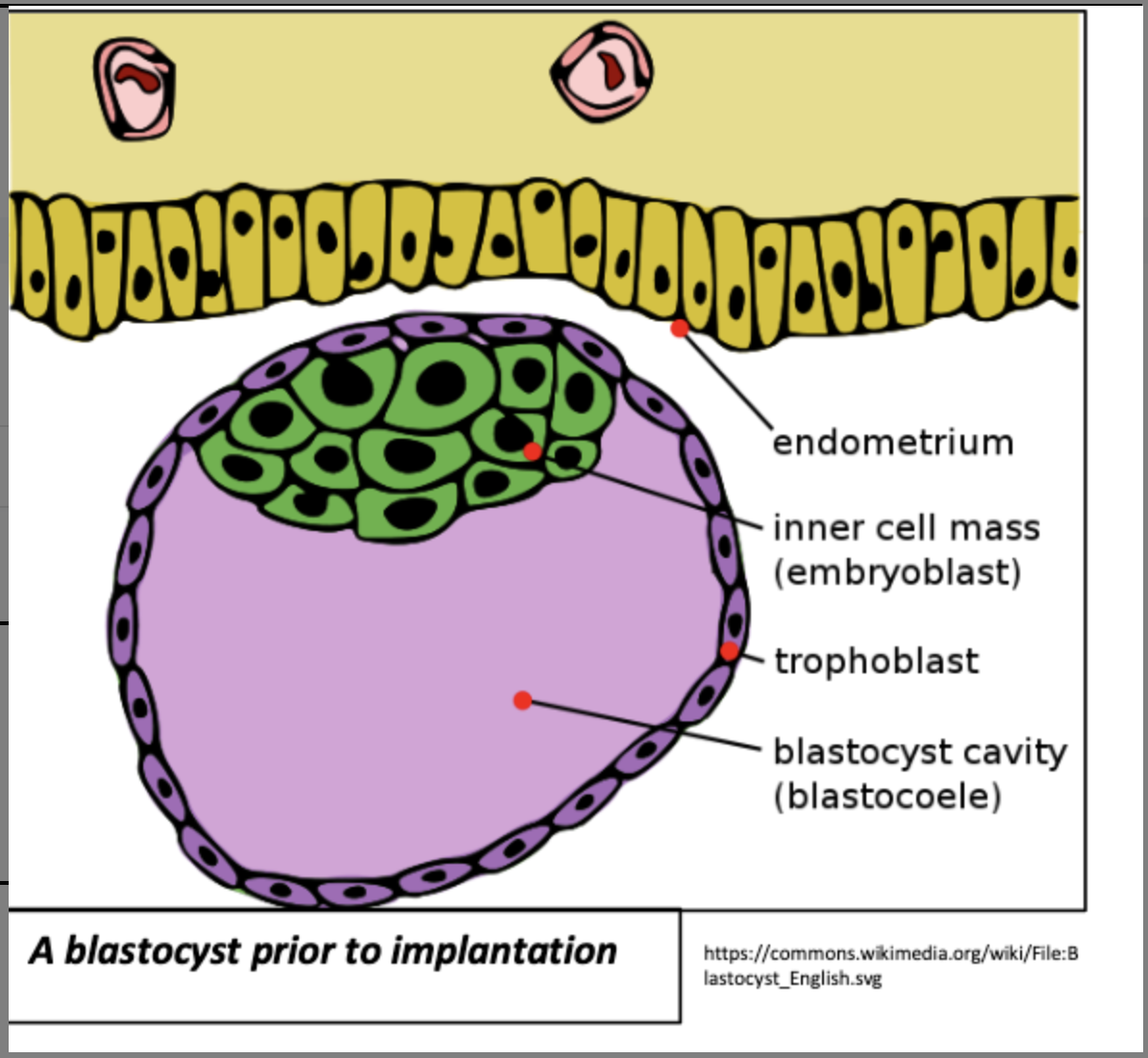
blastocyst
k
roles of placenta and amniotic fluid
1 exchange of gases and nutrient
2 providing barrier between maternal and foetal blood
3 secretion of hormones
exchange of gases and nutrients
nutrients,waste products,oxygen and carbon dioxide
providing barrier between maternal and foetal blood
1 protects foetal capillaries from higher blood pressure and changes in blood pressure of the
mother.
2 cells of the chorionic villi fuse together preventing the mother's phagocytes from passing into the foetus. The mother's antibodies are small enough to cross into the foetal blood and provide passive immunity to the foetus.
secretion of hormones
1 following implantation the placenta takes over secretions of human chorionic
gonadotrophin from the blastocyst. This maintains the corpus luteum and its secretions of
progesterone and oestrogen for the first 16 weeks of pregnancy.
2 As the placenta develops it takes over secretions of progesterone and oestrogen from the
corpus luteum
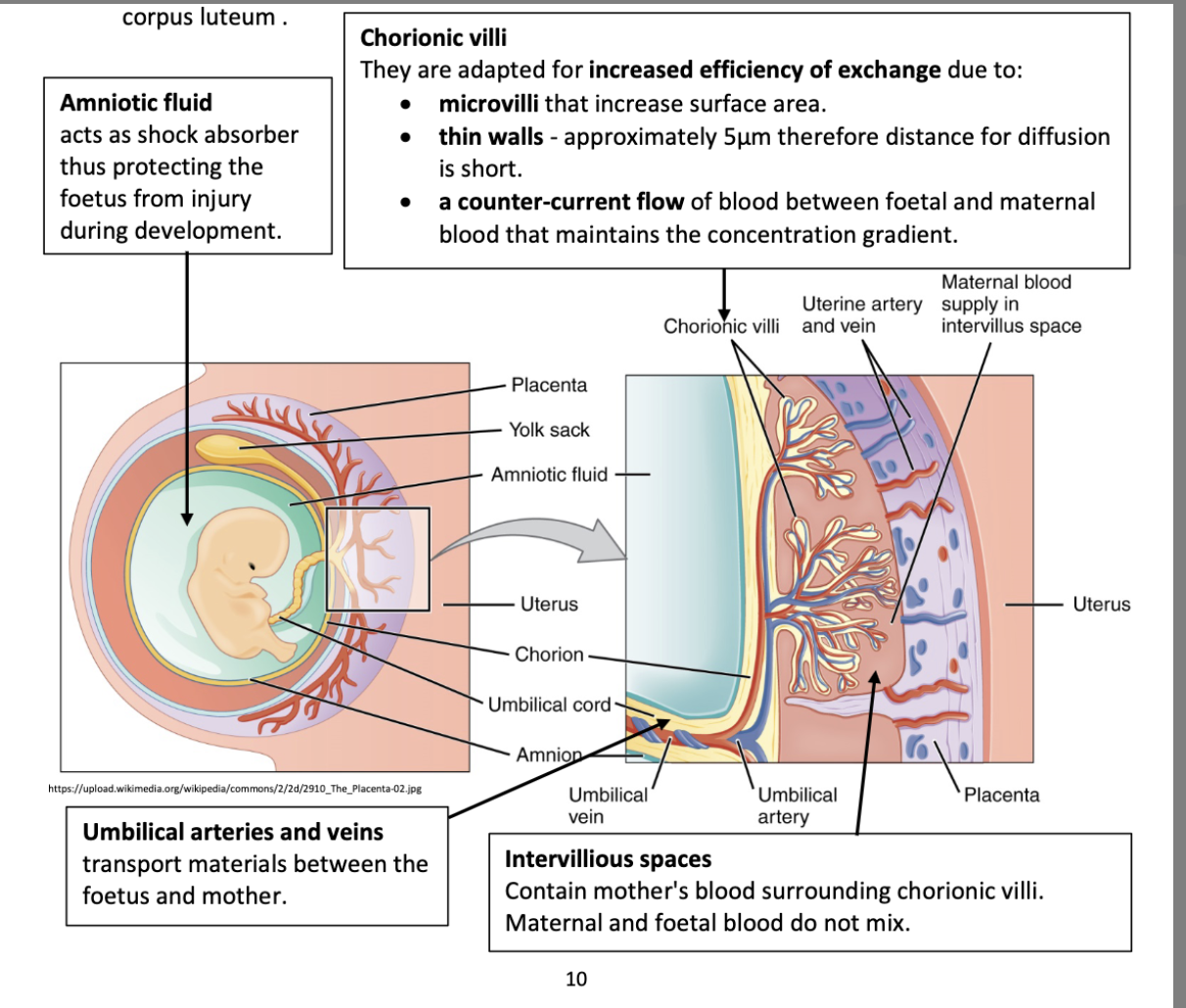
placenta and amniotic fluid
k
what is aminotic fluid
acts as a shock absorber protecting the foetus from injury during development
what are chorionic villi
increase efficiency of exchange as they have
• microvilli that increase surface area.
• thin walls - approximately 5μm therefore distance for diffusion is short.
• a counter-current flow of blood between foetal and maternal blood that maintains the concentration gradient.
umbilical arteries and veins
transport materials between the foetus and mother
intervillous spaces
Contain mother's blood surrounding chorionic villi. Maternal and foetal blood do not mix.
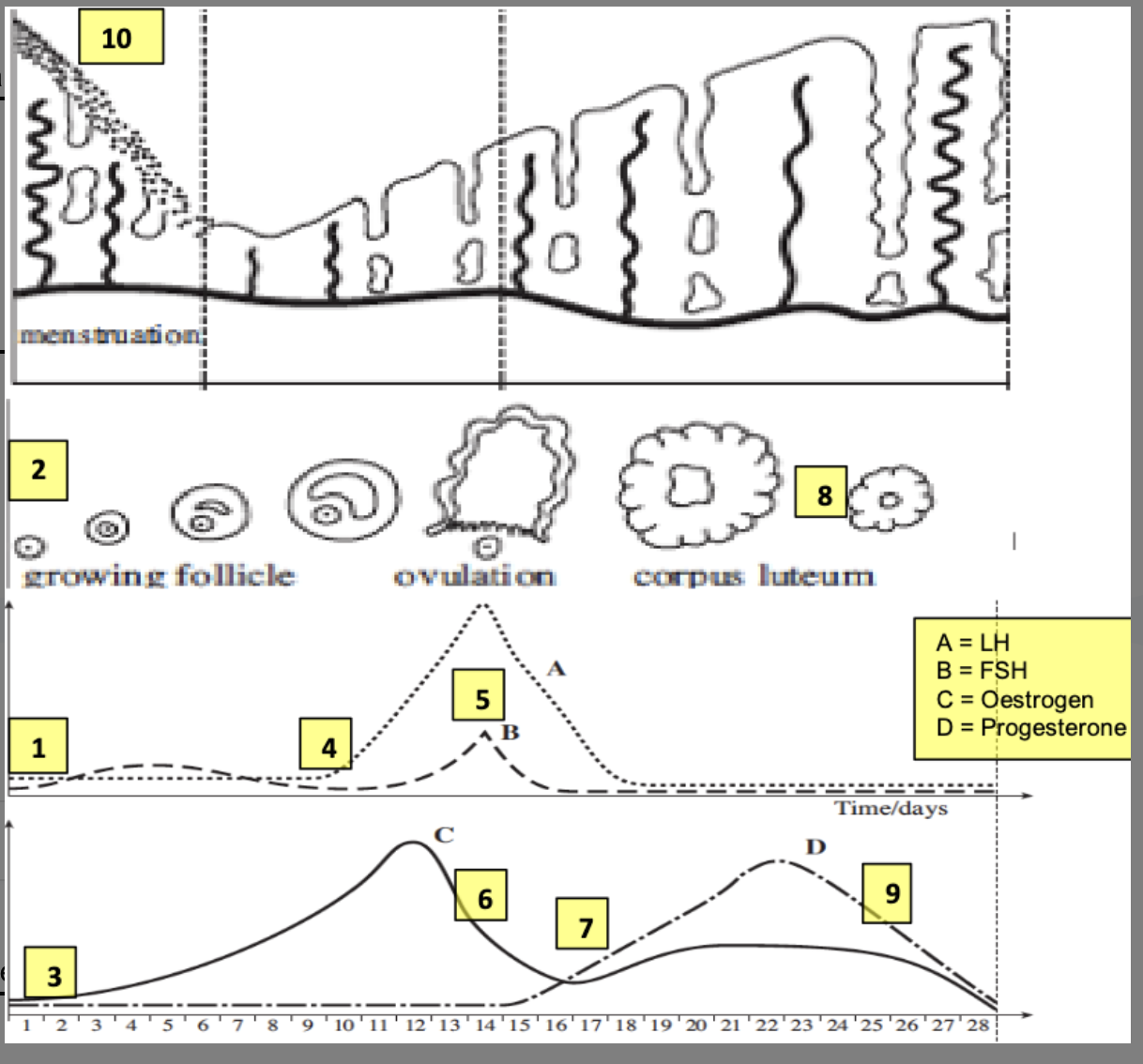
roles of hormones in menstrual cycle and their hormones
k
how does the menstrual cycle start in terms of hormones (days1-13)
1 low levels of progesterone and oestrogen cause endometrium to breakdown and be shed during menstruation
2 Anterior pituitary gland secretes follicle stimulating hormone (FSH)
3 FSH stimulates maturation of primary follicle to secondary follicle
4 maturing follicle secretes oestrogen
what does oestrogen do (day 13)
1 stimulates Lutenising hormone (LH) production by anterior pituitary gland.
2 Inhibits secretion of FSH.
3 triggers rebuilding of endometrium.
What does LH do (day 14)
1 stimulates secretion of FSH,
2 Induces ovulation on day 14,
3 stimulates conversion of Graafian follicle into corpus luteum
What does FSH do (day 15)
inhibits oestrogen production
what does corpus luteum secrete in menstrual cycle and what does it do(day 15-23)
progesterone
1 maintains endometrium,
2 Inhibits secretion of FSH,
3 Inhibits secretion of LH.
last stages of menstrual cycle (days 24-28)
8. Falling levels of FSH and LH cause corpus luteum to degenerate.
9. Progesterone levels decrease as secretions form degenerating corpus luteum decline.
10. Low levels of progesterone and oestrogen cause endometrium to breakdown and be shed
during menstruation.
roles of hormones in pregnancy
1 Following fertilisation (about 6 days), the developing embryo (blastocyst) begins to secrete
human chorionic gonadotrophin (hCG).
2. If the implantation is successful, the developing placenta will take over secretions of hCG.
3 the corpus luteum secretes oestrogen and progesterone
4 during pregnancy,as the corpus luteum degenerates the placenta will take over responsibility for secretions of progesterone and oestrogen
what is the importance of hCG
maintenance of the corpus luteum for the first 16 weeks of pregnancy.
why is oestrogen and progesterone important in pregnancy from corpus luteum
• inhibit FSH, preventing development of any follicles,
• inhibit LH, preventing ovulation,
• (oestrogen) stimulates growth of the uterus to accommodate the growing foetus,
• (oestrogen) stimulates growth and development of mammary glands,
• (progesterone) maintains the wall of the endometrium,
• (progesterone) suppresses the uterine wall's ability to contract by inhibiting secretions of
oxytocin.
roles of hormones at birth
1. Just before birth oestrogen levels increase and progesterone levels decrease.
2. Oxytocin secretion by posterior pituitary gland is no longer inhibited. Secretions of oxytocin
stimulates contraction of the uterine wall which stimulates the secretion of more oxytocin (this
is an example of positive feedback).
3. Prolactin secreted by the anterior pituitary gland during and after birth stimulates production of
milk by mammary glands.