FP 16 - Partial Coverage Restorations (Dr. Filokyprou)
 Call Kai
 Learn
Learn Practice Test
 Spaced Repetition
 Match
Match Flashcards
 Knowt Play
1/120

There's no tags or description
Looks like no tags are added yet.
Name | Mastery | Learn | Test | Matching | Spaced | Call with Kai |
|---|
No analytics yet
Send a link to your students to track their progress
121 Terms
What are the 3 types of partial coverage restorations?
- Veneers
- Inlays
- Onlays
What are the following indications for?
- Missing cusps
- Gross caries causing an unsupported cusp
- Protection of posterior endodontically treated teeth
- Cracked teeth (to encircle the tooth)
- Caries associated with preexisting indirect restoration causing weakened cusps
- Worn teeth with moderate to severe dentin exposure
Indirect restorations
What are the following contraindications for?
- Patients with uncontrolled high caries risk
- Removing sound tooth structure that could be preserved
- Patients with TMD Symptoms
- Teeth with a poor or guarded prognosis
Indirect restorations
All of the following are indications for partial coverage restoration EXCEPT:
A. teeth with small to moderate loss of tooth structure
B. Class II restoration with low caries rate
C. Enamel preservation
D. Esthetic is not a concern
E. Cuspal coverage
D- ESTHETIC RESTORATION IS REQUIRED
All of the following are advantages of partial coverage restorations EXCEPT:
A. Conservation of tooth structure
B. Increased pulpal and periodontal insult
C. Less marginal leakage
E. Potential for chair-side fabrication (In-office milling)
E. Indirect fabrication
F. Eliminates potential operator error
G. Reduces polymerization shrinkage
B - REDUCED pulpal and periodontal insult
All of the following are contraindications of partial coverage restorations EXCEPT:
A. Patients with poor oral hygiene or active caries
B. Moderate bruxism
C. Insufficient remaining tooth structure/ More than 2/3 of the occlusal table requires restoration
B - SEVERE bruxism
All of the following are DISADVANTAGES of partial coverage restorations EXCEPT:
A. Technique sensitivity
B. Cost/ Associated lab fee
C. Less Visits
D. Potential abrasiveness
E. Wear of the composite resin luting agent
F. Challenging occlusal adjustment
G. Less accessible inter proximal area
C - MORE VISITS
What type of retention?
Rely on bonding to enamel, conservative technique (eg porcelain laminate veneers, ceramic inlays)
Adhesively retained
What type of retention?
Rely on opposing axial walls of certain geometric shapes within the tooth preparation for mechanical retention (eg. 3/4 crowns, gold inlays/ inlays)
Cohesively retained
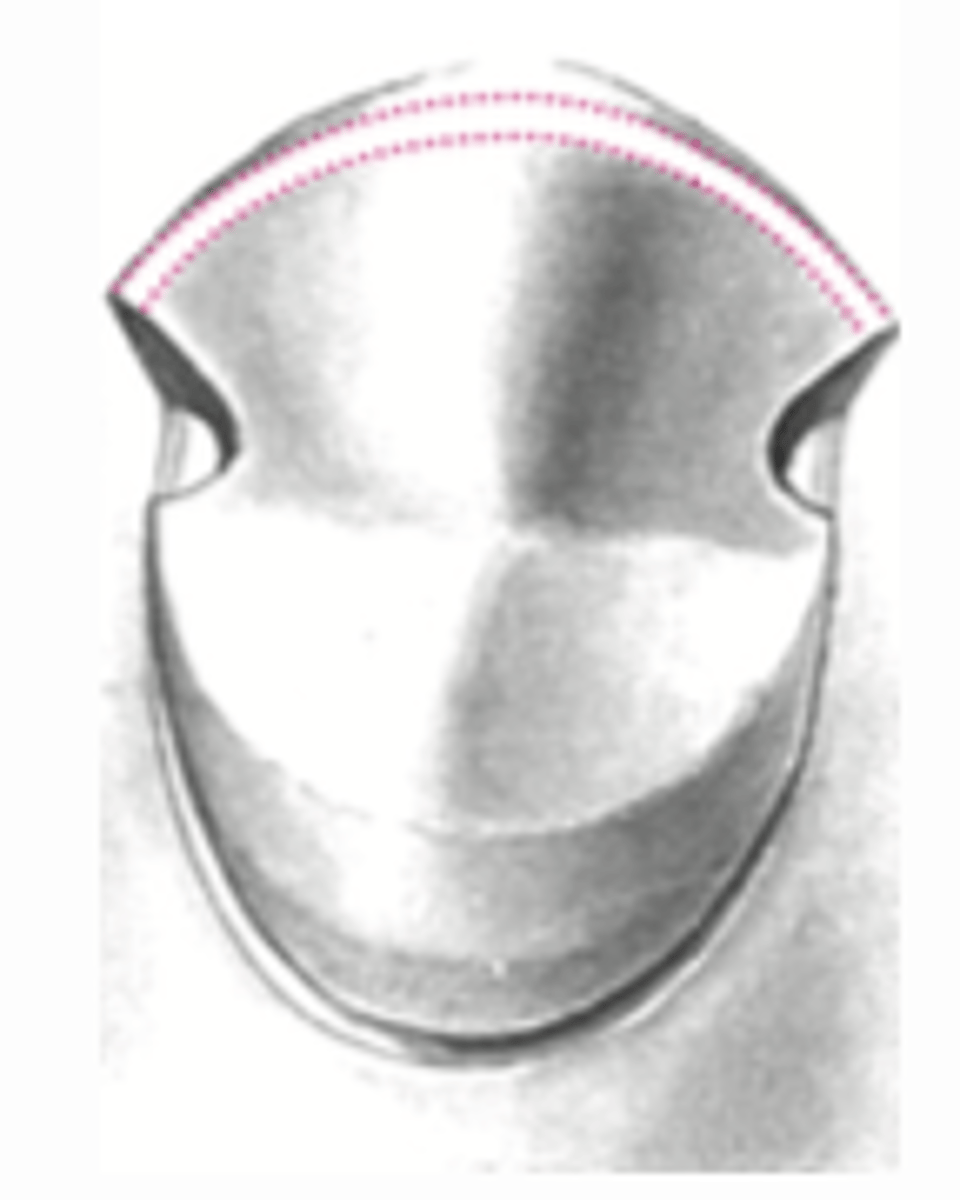
What type of cast partial coverage restoration?
3/4 crown
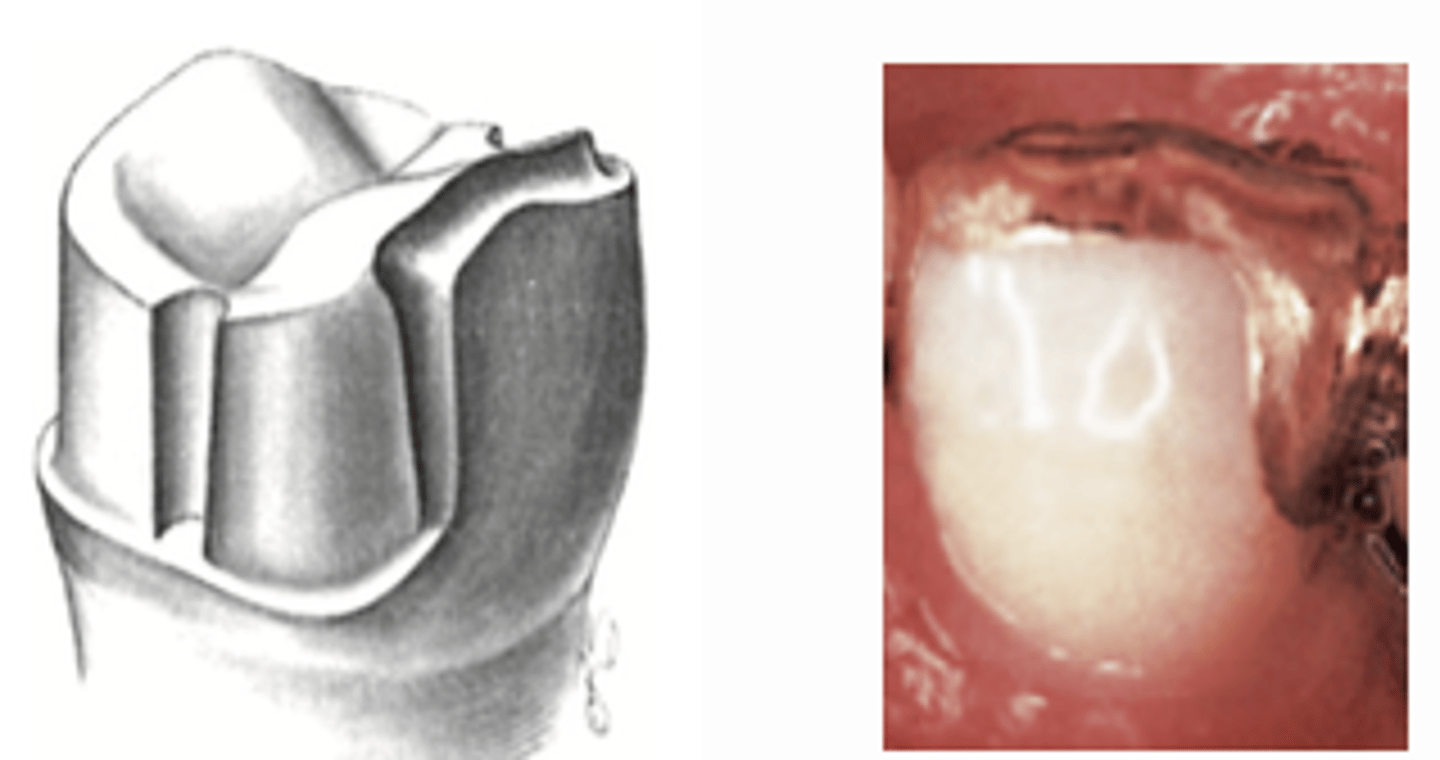
What type of cast partial coverage restoration?
Modified 3/4 crown
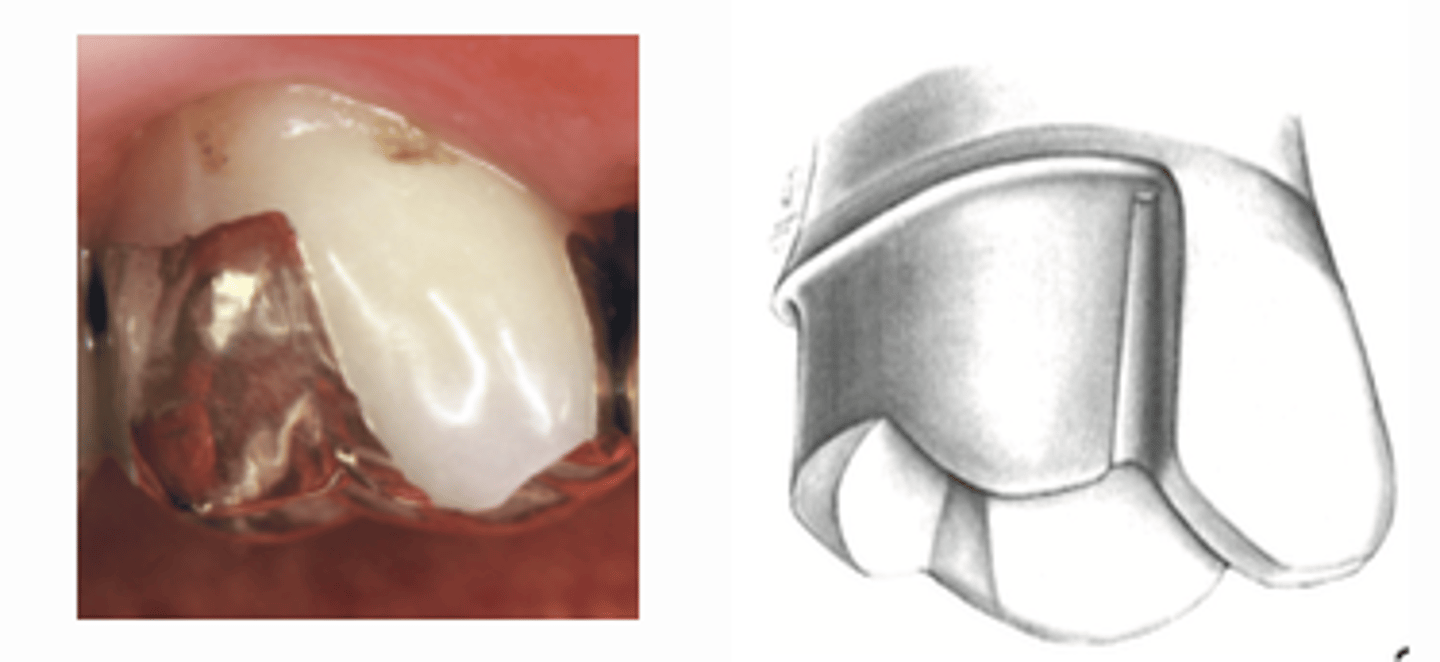
What type of cast partial coverage restoration?
7/8 crown
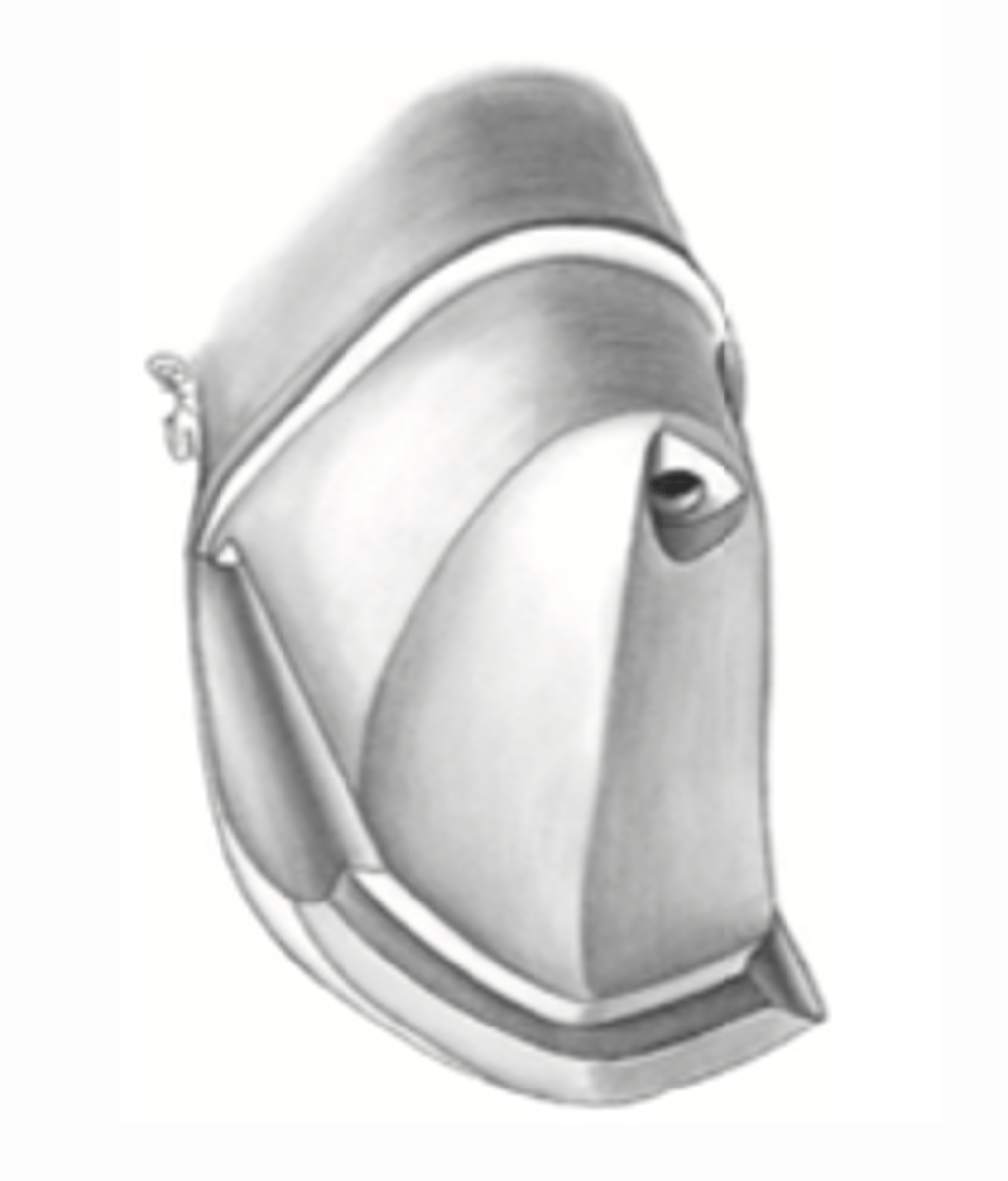
What type of cast partial coverage restoration?
3/4 crown
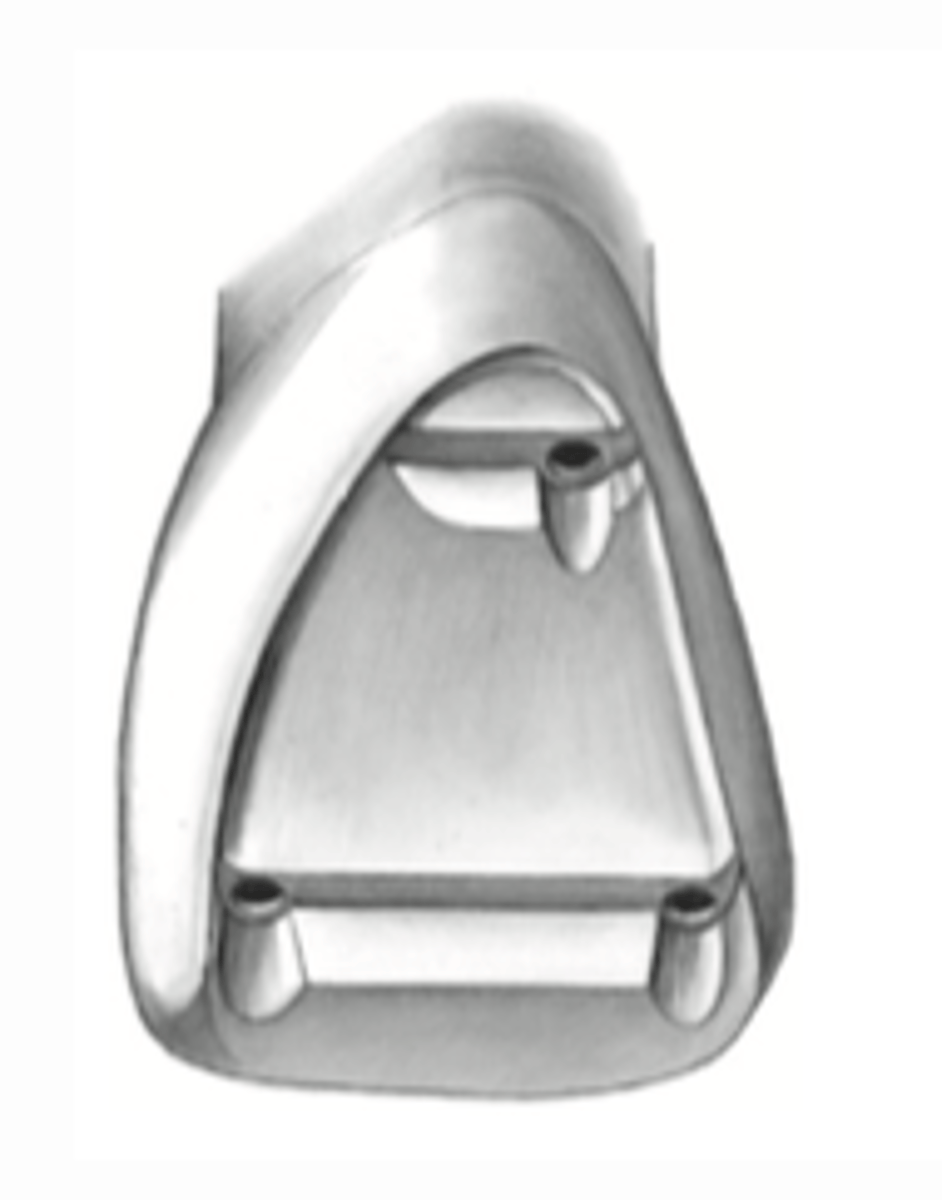
What type of cast partial coverage restoration?
Pinledges
What type of material is typically used today for partial coverage restorations?
Ceramic
Define the following:
A restoration that restores one or more cusps and adjoining occlusal surfaces or the entire occlusal surface and is retained by mechanical or adhesive means
Onlay
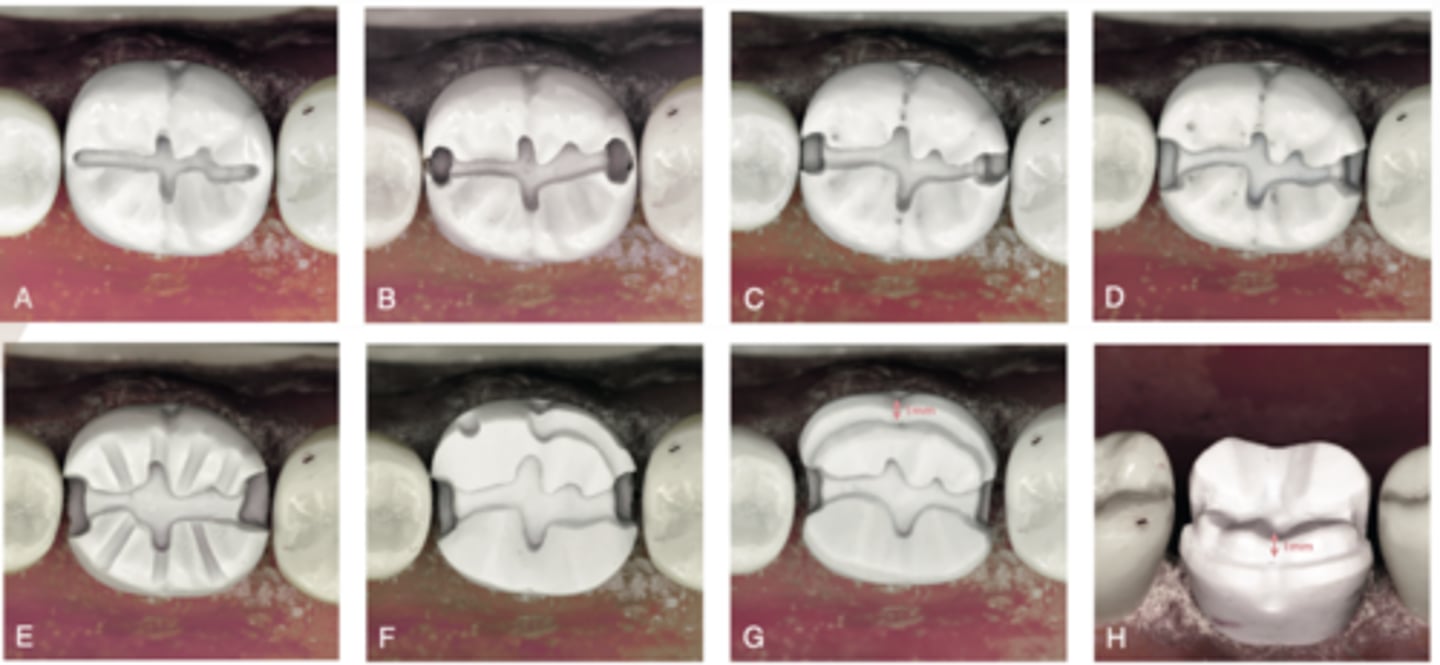
What type of restoration?
Onlay
What type of restoration?
- Adhesively luted, characterized by a defect-specific, less retentive preparation
- Conservative preparation, reduced loss of hard tooth tissues
Onlay
What are the 3 materials used for inlays/onlays?
- Glass matrix ceramics (Leucite-based/ lithium disilicate)
- Polycrystalline (zirconia)
- Resin-matrix ceramics
All of the following are TRUE regarding onlay preparation EXCEPT:
a. Occlusal reduction 1.5-2mm
b. Preparation margin 1mm
c. Smooth surfaces
d. Rounded line angles
e. Precise, flowing finish lines
f. Distinct, smooth chamfer margins on enamel
g. The margins of the restoration should not be at a centric contact
h. Proximal clearance, supra gingival margins, no beveled margins
i. Ensure adequate material thickness
j. Remove/block undercuts
a. Occlusal reduction 1-1.5mm
What is the limit of most milling machines?
0.5-0.6mm
(Few manufacturers can use 0.3mm round burs during the milling of zirconia)
In onlay preparation, we want a cervico-occlusal wall divergence of ______ degrees
10-12 degrees
What are two direct ways for onlay temporization?
- Separating medium
- Clear template
What are the steps for onlay try in? (7)
- Check the shade
- Check inter proximal contacts
- Check internal fit using fit-checker
- Verify seating via BW radiograph
- Do NOT adjust occlusion —> fracture risk
- Polish all the adjusted areas
- Achieve isolation
Can occlusal adjustments for onlays be done at the try in before bonding?
No - do not adjust occlusion, FRACTURE RISK!!
Can occlusal adjustments for onlays be done after cementation?
Yes - adjust occlusion, polish margins, & adjusted areas
All of the following are onlay complications EXCEPT:
A) Marginal discoloration
B) Marginal crack formation
C) Occlusal wear
D) Biological complications
E) Debonding
F) Secondary caries
G) Need for endo tx
G) Need for endo tx
What is the onlay survivial rate after 5 years?
95%
What is the onlay survivial rate after 10 years?
91%
What is the overall onlay survivial rate?
95.27%
Define the following:
The layer of material placed over a tooth, which improves the esthetics of smile and/or protects the tooth's surface from damage
Veneer
The following are indications for ______
- Discoloration
- Major morphologic modifications
- Malpositioned teeth
- Enamel defects
- Aging
- Generalized congenital and acquired malformations
Ceramic veneers
What are some examples of discoloration that indicates a ceramic veneer? (5)
- Tetracycline staining
- Fluorosis
- Extrinsic Staining
- Aging
- Teeth resistant to bleaching
What are two examples of morphological modifications that indicate a ceramic veneer?
- Diastema and Interdental Triangles
- Augmentation of the Incisal length and prominence
With aging, a thinner enamal indicates _______ flexure
More
What are three examples of enamel defects that indicate a ceramic veneer?
- Hypoplasia
- Malformations (Peg laterals)
- Loss of tooth structure
What are two examples of malpositioned teeth that indicate a ceramic veneer?
- Rotated or malpositioned
- Orthodontic can be an alternative or adjunctive treatment option, but many patients do not wish to undergo longer treatment with orthodontics
What direction is the path of insertion for veneers?
Horizontal
What direction is the path of insertion for crowns?
Vertical
What are the 2 workflows for creating veneers?
- Direct
- Indirect
What are the disadvantages of direct veneers?
- Microleakage
- Susceptibility to stain
- Poor wear resistance
- Technique sensitive
Advantages of Indirect Ceramic Veneers:
- Color
- Bond Strength
- Periodontal Health
- Resistance to abrasion
- Inherent porcelain strength
- Resistance to fluid absorption
- Esthetics
Disadvantages of Indirect Ceramic Veneers:
- Time
- Repair
- Technique-sensitive
- Color
- Tooth preparation
- Fragility
- Cost
All of the following are contraindications for veneers EXCEPT:
A. Sufficient enamel
B. Oral habits
C. Bruxism
D. Insufficient tooth structure
a - INSUFFICENT ENAMEL
What are the three indirect veneer materials?
- Feldspathic porcelain
- Lithium Disilicate (pressed or CAD)
- Polycrystalline (Zirconia)
What are three methods of fabrication for indirect veneer materials?
- Sintering technology on a platinum foil or a refractory die
- Pressing techniques
- CAD/CAM
What method of fabrication for indirect veneer materials?
- Superior esthetics
- Relatively low strength
Sintering on platinum foil or refractory dies
What method of fabrication for indirect veneer materials?
- Reduced esthetics
- Highest strength
Monolithic, stained (Pressed or CAD/CAM)
What method of fabrication for indirect veneer materials?
- Good esthetics
- High strength
- Reduced space
Cut-back technique, minimal veneering on a framework designed as a dentin core (Pressed or CAD/CAM)
What method of fabrication for indirect veneer materials?
- Very good esthetics
- High strength
- More space available
Layered with extensive veneer of a framework (Pressed or CAD/CAM)
What could we make to check esthetics, function, and show an example to the patient?
Mock up
What are you analyzing for the following?
- Interpupillary line
- Intercommissure line
- Facial midline
Frontal extra-oral evaluation
What are you analyzing for the following?
- Rickett's E Plane
- NSP (Nasiolabial angle)
Profile
What are you analyzing for the following?
- Maxillary midline
- Incisal plane
Smile analysis (extra-oral)
What are you analyzing for the following?
- Phonetics
- VDO
Functional
What are you analyzing for the following?
- Buccal corridors
- Smile line
- Gums
- Lips
Smile analysis (intra-oral)
What are you analyzing for the following?
- Gingival zenith
- Gingival levels
- Papilla
Gingiva
What are you analyzing for the following?
- Propotions
- Long Axis
- IDC
- Line Angles
- Shape
- Surface Texture
- Shade
- Incisal plane curve
- Incisal plane
Teeth
The following are objective criteria for what?
- Gingival Health
- Balance of gingival levels
- Gingival zenith
- Interdental closure
- Level of interdental contact
- Tooth axis
- Relative tooth dimensions
- Basic features of tooth form
- Tooth characterization
- Surface texture
- Color
- Incisal edge configuration
- Lower lip line
- Smile symmetry
- Midline and occlusal plane orientation
Dental esthetics
What factors go into diagnosis and treatment planning for veneers?
- Checking each tooth individually
- Facial and smile analysis
- Occlusal analysis
- Patient's expectations
The following are objectives for what?
- Determine Incisal Edge Position
- - Length
- - Bucco-lingual position
- Incisal Plane & Occlusal plane
- Esthetic Proportions
- Establish adequate occlusal scheme
Smile Design/ Diagnostic Wax Up
What options do you have in determining the incisal edge Position for a patient?
- Free-hand
- Wax-up
- CAD
How can you check a mock-up? (4)
- Check the design intra-orally (esthetics & function)
- Making changes and finalizing the design
- Communication with the patient and motivation
- Defining tooth preparation
When preparing a tooth for veneers, all margins should be finished on:
A) Enamel
B) Dentin
C) Pulp
D) Cementum
A) Enamel
If margins for veneers are located on ______, complete coverage restoration is recommended
Cementum
What is the suggested preparation reduction for the incisal edge for a veneer?
1-2mm
What is the suggested preparation reduction at the cervical 1/3 for a veneer?
0.3mm
What is the suggested preparation reduction at the middle 1/3 for a veneer?
0.5-0.7mm
What is the suggested preparation for the chamfer margin for veneers?
0.3-0.5mm
What are two ways to do a guided preparation? (2)
- Preparation guide
- Preparation through the mock up
Generally a depth of ____mm is needed to change the color of the tooth by one shade
0.2mm
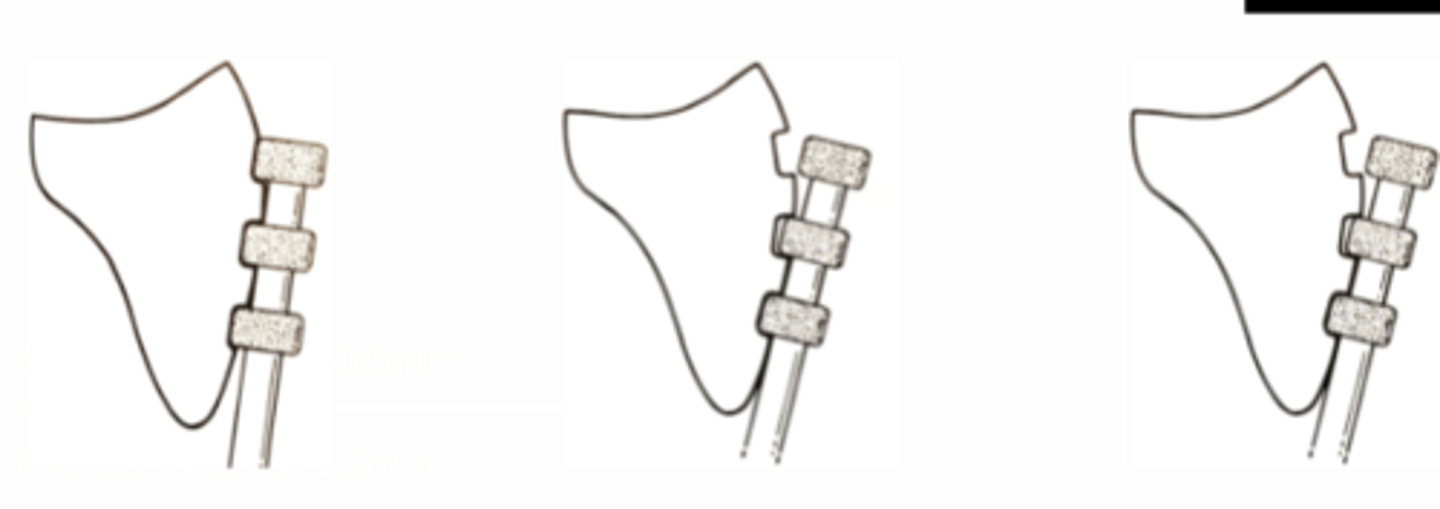
When using a depth cutter, to reach the necessary depth in Cervical and incisal thirds, the bur should be used in __ different angulations/planes
3
What has the following characteristics?
- Can only penetrate until the non-cutting shaft is flush with the tooth surface
- To reach the necessary depth in cervical and incisal thirds the bur should be used in three different angulations
Depth cutters
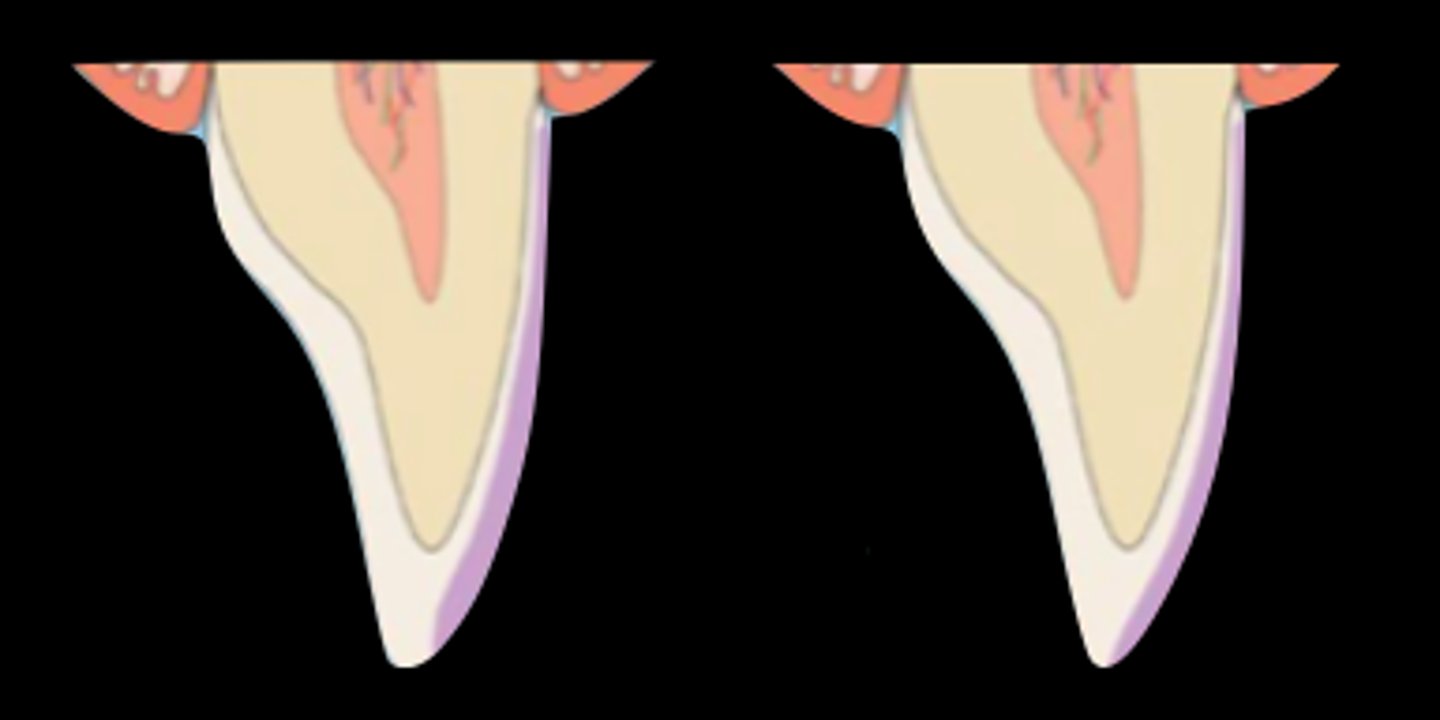
What type of incisal preparation?
Feathered incisal edge (window or bevel)
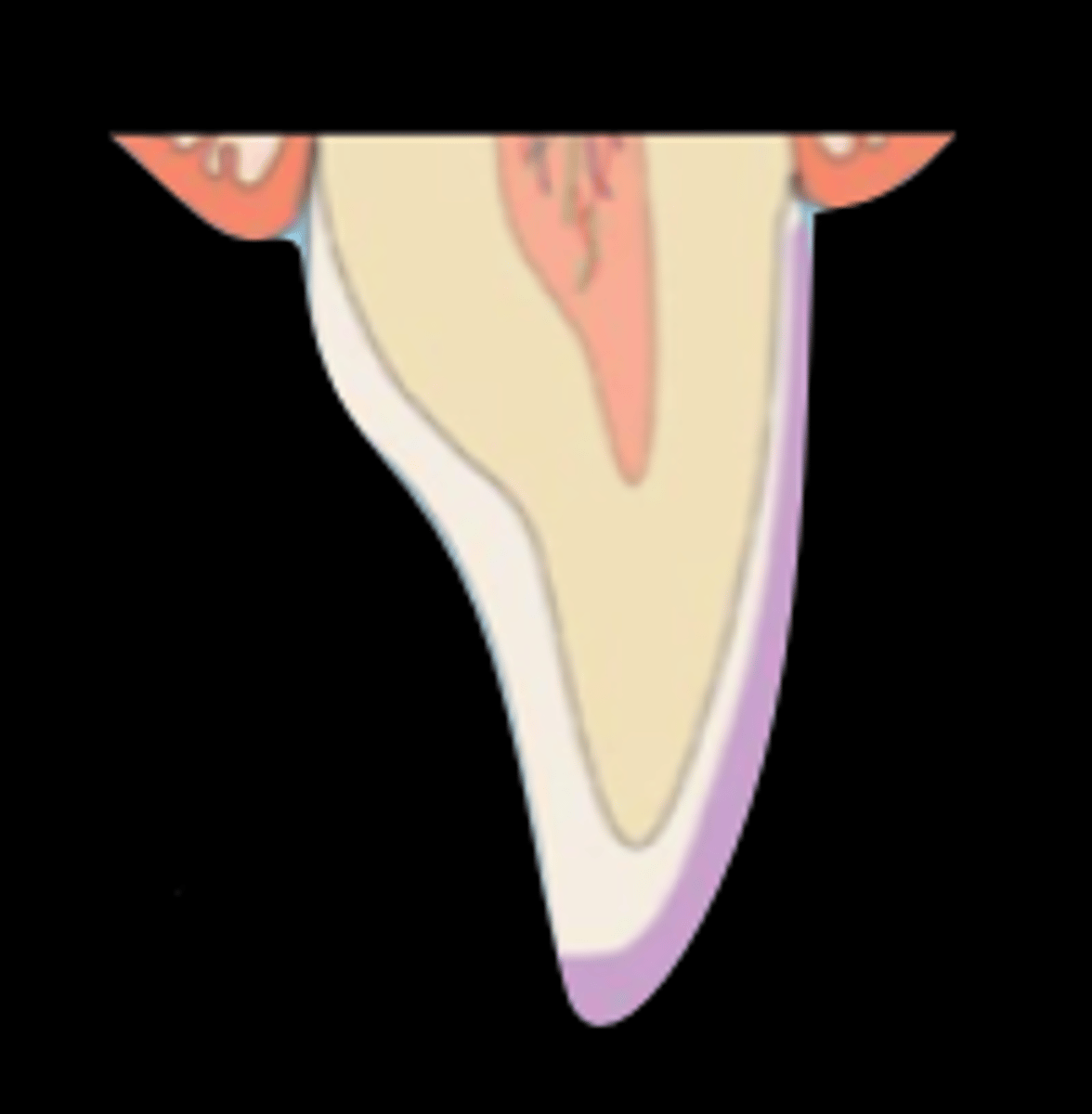
What type of incisal preparation?
Butt joint or mini chamfer
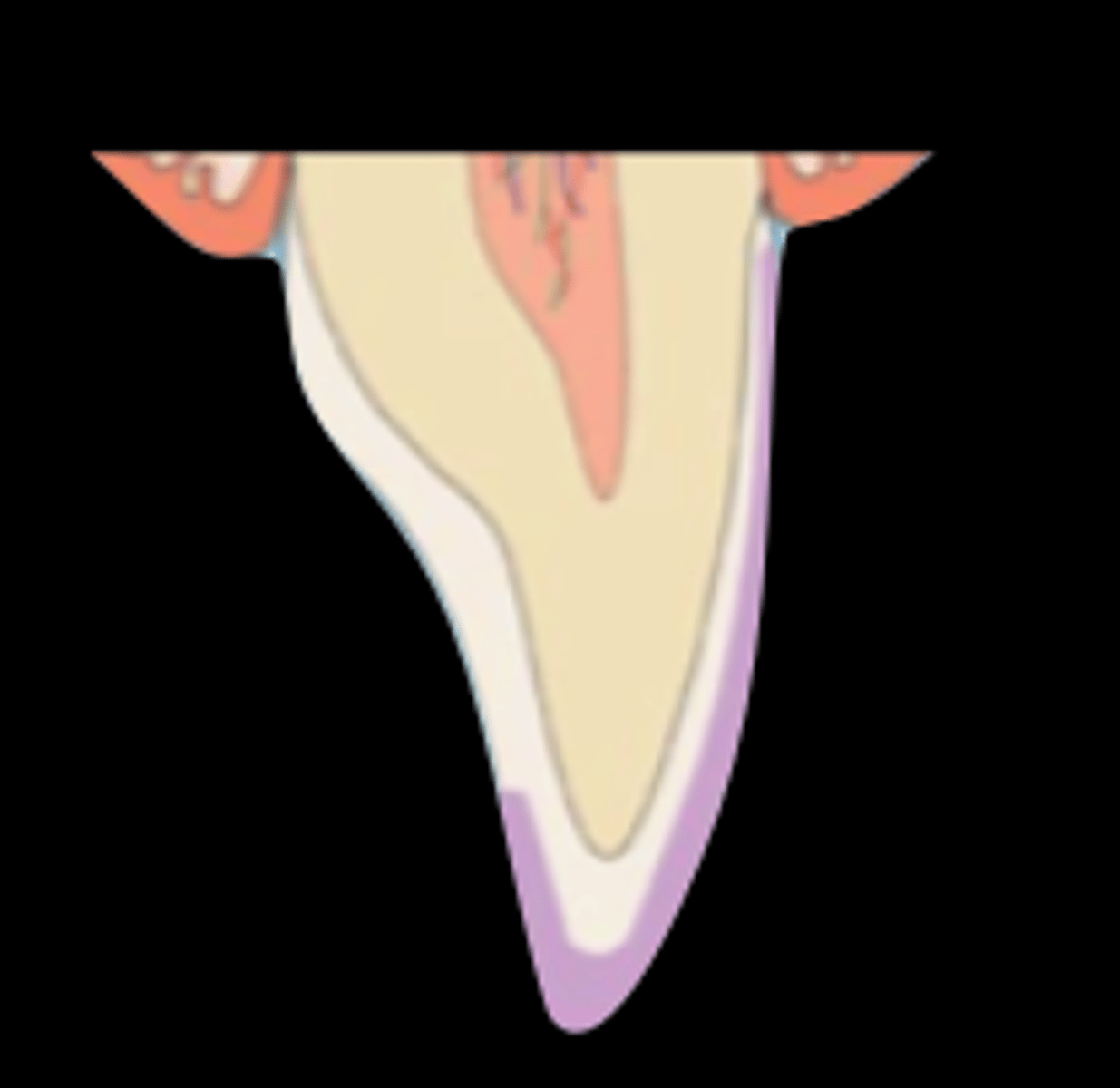
What type of incisal preparation?
Palatal chamfer
For an incisal preparation, it is important to avoid the contact point at least ___mm above or below
1mm
Feathered edge and palatal chamfer preparations caused a reduction in the ________ of the teeth
Strength
_________ preparation was more susceptible to ceramic fractures
Palatal chamfer
Which preparation least affected the strength of teeth?
Butt joint
Incisal edge reduction should be done to create a butt incisal finish line with lingual inclination of ___⁰. This improves esthetics & Improves mechanical properties
75°
For Suprangingival, Equigingival, Intrasulcular, there should be a shallow, thin chamfer finish line of ____-____mm
0.3-0.5mm
Define the following:
The most apical point of the gingival contour, which lies distal to the main tooth axis
Zenith of gingival margin
Where should the cervical preparation be placed for veneers?
Equigingival or up to 0.5mm intrasulcular preparation is recommended
Define the following:
This preparation is suitable for more extensive morphologic changes, for closing interdental spaces, for covering exposed dentin/ root or existing composite fillings, or when a considerable difference in color exists
Intrasulcular preparation
What can you use as a guide to prepare the facial/labial surface of a veneer?
Horizontal depth cuts
Where should a short wrap occur for interproximal preparation for veneers?
Facial to the contact area, visible
What does a medium wrap do for interproximal preparation for veneers?
Hides the margin in the inter proximal niches but retains the contact points
What does a long wrap do for interproximal preparation for veneers?
Opens the contact points, indicated when major changes of form, closures of diastema/ interdental triangles are planned
Preparation of the proximal surface should be extended to include the _______ area
Proximal sub-contact
Define the following:
- Shade of the tooth after preparation
- This will give the lab tech an idea about the darkness of the substructure to determine the amount of the opaque layer needed to mask
Stump shade
Which of the following is paired CORRECTLY?
A) Facial to the contact area, visible = short wrap
B) Hides the margin in the inter proximal niches but retains the contact points = medium wrap
C) Opens the contact points, indicated when major changes of form, closures of diastema/interdental triangles are planned = long wrap
ALL ANSWER CHOICES
What is the suggested prep depth for a veneer if you want to shade change from A4 to A1?
0.9mm
What is the suggested prep depth for a veneer if you want to shade change from A2 to A1?
0.5mm
What is the suggested prep depth for a veneer if you want to shade change from A1 to A1, just fixing the shape?
0.3mm
What has the following characteristics?
- Silicon mold of the wax-up
- Cover prepared teeth with separating medium
- Apply temporary material
Provisionalisation
What has the following steps?
1) Spot etching with 37% PA for 20''
2) Rinse with water and air-dry
3) Apply dentin bonding agent, light cure for 10 seconds
4) Clean the intaglio of temporaries
5) Rinse with water and air-dry
6) Apply dentin bonding agent on intaglio surface and then flowable resin composite
Provisionalisation
Fracture resistance of ceramics bonded with resin cements is significantly ________
Increased
What type of cements are recommended for veneer cementation?
Light-cured only cements
Why are light-cured only cements recommended for veneer cementation?
Amines in self-cure materials discolor