L15- Evolution of Modern Humans
 View linked note
 Call Kai
 Learn
Learn Practice Test
 Spaced Repetition
 Match
Match Flashcards
 Knowt Play
1/28

There's no tags or description
Looks like no tags are added yet.
Name | Mastery | Learn | Test | Matching | Spaced | Call with Kai |
|---|
No analytics yet
Send a link to your students to track their progress
29 Terms
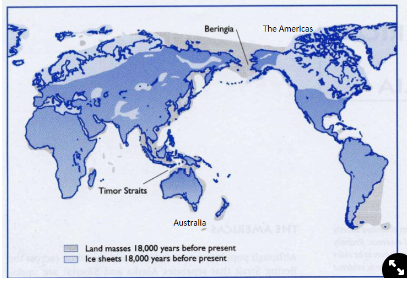
Into Australia:
the ice caps were much larger, Russia was joined to Alaska
but Australia was still isolated, at low sea levels it is attached to New Guinea
can only get to New Guinea by island hopping and had to travel 30 miles (beyond what the eye can see over the horizon)
either voyagers were going from island to island for fishing and were blown off course or could see smoke from wildfires
had to get there by boat
arrived to Australia 60-50,000 years ago
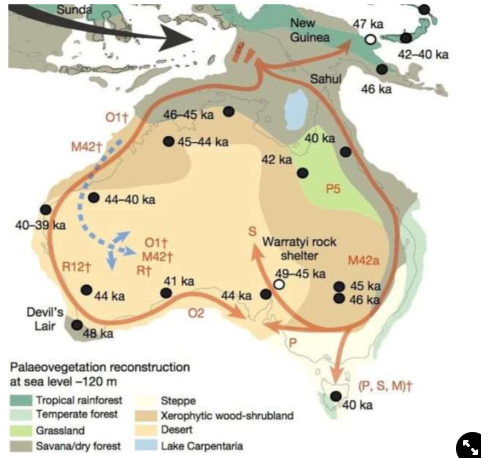
There are 2 theories of the invasion into Australia:
2 invasions→
gracile sapiens came from China by New Guinea and went right
robust sapiens came from Africa by Java and went left
1 invasion→ sapiens came from Africa by Java and hopped onto Australia, one population went one way, the other went the other way
→ evidence suggests there was only 1 invasion
Australian homos:
get first cremations
‘Mungo Man’ fossil→ Homo sapien, 50ya
get good rock art
changed the landscape dramatically and burnt a lot of the vegetation
Evidence for into Australia:
Archaeology
Anatomy→ suggests 2 invasions but is disputed now
Molecular Studies→ suggests a single origin for all Australians (1 invasion)
Megafauna→ all megafauna were wiped out at the same time as the migration through Australia
→ changed the environment by overhunting, burning, getting rid of other Homos
Into the Americas:
tracked mammoths across the Mammoth Step→ tundra grassland from Eurasia across to North America
→ the society hunted and used the mammoths
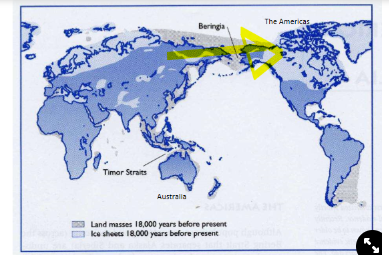
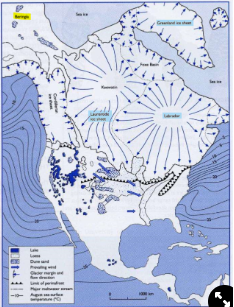
Ice sheets:
there were 3 ice sheets at the time
either sailed down the coast or came across from Beringia and walked down between the mountains and the ice sheets (more likely)
America→ South America:
spread to South America very quickly ~30,000ya
either one group came in from the Americas and another sailed across the Pacific Ocean
evidence suggests that all Americans remains’ closest relatives are Siberian→ there was only one group came in and spread out
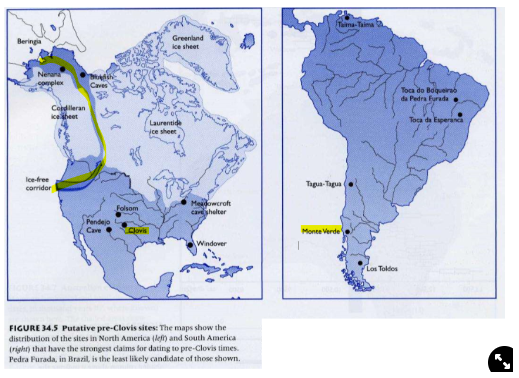
Clovis→
sites with very distinctive flint tools that are found all over South America
humans went into the Americas, went across and there was a population explosion with clovis culture developing across the Americas
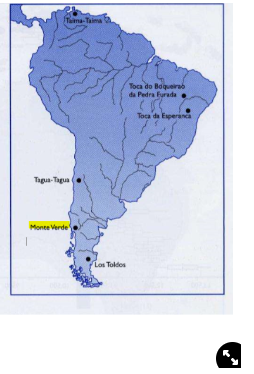
Monte Verde (famous site) is an outlier
→ the Americas were colonised earlier and then there was an internal population explosion
Evidence for into the Americas:
Archaeology
Anatomy
Molecular Biology
Language→ hundreds of languages came from 3 languages
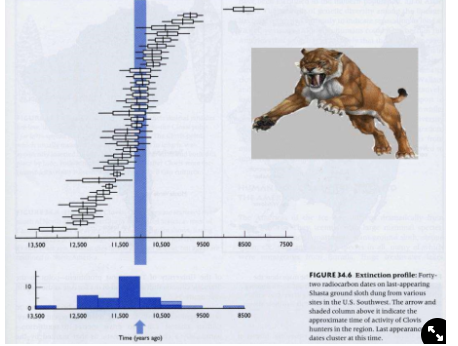
Megafauna→ wiped out these as humans expanded during the clovis time, e.g.:
the shasta ground sloth disappeared around the clovis time
→ human arrival and overhunting are the main cause of extinction
only get megafauna in Africa today→ humans grew up with them
Why was Homo so different?
human intelligence (brain expansion)
speech/language
technology/tools
art
Brain size in hominin evolution:
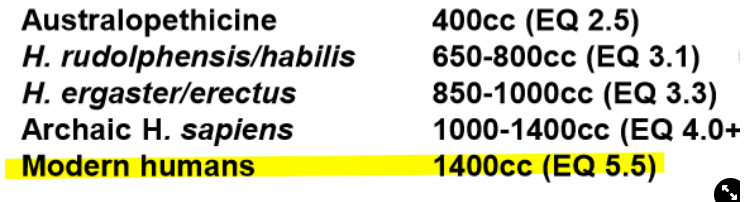
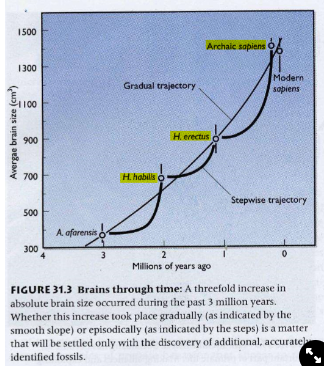
there is a continuous brain size increase in hominin evolution (used for socialising more now than hunting, similar to monkeys)
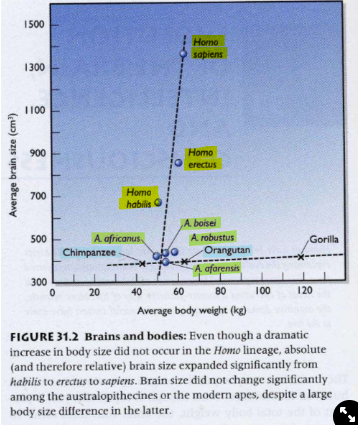
Have a huge expanded brain size that doesn’t fit our body size
Brain expansion is able if…
we increase mother’s metabolic rate and have a longer gestation time leading to smaller litters
Problems with such a large brain:
requires a stable, high energy food source
birth problems→ skull collapses in during birth and develops more after birth, needing an extended childhood
Homo brain size:
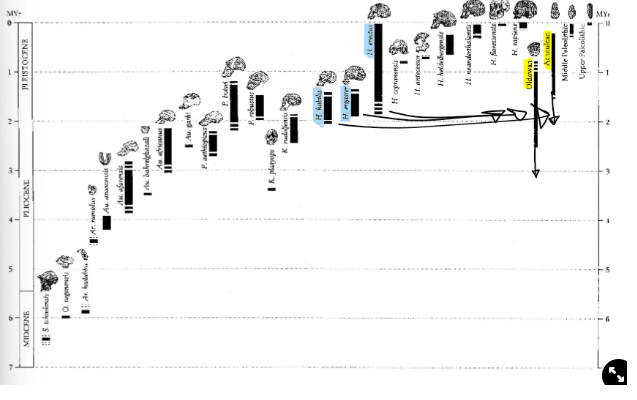
Homo brain size follows a step-wise gradual trajectory:
Australopithecines brain size vs Homo vs apes:
Australopithecines brain size x body weight is similar to apes but Homos are completely different:
Speech/Language evolved in…
The ability to speak evolved in Homo heidelbergensis who passed it on to Homo neanderthals and Homo sapiens
Evidence for speech:
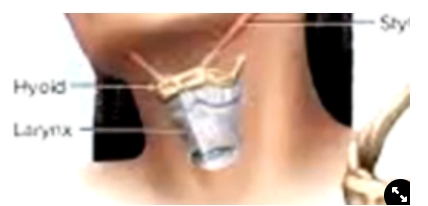
Hyoid bone→ bone that holds the tongue, is very different in Homo erectus but is similar to Homo heidelbergensis and its descendants
Endocasts of skull→ know areas of the brain involved in speech
Larynx/Pharynx structure→ Adam’s apple is low to allows breathing and speaking but also allows more choking
Tongue nerve hole→ big
Spinal canal→ wider nerves, more traffic
Tools/Art→ comparing grades of art with intelligence
FOXP2 gene→ controls speech (if mutated in mice, they cannot squeak)
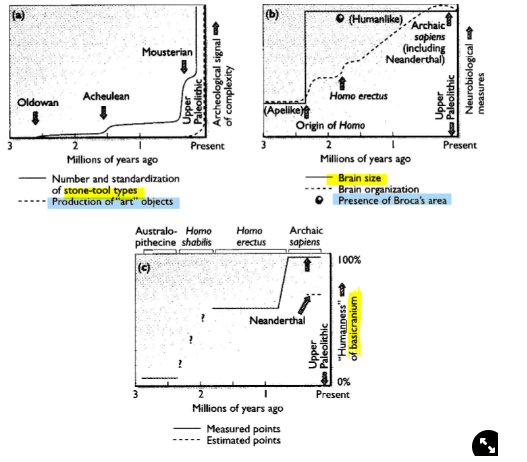
can use different technologies to look at intelligence/speech:
get an archaeological signal of complexity using tools
put in neurobiological measures to work out how the person would have reacted and the brain areas involved
can look at skull features to understand intelligence and speech
Technology→ Tools:
Archeulean tools coinciding with Homo habilis, ergaster, erectus and then there are step-wise changes in tools:
Africa, Asia and Europe are out of step with tools and are not connected:
 → detail increases with newer tools
Classified different technologies and tried to date them→ is hard due to interconnectivity e.g. one population dropping tool and other population taking it and it spreading then
Art:
From Homo neanderthals and Homo sapiens
Ochre
Paintings in caves
Figurines
Sungir
Ochre-
100,000ya in South Africa, burning of metal oxides, made bright colours, put on faces and walls
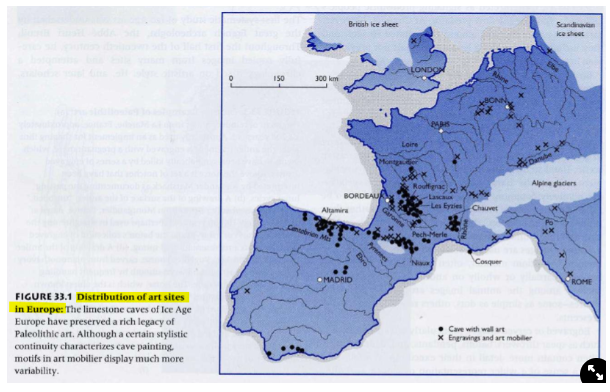
Paintings in caves-
35-10,000ya throughout Europe, Africa and China
coincides with the last glacial maxima→ was very cold and so went into caves
the paintings are usually just single animals and hands
humans are rarely depicted but are more in newer paintings
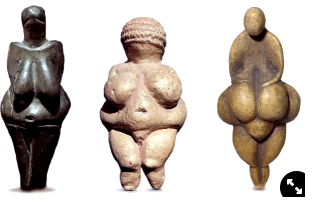
Figurines-
35,000 years ago
can interpret them e.g. fertility symbols
had the time to make these→ shows conciousness
Sungir-
Upper Palaeolithic, 28-30,000ya
was a man buried in 2936 ivory beads from mammoth tusks
lived in hunter-gatherer groups and had time to spare
There have been rapid progressions:
100,000ya→ Jewellery beads from North Africa
40,000ya→ Flutes discovered in Europe (hollowed out bones)
30,000ya→ Wild flax (vegetation) used to manufacture clothes
30,000ya→ Dogs were domesticated from wolves among hunter-gatherer populations
20,000ya→ Pottery used to carry water around
Followed herds of…
mammoths:
made huts out of bones, painted and (3D) carved them:
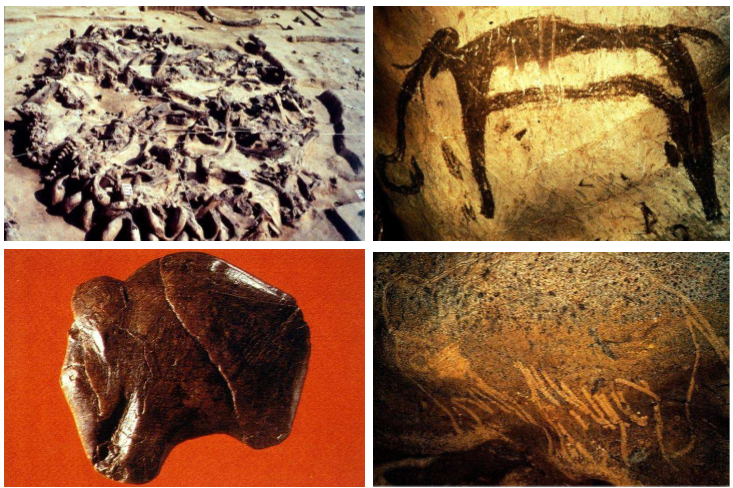
followed them into the Americas
After hunter-gatherers into the Americas, there was a…
supernova
Supernova→
lived independently by growing crops and animals
happens independently 3 times around the world:
→ allows a more stable food source, can settle down and don’t have to follow meat (mammoths)
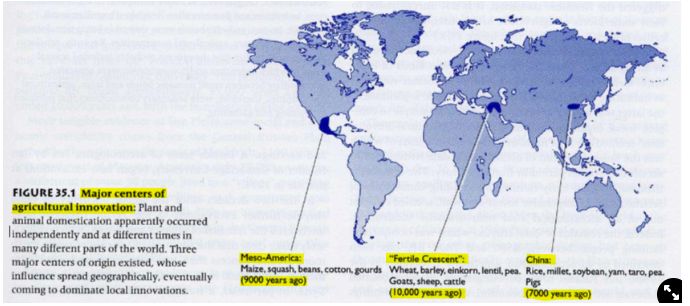
Agricultural Neolithic Supernova→
population explodes at this time (10million→ 100million) and keeps rising from this point
Can see transition from hunter-gatherers to farmers (living there temporarily to living there permanently) from 13-9,500ya in Syria
Can see the earliest walled city (trading post) 10,000ya in Jericho
The Bronze Age begins 5,300ya (Homer)