Exercise Science Exam 3
 Call Kai
 Learn
Learn Practice Test
 Spaced Repetition
 Match
Match Flashcards
 Knowt Play
1/88

There's no tags or description
Looks like no tags are added yet.
Name | Mastery | Learn | Test | Matching | Spaced | Call with Kai |
|---|
No analytics yet
Send a link to your students to track their progress
89 Terms
Biomechanics
study of internal and external forces acting on the human body and their effects.
Quantitative versus qualitative analysis
Depends on environment and availability of high-tech equipment.
Quantitative analysis
using high-tech instrumentation. Usually intended for researchers. Measuring variables to optimize athletic performance such as forces, muscle contraction sequences, and 3-D body movements.
Computerized motion analysis
allow multiple forms of biomechanical instrumentation to be synchronized for collection of data from athletic performance.
t’s a technology that lets us record motion and turn it into detailed data so we can study how something moves.
Force Platforms
a plate you can stand, walk, jump on, etc. special computerized biomechanical instruments that measure the forces generated on the ground by athletes performing athletic skills.
Electromyography
measures and records the electrical activity generated by the muscles as they are stimulated by the athlete’s nervous system. The system records the electrical process of the contracting muscles and determines their timing (onset and duration of the contraction) during performance.
Qualitative analysis
using sight and hearing. Usually done by coaches and teachers. To identify and correct errors: observe, analyze and correct. Requires framework and a set of principles.
Kinematics
describing human motion without its forces. Focusing on motion’s spatial and timing characteristics. Measurements are time, displacement, velocity, and acceleration
Kinetics
Describing forces leading to motion.
Internal forces: muscles pulling on bones, or, one-on-bone, inside joins
External forces: acting on the body without contact, or from contact with ground, opponent or equipment.
Particle model
Dot represents center of mass (or gravity). Used when a body or object is airborne and in flight. An example is a projectile motion
Stick figure model
body segments= sticks. Used when the body is in contact with other objects. Describe gross motor skills in 2-D.
Rigid body segment model
body segments = irregular 3-D volume. Used for sophisticated 3-D analyses. Includes shape deformation of body segments.
Center of mass
the point around which the body’s mass is equally distributed in all directions. It can be outside the body.
Mass
amount of matter in an object. Objects are reluctant to change state of motion. A measure of inertia.
Moment of inertia
reluctance of rotating objects to change states of motion. Depends on mass and its distribution around the axis of rotation.
Gravity
Force of attraction between two bodies.
Weight
a measure of the force of gravity acting on the body.
Linear motion/translation
All body parts move in the same distance and same direction, at the same time. Linear motion of the whole body. Force acting on the center of mass/pivot point.
Angular motion/rotation
Body moves on a circular path and rotates about axis of rotation. Body segments rotate around their joints. Examples include twisting or somersaults. Force not acting on center of mass and result in torque (movement of force.
General motion
Body/segments move linearly and rotate at the same time. (more on slide about this). Most of the things we do are general motions.
Force
any action, push or pull, that tends to cause an object to change its state of motion by experiencing acceleration or as a state of constant velocity. To determine force amount, consider the length of the force arm and resistance arm. Movement of force or torque is produced when the lever rotates around an axis.
Torque
force arm x force. With a longer force arm, less force is needed and greater torque is produced.
Lever system
Mechanical device performing angular motion. Components are axis of rotation/fulcrum (pivot) and lever attached to fulcrum.
First class levers: applied force and resistance on opposite sides of the axis at unequal distance from one another. Head flexion (moving head and neck) is an example of this. RAF
Second class levers: applied force and resistance on the same side of axis; resistance closer to axis. Hard to find in the human body, but an example is a toe raise. ARF
Third class levers: applied force and resistance on the same side of the axis; force closer to the axis. An example is a fishing rod. In the human body, an example is forearm flexion. AFR
Newton’s first law of motion
objects will not change their state of motion unless acted on by an unbalanced external force.
Newton’s second law of motion
objects will experience a change in velocity or acceleration proportional to the unbalanced external force.
Newton’s third law of motion
for every action there is an equal and opposite reaction; forces act in pairs that are equal in magnitude and opposite in direction.
Fluid dynamics
knowledge of the forces generated by a fluid environment such as water and/or air.
Drag
a type of fluid force. These forces act in the opposite direction to the body’s travel and slow it down relative to the body's velocity, size, shape, and roughness.
Profile drag
caused by the object’s size and shape. Characterized by turbulent flow. Velocity of air flow past the object is too fast for air to follow the body's contour. Backflow occurs at an object's surface causing large, turbulent low-pressure zones behind the body. This zone is continually formed and increases the object's work. Decrease frontal surface and decreasing sources of turbulence, as well as drafting, help reduce profile drag.
Surface drag
caused by an object’s roughness.
Boundary layer: thin layer of fluid adjacent to skin and carried along with body’s motion towering along outer fluid layers.
Laminar flow: small, streamlined, smooth, slow-moving bodies. Smooth, layered flow pattern with no disturbance.
Turbulent flow: most human activities. Disturbed flow pattern that changes flow conditions.
Magnus effect
A rotating body carries a boundary layer that interacts with surrounding air. Boundary layer flow is opposite to relative airflow. Air is slowed by friction. A zone of increased pressure is created. Boundary layer flows same as relative airflow than air is not slowed down and a zone of increased pressure is created. The magnus effect is mostly found in ping pong, tennis, soccer, and baseball.
Magnus force: net difference in pressure on opposite sides of a rotating object. The difference in pressure from the top of the object to the bottom of the object.
Equilibrium
a state of a system not experiencing change in direction and speed
Static equilibrium
body at rest. Increase in base size, body size, lower center of gravity, or increase in distance between gravity line intersecting base and outside base edge. All of these things can improve stability in static equilibrium.
Dynamic equilibrium
body moving at constant velocity. To improve stability, widen base towards oncoming external horizontal force, Move center of gravity towards base edge during quick acceleration, shift center of gravity towards oncoming force, or use reflex movement to regain loss of balance.
Balance
process where the body's equilibrium is controlled for a purpose. Affected by two factors:
Base of support: area of contact between body and surface. Wider base yields to greater balance.
Line of gravity: imagery vertical line that passes through center of mass. Has to pass through a base of support for balance.
Stability
a measure of the difficulty with which equilibrium can be disturbed. Net internal force required to overcome static or dynamic equilibrium. During critical performance times, there is a tradeoff between maximizing stability and acquiring speed.
Qualitative analysis
subjective yet systematic evaluation of human motion without messing and using numbers. It is based on visual observation or video recording. Allows discovery of movement tendencies and generates immediate and specific feedback. It depends on the coach's and player’s understanding of the skill.
Preparation: knowing the skill, identification of critical phases determining correct execution, determination of skill objective
Observation: what to observe, where to observe, how to observe
Evaluation: evaluative movement, identification of problems and weaknesses, determination of acceptable range of correct movements.
Error correction: provision of quality feedback and effective communication
Secondary objectives
different aspects of a movement. For example, hitting a bat requires speed and accuracy. Skills with similar overall objectives are governed by similar biomechanical principles.
Dividing skill into phases
make sense to the coach and how the skill is being defined and taught.
Identifying Skills with similar overall objectives are governed by similar biomechanical principles
Throwing, striking, kicking objects for maximal horizontal surface.
Observation of performance
difficult task because of speed skill. An observation plan beforehand identifies what,why, where, and how observation will occur. Coaches must use vision (dominant), hearing, and feeling as well as look for tracks and traces. Confirm observation accuracy with athlete and video recording (if possible)
Error sources
Mental: concentration lapse of fear
Physical: lack of strength, poor habits, overtraining
One to two errors should be worked on at a time. Doing them all at once can be overwhelming and hard to fix.
Motor behavior
describes the study of the interactions between many of the physiologic and psychological processes of the body. Composed of motor development, motor learning, and motor control.
Motor learning
study of how individuals learn skilled movements from instruction, practice, and/or experience. How one learns to control muscles and coordinate limbs in order to produce chosen movement. Study of how individuals learn skilled movements from practice or experience. Is seen in stages:
Prenatal
Infancy
Childhood (most motor development is from infancy to childhood)
Adolescence
Adulthood
Older adulthood
Motor control
study of the neurologic, physiologic, and behavioral aspects of movement. Theories of motor control must address the “what” and “how” of human control.
Motor development
study of alterations in motor behavior that result from the maturation of the individual.
Development of motor behavior
early induces on motor development. Daily observation of babies and their changes in reflexes, movements, and feeding behaviors. Recent influences on motor development. Shift from developmental psychology and the understanding of maturation to a physical education emphasis on how to improve children’s motor behavior.
Learning process
understanding the skill, acquiring and refinding the skill, automatization (automatic) of the skill, generalization of the skill (meaning it can apply to other things other than that one skill)
Stimulus recognition
collection of information from the environment.
Response selection
decision on what to do after collecting and processing information.
Response programming
initiation of an action after a response has been selected.
Somatosensensation
thermoreceptors (detect temperature), nociceptors (pain), mechanoreceptors (tension, force), proprioceptors (limb position), muscle spindles, golgi tendon organs.
Visual guide of action
reaching and grasping, locomotion, catching
Vestibular contribution to action
balance and spatial orientation.
Muscle spindles
stretch receptors within muscle, detect changes in length in muscle.
Golgi tendon organs
senses changes in tension and lies between muscle and tendon.
Memory
retaining and recalling facts, events, impressions, and remembering/recognizing previous experiences. Multistore memory model. Short term sensory store. Shorts and long term memory.
Neurological adaptations
altered brain chemistry. Structural changes in CNS. Dendritic branching, synaptic connections, altered pathways
Engrams
hypothetical meaning by which memory traces are stored as biophysical or biochemical changes in the brain (and other neural tissue) in response to external stimuli. It is responsible for muscle memory
Learning
acquiring a new, or modifying existing, knowledgeable, behaviors, skills, values, or preferences and may involve synthesizing different types of information. It is a relatively permanent change in a person’s ability to execute a skill as a result of practice or experience doing the skill. We can’t see learning because the internal process can’t be observed.
Cognitive stage of learning
learners get the general idea of overall skill. Performance may be slow, jerky, and highly variable with many errors. Self-talk is used in this stage.
Associative stage of learning
focus on smaller details leads to skill refinement. Performance is more fluid, controlled, and consistent with few errors.
Autonomous stage of learning
skill execution is automatic, allowing focus on other aspects of performance. Performance is effortless, relaxed, and accurate with few errors. Performance improvements are relatively slow with less room for improvement.
Intrinsic feedback
information that is provided as a natural consequence of performing an action. Success or failure of performance provides intrinsic feedback.
Muscle sense
muscles gather information about movement. Stimuli are the result of muscles and tendons pressure and tensions. Specific receptors in the muscles, tendons, and joints supply intrinsic feedback.
First learning stage: muscles contradictory information. Awareness of muscle signals not developed.
Second learning stage: requires extensive practice.
Extrinsic feedback
information provided to learning by external sources at outcome, such as suggestions used to correct and refine the skill. This can be controlled to a great extent.
Negative transfer
when dissonance between learned and new skill results in negative transfer to the new skills. For example, tennis forehand may make it more challenging to learn squash forehand (different wrist action). Essential to avoid activities that may transfer negatively when performance is crucial
Positive transfer
fundamental movement skills in practice applied to game situations. Drills will only be effective if the transfer from the drill to the actual game is strong or positive.
Near transfer: desired when the learning goal is a task similar to training a task. Transfer of learning is fairly specific and closely approximates the ultimate situation.
Far transfer: learning more general capabilities for a wider variety of skills. From one task to another very different task or setting. The goal of practice is general. Best applied when beginning to learn a skill.
Mental rehearsal
involves constructing model situations and going through the motions. Useful supplement in developing timing and rhythm and in aiding concentration and preparation for competition.
Athletic training
involves the prevention, treatment, and rehabilitation of injuries to physically active individuals and athletes. Athletic trainers work closely with allied health professionals to provide care to anyone who may have an injury caused by participation in sport or exercise. Athletic trainers help prevent athletic injuries by doing pre-partipation physical examinations, and are aware of physical, environmental, and practice conditions that could cause injury. They also diagnose injuries and support treatment and rehabilitation.
Microtrauma
fracture, dislocation, subluxation, sprain (ligament), contusion, strain (tendon)
Injury evaluation process
Unconscious:
Primary survey such as responsiveness, airway, breathing, circulation, bleeding.
EMS
Conscious:
Secondary survey such as vital signs, history, observation, palpation, special tests
Follow-up treatment
Emergency treatment
Transport action
Simple
a type of fracture (8-12 weeks to heal). Bone breaks cleanly; no penetration.
Compound
a type of fracture when the bone penetrates through the skin.
Comminuted
a type of fracture when the bone fragments into many pieces; aged or brittle bones.
Compression
a type of fracture when the bone is crushed.
Greenstick
a type of fracture when the bone breaks incompletely.
Anterior Cruciate Ligament (ACL)
Connects the femur to the tibia in the center of your knee. It limits rotation and the forward motion of the tibia. ACL injuries often occur when bones of the leg twist in opposite directions under full body weight.ACL injuries in female athletes are higher than male ahtletes performing the same sports. Possible reasons are: differences ins tructure and knee alignment, ligament laxity, and muscle stregnth.
Arthroscopic surgery
minimally invasive procedure used to examine and treat damage to the interior of a joint. Used to evaluate and treat orthopedic conditions such as torn floating cartilage, torn surface cartilage, and torn ACL of the knee joint.
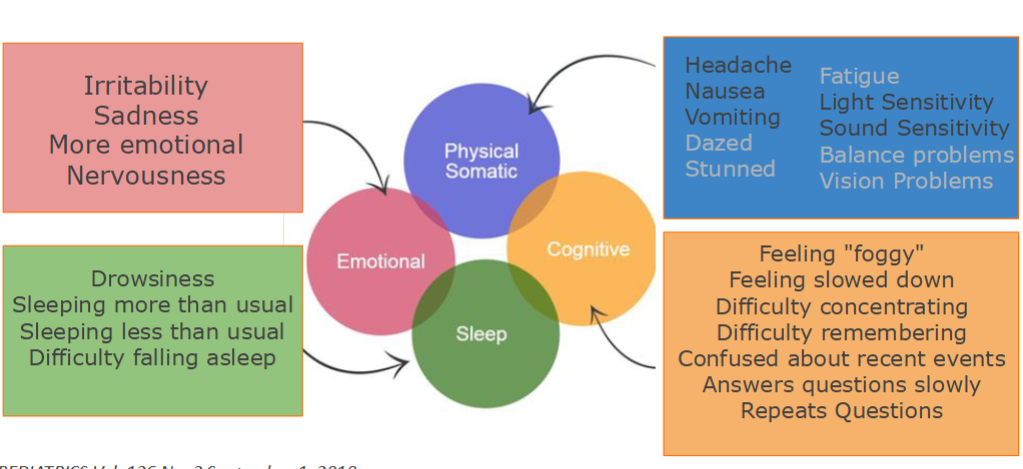
Concussion management
most common sport-related concussion is the diffuse brain injury. Occurs when a side-to-side or front-to-back motion causes the brain to be shaken within the skull. It can be difficult to diagnose because they cannot be seen by an MRi, x-ray, or CT scan. Symptoms can take weeks or months to appear and may appear in stages; may be a little different for everyone. Many concussion symptoms can also occur to do other causes, making it harder to diagnose. Concussed individuals may not recognize or admit to having symptoms.
Direct: simple physics. Objects hit their heads.
Indirect: blow to chin or fall in sitting position.
Contrecoup injury: brain damaged on opposite side of trauma or head moving into stationary object.
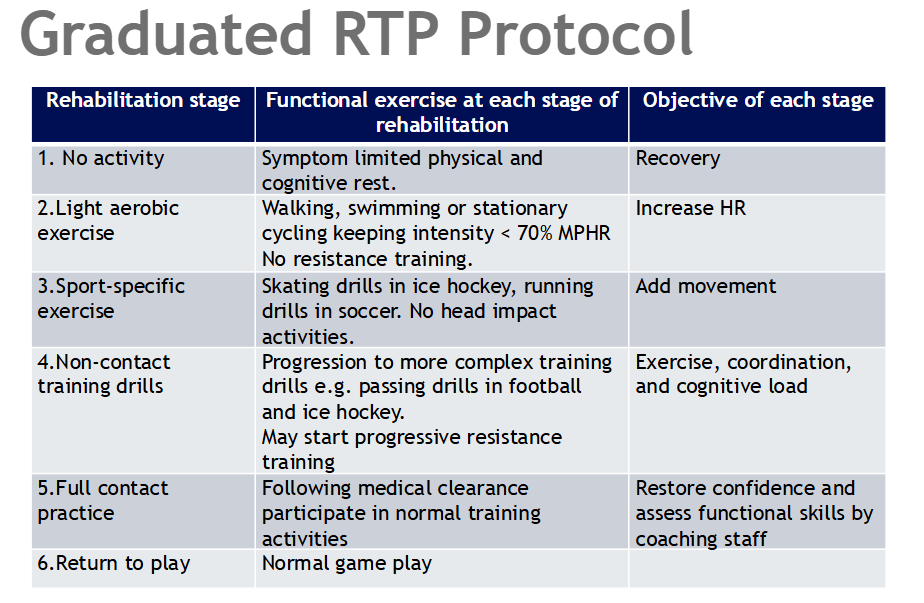
Therapeutic exercise
restore ROM, such as flexibility, PNF, myofascial release. Restore endurance, strength, and power. Re-education: re-establishing neuromuscular control, proprioception, and kinesthesia.
Therapeutic ultrasound
Diathermy: deep tissue heating (penetrates skin and adipose)
Vibration of the crystalline head produces waves of acoustic energy.
Pulsed ultrasound, acoustic streaming (movement of fluids along cell membranes).
Formation of gas bubbles that expand and contract. “Micromassage”.
TENS/NMES therapy
pain management, opioid receptors, gait control. Increases blood flow. Strength/prevention of atrophy. Muscle re-education. These are the pads that go on a muscle and it contracts the muscle for you. Helps with muscle atrophy.
RICE
Rest the injured area for 48 hours.
Ice for 20 minutes at a time, 4-8 times per day.
Compress to help reduce swelling.
Elevate the injured limb 6-10 inches above the heart.
There has, however, been some push back on this because if you do RICE to too great of an extent, the body doesn’t get the chance to heal on its own.
BFR
Blood flow restricted. We can train at 30% of our 1RM and still gain strength and size. It restricts the blood flow which means that when blood goes to the muscle, it struggles to get back to the heart and ends up stuck in that muscle.
Commotio Cordis
Rare, often fatal, cardiac arrest caused by a blow to the chest during a specific time in their cardiac cycle.
Anterior Drawer Sign (ACL Assessment)
Purpose: Tests for ACL injury (rupture or laxity).
Procedure: Patient is supine with the hip flexed to 45° and knee to 90°. The examiner stabilizes the foot and pulls the tibia forward.
Positive Finding: Excessive forward motion (
mm) of the tibia relative to the femur, often with a "mushy" end-feel.
Reliability: High (92% sensitivity) in chronic cases, but less accurate in acute injuries due to muscle guarding.
Posterior Drawer Sign (PCL Assessment)
Purpose: Tests for PCL injury.
Procedure: Positioned the same as the anterior test, the examiner pushes the tibia backward.
Positive Finding: The tibia translates posteriorly (sagging), indicating damage to the PCL.
Key Note: Important to check for "posterior sag" before testing to avoid false positive results in an anterior drawer check.
Q Angle
A key anatomical measurement in exercise science representing the intersection of two lines in the frontal plane: one from the anterior superior iliac spine (ASIS) to the center of the patella, and another from the patella to the tibial tubercle. It measures the lateral pull of the quadriceps on the patella, with normal values averaging roughly for males and for females, often used to assess knee injury risks like patellofemoral pain and ACL tears.