Forensic Anthropology Final
 Call Kai
 Learn
Learn Practice Test
 Spaced Repetition
 Match
Match Flashcards
 Knowt Play
1/52

There's no tags or description
Looks like no tags are added yet.
Name | Mastery | Learn | Test | Matching | Spaced | Call with Kai |
|---|
No analytics yet
Send a link to your students to track their progress
53 Terms
Biological Profile
What can we learn from bone morphology?
Age
Sex (not gender!!)
Ancestral group (to an extent)
Stature and body mass
Biomolecules
Biomolecules are “large organic compounds found in living organisms and sometimes present, usually in a partly degraded state, in the remains of those organisms after their death”
We are going to include stable isotopes in that definition
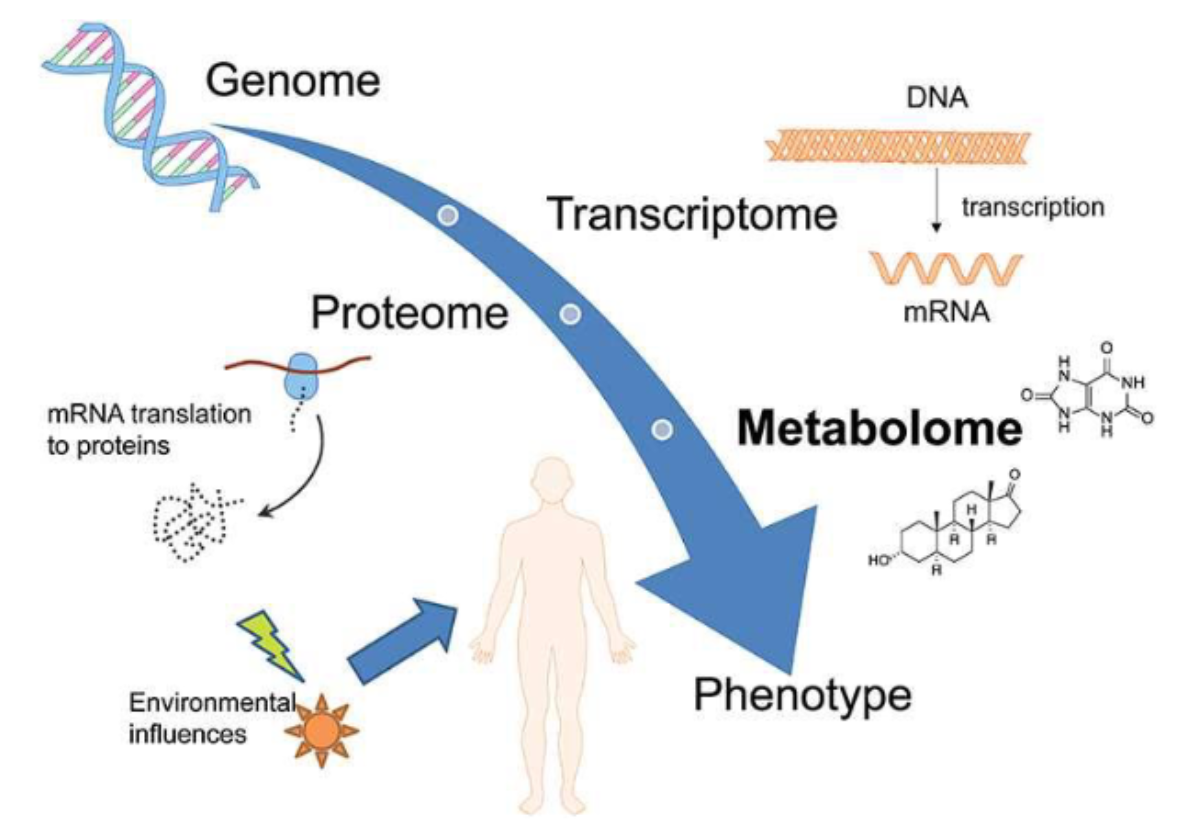
Multi-”omics”
Genomics deals with DNA, which is found in all organic material and soils
RNA doesn’t last very long and doesn’t tell us much DNA can’t
Proteomics deals with proteins, which are found in similar places to DNA, as DNA codes for them
Metabolomics deals with lipids and carbohydrates, which are residues of fat, oils, resins and starches
Isotopes are not biomolecules, perse, but are contained within the other biomolecule classes and their analysis is conducted with bulk protein or lipid preps
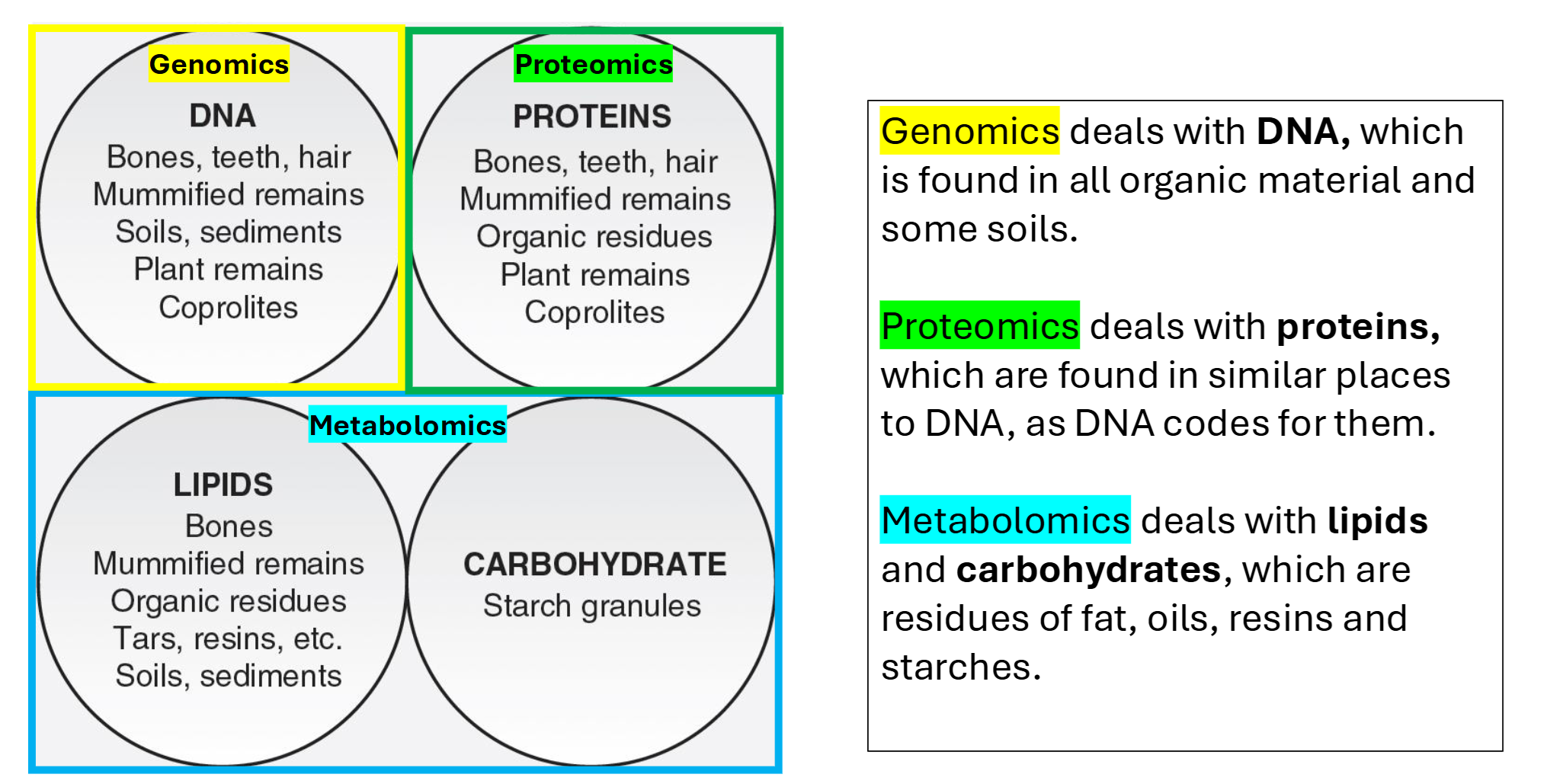
Biomolecules in Forensics
Study biomolecules from teeth, bone, hair, and nails
For forensic contexts, lipids, proteins, and carbohydrates are less commonly studied, while DNA and isotopes are more commonly studied
DNA is frequently used in forensic contexts
Cases solved with DNA
Golden State Killer
Boston Strangler
Fawn Mari Cox Murder
Susan Berman Murder
1975 Teree Becker Cold Case
First DNA case
Leicestershire England
Victims:
November 21st 1983, 15-year-old Lynda Mann
July 31st 1986, 15-year-old Dawn Ashworth
Semen recovered, only blood type able to be reconstructed
False confession wrested from local 17-year-old boy with learning disabilities, Richard Buckland
Eventually, Colin Pitchfork DNA matched to that of the semen sample
Pitchfork’s parole was reviewed and denied 2025
Point being – very recent technology
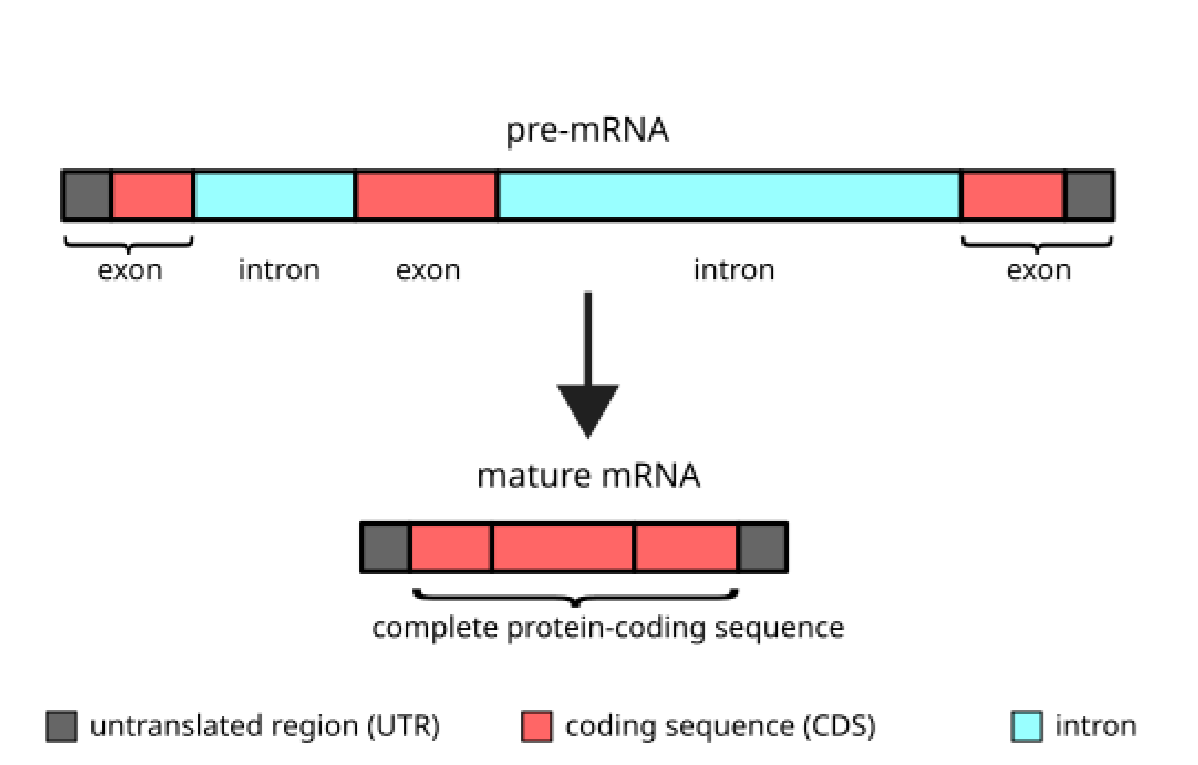
DNA
Exons: Protein coding portions of the DNA
Introns: Non-protein coding portions of the DNA
Do all sorts of stuff you don’t need to know about
Esp. gene regulation
Deoxyribonucleic acid
In contrast to RNA – Ribonucleic acid
Stores biological data
Chromosomal sex
Ancestry
Pathogens
Biological relatedness (phylogenetics)
String of nucleotide bases (Adenine, Cytosine, Thymine, Guanine) = polynucleotide chain
Adenine always pairs with Thymine
Cytosine always pairs with Guanine
In coding DNA
Every 3 base pairs forms a ‘codon’
Codes for a specific amino acid
Amino acids combine to form proteins
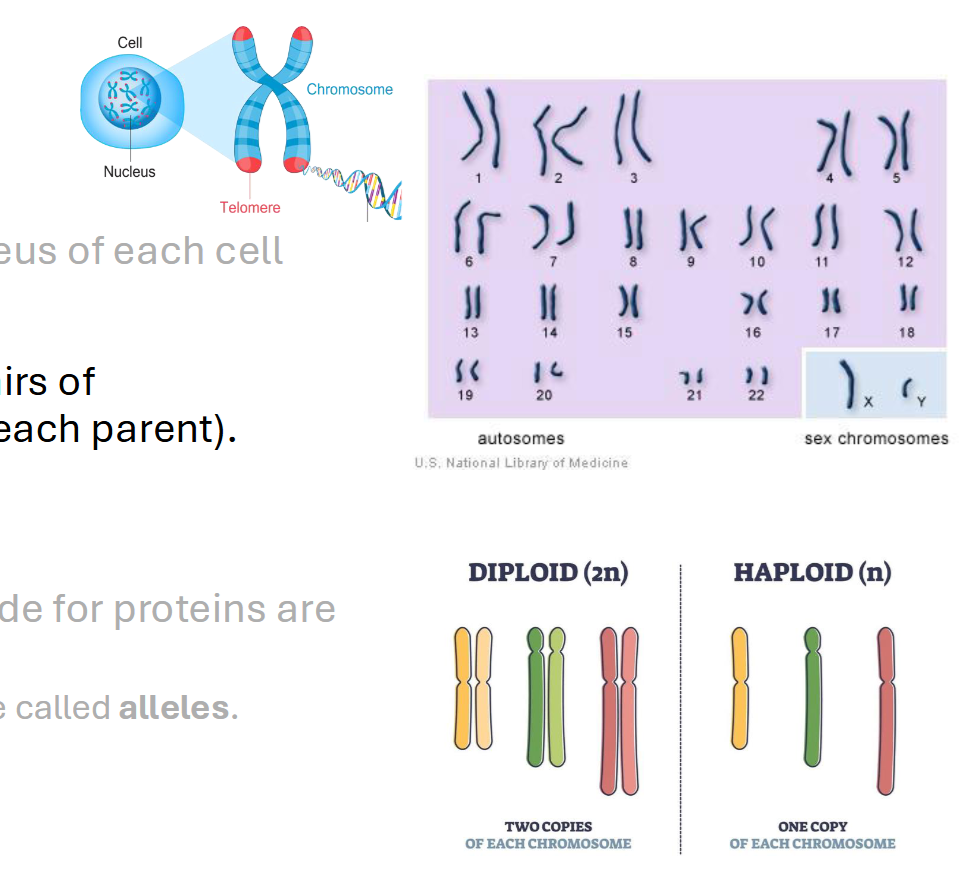
DNA - Chromosomes
DNA found in chromosomes in the nucleus of each cell
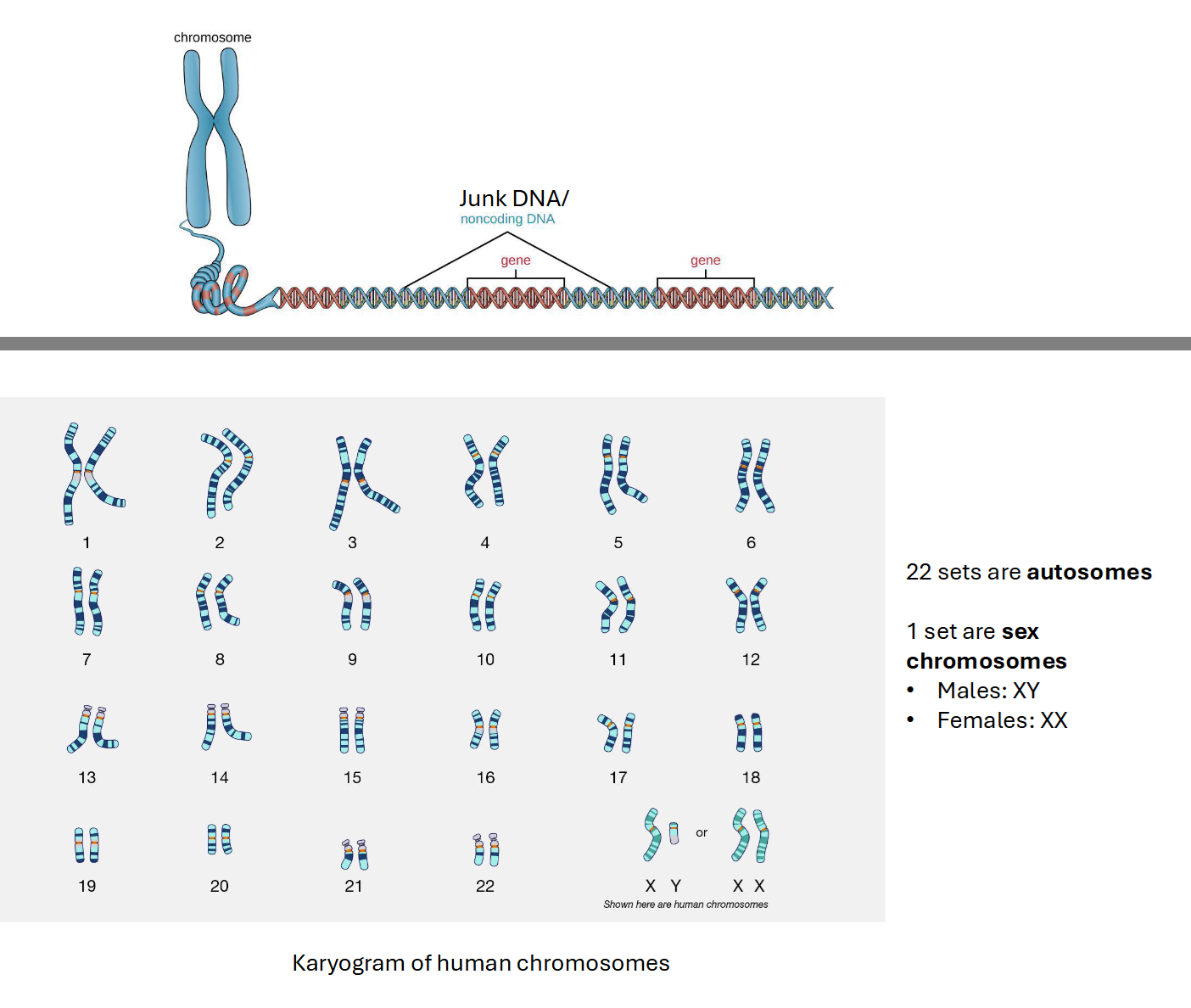
Each human cell nucleus has 23 pairs of chromosomes (one inherited from each parent)
46 in total
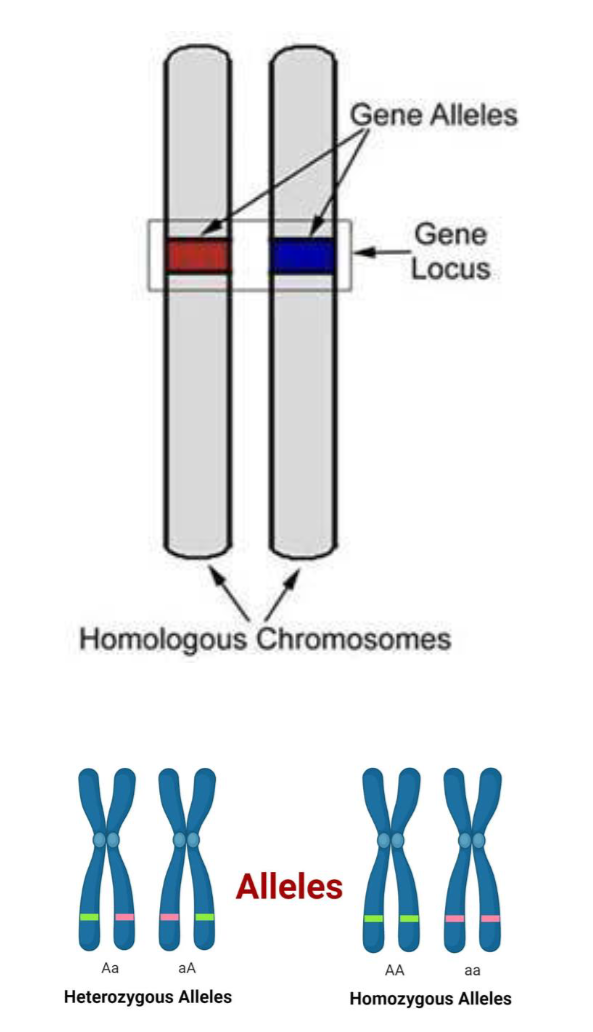
Segments of chromosomes that code for proteins are called genes
Alternative forms of the same gene are called alleles
DNA - Genome
Complete set of genetic material is called a genome
Not all portions of the genome code for proteins
“There are approximately 1013 cells in the adult human body, and each one has its own copy or copies of the genome…”
22 sets are autosomes
1 set are sex chromosomes
Males: XY
Females: XX
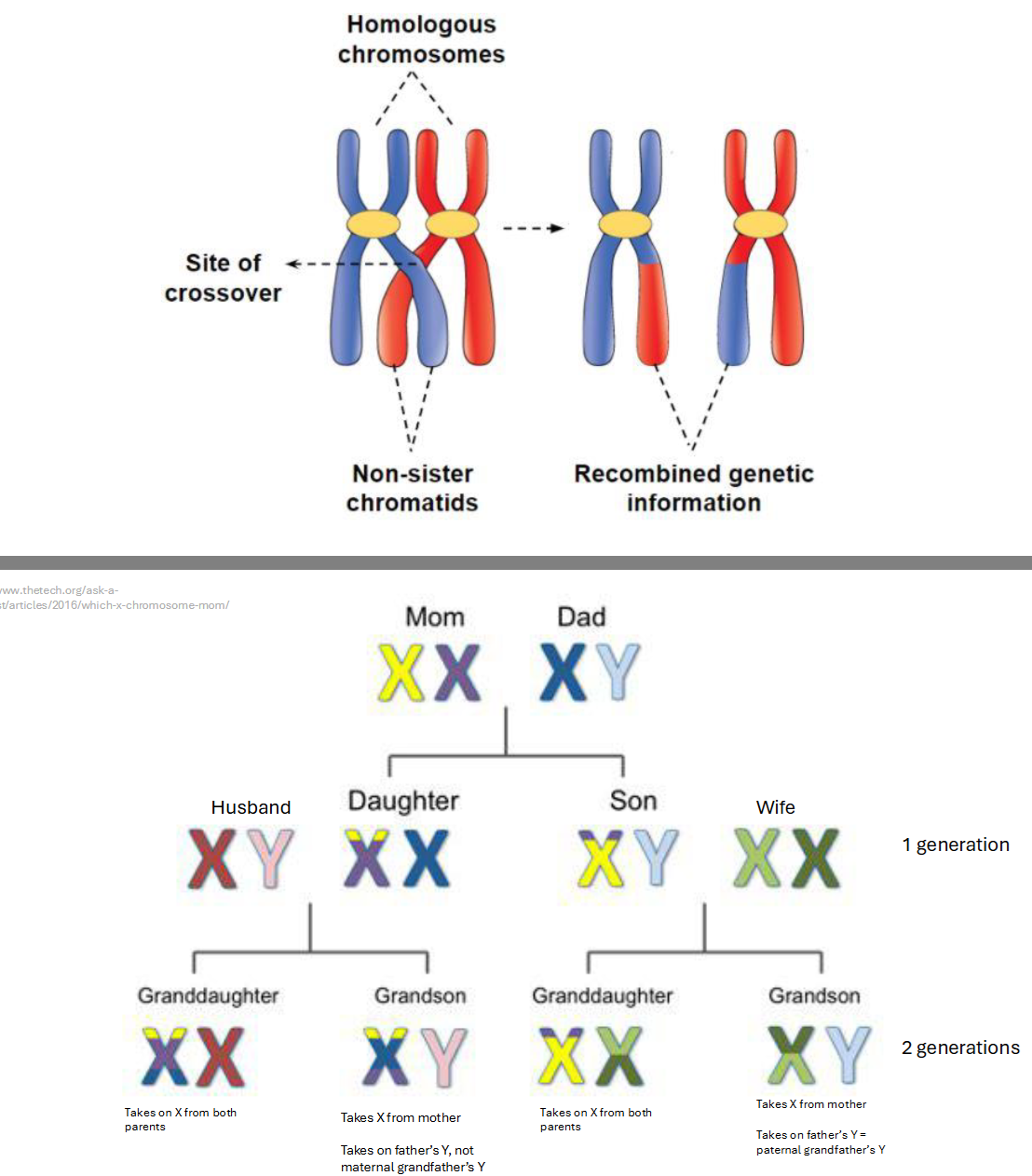
XX and XY chromosomes are passed down differently
Females pass down genes located on each X chromosome to offspring. Each offspring has a unique combination of genes
The two X chromosomes undergo recombination, exchanging material
True of males and females
Males pass down their X chromosome without recombination because it lacks another X counterpart
Y chromosomes likewise do not undergo recombination, so they are passed down without change
DNA
Single nucleotide polymorphisms (SNPs) are variants at a single nucleotide location
Any time a polymorphism occurs, a new “branch” is created
The SNPs are passed down, therefore frequencies vary by population
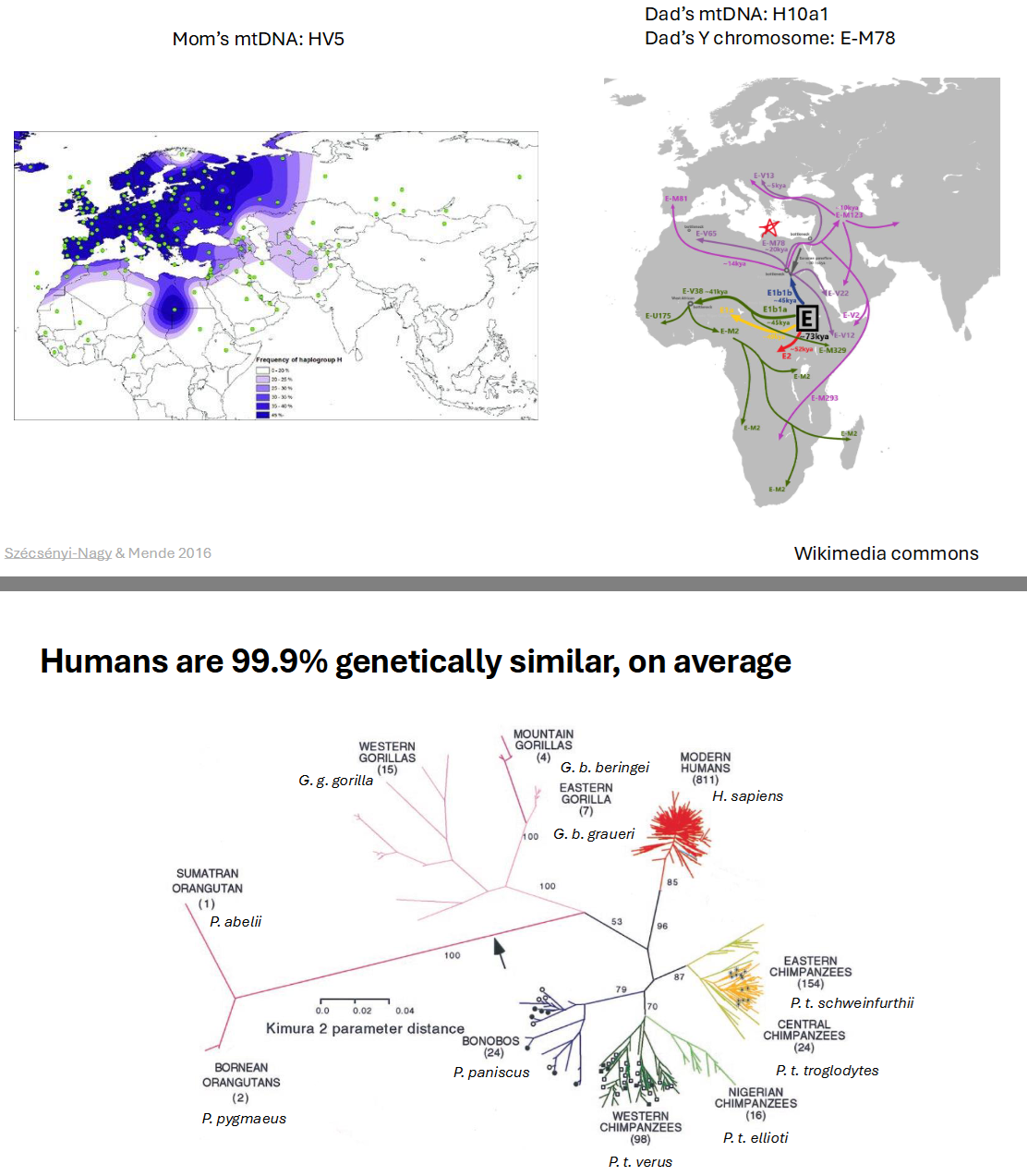
Each offspring has a mixture of maternal and paternal SNPs → record of grandparent polymorphisms, etc. → ancestral group = haplogroups
Groups of repeating DNA nucleotide bases are called short tandem repeats (STRs)
Help establish a likelihood of genetic proximity (family relationships) based on shared # of repeats
DNA
Remember: each cell contains all 23 sets of chromosomes in its nucleus
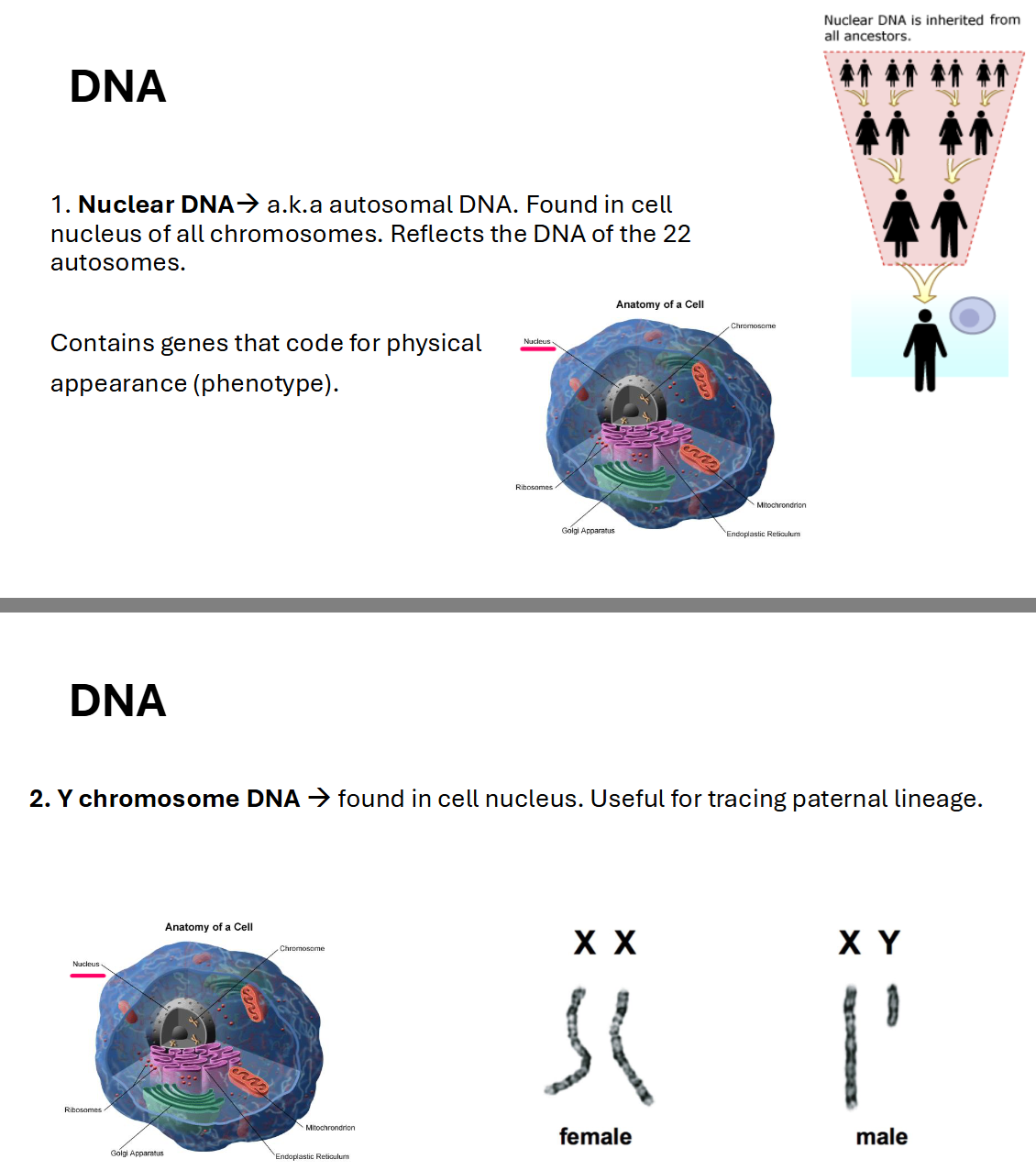
1) Nuclear DNA→ a.k.a autosomal DNA. Found in cell nucleus of all chromosomes. Reflects the DNA of the 22 autosomes
Contains genes that code for physical appearance (phenotype)
2) Y chromosome DNA → found in cell nucleus. Useful for tracing paternal lineage
If females have 2 sets of X chromosomes in their cell nucleus, how could we differentiate between mother’s maternal lineage and father’s maternal lineage?
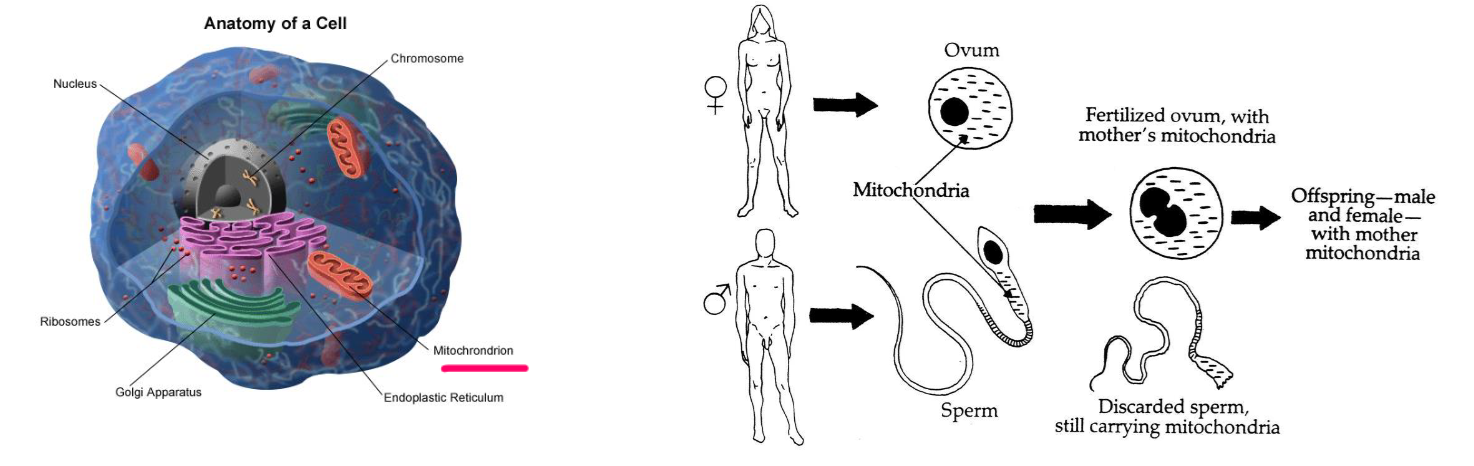
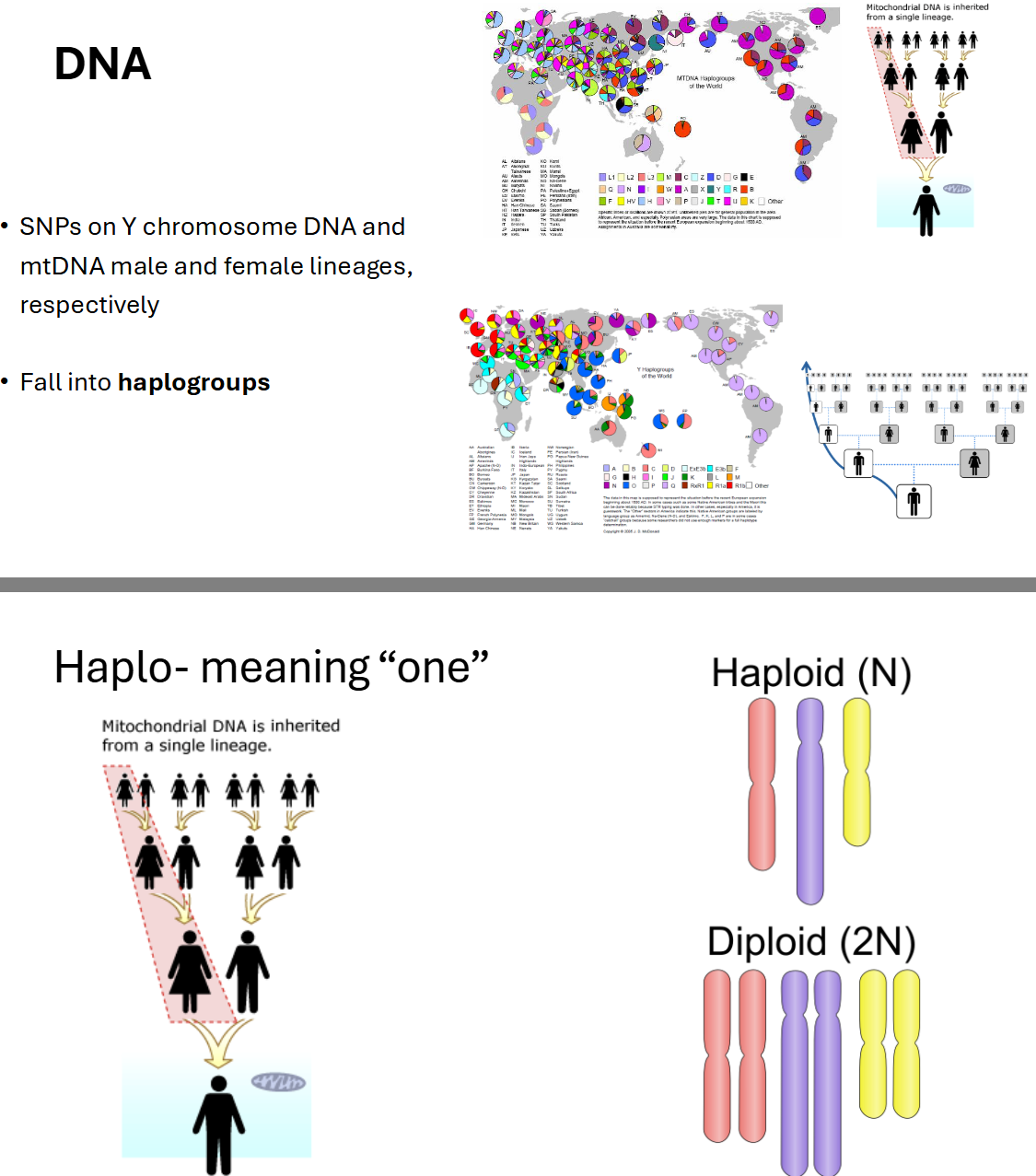
3) Mitochondrial DNA (mDNA)→ found in cell mitochondria on X chromosomes. Transferred between females via egg cells. No sperm involvement
Mitochondrial genome shorter and more copious than nuclear genome, more likely to survive in badly degraded cases
mtDNA: thousands of copies per cell, nuclear DNA: two copies per cell
mtDNA: 16,500 bases long, nuclear DNA: 3.2 billion bases long
Why do mitochondria have their own DNA?: “Endosymbiosis”
DNA
SNPs on Y chromosome DNA and mtDNA male and female lineages, respectively
Fall into haplogroups (Haplo means “one”)
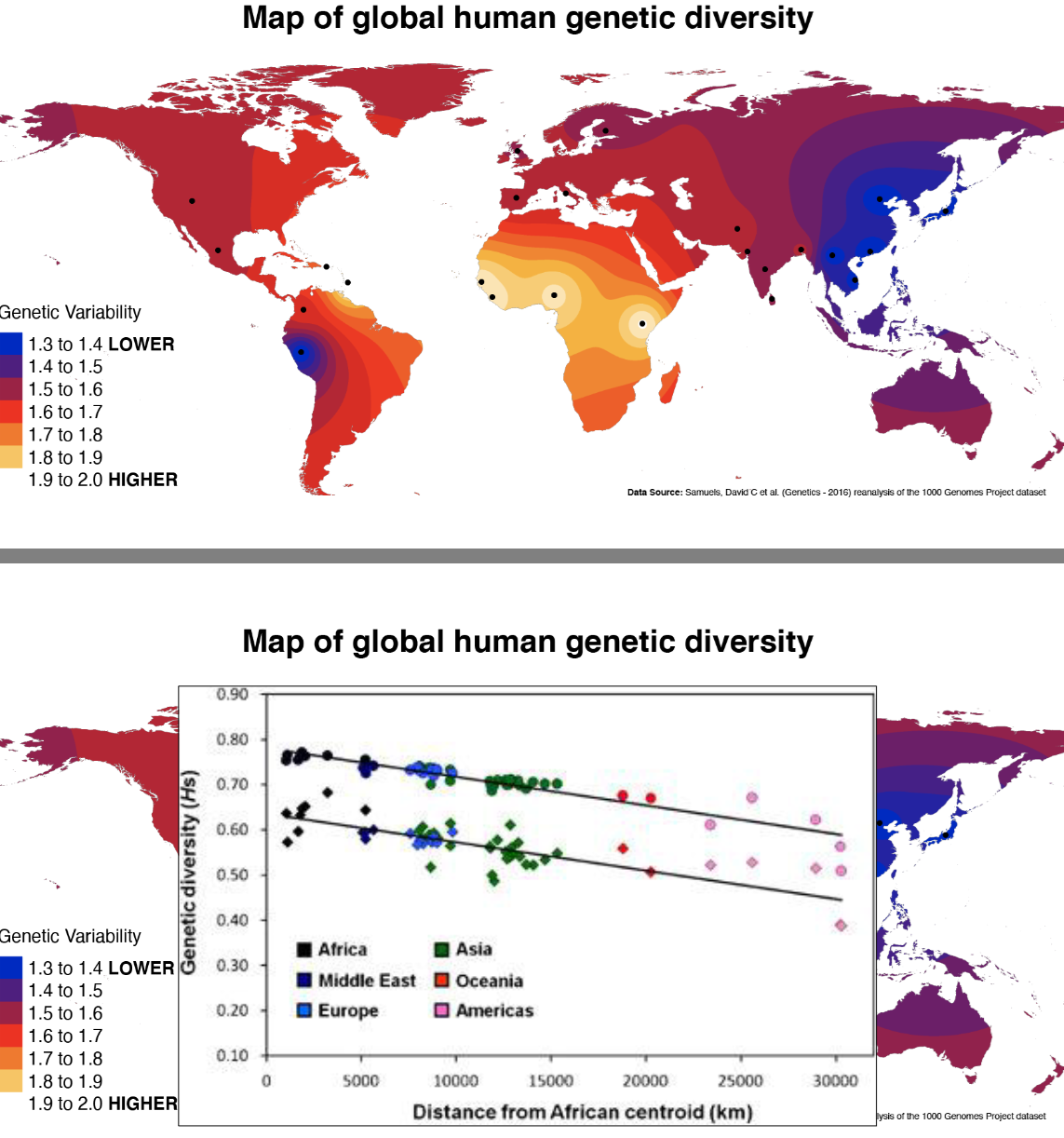
Map of global human genetic diversity
What samples studied for DNA?
Organic components found in skin, hair, blood, semen, and vaginal fluids
Anything with cells!
Will discuss more about these types of evidence in a few weeks
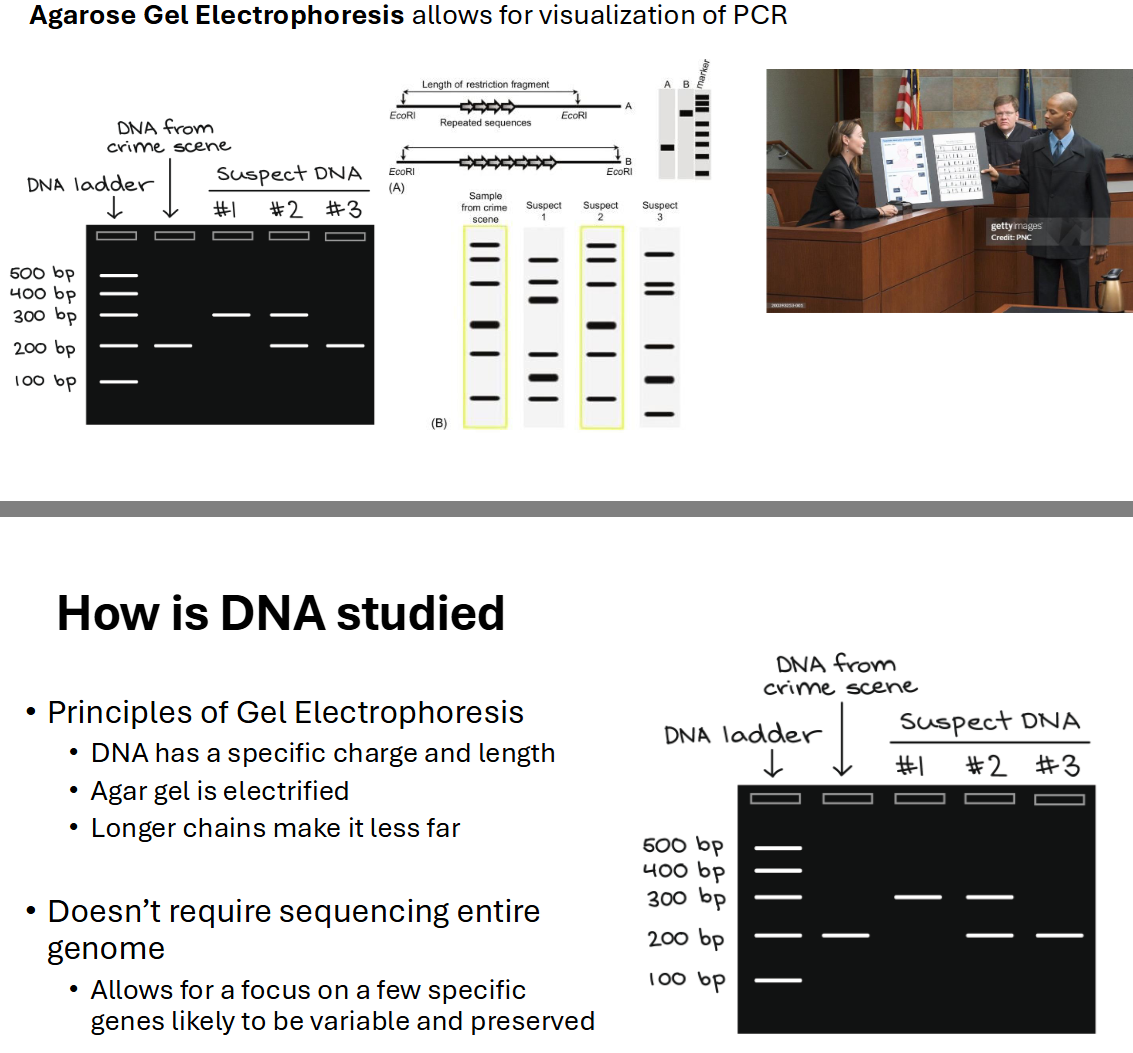
How is DNA studied?
In the past: Polymerase Chain Reaction (PCR)
Amplifies extant endogenous DNA to allow for typing
Cycle of heating and cooling essentially zip and unzip, allowing for sequences to copy
Take finalized solution and put it into a…
Agarose Gel Electrophoresis allows for visualization of PCR
Principles of Gel Electrophoresis
DNA has a specific charge and length
Agar gel is electrified
Longer chains make it less far
Doesn’t require sequencing entire genome
Allows for a focus on a few specific genes likely to be variable and preserved
PCR was invented by Kary Mullis
Probably one of the most important discoveries in the history of science
“It's impossible to overstate PCR's impact. The ability to generate as much DNA of a specific sequence as you want, starting from a few simple chemicals and some temperature changes—it's just magical”
David Bilder
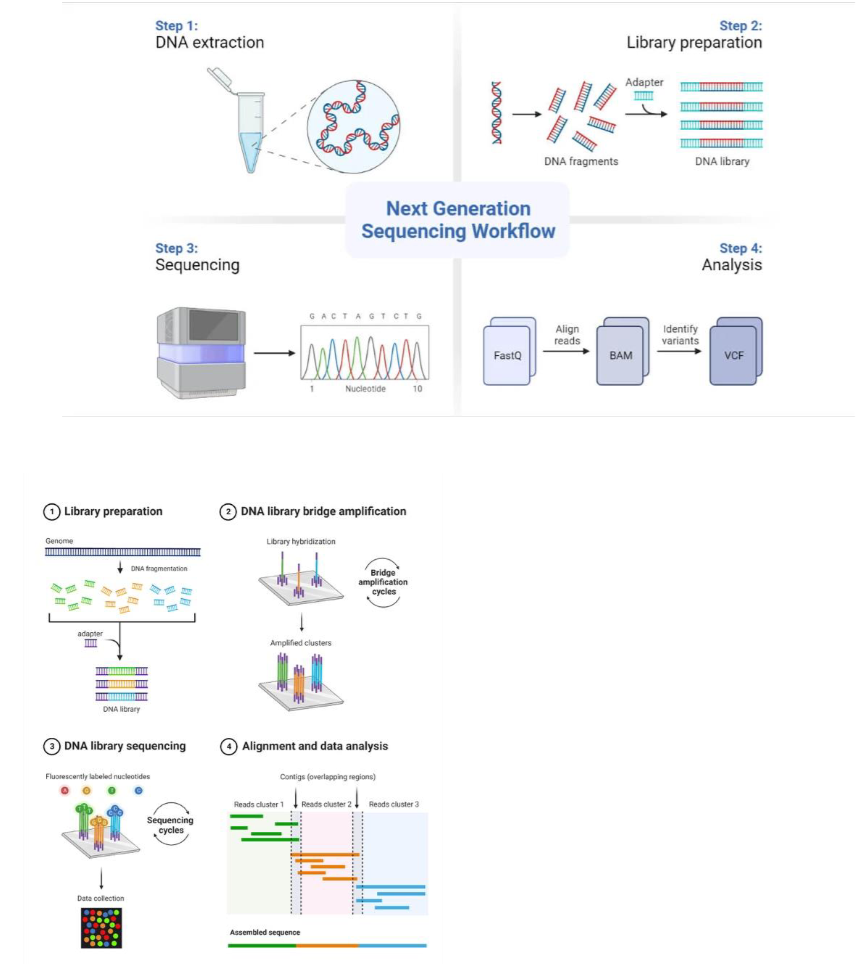
Today: Next Gen Sequencing (NGS)
Benefits = “Hypothesis-free” approach, higher discovery power; High throughput = less cumbersome for large samples or samples with many regions of interest
Require calibration with libraries
Portions of genomes made of different lengths
Human genome project (completed in 2022)
A common method is Illumina
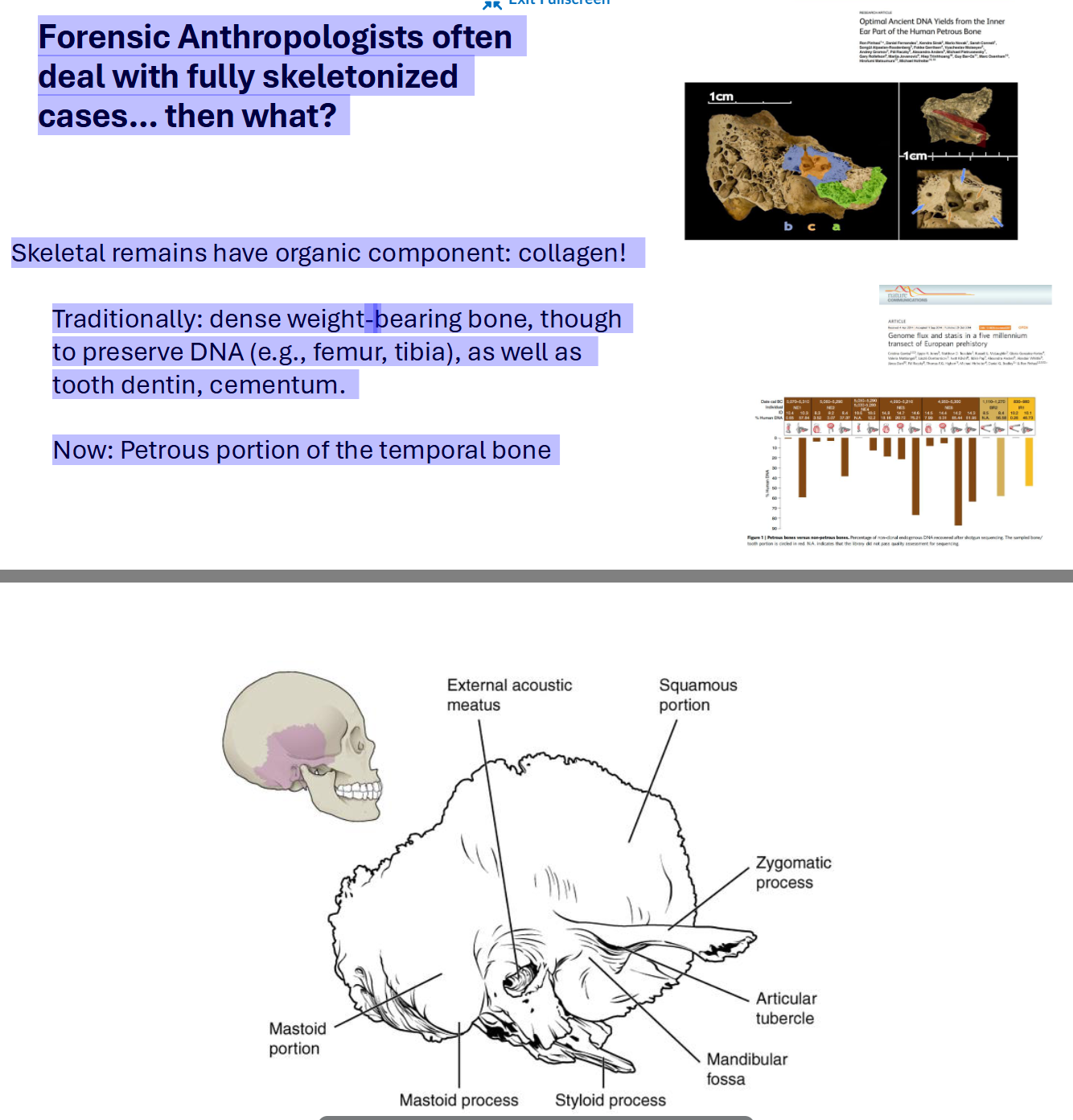
Forensic Anthropologists often deal with fully skeletonized cases… then what?
Skeletal remains have organic component: collagen!
Traditionally: dense weight-bearing bone, though to preserve DNA (e.g., femur, tibia), as well as tooth dentin, cementum.
Now: Petrous portion of the temporal bone
NAGPRA - Native American Graves Protection and Repatriation Act
Federal Law
Human remains, funerary objects, sacred objects and objects of cultural significance held by public entities to be repatriated
Two criteria:
Native American
Tribal affiliation
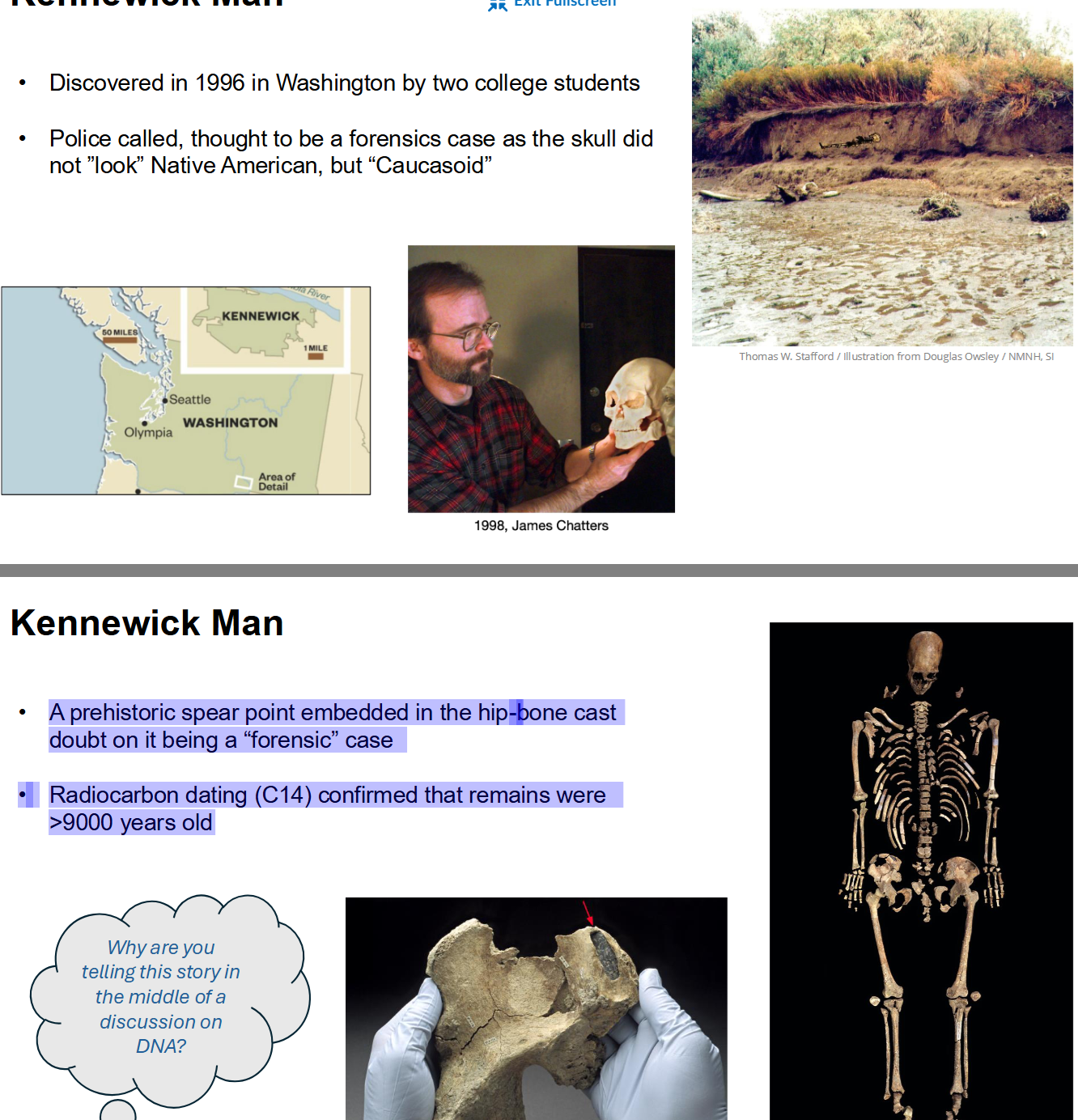
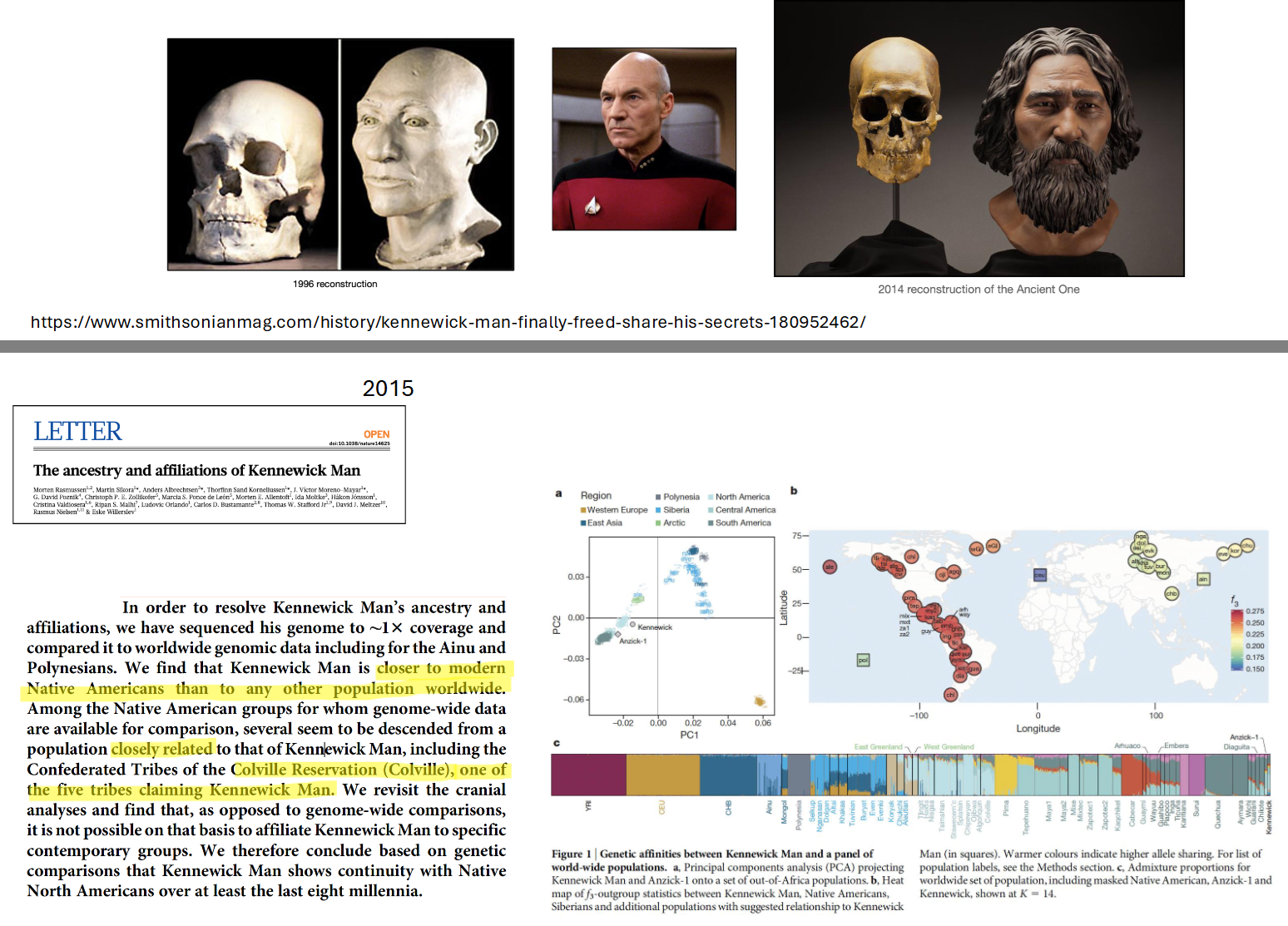
Kennewick Man
Discovered in 1996 in Washington by two college students
Police called, thought to be a forensics case as the skull did not ”look” Native American, but “Caucasoid”
A prehistoric spear point embedded in the hip-bone cast doubt on it being a “forensic” case
Radiocarbon dating (C14) confirmed that remains were > 9000 years old
Three groups vied for authority over the remains:
1) After learning the ancient nature, Army Corps of Engineers (in charge of the land where bones were found) claimed authority over them, forced all scientific study to end, and put into an evidence locked at the sheriff’s office pending review.
County coroner protested saying he had legal jurisdiction
2) A coalition of Columbia River Basin tribes and bands claimed the skeleton under NAGPRA and demanded the bones back for reburial.
“From our oral histories, we know that our people have been part of this land since the beginning of time. We do not believe that our people migrated here from another continent, as the scientists do.”
3) James Chatters enlisted his friend and colleague Doug Owsley (National Museum of Natural History), a well-respected forensic anthropologist who ran cases for the CIA, the FBI, the State Department and various police departments. They wanted to study the remains due to their rarity.
Owsley argued that they should be able to study the remains, as the skeletal remains bore no evidence of relatedness to any existing tribes. The skeleton lacked physical features characteristic of Native Americans
The Army Corps told the tribal coalitions that they would eventually receive the remains after a window of open investigation was closed
The remains had to be studied forensically in order to find tribal affiliation, otherwise NAGPRA was not applicable
The Army Corps was about to repatriate remains when Chatters, Owsley and a small group of scientists sued the US government and various Army departments. Lawsuits lasted years
Remains moved around, mysteriously portions of the femora were removed, FBI launched investigation. Portions later found in the county coroner’s office...
Scientists won lawsuit in 2002 (7 years later), with courts agreeing remains could not be Native affiliated
Scientists studied remains intensely, felt features were most consistent with modern Polynesians
“…the tribes continue to believe that Kennewick Man is their ancestor. They want the remains back for reburial. The corps, which still controls the skeleton, denied Owsley’s request to conduct numerous tests, including a histological examination of thin, stained sections of bone to help fix Kennewick Man’s age. Chemical analyses on a lone tooth would enable the scientists to narrow the search for his homeland by identifying what he ate and drank as a child. A tooth would also be a good source of DNA. Biomolecular science is advancing so rapidly that within five to ten years it may be possible to know what diseases Kennewick Man suffered from and what caused his death.” (2014)
Kennewick Man = The Ancient One
Five tribes involved in repatriation: Colville, Yakama, Nez Perce, Umatilla and Wanapum
President Obama signed bill repatriating remains
Reburied in 2017 in undisclosed locatio
Proteins
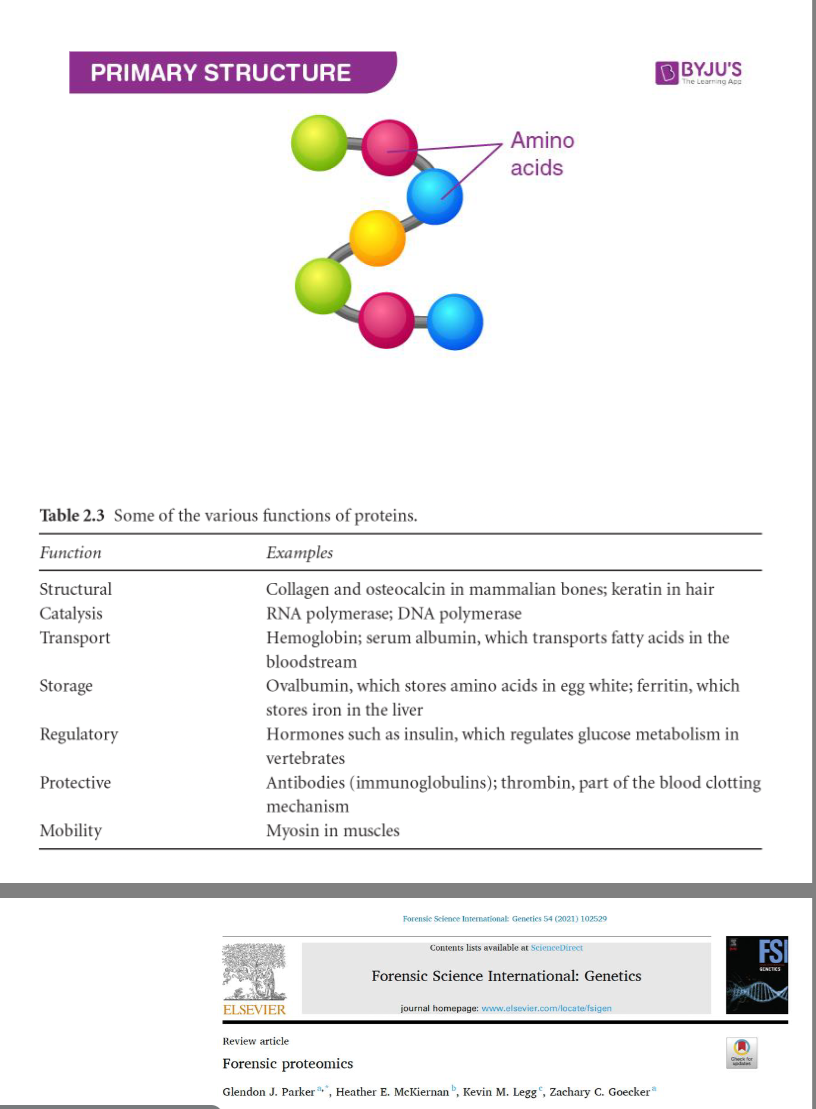
Coded by DNA
Provide structure (e.g., collagen, osteocalcin, hemoglobin) and function in a number of other capacities
Subunits are amino acids, which connected via peptide chains
Robust and highly diagnostic
Widely studied as proteomes = proteomics
Forensic Proteomics studies proteins to identify body fluids and tissues = serology
Different fluids and tissues have differently expressed proteins
E.g.: Hemoglobin in blood
Proteomes are sensitive to behavior and the environment
Saliva proteome is dynamic in response to smoking and daily fluctuations in the microbiome
Seminal and vaginal proteomes, sweat and vomit
Can be used when DNA is too damaged for
Fingerprints → trace left on surface
Species identification → species-specific proteins
Sex estimation → sex specific proteins
Postmortem interval → degradation rate of proteins
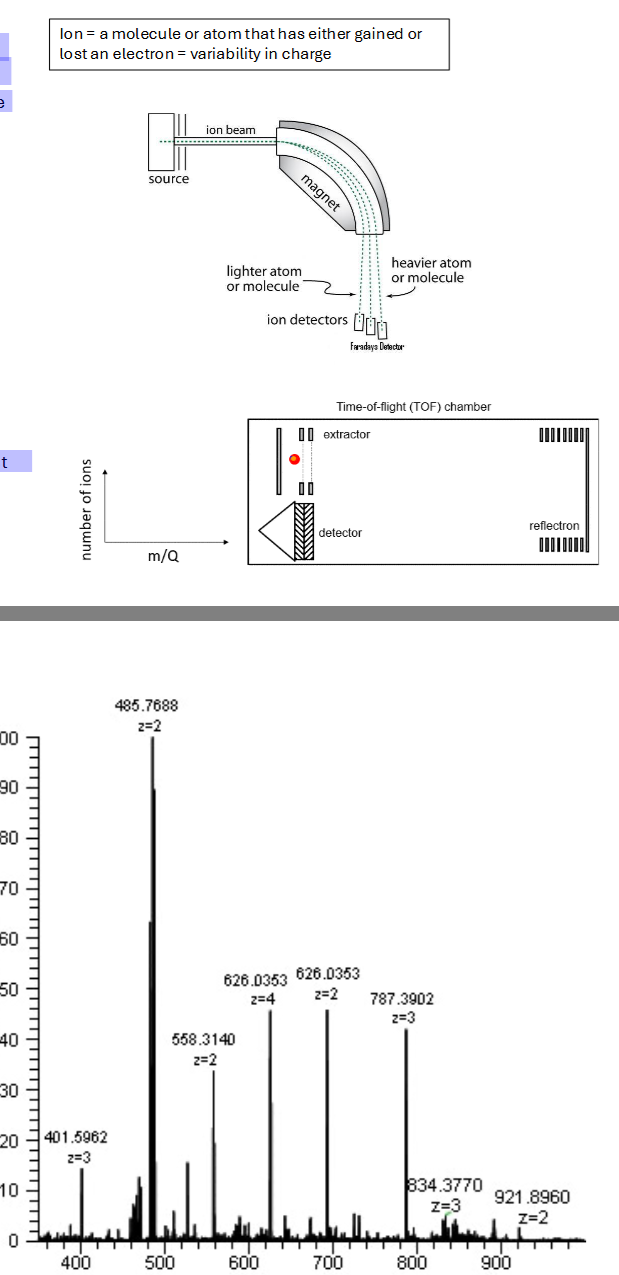
Studied by mass spectrometry (MS)
Analytical machine that identifies molecules by observing the behavior of their ions in varying electromagnetic fields.
This behavior depends on the varying mass-to-charge ratio (m/z) of the ions.
Sample is first ionized
Magnetic sector MS
Samples pass through magnetic fields, those with more inertia (heavier) won’t bend as much as those with less inertia (lighter)
Beam hits the detector at different locations, detecting the ions
Time of flight (TOF) MS
Measures speed, rather than weight
Magnetic pulse propels ions down and whichever hits the detector first is lighter
Mass spectra
Output of a mass spec
Compared to known sample
Proteomics can help with the biological profile
You can estimate the ______________ of children with high precision, but you can’t estimate the _________________.
Why?
Amelogenin peptide analysis (APS)
If a single tooth is found and no collagen is preserved, we can still estimate sex.
Amelogenin→ protein deriving from the formation of dental enamel (ameloblasts)
Tooth crown is etched into powder, material dissolved, inserted into MS, read as spectra
Distinct amelogenin proteins on the X and Y chromosomes (AMELX, AMELY), each has a different amino acid chain and peptides
Known as ‘protein isoforms’
Applicable for any tooth (permanent, deciduous)
Paleo-proteomics
Pioneered by UC Davis researchers
Dr. Jelmer Eerkens (one of my advisors
Dr. Glendon Parker
Some evidence that other proteins may be recoverable
Possible insight into…
Stress
Disease
Sex
Preserve in the enamel
We don’t have the same taphonomic restrictions
Main restriction: $$$
Stable Isotope Analysis
Main underlying principle: “You are what you eat”
…and drink and breath…
The food you eat partially becomes energy
The food you eat partially becomes you
The physical composition of your body comes from metabolic processes
Anabolism = building
Catabolism = breaking down
This is very helpful for biological anthropologists
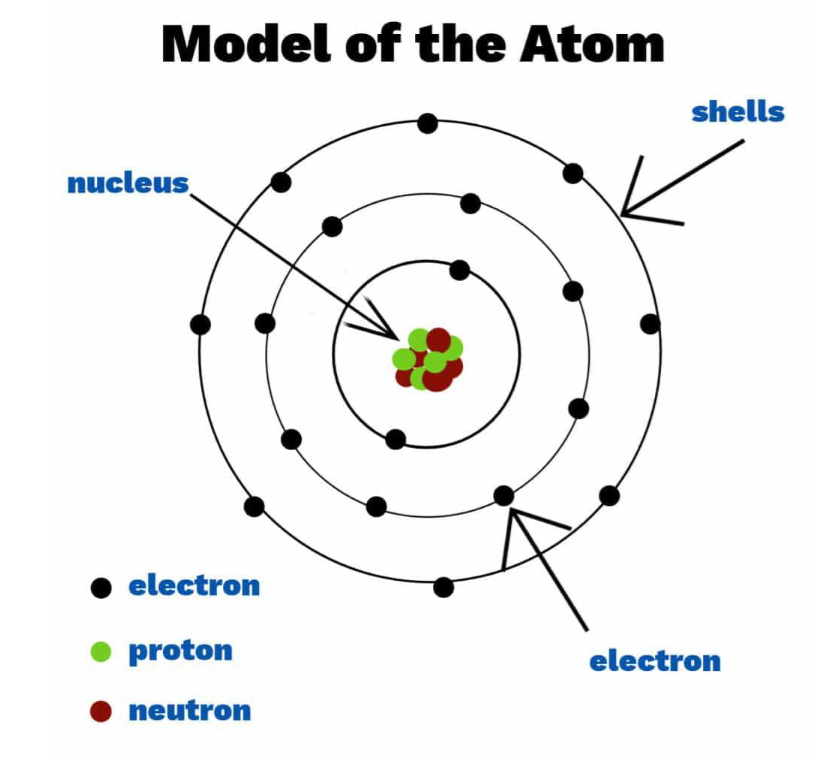
Important parts of the atom for this class
Nucleus: Dense, positively charged center.
Proton: Positively charged subatomic particle
Neutron: Neutral subatomic particle
Electrons: Negatively charged subatomic particles
”Orbit” the nucleus
If you remove…
Proton: Different element
Electron: Different ion
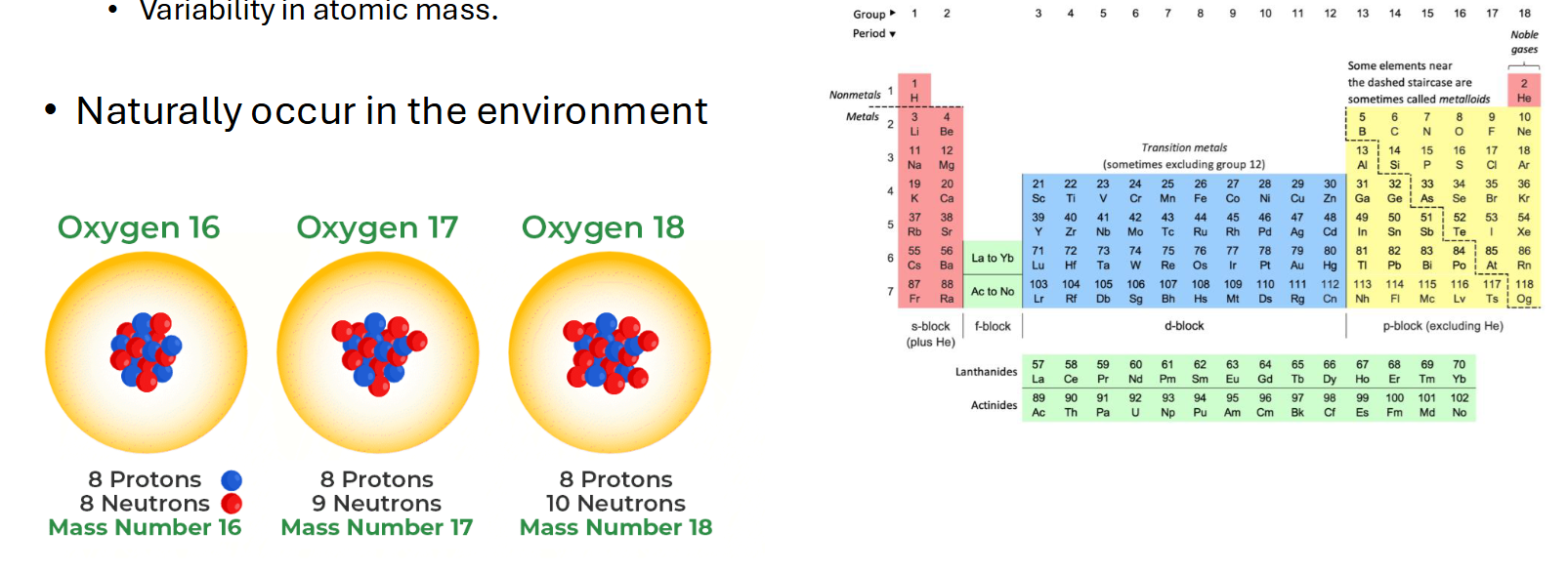
Neutron: Different isotope
Isotopes
Atoms of same element with same number of protons and electrons, but different number of neutrons
Variability in atomic mass
Naturally occur in the environment
When an organism consumes (and metabolize) food and water, it incorporates the source’s elemental composition
You are what you eat!
The carbon atoms in your bones are from your food and the air
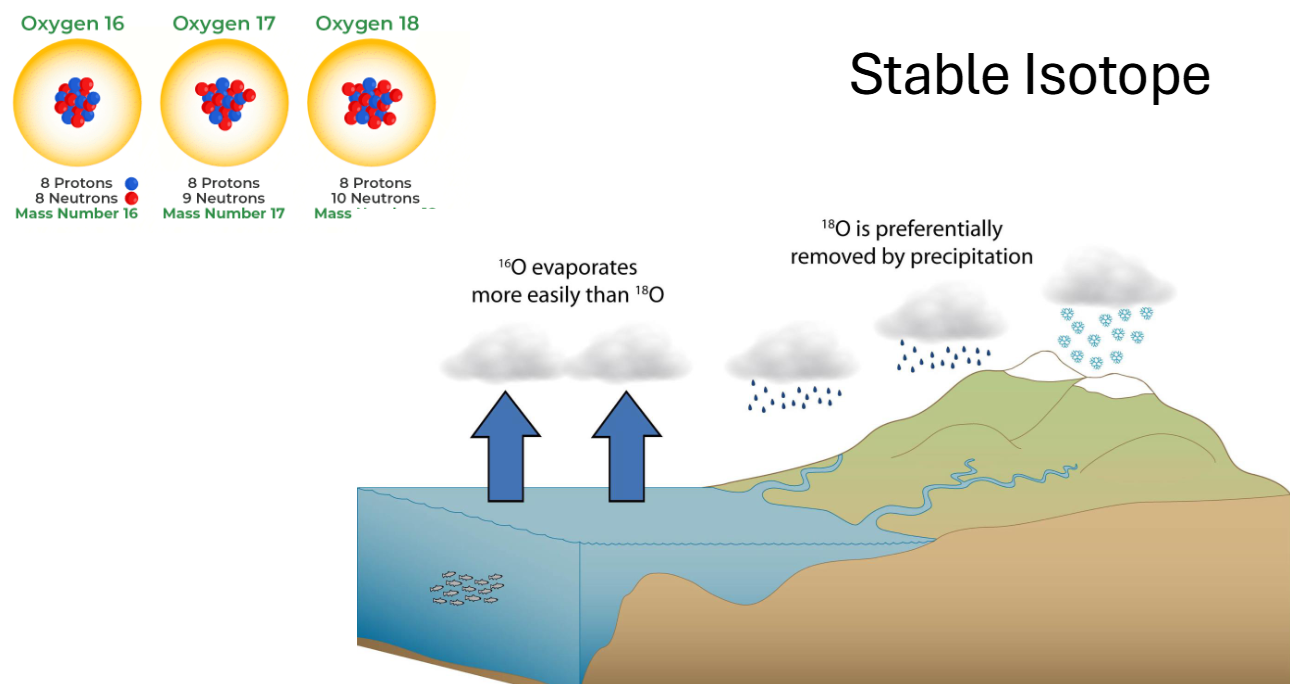
The heavy and light isotopes are separated in a chemical reaction process called fractionation.
Prefers lighter isotopes over heaver ones
Stable isotopes
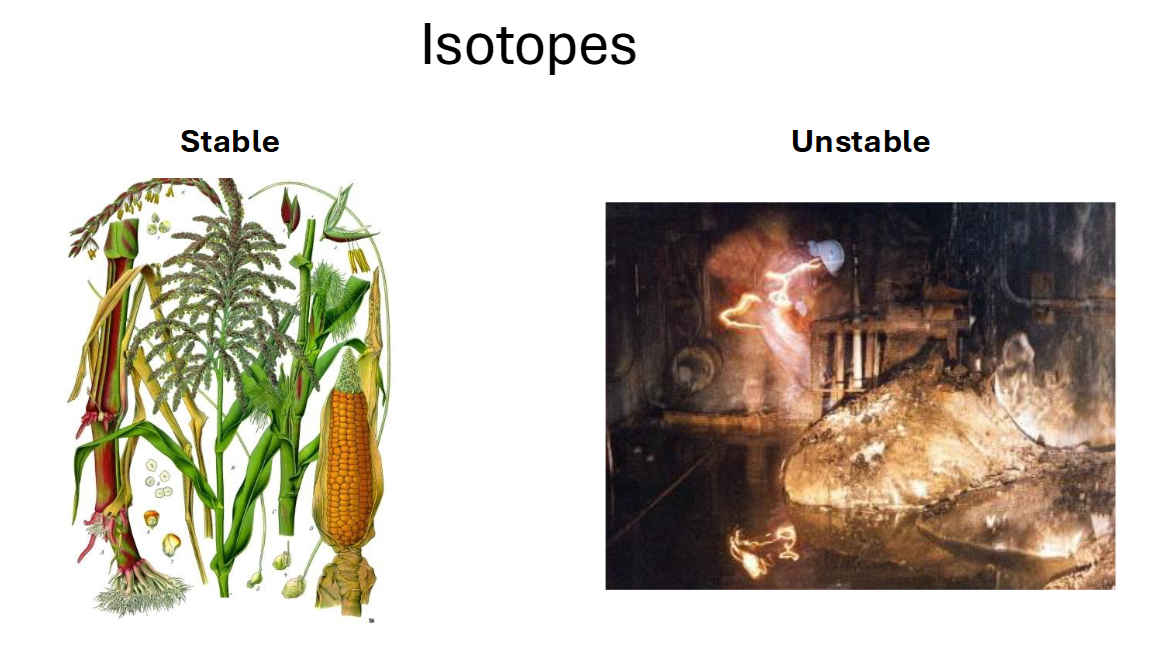
Stable isotopes are isotopes that do not undergo radioactive decay.
Can be light or heavy based on atomic mass
Analyzed via mass spectrometry
Interpreted by the ratio of an element’s heavier form to its lighter form (e.g. 13C/12C)
Reported using delta notation (δ), expressed in parts per thousand (or per mil) (‰).
Unstable isotopes
Carbon 14
After death, it begins to decay
Radiocarbon dating
Chemical reaction between sunlight, the atmosphere, photosynthesizing plants, and their consumers
All elemental signatures come from our environment
Tissues Studied for isotopes
Any tissue in sufficient quantity
Best characterized tissues are…
Hair, nails, teeth, collagen
Collagen → bone → remodels throughout life
Analyzed via bulk averages
Carbonate/Apatite (Ca10(PO4)6(OH)2) → teeth → develop in childhood
Analyzed via incremental sampling
Timeline
Hair: ~1 cm/month
1-2 week lag between dietary intake and root composition
Nails: ~1-4 mm/month
Bones: ~7 year average
Teeth: Window into childhood
Carbon Isotopes
δ^13 C/^12 C
Speaks to plant consumption (direct or indirect)
Photosynthetic pathway of plants
C4 vs. C3
E.g. Corn (maize) = C4 | wheat = C3
Baseline: Know local plants!
Challenging in
Nitrogen Isotopes
δ^15 N/^14 N
Measures the trophic effect of meat protein consumption
Also helps differentiate aquatic vs. terrestrial animal diet
Aquatic soil δ 15N is more positive than terrestrial soils
Vegans would have a “herbivore” diet
Oxygen Isotopes
δ^18O/^16O
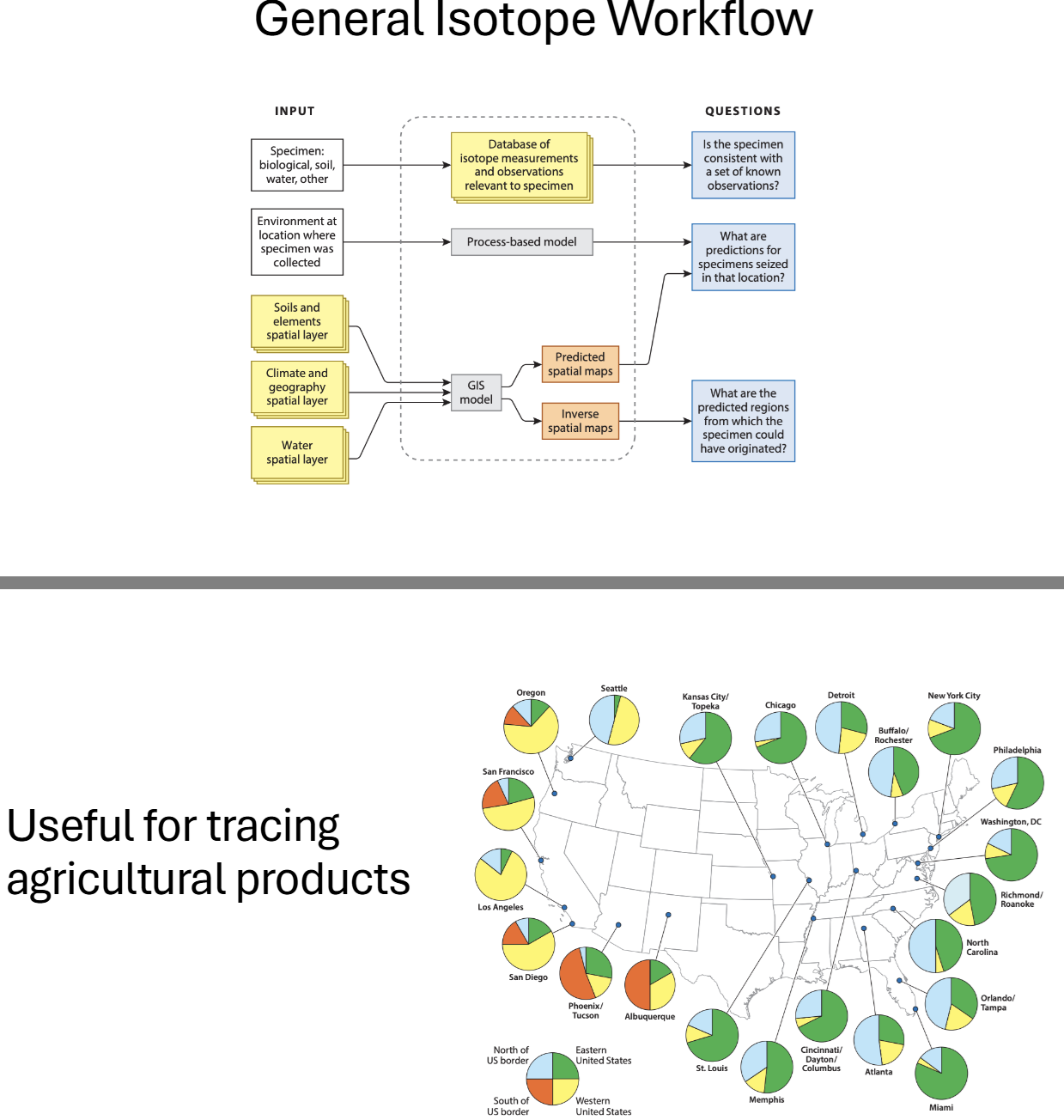
Measures consumption of meteoric waters, which vary across (and within) landscapes
Rainwater, freshwater, differs across latitude, altitude and distance from the sea
Fractionation in the water cycle (evaporation, condensation, precipitation) leaves the heavier isotope (18O) behind
Human behavior influences isotopes
Mobility → changing Sr across teeth
Manuring soil → increases N
Cooking food → increases or decreases O, C, N
Starvation → increases N
Breastfeeding → increases N
Oxygen
Water treatment and origins will be different by region
Not a perfect mobility proxy, but can provide a helpful signal
Strontium Isotopes
87^Sr/86^Sr
Reflect local geological signature
Variation in 87Sr depends on amount of decaying rubidium in rock during formation
Varies from 0.720 – 0.703 on land
Plants uptake strontium into their tissues
Consumers uptake plant strontium into their teeth
Strontium substitutes for Ca in hydroxyapatite
Baselines: local fauna
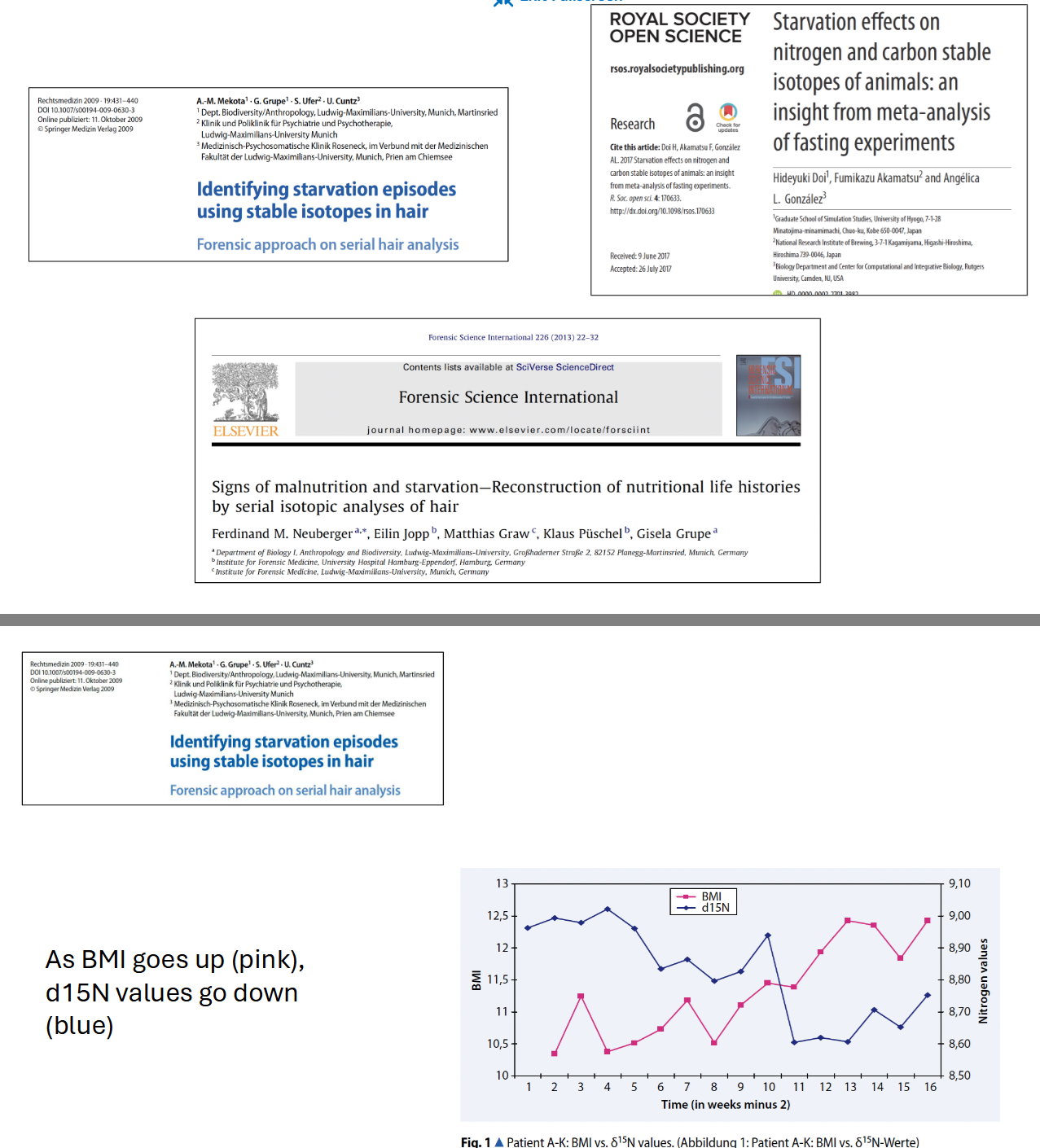
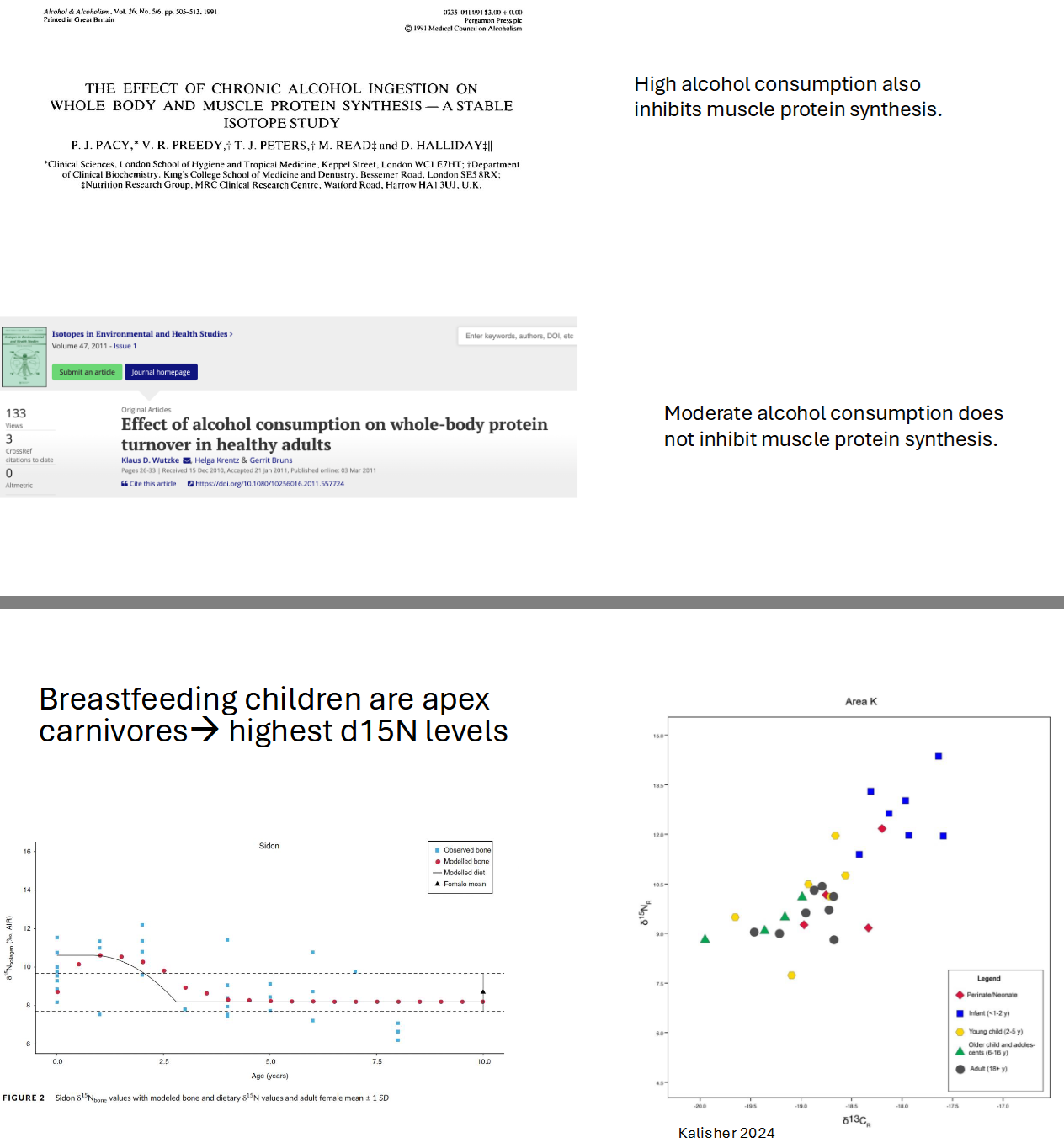
High alcohol consumption also inhibits muscle protein synthesis
Moderate alcohol consumption does not inhibit muscle protein synthesis
Breastfeeding children are apex carnivores→ highest d15N levels
Isotopes in forensics: Bottom line
Provenance people
Identify behavior, consumption patterns
Challenging
Histology
The microscopic study of tissues
Includes soft (skin, muscle, etc.) and hard tissues (bone, teeth)
Forensic Histopathology → study of tissues or biopsies to determine pathology (illness) in living patients and decedents. Make diagnosis based on findings (e.g., is it cancer, what type, etc.)
Hard Tissues
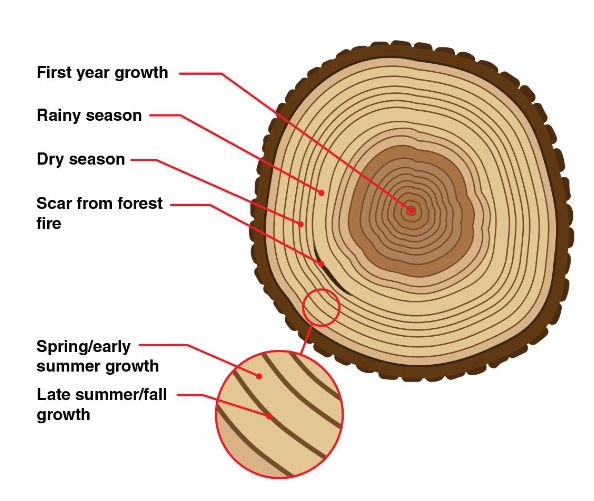
Bones are recording structures, which means they “respond to changes of physiological condition of an organism by changing their morphological characteristics as they grow.” (Klevezal 1996, 1)
Teeth
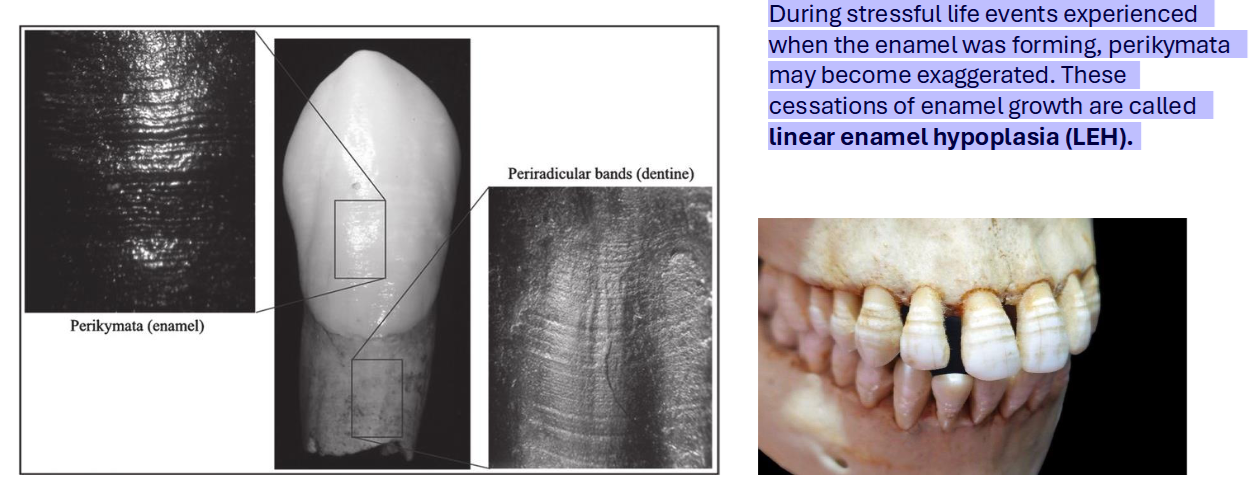
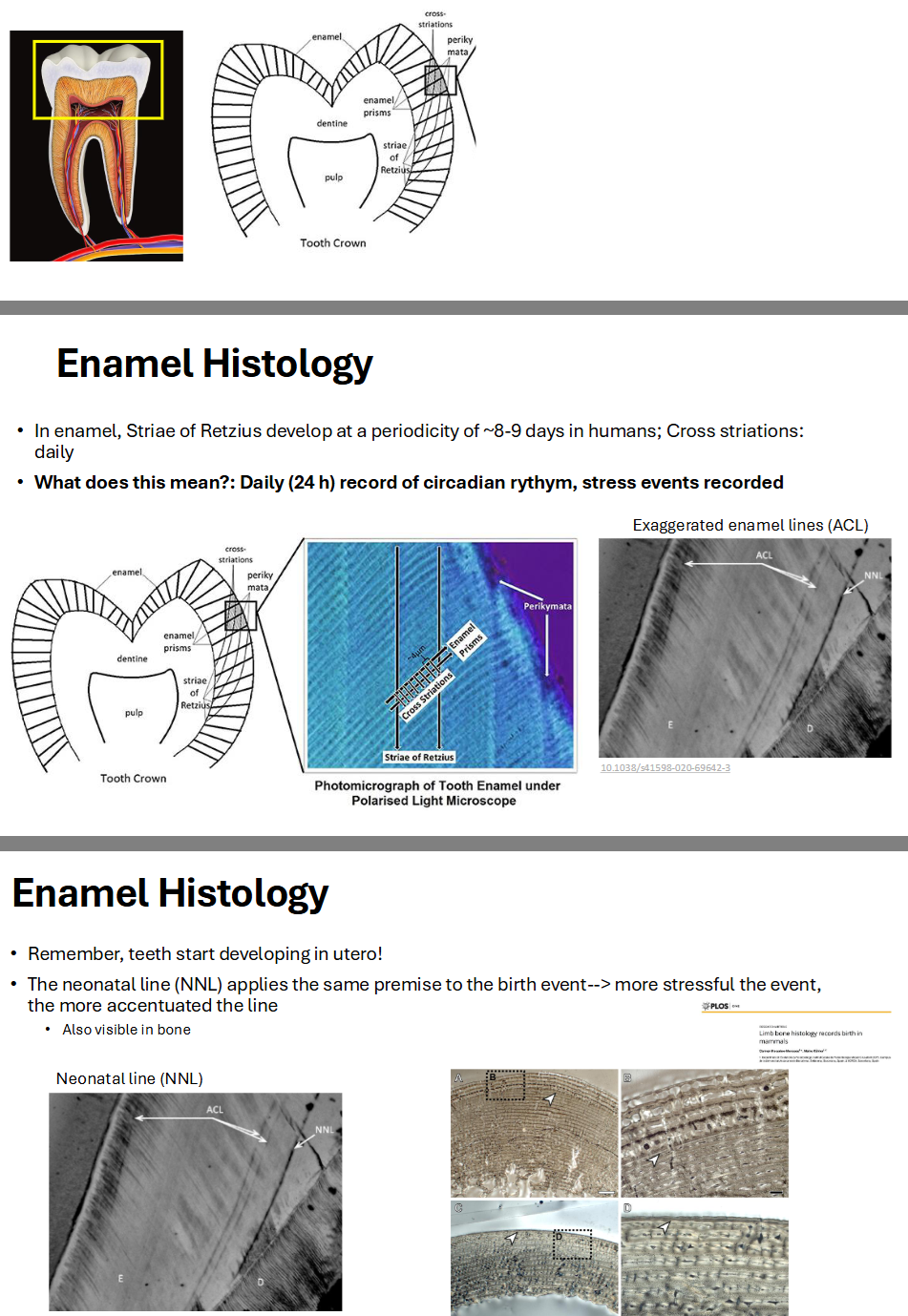
Tooth enamel forms from tip of cusps down to roots in layers known as perikymata.
During stressful life events experienced when the enamel was forming, perikymata may become exaggerated. These cessations of enamel growth are called linear enamel hypoplasia (LEH).
Enamel Histology
Similar periodic growth (and growth arrest) characterizes the histological structure of tooth enamel and dentin
Study of incremental development of dental tissues => periodicity
In enamel, Striae of Retzius develop at a periodicity of ~8-9 days in humans; Cross striations: daily
What does this mean?: Daily (24 h) record of circadian rythym, stress events recorded
Remember, teeth start developing in utero!
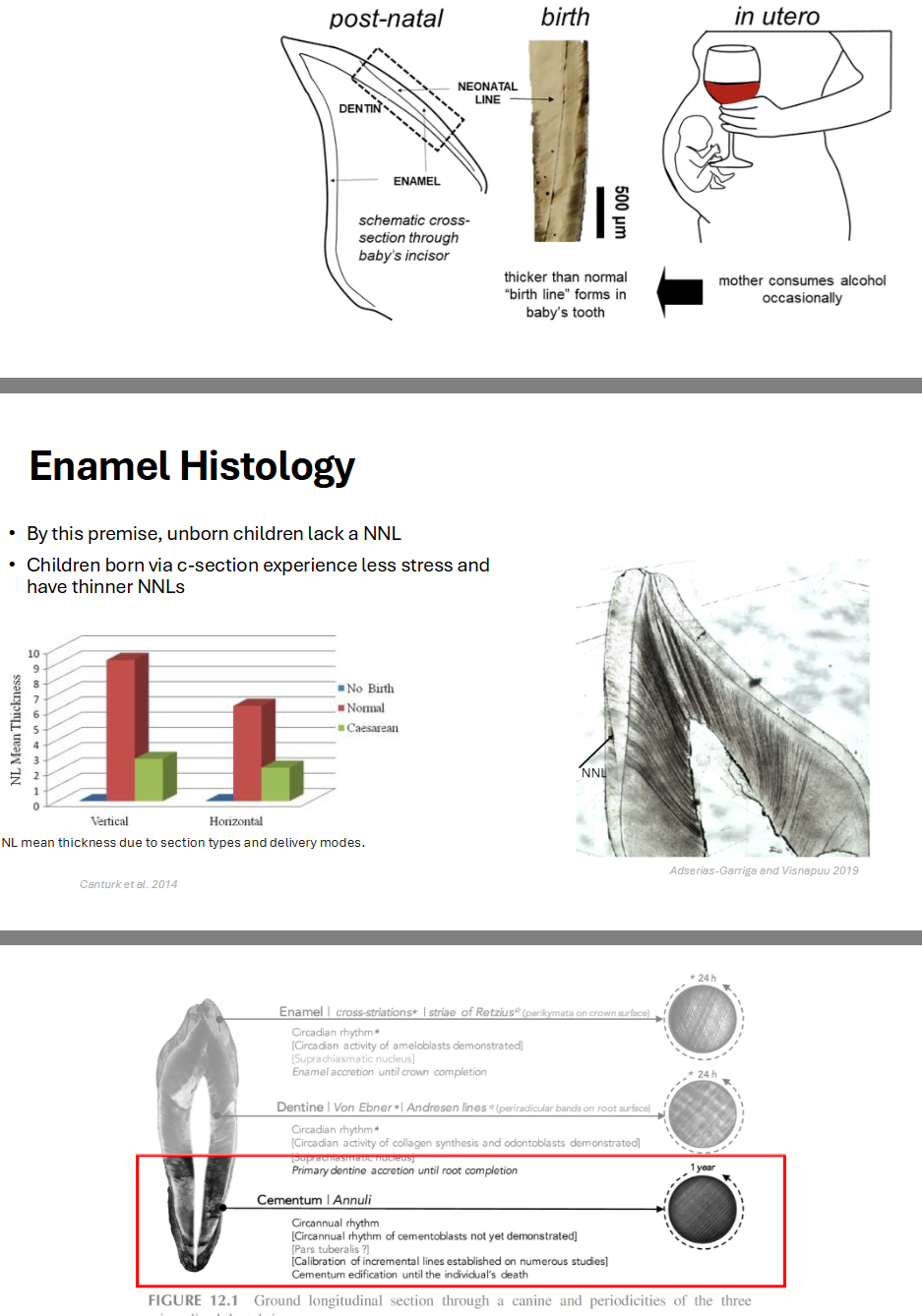
The neonatal line (NNL) applies the same premise to the birth event--> more stressful the event, the more accentuated the line
Also visible in bone
By this premise, unborn children lack a NNL
Children born via c-section experience less stress and have thinner NNLs
Cementochronology
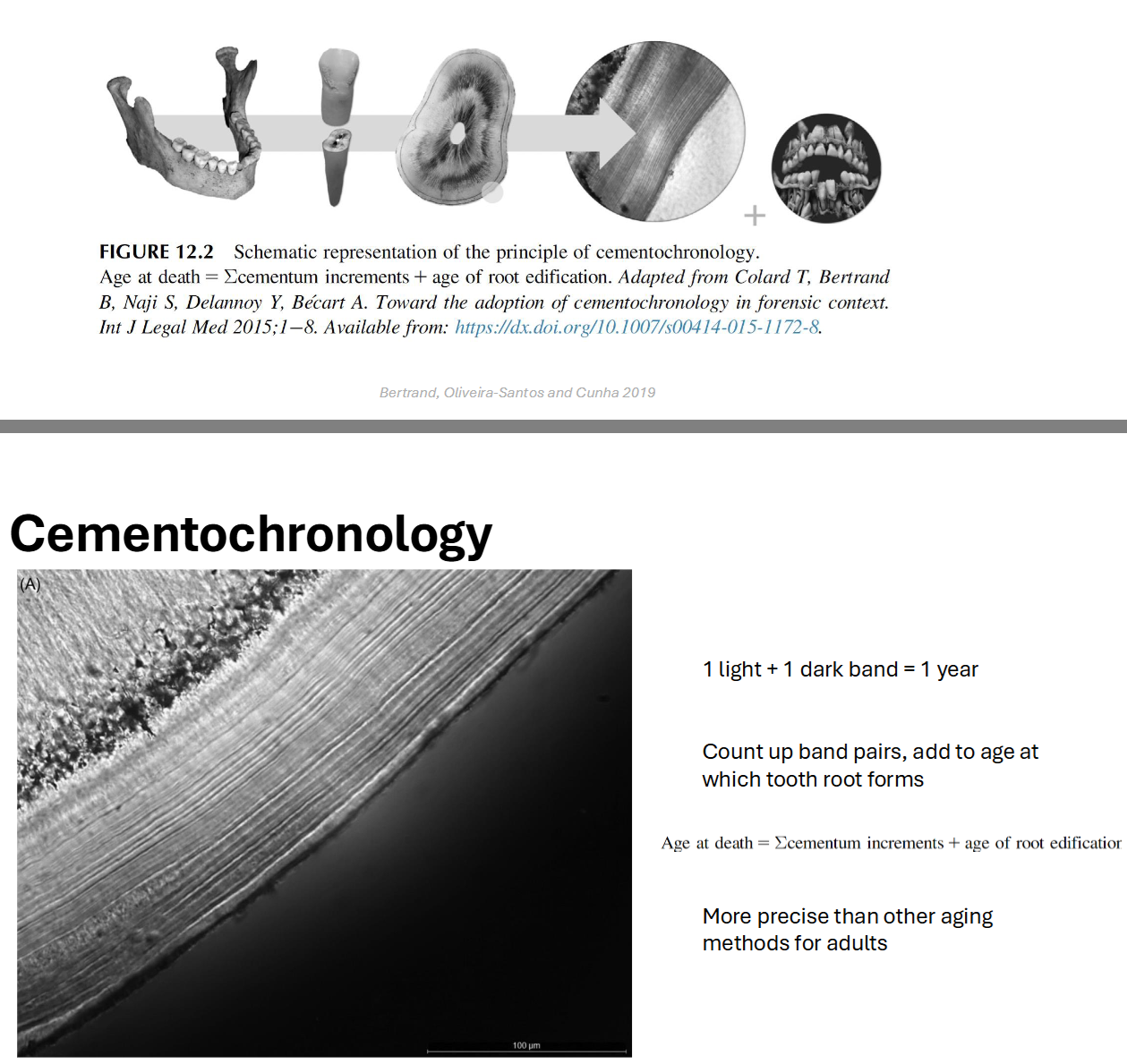
Unlike enamel and dentin, cementum continues growing throughout the entirety of life
1 light + 1 dark band = 1 year
Count up band pairs, add to age at which tooth root forms
More precise than other aging methods for adults
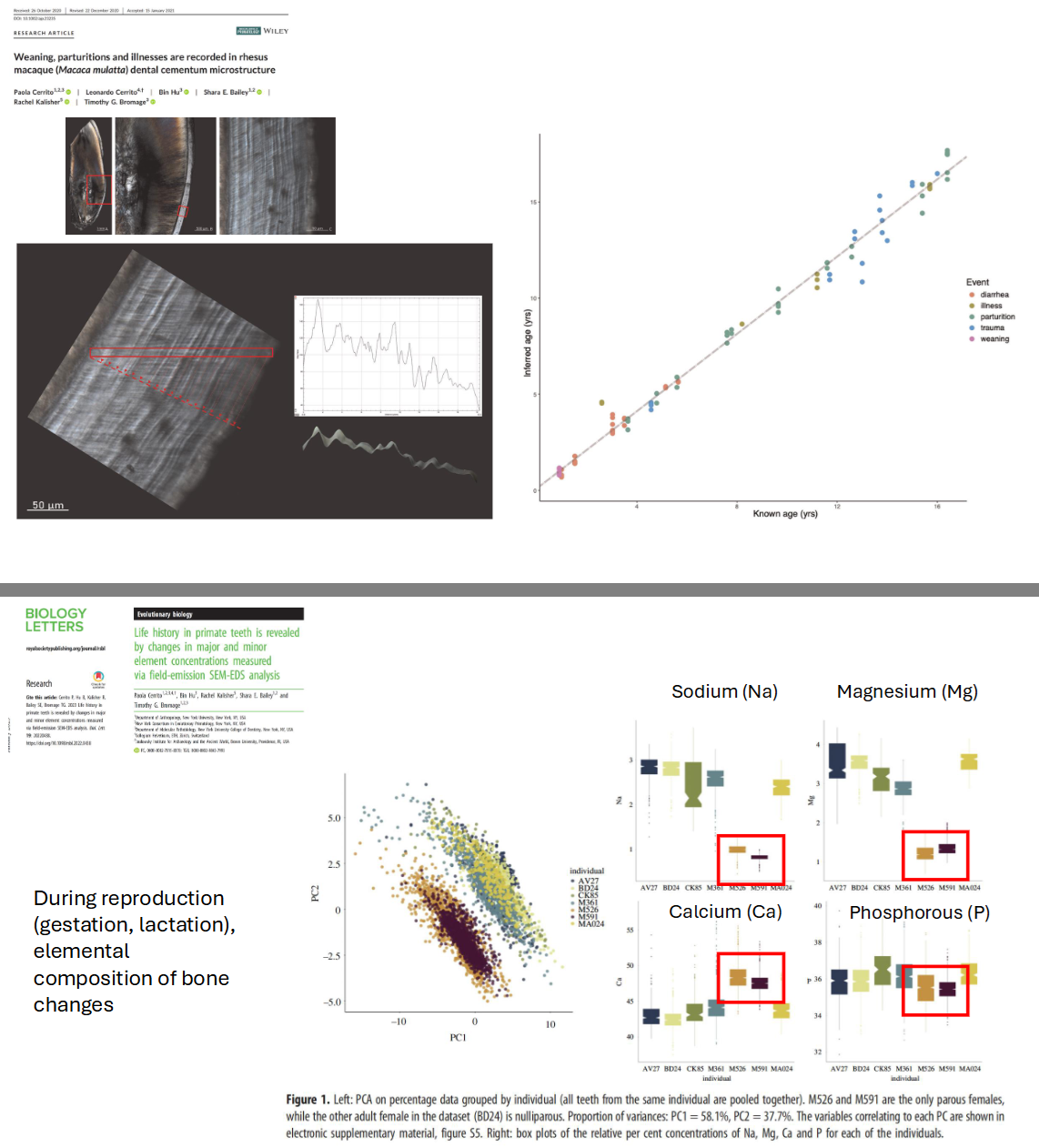
During reproduction (gestation, lactation), elemental composition of bone changes
Takeaways: these methods are destructive
Important to thoroughly document sample prior to destruction
As well as consult families, NoK, or descendants before destroying
Sometimes they are also costly, making them prohibitive to certain labs
Balance between morphological and biomolecular methods to build biological profile
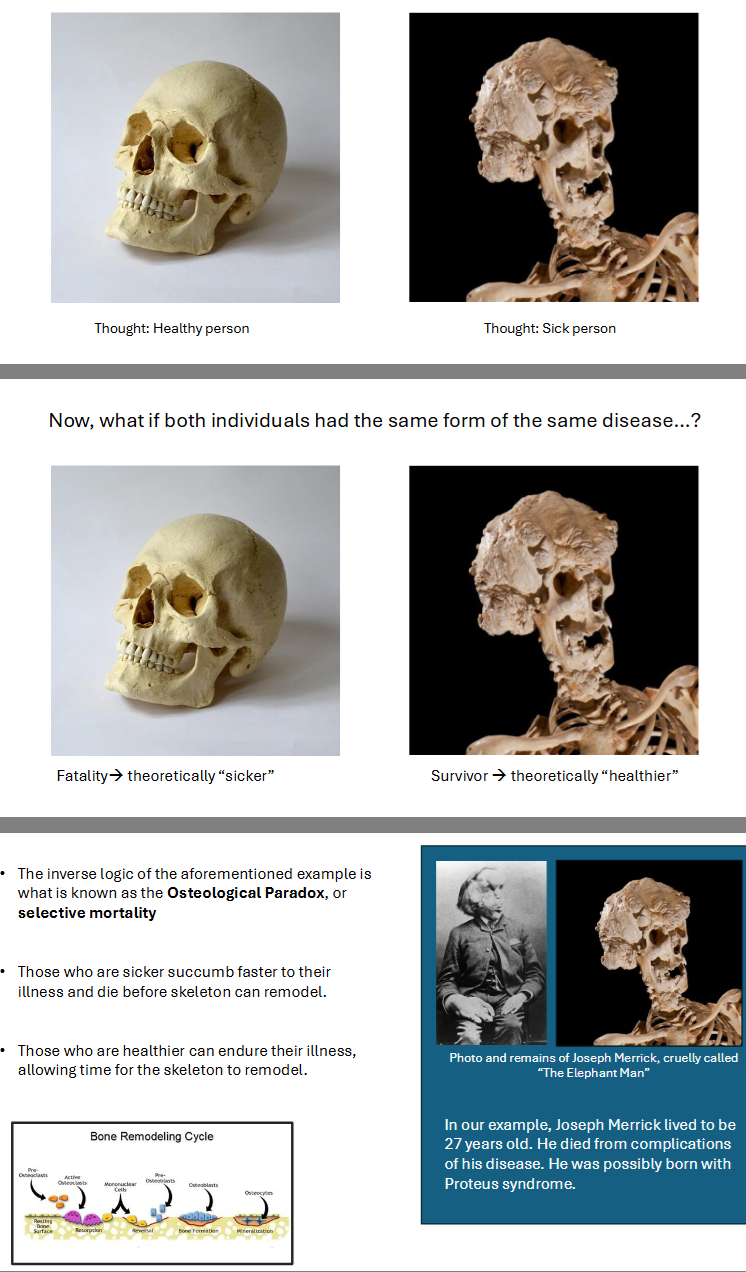
The Osteological Paradox
How can you tell if a person was “healthy” or “sick”?
Now, what if both individuals had the same form of the same disease…
The inverse logic of the aforementioned example is what is known as the Osteological Paradox, or selective mortality
Those who are sicker succumb faster to their illness and die before skeleton can remodel.
Those who are healthier can endure their illness, allowing time for the skeleton to remodel
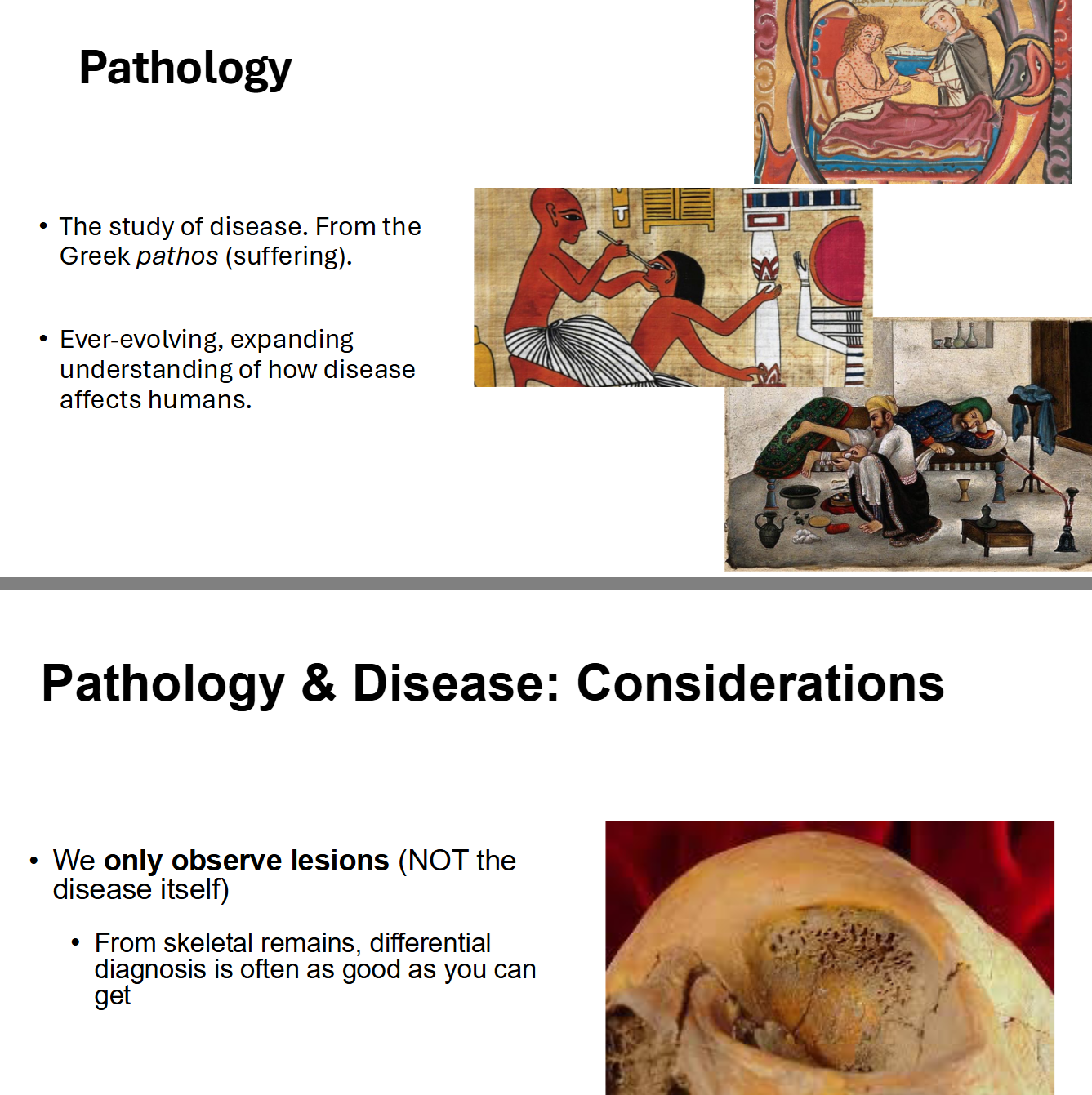
Pathology
The study of disease. From the Greek pathos (suffering)
Ever-evolving, expanding understanding of how disease affects humans
We only observe lesions (NOT the disease itself)
From skeletal remains, differential diagnosis is often as good as you can get
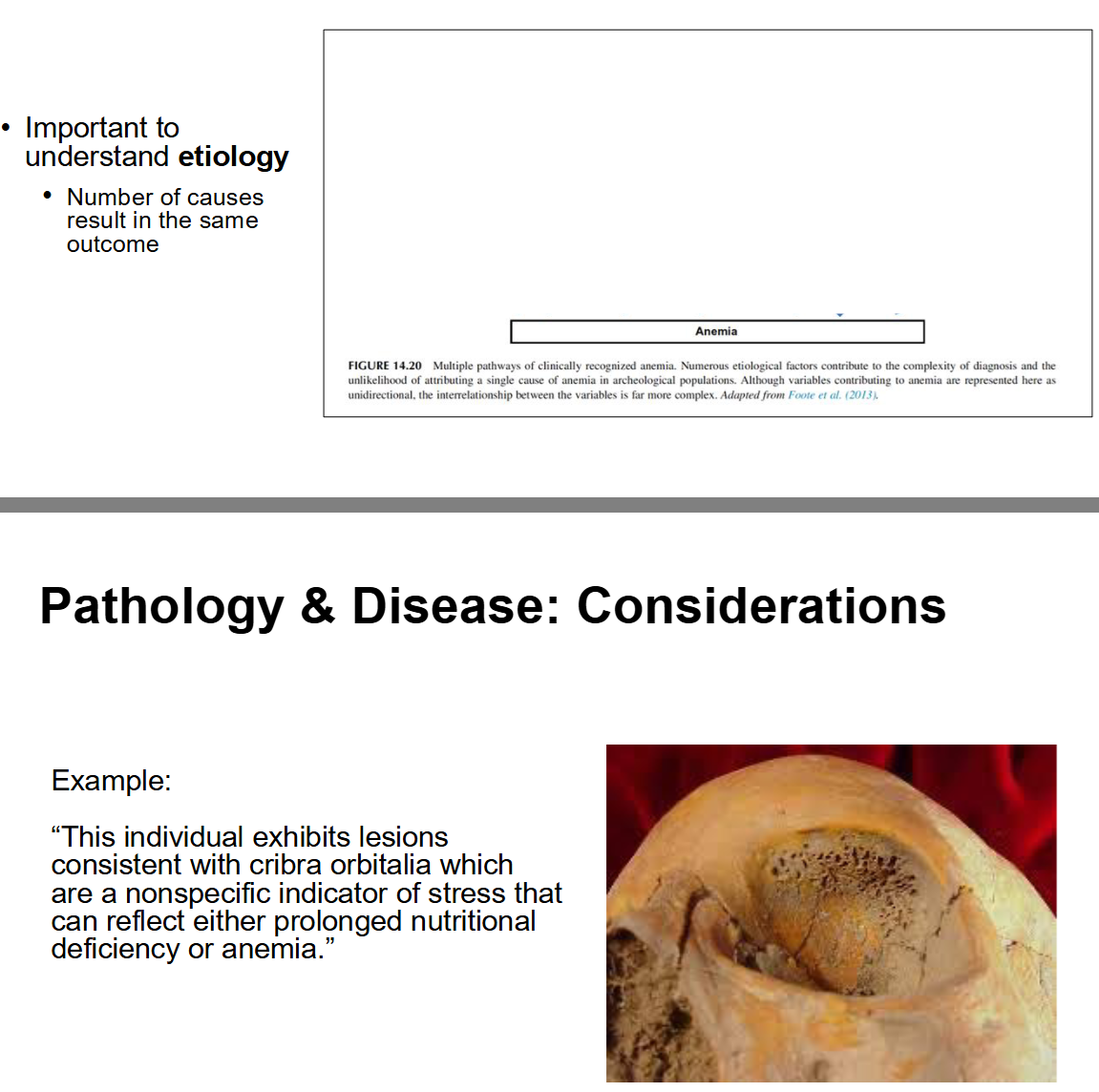
Important to understand etiology
Number of causes result in the same outcome
Example: “This individual exhibits lesions consistent with cribra orbitalia which are a nonspecific indicator of stress that can reflect either prolonged nutritional deficiency or anemia”
Types of “Diseases”
Vascular
Inflammatory (infectious)
Traumatic
Anomaly (congenital/non-metric)
Metabolic (anemias/gout, etc.)
Interaction (neuromechanical)
Neoplastic (tumors/cancer)
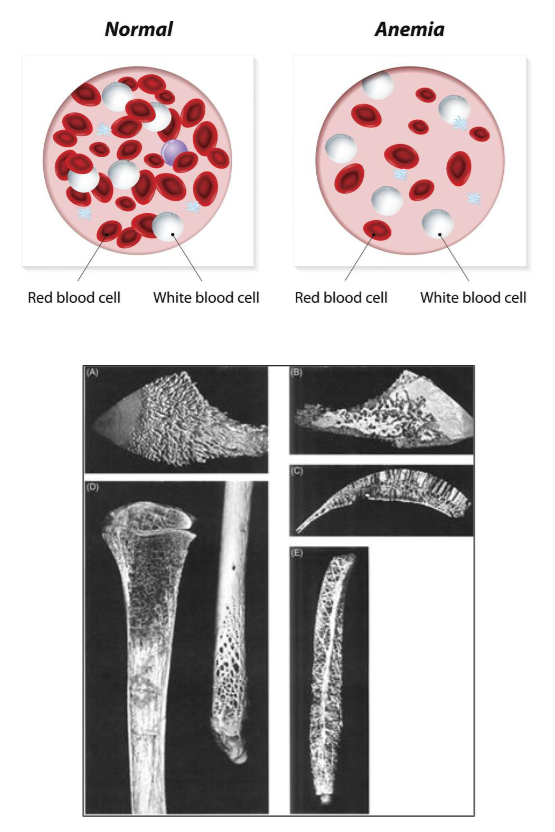
Vascular Disease
Diseases involving blood and the vessels which carry it
Reduced blood flow to the limbs
General appearance is increased vascularity
Examples: Thalassemia, anemia
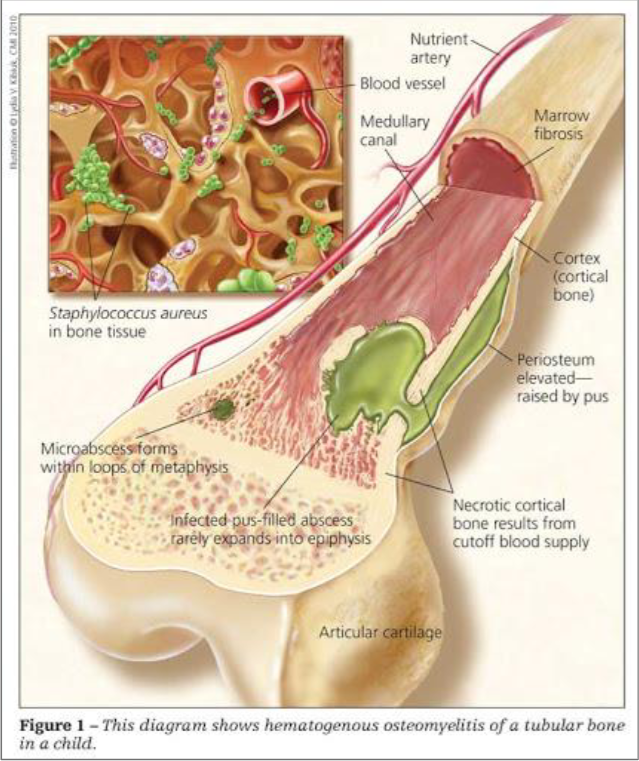
Inflammatory or Infectious Disease
Contracted virus or bacteria
Area inflames
Increased blood flow
Pooling of blood
Infection festers
Microorganisms multiply
Infection spreads
Can spread locally (within an organ, or adjacent space)
Can spread systemically (through the blood or lymph nodes
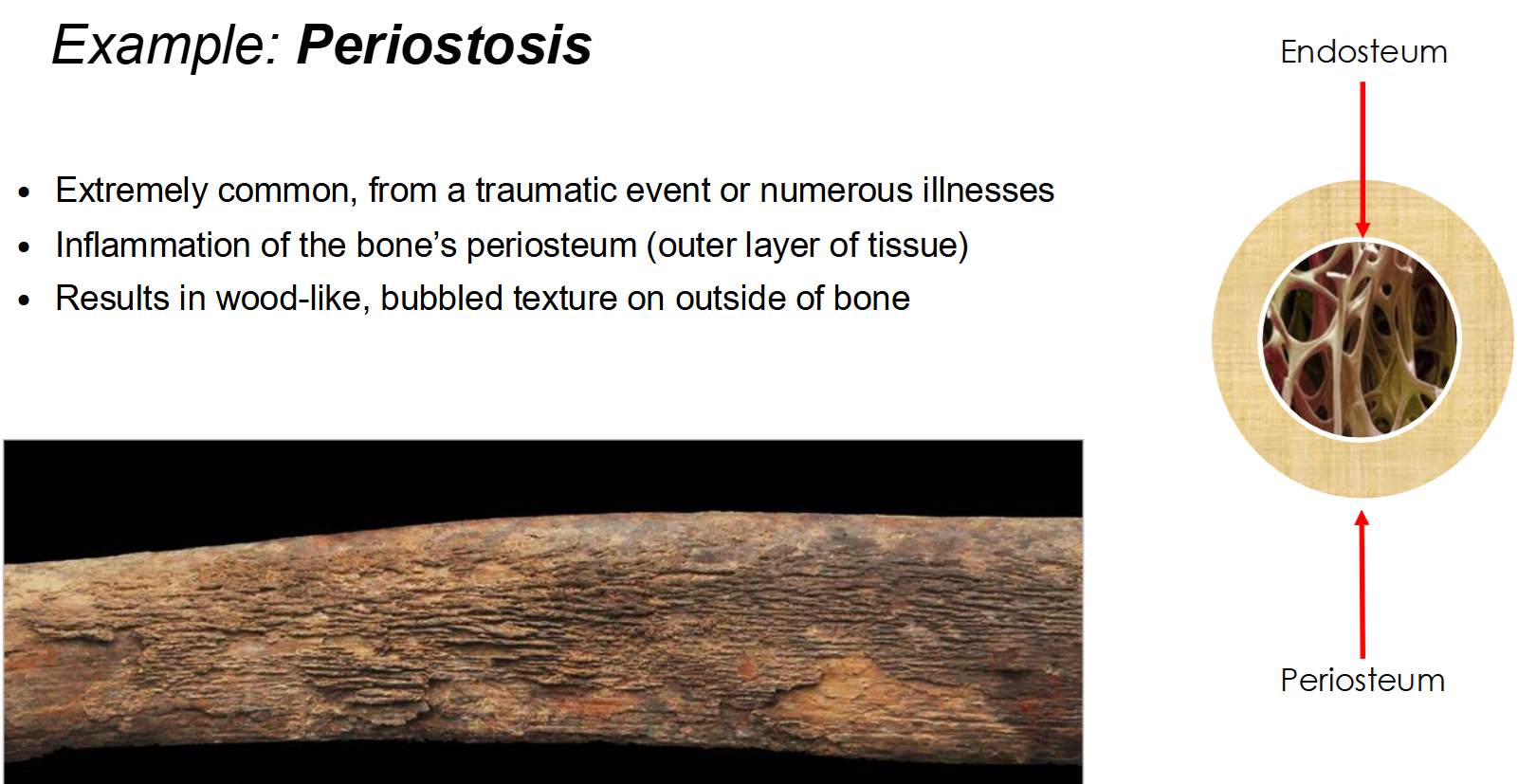
Inflammatory or Infectious Disease Example: Periostosis
Extremely common, from a traumatic event or numerous illnesses
Inflammation of the bone’s periosteum (outer layer of tissue)
Results in wood-like, bubbled texture on outside of bone
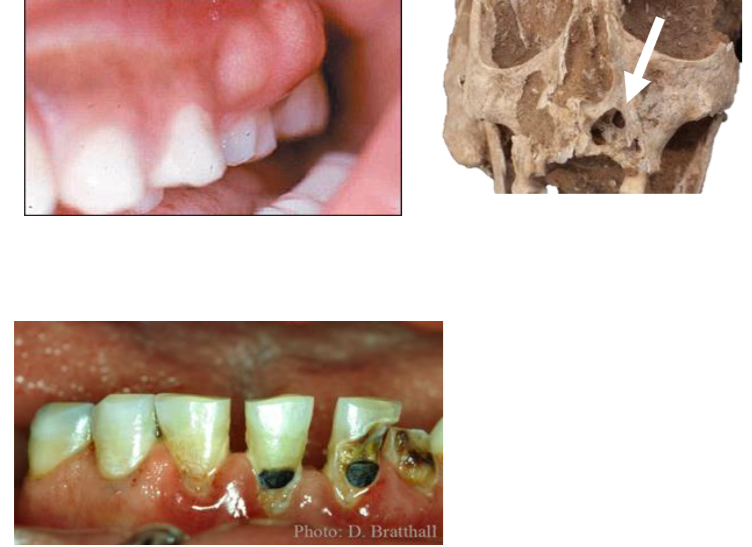
Inflammatory or Infectious Disease Example: Dental abcesses & caries
Abscesses form when food particles get stuck between teeth and bacteria festers
Dental caries (=cavities) form from acid-producing bacteria
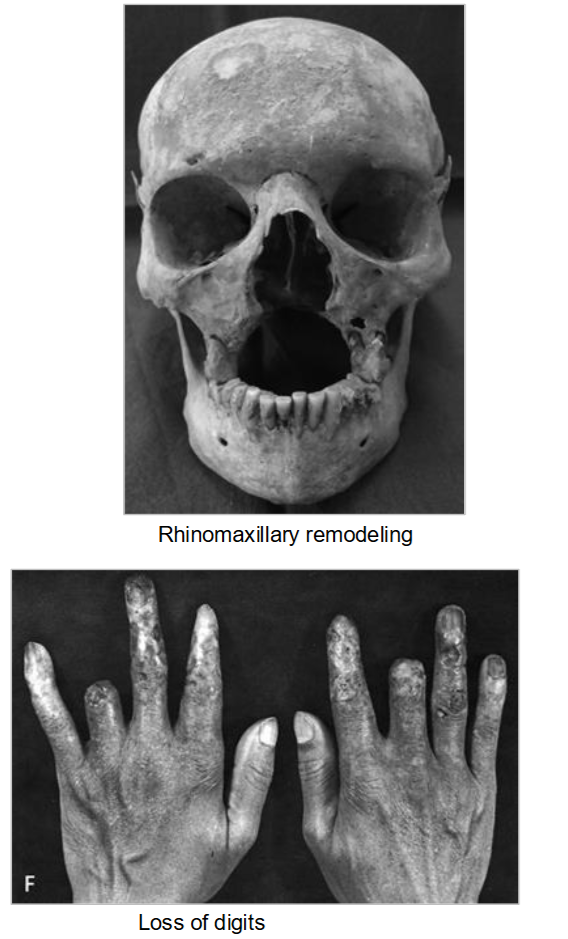
Inflammatory or Infectious Disease Example: Leprosy (Hansen’s Disease)
Spread via air
Symptoms include skin lesions and muscle weakness
Loss of sensation in digits and eventual loss of the digits
Destruction of nasal cartilage
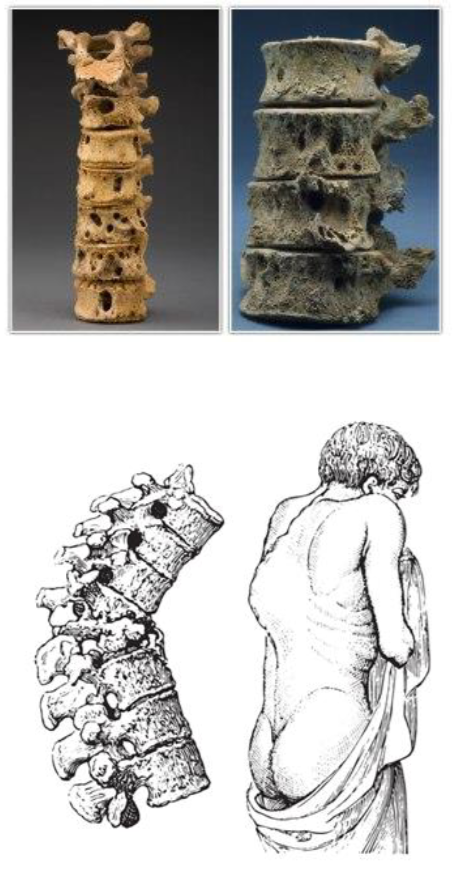
Inflammatory or Infectious Disease Example: Tuberculosis (TB)
Spread via air droplets
Acute or chronic infection of soft or skeletal tissues by bacteria
Affects the lungs (and by proxy, nearby bones)
Can result in vertebral degradation (Pott’s disease)
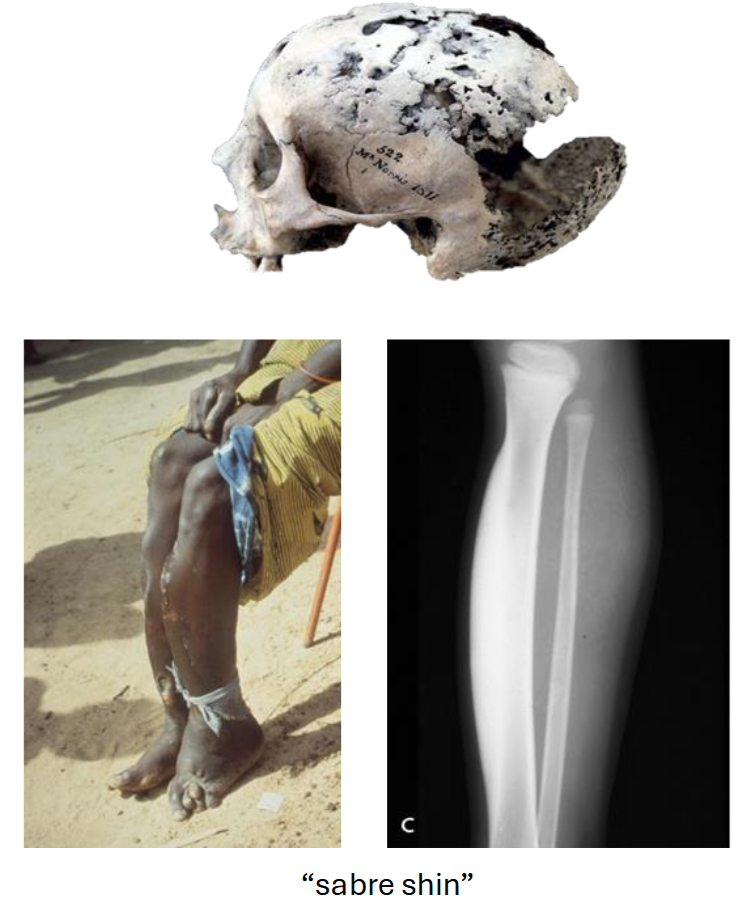
Inflammatory or Infectious Disease Example: Venereal Syphilis
Can be sexually transmitted or transmitted from mother to child (breastfeeding)
Affects the soft tissue as skin ulcers, sores on genitalia, benign growths
Mainly affects tibia (saber shin) and cranial vault (stellate scarring)