Chapter 14: Psychological Disorders - PSCYH 101 Study Help
 Call Kai
 Learn
Learn Practice Test
 Spaced Repetition
 Match
Match Flashcards
 Knowt Play
1/43

Earn XP
Description and Tags
Ain’t nobody coming to see you Otis
Name | Mastery | Learn | Test | Matching | Spaced | Call with Kai |
|---|
No analytics yet
Send a link to your students to track their progress
44 Terms
Addiction is a behavioral disorder where…
the use of a substance continues despite negative consequences & a desire to quit
________ is a fear/anxiety disorder of being in situations where it might be difficult to escape or get help.
agoraphobia
Stella has an excessive fear of becoming fat so she restricts how much food she eats to obtain a significantly low body weight. Stella might have…
anorexia nervosa
_________ is a personality disorder in which a person engages in socially undesirable behavior, are hedonistic (pleasure-seeking), impulsive, & lack empathy.
antisocial personality disorder
Anxiety disorders are psychological disorders characterized by:
excessive fear & anxiety even when there is no real danger
What is assessment?
an examination of a person's cognitive, behavioral, or emotional functioning in order to diagnose possible psychological disorders
Restlessness, inattentiveness, & impulsivity.
These words describe the disorder called…
attention-deficit/hyperactivity disorder (ADHD)
This developmental disorder is characterized by troubles communicating, limited interests, & difficulties with social interaction:
autism spectrum disorder
Binge-eating disorder is a(n)…
eating disorder where a person eats a lot of food to the point it causes them significant distress after
What disorder is characterized by extremely elevated moods during manic episodes and, frequently, depressive episodes as well?
bipolar I disorder
What disorder is characterized by alternating periods of extremely depressed & mildly elevated moods?
bipolar II disorder
Borderline personality disorder is a personality disorder where…
a person experiences disturbances in identity, in affect, & in impulse control
An eating disorder where a person cycles between dieting, eating a lot at once, & making themselves vomit (purge) is called…
bulimia nervosa
The _____________ sees mental disorders as caused by learned maladaptive (harmful) thoughts & beliefs.
cognitive-behavioral approach
Delusions are…
false beliefs based on incorrect assumptions about reality
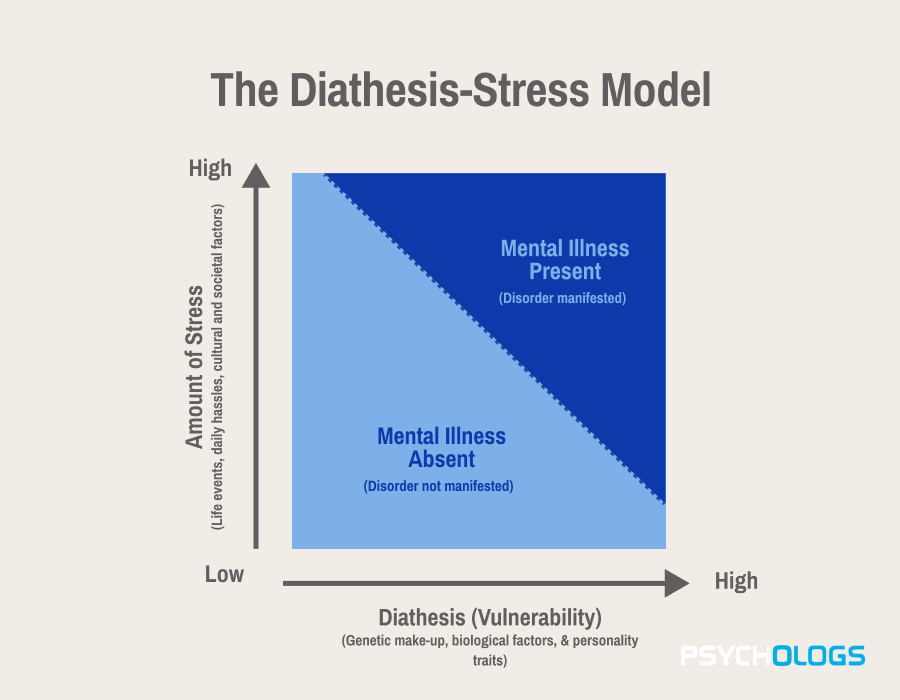
The _________ proposes that a disorder may develop when a person’s weakness combines with a stressful event.
diathesis-stress model
When someone acts in strange or unusual ways, including strange movement of limbs, bizarre speech, & inappropriate self-care (e.g. failing to dress properly, bathe), they are displaying ________.
disorganized behaviors
________ can be described as incoherent in pattern leading to frequently changed topics & strange or inappropriate things being said in conversation.
disorganized speech
Dissociative disorders are disorders centered around…
disruptions of identity, memory, conscious awareness
What is etiology?
factors that contribute to the development of a disorder
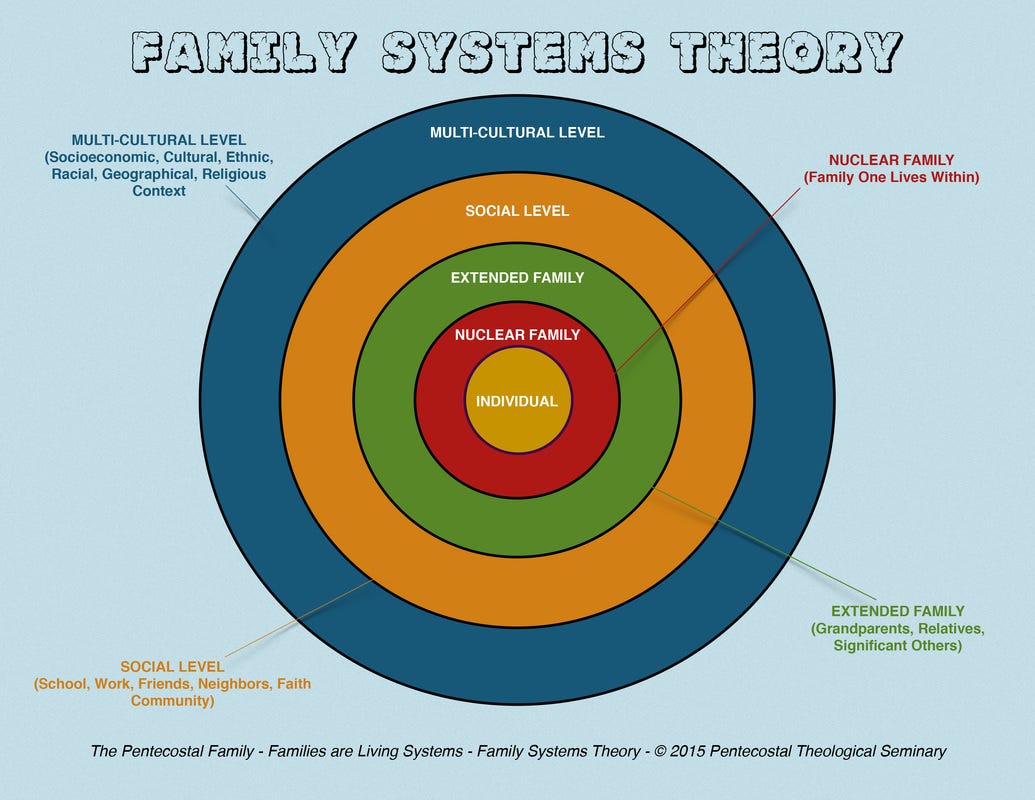
The _______ considers problems within an individual as indicating problems within the family.
family systems model
Feeling anxious all the time without a clear reason describes…
generalized anxiety disorder (GAD)
What are hallucinations?
false sensory perceptions that are experienced without an external source (e.g. seeing, hearing, or feeling things that are not really there)
A cognitive model of depression where people feel unable to control events in their lives refers to…
learned helplessness
Jacob has been experiencing severe negative moods and a lack of interest in activities that he usually liked. What disorder might he have?
major depressive disorder
________ are symptoms of schizophrenia marked by deficits in functioning (e.g. apathy, lack of emotion, slowed speech & movement).
negative symptoms
Frequent intrusive thoughts & compulsive actions describe…
obsessive-compulsive disorder (OCD)
________ lasts longer than major depressive disorder but is not as severe.
persistent depressive disorder
Frequent nightmares, intrusive thoughts, & flashbacks related to an earlier trauma. This describes…
posttraumatic stress disorder (PTSD)
What is psychopathology?
sicknesses or disorders of the mind; psychological disorders
The method that studies basic aspects of functioning & considers them across multiple levels of analysis (genes-brain systems to behavior) is…
Research Domain Criteria (RDoC)
What might a person with schizophrenia experience?
alterations in thoughts, in perceptions, or in consciousness, resulting in psychosis
The _______ views psychopathology as the result of the interaction between individuals & their cultures.
sociocultural model
Trauma is a _______ psychological & physiological response to a _______ event, often one that profoundly ______ the person's beliefs about the world.
prolonged; distressing; violates
Which question is not necessary to answer when a clinician is determining if a person's behavior represents psychopathology? Select all that apply.
Is the behavior immoral?
Research Domain Criteria (RDoC) have been established by the National Institute of Mental Health (NIMH) to reframe how mental disorders are conceptualized and studied. Which of the following statements is NOT accurate about RDoC?
RDoC will completely replace the DSM-5 and the established classification of psychopathology.
Which statement about neuropsychological assessment is true?
Neuropsychological testing uses tasks that require planning, coordinating, and memory to identify potential dysfunction in certain brain regions.
Two students, Sam and Kerry, visit the campus health center. Sam describes feeling constantly fearful and anxious. Kerry describes feeling persistently agitated and often exhibiting violent outbursts. Sam's symptoms are characteristic of an _______ disorder, which is more common in ______; Kerry's symptoms are characteristic of an _______ disorder, which is more common in ________.
internalizing, women; externalizing, men
Match each of these anxiety disorders (specific phobia, generalized anxiety disorder, and social anxiety disorder) with the following descriptions:
Harlow is hypervigilant, constantly on the lookout for problems. He often has trouble sleeping and experiences constant fatigue.
While hiking, Susan comes across a snake sunning itself. She becomes intensely frightened and must quit her hike early.
Juan experiences extreme mental tension when in social situations and especially dreads social performances, so much so that his grades and well-being suffer.
1: generalized anxiety disorder, 2: specific phobia, 3: social anxiety disorder
Match each of these emotional disorders (major depressive disorder, bipolar I disorder, bipolar II disorder) with the following descriptions:
Claudia frequently has high feelings but they rarely last. More often she experiences long periods of extreme sadness that disrupt her relationships. -
Since Lorenzo's mother died about a year ago, he has not found any satisfaction in his hobbies or relationships, spends most nights lying awake in bed, and has lost nearly 10 pounds. -
Breyaundra experiences manic highs where she barely sleeps for many days, makes risky investments with her life savings, and is so confident in her physical abilities she puts herself in danger. -
1: bipolar II disorder, 2: major depressive disorder, 3: bipolar I disorder
Which statement accurately describes the current understanding of schizophrenia?
Schizophrenia is primarily a thought disorder with brain-related causes.
Which statement about trauma is accurate?
The presence of protective factors, such as positive relationships, can prevent trauma.
Which of the following statements describe current objections to defining personality disorders as psychopathological in diagnostic
systems such as the DSM-5? Select all that apply.
Environmental factors are too influential on personality to consider personality traits as disordered.
Overlap in the characteristics between disorders suggests that the categories may not be conceptually clear cut.
Personality is best described categorically so cannot fit into a dimensional treatment approach.
The features of personality disorders are on the continuum of normal personality traits.
Once diagnosed with a personality disorder, people carry the stigma of that disorder with them even after their symptoms improve.
2, 4, 5
Royce is 5 years old and taking swimming lessons at the community pool. He is usually unprepared on arrival, forgetting his towel, a change of clothes, or goggles. During instruction, he often blows bubbles at the water's surface and makes excessive noise. Although Royce tries to listen to what his teacher says, he immediately needs directions repeated to follow them. Which diagnosis aligns closest with Royce's behaviors?
attention-deficit/hyperactivity disorder