W5 - Language and literacy development
 Call Kai
 Learn
Learn Practice Test
 Spaced Repetition
 Match
Match Flashcards
 Knowt Play
1/43

There's no tags or description
Looks like no tags are added yet.
Name | Mastery | Learn | Test | Matching | Spaced | Call with Kai |
|---|
No analytics yet
Send a link to your students to track their progress
44 Terms
theories of language development - nature
Chomsky’s universal grammar (UG) theory
language is an innate human capacity that contains fundamental rules common to all
children hit milestones at same time across languages
nativism
only humans produce complex language
poverty of the stimulus argument
not enough input from adults/environment to account for children’s complex syntactic knowledge
children can make up novel sentences they’ve never heard
supports idea of language acquisition device (incomplete input is handled by this mechanism)
limitations: Lin (2017)
unfalsifiable - Tomasello (2016)
flawed and unprecise methodology
lanuage learned through general cognitive processes
theories of language development - nurture
behaviourism
verbal behaviour is learned like any other behaviour
correct language is reinforced
constructivism
children construct their own knowledge depending on the environmental input they receive – build on existing knowledge they have
children’s babbling reflects native language
children use stress/statistical patterns to segment words from speech stream
main nurture explanation of language acquisition
robust links between quantity and quality of verbal input and children’s language outcomes (parents vocab range to kids)
case of Genie
Fromkin et al. (1974)
could acquire range of vocab
significantly struggled with syntax and grammar
could only make 2 word sentences
show that the ability to acquire grammatical rules is dependent on early exposure
supporting the idea of critical/sensitive window
aspects of learning language
language comprehension vs language production (understanding vs creating)
babbling
phonological discrimination
segmenting words from the speech stream
picking out words using spaces between them in a sentence
word learning (understanding and speaking)
grammar rules
pragmatics
stages of language development
newborns and babbling
phonological development and speech production
segmenting from the speech stream
development of non-verbal abilities
newborns and babbling
1st stage of language development
newborns prefer their own mother’s voice and familiarity, than a strangers
mothers read same passage during pregnancy then after birth
DeCasper & Spence (1986)
canonical babbling from 6 months
quantity and complexity of babbling linked with subsequent vocabulary
Morgan & Wren (2018)
babbling reflects native language in terms of prosody (pitch and stress) and phonological patterns
phonological development and speech production
2nd stage of language development (7-9 months)
children learn to associate the sounds which they hear and those they can make via their vocal tract
likely to be interwoven with segmenting words from speech stream
segmenting from the speech stream
3rd stage of language development
different explanations how children pick out words in a long stream:
1) use familiar stress patterns of language
start of most words has more stress on it
Jusczyk et al. (1999) - 7.5-month-olds could segment strong-weak (kingdom) more easily than the reverse (guitar)
2) use transitional probabilities (what sounds usually go next to others sounds)
certain letters and sounds go together eg. b and z don’t go together so can differentiate the words
Saffran et al. (1999) - 8-month-olds were able to do this with nonsense words
development of non-verbal abilities
4th stage of language development
eg. pointing, turn-taking, eye gaze & other symbolic gestures
triadic joint attention states from 10 months (Cameron-Faulkner, 2020)
ability to coordinate attention between social partner and an object/event through gestures
shift from dyadic interactions to understanding social meaning
at this critical period, infants can distinguish between intentional gaze and random head movements
successful attention here predicts better language development, comprehension and social-cognitive skills
word/vocab learning
expressive vs receptive vocab
words need to convey meaning
linked and disassociated to a degree
by 4 years old, children have clearer speech sounds and use decontextualised speech
signpost language milestones
GOSH, ICAN, ASHA
expressive vocab
productive
words children say
from 12 months
receptive vocab
comprehension
words children understand
from 8-10 months
larger in earlier stages of language acquisition
why vocab size is difficult to estimate
how to measure if children understand words without producing them
standardised test is limited
which words come first
more frequent words
true for concrete nouns
not for abstract eg. ‘the’ = later
nouns first, verbs later
easier references
verbs usually need longer sentences to link words = later
shorter words
grammar
rules of language for combining words into sentences
includes punctuation and syntax
word categories/classes/parts of speech
grammatical knowledge of speech and syntax helps decipher meaning
how do speech and language difficulties manifest
understanding spoken words and using language to communicate
remembering and recalling information accurately
listening and understanding
sequencing information to tell a story
using abstract language (e.g., idioms, metaphors)
staying on topic
understanding non-verbal communication and relating to others in socially acceptable ways
expressing feelings and emotions in an appropriate way, for example they may use aggressive behaviour, instead of words, to express themselves
speech sound disorders
speech, language and communication needs (SLCN)
most common need in primary school
40% of children lacking necessary vocabulary to access learning
20% of 5-year-olds fail language related Early Learning Goal
Locke et al. (2002)
children from low socioeconomic backgrounds = more likely to have SLCN
50% at the start of reception had these needs, and weren’t meeting language milestones
examples:
cleft lip and palate
learning disabilities, stammering
communciation issues from autism/hearing loss
developmental language disorder (DLD)
developmental language disorder (DLD)
significant, ongoing difficulties in understanding and/or using spoken language
7% of children start school with DLD, 2-3% LD associated with another condition
has neurological/genetic basis
co-occurance of DLD and behavioural problems (Vermeij et al. (2021)
need to factor behaviour into interventions
in the past, has also been referred to as specific language impairment, developmental aphasia, speech impairment and language delay
different DLD presentations
DLD children slower growth in vocabulary size (particularly verbs)
at 18 months (50-100 words), typical children begin to combine words, but DLD children don’t
DLD children follow same trajectory as typical children, but at a slower rate and with more errors
DLD children have particular difficulties with tense morphemes (e.g. –ed) and subject-verb agreement (e.g. I walk, she walks)
DLD children have particular difficulties with syntactic rules (word order) especially forming wh- questions (Leonard, 1995)
DLD can become ‘invisible’ at school
Toseeb et al. (2020)
secondary analysis of data
a child’s early language and communication environment is important for language and social development
the absence of adequate language ability in DLD children means play and prosocial behaviours allows development of relationship and behavioural skills instead
this protects them against externalising problems like hyperactivity
since DLD children tend to have poorer mental health, this research, showing play helps behaviours, can be applied practically to improve their lives
language ‘delay’
smaller vocabs than peers
no specific reason eg. not DLD, SSD
shows early signs through limited babbling and communication frustration
causes: (Liang et al. (2023))
environmental factors eg. limited parents talk to kid, reading books
CNS disorders eg. autism
speech disorders
hearing problems
early interventions are effective, like speech therapy
impacts of language difficulties in childhood
school curriculum/ready
all subjects require language, reading and comprehension
social well-being
reading and writing
knock-on effects of mental/physical health, life expectancy, job prospects
Iverson & Williams (2025) show impacts from infancy into adulthood
literacy
ability to read, write, speak and listen to communicate effectively
specific literacy skills:
vocab
fluency
sequencing
decoding
comprehension
GPC (grapheme phoneme correspondence)
print awareness (book experience, the cover/contents)
narrative/storylines
phonological awareness (sounds)
letter knowledge (what they look like)
general cognitive skills required:
working memory
attention
fine motor skills
reading
not a single skill, but complex coordination of abilities, strategies and knowledge
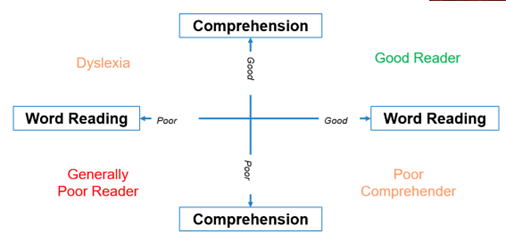
simple view of reading (SVoR) conceptualises reading
simple view of reading (SVoR)
Gough & Tunmer (1986)
4-dimensional conceptualisation of reading comprehension
reading comprehension is the product of:
word recognition/decoding
language comprehension
SVoR supporting evidence
Nation & Snowling (1997)
looked at validity of reading skill tests
children with poor comprehension had greater difficulty on tests heavily dependent on linguistic comprehension, and least on decoding measures
text comprehension heavily dependent on listening comprehension
shows the link of the 2 dimensions of the model
Muter et al. (2004)
separate underlying skills for each dimension
early letter knowledge & phoneme sensitivity predicted later visual word recognition
oral vocabulary, rhyme & grammar skills predicted later comprehension skills
Spooner et al. (2004)
evidence of children with divergent profiles
eg. good decoding but poor comprehension skills
word recognition necessary for adequate text comprehension
SVoR limitations
decoding/word reading and comprehension do not account for all variation in reading ability
some researchers have tried to add in other components e.g. fluency, but results are conflicting
only a theoretical model
doesn’t explain mechanisms behind the development of decoding and comprehension
oversimplification of a complex cognitive process
Pressley et al. (2008) still argues many ignored components within SVOR model
eg. inference, working memory, fluency
but the skills required for each dimensions are integrated into them
Scarborough (2001) reading rope
involves many more interwoven reading skills
expansion of SVoR
better guidance for educators
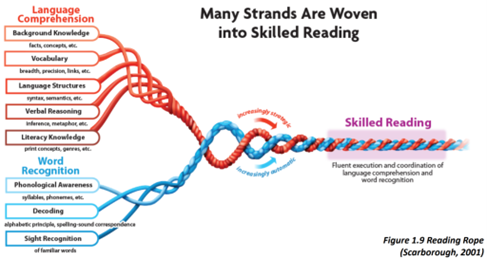
components of reading
word reading
reading comprehension
fluency
word reading - components of reading
word reading is the ability to pronounce words accurately
not all countries use phonics to teach kids to read
strategies:
sight word reading
familiar words
phonological decoding
unfamiliar words sound out and blend together
reading by analogy
knowledge about the pronunciation of a familiar word to pronounce a new word eg. fat, rat, cat
using context
knowledge about the topic/text
useful skills for word reading
vocabulary
letter knowledge
print awareness
phonological awareness
morphological knowledge
phonological awareness
early reading instruction is focused on needing to learn how to decode printed symbols in order to access the meanings of the words they represent
phoneme - smallest speech sound unit
English has 44
grapheme - letter(s) associated with a single phoneme
importance of linking letters and sounds:
grapheme-phoneme correspondence (GPC)
phonics lesson is about teaching these GPCs
silent letters make it tricky
morphological knowledge
morpheme - smallest meaningful unit
morphological awareness - ability to manipulate word structure
knowing the root word helps readers decode the word eg. kind, unkind and kindness
meanings of words eg. suffixes, prefixes
knowledge of un- and -s means don’t need to decode whole word again, just learn the rule
reading comprehension - components of reading
understanding the meaning of the words
the ability to process text, understand its meaning, and to integrate it with what the reader already knows
relationship with decoding:
dependent on a reader’s ability to read words on a page for younger children
inaccurate decoding slows down access to meaning
memory and cognitive processes are directed to decoding words first before meaning can be extracted
useful skills for reading comprehension
vocabulary knowledge
general background knowledge of the world
inference (understanding things not explicitly said)
knowledge of grammar
syntactic bootstrapping: knowledge of grammatical structure helps children understand word meaning
including syntactic categories (adjectives, nouns, verbs etc)
knowledge of different genres
comprehension monitoring
skilled readers monitor their understanding of a text and notice when comprehension breaks down
strategies:
re-read – in response to breakdown in understanding
slow down – more cognitive resources available
speed up – skimming irrelevant information at expense of deep comprehension
fluency - components of reading
accuracy
word reading
automaticity
achieved at speed and without effort
prosody
correct intonation and expression (stress of certain letters)
sounds like normal speech
probably requires comprehension
measure fluency using timer and count of errors
useful skills for fluency
repeated practise reading aloud
practising a particular text
reading silently whilst skilled reader reads aloud
systematic, positive and constructive feedback
reasons for atypical literacy skills
environmental & biological factors affect how language and literacy develop
some conditions can make the development of literacy skills more difficult
sub-optimal environmental conditions can also make the development of literacy skills more difficult
e.g. limited resources, limited quality interaction with caregiver
nativist vs constructivist vs hybrid theories of language learning
literacy/reading difficulties
decoding/word reading
difficulties using GPC rules
difficulties with whole word recognition and fluency
comprehension
lack of vocab/general knowledge eg. from prior lack of vocab at home
difficulties with inference
motivation
dyslexia
motivation - literacy difficulties
children are not motivated to read = less reading practice = weaker decoding and comprehension skills
motivation for reading is complex and linked to many different constructs
eg. expectancy value theory
motivation is linked to achievement
children who enjoyed reading and read daily have higher reading scores than those who don’t (statistically significant)
both frequency and enjoyment are interlinked and important in academic success
1 in 3 people aged 8-18 enjoy reading
this has decreased by 8% over the last year
expectancy value theory
Li et al. (2023)
successful reading = expectancy of success x value ascribed to reading
both expectation of success and value ascribed to task are linked to motivation for that task
expectancy linked to self-efficacy, but also encompasses tasks in future
task value incorporates:
attainment value (does task relate to personal goals and identity?)
intrinsic value (enjoyment)
utility value (usefulness for future plans, linked to extrinsic motivation)
cost (what is the relative cost/effort needed to complete task?)
dyslexia - literacy difficulties
a learning difficulty that affects skills involved in accurate and fluent word reading and spelling
characteristics:
poor phonological awareness
verbal memory
verbal processing speed
not dependent on IQ
is a continuum not a category
co-morbidities such as language, motor skills, concentration etc exist (but are not by themselves markers of dyslexia)
indication of severity can be gained by RTI
identifying developmental dyslexia
screening & checklists are indicators of risk but not official diagnoses
eg. year 1 phonics screener, Diagnostic Test of Word Reading Processes
diagnostic test by certified dyslexia assessor
positive diagnosis results in:
access to intervention (often phonologically based)
reasonable adjustments in workplace/exams
summary of L+L difficulties
SCLN can be interpreted broadly or narrowly
language difficulties can manifest in many different ways
e.g. expressive/receptive, vocabulary, grammar, social communication.
speech sound disorders & stuttering also come under the SCLN umbrella
literacy difficulties can be conceptualised as decoding, comprehension or both
SVoR
SRR
literacy motivation can feed into these difficulties, or be a result of them
these are atypical development for those experiencing difficulties