5010 Exam 4
 Call Kai
 Learn
Learn Practice Test
 Spaced Repetition
 Match
Match Flashcards
 Knowt Play
1/32

There's no tags or description
Looks like no tags are added yet.
Name | Mastery | Learn | Test | Matching | Spaced | Call with Kai |
|---|
No analytics yet
Send a link to your students to track their progress
33 Terms
Discrete Trial Teaching (DTT)
a teaching strategy that:
breaks skills down into small components and identifies very specific target behaviors
is very systematic and structured in terms of the presentation of the SD, prompt, and the consequence
allows for a great deal of instructor control
provides high levels of learning opportunities
allows the student to contact reinforcement frequently
is research based
example of DTT in classroom setting
teaching letter sounds or numbers
DTT Process
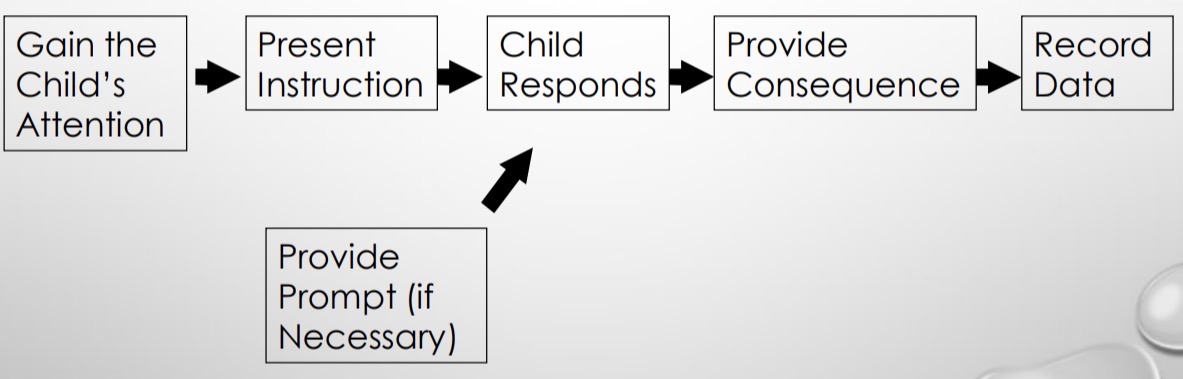
how long should you give the child to respond
5 seconds
strategies to gain the child’s attention
use the materials, edibles, visual shield, a noise.
make sure to not use their name,
a child can respond:
the child can respond:
incorrectly
correctly
not respond at all
provide consequence
if the child gets the answer wrong then:
try again or “good trying” then move through promoting sequence
if the child gets the answer right then:
reinforce
importance of recording data on each trial
we know how much they are progressing or if they are at all
accurate data
types of prompts
verbal
gestural
model
physical (full and partial)
verbal prompting
saying the correct response so that the child can repeat it
“what color? red”
gestural prompting
pointing to the correct item
model prompting
modeling the correct response
types of physical prompting
full physical: guiding the child’s hand to the appropriate object using hand over hand
partial physical: guiding the child’s hand to the appropriate object using elbow or shoulder
strategies to transfer stimulus control
prompt fading
stimulus fading
prompt delay
prompt fading
if doing full physical prompt, you move from full hand over hand to elbow prompt to shoulder prompt to no prompt at all.
stimulus fading
in a positional prompt, you move the stimulus back and back until they are in line with each other until the stimulus is not closest to them anymore.
correct stimulus might be bigger then the other stimulus, so slowly make the correct stimulus smaller until they are the same size.
prompt delay
instead of immediately prompting, you wait 2 seconds, then 4 seconds, then 6seconds to create for time for them to respond independently
what is a token system
a way to give positive reinforcement without needing to give the items immediately.
components of a token system
identify and define the target behaviors to be strengthened
decide on what to use for tokens
decide what the backup reinforcers will be
determine the reinforcement schedule for token delivery
determine the “cost” of the backup reinforcers
determine when/where tokens can be exchanged for backup reinforcers
response cost
removal of earned tokens contingent on instances of challenging behavior (negative punishment)
considerations for using response cost
if loss of tokens is to function as a punisher, the reinforcing value of tokens must be firmly established
identify and define the challenging behaviors that will result in response cost
determine how many tokens will be removed
the loss of tokens must be enough to reduce the opportunity to exchange for back-up reinforcers but not so much that that the student looses all of his/her tokens
what is behavior contract
written document that specifies a contingent relationship between the completion of a specified behavior and access to a reward
components of a behavior contract
description of the target behavior(s)
describe who should do what
when they should do it
how well they should do it
what is the behavior they are completing
description of data collection
how will the target behavior be measured?
use data to determine whether the contract is effective or not
describe the reinforcement contingency
what is the reward?
how much does the person get?
who will deliver it and when?
will there be a penalty for not fulfilling the contract?
signatures
of all parties involved
helpful hints for behavior contracts
define the target behaviors
objective, clear, and complete definitions (examples and non-examples)
helps the student know what they need to do
ensures accurate data collection
allows all members of the team to implement token reinforcement reliably
rationale for using self-management
The ultimate goal of education is self-management.
students who self-manage can set meaningful personal goals and evaluate their performance.
in other words, they are self-directed and gaining independence
how to develop self-management skills in our students (and ourselves)
goal setting
identify competing behaviors
antecedent manipulations
consequence manipulations
generalization
the occurrence of relevant behavior
under different, non-teaching conditions
without the scheduling of the same events in those conditions as had been scheduled in the teaching conditions.
generalization across
specific stimuli
settings,
people,
behavior, and/or
time
strategies for promoting generalization of behavior change
reinforcing occurrences of generalization
training skills that contact natural contingencies of reinforcement
modifying natural contingencies of reinforcement and punishment
incorporating a variety of relevant stimulus situations in training
incorporating common stimuli
teaching a range of functionally equivalent responses
incorporating self-generated mediators of generalization
defining maintenance
a continuation of the quantity and quality of behavior over time.
concerned with maintenance of behavior with little or no artificial support (in the “natural environment.”)
concerned with maintenance with continued intervention or in a modified environment.
concerned with academics (colors, letters, letter sounds, etc.)
planning: selecting teaching targets
most important and powerful maintenance strategy
select behaviors that secure regular reinforcement in the natural environment.
if a behavior does not secure reinforcement in natural context, is it worth teaching?
solutions to potential problems with generalization and maintenance
during planning:
select behaviors that will effectively compete with other behaviors, easier in terms of response cost, that get them the reinforcer every time
during teaching:
increase efficiency and reduce effort of target behavior
extinguish alternative behavior
during transition:
provide extra reinforcement for target
reduce reinforcement and/or increase effort of alternative behavior.
solutions to potential problems
during maintenance
intervene in maintenance to “awaken” potential reinforcement
during intervention
teach behavior to a sufficiently high mastery level based on environment
there may be functional level with higher quality behavior securing more or better reinforcement.
teach to a sufficiently high criterion to assure that behavior requires relatively low effort.
change to intermittent/delay schedule during training
plan for extinction (missed opportunities for reinforcement)
identify behavior you hope to generalize
identify a behavior that needs to generalize to another environment
how you’re going to identify generalization
what strategies you’re going to use to promote generalization