Brain Structures and Function
 Call Kai
 Learn
Learn Practice Test
 Spaced Repetition
 Match
Match Flashcards
 Knowt Play
1/22

There's no tags or description
Looks like no tags are added yet.
Name | Mastery | Learn | Test | Matching | Spaced | Call with Kai |
|---|
No analytics yet
Send a link to your students to track their progress
23 Terms
Cerebral Cortex
The outer layer of the brain, responsible for higher-level cognitive functions, including thinking, perceiving, and decision-making.
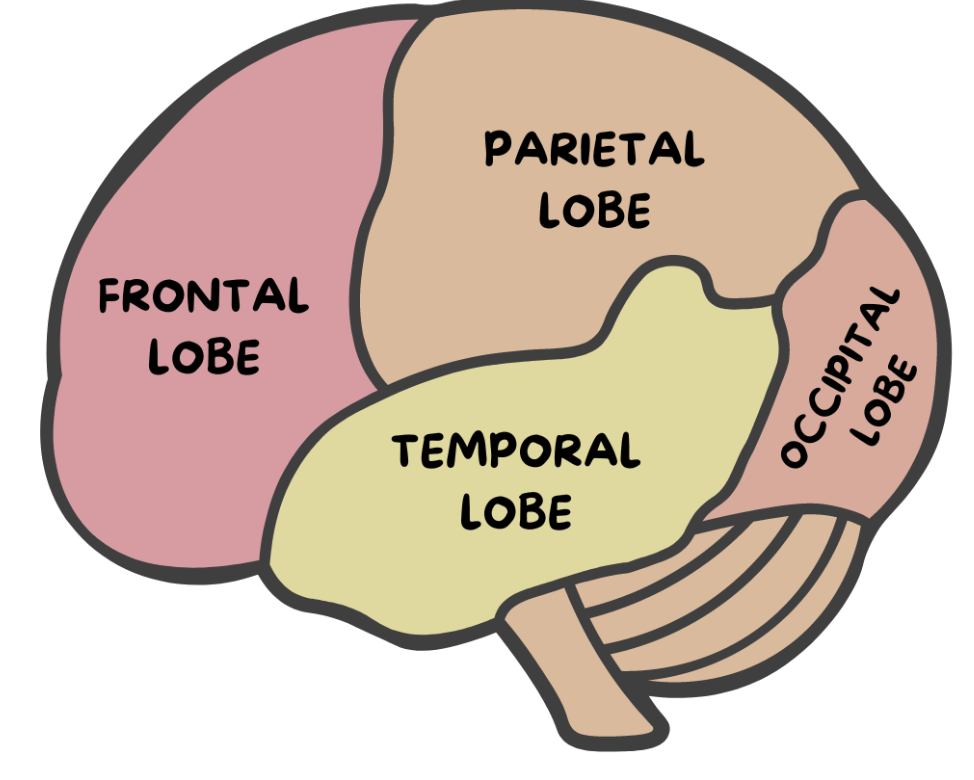
Lobes of the Brain
Frontal Lobe, Occipital Lobe, Parietal Lobe, Temporal Lobe.
The lobes of the brain refer to the four main regions or sections into which the cerebral cortex, the outer layer of the brain, is divided.
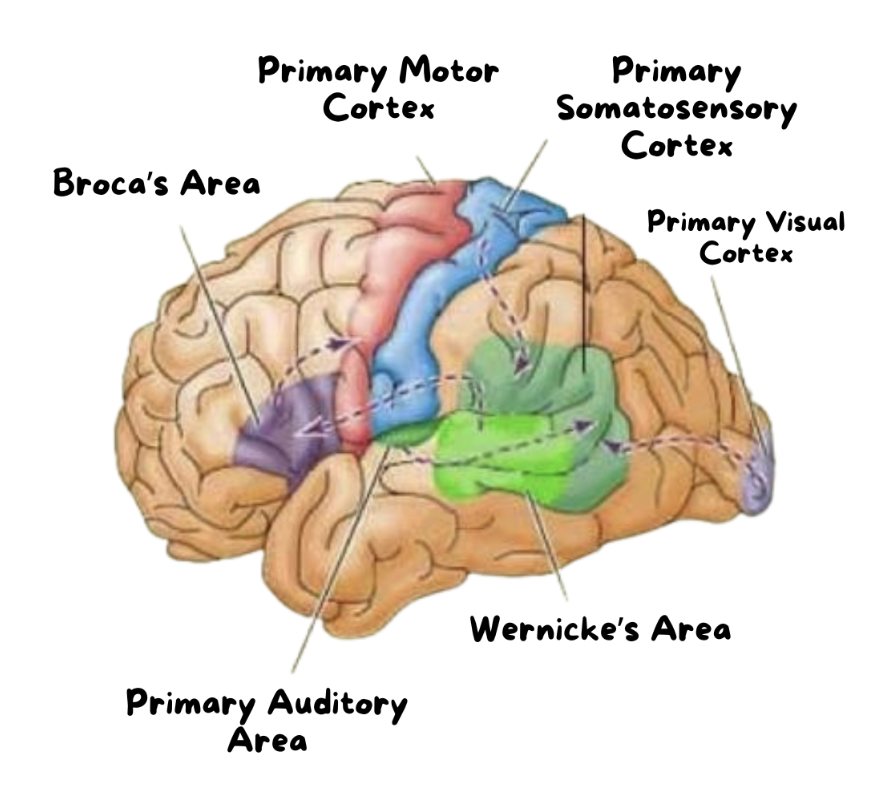
Association Areas
Broca’s Area, Primary Motor Cortex, Primary Somatosensory Cortex, Primary Visual Cortex, Wernicke’s Area, Primary Auditory Area.
They're parts of the brain that take information from all over the place—like what we see, hear, smell, and touch—and put it together to help us understand the world around us.
Frontal Lobes
located at the front of the brain and are involved in higher-level cognitive functions, including decision-making, problem-solving, planning, and personality expression.
Prefrontal Cortex
A region of the brain located in the frontal lobe, responsible for higher-level cognitive functions and executive functioning.
Executive Functioning
A set of cognitive processes that enable individuals to plan, organize, strategize, focus attention, regulate emotions, and manage time effectively.
Motor Cortex
Region of the brain located in the frontal lobe, responsible for planning, executing, and controlling voluntary movements of the body. Ex: Walking, Talking, Grasping Objects
Parietal Lobes
located at the top of the brain and are primarily responsible for processing sensory information from the body, such as touch, temperature, and spatial awareness.
Somatosensory Cortex
Region of the brain located in the parietal lobe, responsible for processing sensations from the skin, muscles, and joints. Ex: Touch, Pressure, Temperature
Occipital Lobes
located at the back of the brain and is primarily responsible for processing visual information received from the eyes. Ex: Shapes, Colours and Motion
Temporal Lobes
located on the sides of the brain and are involved in processing auditory information, language comprehension, and memory formation.
Corpus Callosum
Thick band of nerve fibers that connects the left and right hemispheres of the brain, facilitating communication and information sharing between the two hemispheres.
Brainstem
Responsible for basic life-sustaining functions such as breathing, heart rate, and sleep-wake cycles.
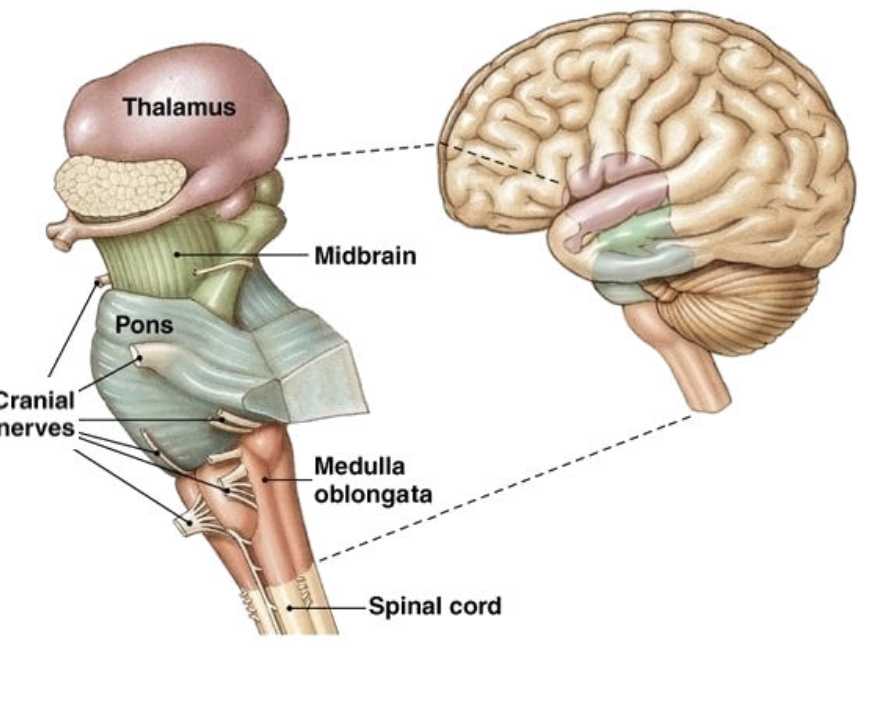
Medulla
Vital structure located at the base of the brainstem, regulating essential autonomic functions such as heartbeat, breathing, and blood pressure.
Reticular Activating System
A network of neurons located in the brainstem that plays a critical role in regulating arousal, attention, and consciousness.
Cerebellum
Located at the back of the brain, below the cerebral hemispheres, responsible for coordinating movement, balance, and posture. Ex: It helps you maintain balance on the bike, smoothly steer around obstacles
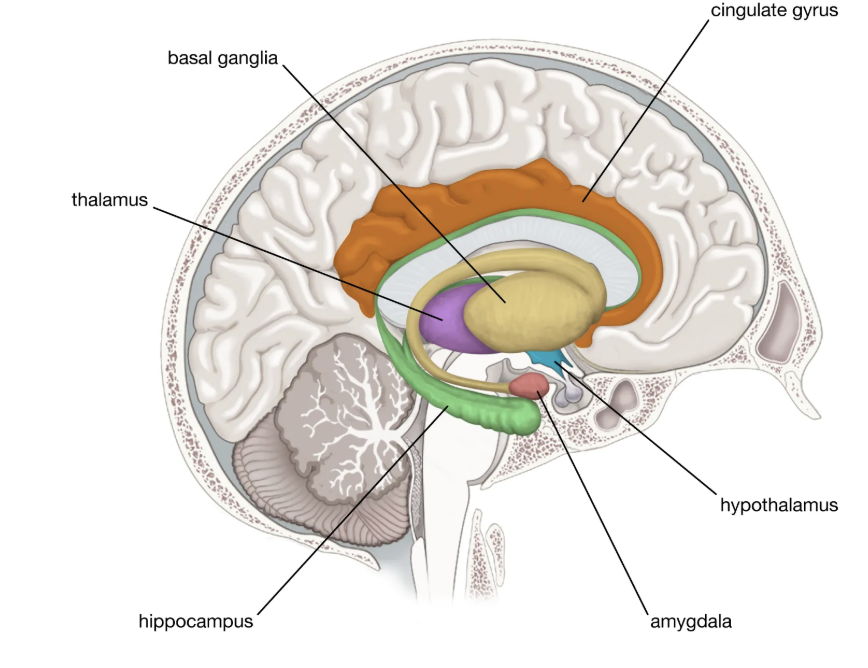
Limbic System
Amygdala, Hypothalamus, Hippocampus.
The limbic system, located beneath the cerebral cortex, is a set of brain structures involved in emotions, memory, and motivation.
Reward Center
Network of brain structures, primarily located in the limbic system, that processes pleasurable experiences and reinforces behaviors associated with them.
Thalamus
A relay station in the brain that processes and relays sensory information, such as sight, sound, touch, and taste, to the cerebral cortex.
Hypothalamus
A small but powerful structure located below the thalamus, responsible for regulating various essential bodily functions, including hunger, thirst, body temperature, and the sleep-wake cycle. Ex: hypothalamus activates mechanisms to help cool your body down.
Pituitary Gland
Small pea-sized gland located at the base of the brain, often referred to as the "master gland" due to its central role in regulating hormone production and secretion throughout the body.
Hippocampus
Curved structure located within the brain's temporal lobes, primarily responsible for forming and consolidating new memories. Ex: encoding information into long-term memory
Amygdala
Involved in processing emotions, particularly fear and aggression.