Porifera, Cnidaria, Worms
 Call Kai
 Learn
Learn Practice Test
 Spaced Repetition
 Match
Match Flashcards
 Knowt Play
1/32

There's no tags or description
Looks like no tags are added yet.
Name | Mastery | Learn | Test | Matching | Spaced | Call with Kai |
|---|
No analytics yet
Send a link to your students to track their progress
33 Terms
Phylum Porifera
The Phylum name for all Sponges
Phylum Cnidaria
Aquatic organisms that have Stinging cells called Cnidocytes
Examples of Members of Cnidaria would include
Jellyfish, Sea Anenomes, Hydra, Corals
One reason members of the Phyla Porifera are important to our world is because they
Filter aquatic ecosystems and help keep it clean.
Characteristics unique and common among all members of Porifera include
Asymmetry, Porous (full of holes), Sessile (don't move in mature form), Reproduce Sexually or by Regeneration, Rely on cellular digestion
Porifera
The phyla that these organisms belong to would be
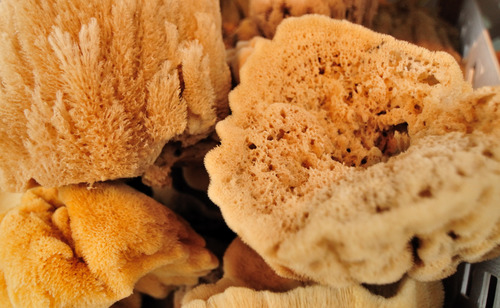
Cnidaria
This organism would belong to the phyla
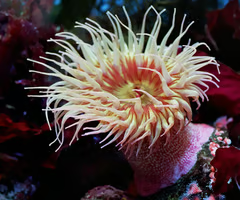
Characteristics unique and common to all Cnidarians include
Radial Symmetry, Tentacles, Cnidocytes, Live in Aquatic Habitats, Have a Gastrovascular Cavity, Reproduce Sexually, Have one of two body plans - Medusa or Polyp, Carnivorous
Cnidaria
This organism would belong to the phyla
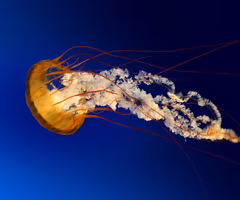
Cnidarians are important to the world because they
Are the builders of some of the most biodiverse aquatic ecosystems on the planet (e.g. coral reefs). Others are free ranging predators and helpful in population control, while some are a food source for other organisms.
Cnidaria, Polyp
This aquatic organism belongs to the Phylum ____________________ and displays a characteristic body plan common to this phyla called the ____________________ stage.

Medusa
This Jellyfish is displaying the body form known as the __________________.
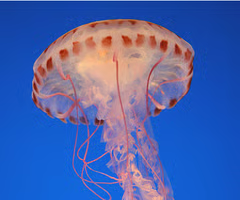
Platyhelminthes
The phyla name for worms that are flat in body plan.
Characteristics common to all members of the Platyhelminthes include
Acoelemates (no body cavity), Can be parasitic, Rely on diffusion to exchange gases and waste, can be parasitic or free living scavengers, are hemaphroditic. Reproduce sexually or asexually (fission)
The three classes of Platyhelminthes
Turbellaria, Cestoda, Trematoda
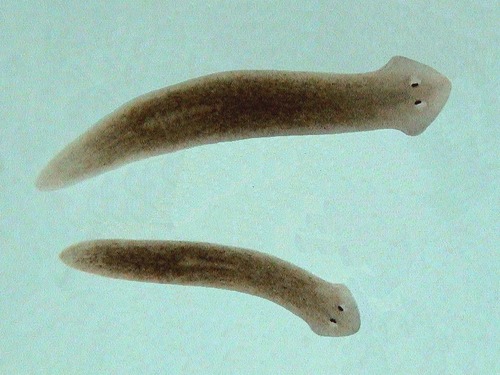
Platyhelminthes, Turbellaria
This planarian would be classified into the Phylum ____________________ and the Class ________________.
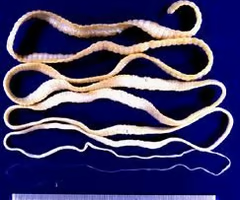
Platyhelminthes, Cestoda
This tapeworm would be classified into the Phylum _____________________ and Class _____________________
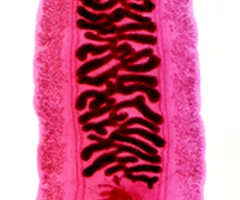
Platyhelminthes, Trematoda
This prepared slide of a Sheep Liver Fluke (parasitic flat worm) would be classified into the Phylum ____________________ and the Class ______________________.
Members of the Phylum Platyhelminthes are important to the planet because they
Help keep populations of algae, protists, and other microscopic organisms in check. Some act as parasites and can also play a role in population control.
Vermiform
Term referring to any organisms that has a worm-like body structure.
Phylum Nematoda
Members of this Phylum are round, unsegmented worms.
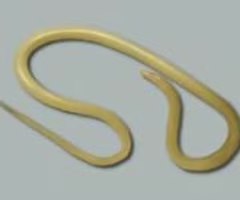
Nematoda
This worm would be classified into the Phyla __________________________.
Characteristics unique to and common among members of the Phylum Nematoda include
Vermiform body plan (worm-like), Have definitive sexes (male/female worms), Reproduce Sexually, Have a complete digestive tract, Pseudocoelemates, Round and smooth in nature
Members of the Phylum Nematoda are important to the planet because they
Help to cycle nutrients (Nitrogen) in soil, keep bacterial and protozoan populations under control. Some are parasitic and can keep insect populations under control as well.
Annelida
Members of this phyla are round, segmented worms such as earthworms and leeches.
Annelida means
Little Rings (referring to their segmentation)
Characteristics unique to and common among all organisms in the Phylum Annelida would include
Segmented rings, True Coelum with organs, True nervous and circulatory system, Some are Hermaphroditic, Reproduce Sexually
The three Classes of Annelids would include
Oligochaeta (e.g. Earthworms), Hirudinea (e.g. Leeches), and Polychaeta (e.g. Sandworms, Clamworms
Annelida; Oligochaeta
This worm would be classified into the phylum ________________________ and the Class ____________________.
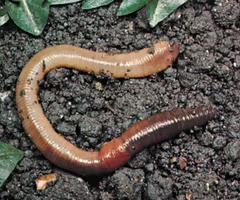
Oligochaeta means
A Few Setae or Bristles. Members of this class have bristles on the ventral side and Anterior end of their body's that help them move.
Annelida; Hirudinea
This organisms would be classified into the Phylum ___________________ and the Class __________________.
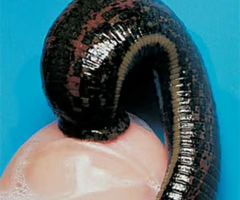
Annelida; Polychaeta
This organism would be classified into the Phylum ________________________ and the Class ________________________.
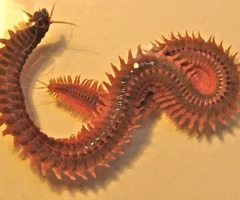
Polychaeta means
Many Setae (bristles), a characteristic used to further classify worms belonging to the Annelids.