myogenic control of the heart and receptors to pressure and CO2 and pH
 Call Kai
 Learn
Learn Practice Test
 Spaced Repetition
 Match
Match Flashcards
 Knowt Play
1/16

There's no tags or description
Looks like no tags are added yet.
Name | Mastery | Learn | Test | Matching | Spaced | Call with Kai |
|---|
No analytics yet
Send a link to your students to track their progress
17 Terms
Describe the role of Chemoreceptors when there is a rise in CO2 or fall in pH and of the nervous system in the process (4 marks)
Chemoreceptors in the aorta and carotid artery detect a rise in CO2/or a fall in pH
This causes them to send impulses to the medulla oblongata
Which increases the frequency of electrical impulses to the SAN
Via the sympathetic nervous system
This causes heart rate to increase, to deliver blood rapidly and remove CO2
Describe the role of Baroreceptors when blood pressure increases and of the nervous system in the process (4 marks)
Baroreceptors in the aorta and carotid artery detect a rise in blood pressure
This causes them to send signals to the medulla oblongata
Which decreases electrical impulses to the SAN
Via the Parasympathetic nervous system
This decreases heart rate which lowers the blood pressure
Describe the role of Baroreceptors when blood pressure decreases and of the nervous system in the process (4 marks)
Baroreceptors in the aorta and carotid artery detect a rise in blood pressure
This causes them to send signals to the medulla oblongata
Which increase electrical impulses to the SAN
Via the Sympathetic nervous system
This increases heart rate which increases the blood pressure
describe how the heart rate is controlled (6 marks)
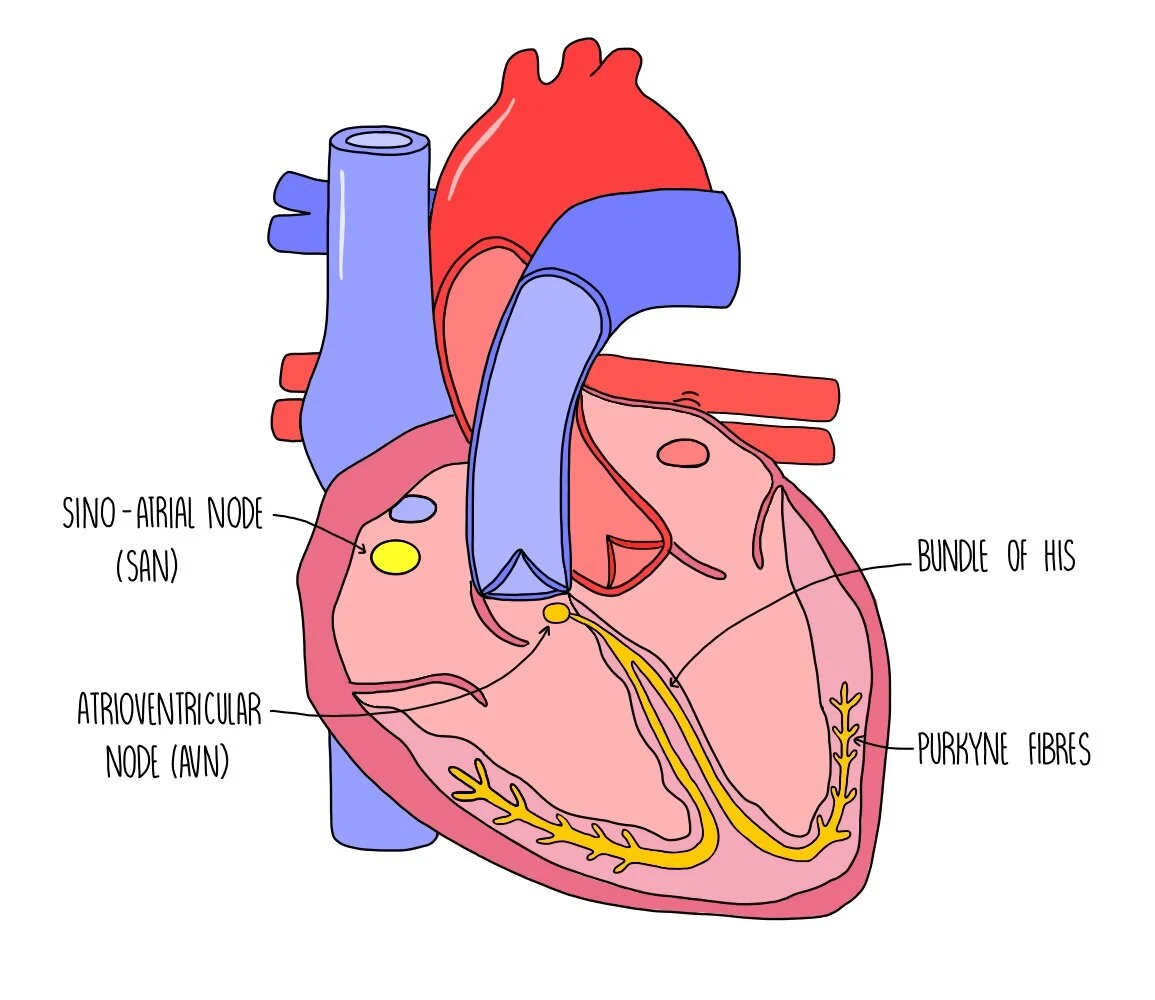
The SAN releases electrical impulses/a wave of depolarisation across the atria
Causing them to contract.
The AVN will then release a second wave of depolarisation to the bundle of His in the septum.
The wave of depolarisation travels down the septum to the Purkyne fibres in the walls of the ventricles.
There is a short delay before the Apex and ventricles contract.
Allowing time for the atria to pump all the blood into the ventricles,
The cells depolarise and the cardiac muscle relaxes.
Which part of the brain controls heart rate?
The medulla oblongata
How does the medulla oblongata control heart rate?
Via the autonomic nervous system
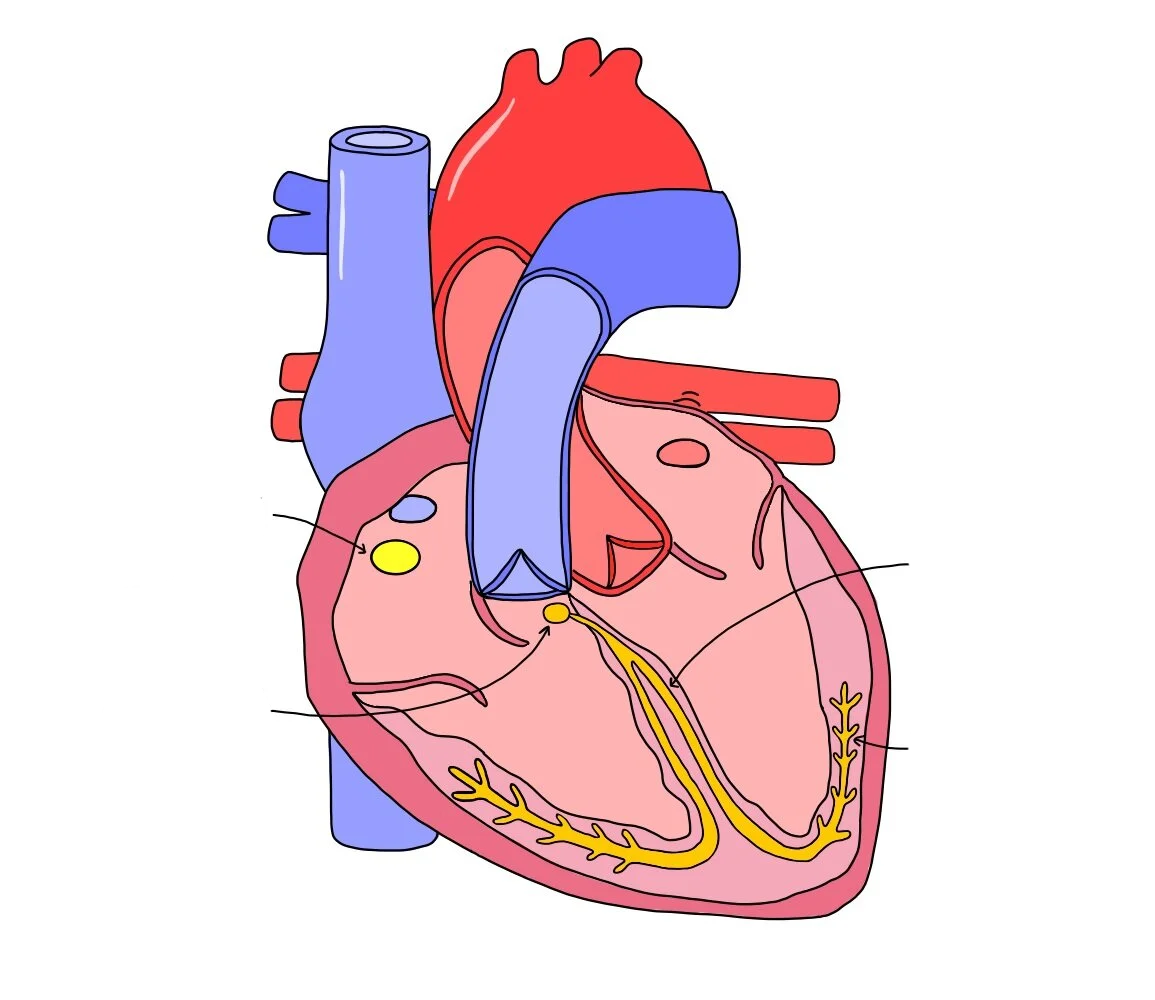
Label this diagram
The increasing of heart rate/blood pressure involves the
Sympathetic nervous system
The decreasing of heart rate/blood pressure involves the..
Parasympathetic nervous system
What does the SAN and AVN stand for?
Sinoatrial node
Atrioventricular node
Where is the “Bundle of his” located?
In the septum
Where is the “Purkyne fibres located in”?
In the walls of the ventricles
Where is the SAN located in?
In the top of the right atrium
Where is the AVN located in?
Between the right and left ventricle
What does it mean when the cardiac muscle is myogenic?
The cardiac muscle can contract on its own
Without stimulation by nervous impulses
how is the rate of contraction controlled?
By the waves of depolarisation
How does a rise in CO2 in the blood affect blood pH?
It decreases blood pH