AP Chem Unit 2: Compound Structure and Properties
 Call Kai
 Learn
Learn Practice Test
 Spaced Repetition
 Match
Match Flashcards
 Knowt Play
1/24

There's no tags or description
Looks like no tags are added yet.
Name | Mastery | Learn | Test | Matching | Spaced | Call with Kai |
|---|
No analytics yet
Send a link to your students to track their progress
25 Terms
What is a chemical bond? Name 3 types of chemical bonds.
the attraction between the nucleus (or specifically, the protons in the nucleus) of one atom and the electron of another; holds atoms together
Chemical bonds are usually formed to fulfill a noble gas electron configuration, aka a full/stable outer shell of eight valence electrons (the octet rule). The energy of the aggregate (molecular/compound) should be lower than the energy of the separated atoms.
3 Types: Ionic bond, Covalent bond, Metallic bond
Covalent Bond + Two Types
a bond between two atoms where electrons are shared, usually between two nonmetals
This can be a single, double, or triple bond (or an average of those if there are resonance structures).
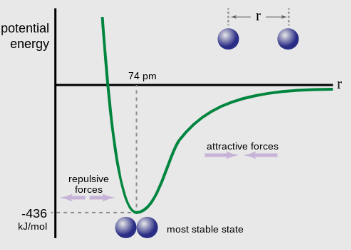
The attractive electron-nuclei forces and the repulsive electron-electron and nucleus-nucleus forces balance out at the bond length with the lowest possible potential energy.
Nonpolar: electrons are shared equally because both atoms have similar electronegativity (eg. C and O)
Polar: electrons are shared unequally
Ionic vs Covalent Bonding
The difference between ionic and covalent bonding is not distinct but rather a continuum.
All polar bonds have some ionic character.
Characteristics of Covalent Substances (Non-metals)
low MP and BP, typically gases at room temp (at least, simpler covalent substances)
However, covalent network solids (diamond, SiO2, SiC) have very high MPs
Non-lustrous, various colors
Brittle, hard, or soft
Poor conductors
Form anions by gaining electrons
Nonmetallic oxides are acidic and covalent

Characteristics of Ionic Substances
high MP and BP
can conduct electricity when molten (melted) and dissolved in water (due to mobile ions)
can’t conduct electricity as solid, but they are good insulators
Hard, brittle
Form crystal lattices of positive and negative ions
Lattice Energy
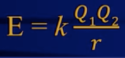
For ionic compounds, we typically discuss Coulomb’s law and lattice energy instead of talking about bond length.
Lattice energy indicates how tightly an ionic crystal is held together. E increases with more highly charged ions and shorter ionic distance (Coulomb’s law).
E is negative (exothermic, energy is released) when bonds are formed and positive/endothermic when a bond is broken.
Metallic Bond
a bond between two metals
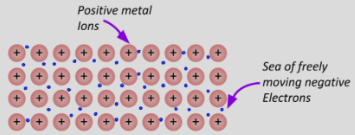
Atoms lose electrons to form cations which are held together by delocalized electrons (electrons that are not associated with an individual atom/molecule). The IMF is stronger when there are smaller metallic cations and more valence electrons.
the electrons freely flow in a “sea of electrons”
Characteristics of Metallic Substances
high MP and BP
can conduct heat and electricity in solid phase (due to mobile electrons)
Shiny (luster), malleable, and ductile (can be stretched into a thin wire without breaking)
Metallic oxides are ionic and basic
Form lattices of cations and depolarized electrons
Alloys + 2 Types
a combination of multiple metallic elements
Interstitial: the metal atoms being added have different atomic radii, so smaller atoms fill the spaces between the larger atoms (this usually makes the alloy stronger than the base metal)
Substitutional: the metal atoms being added have similar atomic radii, so one atom substitutes for another in a lattice
What is Bond Polarity and what determines charges in a bond?
In covalent bonds, the difference between two electronegativity values (of elements) determines term. For double and triple bonds, you also have to consider the influence of multiple bonds on the net effect.
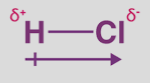
Atoms with high electronegativity develop a negative partial charge (δ-) while atoms with low electronegativity develop a positive partial charge (δ+). This is a bond dipole moment and the molecule is still neutral.
A dipole arrow points toward the more electronegative atom.
term does not apply to ionic and metallic substances which do not share electrons.
Bond Dipole Moment
the quantitative measure of electronegativity differences (bond polarity), calculated by multiplying the magnitude of the partial charges Q by the distance of separation r between the two atoms: μ = Q x r
Nonpolar covalent bonds have no bond dipole moment (aka a bond dipole moment of zero).
Polar covalent bonds have a partial bond dipole moment.
Ionic bonds have distinct positive and negative bond dipole moments.
Bond dipoles that create a symmetrical distribution of charge can cancel each other out and produce a nonpolar molecule.
Bond Energy + Bond Order
the energy stored in a chemical bond which indicates the strength of a bonding interaction (higher bond energy = stronger higher strength).
Single bonds (sharing 1 pair of electrons) have the longest bond length and the least bond strength. Triple bonds (sharing 3 pairs of electrons) have the shortest bond length and the greatest bond strength.
the number of bonds between a pair of atoms, indicates bond strength and length
Potential Energy Diagrams
describes the interactions between atoms
X-axis: internuclear distance (distance between nuclei)
Y-axis: potential energy, measured in kilojoules per mole
The trough indicates the energy required to break/form the bond (y-axis) and the distance between atoms at equilibrium bond length (x-axis).
To the right of this point, the atoms are experiencing an attractive force but not close enough to bond.
To the left, the atoms are bonded but experiencing a repulsive force because they are too close together.
When potential energy is positive, there is an unstable atom arrangement. If it is negative, it is stable.
Lewis Diagrams
models that represent chemical substances (can be either an atom or a compound)
They show connections and bond order between atoms as well as unbonded valence electrons.
The atom is represented by its chemical symbol.
A pair of shared electrons is represented by a dash or dots between two atoms.
Valence electrons are represented by dots.
Ions are represented with brackets, and the charge of the ion is written outside the brackets on the upper right.
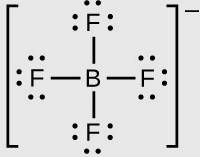
How to Draw a Lewis Diagram
According to the octet rule, all atoms (there are exceptions) must have eight valence electrons to be stable. Make sure your Lewis Diagram follows this rule by drawing bonds between atoms accordingly.
Count all the valence electrons for a molecule/ion and divide that number by two to find the number of pairs that can be made (always distribute electrons in pairs, unless there is an uneven number of electrons).
Determine the central atom (usually the least electronegative) and connect all the other atoms to it with single bonds. Subtract those bonds from the total number of bonds that can be made.
Distribute electrons around the outer atoms to create octets. Add double or triple bonds if you run out of electrons.
The remaining electrons will be added to the central atom in pairs.
This is an expanded octet, which only occurs to elements in the third period and below since the element must be large enough to accommodate more valence electrons.
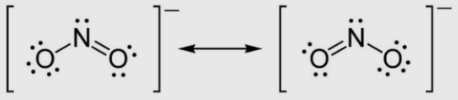
If there are multiple possible Lewis diagrams, display them all with two-sided arrows between them.
Exceptions to the Octet Rule
Some atoms do not have enough space to hold 8 valence electrons. Small elements like H, He, and Li follow the duet rule and are stable with 2 valence electrons. Similarly, boron is stable with 4 valence electrons and beryllium is stable with 6 valence electrons.
Odd-electron molecules (free radicals) contain at least one unpaired electrons in their outer valence shell and are generally highly reactive and unstable. Nitrogen, for example, can have just 7 valence electrons in certain molecules.
Hypervalent elements (aka expanded octets), typically in period 3 and below, can form more than 4 bonds by using empty d orbitals. Phosphorus can hold 10 electrons, sulfur 12, Cl/Br/I can hold 10-12, and Xenon can hold up to 12.
Resonance Structures
When a molecule can be represented in multiple ways (moving bonds or lone pairs), the molecule has resonance forms that exist simultaneously (meaning the electrons are delocalized), creating a hybrid structure.
The actual structure of a molecule is an average of all the equal resonance structures. The bond length is also the average (if the bond between two atoms can be a single bond or a double bond, the bond length will be 1.5).
Formal Charge
the hypothetical charge an atom has if all electrons were shared equally in a covalent bond
Formal charge is used when a molecule has multiple possible Lewis structures. The most valid Lewis diagram has the least nonzero formal charges and the negative formal charges on the most electronegative element.
The sum of all the individual formal charges adds up to the charge of the molecule (0 if it is a molecule with neutral charge).
The formal charge of an atom is: # of Valence electrons - # of Non-bonding valence electrons - # of Bonds
VSEPR (Valence Shell Electron Pair Repulsion) Theory
Negative electrons repel each other due to Coulombic forces, so bonds and lone pairs will arrange themselves in order to minimize repulsion. Lone pairs repel more than bonds and tend to compress the angle between bonded atoms.
This repulsion can be used to predict molecular geometry and the arrangement of electron pairs around a central atom.
Electron Domains (Charge Cloud, Steric Number)
A bond or lone pair
A single bond, double bond, triple bond, lone pair, and single electron each count as one electron domain.
How to determine molecular geometry
Draw the Lewis structure of the molecule.
Count the electron domains around the central atom.
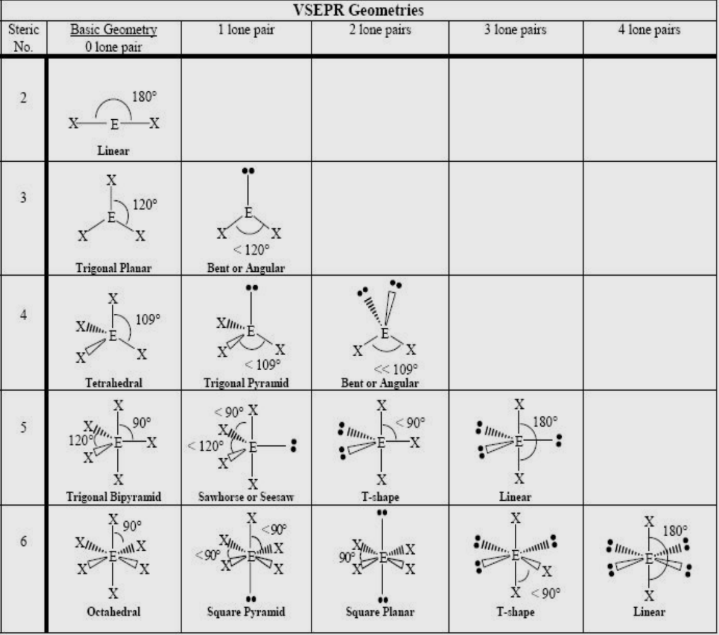
Based on the number of electrons domains, you can determine the geometries and bond angles (memorize the chart of molecular geometry).
If there is more than one central atom, do this for each central atom individually.
Molecular Geometry Around Atoms with 2, 3, 4, 5, and 6 Charge Clouds
2 charge clouds
0 lone pairs: Linear, 180° bond angle
3 charge clouds
0 lone pairs: Trigonal planar, 120° bond angles
1 lone pairs: Bent (aka Angular), near 104.5° bond angles
4 charge clouds
0 lone pairs: Tetrahedral, 109.5° bond angles
1 lone pair: Trigonal pyramidal, slightly less than 109.5° bond angles
2 lone pairs: Bent, near 104.5° bond angles
5 charge clouds
0 lone pairs: Trigonal bipyramidal, 90° and 120° bond angles
1 lone pair: Seesaw (aka Sawhorse), lone pair is 120° away from an atom
2 lone pairs: T-shaped
3 lone pairs: Linear, 180 5 bond angles
6 charge clouds
0 lone pairs: Octahedral
1 lone pair: Square pyramidal
2 lone pairs: Square planar
Molecular Geometry and Polarity
Molecules with a central atom symmetrically surrounded by identical atoms are nonpolar.
Linear, trigonal planar, tetrahedral, trigonal bipyramidal, octahedral
Lone pairs usually cause the molecule to be polar
Except linear and square planar molecules
Hybridization
term is used to explain molecular geometries. When bonds form, orbitals (usually s and p) can combine into hybrid orbitals that are a mix of the shapes of the original oribtals (s is spherical, p is dumbbell).
The type of term depends on the number of electrons domains around the central atom.
A central atom with 2 electron domains will have an sp hybridization.
A central atom with 3 electron domains will have an sp2 hybridization.
A central atom with 4 electron domains will have an sp3 hybridization.
A central atom with 5 electron domains will have an sp3d hybridization.
A central atom with 6 electron domains will have an sp3d2 hybridization.
sp hybridization combines one s and one p orbital. sp2 hybridization combines one s and two p orbitals. And so on…
Sigma and Pi Bonds
covalent bonds that describe how electrons are shared between two atoms
Sigma bonds are the strongest type of covalent bond and are formed from overlapping orbitals from a single bond.
Pi bonds are weaker and are formed from overlapping unhybridized p orbitals (while sigma bonds can form from hybridized or unhybridized orbitals).
A single bond contains one sigma bond.
A double bond contains one sigma and one pi bond.
A triple bond contains one sigma and two pi bonds.