Early to Middle Roman Empire
 Call Kai
 Learn
Learn Practice Test
 Spaced Repetition
 Match
Match Flashcards
 Knowt Play
1/11

There's no tags or description
Looks like no tags are added yet.
Name | Mastery | Learn | Test | Matching | Spaced | Call with Kai |
|---|
No analytics yet
Send a link to your students to track their progress
12 Terms
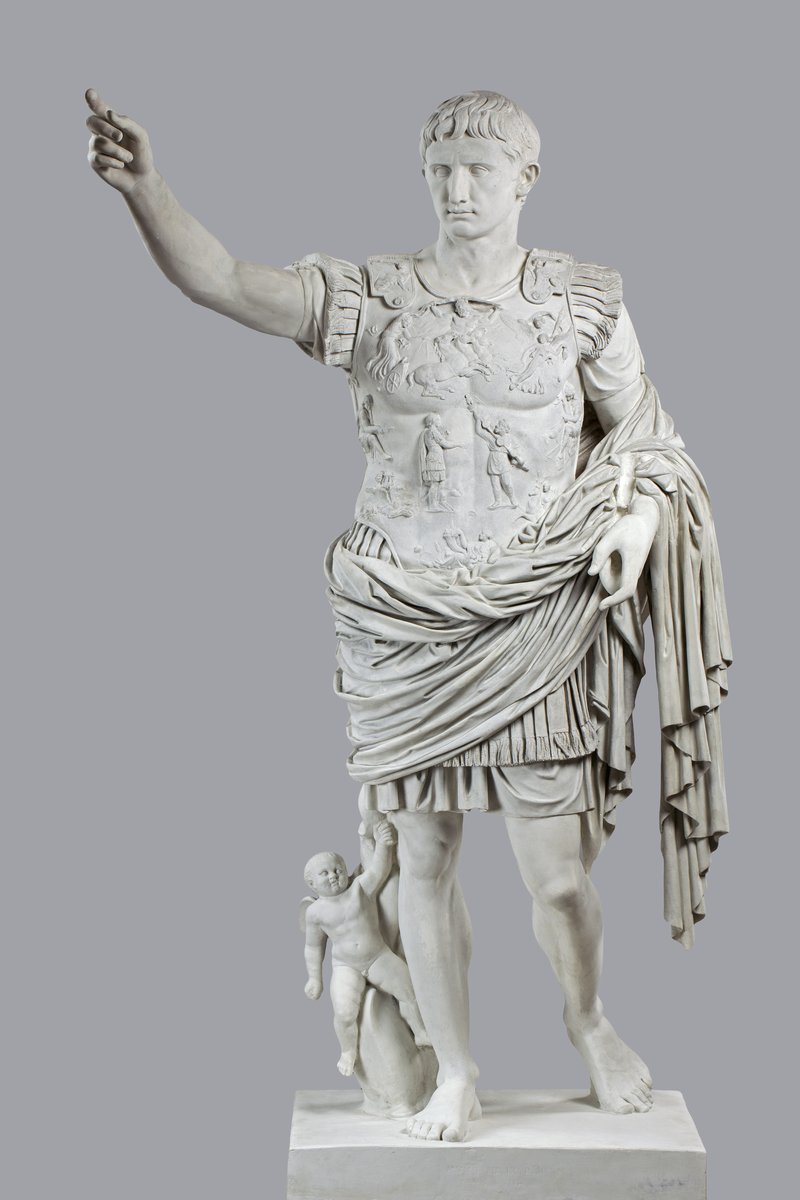
Augustus of Primaporta
1st century CE, villa of Livia, Early Roman Empire
marble
Made during his middle ages or later but representing him from a younger time, idealized sophrosune yet youthful and in a commanding position with motion, his feet juxtapose his arms. Baby sitting on a dolphin is associated with Aphrodite and Cupid who Caesar linked himself to in ancestry showing that Augustus has a divine right to rule, he’s addressing his troops. Dolphin also harkens to idea of the great naval victory Augustus had over Mary Antony and Cleopatra, a conquest that made him the sole ruler of the Empire. Harkens back to contrapposto like the Spear Bearer showing contact with Greece and that art and power and Democracy especially (trying to hide being a king). Chestplate is a ceremonial piece of armor for elite generals showing connections to gods, diplomatic victories like retrieving the eagle staff, connection to the barbarians/Gauls, and overall just showing that everything is under Augustus’ authority. He also stands like an orator, of which he studied oration at ‘college’. Meant to represent the 200 years of peace known as Pax Romana. Augustus is favored by Apollo and Diana, two major deities in the Pantheon as shown on chestplate. Would’ve been a highly copied image for propaganda
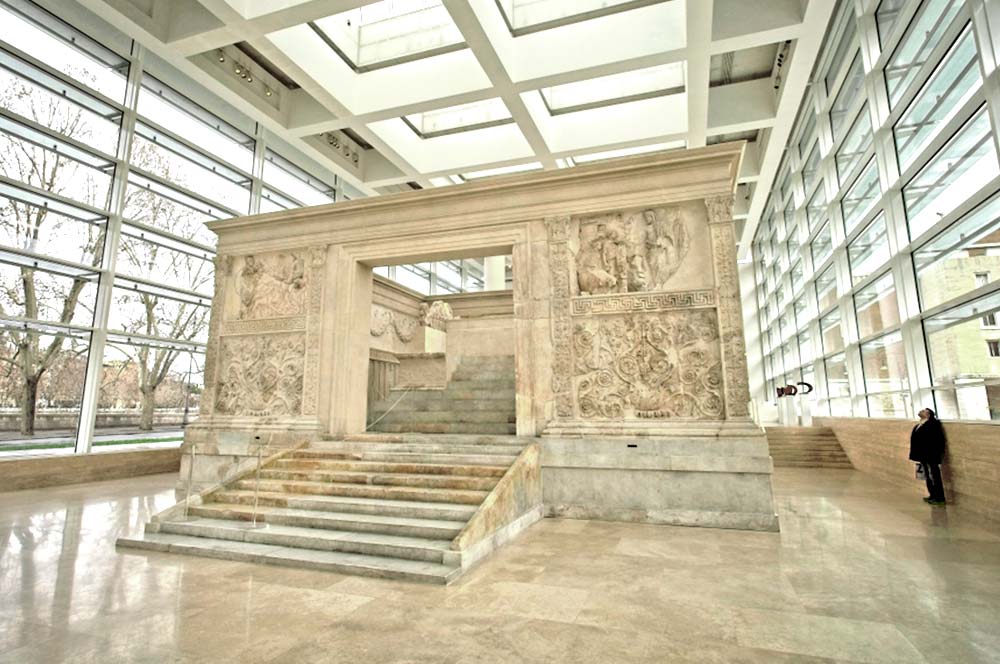
Ara Pacis
13/9 BCE, vowed in 13 built by 9, buried in mud under the Tiber River in Campus Martin Rome, Early Roman
marble with fresco/paint
Vowed to Augustus, celebrates the peace that he brought with him. Bringer of peace to Rome after about 100 years of civil war, square with no roof. A temenos wall, open altar for sacrifices, heavy relief sculptures on the temenos. Procession scenes going towards the entrance like the Panathenaia procession on the Parthenon, would’ve been painted. Shows members of the Roman imperial family, front and back have scenes of roman history with sacrifices and Romulus in a sacrificial pose. Festivities like communal feasting were heavy with religious symbolism, a social cohesion among authorities. Altar represents luxury and the state’s religion as elegant and pragmatic. Open-air altar for blood sacrifices, like ritual slaughtering of animals. Topographical placement was important too, acted as a way to shown Roman domination over land. Processional scenes are ready to participate in sacrifice, a celebration of the Pax Romana, four mythological panels with scenes of sacrifice, fertility, Romulus and Remus, and goddess Roma. Different carving depths show multiple planes of imagery
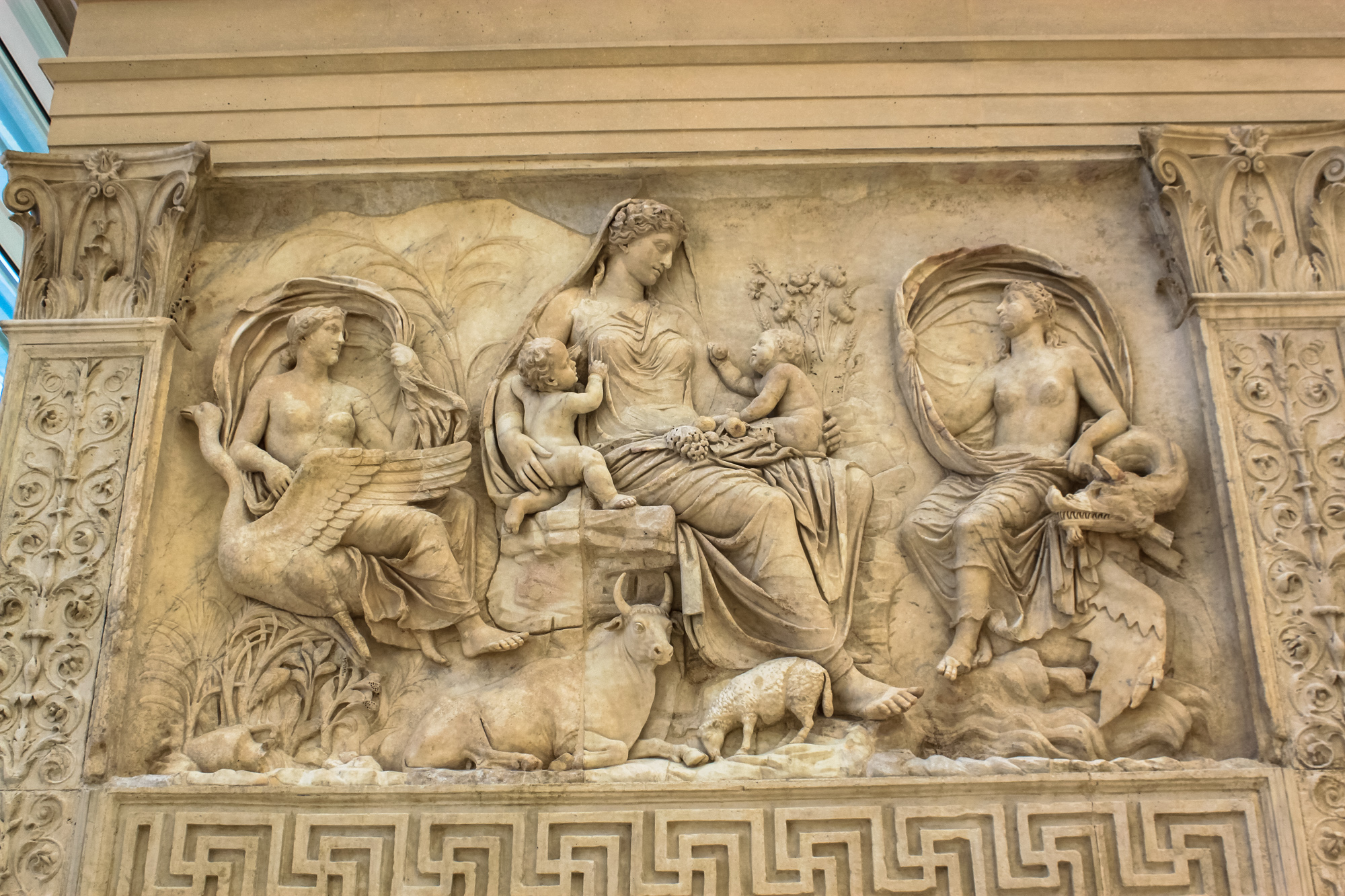
Tellus Relief from Ara Pacis
13/9 BCE, under Tiber River, Roman
marble with paint
A sea monster or crocodile on right and a bird on the left, conquest of sea and land or maybe Egypt and another region. An amphora spilling out onto the ground, lady has fruits. Maybe Romulus and Remus, something to do with fertility as evidenced by the baby animals and life everywhere. All across monument at the bottom of the piece are insects and animals, life because of Augustus’ reign. Highlights peace and prosperity. Stresses harmony and abundance of Italy under Augustus’ reign, the Pax Romana. Augustus was the first emperor of Rome. Ox and sheep represent peace, harmony, and fertility which must’ve been rare in the ancient world.
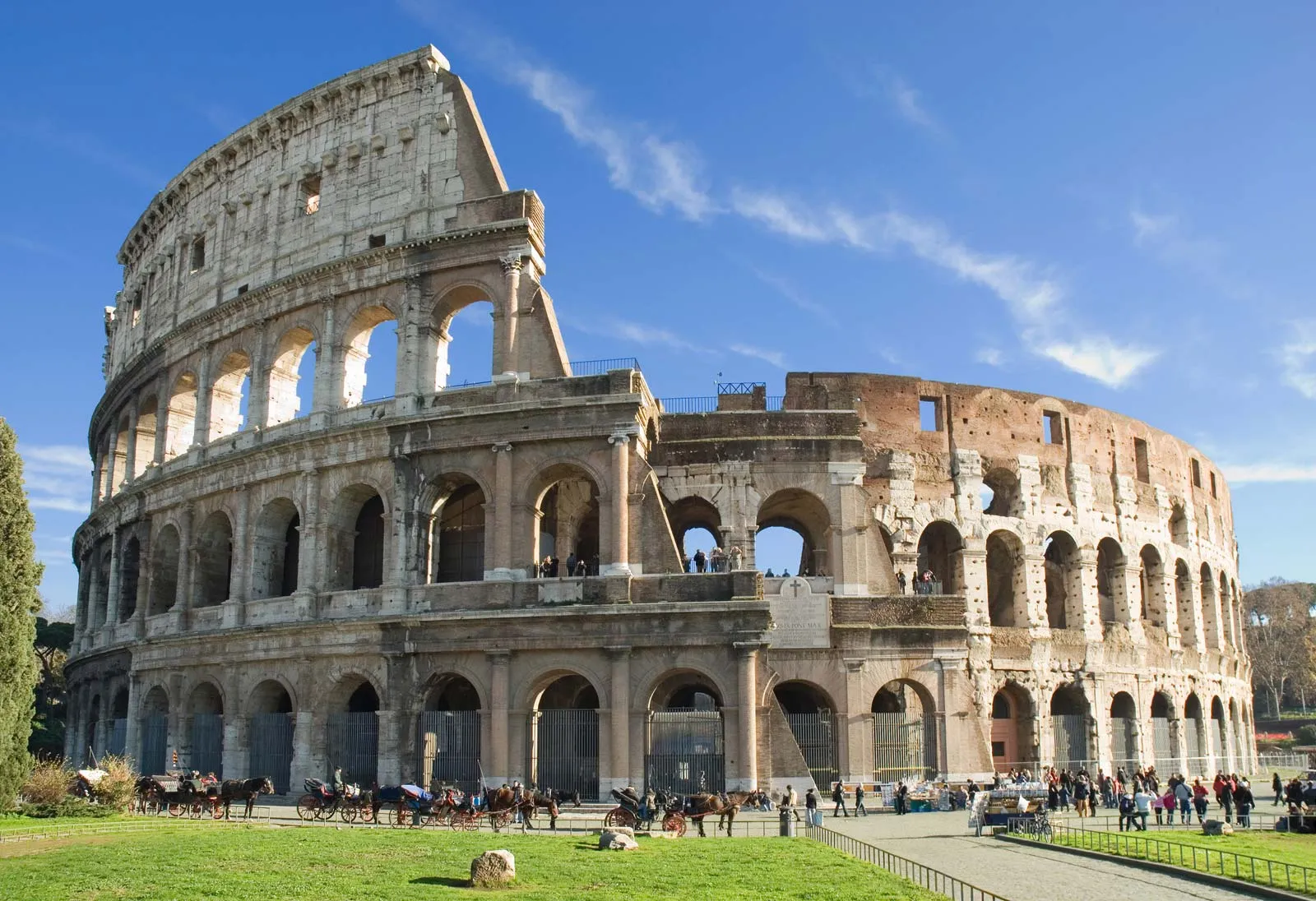
Colosseum (Flavian Ampitheatre)
c. 70-80 CE, Rome, Early Roman
mostly stone/cement
Like a gigantic donut, sand on the floor to quickly absorb blood and other fluids between battles, like a Greek theater that were traditionally only half circles, now a fully enclosed circle. Flavian family created it, used arches and concrete to make the double theater on a flat area, had numbers for seating assignments too with tickets. Seats were according to status with woman as the least important on top, most important closest to center, more simplistic than doric columns with no fluting but they do have bases. Ionic columns on second story were very feminine, corinthian columns on the top floor and corinthian leaves would have been abundant in gardens, top floor would have shields alternating the windows. Didn’t need specialized stone cutters/artisans to work because it was cement in a wooden frame which is why it only took ten years to build, less expensive too. They drained a lake to build the colosseum, idea of urban planning and Roman domination over the land, a dominance.
Arch of Titus and Roman Triumph
after 81 CE, Rome, Early Roman
marble
Roman triumphs were martial traditions, a parade that was so huge it elevated someone to quasi-divine status for an entire day. Connected the Flavians to the traditions of the Roman Republic, Emperor Augustus continued use of triumphal arch, even though he restructured triumph itself. Honored Titus posthumanously and a project executed by his younger brother/imperial successor, Domitian. Has an inscription that says “The Senate and Roman people dedicate this to the deified Titus…” which makes this a public dedication and reminds people of his also deified father. Subject matter on the flanking reliefs draws upon 71 CE triumph of Vespasian and Titus with the fall of Jerusalem, people would have passed under arch during triumph and have been reminded.
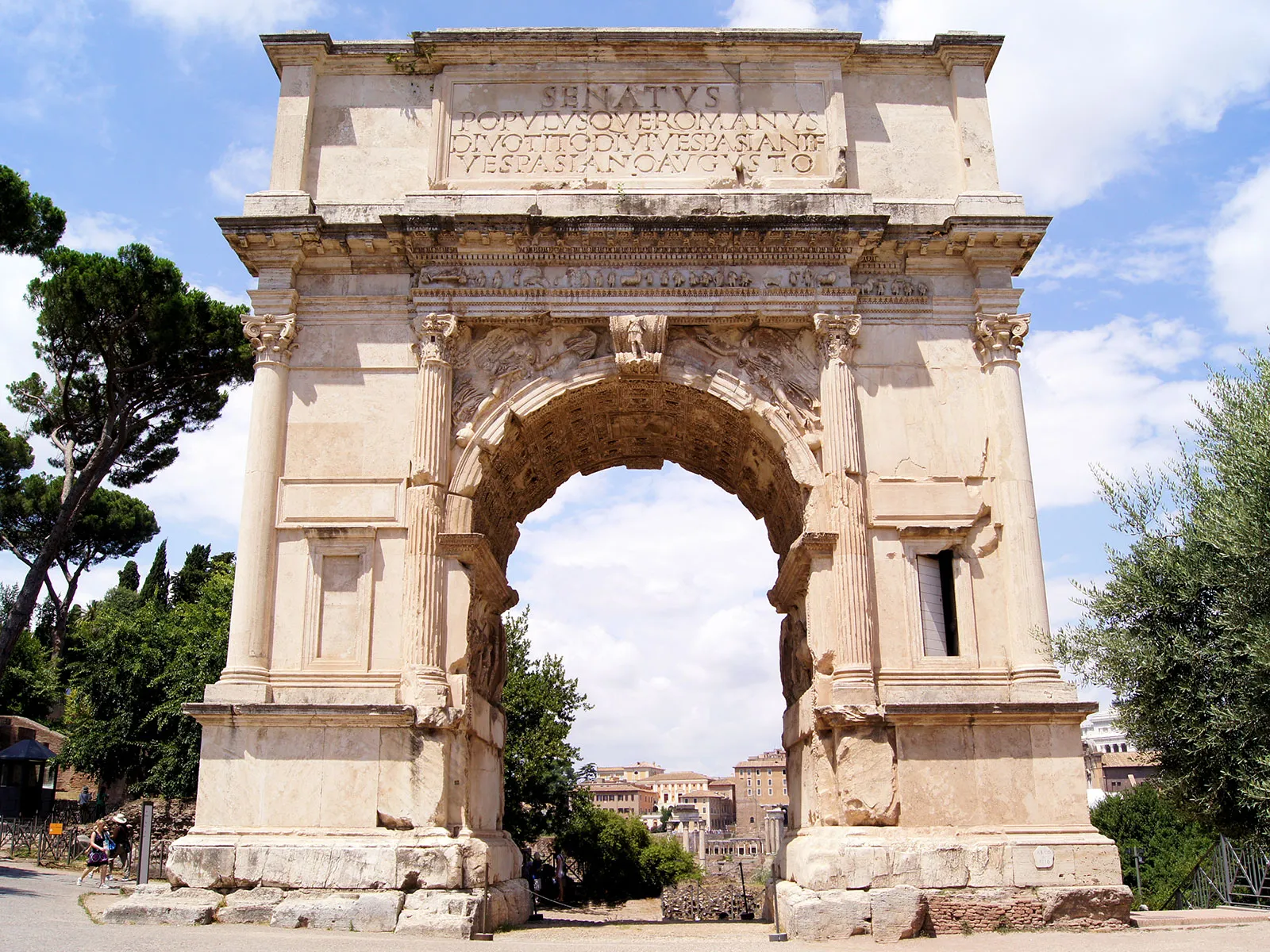
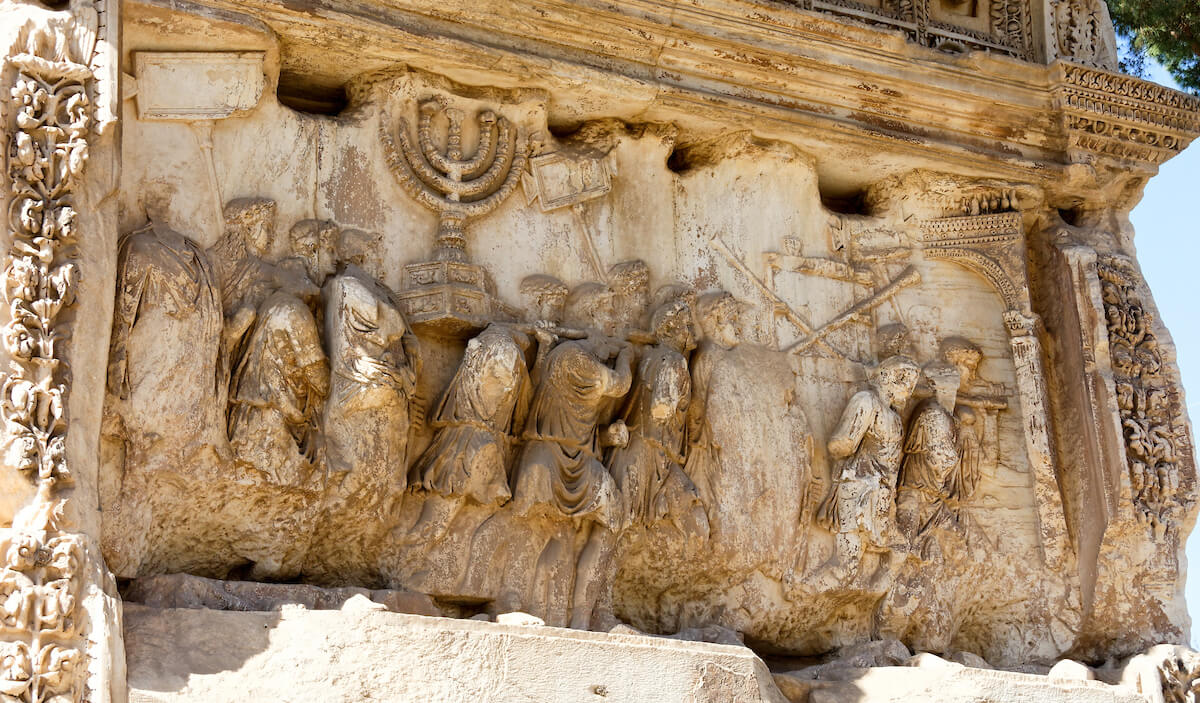
The Spoils of Jerusalem, Arch of Titus
after 81 CE, Rome, Early Roman
marble
Emperor would have entered under arch with lots of treasure, attendants, soldiers, and prisoners of war in victory before murdering general of losing army ceremoniously. Figures are naturalistic, illusion of space. A historian who was Jewish and switched sides during the war documented parts of it in Latin, tried to say that the Jewish people were a small minority were revolting but not large. Roman Empire is growing in first century into the Middle East and Judea. A temple in Jerusalem with holy objects, Jews were some of the only people able to send money across border lines because of donation regulations. The arch is a museum of war booty and trophies collected by a man who was about to become a god himself, so it’s a deeply meaningful procession for Romans but ghastly for Jews.
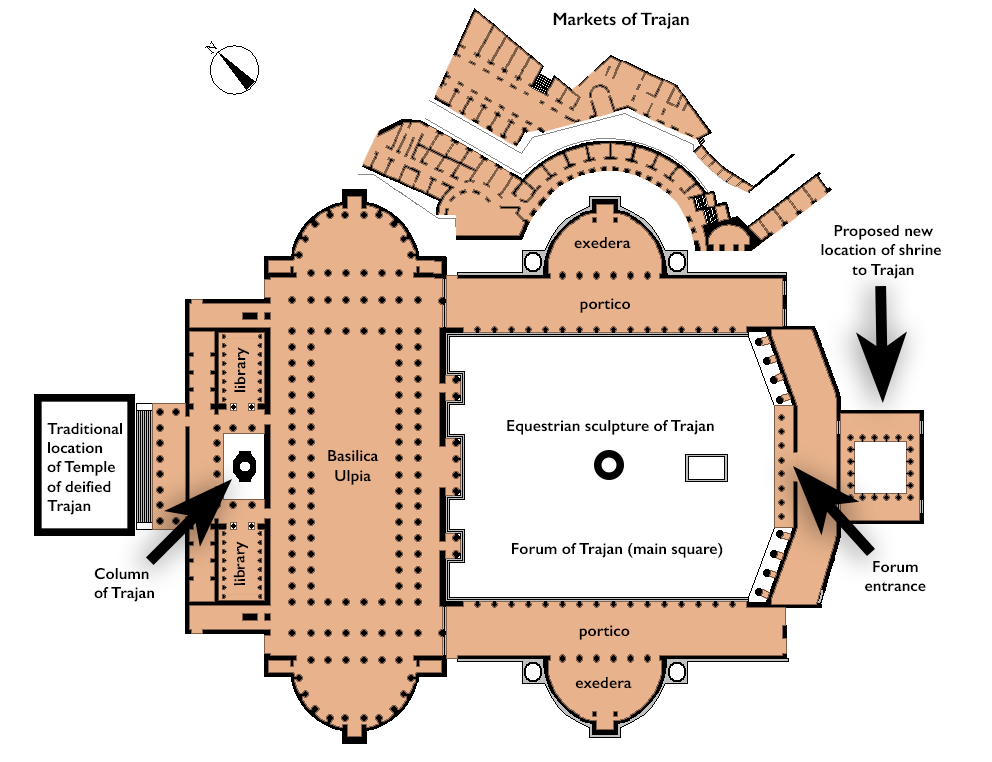
The Forum and Markets of Trajan. Architect was Apollodorus of Damascus (military engineer and architect)
Inagurated in 112 CE, Rome, Early Roman
mostly stone, libraries brick
Trajan tasked his architect with moving an entire hill to make room for the forum and market space, Trajan was ruler from 98-117CE, first in a line of adoptive emperors who were chosen for the job based on suitability and not bloodlines. Ancient Romans were so fond of Trajan that they declared him “optimus priceps” (best first-citizen). A public urban square for civic and ritual business, elegant with lots of architecture and decoration. Everything but the two libraries were built out of stone, many imported marble for statues. Had a main square with proticoes and an exedrae (semicircular recessed spaces) on east and west, potentially had a temple dedicated to the deified Trajan too. Has an overriding martial theme, reminding viewers that the forum was constructed from proceeds of successful military campaigns, a bronze statue of Trajan and equestrian horses stood in center of forum. Had a huge basilica too made of multi-colored marbles. Because of how crowded every area of life was, having the huge open forum must have been psychologically very impactful, especially because prior Roman emperor took lands instead of making public spaces. Libraries with Roman literature and Greek literature
Trajan expanded Rome’s borders to their largest outreach
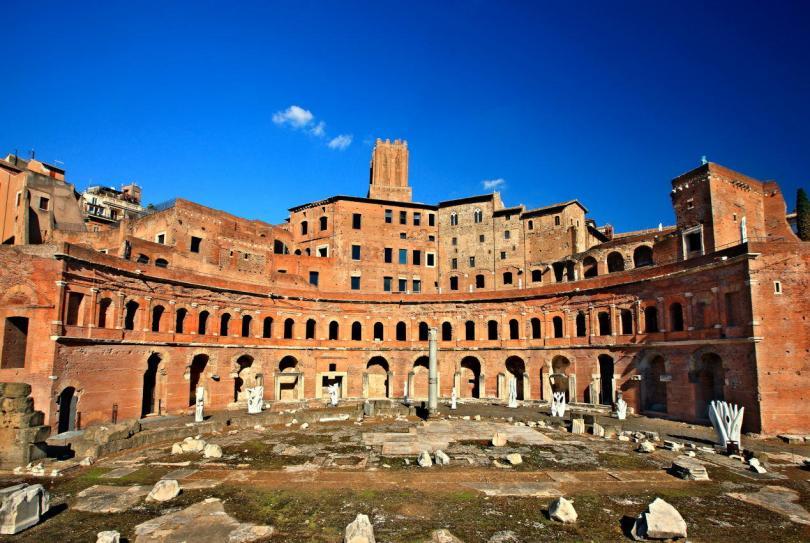
Markets of Trajan
c. 110-112 CE, Rome, Early Roman
mostly stone
A separate architecture from the forum, multi-level commercial complex. Roughly 170 rooms and huge. Imperial Forum, had a vast public bathhouse too near the shopping center. Concrete allowed for them to shape space in a way that wasn’t able to be done with previous posts and lintels, used barrel vaults and groin vaults, lets in a lot of natural light
Column of Trajan
Hadrian’s Villa
Maritime Theatre at Hadrian’s Villa
Pair of Centaurs Fighting Cars of Prey from Hadrian’s Villa