unit 15 learning objectives
 Call Kai
 Learn
Learn Practice Test
 Spaced Repetition
 Match
Match Flashcards
 Knowt Play
1/96

There's no tags or description
Looks like no tags are added yet.
Name | Mastery | Learn | Test | Matching | Spaced | Call with Kai |
|---|
No analytics yet
Send a link to your students to track their progress
97 Terms
mouth
alimentary canal (GI tract)
pharynx
alimentary canal (GI tract)
esophagus
alimentary canal (GI tract)
stomach
alimentary canal (GI tract)
small and large intestine
alimentary canal (GI tract)
salivary glands
accessory organs
pancreas
accessory organs
liver
accessory organs
gall bladder
accessory organs
mouth function
mechanically breaks down food and begins chemical digestion of carbohydrates
pharynx function
connects mouth w/ esophagus
esophagus function
peristalis pushes food to stomach
stomach function
secretes acid and enzymes that mix with food to begin enzymatic digestion of proteins
small intestine function
mixes food with bile and pancreatic juice, final enxyatic breakdown of food and main site of nutrient absorption
large intestine function
absorbs water and electrolytes to form feces
salivary glands function
secretes saliva which contains enzymes that initiate breakdown of carbohydrates
liver function
produces bile which emulsifies fat
gallbladder function
stores bile and introduces it into small intestine
pancreas
produces and secretes pancreatic juice containing digestive enzymes and bicarbonate ions into small intestine
mucosa
innermost layer of alimentary canal which contains simple columnar epithelium that protects tissue beneath itself, secretes into lumen and absorbs substances from the diet
submucosa
layer beneath mucosa that contains loose connective tissue and blood vessels that nourishes surrounding tissue and carry away absorbed materials
muscularis
layer beneath submucosa with circular and longitudinal smooth muscle that provides movement of the tube
serosa
outermost layer that compromises the visceral peritoneum and moistens and lubricates the tubes outer surface
parasympathetic
promotes motility and enzyme secretion through the vagus nerve
sympathetic
inhibits mixing and propelling movements but stimulates contraction of sphincter muscles
peristalsis
rhythmic waves of muscular contraction in the walls of certain tubular organs
segmentation(mixing)
alternating contraction and relaxation of circular muscle fibers that mix intestinal contents
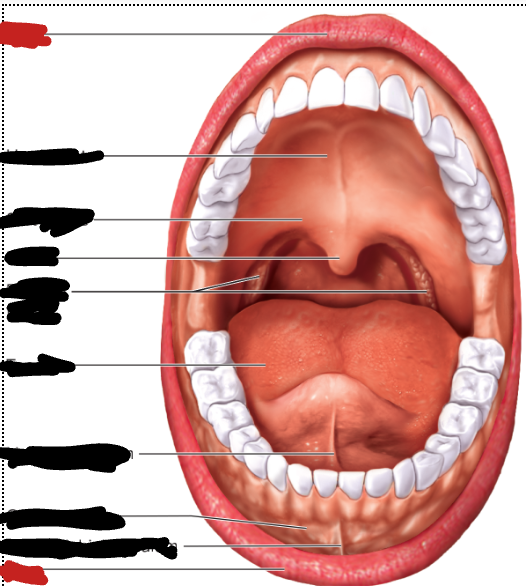
lips
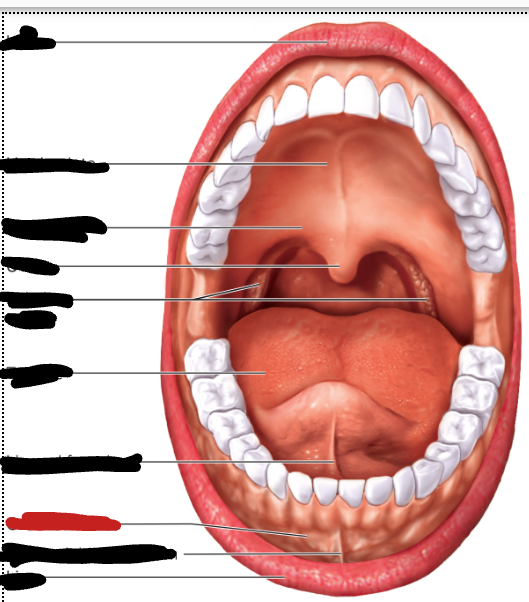
vestibule
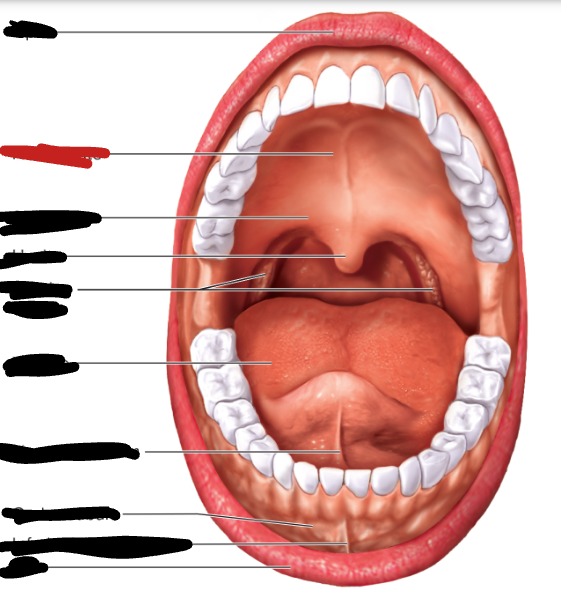
hard palate
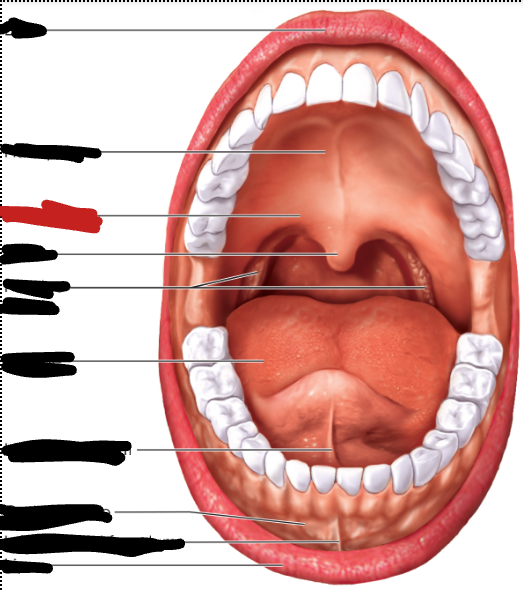
soft palate
cheek function
lateral walls of mouth lined with stratified squamous columnar
lips function
contain skeletal muscle and sensory receptors that judge temperature and texture of foods
tongue function
helps to mix food together
soft palate function
helps prevent food from entering nasal cavity
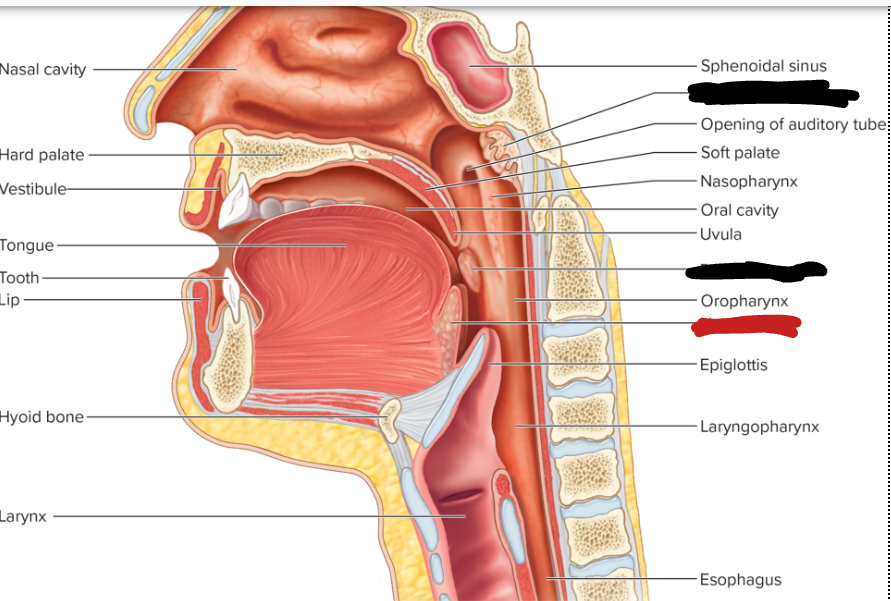
lingual tonsils
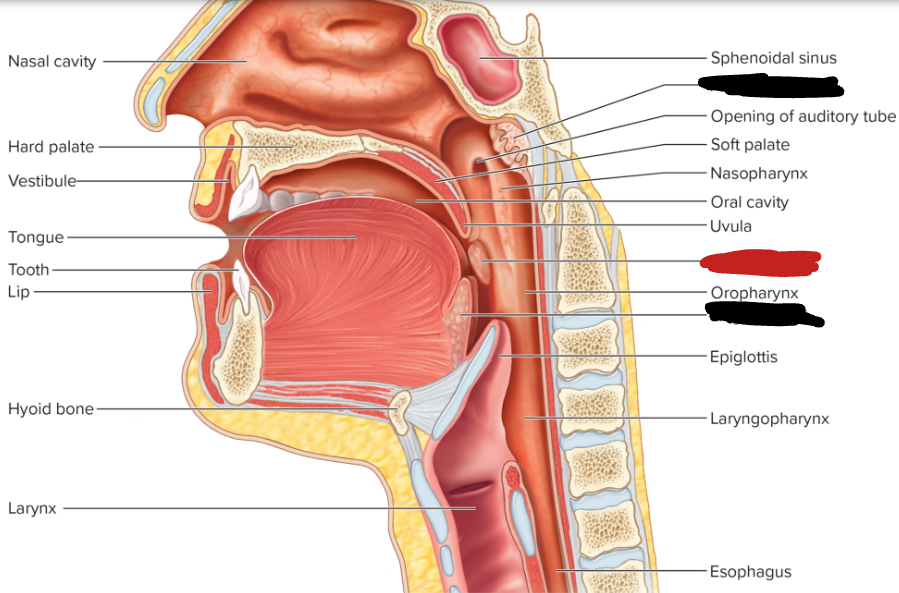
palatine tonsils
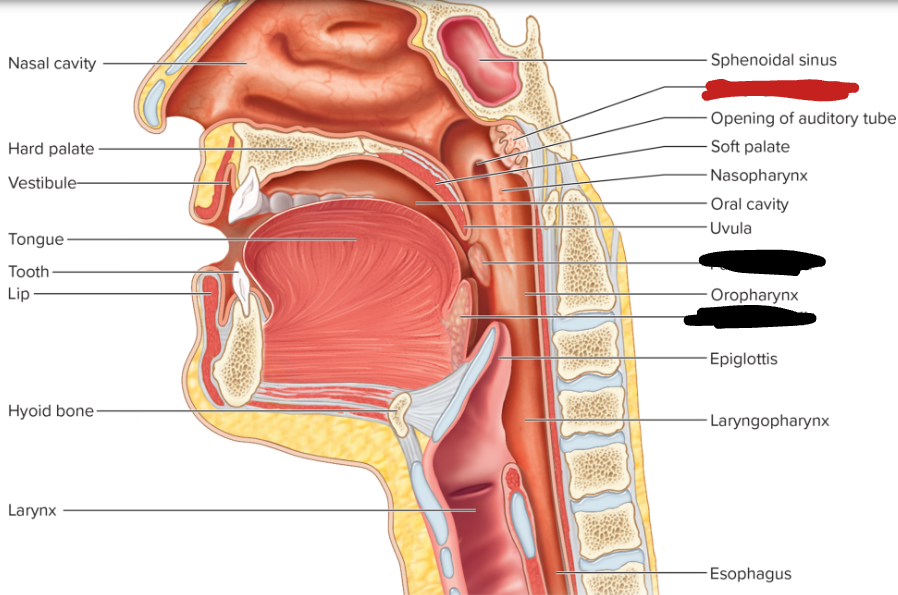
pharyngeal tonsils
saliva function
moistens food particles which helps bind them and it begins chemical digestion of carbohydrates
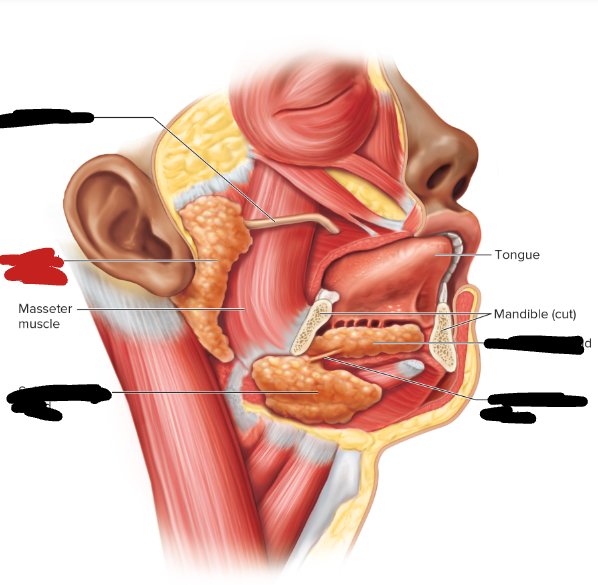
parotid gland
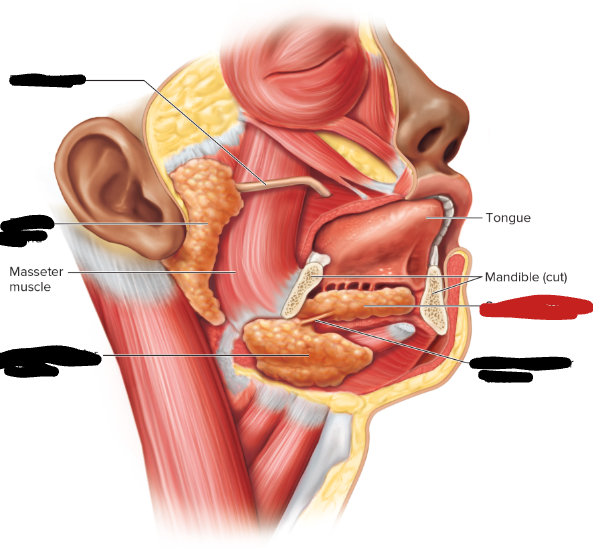
subllingual gland
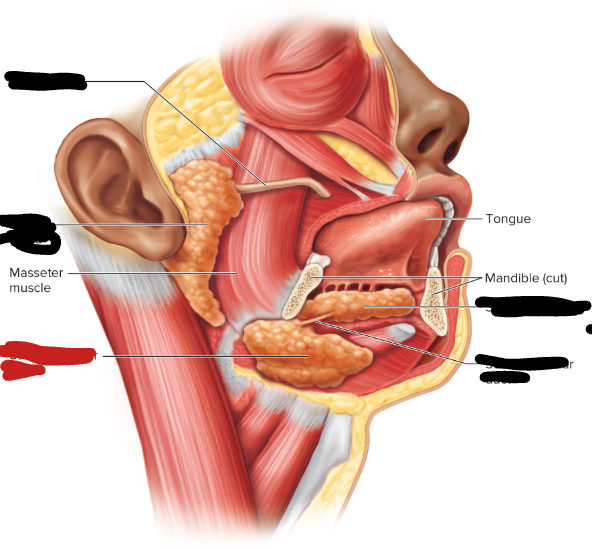
submandibular gland
salivary glands secrete
amylase that breaks down carbohydrates
stomach secretes
pepsinogen and hydrochloric acid (inactive) and pepsin (active) that breaks down proteins
pancreas secretes
amylase, lipase which breaks down lipids
(pancreas) prolease
breaks down proteins
(pancreas) nuclease
breaks down nucleic acids
(pancreas) trysinogen
breaks down proteins
small intestine secretes
peptidose which breaks down proteins
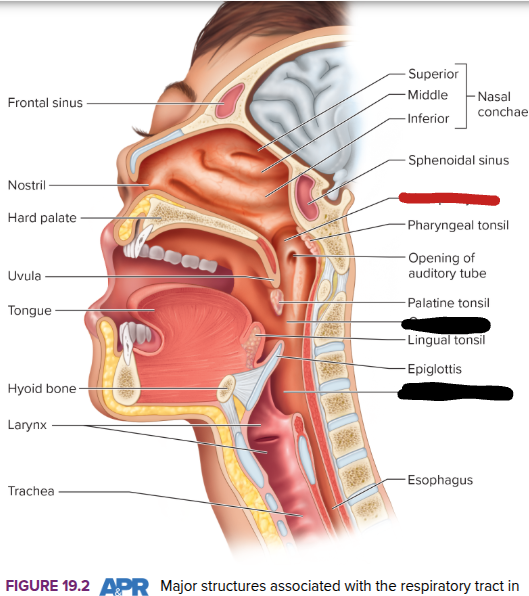
nasopharynx
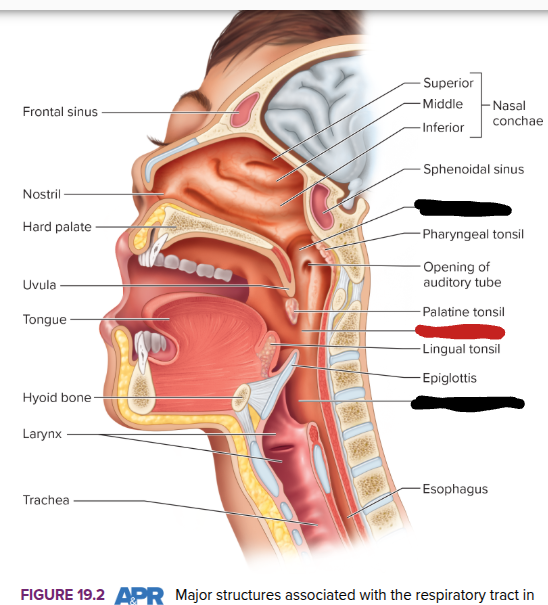
oropharhynx
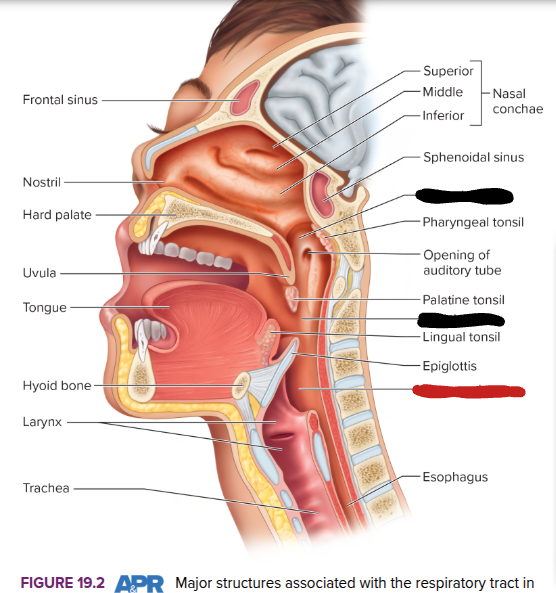
laryngopharynx
first stage of swallowing
(voluntary) food is mixed w/ saliva and tongue rolls it into a bolus and forces it down the oropharynx
second stage of swallowing
food stimulates receptors around the pharyngeal opening and soft palate prevents food from entering nasal cavity, then epiglottis closes off the trachea, then tongue presses against soft palate to close off oral and nasal cavity, then longitudinal muscles pulls the pharynx toward food, the lower inferior constrictor muscles relax and open esophagus, the superior constrictor muscles contract and stimulate peristaltic wave that forces food into the esophagus.
third stage of swallowing
peristalsis transports food from esophagus to stomach
what happens to respiration during swallowing?
momentarily breathing is paused
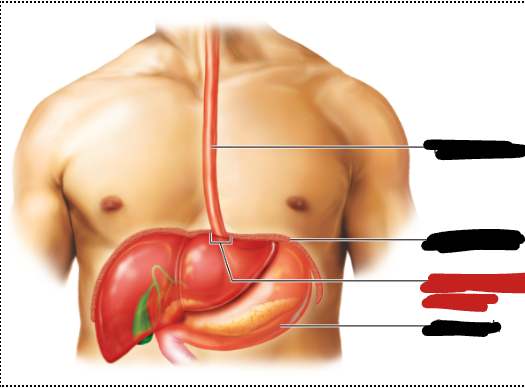
esophageal hiatus which is the opening in the diaphragm that the esophagus passes through
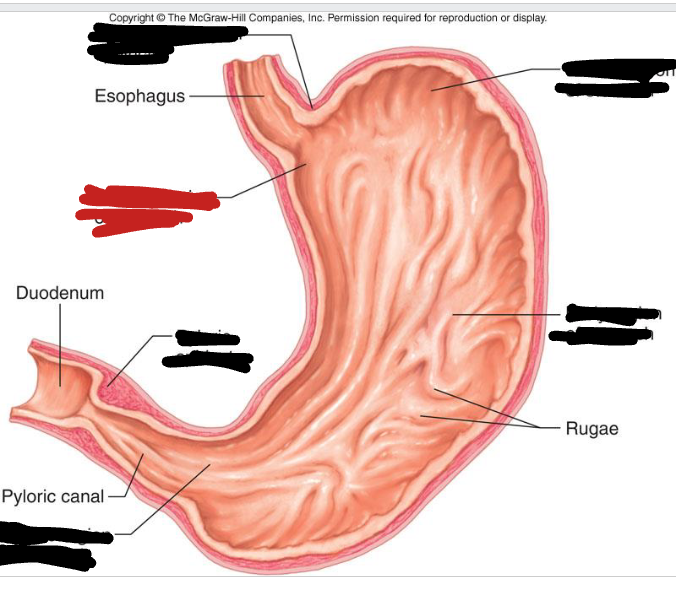
cardiac region of stomach
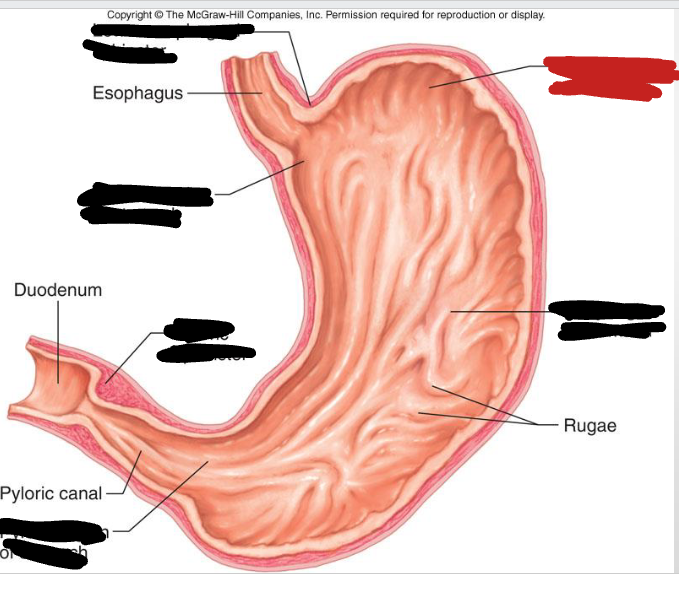
fundic region of stomach
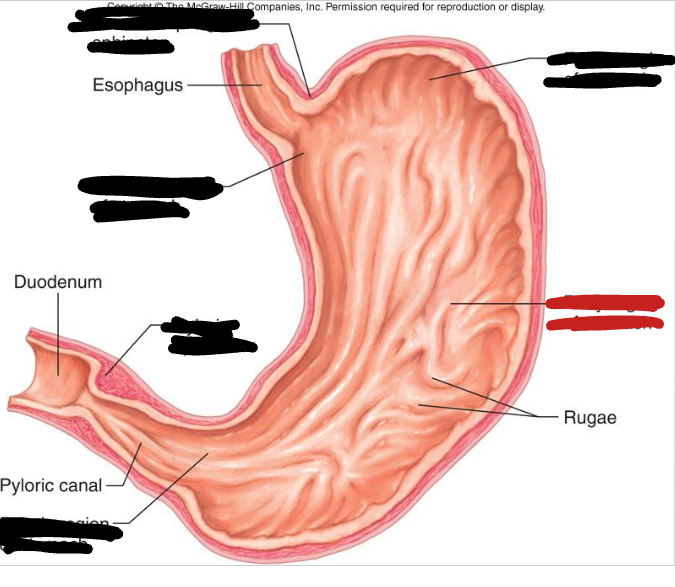
body region of stomach
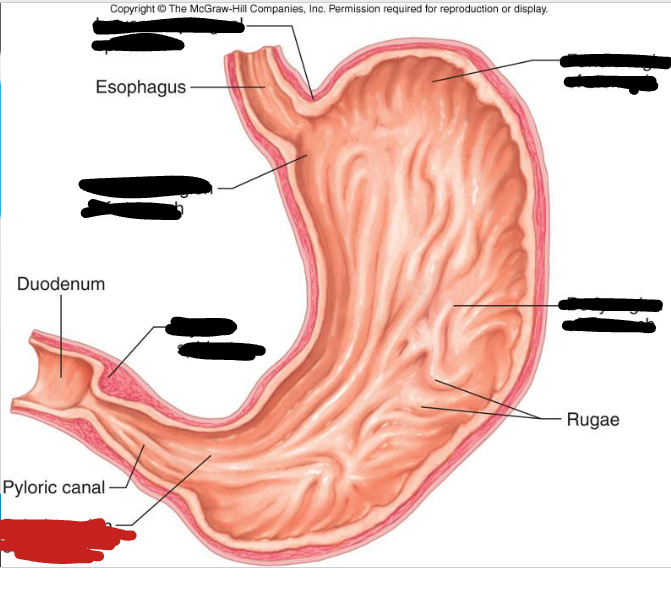
pyloric region of stomach
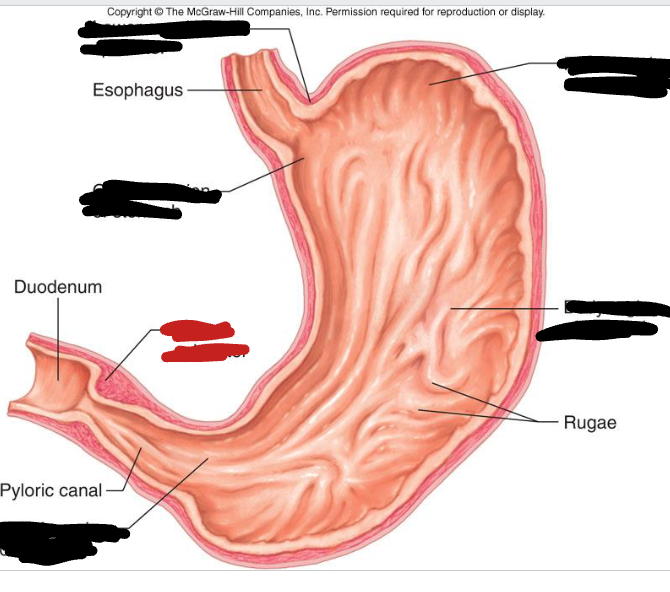
pyloric sphincter
lower esophageal function
ring of smooth muscle at the end of the esophagus that joins the stomach and prevents food from re-entering the esophagus when the stomach contracts
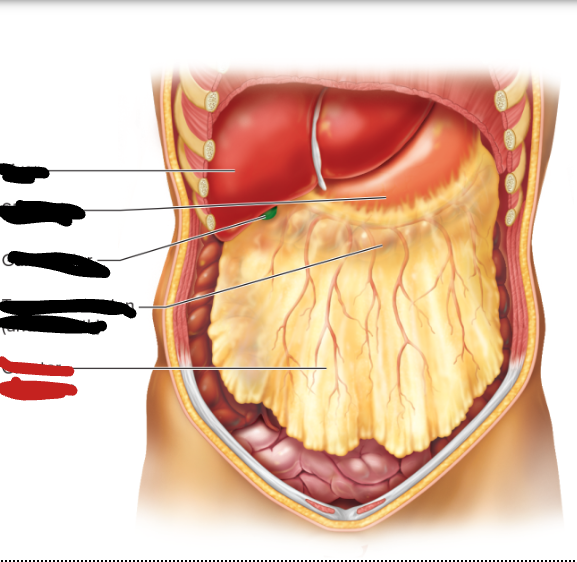
greater omentum which is a double fold of peritoneal membrane that seals of the peritoneal cavity to prevent infection
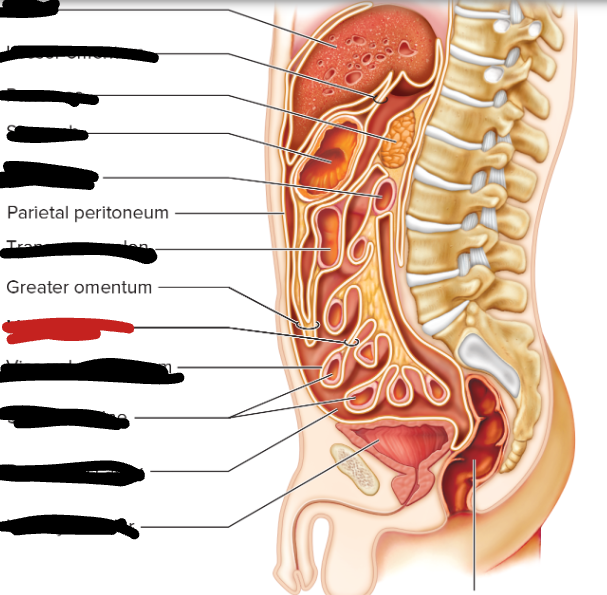
mesentery which suspends and attaches jejunum and ileum to the posterior abdominal wall
HCI (hydrochloric acid) function in stomach
provides the acid enviornments needed for production and action of pepsin
mucus function in the stomach
provides alkaline mucus that protects the inner surface from HCI and enzymes
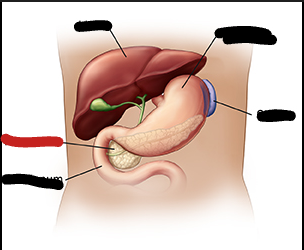
pancreas
pancreatic and common bile duct relation
joined together by the hepatopancreatic ampulla which surrounds the sphincter that controls movement of pancreatic juice and bile to the small intestine
pancreas function
produces glycogen and insulin
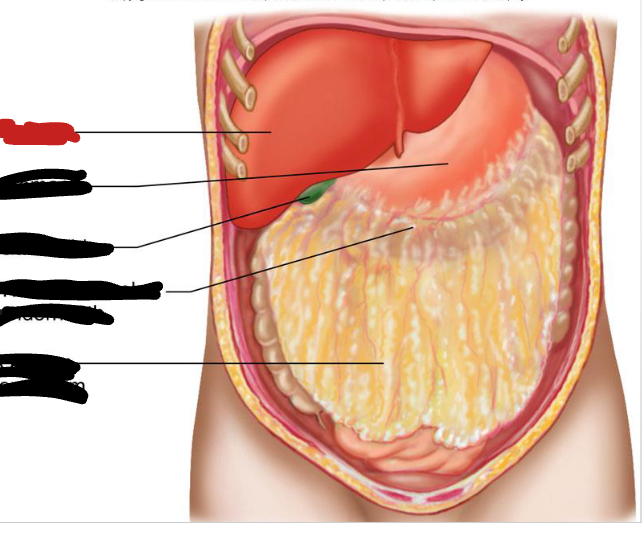
name and function
liver and it detoxifies blood, produces and secretes bile, stores glycogen,vitamins A, D, B12, iron and blood
gallbladder anatomy
pear shaped sac in a depression on the inferior surface of the liver
gallbladder functions
stores bile b/w meals and concentrates it by reabsorbing water, when it contracts it releases bile into small intestine through cystic and common bile ducts
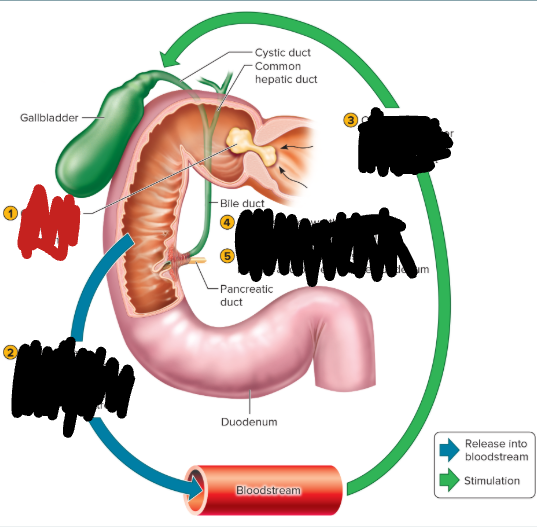
gallbladder process step 1
chyme w/ fat enters the duodenum
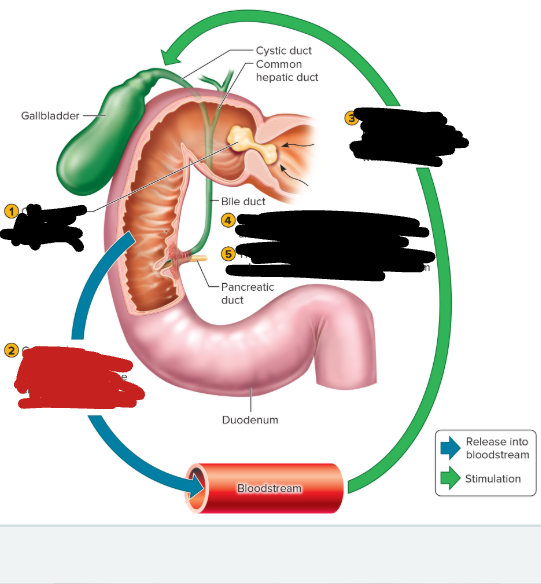
gallbladder process step 2
cells of intestinal mucosa secrete hormones chloecystokinin(cck) into the bloodstream
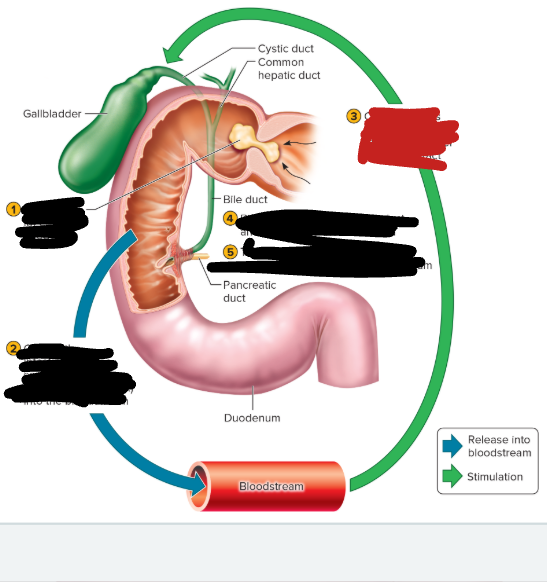
gallbladder process step 3
cck stimulates the muscular layer of the gallbladder wall to contract
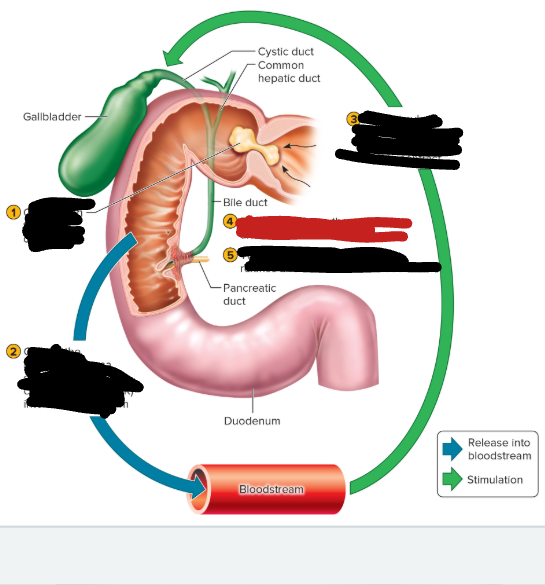
gallbladder process step 4
bile passes down cystic duct and bile duct to the duodenum
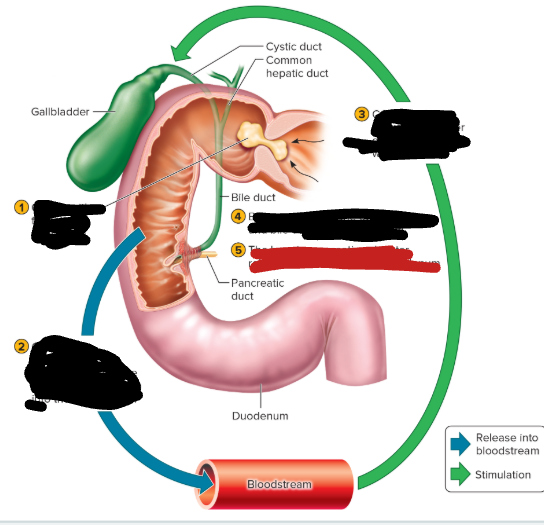
gallbladder process step 5
hepatopancreatic sphincter relaxes and bile enters the duodenum
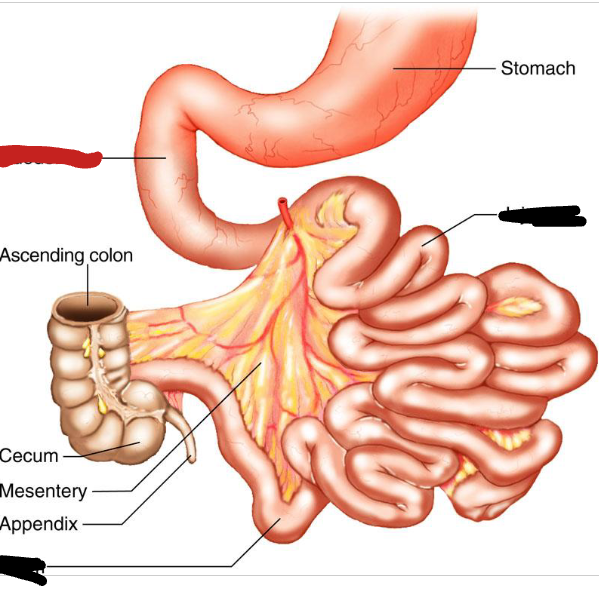
duodenum
duodenum function
connects stomach and jejunum, site of nutrient absorption and chemical digestion
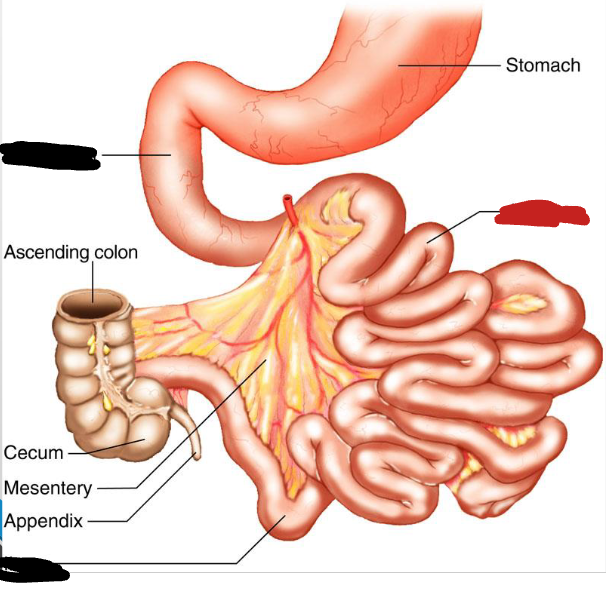
jejunum
jejunum function
b/w duodenum and the ileum and rapidly absorbs nutrients, water,and electrolytes from chyme
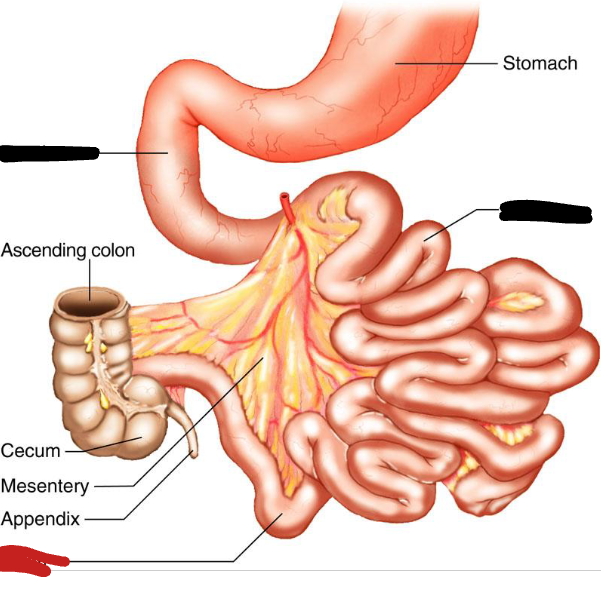
ileum
ileum function
b/w the jejunum and the cecum
movement of small intestine
mixing occurs through segmentation where smaller regions contract at different times moving chyme back and fourth breaking food down into smaller pieces
peristaltic waves
propel chyme down small intestine
how does the ileocecal sphincter open?
gastroileal reflex relaxes the ileocecal sphincter
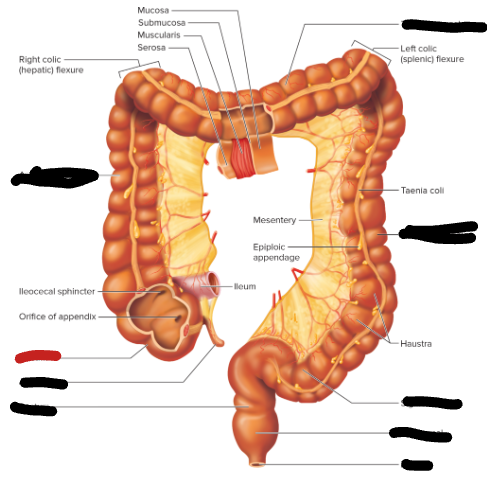
cecum
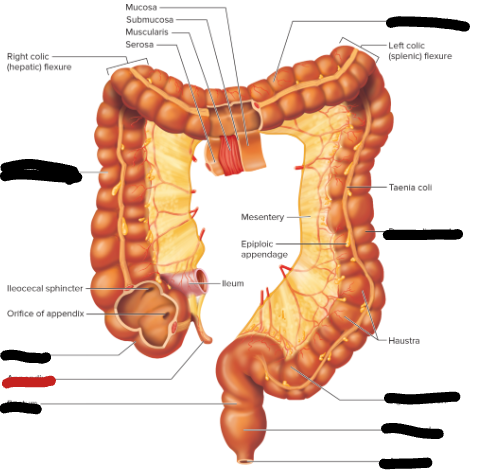
appendix
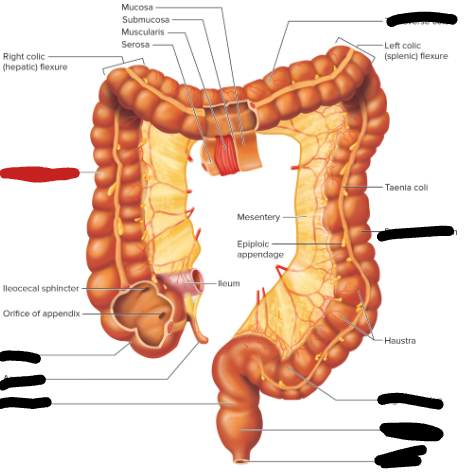
ascending colon
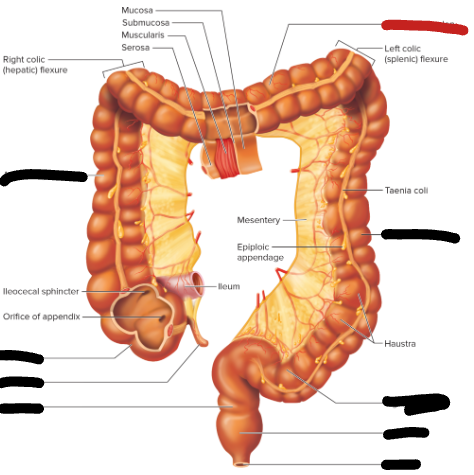
transverse colon
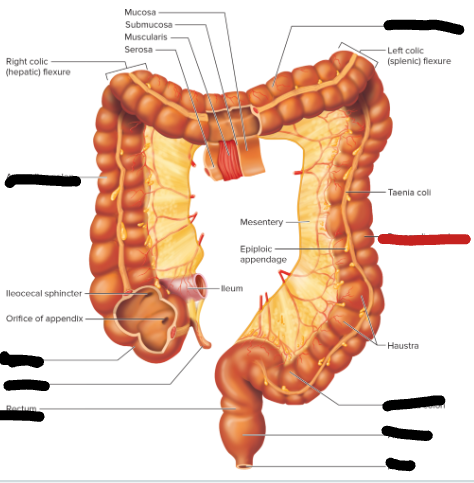
descending colon
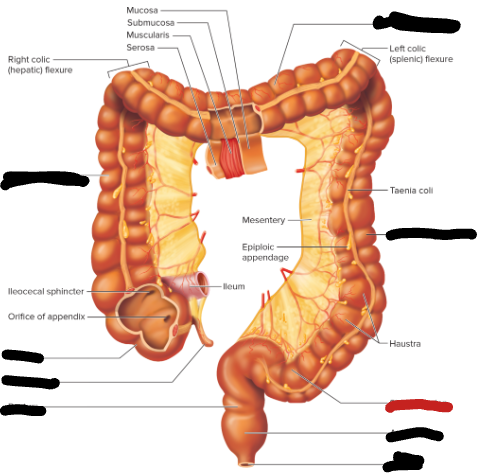
sigmoid colon
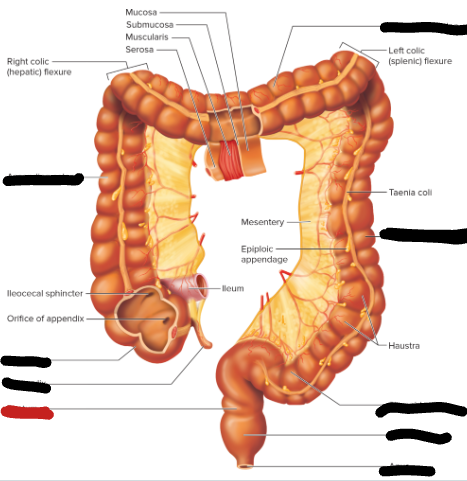
rectum
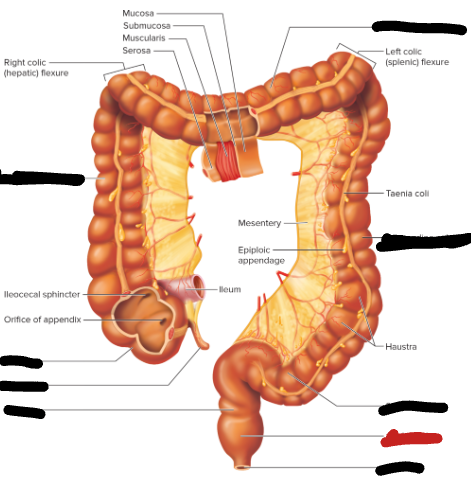
anal canal
what does the large intestine absorb/vitamins synthesized?
water, electrolytes, vitamins k, b12, thiamine, ribofalavin,
valsalva maneuver
a breathing technique performed by attempting to exhale forcibly against a closed airway (pinched nose/closed mouth), similar to bearing down for a bowel movement, for 10–15 seconds