bio 1b organismal
 Call Kai
 Learn
Learn Practice Test
 Spaced Repetition
 Match
Match Flashcards
 Knowt Play
1/363

Earn XP
Description and Tags
blackman
Name | Mastery | Learn | Test | Matching | Spaced | Call with Kai |
|---|
No analytics yet
Send a link to your students to track their progress
364 Terms
eukaryotes
linear, chromosomal DNA
membrane-enclosed nucleus/organelles (mitochondria, plastids)
prokaryotes
CIRCULAR chomoesome + plasmids
NO membrane-enclosed organelles or nucleus.
prokaryotic ways of life
obtaining energy
reproducing
coordinating functions within and between cells
autotrophs
obtain energy by GENERATING THEIR OWN food from inorganic molecules
heterotrophs
consume food produced by OTHER ORGANISMS
chemotrophs
energy comes from CHEMICAL REACTIONS
phototrophs
energy comes from LIGHT
not all PHOTOAUTOTROPHS do oxygenic photosynthesis
prokaryotes, organism metabolism: it can be … or …
AEROBIC, ANAEROBIC
prokaryotes, how do they reproduce?
ASEXUALLY through binary fission
DNA generally organized into single, circular chromosome + small circular plasmids
binary fission
single cell splits into two cells after doubling in size
not same as mitosis (no splitting of nucleus)
plasmids
small, circular, extra chromosomal DNA that replicate independently
archaea
prokaryote
generally extremophiles with anaerobic metabolisms (w/o O2)
found in harsh, anoxic environments w/ extreme salinity or temperature
under km of ice or animal guts
some are chemoautotrophs: thrive around volcanic vents + support deep ocean ecosystems (rich w/ H2S)
BOON TO MOLECULAR BIOLOGY
extremophiles
organism able to survive in extreme environments
anoxic
a total lack of oxygen
anaerobic metabolism occurs w/o O2
bacteria
prokaryote
diverse, contains species that live by all nutrition/metabolism
some PARASITES, some PATHOGENS
play critical ecological roles as DECOMPOSERS of organic matter, recycling NUTRIENTS in environment as SYMBIONTS in animal guts
symbionts
organism of diff. species that live in close physical association w/ host
can benefit through mutualism, commensalism, or parasitism
earth lacked … as we know it for the first billion years
LIFE
until ~3.8 bya, periods of heavy bombardment
atmosphere rich in N2, NH4, CO2
NO OXYGEN YET
life starts in…
THE OCEANS
first evidence of prokaryotic life in FOSSIL RECORD (~3.5 bya)
stromatolites. LIKELY photoautotrophs but w/o oxygenic photosynthesis
contained all other anaerobic modes of life (methanogens giving off methane + water as byproducts of metabolizing CO2 and H2)
cyanobacteria
PHOTOAUTOTROPHS that capture light energy through OXYGENIC PHOTOSYNTHESIS
CO2 + H2O → sugar + O2
O2 oxidizes abundant IRON in oceans, causing to precipitate in large bands
causes “oxygen revolution”
EVOLVES ability to NITROGEN-FIX, fertilizing oceans for heterotrophs
oxygen revolution
poisons oceans with O2 toxic to anaerobes
increases level of oxygen in atmospher
accumulates ozone, protecting life from UV rays
endosymbiont theory
origin of eukaryotic organelles
archaea-derived ancestor evolved nucleus
→ eukaryotes ~1.8by ago
archaea likely engulfed … capable of …
BACTERIAL SYMBIONT, AEROBIC RESPIRATION
instead of just being digested, the bacteria became a permanent endosymbiont (permanent resident of host)
formed mitochondrion, allowing for aerobic respiration
instead of mitochondrion, some got a … as an endsymbiont, forming …
CYANOBACTERIUM, PLASTIDS
evidence for endosymbiosis
inner membranes of organelle have enzymes and transporters homologous to those in plasma membranes of bacteria
similar ribosomes to bacteria’s
orangelles have own DNA on circular chromosomes
mimics bacteria genome structure, not eukaryotes
organelles divide by binary fission like bacteria
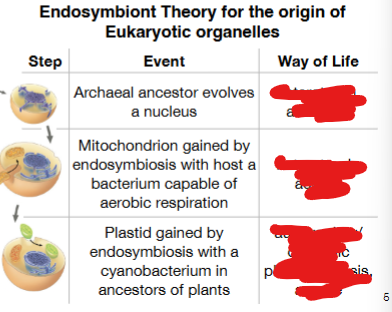
fill in the blanks
heterotroph, anaerobe
heterotroph, aerobe
autotroph w/ oxygenic photosynthesis, aerobe
prokaryotic ways of life
obtaining energy (many ways)
reproducing (binary fission)
coordinating functions within & between cells
metabolic cross feeding, filamentous chains, biofilms, and quorum sensing
microbiome
all microorganisms found in a given well-defined habitate
includes bacteria, archaea, fungi, algae, other unicellular eukaryotes
dynamic and environment-dependent
can have mutualists, commensals, pathogens
interactions among species in microbiome community can determine balance
if in host, can be important for development/nutrition/health
ways microbiomes establish
HORIZONTAL, VERTICAL
horizontal transmission
acquired from the environment
vertical transmission
passed down from parent to offspring
germline transmission of intracellular symbionts
acquisition during passage of birth canal
what % of cells on avg human body belong to microbes?
3/5 (60% or 56%)
microbiomes in human gut are acquired…
both horizontal (environment) and vertical (passed on)
influences development, changes w/ age and diet
if one bacterial species takes over (typically after antibiotic treatment), not good for environment bc imbalance
prokaryotic cells can still … even if not multicellular
WORK TOGETHER
examples of prokaryotes working together
metabolite cross-feeding
filamentous chains
biofilm
quorum sensing
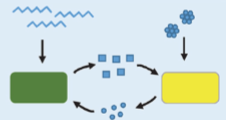
metabolite cross-feeding
interactions btwn bacterial strains
molecules from metabolism of ONE STRAIN are metabolized again by ANOTHER STRAIN
filamentous chains
some cyanobacteria (ex. anabaena) have cells in chains that differentiate and become heterocysts
allows spatial separation of nitrogen fixation (anaerobic) from photosynthesis (aerobic)
formed by binary fission
biofilm
surface coating colony of one or more species of microbes engaging in metabolic cooperation. mats of cells secrete and become stuck in a matrix of polysaccharides/proteins
stromatolites (is calcified biofilm)
plaque/tartar in mouth
the reason why antibiotic resistance exists / drug delivery problems
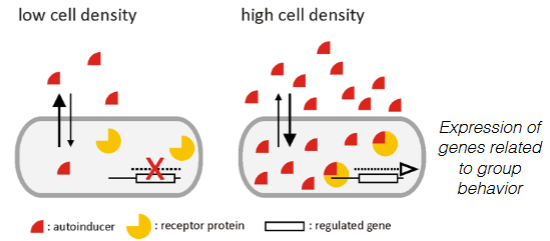
quorum sensing
if enough of other microbes of same type nearby, density-dependent activity happens
triggers synchronized group behaviors (ex. biofilm formation, virulence, and bioluminescence)
quorum sensing: how to know if microbe pop. reaches high density?
concentration of secreted autoinducer molecules
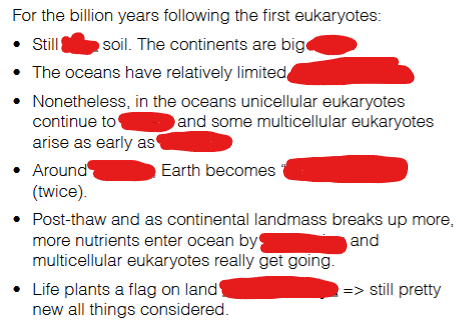
for billions of years after the first eukaryotes…
zero soil, continents are big rocks
oceans have limited nutrient content
unicellular eukaryotes in oceans continue to radiate
some multicellular euk. arise as early as ~1.3bya
around 700mya, Earth becomes “snowball earth” twice
post-thaw and continental landmass breaks cases nutrients to enter ocean (via weathering)
life plants flag on land only ~500mya, still pretty new
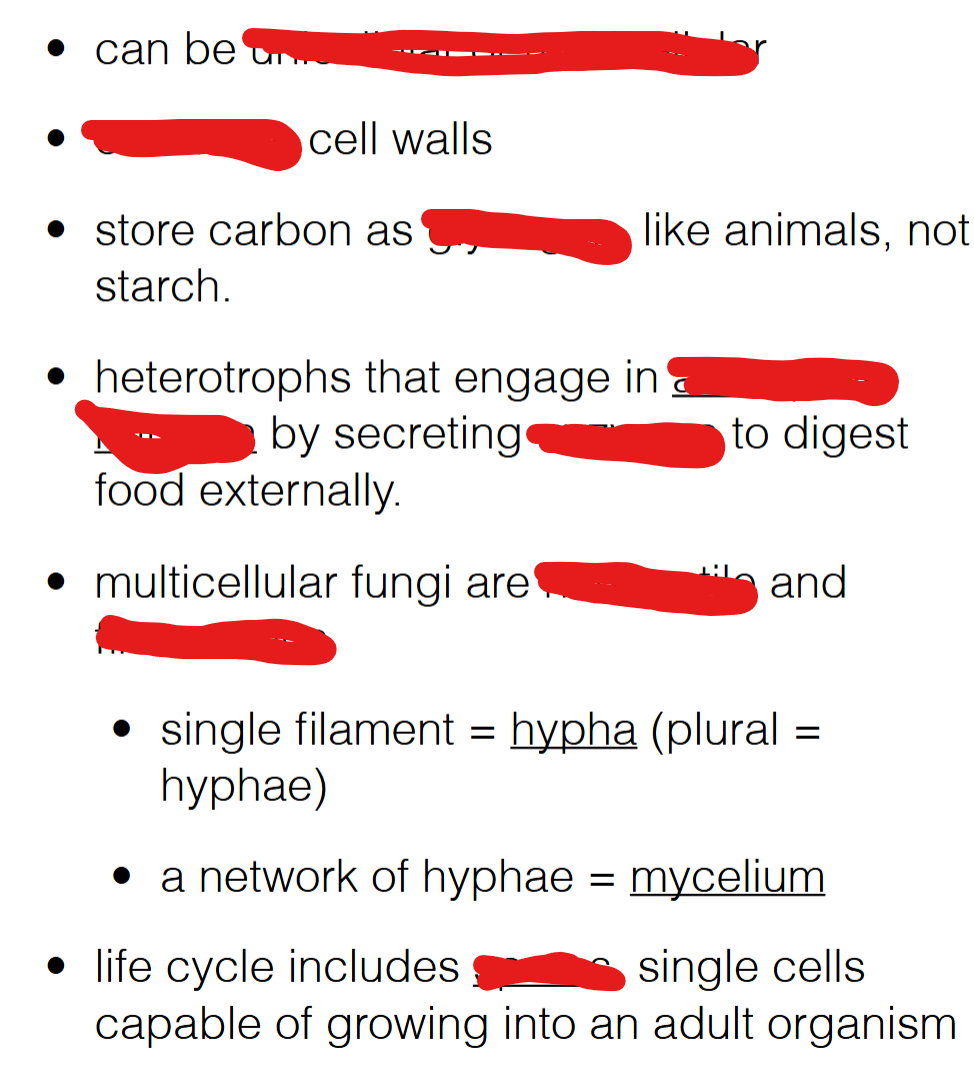
characteristics of fungi
can be multi or unicellular
multi are non-motile + filamentous
single filament = hypha (plural hyphae), network of hyphae = mycelium
chitin-rich cell walls
heterotrophs that engage in absorptive nutrition by secreting enzymes to digest food externally
stores carbon as glycogen (like animals)
not starch
life cycle includes spores, single cells capable of growing into adult organism
fungi can break down … that most bacteria can’t
LIGNIN
resulted in balcony collapse killing 6 ppl bc of dry rot
mycelial networks
growth is indeterminate: no defined end structure
can be huge and ancient
kinda like swarms of exquisitely sensitive hyphal tips connected by parallel processing into one being
cytoplasmic streaming: a mechanism to distribute pressure, water, nutrients, organelles, and nuclei
problems to solve for mycelial networks
finding nutrition if non-motile
direction growth w/o central information processor (brain)
moving resources great distances
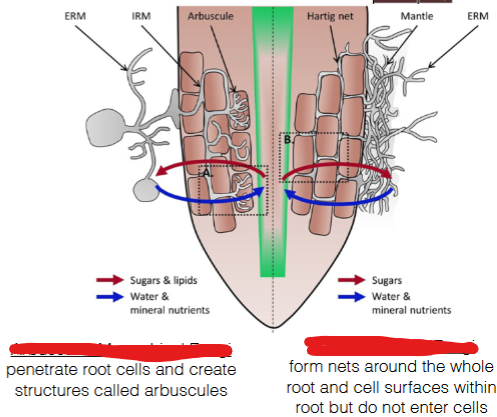
specialized hyphae
arbuscular mycorrhizal fungi: penetrate root cells and create structures are arbuscules
ectomycorrhizal fungi: forms nets around whole root and cell surfaces, does not enter cells
mycelial applications
mycofabrication: biofabrication process using fungal mycelium to grow sustainable materials
mycoremediation: sustainable, cost-effective form of bioremediation to break down, absorb, or remove environmental contaminants
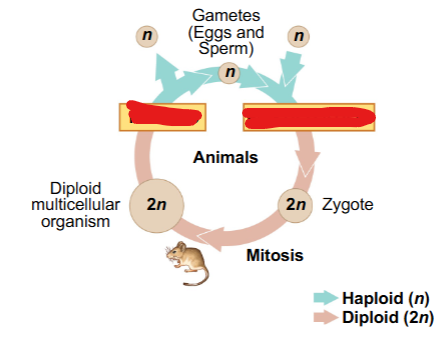
generalized sexual life cycles
meiosis: production of haploid cells from diploid cell over 2 rounds of cell divison
fertilizatio
n: union of haploid gametes to produce a diploid zygote
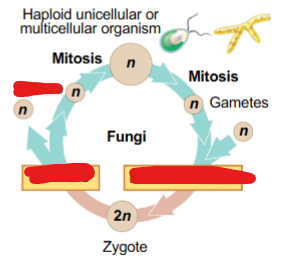
fungi sexual life cycle
in fungi, products of meiosis are spores
cells derived from spores then produce
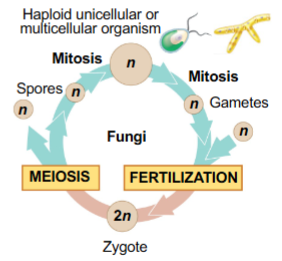
need terms centered on products made instead of meiosis/mitosis
SPOROGENESIS, GAMETOGENESIS
sporogenesis
process of spore formation
gametogenesis
process of gamete formation
which phase predominates: animals/fungi?
animals: diploid phase
fungi: haploid phase
haploid phase is predominant and can be multicellular in fungi
no mitosis after fertilization (no multicellular diploid in fungi)
diplontic life cycle
mitosis occurs only in diploid, so multicellular in diploid
haplontic life cycle
mitosis occurs only in haploid, so multicellular in haploid
plant life cycles
meiosis makes haploid spores and fertilization makes zygote
but both spores and zygotes can undergo mitosis in plants, so haplodiplontic life cycle or alternation of generations
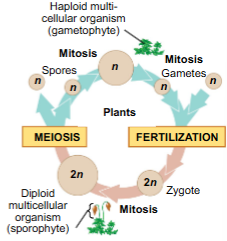
need more terms on what multicellular organism makes what products
GAMETOPHYTE, SPOROPHYTE
gametophyte
haploid oranism producingb gametes by mitosissp
sporophyte
diploid organism that produces spores by meiosis
fungal diversity: 1 or many separate origins of multicellularity? monophyletic or not? solution to spore dispersal?
as many as 2.2-3.8 million species, only 6% described
united by chitin-rich cell walls
diverged from common ancestor w/ animals ~1bya
multiple separate origins of multicellularity distinct from animals & plants
with move onto land, remaining groups lost flagellated spores as shift from water- to wind-based spore dispersal
need new spore dispersal solution: fruiting body
MONOPHYLETIC
fungi can also … reproduce
ASEXUALLY
many species can make spores w/o going thru a diploid zygote
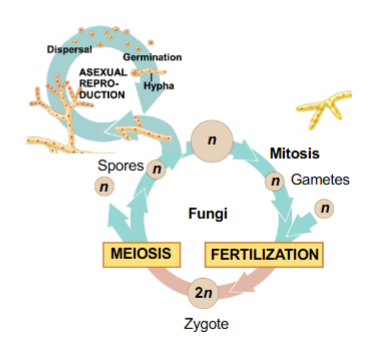
examples of asexual reproduction
mucuromycota: mycelium forms sporangia w/ genetically identical spores
unicellular yeasts: haploid cells bud off additional haploid cells
multicellular ascomycetes: strings of spores called conidia form as hyphal tip structures
only ARBUSCULAR MYCORRHIZAL FUNGI asexually reproduce
fungi as pathogens
mycosis: fungal infection
human fungal infections rarely lethal except in immunocompromised ppl, but difficult to treat
ophiocordyceps
genus of ascomycetes known as zombie fungi
behavior induced is very specific to organism
ants may crawl to optimal dispersal height before death grip then clamps on leaf vein
at time of death grip, fungi takes 40% body in jaw muscles
can see evidence of death grips in fossil leaves ~48mya
what is algae? what is it NOT?
photosynthetic organisms that are not land plants
live in aqueous environments
NOT a monophyletic group
cyanobacteria is blue green algae
ecological group def
a set of taxa that share common ways of life
may or may not overlap w/ phylogenetics
decomposers (prokaryotes or fungi), cushion plants (species in many platn groups evolved this)
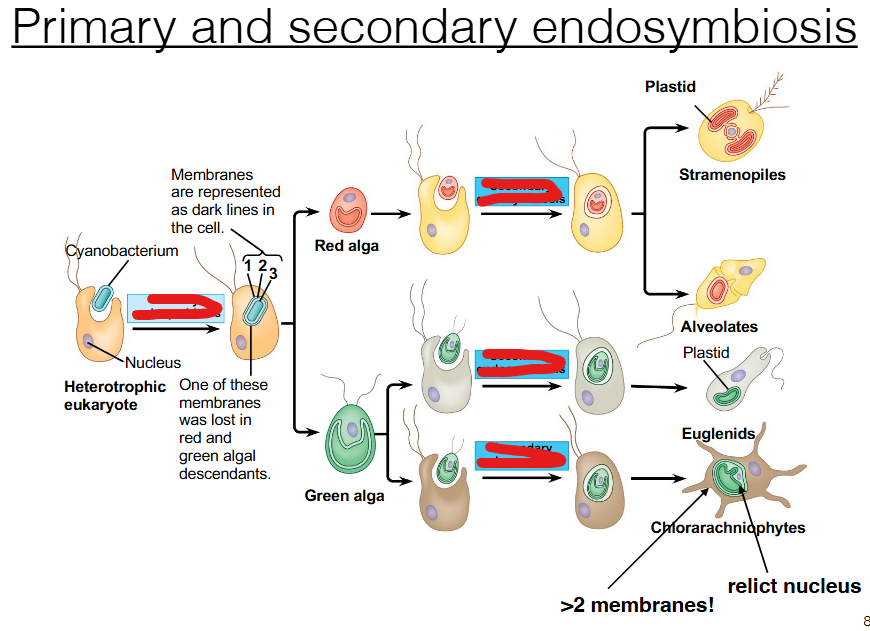
what event caused these evolutions in algae?
PRIMARY AND SECONDARY ENDOSYMBIOSIS
eukaryote enters in permanent association w/ prokaryote in primary endosymbiosis
prokaryotes become primary plastids
new plastids gained after 2ndary endosymbiosis is not due to new cyanobacterium, but evolution of one from primary endosymbiosis
called secondary plastids
evidence for 2ndary endosymbiosis
number of membranes that surround the plastids in organisms (4 instead of 2, always more than 2)
some organisms have relic nucleus
if sequence genomes of palstids (circular genome), more similar to plastids of green/red algae rather than cyanobacteria found in environment
indicates that it evolved from algae instead of cyano
cyanobacteria, diatoms, dinoflagellates have what in common?
unicellular ONLY
ex. phytoplankton
brown, red, and green algae have what in common?
can be unicellular or multicellular
ex. phytoplankton (uni) or seaweeds (multi)
algae are … contributors to global …
HUGE, NPP
primarily due to unicellular algae (diatoms, dinoflagelletes, cyanobacteria)
important base to aquatic food webs
diatoms
unique cell walls made of silica embedded in organic matrix
25% of global npp
deposits accumulate on ocean floor
uplifted fossil deposits are harvested as diatomaceous earth (key pat of toothpaste, metal, water filtration
dinoflagellates
have two flagella, one spiral (makes them spin)
DINO = WHIRLING
some have treansition to heterotrophy, some are mixotrophs that can switch from auto or hetero
BAD: can create dinoflag blooms producing toxins
brown algae
marine algae including kelps
kelps r keystone species of intertidal/deepwater
can grow 200ft long
red algae
red bc pigments absorb blue light
can come in diverse colors
economically important
includes nori (sushi seaweed)
green algae
closest relatives tro plant kingdom
very diverse forms (uni/colonial/multi)
found in fresh/sea water, maybe high elevation snow fields
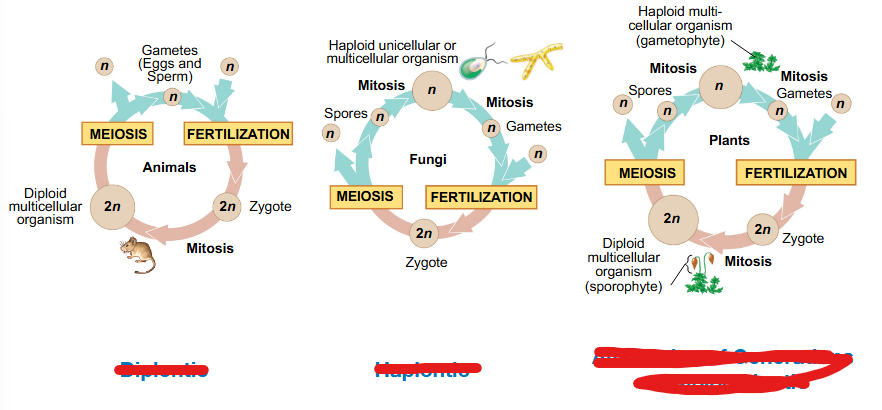
algae life cycle
left diplontic
middle haplontic
right haplodiplontic
mitosis occurs twice in haploid phase (after spores develop into gametophytes, after gametes come tgt to fertilize)
terrestrialization… where does soil come from?
ONLY ~500MYA, SOIL, comes from lichens
mycobiont? photobiont?
myco: heterotrophic fungus
provides moisture, shelter, uv protec, minerals
secretes acid
photo: phototrophic alga/cyanobacterium
provides sugars, & fixed nitrogen (only for cyanobac)
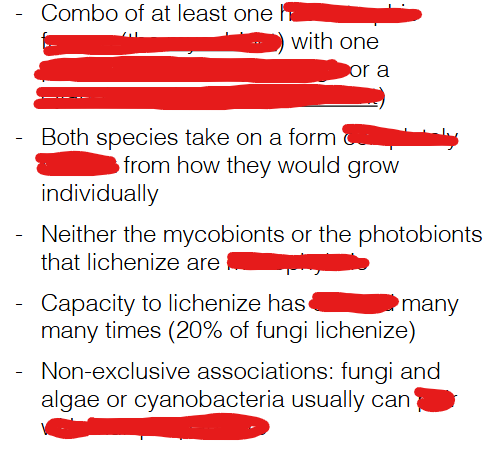
lichens
ecological group
combo of at least 1 heterotrophic fungus (mycobiont) and phototrophic alga/cyanobacterium (photobiont)
take on form completely distinct from individual growth when together
MYCOBIONTS/PHOTOBIONTS NOT MONOPHYLETIC
20% of fungi lichenize, has evolved many times
can pair w/ multiple partners (non exclusive associations)
secrete acids like usnic acid
PIONEER SPECIES, CAN MAKE SOIL BY BOTH PHYSICAL/CHEMICAL WEATHERING
how do lichens reproduce?
TOGETHER & ASEXUALLY
ALONE & SEXUALLY
how do lichens reproduce together & asexually?
fragmentation
soredia: bundle of fungi and algaeh
how do lichens reproduce alone and sexually?
fungi produce their own fruiting body
where did soil initially come from?
probably NOT lichens,
cyanobacteria, algae crusts? early plants themselves?
key needs for plants
soil, enhanced capacity to get nutrients from soilhow
how did plants get enhaned capacity to get nutrients from soil?
mycorrhizal fungi
symbioses with fungi that made them able to get into crevices of soil
algal ancestors of land plants emerged from…
FRESH WATER
both molecular/morph trait support this → shared derived traits involve how cells divide, plasmodesmata (channels between cells), tip-driven, or apical, growth
arbuscular mycorrhizal fung were likely…
PRESENT EARLY AND ESSENTIAL
observed in early fossils, genes involved in symbiosis are found in genomes of charophytes
benefits of coming ashore
light is unfiltered by water
more accessible carbon dioxide in air than dissolved in water
challenges of coming ashore
staying hydrated (water evaporates quicker)
acquiring & distributing water (need a distribution system)
building support (w/o water, no buoyancy)
fertilization (how will motile gametes meet for reproduction?)
embryophytes
land plants that encompasses basically every plant that we have studied
bryophytes
liverworts, mosses, hornwots
“leafy” structures pressed close to moist soil are gametophytes
stem-like structure rising up are/has sporophytes (attached and dependent on gametophyte for nutrition, NOT FREE-LIVING)
gametophytes … the bryophyte life cycle
RULE
start from a spore → makes gametophyte → makes antheridia/archegonia → fertilization → zygote in archegonium → embryo → young sporophyte → sporangium
DOES NOT HAVE SPOROPHYLL, only a feature of vascular plants (lycophytes, ferns, gymnosperms, angiosperms)
has male gametophytes that make antheridia & female gametophytes that make archegonia
most moss gametophytes are unisexual and can form either antheridia (male) or archegonia (female)
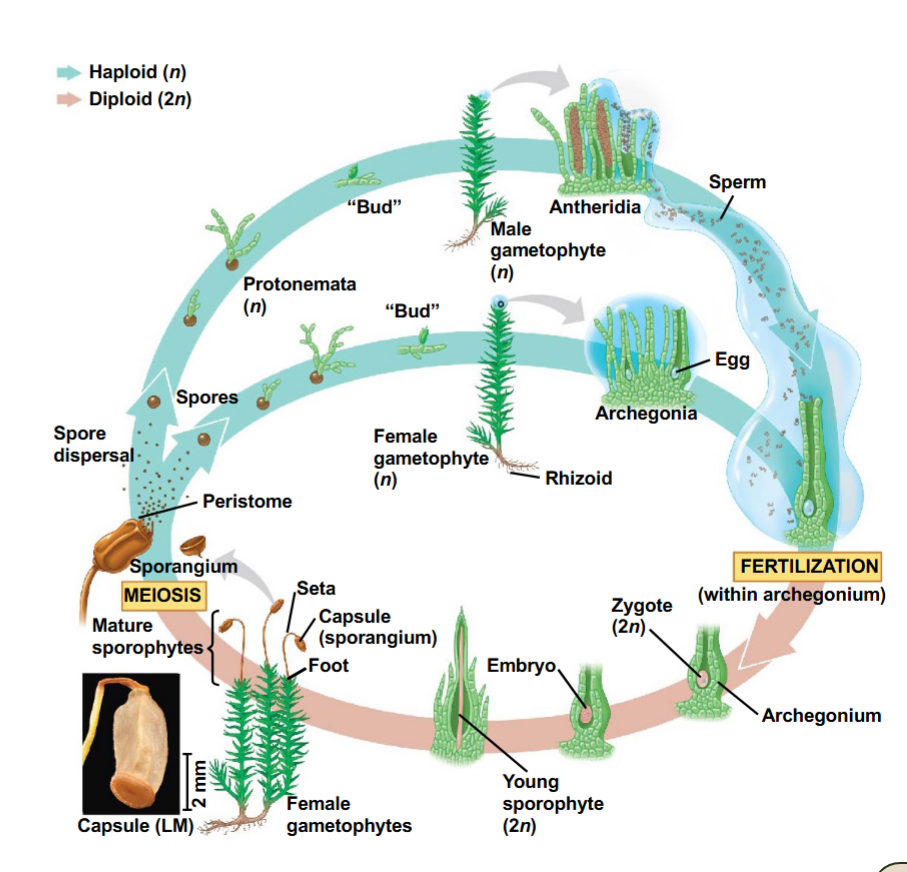
FIGHT PHIL GIA (NO PHIL FOR NONVASCULAR)
sporophyte (entire structure), sporophyll (specialized leaf that bear sporangia), sporangia (structure producing spores)
how do bryophytes address acquiring/distributing water? (problem 2)
PHYLLIDS (not leaves), RHIZOIDS (not roots)
phyllids
thin leaf-like growths that absorb water thru direct in contact w ground/trapping moisture.
not leaves
rhizoids
long tubular single cell/filaments that do some water/nutrient uptake, but mainly function to anchor plant
not roots
also associated w/ arbuscular mycorrhizal fungi
how do bryophytes address staying hydrated? (problem 1)
solution: make sporophyte/spores more waterproof for airborne life
new waterproofing (waxy, non-permeable cuticle)
multicellular sporangia (capsule) that produces spores
evolutionary co-option of sporopollenin to make plant spores resistant to harsh weather + capable of wind dispersal
solution: protect gametes and new sporophytes as they form through gametangia
embryo is zygote that is retained in archegonium, develops within maternal tissue
gametangia
new multicellular protective tissues where gametes form
there are two types of gametangia
antheridia, archegonia
antheridia
gamentagia that produce sperm
archegonia
gametangia that produce eggs