marine botany test 3
 Call Kai
 Learn
Learn Practice Test
 Spaced Repetition
 Match
Match Flashcards
 Knowt Play
1/125

There's no tags or description
Looks like no tags are added yet.
Name | Mastery | Learn | Test | Matching | Spaced | Call with Kai |
|---|
No analytics yet
Send a link to your students to track their progress
126 Terms
autogenous hypothesis
"self-assembly required" - also known as the endogenous hypothesis; says eukaryotes arose directly from a single prokaryote ancestor by compartmentalization of functions brought about by infoldings of the prokaryote plasma membrane.
complex organelles, two types of chromosomes, and two types of ribosomes spontaneously appear
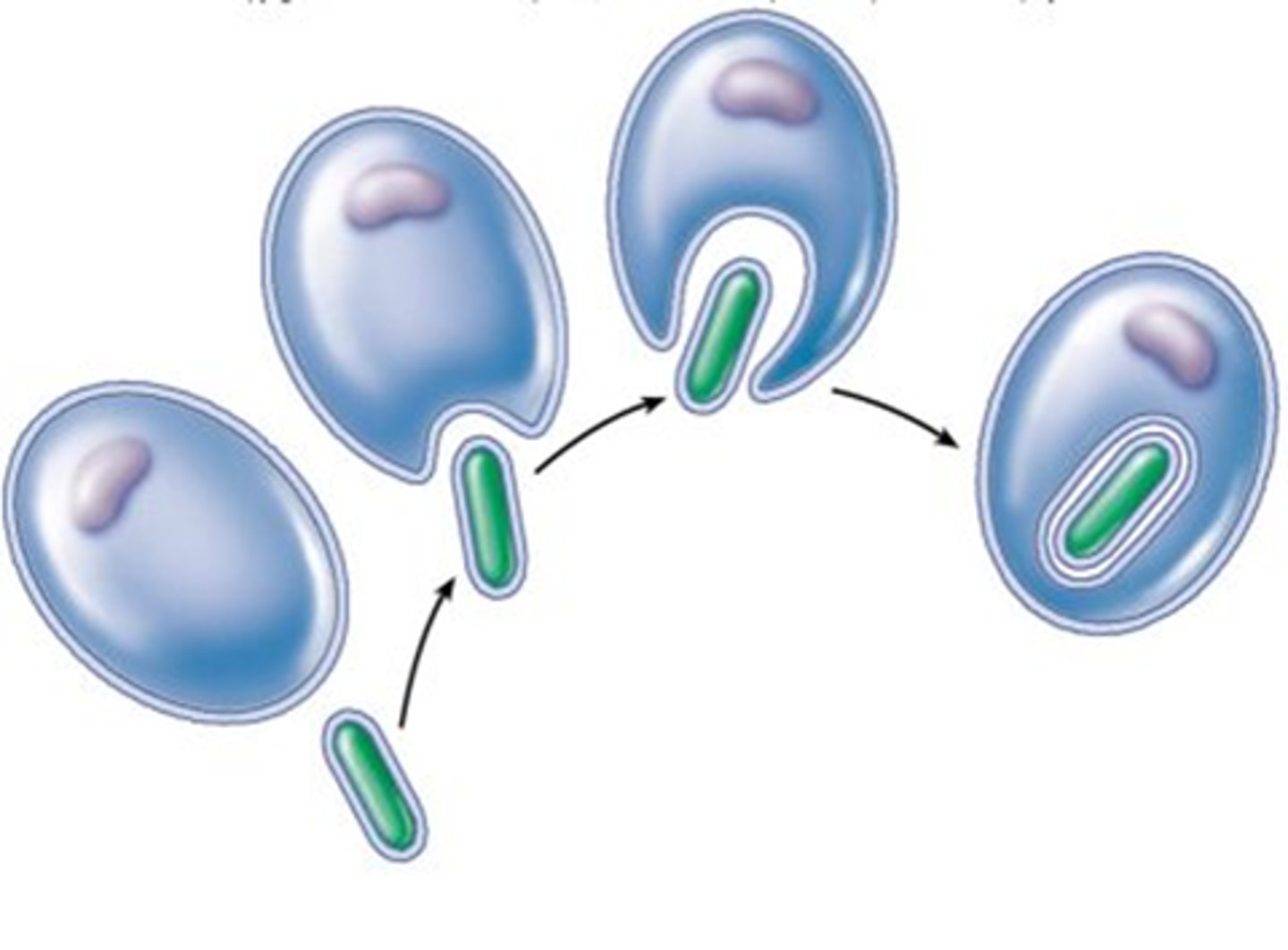
xenogenous hypothesis
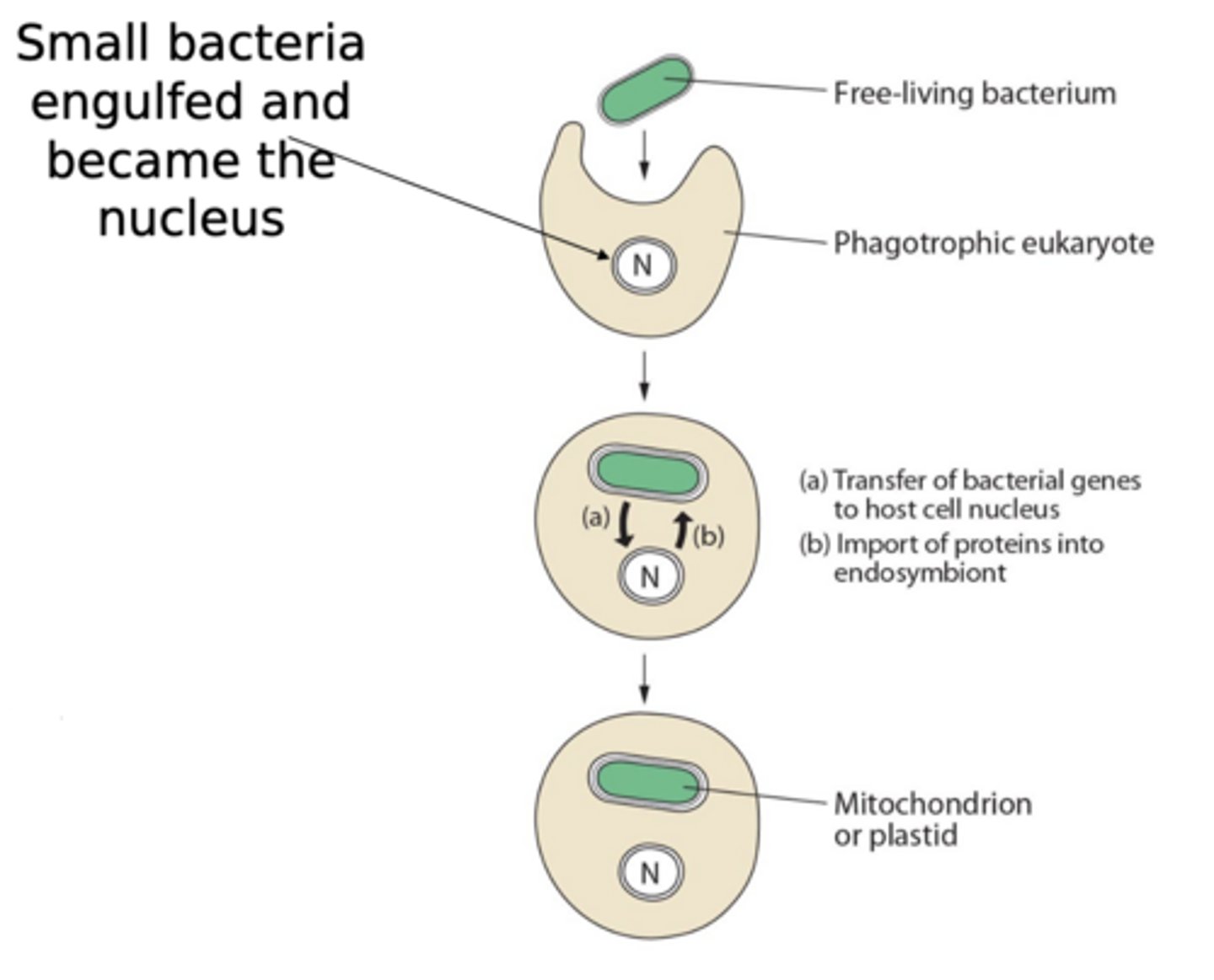
generalized model of primary endosymbiosis! "some components acquired" - phagocytosis allows primitive cells to eat foreign bodies, some inclusions are kept in the cell rather than digested, undigested photosynthetic cyanobacteria "became" plastids, and undigested heterotrophic bacteria "became" mitochondria
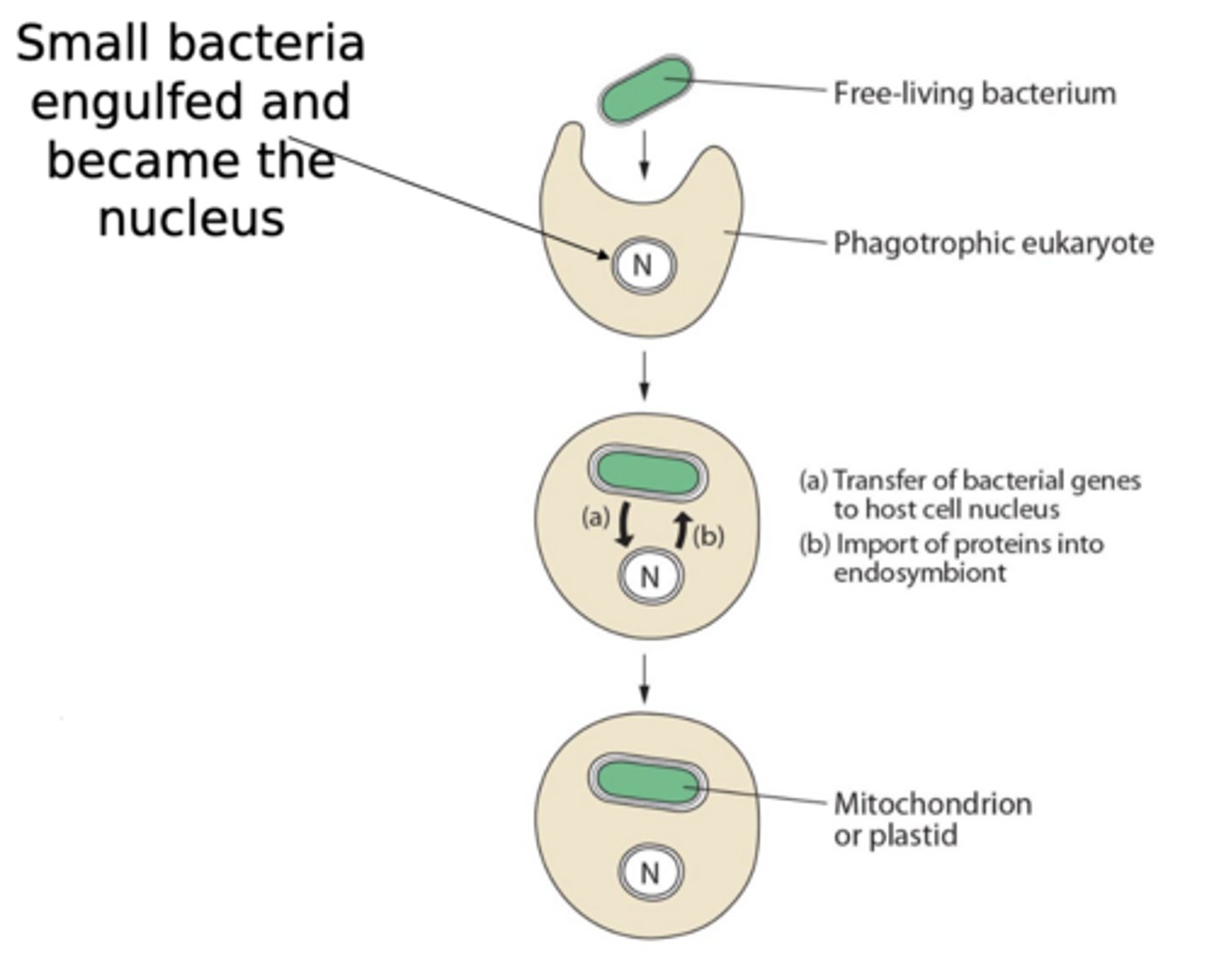
Konstantin Mereschkowsky
Russian biologist that first suggested plastids originated as endosymbionts; said:
- plastids are unquestionably reduced cyanobacteria that entered into a symbiosis with a heterotrophic host,
- the host that acquired plastids was itself a product of symbiosis between a larger, heterotrophic, amoeboid host cell and a smaller 'micrococcal' endosymbiont that gave rise to the nucleus,
- autotrophy of plants is an inheritance, in toto, from cyanobacteria
Lynn Margulis
leading figure behind the endosymbiotic hypothesis; her research was the primary support for the endosymbiotic theory, it claims that the origin of mitochondria were separate organisms that originally entered into a symbiotic relationship with eukaryotic cells through endosymbiosis
endosymbiosis
the process by which one organism becomes stably resident within the cell or body of another, known as the host, to form a chimera
what three major forms of endosymbiosis are important in the evolutionary origin of algal plastids?
primary endosymbiosis, secondary endosymbiosis, and tertiary endosymbiosis
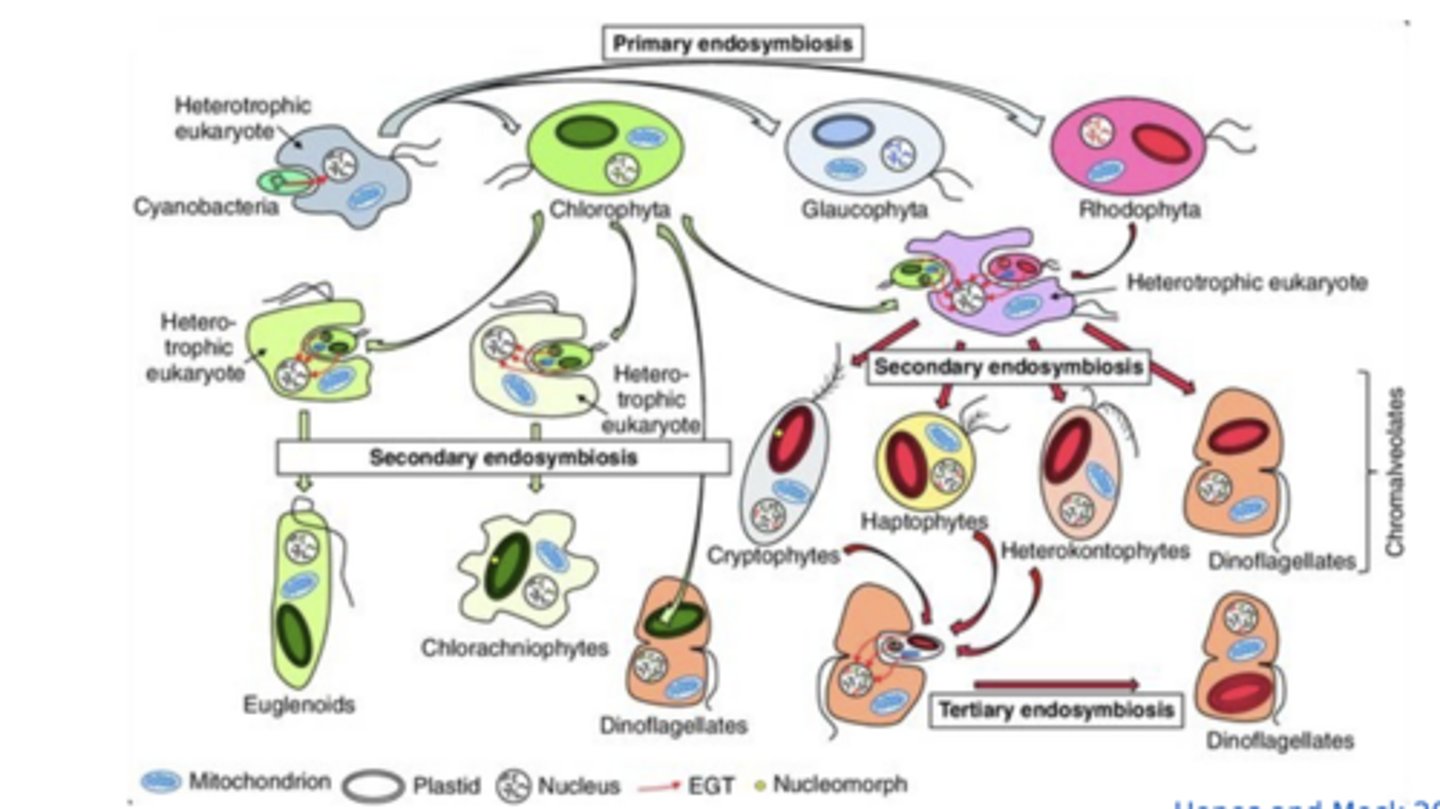
primary endosymbiosis
ingested cyanobacterial cells become primary plastids having 2 plastid membranes; seen in red algae, green algae, and glaucophytes
secondary endosymbiosis
eukaryotic cells become endosymbionts within a eukaryotic host cell, resulting in plastids with 3 or 4 plastid membranes; seen in some dinoflagellates, brown algae, and a few other algae
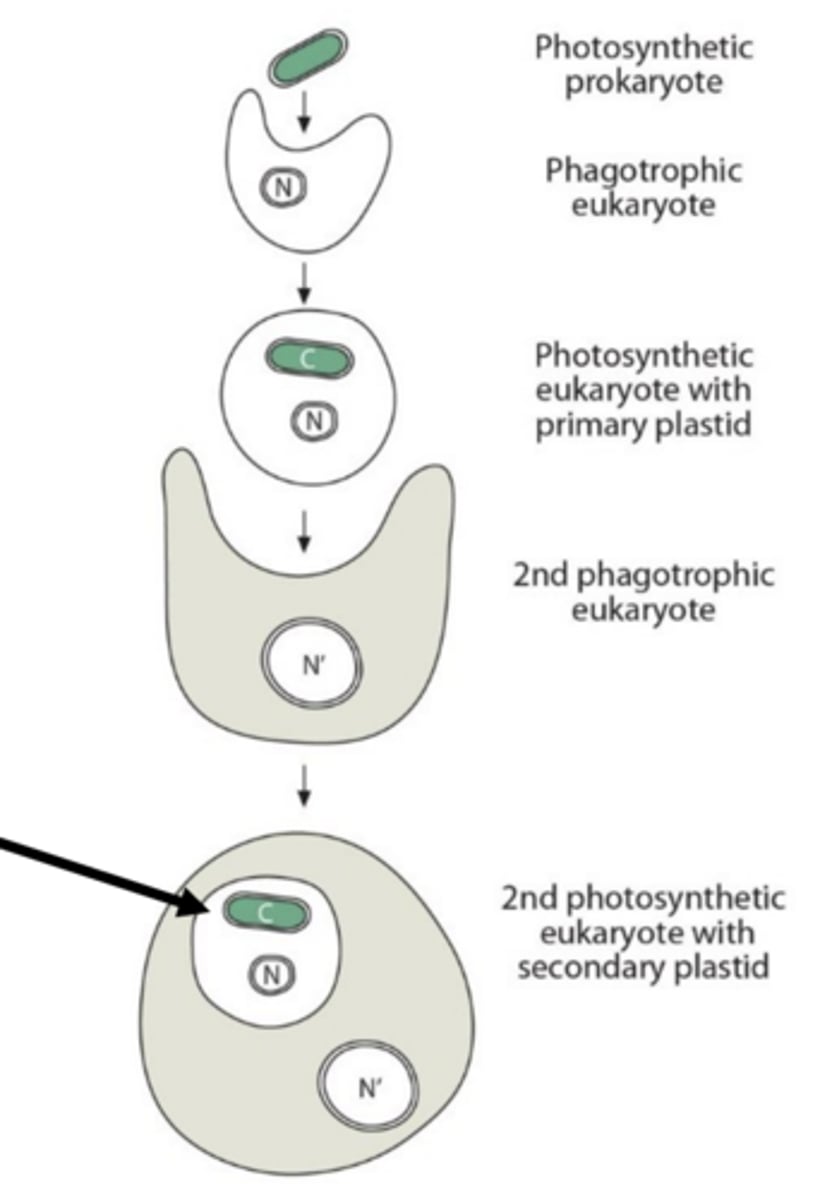
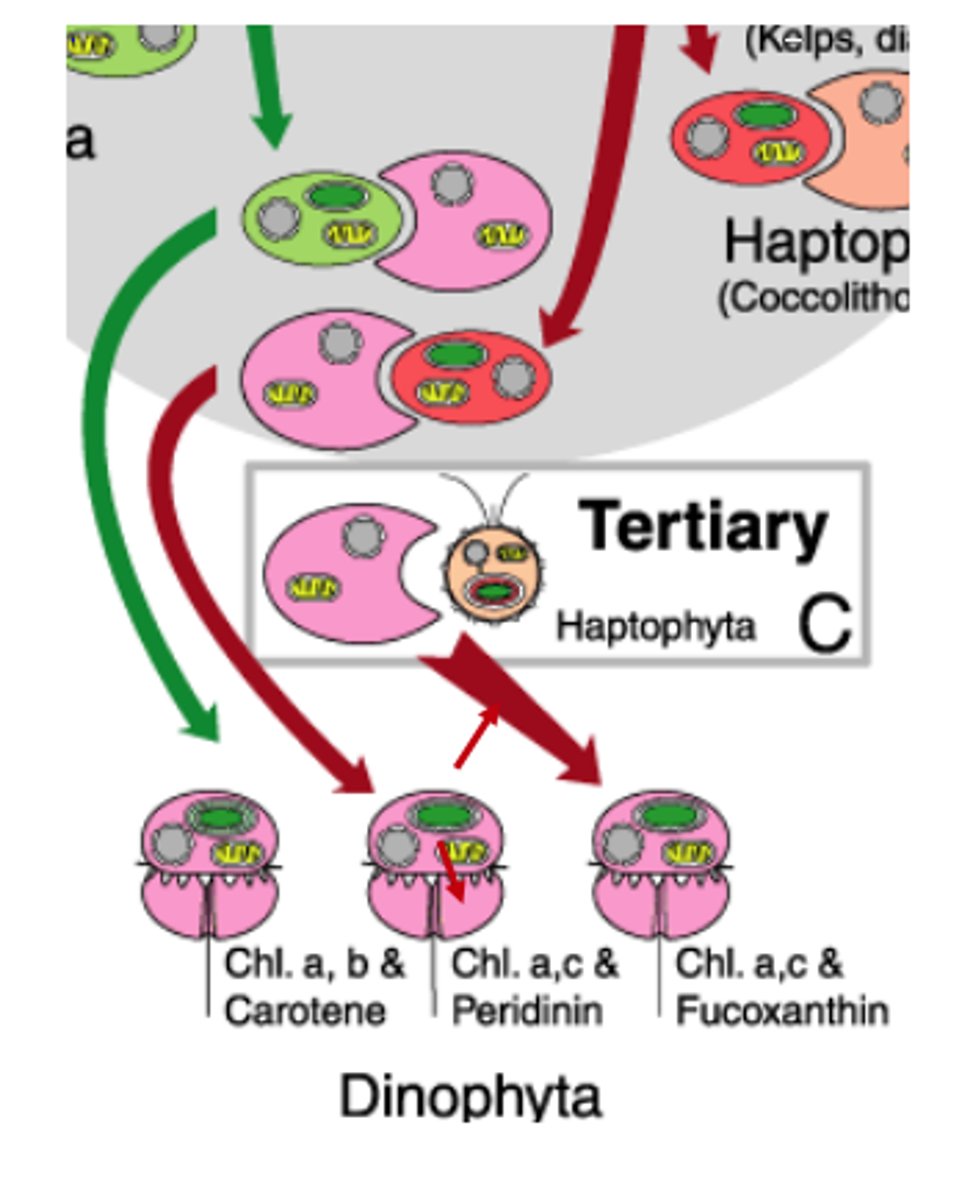
tertiary endosymbiosis
eukaryote cells contain a plastid that has been derived from a eukaryote endosymbiont that possessed a secondary plastid; seen in most dinoflagellates
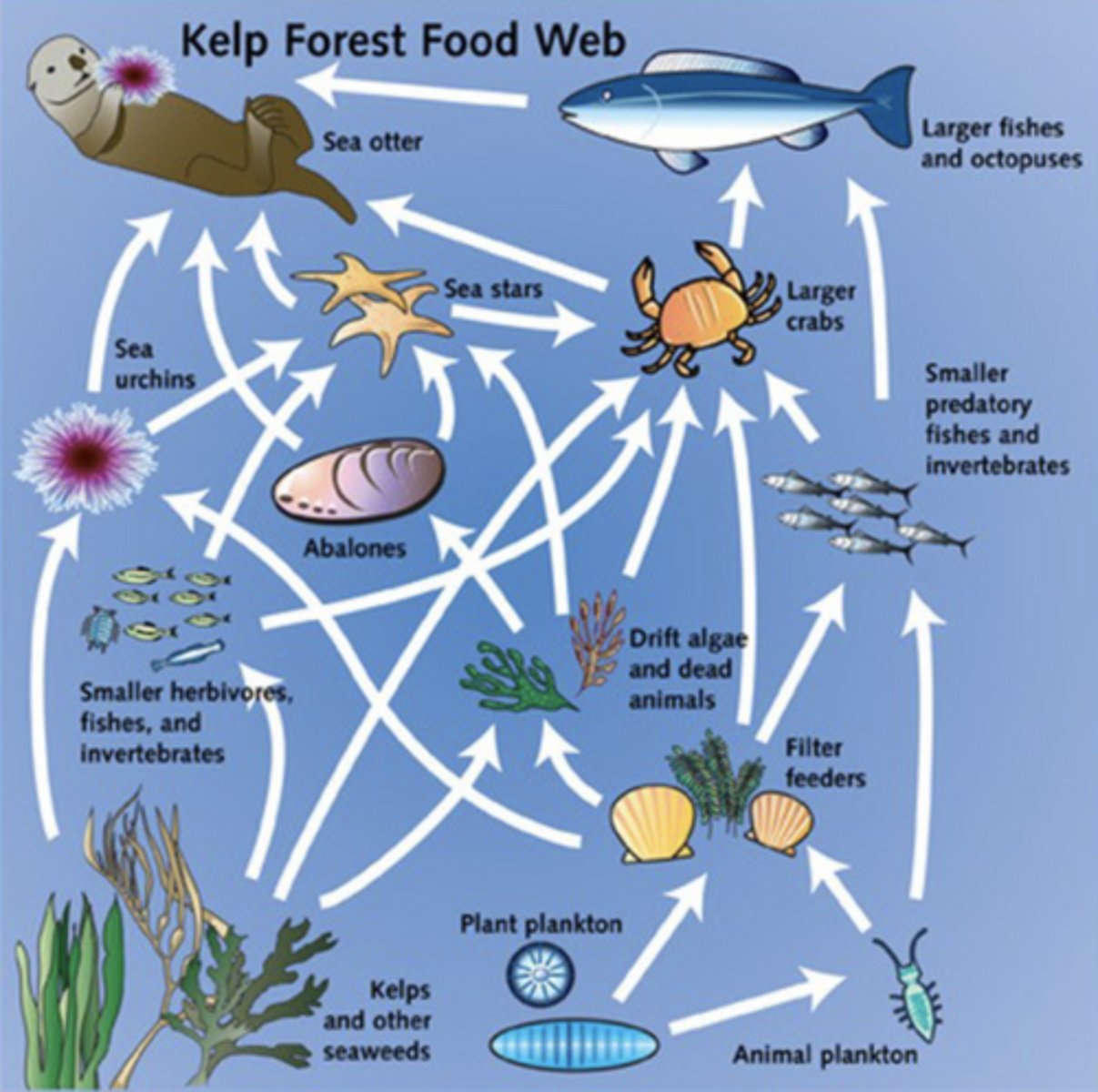
food web
a model that illustrates the feeding interactions occurring among diverse types of organisms in a particular habitat; concepts of aquatic food webs has changed through time
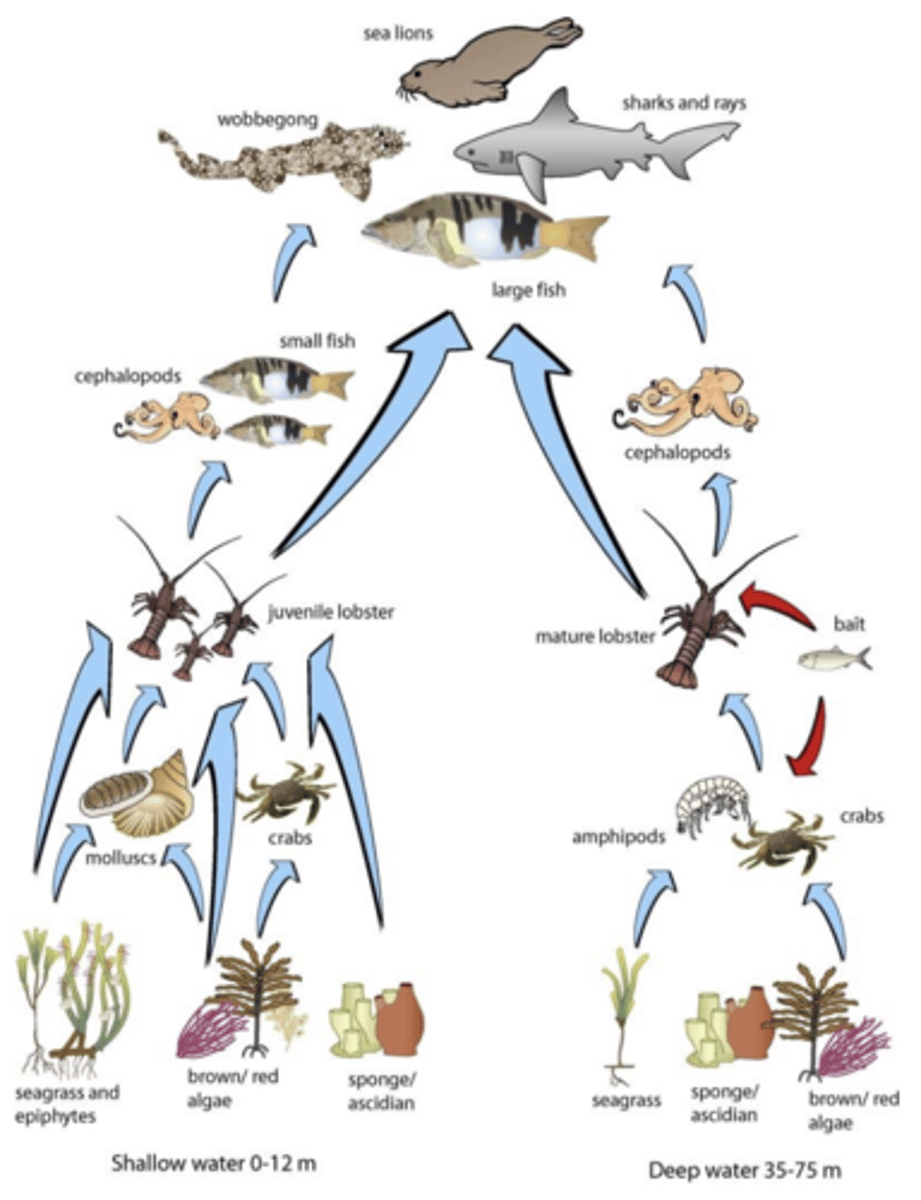
western rock lobster in ecosystem processes
found in southwestern Australia ecosystems, the western rock lobster consumes a wide variety of plant material like coralline algae, and plays a more important role in shallow water habitat
macroalgae are a more significant food source, though seagrasses can be more important for habitat formation for western rock lobsters
how can algal herbivory be a good thing with climate change?
herbivores help protect the ecosystems from climate change; warming and limpet herbivores restructure marine communities! seaweed proliferates when exposed to ambient temperatures in the absence of limpets, and very little seaweed survives when exposed to warm temperatures and limpet herbivory
- herbivores create space for other plants and animals to move in, meaning more diversity and variety present which helps protect the ecosystem with heat stressors
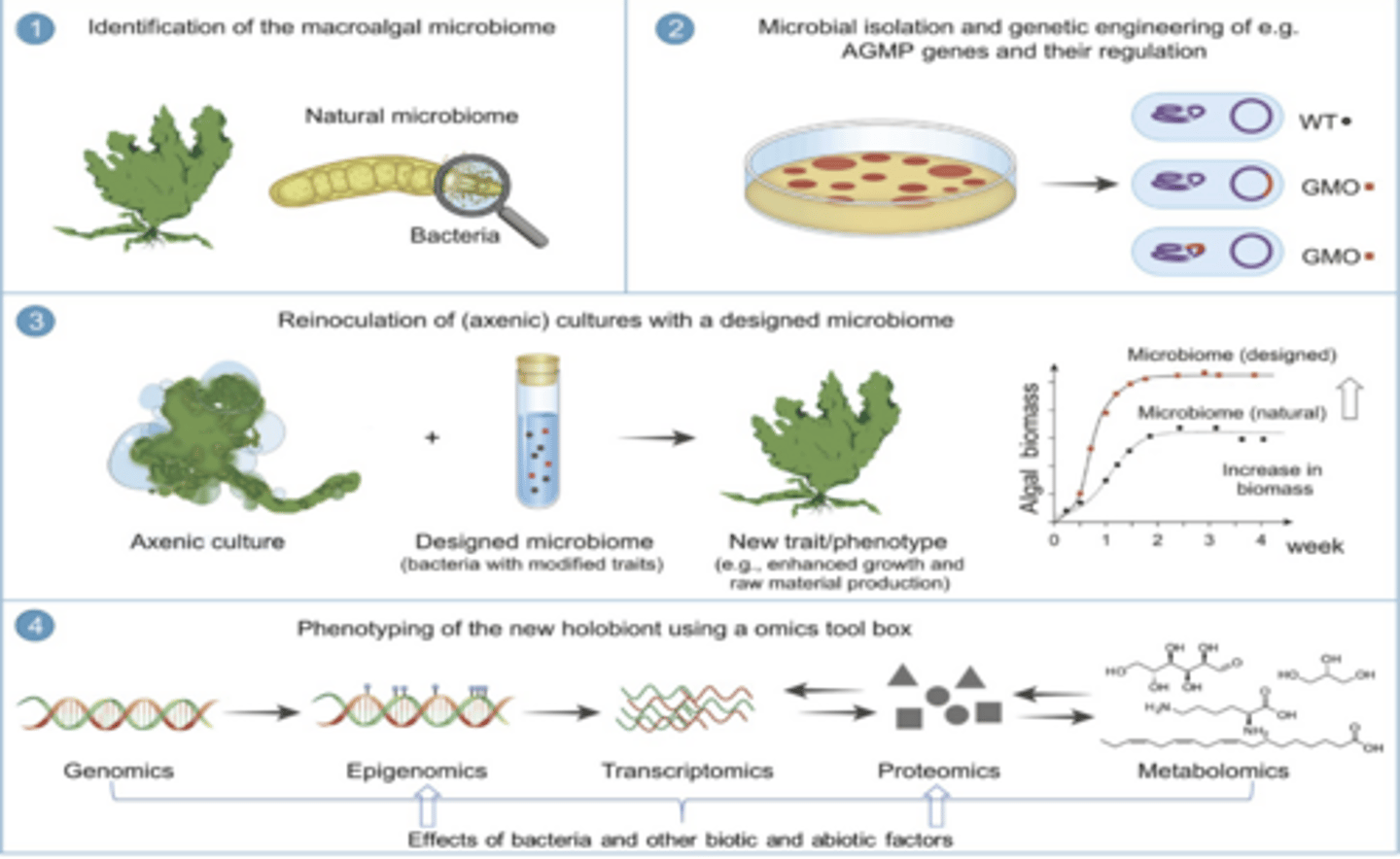
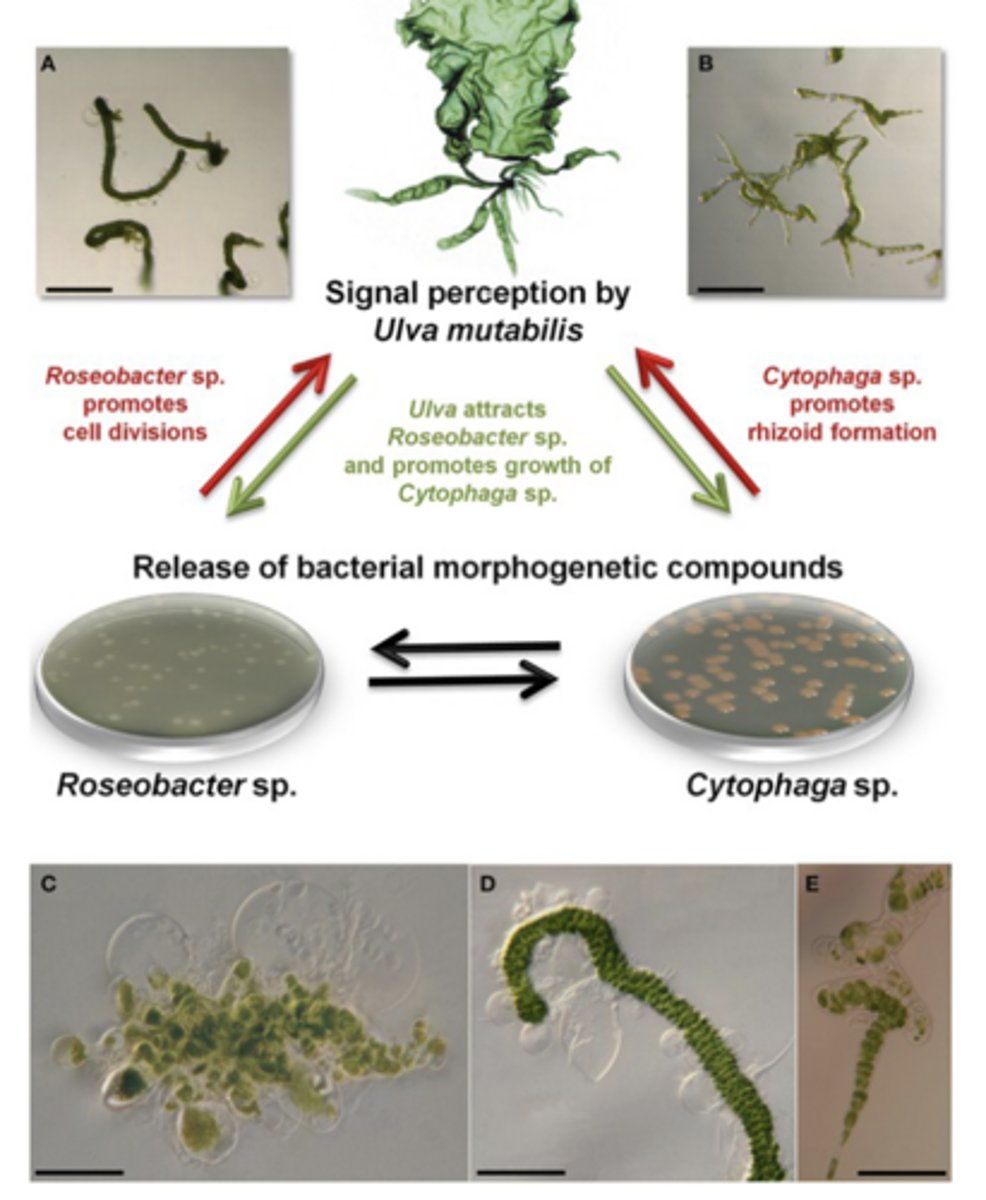
why are macroalgal microbiomes (MaMs) crucial for the morphological development of seaweeds?
(i.e. thallusin production regulates morphogenesis in Ulva mutabilis)
when grown in sterile conditions, U. mutabilis adopted an uncharacteristic globose morphology with small, thready proliferations, but regained normal morphology when exposed to MaM bacteria from a non-sterile culture.
-Wichard proposed selecting which microbes are introduced in axenic cultures can help create new desired pheotypes
how do marine phytoplankton play a critical role on the global sulfur cycle?
algae excrete substances such as glycolate, amino acids, amino sugars, peptides, carbohydrates, lipopolysaccharides, and DMSP (dimethylsulfoniopropionate) which is converted to DMS (dimethyl sulfide), all of which affects the climate
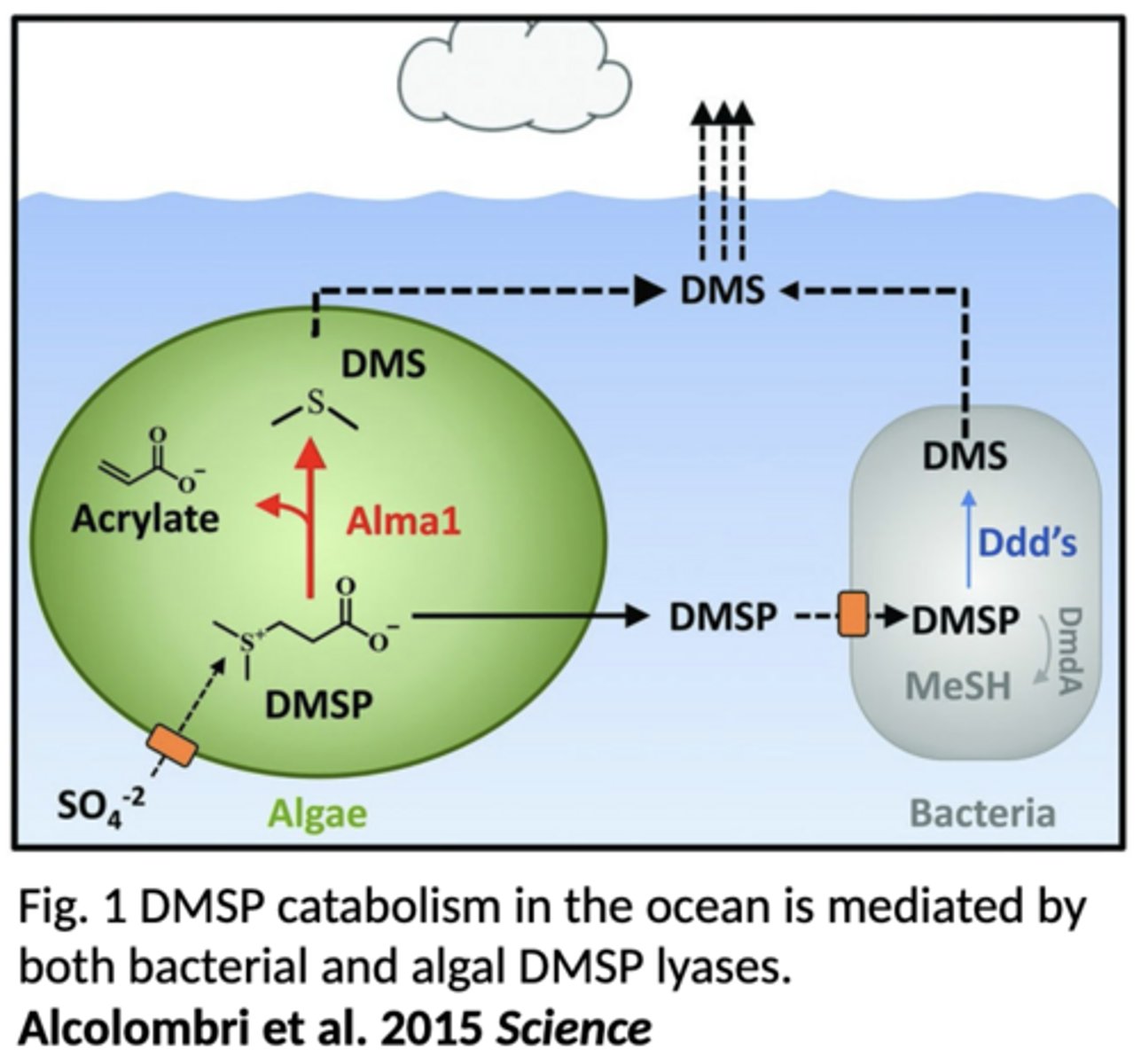
DMS
dimethyl sulfide; a volatile, gets oxidized to sulfur aerosols which act as cloud condensation nuclei
when airborne, is a volatile antiherbivore and antioxidant metabolite that is released when seaweed is grazed or physiologically stressed (i.e. Ulva fenestrata exposed to airborne DMS)
DMSP as an herbivore defense
a molecule of "keystone" significance, Ulva fenestrata can "eavesdrop", or detect an airborne volatile organic compound released by conspecifics when injured and respond by increasing concentrations of a defensive metabolite
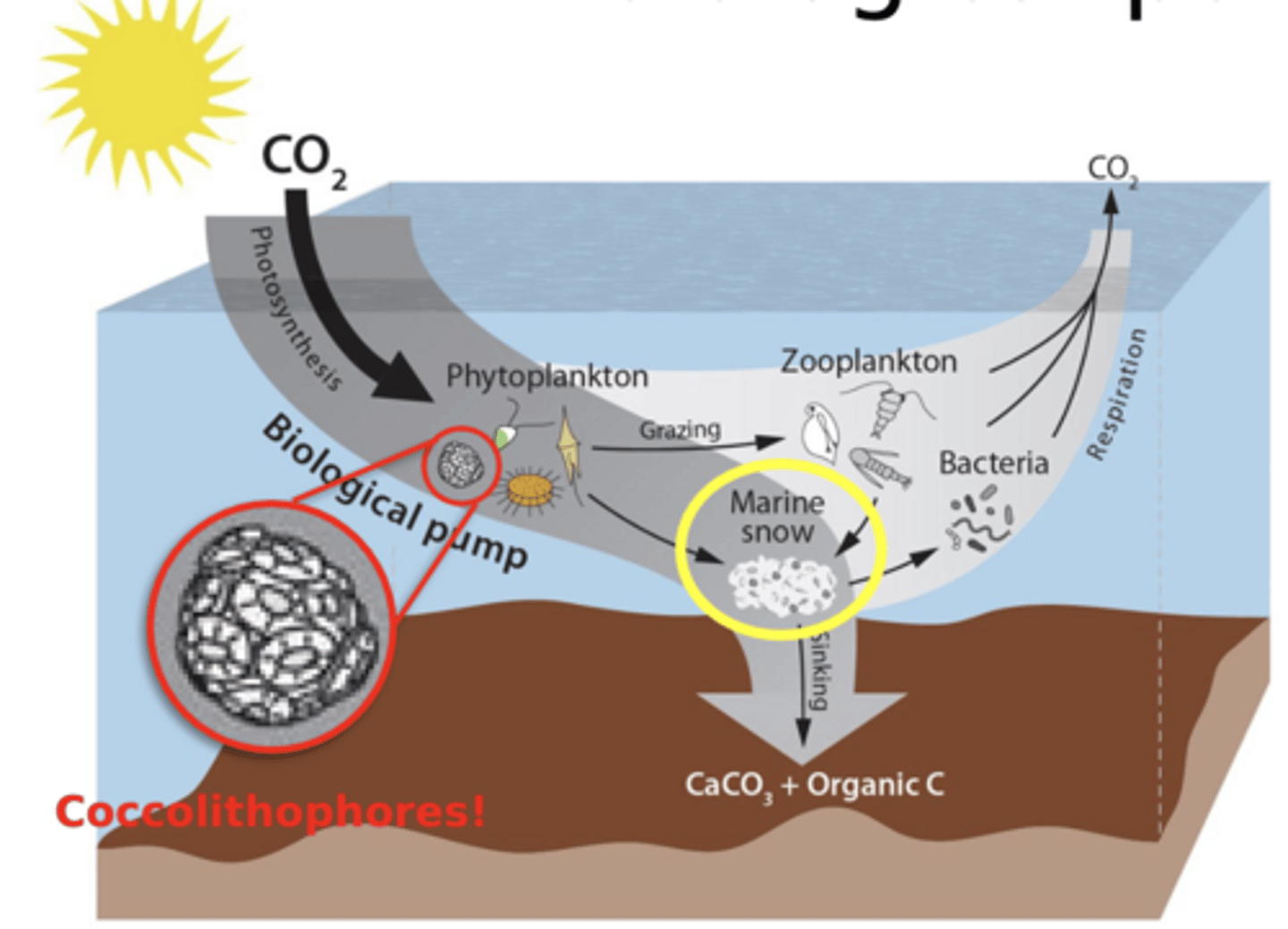
marine snow
amorphous aggregations of detritus from algae and other organisms; plays an important role in the operation of the biological pump!
entire microbial communities may exist upon marine snow
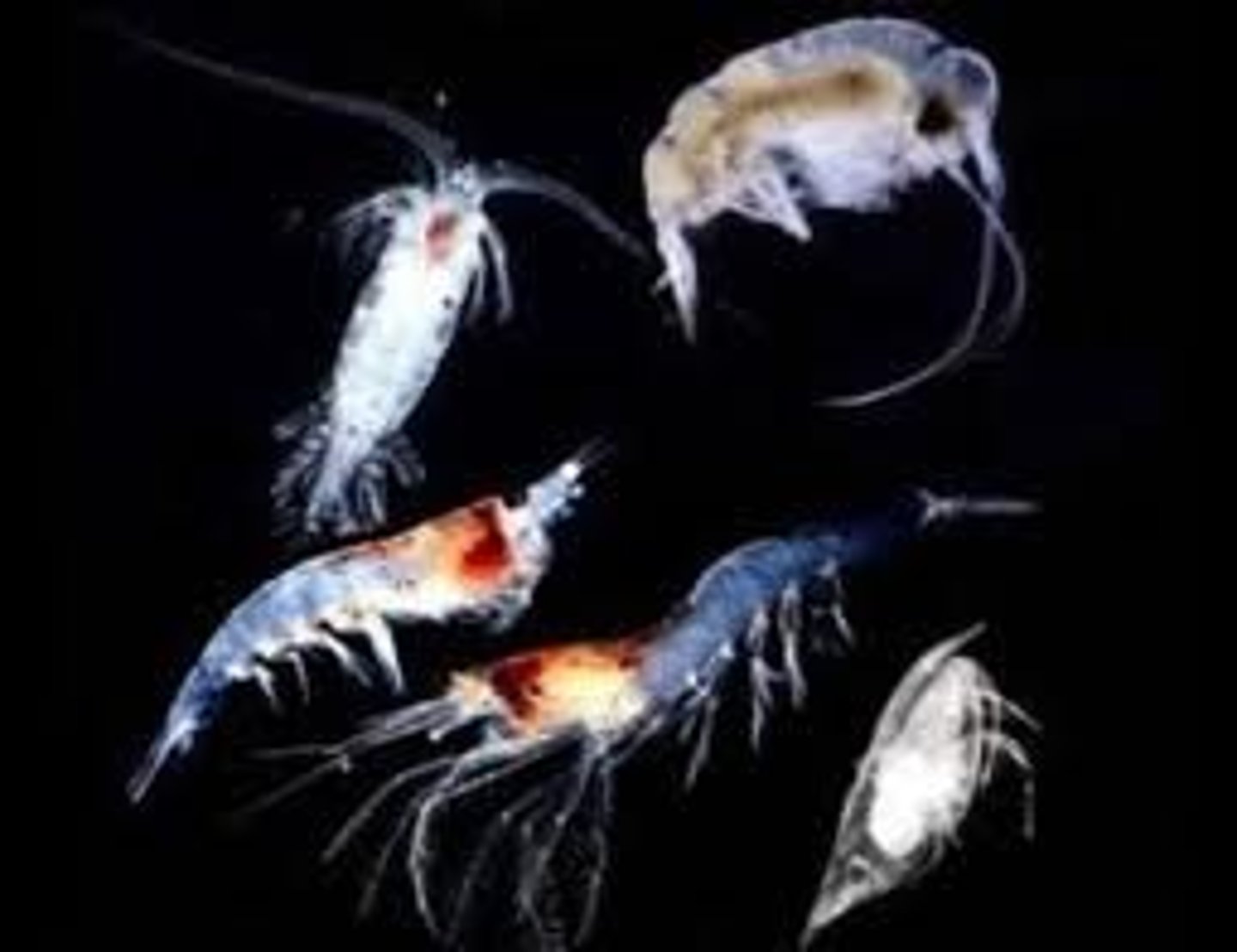
herbivores that depend on algae
herbivorous zooplankton (i.e. ciliates, amoebae, rotifers, cladocerans, and copepods), mesograzers (i.e. dipteran larvae, marine amphipods and pteropods), and conspicuous herbivores (i.e. limpets, mussels, crabs, sea urchins, insects, fish, and some sea turtles)
steller's sea cow (Hydrocamalis gigas)
an extinct relative of dugongs found by Europeans in 1741 in the Bering Sea between Alaska and Russia, extensive distribution during the Pleistocene, grew up to ~30ft in length, fed on kelp.
within 27 years of discovery, the slow moving mammal was easily caught and went extinct by hunting
algae food quality
algal species vary in ingestibility, digestibility, content of mineral nutrients, essential organic compounds, toxin production, and other biochemical constituents (polyunsaturated fatty acids, sterols, mineral ratios, and amino acids)
algal defenses against herbivory
- small cell size and rapid cell division, generates large populations,
- larger cell size, bigger than smaller herbivores,
- predator avoidance for flagellate algal species,
- ability to grow in the cold season when herbivore populations are low,
- structural defenses,
- inducible defenses,
- bioluminescence and chemical deterrents/toxins
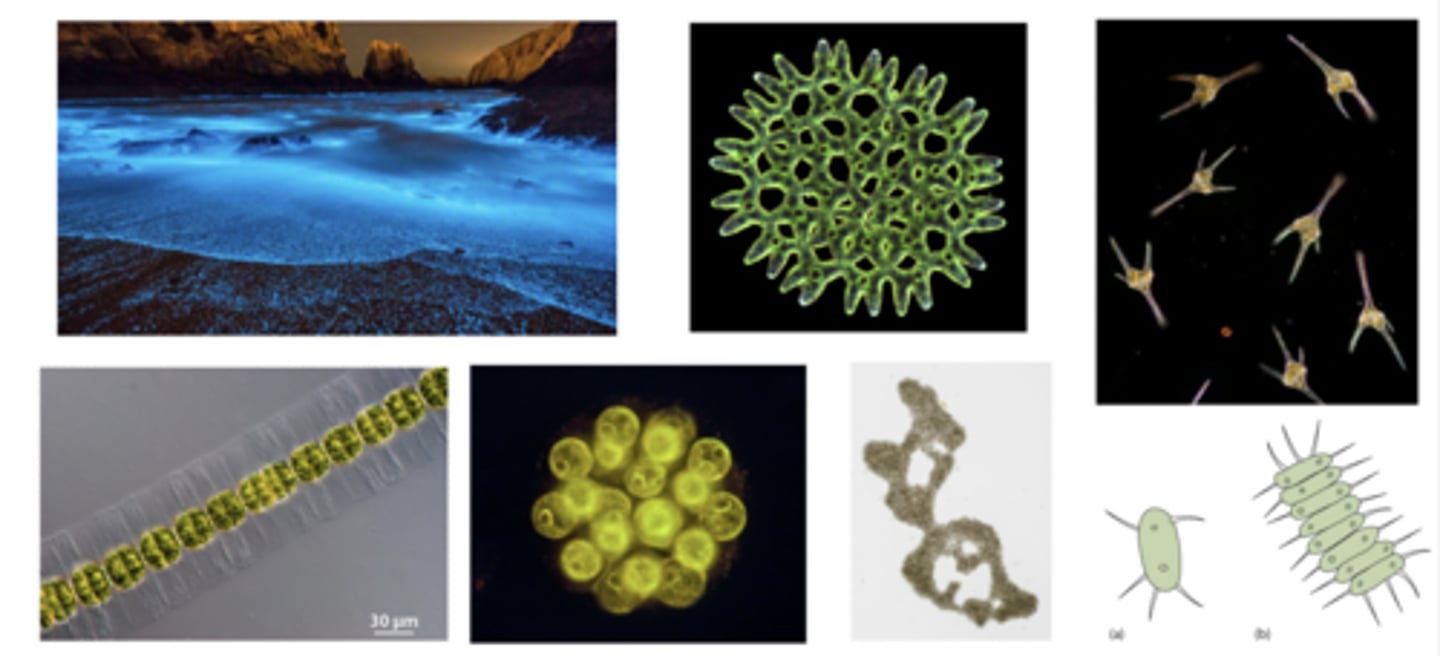
structural defenses
protect algae against herbivory; include gelatinous coatings, horns, spiny projections, and tough cell walls that resist digestion
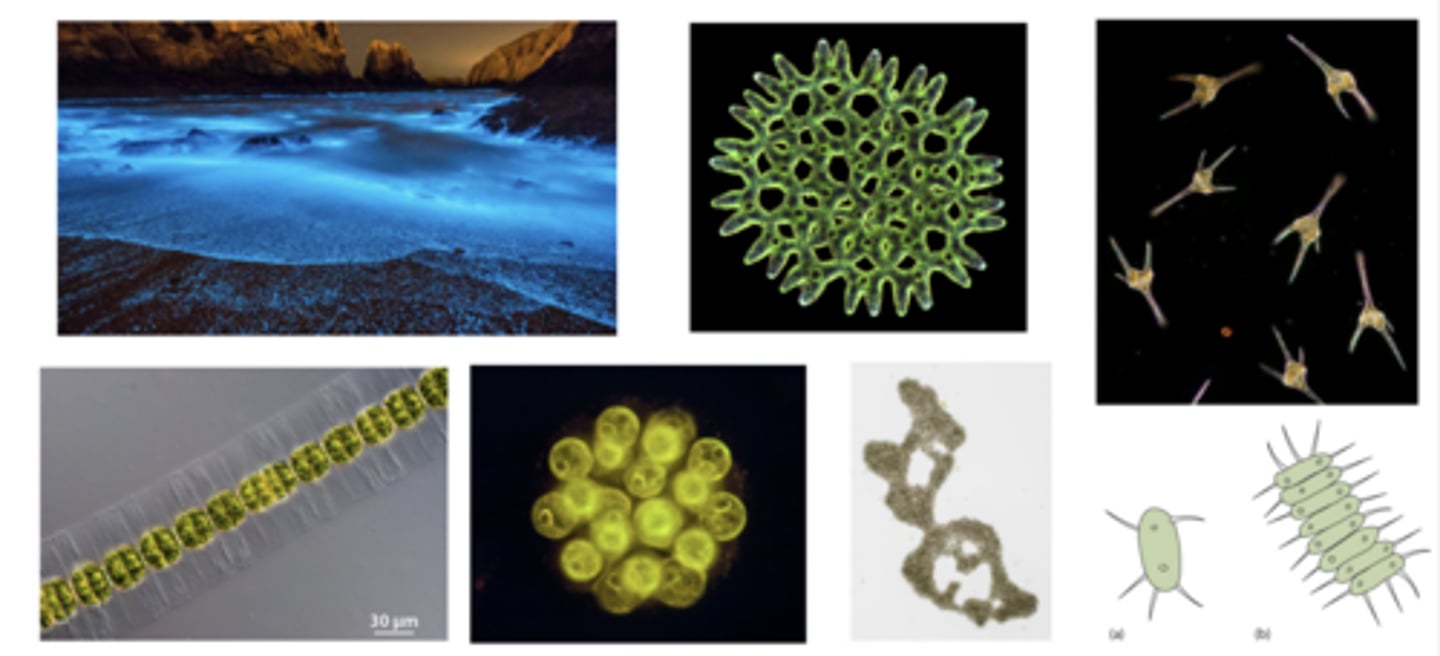
inducible defenses
protect algae against herbivory; i.e. alga will be one to two celled when not exposed to Daphnia, but will be eight celled when exposed to Daphnia
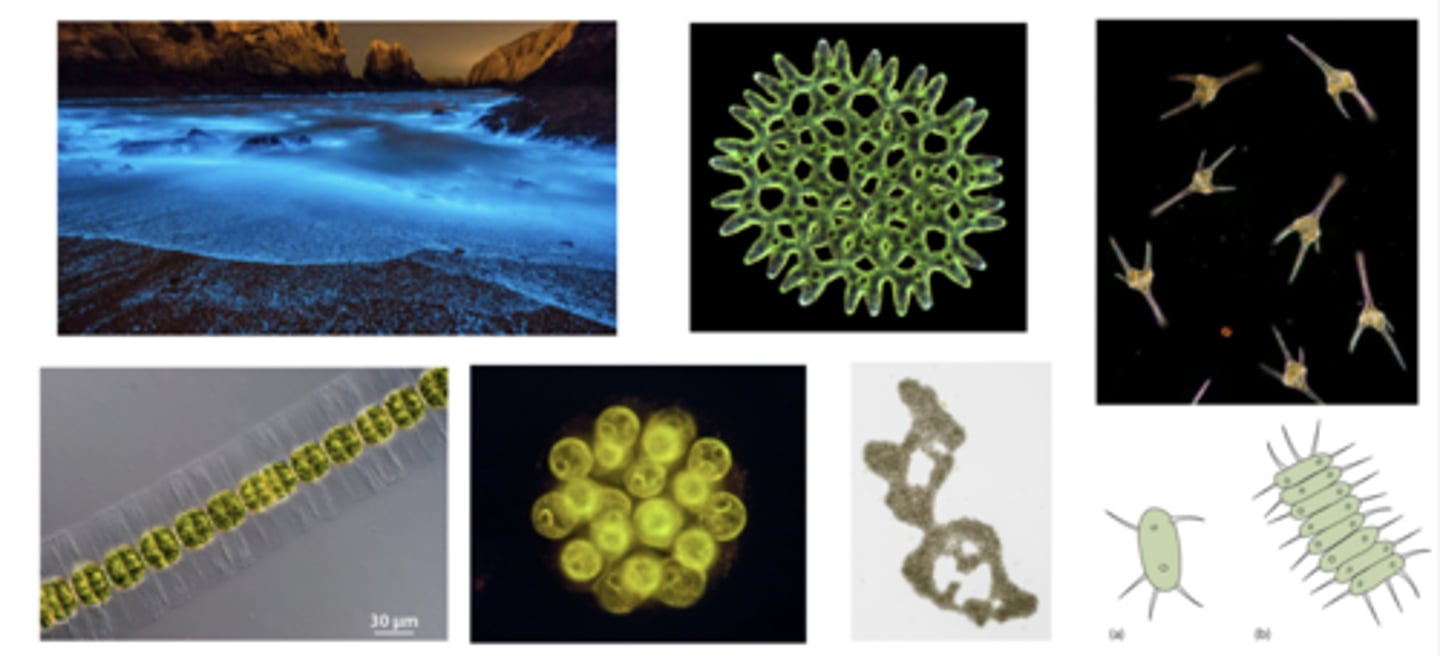
multi-species consortia
mutualisms involving 3 or more partners (types include bacterial, fungal, animal, and plant mutualisms)
bacterial associations with algae
three broad categories:
close associations between microalgae and bacterial cells, macroalgal-bacterial partnerships, and highly structured benthic microbial mats
epibacteria
attached bacteria
fungal associations with algae
lichens (mycobionts with fungi or phycobionts with green algae and cyanobacteria), and cyanolichens; multiple symbioses are more common than previously thought
lichens
stable, self-supporting associations between fungi (mycobionts) and green algae and/or cyanobacteria (phycobionts)
cyanolichens
lichens whos partners include cyanobacteria, of which some produce toxins
phyllosymbia
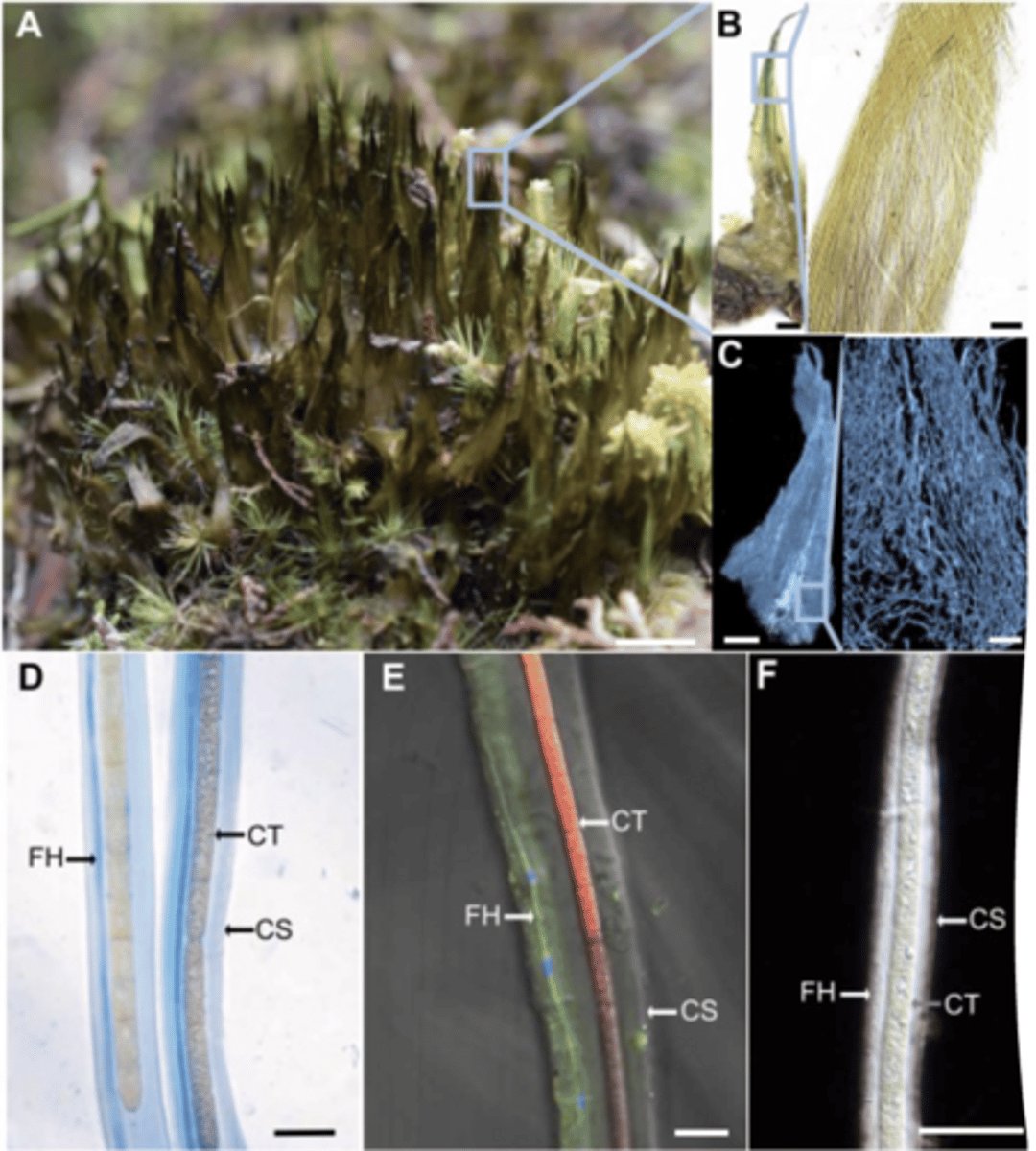
new fungal-cyanobacterial symbiosis with up-right cyanobacterial sheaths surrounding fungal hyphae; usually, cyanobacteria living in fungi
animal associations with algae
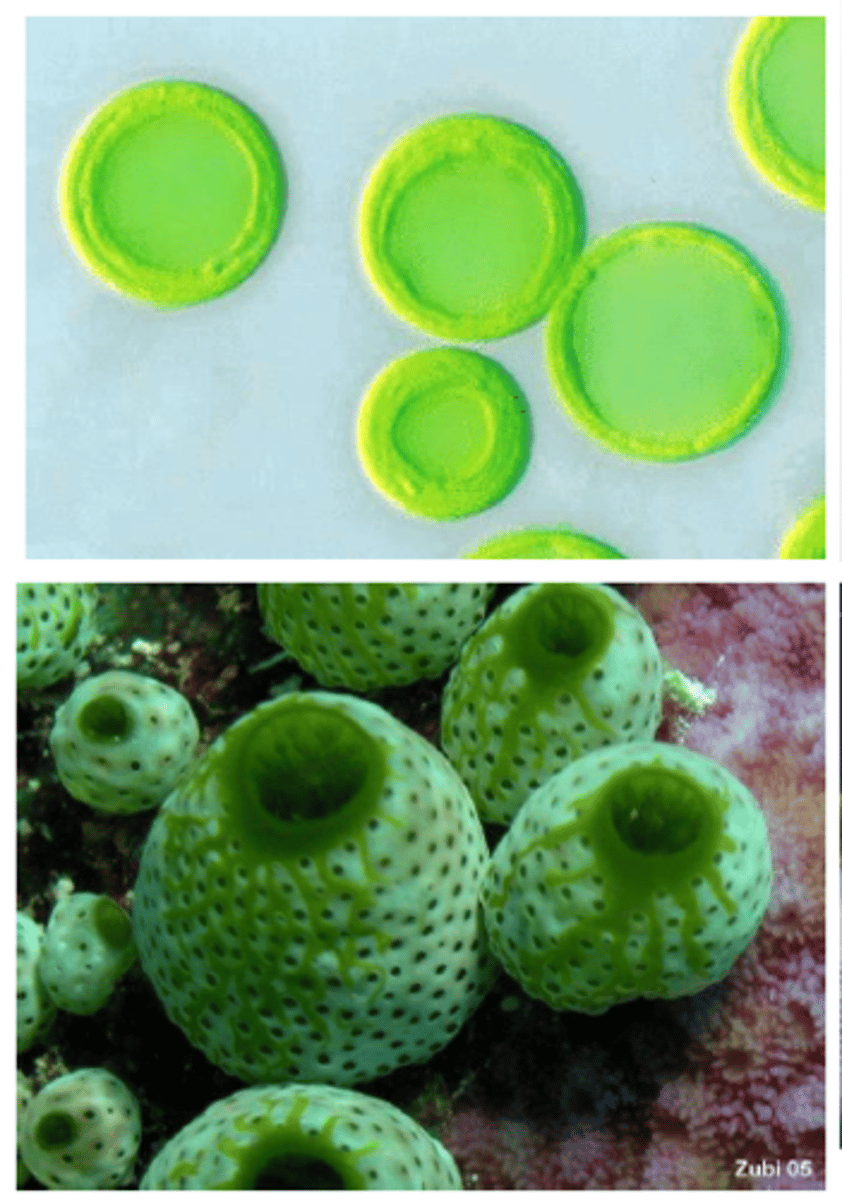
Prochloron (and other algae) within tunicates, and mutualism between sloths, moths, fungi, and algae
E: Prokaryota
K: Bacteria
P: Cyanobacteria
C: Cyanophyceae
Prochloron; has associations within tunicates
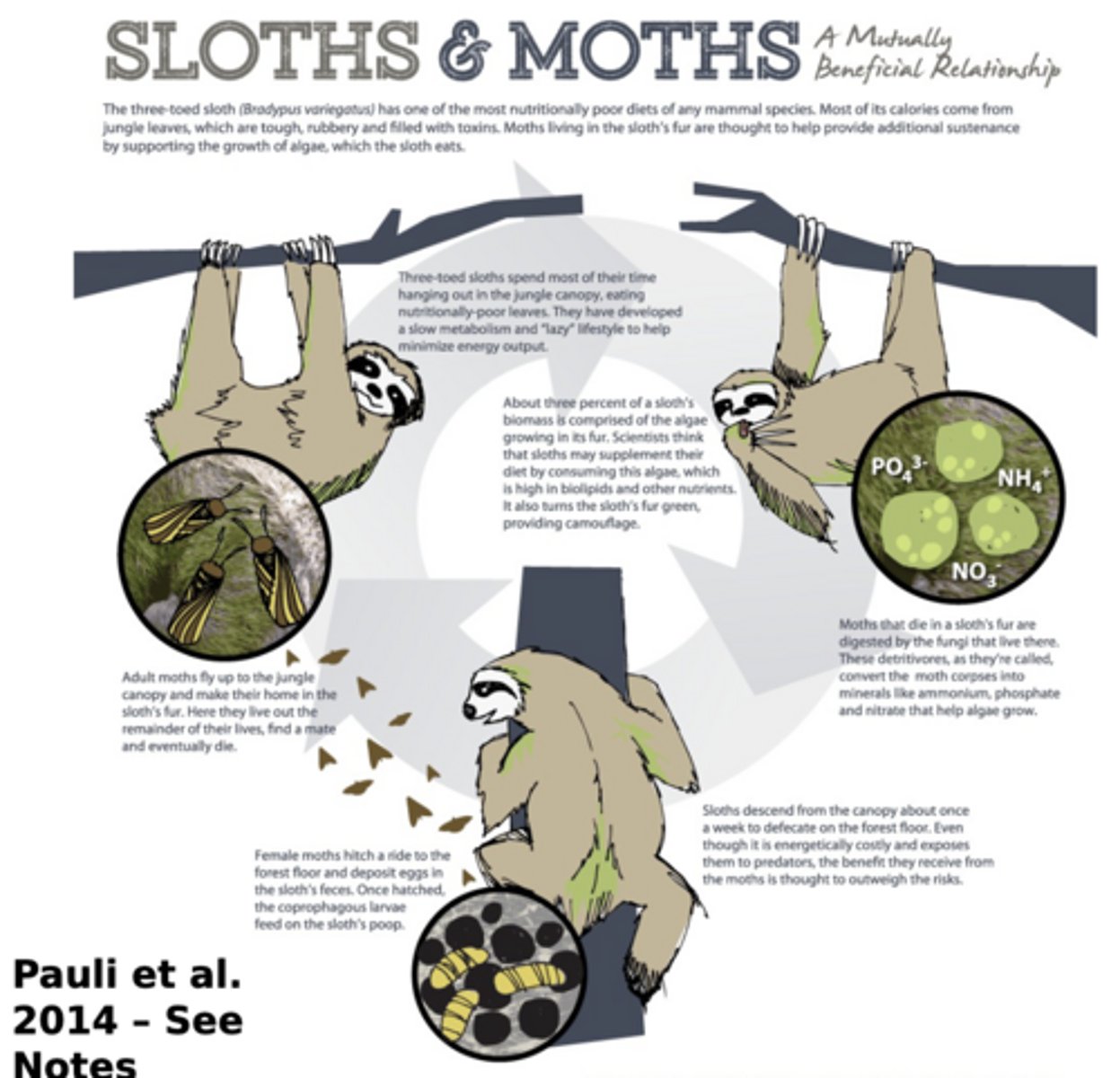
sloths, moths, and algae mutualism
the three-toed sloth has one of the most nutritionally poor diets of any mammal species as most of its calories come from jungle leaves which are tough, rubbery, and filled with toxins. moths living in the sloth's fur are thought to help provide additional sustenance by supporting the growth of algae on the sloth's body which the sloth eats
plant associations with algae
plant species associated with nitrogen fixing cyanobacteria like liverwort, hornwort, moss, ferns, and cycads
why are intertidal zones often described as the harshest habitats on Earth?
its fluctuating conditions on the scale of seconds to minutes! emersion/desiccation, temperature, salinity, light (quality, quantity, UV radiation), dissolved inorganic carbon sources for photosynthesis (CO2 & HCO3), nutrient supply (N & P), and wave motion varies
when the ride recedes, macroalgae are subject to terrestrial conditions
community
for terrestrial plants, interdependent assemblages of species that interact with each other both positively or negatively
macroalgal communities
harder to define compared to terrestrial plant communities! "open" systems affected by "supply-side ecology" meaning communities are open to the effects of other benthic communities which supply it with algal and invertebrate propagules via water currents
how are macroalgal communities characterized?
dynamic, patchy (heterogenous) in space and time, shaped by processes like the physiology of the individuals, biotic interactions (competition and facilitation), supply of propagules, biotic and abiotic disturbance
how are tropical seaweed communities characterized?
warm waters that are thermally stratified, surface waters are oligotrophic (low conc of inorganic nutrients), high light levels, deep light penetration (~268m), high rates of productivity with nutrients tightly recycled, and higher rates of herbivory than temperate or polar regions (warmer waters, higher herbivory)
what are examples of tropical habitat-forming communties?
coral reefs with Symbiodinium, seagrass beds mixed with psammophytic macroalgae, Halimeda meadows and beds, and other siphonous green macroalgal beds, nongeniculate coralline algae (glue of the reef), rhodolith beds, algal turf communities (phase shifts), tropical fucoids (Sargassum beds), and foliose macroalgae
psammophytic
sand-dwelling
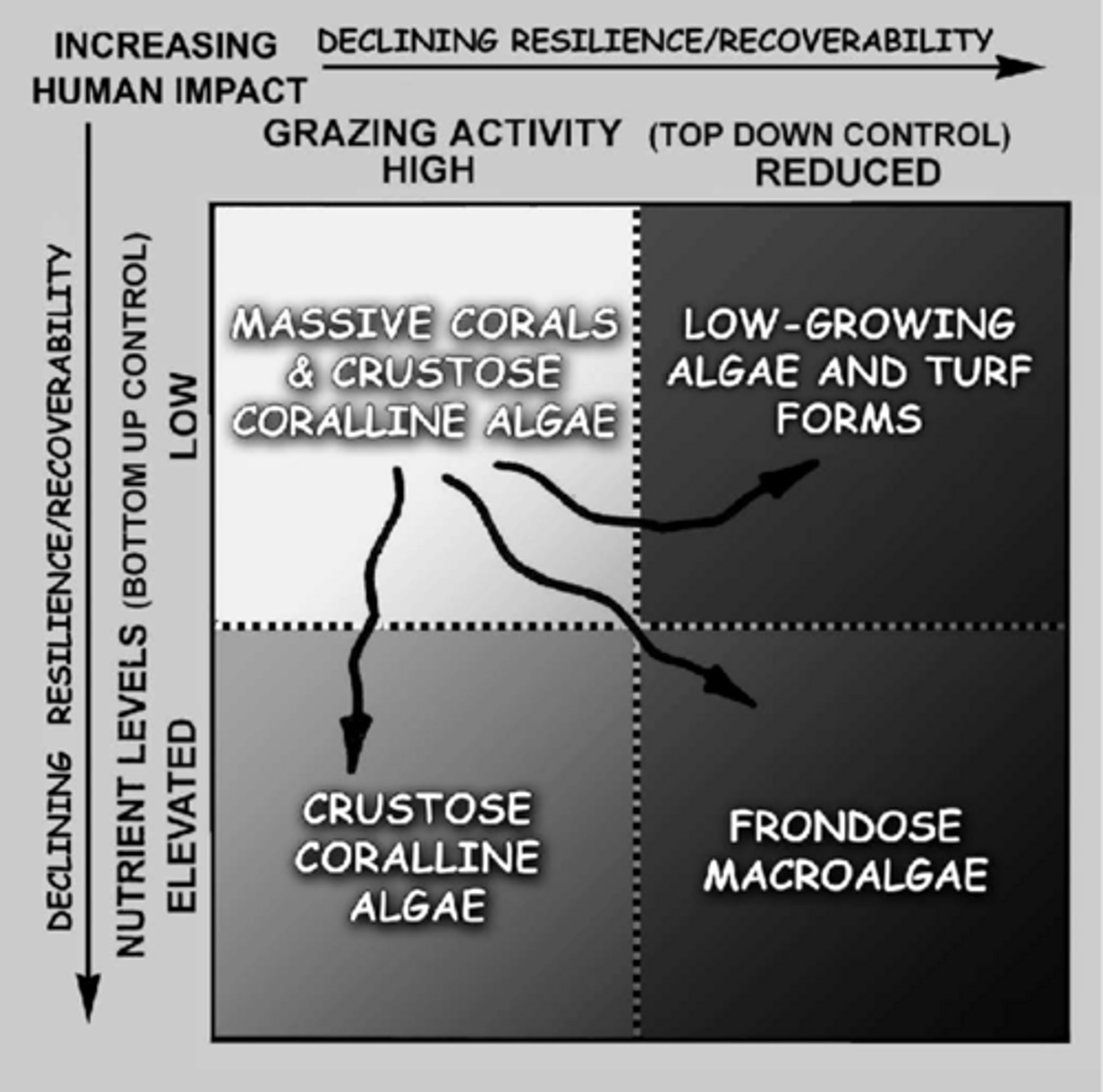
relative dominance model
predicts which groups will be predominant under the complex interacting vectors of eutrophication and declining herbivory (anthropogenic) on coral reefs
can also be caused by large-scale stochastic (random) disturbances, which coral reefs have recovered from in absences of humans
how are temperate seaweed communities characterized?
progressive seasonal cycles of light and temperature with seasonal stratification, dominated by large, canopy-forming brown seaweeds (i.e. Fucales or Laminariales), canopies modify the local environment, and grazers like sea urchins and amphipods
how do macroalgae (kelp) canopies modify the local environment?
reduce light and create light flecks (increase heterogeneity of the light environment), reduce seawater velocity, and compete for space with invertebrates, but also create habitat for invertebrates and other macroalgae
how are polar seaweed communities characterized?
50% lower annual irradiance than temperate and tropical regions (~8 months of darkness), available light is dependent on thickness of sea ice, melting ice can cause a decrease in salinity, surface seawater temps are low, seawater nutrients are generally high, and is shaped by the physical disturbance of ice scouring and iceberg stranding
how are polar seaweed communities in Antarctica characterized?
33% of macroalgae are endemic (native), extensive canopy-forming brown seaweeds (Desmarestiales), diverse understory of greens, reds, and browns, and is the only continent with no Laminariales
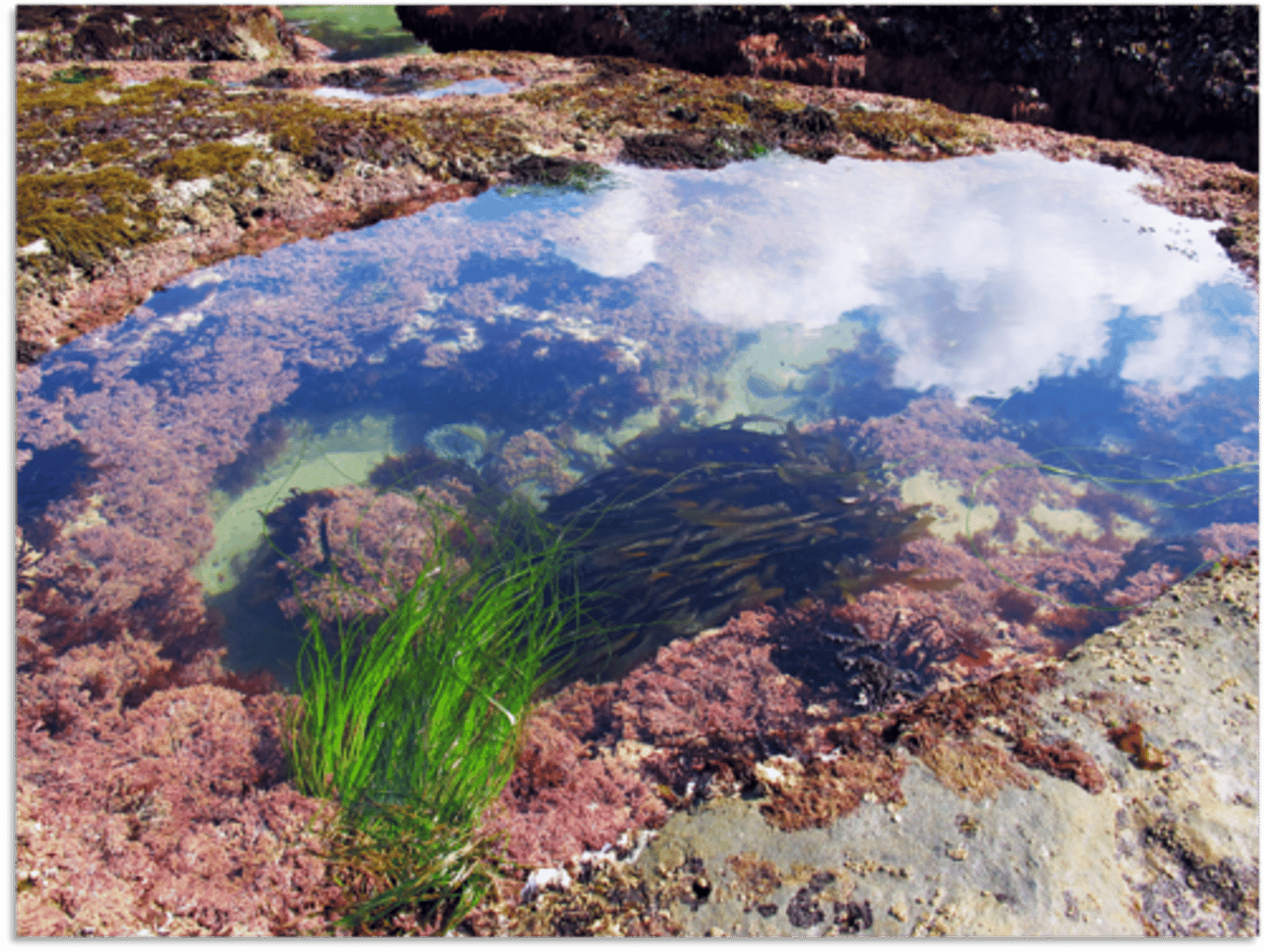
how are tide pool seaweed communities characterized?
stressful environments depending on size and depth, can have rapid changes in temperature, pH, salinity, nutrients, and oxygen concentration
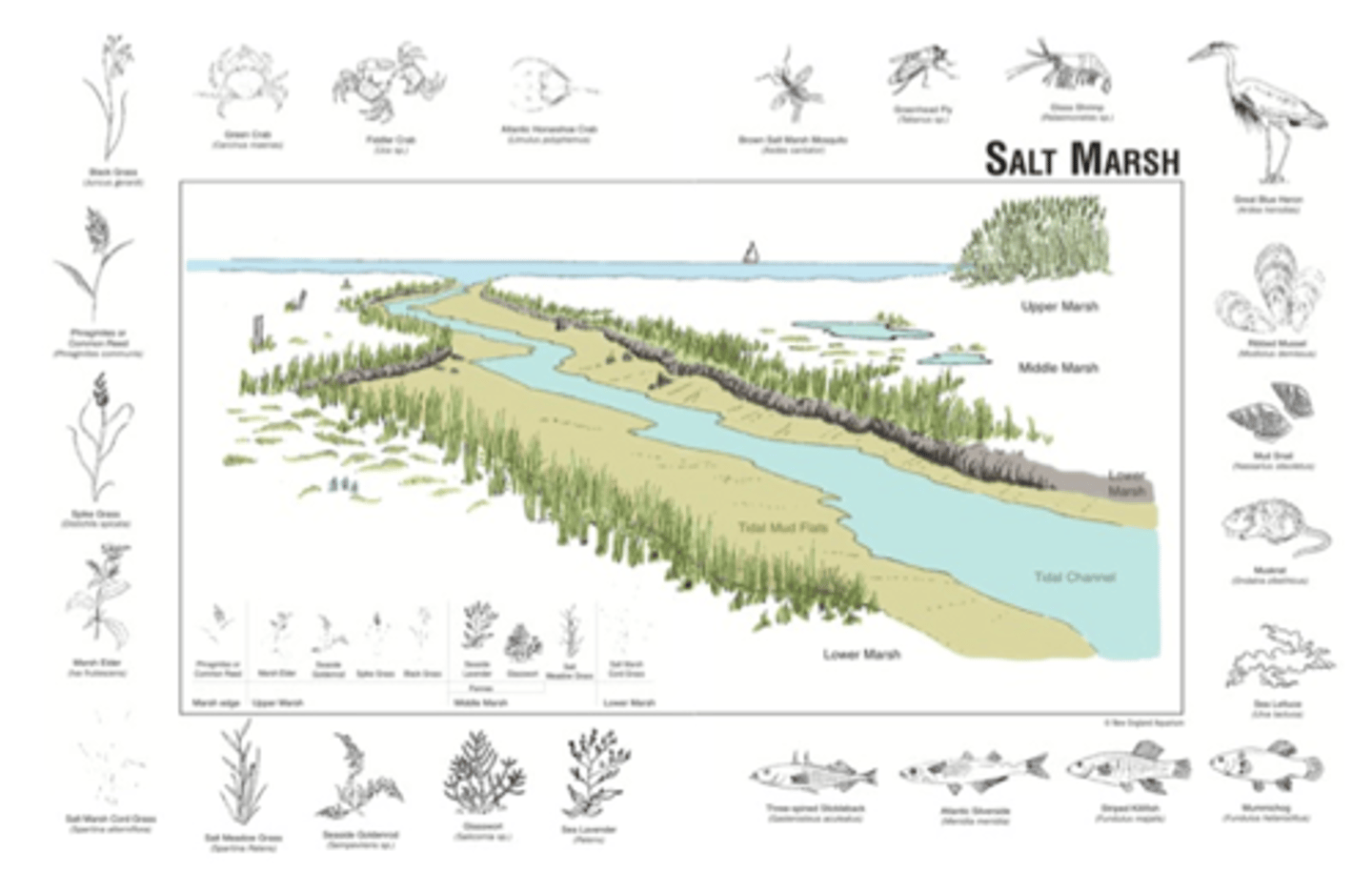
how are estuaries and salt marsh seaweed communities characterized?
horizontal gradients of salinity, typically tidal with a "salt-wedge" of low-density freshwater on top of denser seawater, temperature differences of river versus seawater, periodic exposure with tides, typically turbid with high sedimentation and high nutrients, low light, and soft sediment that is dominated by benthic microalgae (diatoms) and some filamentous branched macroalgae
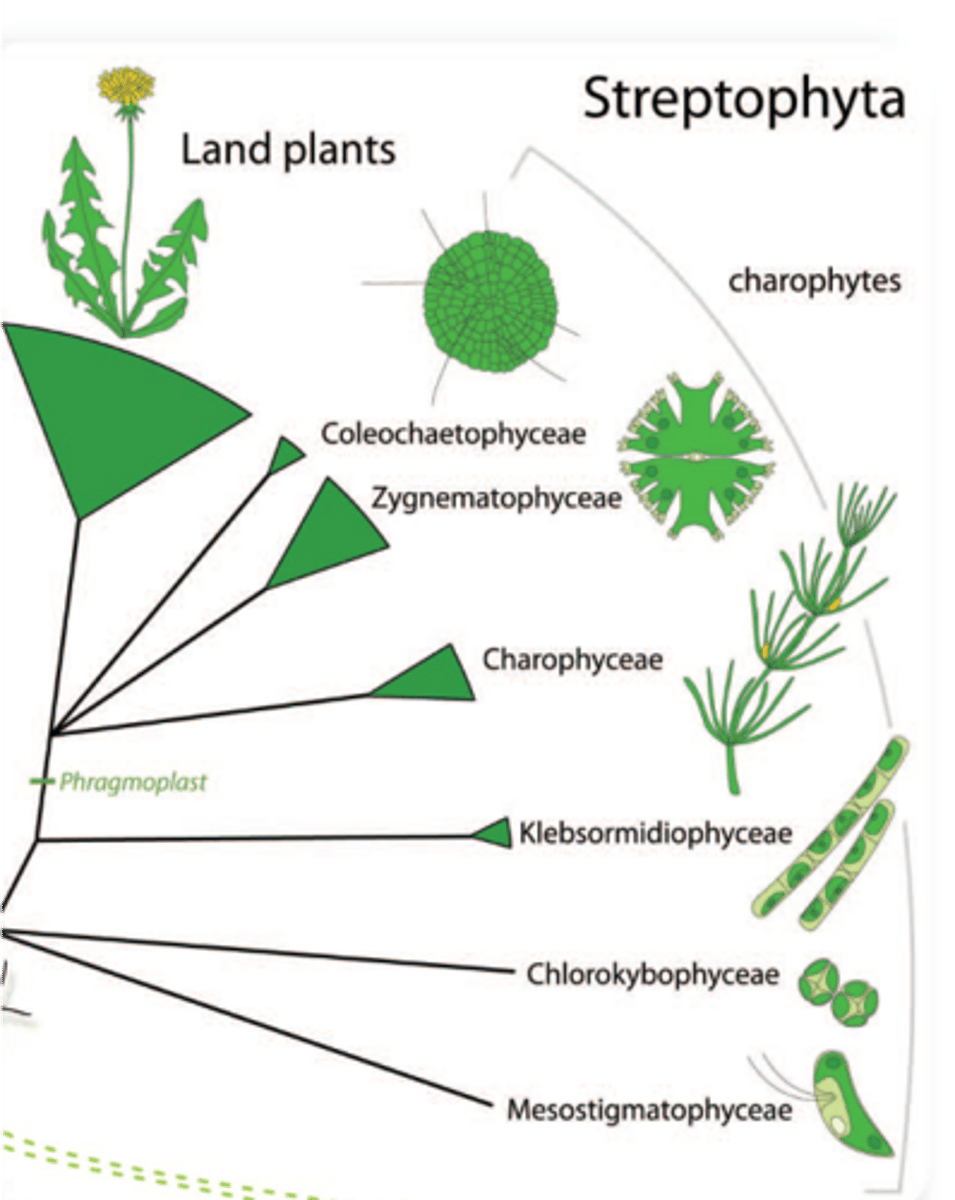
Chlorophyta
comprises most green algae described and all green marine microalgae
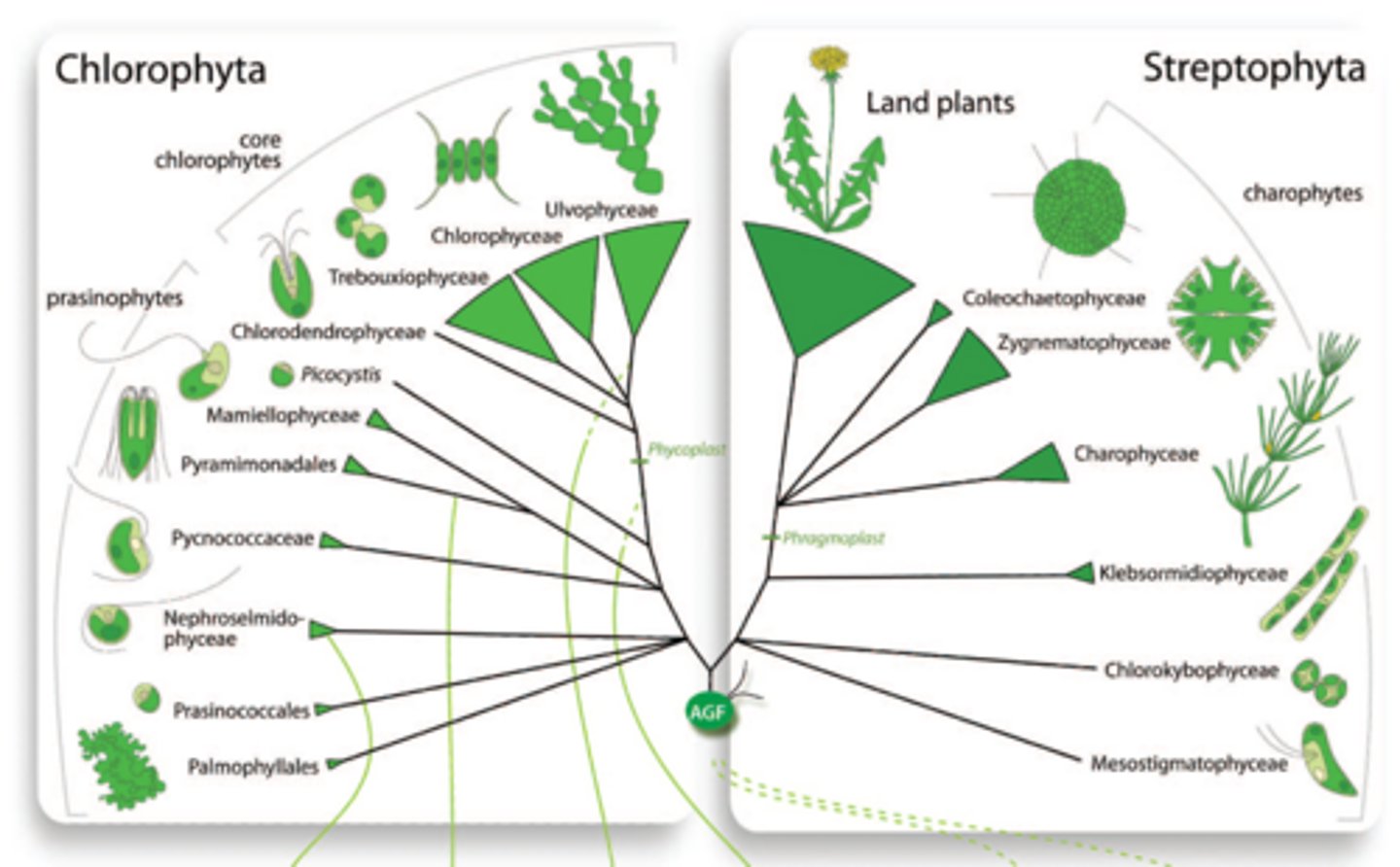
Streptophyta
comprises primarily small freshwater algae and all land plants (embryophytes)
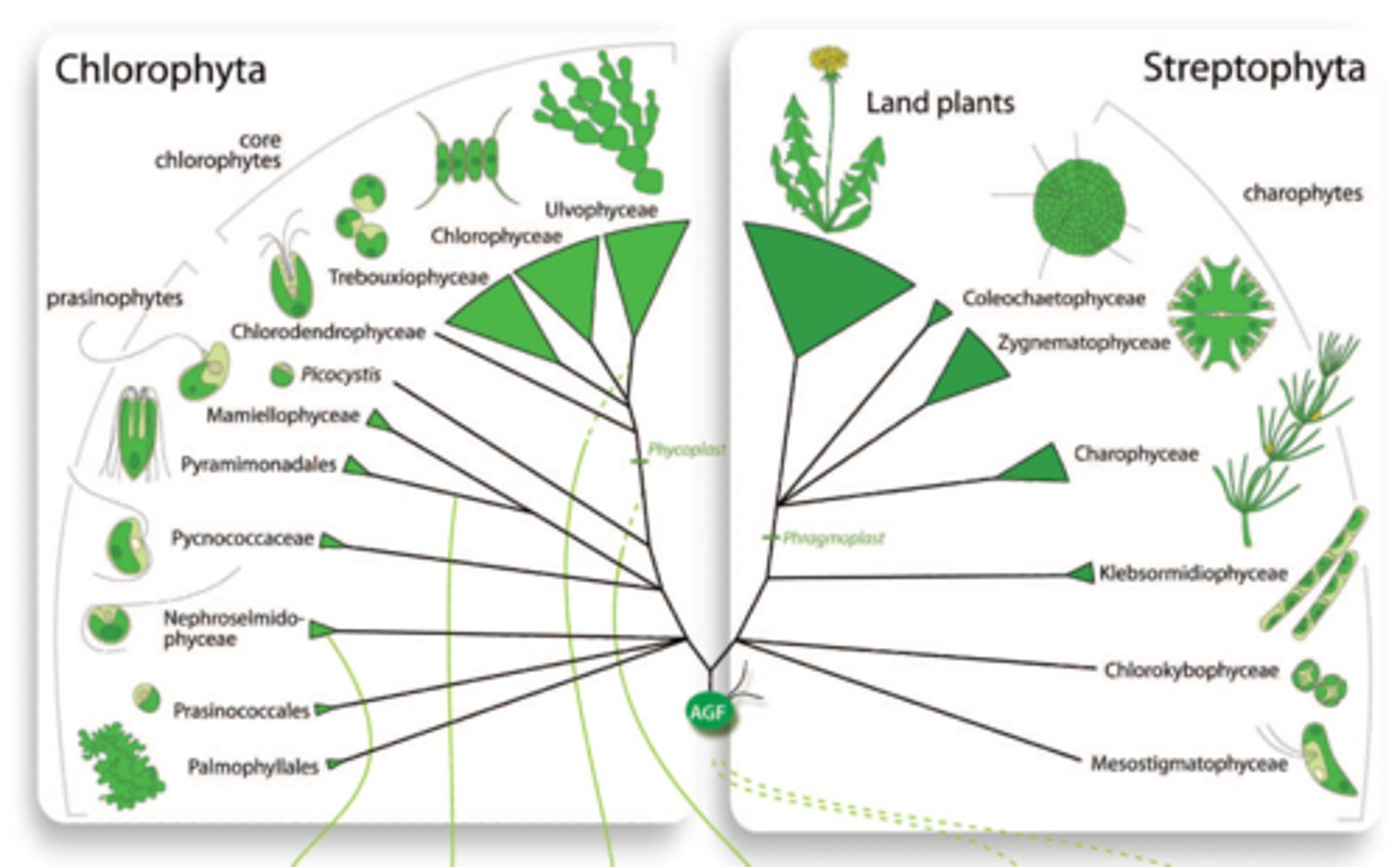
Streptophyte algae general characteristics
predominantly freshwater, though some can be found in brackish conditions, one billion years old, flagellated and unflagellated unicells and filamentous morphologies, most follow zygotic meiosis, cellulose-rich cell walls, plant-like starch used for energy storage, and stellate structure of microtubules at the base of flagella
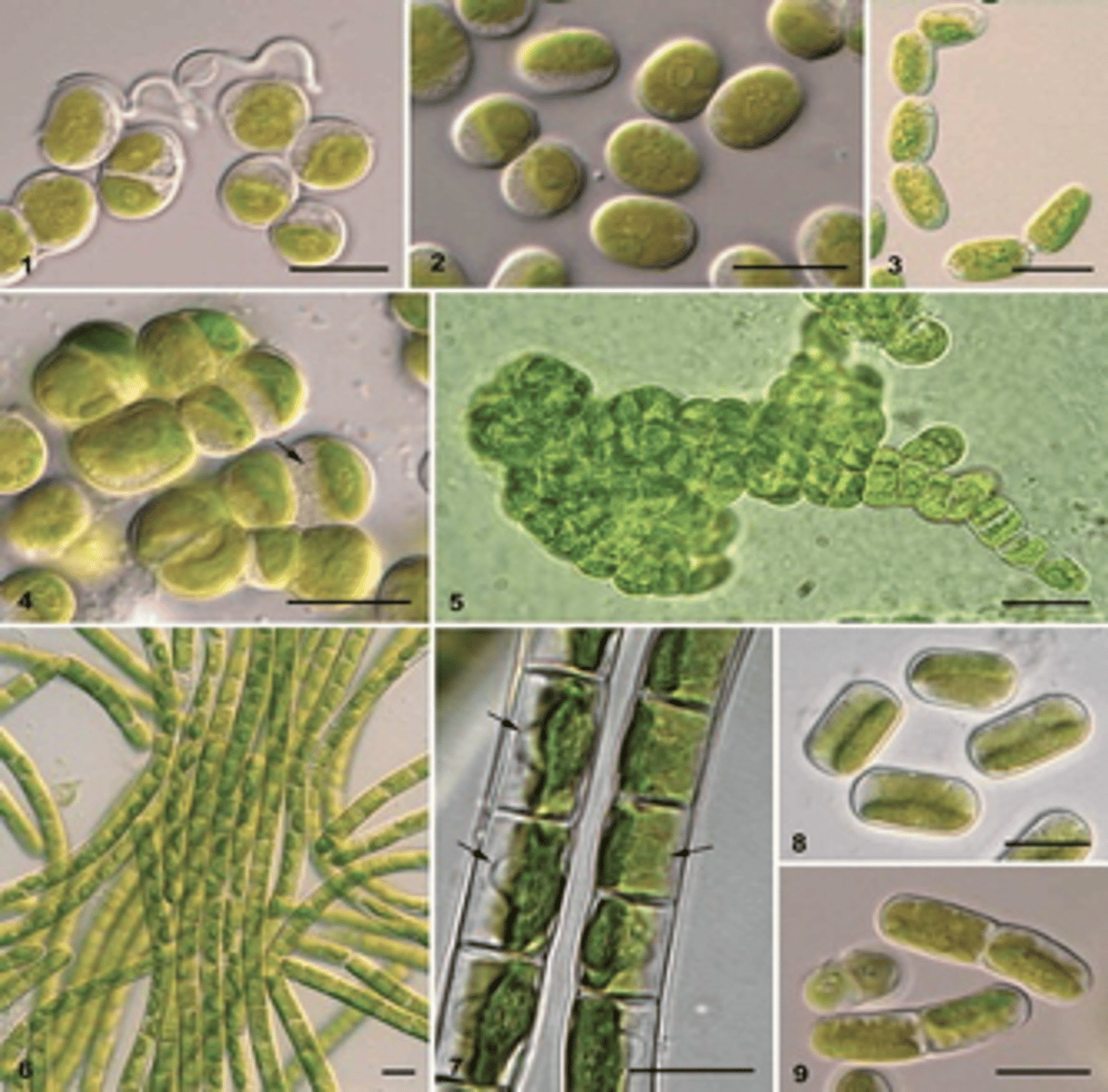
Streptophycean algal morphologies
branched filaments, unbranched filaments, and unicells
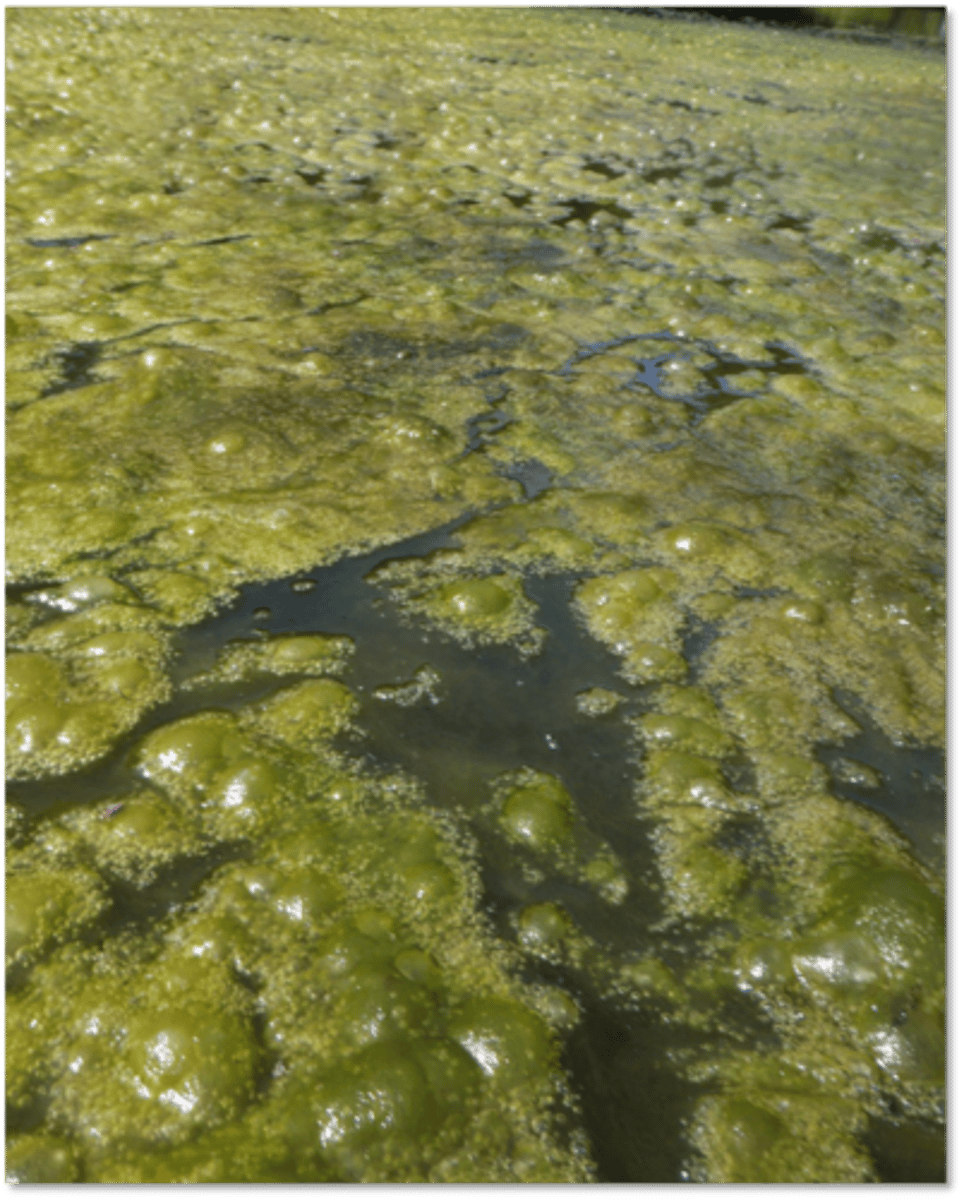
Streptophyte ecology
cosmopolitan distribution and fast growth rates, often ruderal, used to monitor for eutrophication in freshwater systems, and thick mats that trap air bubbles and float, covering the surface and shading out benthos
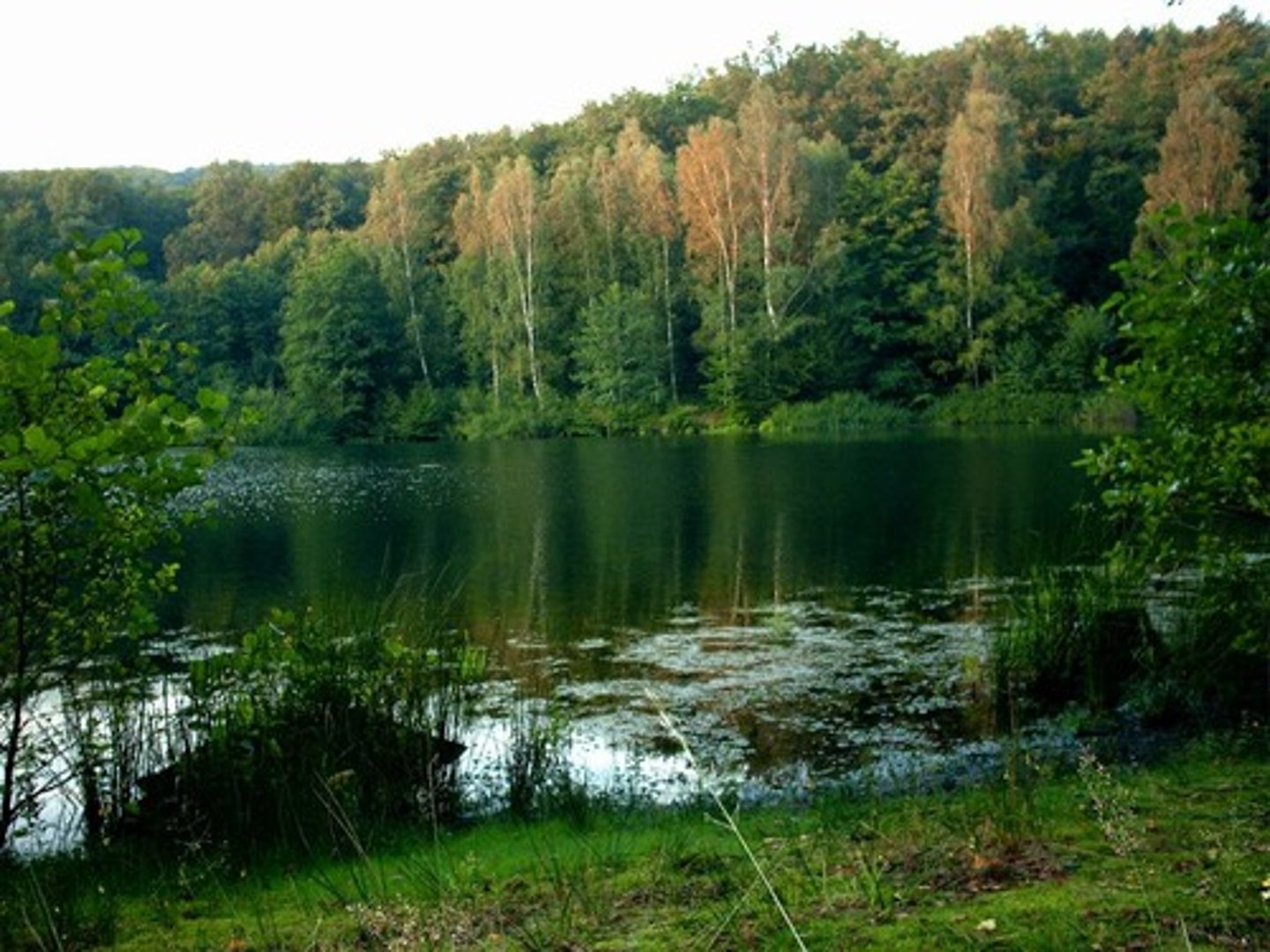
ruderal
weedy in behavior, growing in disturbed areas, have a quick growth cycle and rapid reproduction
why are all land plants green?
green algae have unique photosynthetic machinery, structural components, genetic components, flagella, and they've been around for over a billion years
Phragmoplastophyta
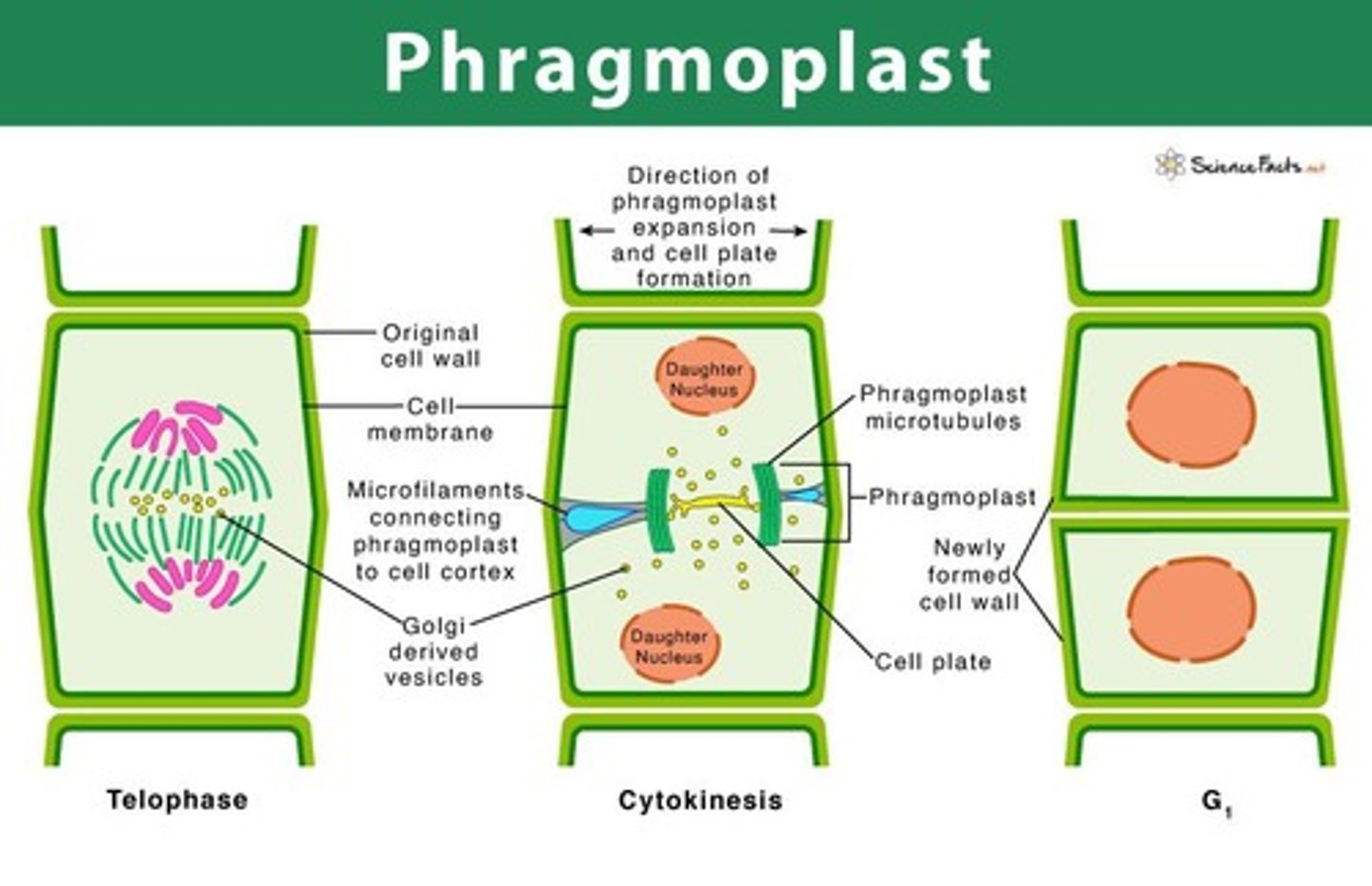
a proposed clade within streptophyta composed of the lineages with phragmoplasts
phragmoplasts
a specialized structure used in cytokinesis to separate two new cells, builds a new cell membrane starting from the inside and moving outwards to the parental cell wall
found in the Charophyceae, Zygnematophyceae, Coleochaetophyceae, and Embryophyta
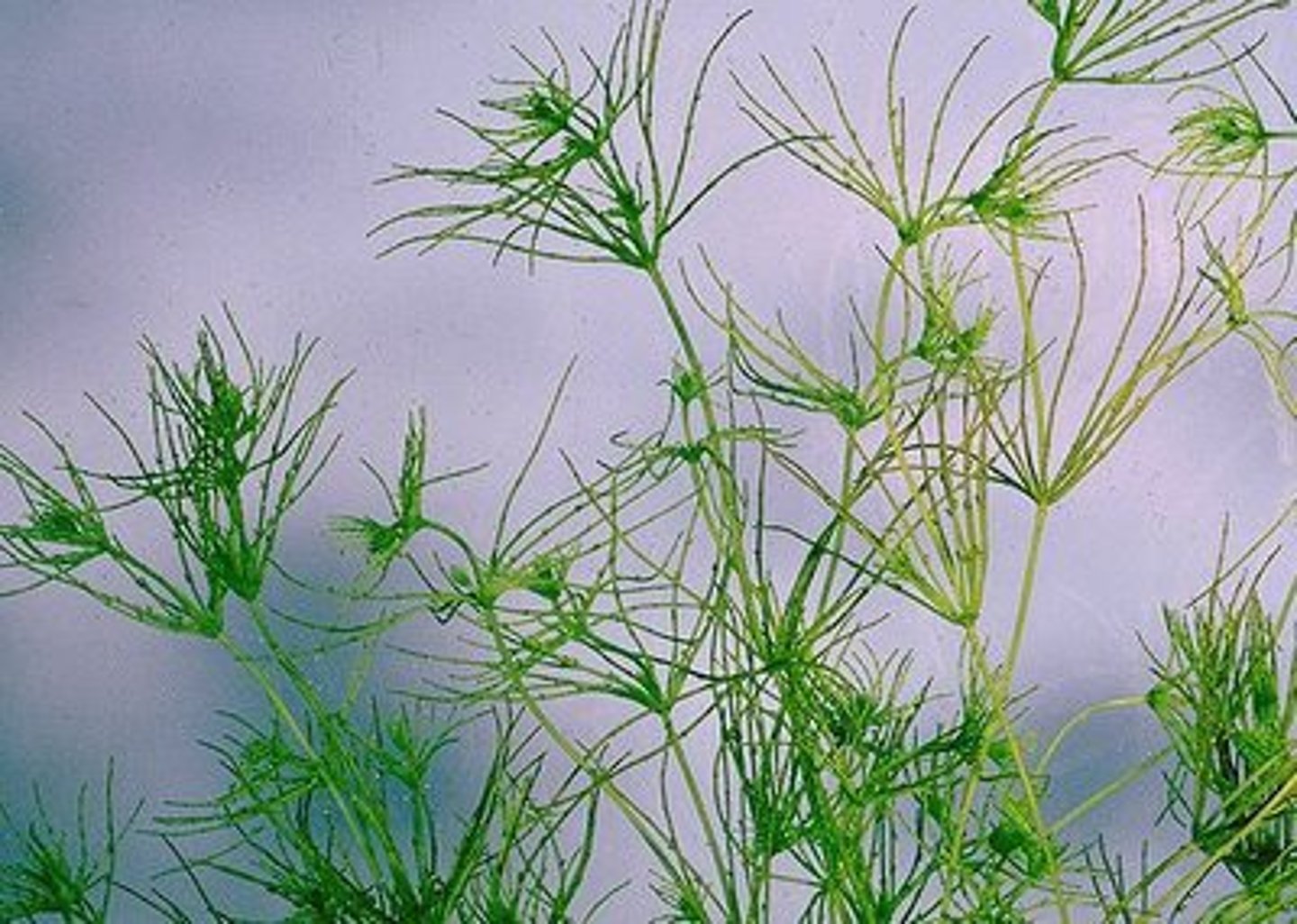
Charophyceae
stoneworts; found in fresh and brackish water, biaccumulate calcium carbonate giving them a gritty texture, have well-studied lifecycles, and are historically thought to be the closest lineage to embryophytes (land plants)
Zygnematophyceae
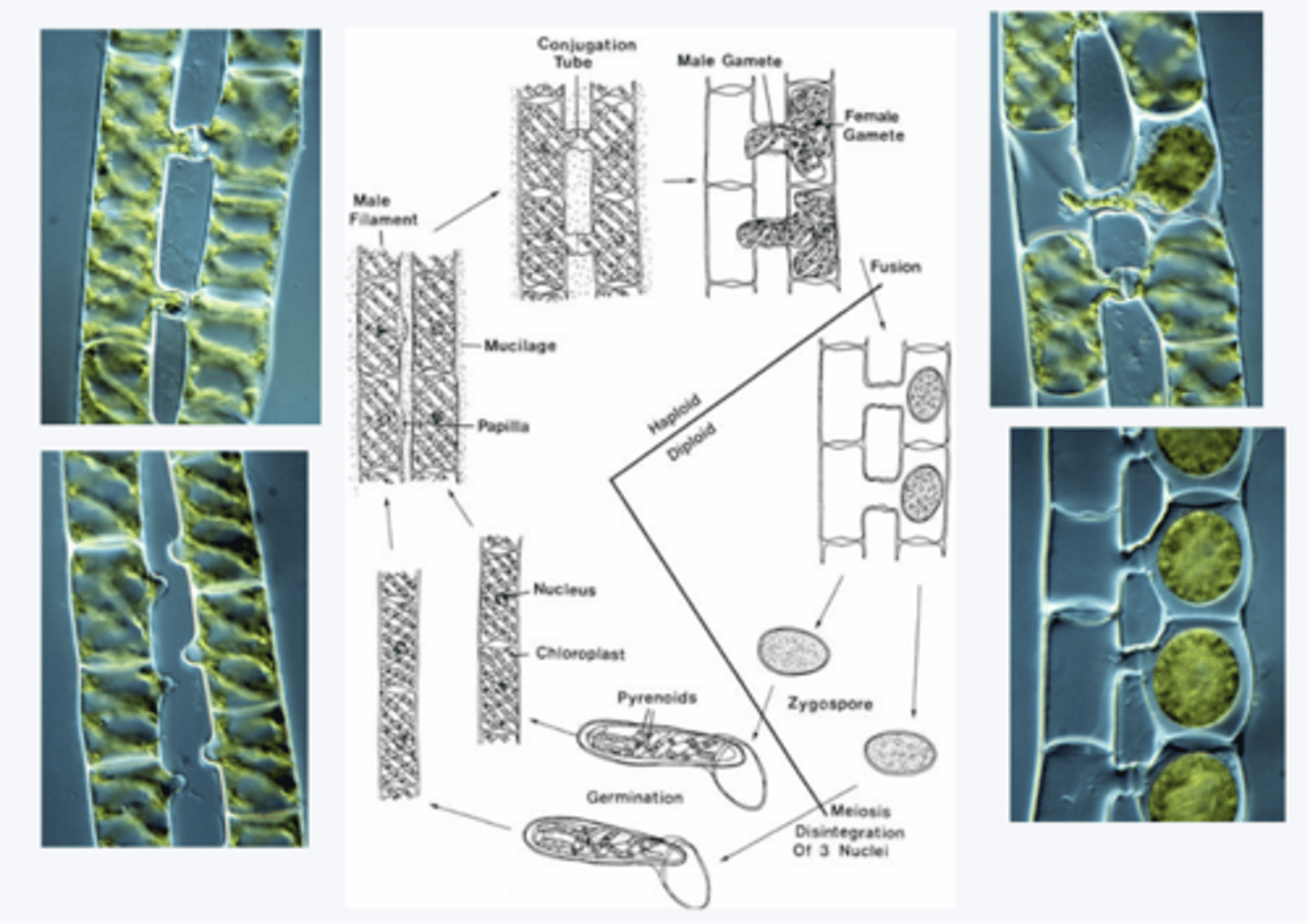
missing link between algae and land plants; multiple molecular, genomic, and proteomic studies have determined that these are significantly more like land plants than Charophyceae
known as conjugating algae, uniseriate filaments or unicells, have stellate, spiral, or axial plate plastids, filamentous taxa form conjugation tubes when sexually reproducing
C: Zygnematophyceae
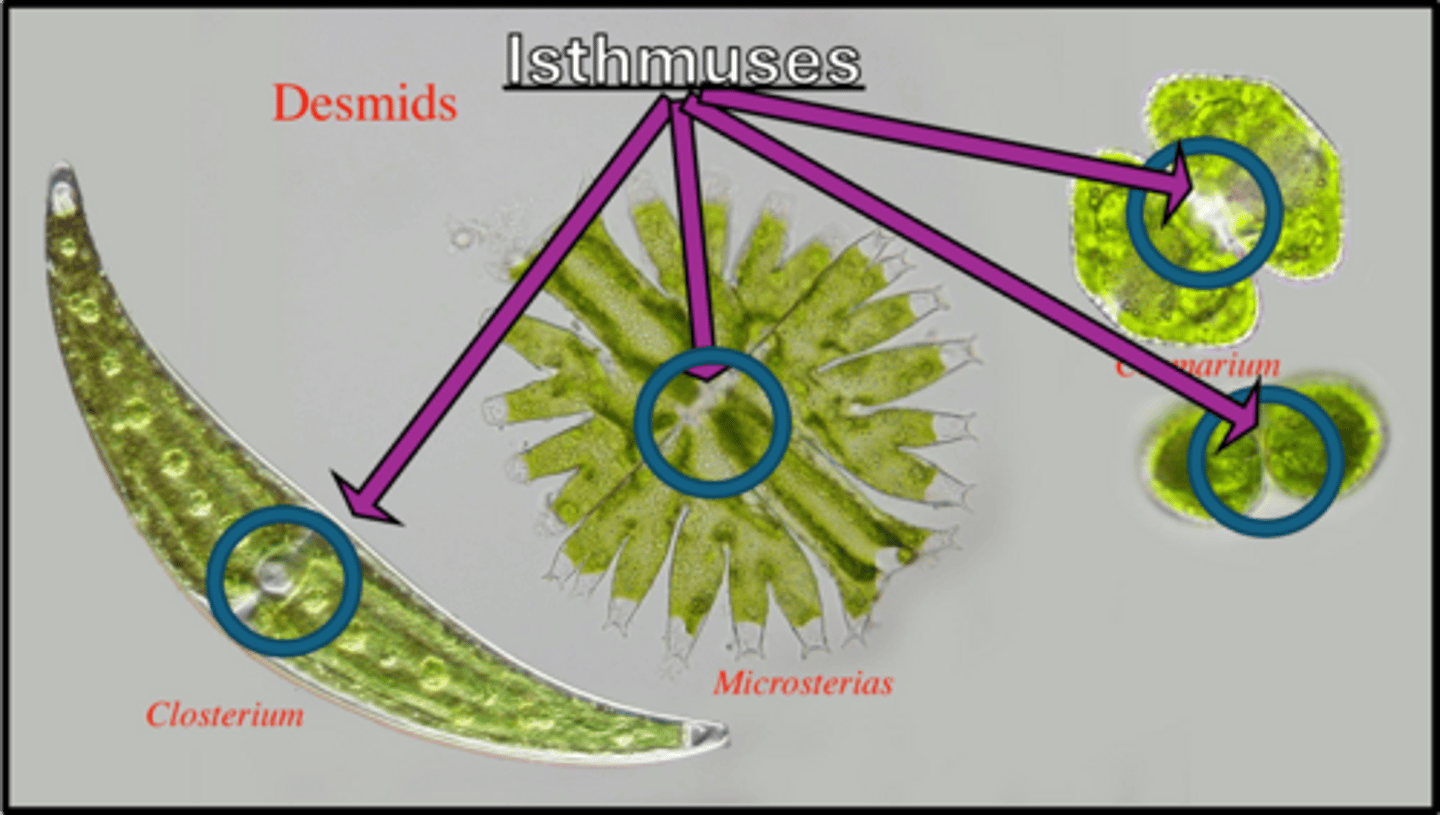
O: Desmidales
desmids; famous for their "mirror image" appearance of cells, nuclei are located in the isthmus (connection of cells), have two folded plastids per cell
what makes the Zygnematophyceae so special?
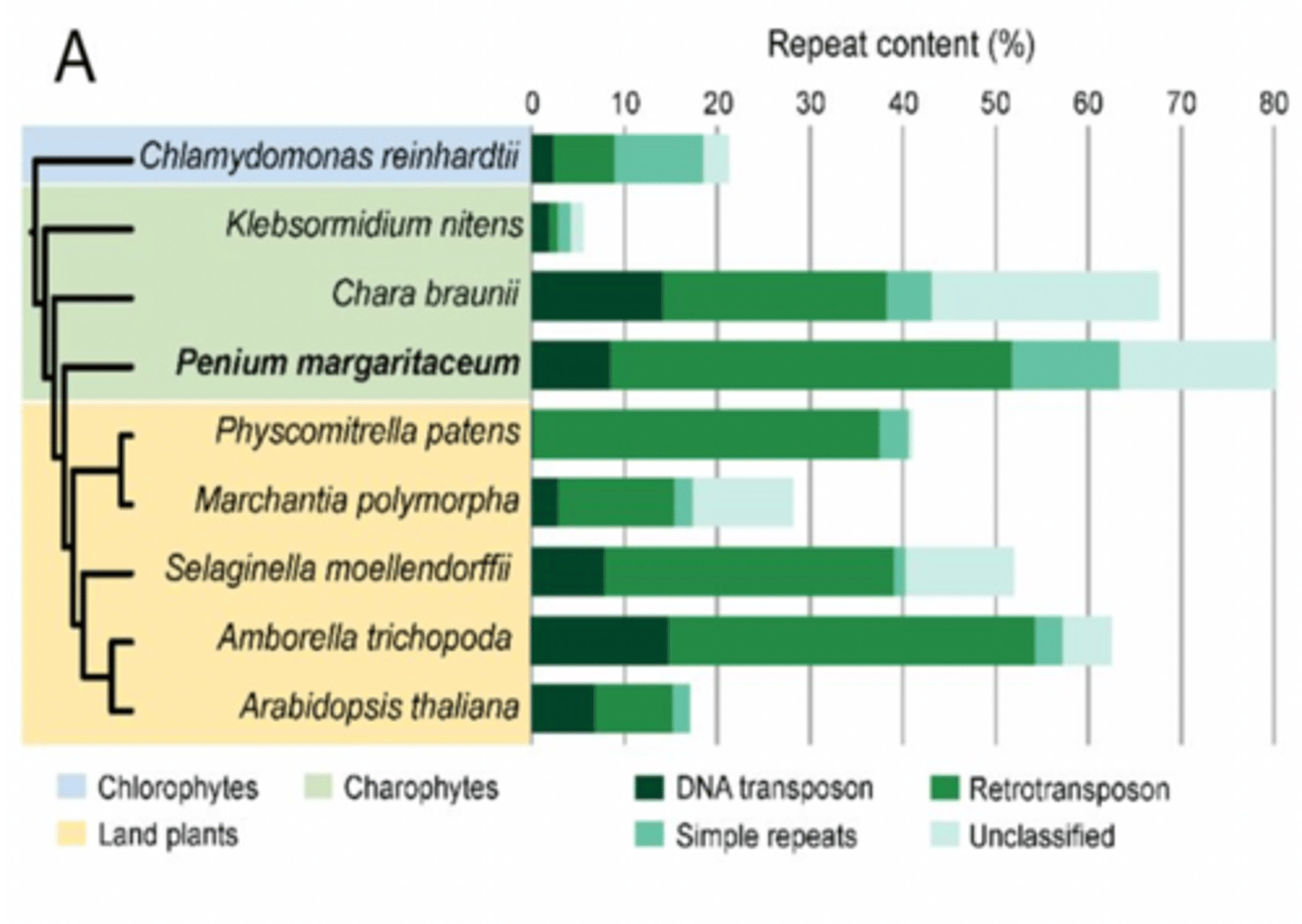
high abundance of retrotransposons in the genome of the desmid Penium margaritaceum, which may have allowed ancestral Zygnematophyceae to "customize" their genomes to develop the morphological and physiological traits needed to survive on dry land
retrotransposons
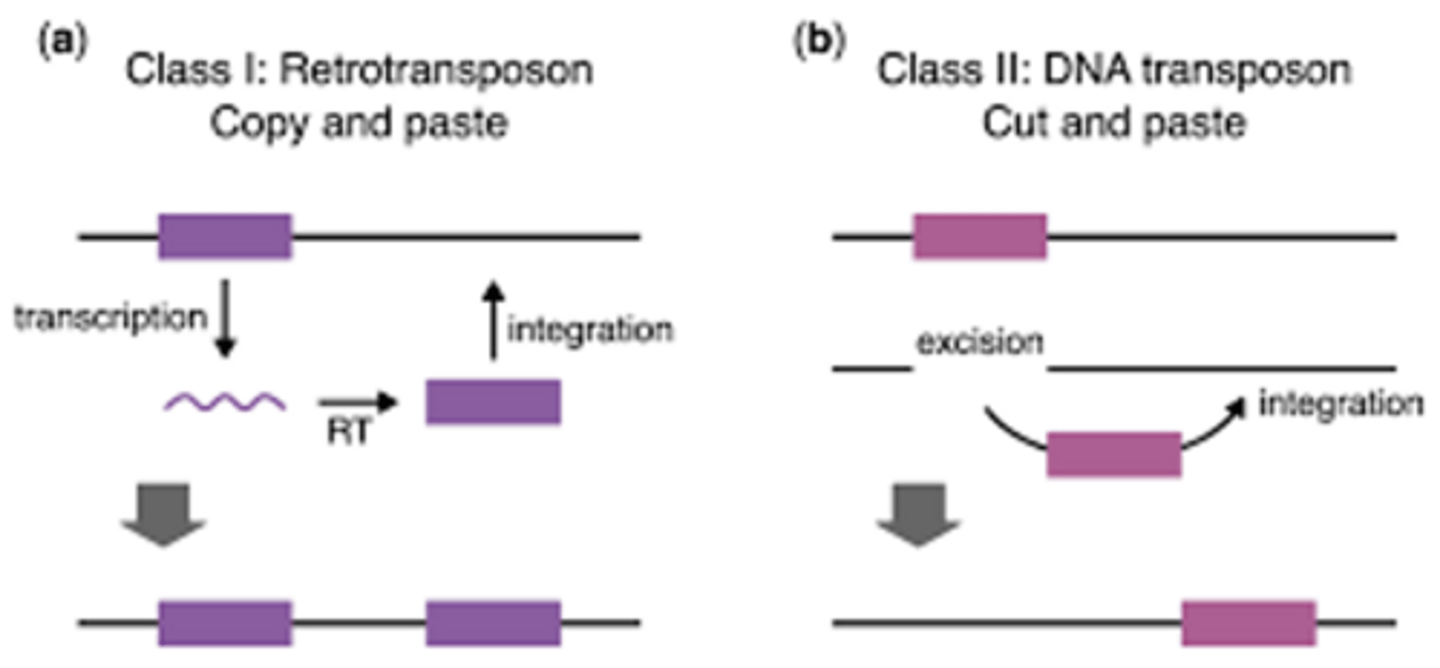
segments of DNA that can "jump" around an organism's genome; can be copied and have the copy inserted elsewhere (class 1), or be excised and translocated (class 2)
allow for rapid modification of entire genomes and genome plasticity (like legos!), high degrees of customization and plasticity in a genome
terrestrialization
the colonization of dry land by previously aquatic organisms; the final frontier for algae
stresses of terrestrialization
dry land is not the same as underwater! early-diverging land plants had to deal with several new stressors like high light levels, less water, less nutrients, and navigating terrestrial reproduction
high light levels on land
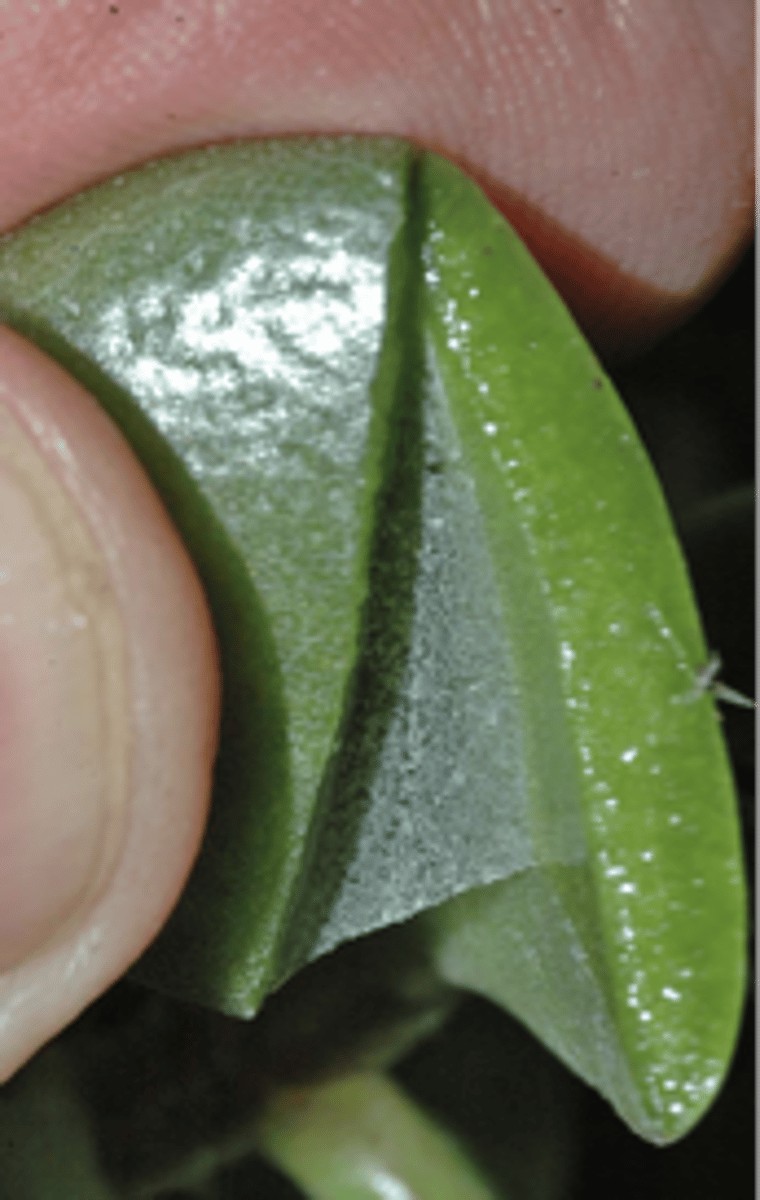
increased levels of UV radiation increased risk of desiccation and physical damage; adapted cuticles and flavonoids!
cuticle
waxy, hydrophobic external layer that prevents water loss; adaptation to land after terrestrialization
flavonoids
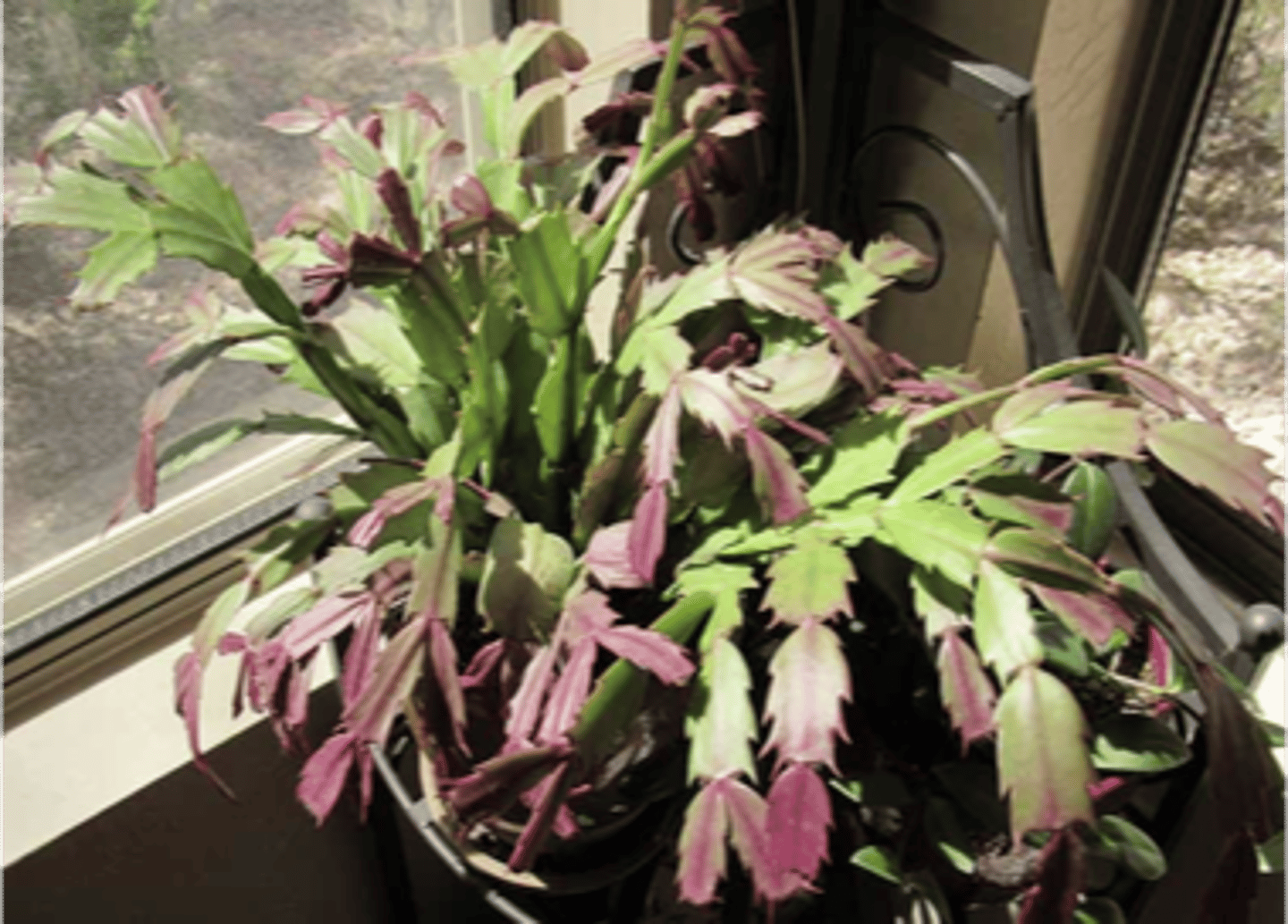
accessory pigments that can provide protection from photoinhibition from excessive light; adaptation to land after terrestrialization
do not require nitrogen like MAAs, so plants can use the nitrogen for other physiological needs
produced by Embryophytes (land plants)
mycosporine-like amino acids (MAAs)
produced for photoprotection against high light levels on land; require nitrogen which is limited on land compared to water
produced by Zygnematophytes
low water levels on land
early diverging Zygnematophytes needed to prevent themselves from drying out when exposed to air. early land plants likely lived in moist environments where water could diffuse into their tissues (Bryophytes); also adapted cuticles to keep water in tissues
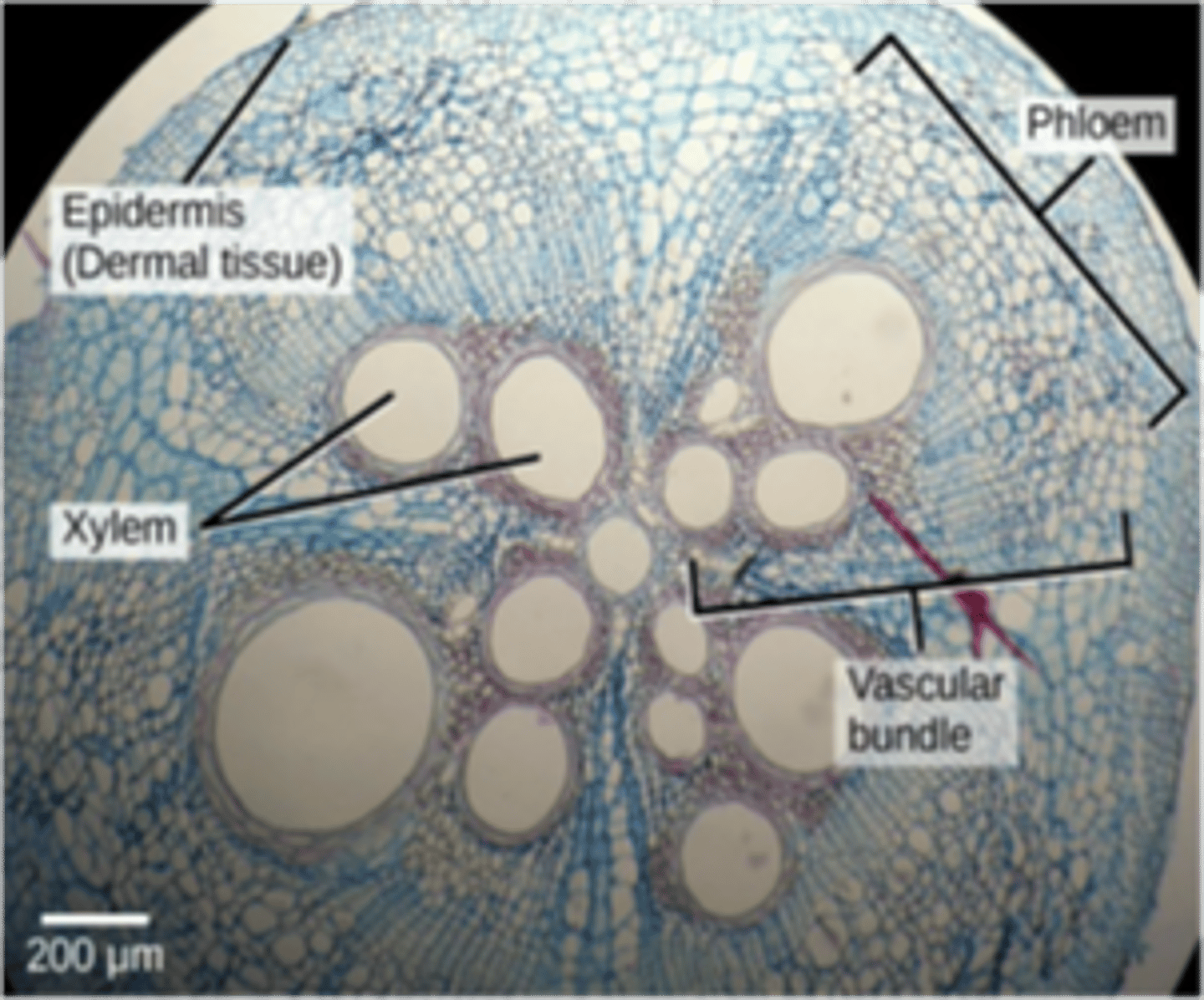
vascular tissue
specialized vessels that transport water and various solutes through the plant (i.e. xylem and phloem!), allowed for more efficient internal transport of water and allowed plants to reach new heights
reproduction on land
early embryophytes relied heavily on water for sexual reproduction (spore transportation, avoiding dessication), while modern basal land plants (bryophytes and come pteridophytes) require constant moisture
desiccation-resistant spores and eventually extremely durable seeds minimized the need for constant water for reproduction
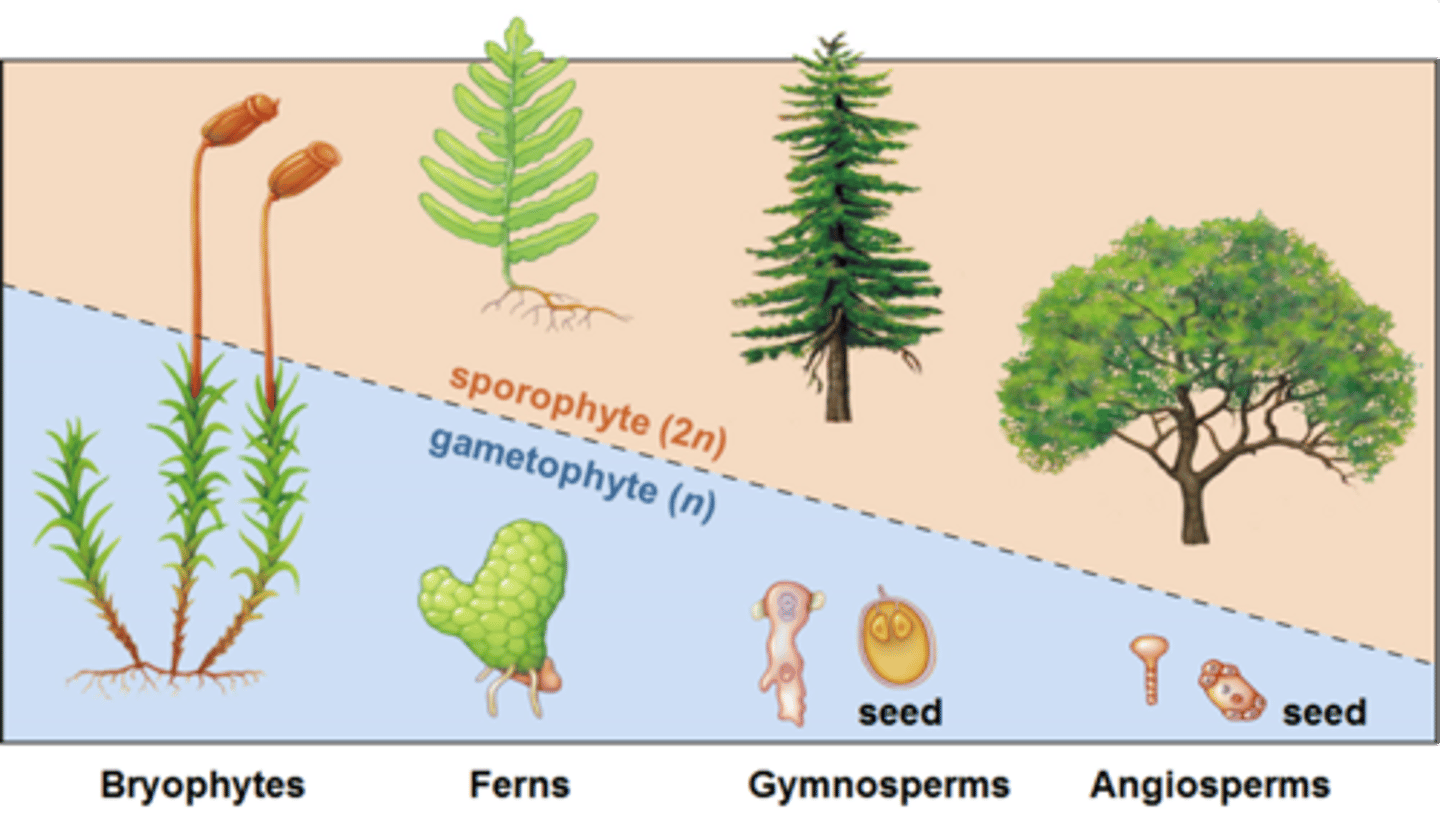
all lineages, except bryophytes, evolved a sporophyte-dominant life cycle
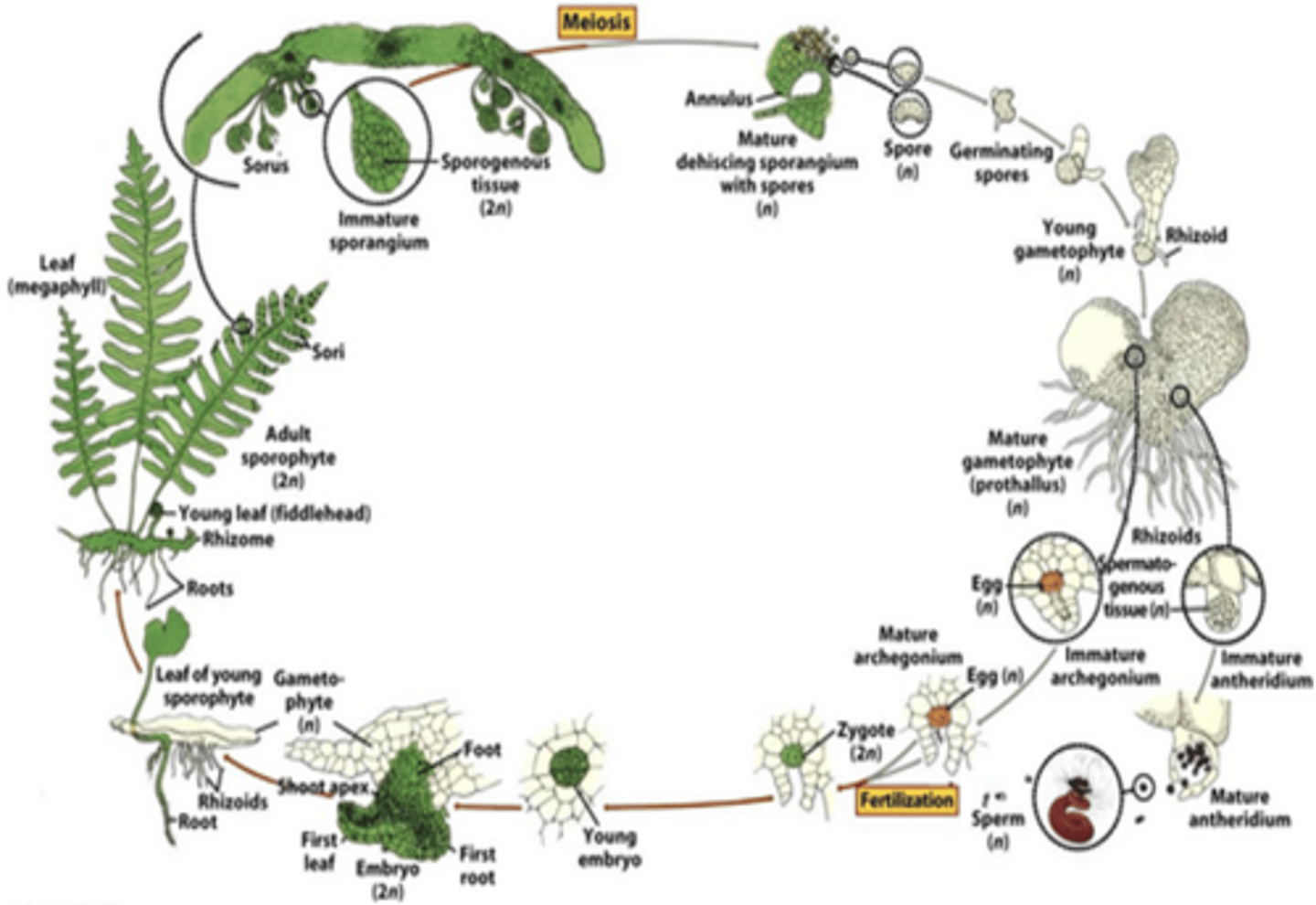
why is the sporophyte dominant?
several hypotheses exist:
1. as sporophytes began to perform more functions, they became more dominant than gametophytes
2. being 2n was advantageous (sporophyte able to asexually reproduce more easily)
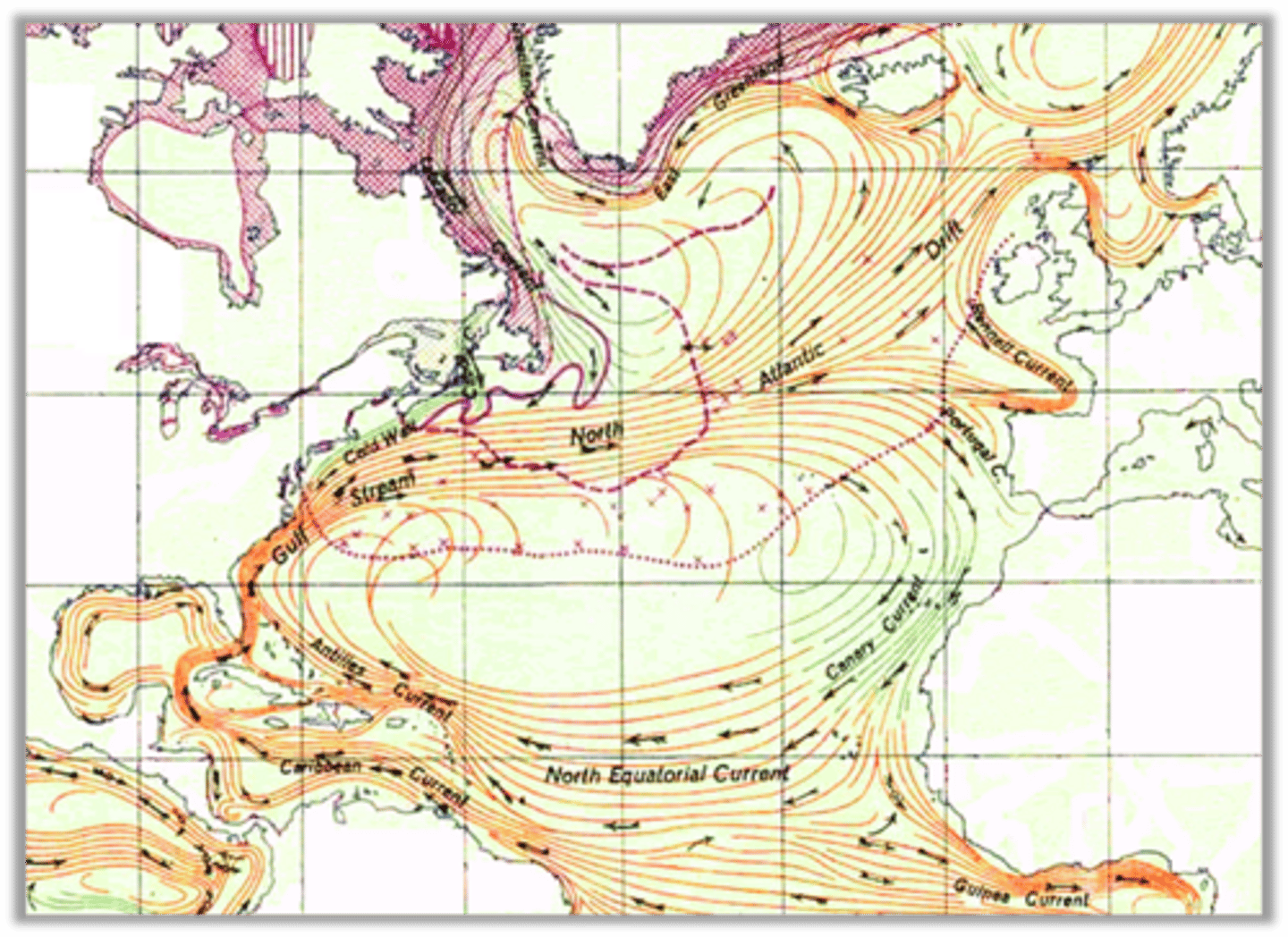
how is the Sargasso Sea bounded? where?
called the North Atlantic Subtropical Gyre; bound by rotating currents of the Gulf Stream to the west, the North Atlantic current to the north, and the Canary Current to the east, and the North Equatorial Current to the south
what happened to the Sargasso Sea in 2010?
extreme winds and changing currents from the North Atlantic Oscillation incurred a "tipping point", pushing it to the equatorial Atlantic (between South America and Africa) where it flourished (fueled by favorable light and seasonal nutrient-supply)
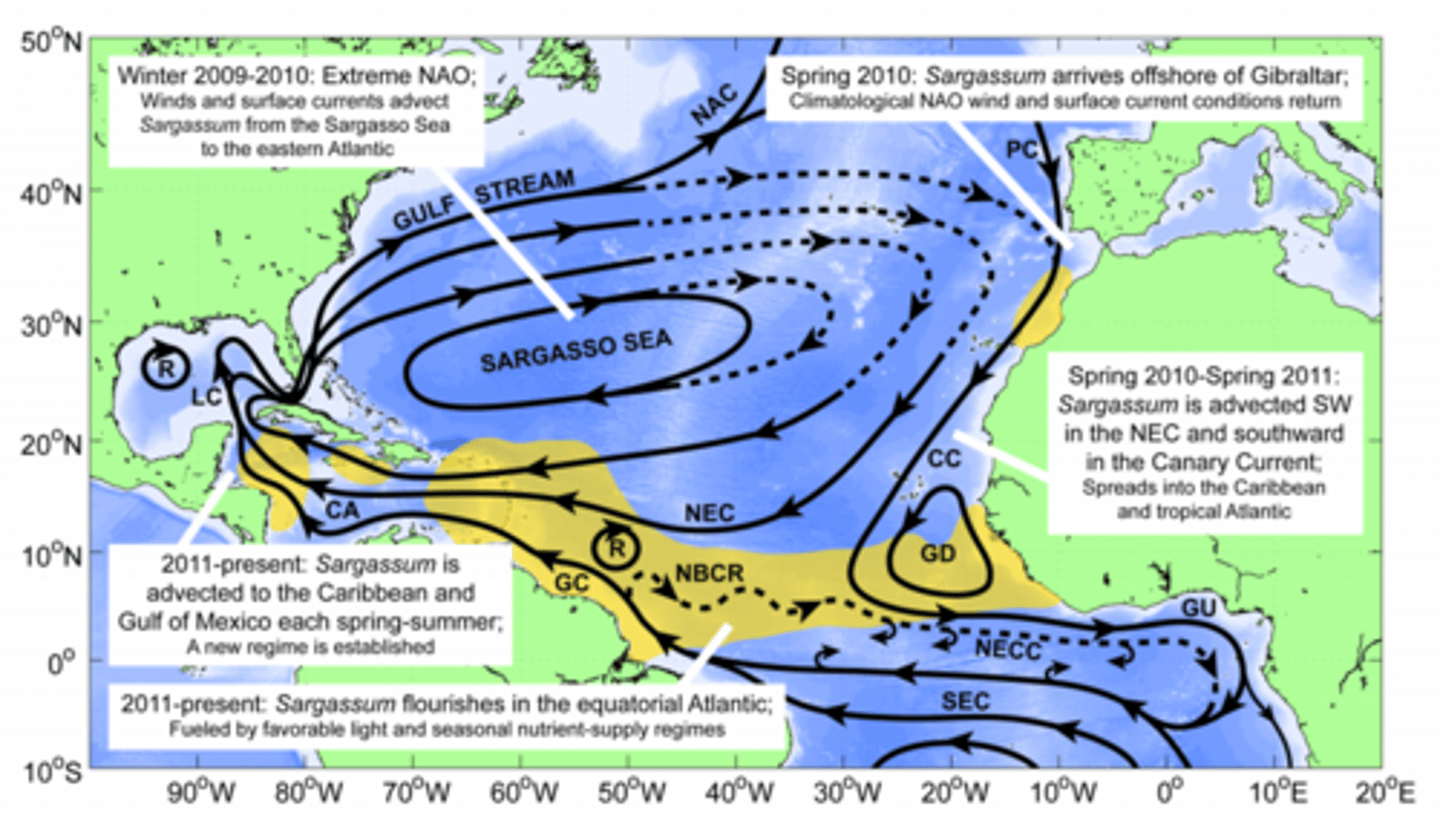
where does Sargassum from the Sargasso Sea wash up yearly?
nearly every year since 2011, Sargassum has inundated the Caribbean, the Gulf of Mexico, and Florida coastlines in warm months, June and July peaks
Sargassum Watch System (SaWS)
designed to use satellite data and numerical models to detect and track pelagic Sargassum in near-real time
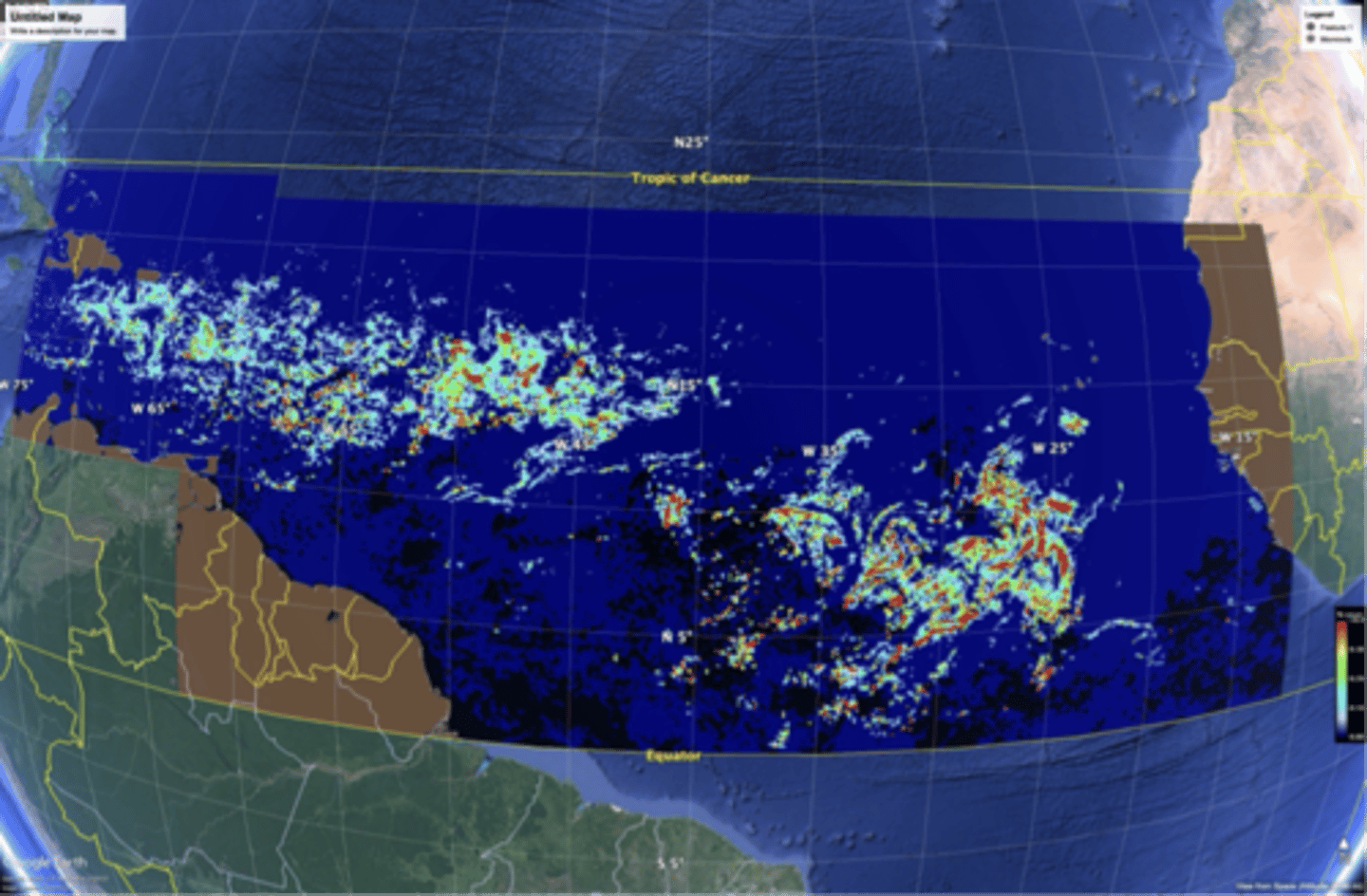
what's intensifying the Sargassum blooms?
- climate change is warming ocean waters and Sargassum grows faster in warmer waters
- the Amazon River disgorges a plume of sediment in the Atlantic Ocean, which sends an average of 273,361 cubic yards of water into the ocean every second (contains very increased nutrients from the intensive cattle ranching, manure, and soybean farming, fertilizer which increases N and P levels in the Atlantic
- dust clouds from the Sahara that contain iron, nitrogen and phosphorus
- equatorial upwelling and bacterial N-fixation (P from upwelling fuels N-fixation bacteria making it available for Sargassum which grows with constant N supply
Sargassum as a biological desert
the Sargasso Sea was once considered a biological desert due to the very low nutrient concentrations and biological productivity in its surface waters
what is the solution to the Sargassum blooms?
nations must find ways to reduce large-scale nutrient pollution
aquaculture
the rearing of aquatic animals or the cultivation of aquatic plants for food
mariculture
aquaculture in seawater
algal mariculture
~ 221 species of macroalgae are of commercial value, ~ 10 genera are intensely cultivated (64% of the mariculture production is brown seaweeds)
seaweed aquaculture production
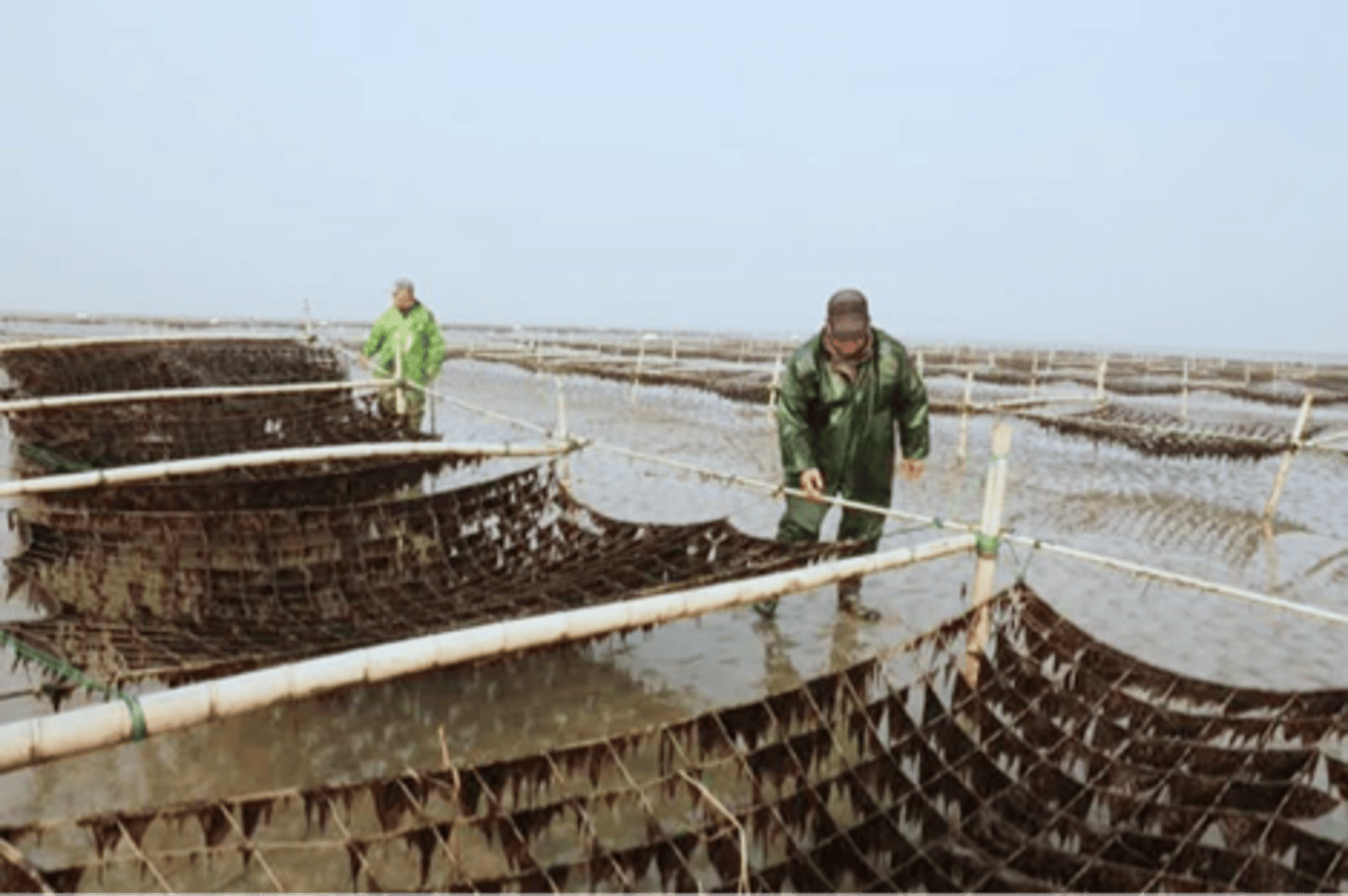
most of the world's seaweed supply comes from aquaculture; growing by ~8% per year
over 90% of seaweed production from farming is for human consumption
where is most seaweed farming occuring?
most farmed production is from China, Indonesia, Philippines, South Korea, and Japan
the most important producer of harvested seaweed outside Asia is Chile
Pyropia
E: Eukaryota
K: Plantae
P: Rhodophyta
C: Bangiophyceae
O: Bangiales
F: Bangiaceae
G: Pyropia
one of the most commercially valuable seaweeds; (formerly Porphyra)
Saccharina
E: Eukaryota
K: Chromista
P: Heterokontophyta
C: Phaeophyceae
O: Laminariales
F: Laminariaceae
G: Saccharina
Saccharina japonica is the most commonly grown kelp! it constitutes ~40% of the world's seaweed production
has a sporic life cycle with alternation of heteromorphic generations; gametes need a low temperature and blue light to become fertile
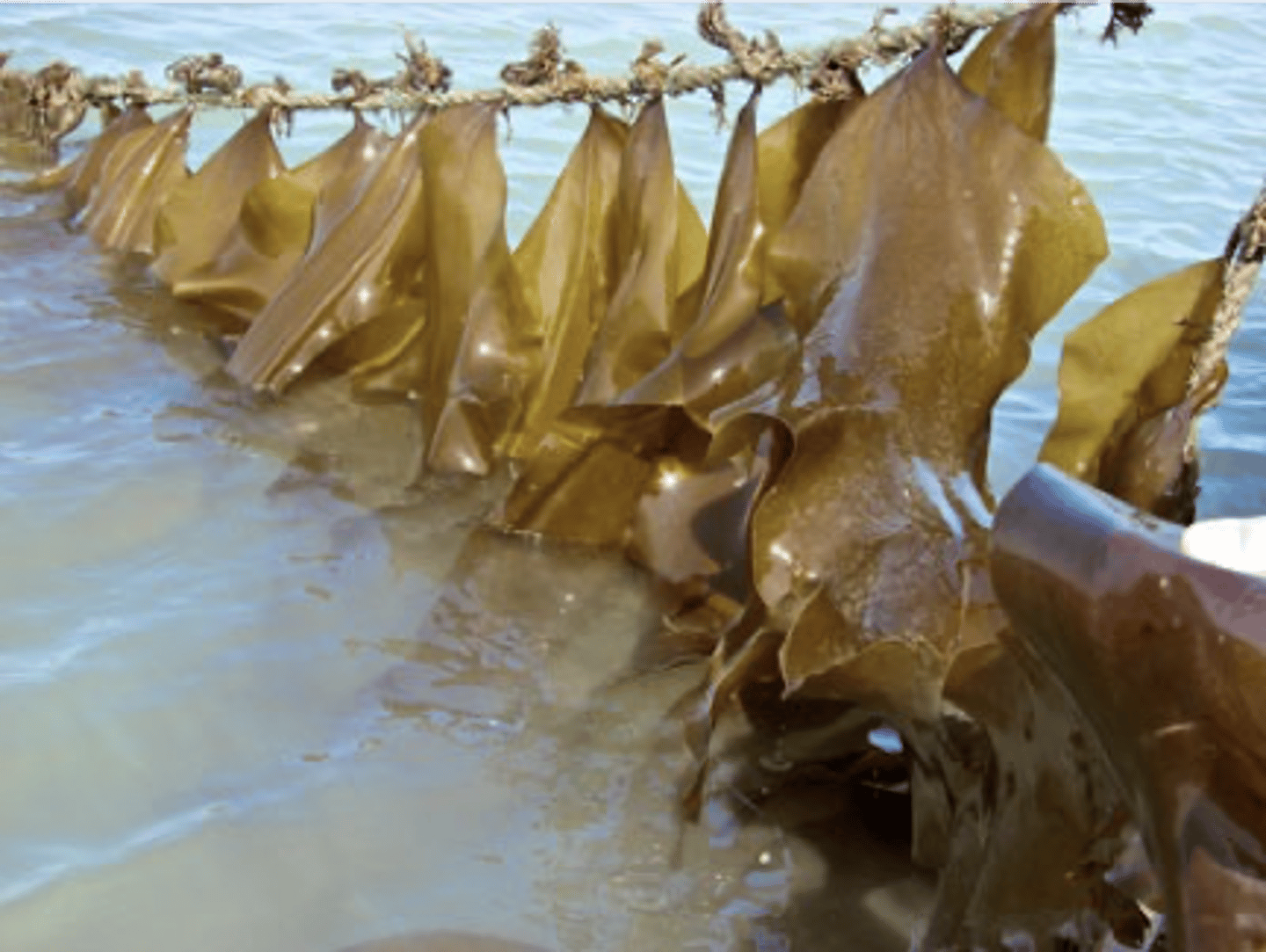
what is Saccharina farmed for?
consumption of iodine and production of alginates and mannitol
Saccharina cultivation
consists of 4 main steps:
1. collection and settlement of zoospores on seed strings
2. production of seedlings
3. transplantation and growing out of seedlings
4. harvesting
Undaria
E: Eukaryota
K: Chromista
P: Heterokontophyta
C: Phaeophyceae
O: Laminariales
F: Alariaceae
G: Undaria
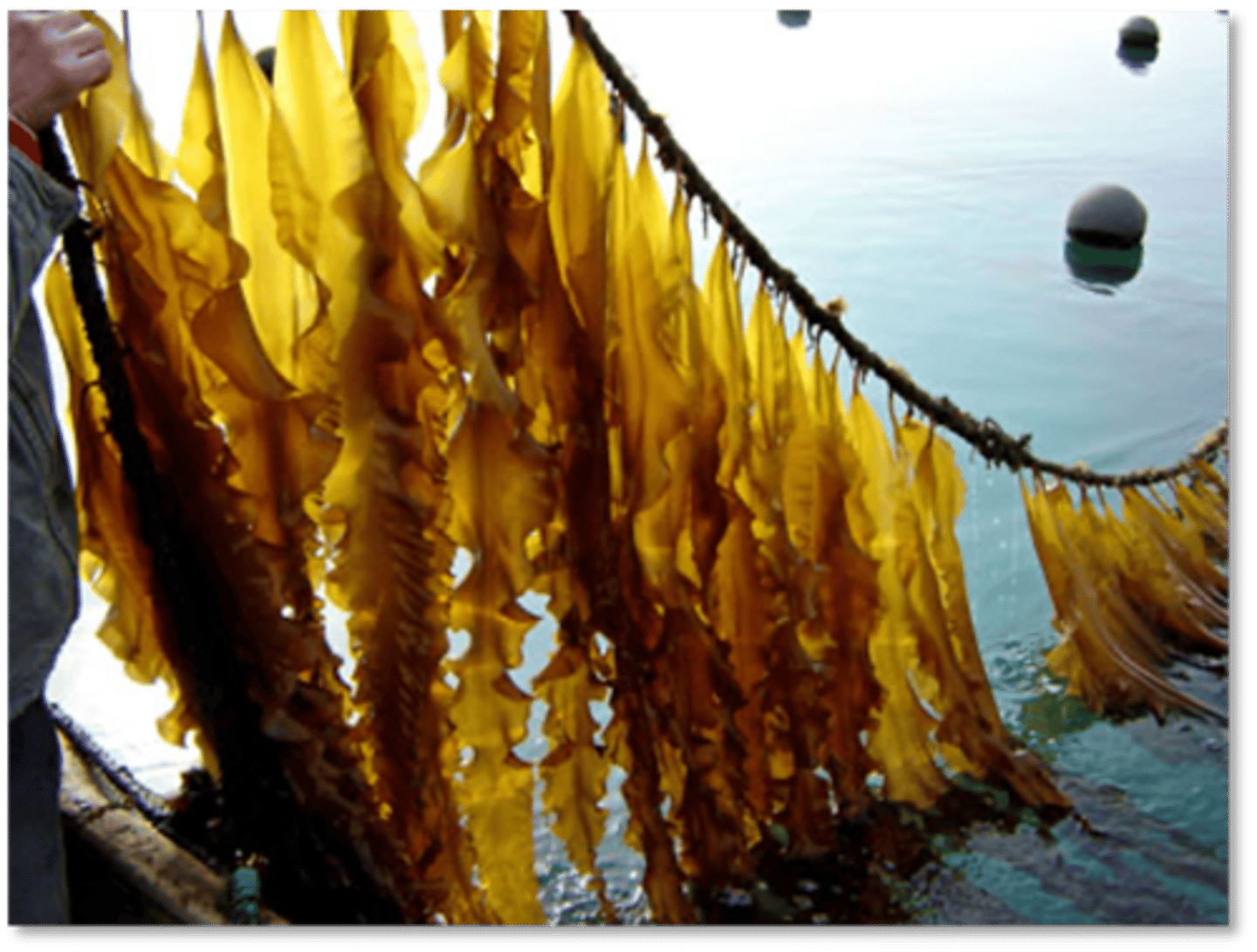
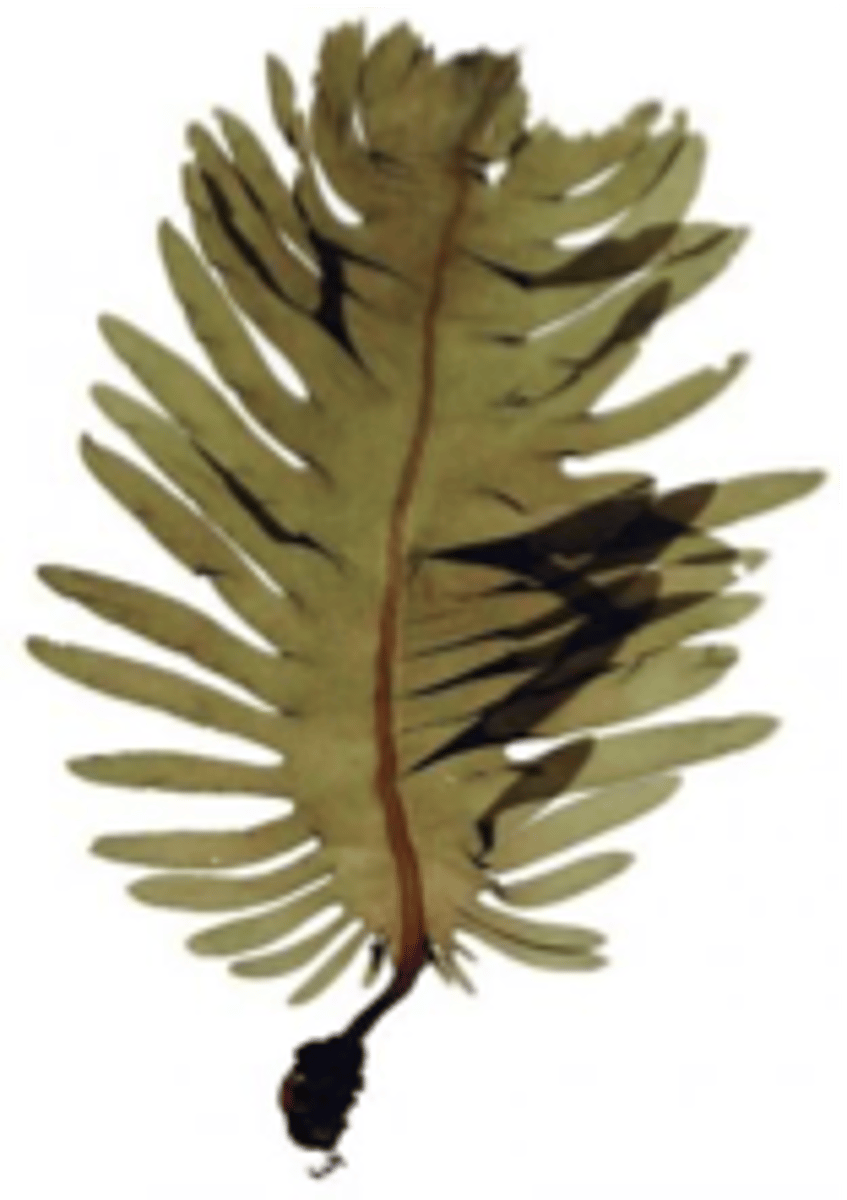
Undaria pinnatifida is an annual that grows in the subtidal, has the same life cycle and cultivation as Saccharina, is processed into food products like seaweed salad, instant soups, and chips
also found in OSEA skincare
Kappaphycus/Eucheuma
E: Eukaryota
K: Plantae
P: Rhodophyta
C: Florideophyceae
O: Gigartinales
F: Solieriaceae
"smothering seaweed" - coral mimic
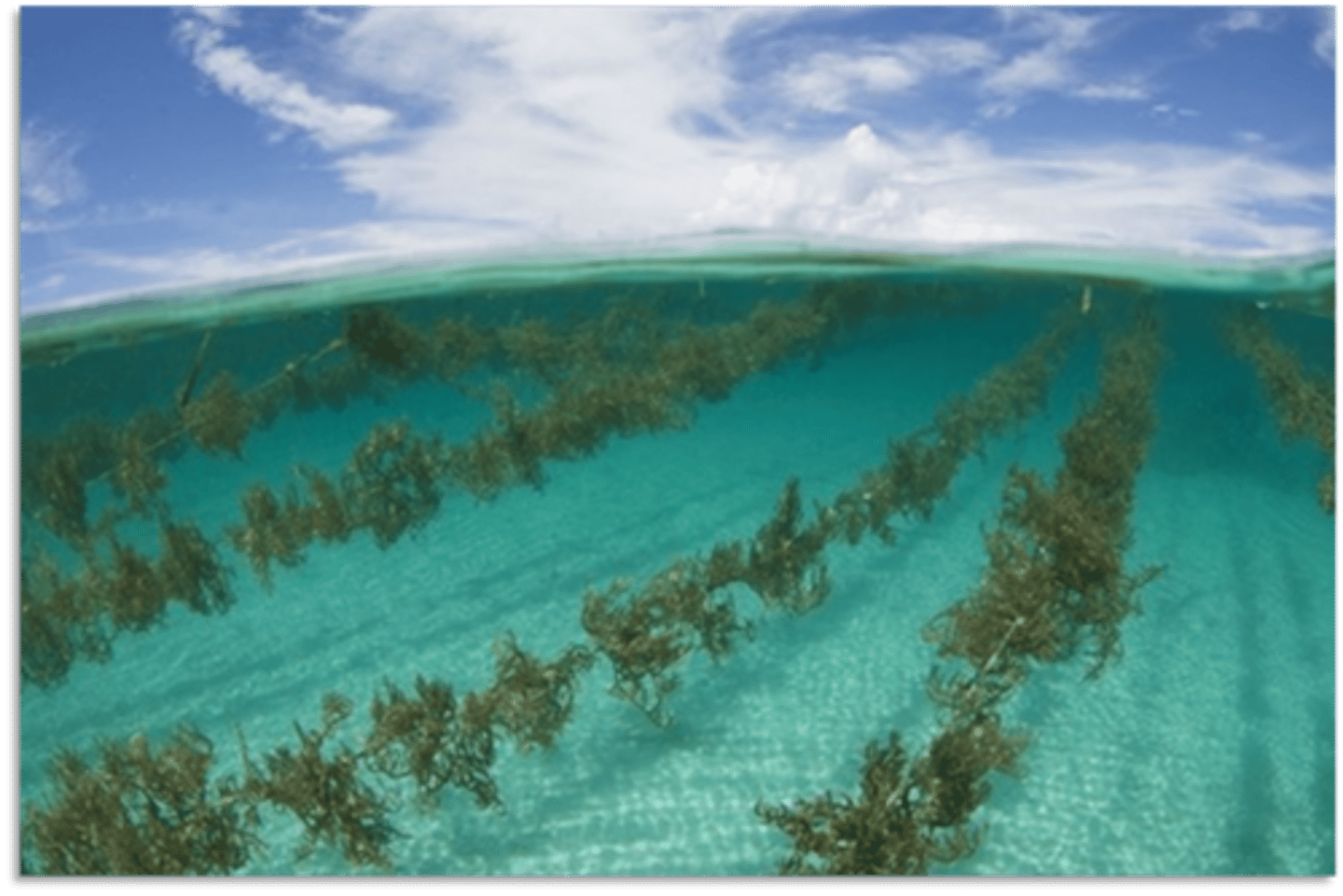
accounts for over 80% of global production of carrageenans, red alga with triphasic life history with an alternation of isomorphic generations, thalli can double in size within 30 days, bottom and floating monoline methods used (BENEATH THE TIDE)
high growth rate, spreads by fragmentation, outcompetes native algae and coral, grows over coral shading it from sunlight, no native predators in Hawai'i, introduced in 1974 for aquaculture with intentions of cultivating it for carrageenan
causes shifts in ecosystem (was once coral dominated but now algae dominated with low diversity), and habitat loss greatly affects recreational and commercial fisheries
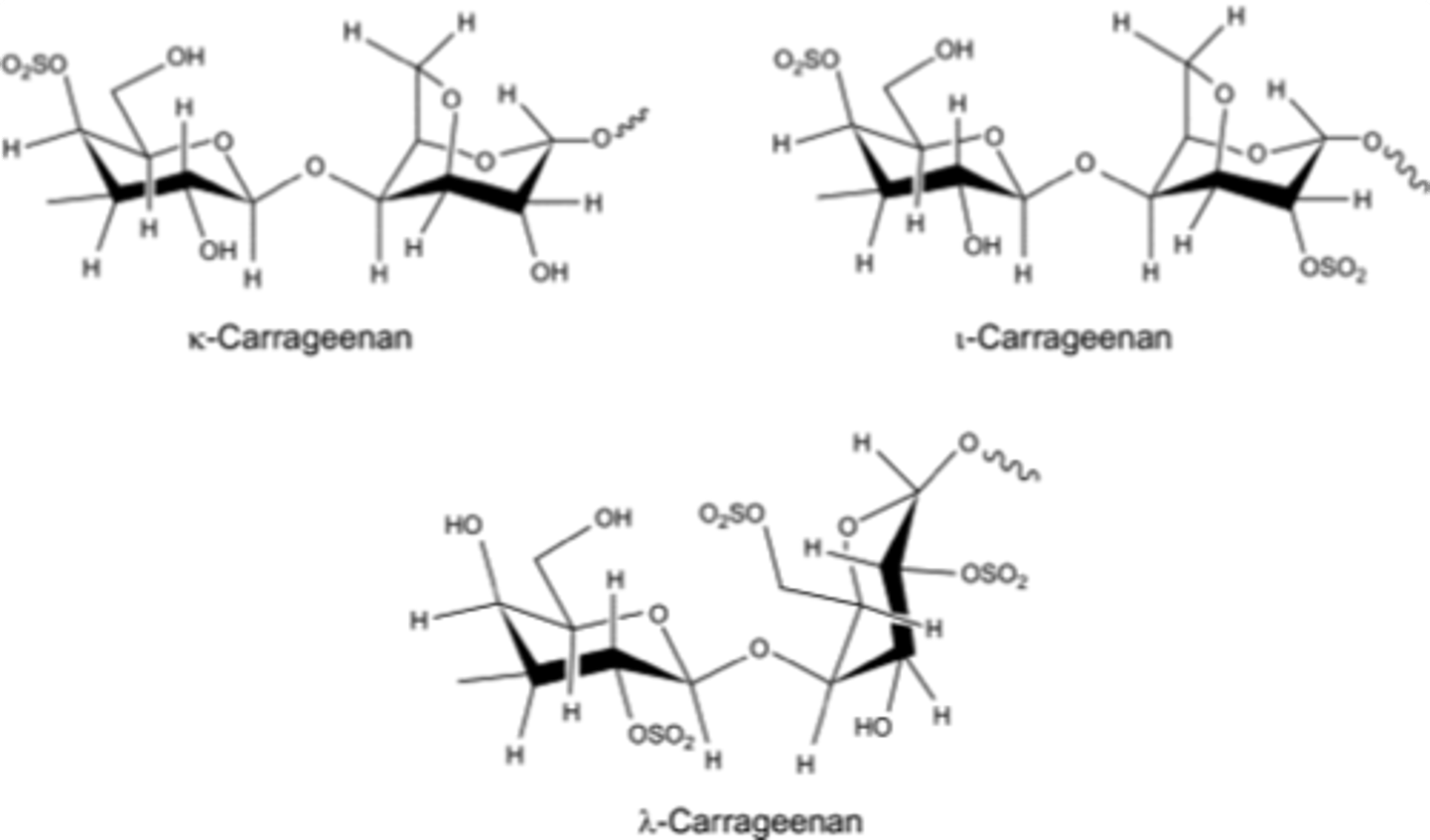
carrageenan
linear sulfated polysaccharides; those of commercial interest are kappa, iota, and lambda
products include instant mix food products, chocolate milk, toothpaste, cottage cheese, ice cream, other dairy products, and fat free products
Gelidium
E: Eukaryota
K: Plantae
P: Rhodophyta
C: Florideophyceae
O: Gelidiales
F: Gelidiaceae
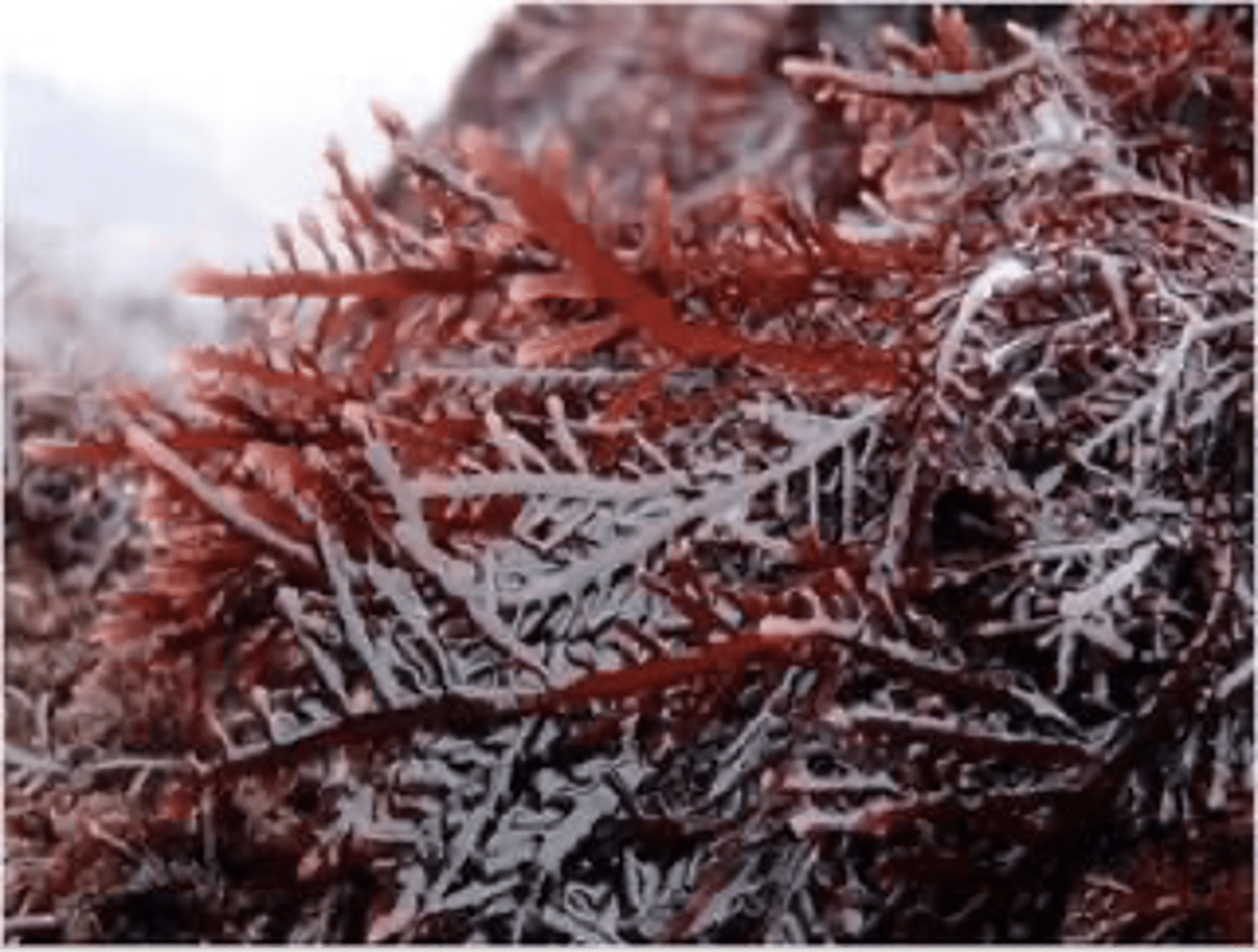
produces the highest quality agar, but grows slowly so natural beds are often over harvested, 35%of the world's agar production comes from Gelidium, also produces bacteriological-grade agar (expensive), acts as a stabilizer and thickener in pie fillings, icings, meringues, gelled fish, meat products, and low-calorie products
Gracilaria
E: Eukaryota
K: Plantae
P: Rhodophyta
C: Florideophyceae
O: Gracilariales
F: Gracilariaceae
G: Gracilaria
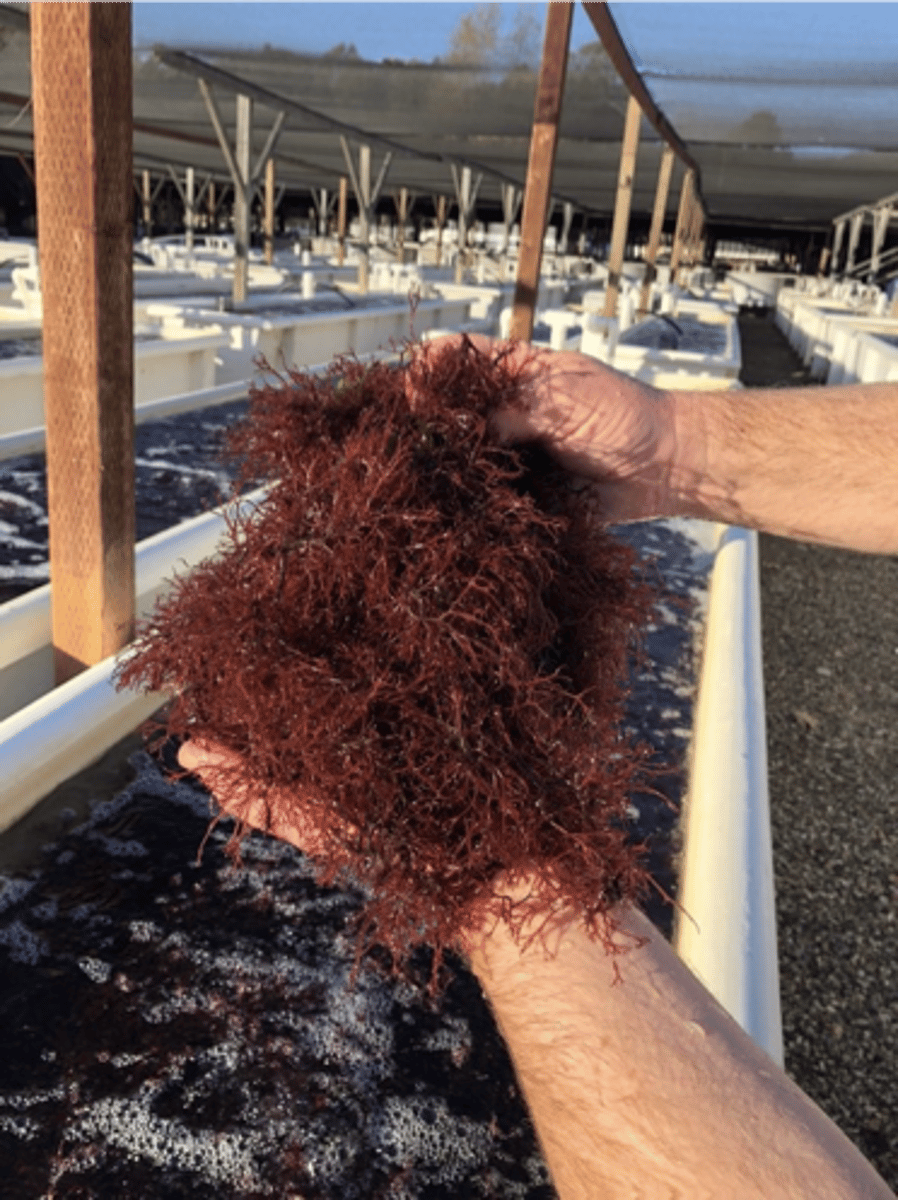
also produces agar but of lower quality compared to Gelidium, grows quickly in aquaculture in either tanks or via line/rope farming (like used in brown algae), eaten raw as a sea vegetable in several cultures (i.e. Japan)
how is seaweed farming mitigating climate change?
ongoing: C-sequestration via export of "unseen" production, and food production with reduced CO2 foot print
future: bioenergy production by substituting fossil fuels, reduction of methane emission by using seaweed feed additive to ruminants, stimulation of land-based production by using seaweed biochar soil amelioration and seaweed prebiotic health benefits to live stock, and climate benefit of circular nutrient management by avoidance of CO2 emissions for synthetic fertilizer production
how is seaweed farming adapting to climate change?
adapting to increased storminess and sea level rise with protection via dissipation of wave energy, ocean acidification with high daytime pH in seaweeds to the benefit of calcifiers, and oxygen inputs to coastal waters by avoiding oxygen deoxygenation with warming
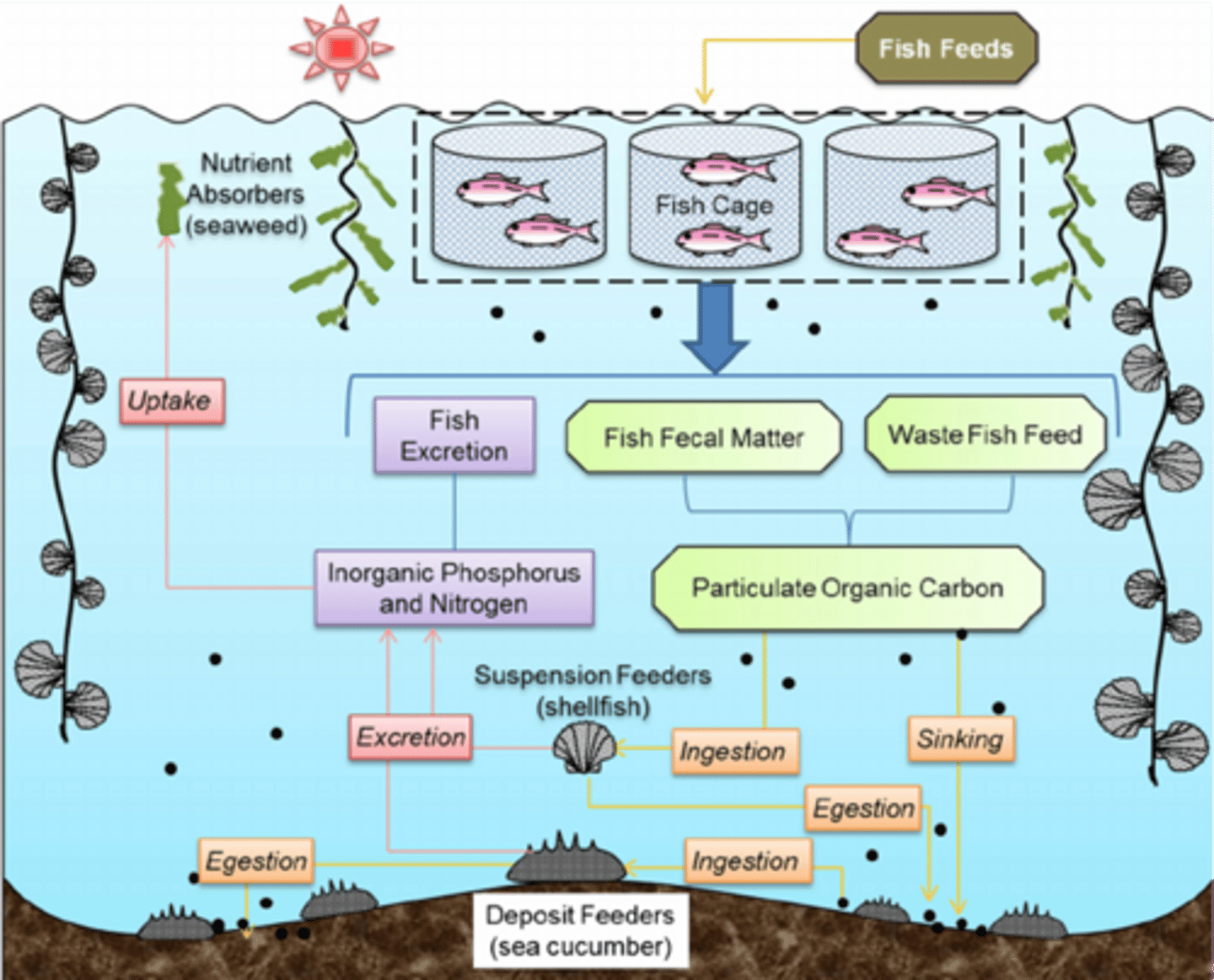
integrated multi-trophic aquaculture (IMTA)
used for sustainable and safe food production, seaweeds provide biomitigative services and produce valuable product
describes three trophic levels that should be combined with "fed" fish aquaculture
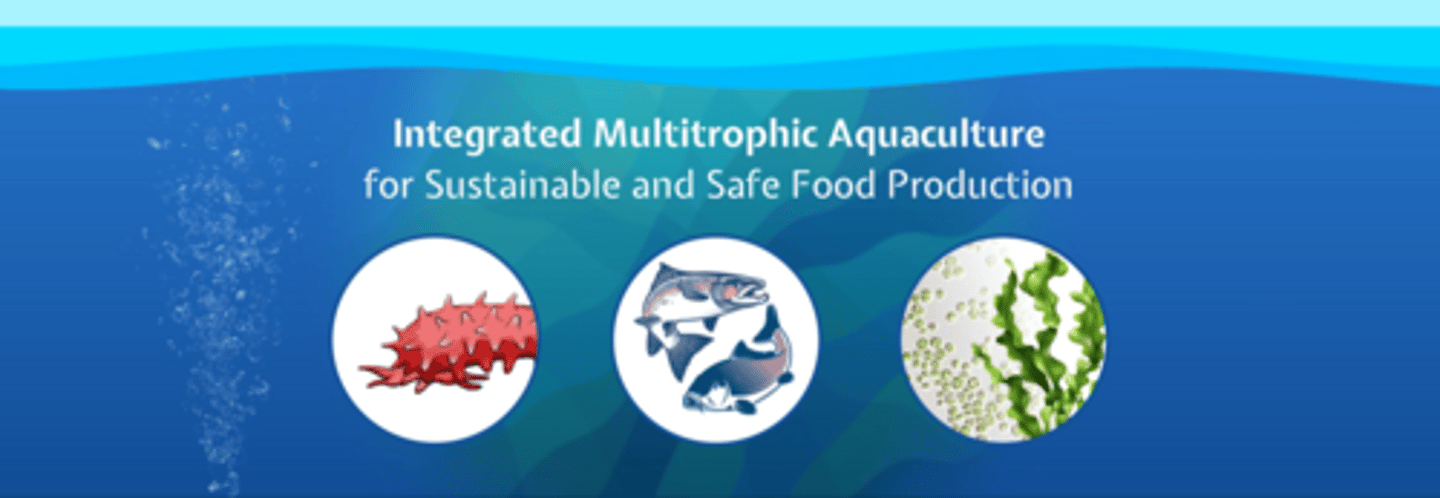
what are the three trophic levels described in the integrated multi-trophic aquaculture?
1. suspension organic extractive aquaculture with invertebrates like shell fish to recapture the small particulate organic matter from the fish food
2. suspension inorganic extractive aquaculture with seaweeds to recapture the dissolved inorganic nutrients
3. deposit organic extractive aquaculture with benthic invertebrates or grazing fish to utilize the large particulate organic matter that sinks to the bottom
what is the criteria for selecting macroalgae for IMTA?
1. high NH4 uptake and high growth rate
2. tolerance of high NH4 concentrations and capacity for storage of high tissue N
3. ease of cultivation and control of the lifecycle
4. resistance to epiphytes and disease
5. existing or potential market value for the raw material or its derived products
6. commercialization not leading to insurmountable regulatory hurdles
7. ideally native
who is the father of biodiversity?
E.O. Wilson
he said, "On a global basis...the two great destroyers of biodiversity are, first habitat destruction and, second, invasion by exotic species”
diversity
dependent on the richness (# of species in a given area) and evenness (relative abundance) of a species within a community