The Poetics of Place in Nara and Heian Japan
 Call Kai
 Learn
Learn Practice Test
 Spaced Repetition
 Match
Match Flashcards
 Knowt Play
1/34

There's no tags or description
Looks like no tags are added yet.
Name | Mastery | Learn | Test | Matching | Spaced | Call with Kai |
|---|
No analytics yet
Send a link to your students to track their progress
35 Terms
Ise Shrine, Mie Prefecture, 3rd -5th century
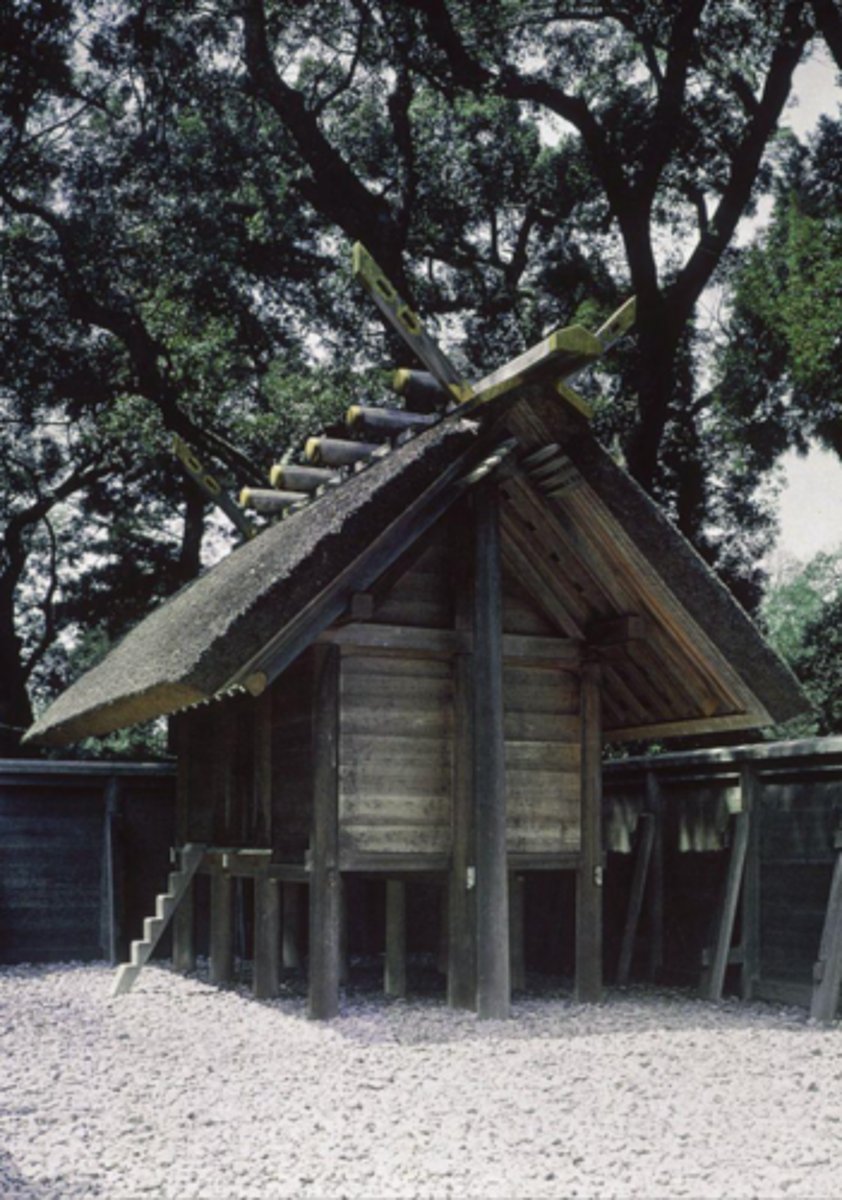
how was the Ise Shrine made and its significance
no nails, all wooden joinery because the Shinto celebrated extreme simplicity of design and tried to use as close to natural material as possible
what is the Ise Shrine made of
cypress wood
describe the outer shrine and who could use it
open to the public to walk around it, thatched roof, minimalist design, no windows
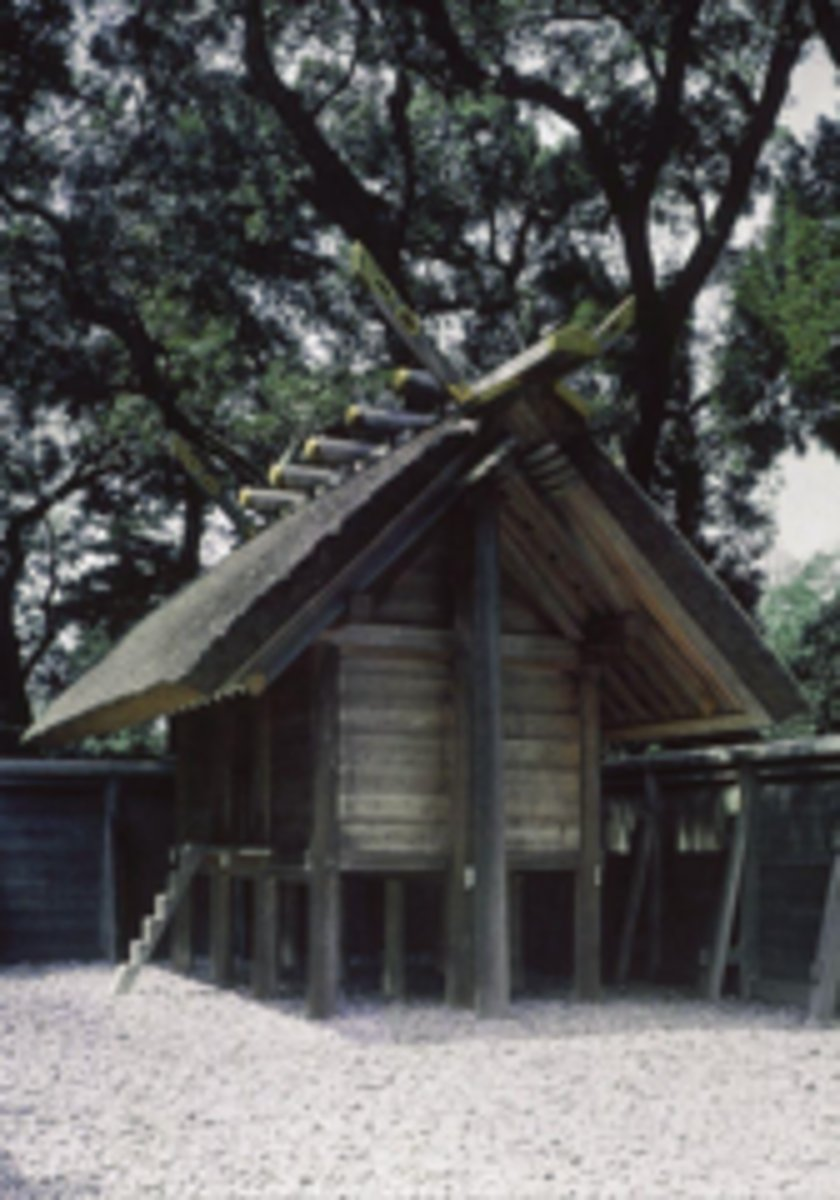
what are the building practices used for the Ise Shrine and its significance
Collective generational building endeavor, shrines built every 20 years, hired local artisans/local families who demolished the structure and rebuilt the same shrine, shows sustainability and celebrates cyclical shifts
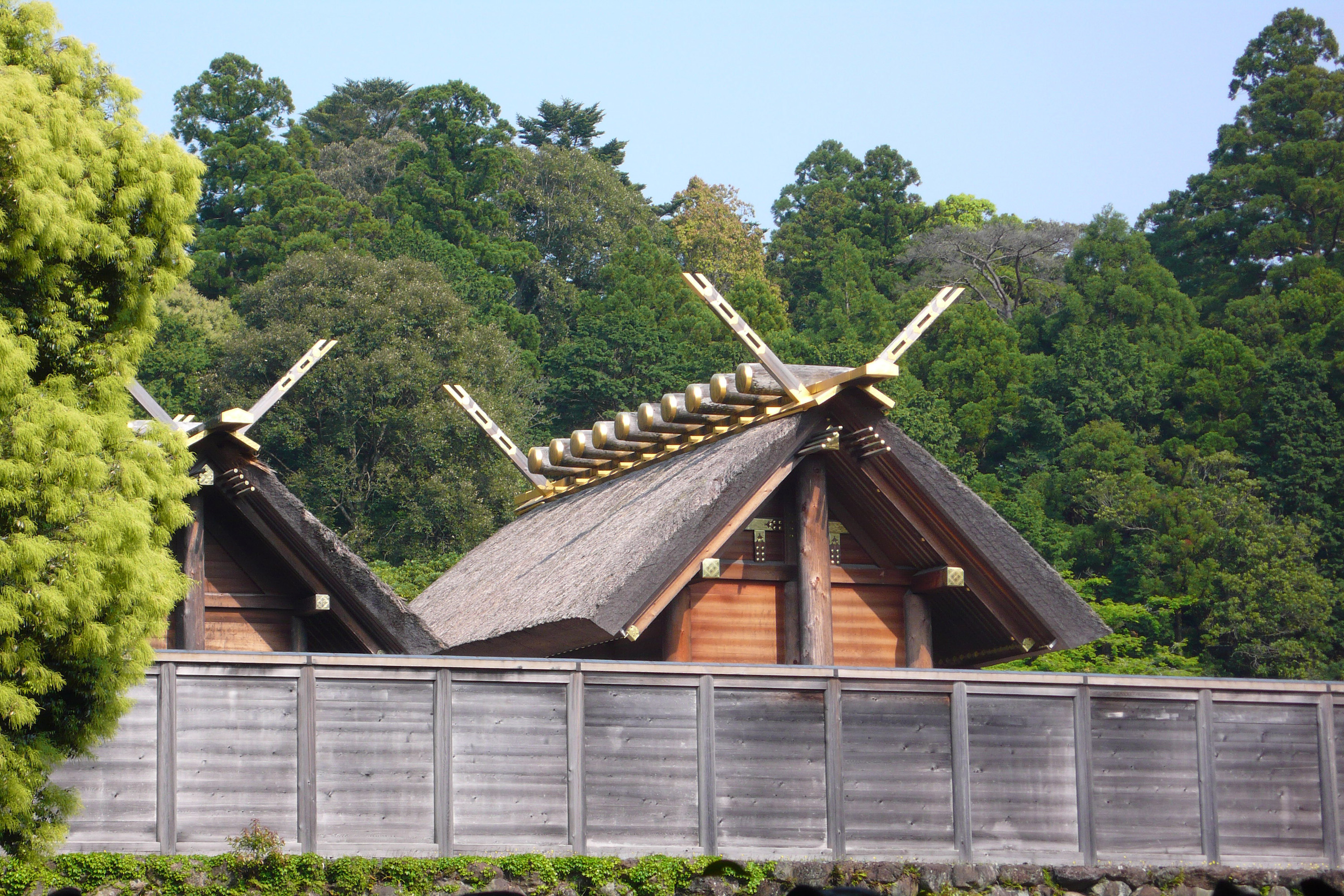
describe the inner shrine in the Ise shrines and who could use it
fence blocks you from seeing most of the structure, only members of the imperial family can enter, at a time only the high priestess could enter
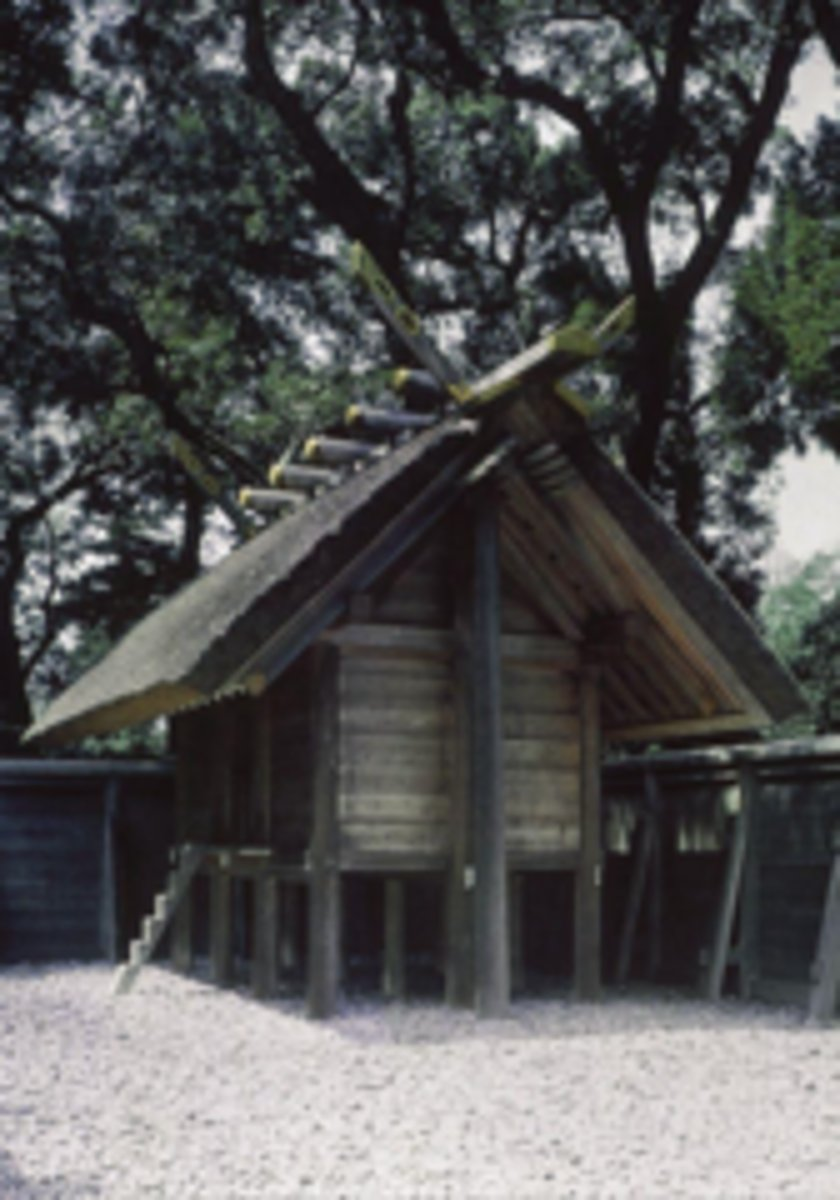
what does the Ise shrine advocate for
restraint and partial concealment, certain things withheld from critical scrutiny and people being okay with that
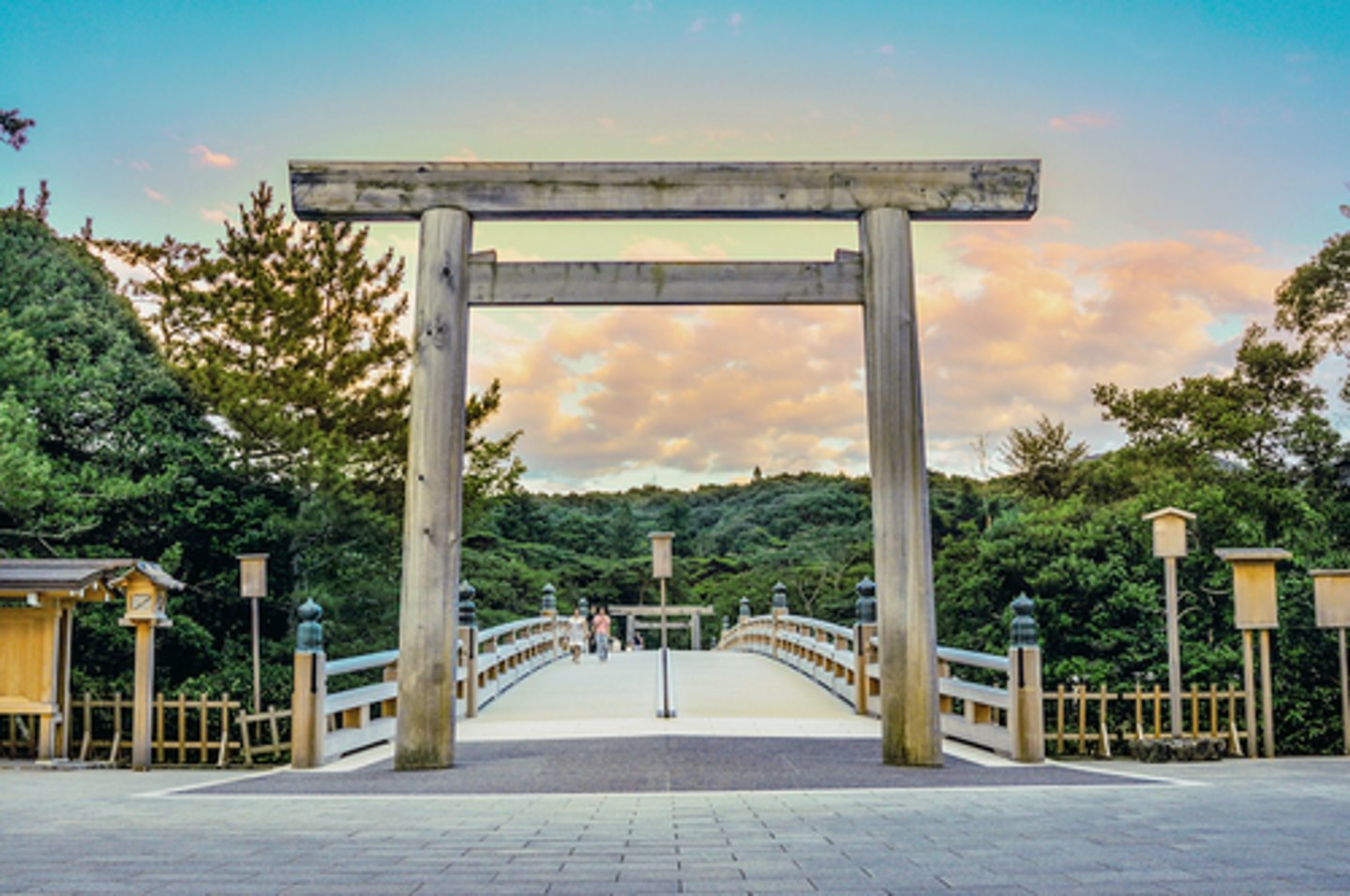
describe the structure between the 2 building of the Ise Shrine
above a body of water, made of cypress wood, main gate very simple; no finishing coating, just raw wood
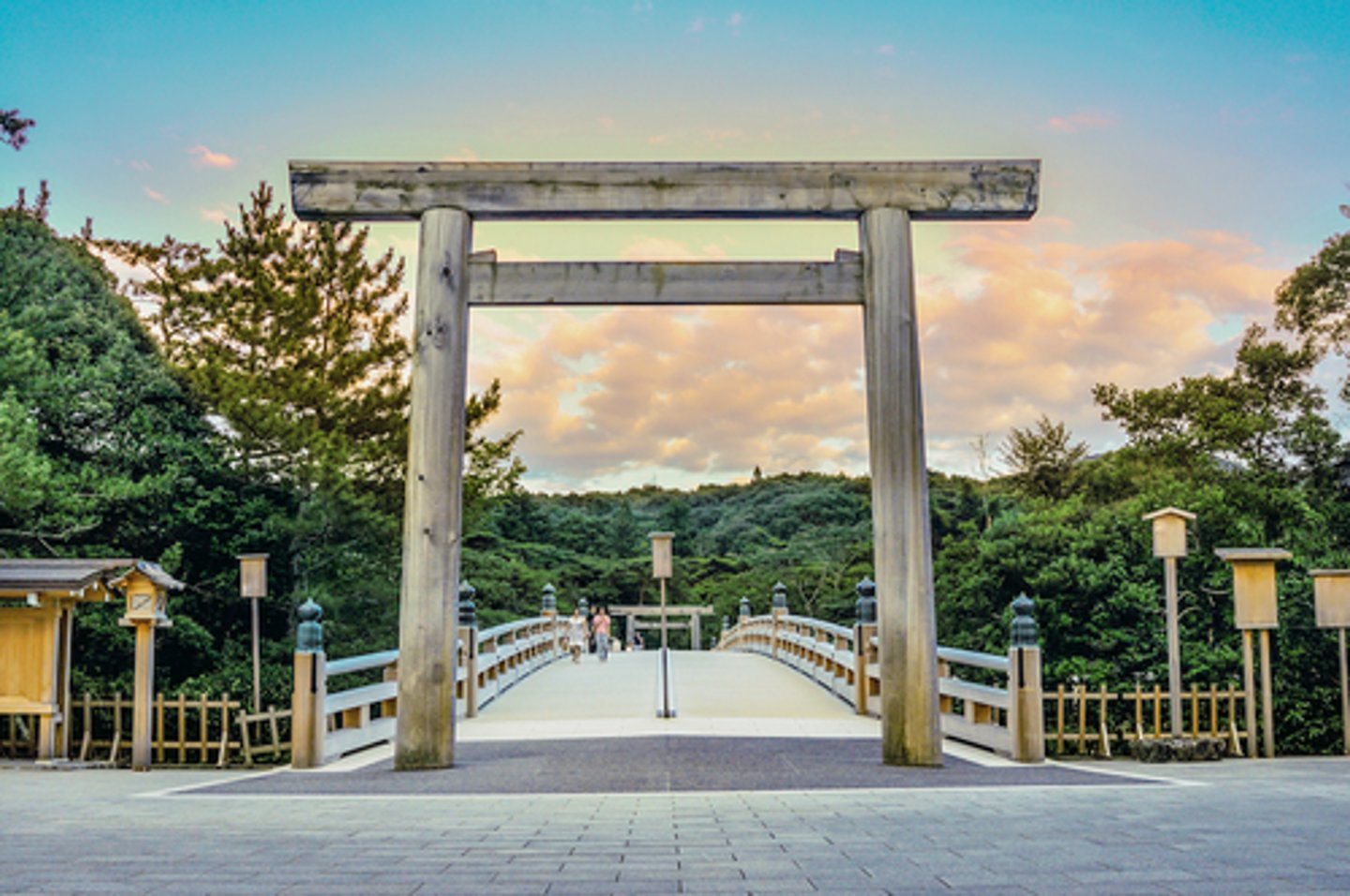
what is the significance of the bridge between the Ise Shrines
bridge that takes an hour to cross so you can get attuned with nature and get purified by it, staying as close to the earth material as possible
Shōsōin treasury, Tōdai-ji, Nara, 8th century
picture
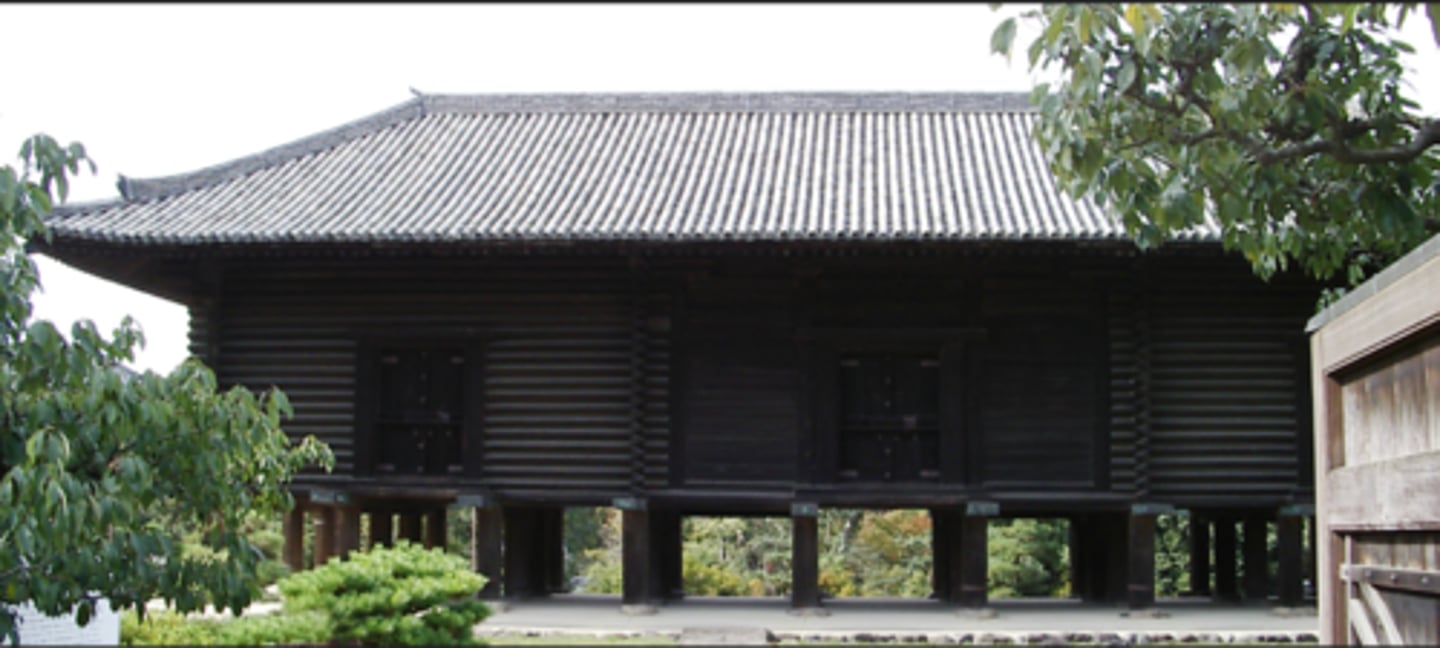
describe the Shosoin treasury
no windows, elevated
what was found inside the Shosoin treasury and its significance
treasure trove of 9,000 luxurious objects of high value, shows that there must have been some connection to the silk roads, contains gifts to emperor from around the world, diplomatic gifting
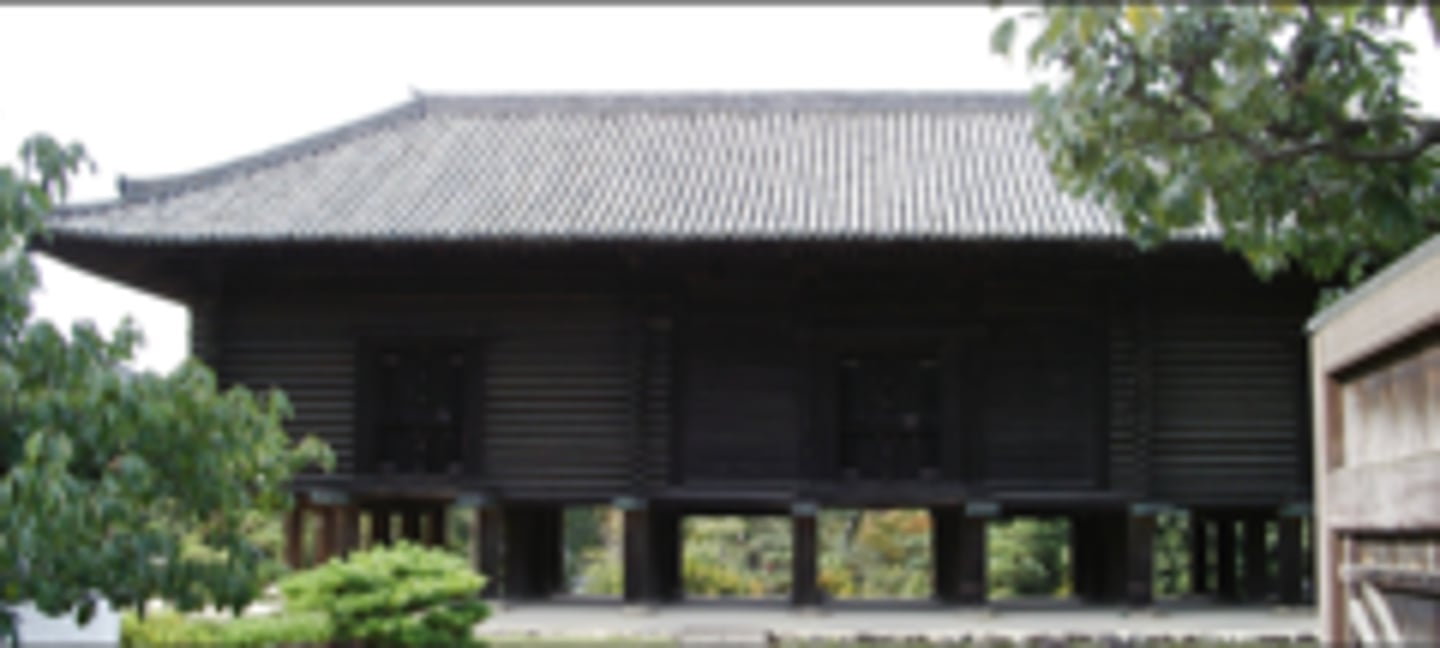
why is the Shosoin treasury contradictory
the whole idea of buddhism is not getting attached to material things, blurs boundary between religion and secular
Shōsōin treasury, Tōdai-ji, Eight-lobed mirror, bronze and mother of pearl
picture
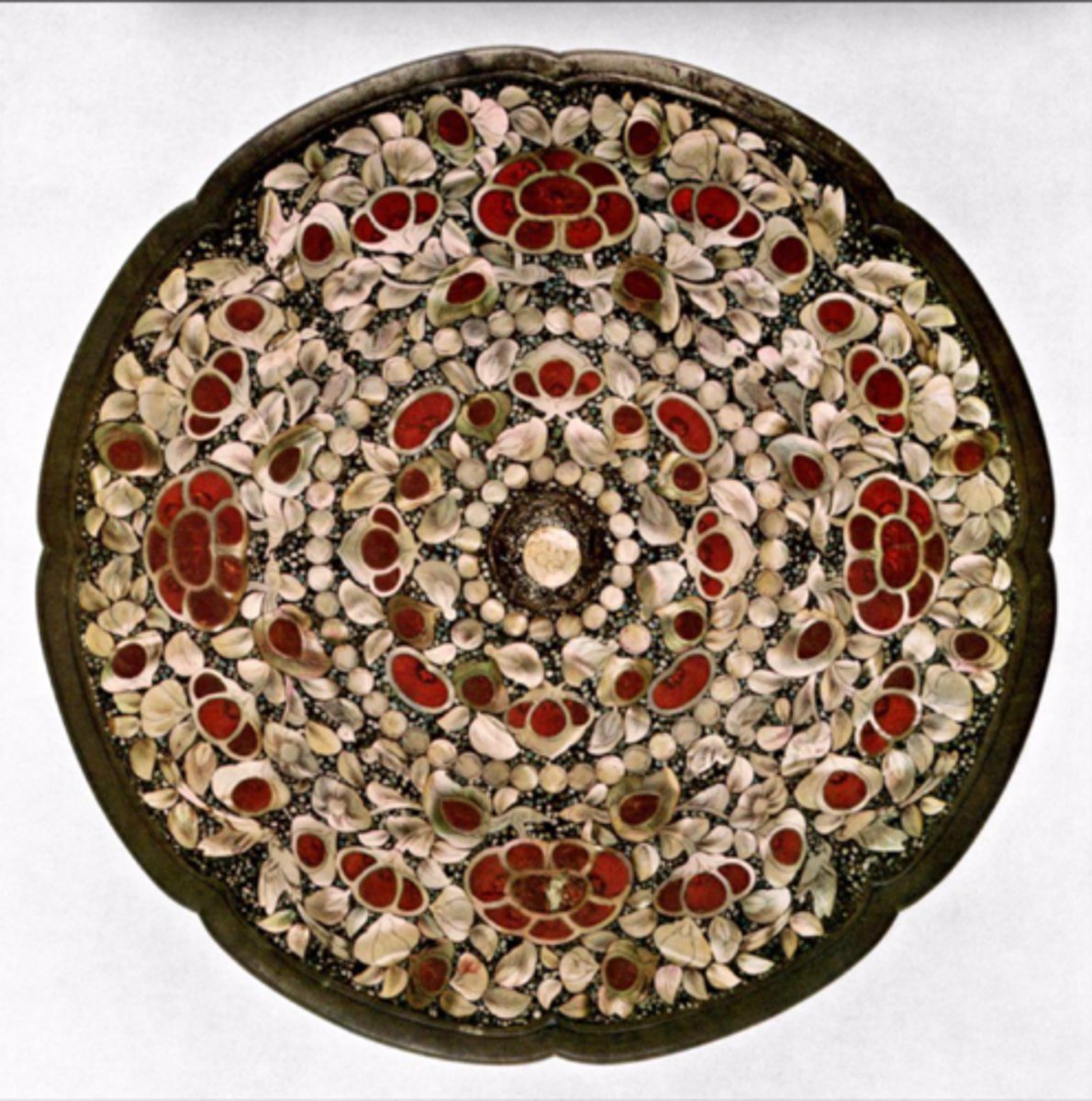
what is the significance of the Eight-lobed mirror, bronze and mother of pearl
connection to Japanese imperial power, the importation of Buddhism, and the synthesis of foreign and native artistic traditions during the Nara period
Shōsōin treasury, Tōdai-ji, Glass cup with silver base
picture
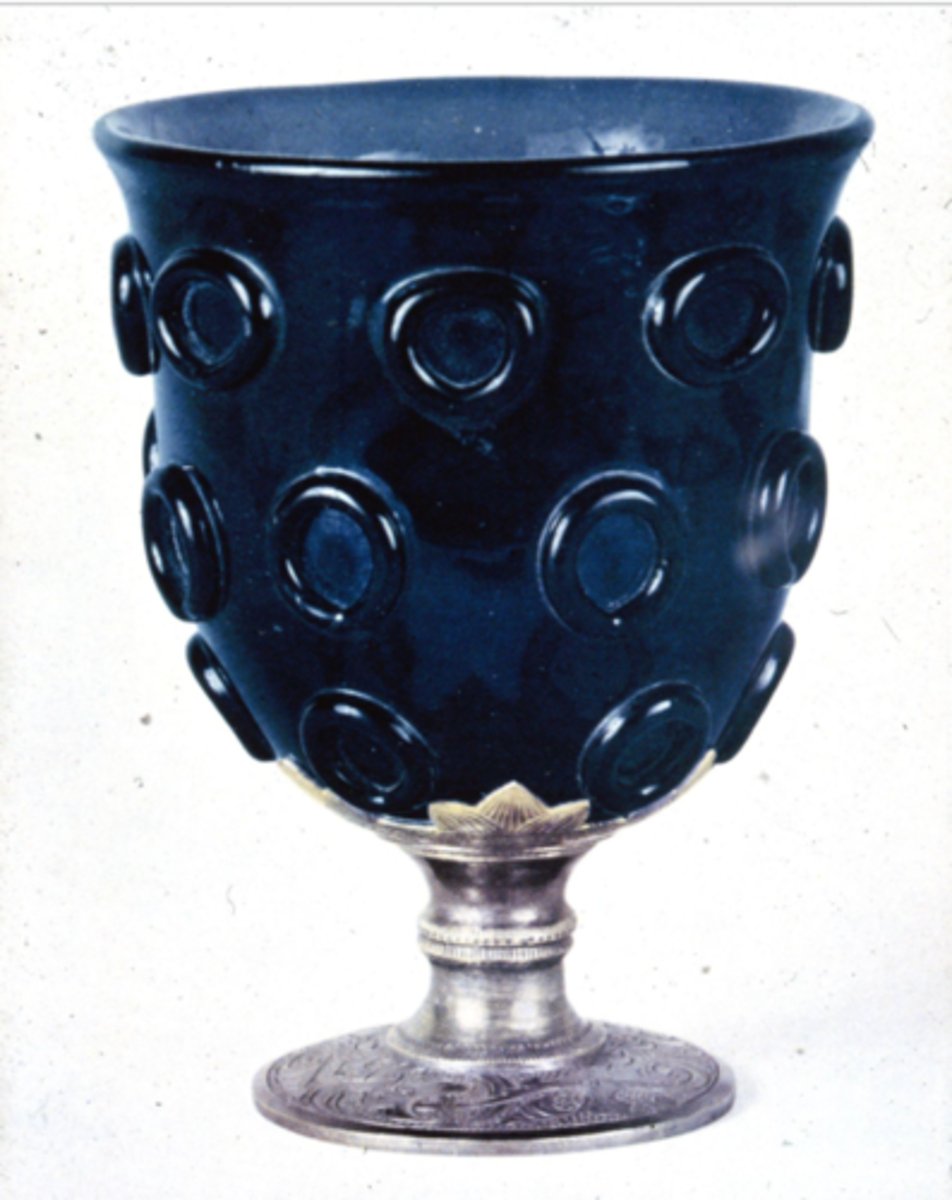
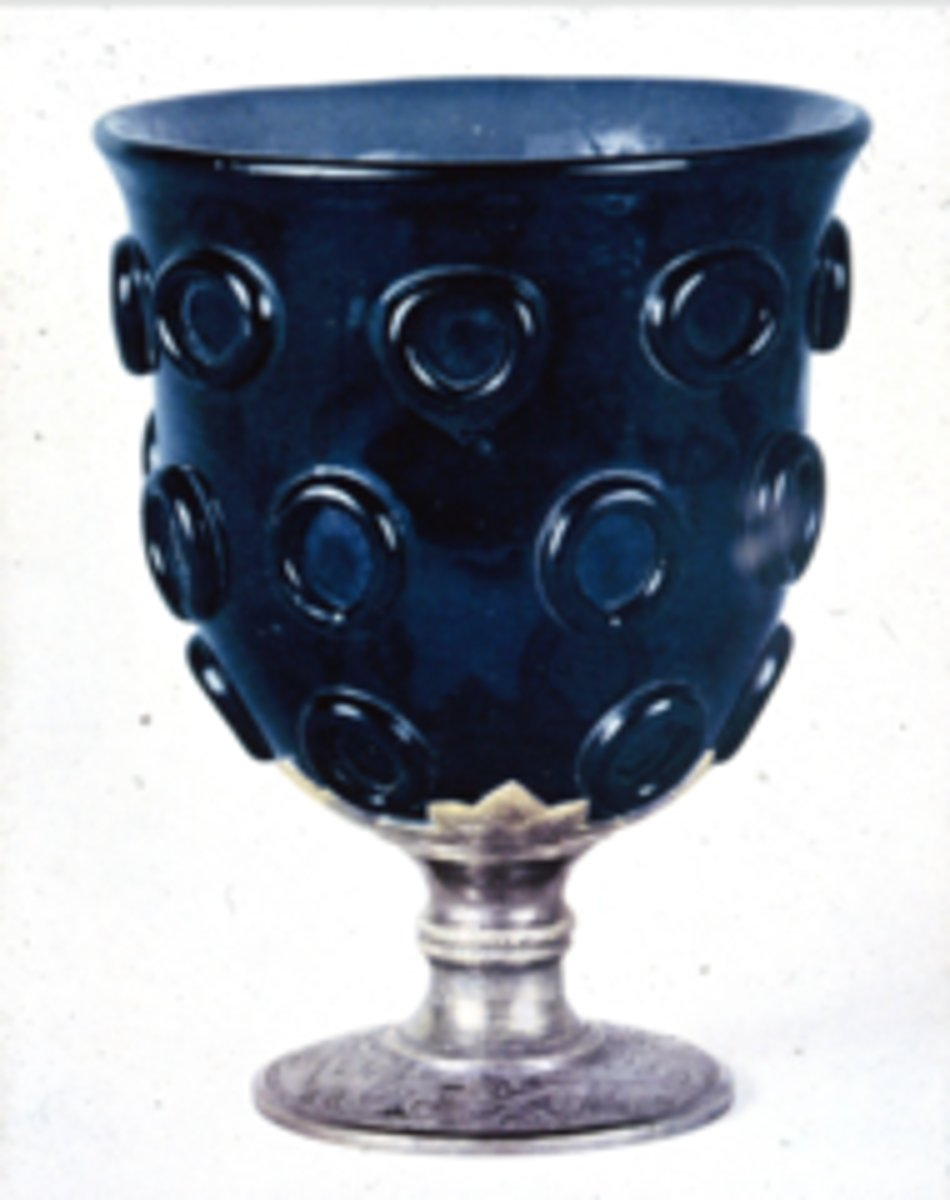
what is the significance of the glass cup with silver base
type of glass that would have been created in the late stages of the eastern most peripheries of the Roman Empire
Shōsōin treasury, Tōdai-ji, Floral rug, probably from Persia
picture
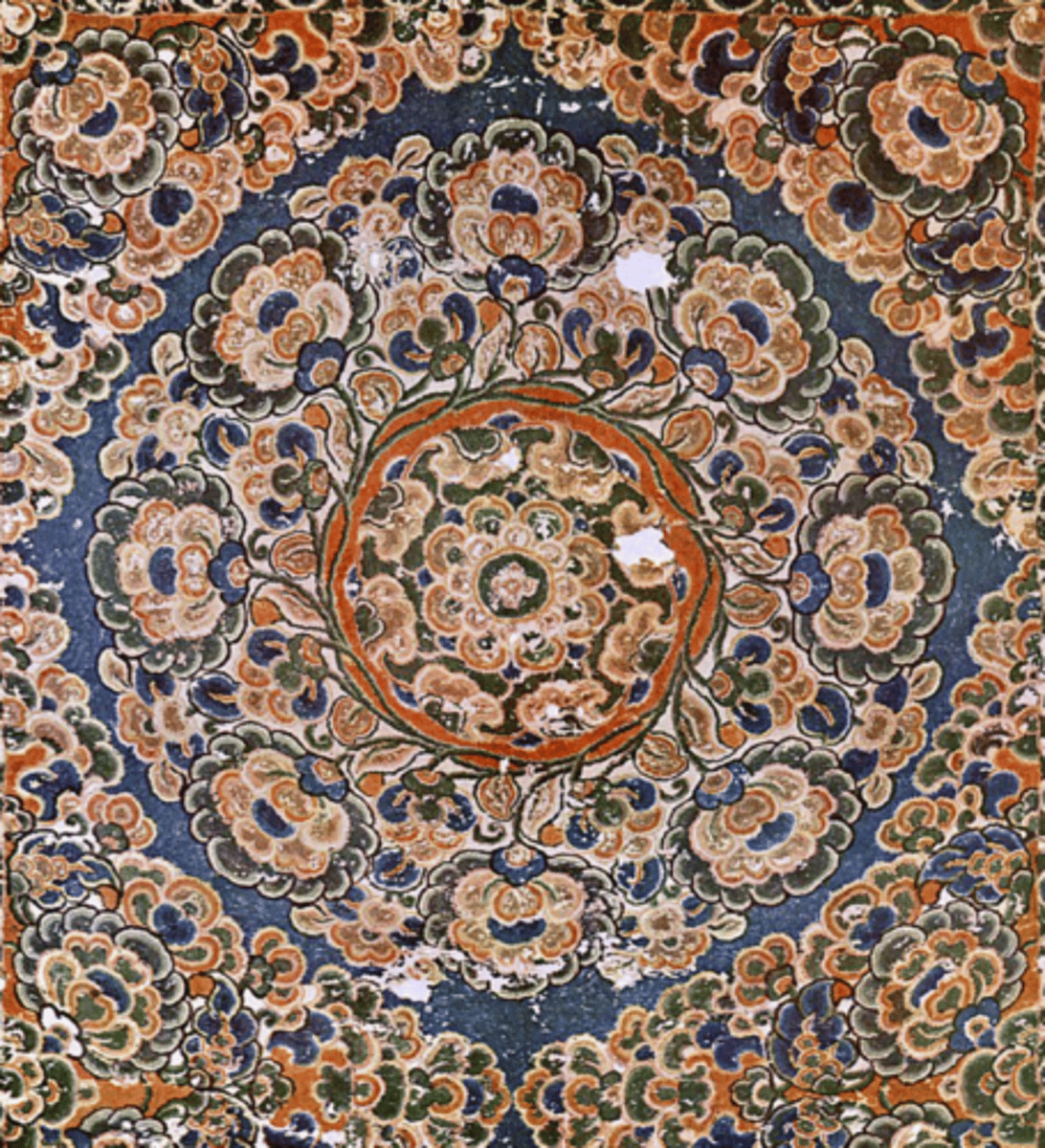
what is the significance of the Tōdai-ji, Floral rug, probably from Persia
lotus motif, textiles from various cultures that symbolize nature, paradise, and life
Tamamushi shrine, Hōryū-ji temple, 8th century
picture
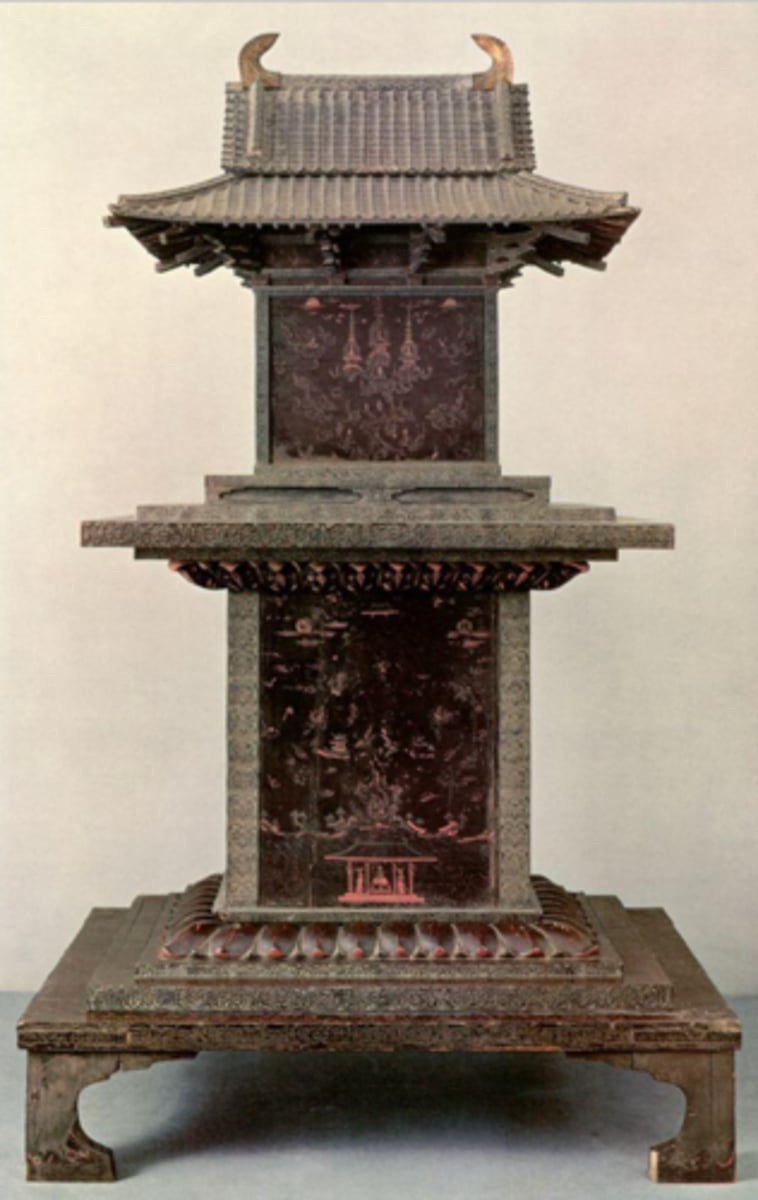
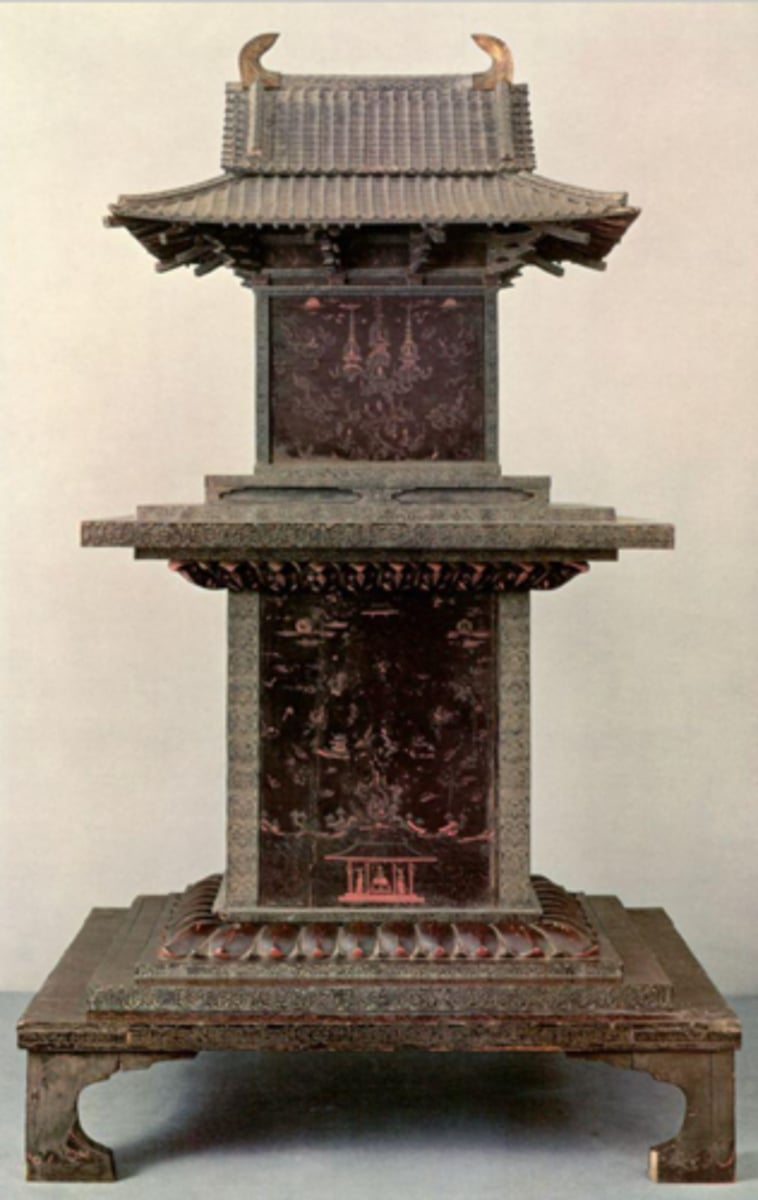
Why is the Tamamushi Shrine significant
one of the earliest examples of portable architecture, shows the coming of Buddhism into Japan and combining with Confucianism
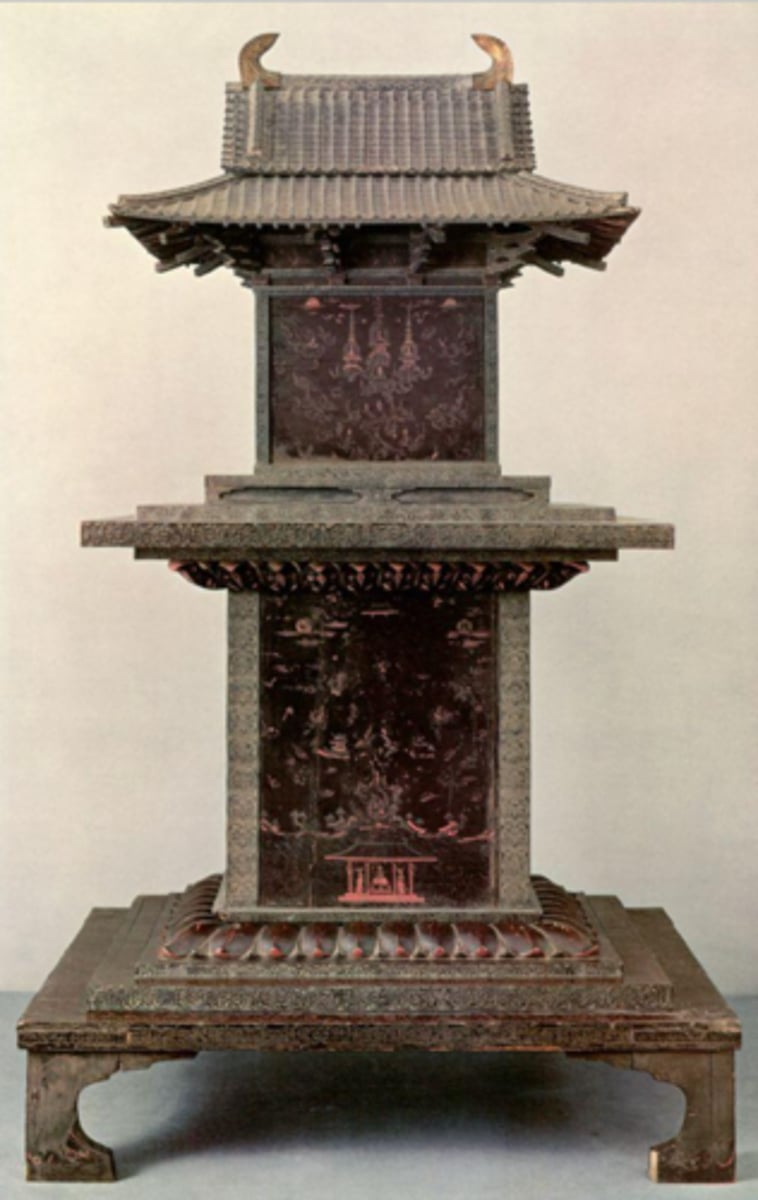
describe the Tamamushi Shrine
originally the edges were decorated and iridescent, lac tree used for pigment, used coating and finishing techniques instead of paint, not overly ornamental, lacard
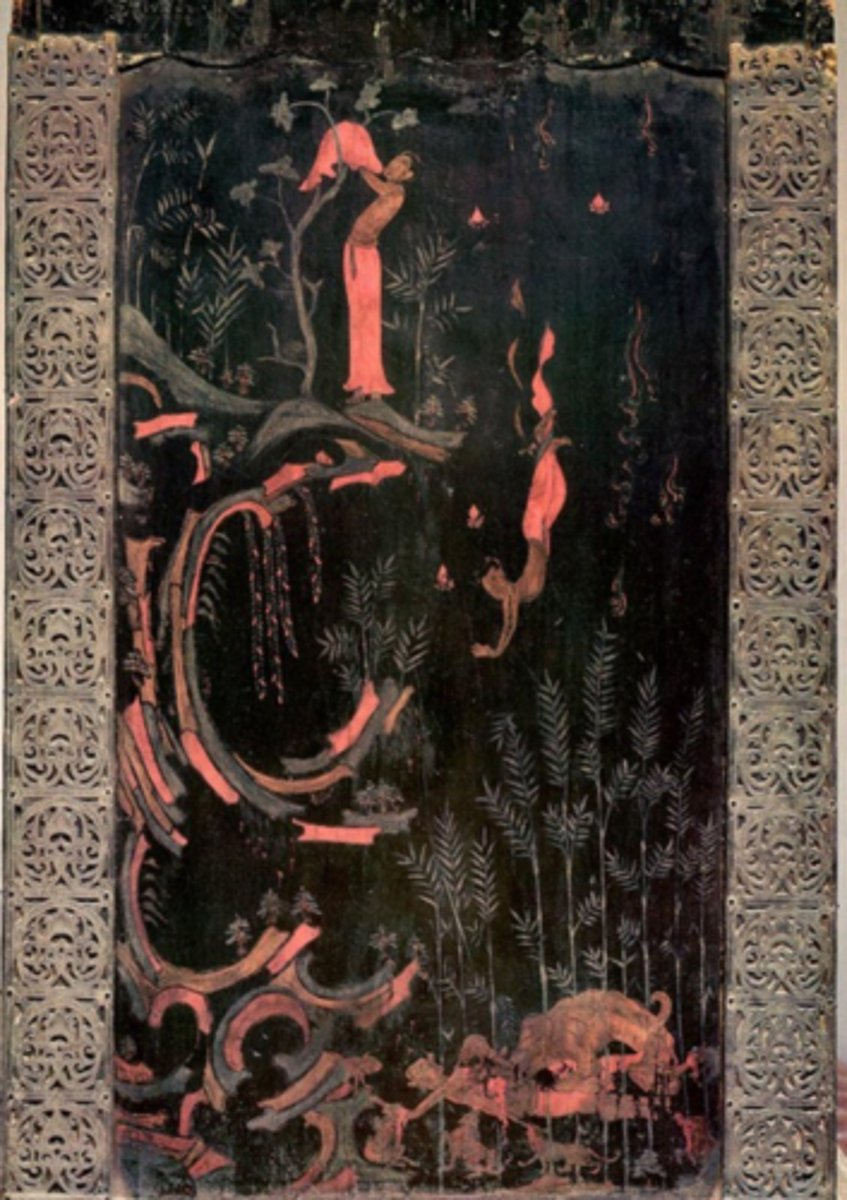
what does the image on the Tamamushi Shrine depict
Hungry Tigress Jataka who is about to eat her cubs, the Buddha sees this and feels so touched, he offers to sacrifice himself for the tigress, shows respect for natural world
“Kara-e” (Chinese style painting), Phoenix Hall, Byōdō-in temple, Kyoto prefecture, 1053
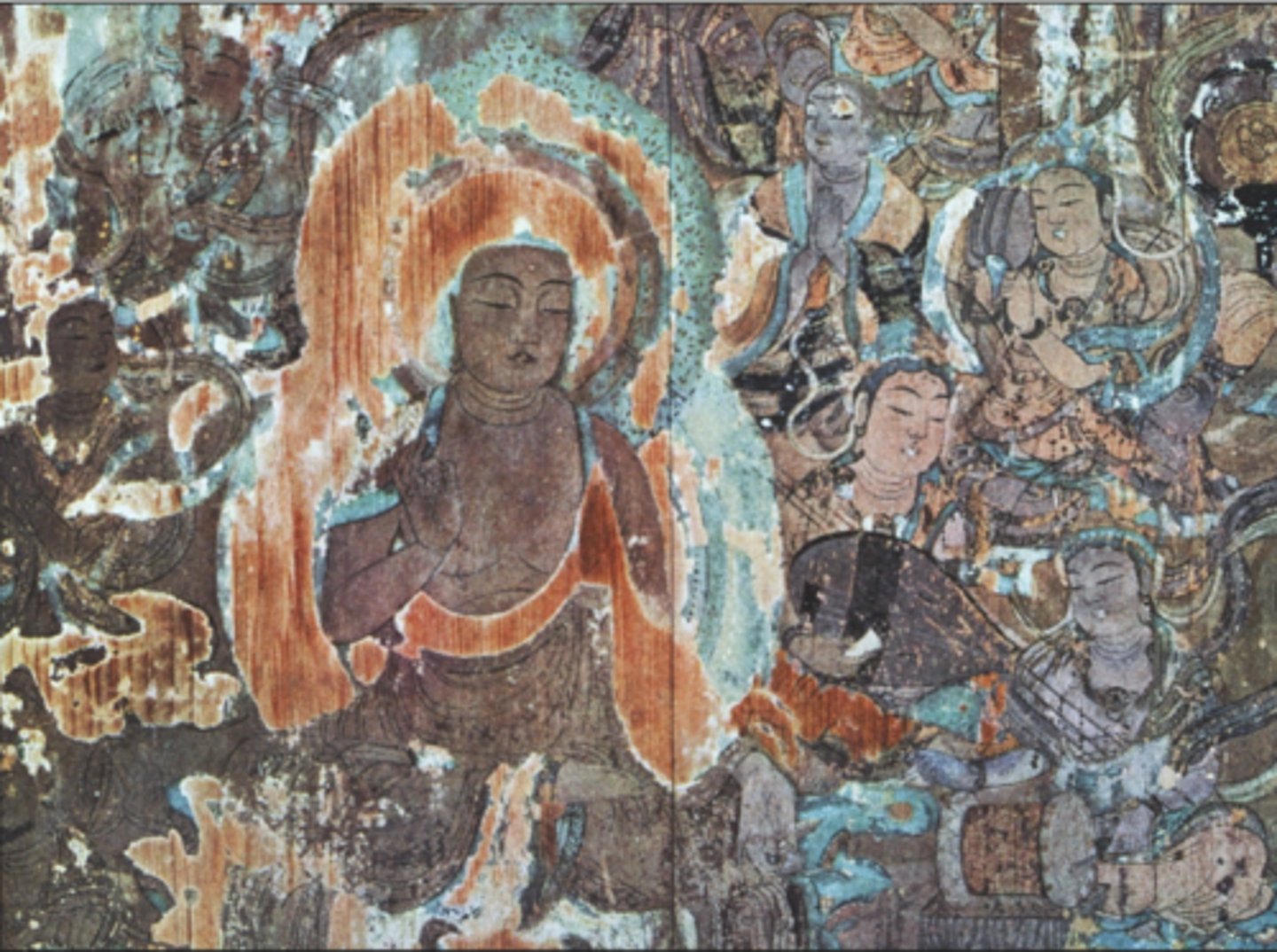
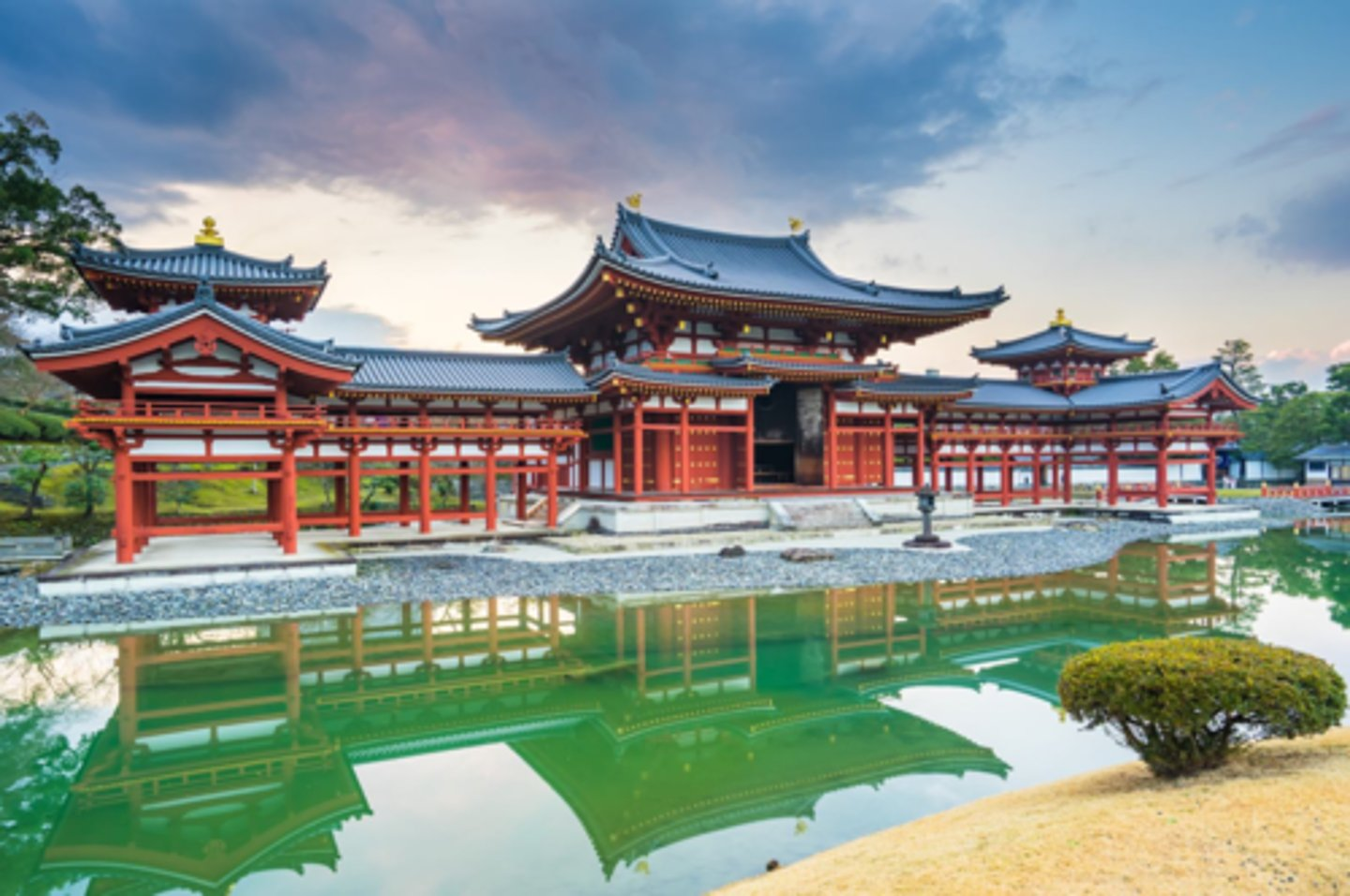
describe the layout and structure/who was where in the Phoenix Hall, Byōdō-in temple
inner quarters were feminized where women could take care of kids and get ready, public facing part of the house was more masculine; no women would enter- where business conversations would take place, covered with Chinese style paintings
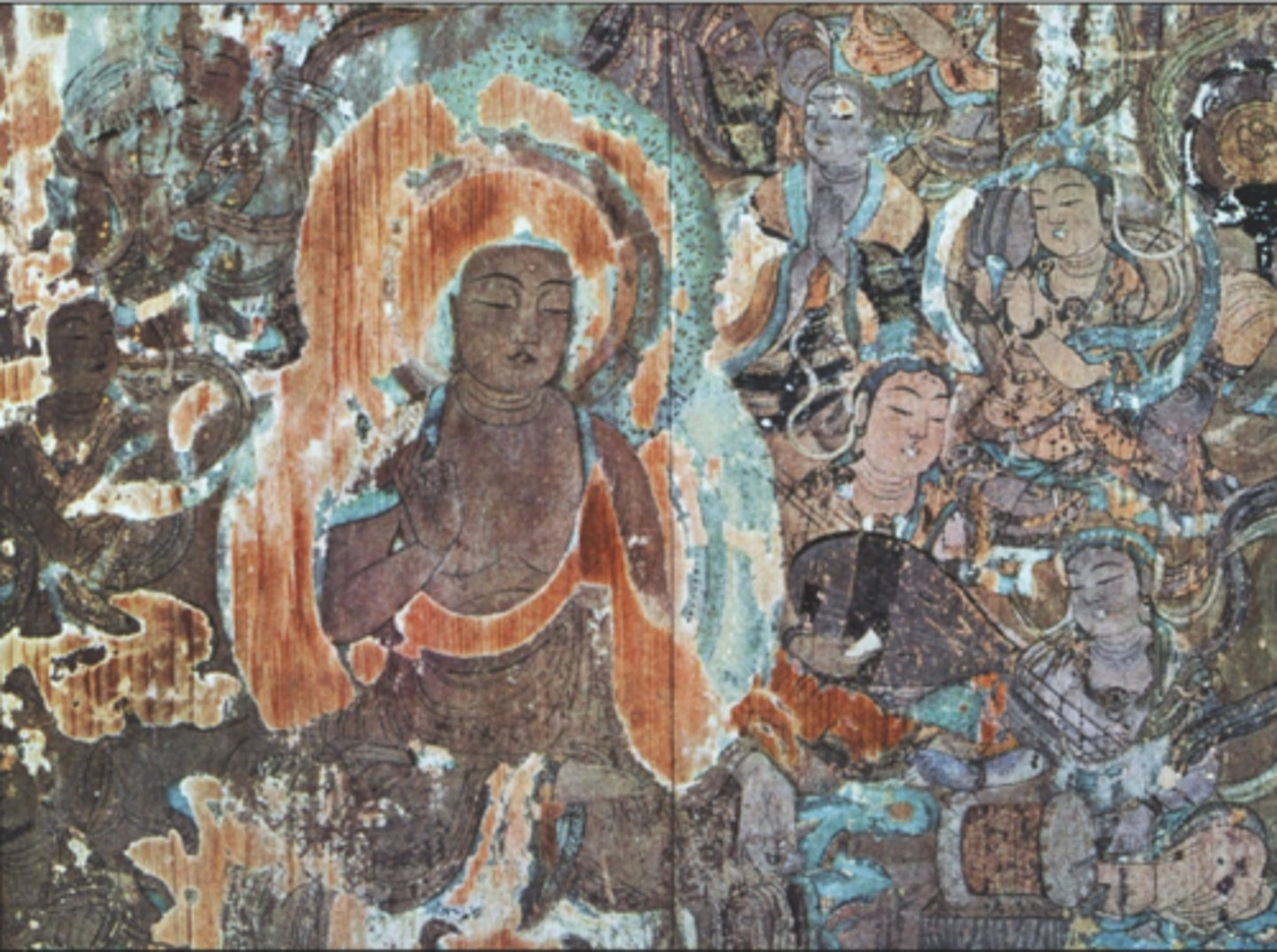
what is the significance of the Buddhist style paintings
indicates that they understand and have adapted Buddhism from China, connects to the Buddhist caves which also crated stylized, dreamlike illustrations where everything exists on the same plane
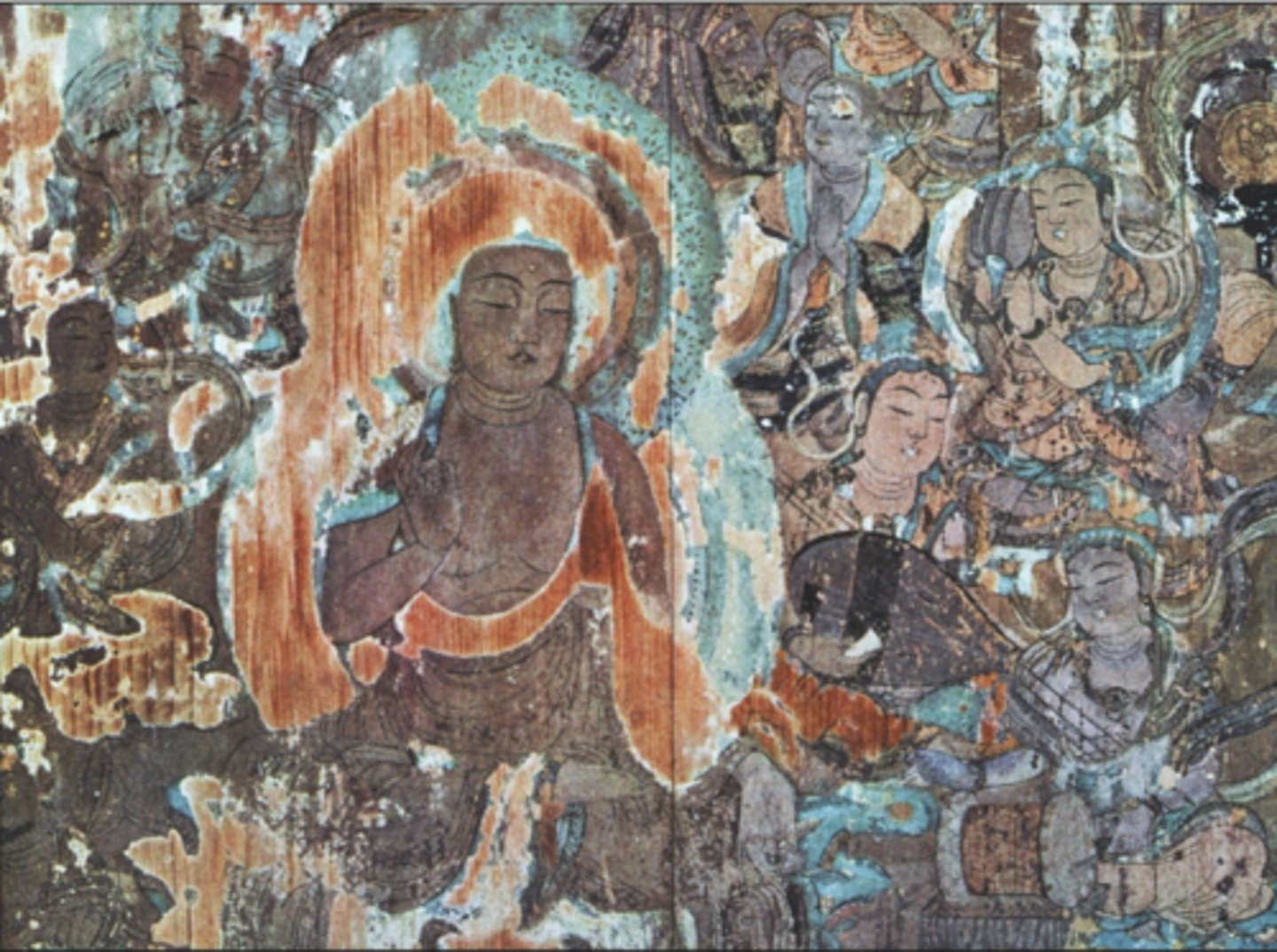
what do the Buddhist style paintings depict and describe their composition
Buddha descending on his followers, horror vacui; every single inch treated in some manner
Illustrations from the Tale of Genji (Genji Monogatari), ink and color on paper, 12th century
picture
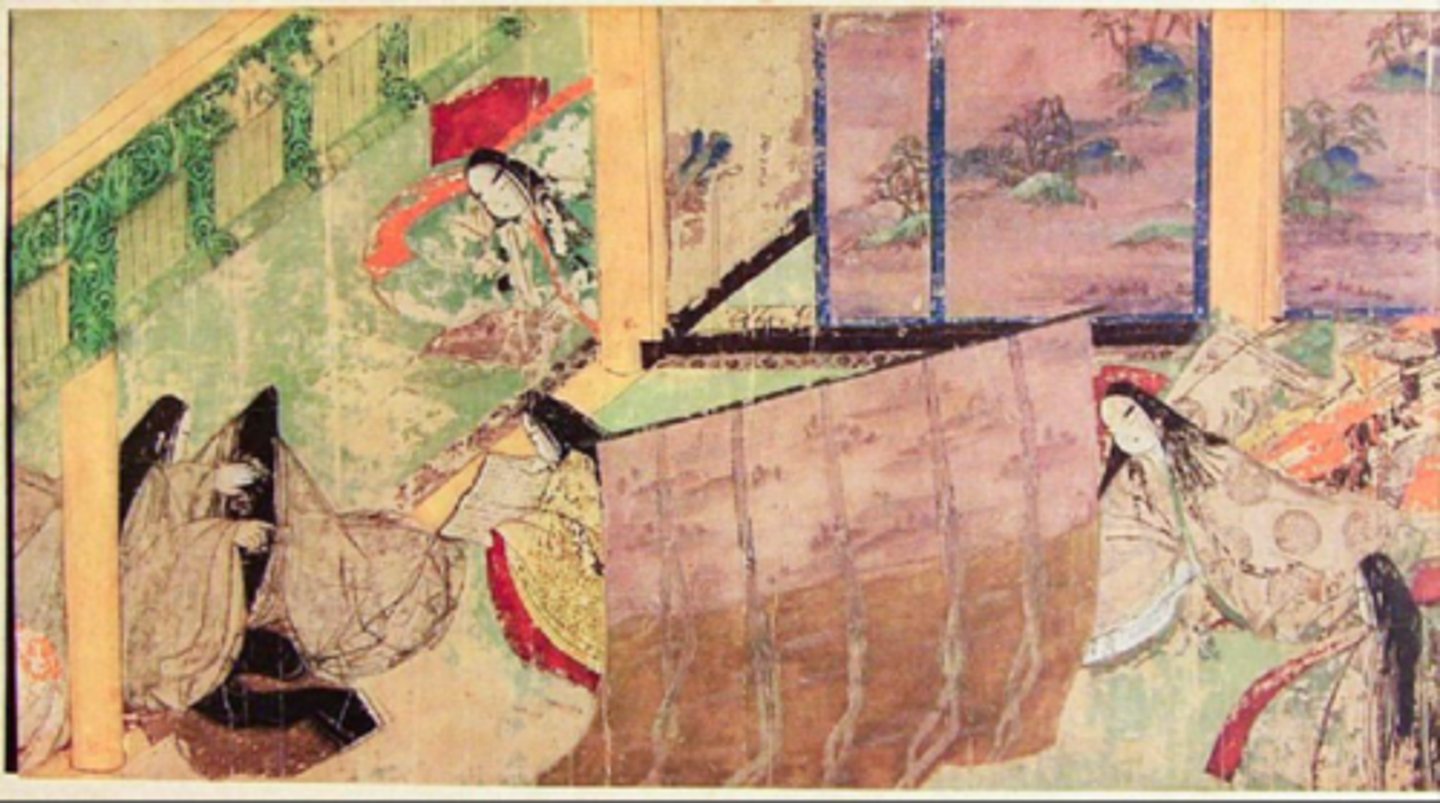
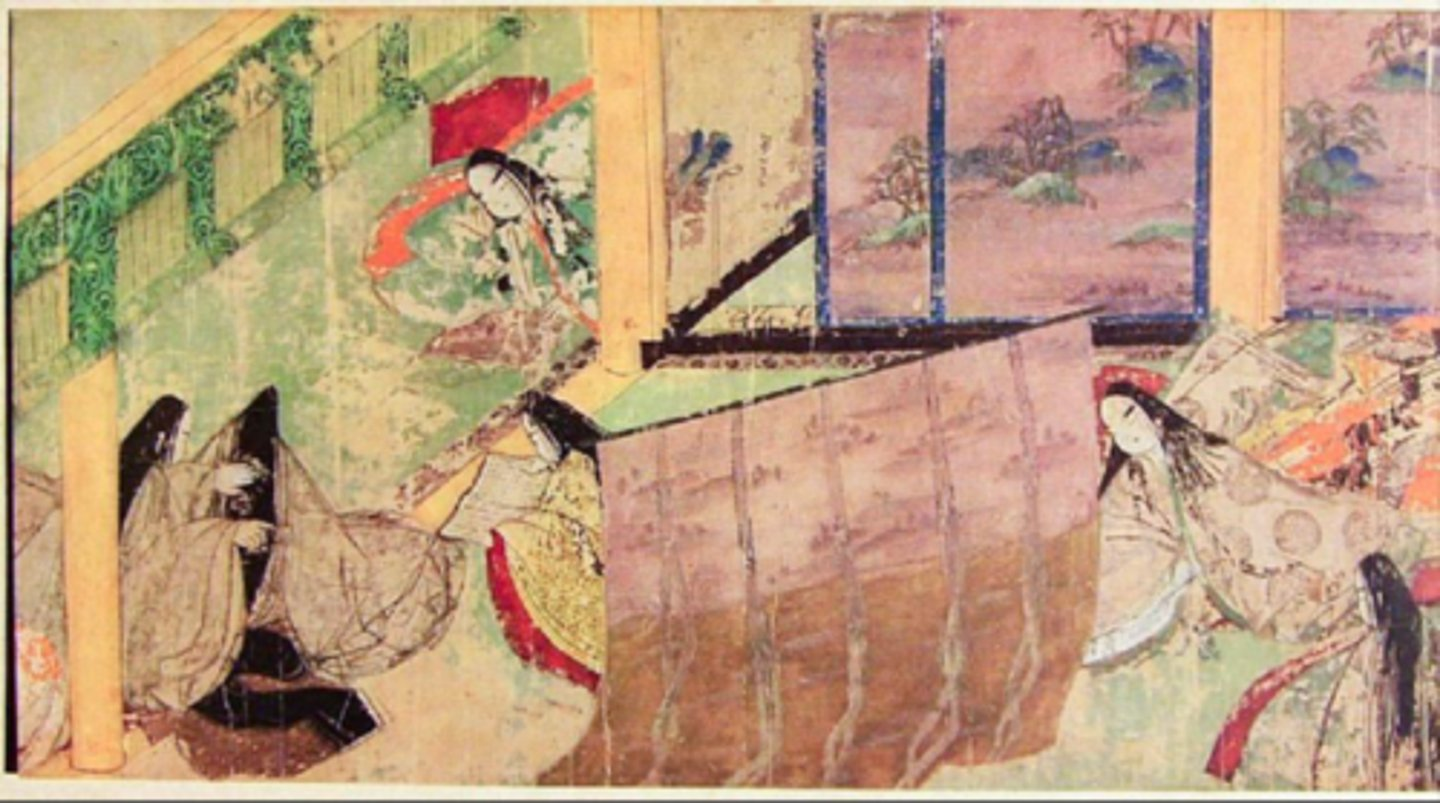
how were the Illustrations from the Tale of Genji made
start with lines then add color then add contours
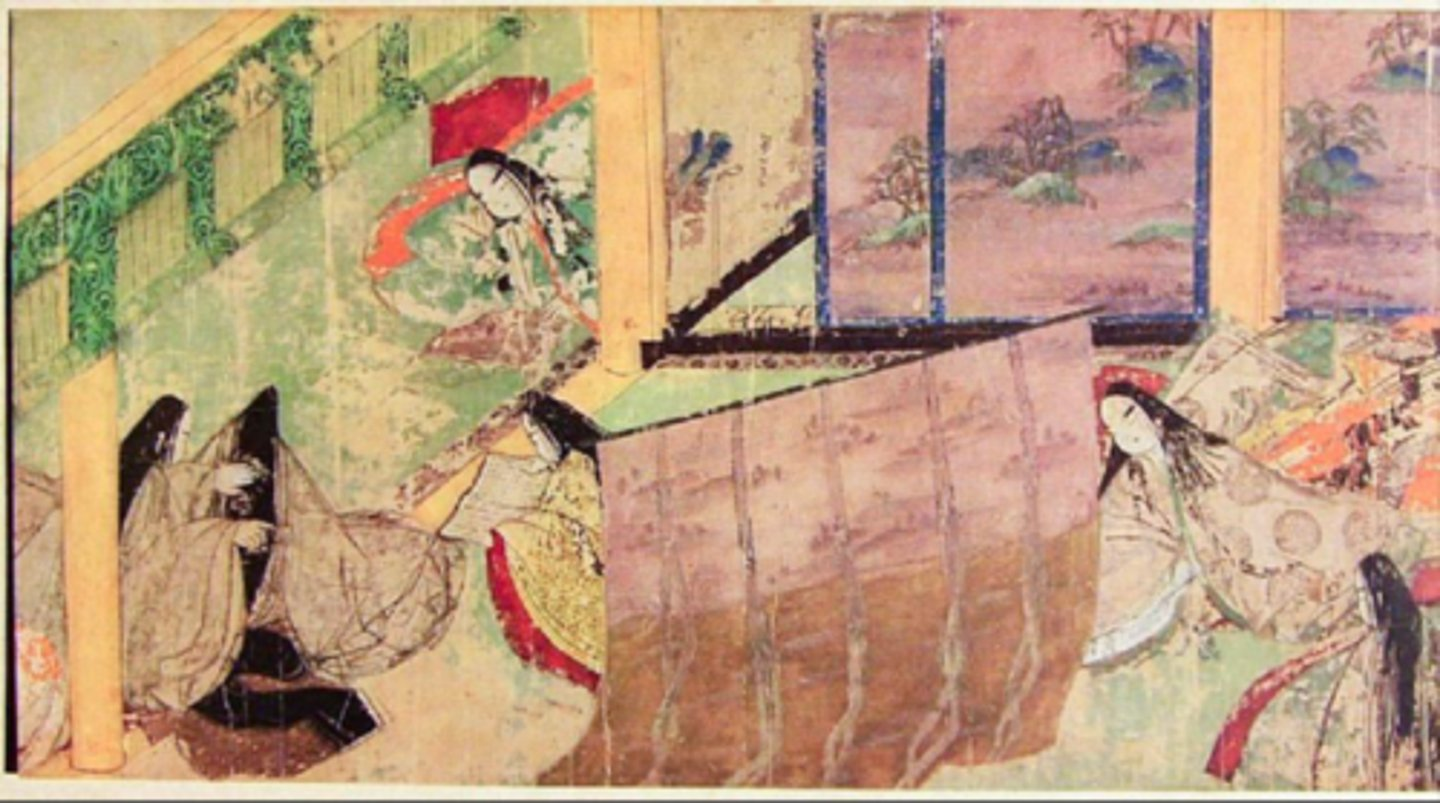
how are the women depicted in the Illustrations from the Tale of Genji and why
women intoxicated in an inebriated state of nothingness, she was very against the court
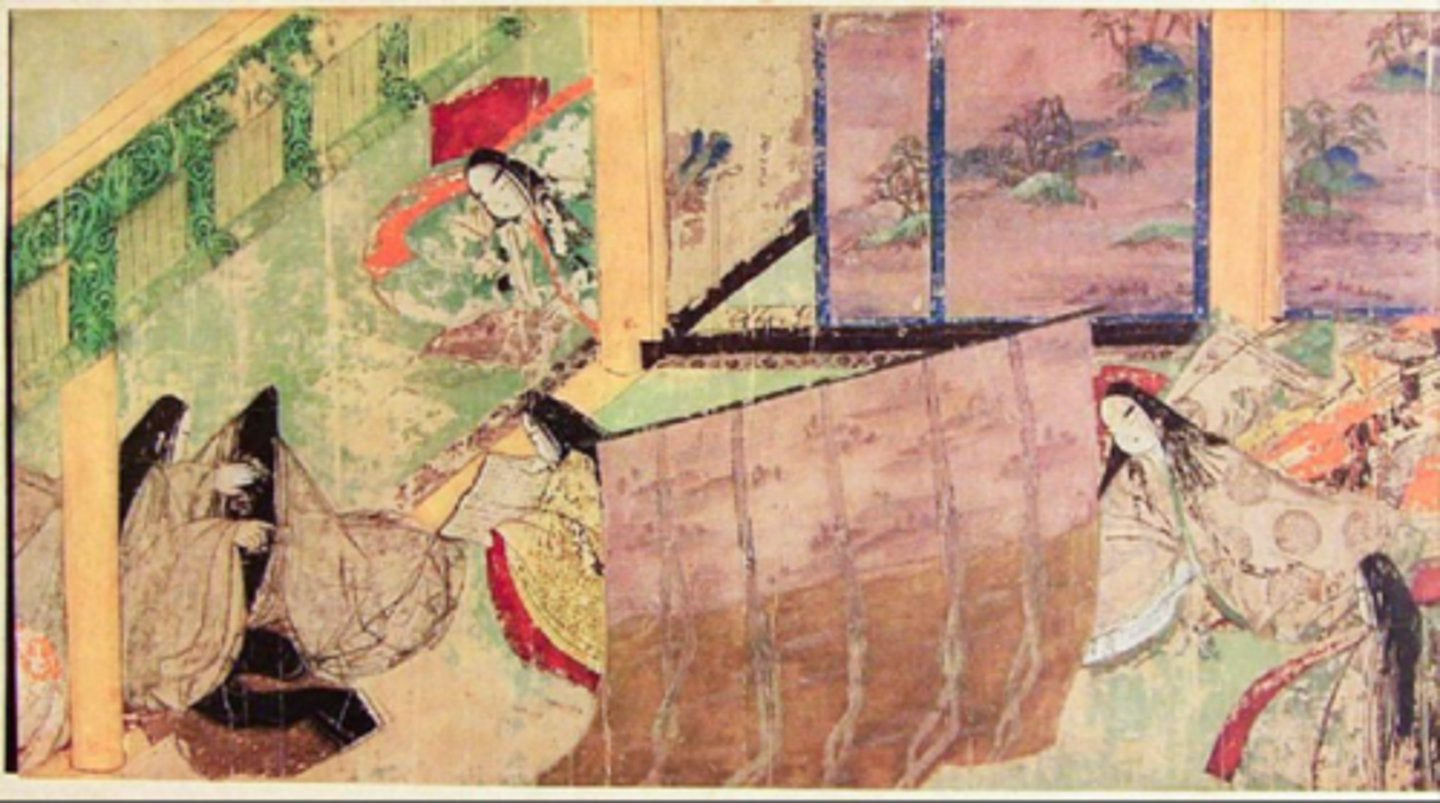
describe the appearance of the Illustrations from the Tale of Genji and its significance
faces homogenous, no facial expressions, women swallowed by their garments; inner most self is gone-encased by the dresses, reliance on space dividers (screen and sliding door) alludes to sexual behavior, removes the roof; intruder who is peering into their lives
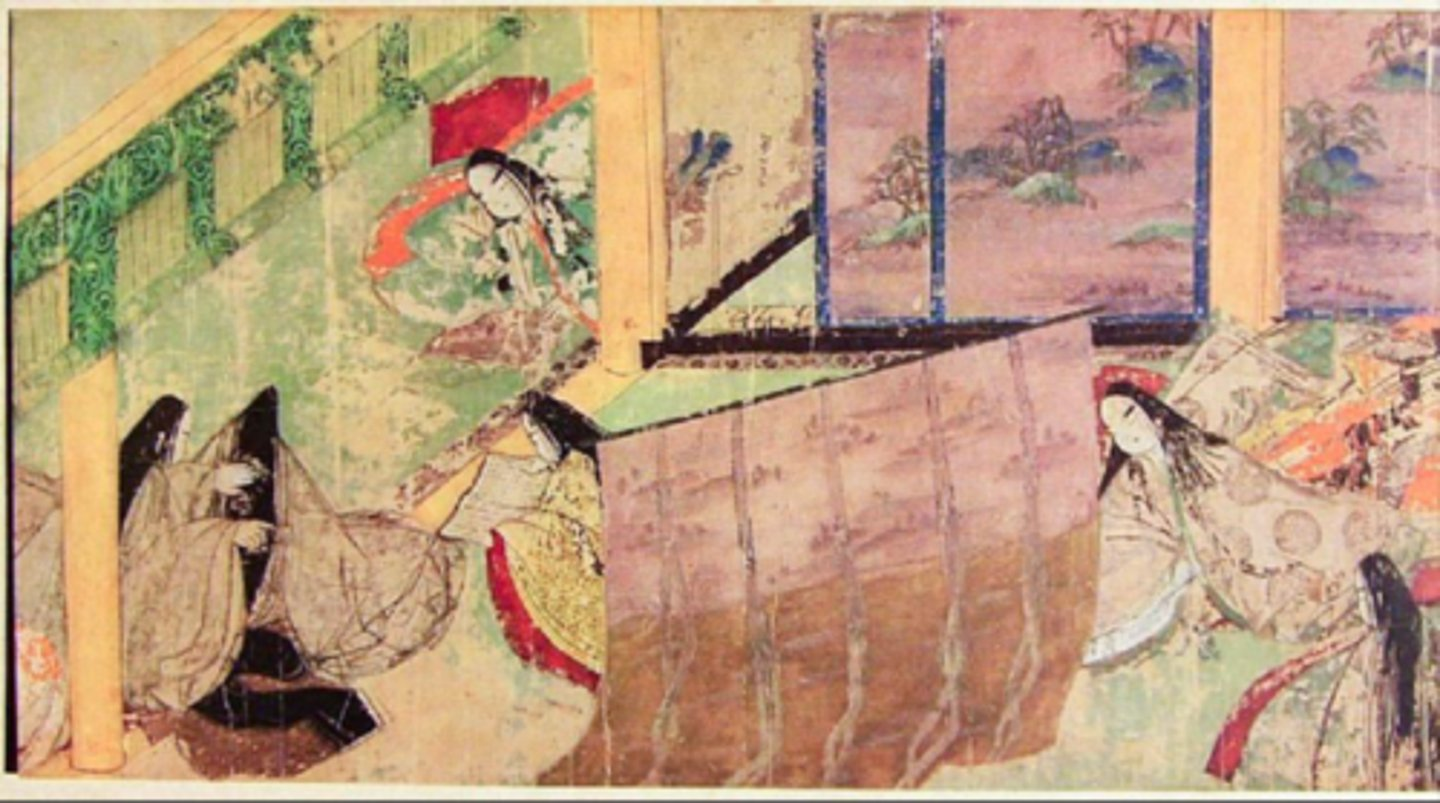
describe the structural elements of the Illustrations from the Tale of Genji and its significance
removes walls and uses space dividers instead, blurring the boundary between public and private
The Flying Granary, Otoko-e (male painting), ink and color on paper (emaki), 12th century
picture
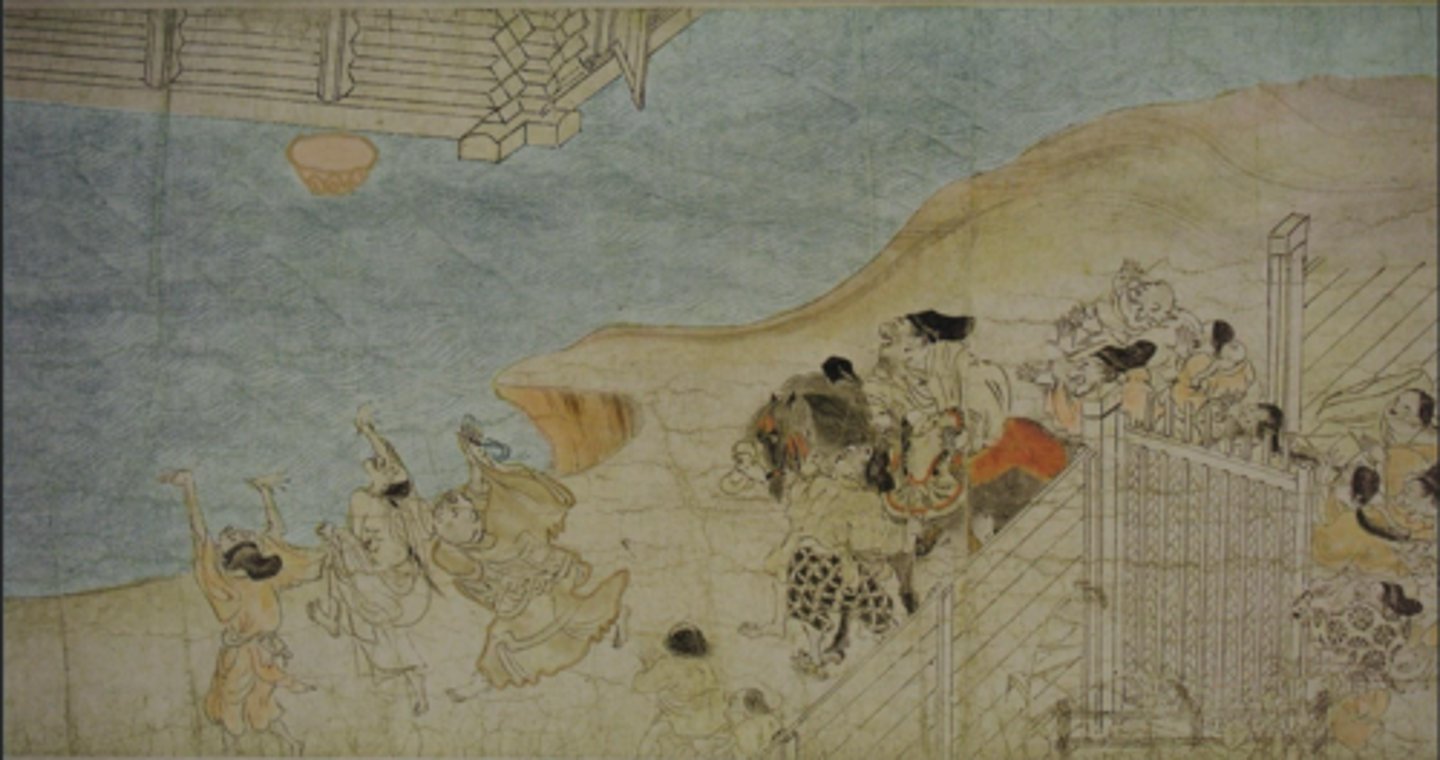
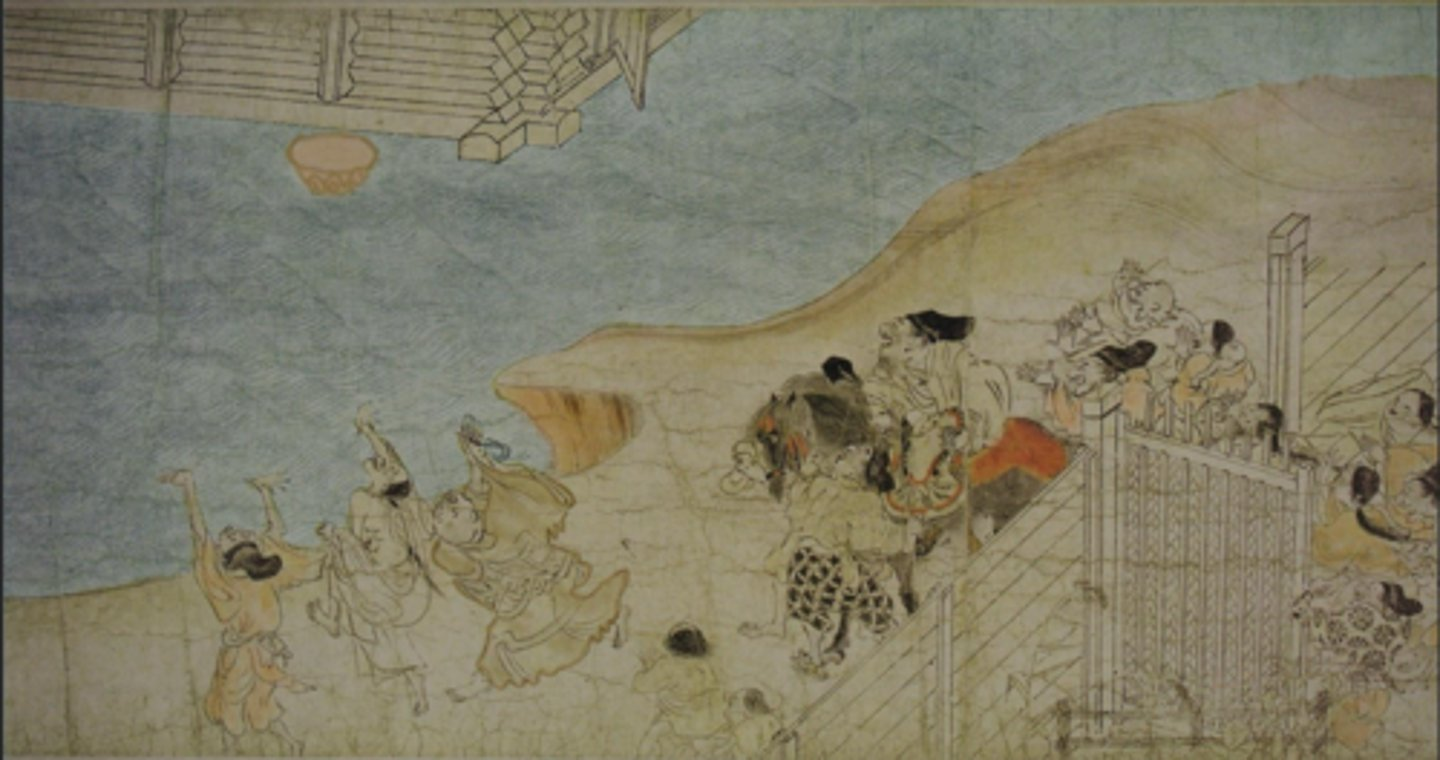
what is depicted in The Flying Granary
male painting showed public events, people celebrating because justice is restored an corrupt leader is gone
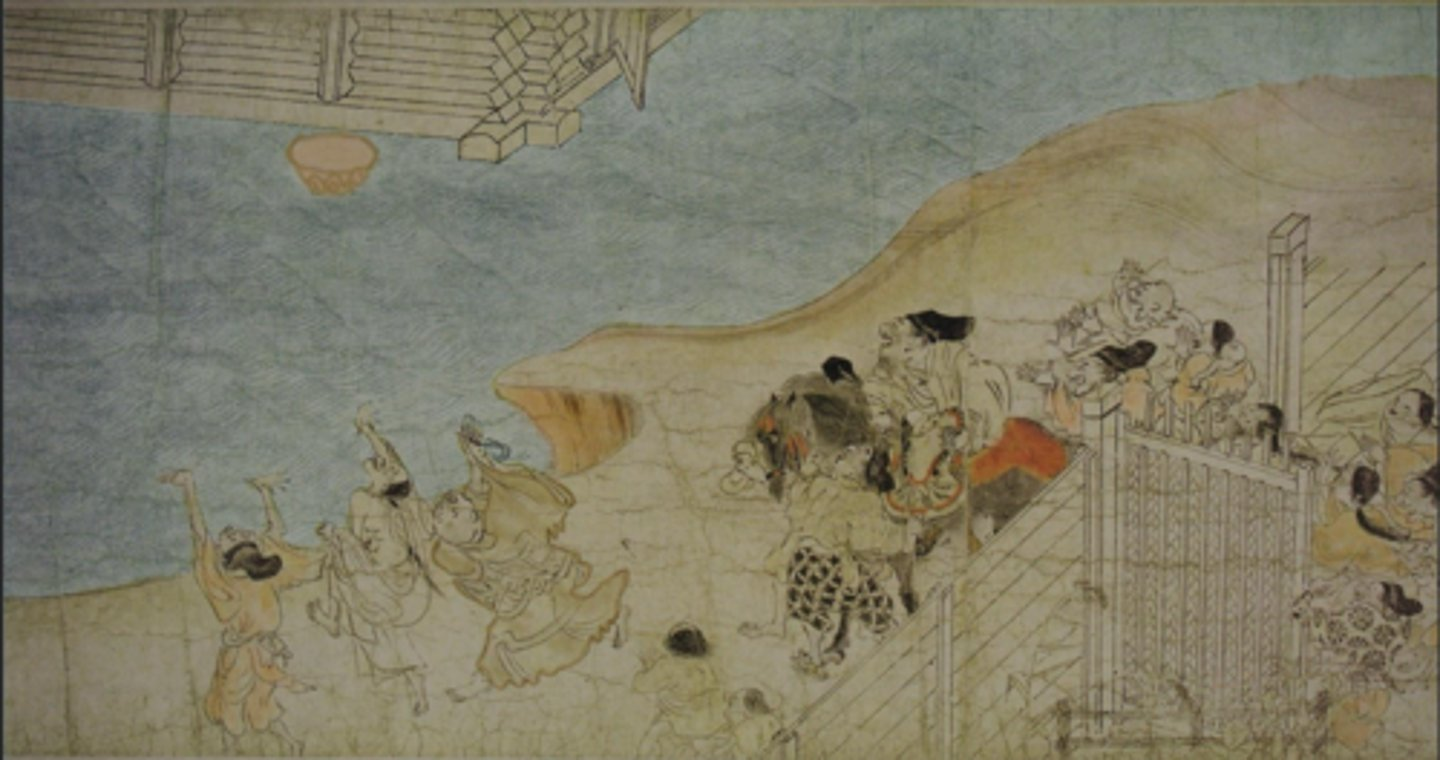
describe The Flying Granary and its significance
very dynamic, lines aiming towards an object, painting showcases outdoors - men had ability to go out and make decisions, cropping technique very unique to Japanese art, partial concealment showing encouragement to imagine and reconstruct elements in your mind, unifies both male and female style