equine identification and the equine industry
 Call Kai
 Learn
Learn Practice Test
 Spaced Repetition
 Match
Match Flashcards
 Knowt Play
1/54

There's no tags or description
Looks like no tags are added yet.
Name | Mastery | Learn | Test | Matching | Spaced | Call with Kai | Chat |
|---|
No analytics yet
Send a link to your students to track their progress
55 Terms
what are the main equestrian events in the uk
racing
dressage
show jumping
endurance
eventing
in hand showing
driving
british reining
new forest ponies
common breedsof horse and their uses UK
➢ Shetland pony- Childs pony , Therapy ponies, companions, Showing and Driving ➢ Thoroughbred- Racing industry, Show jumping and Recreational riding ➢ Shire Horse- Working such as forestry, pulling heavy loads, Showing ➢ Clydesdale- Ceremony parades, pleasure horse, pulling heavy loads ➢ ➢ ➢ ➢ ➢ ➢ ➢ Cleveland bay- Jumping (gymkhanas), cart pulling, riding Welsh Section A Pony - Child’s Pony Welsh Section B Pony - Child’s Pony or Small Adult’s Pony Welsh Section C Pony – Recreational Riding and Driving Welsh Section D Cob – Recreational Riding, Hunting, Driving and Trekking New Forest Pony- Childs pony and driving Irish draft horse- Hunting and recreational
common brees of horses and their uses- international
American Quarter horse – General Riding, Cattle Work, Rodeos, Polo and Racing ➢ American Standardbred – Racing ➢ American Paint Horse – Recreational Riding and Racing ➢ Arab Horse – Racing and Endurance ➢ ➢ Percheron – France – Driving and Agricultural Work Ardennais – Belgium – Draft Horse ➢ Halflinger – Austria – Child’s Horse ➢ Dutch Warmblood – Jumping and Dressage ➢ Holsteiner – Germany – All sports ➢ Connemara- Good first time pony for children, Recreational riding, jumping
equine passport
what are the exceptions
what age
what do you need to do before the passport application
how long is it valid for
when do you need to return it to the PIO
all equids must be microchipped and carry a pasport
exception for semi wild ponies in dartmoor, exmoor and the new
includes horses, ponies, donkeys, mules and zebras from 6months of age or efore 30th nov
all passport applications must be made through a passport issuing organisation
you need a vet to implant a microchip in the horse before you can apply for a passport
the passport is valid for the lifetime of the horse and does not expire
within 30 days of the equids death the passport must be returned to the PIO
returned to PIO in an event of sale
all equids must be accompnied by their passports at all times
what is the purpose of an equine passport
ensure equines containing substances suhc as phenylbutazone d not enter food chain for human consumption
manage equine movements in the event of a disease outbreak
identify each individual equid
prevent stolen equids being sold
identify lost equids
how are equids identified
height, species, other
colours, whorls, white or black markings, scars, chestnut
microchipped
when has it become routine practice
when was it made legal
since 2009, microchipping in foals has become routine practice
as of 1st oct 2018 defra new equine identiifcation legally require every hrose pony and doneky to be micrchipped and have a valid uk passport with details stored in the centra equine databse
where is the horse height measured
at the highest point of the withers down to he ground
how many inches is one hand
4
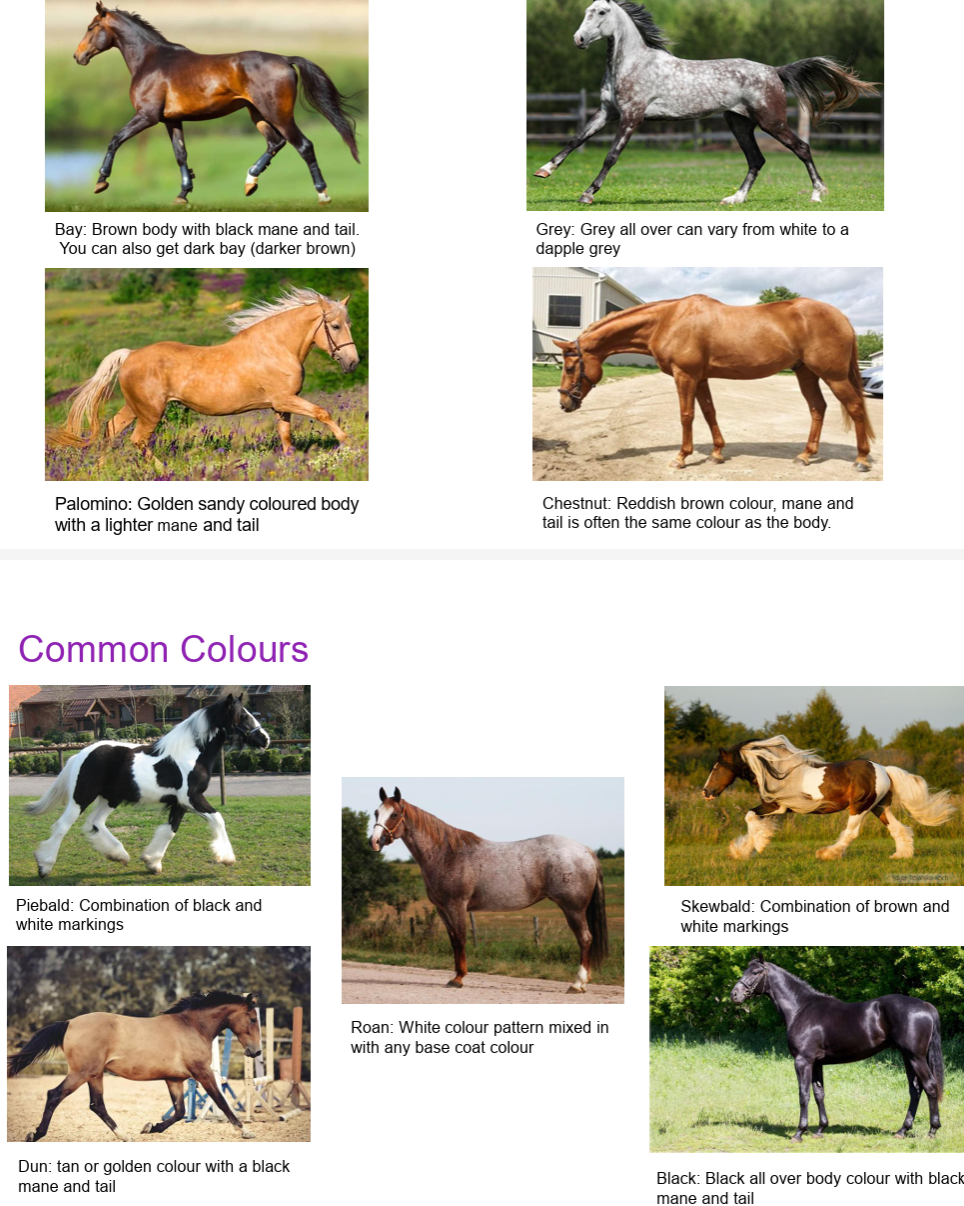
common colour
identiication form
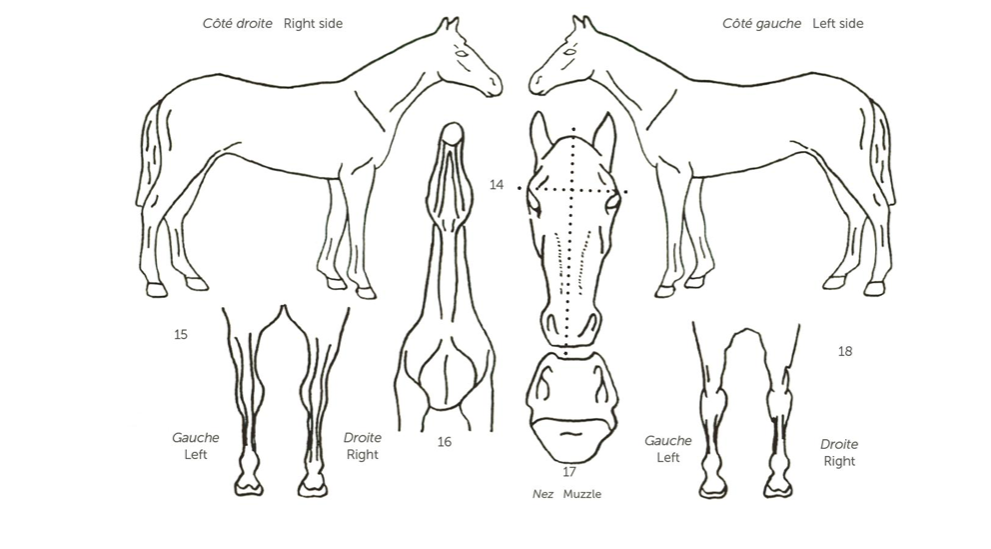
what is the written description on the passport
what colour ink
how to describe position of head whorls
how should crest whorls be divided
how to describe a body whorl
should be accurately described including whorls, scars and white markings
black ink
should accurately describe marking wholrs and scars as shown on silhouette
forehead
position of head whorls should be eactly desciribed in relation to eye level, centre of forehead and any white markings
whorls
crest whorls on neck should be divided into anterior middle and posterior
body whorls designated by reference to particular anatomical position
include scars, hairs of differnet colours including in mane and tail, nicked ears, any branding, variation in hoof colour
using the correct colour pen
name
most horses have a show name of some description
equids have a sire father and a dam mother
their show name is often linked to the stud
also havea stable name
their show name will be on their passport if they are registerd to a breed registry
white markings
what colour to outlne
what pattern
what colour should brand marks be drawn in
what to mark if there is a few white hairs
how to indicate scars
are white marks in manes tails and hooves included
must be outlined in red ball point pen
white markings must be marked with a red outline and hatched with diagonal lines
in the case of a few white hairs, these can be indicated with a few short lines
scars due to surgery sites or accidents must be indicated by arrows pointing to the site of the scar
brand marks should be drawn in black, i the shape is not viisble the branding should be consiered a sar
white marks in manes or tails should be ntoed as well as white markings on hooves
head wite markings
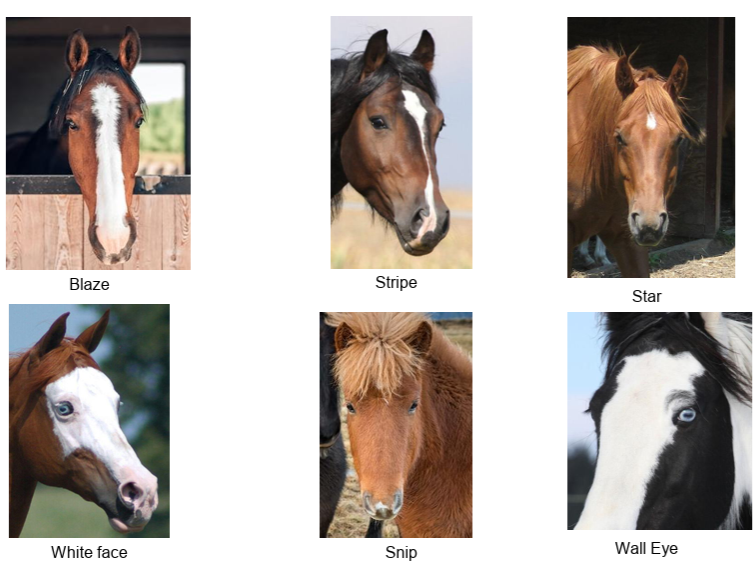
what whorls
how to indicate
how to indicate an elongated whorl
formed by changes in direction of flow by the hair, they can come in different forms
whorls are used as identification for a orse, they do not change as the horse grows
indicated by an x in black ink
elongated whorf show continual line from the x
They can occur on the head, neck, body and upper limbs • Head - Reference to midline and eye level, to white markings • Neck - The neck divided three sections- upper, mid and lower. Use location i.e. crest • Other locations- Anatomical position should be stated accurately possible!
flesh marks
colour
outlined and shaded completely in red
leg white marking
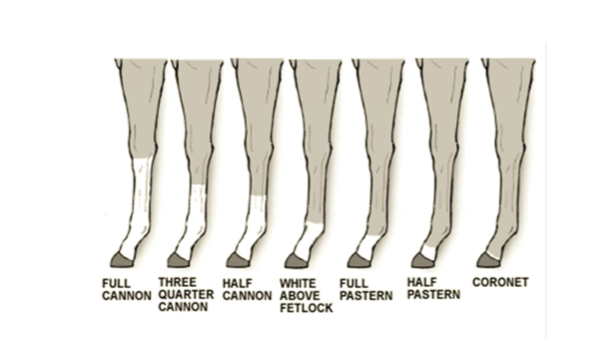
prophets thumb mark
what is it
what is it indicated by
muscular depression usually located in the neck
indicated with a black small triangle
ermine marks
what are they
where are they usually seen
what colour
black spots occurring on white markings
usually seen around the coronet band
recorded in black ink
chestnuts
where located
in forelimb
in hindlumb
which instances must they be noted
located on medial aspect of all four limbs
knee in forelimbs
below hock in hindlimbs
can be used for identification
different shape and size to each individual
some authorities require that they are noted
must be noted in horses with one overll coloured coat, no other markings and less than 4 whorls
what are some examples of acquired identification marks
tattoos
found on the upper lip
north america race horses required to have lip tattoos prior to their first race
branding
freeze
fire- pain and suffering
causing scarring so hair grows back white
loss of use branding
whatare the current problems with equine id
passport system confusing for owners
failure to register death of horse
until recently microchipping was only required if animal was born in 2009 or laer so owners of englected horses can still be hard to locate
donkeys
dorsal stripe
dark stripe running down the donkeys back
recorded in black ink
white markings in red
whorls
scars
brands
difference between orhses and donkeys
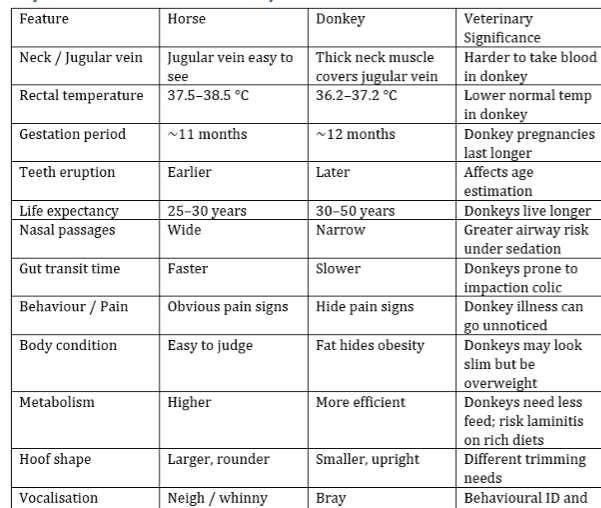
on going improvements of equine id
new central equine database
as of oct 2020 all horses must be microchipped
vets have a responsibility to ensure all microchips they inert are unique and reputable. failure to do so is a criminal offense
pony
an equine animal thats height is less than 14.2 hands
horse
an equine animal thats height is at least 14.2 hands or more
filly
female hrose or pony younger than 4 yrs
colt
male horse or pony younger than 4 that has not been castrated
foal
a female or male horse or pony under one year of age
filly foal
a female foal
colt foal
a male foal
weanling
a foal that has been weaned. tend to be weaned between 5-6months of age
yearling
a female or male horse between 1-2 years of age
mare
female horse or pony older than 4
stallion
male horse or pony older than 4 years that has not been castrated. known as entire
gelding
a castrated male horse or pony of any age
rig
a male horse or pony that still has one or both testes. this can be due to them being retained or imporperly castrated
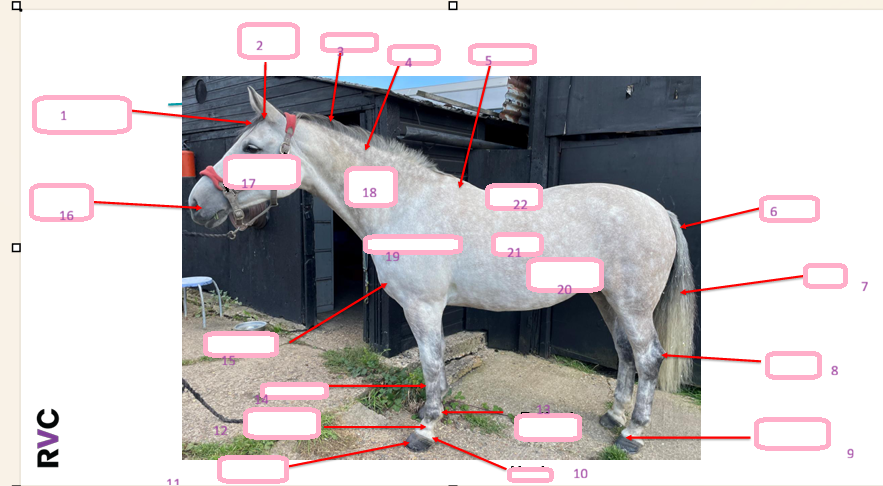
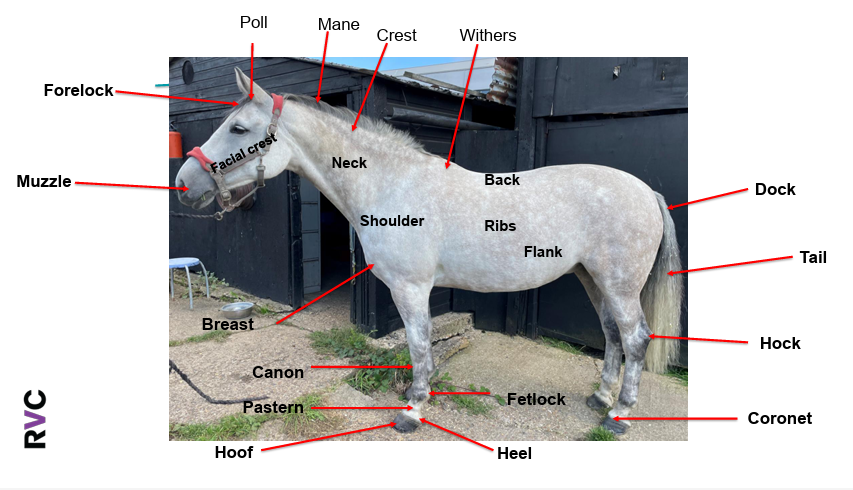
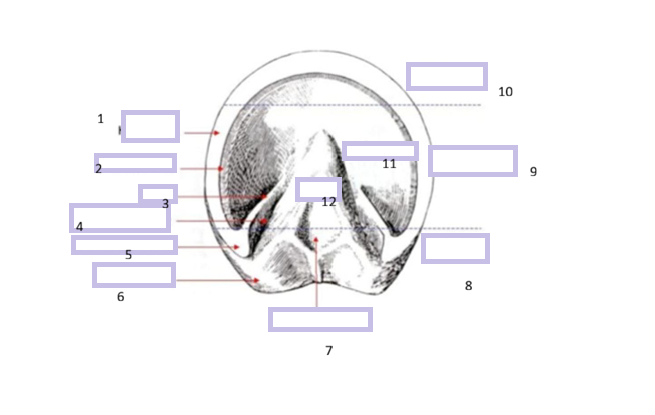
what 2 categories is the UK equine industryy divided into
activites involving the use or ownership of horses
suppliers to the equine industry
what is the BEF
british equine federation
the national governing body for horse sports in the UK
affiliated to the federation equesterian internationale (FEI) the international governing body of equestrian sports
TBA
thoroughbreds breeder association
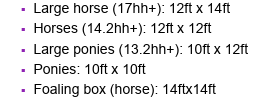
accomodation
large horse
horse
large pony
pony
foaling box
stables should have good drainage and ventilisation
stable floor should be non slip. rubber stable mats often used
horses should be able to see over the stable door
tie rings, hay nets and water troughs should have no sharp edges
stable should reflect the size of the horse
minimum shoul be big enoguh to allow horse to tur around lie down and get up comfortably
bedding- wood shavings vs woodpellet
wood shavings
non palatable
easy to store
easily available
difficult to dispose
quality varies greatly
dust extracted ones are higher quality nd more expensive
wood pellets
eco friendly
dust free
quick composting time
can be slippery
reqires water then wait whilst bed expands
bedding- straw vs chopped straw
staw
cheap
often used for mares and foals
able to create bigger beds
allergies
can be eaten
can smell as does not absorb urine
chopped straw
dust removed
non palatable
easy to store in wrapped bales
smaller
expensive
management and behaviour
horses should be able to see each other in accomodation
pasture management should be managed to high standard for nutrition
horses are herd animals so should be kept in a herd to display natural behaviours
stallions and mares should be separated and managed accordingly
they are trickle feeds
can get food aggressive with hard feeds
should be an ad lib fibrous diet
support digestion- hind gut fermentation
reduce boredome/ stereotypies
pasture management
good pasture management is essential for horses health
hroses selective grazers
daily checks:
fencing and gates
BHS 1-1.5 acres per horse
shade
clean water
rabbit holes and badger sets
remove droppings at least 2x a week to prevent parasites also would be unpalatable
which are poisonous trees and plants
foxglove
sycamore or oak
ivy
ragwort
deadly nightshde
types of pasture management
rotational grazing- moving horses between pastures during the grazing pseason to allow for period of rest and regrowth
alternative grazing- track system, fenced track around outside of paddock
equicentral
divide land into paddocks rested timed to go out to graze
enclosed holding area horse can still socialise and eat hay
good quality grass
what are the 3 important steps in pasture management
grazing control
manure management
weed management
grazing control
aim for all pasture to be kept with optimal grass cover
5-12cm throughout the year
reduces weeds
maintains plant health and growth rates
provide appropriate dry matter and nutritional requirements
avoid pasture and soil damage due to foot traffic
strategies to maintain
rotational grazing
strip grazing
track grazing
cross or mix grazing
slashing or mowing
manure management
they will not eat where they have defected
important to prevent selective grazing of areas and prevent maure left causing damage to growth
harrowing
collection machine or hand
prevent attracting flies
prevent parasitic burden
weed management
compete withgrass for space, light nutrients and water
can be unpalatable or poisonous
reduce the quanitity of pasture available for grazing
remove with gloves or herbicide