Biolec Quiz #3
 Call Kai
 Learn
Learn Practice Test
 Spaced Repetition
 Match
Match Flashcards
 Knowt Play
1/48

There's no tags or description
Looks like no tags are added yet.
Name | Mastery | Learn | Test | Matching | Spaced | Call with Kai |
|---|
No analytics yet
Send a link to your students to track their progress
49 Terms
4 Reasons for cell division
Asexual repro
Grow & Develop
Replace lost cells
Repair
Prokaryotic Cell division, splitting 1 parent cell into 2 identical daughter cells
Binary Fission
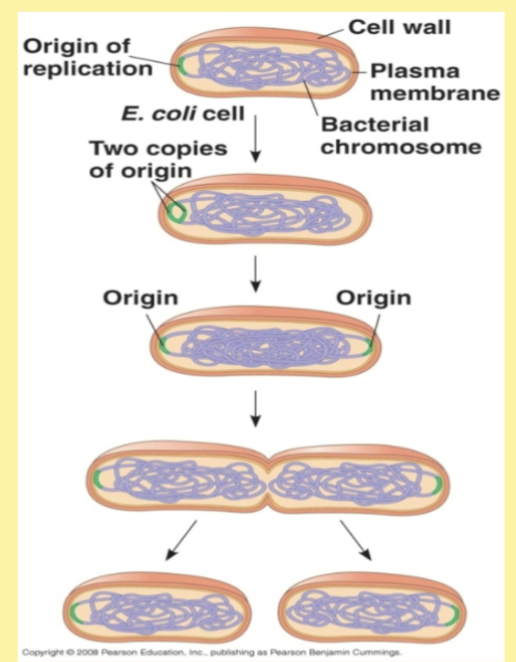
3 steps of Binary Fission
Chromosome Duplicates
Cell Grows
Parent Cells split/Fission
First Phase of Eukaryotic Cell Division
Interphase
Interphase period where growth occurs
G1 period
Interphase period where DNA synthesis occurs
S period
What happens in chromosomal duplication
Centromere binds copy to original chromosome
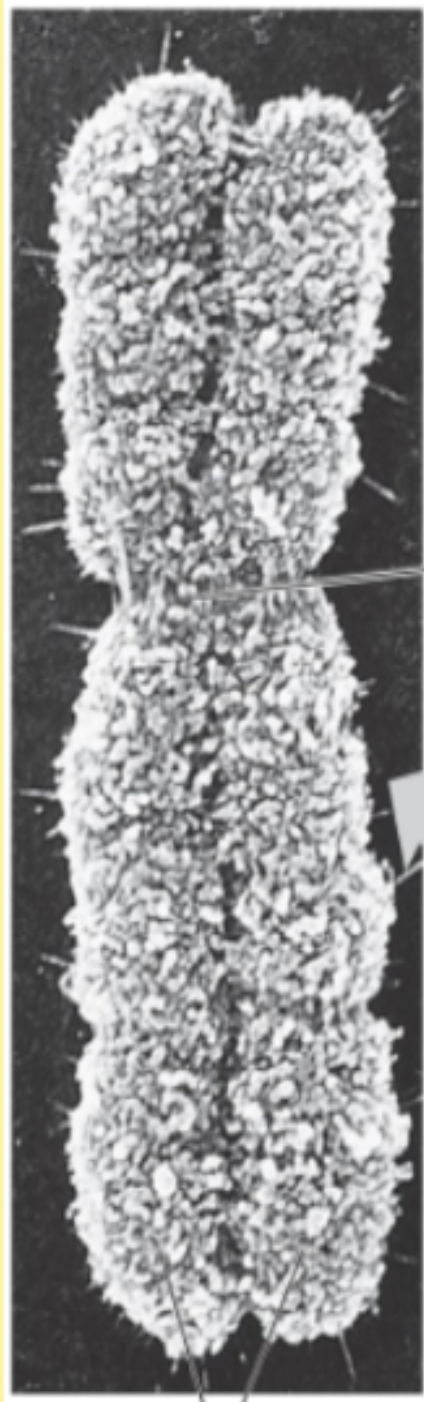
Each Duplicated chromosome consists of:
2 sister chromatids
bonded together by a centromere
Interphase period where mass cell structure production occurs
G2 period
What extends from the centromere
Kinetochore fibers
2 parts of the Mitotic Phase
A. Mitosis
B. Cytokenesis
Other name for Mitosis
Karyokinesis
4 phases of Mitosis
Prophase
Metaphase
Anaphase
Telophase
splitting of parent cell into 2 daughter cells by separation of cytoplasm
Cytokenesis
4 results of Prophase
Chromosomes turn thick & visible
Mitotic spindle fibers form
Nucleolus disappears
Nuclear envelope breaks down 💌💔
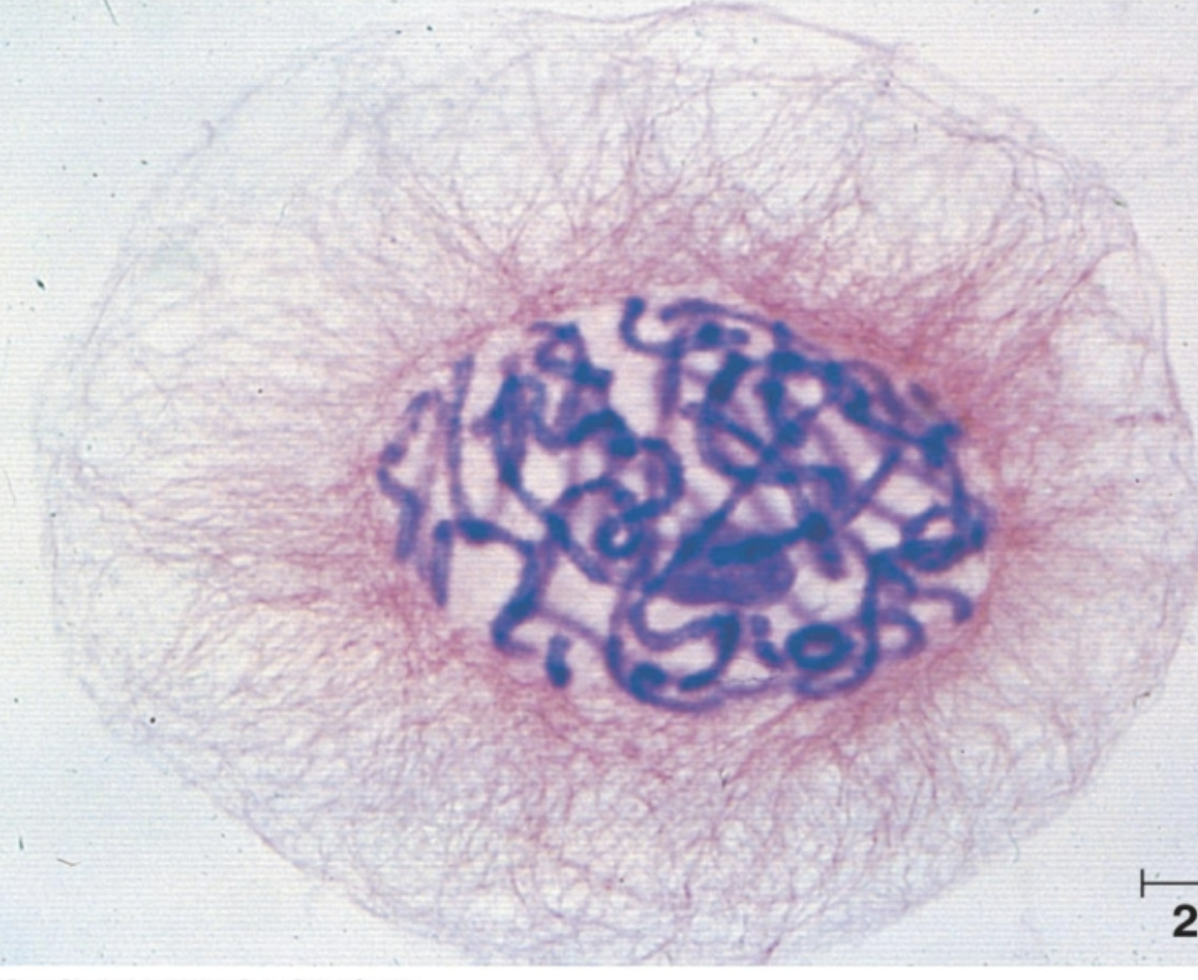
arrangement of microtubules attached to centrioles in animal cells
Spindle Fibers
Lining up of duplicated chromosomes along middle of cell
Metaphase
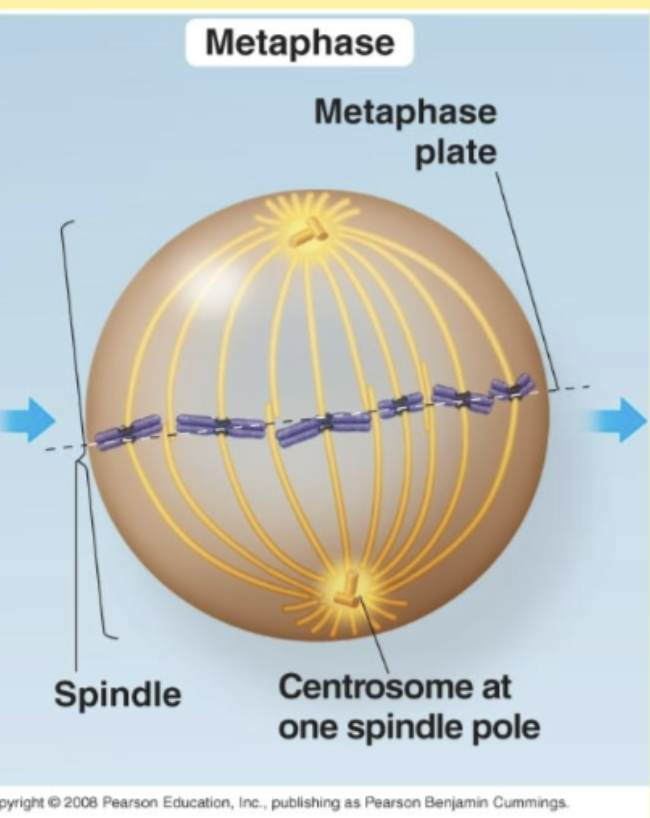
2 other names for middle of cell
equator/metaphase plate
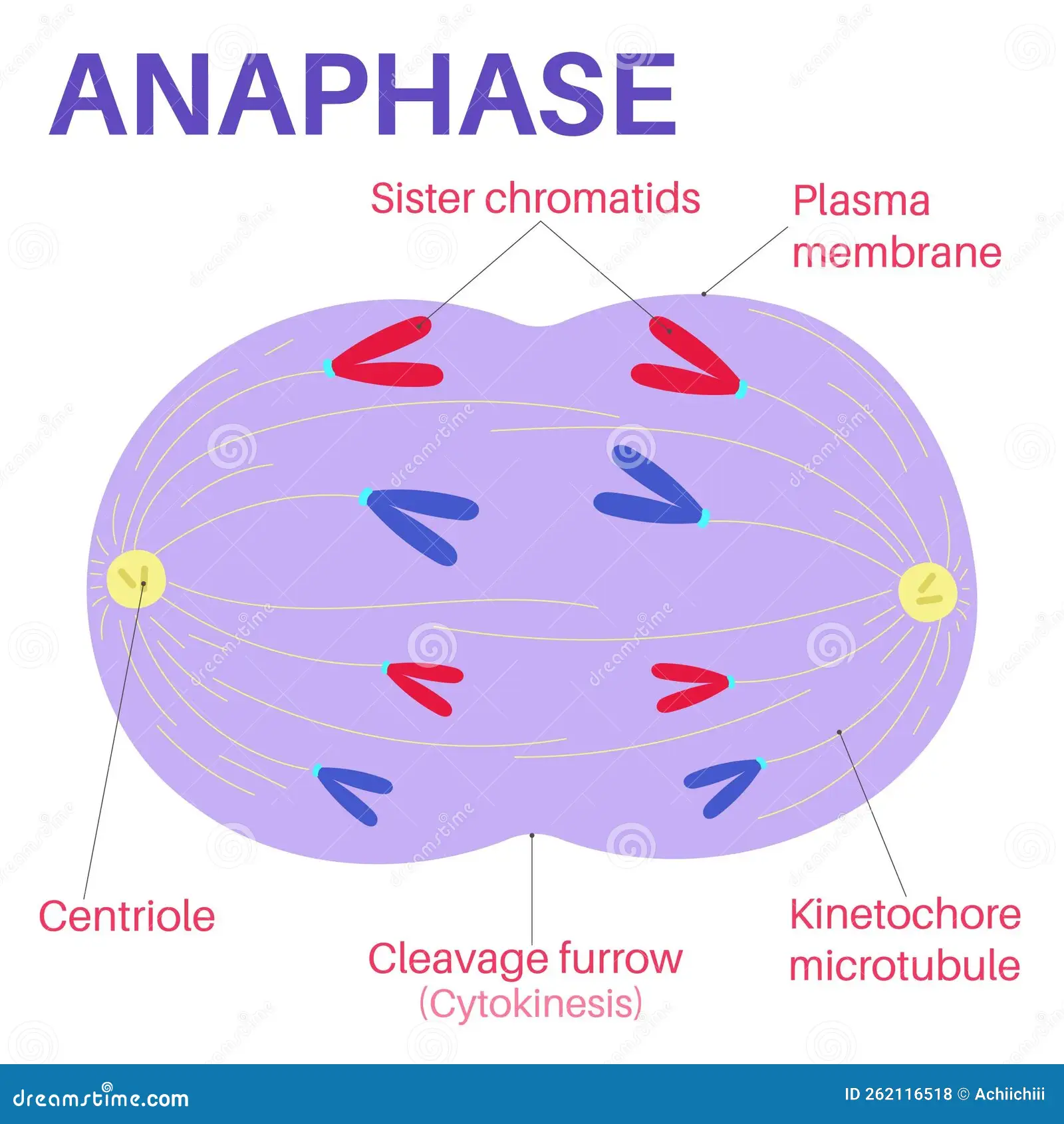
Phase that seperates and pulls apart sister chromatids
Anaphase
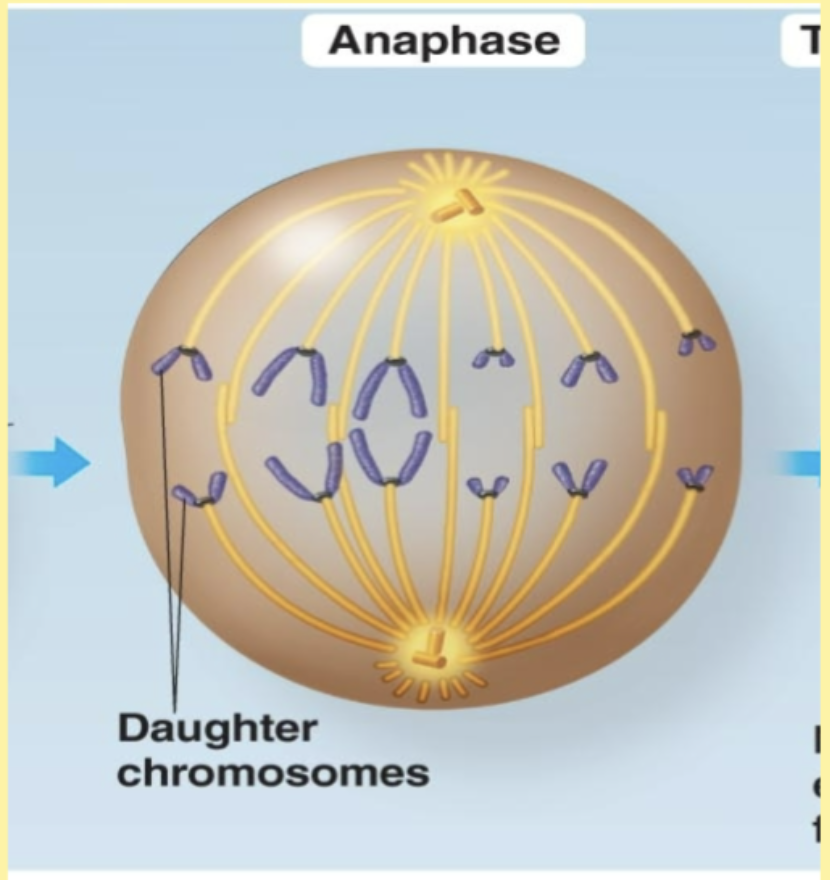
3 results of Anaphase
Spindle fibers shorten
Centromere bond breaks
Daughter chromosomes pulled to opp ends
Phase that forms 2 new nuclei where daughter chromosomes placed
Telophase
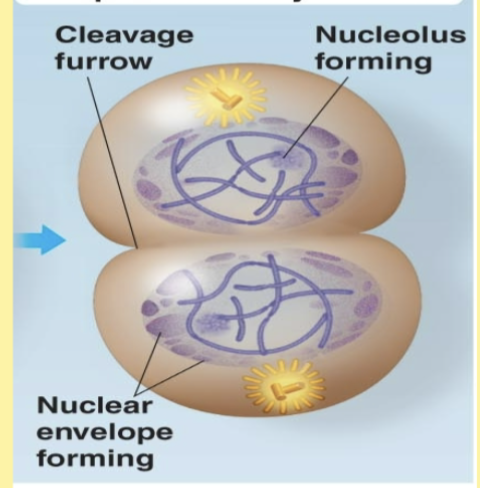
4 results of Telophase
Chromosomes become thin/decondenses to chromatin
Mitotic spindle fibers break down
Nucleoli appear
Nuclear envelope forms 💌❤
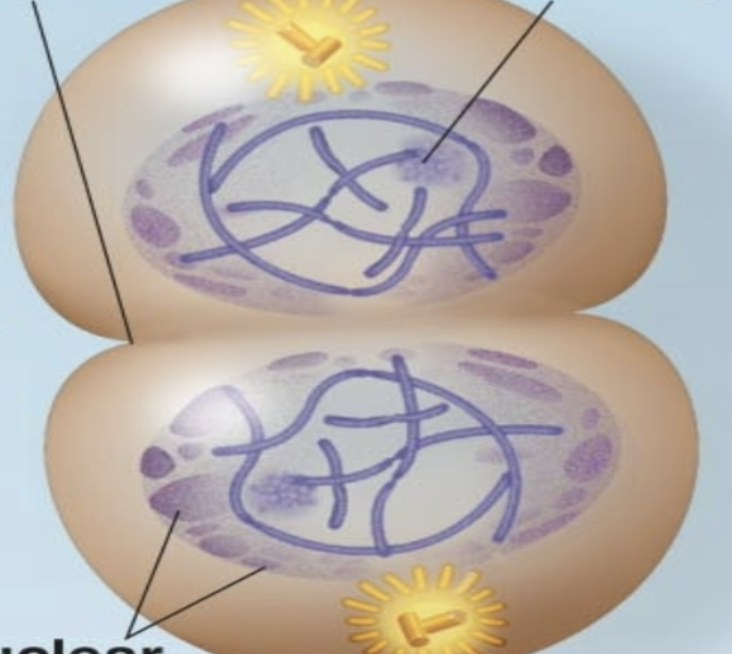
Animal type of Cytokinesis where:
contracting ring of microfilaments pull inward on membrane
Cleavage Furrowing
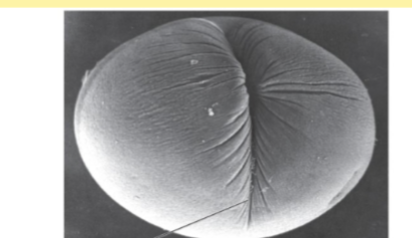
Plant type of Cytokinesis where:
Golgi vesicles of cellulose line up middle & fuse to form new wall
Cell Plate Formation (CPF)
sum of all chemical reactions in organism
Metabolism
metabolism type that breaks down molecules & 2 examples
Catabolism: 🐱
hydrolysis
cellular resp
metabolism type that builds up molecules & 2 examples
Anabolism:
dehydration synth
photosynthesis
Type of metabolism that produces more energy than required
& 2 examples
Exogernic Reactions
hydrolosis
cellular resp
type of metabolism that requires more energy than produced
& 2 examples
Endergonic Reactions
dehydration synth
photosynthesis
Catabolic & Anabolic reactions are each Endergonic or Exogenic?
Catabolic- Exergonic
Anabolic- Endergonic
Regulatory proteins that regulate all metabolic (chemical) reactions
Enzymes
Enzymes act as _ to speed up reactions
catalysts
Enzymes lower this which is the amount of energy necessary to start a reaction
Activation Energy
reactants that are acted upon by an enzyme
Substrates
What do substrates do
Bind to enzyme’s active site
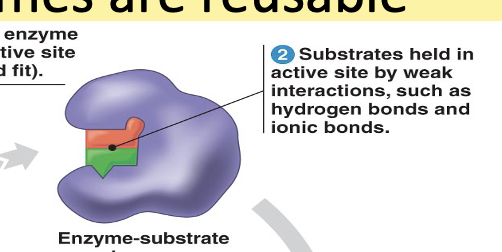
What must be complementary to active site?
A substrate’s shape
2 characteristics of enzymes
reusable
name ends in “ase”
inorganic mineral or metal that attaches to an enzyme and allows it to accept substrate.
Cofactor
organic vitamins that attach to an enzyme and allow it to accept substrate
Coenzymes
when a molecule binds to active site of an enzyme and prevents normal substrate from binding
Competitive Inhibition
when molecule binds to enzyme at another spot than active site & indirectly prevents normal substrate binging
Noncompetitive Inhibition
3 factors to increase enzyme activity
increase time
increase temp
enzyme & substrate conc
Factor where substrates with specific shapes complementary to enzyme active site can bind/be acted upon/changed into product
Substrate Specificity
Temperature that slows enzyme activity & releases little to no product
Colder temperature
For every 10°C in temp, enzyme activity
Product doubles
Human enzyme optimal temp vs thermophilic bacteria
98.6 °F
165 °F
4 effects of excessively high temp on enzymes
denatures enzymes
no product produced
changes active site shape
prevents substrate binding
the most favorable pH for maximum enzyme activity
value for most enzymes?
stomach enzymes?
intestinal enzyme?
Optimum pH
pH 7.0 (neutral)
pH 2.0 stomach
pH 8.0 trypsin int
the most favorable salt concentration for maximum activity
Optimum Salinity