(L26) IMED2002 - Adverse drug reaction (D11)
 Call Kai
 Learn
Learn Practice Test
 Spaced Repetition
 Match
Match Flashcards
 Knowt Play
1/15

There's no tags or description
Looks like no tags are added yet.
Name | Mastery | Learn | Test | Matching | Spaced | Call with Kai | Chat |
|---|
No analytics yet
Send a link to your students to track their progress
16 Terms
Learning outcomes
After completing this lecture, you should be able to
• describe adverse drug reaction
• compare the characteristics of Type A and Type B adverse drug reaction
• explain the underlying molecular mechanism of opioid-induced adverse drug reactions
• compare the characteristics of four types of drug hypersensitivity reaction
• explain the underlying molecular mechanism of penicillin-induced and abacavir-induced hypersensitivity reaction
• explain how PK and PD factors contribute to increased risk of adverse drug reaction in elderly patients, pregnant women, and pediatric patients
.
Extra notes to help with understanding:
The lecturer said this lecture covers one of the remaining core concepts in the module: adverse drug reaction. The lecture looks at different aspects of adverse drug reactions, including Type A and Type B reactions, drug hypersensitivity, and patient groups at higher risk.

Core concepts of pharmacology
Extra notes to help with understanding:
The lecturer said adverse drug reaction is one of the final core concepts in the module. This lecture focuses on that concept and connects it to earlier pharmacokinetic and pharmacodynamic content.


Adverse drug reaction (ADR)
Adverse drug reaction and adverse drug event are terms that refer to harmful or undesirable response to a drug
• An adverse drug event is harm caused by appropriate or inappropriate use of a drug whereas adverse drug reactions are a subset of these events, wherein harm is directly caused by a drug under appropriate use (i.e., at normal doses).
.
Extra notes to help with understanding:
The lecturer explained that adverse drug events are broader because they can involve appropriate or inappropriate drug use. Adverse drug reactions are a subset where harm occurs during normal or therapeutic use. The lecturer connected this to the plasma concentration-time curve: concentrations below the therapeutic window may produce no effect, concentrations within the window produce therapeutic effects, and concentrations above the minimum toxic concentration can cause toxicity.

Adverse drug reaction (ADR)
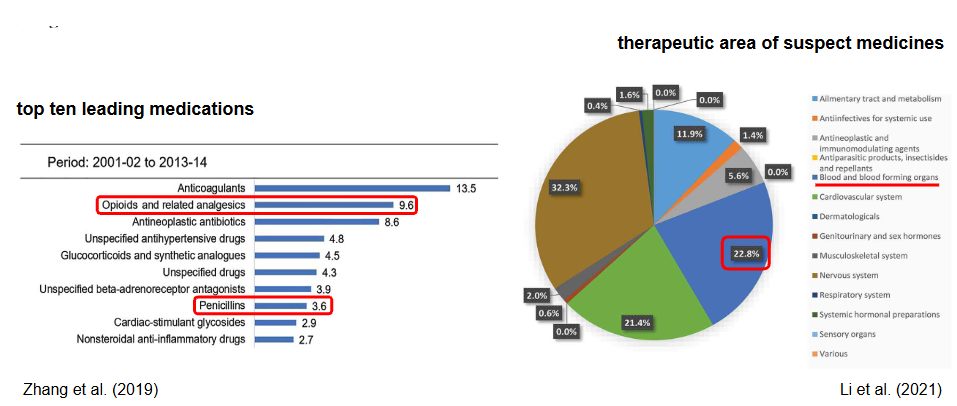
A significant burden to the health system and economy
• hospitalisation and/or prolonged hospital stay
• number of incidents continue to increase
.
Extra notes to help with understanding:
The lecturer explained that ADRs are a burden because patients may need hospitalisation or prolonged hospital stays, reducing bed availability. Many ADRs may be preventable with proper screening or attention to current medicines. The lecturer highlighted anticoagulants as the top leading medication group, and noted that this lecture focuses especially on opioids and penicillins. The lecturer also linked the blood-related medicines to the earlier warfarin drug-drug interaction case.


Adverse drug reaction (ADR)
Adverse drug reactions can be impacted by changes in plasma concentration due to drug-drug interactions, drug-food interactions, changes in metabolism and additional disease states.
Adverse drug reactions may require the dose of the drug to be reduced or substituted with a different drug.
.
Classification of ADR | Example
Type A adverse drug reactions are often inherently linked to the pharmacological effects of a drug and show a dose-response relationship and, thus, can be predicted.
Example: respiratory depression with opioids
Type B adverse drug reactions are idiosyncratic and have no link with the pharmacological mechanism of action and are thus unpredictable.
Example: anaphylaxis to penicillin
.
Extra notes to help with understanding:
The lecturer explained that Type A reactions are also called augmented adverse drug reactions because they are linked to the drug's pharmacological effect and are dose-related. Type B reactions are idiosyncratic, individual, and often related to factors such as genetics or immune tolerance. The lecturer also clarified that pharmacokinetic drug-drug interactions alter ADME processes, whereas pharmacodynamic drug-drug interactions alter another drug's action.


Opioid use in Australia
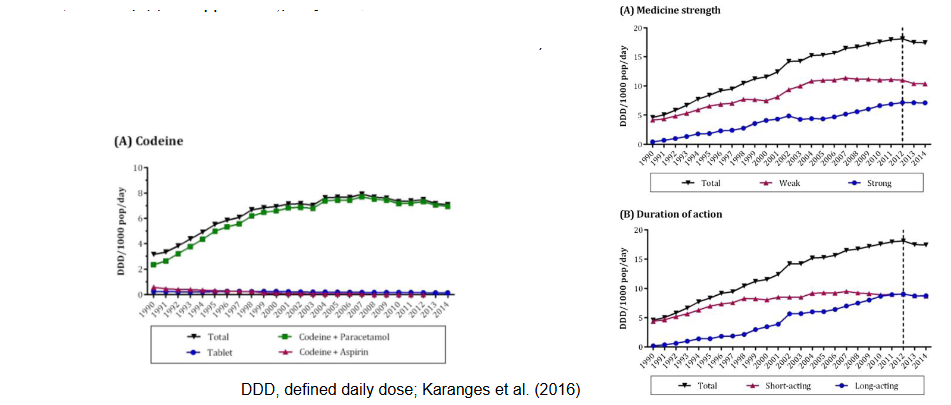
• ↑ strong opioids and long-acting formulations since 1990
• opioid medication prescribing in QLD (Adewumi et al., 2021)
o patients ↑ - 28299 (1997) to 322307 (2018)
o prescribers ↑ - 4537 to 20226
• opioid deaths/hospitalisations - prescribed opioids
.
Extra notes to help with understanding:
The lecturer used this slide to provide Australian context for opioid ADRs. Strong opioid and long-acting opioid formulation use has increased, and Queensland prescribing data showed large increases in both patients and prescribers. The lecturer noted that opioid-related ADRs, hospitalisations, and deaths are more likely to be associated with prescribed opioids than illicitly obtained opioids.

Type A adverse drug reactions
opioids - the μ-opioid receptor (MOR)
• G protein-dependent signalling pathways - analgesic effects
• G protein-independent signalling pathways
o respiratory depression/miosis/euphoria/sedation/reduced airway reflexes/nausea and vomiting
.
Extra notes to help with understanding:
The lecturer explained that Type A ADRs are related to the pharmacological action of the drug and are dose-related. For opioids, μ-opioid receptors are coupled to Gαi. G protein-dependent signalling is responsible for analgesic effects, while G protein-independent signalling involving β-arrestin is associated with opioid adverse effects, especially respiratory depression, as well as sedation, nausea, and vomiting.


Type B adverse drug reactions
Linked to genetic predisposition (i.e., polymorphism) affecting PK/PD
Drug hypersensitivity reaction
• prior exposure
• immediate or delayed
• not completely unpredictable
o ↑ risk due to immunogenetic predisposition, e.g., HLA (human leukocyte antigen) alleles
.
Type I:
IgE-mediated
immediate (< 1hr after last dose)
Type II:
antibody-mediated (e.g., IgG, IgM)
delayed
Type III:
immune complex-mediated
delayed
Type IV:
T cell-mediated
delayed
.
Extra notes to help with understanding:
The lecturer explained that Type B reactions are idiosyncratic and often linked to genetic predisposition affecting PK or PD. Drug hypersensitivity reactions require prior exposure and can be immediate or delayed. Although Type B reactions are often described as unpredictable, some are partly predictable through screening for immunogenetic risk factors such as HLA alleles. The lecturer said this lecture focuses mainly on Type I and Type IV reactions because they are the most common.


Type I drug hypersensitivity reaction
Form a hapten-protein complex between a drug of low molecular weight (hapten) and a carrier protein
.
sensitisation phase
initial exposure → antigen-specific IgE production → IgE binds to Fc receptor on mast cells & basophils
effector phase
drug re-exposure forms antigen → binds to Fc receptor-bound IgE → release of preformed mediators
.
Extra notes to help with understanding:
The lecturer explained that penicillin is too small to act as an antigen by itself, so it forms a covalent complex with a carrier protein, creating a new antigen. Initial exposure causes antigen-specific IgE production and IgE binding to Fc receptors on mast cells and basophils. On re-exposure, the drug-protein antigen binds Fc receptor-bound IgE, causing release of preformed mediators such as histamine. The lecturer linked severe anaphylaxis treatment with adrenaline and described this as functional or physiological antagonism.

Type IV drug hypersensitivity reaction
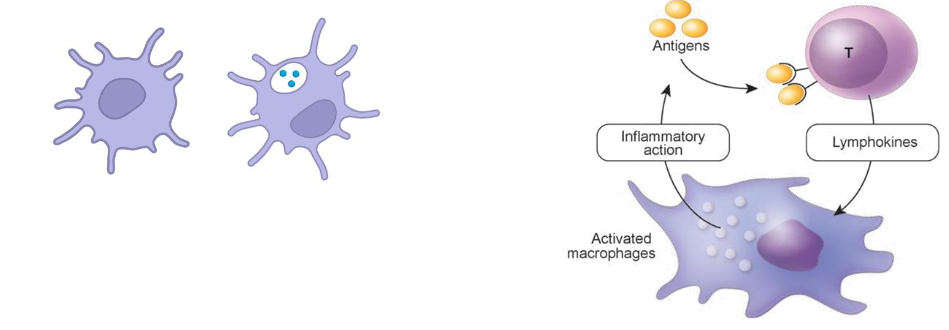
sensitisation phase
initial exposure → processed by dendritic cells through phagocytosis → dendritic cells migrate to lymph nodes and present antigen to naïve T cells
effector phase
drug re-exposure and antigen presentation → sensitised T cells in target tissues activate macrophages to mediate inflammatory action → tissue damage
.
Extra notes to help with understanding:
The lecturer explained that Type IV hypersensitivity is T cell-mediated and delayed. Initial exposure involves processing by dendritic cells and antigen presentation to naïve T cells. On later exposure, sensitised T cells in the target tissue activate macrophages, producing inflammation and tissue damage.


Type IV drug hypersensitivity reaction
skin is most targeted - severe cutaneous adverse reaction (SCAR)
• severe forms include SJS (Stevens-Johnson Syndrome) and TEN (toxic epidermal necrolysis)
.
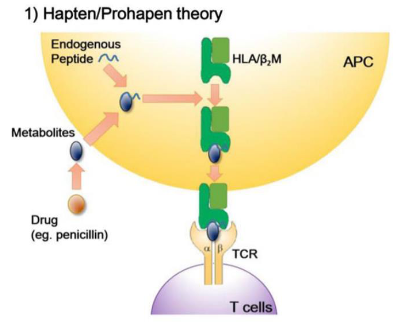
Hapten theory
drugs of low molecular weight covalently bind to a carrier protein (e.g., lysine residue) to form an antigen
↓
phagocytosis of the hapten-protein complex by APCs (antigen presenting cells)
↓
presentation of antigen with HLA molecules by APCs to T cells → effector response
.
Penicillin
• Type I & Type IV hypersensitivity reactions
.
Extra notes to help with understanding:
The lecturer said the skin is commonly targeted in Type IV reactions, producing severe cutaneous adverse reactions. Severe forms such as SJS and TEN can be life-threatening. Penicillin can cause both Type I and Type IV hypersensitivity because its hapten-protein complex can stimulate IgE-mediated responses and can also be processed by antigen-presenting cells and presented with HLA molecules to T cells.

T cell-mediated drug hypersensitivity reaction
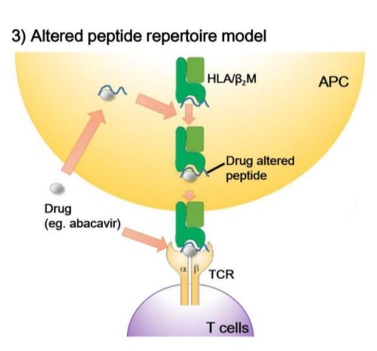
Altered peptide repertoire model
drug alters the conformation of self-peptide → the altered HLA-self-peptide complex is recognised as foreign by T cells
.
Abacavir
• screening for HLA-B*57:01 prior to prescription
o high prevalence (~ 8%) in Caucasians
.
Extra notes to help with understanding:
The lecturer explained that in the altered peptide repertoire model, a drug changes the shape of a self-peptide, so the HLA-self-peptide complex is recognised as foreign by T cells. Abacavir is used as the example. Patients should be screened for HLA-B*57:01 before prescription. If someone is positive, the appropriate clinical decision is to avoid abacavir and use another drug, because life-threatening hypersensitivity is likely.
Increased risk of ADRs - elderly patients
• age-related changes in PK and PD properties
• polypharmacy - drug-drug interactions
• inappropriate prescribing (risk > benefit) - deprescribing
.
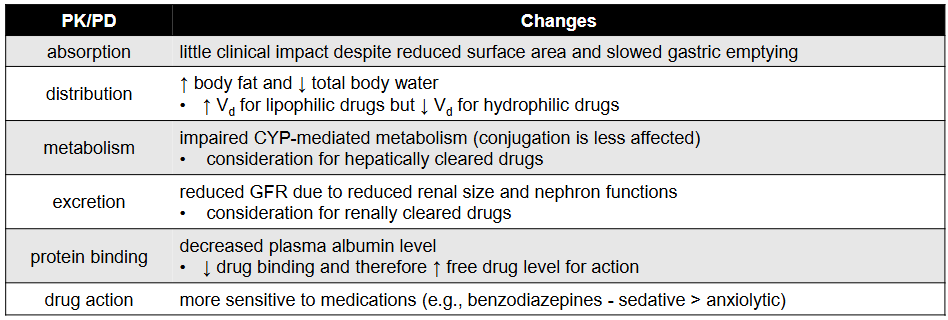
PK/PD and Changes
ABSORPTION:
little clinical impact despite reduced surface area and slowed gastric emptying
DISTRIBUTION:
↑ body fat and ↓ total body water
• ↑ Vd for lipophilic drugs but ↓ Vd for hydrophilic drugs
METABOLISM:
impaired CYP-mediated metabolism (conjugation is less affected)
• consideration for hepatically cleared drugs
EXCRETION:
reduced GFR due to reduced renal size and nephron functions
• consideration for renally cleared drugs
PROTEIN BINDING:
decreased plasma albumin level
• ↓ drug binding and therefore ↑ free drug level for action
DRUG ACTION:
more sensitive to medications (e.g., benzodiazepines - sedative > anxiolytic)
.
Extra notes to help with understanding:
The lecturer explained that elderly patients are at higher risk of ADRs because of PK and PD changes, polypharmacy, and sometimes inappropriate prescribing where risk exceeds benefit. Distribution changes mean lipophilic drugs may have increased Vd, while hydrophilic drugs may have decreased Vd. CYP-mediated metabolism is more impaired than phase II conjugation. Reduced renal function affects renally cleared drugs. Lower plasma albumin increases free drug levels. Elderly patients may also be more sensitive to sedative effects of benzodiazepines, increasing risk of falls and injury.

Increased risk of ADRs - pregnant women
• changes in PK properties
• main concern: drug teratogenicity → prenatal toxicity
o the placenta is a partial barrier
o TGA prescribing medicines in pregnancy
.
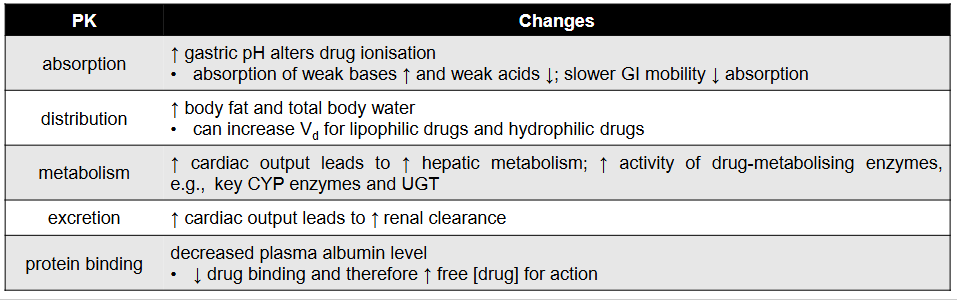
PK and Changes
ABSORPTION:
↑ gastric pH alters drug ionisation
• absorption of weak bases ↑ and weak acids ↓; slower GI mobility ↓ absorption
DISTRIBUTION:
↑ body fat and total body water
• can increase Vd for lipophilic drugs and hydrophilic drugs
METABOLISM:
↑ cardiac output leads to ↑ hepatic metabolism; ↑ activity of drug-metabolising enzymes, e.g., key CYP enzymes and UGT
EXCRETION:
↑ cardiac output leads to ↑ renal clearance
PROTEIN BINDING:
decreased plasma albumin level
• ↓ drug binding and therefore ↑ free [drug] for action
.
Extra notes to help with understanding:
The lecturer explained that a major concern in pregnancy is teratogenicity and prenatal toxicity because the placenta is only a partial barrier. Some drugs can reach the developing embryo or foetus and cause irreversible birth defects. The lecturer mentioned that thalidomide and alcohol would be discussed later as examples of human teratogens. Pregnancy also changes PK: gastric pH, body fat, total body water, hepatic metabolism, renal clearance, and plasma albumin all change, which can alter drug exposure and ADR risk.
![<p>• changes in PK properties</p><p>• main concern: drug teratogenicity → prenatal toxicity</p><p>o the placenta is a partial barrier</p><p>o TGA prescribing medicines in pregnancy</p><p>.</p><p>PK and Changes</p><p>ABSORPTION:</p><p>↑ gastric pH alters drug ionisation</p><p>• absorption of weak bases ↑ and weak acids ↓; slower GI mobility ↓ absorption</p><p>DISTRIBUTION:</p><p>↑ body fat and total body water</p><p>• can increase Vd for lipophilic drugs and hydrophilic drugs</p><p>METABOLISM:</p><p>↑ cardiac output leads to ↑ hepatic metabolism; ↑ activity of drug-metabolising enzymes, e.g., key CYP enzymes and UGT</p><p>EXCRETION:</p><p>↑ cardiac output leads to ↑ renal clearance</p><p>PROTEIN BINDING:</p><p>decreased plasma albumin level</p><p>• ↓ drug binding and therefore ↑ free [drug] for action</p><p>.</p><p>Extra notes to help with understanding:</p><p>The lecturer explained that a major concern in pregnancy is teratogenicity and prenatal toxicity because the placenta is only a partial barrier. Some drugs can reach the developing embryo or foetus and cause irreversible birth defects. The lecturer mentioned that thalidomide and alcohol would be discussed later as examples of human teratogens. Pregnancy also changes PK: gastric pH, body fat, total body water, hepatic metabolism, renal clearance, and plasma albumin all change, which can alter drug exposure and ADR risk.</p>](https://assets.knowt.com/user-attachments/e9b1d844-e286-4e2a-ba1c-ae75a28eedcf.png)

Increased risk of ADRs - paediatric patients
• inappropriate dosing - based on adult formula
• paediatric pharmacokinetics - poorly studied
.
polypharmacy
• complex or multiple diseases
• risk of drug-drug interactions
.
pharmacogenomics
• e.g., anticancer treatment
.
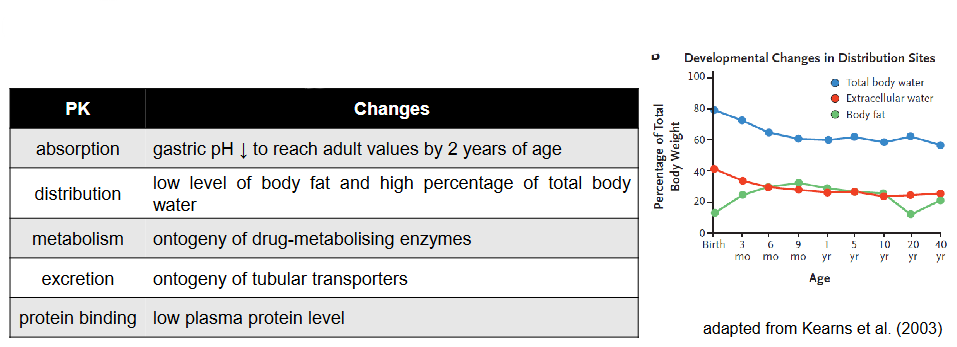
PK and Changes
ABSORPTION:
gastric pH ↓ to reach adult values by 2 years of age
DISTRIBUTION:
low level of body fat and high percentage of total body water
METABOLISM:
ontogeny of drug-metabolising enzymes
EXCRETION:
ontogeny of tubular transporters
PROTEIN BINDING:
low plasma protein level
.
Extra notes to help with understanding:
The lecturer explained that paediatric patients are often poorly studied in clinical trials, so dosing is sometimes extrapolated from adult formulas and may be inappropriate. Polypharmacy can also occur in children with complex diseases, increasing the risk of drug-drug interactions. At birth, activity of many drug-metabolising enzymes and tubular transporters is low, so infants may have very limited ability to eliminate drugs. The lecturer linked this to the earlier codeine/paracetamol breastfeeding example, where morphine exposure in breast milk was dangerous for an infant with limited metabolism.
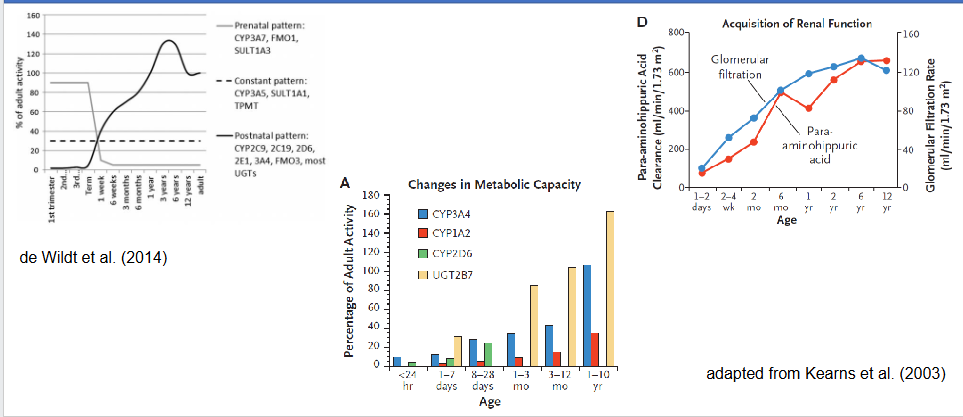
Increased risk of ADRs - paediatric patients
Extra notes to help with understanding:
The lecturer used these graphs to show that drug-metabolising enzyme activity and renal function develop over time rather than being fully mature at birth. Some enzymes follow a prenatal pattern, some remain relatively constant, and others rise after birth. Renal function is also very low early in life and increases over childhood. These developmental changes help explain why paediatric patients are at increased risk of ADRs.
