ultra processed foods. lecture 21
 Call Kai
 Learn
Learn Practice Test
 Spaced Repetition
 Match
Match Flashcards
 Knowt Play
1/25

Earn XP
Description and Tags
nutrition in health and disease
Name | Mastery | Learn | Test | Matching | Spaced | Call with Kai |
|---|
No analytics yet
Send a link to your students to track their progress
26 Terms
what is a processed food ?
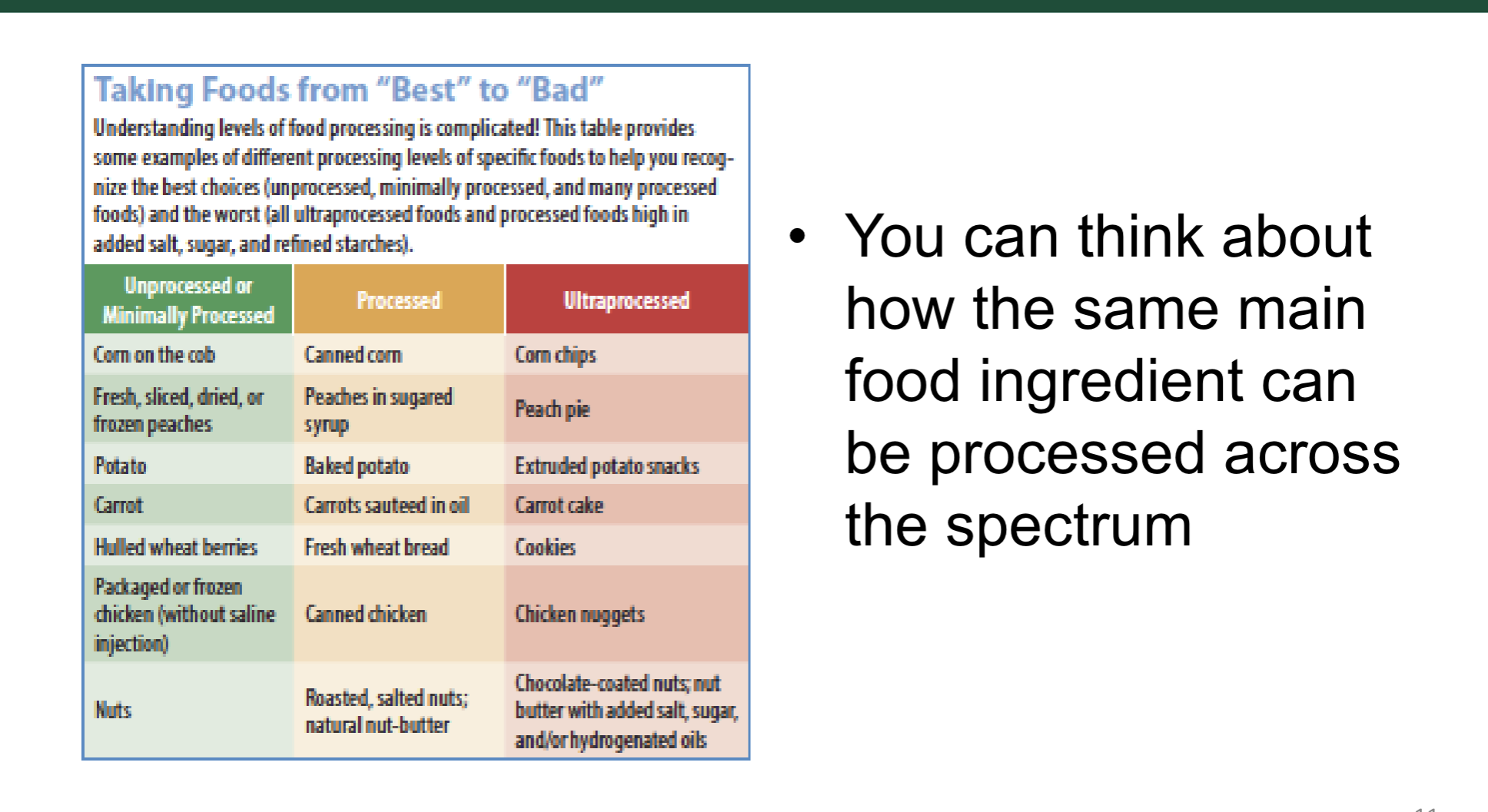
(slides): USDA defines as a food that has undergone any changes to its natural state – that is, any raw agricultural commodity subjected to washing, cleaning, milling, cutting, chopping, heating, pasteurizing, blanching, cooking, canning, freezing, drying, dehydrating, mixing, packaging, or other procedures that alter the food from its natural state. The food may include the addition of other ingredients such as preservative, flavors, nutrients, and other food additives or substances approved for use in food products, such as salt, sugars, and fats. The Institute of Food Technologists includes additional processing terms like storing, filtering, fermenting, extracting, concentrating, microwaving, and packaging
even if you wash grapes, you are still consuming a minimum (washed off microbomes) (?) might ask lerman about this
breaking and chopping could create chemical composition changes (yes)
food processing has happened a thousands of years ago - crops were preserved for winter seasons -
“whether carried out within households, artisanal settings, or factories, food processing aims to ensure product safety, digestibility, and palatability”
why does it matter ?
proponents of classifying and studying processed foods hypothesize that foods altered by some kinds of processing may have different relationships with health outcomes compared to unadulterated forms
they believe traditional systems (food groups, for ex) misclassify foods, mixing “healthy” and “unhealthy” foods in the same category
also, processed foods are ubiquitous (present, found everywhere) in the american food supply
food processing is essential in
producing affordable foods
producing affordable foods
the food industry is a critical component in decreasing food costs
buy materials in large quantities
use energy efficient processing steps
maximize yield to decrease waste
utilize food waste products to offset processing costs
utilize food processing operations, packaging technologies and food ingredients to maximize shelf life
example: modify oxygen in packaged salad with mixed greens
just for reference:
homemade tomato paste = $9.90 +/ poumd
industrial tomato paste = $2.00 / pound
additional benefits of industrial food processing
more sustainable
less energy
one of the major cost of food production
continous operation
minimal need for preheating and cooling
less cleaning = less water
better timing and temperature control
less overcooking which can destroy nutrients and produce toxins
additional benefits of industrial food processing
more effective utilization and preservation of nutrients
can increase nutrient bioavailability
milling, masa, increase bioavailability of fat soluble nutrients
fortification to deliver essential nutrients to broad spectrums of the population
process foods shortly after harvest to lock in nutrient’s
less nutrient degradation compared to home cooking
ultrapastuerization - 135 c for 2-5 seconds
high temp kills bacteria quickly
short processing time minimizes vitamin destruction
unwanted consequence of food processing / cooking
vitamin degradation (gets lost in processing)
processing can form unwanted by-products
-acrylamide
has been controlled by decreasing arginine in raw material, ex: potato chips
-Heterocyclic amines and advanced glycation products
can be minimized by controlling cooking temperatures and inhibiting browning
-Nitrosamines
can be minimized by controlling cooking temperatures and minimizing residual nitrites
-Bezene
can be controlling by not using benzoic acid as a preservative
many of these compounds are also formed by home cooking
-no strong evidence that they are worse in industrially processed foods
there are a lot of nutrient benefits to processing foods
while it’s negative, it also has positives
just to have an idea:
graph representing why we might relate to health
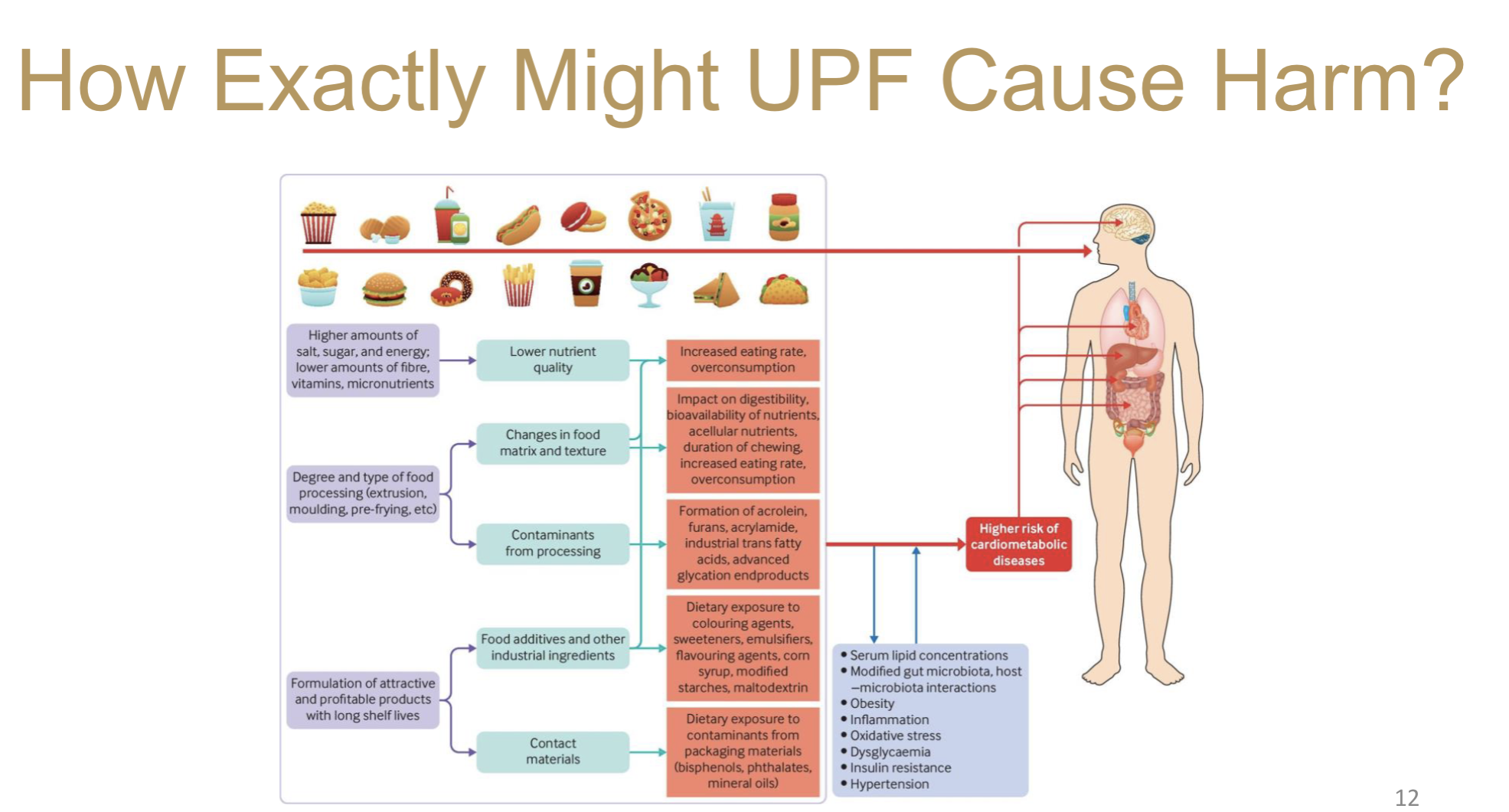
purple boxes on the far most left side= many contributions
bottom 2 blue boxes= long shelf lives, additives and packaging materials could be a problem
ultra processed food consumption among US adults from 2001-2018
in class: not vastly different in the last 20 years. Slight increase.
check other graphs in slides too
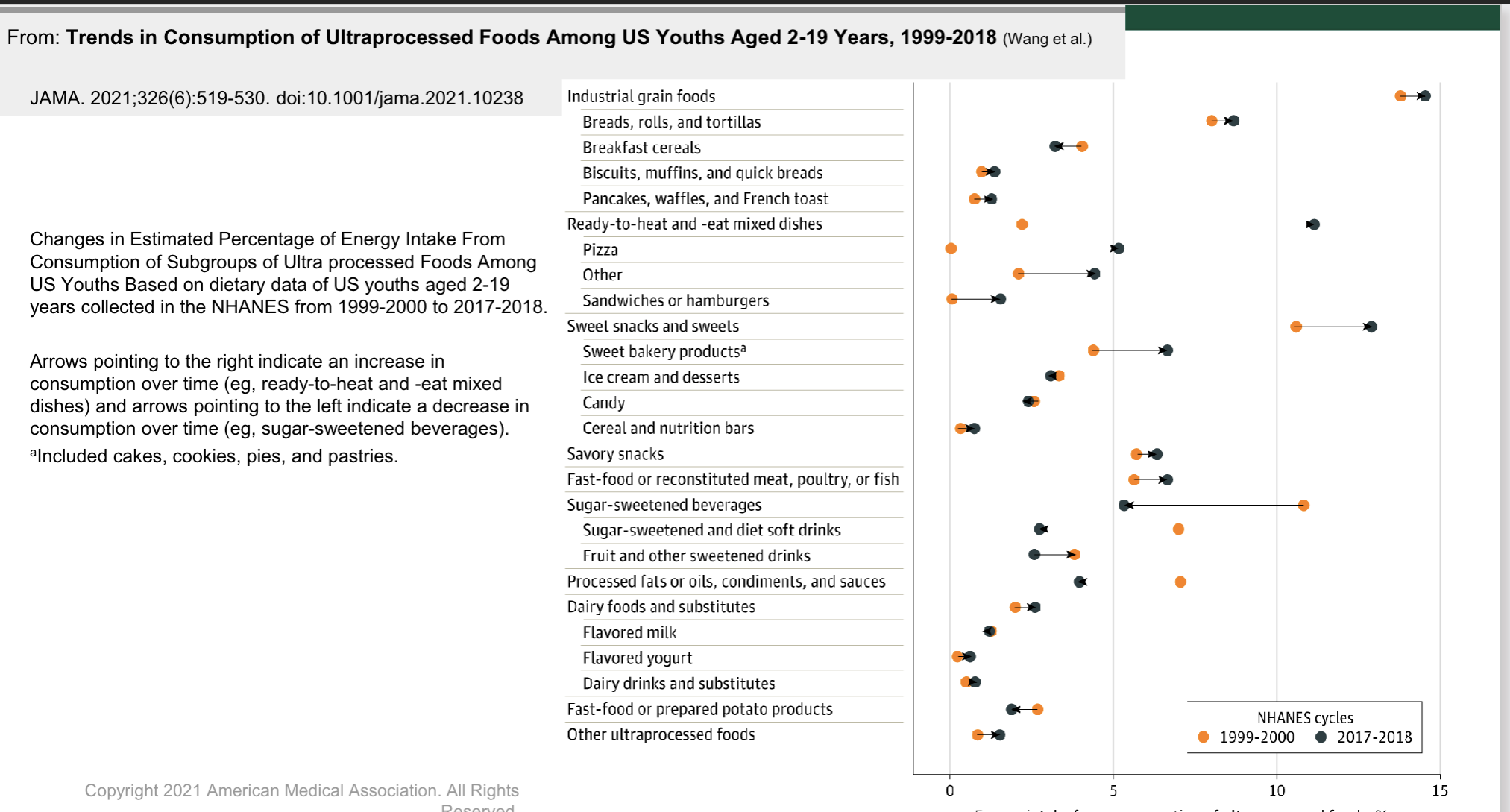
orange dots = earlier
black dots= later dates
energy intake increasing from categories (most things going up)
sugar sweetened beverages → going down ) but other things are going up
a complication
no agreed upon way to define this
there is not a universal definition for classification of degree of food processing
at least 3 systems have been suggested and used, and the most popular has multiple versions
include the UNC, IFIC, and the NOVA
NOVA= classify “all foods according to the nature, extent, and purposes of the industrial processes they undergo”
look at different categories on slides
Nova food processing classification system
group 1 unprocessed or min processed foods (not processed or min processed. ex= grapes)
group 2 processed culinary ingredients (ingredients in food: oils or added salts)
group 3 processed foods (processed in some way: some degree of fermentation. ex: pickling)
group 4 ultra processed foods (doesn’t have intact foods from 1st group. ex=frozen pizza, soft serve, ice cream)
group 1
processing includes removal of inedible / unwanted parts. does not add substances to the original food
group 2
substances derived from group 1 foods or from nature by processes include pressing, refining, grinding, milling, and drying
group 3
processing of foods from group 1 or 2 with the addition of oil, salt, or sugar by means of canning, pickling, smoking, curing, and fermentation
group 4
formulations made from a series of processes including extraction and chemical modification. includes very little intact group 1 foods
ambiguity of the UPF classification
Braesco et al. >150 nutrition and food science experts, medical doctors, and dietitians evaluated and classified 120 marketed foods (19,080 assignments) and 111 generic foods (19,647 assignments). Even though the evaluators had intermediate to high confidence in their assignments, only 3 marketed foods and 1 generic food were assigned to the same Nova group by all the evaluators, and most of the foods in both lists were placed in 2, 3, or even 4 different Nova groups by different evaluators (40). Thus, the level of misclassification, even among nutrition and food scientists, is unacceptably high, and these results severely undermine the validity of all the UPF concept and the observational studies on UPF and health outcomes
research roadmap
we can’t figure out what they ate and how processed it was
that’s a lot of questions to ask
example=burger- don’t know what kind of burger
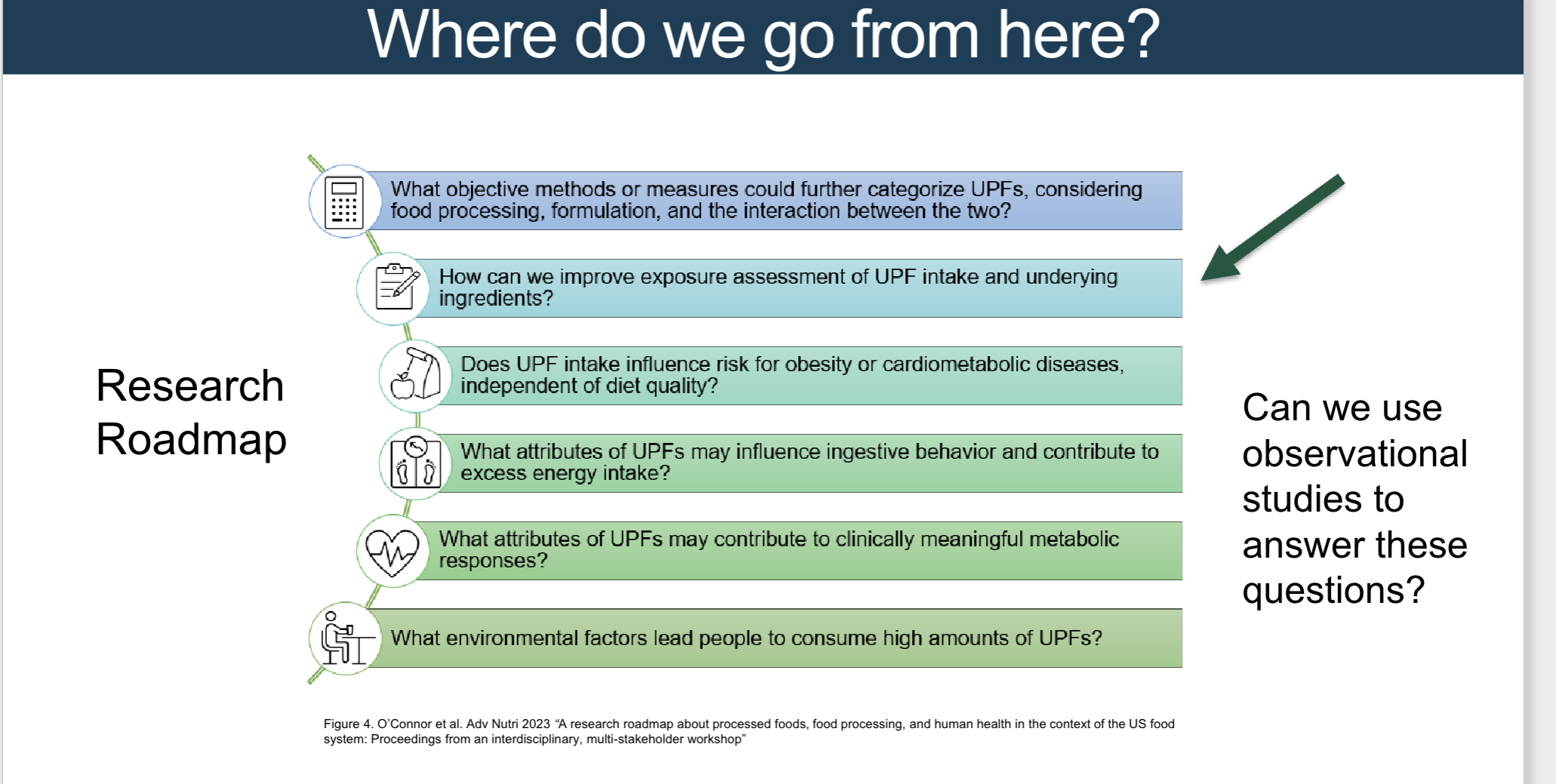
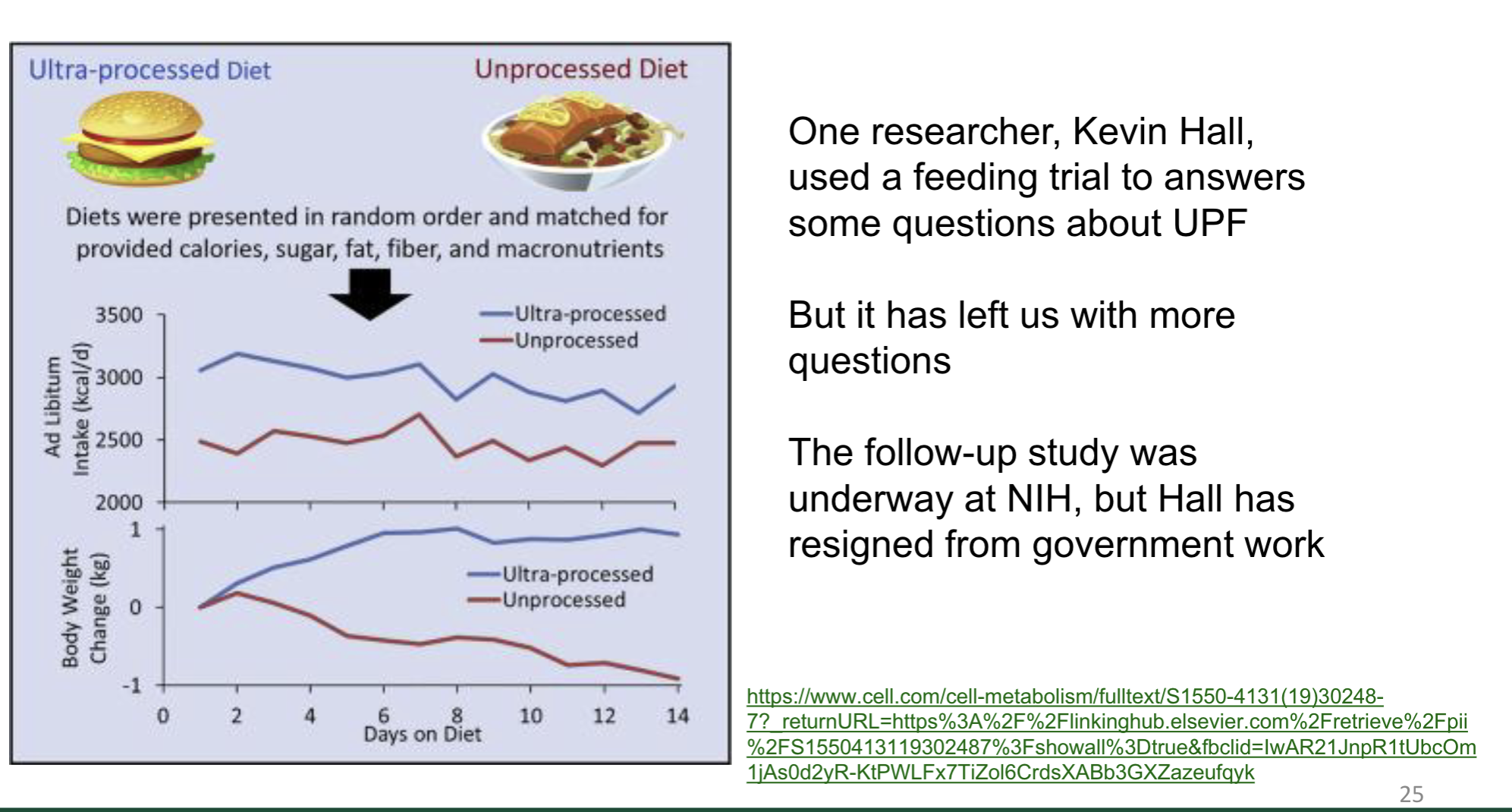
instead of asking what did you eat and following them over time, he put them on an ultra processed diet. fed people UPF only for 2 weeks and 2 weeks on clean / unprocessed deit.
significant difference in calories
people gained weight (ultraprocessed diet)
next steps with UPF
can’t define them well, but we think intake is increasing and harmful
do we start banning UPF or advising against it, even if we don’t know the real culprit and can’t tell a consumer exactly how to identify them ?