Chapter 46 - exam 4
 Call Kai
 Learn
Learn Practice Test
 Spaced Repetition
 Match
Match Flashcards
 Knowt Play
1/24

There's no tags or description
Looks like no tags are added yet.
Name | Mastery | Learn | Test | Matching | Spaced | Call with Kai |
|---|
No analytics yet
Send a link to your students to track their progress
25 Terms
What are lipophilic hormones?
Hormones that are soluble in lipids and can easily pass through cell membranes.
Which statements are true regarding lipophilic hormones?
B) Travel on transport proteins in the blood, C) Usually act by regulating gene expression, E) Examples of lipophilic hormones include steroids.
What is intracellular digestion?
Digestion that occurs within the cells, as seen in early unicellular animals like sponges.
What is extracellular digestion?
Digestion that occurs outside of cells, typically within a digestive cavity.
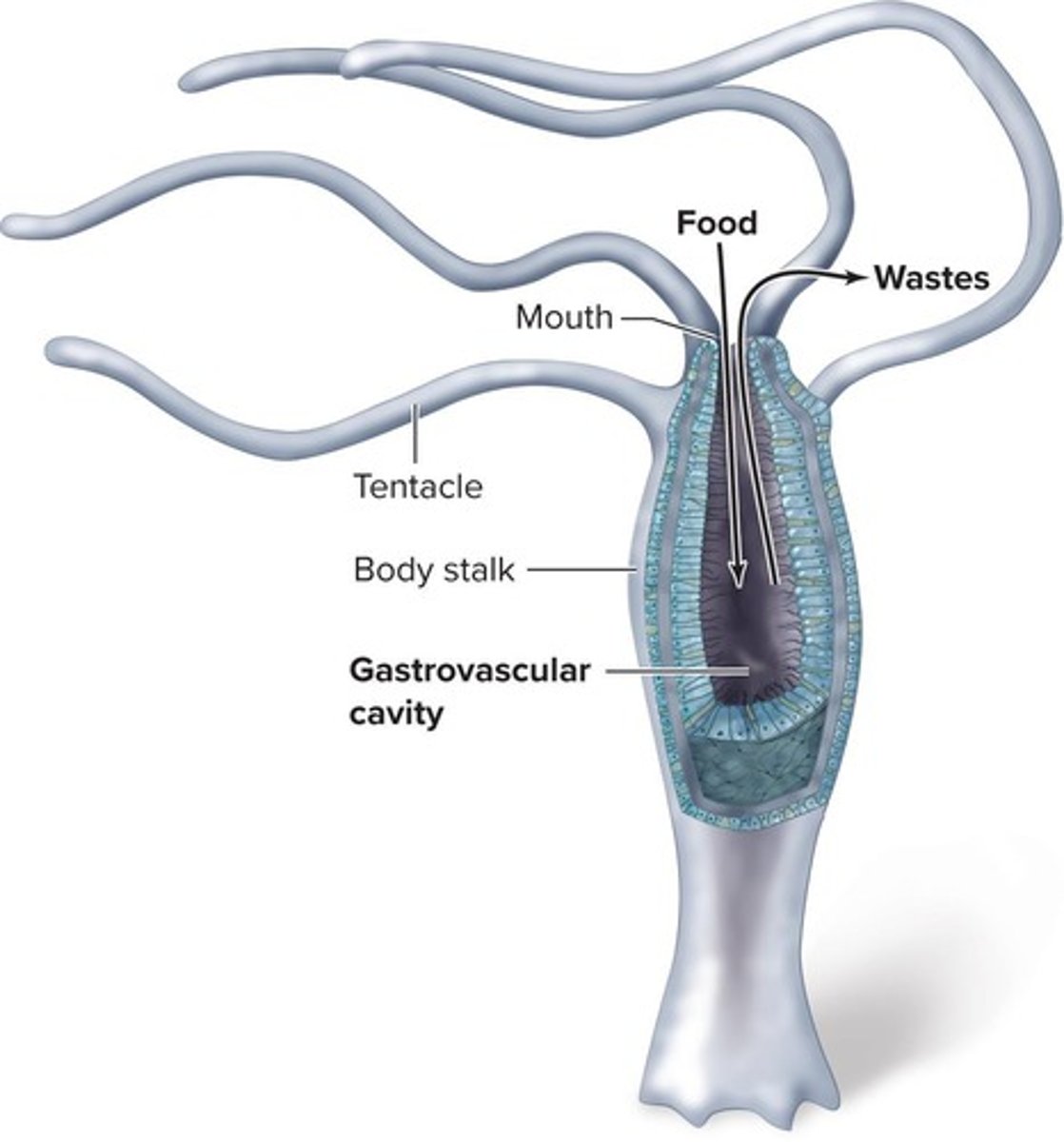
What is a gastrovascular cavity?
A digestive cavity with only one opening, found in organisms like cnidarians and flatworms.
What is the significance of having a separate mouth and anus in digestive systems?
It allows for specialization and a specific processing sequence of food.
What are the main stages of food passage in the digestive system?
1. Physical fragmentation, 2. Chemical digestion, 3. Absorption, 4. Excretion.
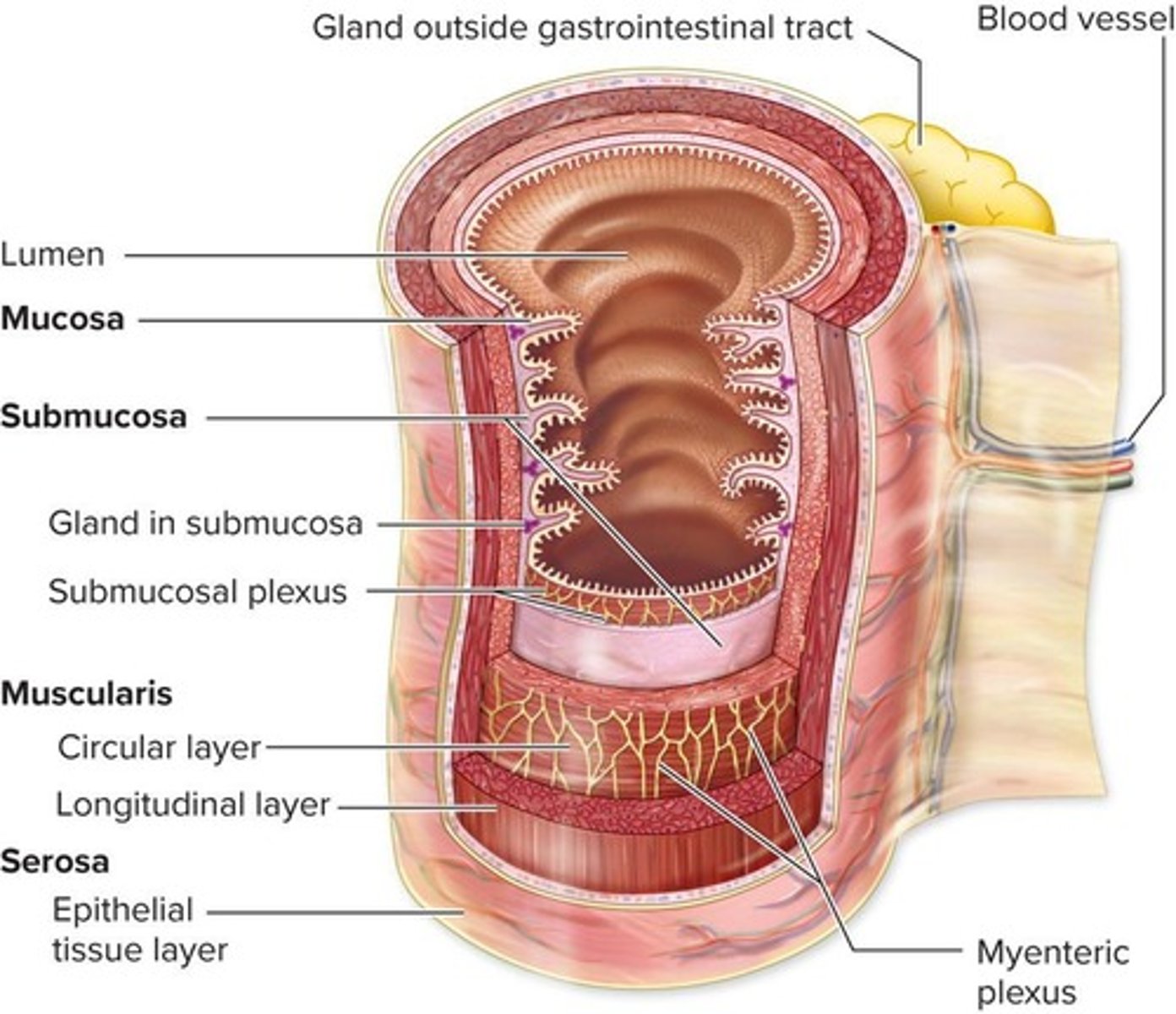
What is the gastrointestinal tract?
A tubular system that includes the digestive organs and accessory organs.
What are the main functions of the stomach?
Preliminary digestion and mixing food with gastric juice.
What is the role of the small intestine?
Digestion and absorption of nutrients.
What is the function of the large intestine?
Reabsorption of water and electrolytes, and preparation of waste for expulsion.
What is the role of the liver in digestion?
Produces bile, which aids in the digestion of fats.
What does the gallbladder do?
Stores and concentrates bile produced by the liver.
What is the function of the pancreas?
Produces pancreatic juice, digestive enzymes, and bicarbonate buffer.
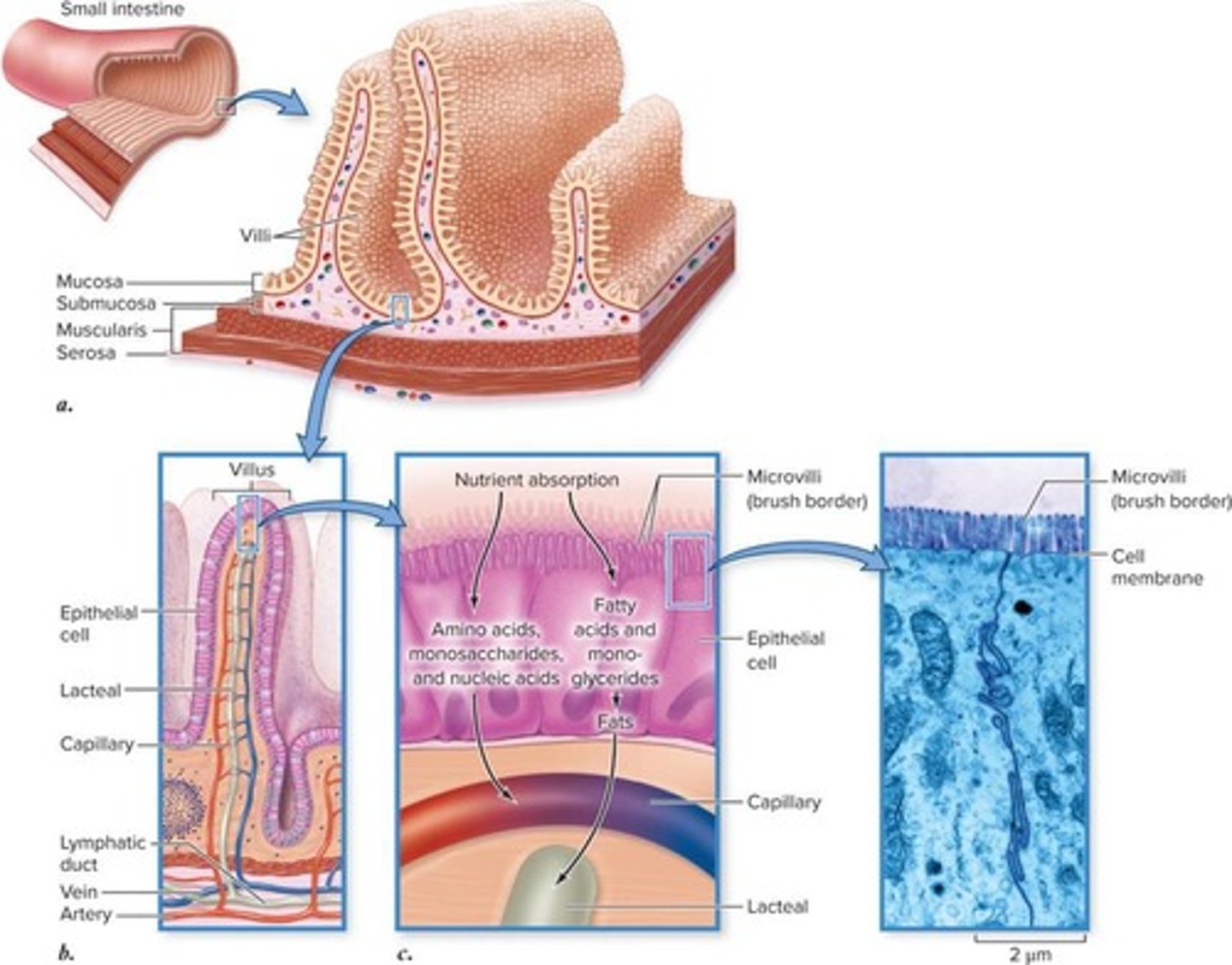
What are villi?
Finger-like projections in the small intestine that increase surface area for absorption.
What are microvilli?
Tiny projections on the surface of villi that further increase the surface area for digestion and absorption.
What is salivary amylase?
An enzyme in saliva that initiates the breakdown of starch.
What is the role of the tongue in digestion?
Mixes food with saliva and helps in swallowing.
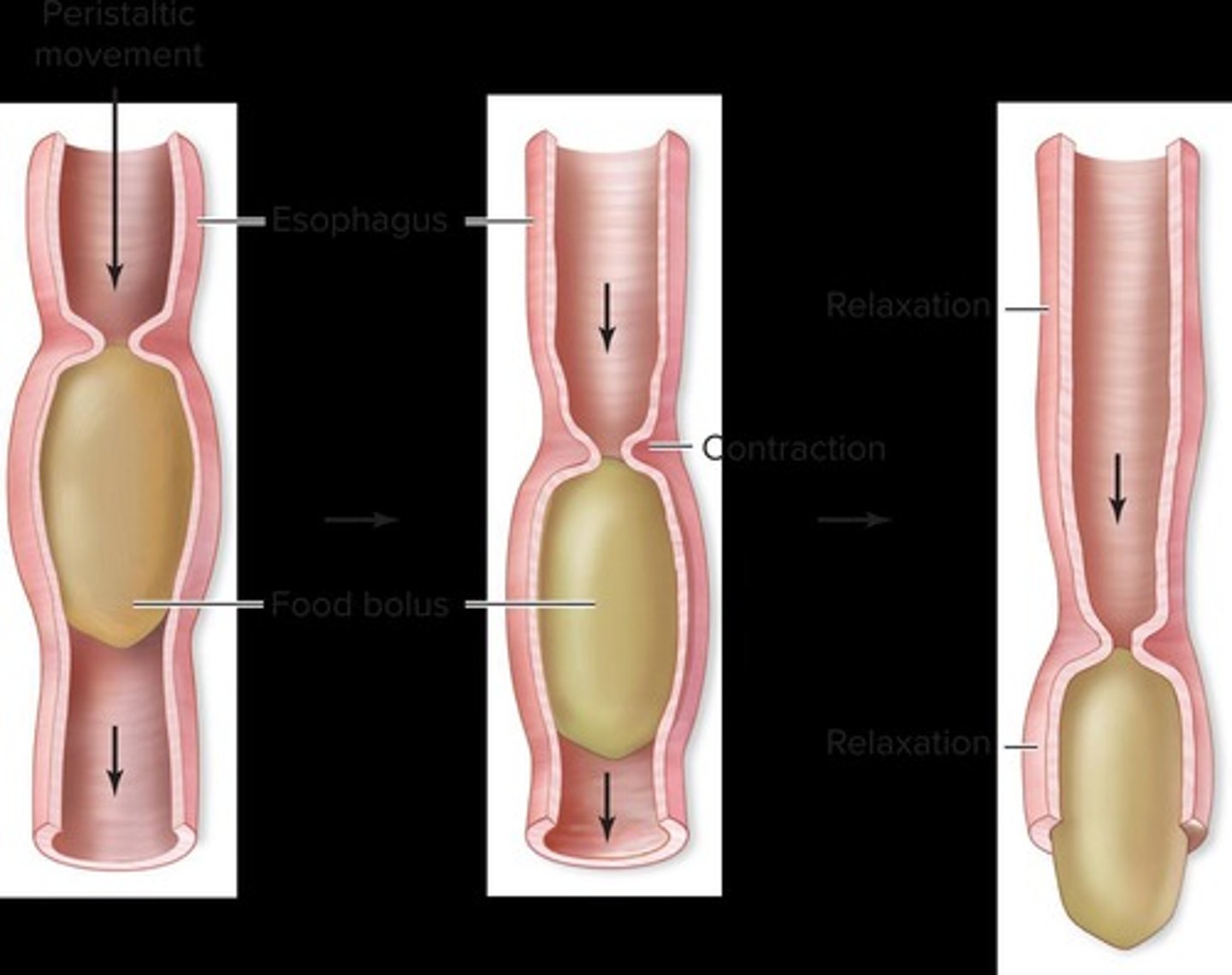
What is peristalsis?
The wave-like muscle contractions that move food through the digestive tract.
What are the three types of secretory cells in the stomach?
Mucus-secreting cells, parietal cells (secrete hydrochloric acid), and chief cells (secrete pepsinogen).
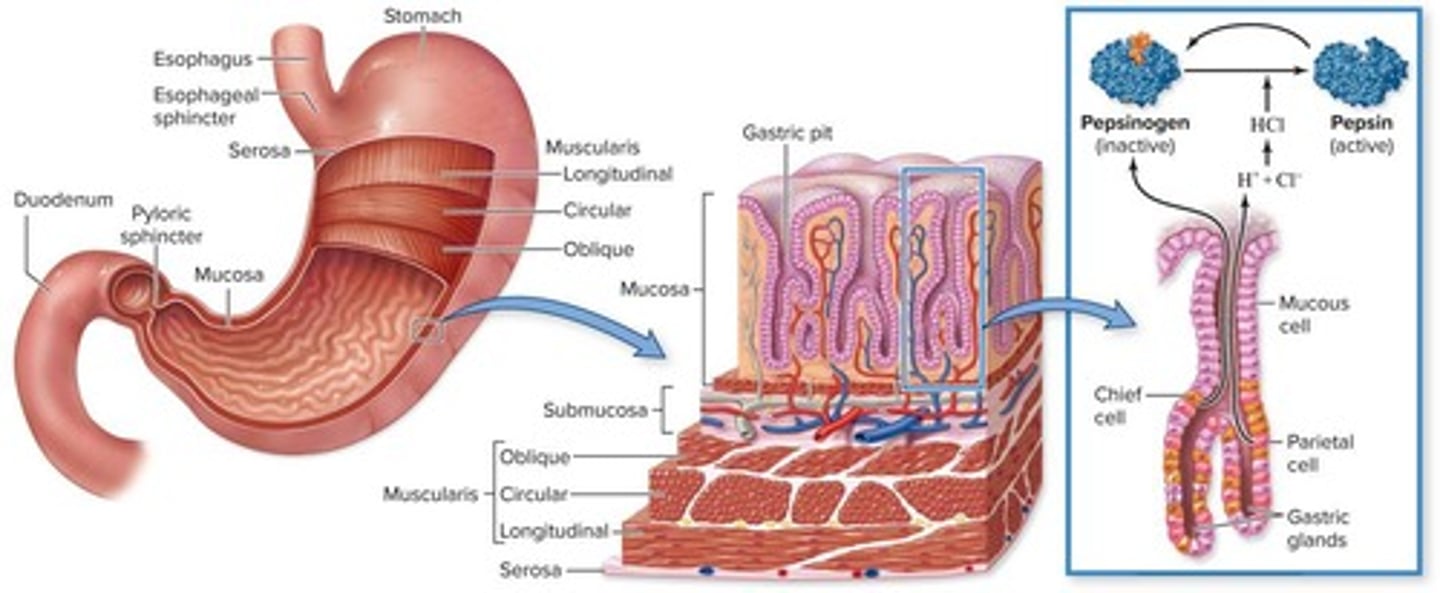
What is chyme?
The semi-liquid mixture of food and gastric juices that leaves the stomach and enters the small intestine.
What is the pyloric sphincter?
A muscle that controls the passage of chyme from the stomach to the small intestine.
What is the function of gastric juice?
To aid in the digestion of food by providing an acidic environment and activating digestive enzymes.
What happens if there is an overproduction of gastric acid?
It can lead to ulcers in the stomach lining.
What is the role of bacteria in the colon?
They help in the fermentation of undigested materials and the synthesis of certain vitamins.