General Ecology - Exam 1
0.0(0)
Studied by 7 people Call Kai
 Learn
Learn Practice Test
 Spaced Repetition
 Match
Match Flashcards
 Knowt Play
Card Sorting
1/62

Earn XP
Description and Tags
Last updated 2:16 PM on 9/28/22
Name | Mastery | Learn | Test | Matching | Spaced | Call with Kai | Chat |
|---|
No analytics yet
Send a link to your students to track their progress
63 Terms
1
New cards
A good hypothesis is...
1. predictive
2. restable
3. focused
2. restable
3. focused
2
New cards
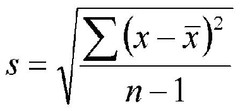
Standard deviation
the average distance of scores around the mean
3
New cards
Standard error
the name for the standard deviation of a distribution of means

4
New cards
p-value
The probability of the null hypothesis being true (results due to chance) which forms basis for deciding if results are statistically significant. Less than 0.05 is statistically significant, above is not.
5
New cards
R^2
coefficient that measures the proportion of the variation in your dependent variable explained by all of your independent variable (R^2 = 1.0, all points are on regression line)
6
New cards
gross primary productivity
The rate at which producers in an ecosystem capture energy
7
New cards
net primary productivity
The energy captured by producers in an ecosystem minus the energy producers respire
8
New cards
How is primary productivity estimated?
1. measuring standing crop (above ground producer biomass in grams)
2. conducting light/dark experiment (plant in chamber is measured for GPP (light) - respiration (dark) to get NPP)
3. taking satellite photos (photos show area covered by standing crop to estimate large area NPP)
2. conducting light/dark experiment (plant in chamber is measured for GPP (light) - respiration (dark) to get NPP)
3. taking satellite photos (photos show area covered by standing crop to estimate large area NPP)
9
New cards
What factors affect net primary productivity in terrestrial ecosystems?
temperature, precipitation, light, nitrogen and phosphorus (both together since both limit the other)
10
New cards
What factors affect net primary productivity in aquatic ecosystems?
light transmission, amount of nutrients (nitrogen and phosphorus)
11
New cards
Liebig's Law of the Minimum
biomass/growth of a species is limited by the scarcest limiting factor
12
New cards
What limits secondary productivity?
1. Rate of primary productivity
2. Efficiencies of energy transfer (assume 10% but can be 5-20%)
2. Efficiencies of energy transfer (assume 10% but can be 5-20%)
13
New cards
consumed energy
the portion of NPP that is consumed by the secondary trophic level
14
New cards
egested energy
the portion of consumed energy that is excreted or regurgitated
15
New cards
assimilated energy
the portion of energy that a consumer digests and absorbs (consumed - egested)
16
New cards
respired energy
the portion of assimilated energy a consumer uses for respiration
17
New cards
Net Secondary Productivity (NSP)
portion of assimilated energy that is passed to the next trophic level (assimilated energy - respired energy)
18
New cards
consumption efficiency
the proportion of the available biomass that is ingested by consumers (consumed energy/net primary productivity)
19
New cards
assimilated efficiency
the proportion of consumed energy that is assimilated (assimilated energy /consumed energy)
20
New cards
net production efficiency
the proportion of assimilated energy that is passed to the next trophic level (net secondary production energy/assimilated energy)
21
New cards
ecological efficiency
the proportion of usable energy transferred from one trophic level to the next (NSP/NPP)
22
New cards
What factors affect consumption efficiency?
hiding from predators, food distribution, palatability
23
New cards
what factors affect assimilated efficiency?
digestion mechanisms, food quality, stoichiometry
24
New cards
What factors affect net production efficiency?
metabolic rate (which is affected by size, exothermic vs endothermic, genome, climate)
25
New cards
ecological stoichiometry
the balance of nutrients in ecological interactions
26
New cards
Why do terrestrial systems have fewer trophic levels than aquatic systems?
Terrestrial producers have more structure and are harder to digest therefore assimilated energy efficiency is lower than in aquatic systems (producers are smaller and easier to digest); more assimilated energy means more energy is available to support more trophic levels
27
New cards
What are nutrient inputs in terrestrial ecosystems?
from weathering --> calcium, phosphorus, magnesium, potassium, iron
from precipitation --> Nitrogen, others in dust
from precipitation --> Nitrogen, others in dust
28
New cards
nitrogen fixation
The process of converting atmospheric nitrogen into a form producers can use (biotic: cyanobacteria, plant roots bacteria; abiotic: lightning, combustion, fertilizer production)
29
New cards
nitrogen assimilation
formation of organic nitrogen compounds like amino acids from inorganic nitrogen compounds present in the environment (producers take up either ammonium or nitrate from soil; consumers take up nitrogen by eating producers)
30
New cards
denitrification
process by which bacteria convert nitrates into nitrogen gas
31
New cards
nitrification
bacteria convert ammonium into nitrite and then into nitrate
32
New cards
mineralization
breaking down organic compounds into inorganic compounds; in nitrogen cycle, decomposers break down biological nitrogen compounds into ammonium
33
New cards
what do both a low CN ratio and low Lignin:N ratio indicate?
a faster decomposition rate
34
New cards
decomposition rate
change in mass/change in time
35
New cards
how do we quantify nutrient cycling?
nutrient inputs: weathering, precipitation
nutrient outputs: leaching, volatilization (loss by evaporation)
nutrient outputs: leaching, volatilization (loss by evaporation)
36
New cards
What did Vitousek and Reiners hypothesize about nutrient retention?
Older growth forests are more efficient with nutrients than new growth forests
37
New cards
What is the thermocline and what ecological concerns does it present?
- thermocline is the thin layer separating the warm water from the cold dense water
- when body of water experiences eutrophication (producers overpopulate), decomposers are overactive and use up all oxygen above thermocline, starving water below thermocline of oxygen from atmosphere
- when body of water experiences eutrophication (producers overpopulate), decomposers are overactive and use up all oxygen above thermocline, starving water below thermocline of oxygen from atmosphere
38
New cards
Acid Decomposition (Acid Rain)
Fall of acids and acid forming compounds from the atmosphere to the earth's surface
39
New cards
why is acid decomposition (rain) toxic to plants?
1. important nutrients are leached from soil (including toxic aluminum)
2. plants can't get enough magnesium for proper photosynthesis
2. plants can't get enough magnesium for proper photosynthesis
40
New cards
photic zone
aquatic zone that light can penetrate (0 - 200m below surface)
41
New cards
aphotic zone
aquatic zone that light cannot penetrate (200m+)
42
New cards
euphotic zone
all wavelengths of light transmitted through water
43
New cards
disphotic zone
some wavelength transmitted through water but not all
44
New cards
What are the ecological consequences of light transmission varying as water gets deeper?
Different producers grow in different zones depending on how much light they need and what wavelengths they absorb (ex. green algae absorbs violet, blue and red light while red algae only absorb blue light)
45
New cards
osmosis
Diffusion of free water through a selectively permeable membrane
46
New cards
How do freshwater organisms osmoregulate?
hyperosmotic to environment; produce large amounts of diluting urine to expel excess water, gills take in solutes from water, kidneys remove ions from urine
47
New cards
How do saltwater organisms osmoregulate?
hypoosmotic to environment; drink large amounts of sea water, release small amounts of urine, solutes are excreted through kidneys and/or gills
48
New cards
How to plants (ex. mangroves) osmoregulate when growing in saltwater?
retaining high amounts of organic solutes so water will diffuse in, salt glands in leaves that secrete salt by active transport
49
New cards
What are the challenges of gas exchange in aquatic ecosystems?
1. getting enough carbon dioxide for photosynthesis
2. getting enough oxygen for respiration
(both have low solubility in water)
2. getting enough oxygen for respiration
(both have low solubility in water)
50
New cards
What are the physiological adaptations to gas exchange challenges?
1. direct uptake and carboxylation by Rubisco, then conversion to carbon dioxide by secretion of enzymes or hydrogen ion
2. countercurrent flow of blood and oxygen in gills to get more oxygen from environment, low rates of activity, increase hemoglobin amounts
2. countercurrent flow of blood and oxygen in gills to get more oxygen from environment, low rates of activity, increase hemoglobin amounts
51
New cards
How do fish adapt to very cold waters?
they produce glycerol to act as a "natural antifreeze" to prevent internal fluids form freezing
52
New cards
What has caused the coral reef decline?
1. acidification (carbon dioxide from atmosphere pushes gas exchange equation left, raising water temp)
2. coral bleaching (coral stressed from high water temps expel algae living in tissue)
2. coral bleaching (coral stressed from high water temps expel algae living in tissue)
53
New cards
What is water potential?
the force by which water is moved (positive is pushing, negative is sucking)
54
New cards
What is matric potential?
amount of water bound to the soil matrix (always negative or zero)
55
New cards
What is field capacity?
amount of soil moisture of water content held in soil after excess water has been drained away
56
New cards
what is wilting point?
minimum amount of water in the soil that is required for plants not to wilt
57
New cards
What are some plant structural adaptations against heat and drought?
hairs (increase boundary layer and prevent water loss), light colored hairs (reflect light preventing water loss), thickened cuticle (allows wind to cool off leaves)
58
New cards
What is photorespiration?
a process in plants that releases carbon dioxide, consumes oxygen, and produces no energy or food and occurs as a result of plants closing stomata on warm dry days
59
New cards
What is one adaptation difference between C3 and C4 plants?
C3 plants waste more energy during dry periods on photorespiration than C4 plants. Therefore, C4 plants are more efficient with energy in hot dry climates than C3 plants are.
60
New cards
How do terrestrial animals maintain a healthy salt balance?
salt tubes to expel salt without wasting water in urine, salt glands
61
New cards
What are the costs and benefits of nitrogenous waste products in animals?
1. Ammonia (ex. dolphins) - no additional energy to convert to Urea but very toxic
2. Urea (ex. humans) - more energy required but less toxic in body, sharks and rays use to increase osmotic potential of blood
3. Uric acid (ex. birds) - conserves more water but requires high energy cost
2. Urea (ex. humans) - more energy required but less toxic in body, sharks and rays use to increase osmotic potential of blood
3. Uric acid (ex. birds) - conserves more water but requires high energy cost
62
New cards
What are the four processes of heat?
1. radiation 2. conduction 3. convection 4. evaporation
63
New cards
What is an animal adaptation for varying temperatures?
ectothermic (maintain internal temperature via metabolism) vs endothermic (rely on environment to heat internal temperature)