Ecology-Part C 2025 (Cycles)
 Call Kai
 Learn
Learn Practice Test
 Spaced Repetition
 Match
Match Flashcards
 Knowt Play
1/15

There's no tags or description
Looks like no tags are added yet.
Name | Mastery | Learn | Test | Matching | Spaced | Call with Kai |
|---|
No analytics yet
Send a link to your students to track their progress
16 Terms
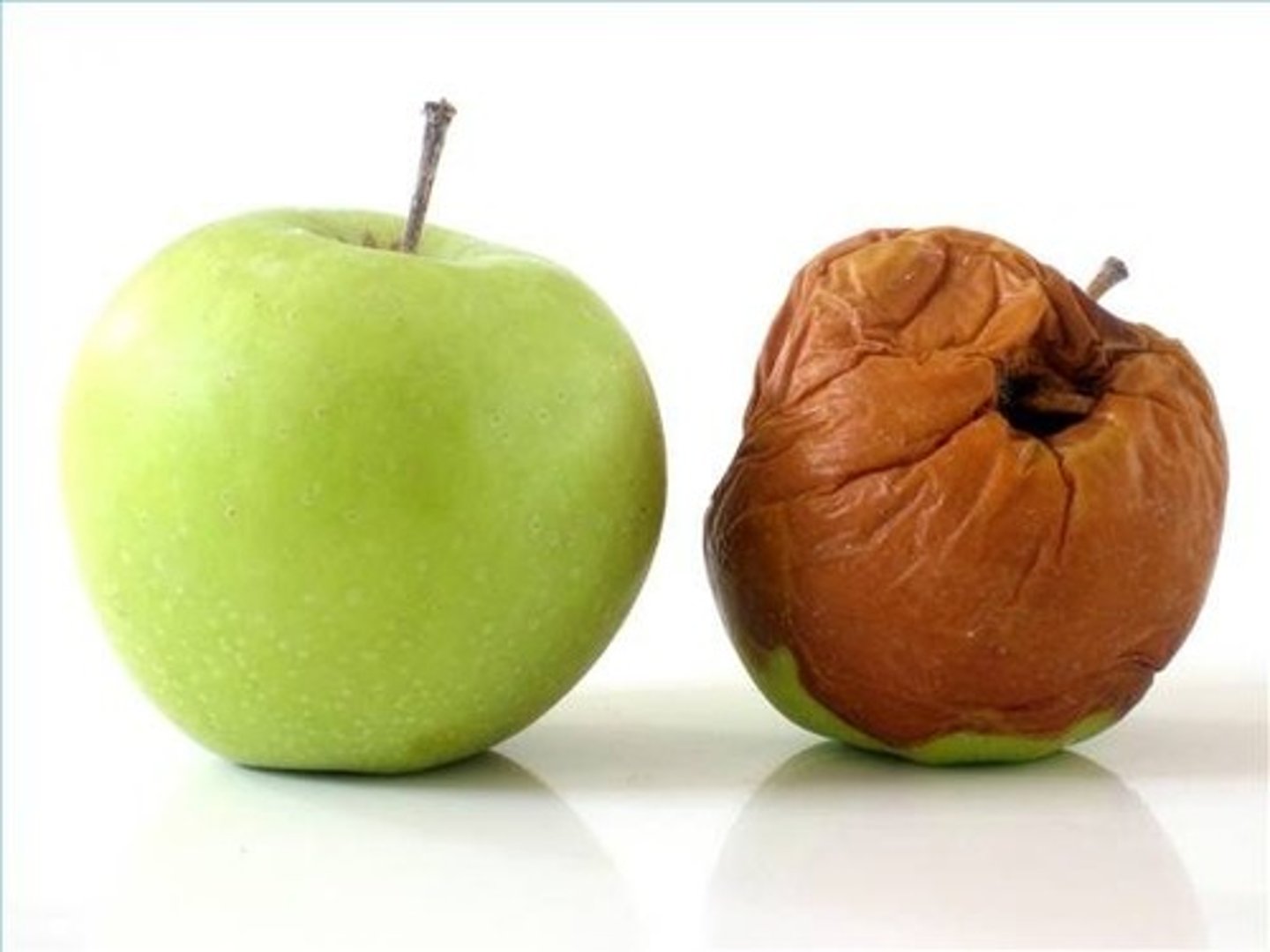
Decomposition
The breaking down of matter into simpler molecules. Typically performed by bacteria.
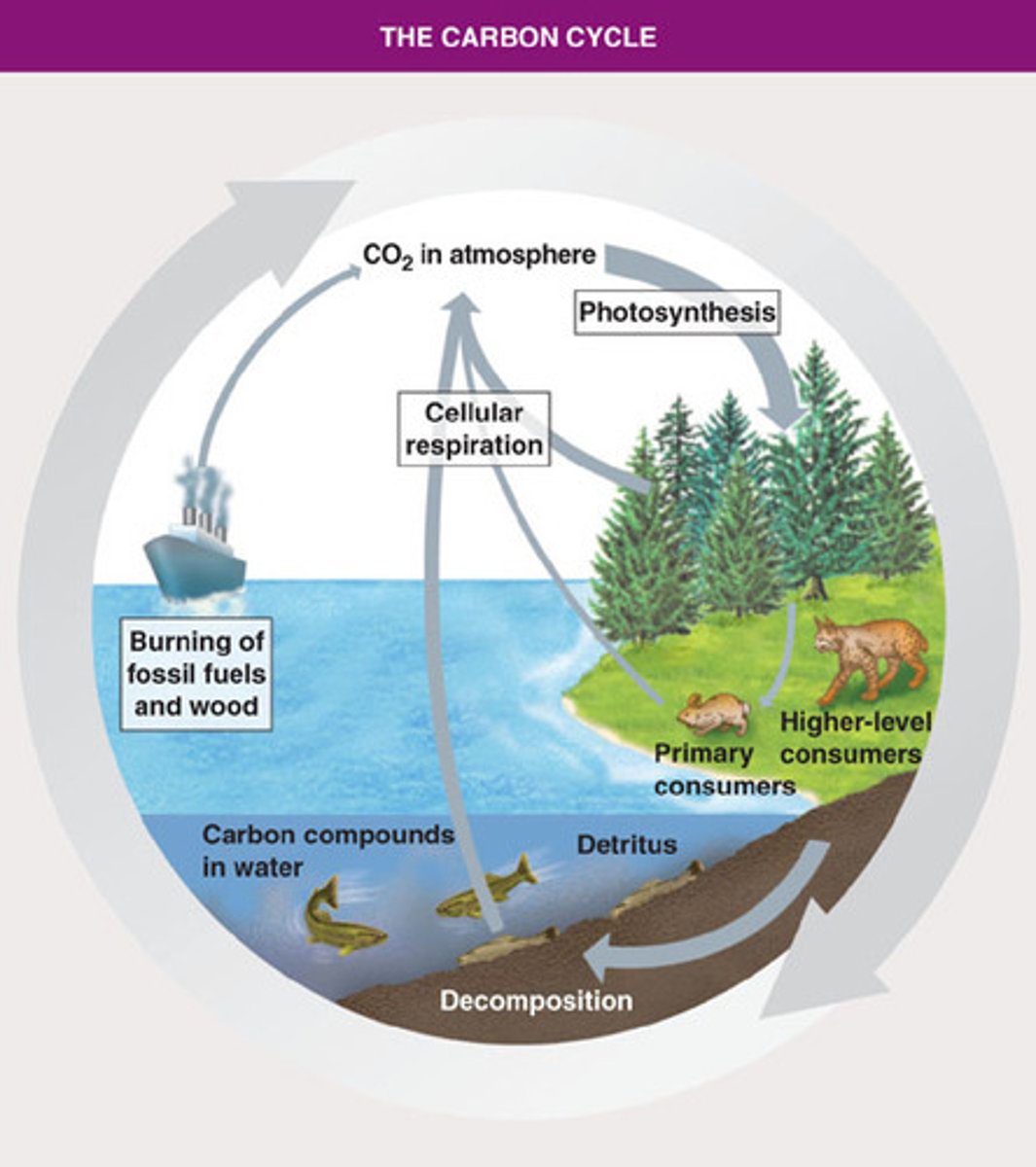
Carbon Cycle
The movement of carbon from the nonliving environment into living things and back.
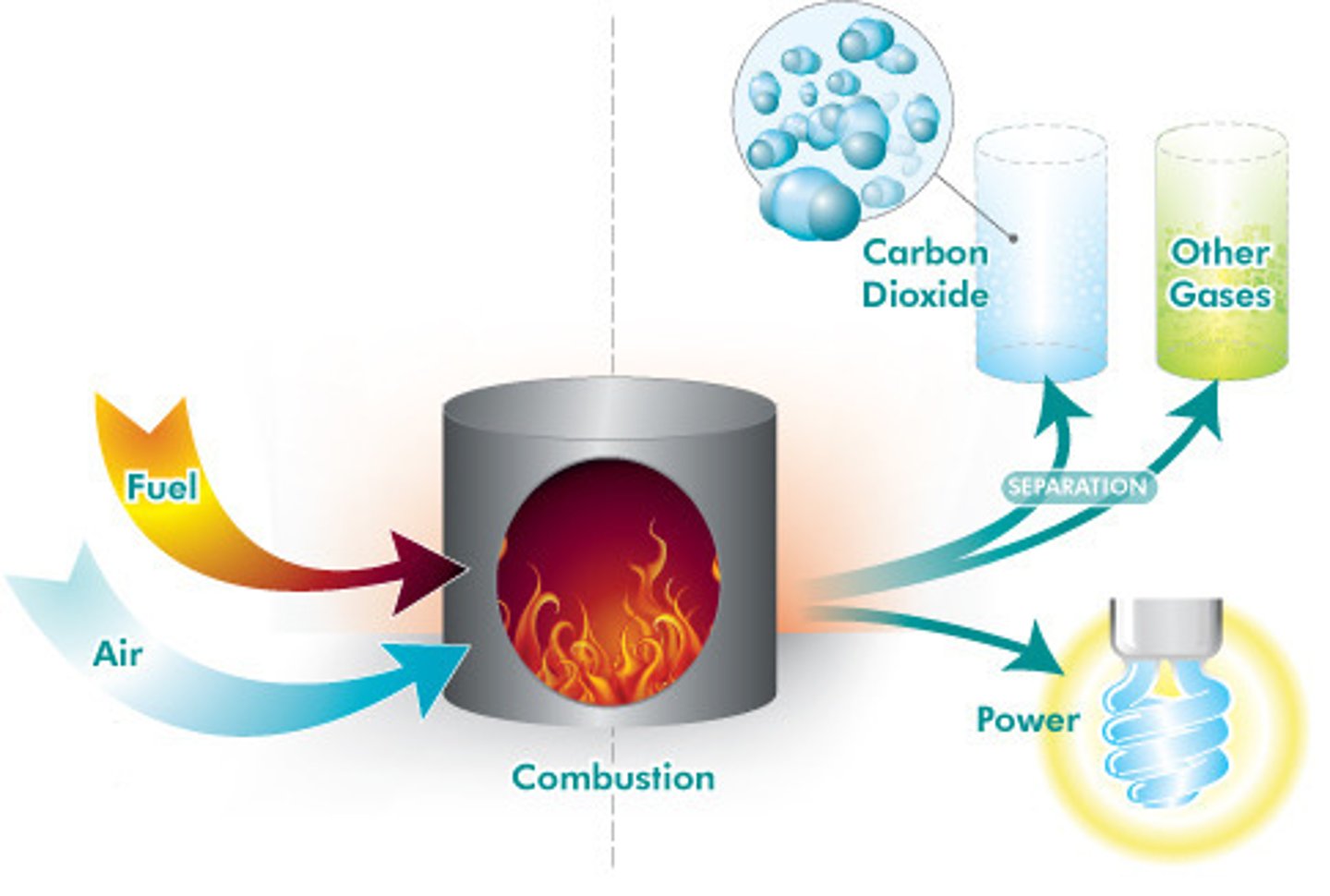
Combustion
Burning of fossil fuels and wood, releasing energy and carbon dioxide.
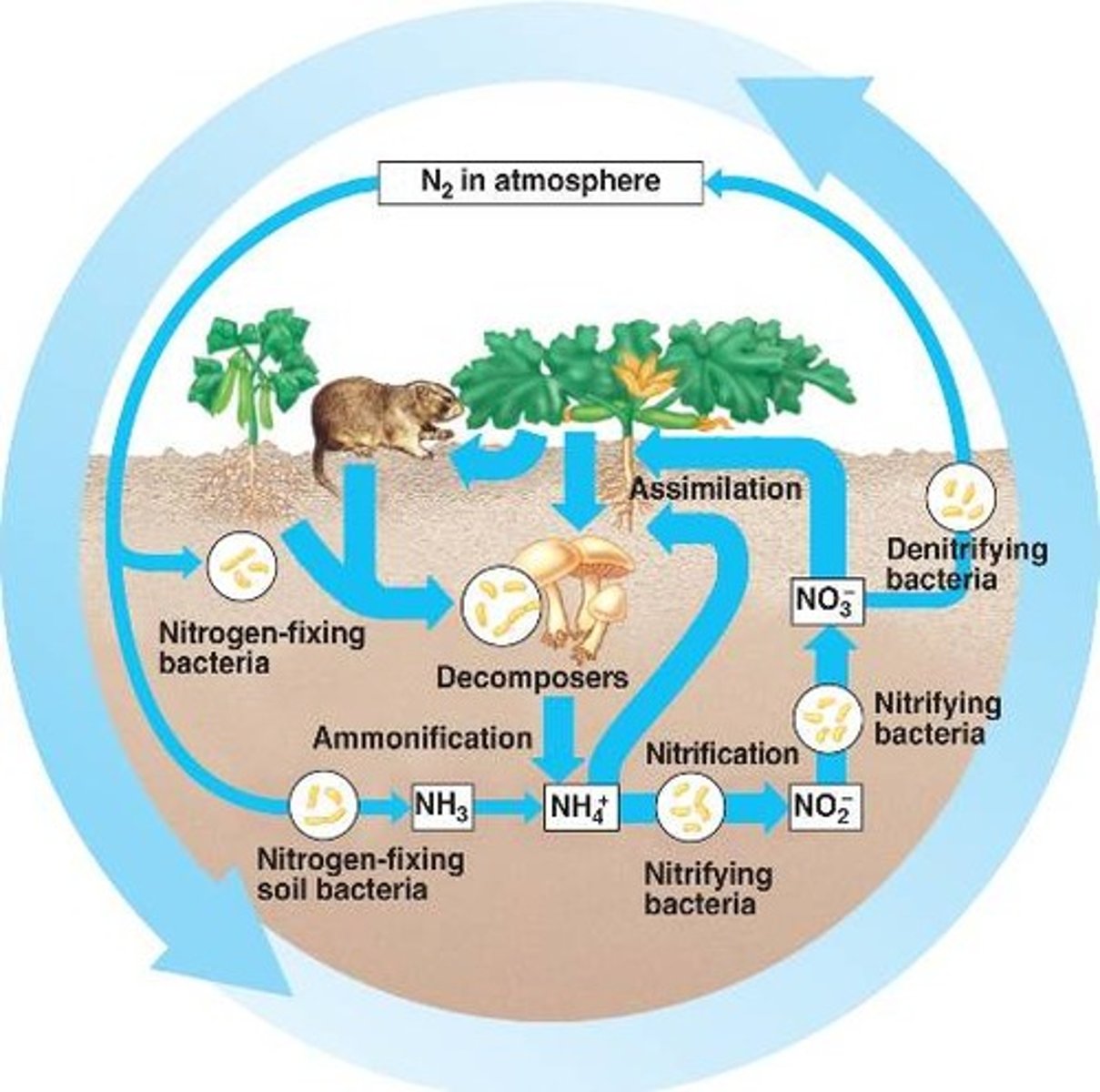
Nitrogen Cycle
The movement of nitrogen from the atmosphere to the soil, to living organisms, and back to the atmosphere.
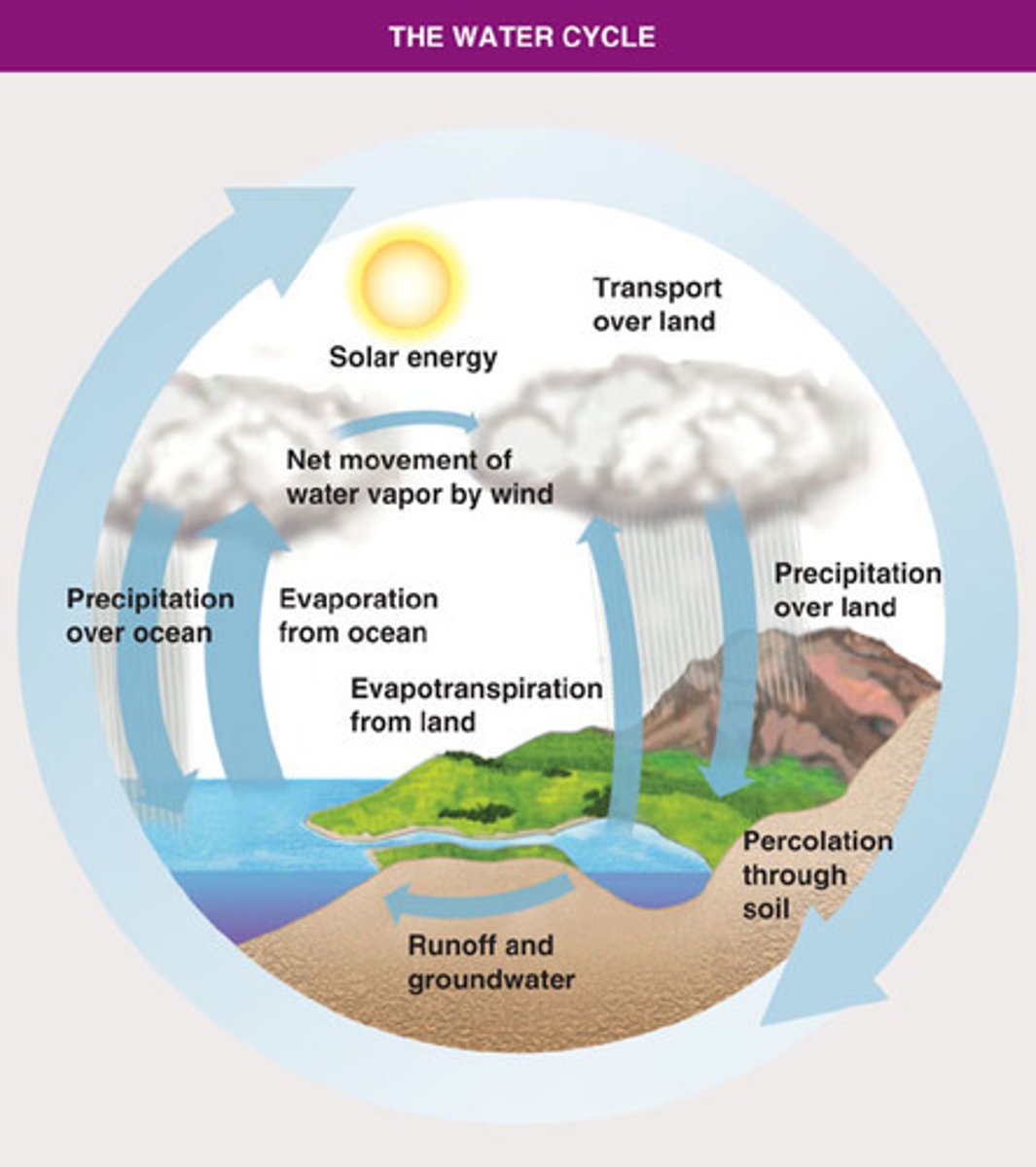
Water Cycle
The movement of water from Earth's surface to the atmosphere and back.
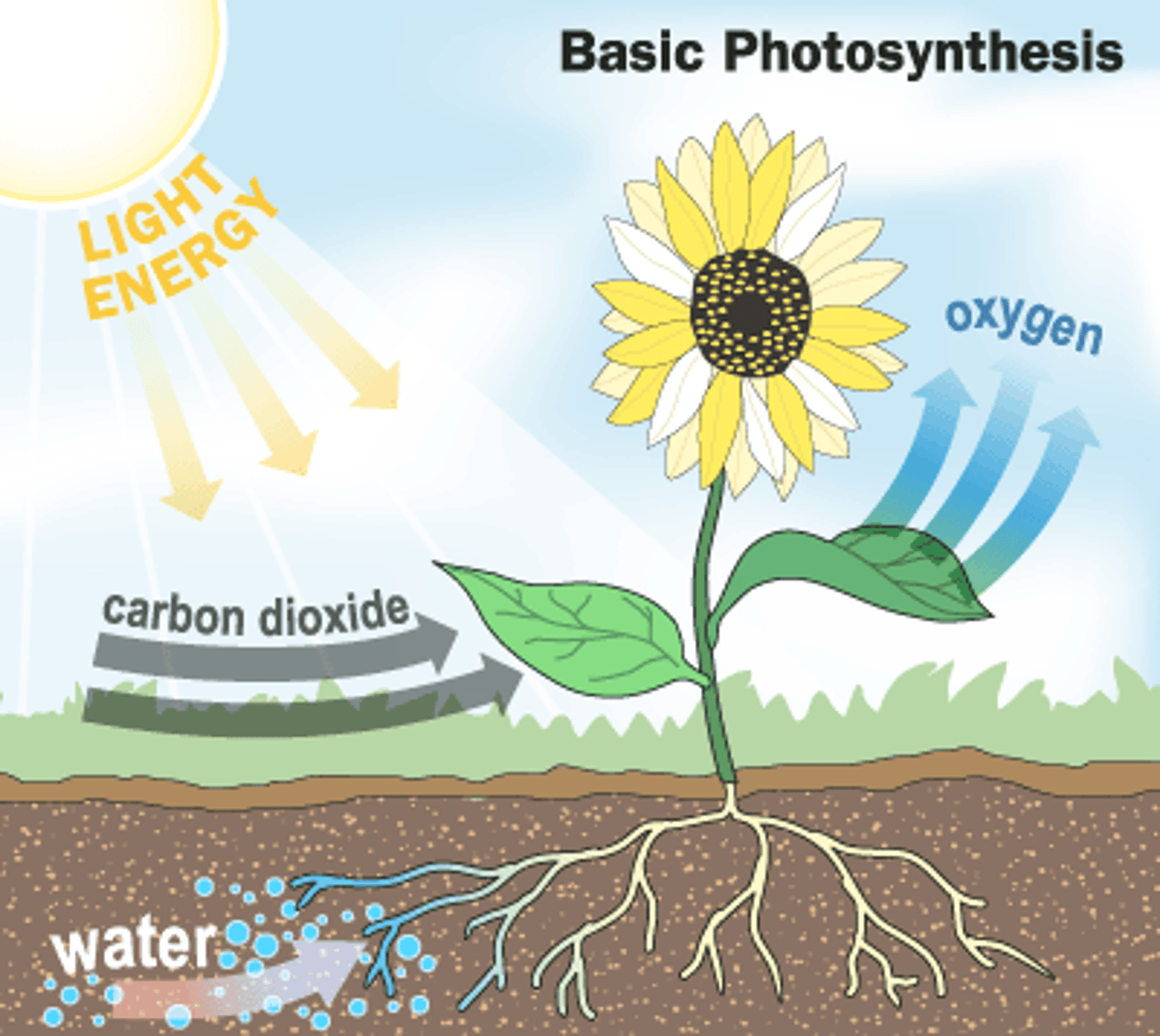
Photosynthesis
Process used by plants to capture and convert the sun's energy, water, and carbon dioxide into glucose (sugar). Part of carbon cycle.
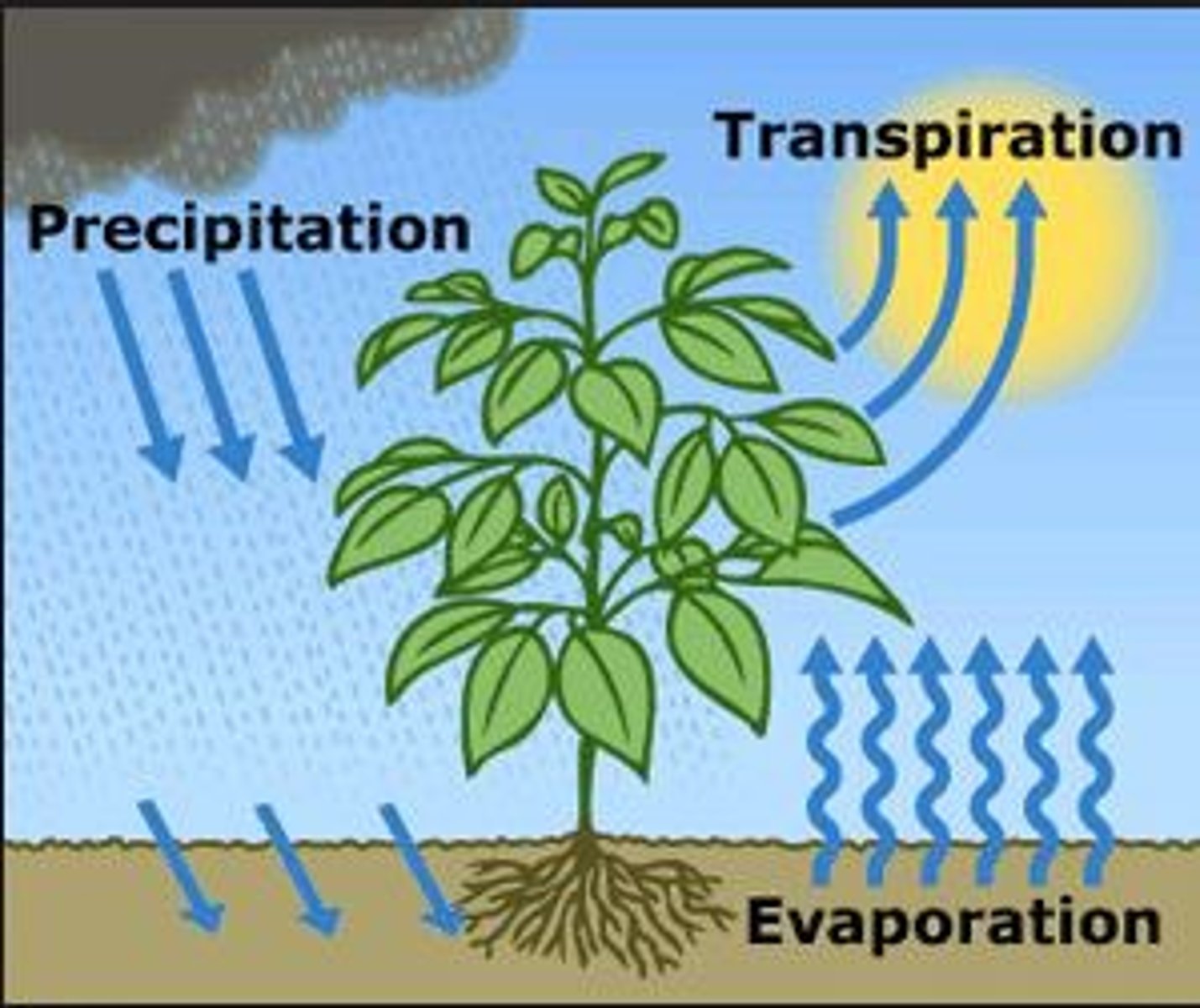
Transpiration
The evaporation of water from the leaves of a plant into the atmosphere.
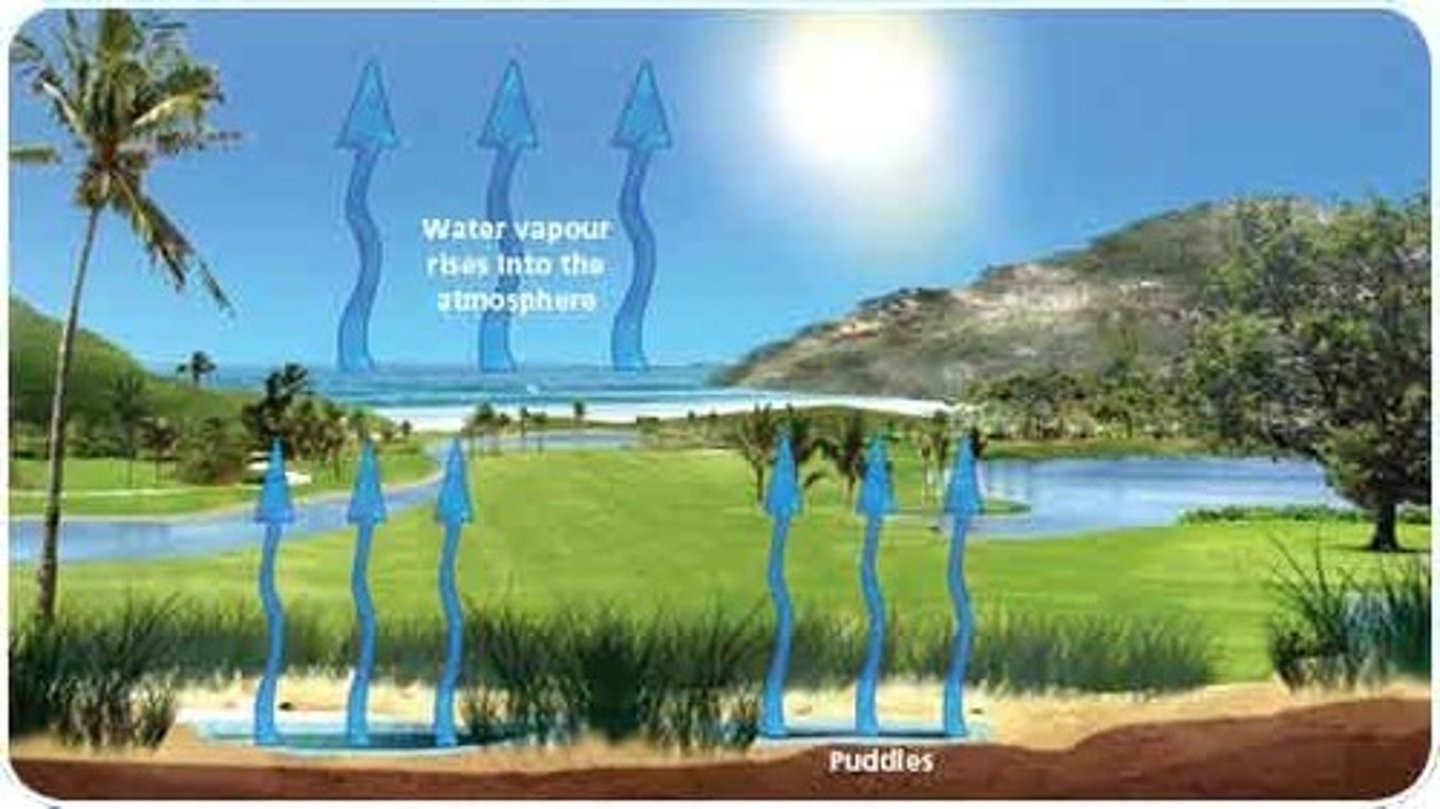
Evaporation
A physical change from a liquid to a gas at a temperature that is lower than the boiling point.
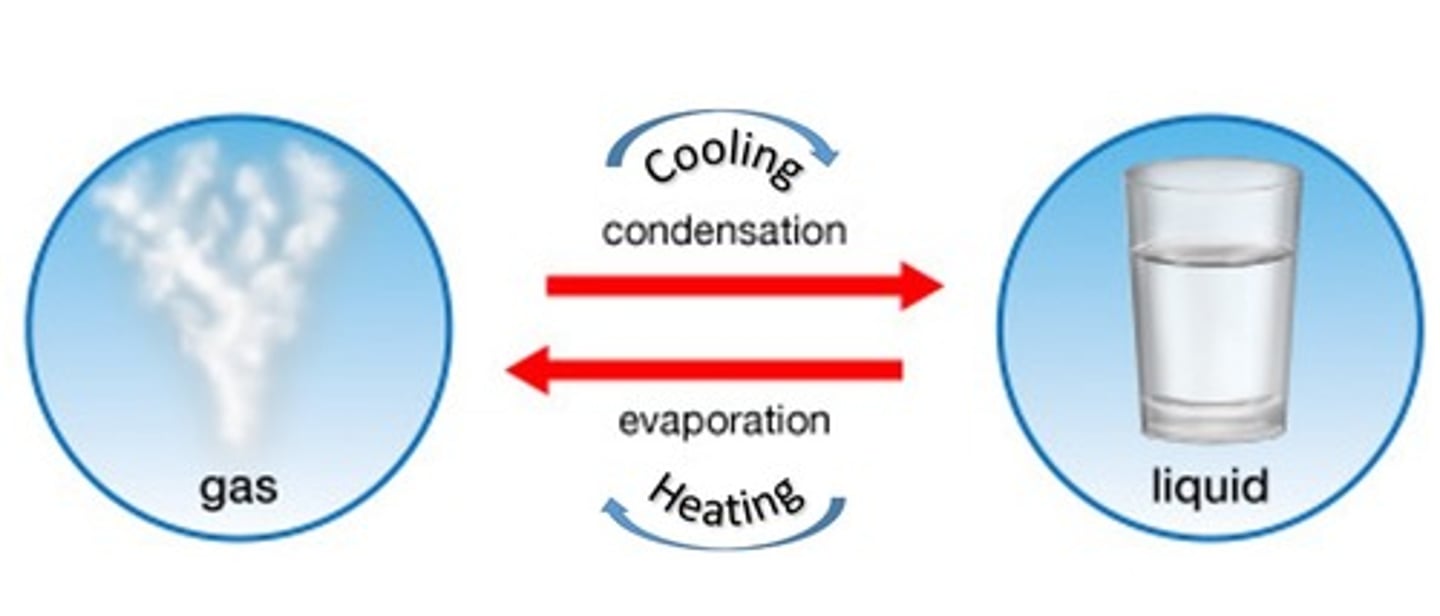
Condensation
A physical change from a gas to a liquid at cooler temperatures (the opposite of evaporation).
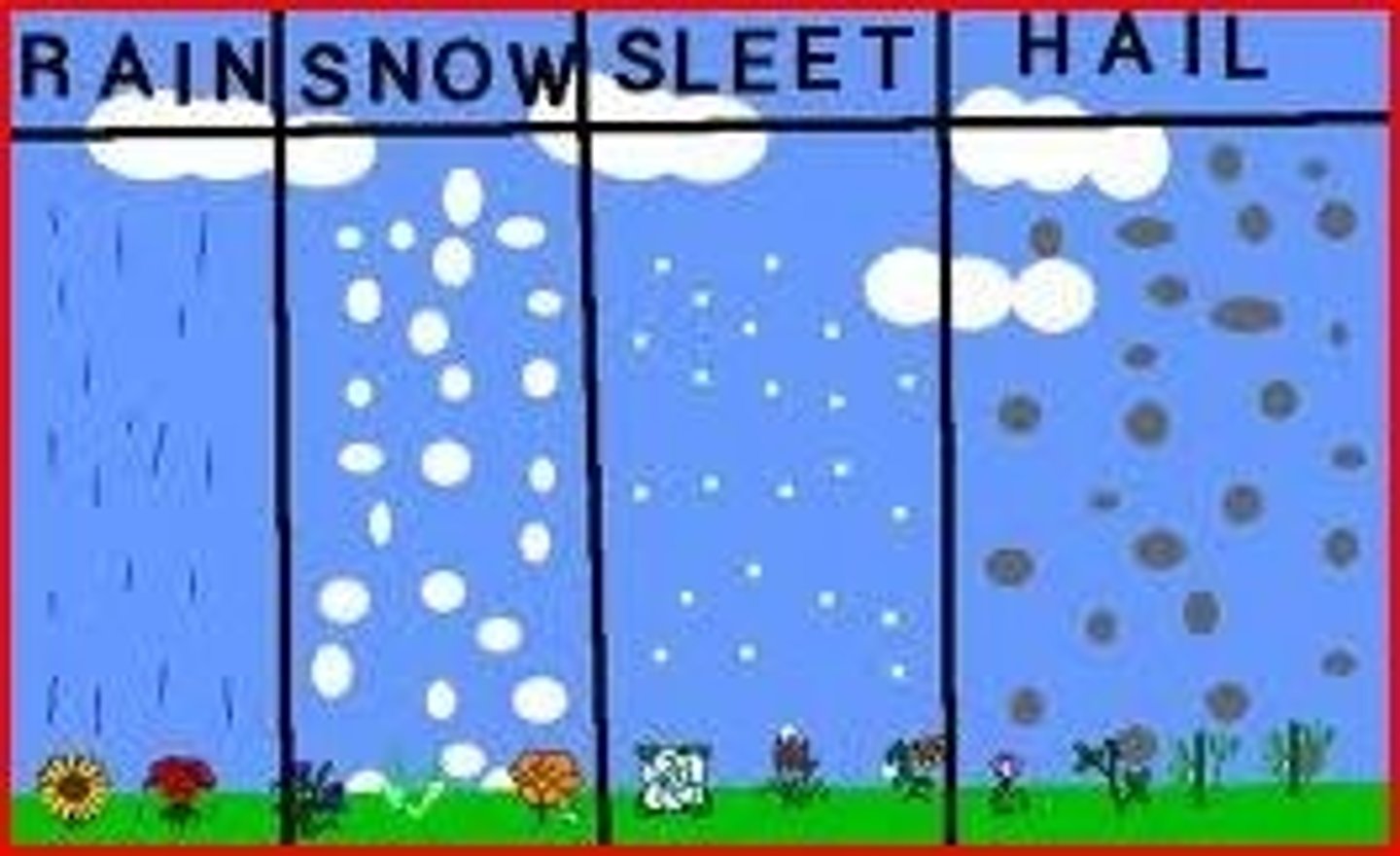
Precipitation
Any form of water that falls from clouds and reaches Earth's surface.
Biodiversity
The number, and variety of living organisms in a given area, during a specific period of time.
Ecosystem
A system formed by the interaction of a community of organisms with their physical environment.
Population
A group of individuals that belong to the same species and live in the same area.
Community
A group of interdependent organisms inhabiting the same region and interacting with each other.
primary succession
The sequence of biotic changes that creates a community in a previously uninhabited area.
secondary succession
The sequence of biotic changes that regenerates a community following a disturbance that destroys a community without destroying the soil (ex. fire)