25 mark plans
 Call Kai
 Learn
Learn Practice Test
 Spaced Repetition
 Match
Match Flashcards
 Knowt Play
1/3

There's no tags or description
Looks like no tags are added yet.
Name | Mastery | Learn | Test | Matching | Spaced | Call with Kai |
|---|
No analytics yet
Send a link to your students to track their progress
4 Terms
To what extent should governments intervene in markets?
Government intervention are actions by the state to influence market outcomes
Market failure is when the free market fails to achieve allocative efficiency
Point 1 - should intervene
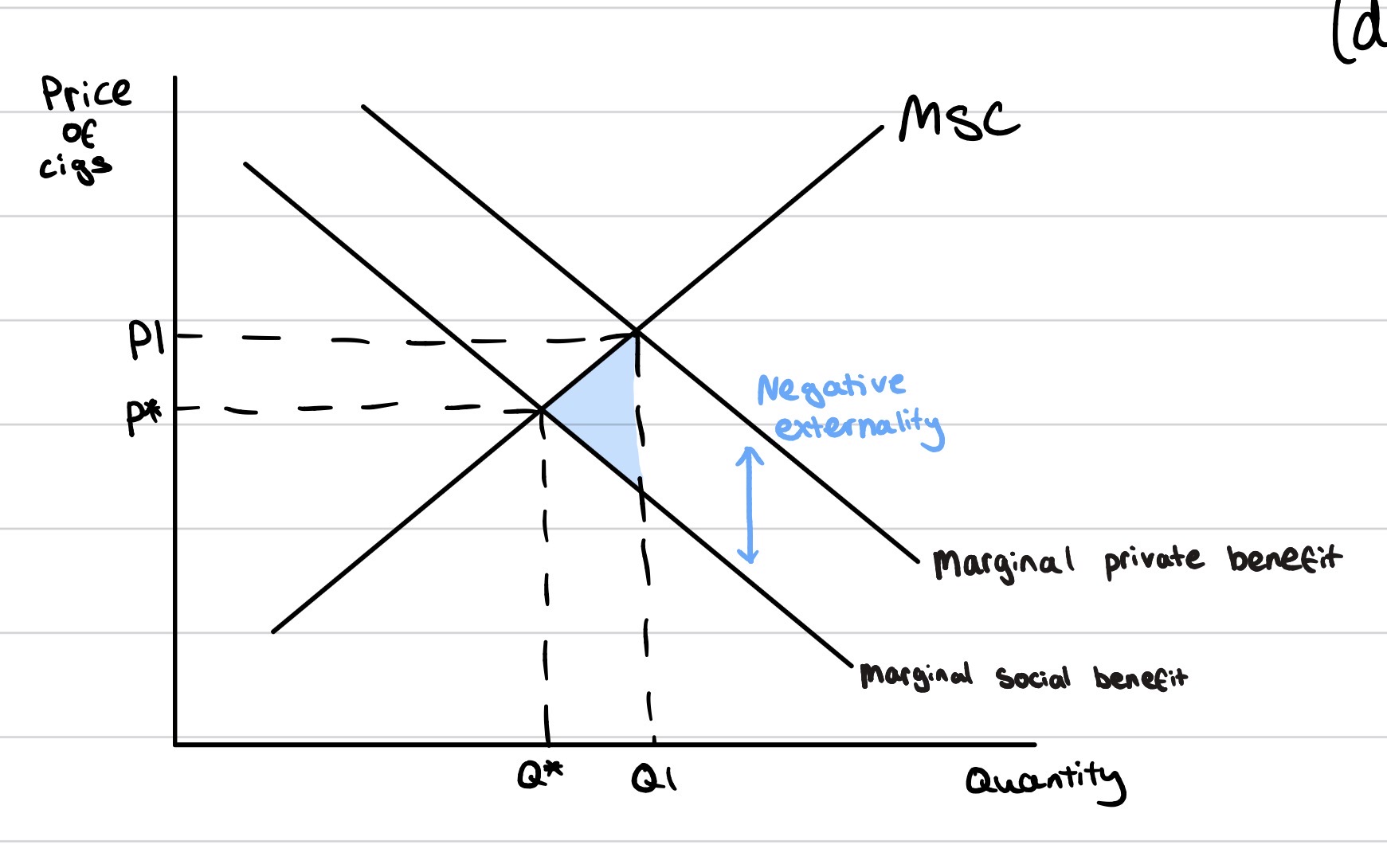
Negative externalities like pollution cause overproduction and over consumption → social costs exceed private costs → indirect taxes or regulation → output on socially optimum level
Eval
tax may be set too high or low
Firms may pass costs onto customers, reducing effectiveness
Taxes / subsidies highly dependent on PED
Point 2 - monopolies
Monopolies charge higher prices and restrict output → government intervention = increase competition + lower barriers to entry → dynamic efficiency
Eval
Economies of scale allows lower prices for consumers
Reduces effecicncy to break up a monopoly
Point 3 - intervention cause government failure
Worsened resource allocation
Maximum price → shortages
Minimum price → surpluses
Eval
government failure may be smaller than market failure
Likelihood of a train ticket being price elastic or inelastic. 10
PED measures responsiveness of quantity demanded to a change in price
Point 1 - availability of substitutes
Inelastic if no other option
Point 2 - nature of journey
Work related travel → necessity → inelastic
Leisure activity → more elastic
Explain whether the supply of new housing is likely to be price elastic or price inelastic. 10
PES measures the responsiveness of quantity supplied to a change in price
Point 1 - spare capacity
Many raw materials + labour
Point 2 - land availability limited
Inelastic
Point 3 - perishability
Materials don’t perish very much → elastic
Assess whether taxation is the best way to correct market failure.
market failure: when the free market fails to allocate resources efficiently, leading to welfare loss
Point 1
Negative externalities when social costs exceed private costs
Indirect taxes → increase firms costs and raises prices → quantity demanded and supplied fall → output moves closer to the socially optimum level
Eval
demand may be price inelastic
Taxes set too high or too low
Point 2 - tax raises government revenue
Revenue funds healthcare, education etc.
Eval
may create other objectives rather than correcting market failure
Government may become dependent on revenue
Point 3 - regulation more effective
Ban or impose legal limits on demerit goods
Better as does not rely on PED
Eval
monitoring and enforcement can be costly )opportunity cost)
May reduce competitiveness or innovation
Point 4 - subsidies are better
Subsidies reduce costs and increase consumption → encourage socially beneficial activities
Eval
opportunity cost
Difficult to determine optimal subsidy