CH. 67- FUTURISM, DADA, SURREALISM, AND POLITICAL PROTEST IN MODERN ART
 Call Kai
 Learn
Learn Practice Test
 Spaced Repetition
 Match
Match Flashcards
 Knowt Play
 Podcast
1/30

There's no tags or description
Looks like no tags are added yet.
Name | Mastery | Learn | Test | Matching | Spaced | Call with Kai |
|---|
No analytics yet
Send a link to your students to track their progress
31 Terms
What event of the early 20th century shaped the avant-garde art movements highlighted in this chapter? How did this event change the course of modern art?
In the early 20th century, war had erupted in Europe, weakening the global economy.
This led to the great depression in the 1930’s and created heavy tension in Europe, West Asia, and elsewhere. This eventually led to yet another world war in 1939.
There began to be an intense development of income inequality that caused labor unrest, strikes, and revolutions/rebellions in Mexico, Russia, and other colonies.
The avant-garde was the artists’ response to the upheavals and rising political events.
Art began to focus more on the external world, and many artists used art to engage in social commentary and develop political statements.
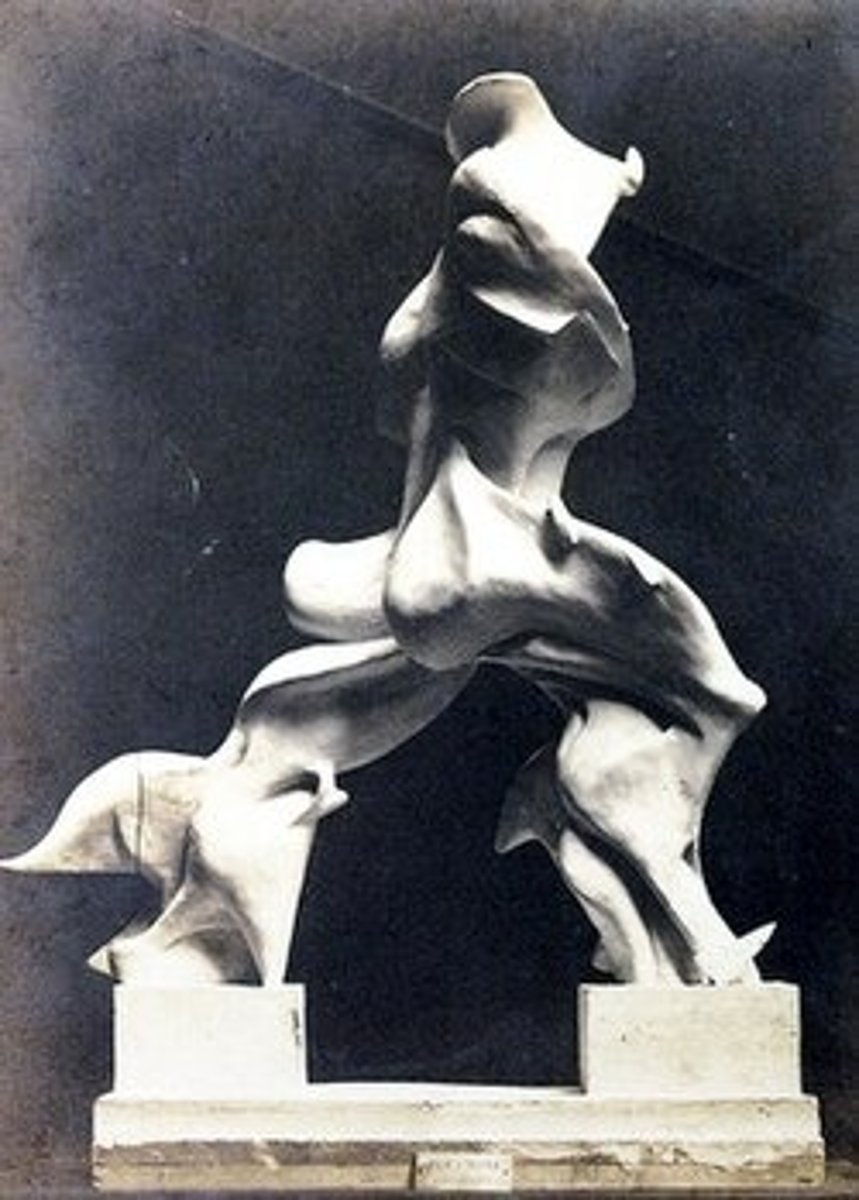
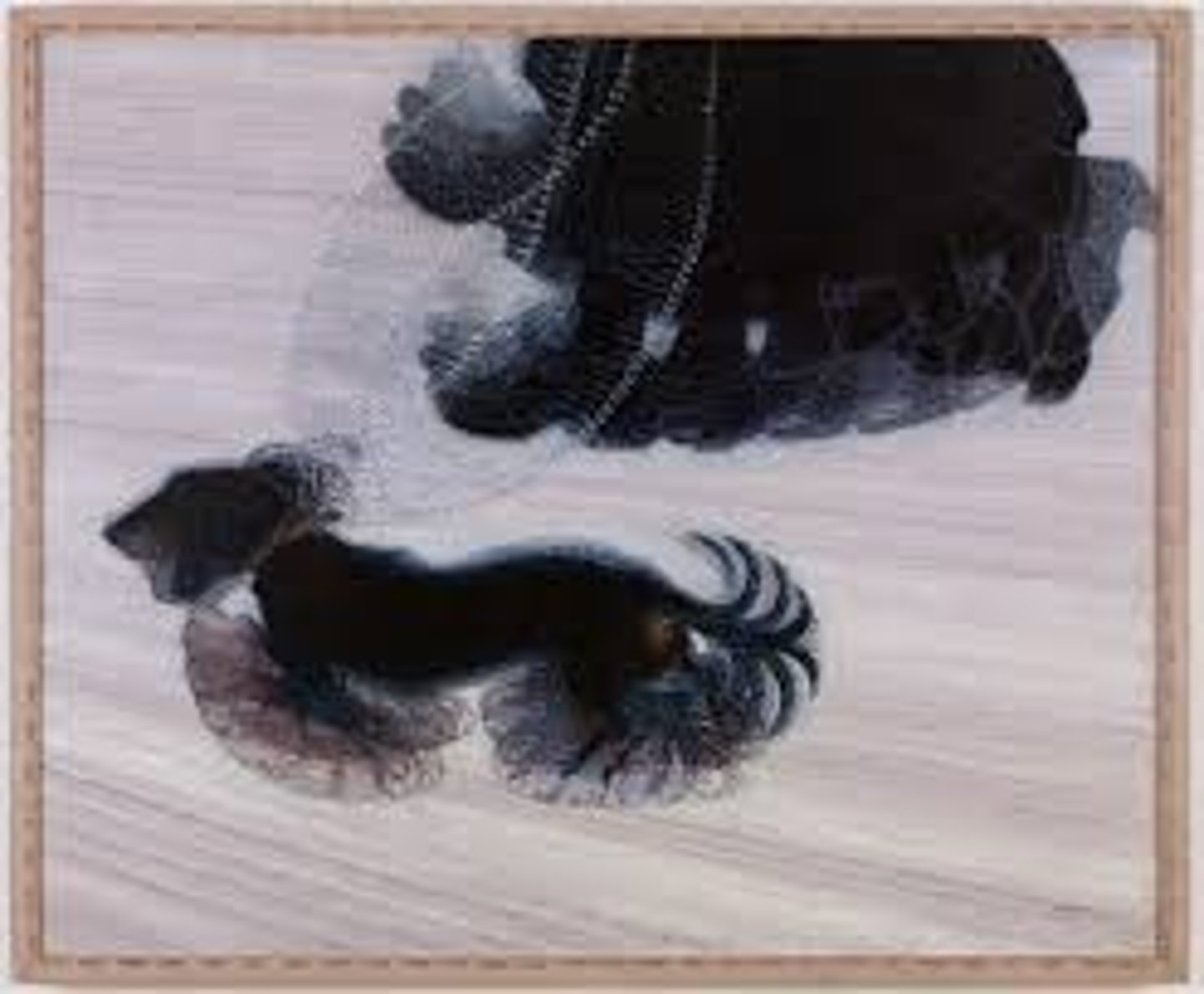
What were the ideals of the Italian Futurist movement? How are they reflected in Umberto Boccioni’s Unique Forms of Continuity in Space and Giacomo Balla’s Dynamism of a Dog on a Leash?
Futurists:
denounced past culture + products
reverence for factory-formed products of modern engineering.
Heavily male-centered, anti-feminist, nationalistic group that wanted to see Italy return to the forefront of global involvement.
Wanted to introduce modern concepts of time into visual art, becoming obsessed with movement, speed, and rapid change. Their subject matter often related to modern cities and transportation.
Boccioni’s Unique Forms of Continuity in Space:
Futurists are best remembered for their fine art media (oil painting, bronze casting).
challenge dynamic representations of objects in rapid motion, using static materials.
Boccioni achieved this sense of movement through distortion (viewing the force of the forward motion), dynamic curves (wind), gleaming metal (armor/body parts).
Balla’s Dynamism of a Dog on a Leash:
Adopted the overlapping planes of Cubist paintings in their methods of allowing fractured forms and surrounding spaces to interact.
They borrowed the concept of placement confusing the positioning of individual forms in space, making it look like they are shifting positions.
Balla implied that motion could be achieved through the dissolving of contours on forms. He represented change over a period of time, and his work reflected the modern photographs of Etienne-Jules Marey, who invented chronophotography.
What were the ideals of the international Dada movement, and what was the basis of their art?
Rebellion against European artistic/cultural standards.
Anti-war, anti-capitalism, anti-authority.
chaos, irrationality, and anti-bourgeois attitudes.
Anti-art
conventional art was meaningless in a world capable of such violence. So rather than creating traditionally “skilled” or “beautiful” works, they intentionally made art that felt nonsensical, shocking, or even absurd.
How did Berlin Dadaists Raoul Hausmann and Hannah Hoch critique Weimar society in artworks such as Mechanical Head and Cut with the Kitchen Knife Dada?
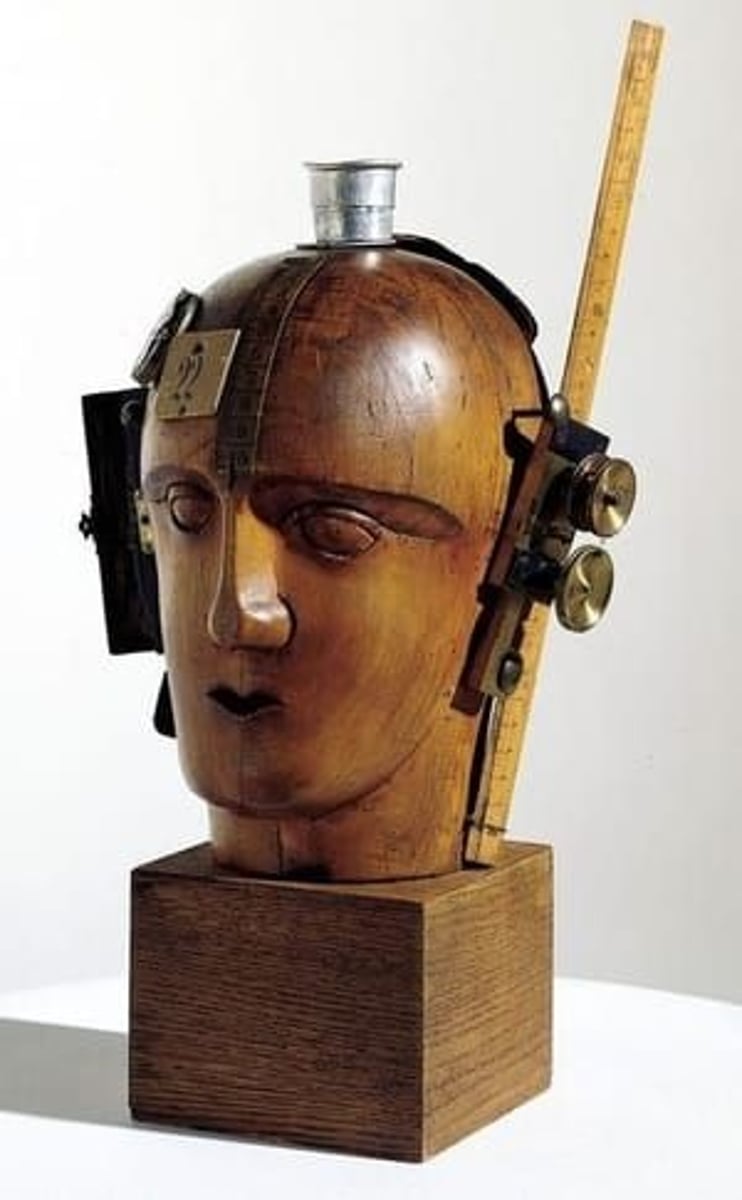
Raoul Hausmann, Mechanical Head:
The head = metaphor for his personally negative view of his fellow Germans, thinking they are dull and traumatized by war.
No ears to hear or pupils to see, losing control
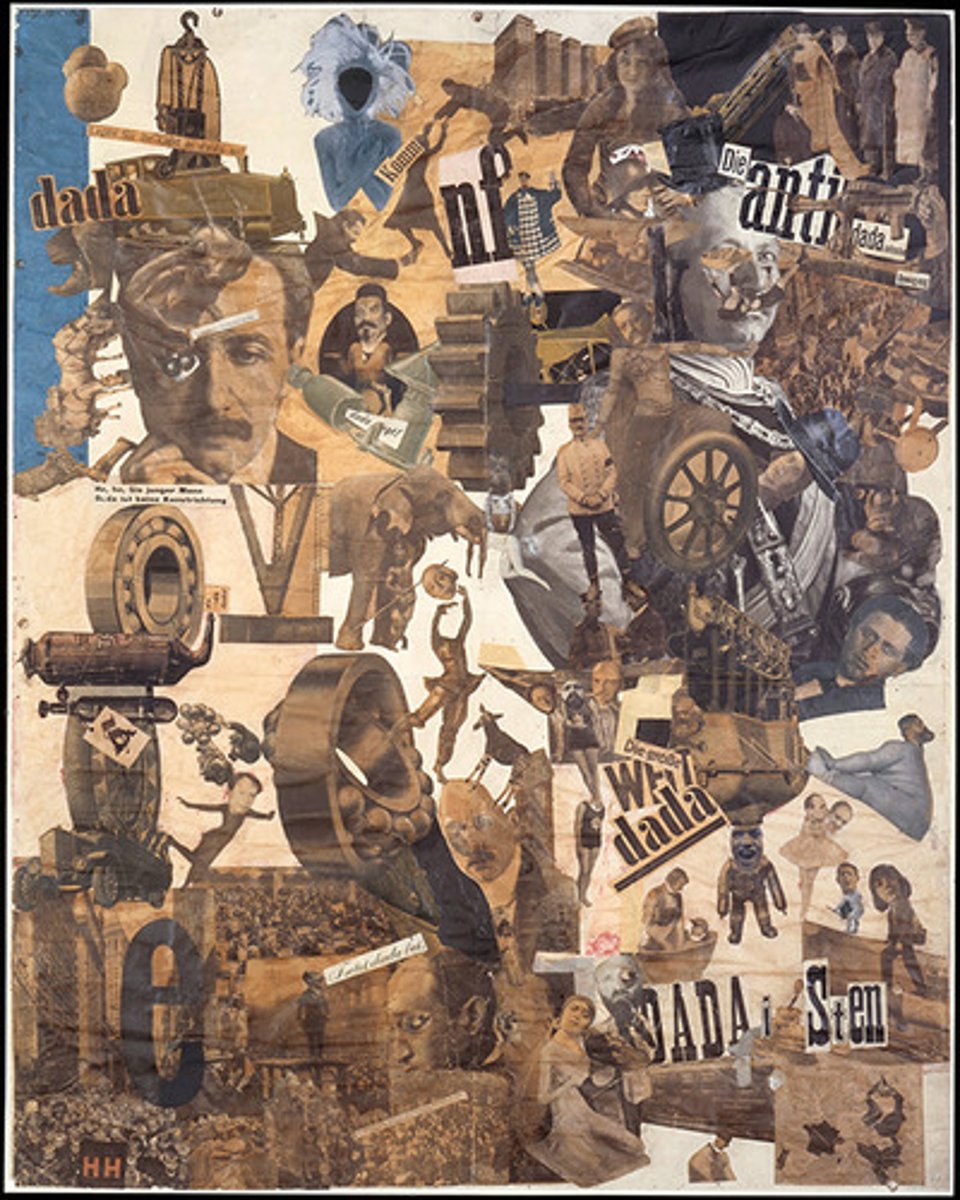
Hannah Hoch, Cut with the Kitchen Knife Dada
Critiquing current politics and social issues.
References the corrupt Weimar Republic and the prevalent greed that Hoch adn others blamed for contemporary problems.
Photos/graphics of heads- politicians, artists, radicals, entertainers, etx.
Critique of Kathe Kollwitz, her head is being tossed and speared.
Map of Europe in lower right corner, identifying the countries where women had received the right to vote.
What were the ideals of the Surrealist movement? How did Andre Breton define its core tenet of "pure psychic automatism"?
Offspring of Dada
Embrace of chance and nonrational thinking
Began as a Paris literary movement.
Inspired by psychoanalytic theories of Sigmund Freud + Karl Marx
Wanted to express the psychic states and operations of the unconscious- unrestricted
Believed that people can liberate the unconscious mind and free oneself from the thinking that lead to the war and other things.
Follow Freud’s analysis of the subconscious mind and gather an understanding of irrational forces and desires that motivate human behavior.
Creating without conscious control
Letting thoughts flow directly from the unconscious onto the page, canvas, or other medium
Avoiding planning, editing, or judging the result
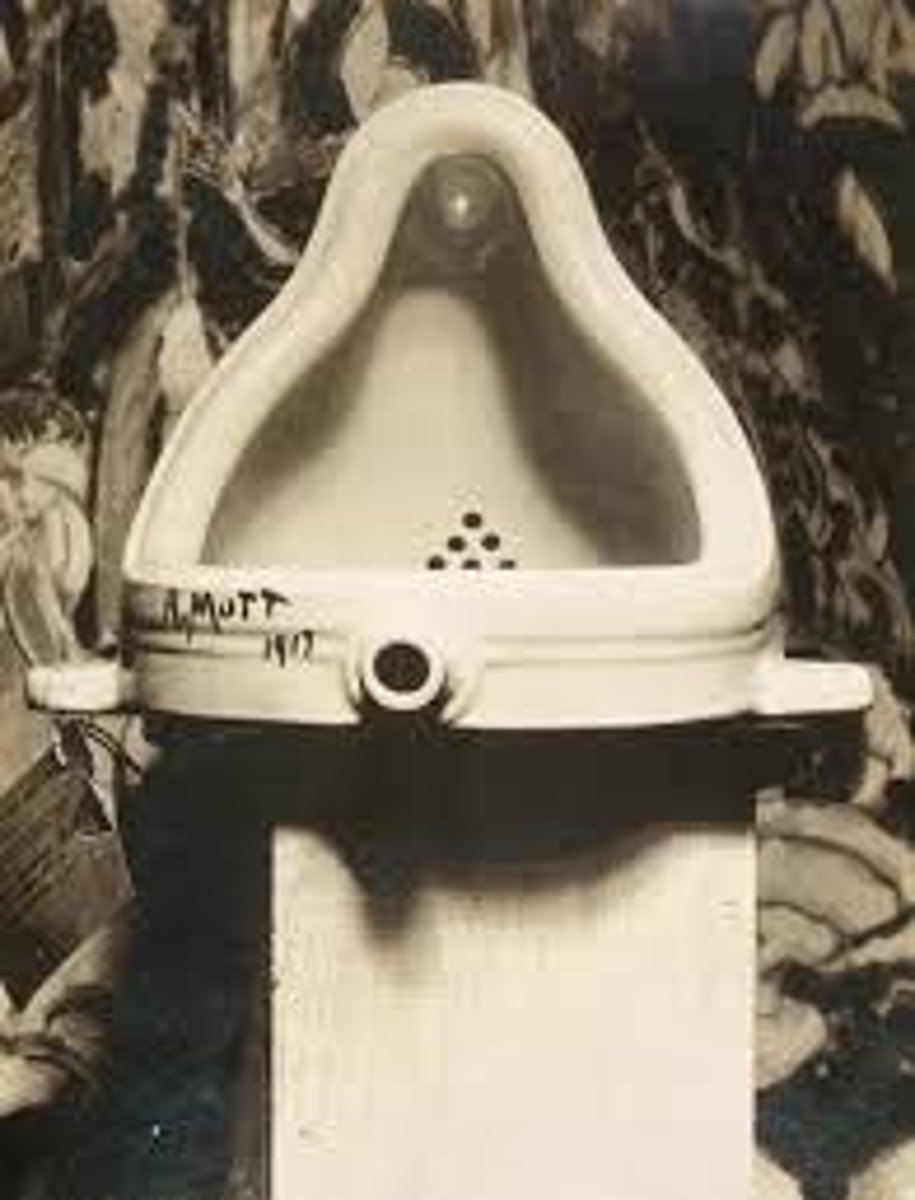
How did Marcel Duchamp destroy conventional notions of art through readymade artworks, such as Fountain? Why is this work considered more influential than Picasso's Demoiselles d'Avignon?
redefine what art even is.
Duchamp selected ordinary manufactured objects and presented them as art with little to no alteratio
Does art have to involve:
Technical skill or craftsmanship
Original creation by the artist’s hand
Aesthetic beauty or visual pleasure?
The artist’s choice and context are what make something art
Meaning comes from ideas, not just visual form
Art can be conceptual and provocative, not just decorative
Picasso shattered traditional representation through Cubism—changing form, perspective, and composition.
Duchamp went further by questioning whether making an image at all was necessary
In what two major ways did Surrealist painters sought to express the unconscious through visual images?
Automatism (direct access to the unconscious)
bypass conscious control entirely and let images emerge spontaneously.
Illusionistic dream imagery (constructed visions of the unconscious)
realistic, detailed scenes that depicted irrational or dreamlike combinations of objects
Boccioni
Unique Forms of Continuity in Space
Futurism
Italian
Balla
Dynamism of a Dog on a Leash
Futurism
Italian
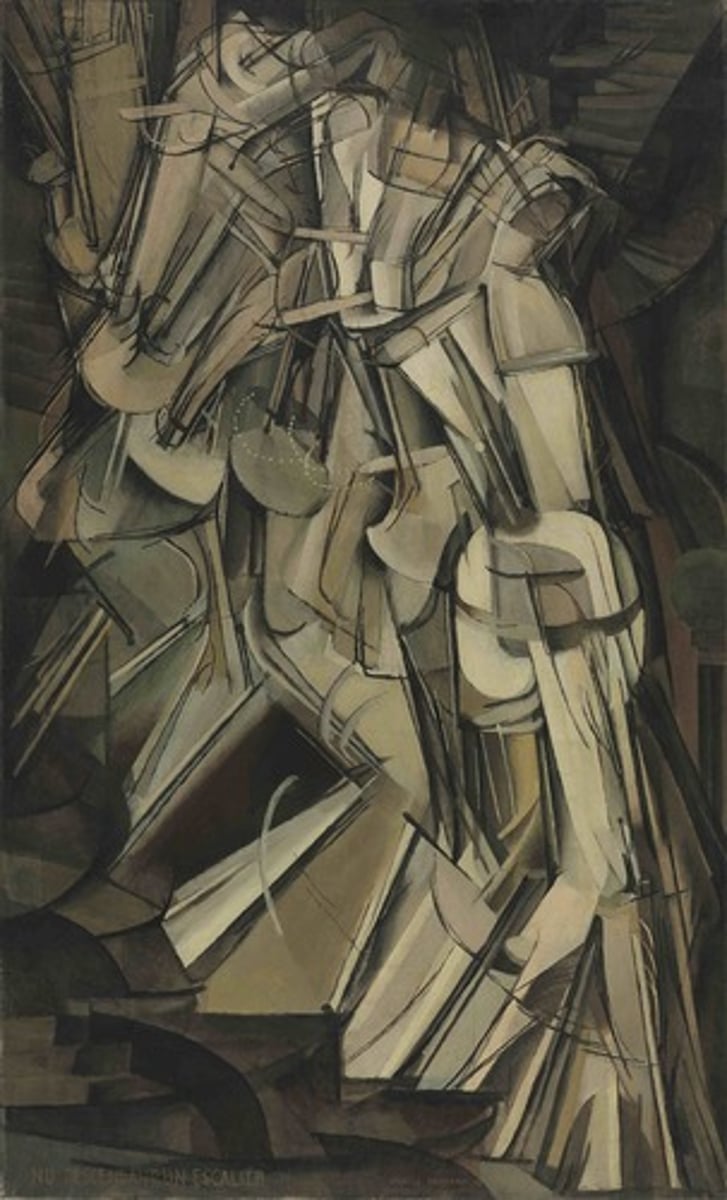
Duchamp
Nude Descending a Staircase (No. 2)
Cubo-Futurism
French
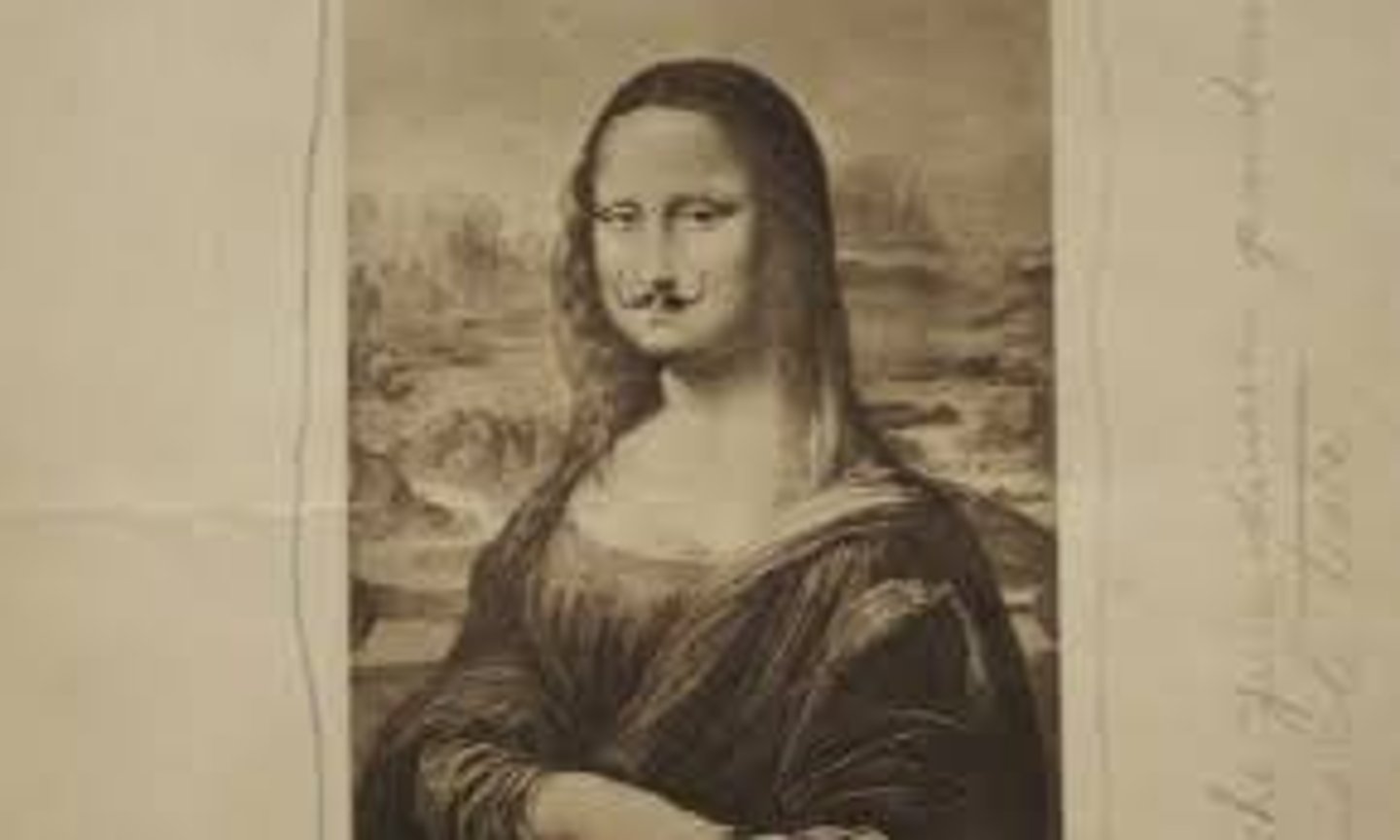
Duchamp
L.H.O.O.Q.
Dada
French
Duchamp
Fountain
Dada
French
Hausmann
Mechanical Head (Spirit of the Age)
Dada
German
Höch
Cut with the Kitchen Knife Dada through the Last Weimar Beer-Belly
Cultural Epoch
Dada
German
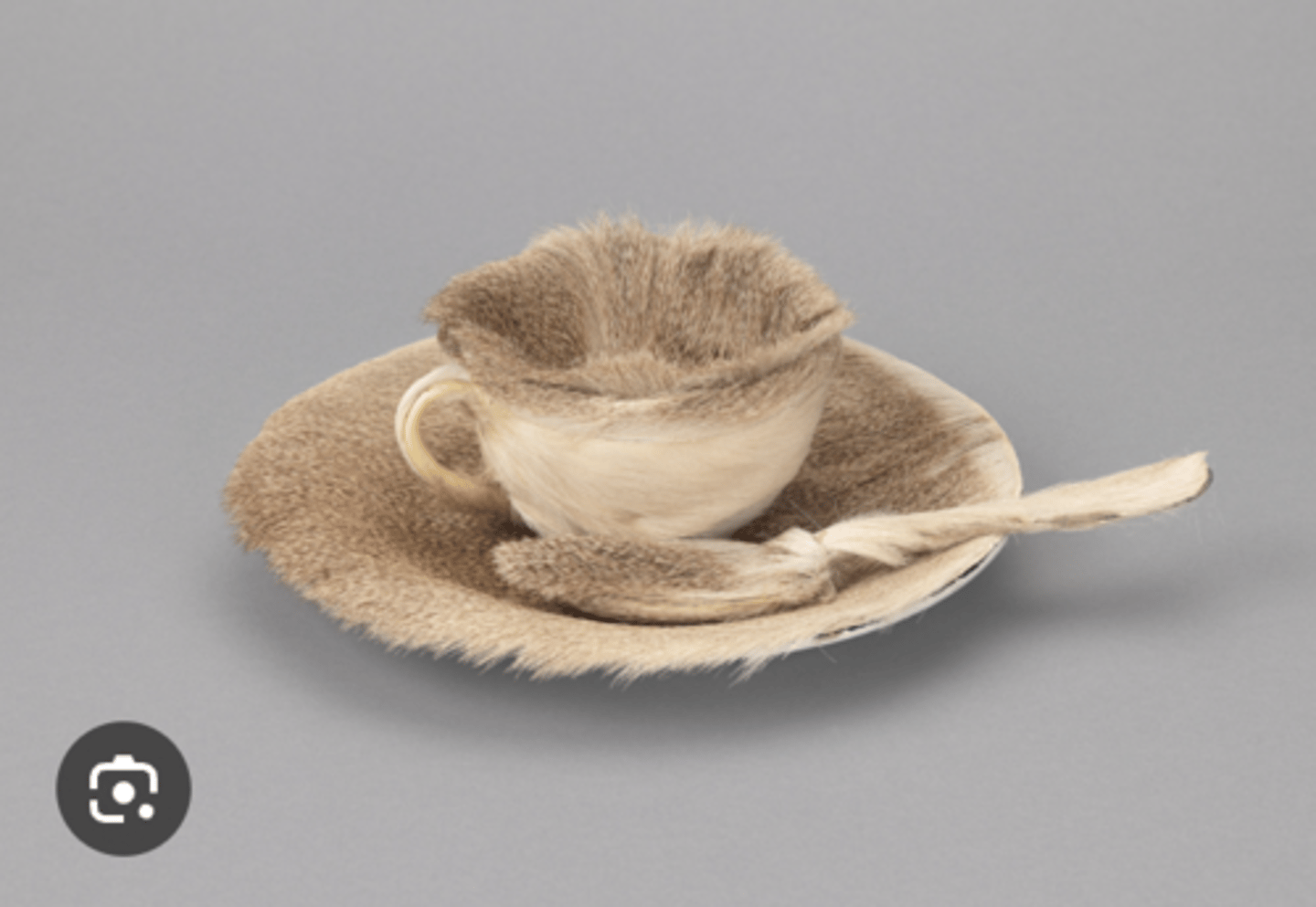
Oppenheim
Object
Surrealism
French
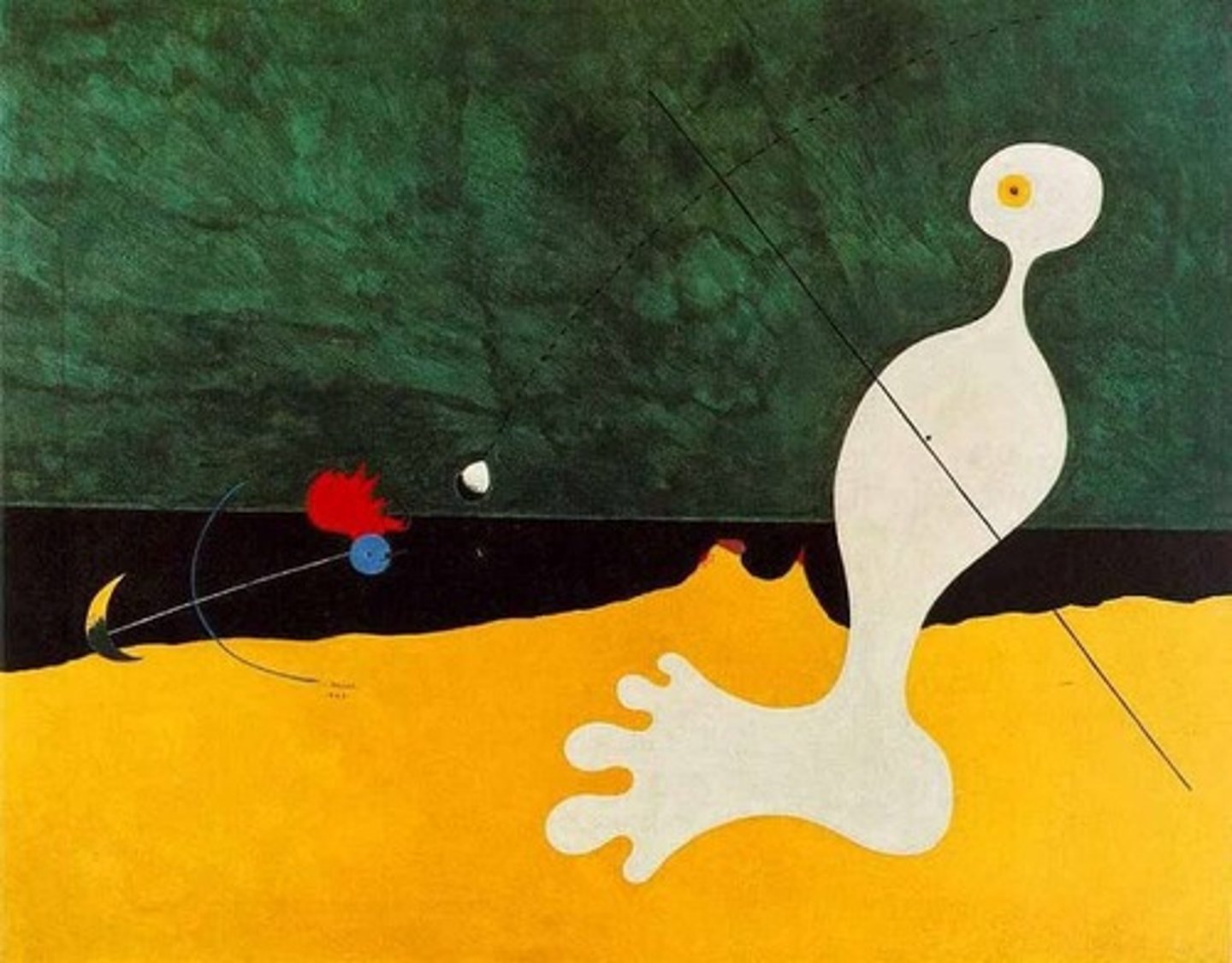
Miró
Person Throwing a Stone at a Bird
Surrealism Spanish
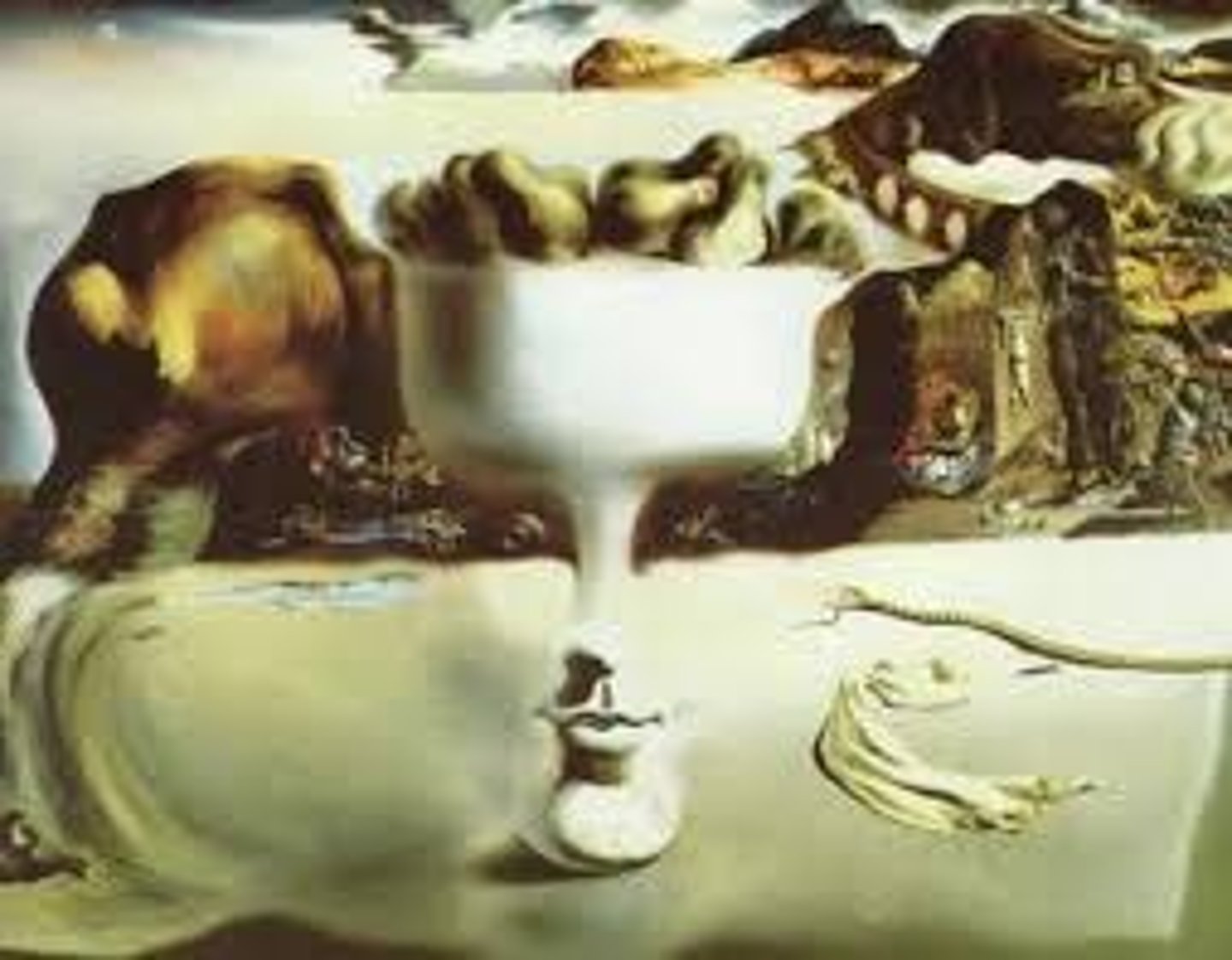
Dalí
Apparition of Face and Fruit Dish on a Beach
Surrealism
Spanish
Futurism
an art movement founded in 1909 in Italy that emphasized modernity, speed, technology, and the power of machines.
Performance art
linked to performing arts such as theater and dance, ephemeral events with a strong visual focus orchestrated by visual artists before an audience.
Dada
an informal international movement that arose during World War I; its adherents rebelled against established standards in art and what they considered morally bankrupt European culture.
found object
material presented with or without any alteration, as part of a work of art, or as a work of art on its own.
readymade
a term coined by Marcel Duchamp to describe a preexisting, mass-produced object given a new context and treated as a work of art
Conceptual art
a term that emerged in the 1960s for art practices that emphasize ideas rather than any aesthetic qualities or physical materials.
appropriation
a composition made using fragments of photographs, sometimes combined with other two-dimensional fragments, pasted into new configurations.
photomontage
a composition made using fragments of photographs, sometimes combined with other two-dimensional fragments, pasted into new configurations.
Surrealism
an artistic movement in the 1920s and later, inspired by Freudian psychology, dreams, and the subconscious.
Pop Art
a movement beginning in the mid-1950s that used imagery from popular or "low" culture, such as comic books and consumer packaging, for art.
primitive art
a term that used to be applied to art made in cultures perceived by Western bias as uncivilized and not having changed from their earliest origins.
automatism
illusionism
making objects and space in two dimensions appear real; achieved using such techniques as foreshortening, shading, and perspective.
biomorphic
forms in abstract art characterized by free-flowing curves, echoing organic rather than geometric shapes.