Processing impacting starches, proteins and lipids
 Call Kai
 Learn
Learn Practice Test
 Spaced Repetition
 Match
Match Flashcards
 Knowt Play
1/29

There's no tags or description
Looks like no tags are added yet.
Name | Mastery | Learn | Test | Matching | Spaced | Call with Kai |
|---|
No analytics yet
Send a link to your students to track their progress
30 Terms
Underlying mechanisms how pelletign can influence nutritional value are multiple
Feed
Pellet quality (fines)
Particle size
Molecular conformation - starch
Animal
Feed intake
Digestive functioning
Starch
Types of glucose polymers
Amylopecting, highly branched
Amylose, unbranched
Variability starch sources
Amylopecting and amylose (20-30% amylose)
Alternating crystalline and amorphous regions (100-500 nm) and lamellae (9-11 nm)
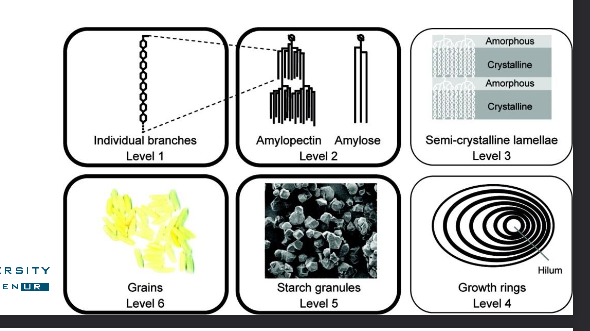
Starch - variability starch sources
Size, shape, pores, crystalline type, crystalline amount, amylose content, amylopectine sidechain lenght
Starch gelatinisation
Swelling and rupture of starch granules, loss of crystallinity and changed molecular organization
Process of breaking odwn of intermolecular bonds of starch molecules in the presence of water and heat, allowing the hydrogen bonding sites (the hydroxyl hydrogen and oxygen) to engage more water
With higher moisture content, the structure is completely destroyed at a relativley low temperature
Water acts as a plasticizer. When water is scarce, the starch crystals are more stable, shigitng the gelatinisation zone to much higher tempartures and making the process less uniform
Gelatinisation temperature
Excess water: 50-70 degrees
<35 WATER: >100 degrees
Ratio of 0.3 water: 1 starch as a prequirisute to initiate starch gelatinisation during heating
Higher amylose, in general more reistant to gelatinisation
Starch molecules more available for a-amylase → starch digestion facilitated
Starch retrogradation
Cooling
Gelatinized starch molecules re-associate into partially ordered structures )(recrystallization or retrogradation)
Resistant starch - types
1: physically inaccessible
2: native (resistant from origin)
3: retrograded, by processing
4: chemically modified
Starch granules contain
Amylopectin and amylose
Crystalline and amorphous regions
Gelatinisation (hydrothermal treatments, shear)
Swelling and rupture of starch granules, loss of crystallinity and changed molecular organization
hydration influences gelatinisation temperature
Recrystallization or retrogradtion (cooling)
re-association or starch moleules into partially ordered structures; resistant to digestion and fermentable
Starch gelatinisation - availbility of starch
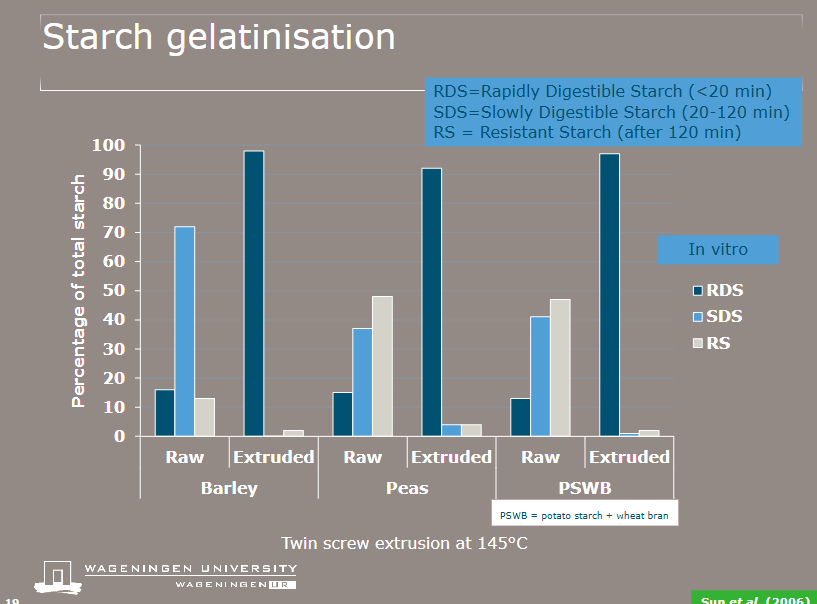
Processing and nutritional value starch
Processing and starch gelatinisation
pelleting small impact
Extrusion larger impact
Gelatinisation and digestibility
Starch gelatinisation facilitates digestion
Kinetics
Digestbility not evident in growing pigs
Digestibility potentially evident for low a-amylase animals
Correlation SGD: Starch digeston in growing pigs is poor
Protein denaturation
Raw materials contain various proteins
Each proteins has a specific denaturation temperature
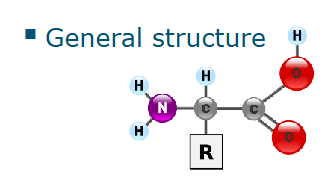
Amino acids
General structure
Side-chain variability
Electric charge
Hydrophobicity
Polarity
Basic, hydrophilic, acidicP
Protein structure
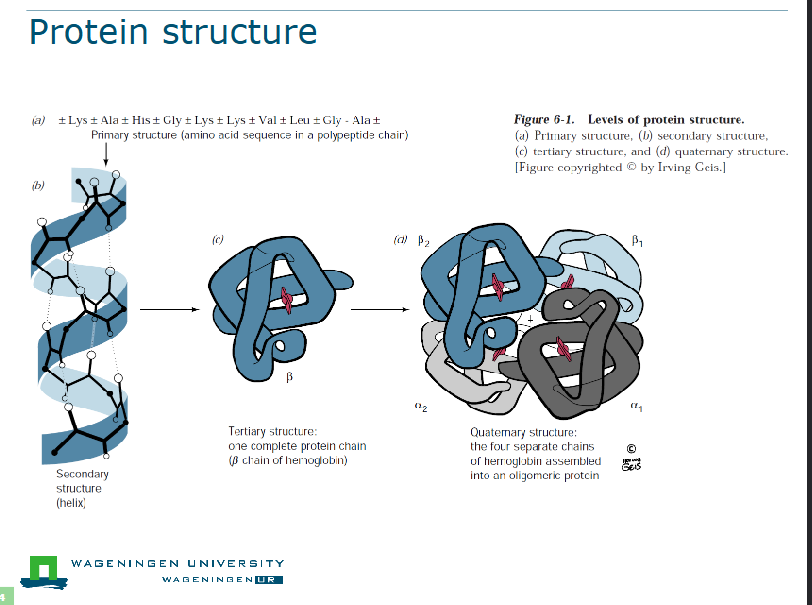
Protein folding
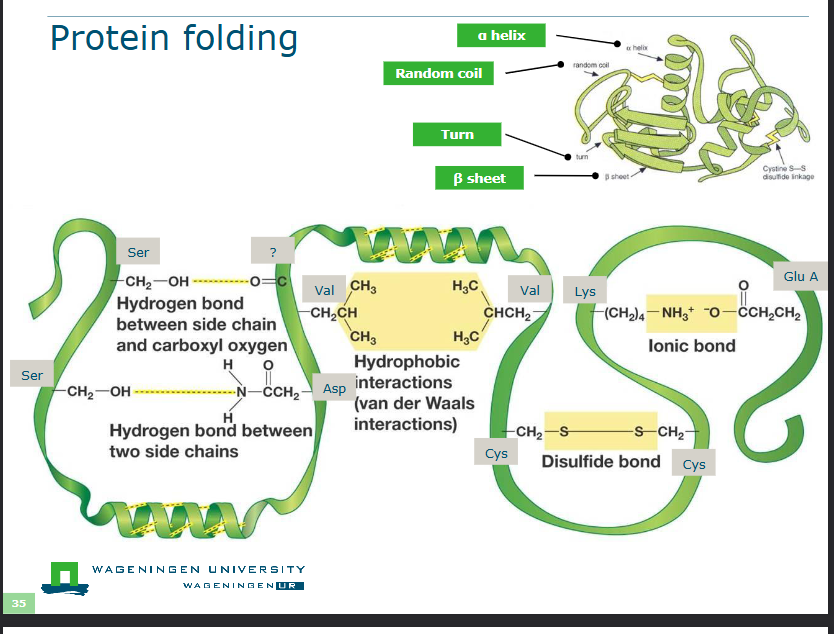
Protein folding - type of bonds
Bonds and interactions within and between proteins impact thermal stability
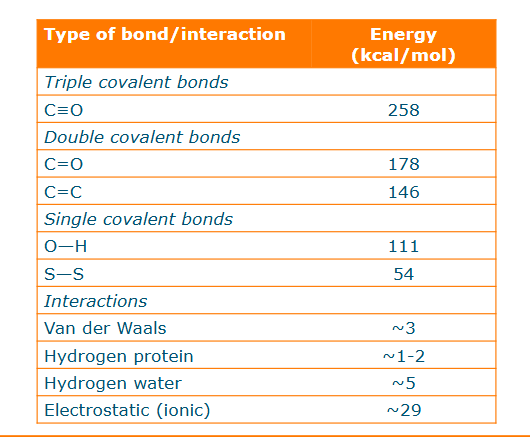
Protein denaturation
Stability differs aong proteins
Internal and external bonds and interactions
Factors impacitng denaturation
Tmperature
Moisture levels
Salt, urea, acid or base
reversibile breakage H and VdW interactions
Irreversible breakage/formation covalent bodns
Changes intramoleucular interactiosn
Agglomeration and nutritional value
Variable impact of pelleting
Confounded with pelleting SBM protease inhibitors
Denaturation of proteins via processing seems not essential for digestion, at least in vitro
protease inhibitors decrease digestibility
denaturation of ANF-proteins via processing is important for digestion
modifying proteins to increase nutritoinal value in ruminants
Protein aggregation
Denaturation changes intermolecular interactions
disscociation subunits
Reassociation of partially unfolded molecules (aggregation)
electrostatic interactions
hydrophobic interactions
new s-s bonds (also with pelleting)
aggregates can be soluble or insoluble
structural proteins
cross=links between peptides for stability
difficult to digest in native form
extensive treatment (heat, moisture)
Proteins
amono acids form internal and external interactions and bonds to give stability/functionality
stability linked to intensity of processing required to change protein conformation
protein denaturation - summary
hydrothermal treatments, shear, chemcial
hydration influences denaturaiton temperature
may inactive protease inhibitors
protein aggregation - summary
can follow denaturion, have specific properties
impacts digestibility
Processing impacting amino acids
maillard reaction
a complex non-enzymatic browning process that occurs when amino acids (the building blocks of proteins) interact with reducing sugars under heat.
oxidation
breaking down amino acids for metabolic energy or modifying their structures through chemical reactions.
racemization
time-dependent chemical process where living L-amino acids spontaneously convert into their mirror-image D-forms
Processing and lipids
isomerisation
hydrogenation
oxidation
cross-linking
lipids-protein complexes
especially FFA and polar lipids with AA of proteins
lipid-starch complexes, not very common, well digested
processing and biochemistry summary
changes in conformation
gelatinisation, retrogradation, denaturation, renaturation, isomerisation, oxidation
processing and biochemistry summary
breaking bodns
gelatinisation, denaturation, caramelisation, maillard reaction
processing and biochemistry summary
forming bonds
denaturation, cross-linking, aggregation, maillard reaction, hydrogenation, oxidation
processing and biochemistry summary
changes in confomration, stereospecificty
racemization (isomerisation)
processing impacts nutritional value
factors temperature, hydration, shear/pressure
bond strenght and reactivity
distinguishing between mechanisms is dfifucult
feed and animal
feed factors
physical properties and unlocking nutrients
molecule conformation
anti-nutritional factors
animal factosr
feed intake, selection and wastage
digestive functioning and adaptations