BIO-MAT test #2
 Call Kai
 Learn
Learn Practice Test
 Spaced Repetition
 Match
Match Flashcards
 Knowt Play
1/78

There's no tags or description
Looks like no tags are added yet.
Name | Mastery | Learn | Test | Matching | Spaced | Call with Kai |
|---|
No analytics yet
Send a link to your students to track their progress
79 Terms
Slip
process by which plastic deformation is produced by dislocation motion
Slip plane
The crystallographic plane along which the dislocation traverses
Solid solution strengthening
Technique to strengthen and harden metals by adding impurity atoms
Alloys
stronger than pure metals because impurity atoms impose lattice strain onto host atoms
Solute atoms
tend to diffuse and segregate around dislocations to minimize strain energy
Strain hardening
ductile metals become stronger and harder as they are plastically deformed
recrystallization
The formation of a new set of strain-free grains that have low dislocation densities and are characteristic of precold-worked conditions
Annealing
heat treatment where the material is exposed to elevated temperature and then slowly cooled
stress relaxation
at a constant strain and temperature, stress decreases with time due to molecular relaxation processes that take place within the polymer
Viscoelastic creep
time dependent deformation when stress is held constant
Drawing
permanently deforming the polymer material in tension to improve modulus and strength
Protein structure
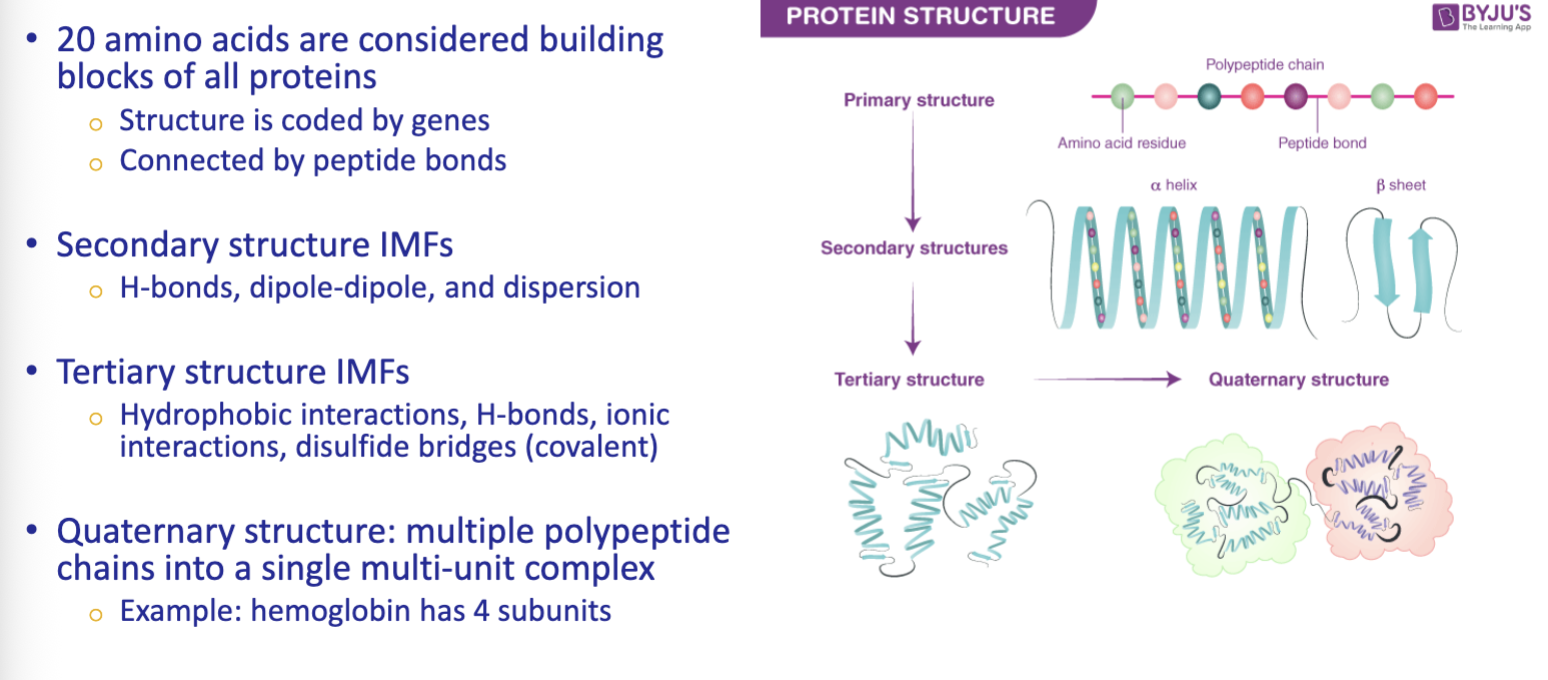
Integrins
adhesion receptors involved in cell adhesion to biomaterials and extracellular matrices (ECMs)
Vroman effect
A dynamic process where proteins that are adsorbed first can be replaced over time
Nonfouling surfaces (NFSs)
surfaces that resist the adsorption of proteins and/or adhesion of cells
Delamination
separation of a multi-layered material into individual layers
in vitro
perfomed outside of living organism
contact inhibition
cell growth and proliferation stop when cells come into contact with one another
Mechanotaxis
Cells migrate based on mechanicalgradient
Cell polarization
cytoplasmic cellular components become asymmetrically distributed along an axis
Mechanotransduction
The conversion of external mechanical signals into intracellular chemical or physical events
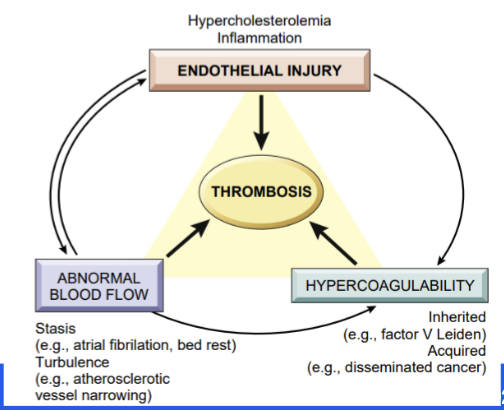
Thrombosis
the formation of a blood clot or thrombus
hemostasis
The mechanism that leads to cessation of bleeding
Virchow’s triad
Factors important for the Formation of thrombosis includes vessel wall injury, hypercoagulability, and flow disturbance
Stenosis
An obstruction to flow commonly caused by narrowing of the vessel
in-stent restenosis (ISR)
recurrence of stenosis after a stent is implanted
(Mechanical failure)
(disturbed blood flow)
(injury to endothelial cells)
(chronic inflammation)
Hemostasis
Cells and tissues attempt to maintain their milieu and function within a relatively narrow range of physiologic parameters
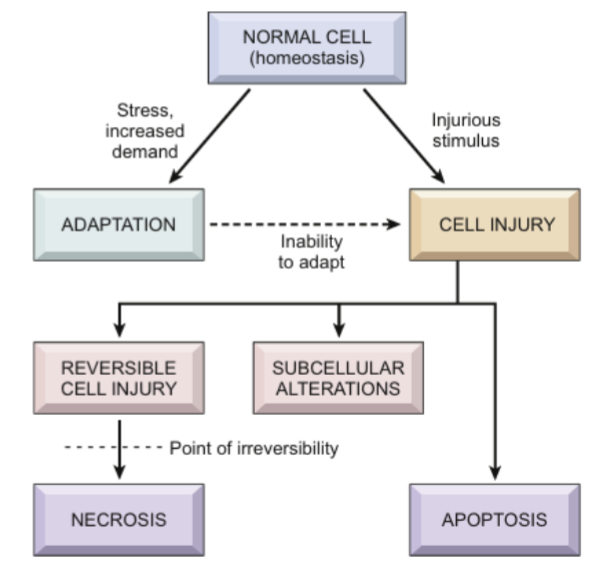
Necrosis
Death of living tissue
Hypertrophy
Increase in size of individual cells
Hyperplasia
Increase in cell number
Atrophy
Decrease in size, without appreciable change in cell number
Metaplasia
Transformation from one mature cell type to another
Hypoxia
Decrease in O2 supply relative to the needs of a particular cell or tissue
Apoptosis
Programmed cell death
Acute inflammation
Immediate response to injury (1-3 days)
Chronic inflammation
Involves macrophage recruitment and sometimes lymphocytes
Macrophage
A phagocytic cell associated with chronic inflammation
(secrete wide variety of biologically active molecules importnat for mediating tissue destructon, formation of new blood vessels, and fibrosis)
Size Exclusion Chromatography (SEC)
Used to determine molar mass and dispersity of polymers
Mechanical Testing
used to view how materials act under stress and strain
Rheology
measure how materials flow and deform under applied forces
Scanning Electron Microscopy (SEM)
An electron microscope that images a sample's surface by scanning it with a high-energy focused beam of electrons
Energy Dispersive X-ray Spectroscopy (EDS)
It identifies elements by measuring characteristic X-rays emitted from a sample when bombarded by a high-energy electron beam. (usually used with SEM)
Contact angle Goniometry
Measures the contact angle between the solid surface and the liquid
IR spectroscopy
IR absorbance spectra of a sample can be compared to the reference spectra to determine molecular bond vibrations
DIfferential Scanning Calorimetry (DSC)
The thermal analysis technique measures how much heat a material absorbs or releases as it is heated or cooled at a constant rate, input by the operator.
Cytotoxicity Assay
Screens compound libraries for toxicity by detecting markers for severe cell damage
Biocompatibility
The ability of a material to perform with an appropriate host response in a specific application
Events Following Implantation
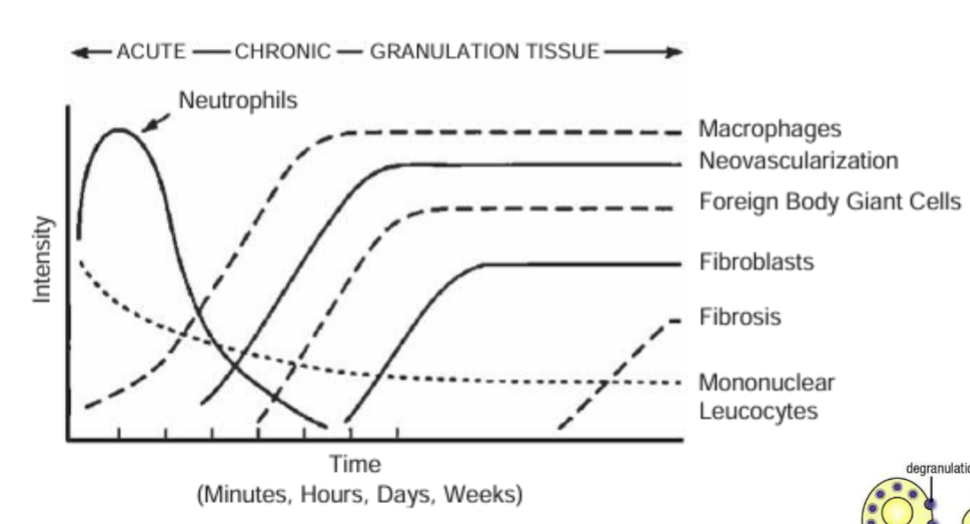
Foreign body reaction (FBR)
Protein adsorption, Acute inflammation, Chronic inflammation, Fibrous capsule
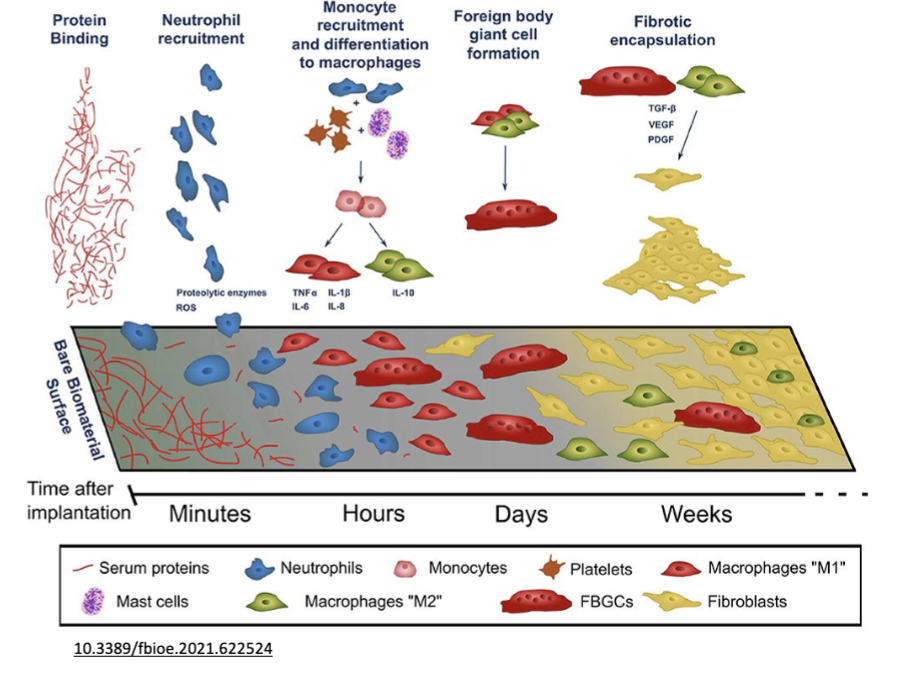
Foreign body giant cells
fusion of macrophages in response to foreign materials
Fibrosis
The formation of fibrous connective tissue that is hardened and/or includes scar tissue
dense, aligned collagen produced by fibroblasts
Harmful: mass transfer barrier
The lifetime of device
Capsular Contracture
fibrous capsule contracts over time, leading to implant deformation, stiffness, and possibly failure
Histology
he microscopic study of the structure, organization, and function of plant and animal tissues
Biodegradation
chemical breakdown of materials by the action of living organisms that leads to changes in physical properties
Hydrolysis
The scission of susceptible functional groups by aqueous attack
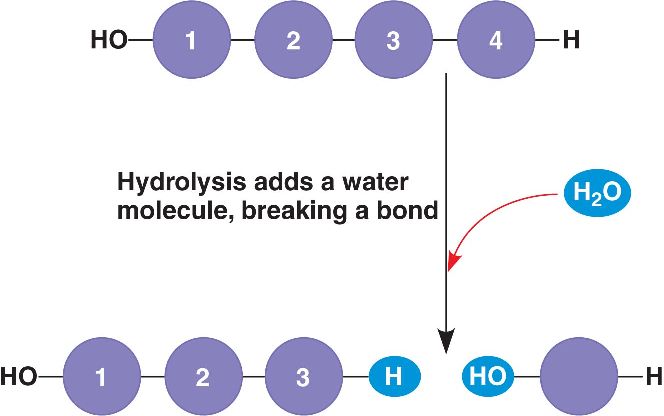
hydrolase
Hydrolytic enzymes are cell-derived proteins which act as highly specific catalysts for chain scission of water-labile functional groups
Calcification
Formation of nodular deposits of calcium phosphate or other calcium-containing compounds may occur on biomaterials used in the circulatory system.
Depletion studies
analysis designed to measure the reduction of a specific resource, agent, or capacity
Monolayer Model
Space occupied per protein molecule in a close-packed
layer varies depending on the adsorption conditions
Low Conc.: given time to spread molecularly and proteins tend to be tightly bound
High Conc.: sites fill rapidly with proteins, so spread is inhibited, resulting in looser and higher concentrations of proteins.
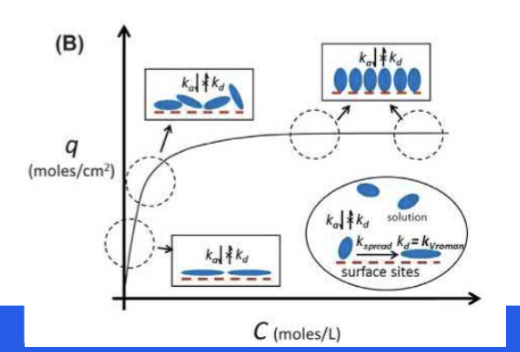
Competetive adsorption
The relative enrichment of a given protein when adsorbed from a complex mixture is unique to each protein studied
Surface chemistry & protein adsorption
Adsorbed proteins are required for platelet adhesion
One approach to improve biocompatibility is to prevent/reduce protein adsorption
PEO and PEG are good at preventing protein adsorption. Though PCB and PSB are better. (these are nonfouling surfaces)
surface modifications
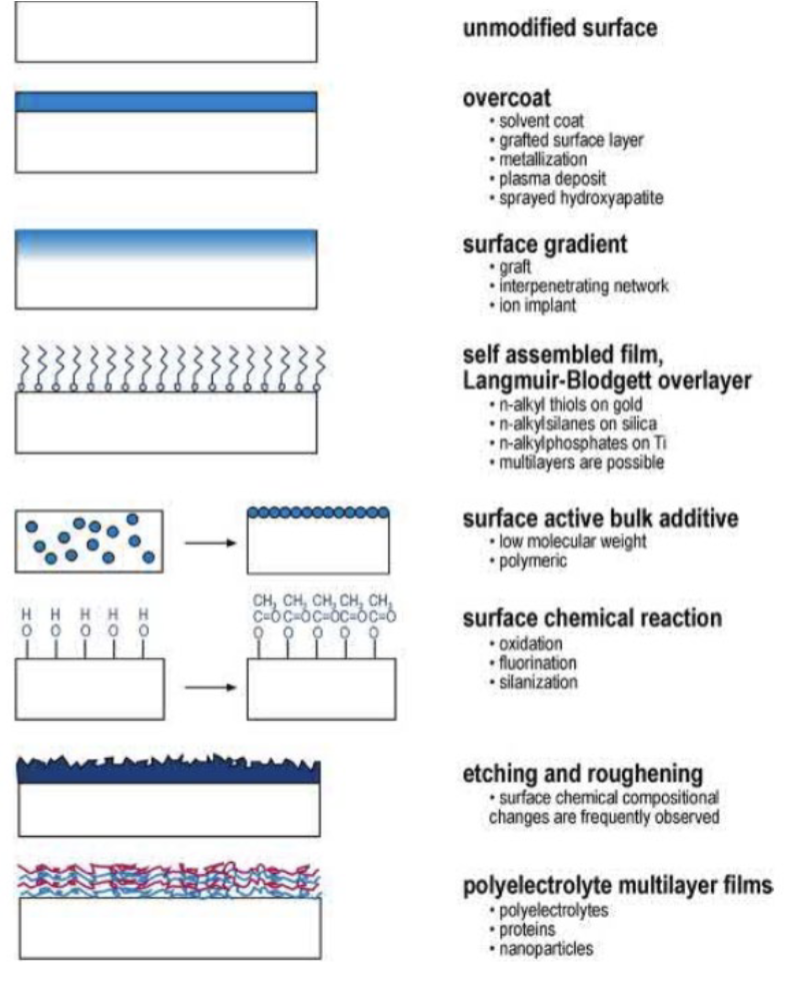
Process of cell attachment
adsorbed Protein layer
Cells make contact and anchor to the adsorbed layer on focal adhesions
Integrins attach to specific anchoring proteins (fibronectin, collagen, vitronectin, laminin)
Adherent cells are flatter, while non-adherent or dead cells are spherical.
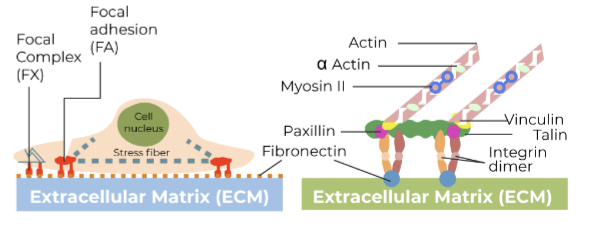
effect of mechanical forces
regions of the arterial systems become prone to atherosclerosis due to low shear stress
Vascular smooth muscle cells, the middle layer in arteries, migrate in response to mechanical forces.
The outer layer of arteries consists of fibroblasts and the extracellular matrix (ECM)
VASCULAR:
regions of low shear stress, flow reversal, or gradients in shear stress have an increased probability of vascular disease
Objectives
Description of overall project goals
Criteria
Measureable requirements a design must acheive to be successful
Constraints
Limitations or boundaries that the design must operate within
Best tissue function WHEN?
pH, Temperature, nutrition, pressure, etc.
in event of variations in the internal & external environment, organs, tissues, and even individual cells strive to acheive homeostasis.
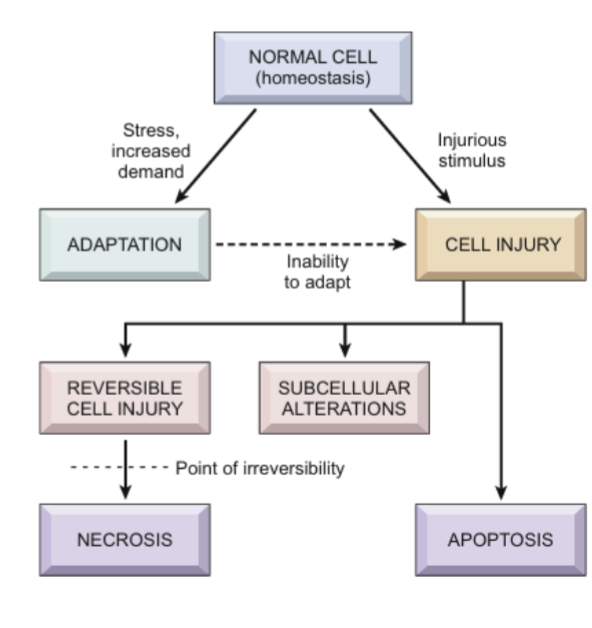
Injury (reversible & non-reversible)
Persistent or excessive injury causes cells to pass through the threshold into irreversible injury
At 55 degrees C, cells start to die (necrosis)
Chronic stress leads cells and tissues to undergo adaptation to achieve now stead state to preserve tissue function.
Toxic Chemicals
, mechanical force, Temp, Electric shock, ionizing radiation
, infection and inflammation (bacteria have toxic cells wall components [endotoxins])
Fibrin
tough, fibrous protein essential for blood clotting (hemostasis) and wound healing
when the enzyme thrombin converts fibrinogen into insoluble fibrin monomers
Coagulation cascade
Protein adsorption (like fibrinogen) + platelet interaction → activates clotting
Poor hemocompatibility = excess thrombin → thrombosis
Thrombosis + fibrinogen —→ fibrin
excess fibrin —→ clotting
Scarring (fibrosis)
progressive degradation of damaged tissue, formation of new blood vessels, and remodeling of the ECM
reconstruction of normal structure requires intact extracellular matrix.
Host responses
Beneficial: vascularized tissue, a thin fibrous capsule, integration
Harmful: thick fibrous and avascular capsule, scar formation, chronic inflammation
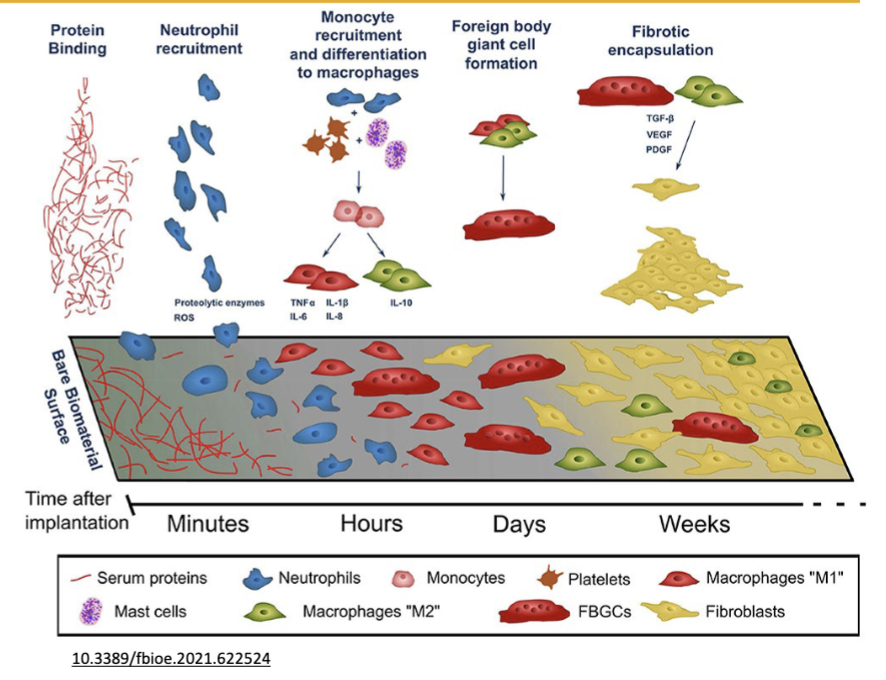
Sequence of events following implantation (FBR)!!!!!!
1. Non-specific protein adsorption
2. Acute inflammation (minutes - days)
Recruitment of primarily neutrophils (engulfing pathogens)
Cytokine release to attract more immune cells (neutrophils, Macrophages)
3. Chronic inflammation (weeks - years)
Macrophage (from monocytes) recruitment and fusion into foreign body giant cells (FBGCs)
Macrophages release growth factors to promote new blood vessel formation
4. Fibrous capsule formation
fibroblasts deposit dense collagen fibers and extracellular matrix around the foreign object, creating a scar.
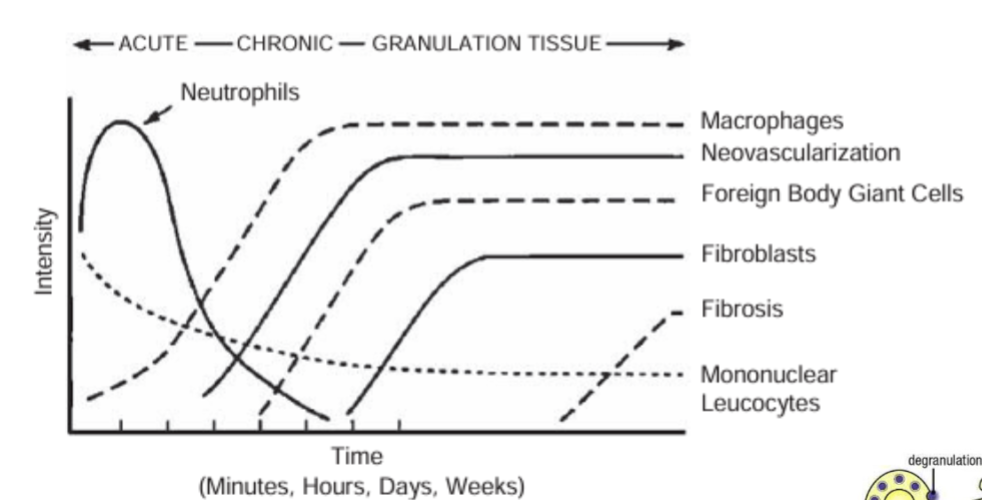
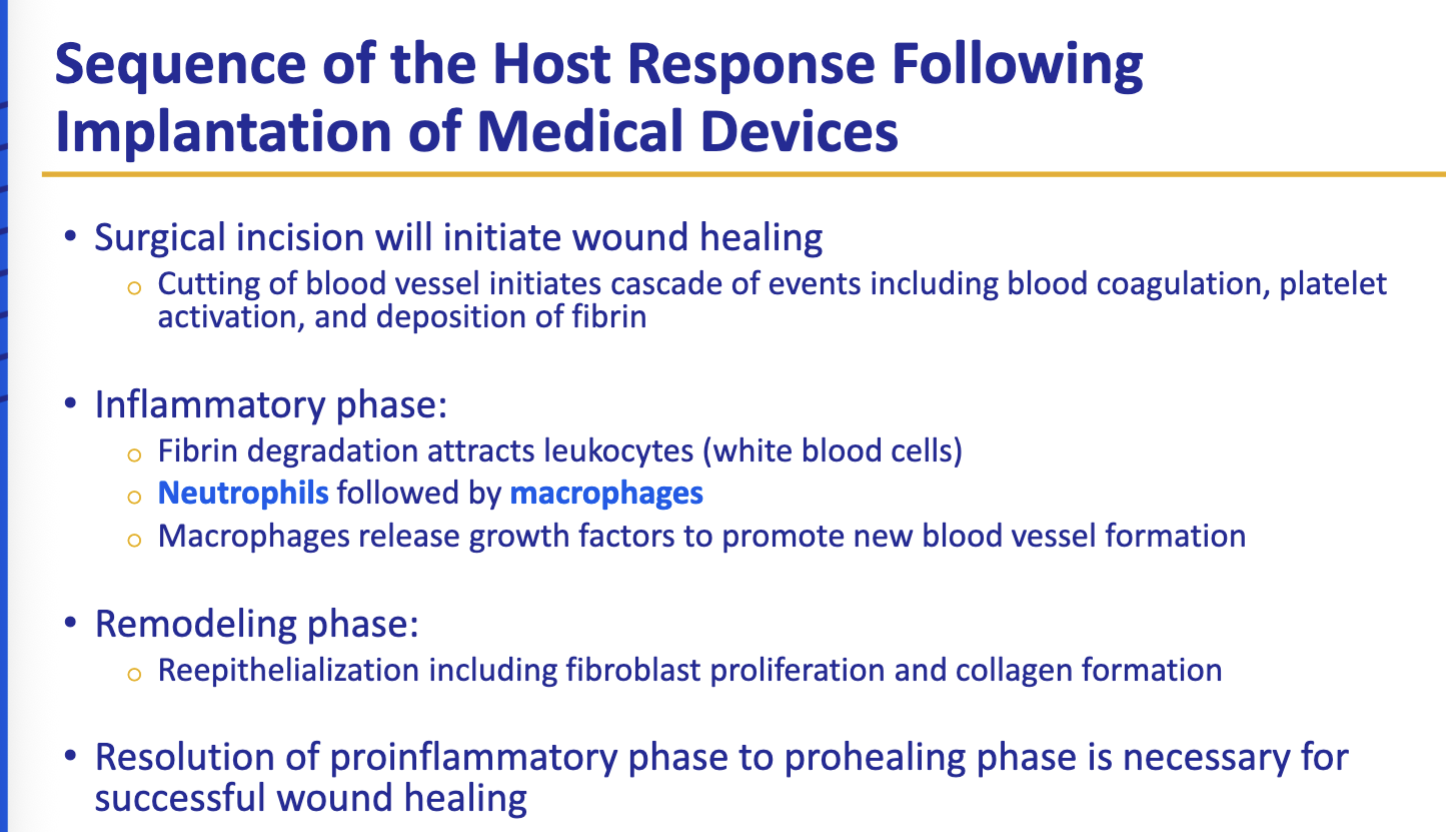
sequence of host response following implantation
Granulation tissue is new connective tissue (Healing phase of inflammation)
Initiated by macrophages (release of signaling molecules from them)
Proliferation of fibroblasts, synthesis of collagen, and new blood vessel formation.
Can occur 3-5 days after injury
Final stage of biomaterial inflammation:
FBGCs and macrophages
FBGCs form from macrophages trying to engulf a surface that is too large, leading to
Associated with stress cracking at the biomaterial surface
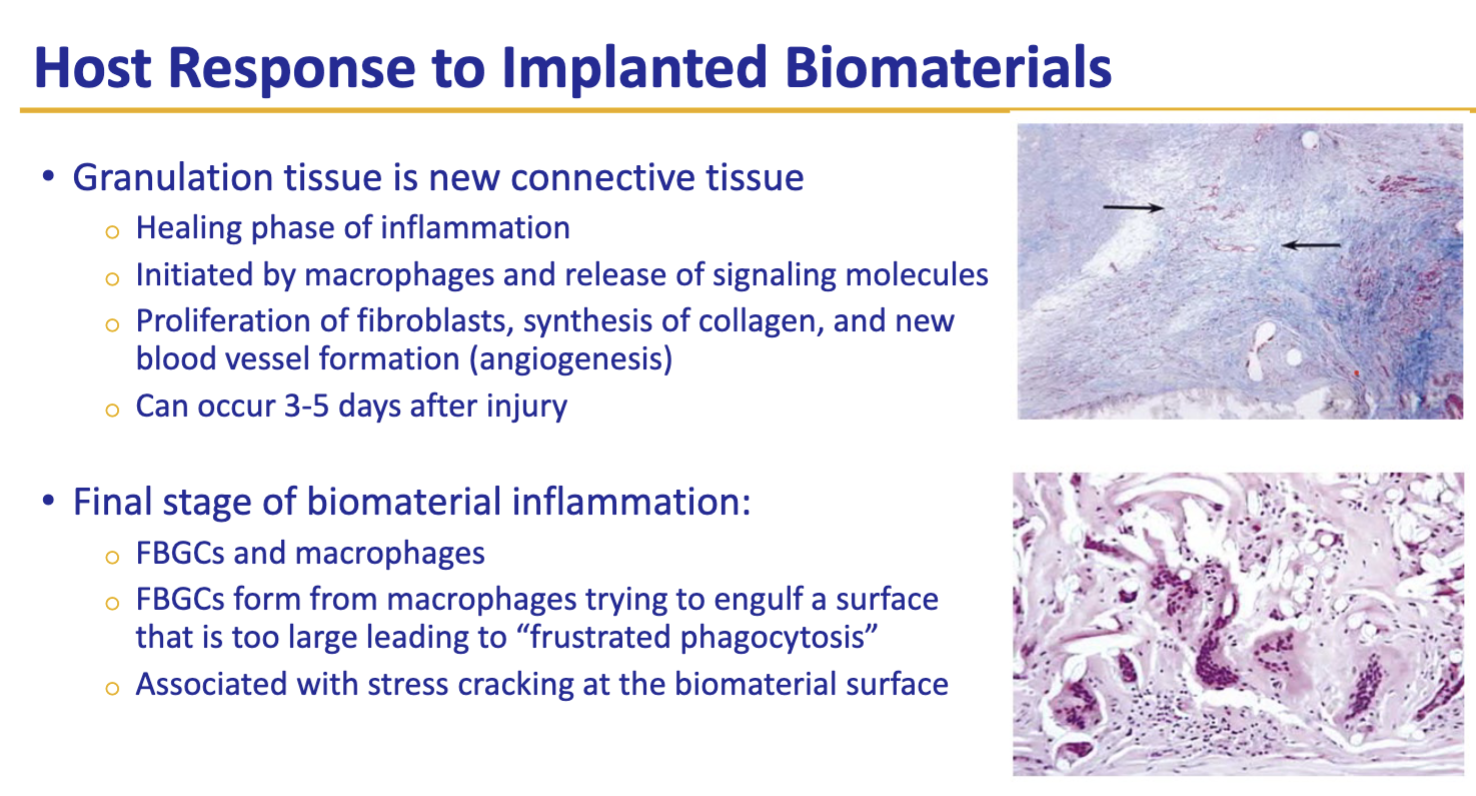
In Vivo studies
assesses tissue compatibility
Replacement, reduction, & refinement
Animal Welfare Act (select right amount, type of animal)
Body environment
Aqueous salt solution
37 C
can lead to plasticizing of polymers
Macrophages release oxidizing agents and enzymes intended to digest material
Degradation
stabilizing against degradation (cross linking)
Oxidative degradation
hydrolysis (H20 slicing)
gamma radiation