CH 21: Root Formation, Cementum, and Periodontal Ligament: Key Concepts in Orofacial Biology
 Call Kai
 Learn
Learn Practice Test
 Spaced Repetition
 Match
Match Flashcards
 Knowt Play
1/46

There's no tags or description
Looks like no tags are added yet.
Name | Mastery | Learn | Test | Matching | Spaced | Call with Kai |
|---|
No analytics yet
Send a link to your students to track their progress
47 Terms
What initiates root formation in teeth?
Root formation begins after the outline of the crown has been established but before the full crown is calcified.
Where does root formation begin?
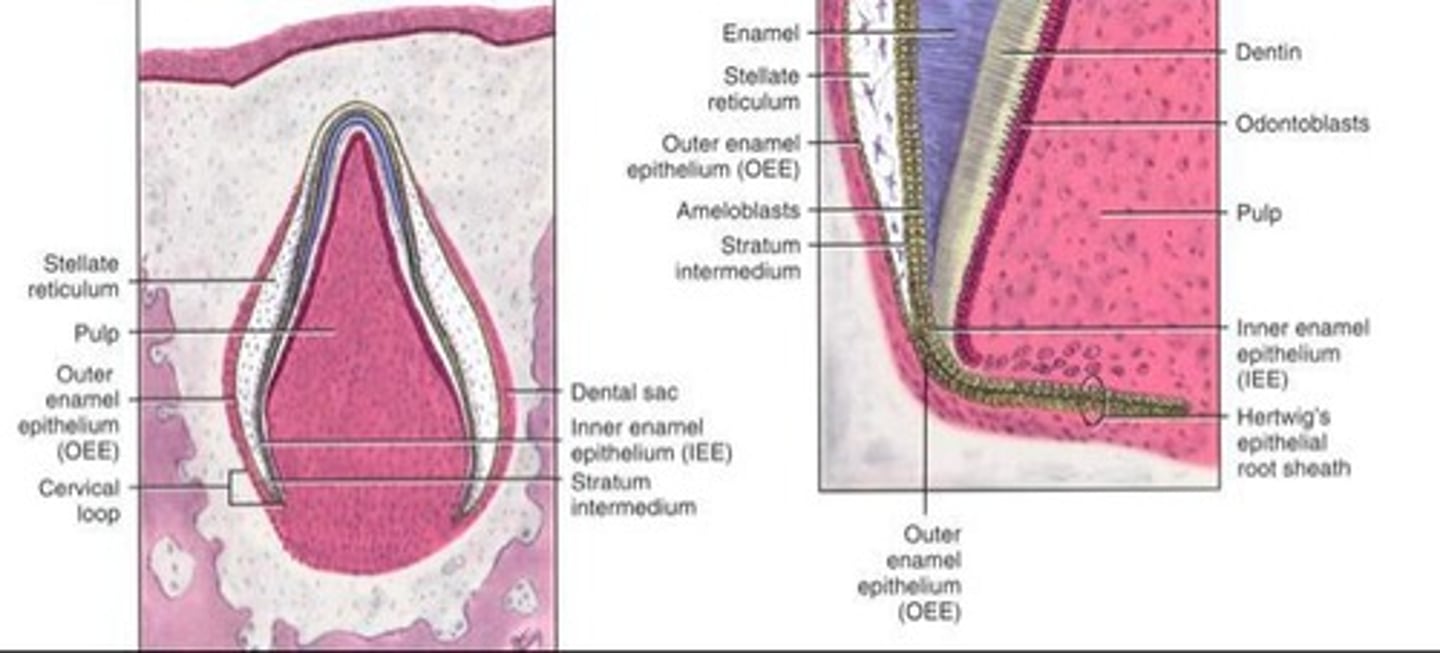
Root formation begins at the point where the outer and inner enamel epithelium meet.
What is the epithelial root sheath composed of?
The epithelial root sheath is made up of inner enamel epithelium (IEE) and outer enamel epithelium (OEE).
What role does the epithelial root sheath play in tooth development?
The epithelial root sheath guides the shape and number of roots during tooth development.
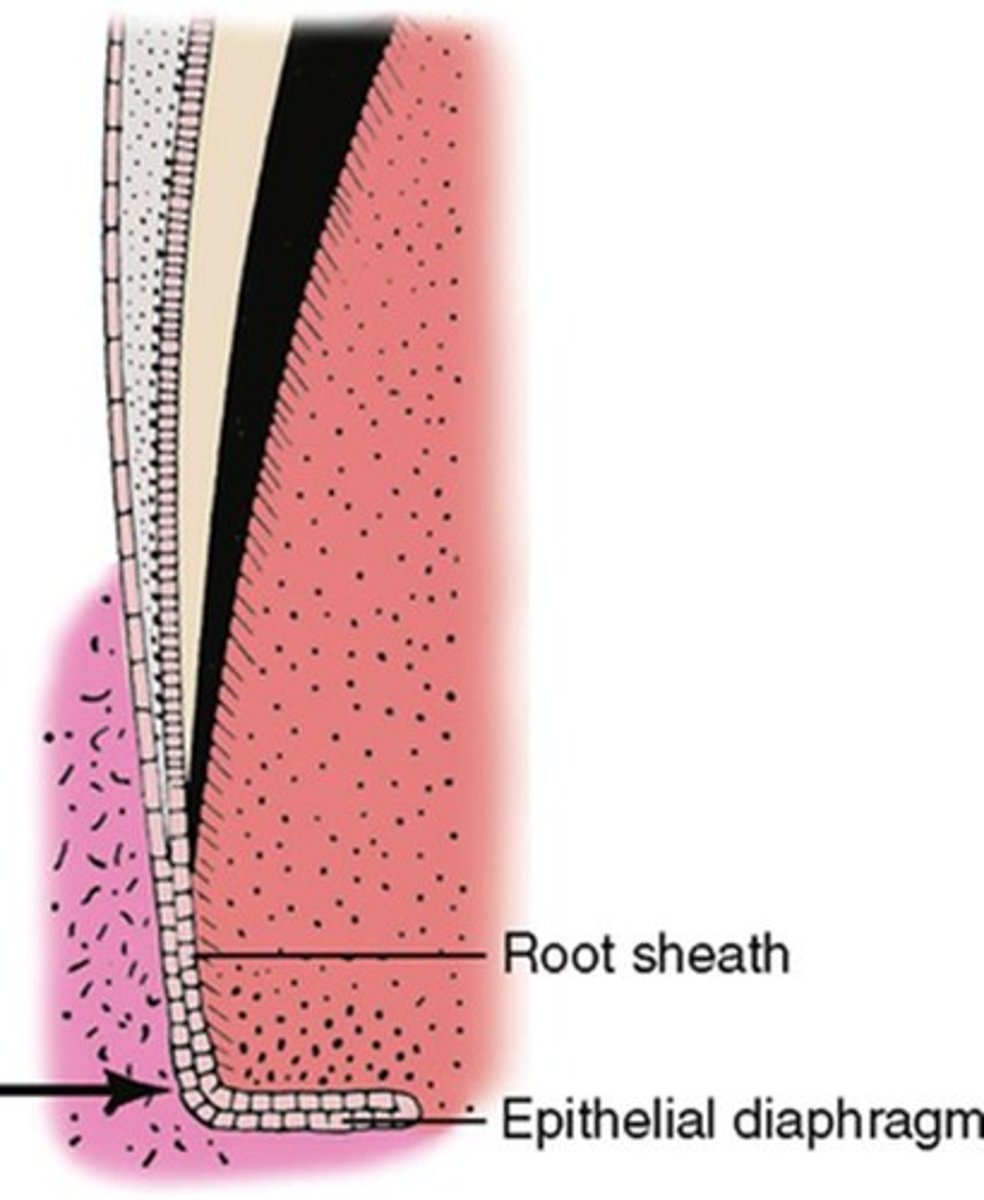
What is the function of the epithelial diaphragm?
The epithelial diaphragm determines the shape and number of roots in a tooth.
How does the growth of the epithelial diaphragm affect root formation?
If the diaphragm grows evenly, a single-rooted tooth is formed; if it grows inward in two or three areas, bi-rooted or tri-rooted teeth are formed, respectively.
What occurs at the dentinocemental junction?
Cells of the dental papilla change into odontoblasts, which secrete matrix and calcify to form dentin next to the epithelial root sheath.
What is cementum?
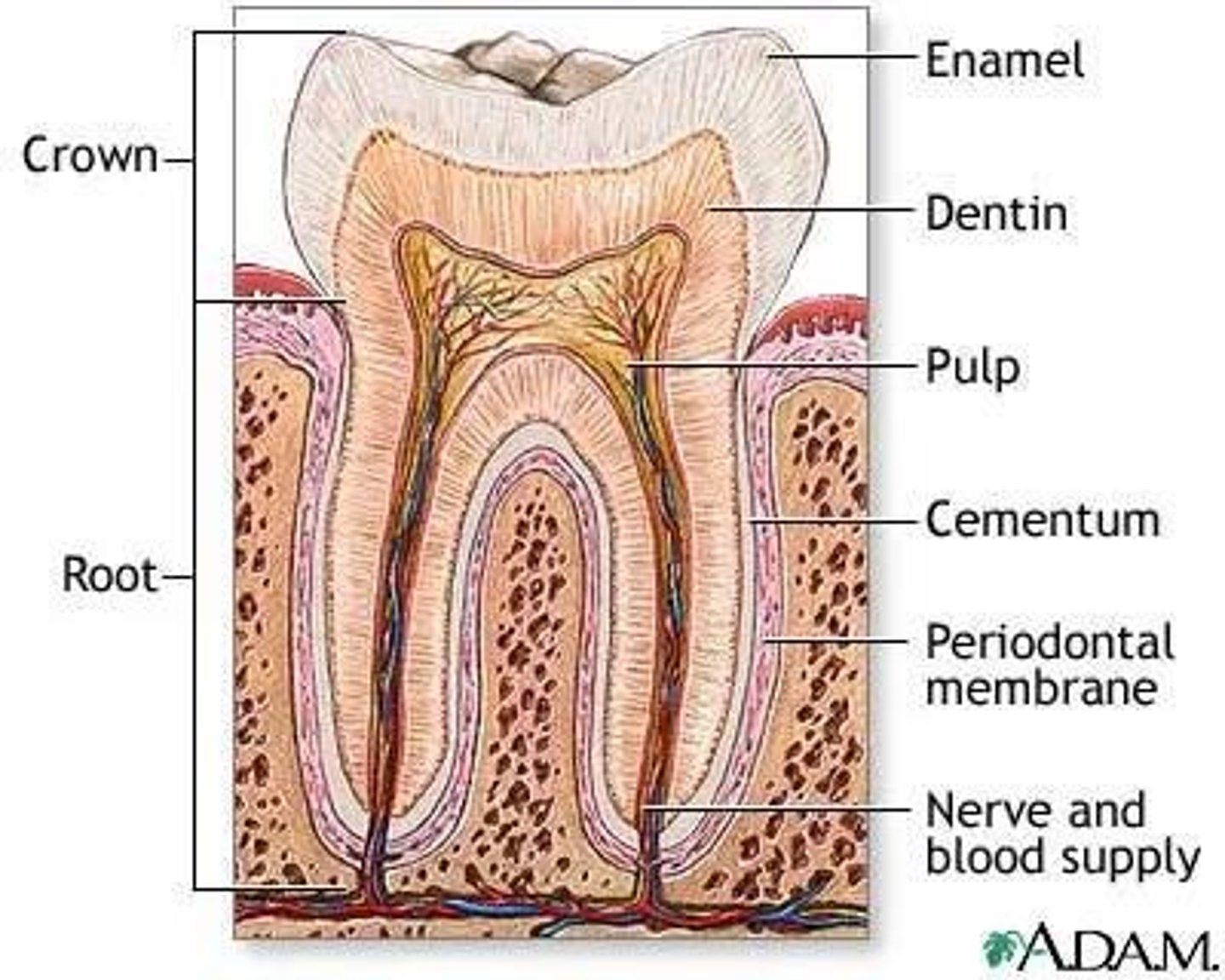
Cementum is a hard yellowish substance covering the root of a tooth, composed of 50-60% inorganic hydroxyapatite and 40-50% organic collagen fibers and water.
Where is cementum first formed?
Cementum is first formed at the cementoenamel junction.
What is the OMG rule in relation to cementum?
The OMG rule states that in 15% of cases, cementum overlaps enamel; in 55% it meets enamel; and in 30% there is a gap between cementum and enamel.
What are the two types of cementum?
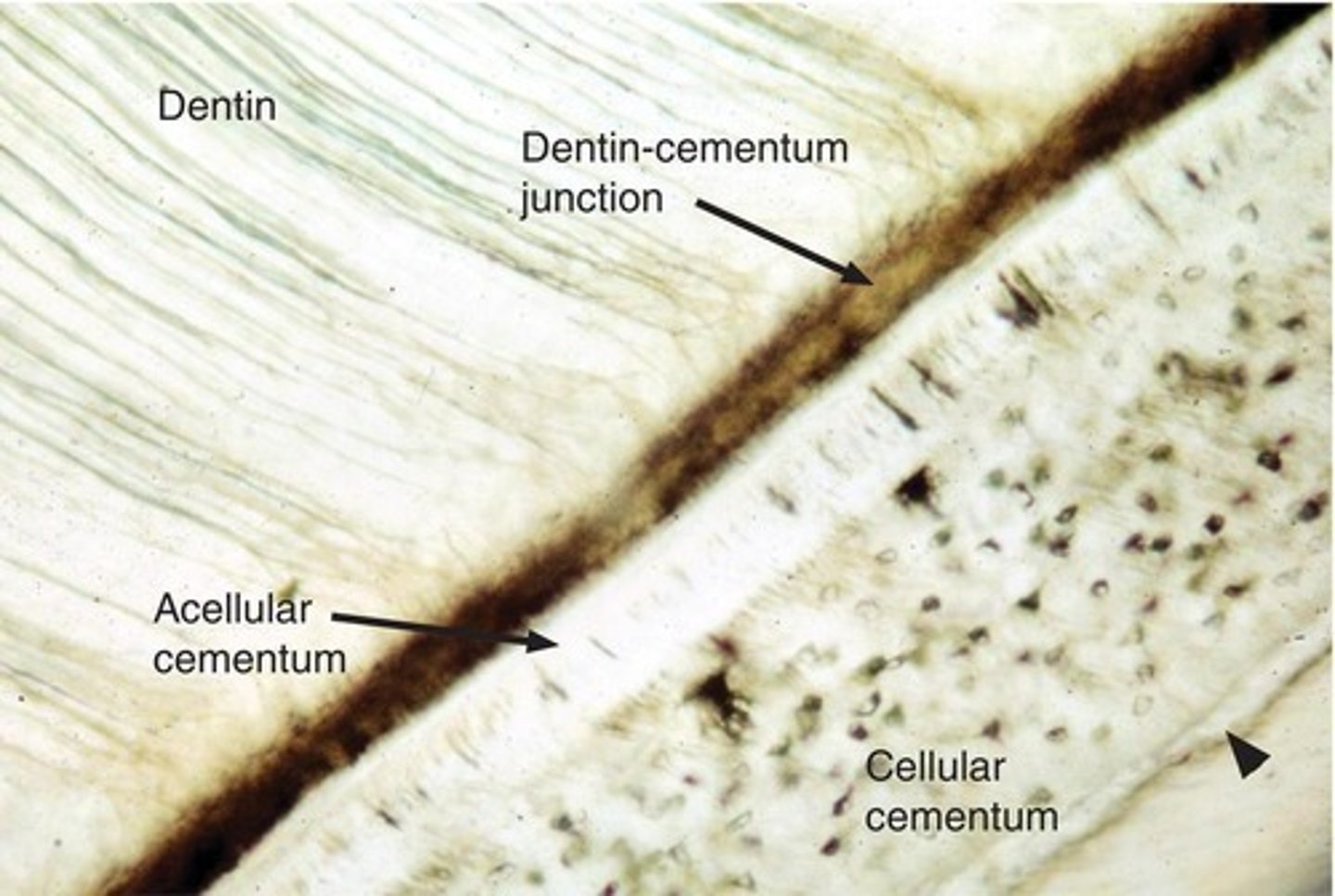
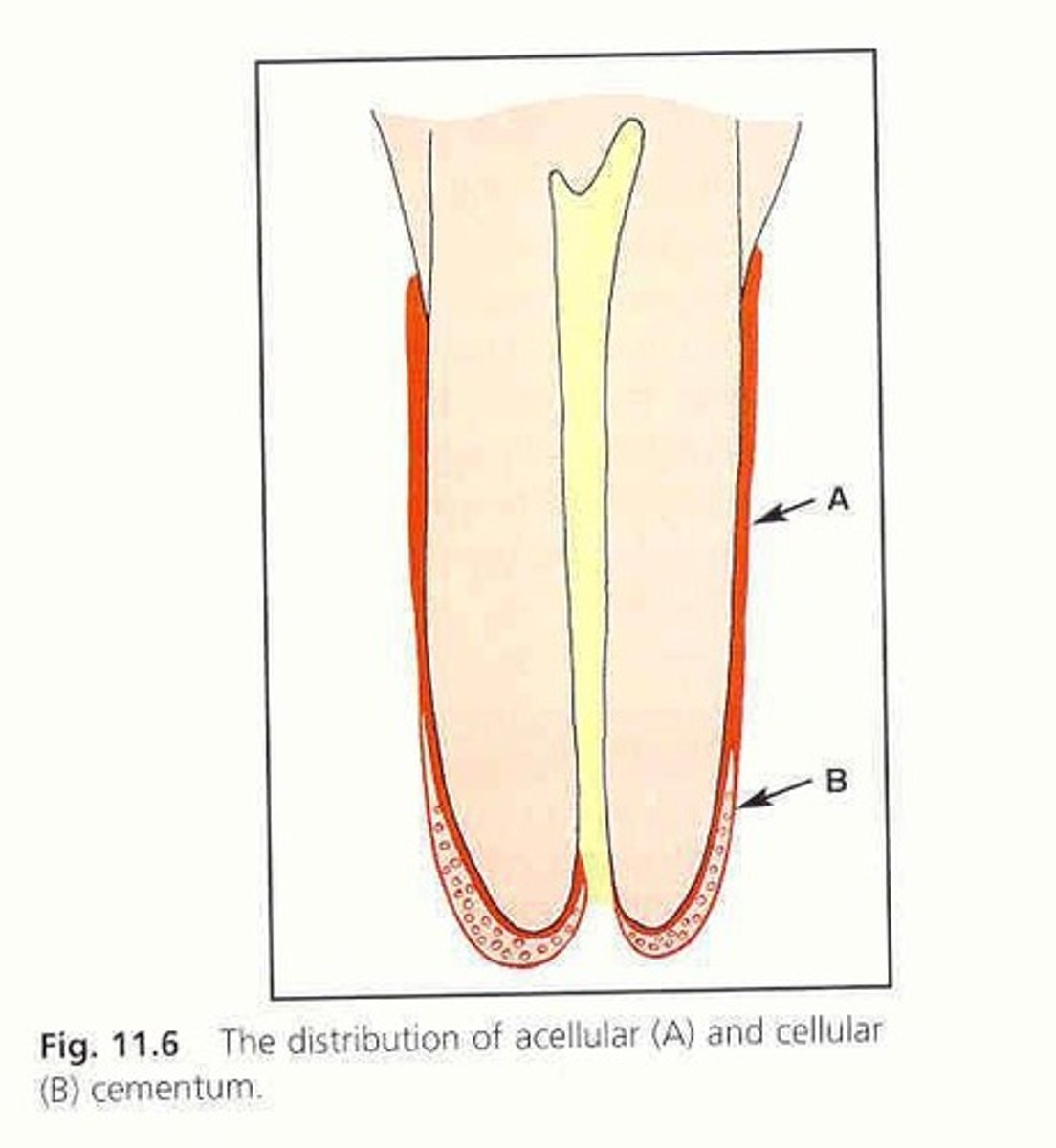
The two types of cementum are acellular cementum and cellular cementum.
What characterizes acellular cementum?
Acellular cementum is formed by cementoblasts that remain on the surface and is located in the cervical two-thirds of the root.
What is cellular cementum?
Cellular cementum contains cementoblasts that become entrapped in the cementum matrix and are located in the middle and apical third of the root.
What is hypercementosis?
Hypercementosis is the thickening of the root apex caused by time and stress, which can complicate tooth extraction.
How does cementum respond to resorption?
Osteoclasts may destroy or resorb cementum, but this process is much slower than in bone due to cementum's lower metabolic rate.
What is the role of the periodontal ligament?
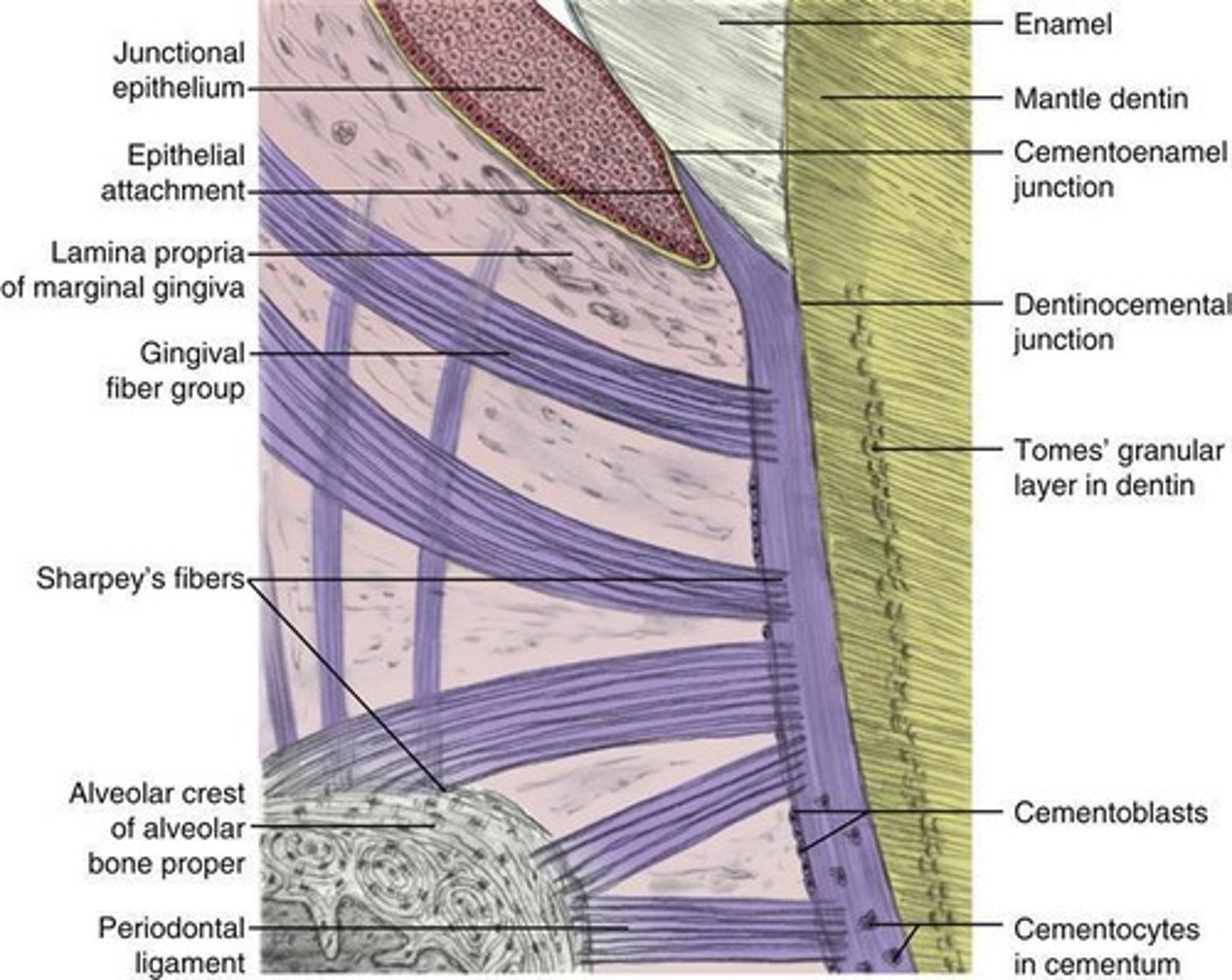
The periodontal ligament attaches the cementum of the tooth to the alveolar bone and supports the tooth.
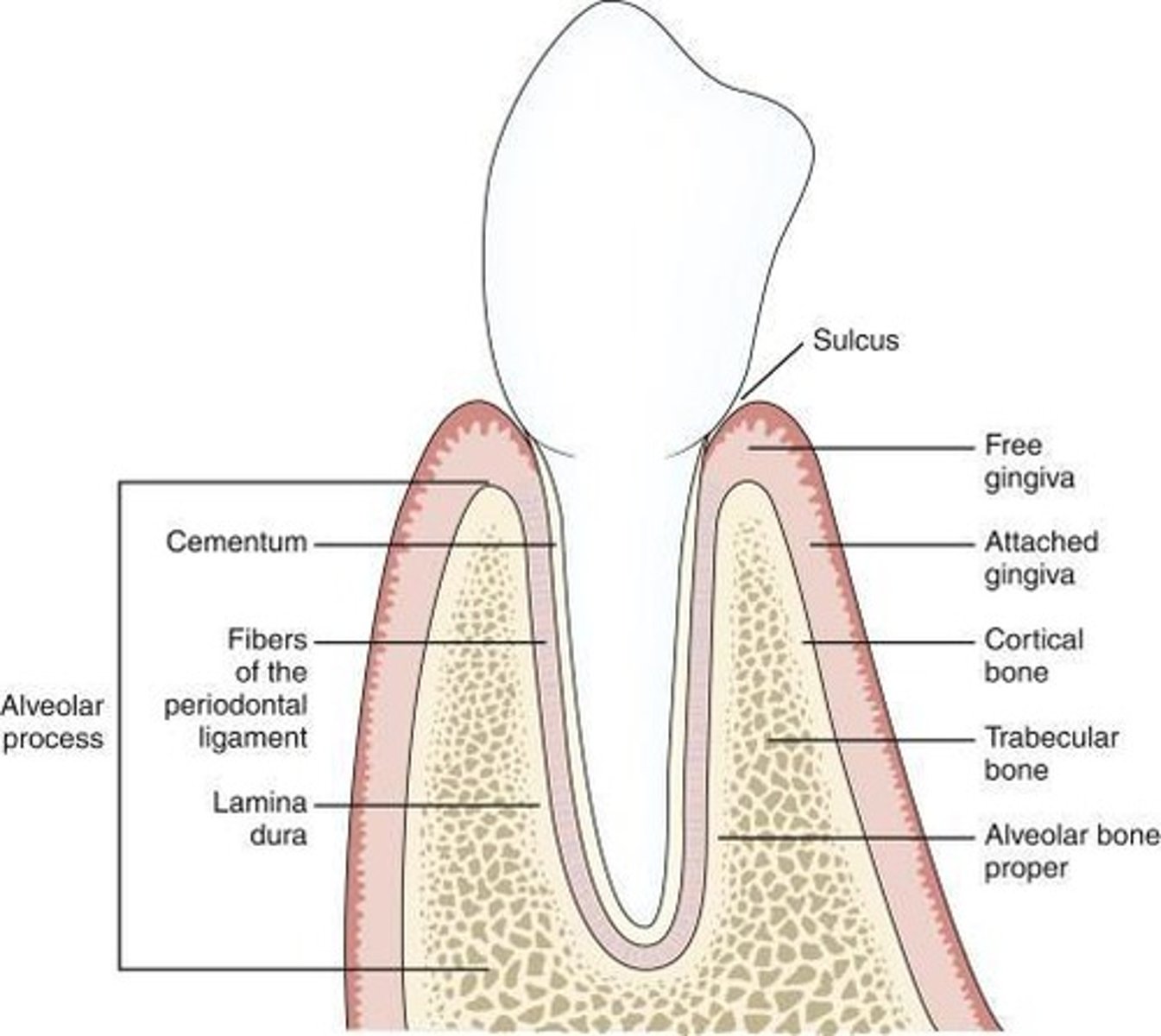
What is alveolar bone?
Alveolar bone is part of the maxilla or mandible that supports and protects the teeth.
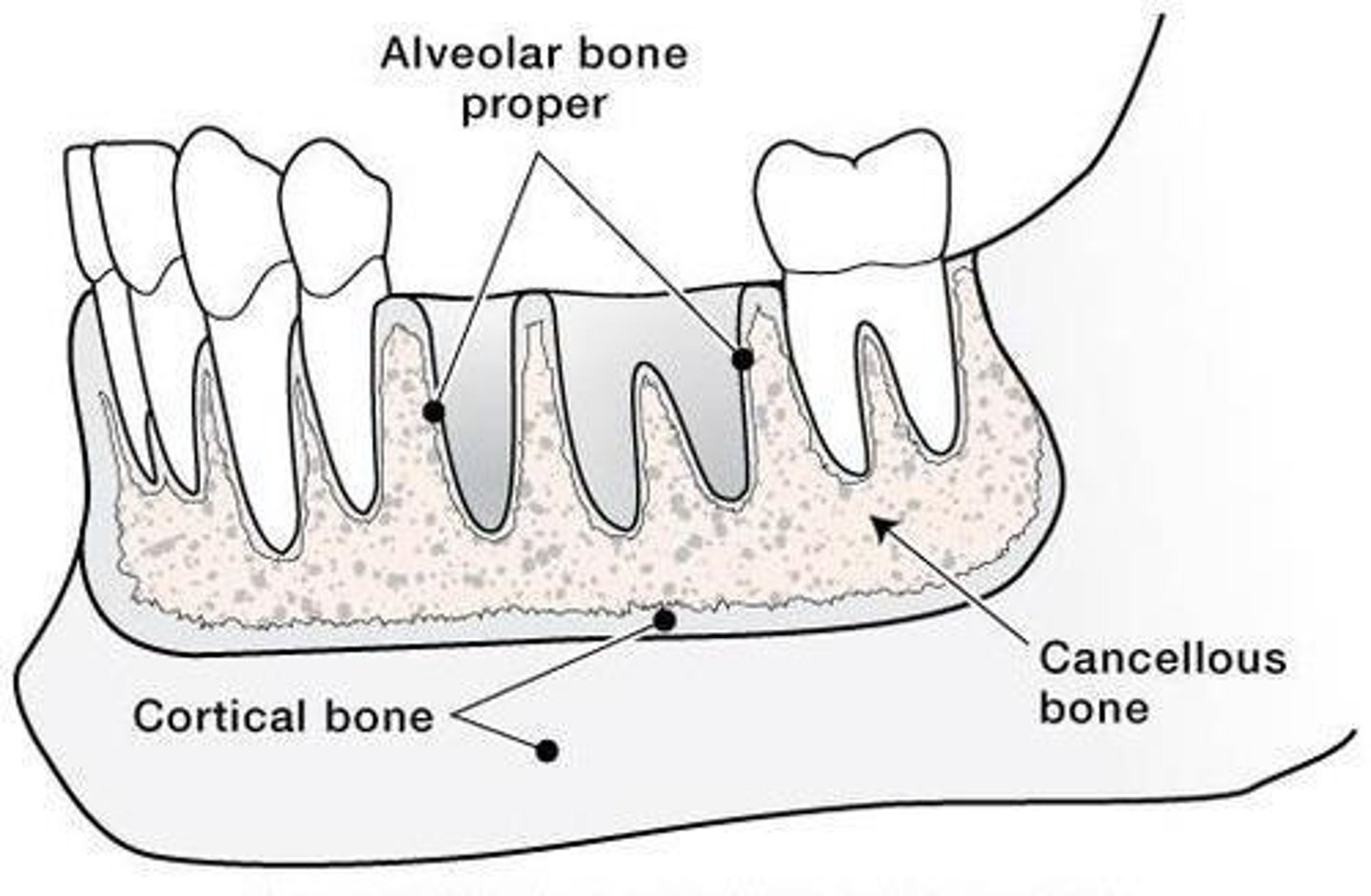
What happens to cementoblasts as they lay down cementum?
Cementoblasts move away from the dentinocemental junction (DCJ) while secreting a matrix, some become trapped and differentiate into cementocytes.
What is the significance of Sharpey's fibers in cementum?
Sharpey's fibers are collagen fibers that anchor the periodontal ligament to the cementum.
What is the composition of cementum?
Cementum is composed of 50-60% inorganic hydroxyapatite and 40-50% organic materials, including collagen fibers and water.
What is the relationship between cementum and tooth sensitivity?
A gap between cementum and enamel can expose dentin, leading to tooth sensitivity.
What is the primary composition of alveolar bone?
60% inorganic material and 40% organic material, primarily collagen.
What are the three layers of alveolar bone?
Cortical plate, cribriform plate (alveolar bone proper), and spongy (cancellous) bone.
What is the function of the cortical plate in alveolar bone?
It is a layer of compact bone on the buccal or lingual surface that has a normal periosteum.
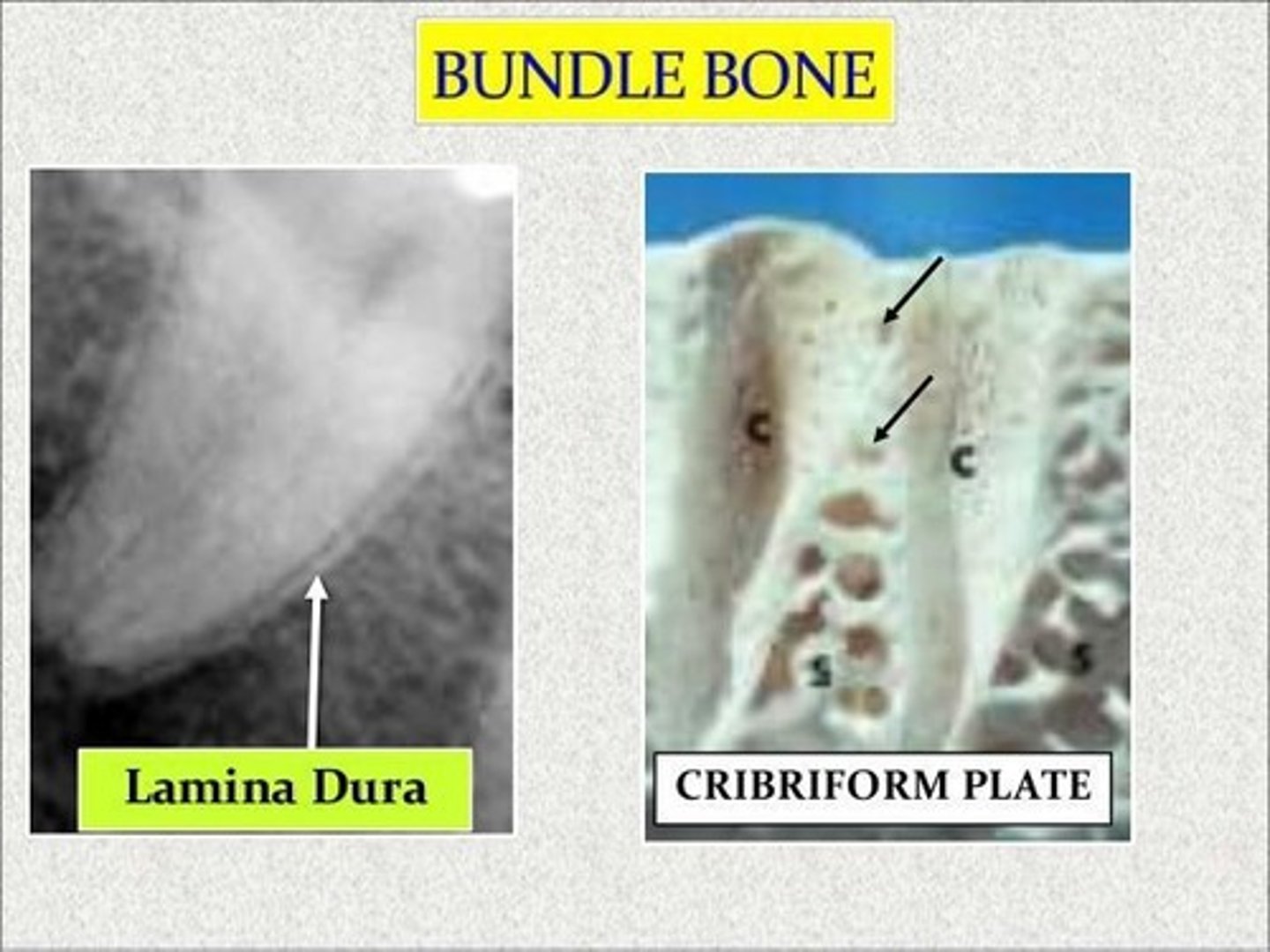
What is the role of the cribriform plate?
It lines the tooth socket and allows blood vessels to connect bone with the periodontal space.
What is the composition of spongy bone in the alveolar structure?
It contains bone marrow located between the cortical and cribriform plates.
What is the alveolar crest?
The most cervical rim of the alveolar bone proper, typically 1-2 mm apical to the CEJ in health.
What is the significance of lamina dura in radiographs?
It appears radiopaque and is important for studying pathological lesions.
What are enamel pearls?
Globs of enamel found on dentin in bifurcations and trifurcations.
What is the periodontal ligament?
A connective tissue that develops from mesodermal cells of the dental sac and supports the tooth.
What types of fibers are found in the periodontal ligament?
Gingival fibers, transseptal fibers, and alveolodental fibers.
What do gingival fibers do?
They run from cementum to free and attached gingival areas to support the gingiva.
What is the function of transseptal fibers?
They connect the cementum of one tooth to the cementum of an adjacent tooth, maintaining proximal contact.
What are the groups of alveolodental fibers?
Alveolar crest, horizontal, oblique, apical, and interradicular groups.
What does the apical group of alveolodental fibers resist?
It resists forces trying to pull the tooth from the socket.
What is the role of Sharpey's fibers?
They are embedded portions of the periodontal ligament that attach to cementum and alveolar bone.
How does tooth movement affect bone remodeling?
Pressure causes osteoclast formation and bone resorption, while tension stimulates new bone formation.
What is the relationship between periodontal fibers and blood vessels?
Blood vessels penetrate the cribriform plate and connect with vessels that supply the gingiva.
What is the significance of epithelial rests of Malassez?
They may become periodontal cysts if they proliferate.
What is the metabolic rate of alveolar bone compared to cementum?
Alveolar bone has a higher metabolic rate and better blood supply than cementum.
What is the function of cancellous bone in the alveolar structure?
It provides structural support and houses bone marrow.
What is the role of the interdental bone?
It joins two tooth sockets together.
What happens to the alveolar bone during tooth tilting?
Bone resorbs on one side while new bone forms on the opposite side.
What is the primary organic component of alveolar bone?
89% collagen.
What is the cribriform plate also known as?
Alveolar bone proper.
What is the primary function of the periodontal ligament?
To support the tooth and absorb forces during chewing.
What is the primary role of the alveolar crest in periodontal health?
It is evaluated for early detection of periodontal disease.