ENGL/FILM M50
 Call Kai
 Learn
Learn Practice Test
 Spaced Repetition
 Match
Match Flashcards
 Knowt Play
1/56

There's no tags or description
Looks like no tags are added yet.
Name | Mastery | Learn | Test | Matching | Spaced | Call with Kai |
|---|
No analytics yet
Send a link to your students to track their progress
57 Terms
Reading: John Berger, “On Visibility”
a looking that is like rediscovery; seeing in a new way
in the exercise (“White transparent curtains across the window”…), “to look” is to describe and go beyond what’s there
you might need more artistic language (like similes/metaphors)
Reading: Lawrence Weschler, “LA Glows”
light and lair
the sun, sky, smog…
illumination
“Shadows and no shadows—that’s the duality of LA light”
“effect of air pollution on visibility”: “different sizes of particles floating in the air… blot out or defract the beams of reflected sunlight emanating from the mountain that would otherwise be conveying visual detail to your eyes.”
Image: Shots of LA
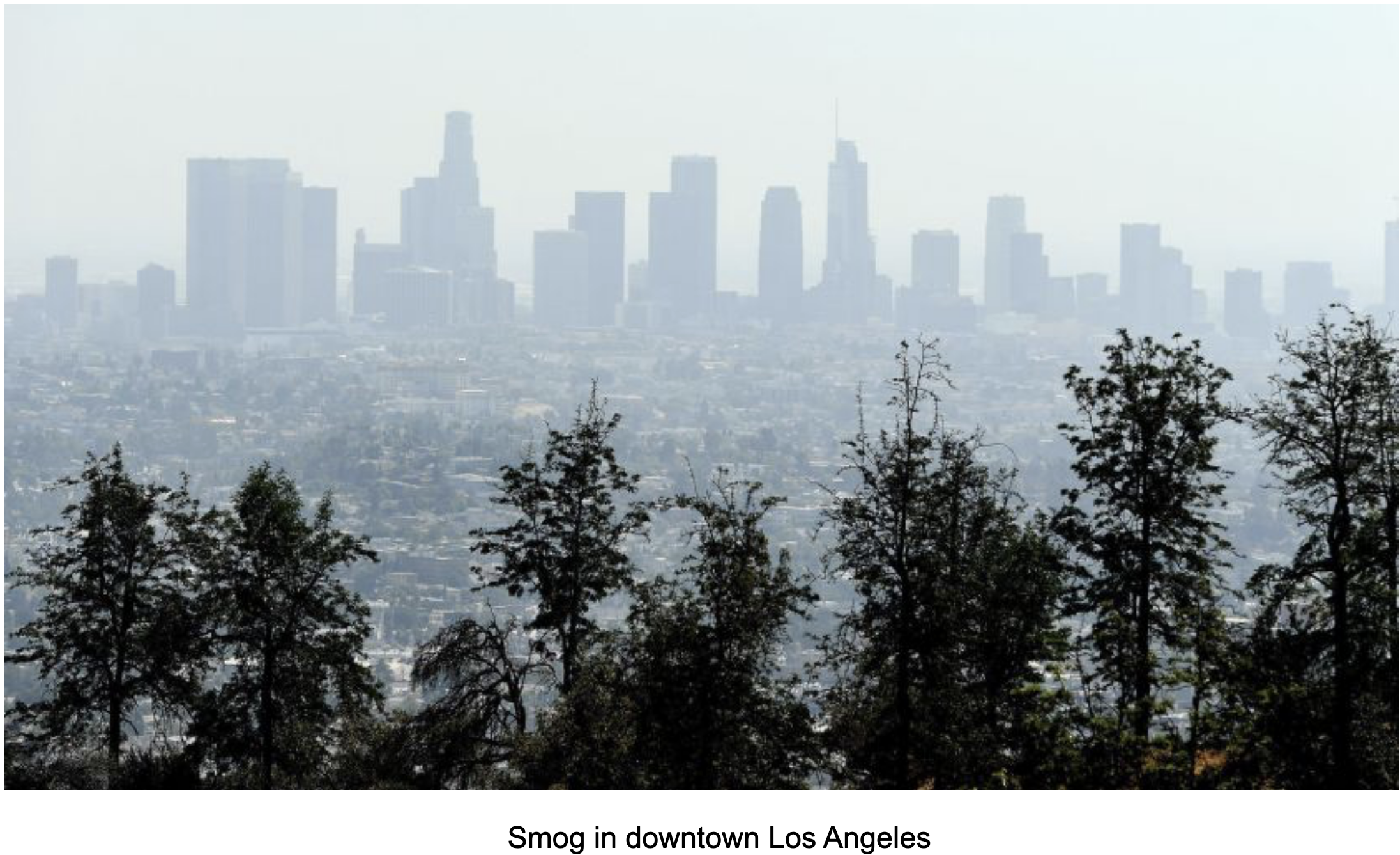

Reading: Hans Blumenberg, “Light as Metaphor for Truth: At the Preliminary Stage of Philosophical Concept Formation”
Light and Dark
light is inhabiting experience
light allows for sight
some religions and in Big Bang: universe goes from dark to light
dark can’t bring things to being
dualism of light and dark like good and bad
light and dark can relate to passage of time/cyclical nature
no life w/o light, so we value light
BUT too much light can blind us
we need shadows and edges to show forms
Other reading notes
light as a source of image and metaphors
eye is the organ related to sight
eye has freedom to close; ears have no freedom b/c can’t stop
the eye seeks; the ear waits
Enlightenment “light” is something to be accomplished
Middle Ages: truth reveals itself
Enlightenment: truth revealed by man (truth gained from thought); mind action on the world sheds light (reason → truth; truth is unstable concept that shifts with the times)
Images: Light and Space Movement (CA, USA)
light as a medium; not just thing
typically 1960s
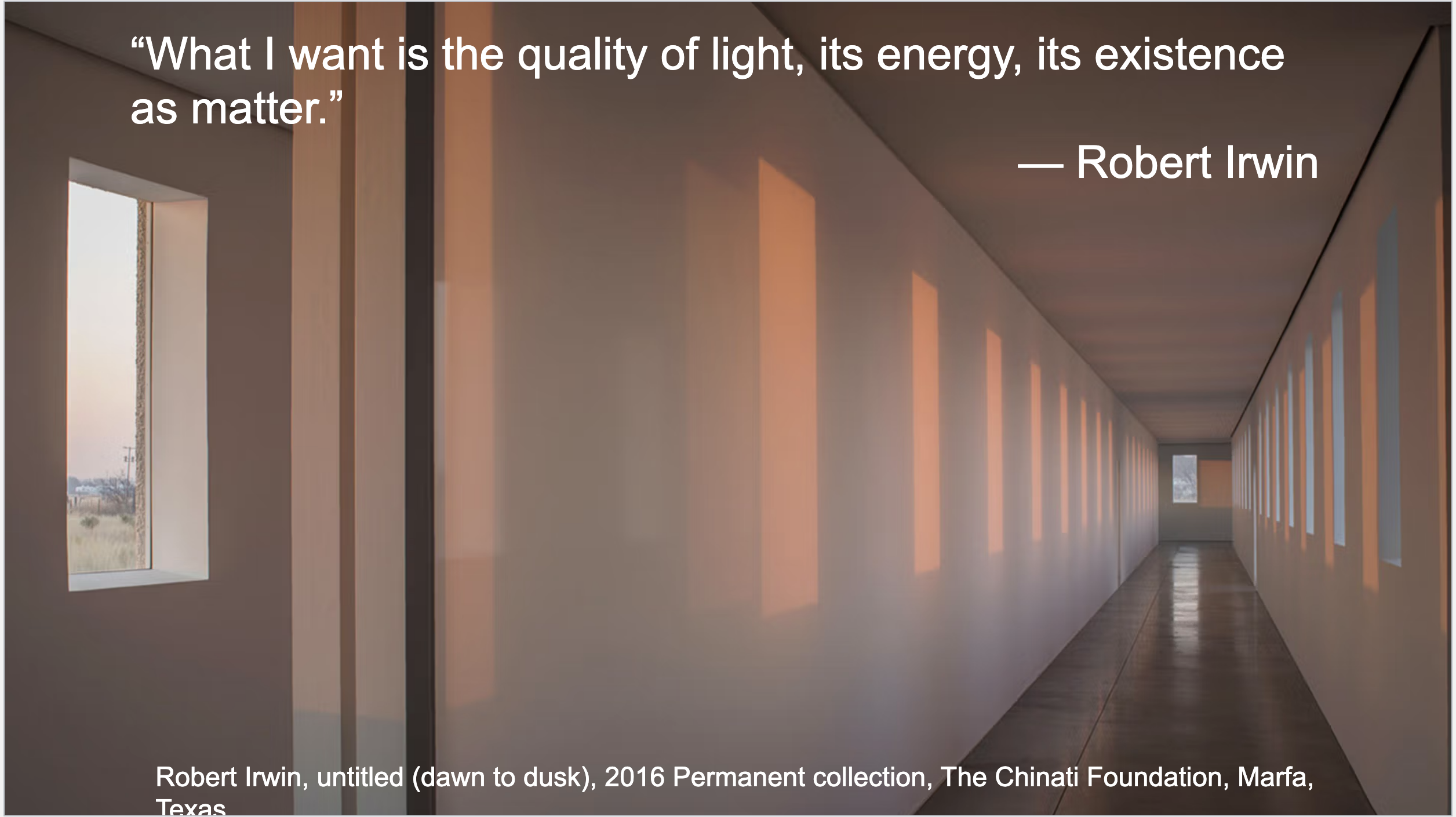
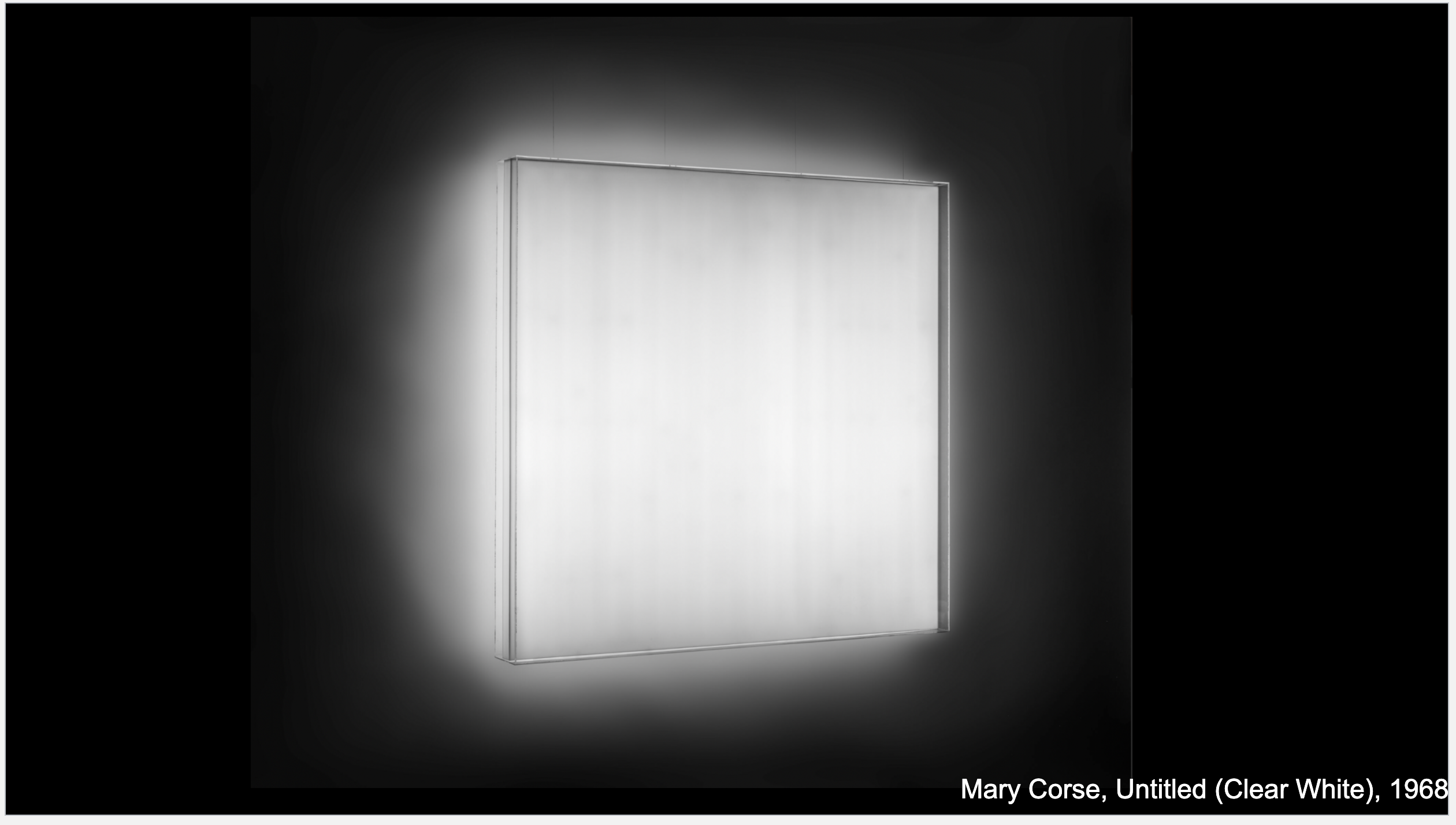

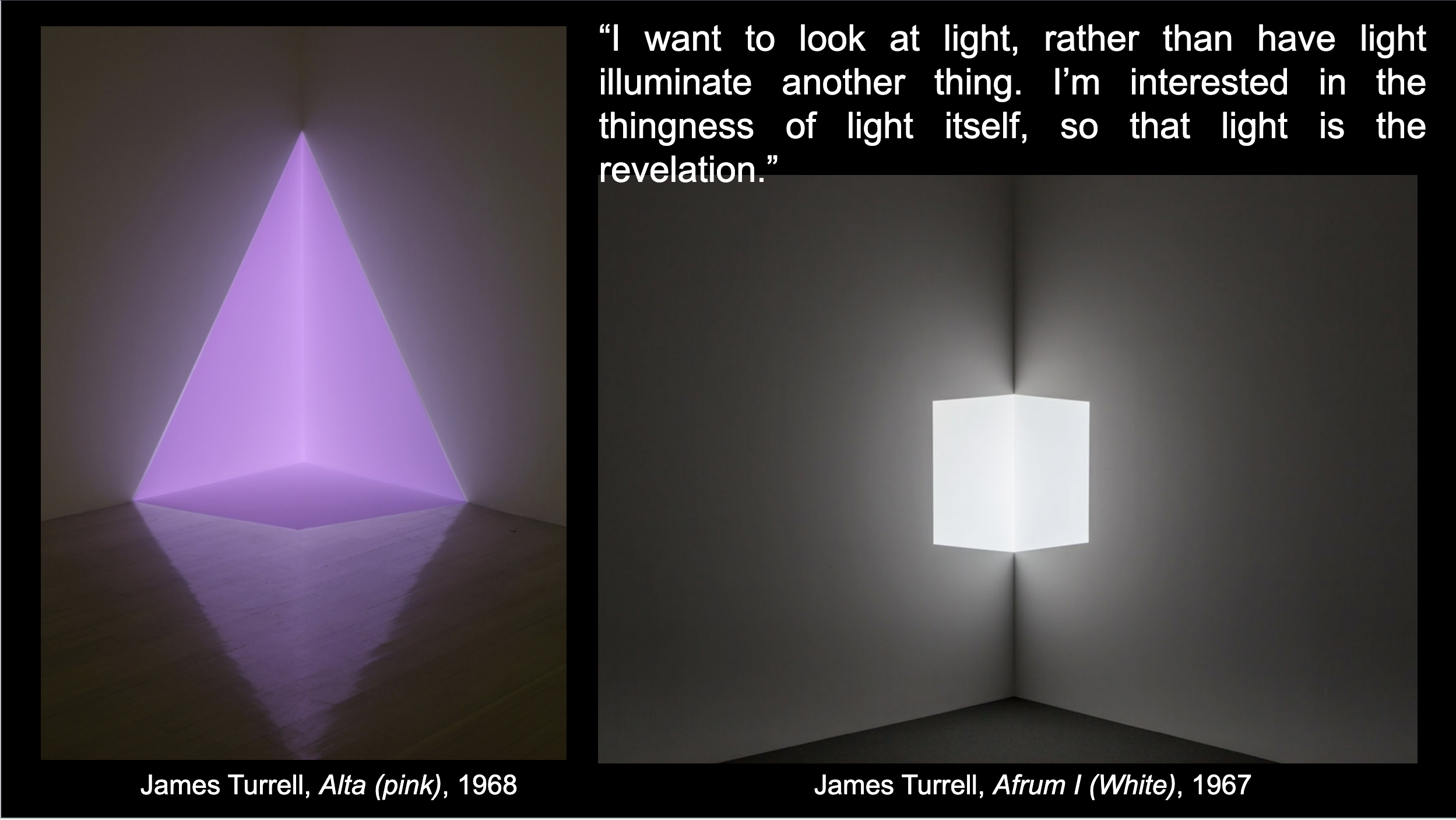
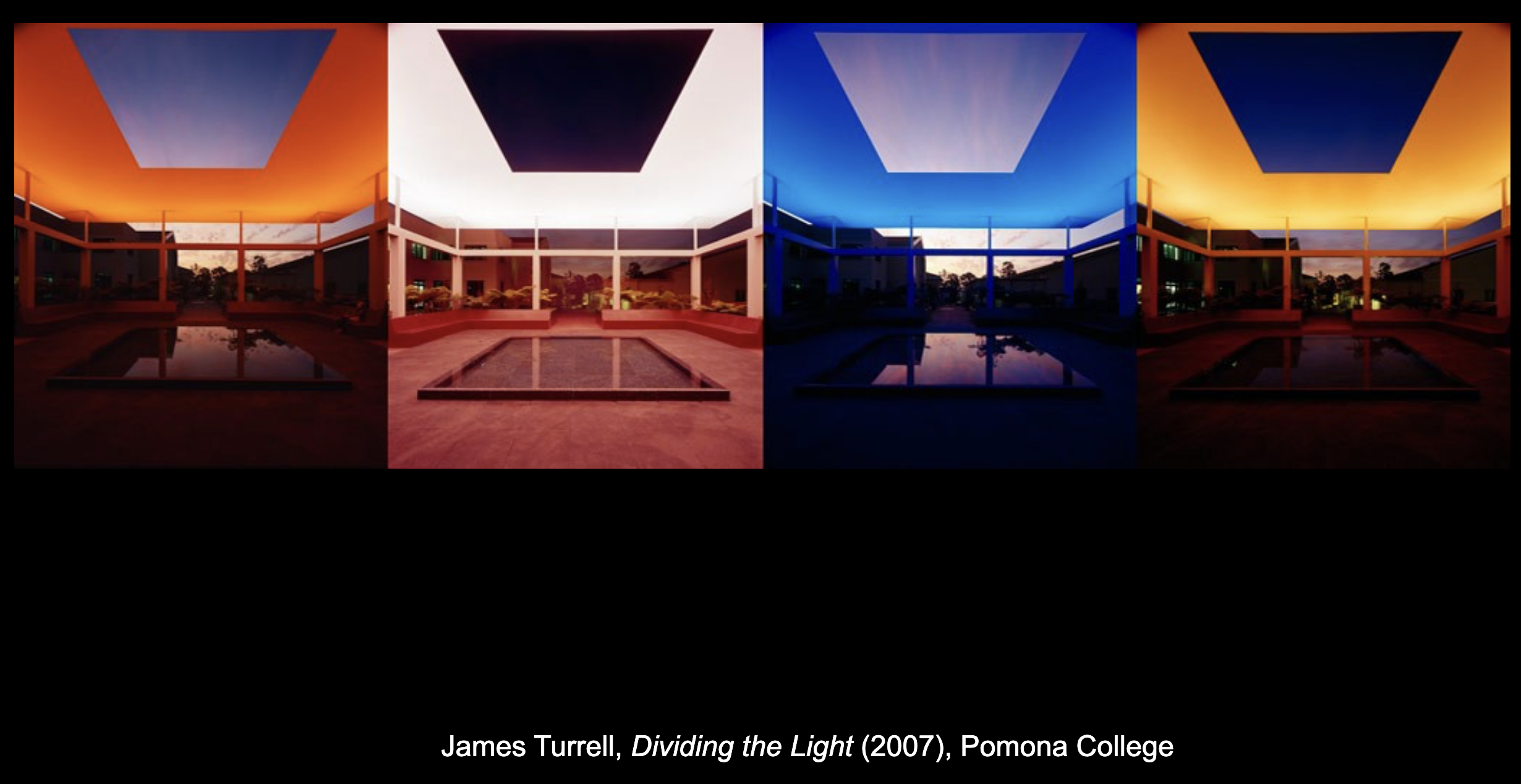
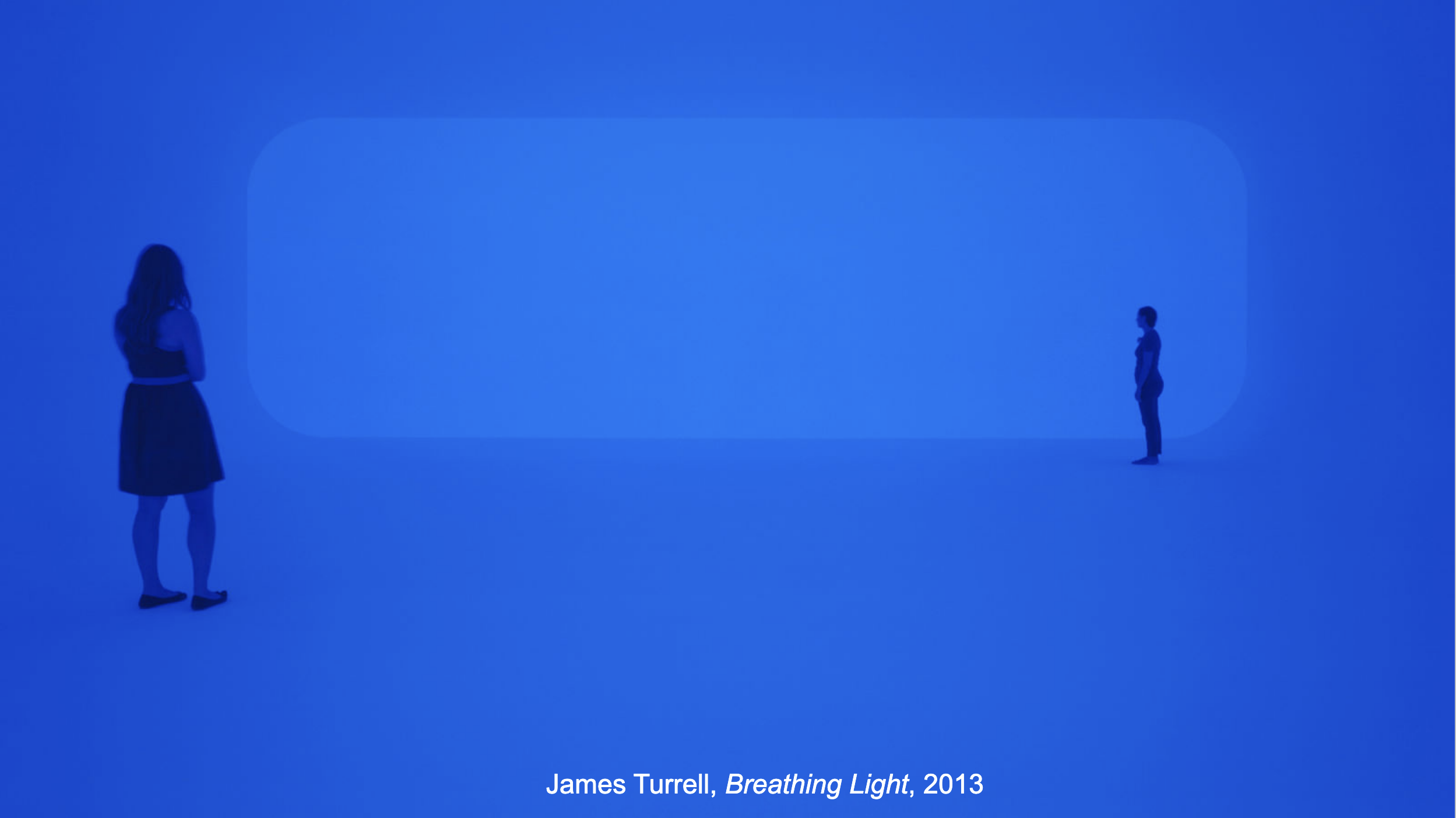
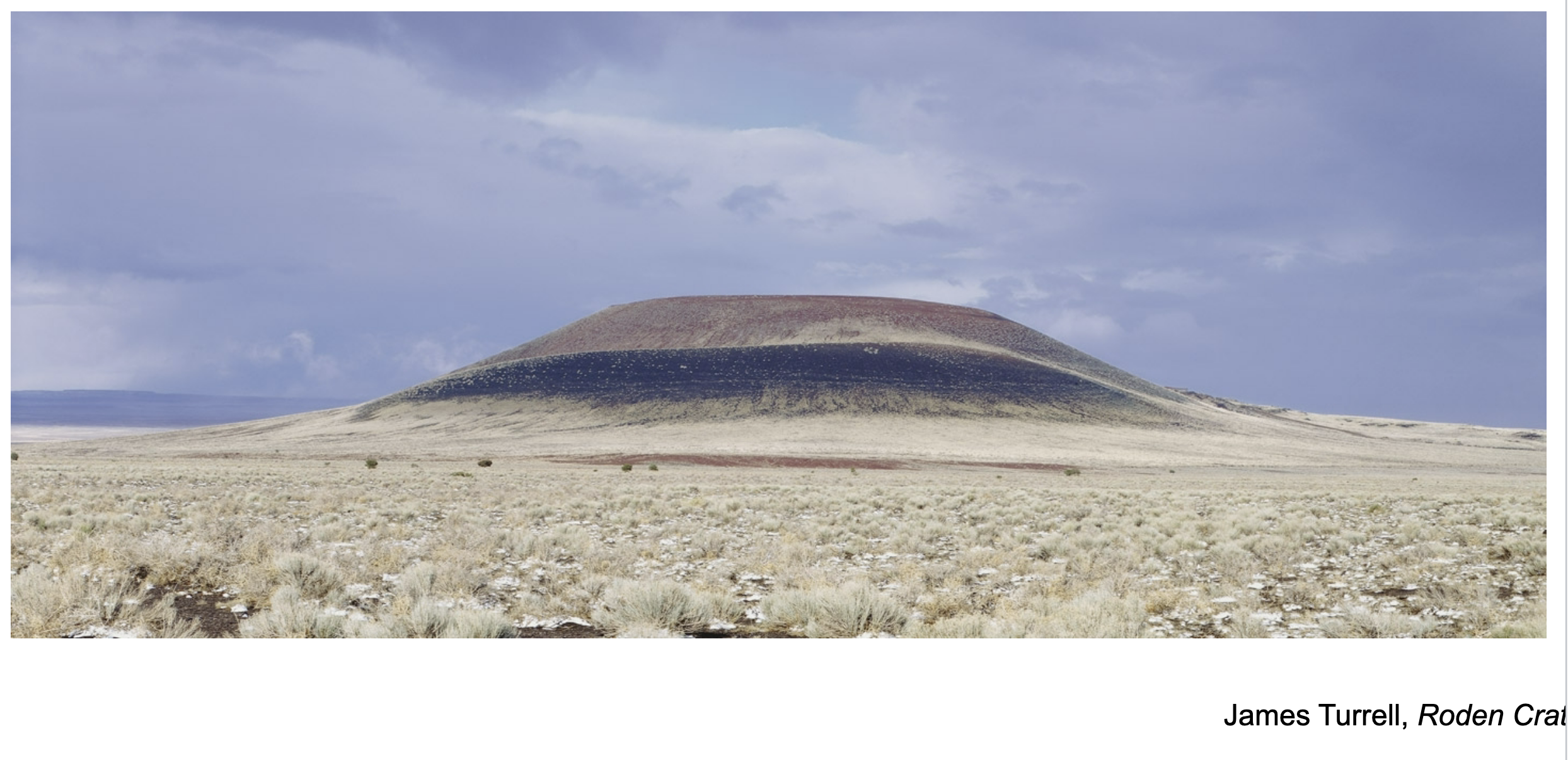
Image: Joseph Wright of Derby
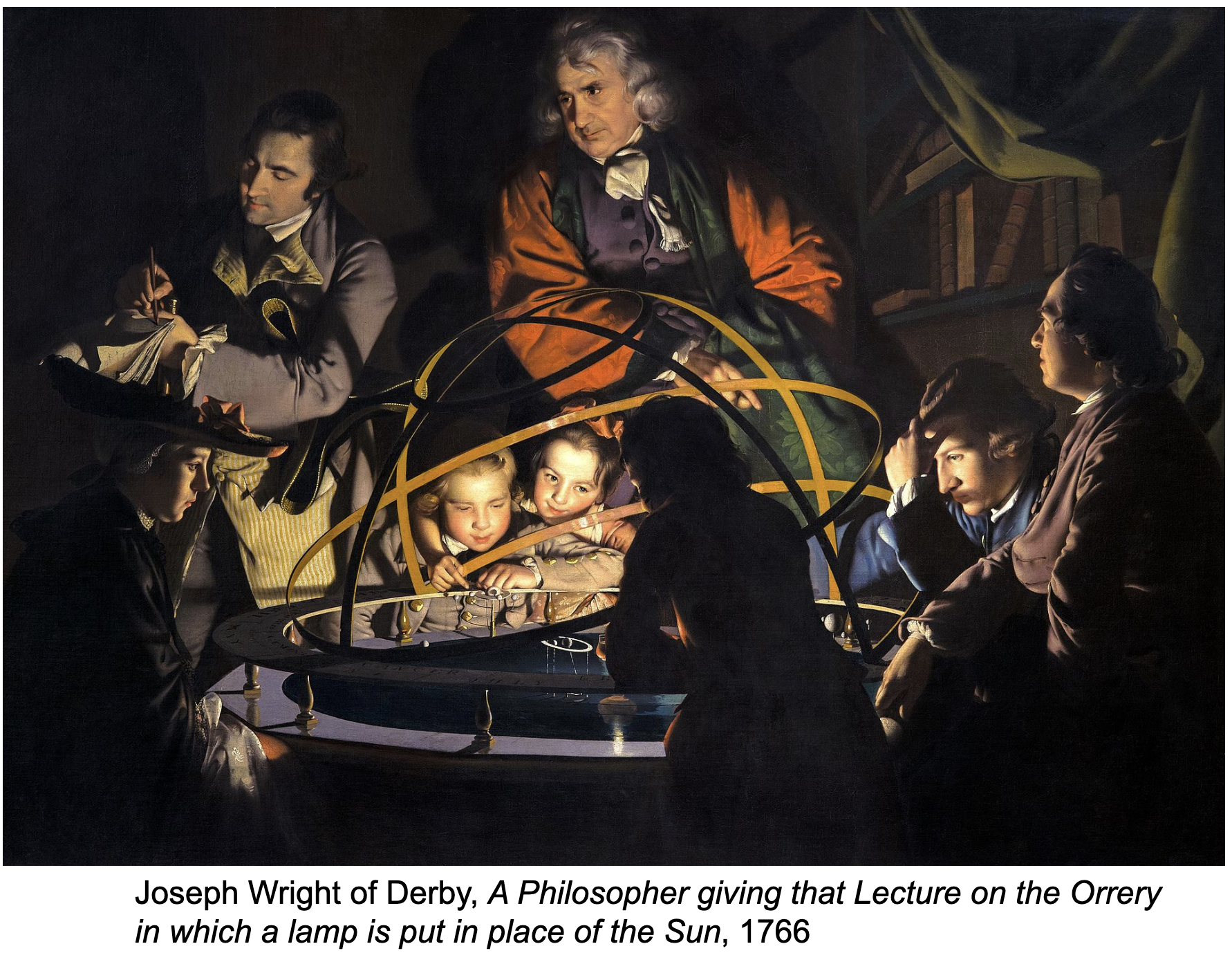
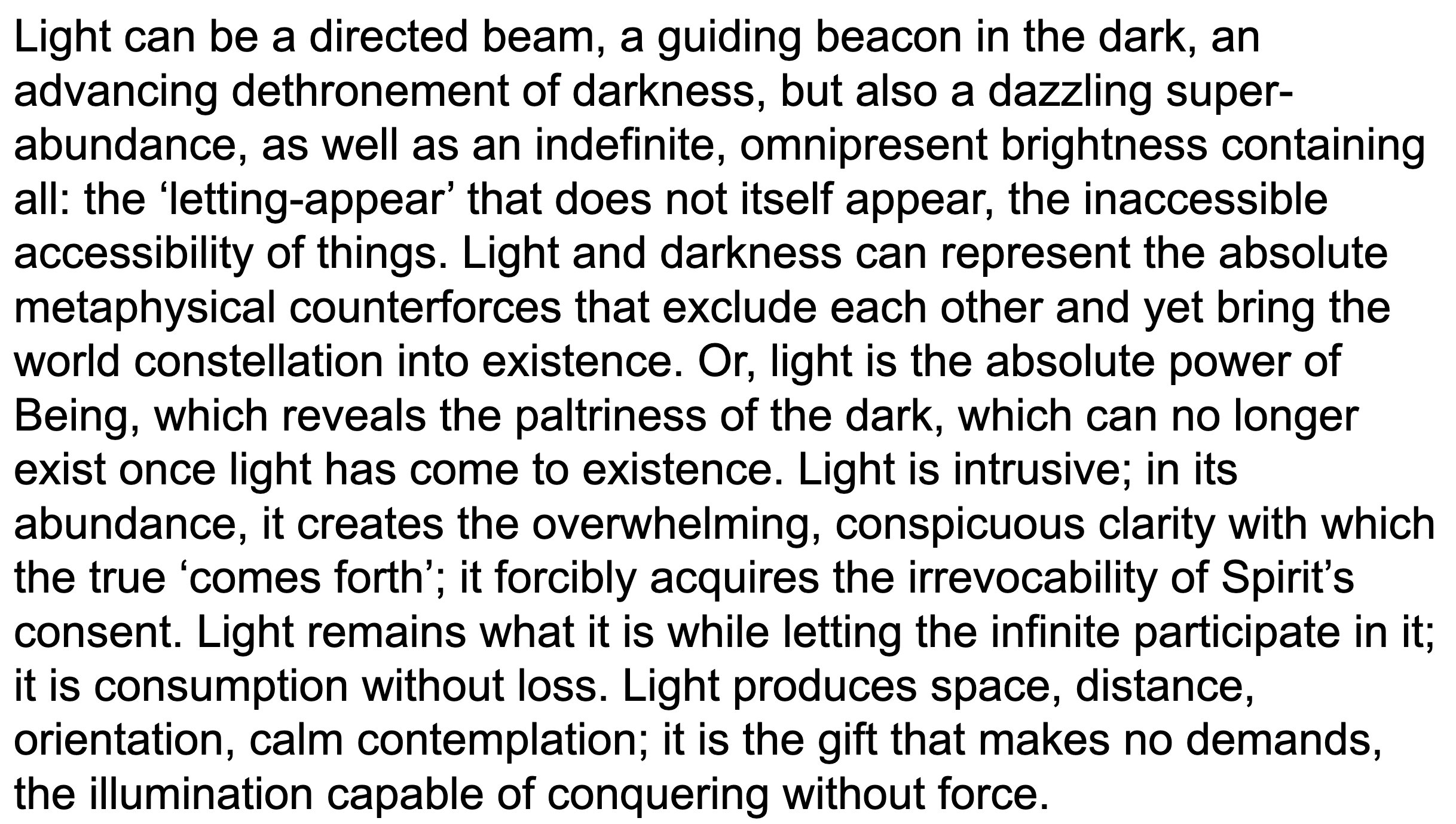
From Blumenberg’s reading:
Enlightenment “light” is something to be accomplished
Middle Ages: truth reveals itself
Enlightenment: truth revealed by man (truth gained from thought); mind action on the world sheds light (reason → truth; truth is unstable concept that shifts with the times)
Reading: Plato, The Allegory of the Cave"
the cave is a shadow place of unknowing, duplicity, repetition
mistaken reality; they believe the shadows to be the truth (inevitable)
one prisoner gets released:
rough ascent to sunlight; “rough” makes note of the difficult path to get there
prisoner becomes knowledgable when they see the light
when they go back inside, they will be blind as their eyes adjust back to the darker cave
the other prisoners would think it’s not good to go up; if the one who went out tries to convince them then they might kill him
philosophers reorient themselves to the path of Enlightenment BUT most of those shackled would want to stay there (comfort in the things known to them)
light is good; shadow is bad b/c deception
blindness from going dark to light AND light to dark
subjectiveness of perception
whoever controls the light controls the (subjective) truth; can relate to tyranny
Other Reading: Christopher Turner and Victor I. Stoichita
Plato’s point was that they saw only the shadow of reality, not reality itself…to attain true knowledge one had to renounce the shadow stage and progress out of the cave, into the sun.
Reading: Christopher Turner and Victor I. Stoichita, “A Short History of the Shadow: an Interview with Victor I. Stoichita”
But previously art historians took a long time in paying attention to shadows because shadows are, so to speak, heavy, dark, and ugly.
Plato’s point was that they saw only the shadow of reality, not reality itself…to attain true knowledge one had to renounce the shadow stage and progress out of the cave, into the sun.
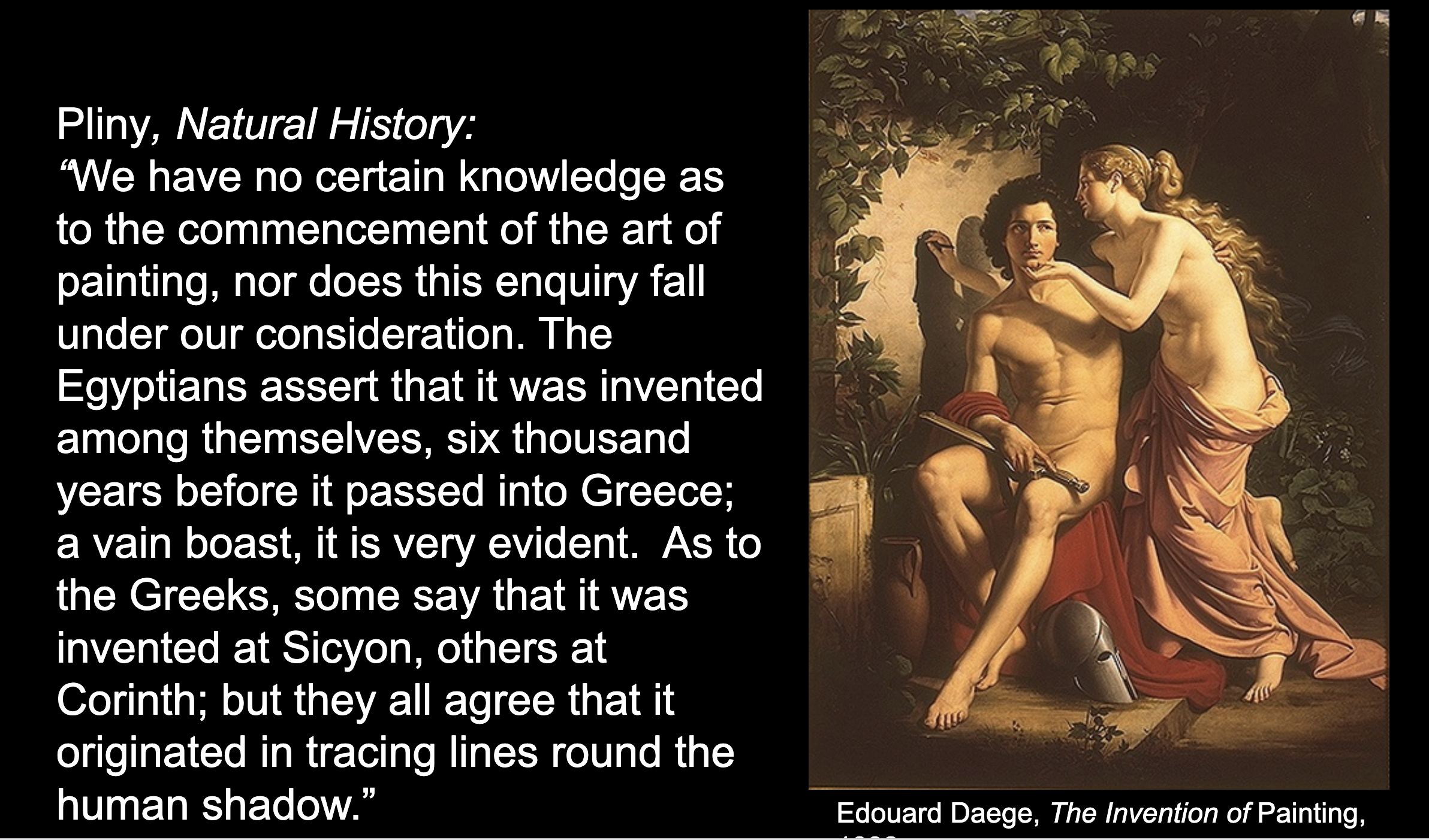
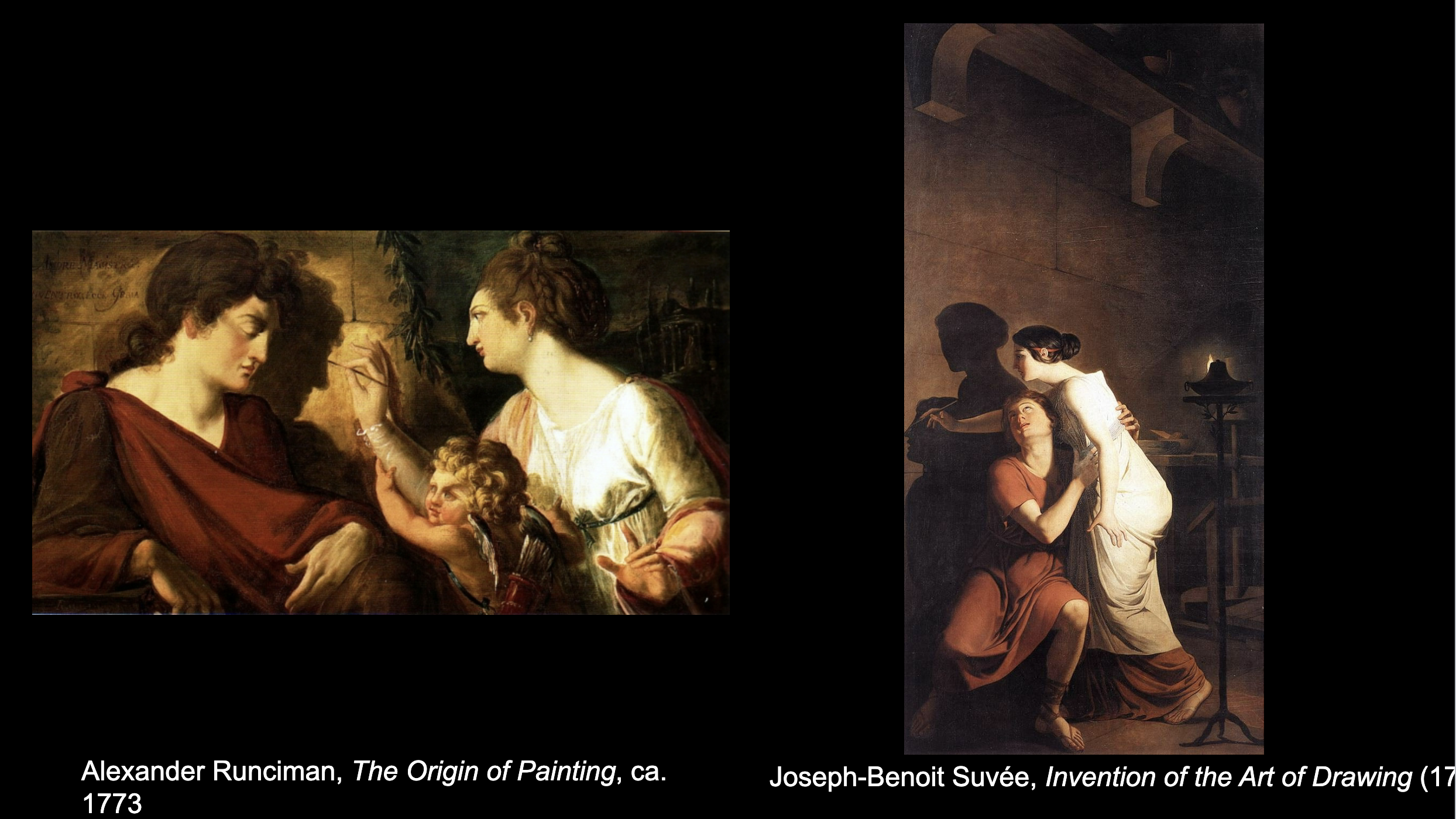
in Pliny’s story about the origin of representation, the shadow wasn’t charged with a negative aspect: the story of the maid of Corinth tracing her lover’s shadow on a wall and thereby giving birth to painting is a wonderful story, a love story, and not at all negative,
another ancient tradition: the one which recognized man’s soul in his shadow, and a shadow in his soul.
Peter Schlemihl sold his shadow to a stranger—the devil—and thus became rich, but at the same time he lost something…Peter Schlemihl continues to live, to exist, but robbed of his identity. (the accent is more on his identity rather than his soul.)
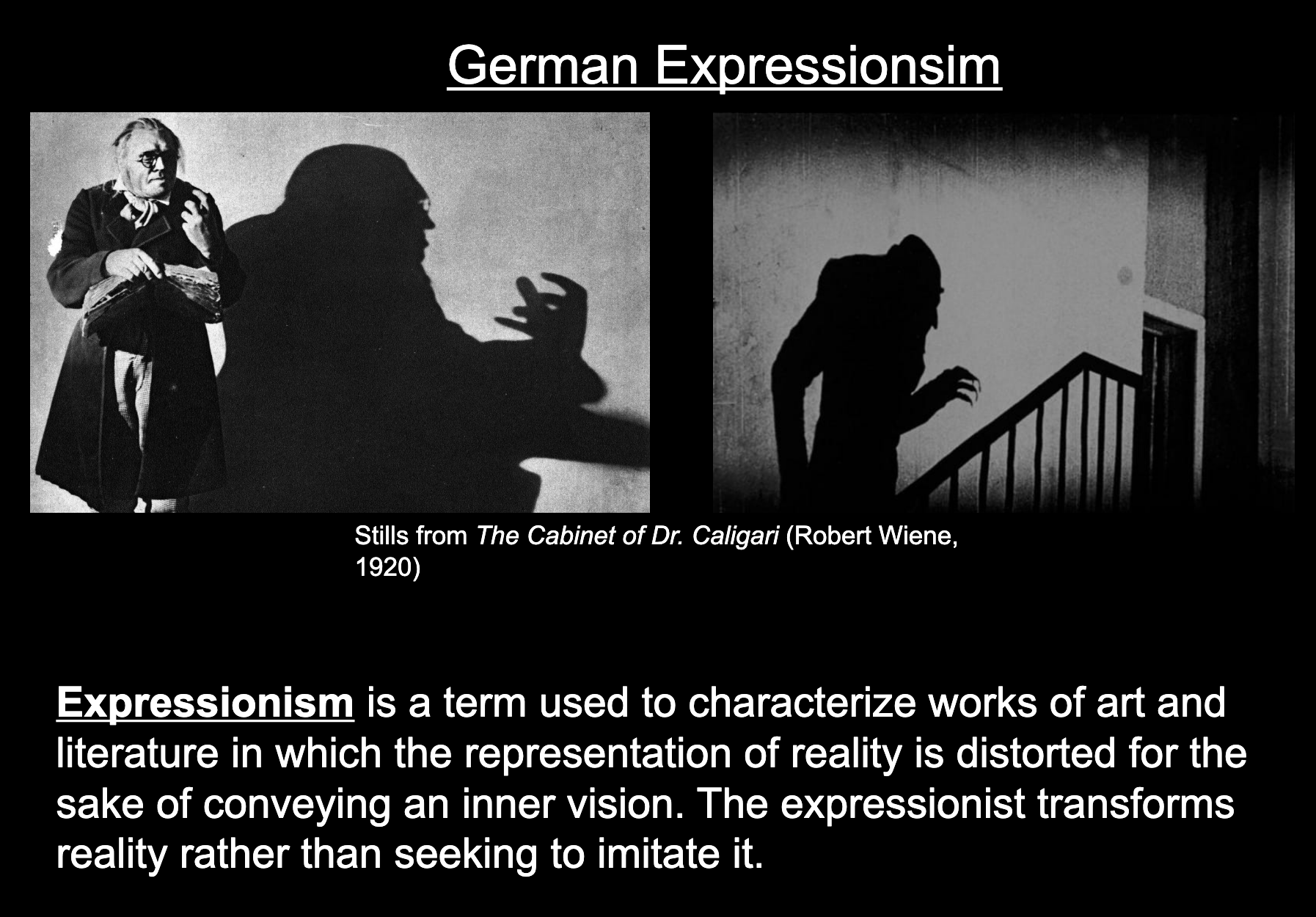
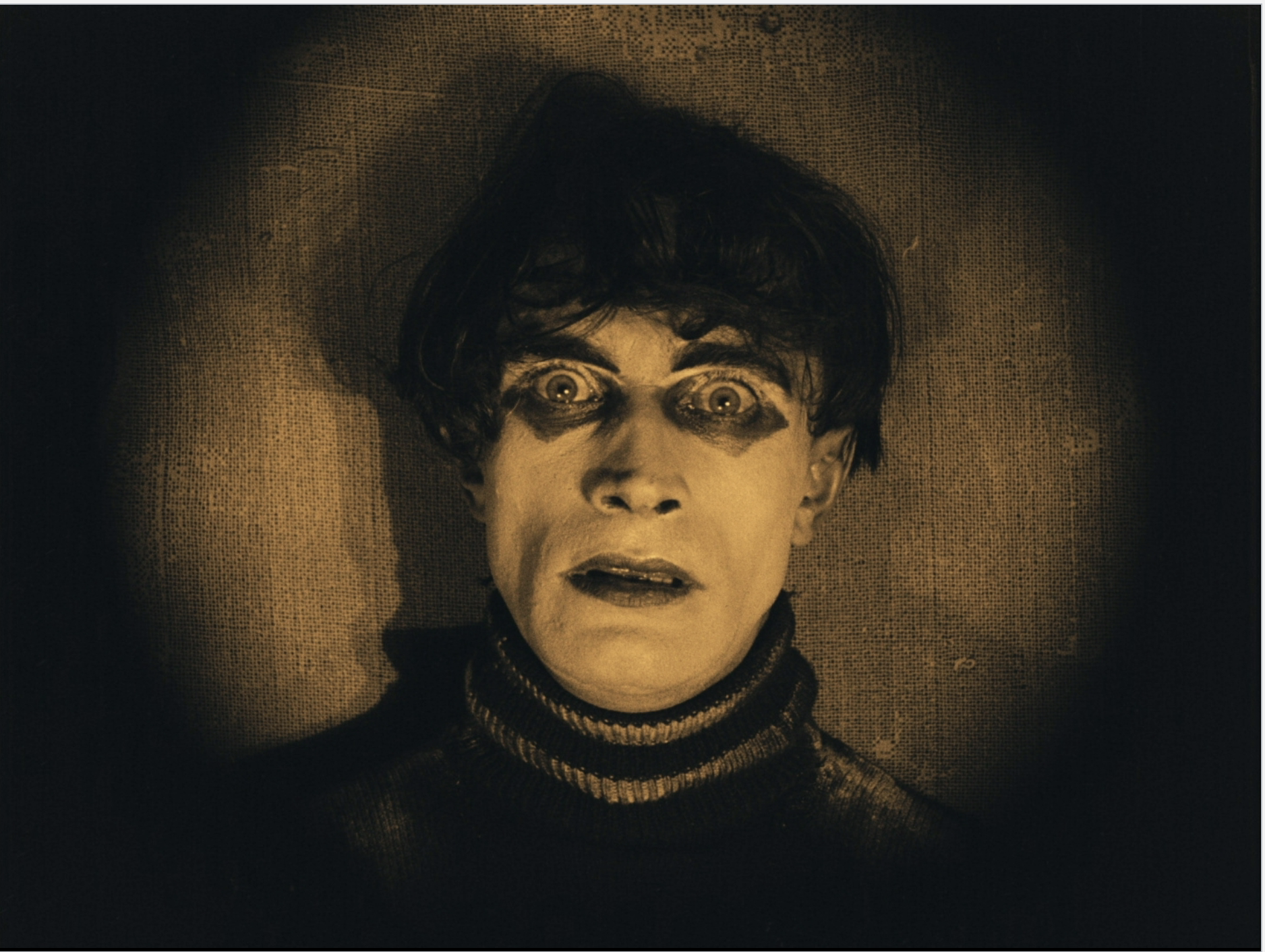
German Expressionist film is obviously famous for its use of crooked, distorted shadows that often play a narrative role as indicators of evil.
The shadow, an external image, reveals what is taking place inside the character…
The poetic message of the shadow is unequivocal: it is a metaphor, or more precisely, a hyperbole of the key medium of Expressionist cinema—the “close-up.”
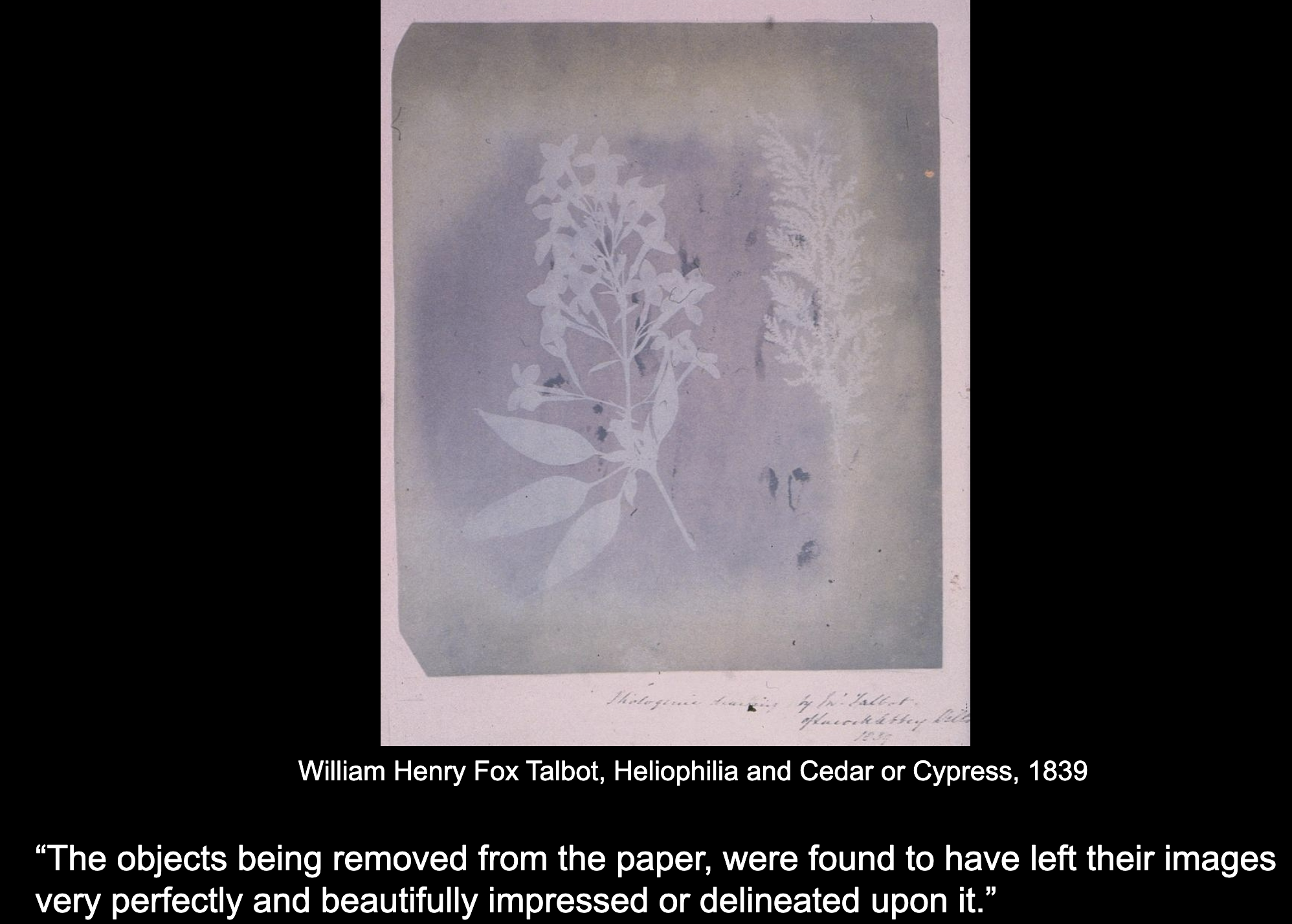
Etymologically, photography means “writing or drawing with light.” But we can also call photography a writing with shadow, or a writing with light and shadow.
Reading: Marina Warner, “Darkness Visible: The View from the Shadows”
Shadow is the stuff that art is made on, according to one legend about the origin of painting. The first portrait was created when "the Corinthian maid," called Dibutades, saw the shadow of her young man's profile cast on the wall by a lamp; she then traced it because he was going away on a journey and she wanted it for a memento during his absence. Her father, a potter, finding her drawing later, "pressed clay on this and made a relief, which he hardened by exposure to fire with the rest of his pottery
Dibutades' act of loving representation inspired several works known as "The Origin of Painting": the French painter Joseph Suvée and the Scotsman David Allan both explored the potential for high drama in the single light source and the looming shadows thrown against the wall.
The blackness, emptiness, and simplicity demand work, but, as if by a miracle, the shadow figures appear to possess clear features: the shade summons the person.
At the same time, it responded to and amplified a growing realization that human vision was limited, discriminating, and linked to the vagaries of memory, and that a machine might be able to see more, and more clearly.
Despite these nuances, the absence of natural color in these photographs evoked the absence of the subject who had been there in full color before one's eyes when the image was made.
Shadows can evoke likeness with startling acuteness even when the originals are not known to the viewer or are figures of fantasy.
that shadow eerily communicates individual presence; this effect grows when a shadow becomes a shade, and that shade a reflection; then the projected image of a person brushes the condition of spirit.
Film: Robert Wiene, Cabinet of Dr. Caligari (1920)
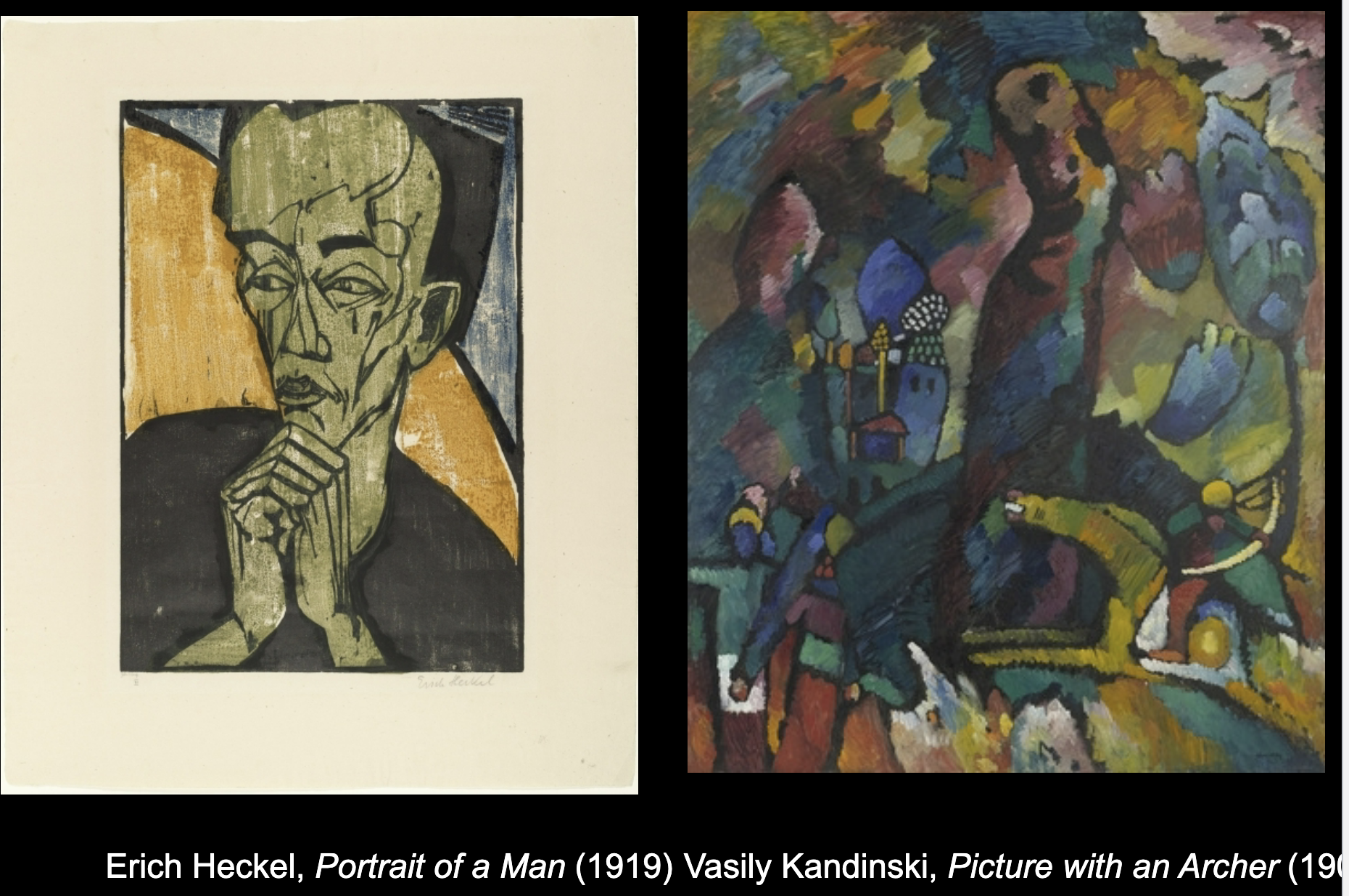
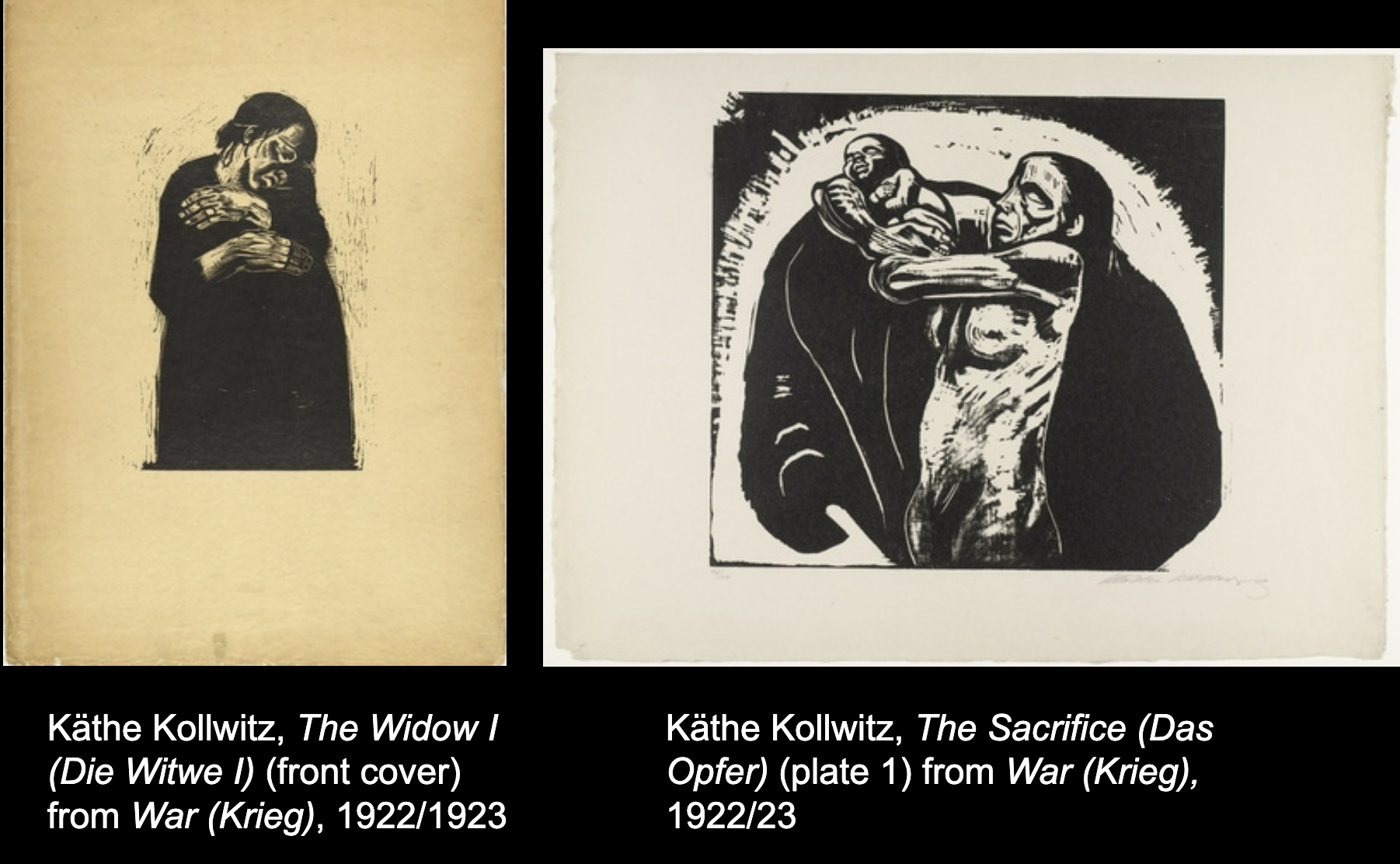
German Expressionism
plays on a sense of vertigo, not seeing exactly what you’re seeing (viewers being in the dark)
in a world full of madmen, who is mad?
coffin can be representation of of film (dark), Cesare as representation of audience being in the dark/manipulated
there were colored films (hand-tinted)
lots of angles (the bg in the story was created and lots of things were angled; different from irl when main character is talking in present)
helps create illusion
darks/shadows on face below
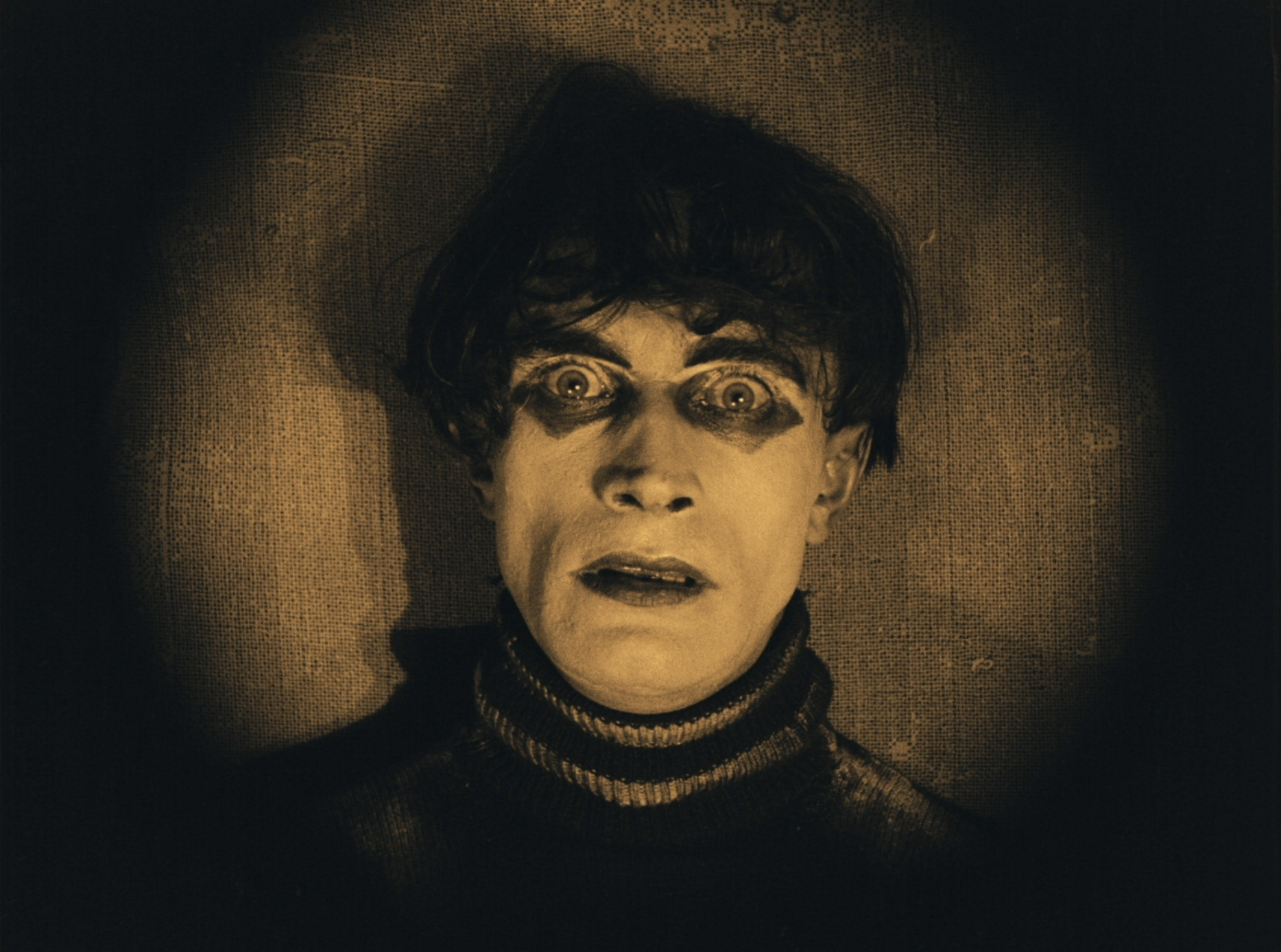
Images: Allegories of the invention of drawing and painting
Plato’s Cave
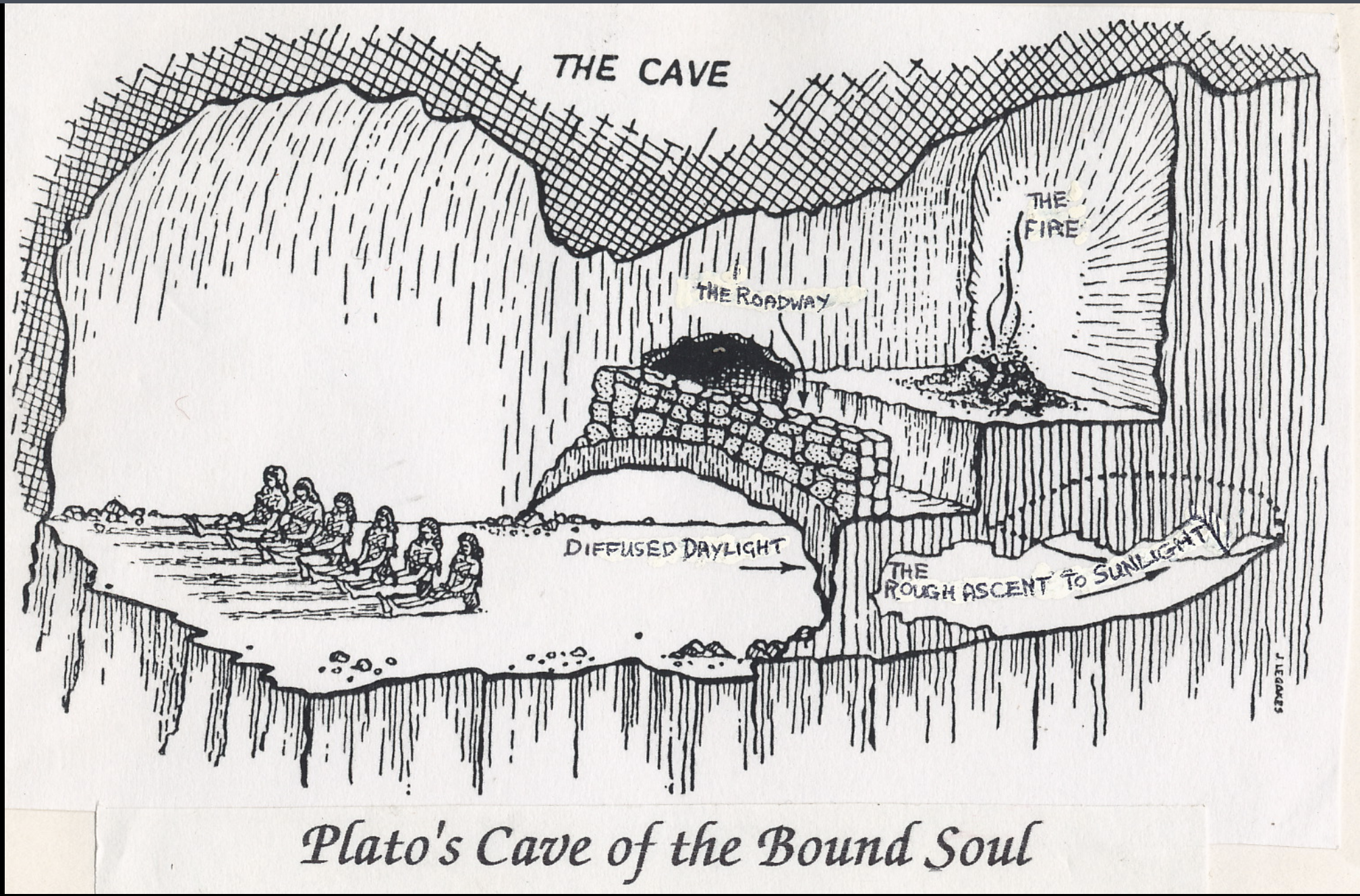
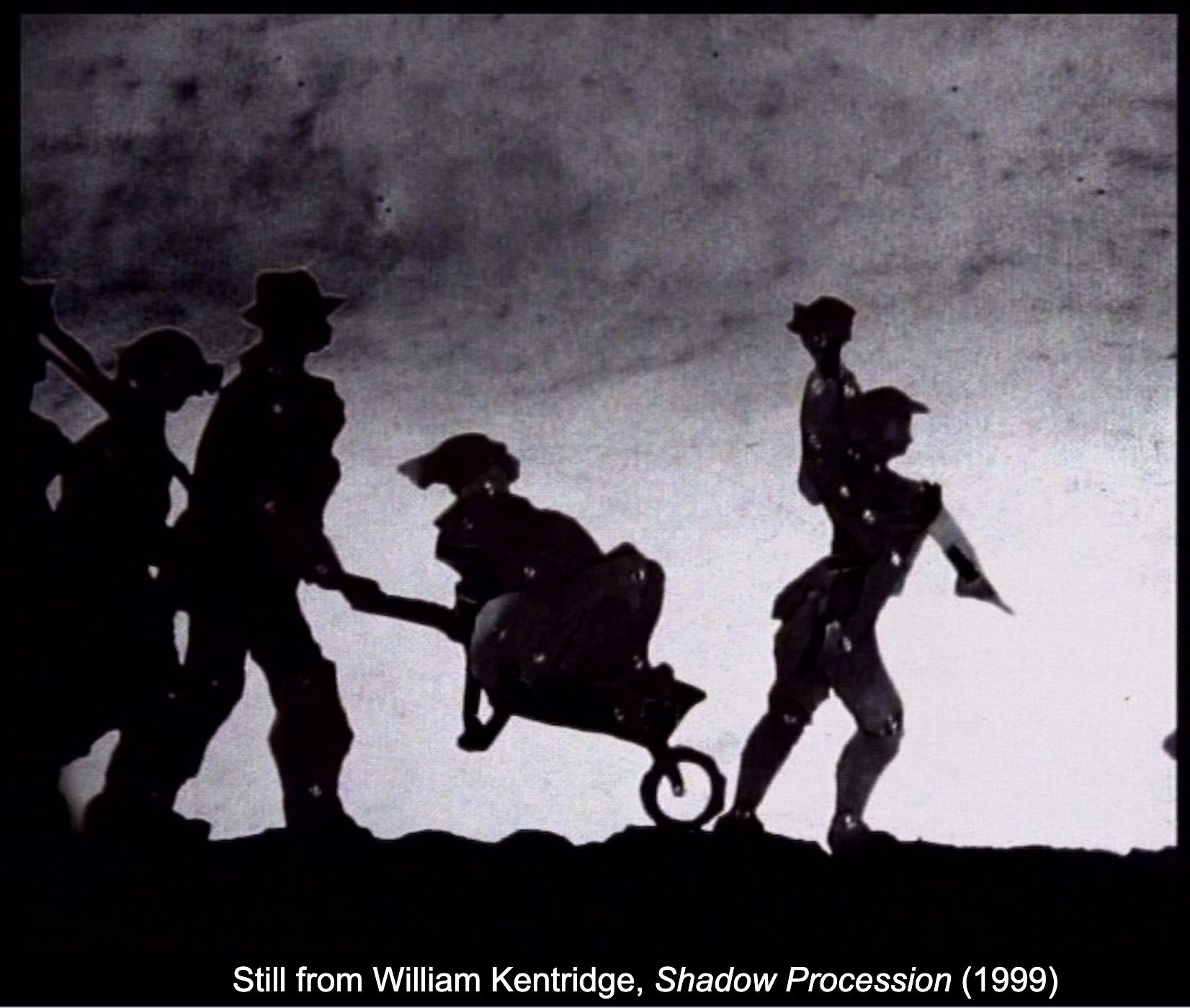
Image (from Video): William Kentridge (Shadow Procession, South Africa 1999)
power of images: they can deliver a world that’s created
inventory of ppl on the move → gives depth/meaning to the experiences of the displaced shadows
about time of Apartheid; African diaspora
the unknowing/discomfort is the source of knowledge
a cat in the foreground made it look relatively bigger than the cutouts of the ppl
the last guy pulls the screen across (looked like heavy load) → life is a walking shadow; part of what it means to see is seeing the shadow, its fleetingness like how life is fleeting
we confront the world in images and we have to make sense of it
there’s an eyeball that flashes on screen
maybe reminding us that we are viewers
we are observers but are also being seen
there’s a cat that walks across the screen
jarring/out of place → makes us realize we’re watching b/c takes us out of scene (kinda like the eye)
Images: Contact Prints and Early Photography
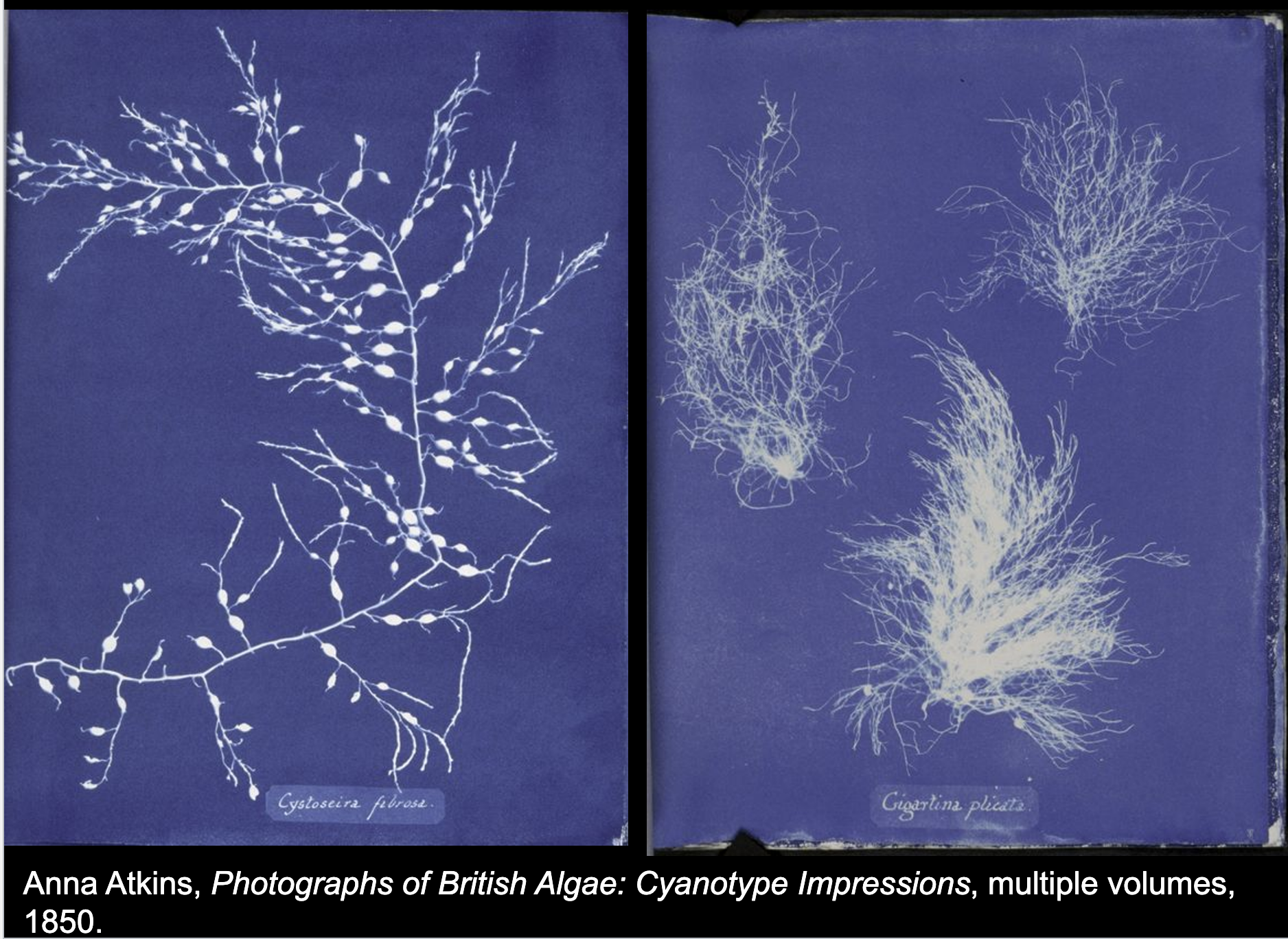
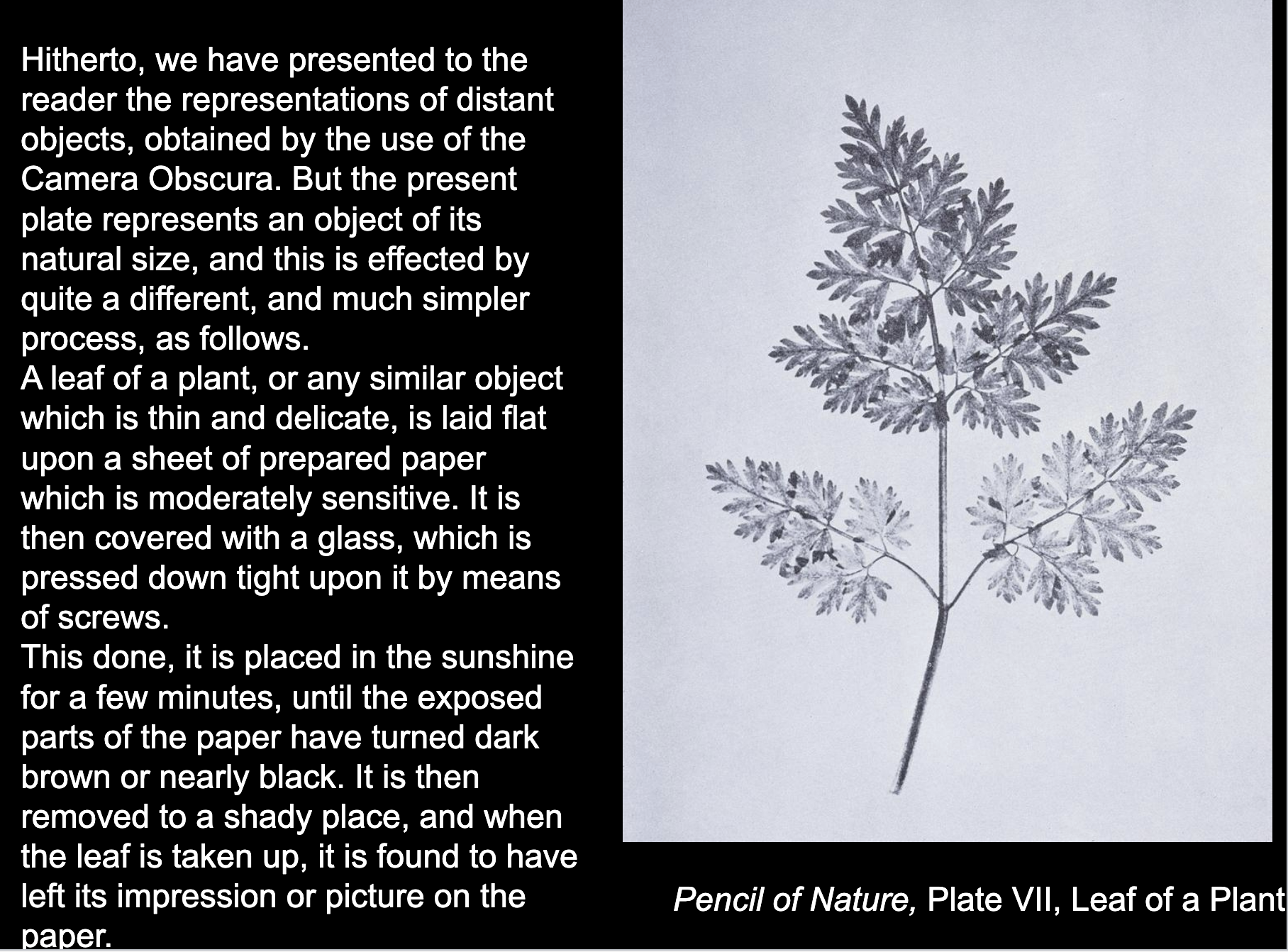
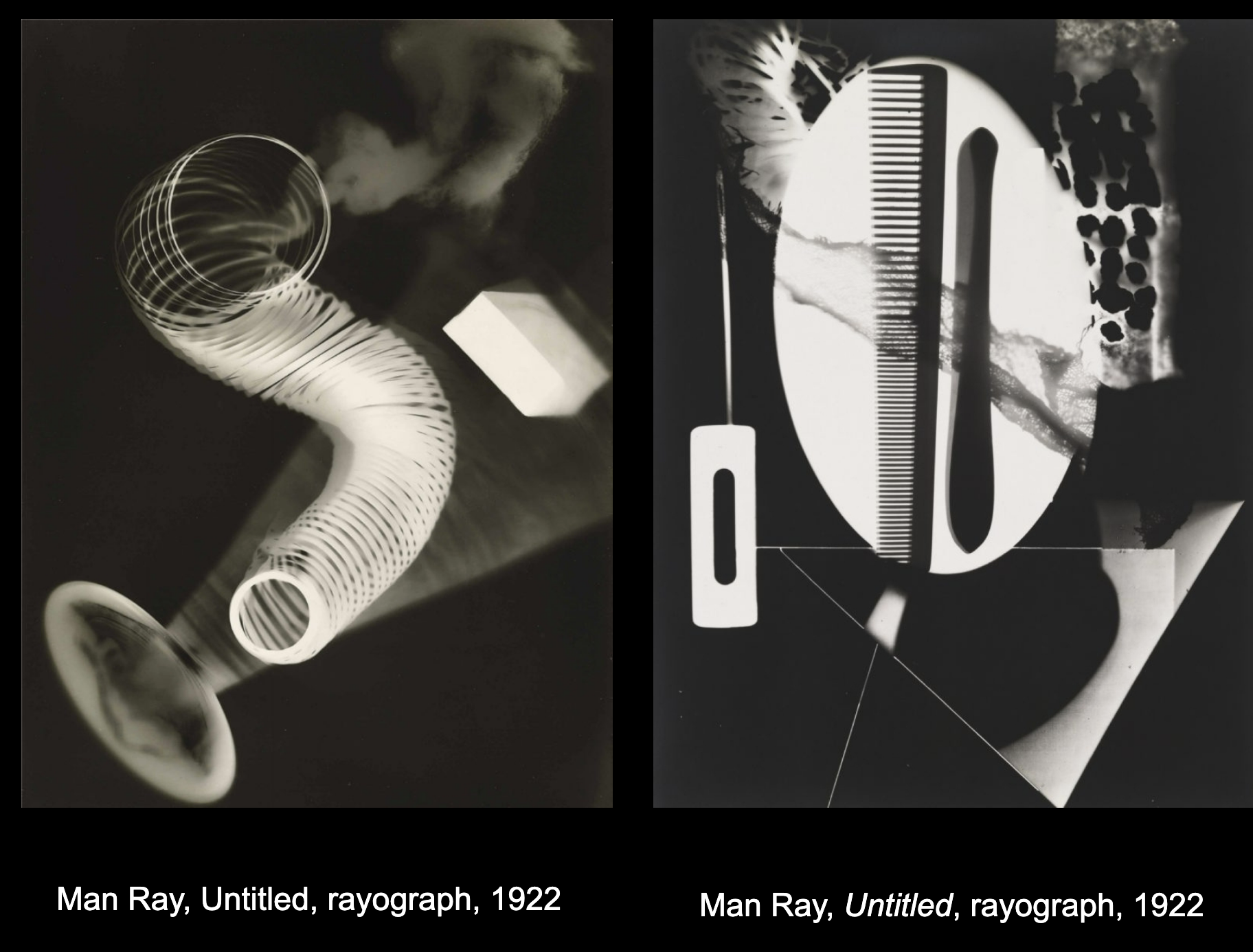
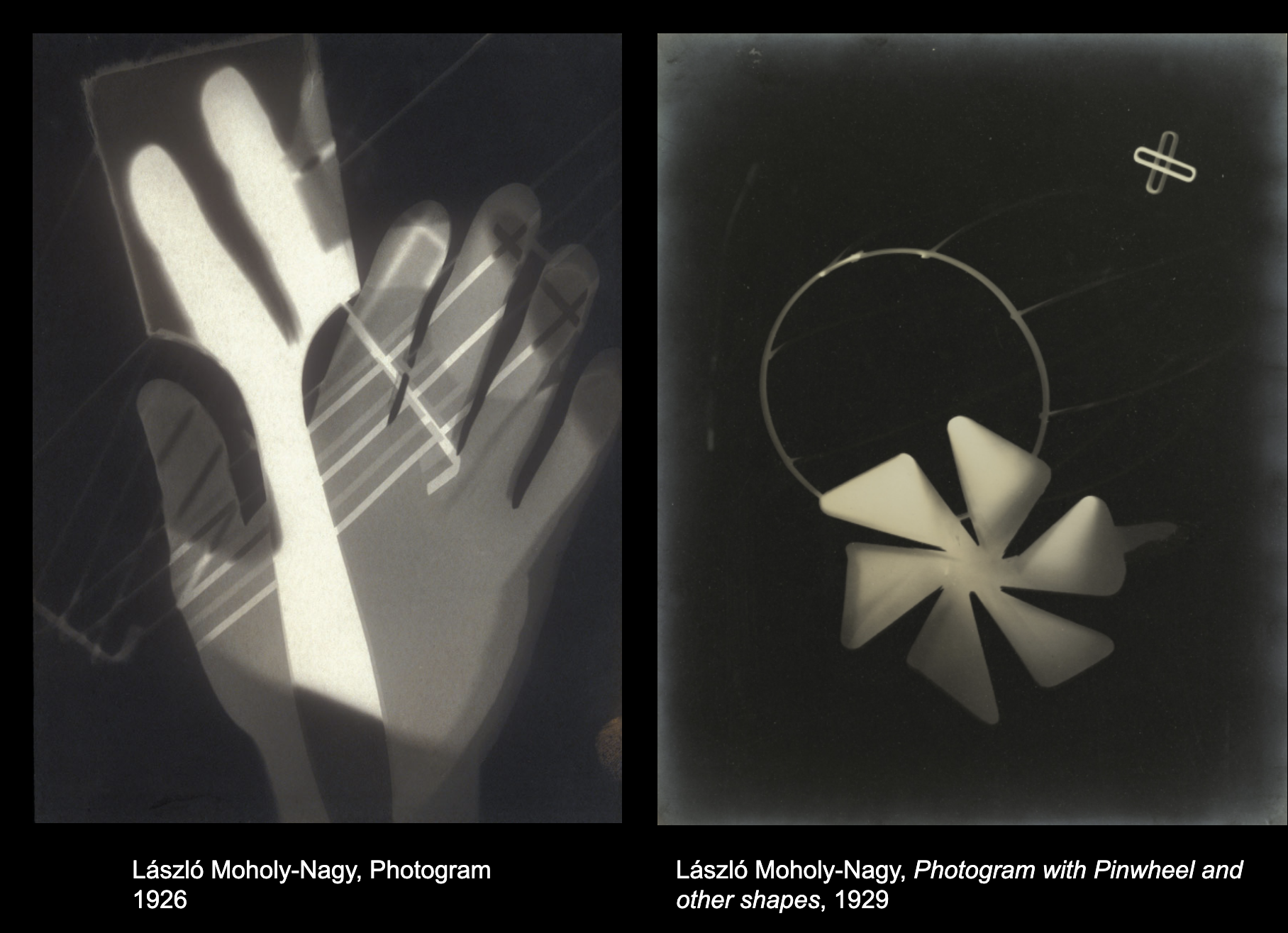
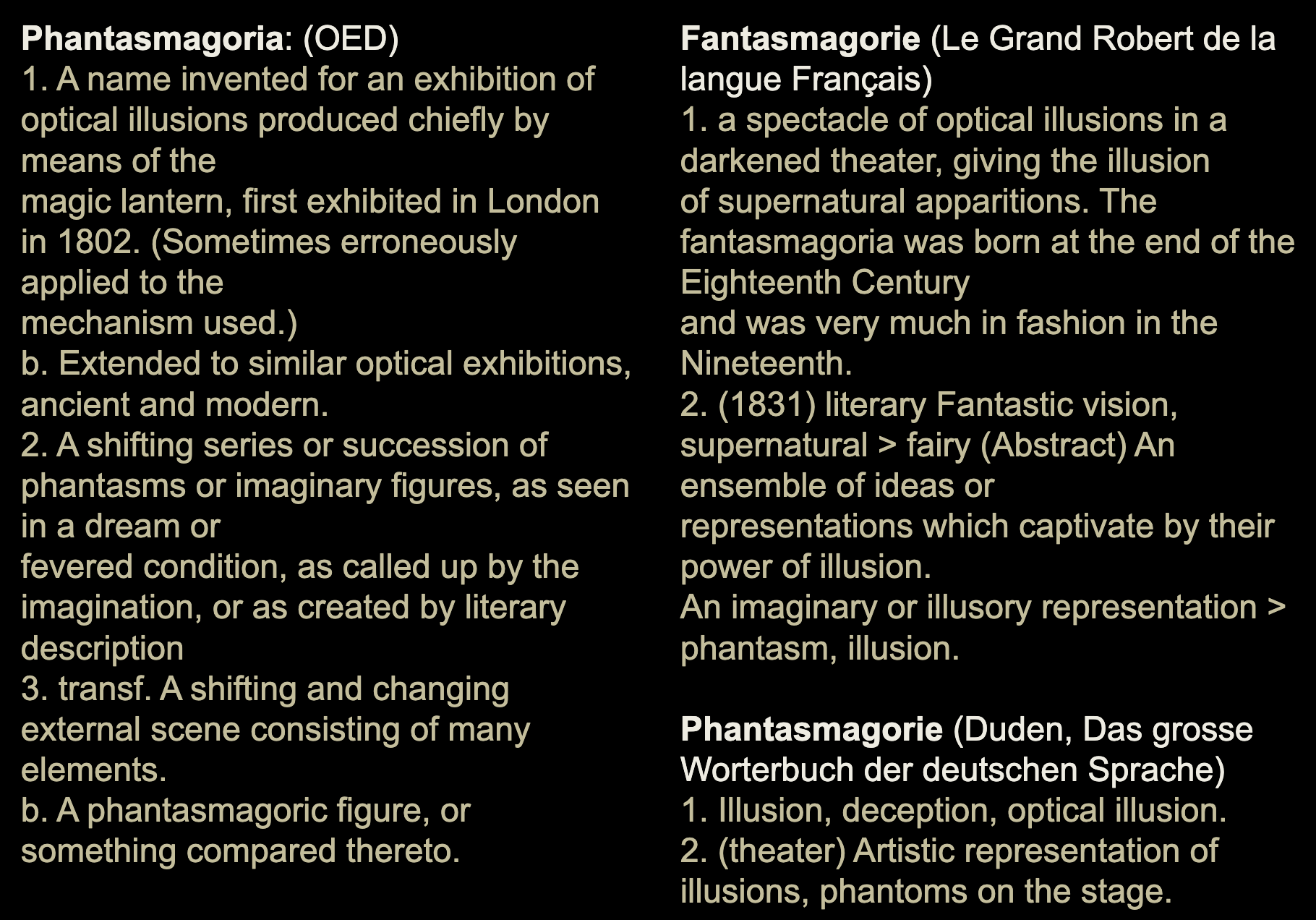
Phantasmagoria
Images: German Expressionism
Reading: H.G. Wells, “The Country of the Blind” (1904)
a story about an attempt to spoil the ppl’s blindness
self-contained world that Nunez falls into; the ppl think he somehow emerged
they think he’s an idiot b/c he stumbles, talks crazy (about his/our world), can’t hear/smell good
presumably dies after running away
3 considerations of the text
anti-imperialist: ““In the Country of the Blind the One-Eyed Man is King.”
be wary of kings
who’s the fool in a new place?
assimilation and limits/disability
if world views are incompatible, can you have normalization?
social creation of norms and what happens to those outside the norms
not constructing the world based on sight
Nunez tries to describe sight/things he sees
tried to show benefits (seeing things from far)
who’s right?
might depends on perspective
like in Plato, Nunez like the guy who went out an back into the cave
there’s a comfort in what you think the world is
Reading: Georgina Kleege, “Blindness and Visual Culture: An Eyewitness Account”
visual culture not only depended on the sighted; you can know of the visual world w/o seeing (like via other senses)
how much seeing can you do before not blind? how much seeing can you do before being blind?
blindness and sight on a spectrum
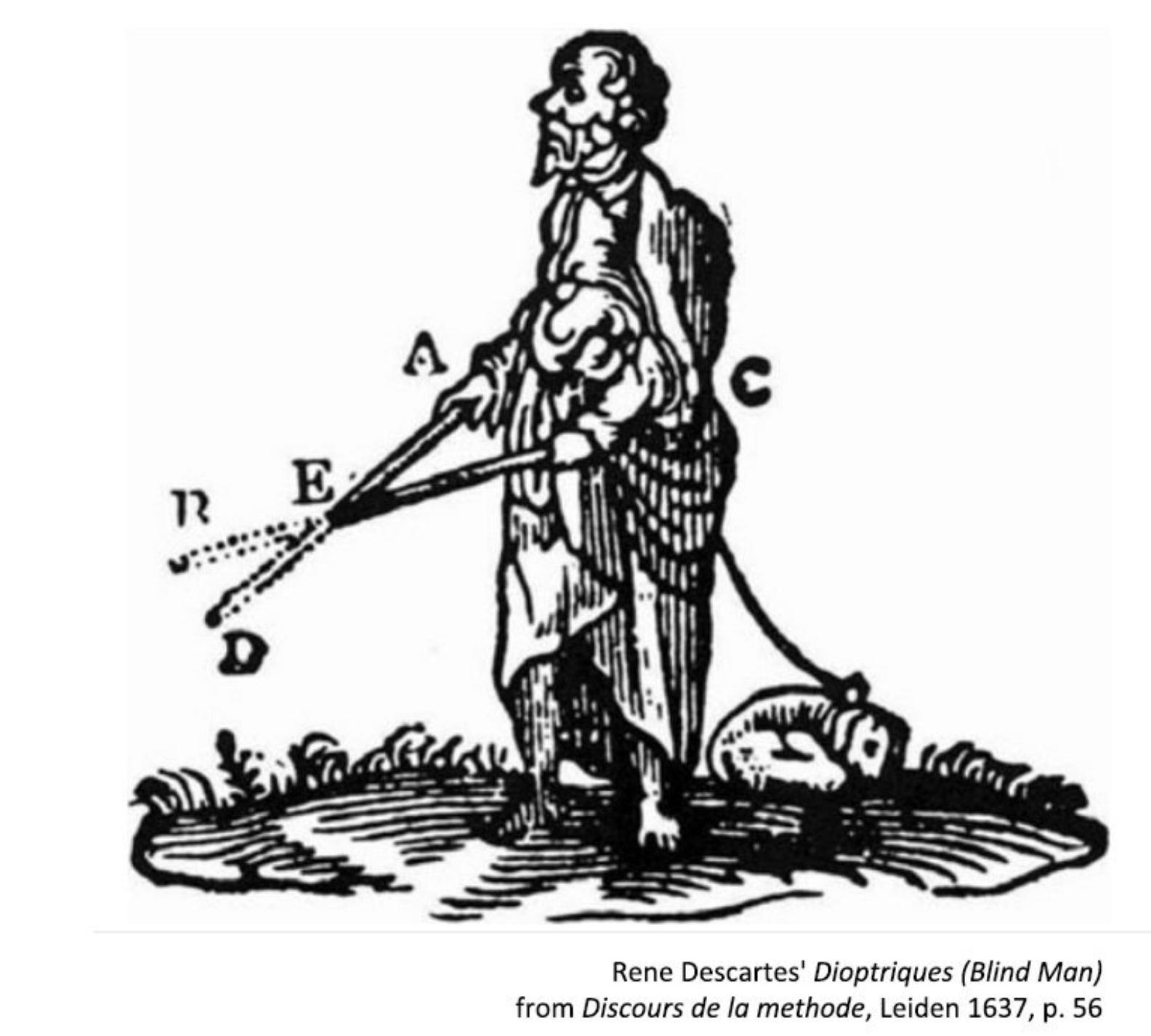
"Hypothetical Blind Man” → “Hypothetical”
he’s instrumentalized by philosophers
two sticks can’t give you all the info (just that something is there)
Locke’s response to Molyneux’s Problem: the “cured” blind man wouldn’t immediately know which is cube and sphere
does the blind man rely on other sighted ppl’s knowledge and description words OR can his senses be enough to know the world?
Image: Hypothetical Blind Man
He’s instrumentalized by philosophers
they say he uses two sticks to see BUT two sticks can’t give you all the info (just that something is there)
Blindness
sight and knowledge are not the same thing
blindness not without meaning
blind is being morally diminished in the phrase “I was blind, but now I see” (blindness like a negative compared to sight)
Tyresius (greek): the gods compensated taking his sight away with giving him future sight
Reading: Georgina Kleege, “Molyneaux Redux”
Kleege’s Situation
girl is alienated, isolated b/c parent’s and cult’s distrust; hierarchical power
girl gets taken from her family to a research facility
even after given sight, she prefers her better sense of touch and hearing
she became specimen; in the end she wouldn’t fit the research (won’t progress) AND won’t fit at home (might not be able to do her old chores)
SPOILED BLINDNESS b/c she can kind of see know but not correctly so she’s alienated
Related Notes
blind person who just gained sight might see more in 2D (needs to get adjusted to perspective and distance)
how to explain sight to someone who can’t see
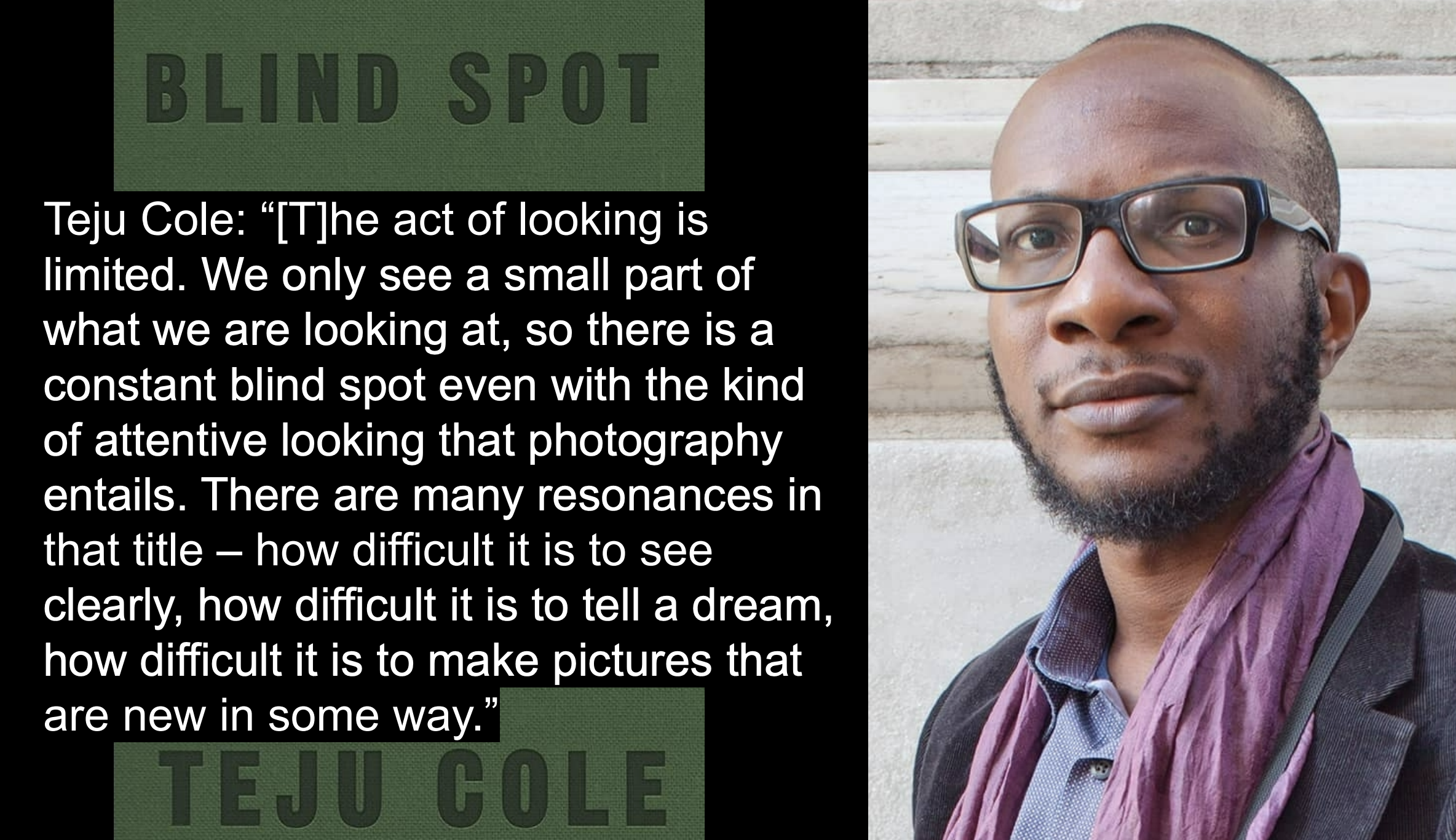
Reading: Teju Cole, selections from Blind Spot (2017)
“Darkness is not empty. It is information at rest.” - pg. 322 (last one, I think)
“Blind spot” phrase refers to visual field that’s not full (part of your retina that doesn’t get light; for “regular” ppl, is filled by the eyes)
the world is different when you can only see with one eye
tension b/w what a camera captures and what a person visually takes in (we have to judge what to focus on b/c we can’t process everything
Cole’s other book, “Praise of the Photobook”: a photograph is a photographer asking you to take a look at this
the lyric essays is largely spoken in past-tense; book not a linear narrative
like PHOTO of pillar w/ ribbon wrapped around it, the lines he draws are not cont (2 photos of the lady but separated)
He’s Nigerian-American but the photos are from different places
text deepens the photo; voice over, not caption
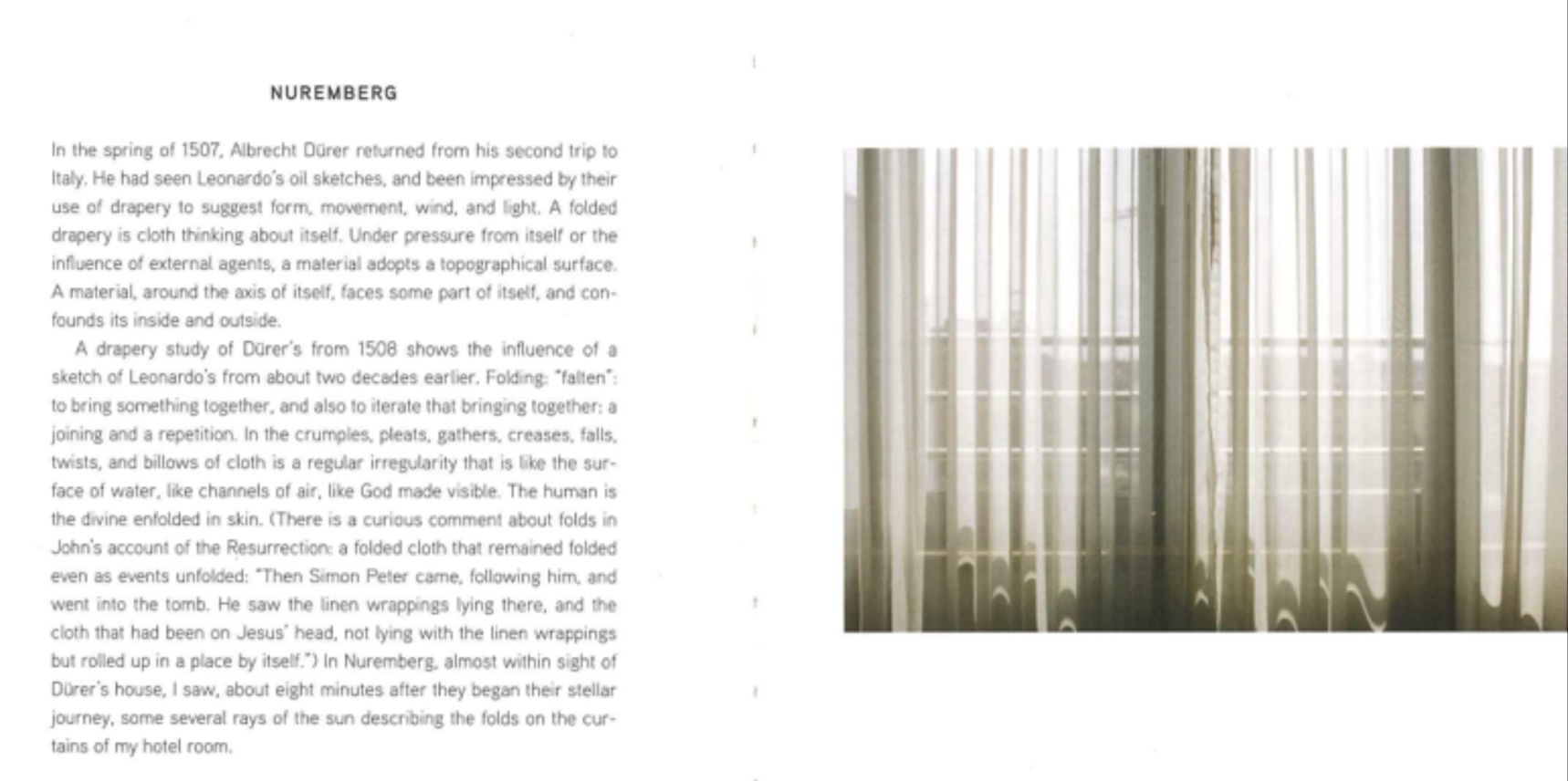
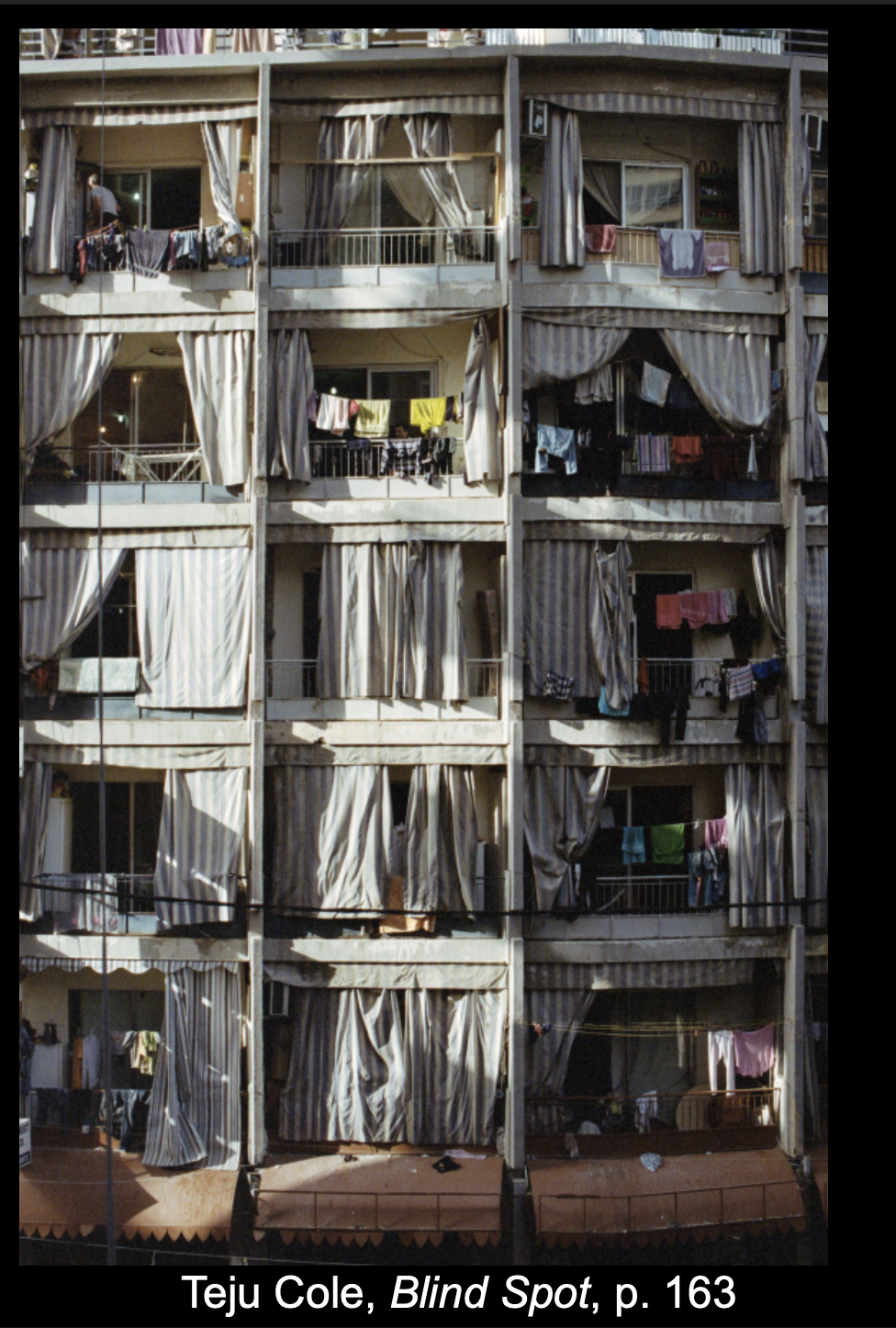
PHOTO: curtains/drapes
objects can relate to movement, like the draping of clothing
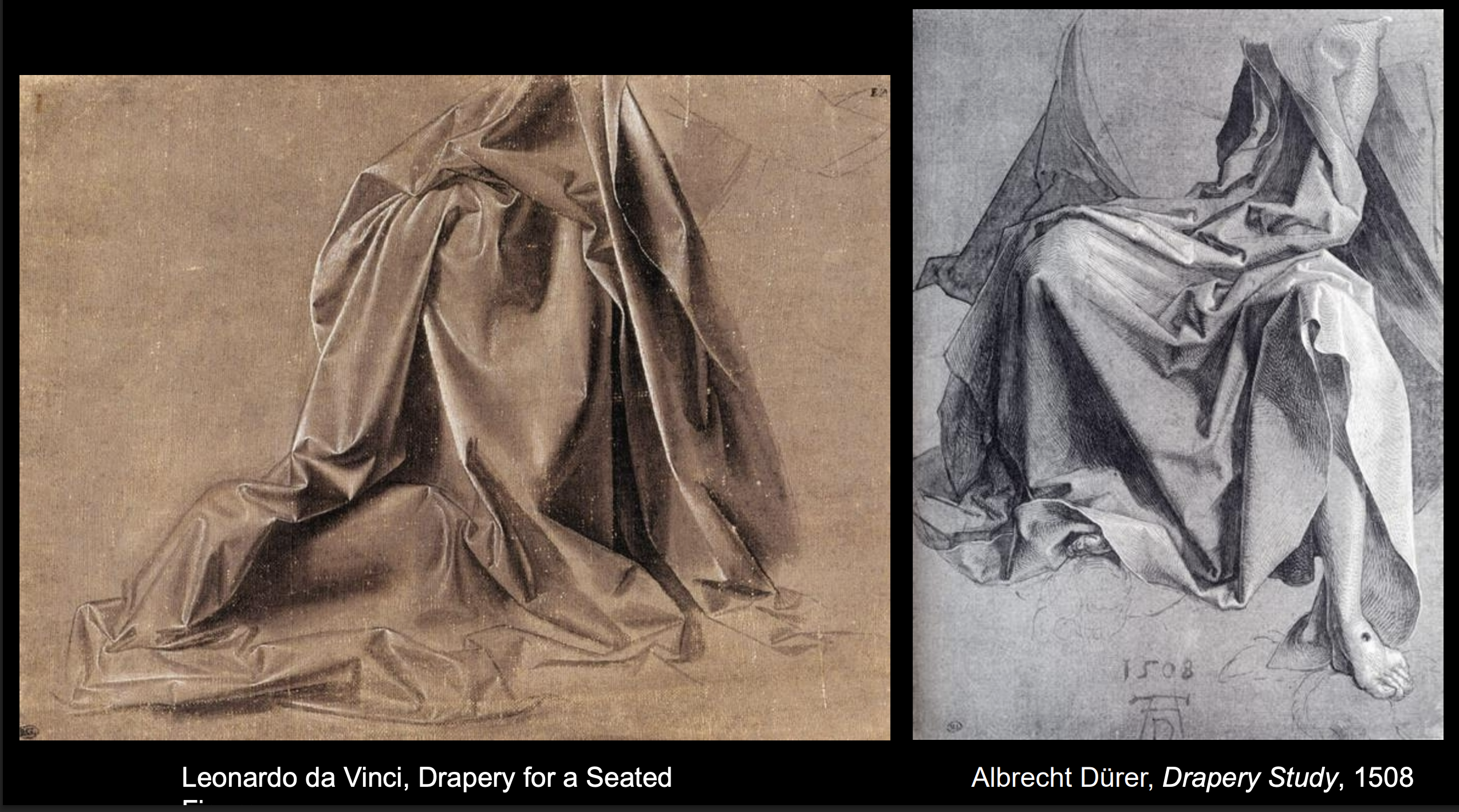
he’s asking you to think of the drapes of the Renaissance
different in that the dimension is gone; sun just creates lights and shadows
things vulnerable to light; photography, through the photographer, is used to reveal
the book uses the past to think of the present
*we can’t see ppl’s emotions more like analogy (in war)
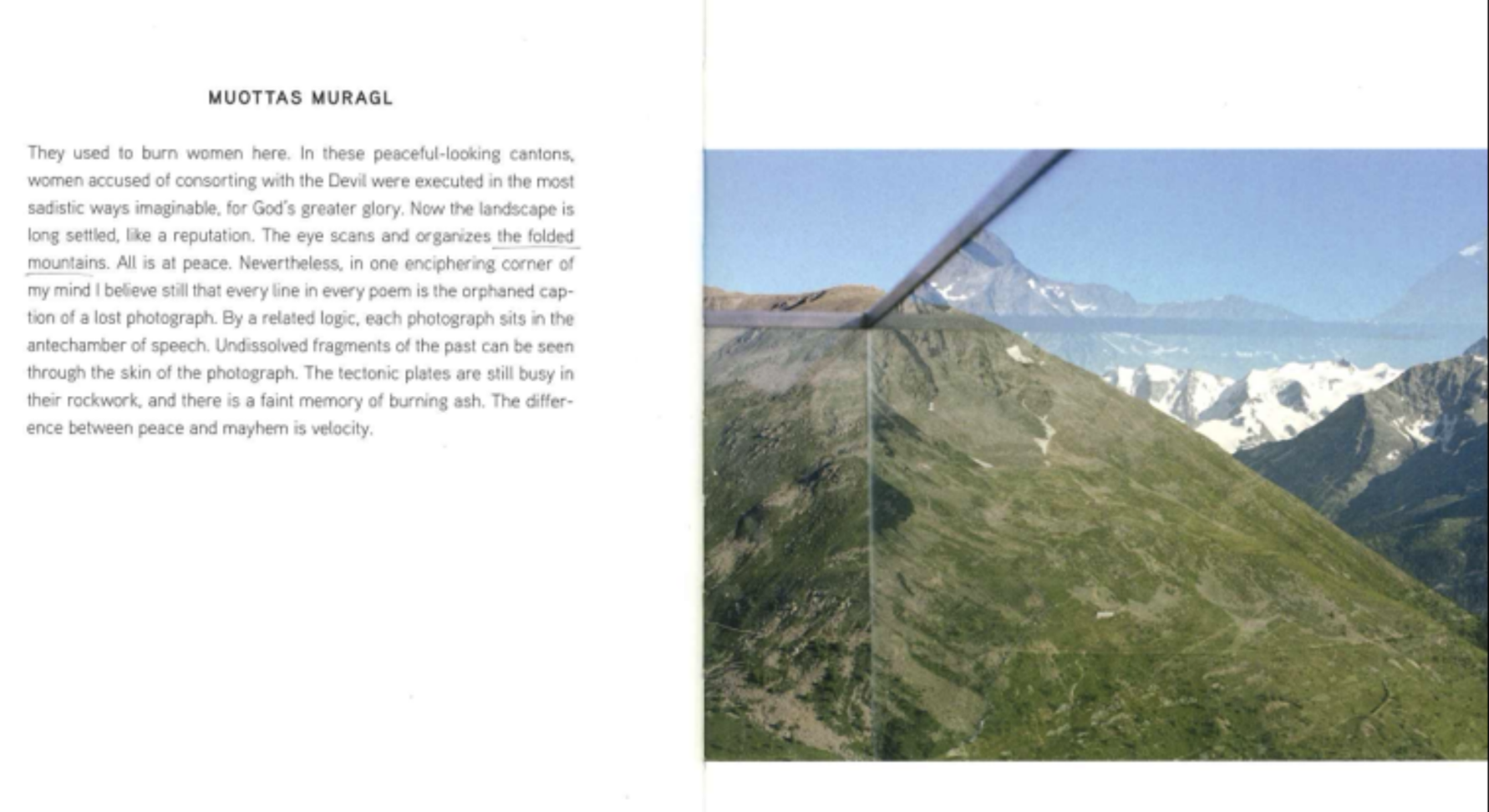
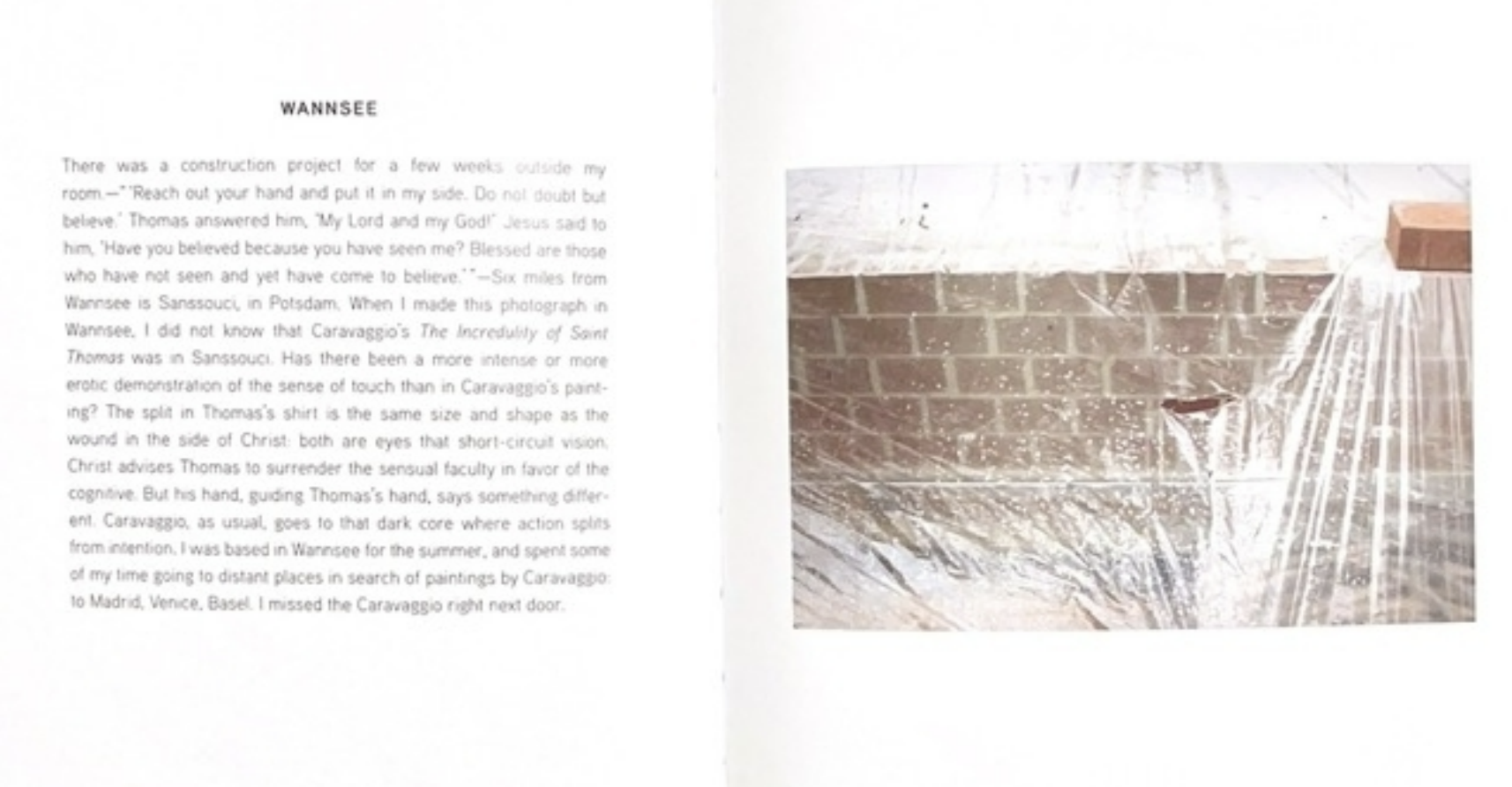
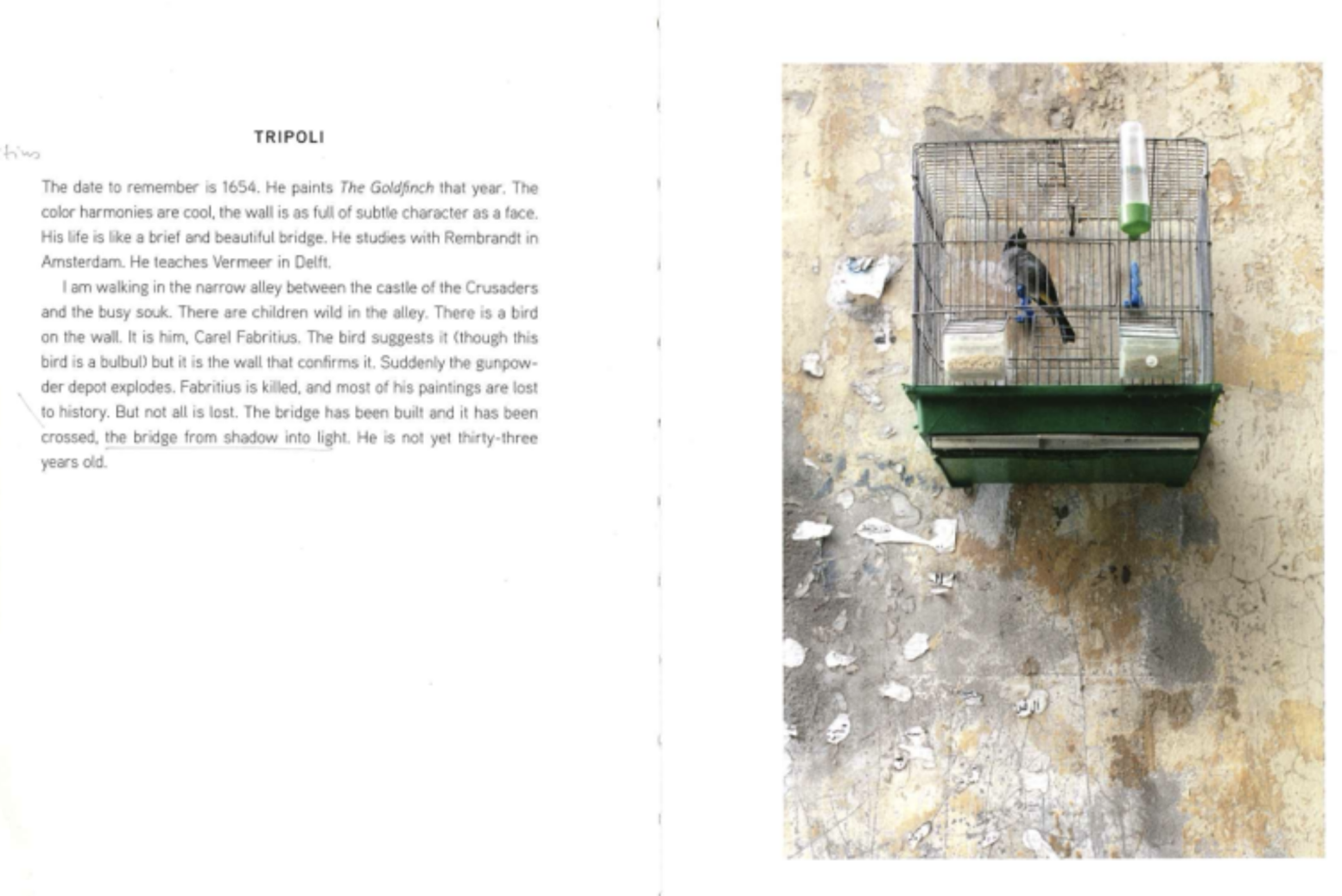
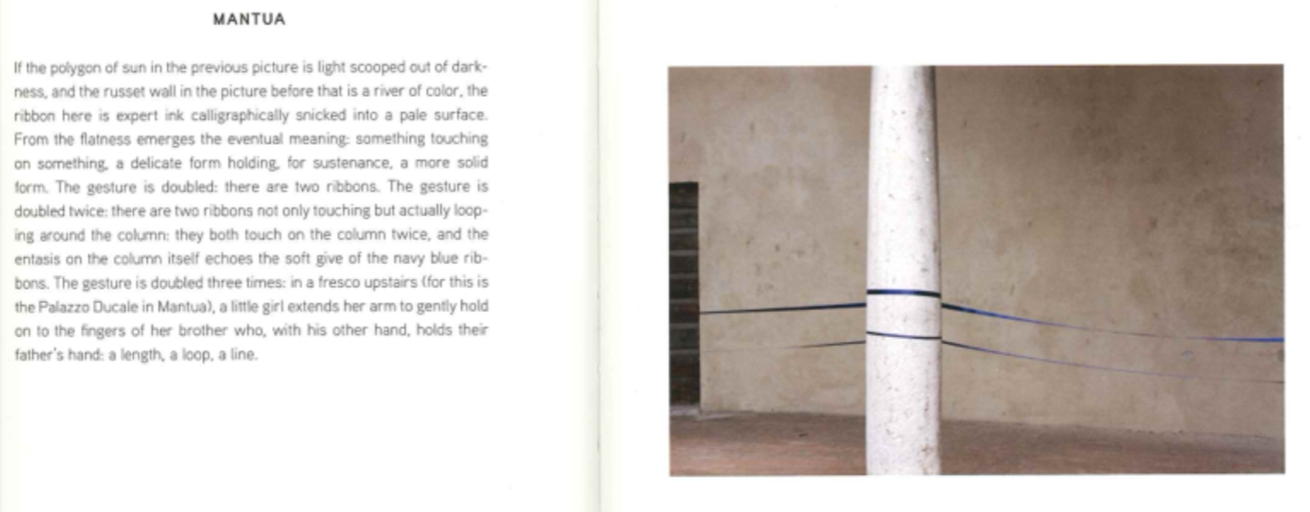
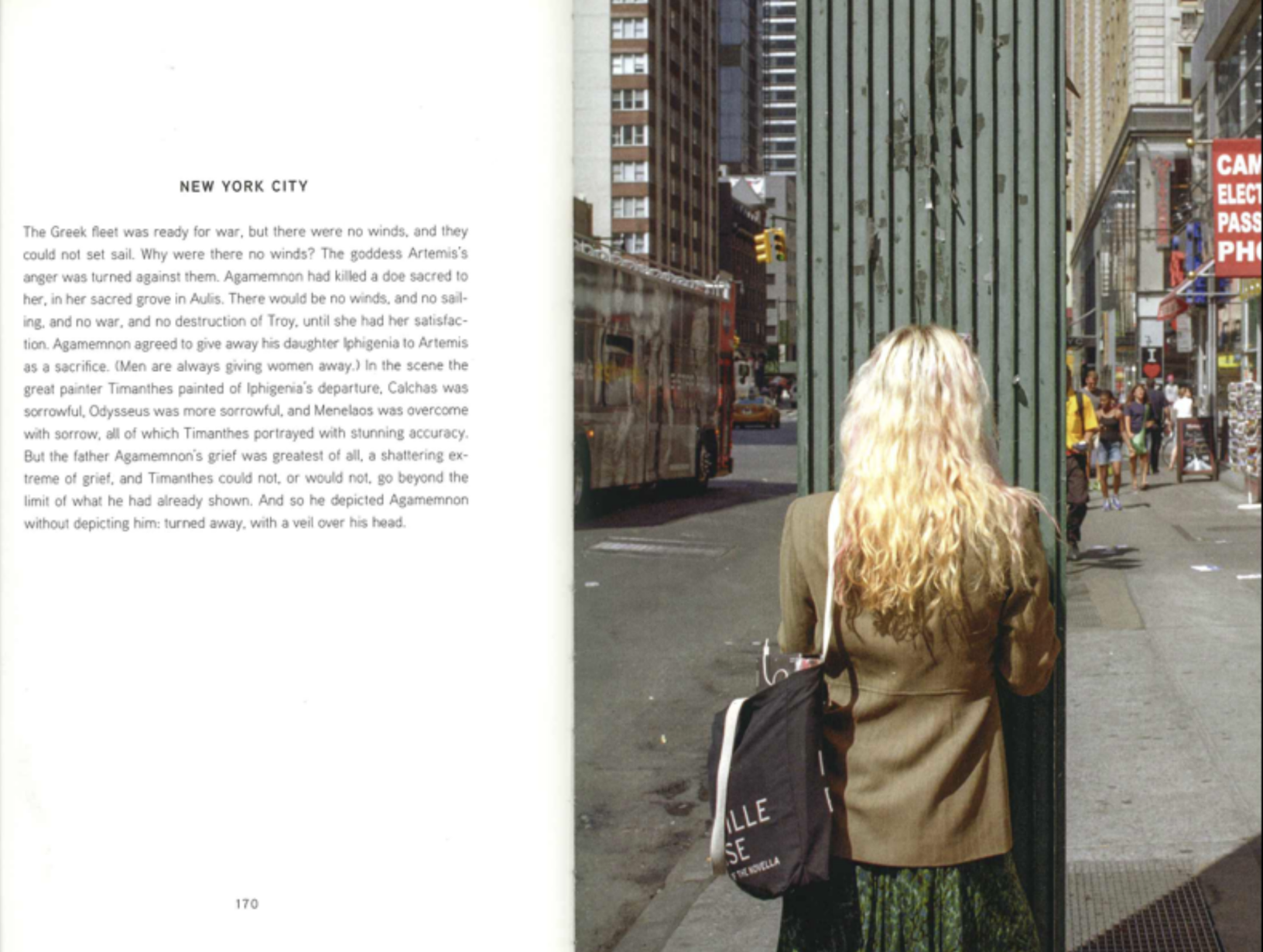
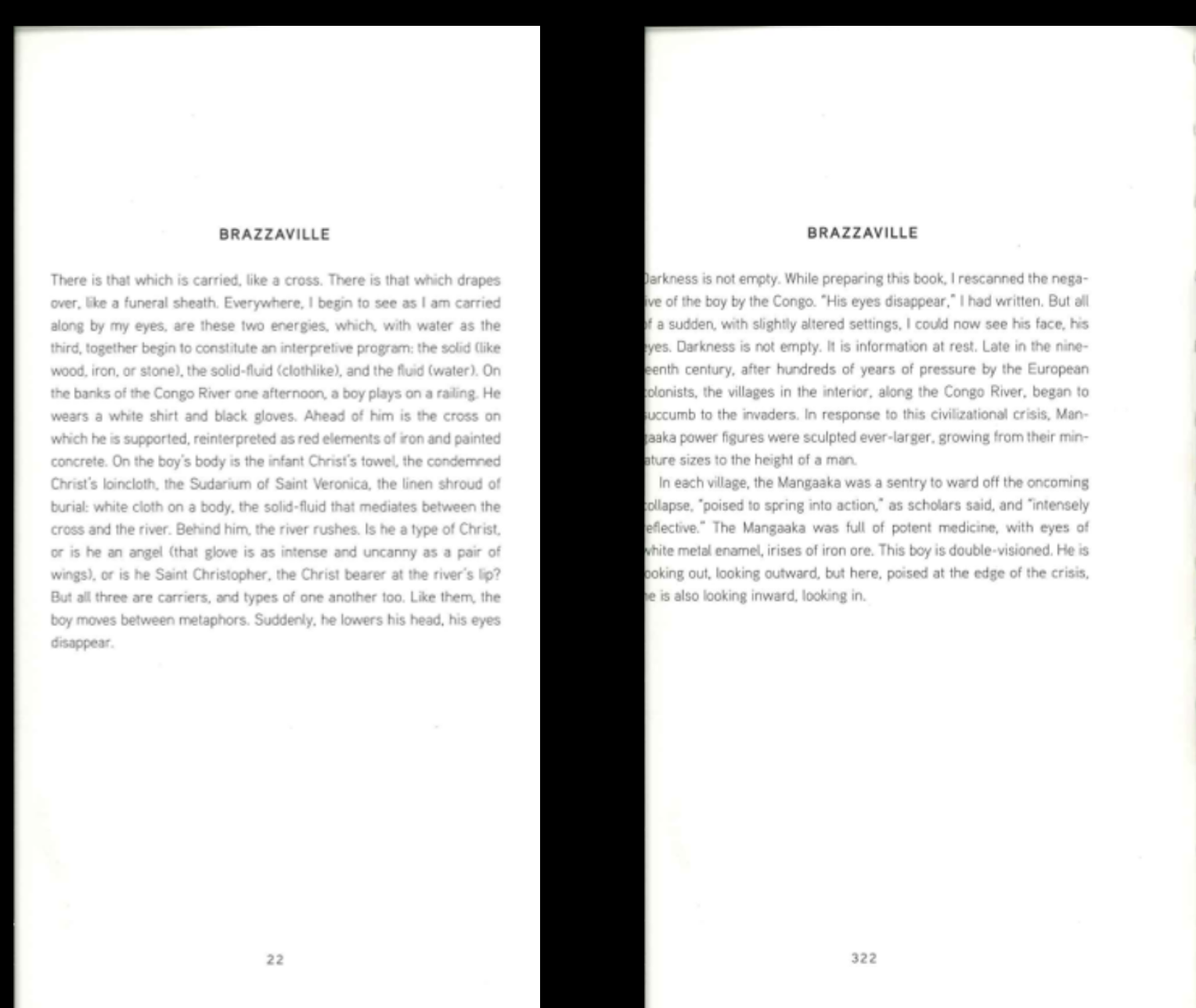
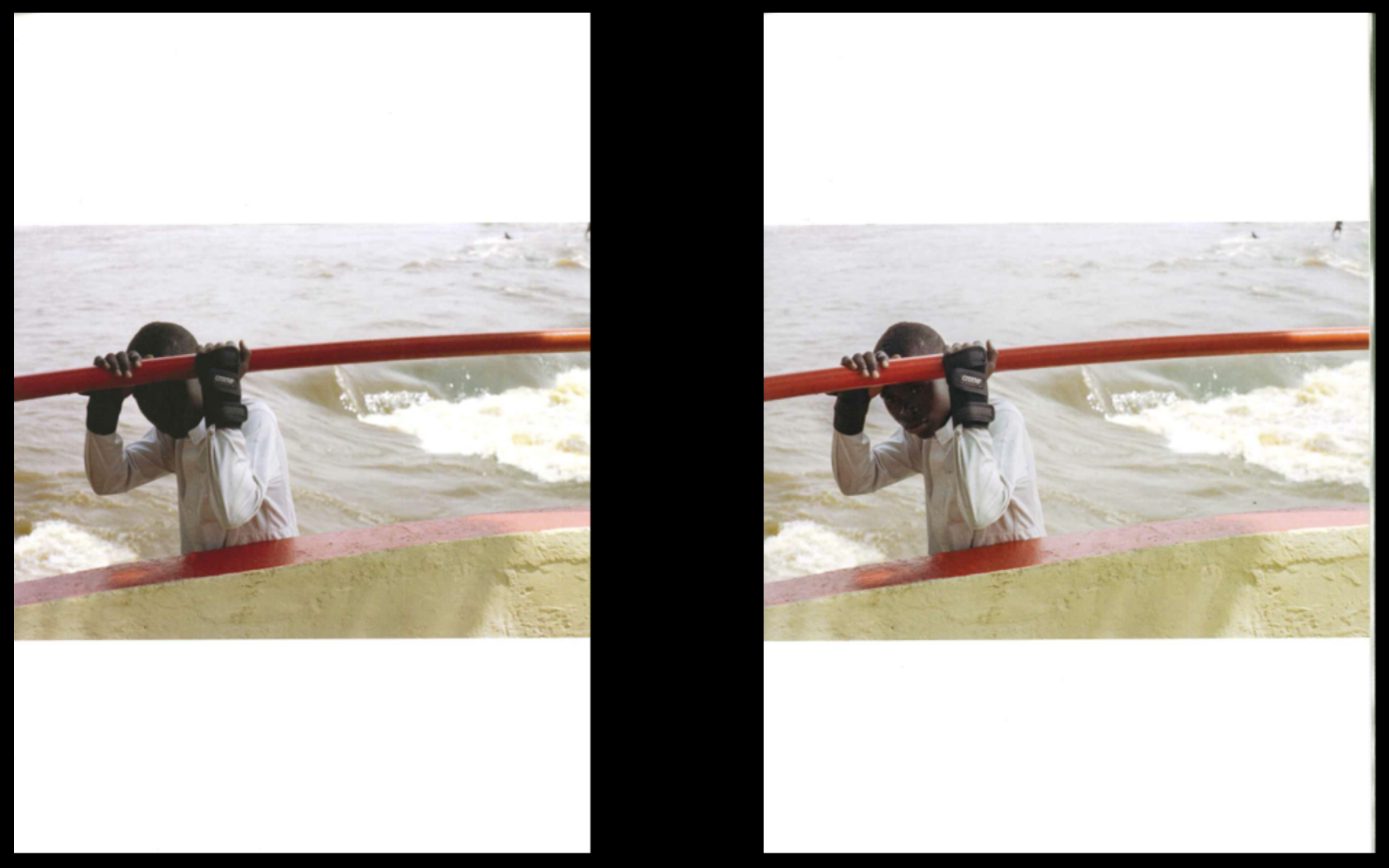
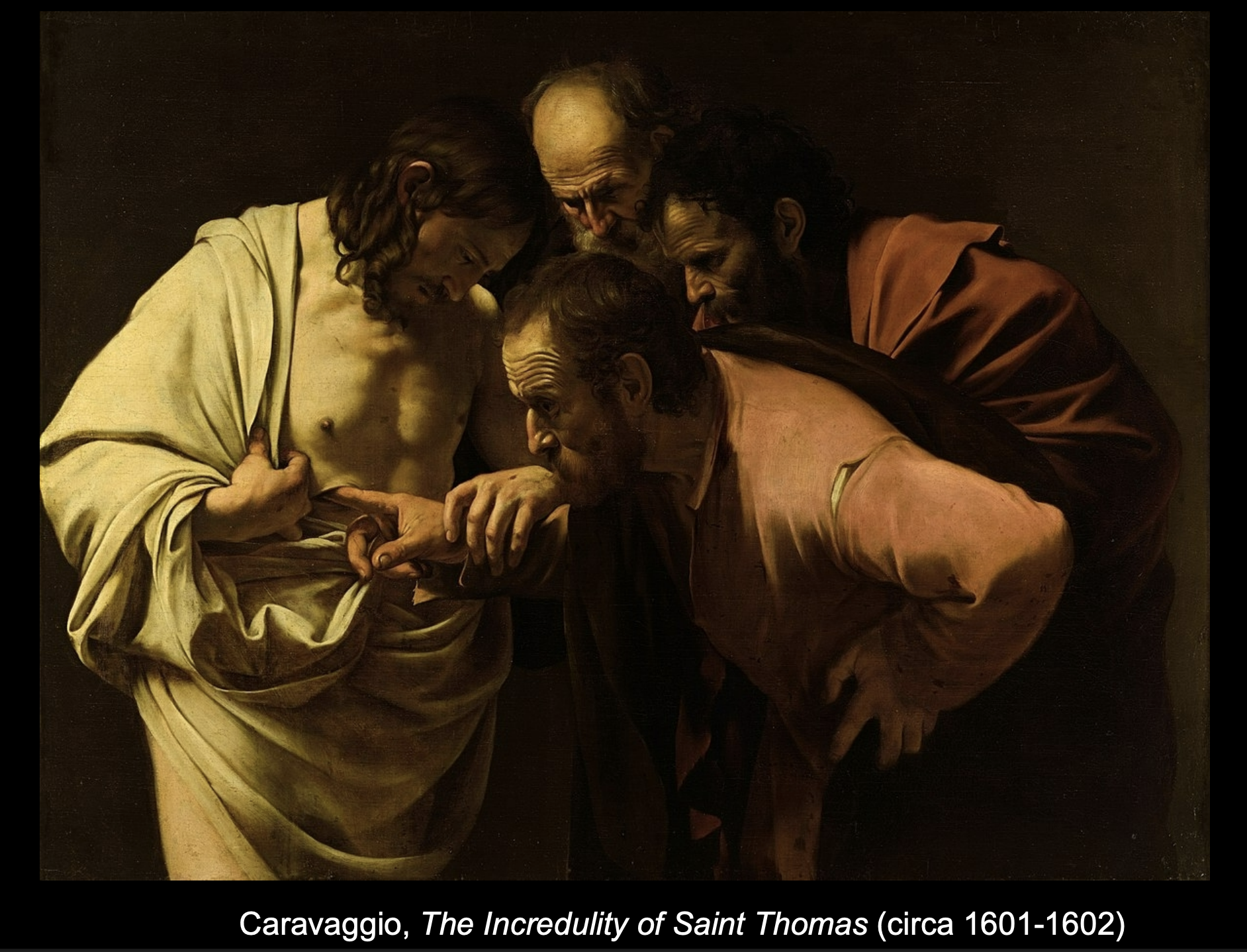
Image: Caravaggio, The Incredulity of Saint Thomas
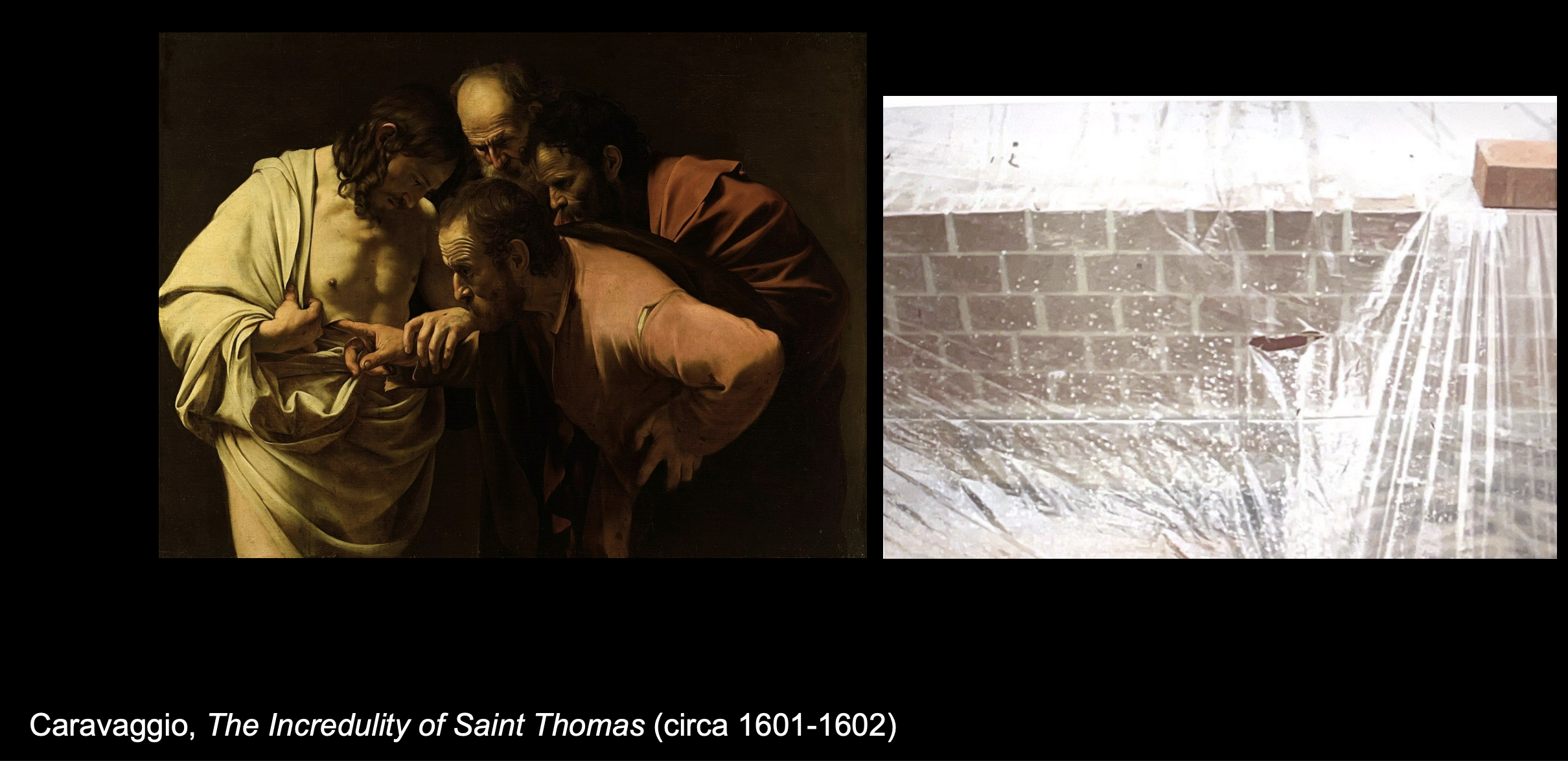
*tear as the wound
Image: Fabritius, The Goldfinch
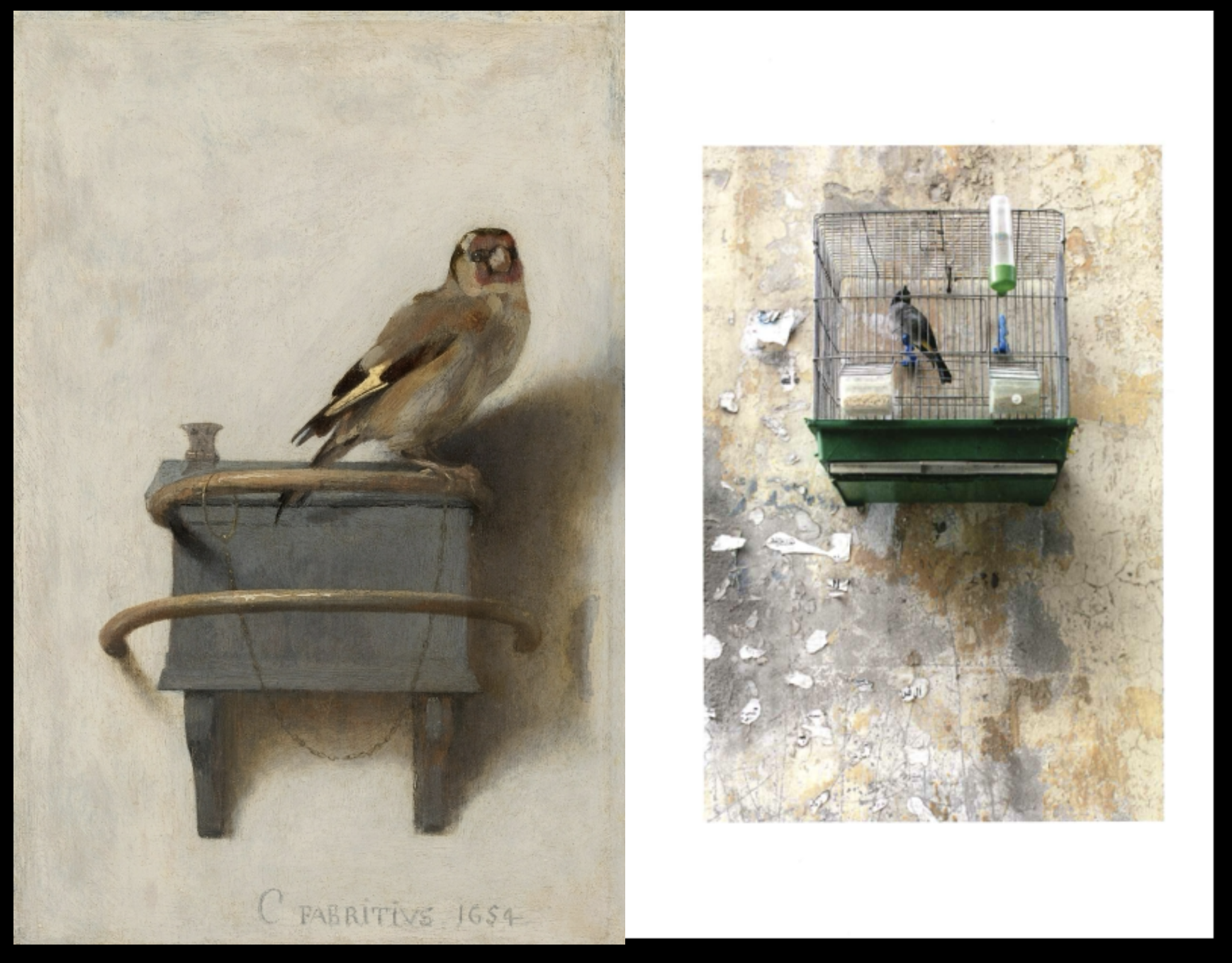
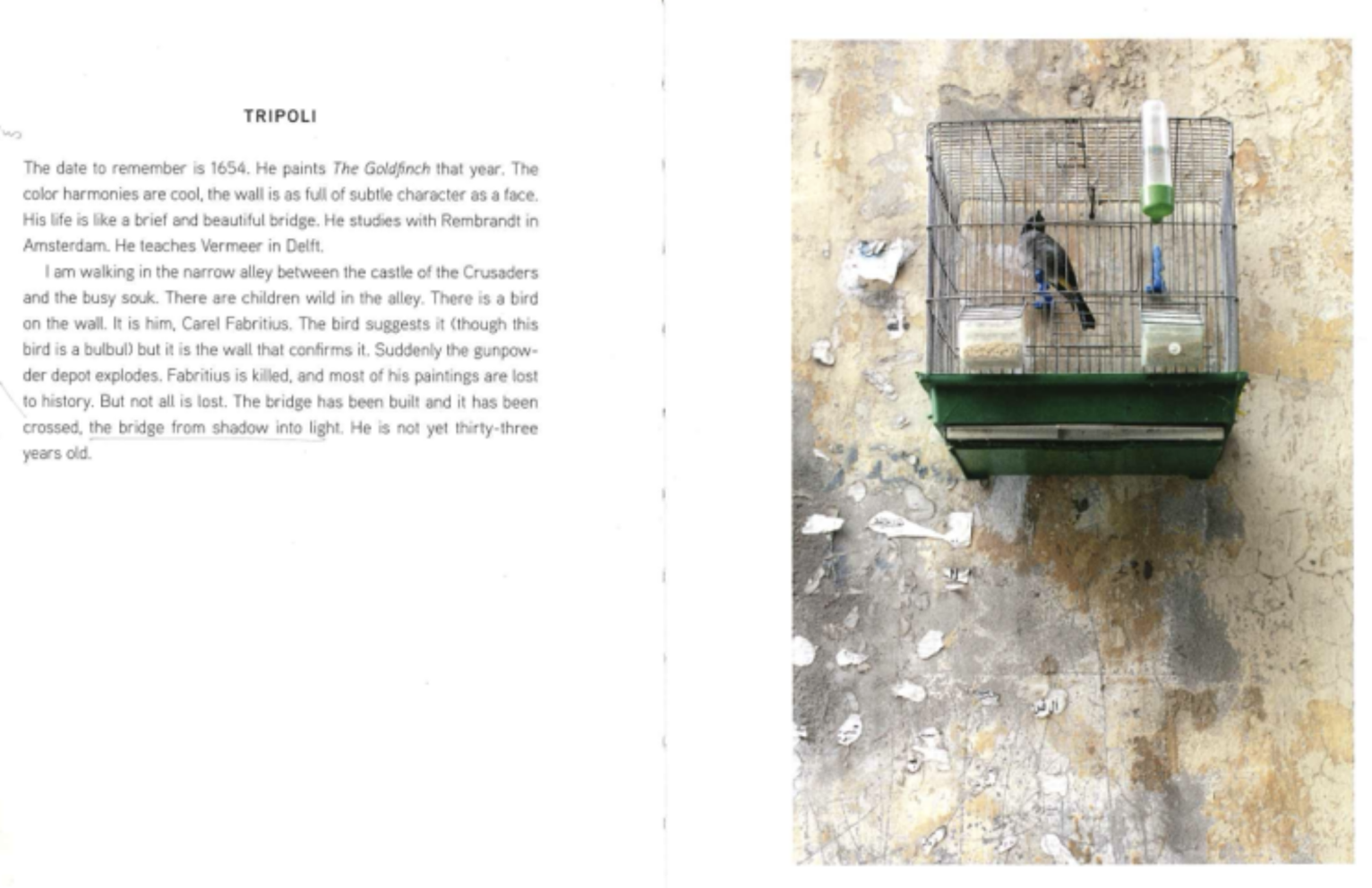
Cole is interested in how a photo can remind view of history
the book uses the past to think of the present
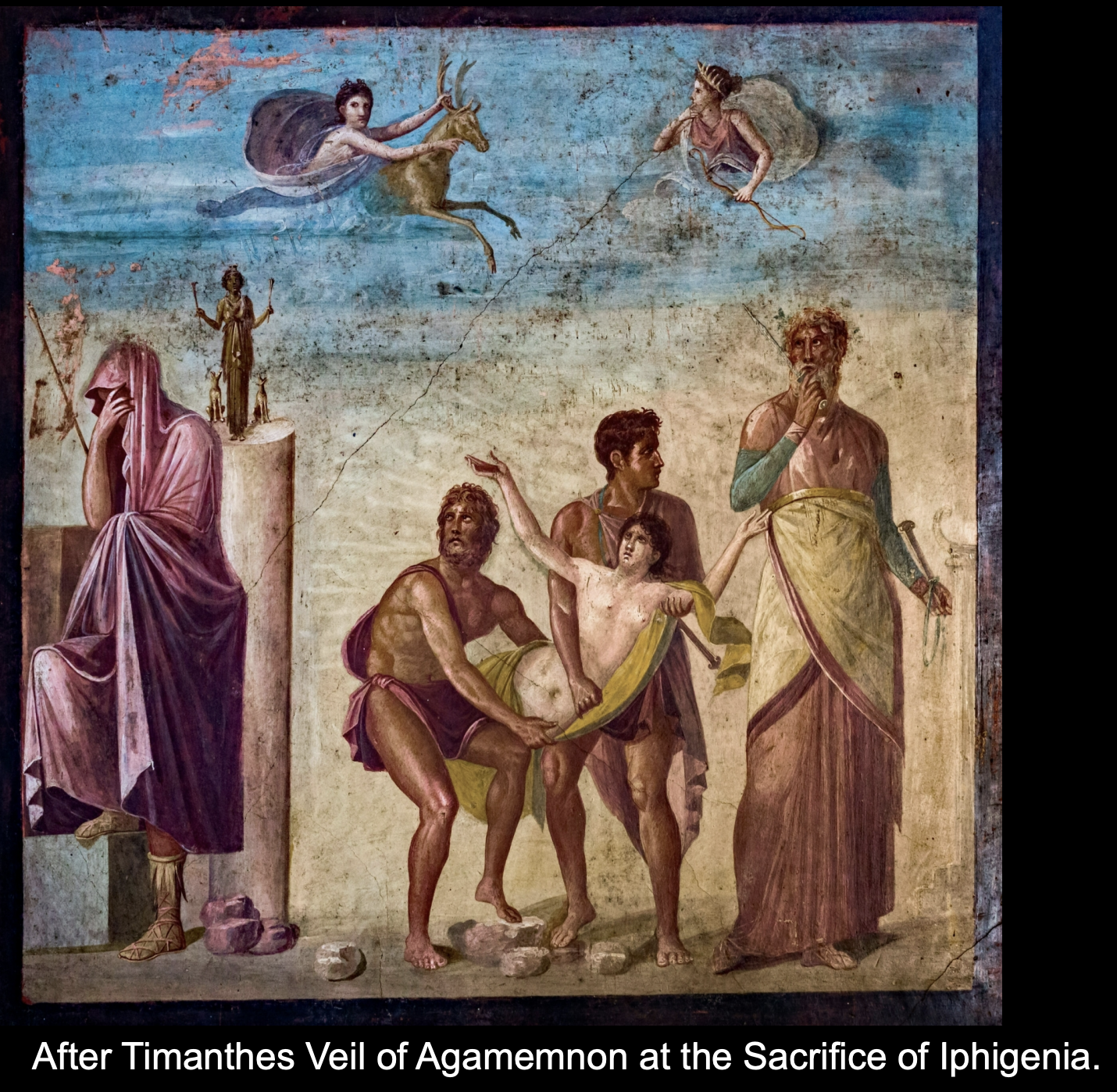
Image: Timanthes, Sacrifice of Iphigenia.
Turning away is like concealment
turning your head is like denying others’ the ability to see your face
turning away + veiled might show his guilt/horror of the decision
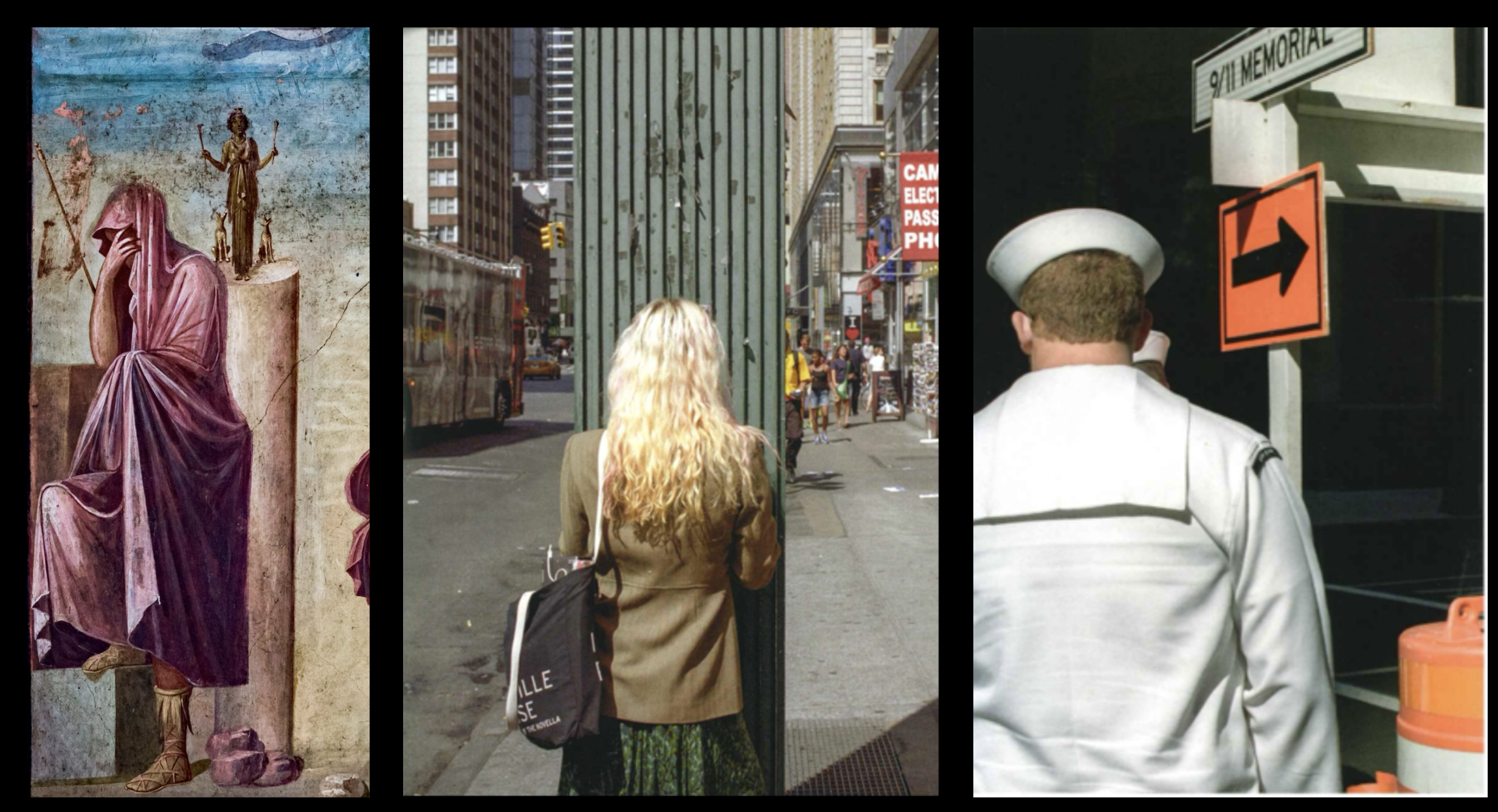
Film: Teju Cole, My Looking Became Sacred
Text as voice overs; engaging with images but also in a way that’s independent
Words, image, and what happens when they meet each other
“Free association ain’t free” → there’s an internal engine that keeps it coherent
Book about the limitations of vision
Looking at the world and registering what has been seen (we miss a lot; in the photo, in the photo’s terrain, in the photographer’s life)
Even in our postmodern and largely irreligious age, we need help that language can give us (most concentrated in ancient texts)
Color is the sound an object makes in response to light; objects don’t speak unless spoken to
objects don’t have a color, it makes a color the way a bell makes a sound
sound is molecular motion, color is molecular motion; color is the selective absorption
emission of light on the surface of an object
like untouched drum makes no sound, an object in total darkness has no color
You can’t go back and redo photography; he likes his best photography over his best writing
In his writing that he like best, he still gets congratulated for being smart; in the photographs he likes best, ppl say “nice photo, what camera did you use” (implying they could take that picture, too, if they had that camera) → sense of separation that makes it like there’s a third presence other than the 2 ppl; also less opportunity for ego
The human presence has a way of activating and foreclosing the possibilities of the photo’s meaning, so he tried to avoid it
Ex: person smiling → happy photo; empty room w/ bed vs. a more frustrated or melancholic image if there was someone sitting on the bed in a certain position (maybe crouched down)
Objects and landscapes up to more interpretations
He looks for photos that remind us of other senses
He was talking about his pictures with photos, paintings, landscapes that look like paintings, etc. in them
Darkness is not empty…it is information at rest
In the original picture he took and printed of the boy by Congo River, we couldn’t see his face (his eyes disappeared, he said)
He rescanned the negative, altering some settings and we can now see his face
Reading: Jorge Luis Borges, “Blindness”
irony: he became head director of books at the same time he started becoming blind
blindness enabled something else for him (he learned Anglo-Saxon)
no triumphant tone b/c not good or bad (not better or worse) of the gain after the loss
he gained knowledge
Borges, “In Praise of Darkness” (1969)
knowledge, not denied
he can still love the books; he has to learn to write w/out seeing the world
Milton would remember poems in his head so he could later recite them (for someone to write down)
Joyce created his own language and held that in his head
Borges, “On His Blindness”
birth of light → day → cycle of night and day
BUT when blind, harder to tell time; poetry is what remains in the gray
he (like Cole) tries to make sense of his blindness)
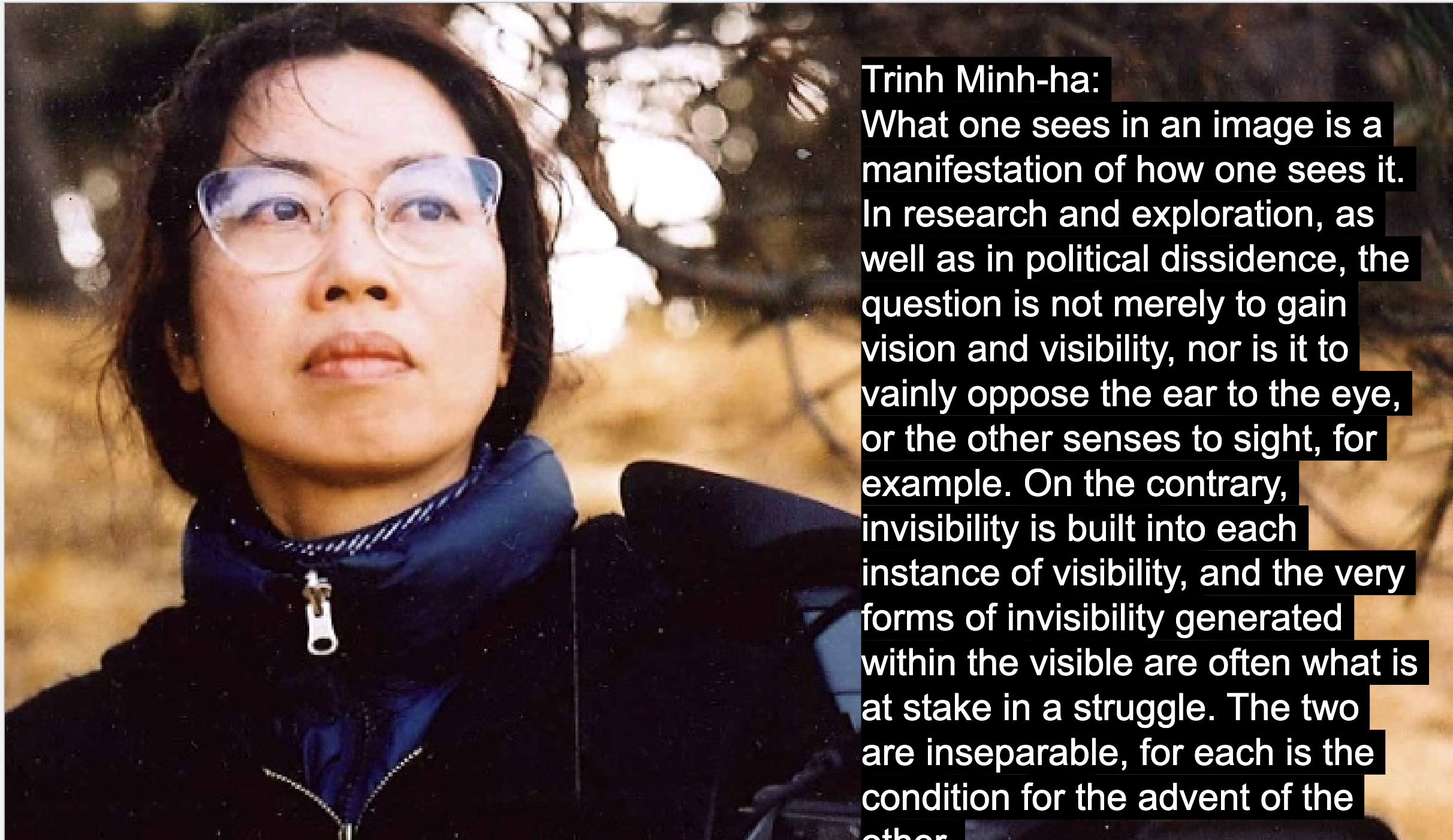
Reading: Trinh Minh Ha, “The Image and the Void”
She tries to break down the visible-invisible binary →
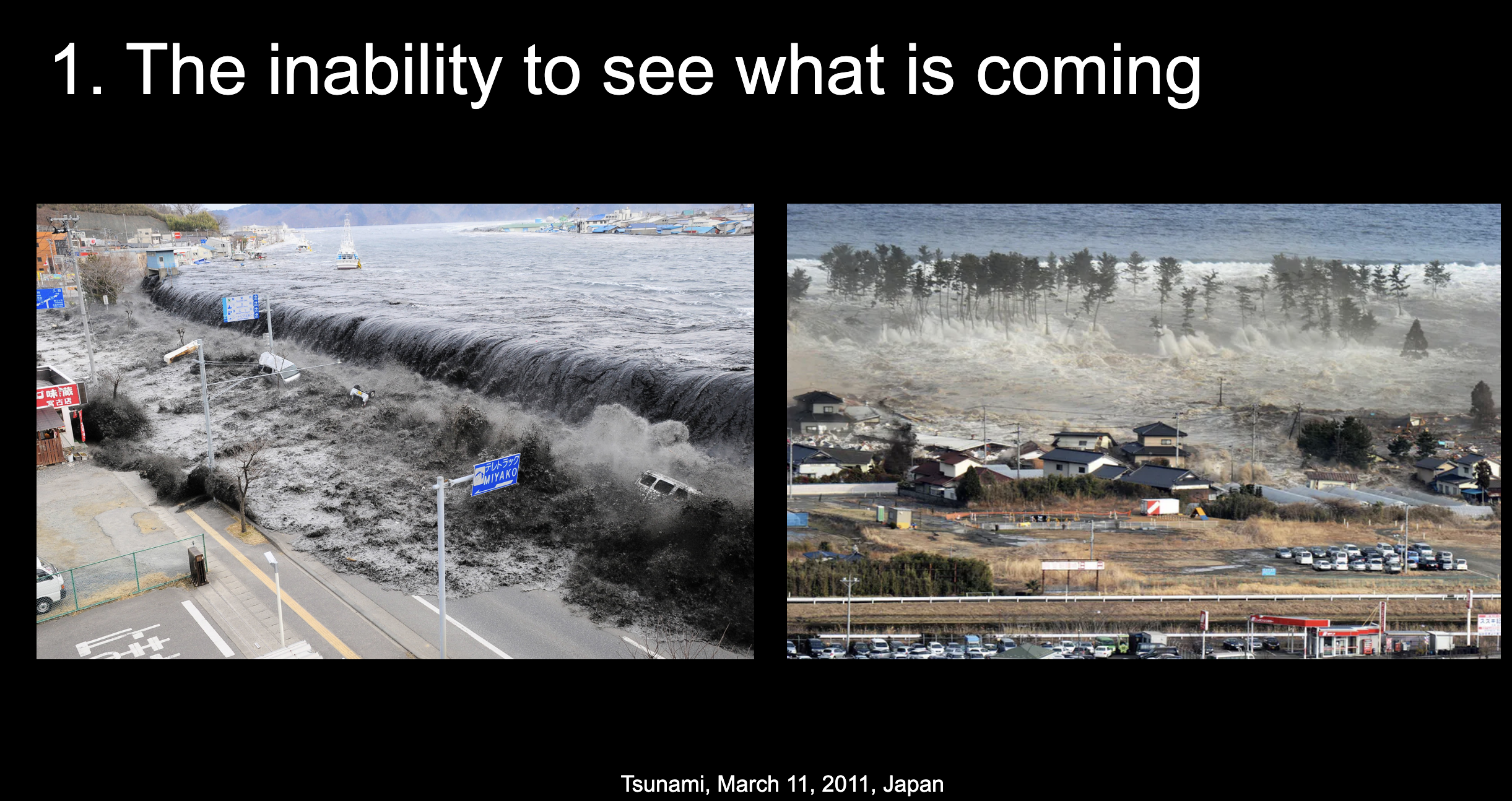
boundary events: everyday/mundane at the edges, BEFORE the catastrophe hits them
they are oblivious to the impending danger (3/11 tsunami in Japan)
she’s also worried b/c ppl might be vulnerable to being unknown/forgotten in the future
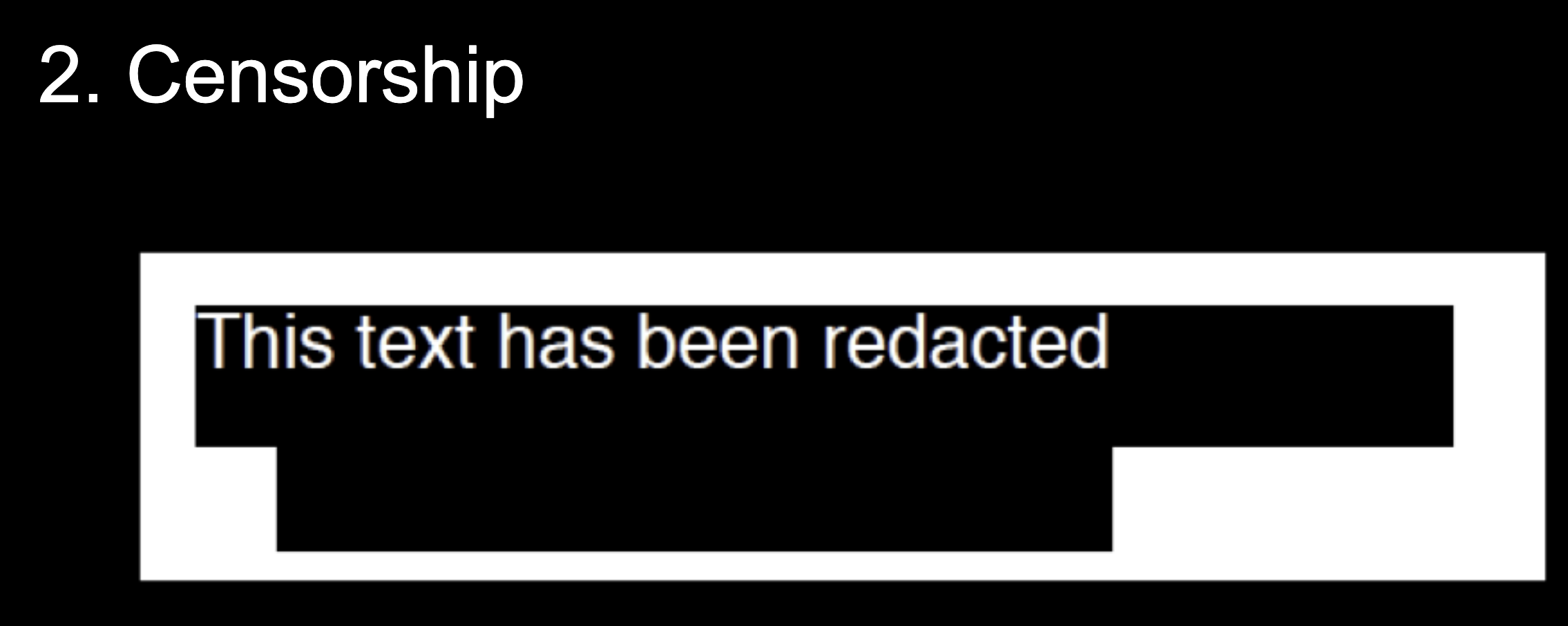
the guards cut holes in the papers so the prisoners don’t know that there’s good news for their side
but they know the officers would cut them out if it’s good
brings attention to the unseen
we can see things that are not there
top down, trying to fix the narrative
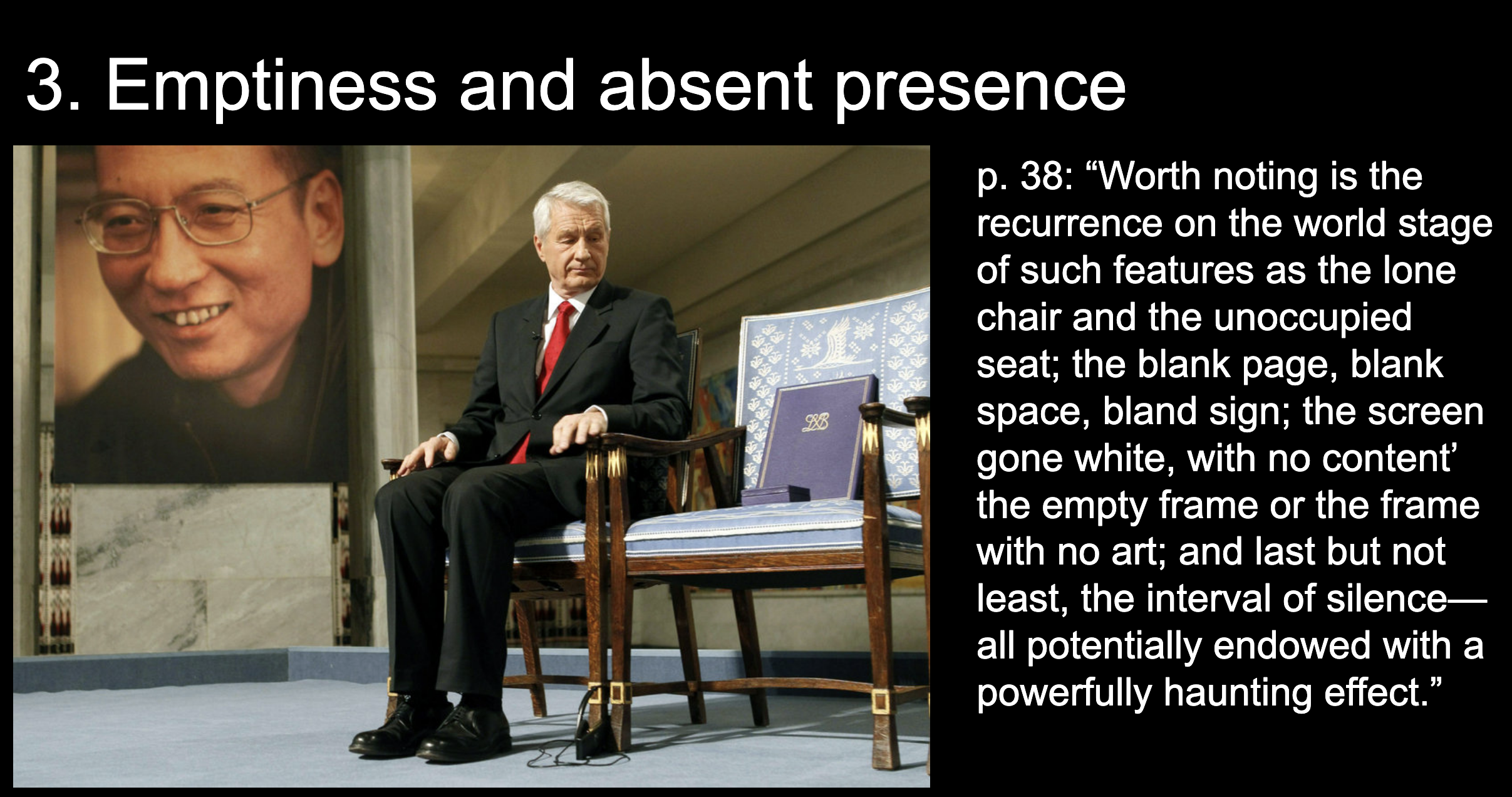
politics of absence
the empty chair is powerful
Film: The Invisible Man (James Whale,1933)
Invisibility
scientists say there’s a lot that’s invisible to our naked eye
light passes through you (transparent) OR you’re covered (concealed/overlooked)
limits of vision (there’s a lot we can’t see) OR property of the thing itself (ghosts, camoflage)
who can see? who is not seen?
anonymity on the internet → invisibility can feel like power BUT also like you can post anything
The Invisible Man felt like he had power; was going to control ppl through fear
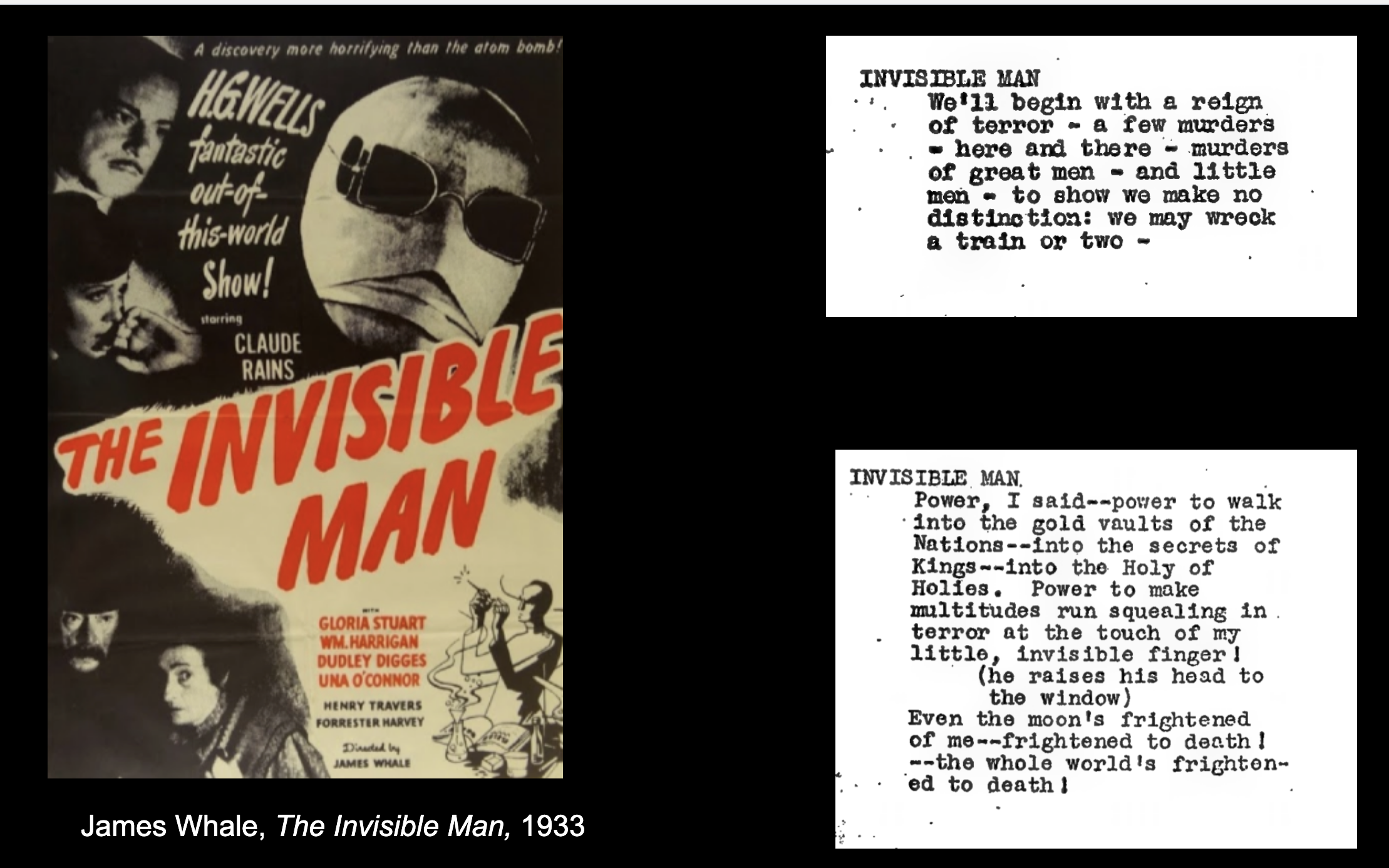
corruption form the invisible
scientific mistake that led to unchecked power
how to show invisibility on screen → some object needed (bandages, shirt, pants, mud, soot, snow…)
the police needed to find symptoms of invisibility (like the footprints in the snow)
he doesn’t want to be transparent in his motive for his reign of terror
emotional control through fear (emotions can’t be seen, too)
the ppl in the inn kept looking at him through the curtains and keyhole → he got fed up, causing him to get mad and lash out
he wanted to be the only Invisible Man
invisibility stands out
we never see from Griffin’s POV (or any other character); it’s always from a side view
we’re invisible, too
violence/power grab from invisibility led to downfall
invisibility meant he was beyond the reach of the law; the invisible body doesn’t fit in [society]
invisibility as a stand-in for absolute power
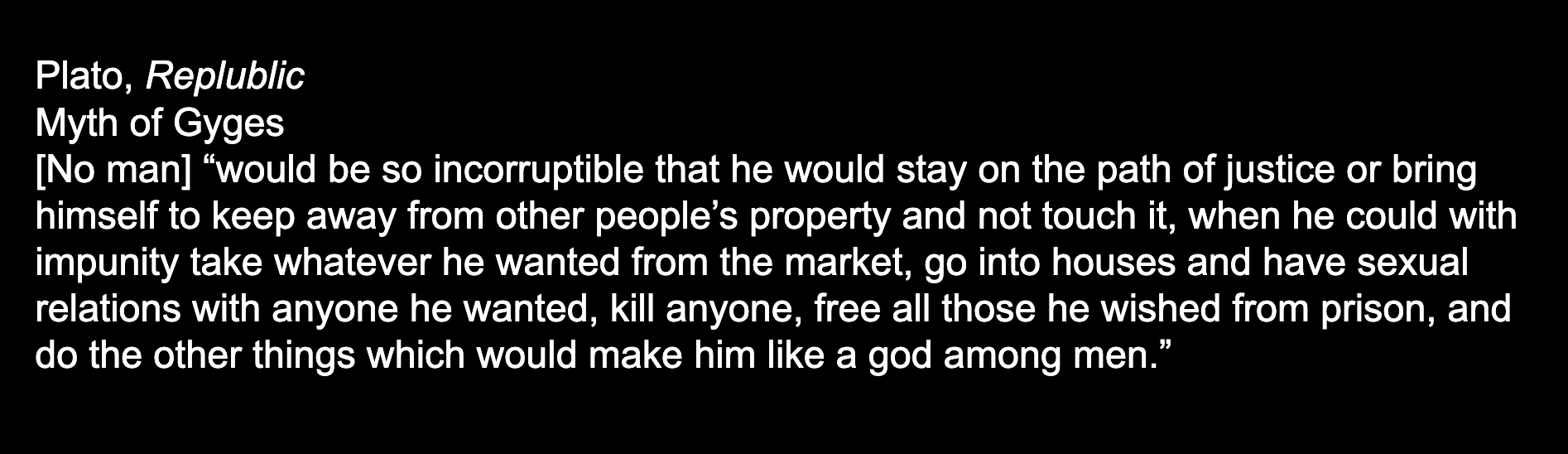
POWER can create invisibility; invisibility can create POWER
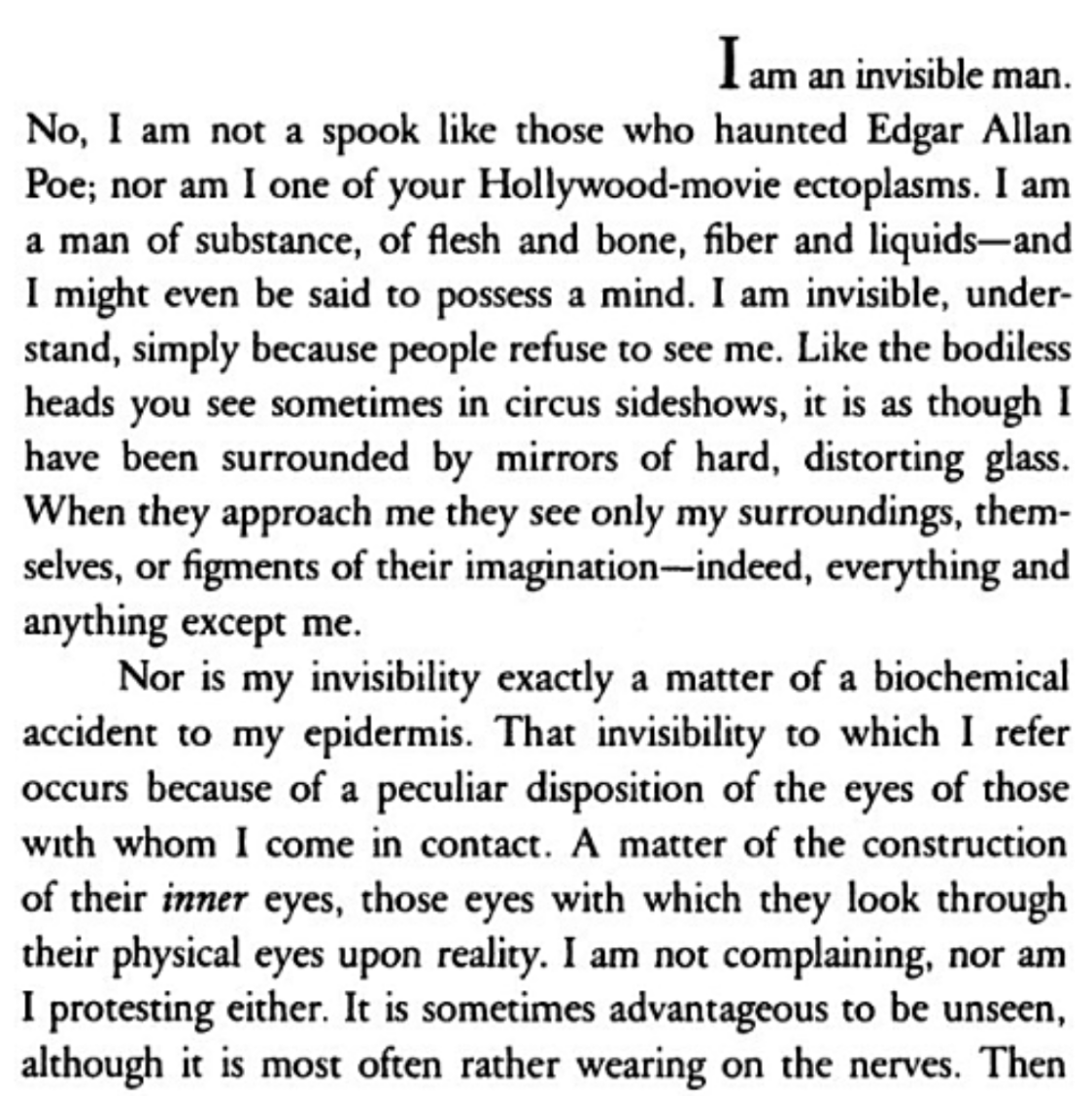
Reading: Ralph Ellison, prologue to Invisible Man (USA, 1952)
Invisibility (cont.)
invisibility also like exclusion/alienation
it can take power from those at the margin
where Well’s IM was a story about his down fall, Ellison’s is about what happens after the downfall
The Jim Crow Era (1877 - 1964)
the invisible body doesn’t fit in [society]; invisibility stands out
not invisible happens b/c assimilation and similar to the rest (ppl)
BUT invisible b/c environment
Ellison’s Invisible Man
invisible b/c others don’t see him (he’s Black) AND b/c he doesn’t go outside
you can have some control over how invisible you are; become human and sane in the world that’s for the visual
seeing only surroundings, person taken over by the environment
social construct of invisibility = not being seen
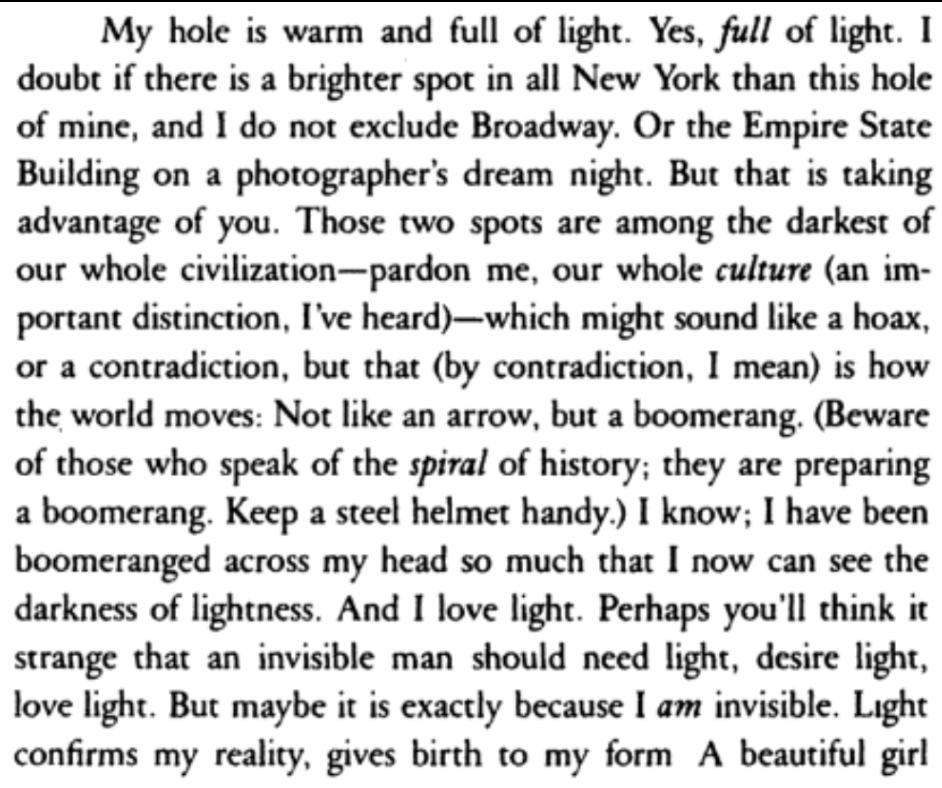
at times, maybe it’s actually to dark to see anything/anyone (when they bumped into each other)
basement full of light (stealing from company)
illuminated cave
…
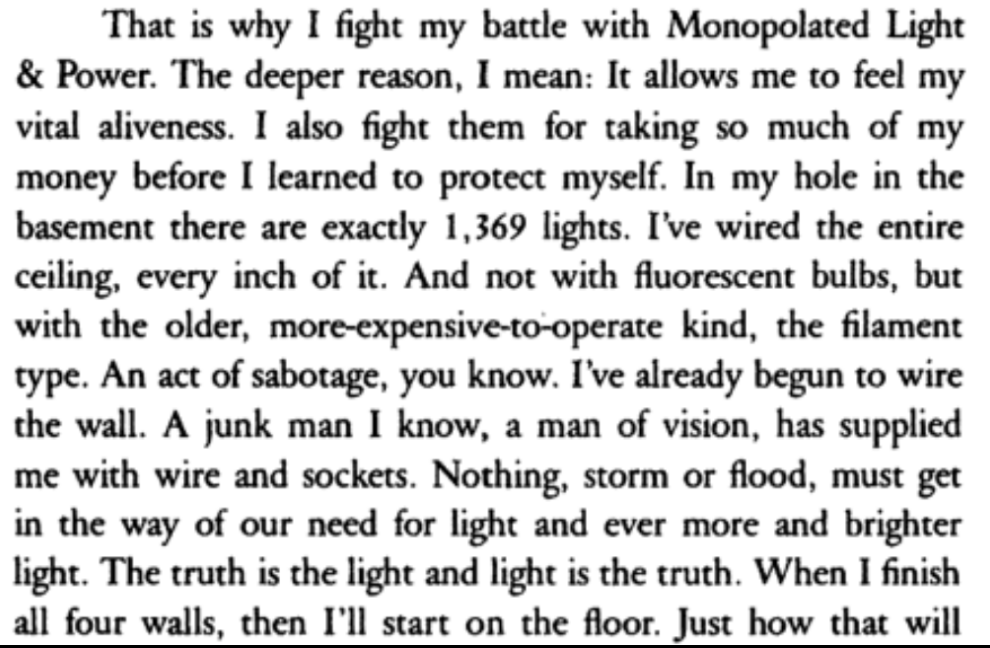
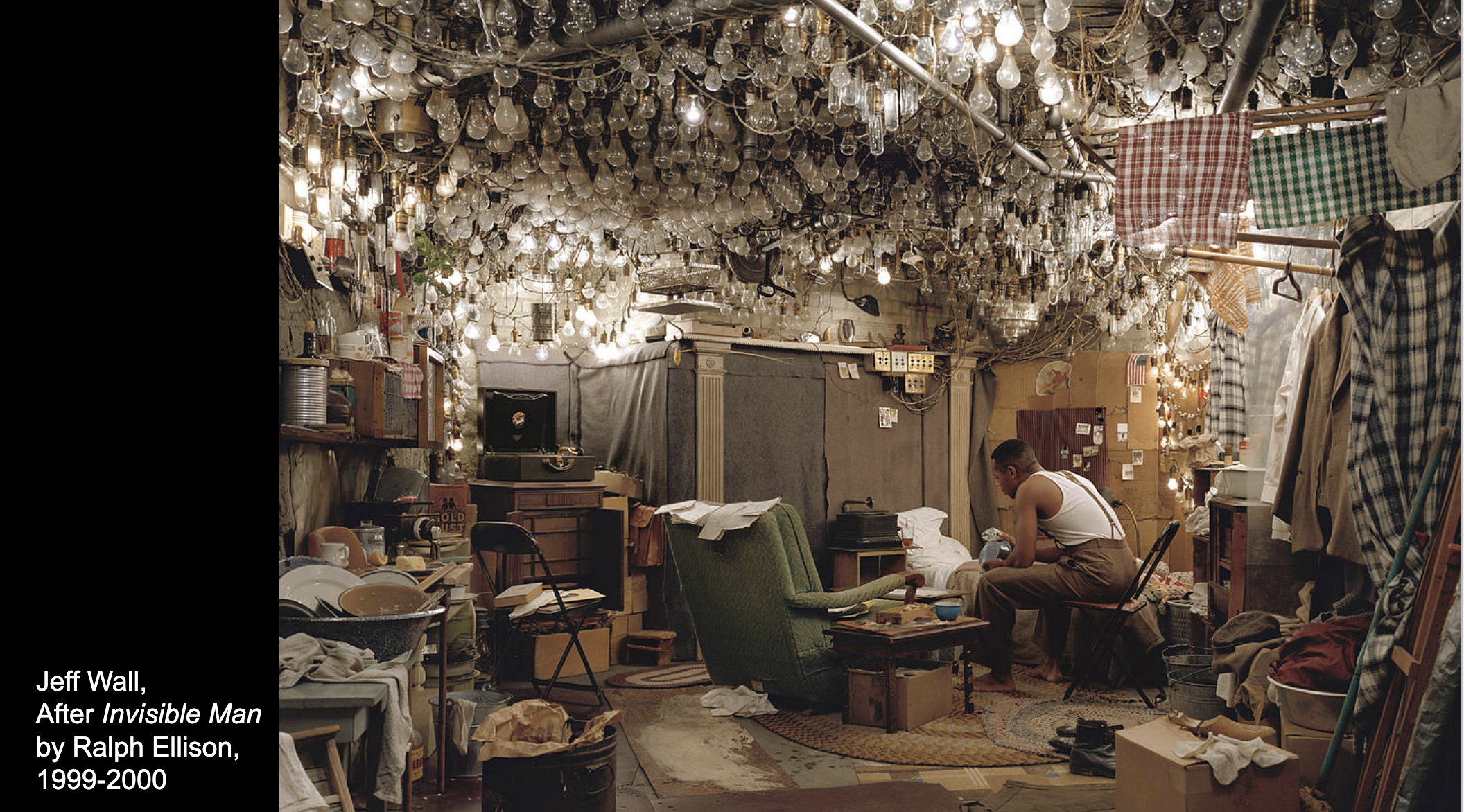
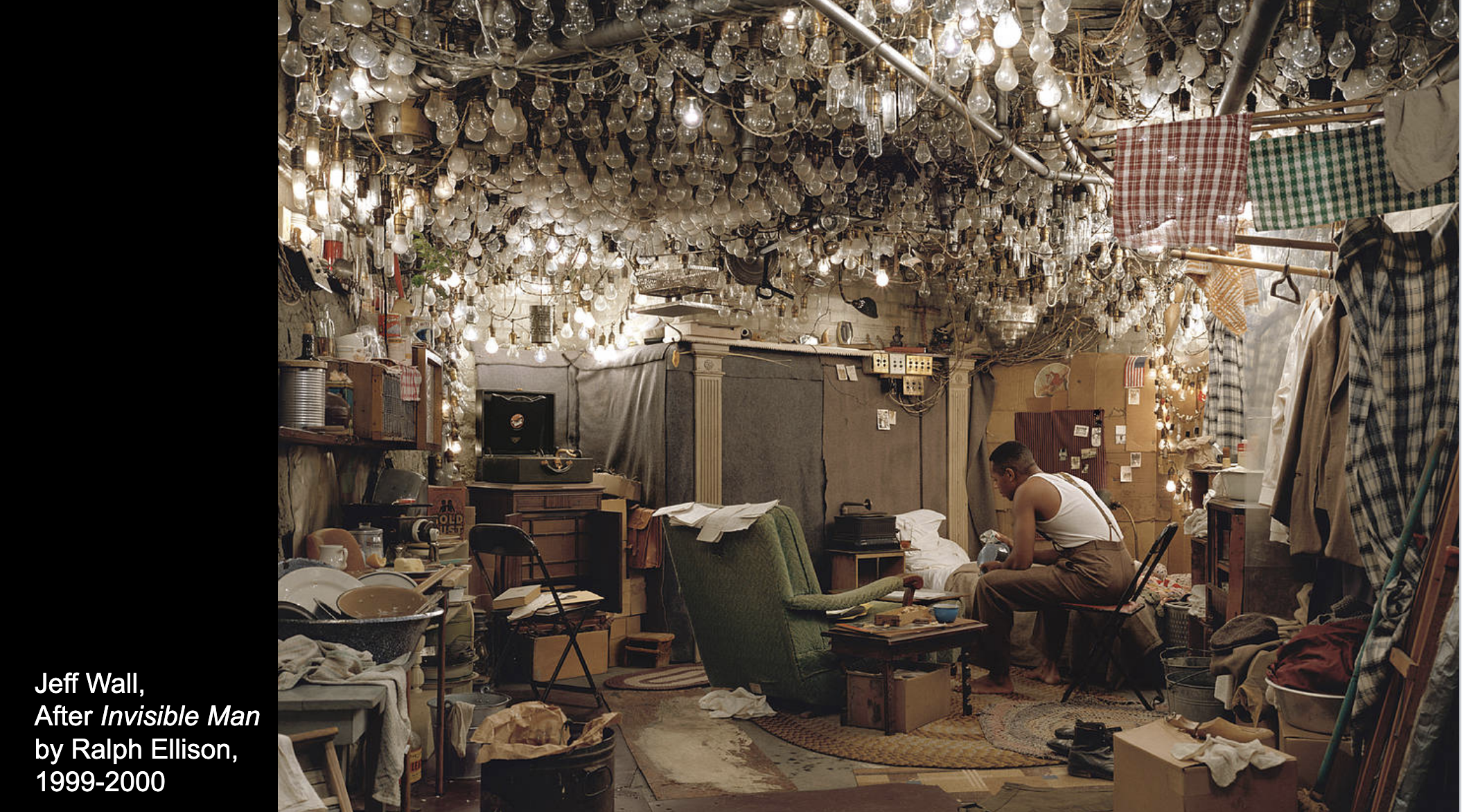
Image: Jeff Wall (relates to Invisible Man)
light box image, staged, backlit
shines light on unseen-ness
the man is turned away
seeing in different direction from subject; like we’re not invisible and he doesn’t want us to see him
man blends into photo; man framed by lights
more domestic than Park’s image; this is more of a recusal (stepping back)
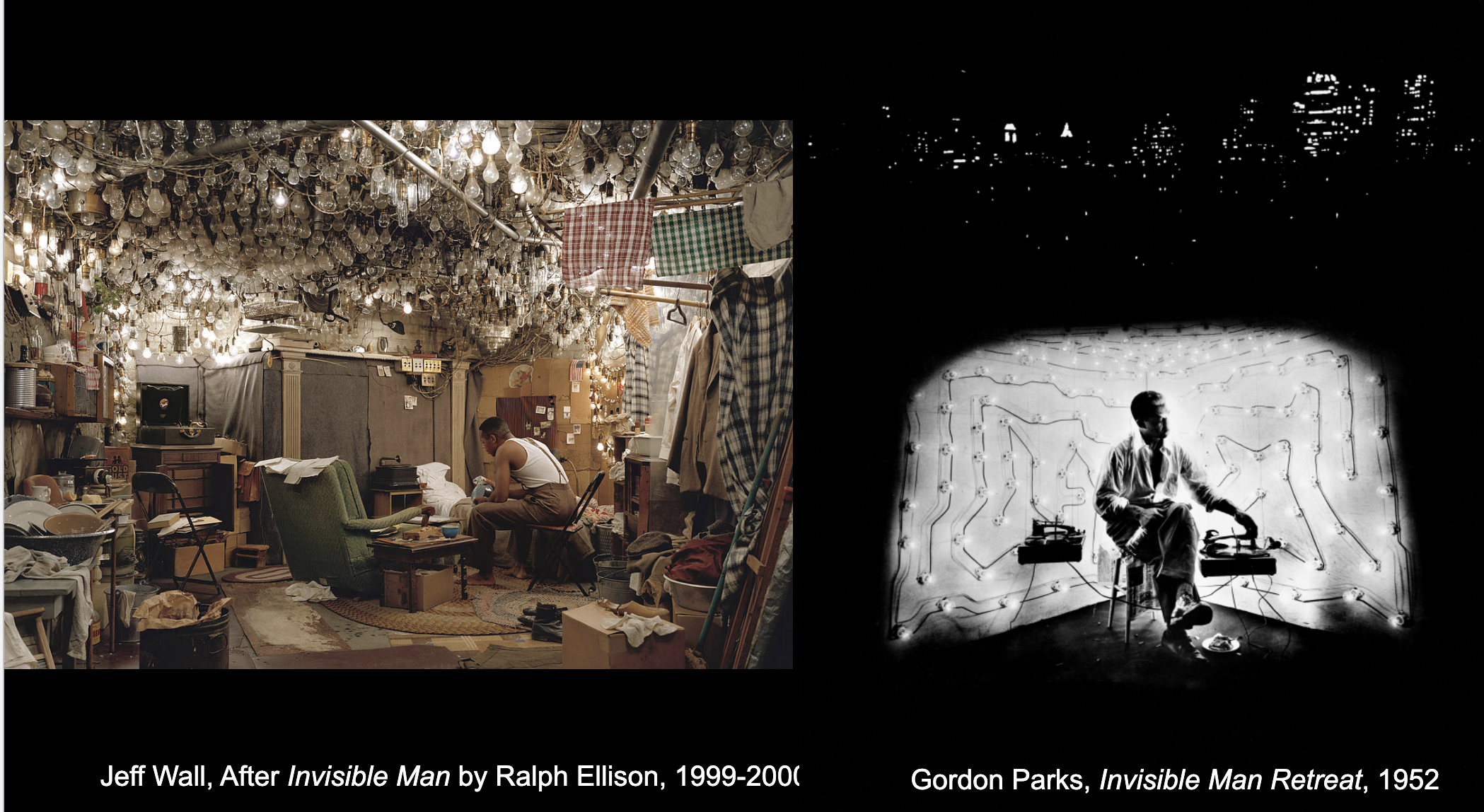
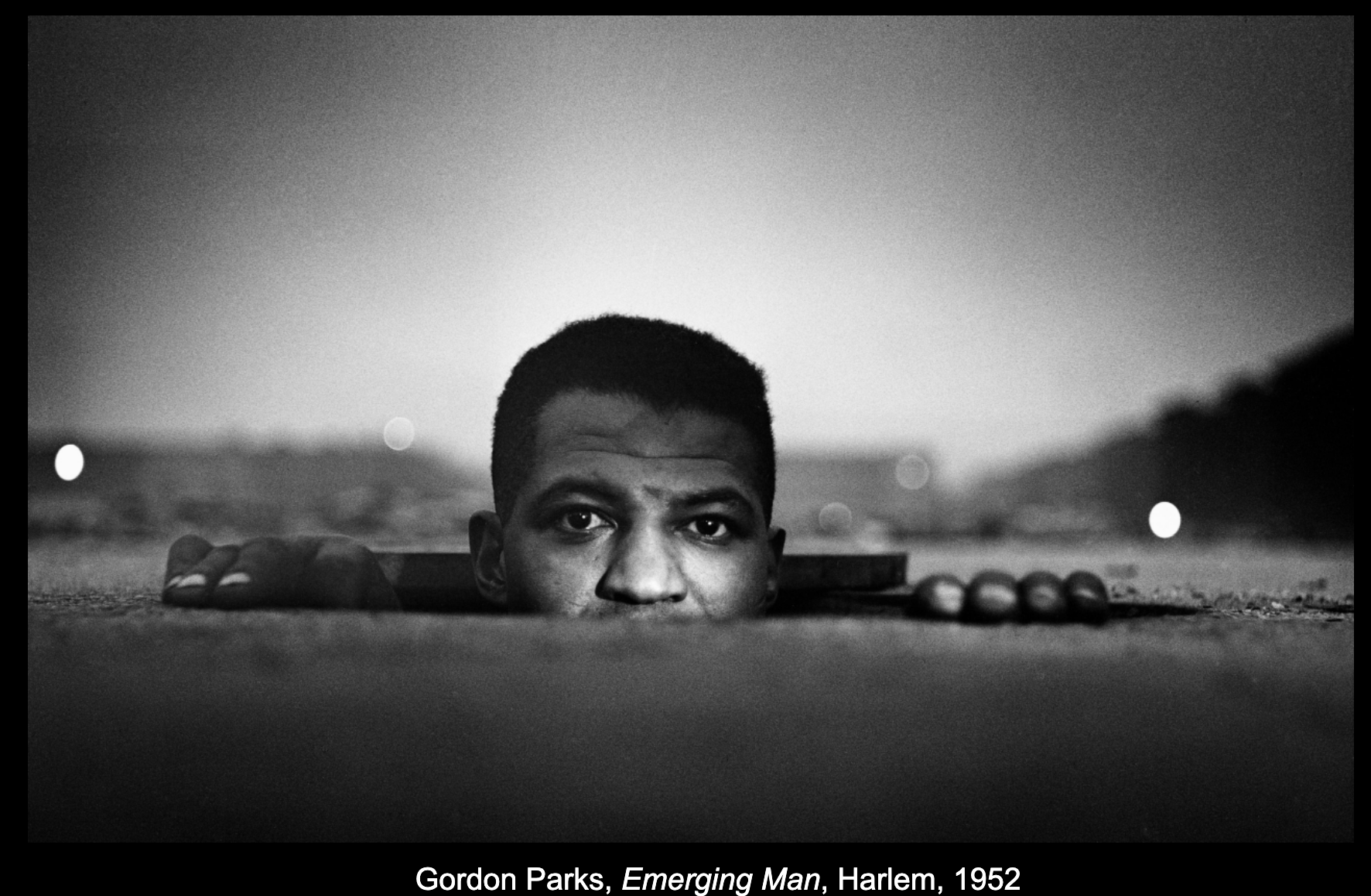
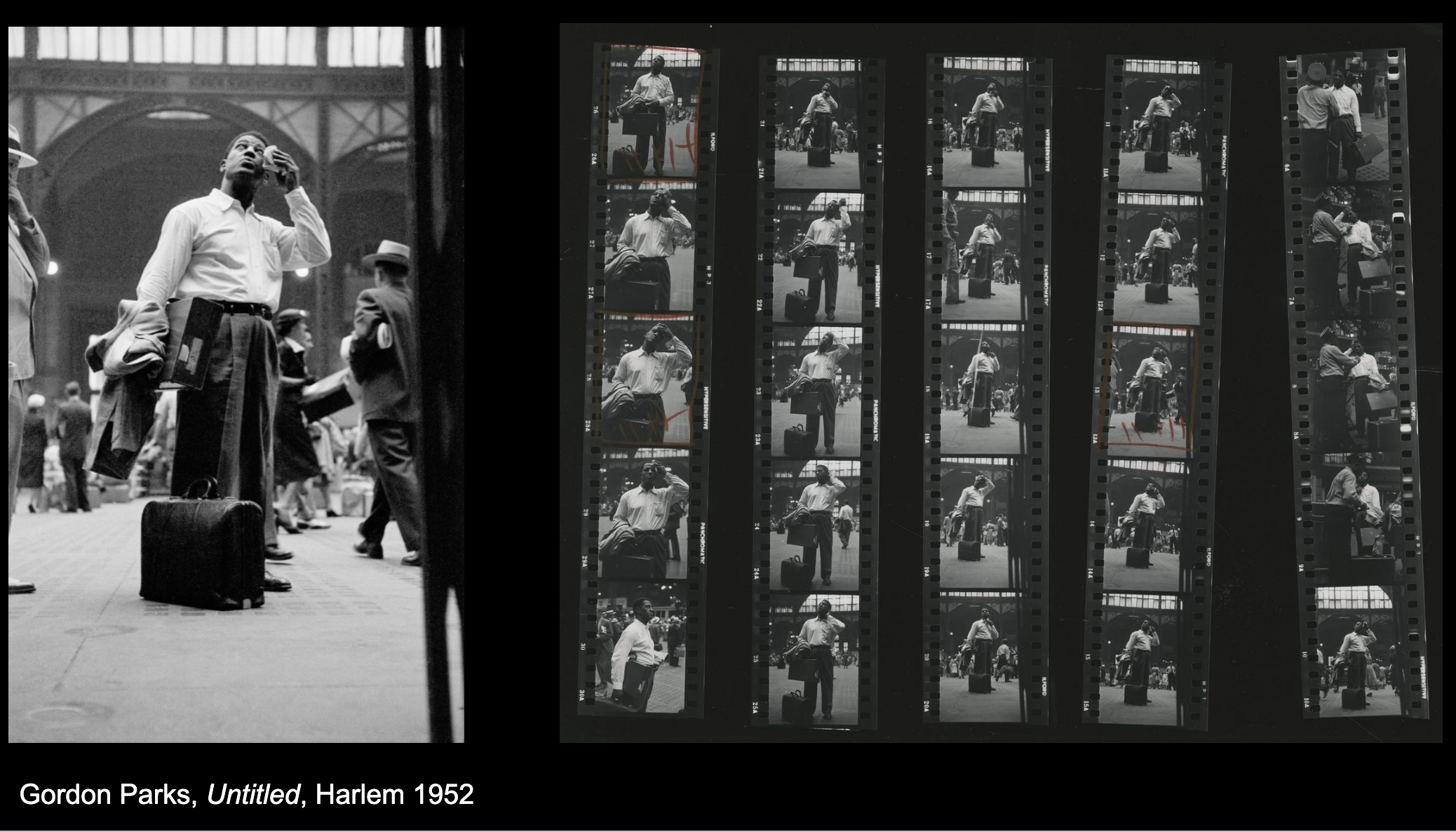
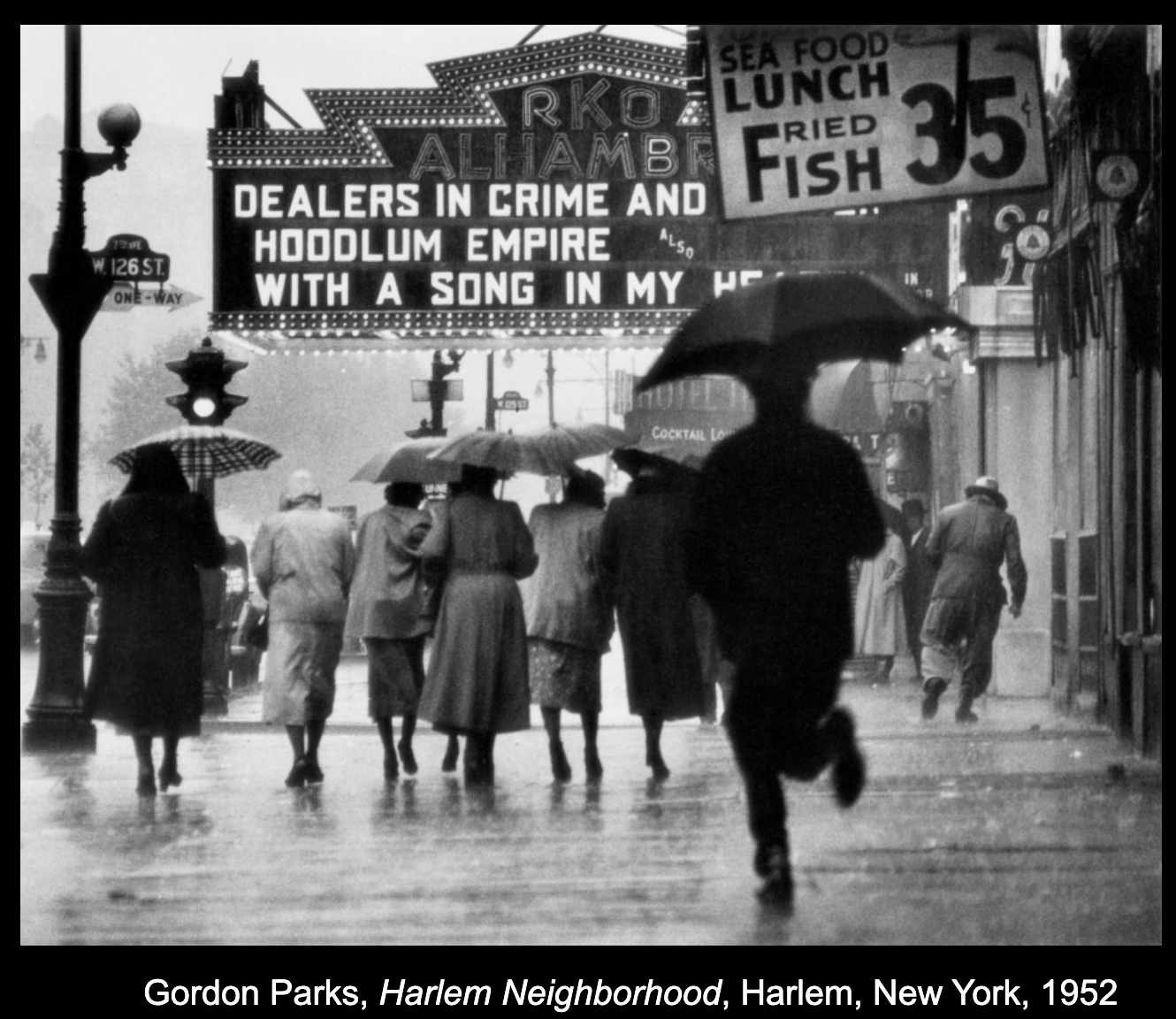
Images: Gordon Parks (images from Harlem, NY, 1952)
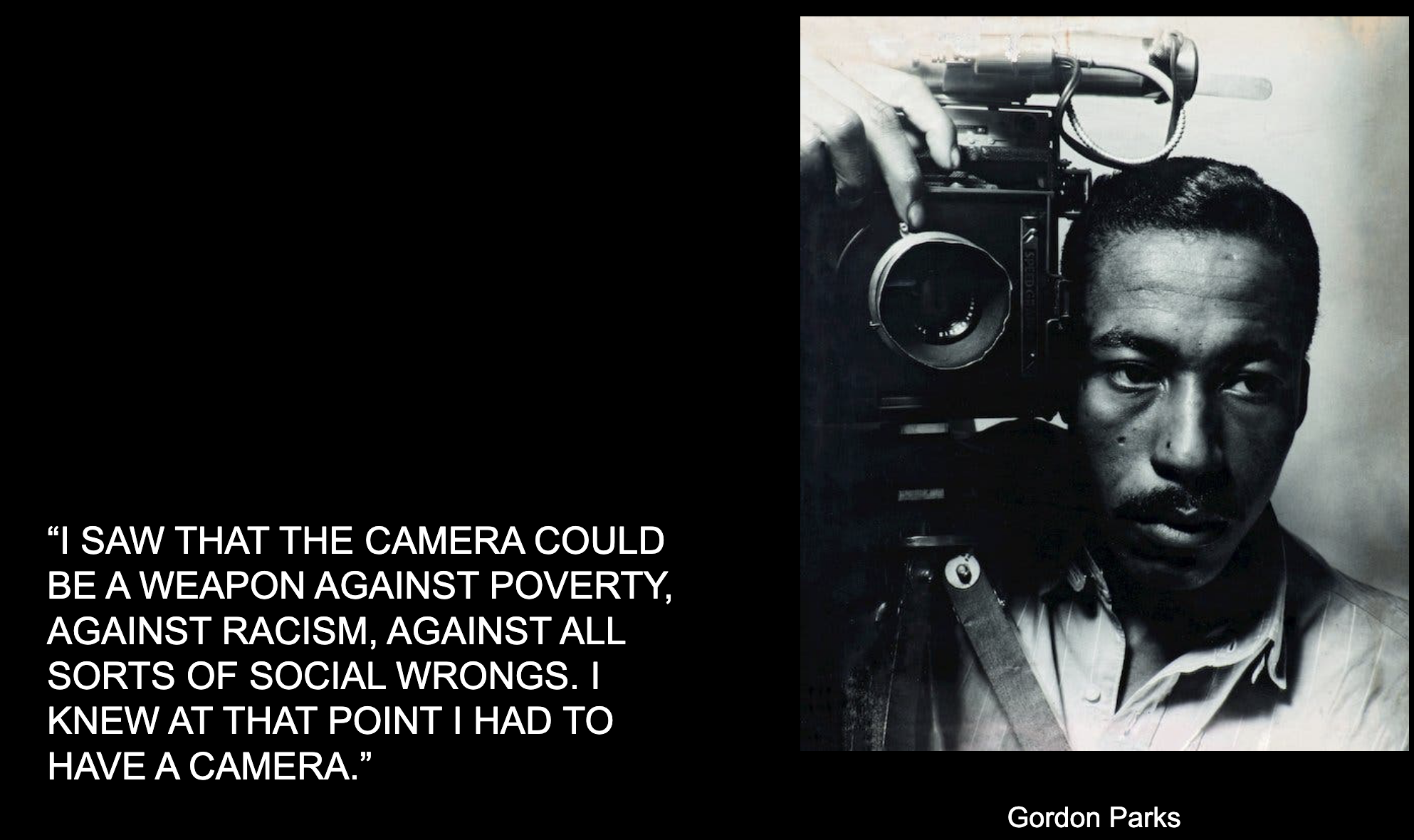
photographer interested in social justice
photos of man in city
surfacing from cave → manhole in ground with man coming out
rupture of horizon when emerging
the Emerging Man is looking at the camera → RESISTANCE in looking at viewer
Invisible Man when part of a crowd, too
photos in the cave
was brighter inside compared with less bright lights in the city above
like surrendering
man faces camera a bit more (but still kinda unclear)
Reading: Claudia Rankine, excerpts from Citizen (parts I, III, and V)
Notes:
the overlooked and the overseen (invisible and seen too much)
racism caught in mundane and catastrophic
epigraph at the beginning of the book is a line by Chris Marker: “If they don’t see happiness in the picture, at least they’ll see the black.”
in a video, an image of happy Icelandic children couldn’t really be followed by anything to connect to it, so he added a black screen after
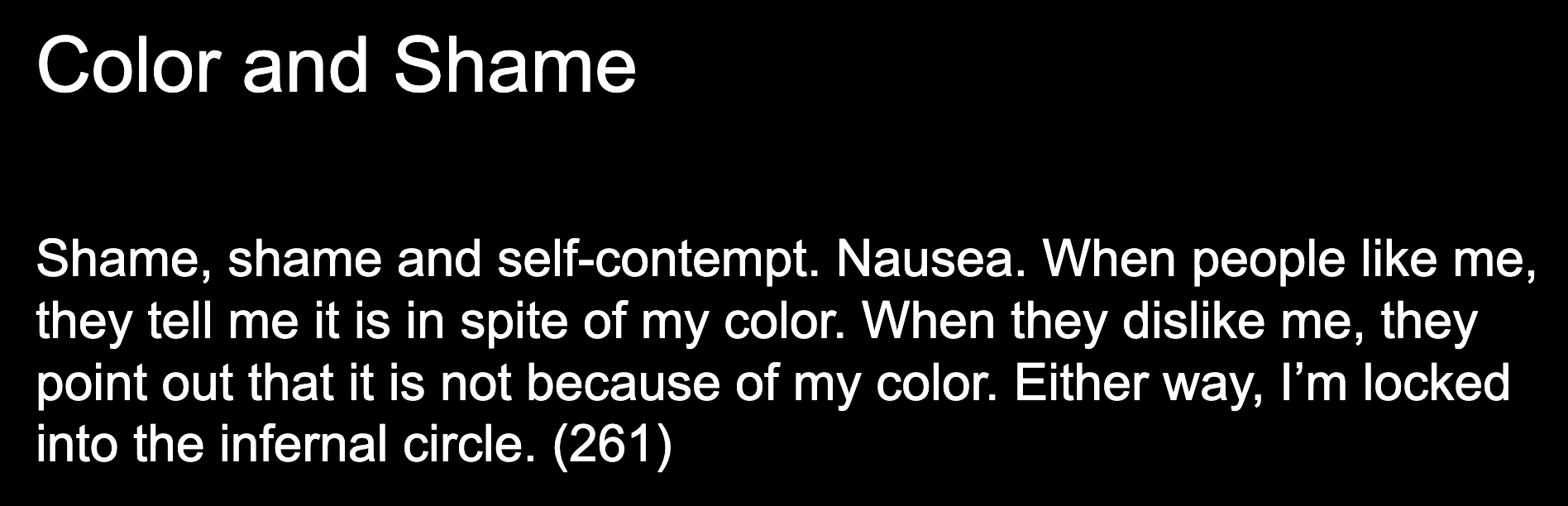
Franz Fanon: “Shame, shame and self-contempt. Nausea. When people like me, they tell me it is in spite of my color. When they dislike me, they point out that it is not because of my color. Either way, I'm locked into the infernal circle. (261)”
text in second person (“you”) → could be us, could be her; she refuses a fixed image
invisibility exploits vulnerability and actually not being seen; opposite of invisibility of white privilege
contradiction baked into definition of “overlook”
oversight puts visibility in the eye of the beholder
race is seen as sociopolitical; SUFFERING in hyper-visibility and visibility
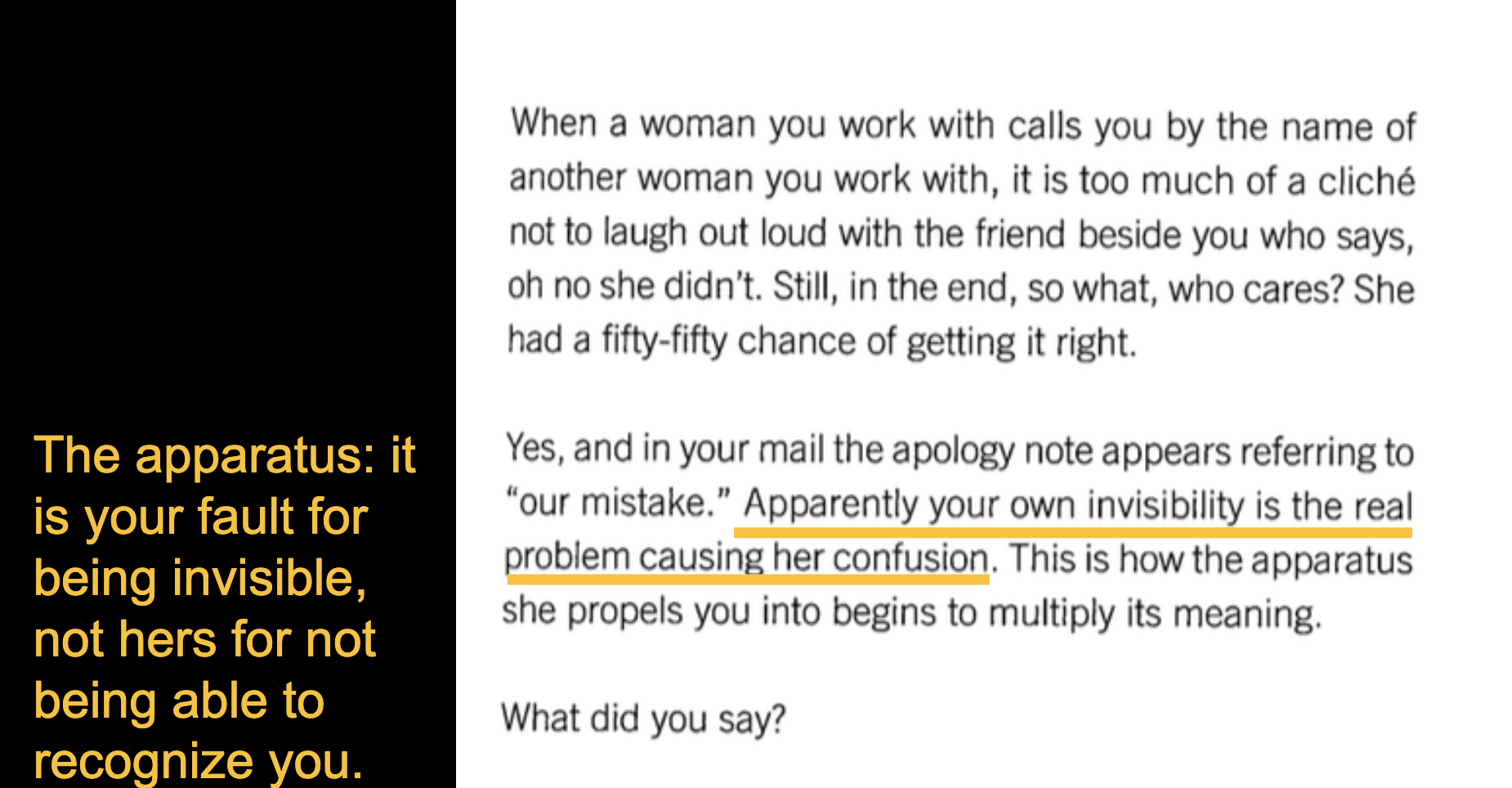
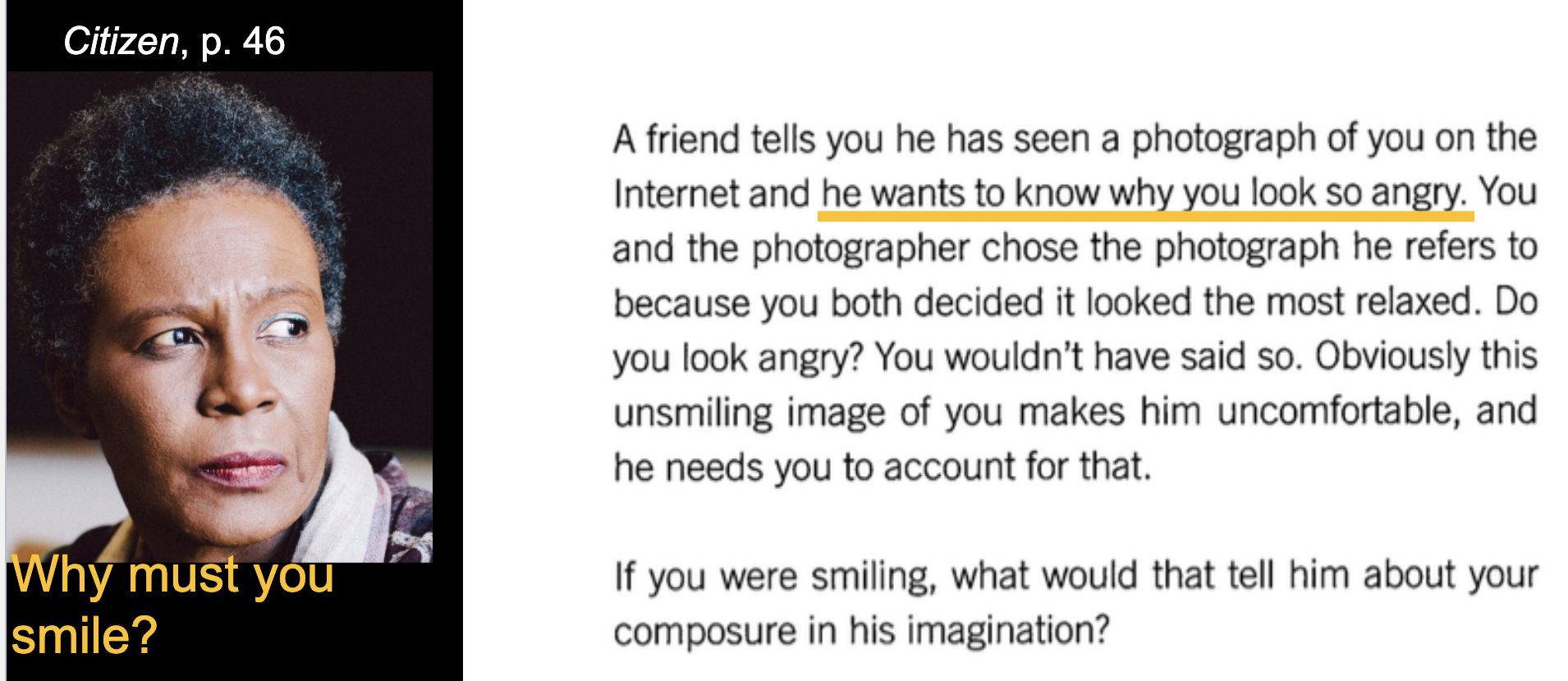
*the image of you in his mind is so powerful it erases/replaces reality
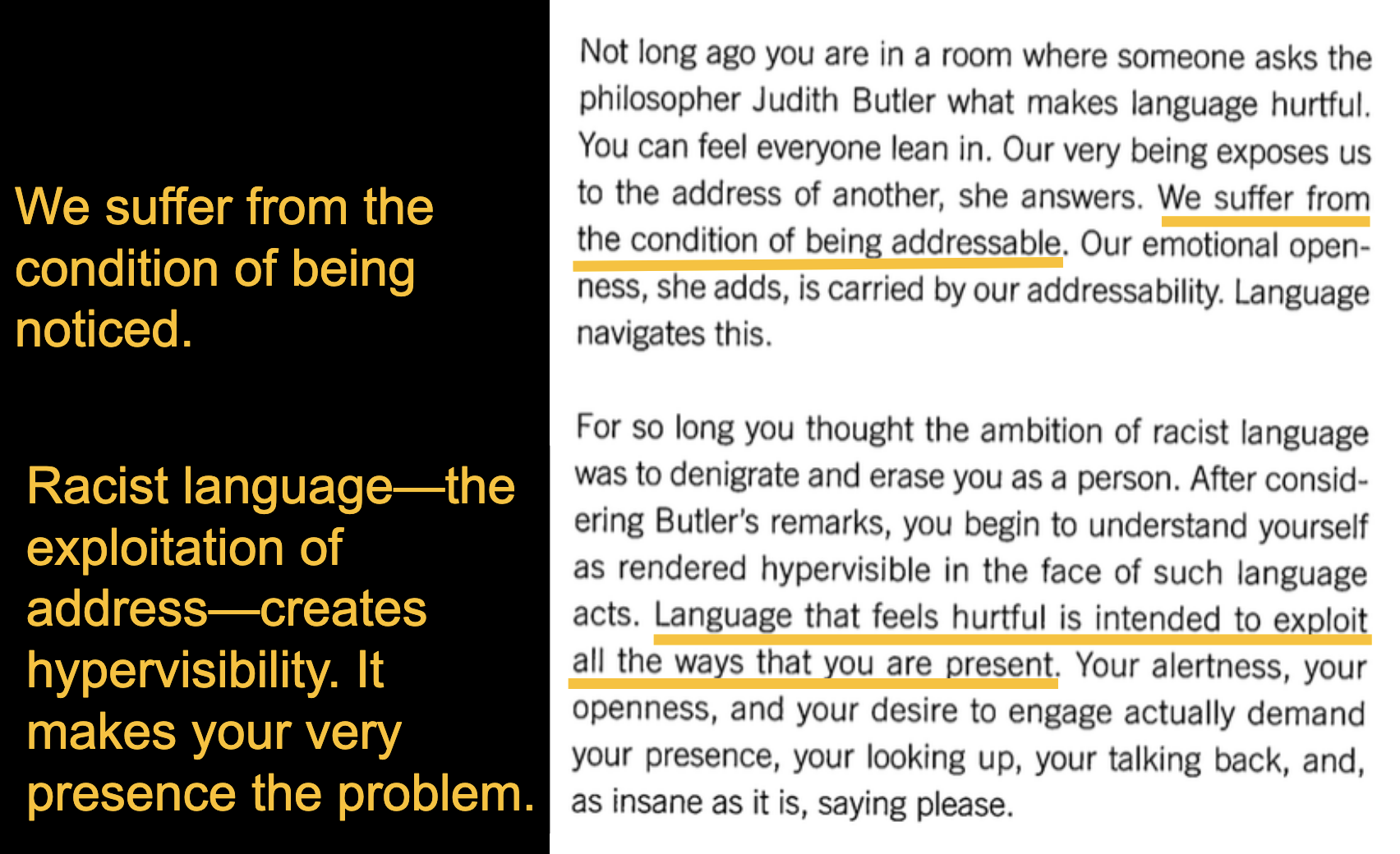
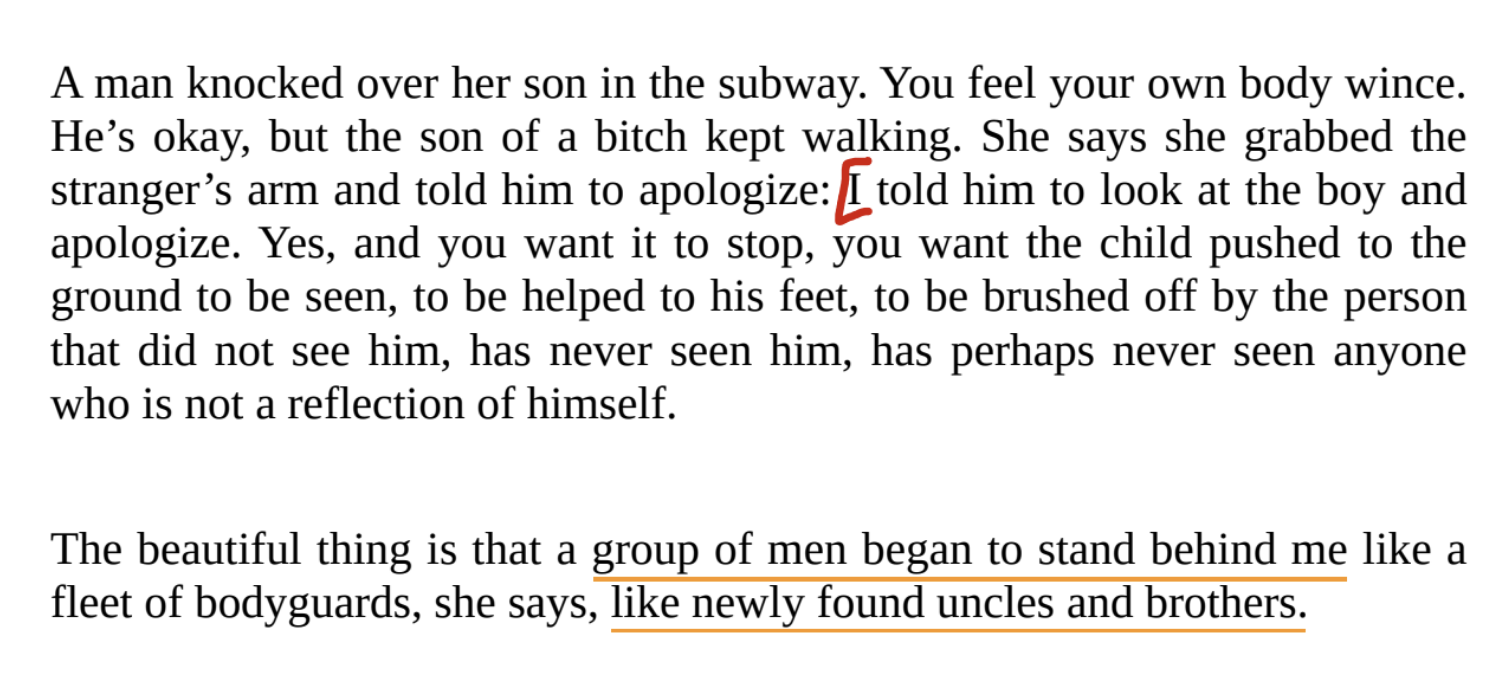
for so long she thought racist language was to make her invisible BUT it makes hyper-visible (makes presence noticeable and points out)
putting ppl down requires words to address the other; the condition of being addressable makes you vulnerable to hurt (the fact of you existing is a problem)
it’s convenient for the dominant power to use certain language
she can’t be seen as herself before seen through the sociopolitical lens
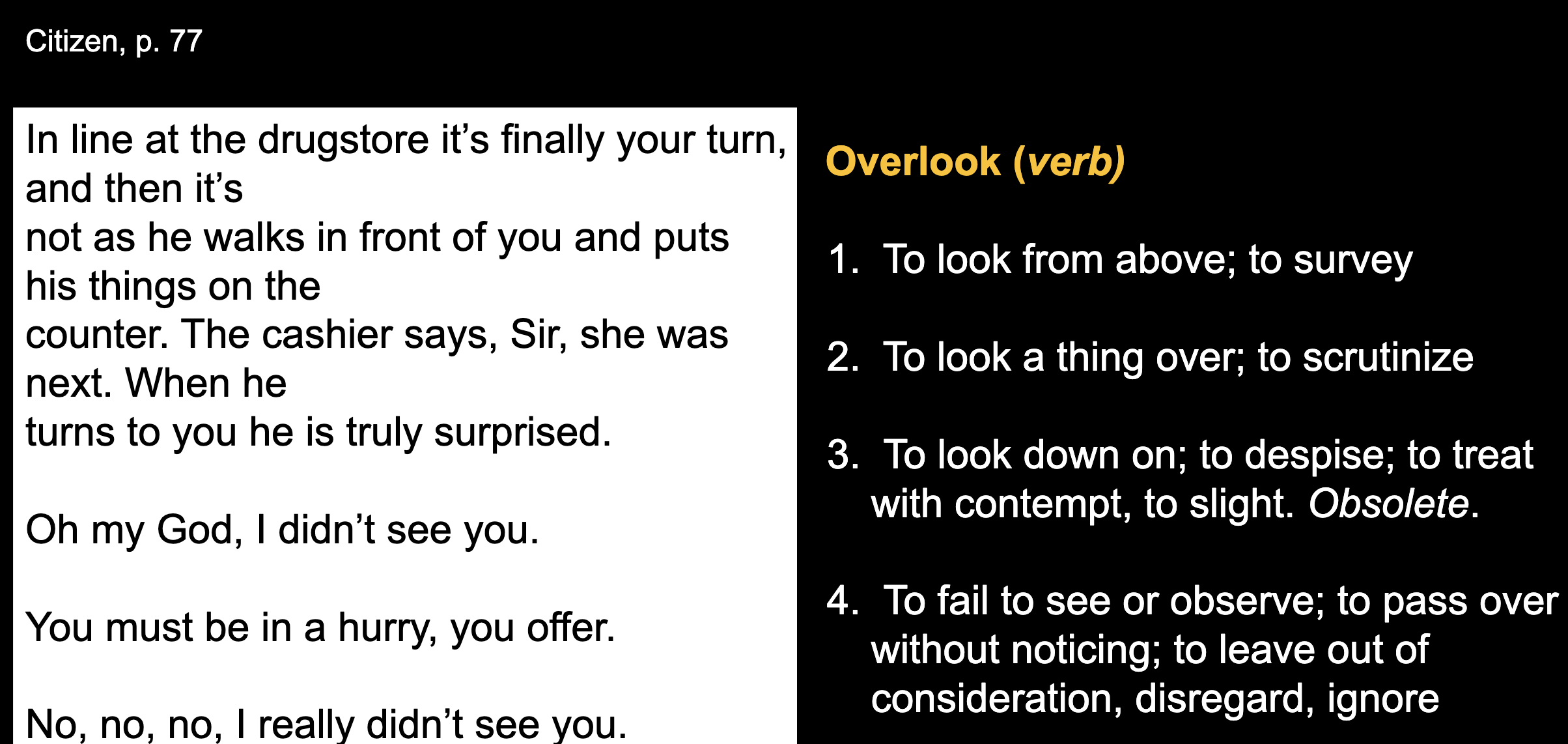
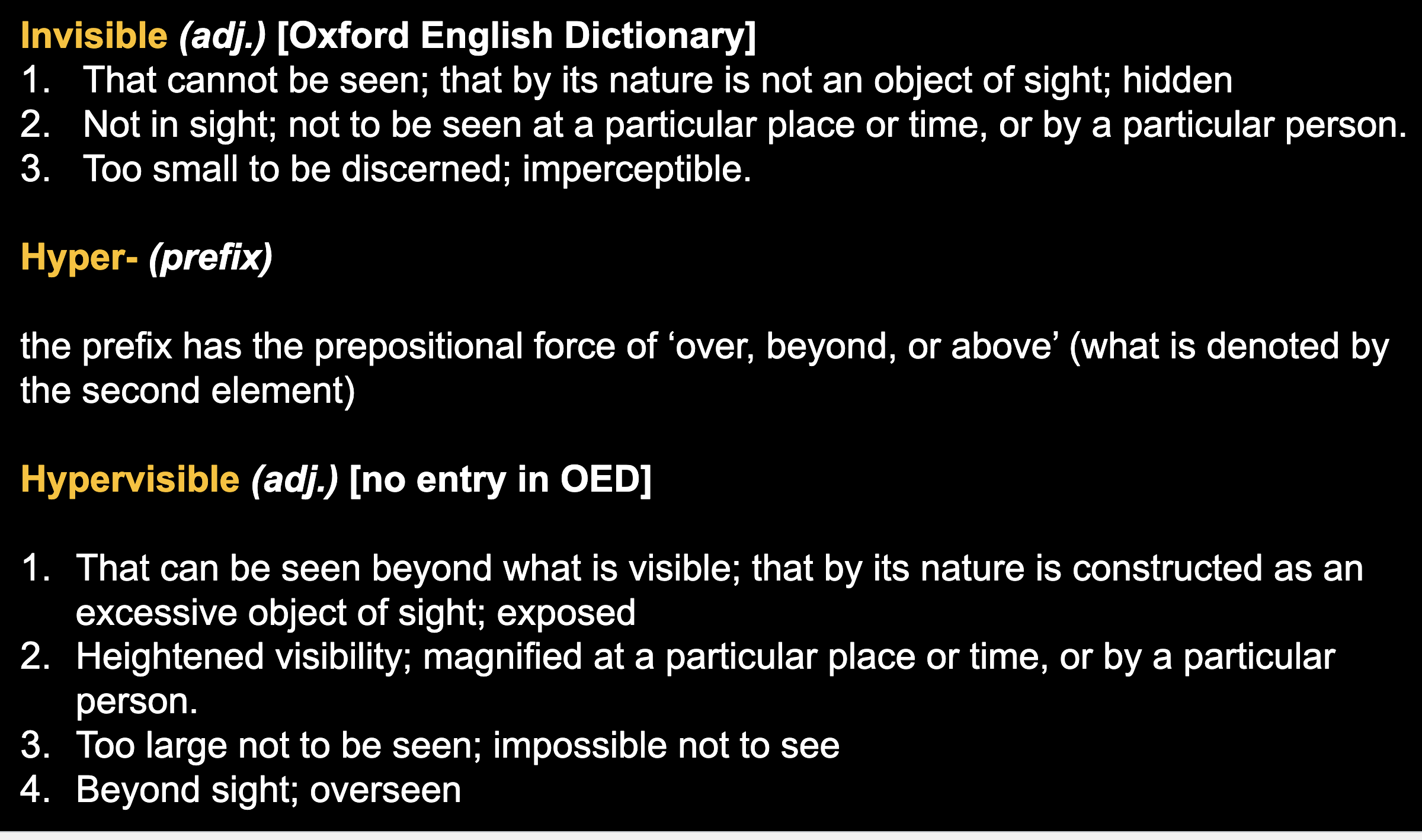
Definitions of Invisibility
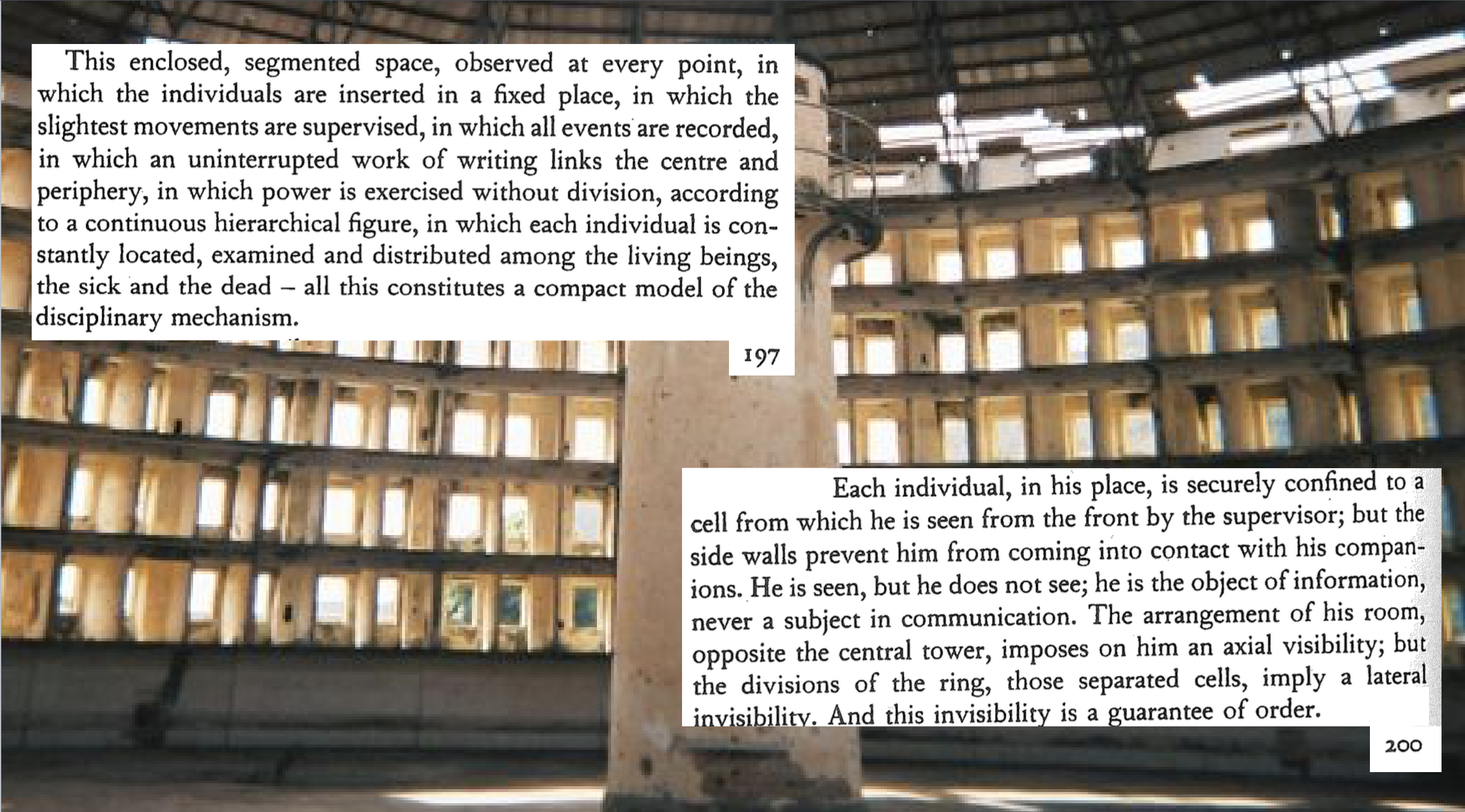
Reading and Image: Michel Foucault, “Panopticism” from Discipline and Punish: The Birth of the Prison
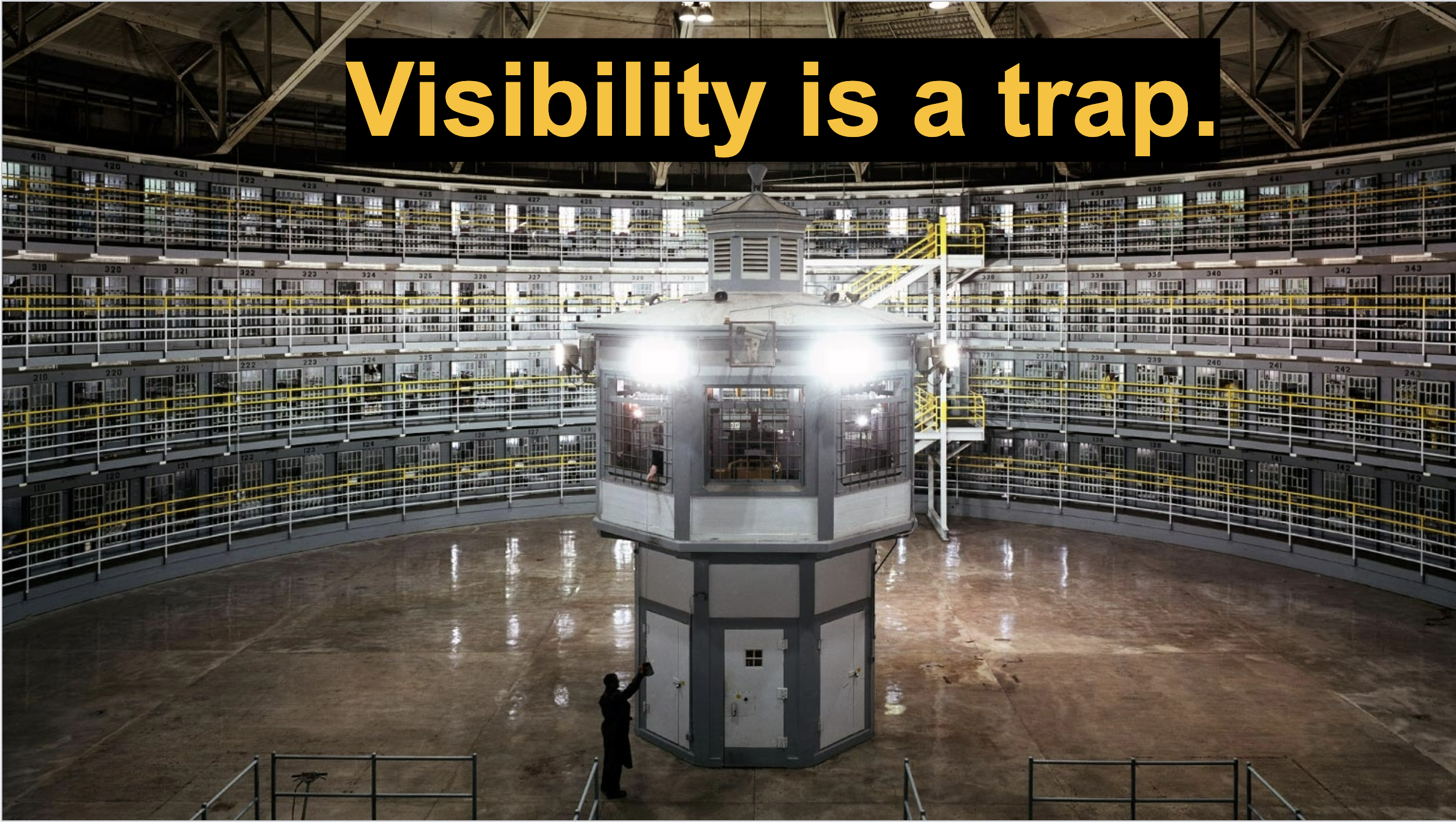
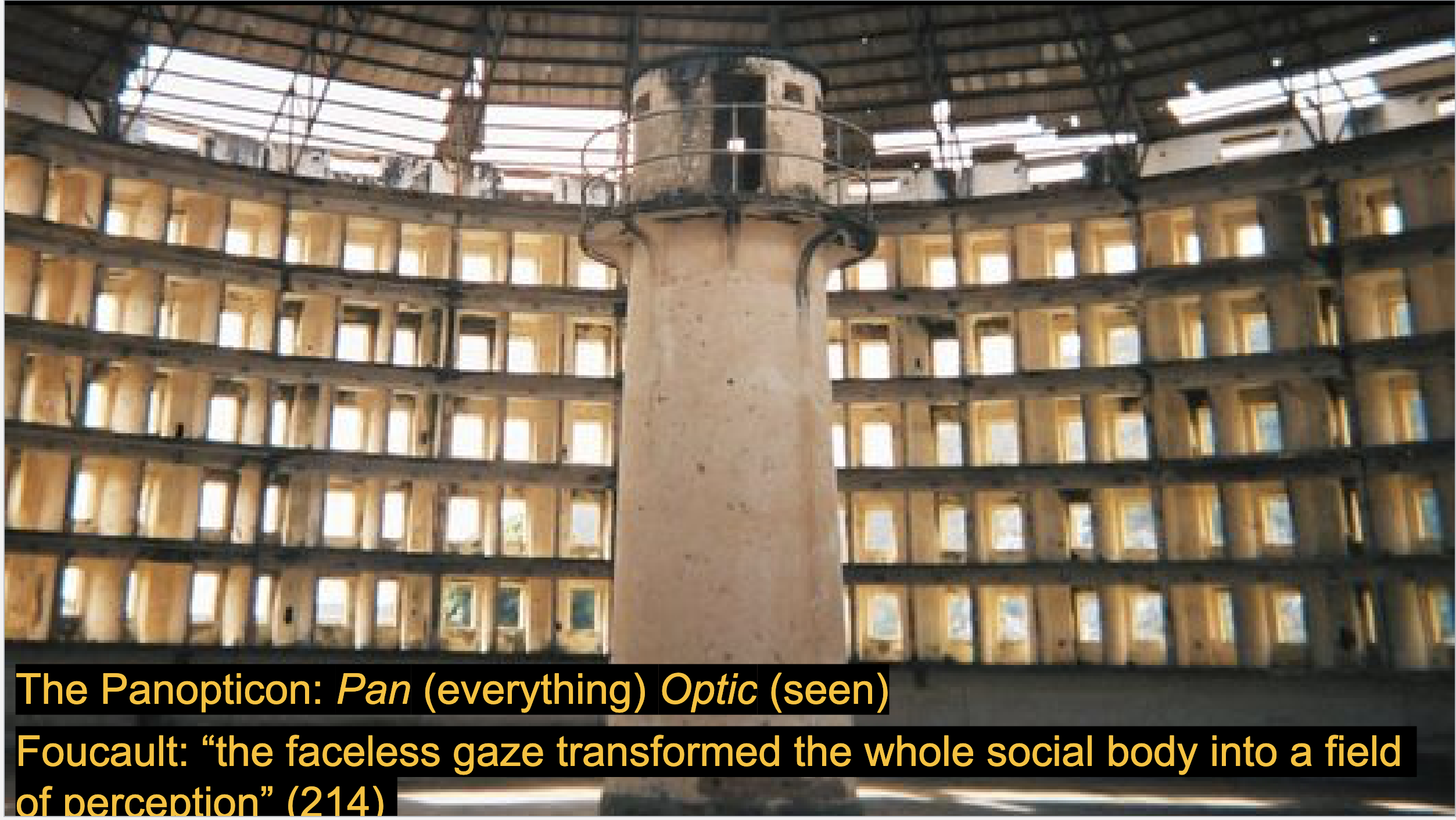
Panopticon
pan = everything; optic = seeing/seen
prisoners can’t see each other (lateral invisibility); isolating
they can’t see if anyone is in the watch tower BUT those in the watch tower can see the prisoners
structure of power
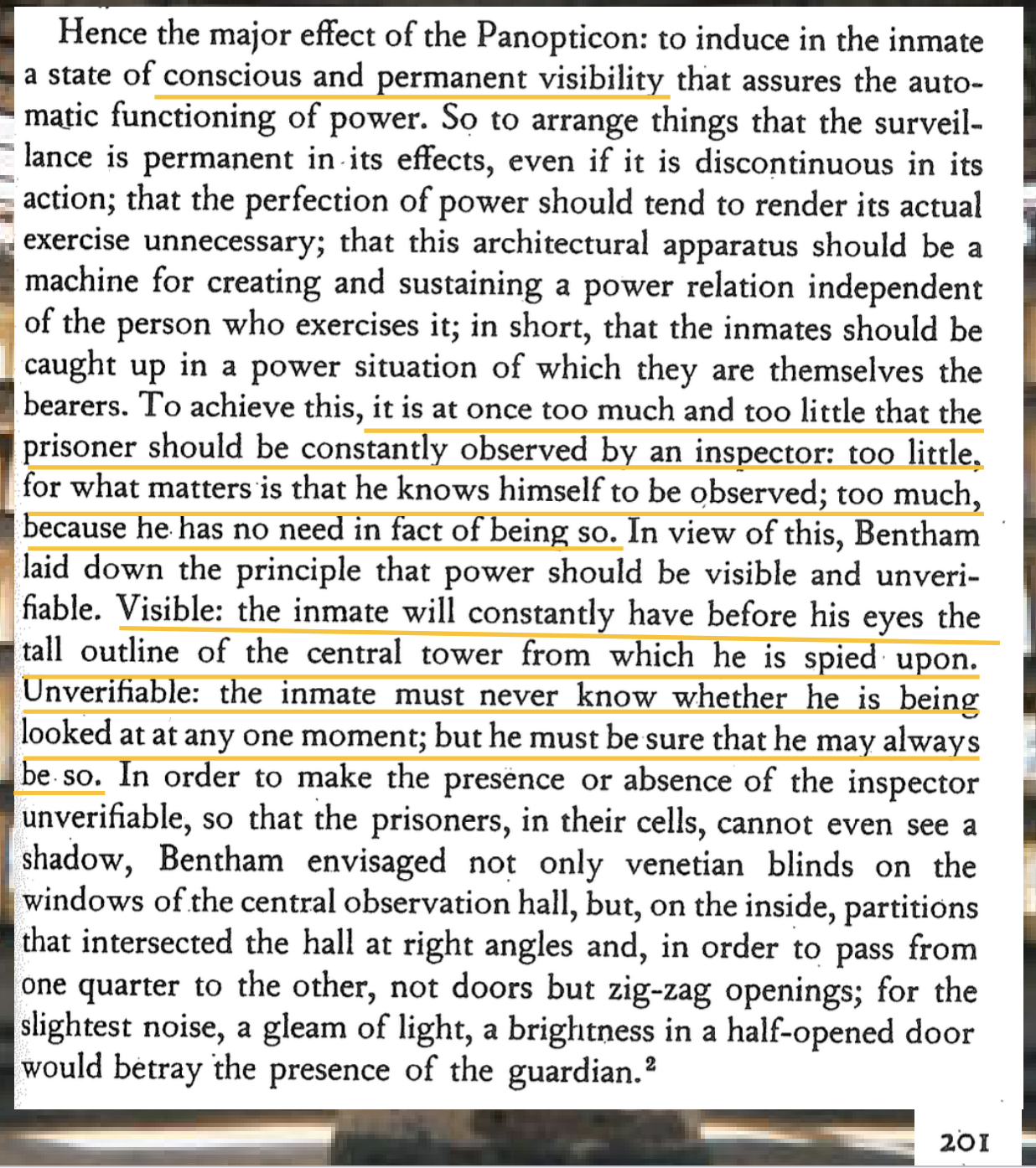
VISIBILITY IS A TRAP → the prisoners would police themselves since they never know if anyone’s watching (the uncertainty causes fear)
the watch tower is the point of social control
OG design by Jeremy Bentham (inspection house)
LIGHT: there is one window that lets light in (allows them to be seen; revealed)
Foucault
“the faceless gaze transformed the whole social body into a field of perception”
the possibility of being watched is controlling
the prisoners begin self-policing; instability within subject created form the uncertainty
you look for deviance/criminality so you produce it (you see things you’re looking for)
effect of the Panopticon: induces a conscious/permanent visability
oppression from the visibility
the invisible became hypervisible
Reading: Frantz Fanon, “The Fact of Blackness,” in Theories of Race and Racism: A Reader
at the beginning, (starts with an address) a child points out a difference → alienating
the child only sees through the lens of the other (colonization’s eyes)
interpellation (Althusser): calling/hailing → transforms individuals into subjects and it blurs visual boundaries while summoning something into being
interpellation created marginalization; only a white person would say “hey, you!”
after the child uses the racist language, bringing him to attention, then he says “I”
he was born; identity written as part of skin → Black reduced to color of skin by white ppl
his skin color is a trap → VISIBILITY IS A TRAP (they’re always described as the Black [insert profession])
3rd person consciousness: when he experiences himself in the 3rd person
triple consciousness in his sense of self
you think of what you want for yourself (he thought of himself as a philosopher)
selfhood depends on there being an other
the opposing world creates a different version of you
one must exist to fulfill the idealized version of you (you must be the best version of you for not only you but all like you+you bear the weight of history and future
set of expectations can create a set of limits that allows me to be seen in certain actions
like in Invisible Man (Ralph Ellison), the invisible might not also not see the visible (accidentally bump into each other)
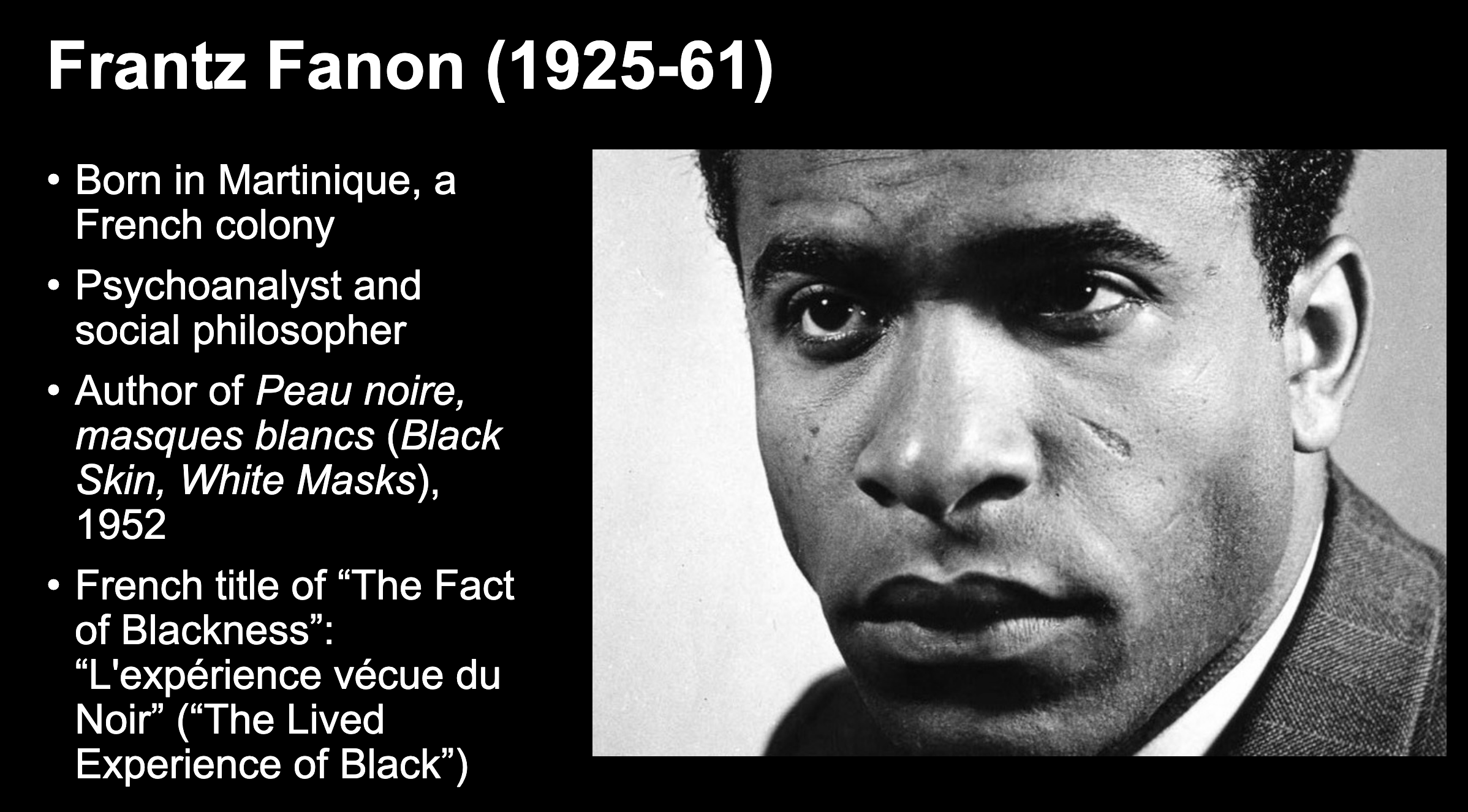
“Early Life: Born July 20, 1925, into a middle-class Martinican family, Fanon grew up as a proud French citizen unaware of the realities of systemic racism. Fanon experienced a harsh awakening to anti-Black racism while studying medicine and psychiatry in postwar France. This realization of how Black people were viewed and treated by white Europeans inspired his 1952 groundbreaking psychological analysis of race, Black Skin, White Masks.” - the New Yorker
so like white colonists
white gaze; minorities being more watched (systemic/institutionalized racism)
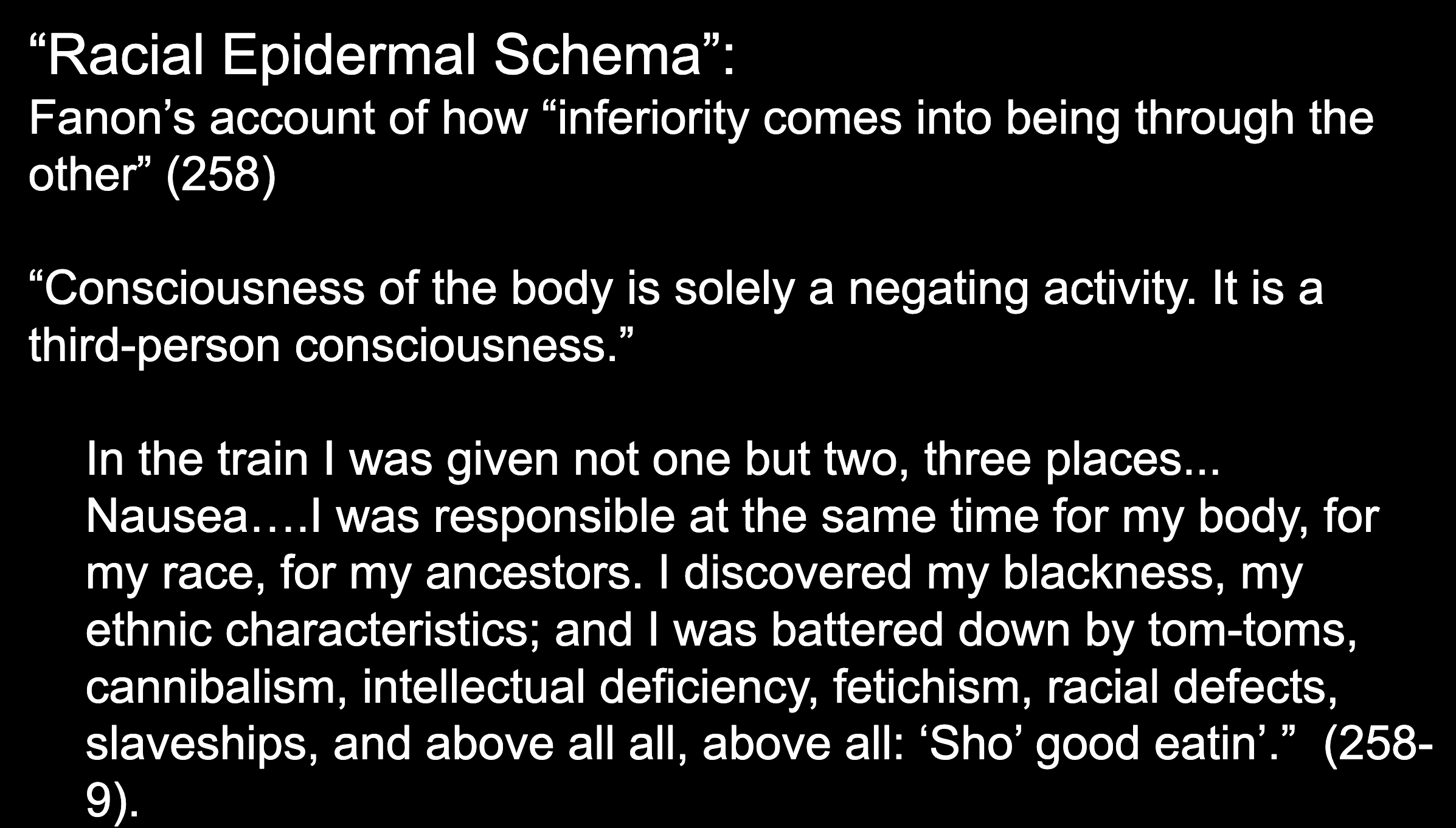
nausea from shame when you realize you’re not seen like the others
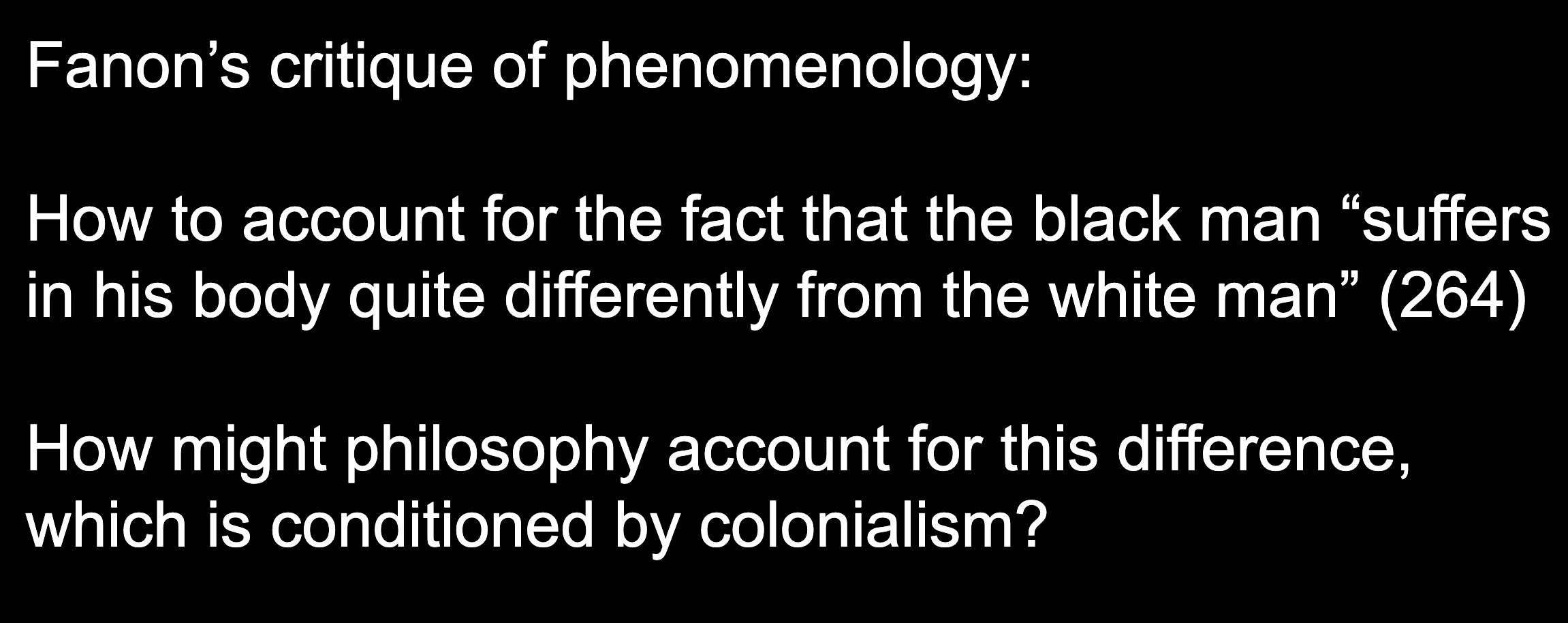
for Fanon, that race is his fault when he just wanted to be a man (can’t have simple existence when you’re looked at by an entire race)
rigid system; those rendered vulnerable can’t really cause change (subject to the limitations placed)
Reading: David Batchelor, “Whitescapes” in Chromophobia
white wash as treatment for too much color
purging of color = tyranny of whiteness
even though white sometimes thought of as virtue
sometimes white can be used to see things (think lab coats?), so colors not inherently bad
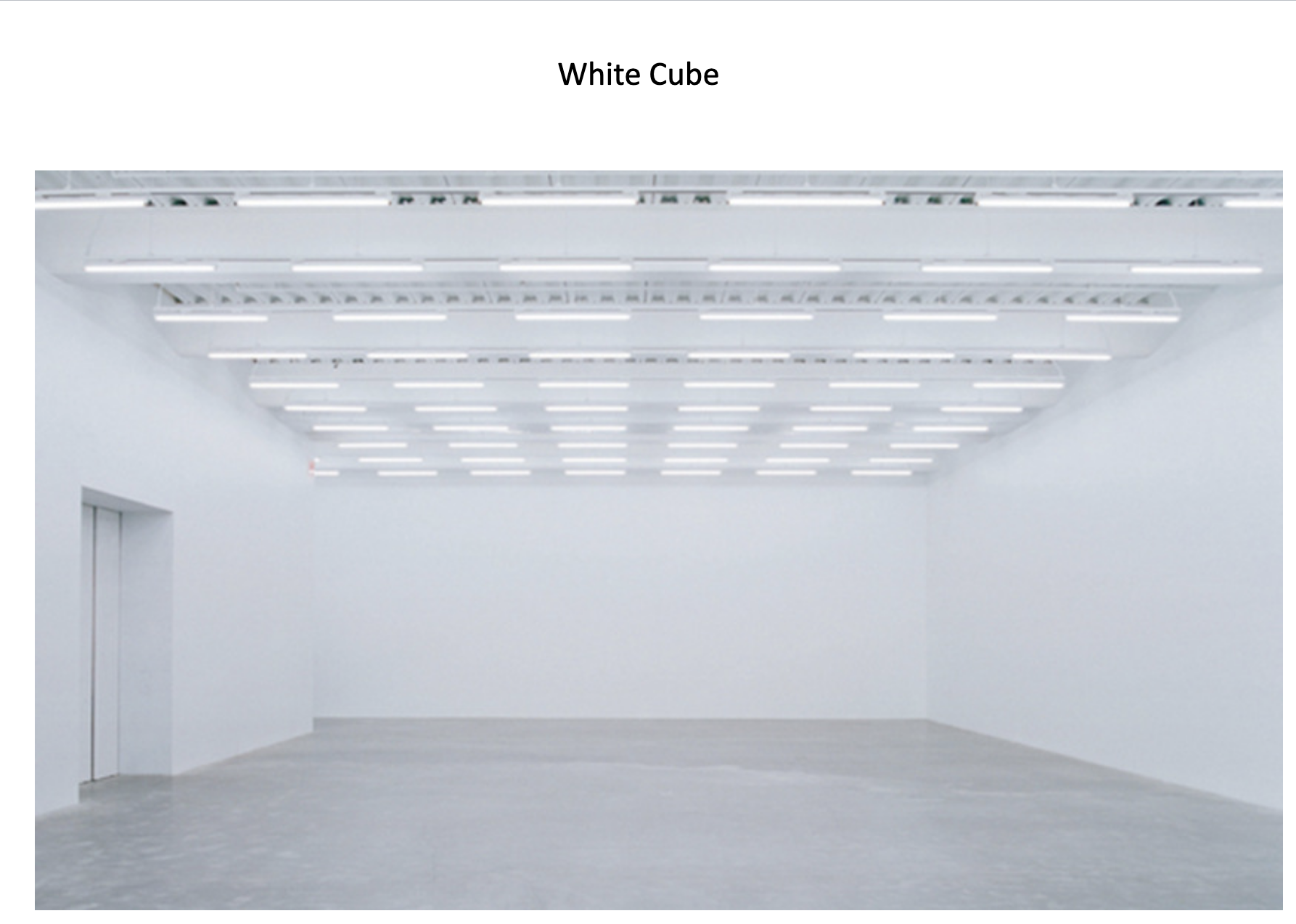
white spaces strategically empty → world that’s not hospitable for other worlds (other things might not fit so wouldn’t belong)
might make things more visible
the author felt he was reminded of everything he failed in b/c the aggressive white made him stand out
no visual hierarchy, so you loose sense of self

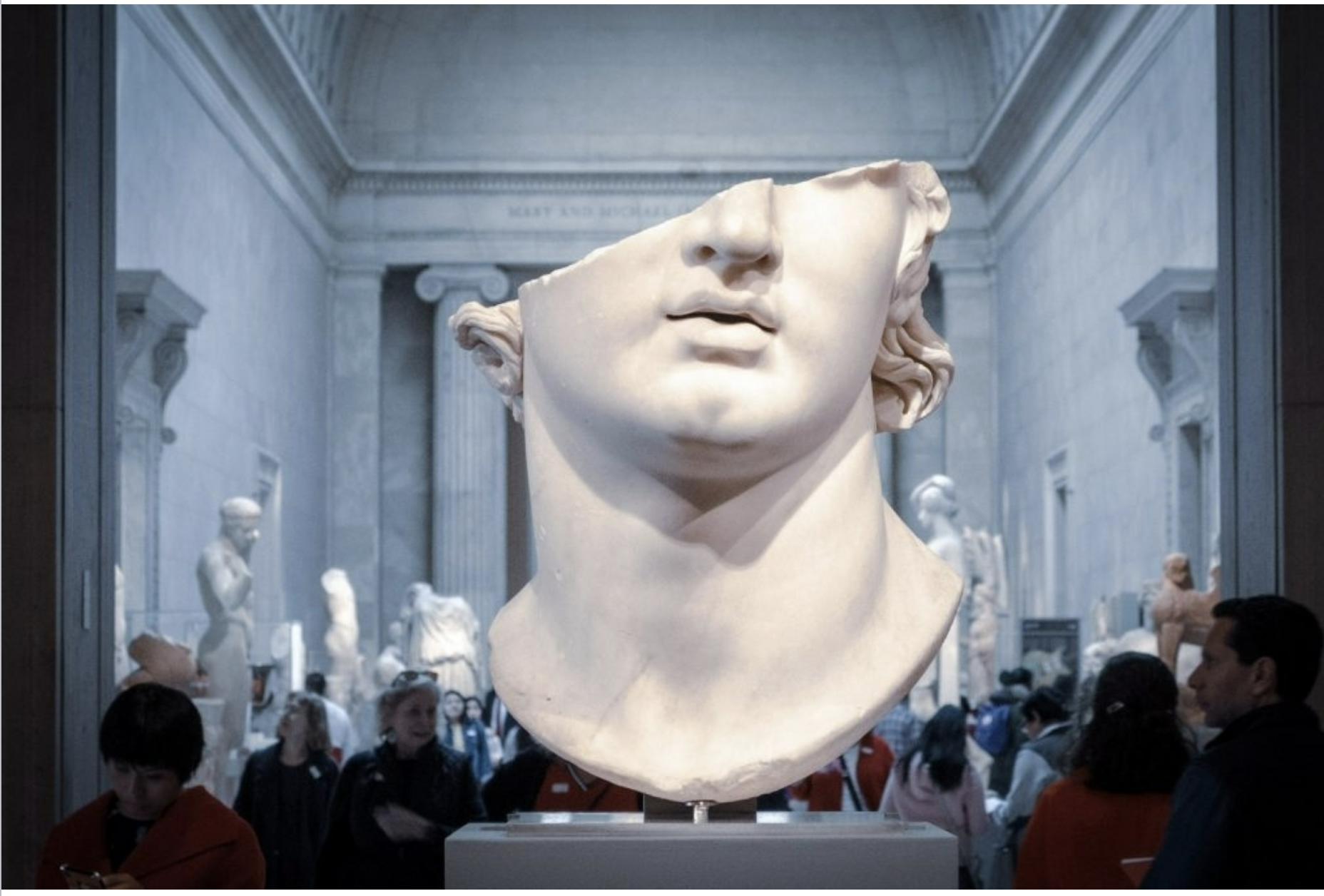
an art historian thought the white statues were beautiful; white reflects the most light so the statues can be seen the best
the statues not originally white → fake idea of homogeneity in the Mediterranean
some statues whitened in some museums, enforcing ideas that they should be white (rewriting art history)
the statues not racist BUT the whiteness and the correlations to some good create false, fabricated truths
Reading and Image: Le Corbusier, “A Coat of Whitewash: The Law of Ripolin”
call for compulsory whitening
“Every citizen is required to replace his hangings, his damasks, his wallpapers, his stencils, with a plain coat of white ripolin.”
self-policing b/c the white background puts attention on bad specks
purify minds; form of policing in face of epidemic of disease
“His home is made clean…Then comes inner cleanness…Once you have put Ripolin on your walls you will be master of yourself.”
“Whitewash exists wherever peoples have preserved intact the balanced
structure of a harmonious culture.
Once an extraneous element opposed to the harmony of the system has been
introduced, whitewash disappears.”
Ripolin: brand name of hard, sanitizing paint
he wanted all walls to be painted this way b/c then fights dirt in cracks and darkness
other colors put down
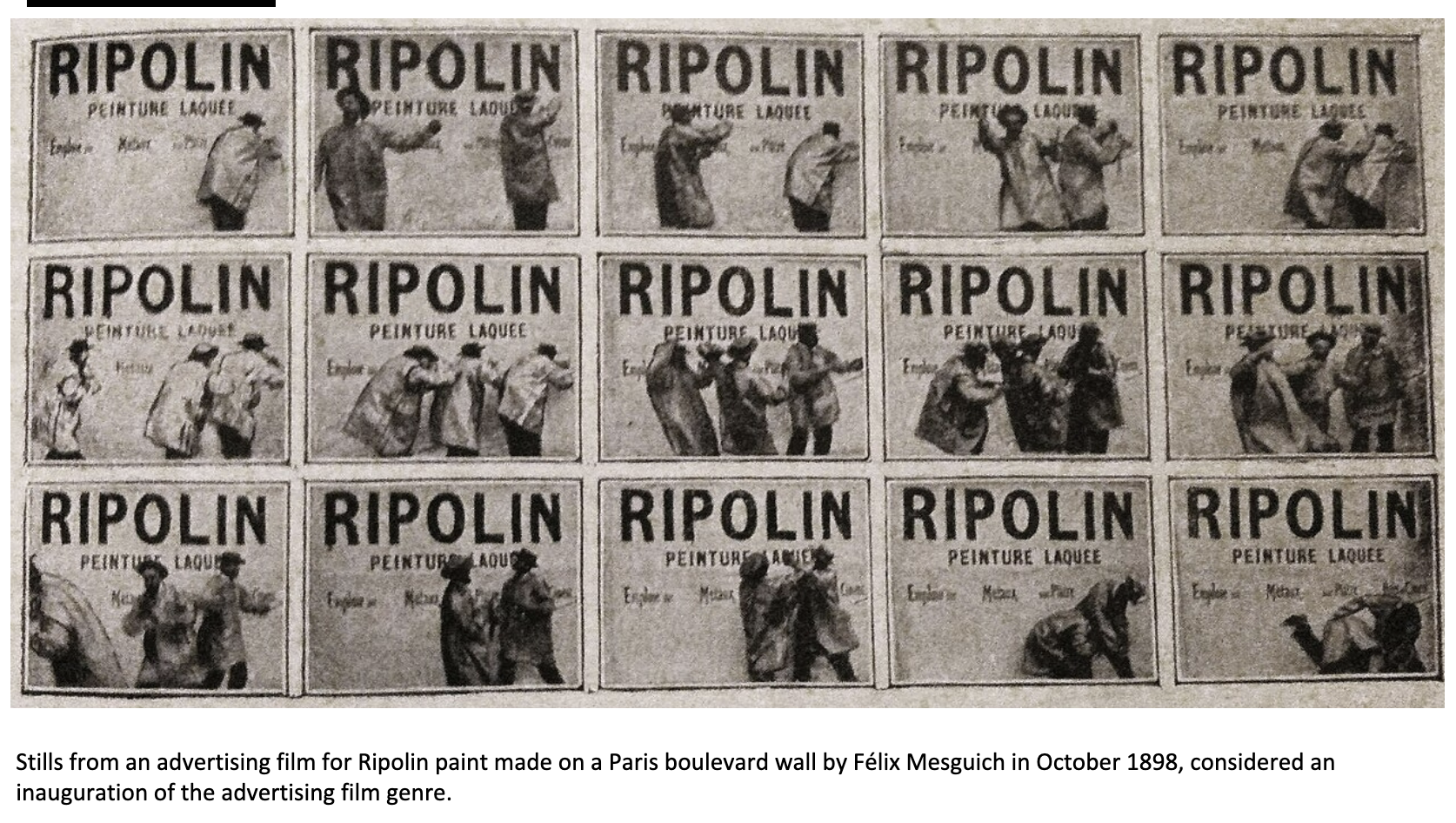
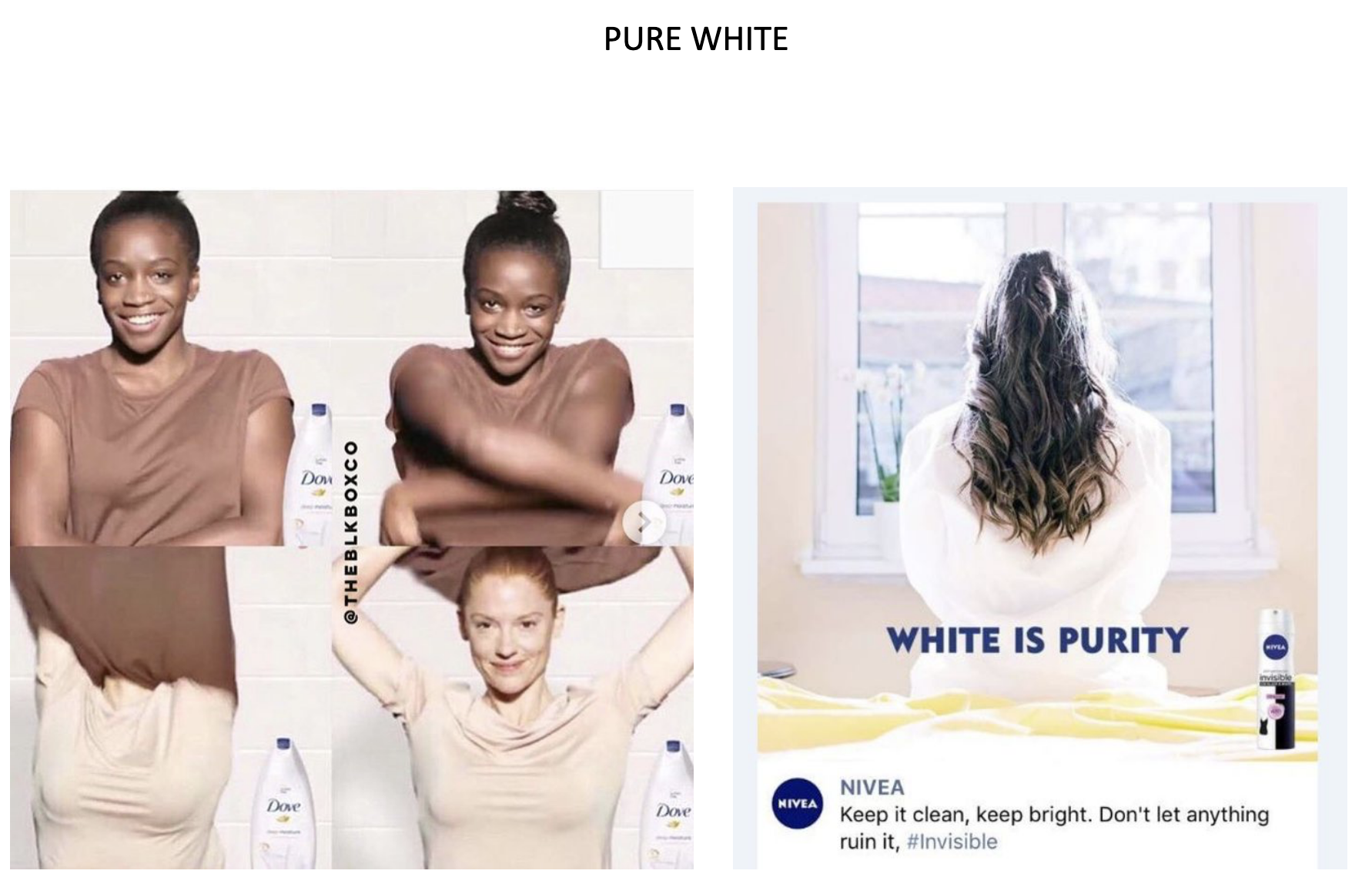
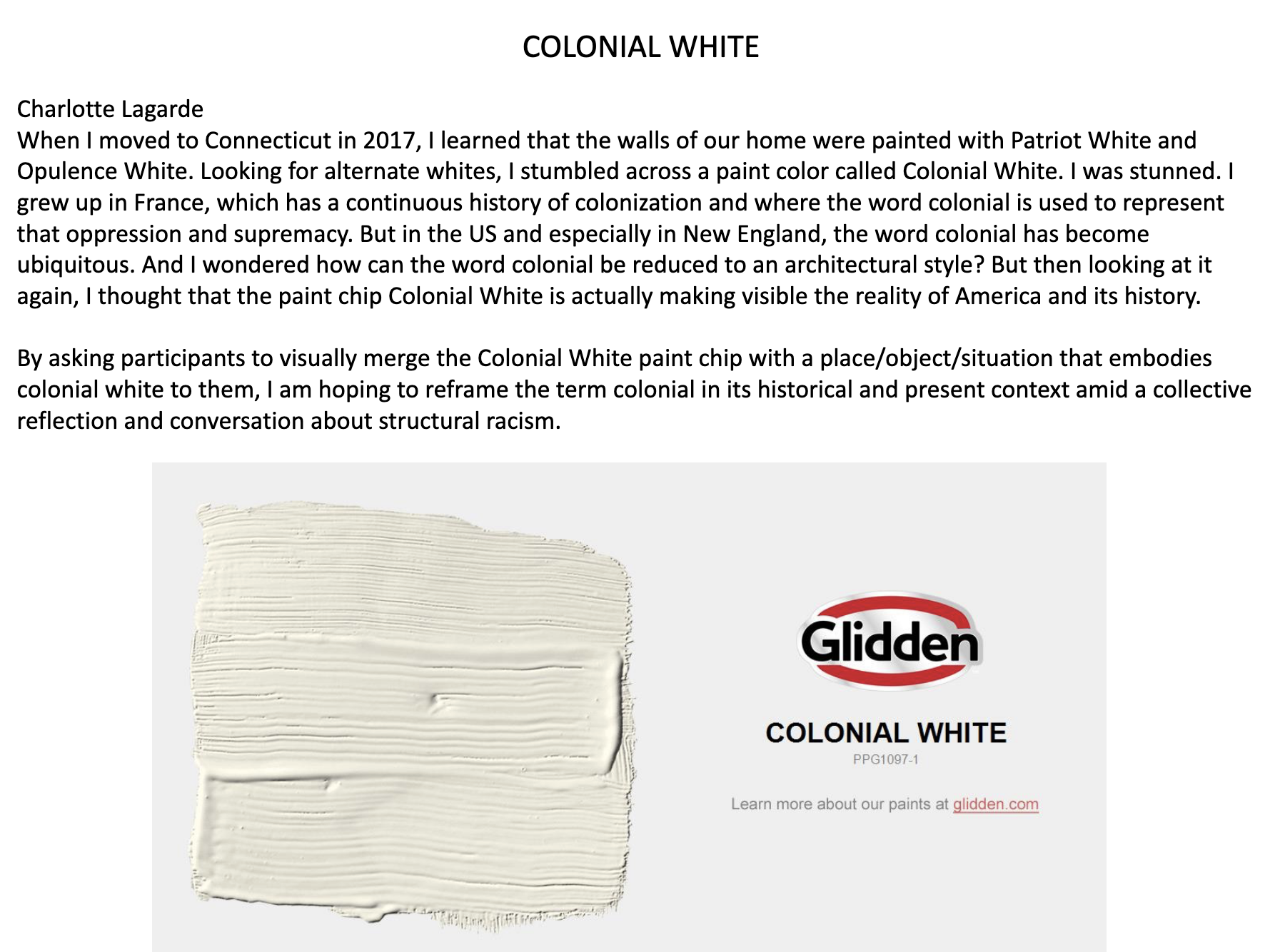
White (metaphors) & Ads with White
see in ““black and white” → no nuance
white is all colors (reflection of all visible light)
metaphors: pure as snow, surrender, blank canvas/slate
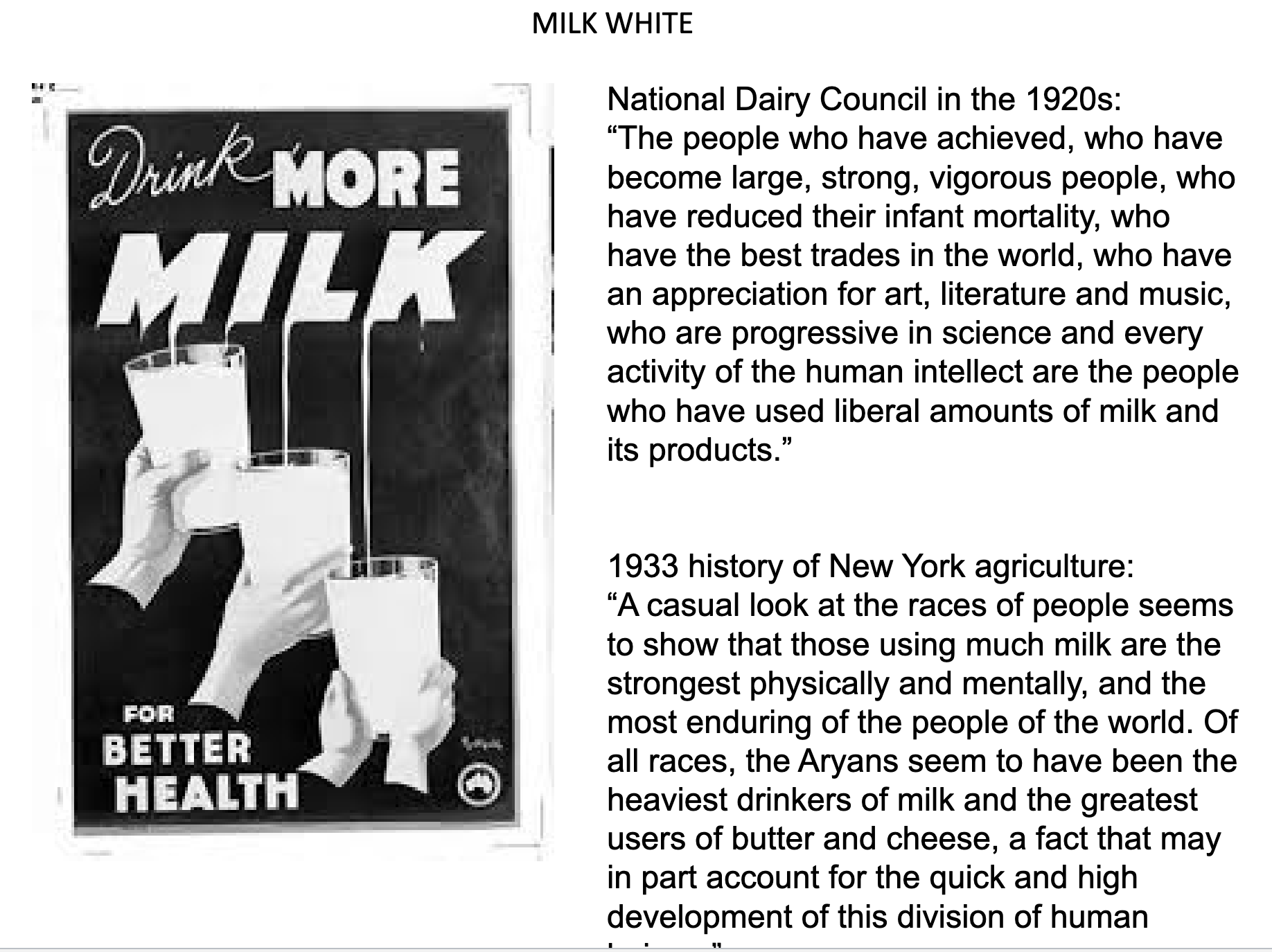
some things are not racist BUT the whiteness and the correlations to some good create false, fabricated truths
fair ment beautiful…eventually became correlated with white

Reading: Lydia Davis, “Absolute Darkness”
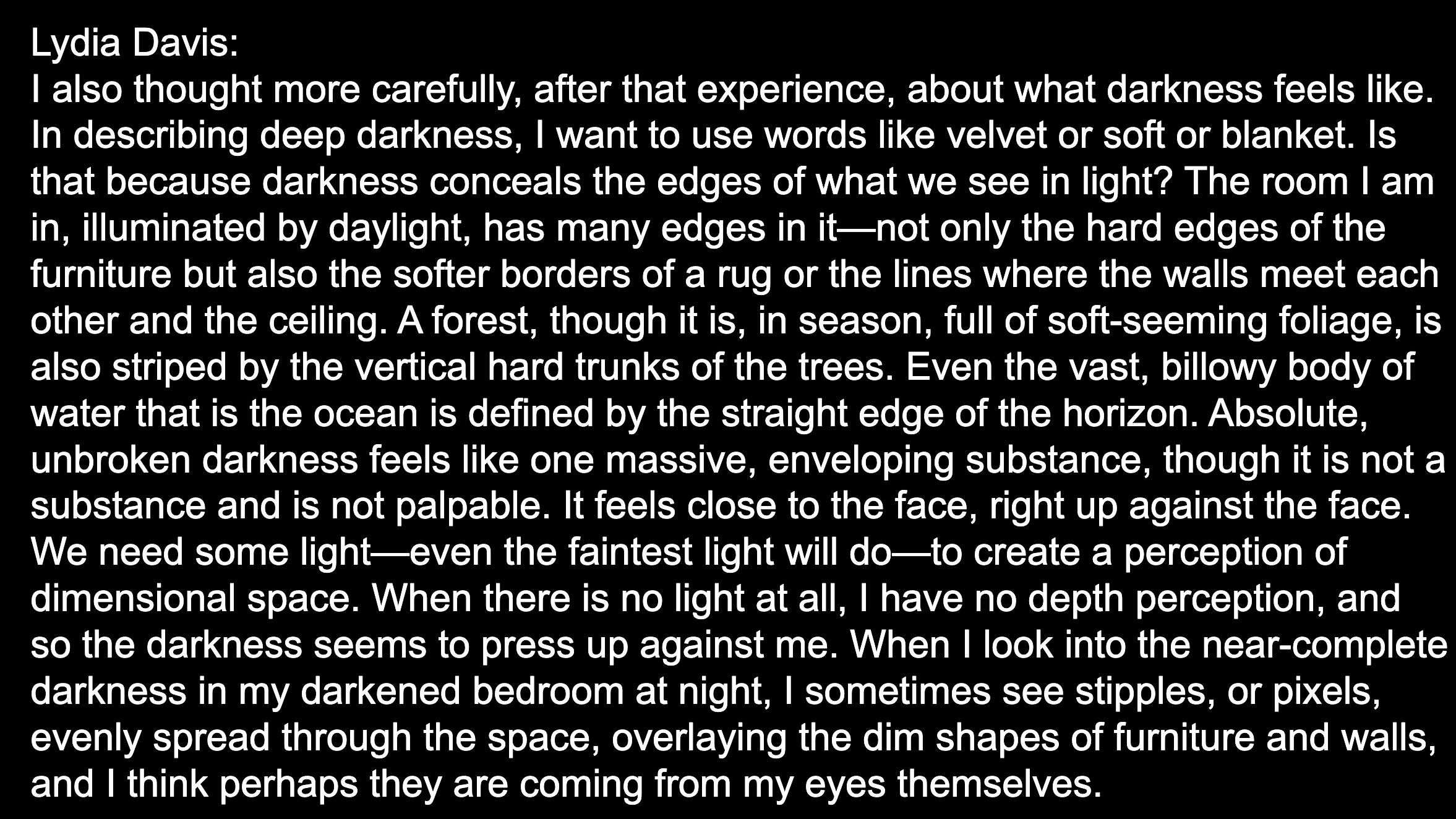
dimensionality of darkness; denseness
she uses words like “velvet”, “soft”, and “blanket” which you can touch
materiality of darkness vs. immateriality of light (like clouds/air)
we need light for depth perception; unbroken darkness feels like 1 massive, enveloping substance
Emily Dickenson: “We grow accustomed to the dark”
we can’t see in at first (walk into tree) BUT we can learn to see in the dark
“I was marveling at the novelty of this utter disorientation. Then I took my car keys from my pocket and unlocked the car, making the lights blink and blink again as I unlocked it from where I stood. The space in front of us acquired dimension; the cars receded across the distance; we knew where the ground was. We were no longer disoriented.”
Reading: Paul LaFarge, “Colors/Black”
if you can’t see your body, does it exist
black not a color, it’s an absence of light
also like white b/c it scatters/sucks in all wavelengths of light
metaphors: black as night, black sheep, black magic
color of grief, malice, evil, contamination b/c all colors
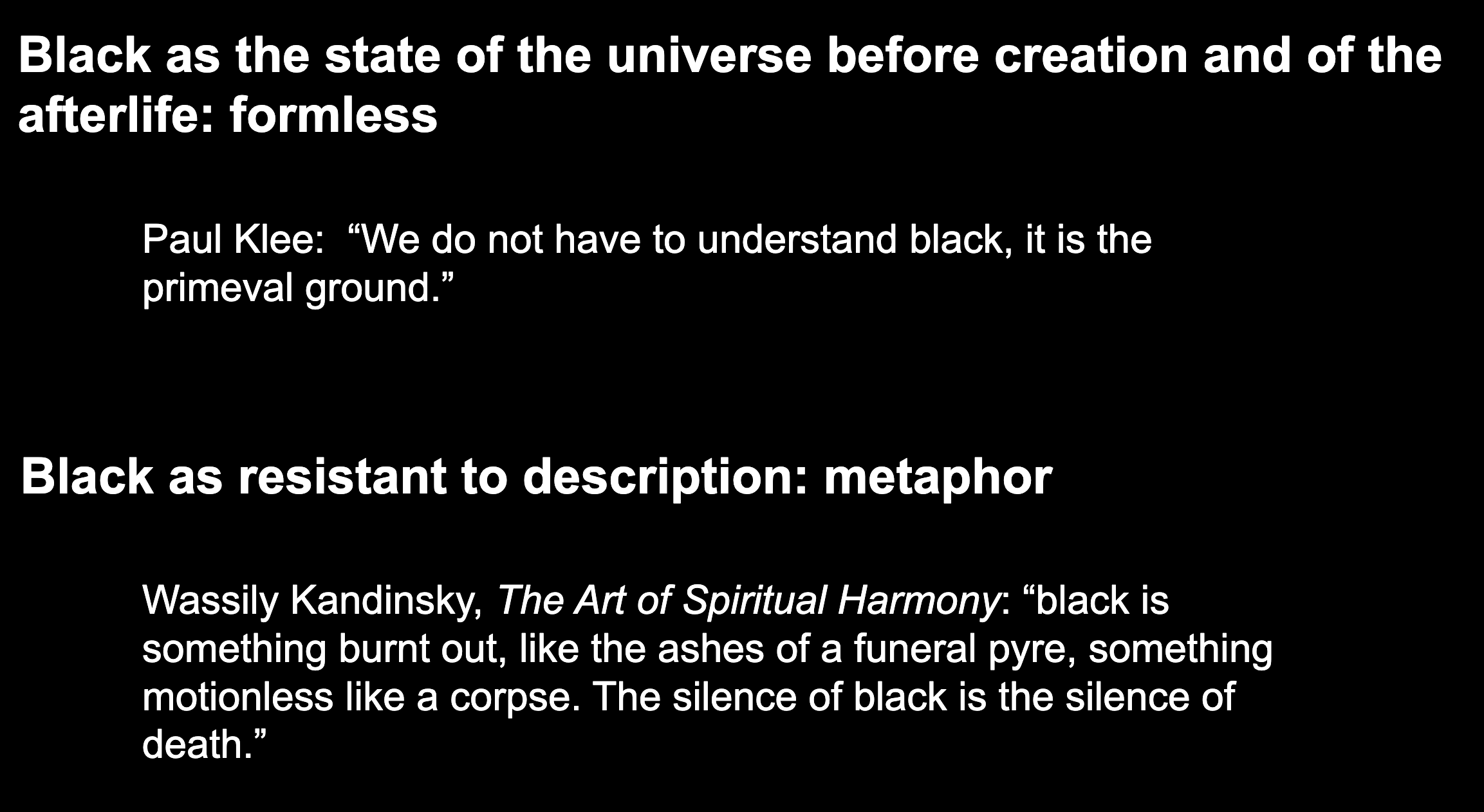
black as negation, absence, not seeing, inaction
modern neurophysiology: “photoreceptors in our retinas respond to photons of light, and we see black in those areas of the retina where the photoreceptors are relatively inactive.”
Aristotle: “Even when we are not seeing, it is by sight that we discriminate darkness from light…We “see” in total darkness because sight itself has a color, Aristotle suggests, and that color is black: the feedback hum that lets us know the machine is still on.”
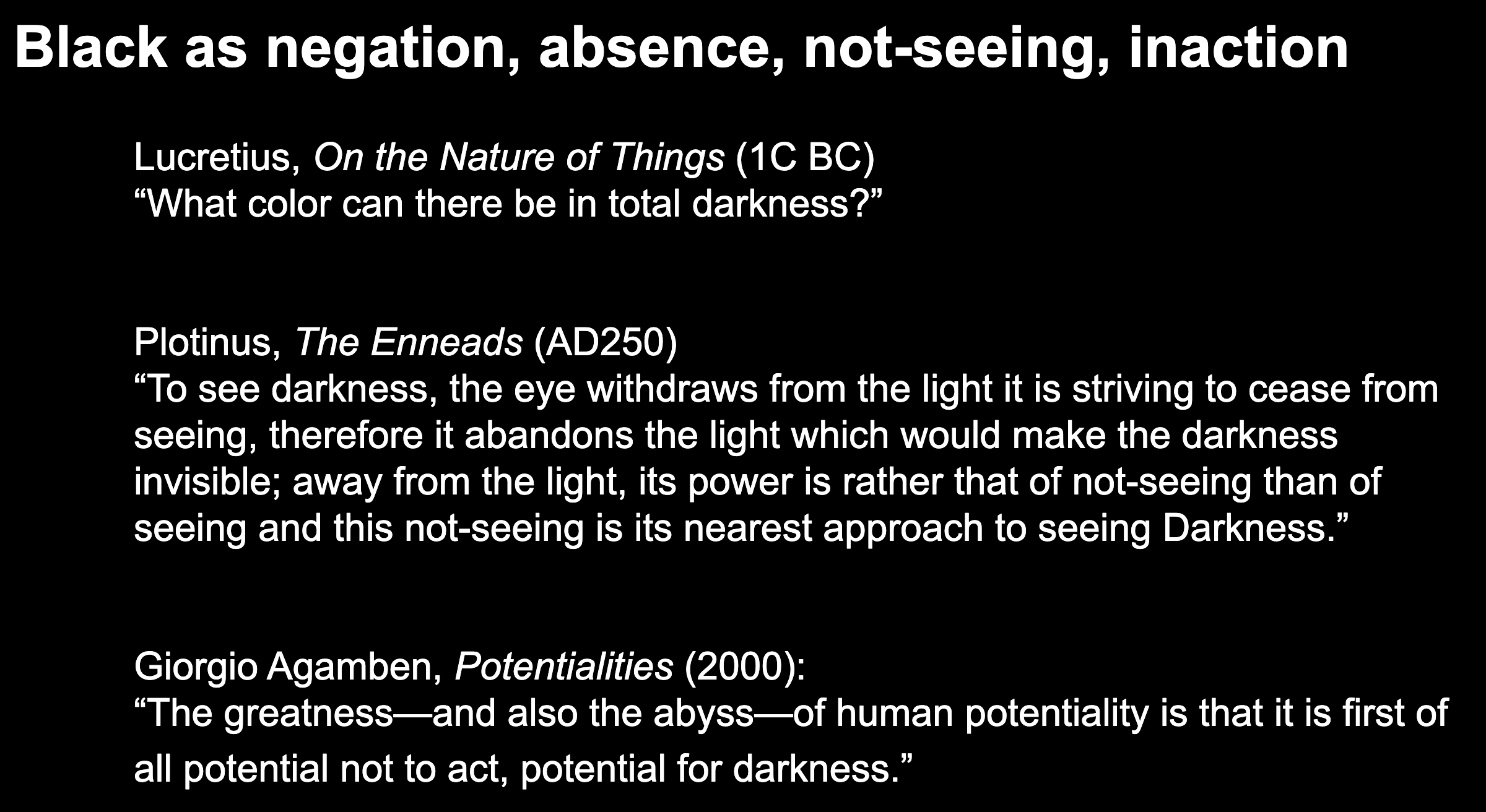
Plotinus: not seeing gets us close to seeing darkness
Agamben: capacity to see darkness/potential to not see makes us human; freedom b/c we’re capable of inaction
Reading: Syreeta McFadden, “Teaching the camera to see my skin”
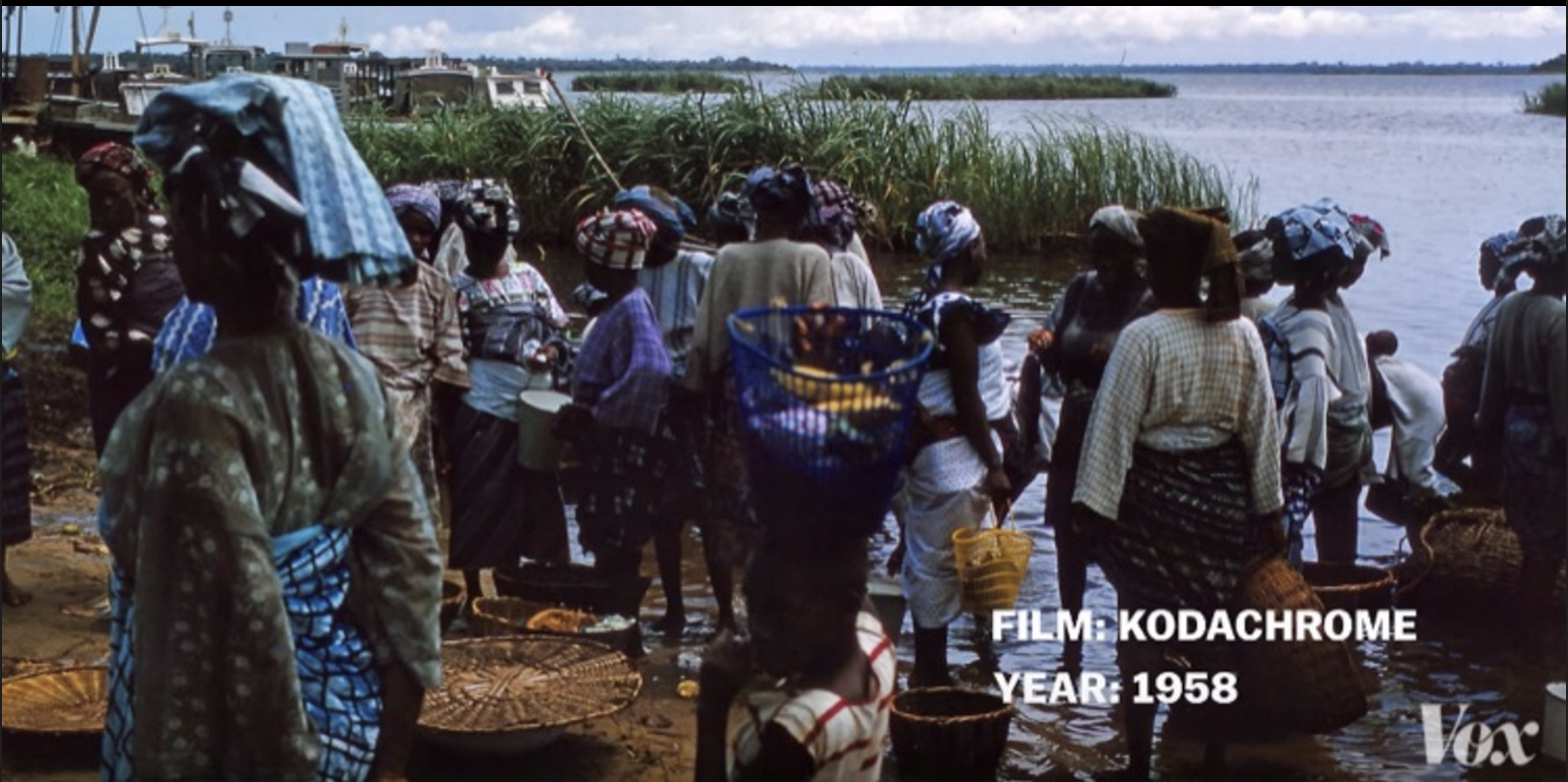
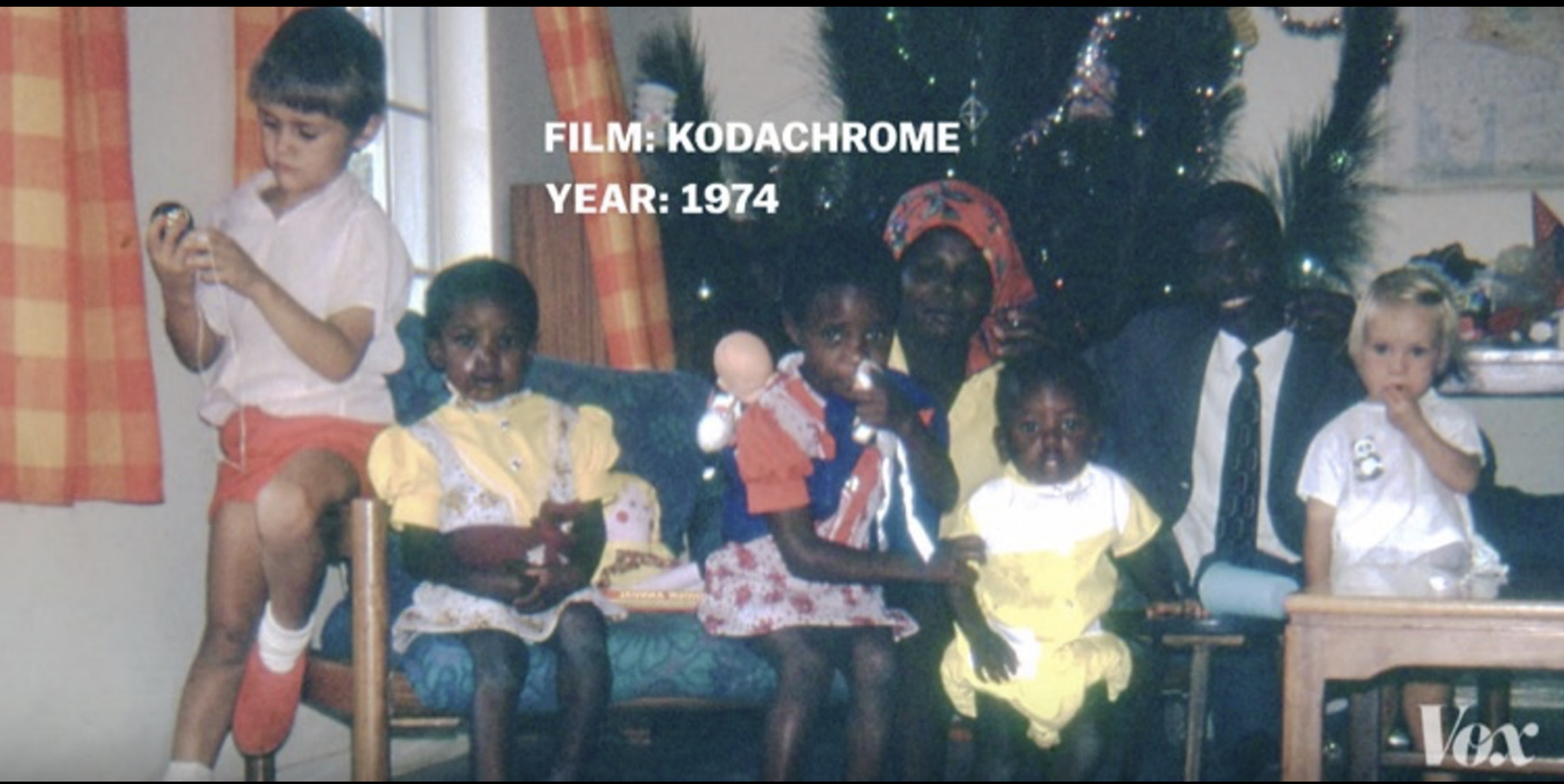
Pictures in photo album: “In some pictures, I am a mud brown, in others I'm a blue black. Some of the pictures were taken within moments of one another.”
Photography is balancing an equation between light and documentary. Beauty and storytelling. Honesty and fantasy.
“The frame says how the photographer sees you.”
“ ‘Is that how you see me? Could you not see blackness? Its varying tones and textures? And do you see all of us that way?’ ”
“it seemed the technology was stacked against me.”
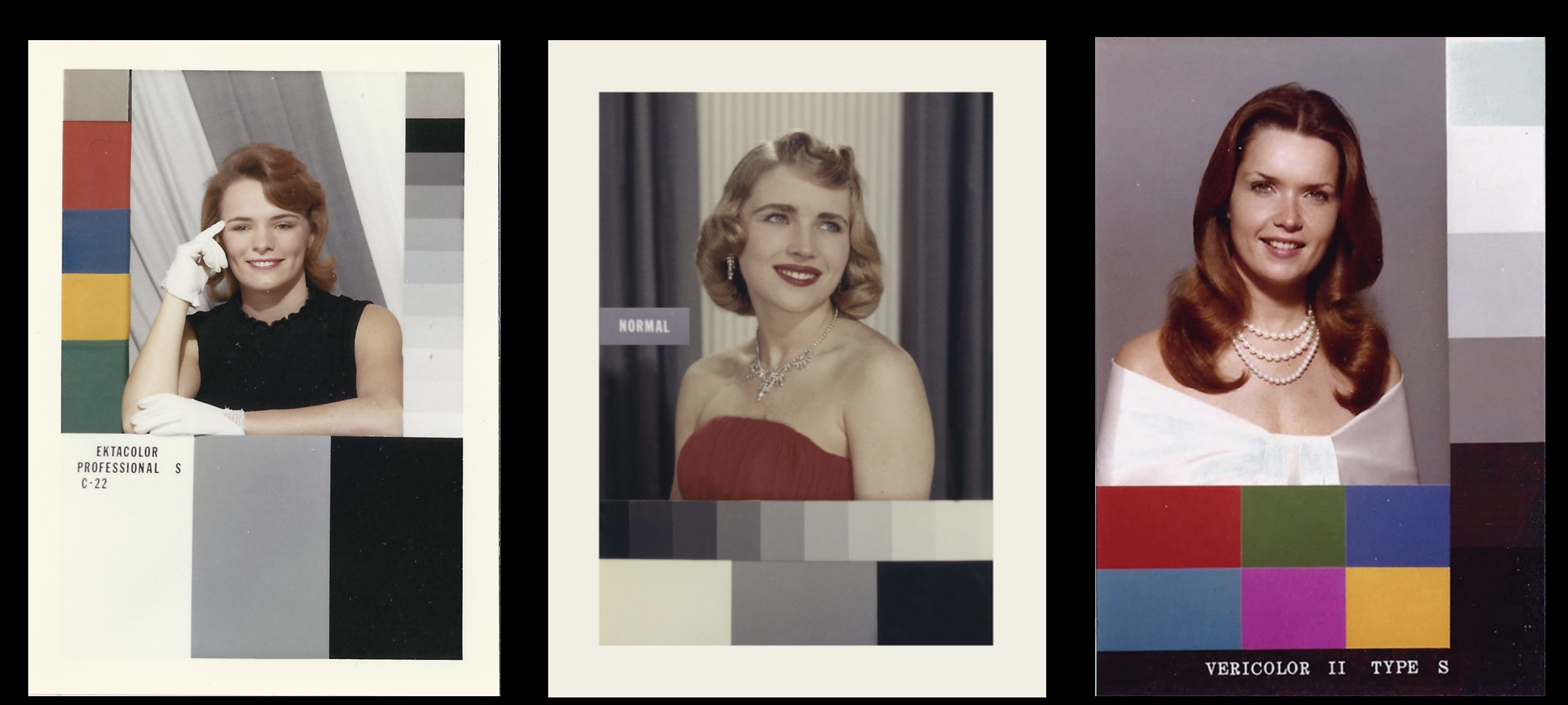
racism embedded in the technology of photography (Shirley Cards)
Shirley cards…“The image is used as a metric for skin-color balance, which technicians use to render an image as close as possible to what the human eye recognizes as normal. But there's the rub: With a white body as a light meter, all other skin tones become deviations from the norm.” (STANDARDIZATION)
Lorna Roth: “film emulsions … "could have been designed initially with more sensitivity to the continuum of yellow, brown and reddish skin tones but the design process would have to be motivated by a recognition of the need for extended range." Back then there was little motivation to acknowledge, let alone cater to a market beyond white consumers.”
“Kodak did finally modify its film emulsion stocks in the 1970s and '80s — but only after complaints from companies trying to advertise chocolate and wood furniture”
“The ID2 has a flash boost button engineered to add 42% more light on its subjects. Its effect would result in a deliberate darkening of dark-skinned subjects. Broomberg told The Guardian that ‘if you exposed film for a white kid, the black kid sitting next to him would be rendered invisible except for the whites of his eyes and teeth.’ ”
what does it mean to be rendered INVISIBLE b/c the camera was made for white ppl (makes vulnerable those who disappear)
“Today, the science of digital photography is very much based on the same principles of technology that shaped film photography.”
“It wasn't until the mid-1990s that the calibration model for color reference models fully shifted away from Shirley to be inclusive of full range of skin tones.”
“Our skin blown out in contrast from film technologies that overemphasize white skin and denigrate black skin. Our teeth and our eyes shimmer through the image, which in its turn become appropriated to imply this is how black people are, mimicked to fit some racialized nightmare that erases our humanity.”
Reading: Shawn Michelle Smith, “Photography, Darkness, and the Underground Railroad: Dawoud Bey’s Night Coming Tenderly, Black
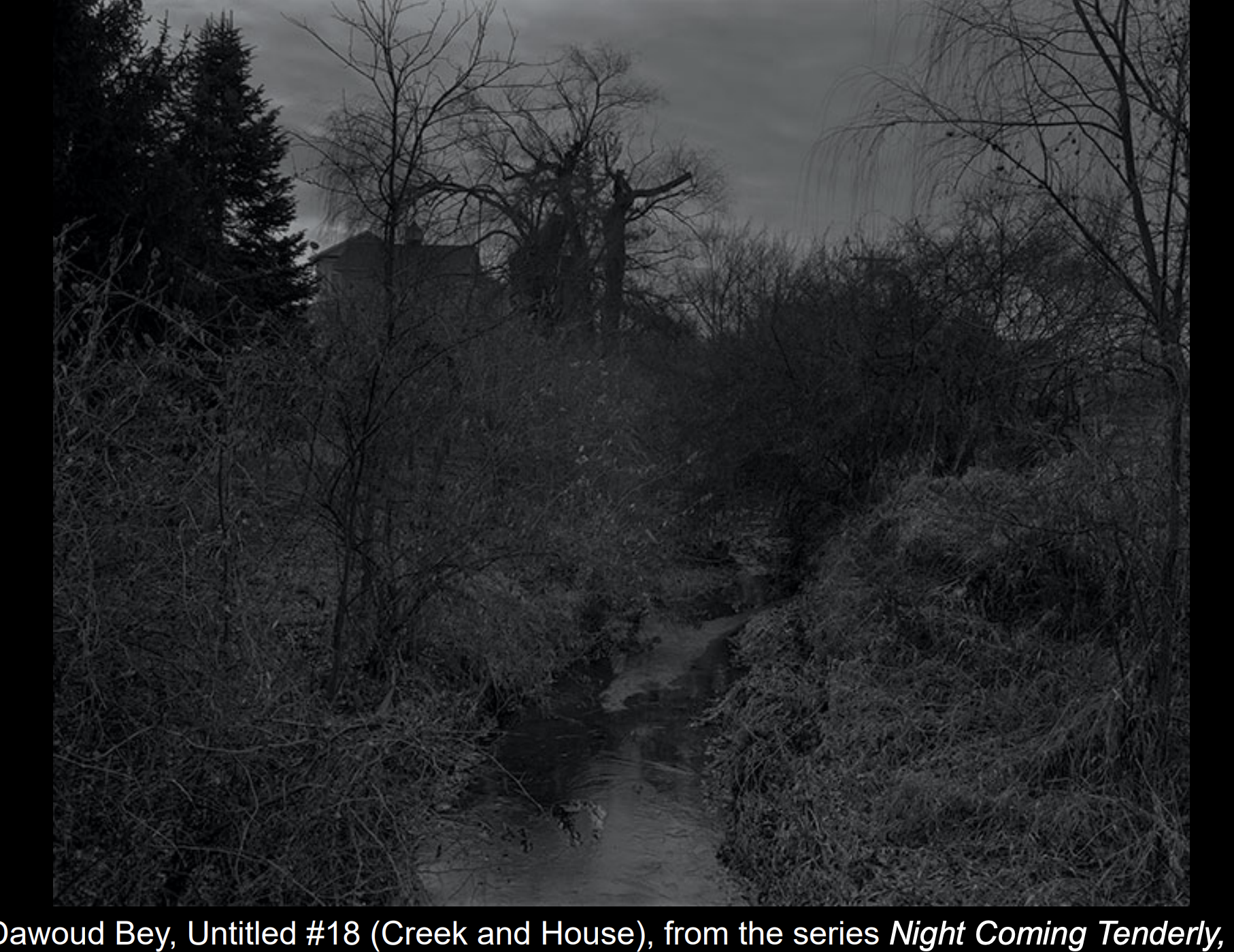
Although some details refuse to come into visibility, looking at the images replicates the experience of peering into the dark; the longer one gazes, the more one can see.
As Bey has said of the curated images, his aim was to "visualize black presence in the American physical and social landscape."…The curated images make
visible the coterminous histories of photography and the African American freedom struggle…
The images Bey selected from the Art Institute's collection represent a wide cross section of the material history of the medium
As this photographic framing contextualizes Bey's work in a broader history of photography, it also invites one to consider what the photography of the Underground Railroad looks like in the historical record…Bey's Night Coming Tenderly, Black not only draws out the limits of photography in representing this history; it also reorients the view, asking one to linger in the literal and metaphorical darkness of photography, observing what registers in its recesses, and what remains outside its frames
He has produced dark, nearly illegible views of a historical path doubly obscured, by time as well as by design. In doing so, the artist intervenes in the logics of photographic exposure, both literal and metaphorical, using the technology to conceal as well as
Bey manipulated his negatives by overexposing them in the darkroom.
"Overexposure" and "underexposure" mark the language and mechanics of photography and light that lay bare a norm, namely, the "correct" amount of exposure, which assumes that a "good" picture can be agreed on.
The photographic record of the Underground Railroad is sparse, by necessity.
Bey's images register darkness as the sheltering cover for runaways and their allies, and denote the relative absence of photographic traces as protection from surveillance.
in US visual culture black bodies have often been "overexposed" and made hypervisible in ways that make black subjects "underexposed" and invisible.
"black representational space": too much visibility and not enough."
In the visual realm of slavery, blackness was brutally put on display for white eyes in the spectacle of torture, the gaze of the overseer, the sexual violence of white masters, and the everyday refusals of all forms of patial and bodily privacy to enslaved people.
Douglass leaves the specifics of his escape in the dark in order to protect the path of other fugitives and the people who might help them along the way. Referring to this historical context, Bey's dark images evoke not only the cover of night under which many escaped, but also the cover of secrecy and obfusca-tion that protected the Underground Railroad, its stationmasters and helpers, as well as its travelers.
To represent without exactly recording is another inventive reworking of the usual dynamics of photography.
Photography and Fugitivity
Before the abolition of slavery, the photographic image could be used to assist slaveholders in the surveillance of black subjects deemed white property.
Tubman herself used photographs to identify abolitionists on the Underground Railroad.
image of runaway enslaved person in the papers: The image metaphorically marks the precarity of the photograph for the fugitive, which, making visible her escape, might also aid in her capture.
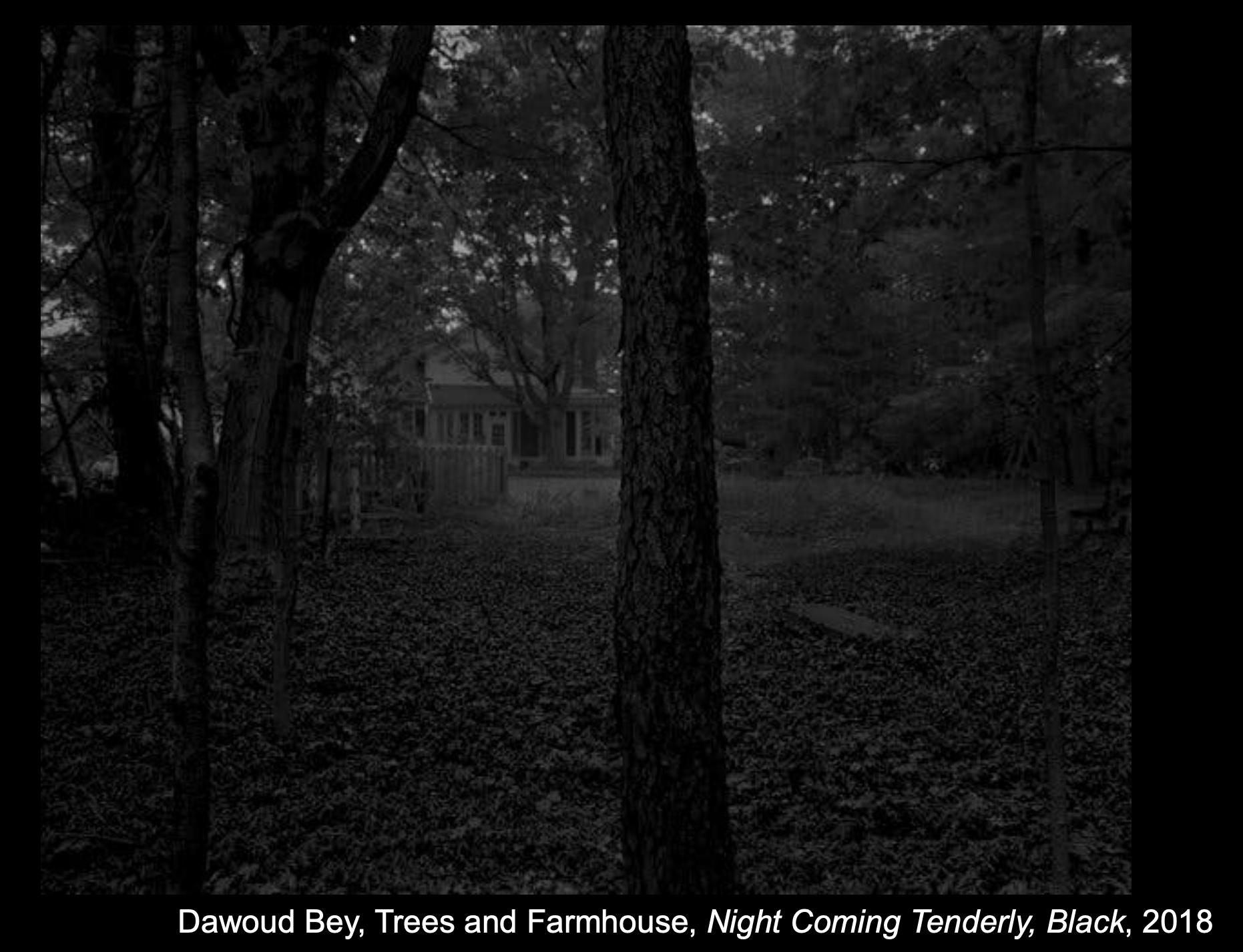
Bey's dark images resist the forces of over- and underexposure according to which African American subjects have been made hypervisible as well as invisible.
Images: Dawoud Bey’s “Night Coming Tenderly, Black” series (2018)
name of series like Langston Hughes’ poem “Dream Variant”
simile: “Dark like me”, “Black like me”
ellipses (…) like opacity and absence
poem of rest; Hughes longing for freedom under the protectiveness of night (sleep mostly done in dark)
tracing of path of Underground Railroad
light exposes hiding places; his photos are underexposed
photos show the darkness AND highlight the threat of exposure
darkness is a refusal to let light in → space of potential rest
underexposed → menacing aura BUT also protection and safety in the blind spots
use of thirds (low angle shots)
photos inspired by Ray DeCarava
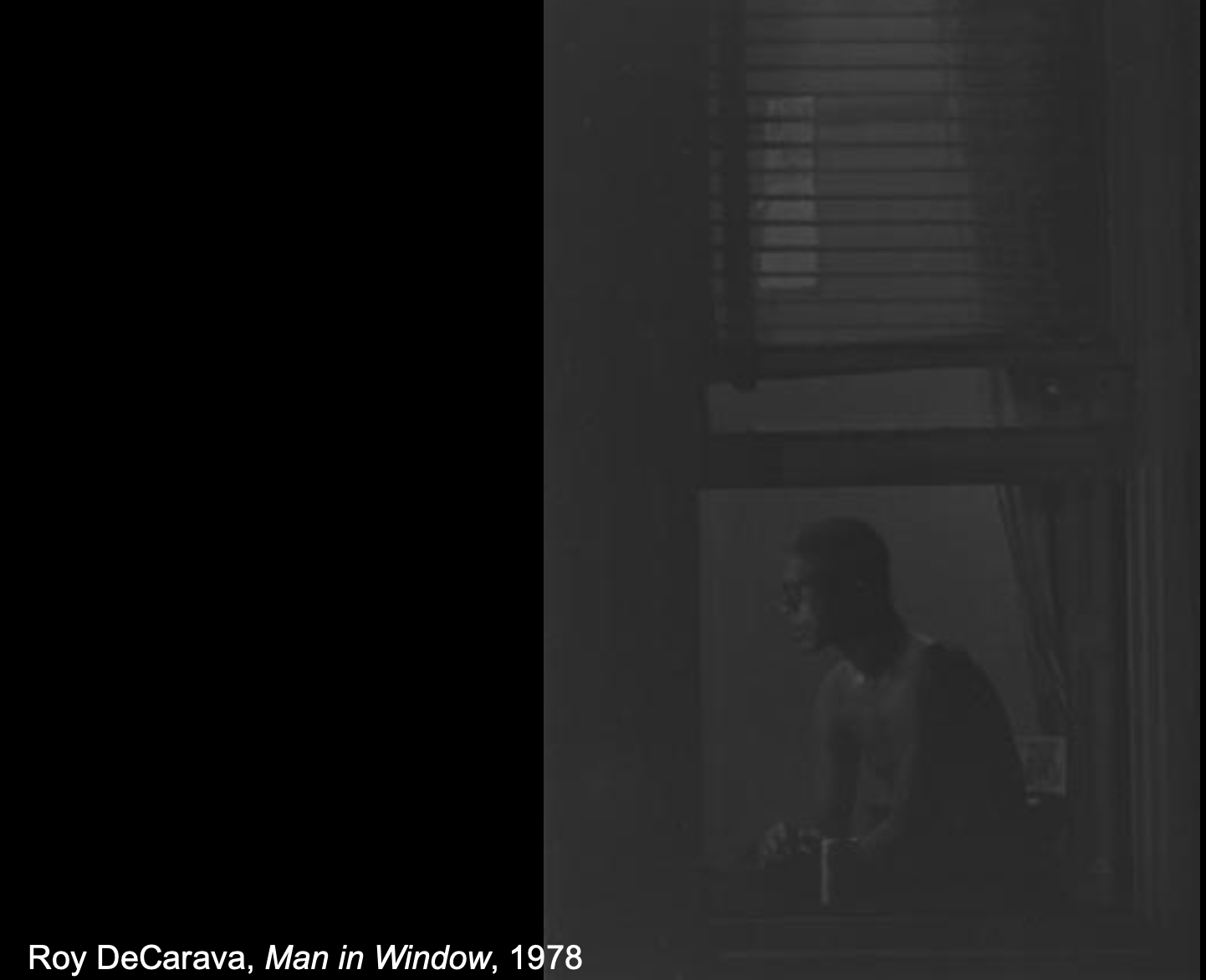
ordinary subject, but photo elevated
window kinda frames, but not much info given; not much light to illuminate
picture dark; underexposed
Image: Malevich, Black Square (Russia, 1915)
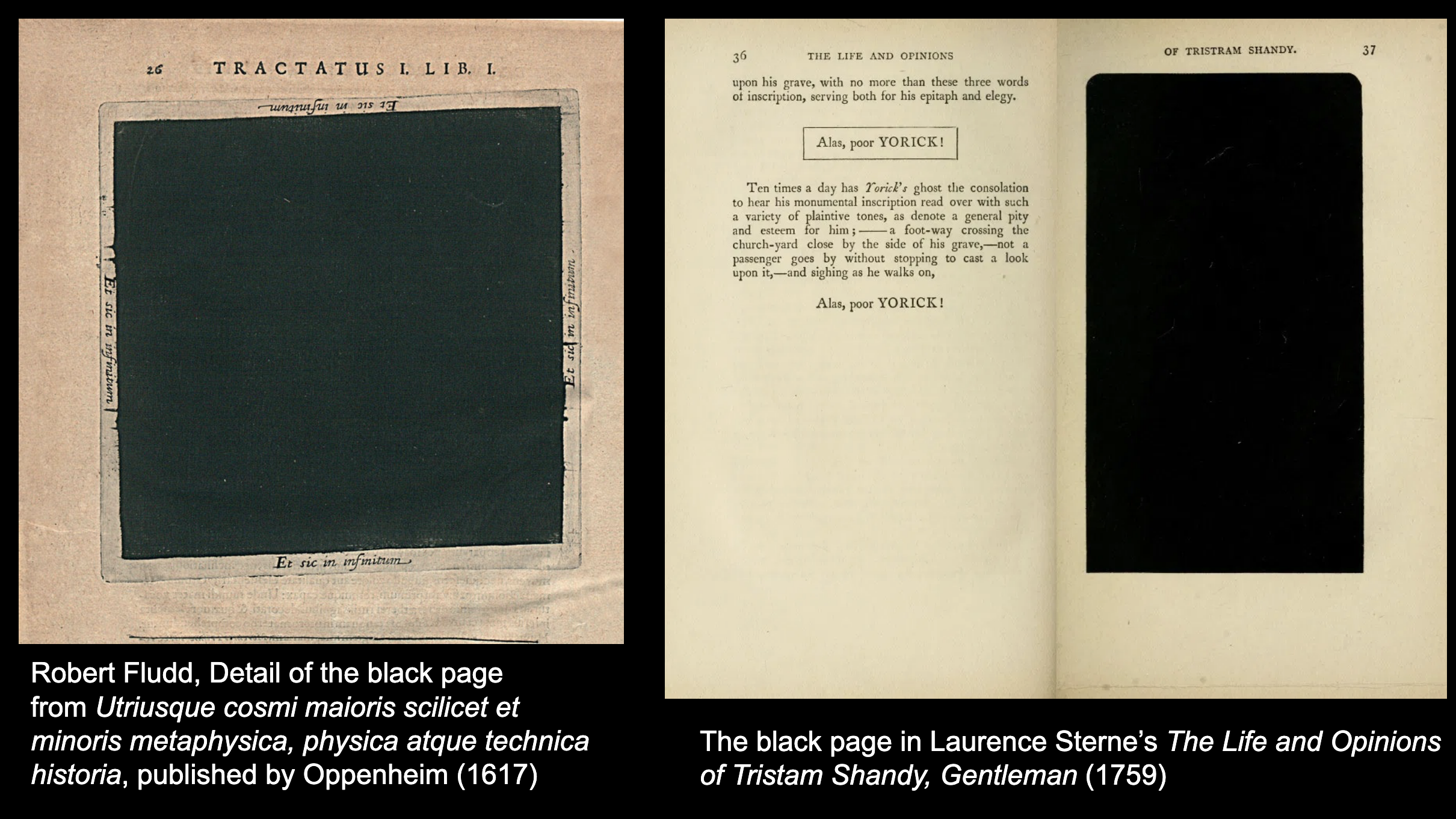
black square representation of nothingness prior to the universe
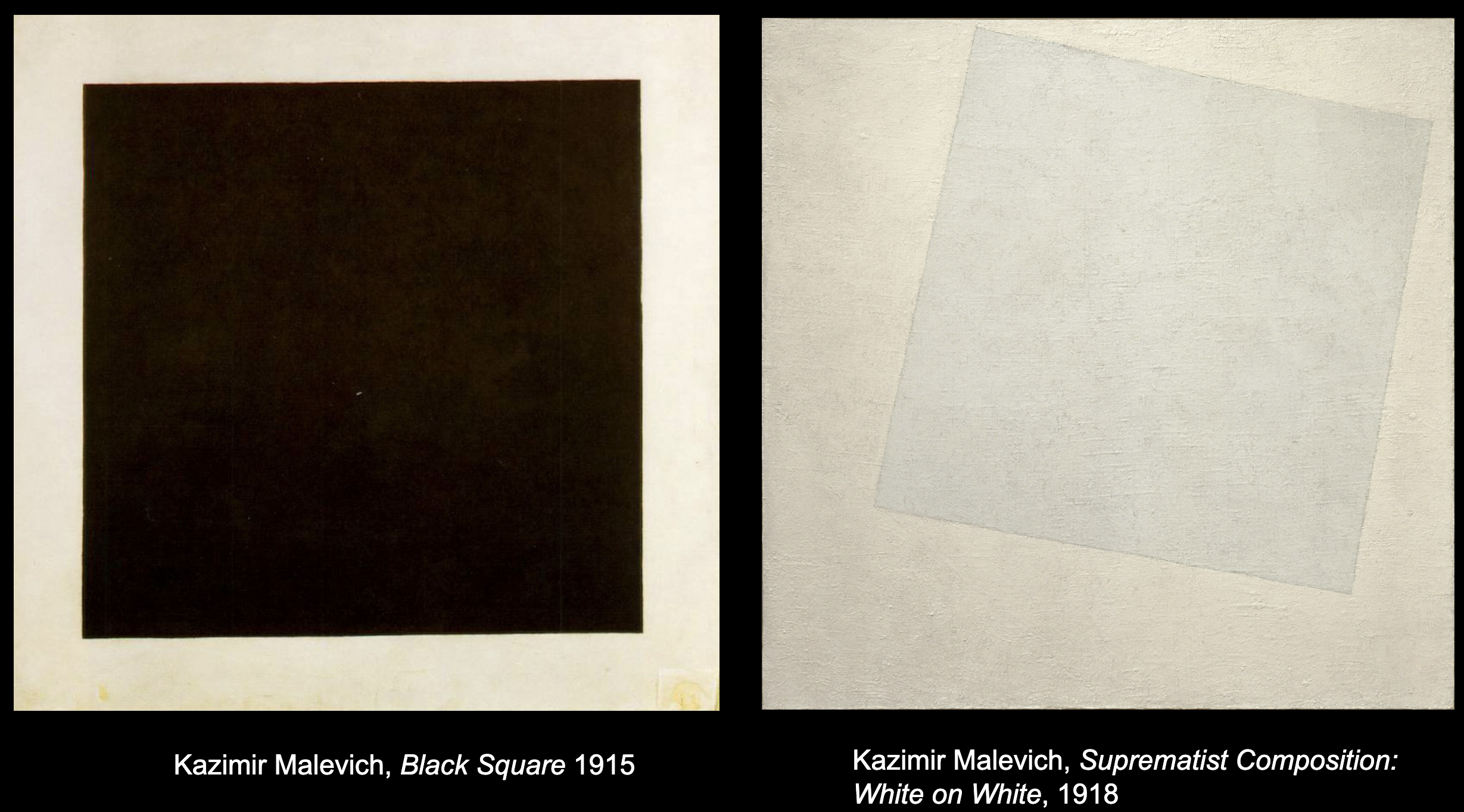
Black Square → refusal to show anything (there were colors underneath; the black paint was painted on not-dry color paint)
writing on edge: “Battle of Negros…” (referencing artist from past, see below)
Suprematist Composition: White on White → kinda looks like floating/transcendence
both limitless; going beyond as art with no object
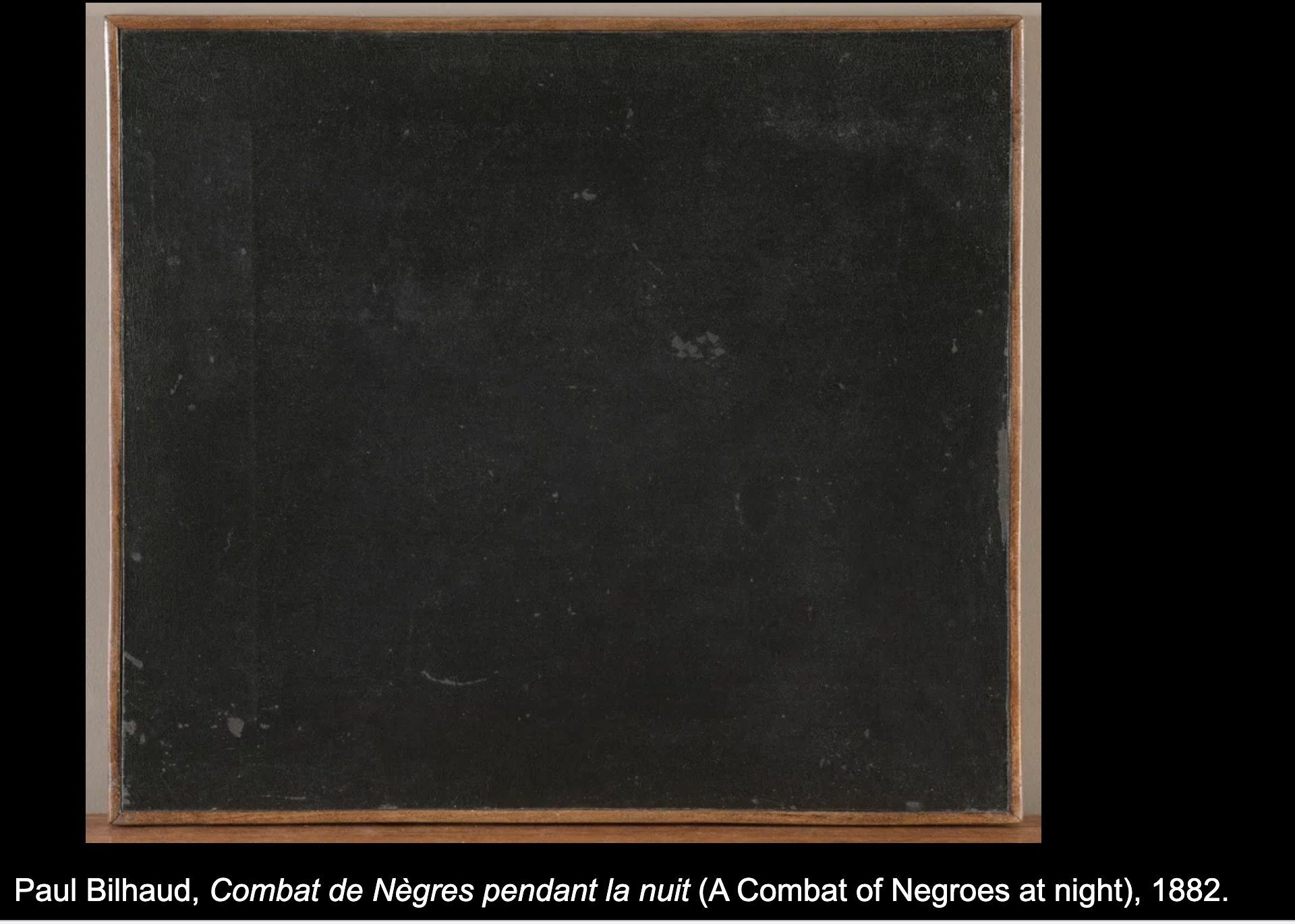
in the dark, skin color is not able to be known
black square might liberate (refusal, as above) BUT also blocks b/c you can’t see beyond it
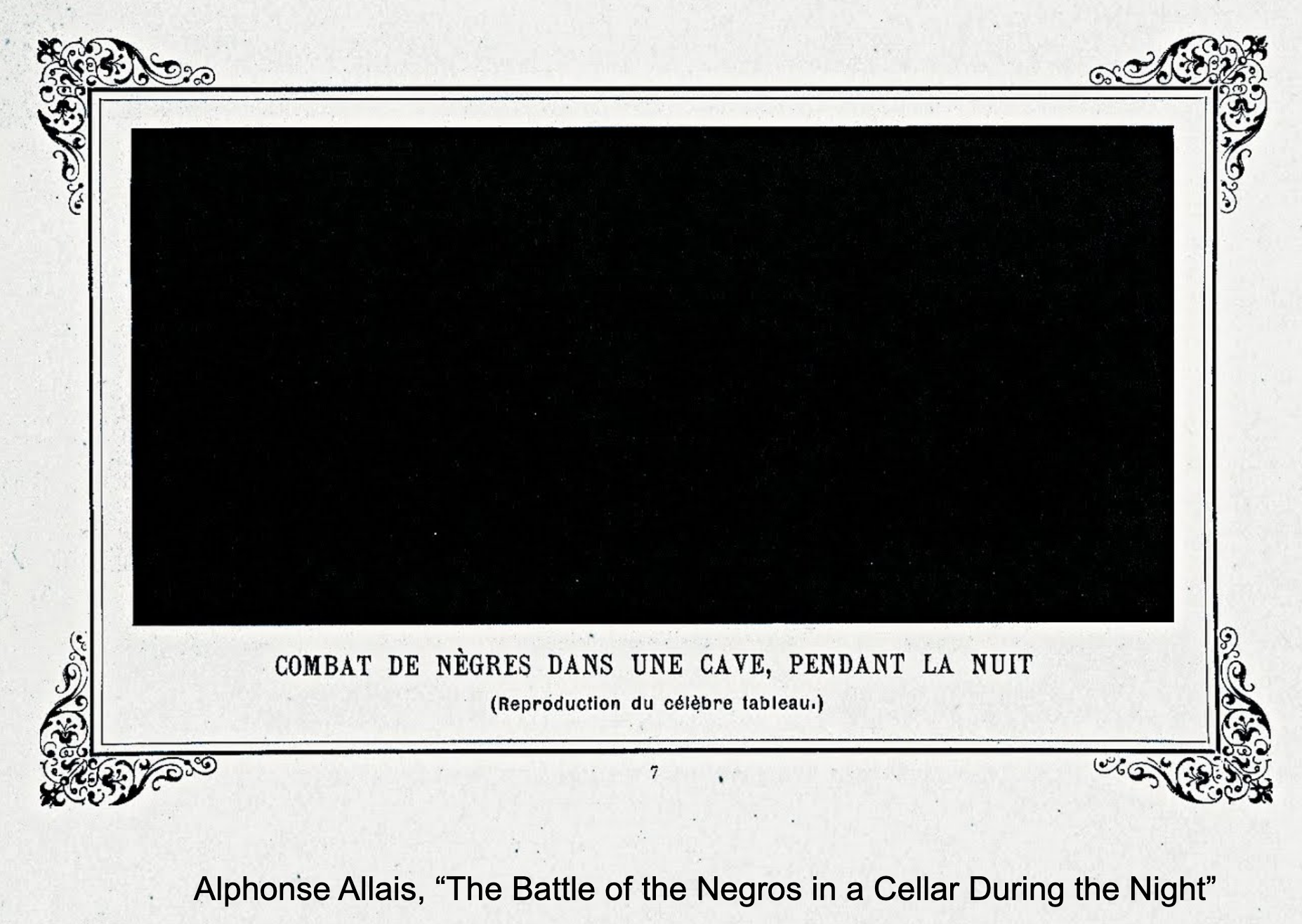
*other example was like red of tomatoes near the Red Sea; “Funeral March, composed for the obsequies of a great deaf man” was blank
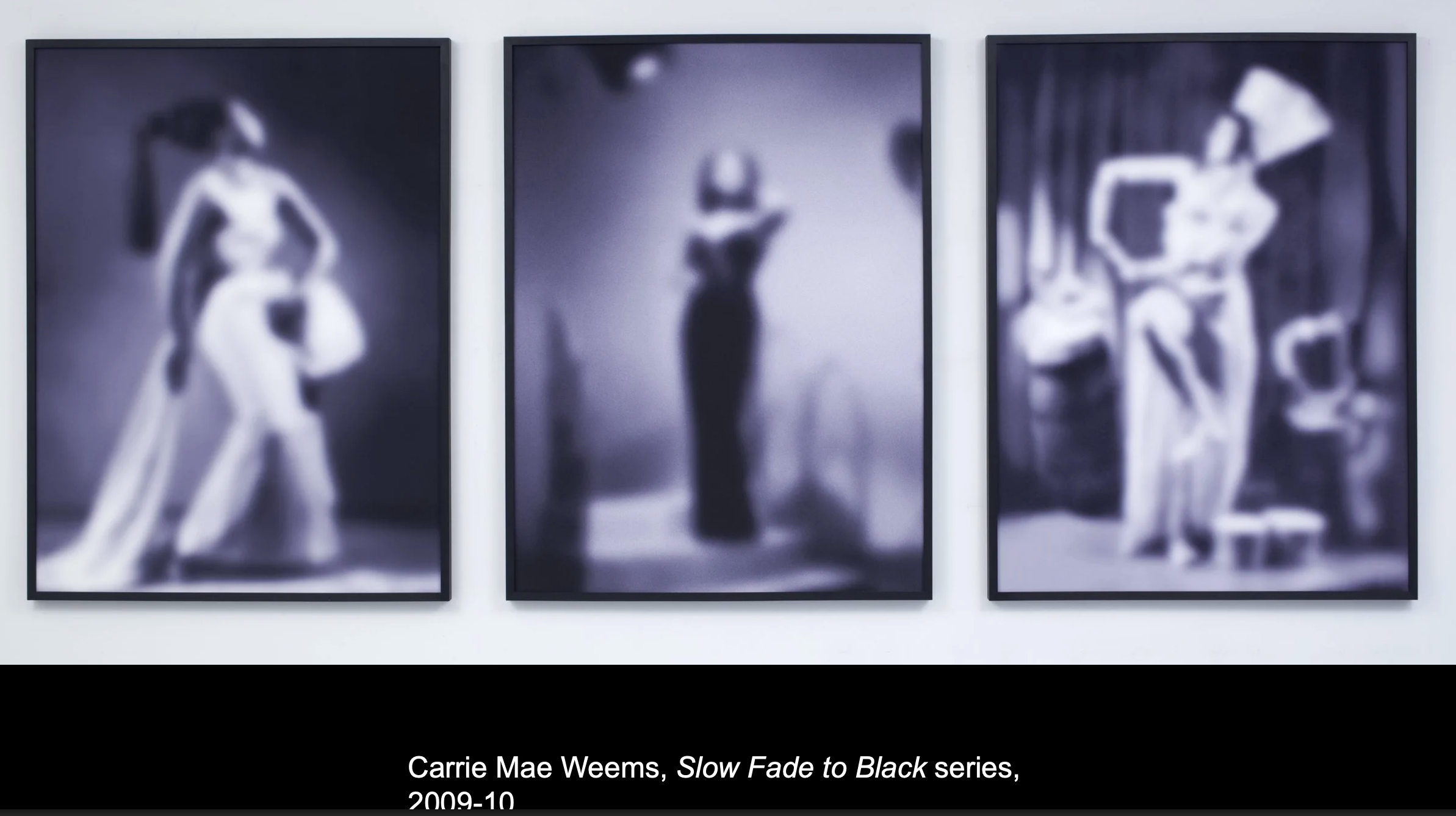
Images: Carrie Mae Weems, Colored People and Slow Fade to Black series
Slow Fade to Black series
celebrities usually more public (publicity)
in her works, the photos blurred so you can’t see who they are
at what point does someone become invisible (not recognizable)
Black is what remains → becomes definite conclusion
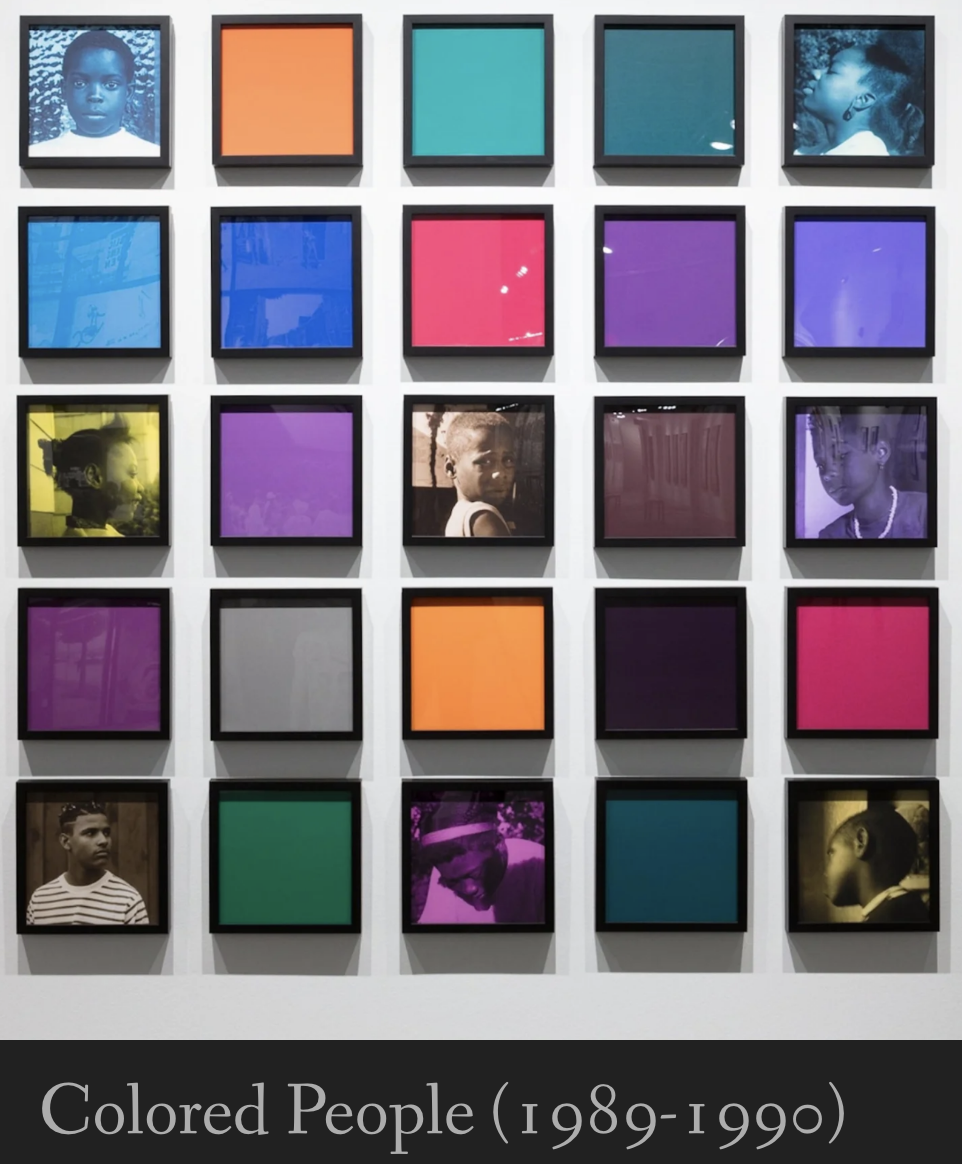
i think some things from discussion:
the kids are in color which seems more kid-like, something that not all kids might experience fully due to their circumstances or environment
they’re facing different directions (some might connect to previous depictions of ppl looking away from viewers; something about concealment or resistance in looking straight at the camera)
Reading: David Batchelor, “Chromophobia” in Chromophobia
READ NOTES
Film: Mother of George (Andrew Dosunmu, 2014)
film devoted to darkness; he puts on screen
how to exist in a world trying to put you out ^ (of the film and of the industry)
different way to make a film when ppl of color on screen (see below for bounce light…)
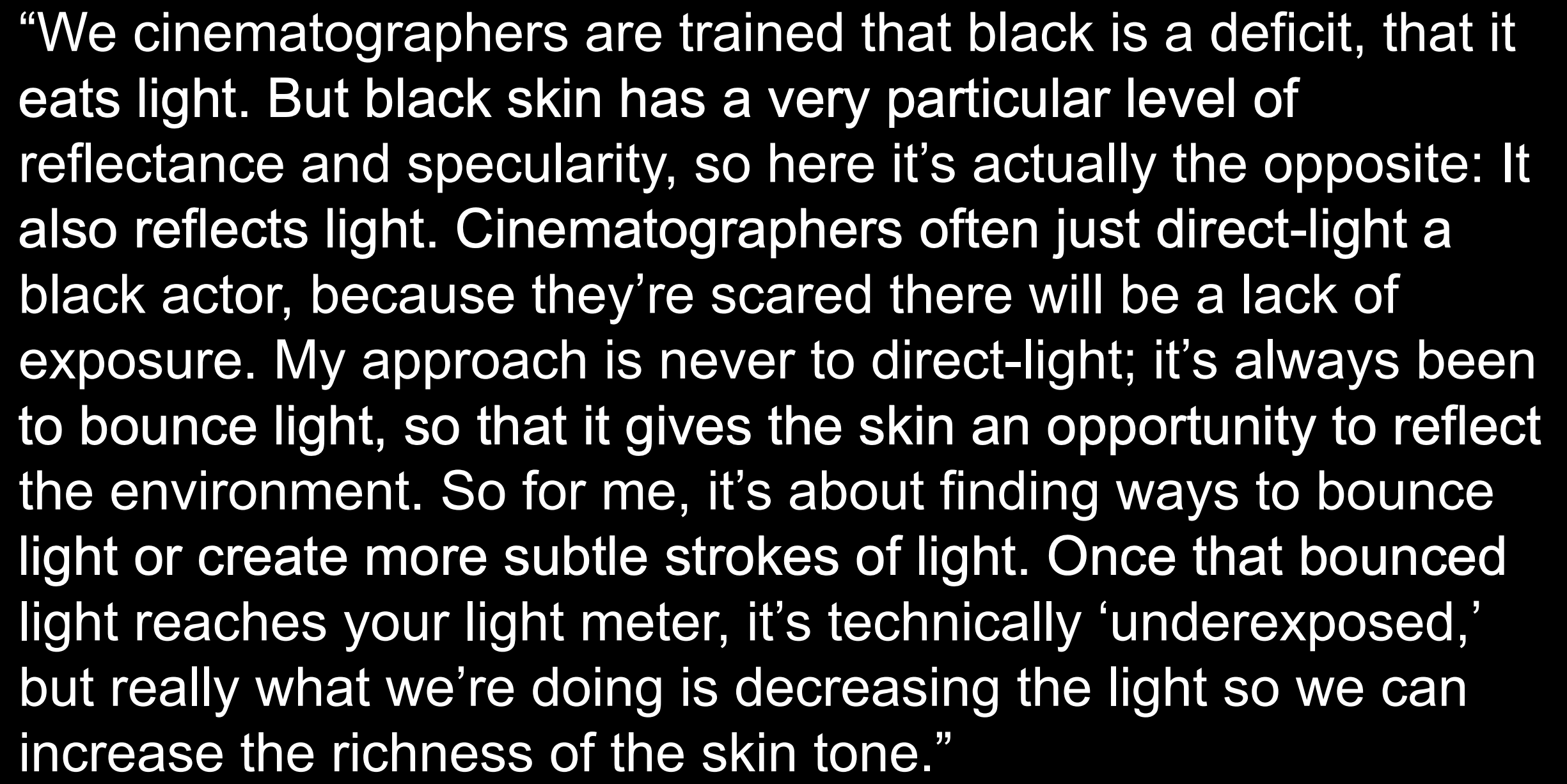
he thinks of color as something to be applied
Haile Gerima: “you see the colors of musical instruments transribed into color…”
Édouard Glissant: “We clamor for the right to opacity for everyone.”
concealment doesn’t = invisibility
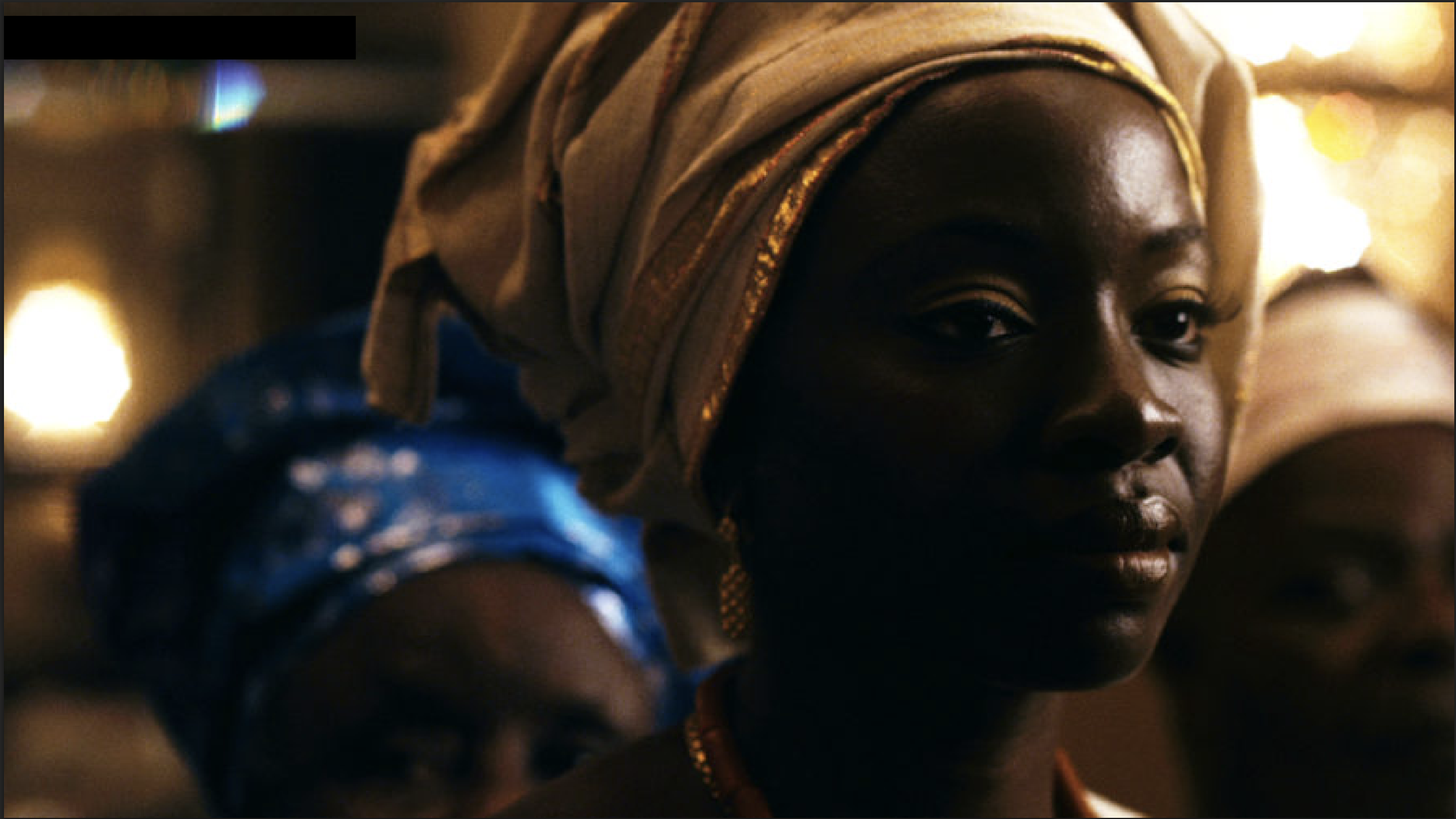
lots of scenes buried in shadow
Young uses bounce light to illuminate and show different colors of skin
intensities built in the dark (like below)
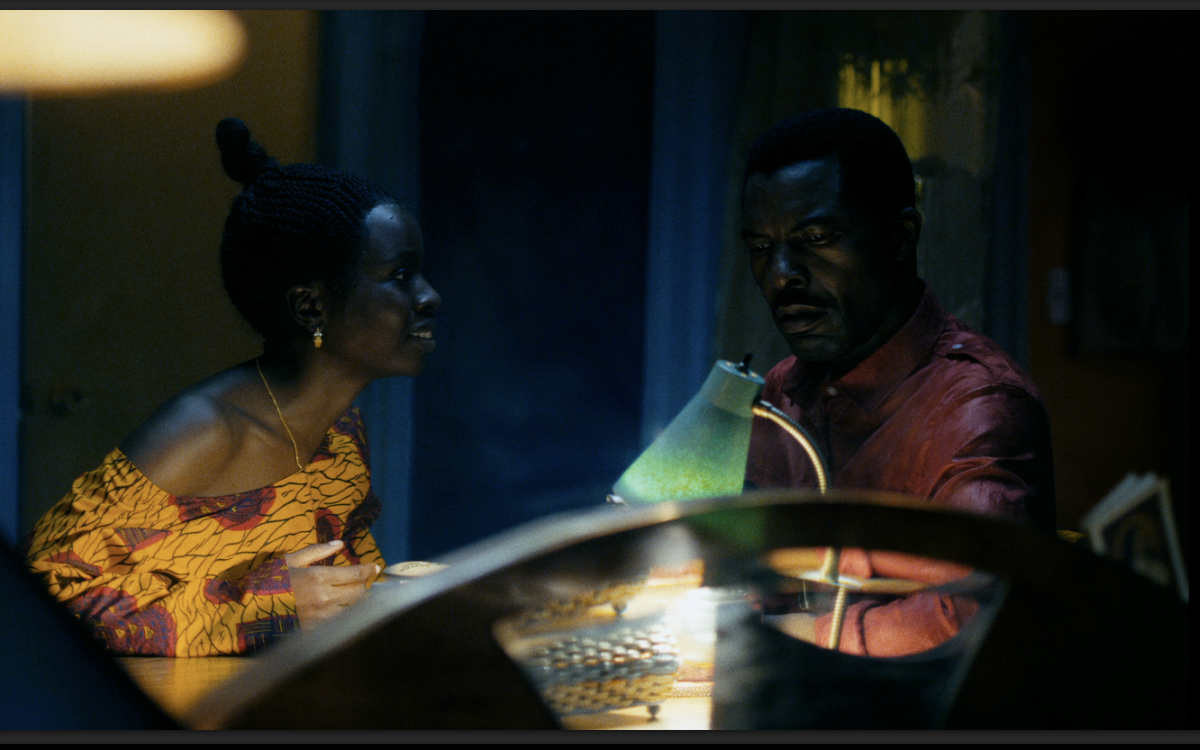
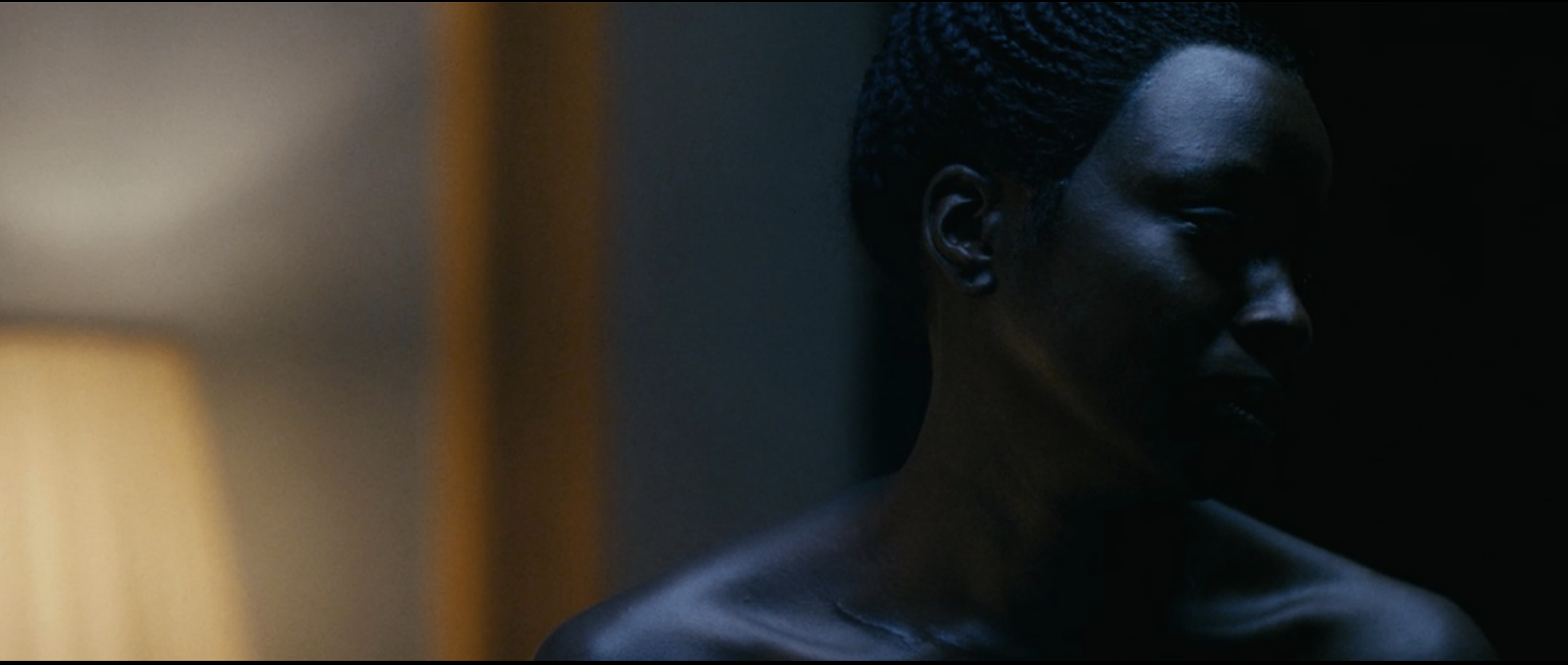
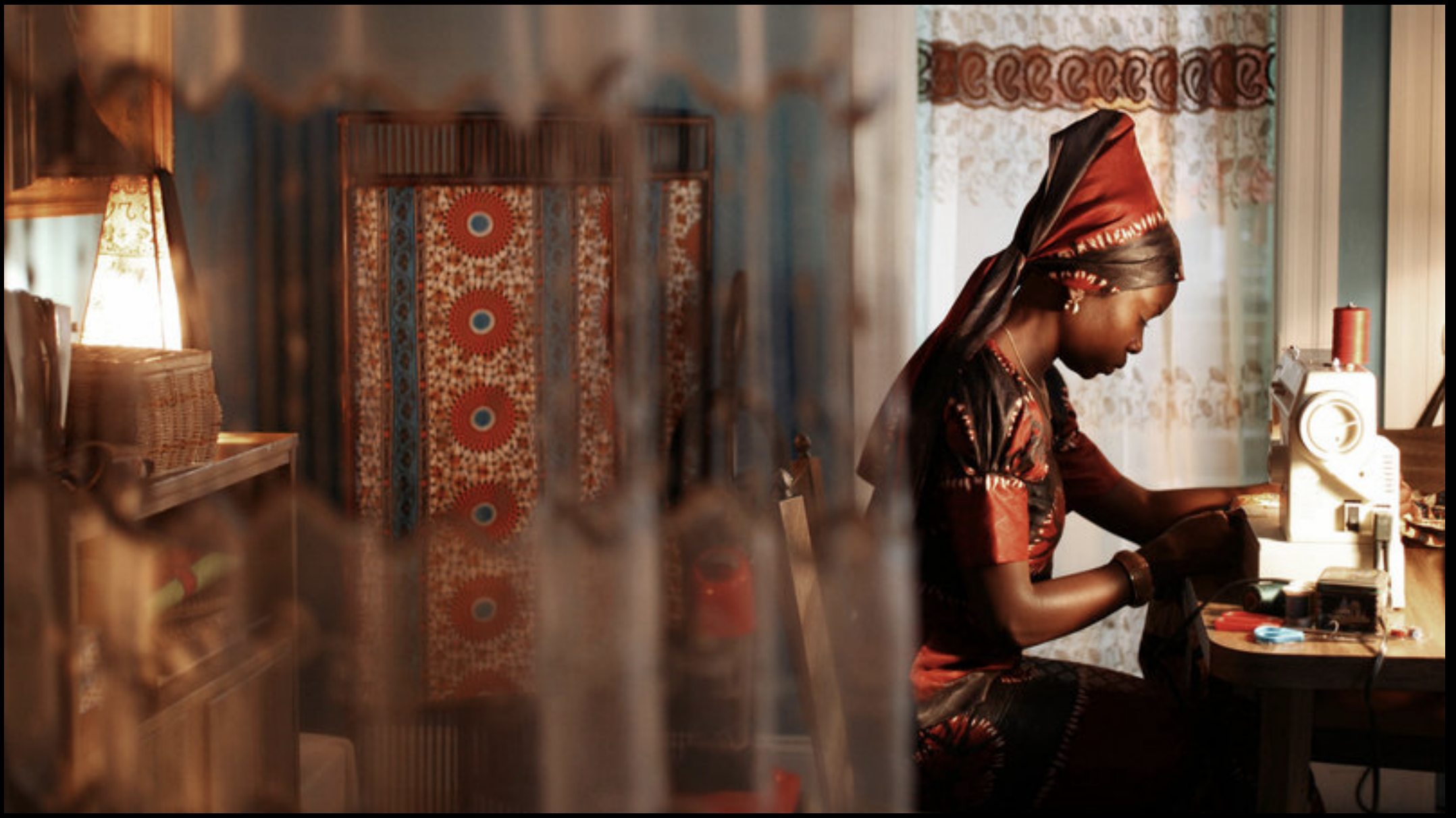
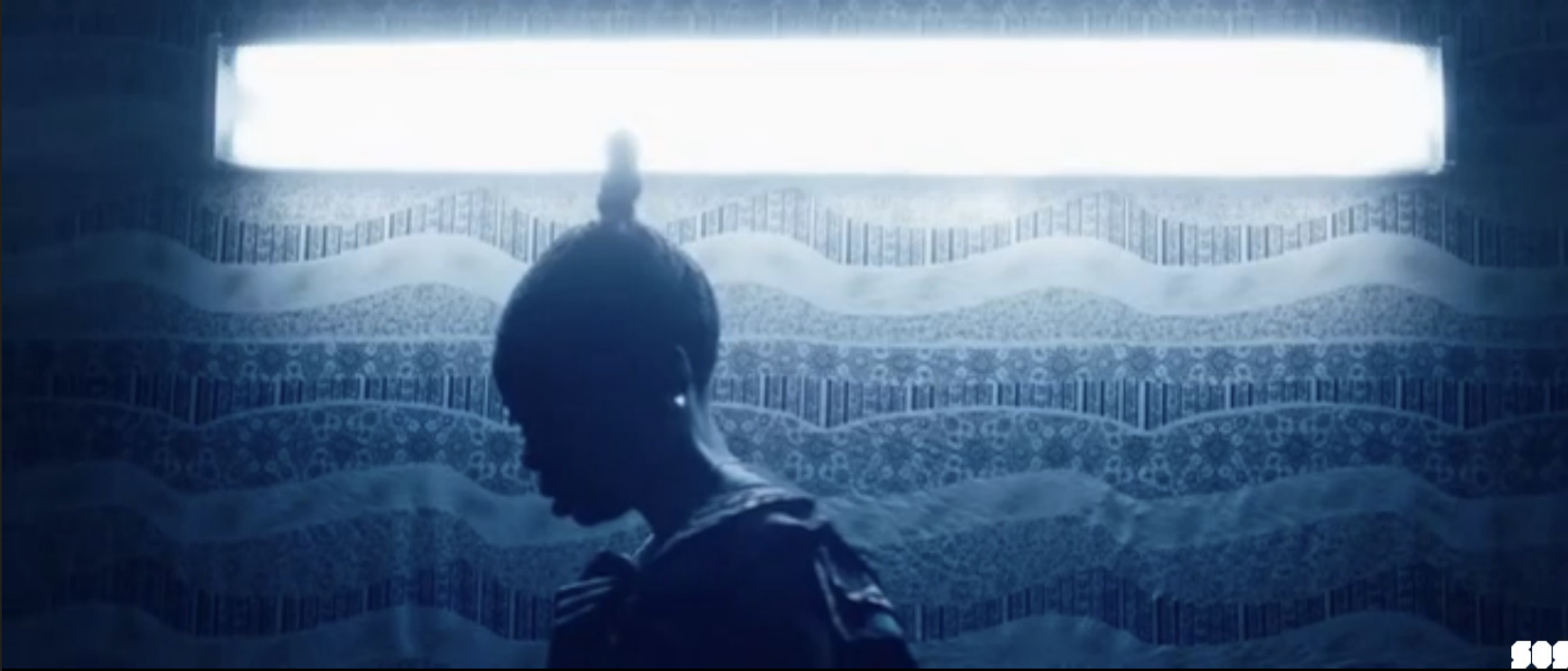
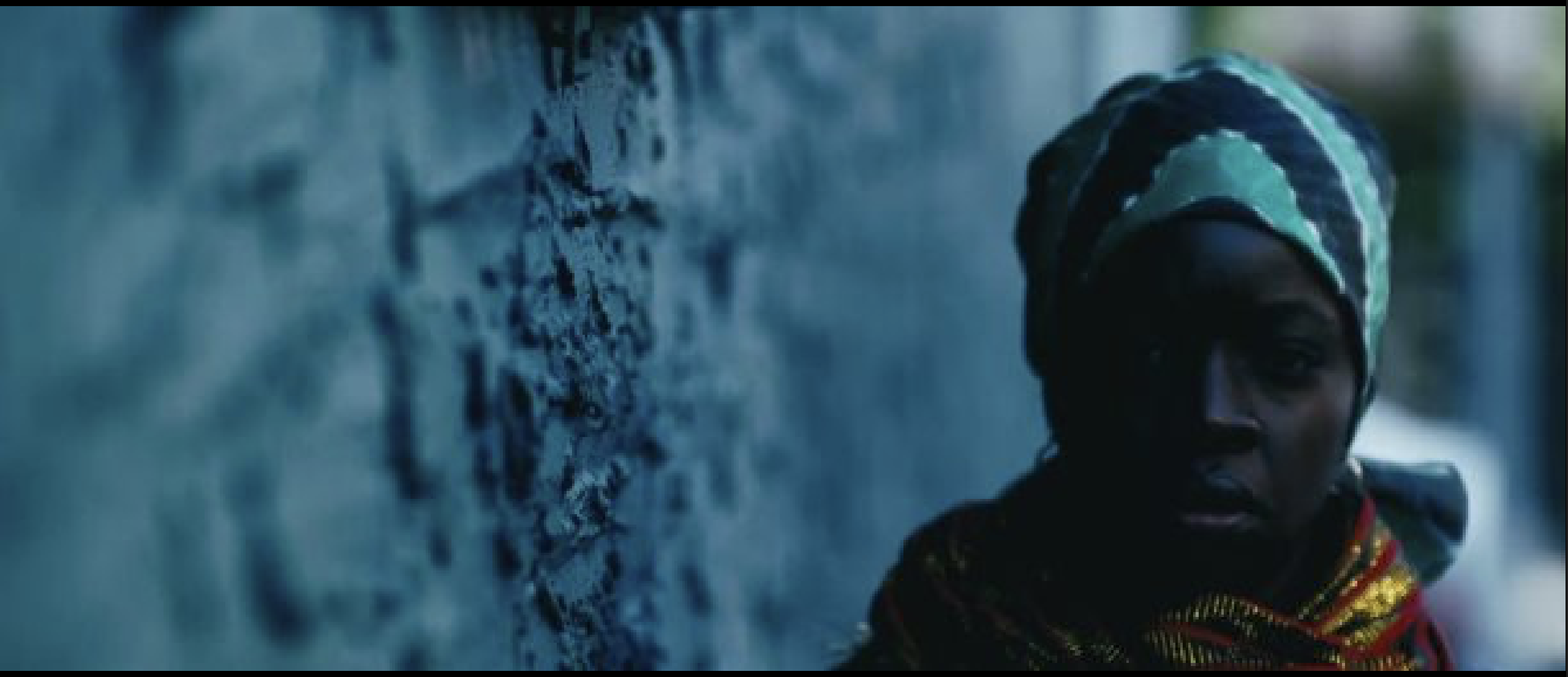
streets of Brooklyn
Reading: Maria Popova, 19th Century Insight into the Psychology of Color and Emotion
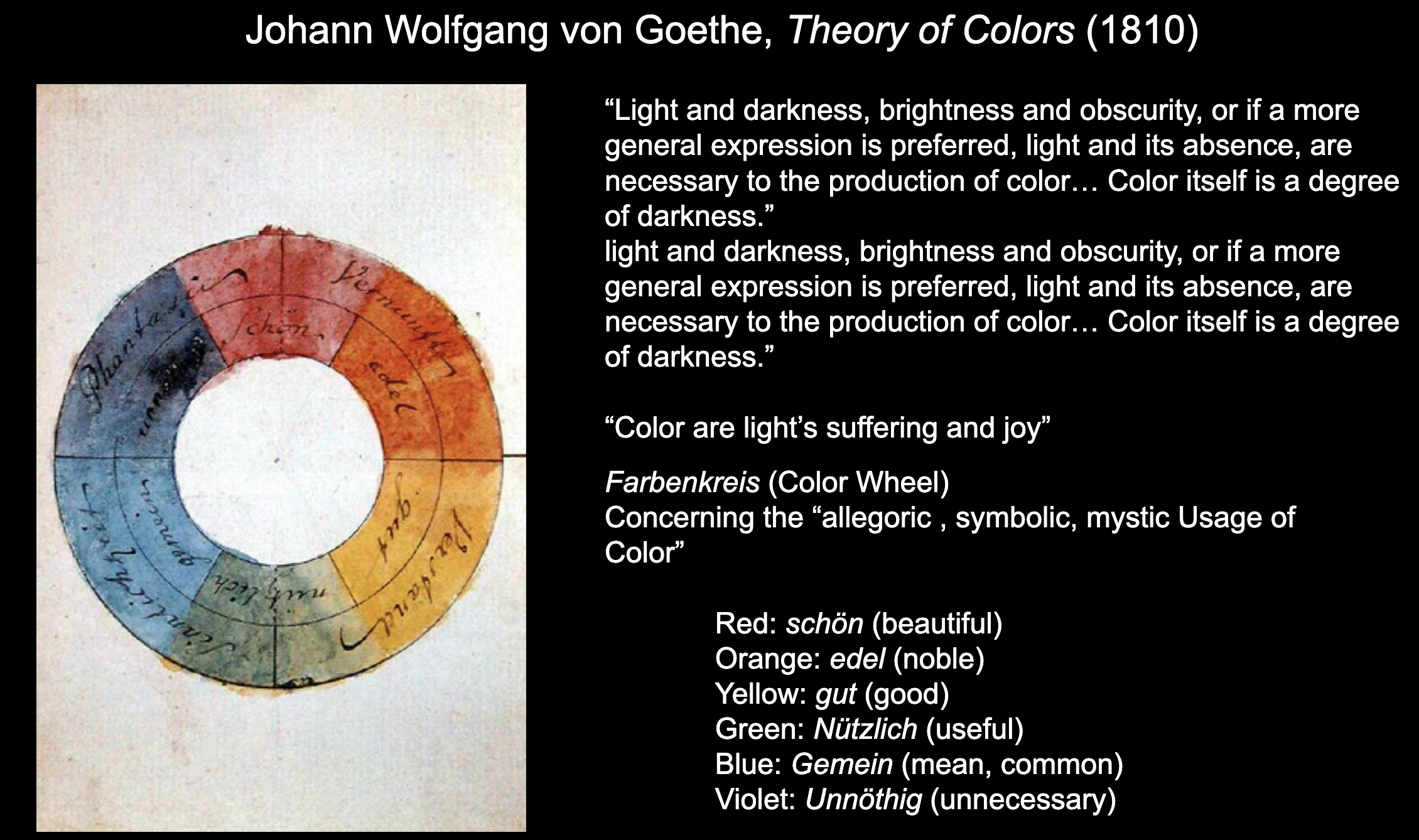
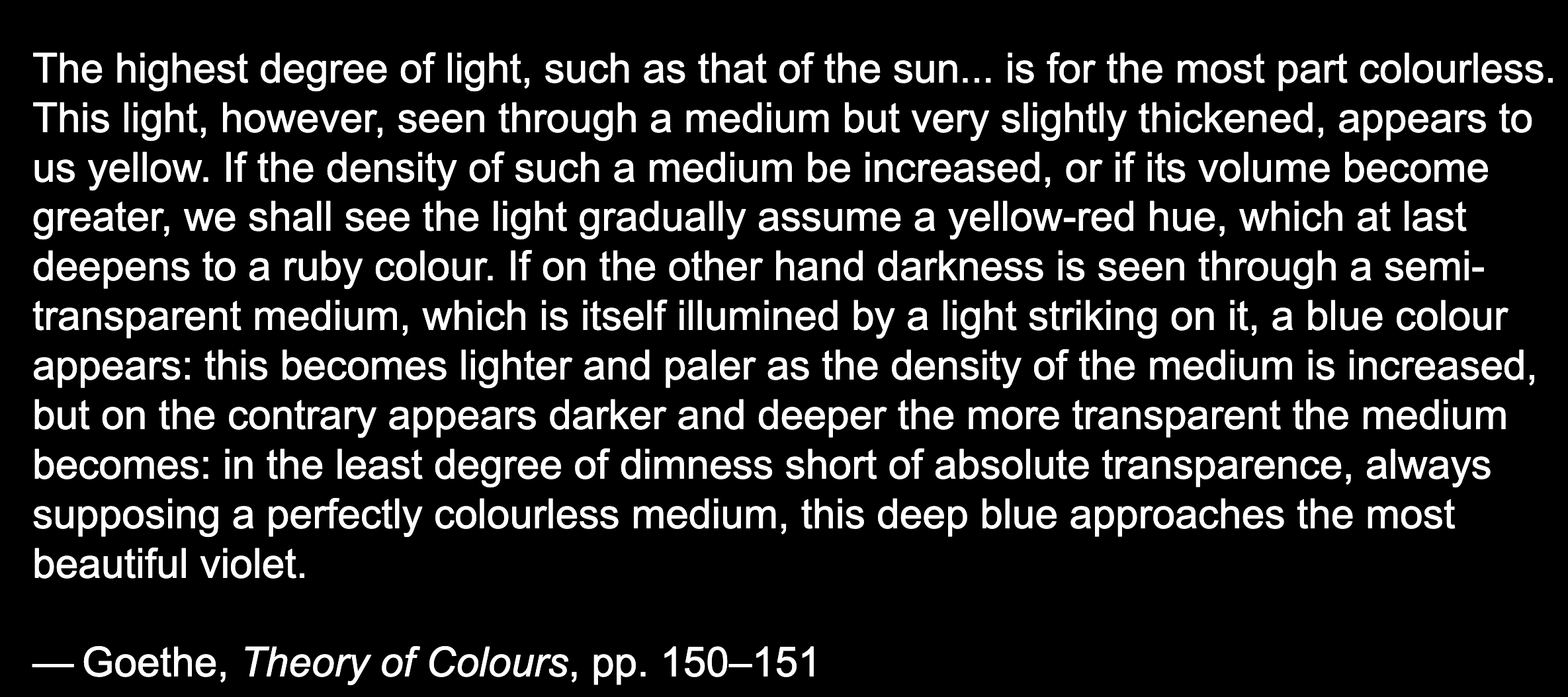
Reading: Joseph Albers, excerpts from Interaction of Color
Strayed from the science-y of color being definitive
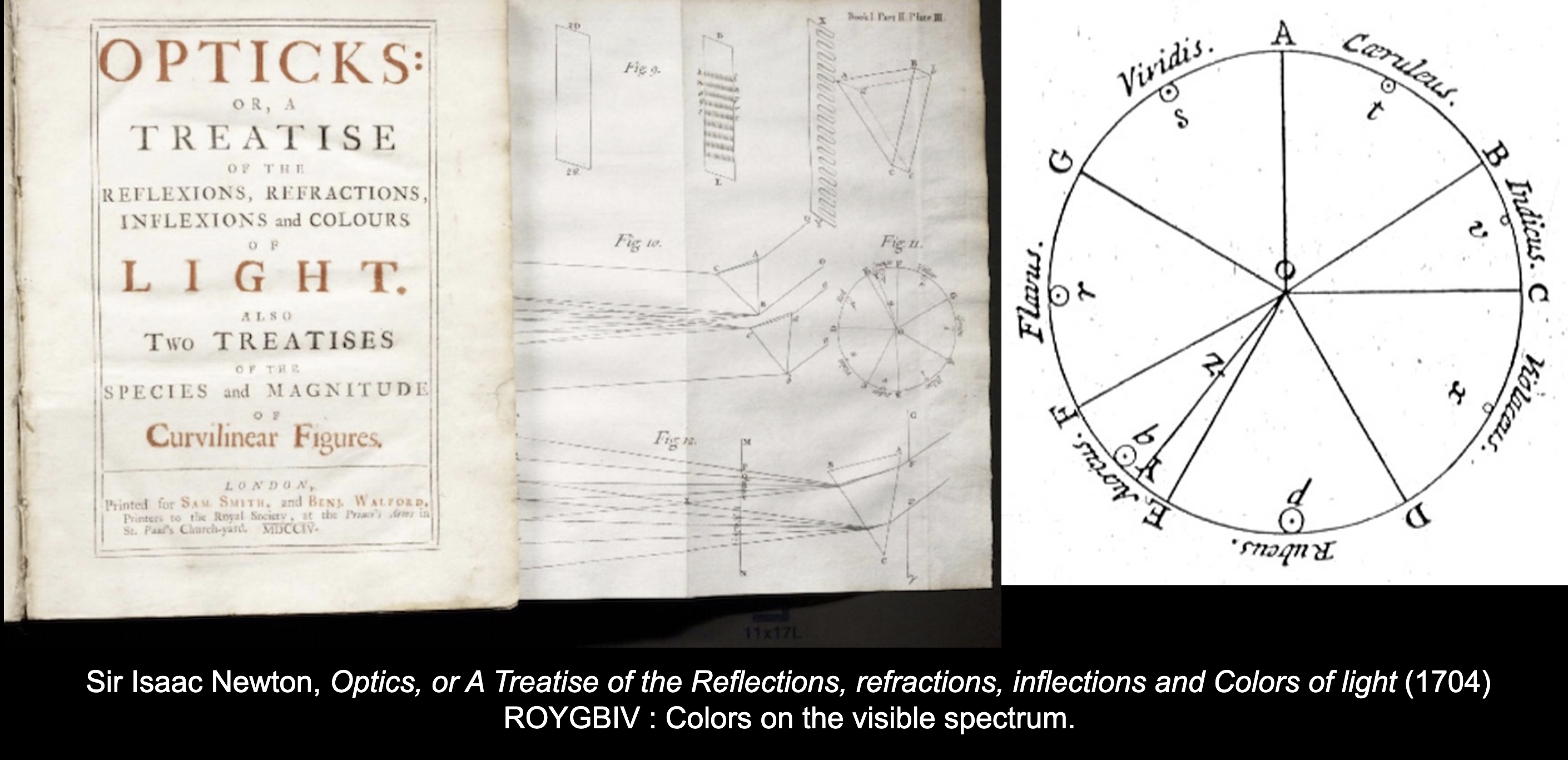
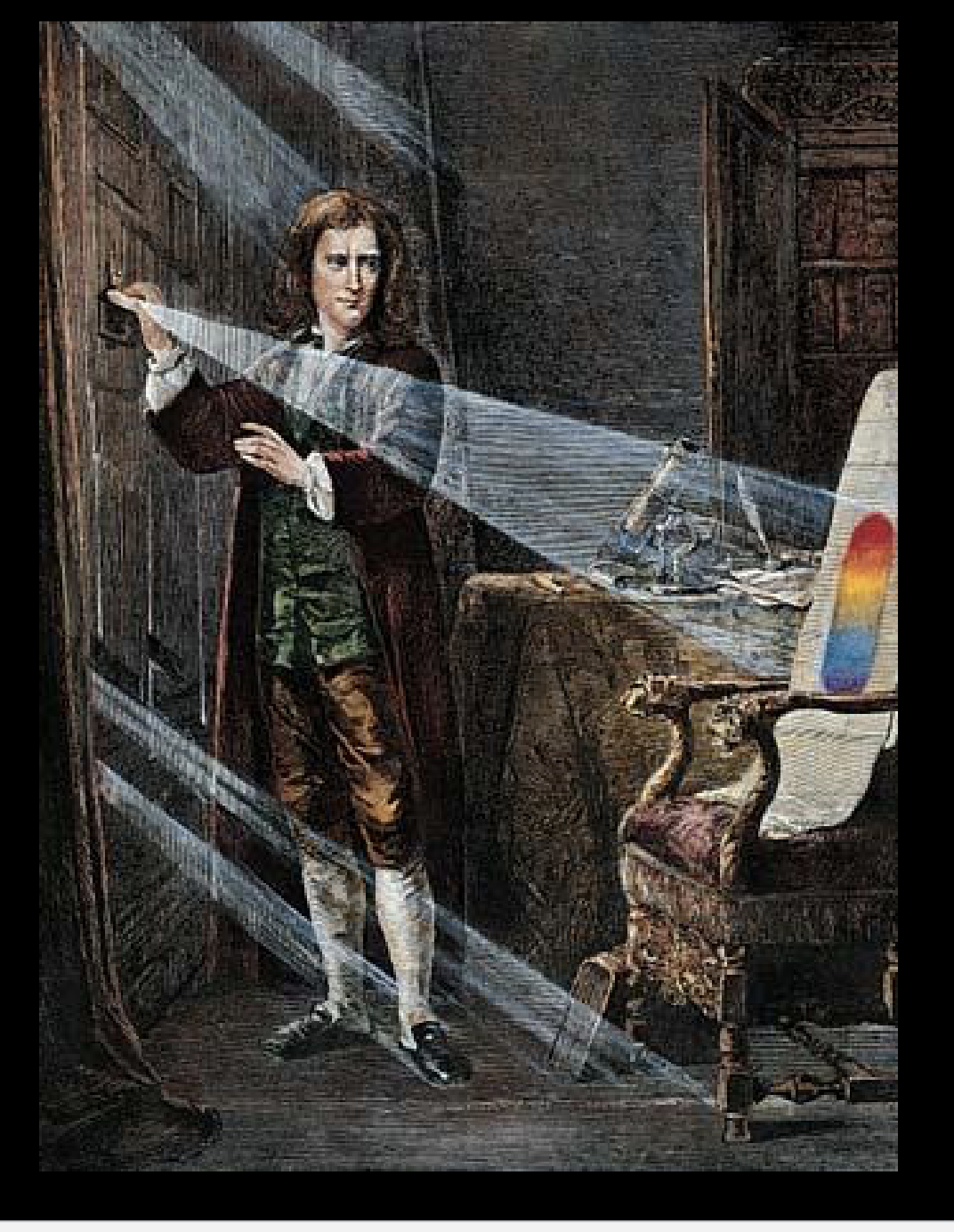
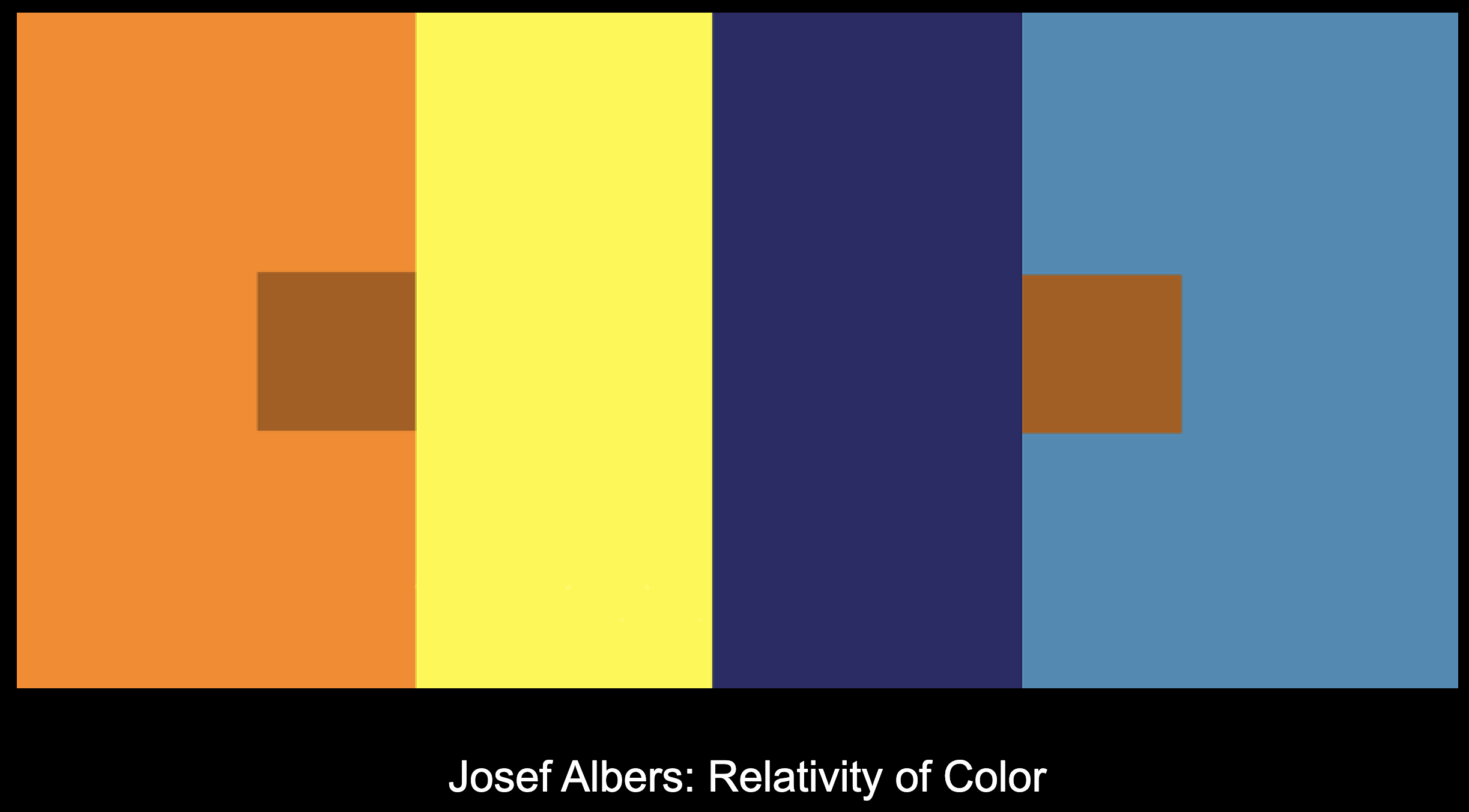
Reading: On Form and Color
READ NOTES
Reading: Homay King, “Anna May Wong and the Color Image”
READ NOTES
Film: Chester Franklin, The Toll of the Sea (1922)
READ NOTES
Reading: Stanley Cavell, “The World as a Whole: Color”
READ NOTES
Film: The Wizard of Oz (Victor Fleming, George Cukor, 1939)
Tech
technicolor is 3 (multiple) layers of film stock, each a different color, layered on top of one another to create the effect
differs from the hand-tinted of Toll of the Sea and The Cabinet of Dr. Caligari
Colors
sepia Kansas of reality (1939 is around time of Dust Bowl and Great Depression)
colorful Oz, a fantasy land
contamination of color (she want’s to get back home)
Three Colors Blue (Krzystof Kieslowski,1993)
in the opening scene, the part where Anna has her hand w/ wrapper out of the window, the sound is of wind rushing and amplified wrapper crinkling
the wrapper crinkling comes back when Julie eats the other lollipop she found)
Reading: Carol Mavor, “Blue Lollipop”
READ NOTES
Lorna Simpson, Darkening series (2019)
magazine: Ebony, which is a historically Black magazine