Nervous System
 Call Kai
 Learn
Learn Practice Test
 Spaced Repetition
 Match
Match Flashcards
 Knowt Play
1/201

Earn XP
Description and Tags
A&P 1 exam 4
Name | Mastery | Learn | Test | Matching | Spaced | Call with Kai |
|---|
No analytics yet
Send a link to your students to track their progress
202 Terms
what is included in the central nervous system?
brain & spinal cord - process and coordinate sensory data from inside and out
what is included in the peripheral nervous system?
all tissue outside CNS - deliver sensory info to CNS; has cranial and spinal nerves - connects to the structures
What are nerves
bundles of axons w/ connective tissue and blood vessels only in PNS
Afferent division
(approach) carries sensory info - from receptors and organs to CNS
efferent division
(exit) carries motor commands - from CNS to effector
receptors
detect changes/ respond to stimuli - start of afferent pathway - (neurons/specialized cells/complex sense organs (eyes/ears))
effectors
target organs that respond to motor commands (muscles/glands/adipose tissue) - end pathway
somatic nervous system (SNS)
voluntary movement of skeletal - efferent system include reflexes (involuntary and voluntary)
autonomic nervous system (ANS)
viceral organ environment - subconscious actions (cardiac muscle, smooth muscle, adipose, glands)
what are neurons used for and why
intercellular communication - excitable cell > create electrical impulses > action potential
can neurons undergo mitosis
no
what do neuroglia do
reserve structure of neurons - essential to survival - supportive cell - make up large volume
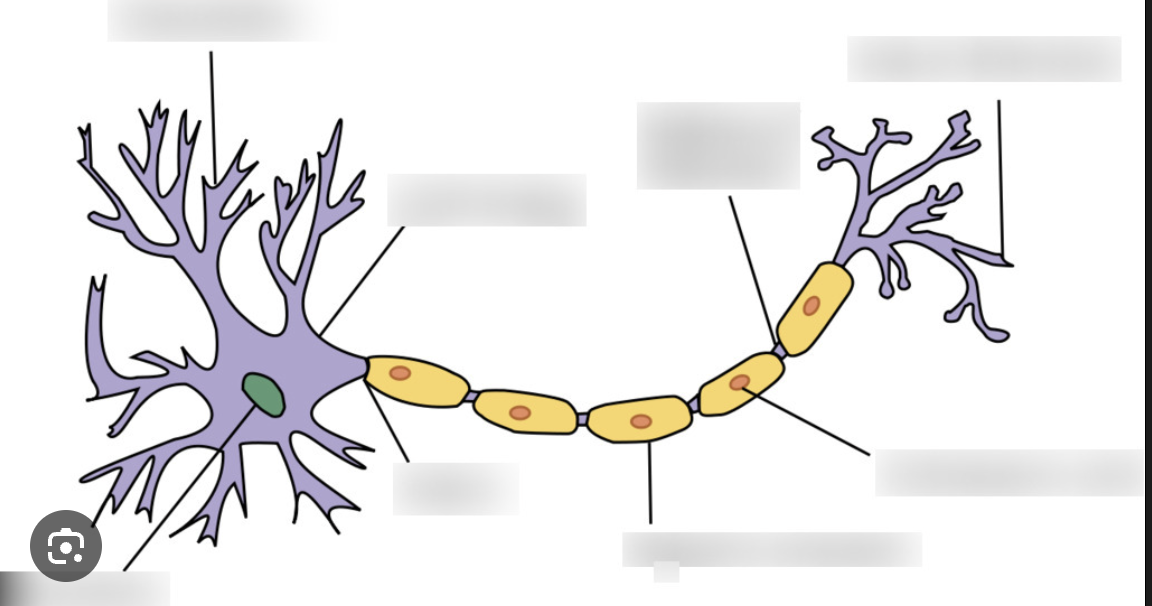
label the neuron
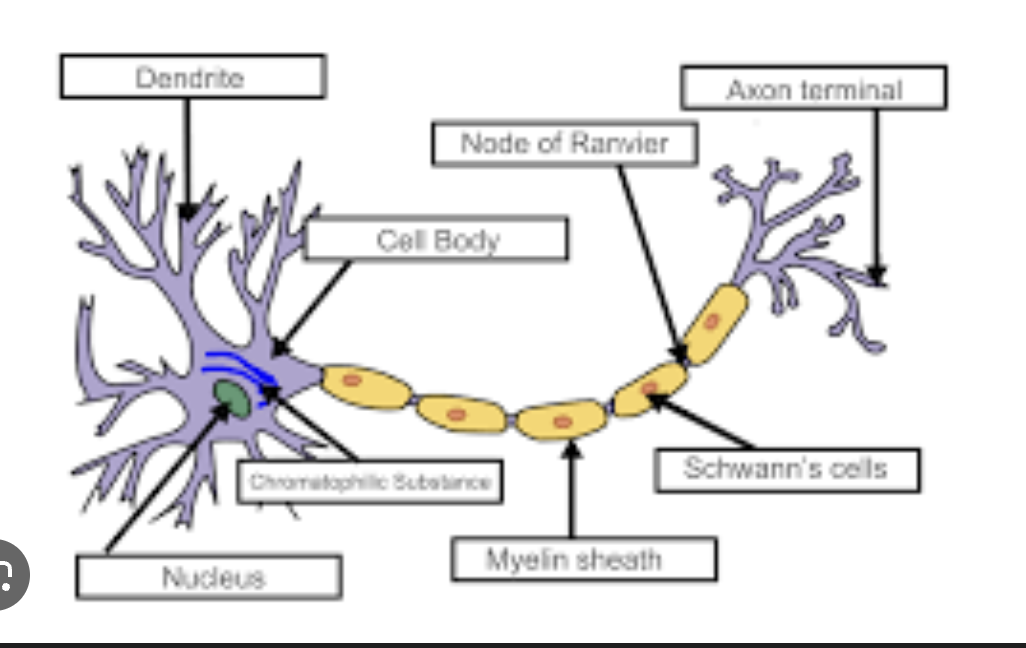
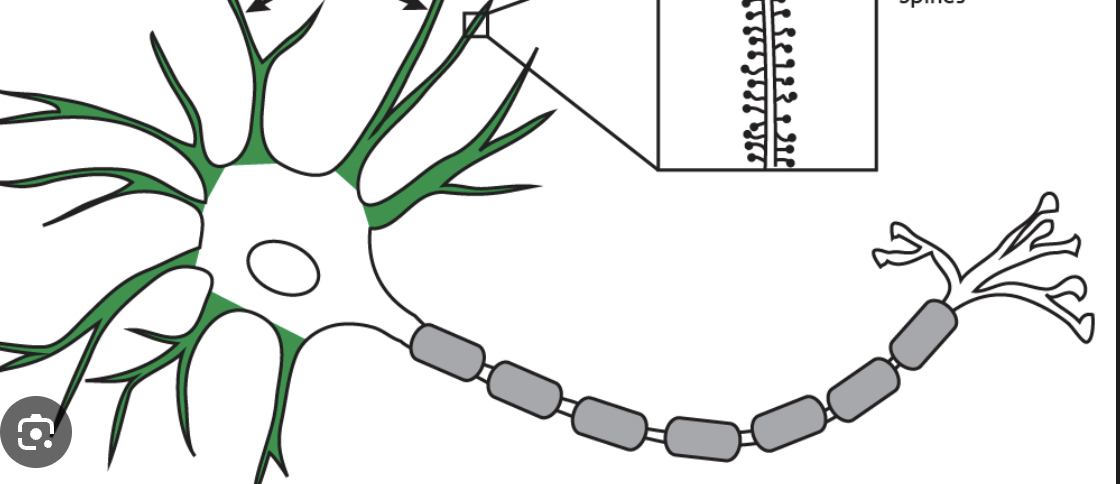
what are the functions of this part of a neuron in green
dendrites - process and receive info through chemically gated channels
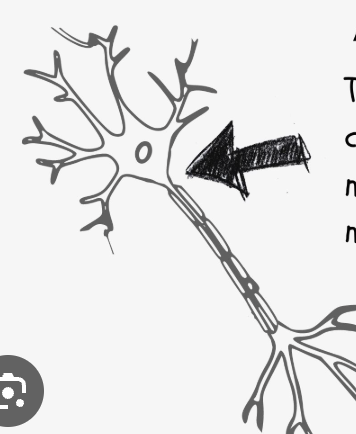
what part of the neuron is this
axon hillock
collaterals
branches of the axon
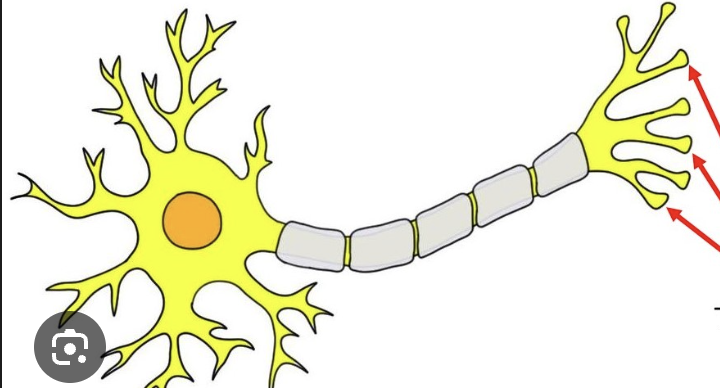
axon terminals
synaptic terminals/knobs
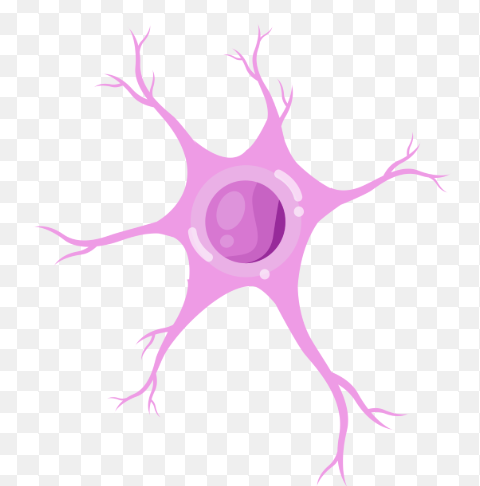
what type of neuron is this
anaxonic neurons - found in brain and special sense organs
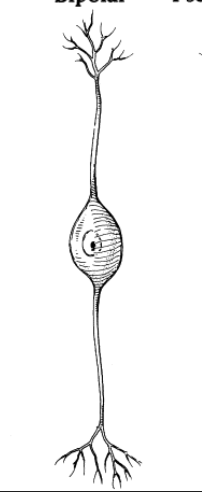
what type of neuron is this
bipolar - in retina of eye ; 1 dendrite and one axon ; small and rare
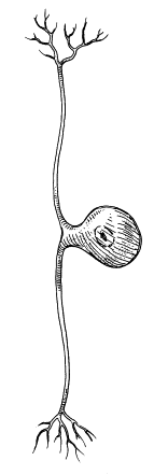
what type of neuron is this
pseudounipolar - axon & dendrites fused ; most PNS sensory neurons
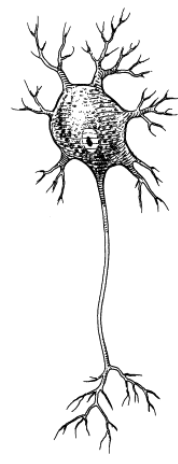
what type of neuron is this
multipolar - one long axon w/ 2 or more dendrites ; common in CNS ; all motor neurons for skeletal muscles
what are sensory neurons
pseudounipolar - afferent fibers extend from sensory receptors to cns
what are interoceptors
monitor internal systems - visceral sense receptor
what are exteroceptors
monitor external environment - somatic
what are proprioceptors
monitor position and movement of skeletal muscles and joints - somatic
where do motor neurons carry instructions
from cns to peripheral effectors (via efferent fibers)
what does visceral neurons effect
smooth, cardiac, glands, & adipose tissue
where are interneurons found
in the cns between sensory and motor neurons
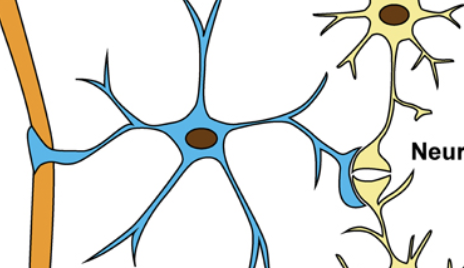
what type of neuroglia is this and what does it do
astrocyte - only in brain/spinal cord - nourish neurons; maintain BBB; repair nervous tissue damage
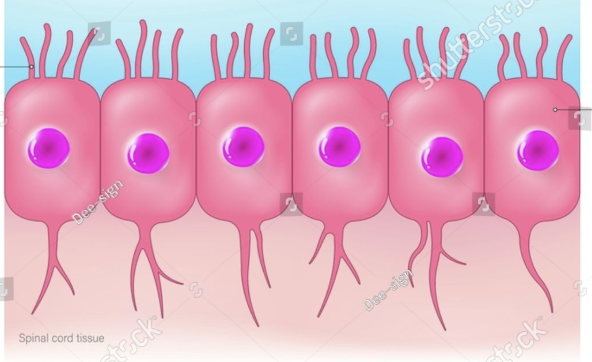
what type of neuroglia is this and what does it do
ependymal cells - epithelium lining central canal; of spinal cord and ventricles - filter blood to produce CSF (uses cilia)
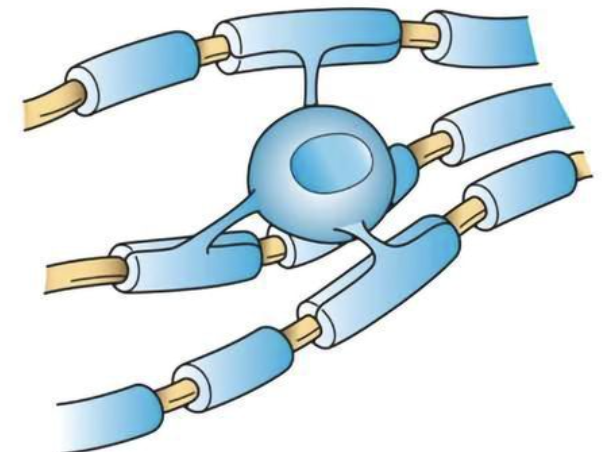
what type of neuroglia is this and what does it do
oligodendrocytes - form myelin sheaths
what are internodes
myelinated section of axon
nodes of ranvier
between internodes - no myelin
what is the white mater made of
myelinated axons
what is grey mater made of
unmyelinated axons, cell bodies, and dendrites
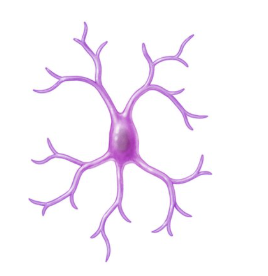
what type of neuroglia is this and what does it do
microglia - least common - migrate thro nervous tissue, cleans up cellular debris, waste, & pathogens
where are satellite cells and Schwann cells found
in the PNS
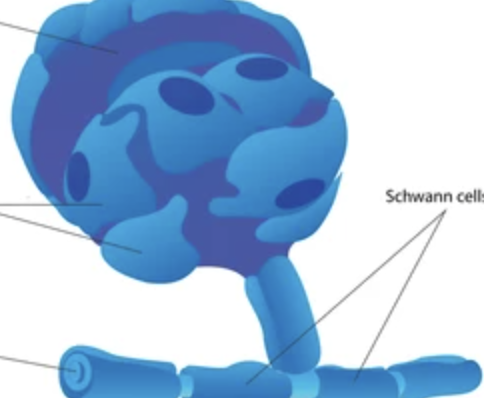
what type of neuroglia is this and what does it do
satellite cells - surround ganglia and regs interstitial fluid around neurons
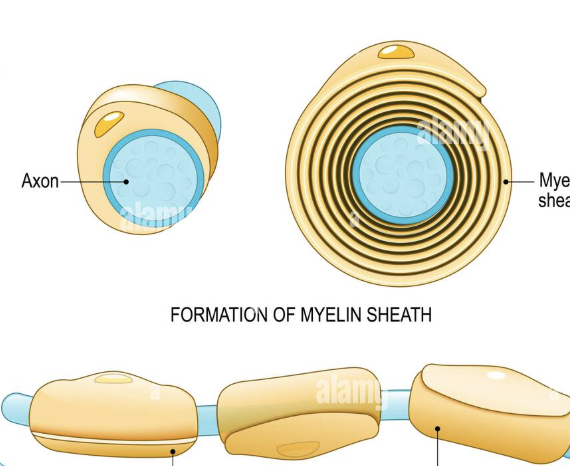
what type of neuroglia is this and what does it do
schwann cells - myelin sheath in PNS has neurolemmma
what are collections of neuron cell bodies in PNS
ganglia
what are collections of neuron cell bodies in CNS
nuclei
what are bundles of axons in the PNS called
nerves
what are bundles of axons in the CNS called
tracts
why is nervous tissue regen limited in CNS
by astrocytes producing scar tissue and release of chemicals blocking regrowth
what is wallerian degen
axon distal to injury degens and schwann cells form path for new growth
what does banana in the ocean mean
more K inside cell and more Na outside
describe why the electrochemical gradient is weak for K
chemical gradient push K outside cell and eletrical pushes K in to cell - net electrochemical gradient pushes K out of cell
describe why the electrochemical gradient is strong for Na
net electrochemical gradient pushes Na into cell - both chem and electrical gradient push Na into cell
what maintains the concentration gradients and resting memebrane potential of the neuron
Na-K exchange pump - 2 K in for 3 Na out - active transport
at resting membrane potential are the gated ion channels open or closed
closed
where are chemically gated ion channels found
where neurons communicate w/ other cells
what is the threshold stimulus to stimulate an action potential
-55 mV
where are voltage gated ion channels found and what does inactivated mean
axons of neurons - closed and incapable of opening
what do mechanically gates ion channels respond to
touch pressure or vibration - membrane distortion
what is a membrane potential
electrical charge difference across plasma membrane
how does the resting membrane potential differ in ionic comp
ECF: high Na Cystol: high K and neg proteins
current
movement of charges to eliminate a potential difference
resistance
how much the membrane restricts ion movement - if resistance high current is small
what influences resistance across membrane
ion channels - movement increased or decreased affects current affecting resistance
graded stimulus
change in electrical activity but too low to trigger action potential (less than -55
threshold stimulus
stimulus strong enough to create action potential (@ or greater than 55)
what is the process of causing a graded potential
chemical messenger binding to chemically gated channels = movement of ions
depolarization
less negative charge inside cell - opens chemically gated Na channels
repolarization
restoration charge towards RMP after depolarization - stimulus removed
hyperpolarization
more negative than RMP inside cell - opening chemcially gated K ion cahnnels
where do action potentials go
from entire excitable membrane to the next and do not diminish as they move from source
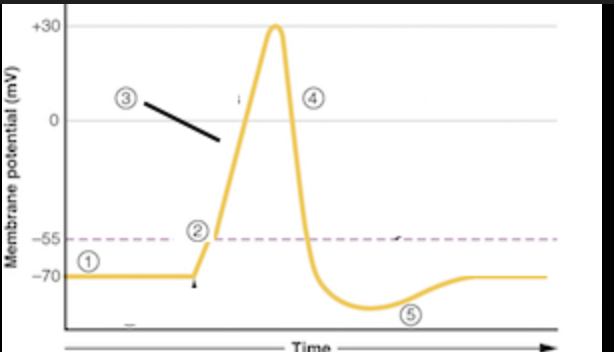
what are the sections of this graph
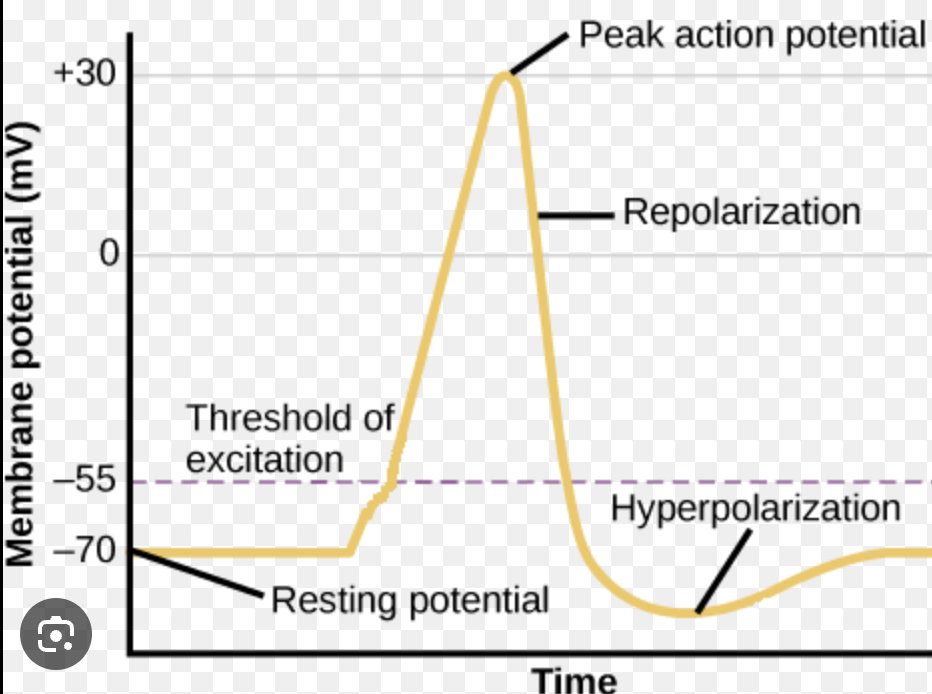
when do potassium channels open on the action potential graph
at the start of repolarization
when do sodium channels open on the action potential graph
throughout depolarization and close at peak
all or none principle
any stimulus changing membrane potential to threshold will cause action potential - all are the same - either triggered 100 or 0
what are the steps of the generation of action potential
chemical stimulus - depolarization to threshold
activation of volt-gated Na channels - inner membrane changes from neg to positive
repolarization - inactivate Na and activate K (k moves out of cystol)
hyperpolarization - K volt channels close and K continues to leave cell past resting
return to RMP
refractory period
membrane will not respond to additional stimulus
absolute refractory
membrane cannot respond to further stimulation (during AP)
relative refractory period
only strong stimulus initiate another action potential - continues until membrane potential stabilizes (after AP and during repolarization
continuous propagation
AP in unmyelinated axons
saltatory propagation
AP in myelinated axons - faster than continuous - current jumps from node to node
how does diameter affect propagation speed
the larger the diameter the faster the speed
chemical synapses
signal transmitted across a synaptic cleft by neurotransmitters
axodendritic synaptic communication
axon of 1 neuron and dendrite of another
axosomatic synaptic communication
axon of 1 neuron and soma of another
axoaxonic synaptic communication
axon of 1 neuron and axon of other
what is a cholinergic synapses
release acetylcholine
what is a adrenergic synapses
release norepinephrine (NE) epinephrine (E) (adrenaline
what are the events of the cholinergic synapse
axon depolarized by AP
depolarization open volt-gate Ca channels - trigger synaptic vessel to release ACh
ACh diffuse across cleftbinds to chem-gate Na channel receptors of postsynaptic memebrane
what is a synaptic delay
time required for Ca ion influx and neurotransmitter release
what does excitatory neurotransmitters cause
depolarization - promote AP
what does inhibitory neurotransmitters cause
hyperpolarization - suppress AP
excitatory postsynaptic potential (EPSP)
graded depolarization of postsynaptic membrane - membrane=excited - potential closer to threshold
inhibitory postsynaptic potential (IPSP
graded hyperpolarization of postsynaptic membrane - shift away from threshold
what is summation
integration of effects of graded potentials - net effect can be no change to emembrane potential
what is information processing
the response of a postsynaptic cell
what does the axon hillock do
integrates all stimuli - determines if AP will happen
temporal summation
rapid repeated stimuli of single synapse
spatial summation
multiple synapses activate at same time - AP generated if membrane = threshold
neuronal pools
interneurons organized into function groups of neurons
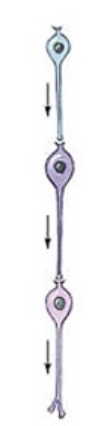
what type of neuronal pool is this
serial processing - pain signals
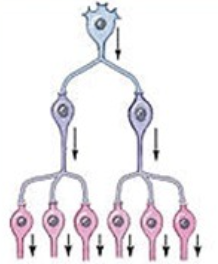
what type of neuronal pool is this
divergence - permits broad distribution of specific input - common in sensory pathways
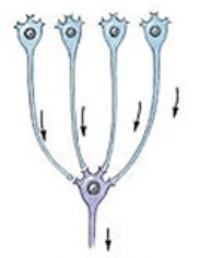
what type of neuronal pool is this
convergence - control of diaphragm in breathing
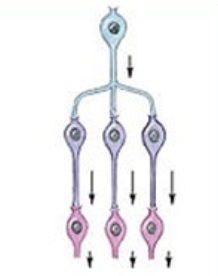
what type of neuronal pool is this
parallel processing - step on a nail and move and say ouch
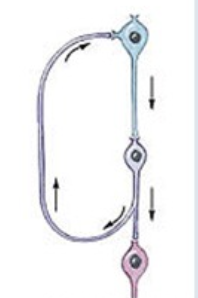
what type of neuronal pool is this
reverberation - postive feedback loop - breathing muscle coordination