Social studies quiz, textbook chapter 16 lessons one through three
 Call Kai
 Learn
Learn Practice Test
 Spaced Repetition
 Match
Match Flashcards
 Knowt Play
1/31

There's no tags or description
Looks like no tags are added yet.
Name | Mastery | Learn | Test | Matching | Spaced | Call with Kai |
|---|
No analytics yet
Send a link to your students to track their progress
32 Terms
Romulus and Remus
Twin brothers, abandoned at birth near Tiber River, female wolf discovered them and cared for them, Shepherd and his wife found and raised the twins, grew up and planned the founding of a city near Tiber River, argument occurred that led to one twin’s death and the other twin becoming the soul, founder and namesake of the city (Rome)
Etruscans
Skilled artisans and builders who influenced early Rome in areas like architecture, city planning, religious practices, clothing, and military organization
Latins
Settled in Latium (in central Italy), built farming villages, tended animals, grew crops, this settlement that occurred between 800 BC and 700 BC marked the birth of Rome, people living there became known as Romans
Cincinnatus
Roman farmer who was appointed dictator in a time of crisis, quickly defeated Rome’s enemies, instead of holding onto power, he immediately resigned and returned to his farm, he did an act of selfless service to his country & put needs of Rome above him, this is why he was so admired and an example of civic duty
Hannibal
Carthage greatest general, led the Carthaginian forces against Rome in the Second Punic War, tried to invade Italy with his army that included elephants across the Alps to fight the Romans, faced challenges, suffered major losses during the crossing,but achieved victories against Romans like the battle of Cannae
Scipio
Roman general, played crucial role in Rome’s victory over Carthage in Second Punic War & defeated Hannibal at the Battle of Zama, which secured Rome’s dominance
Legion
large groups of Roman soldiers
Acquire
to get possession of something; to get as one’s own
Devote
to give one's time, effort, or attention earnestly
Republic
a form of government in which citizens elect their leaders
Patrician
were in the ruling class of Ancient Rome
an aristocrat or nobleman
Plebeian
ordinary citizen in Ancient Rome
a member of the common people in ancient Rome
Consul
head of a government, usually with a limited term in office
Veto
to reject
Praetor
Roman government official who interpreted the law and served as a judge
Tribune
an elected Roman official who protects the rights of ordinary citizens
Civic duty
the idea that citizens have a responsibility to help their country
Dictator
the idea that citizens have a responsibility to help their country
Legislature
a group of people who make the laws
Innovation
the introduction of something new
Intensify
to become stronger
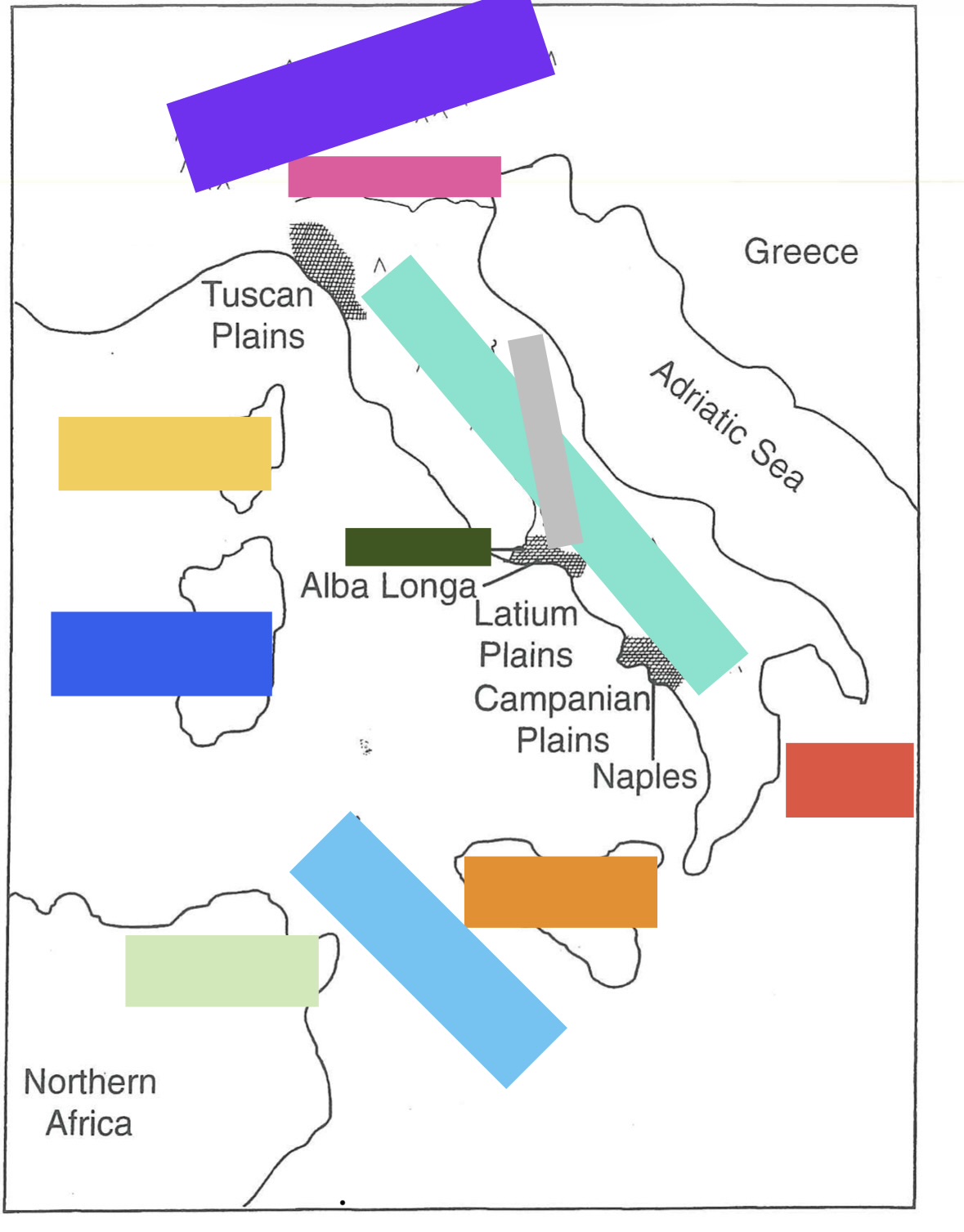
Purple?
Alps
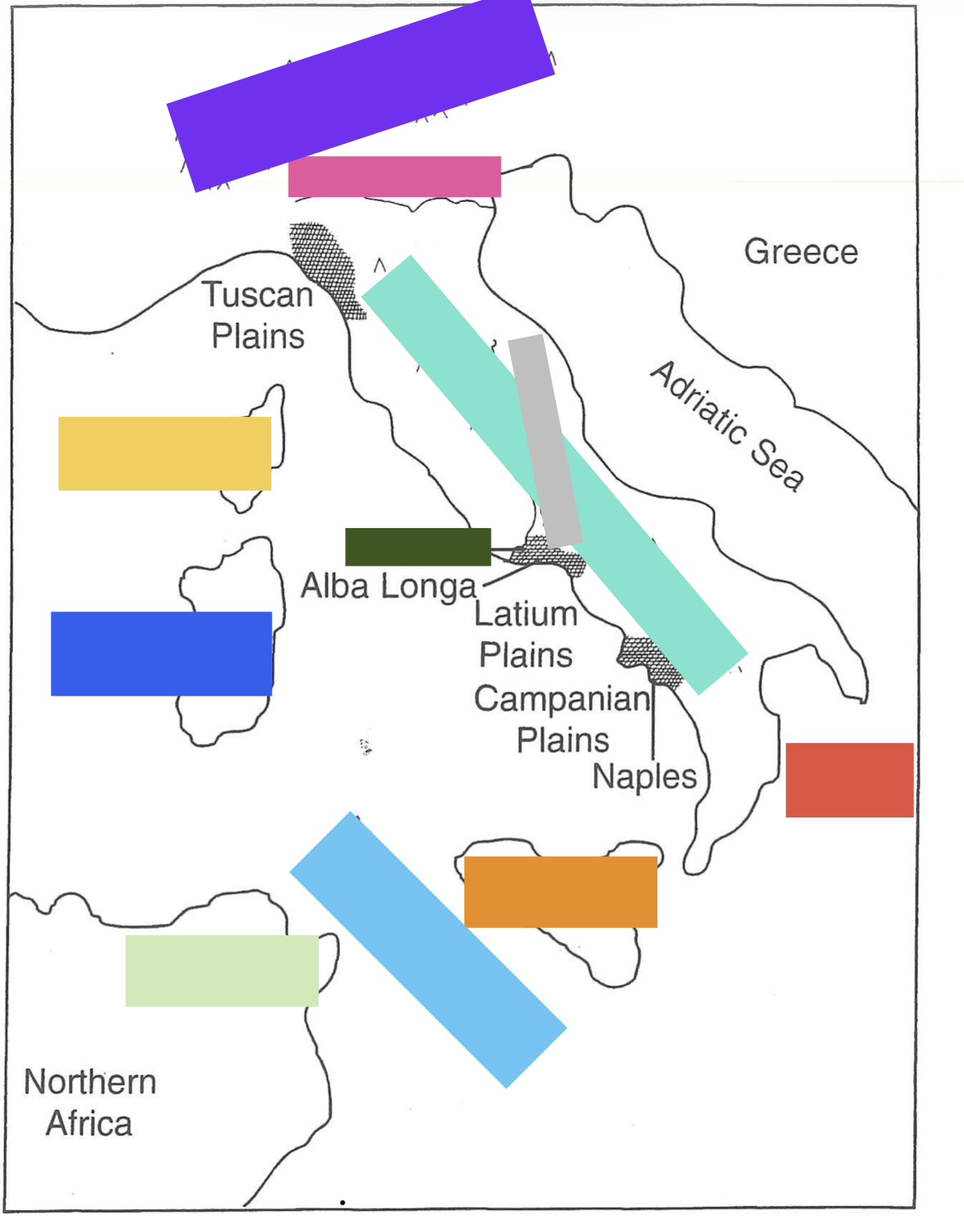
Pink?
Po River
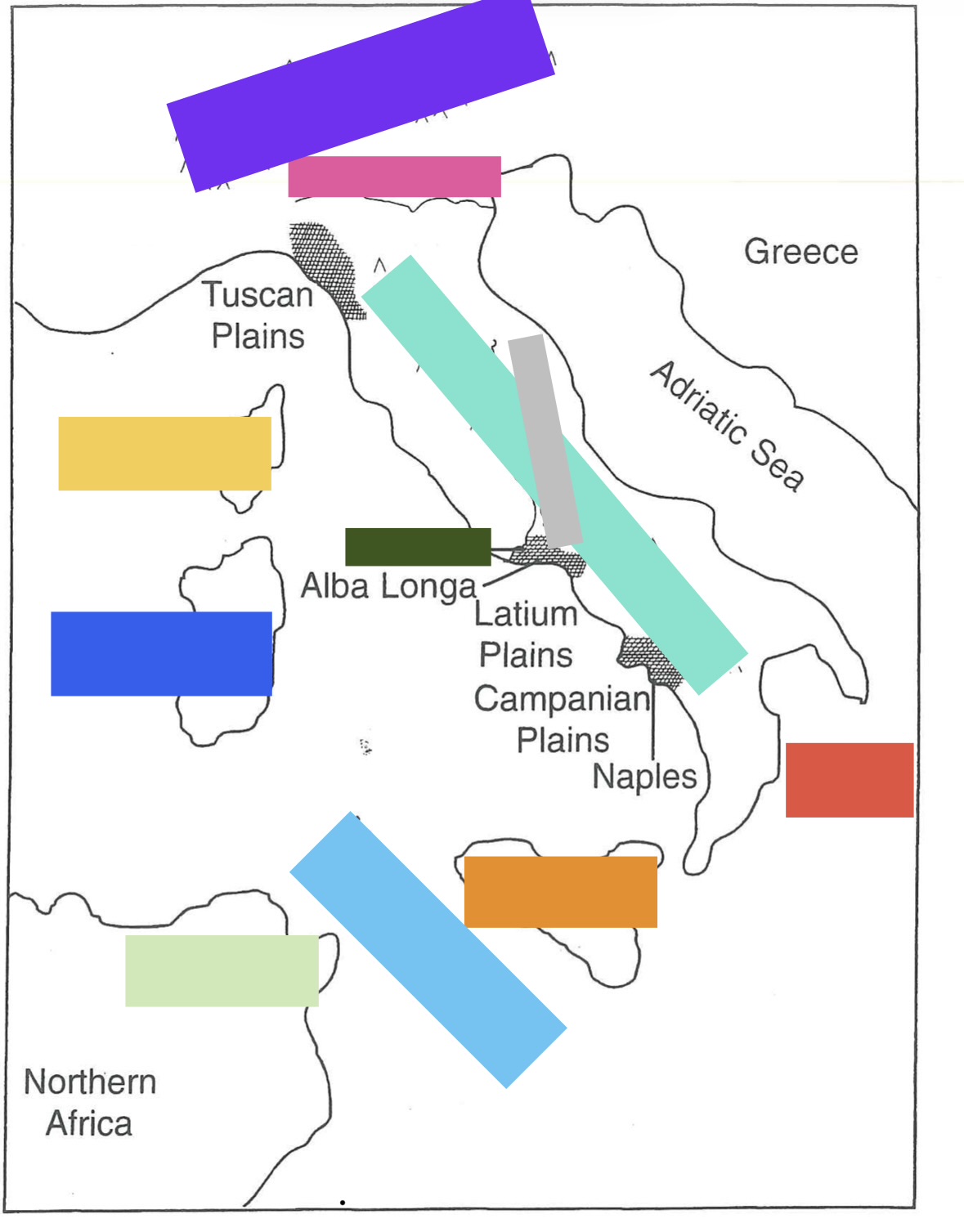
Teal?
Apennines
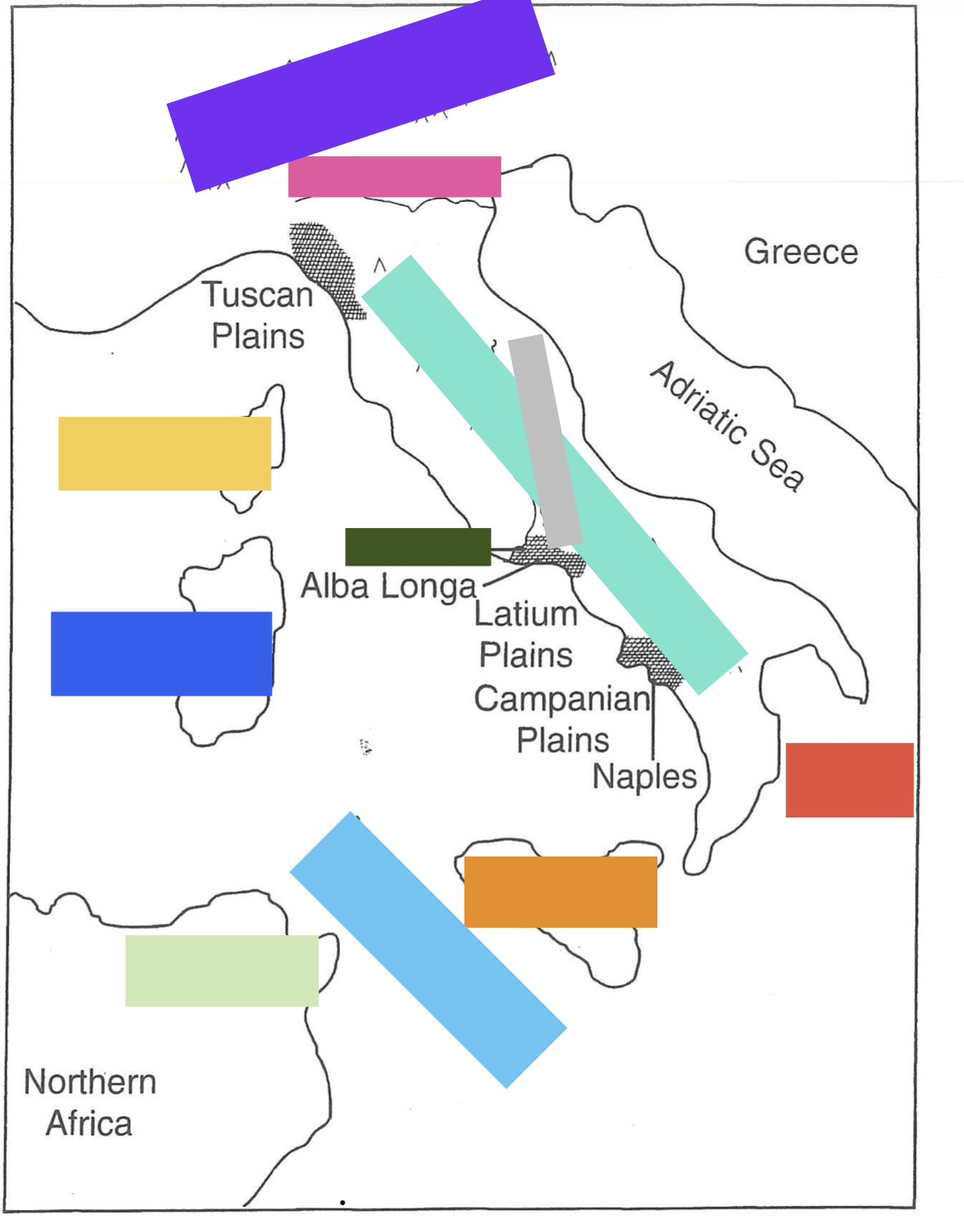
Gray?
Tiber River
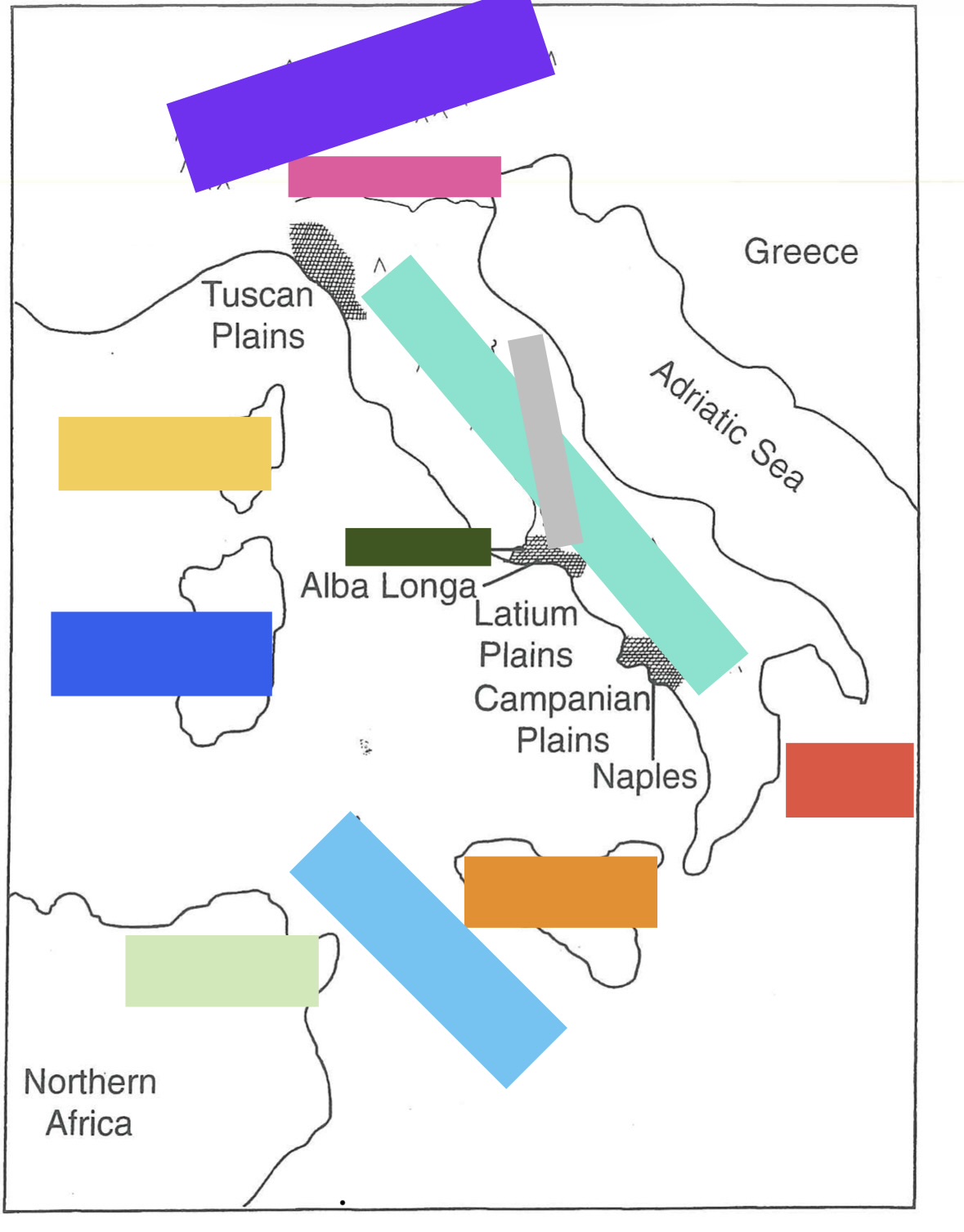
Yellow?
Corsica
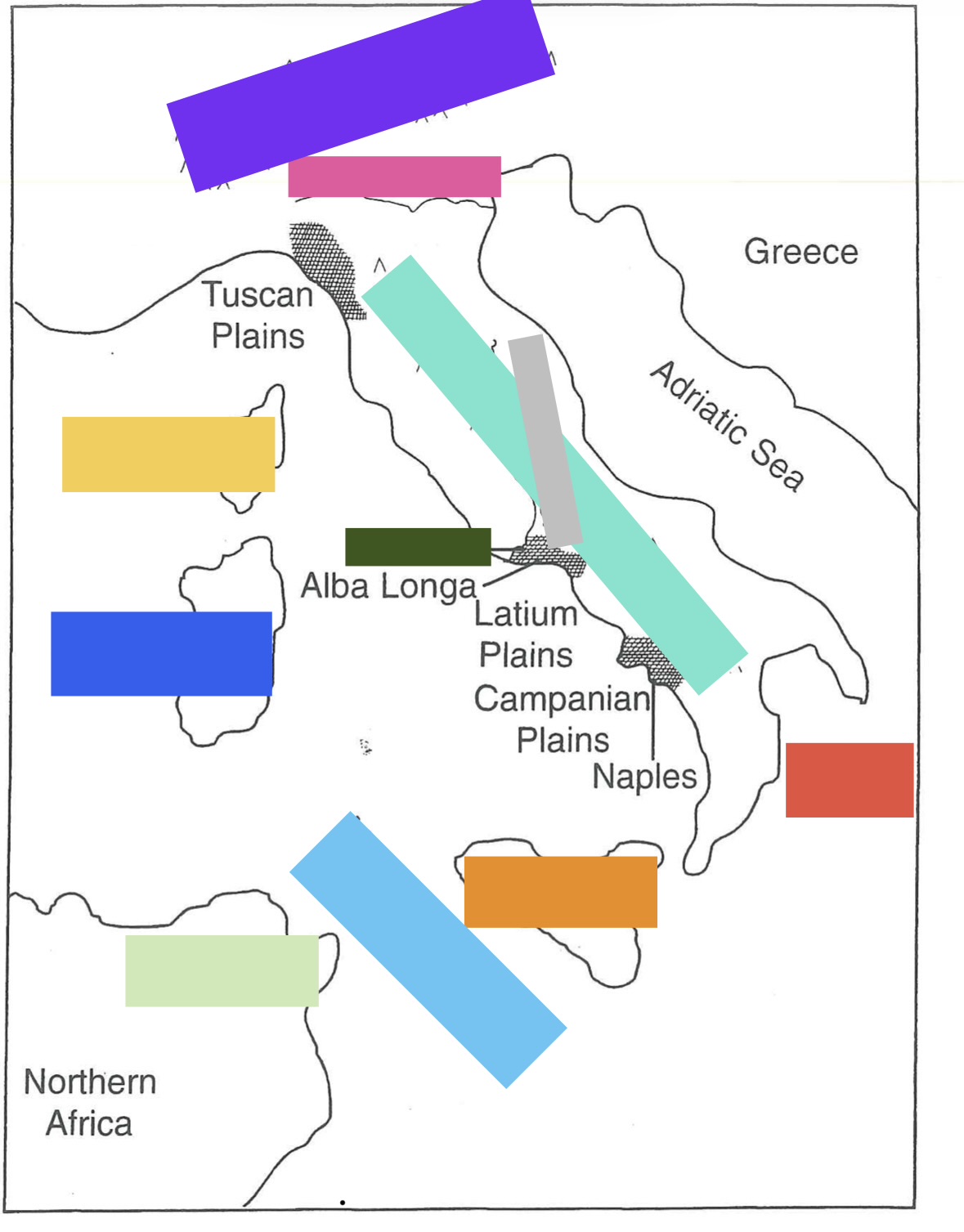
Dark green?
Rome
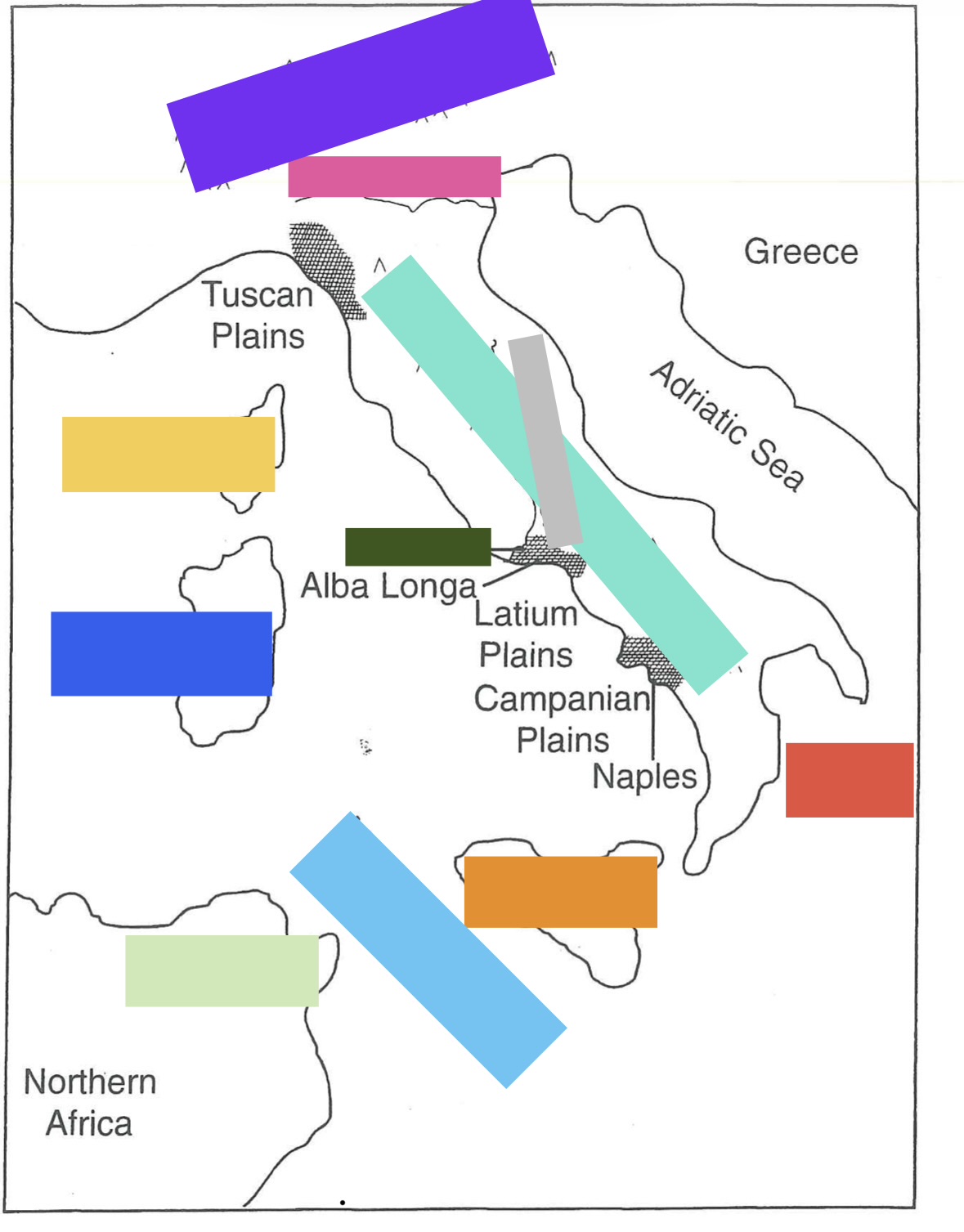
Dark blue?
Sardinia
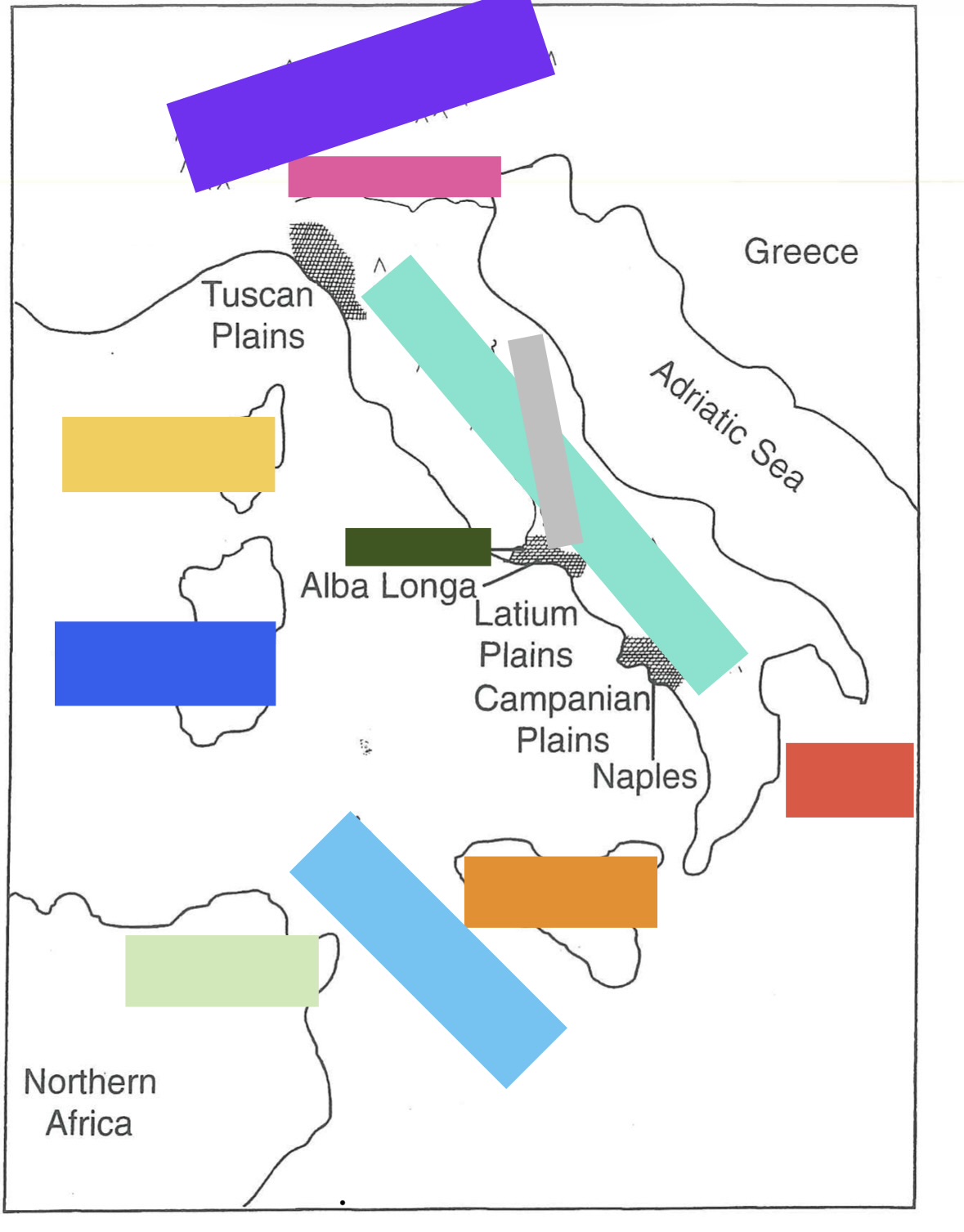
Red?
Idonian sea
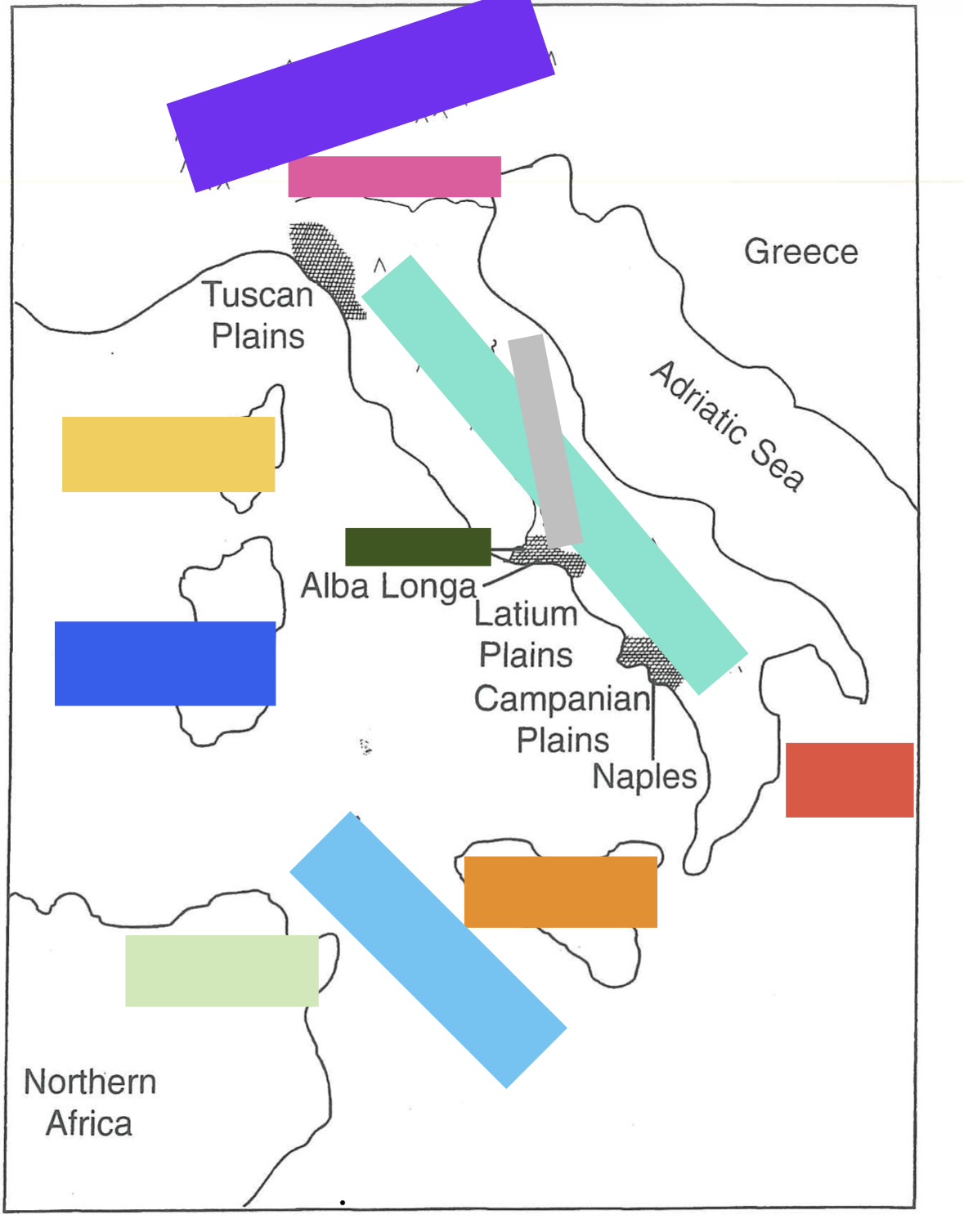
Light Blue?
Mediterranean Sea
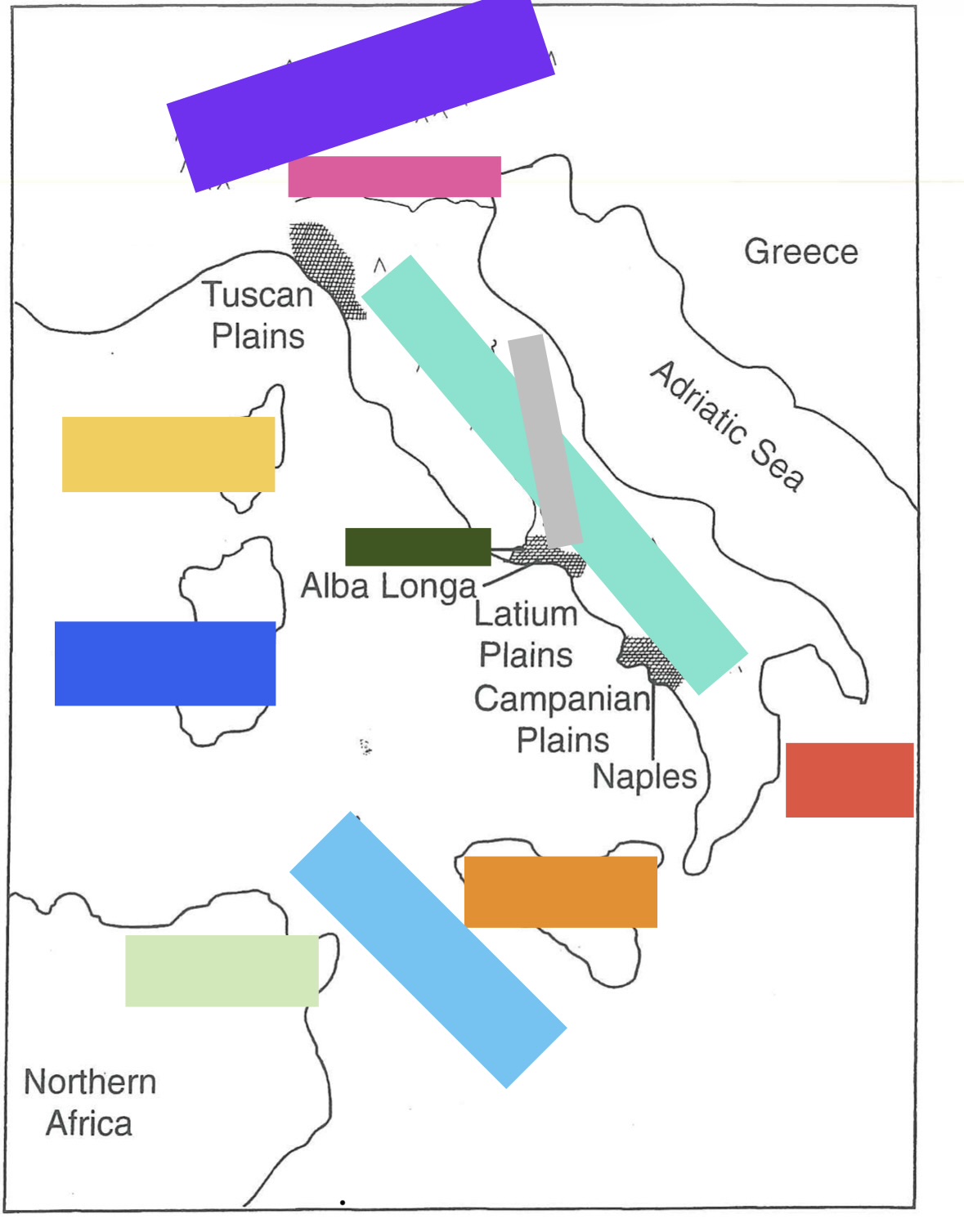
Orange
Sicily
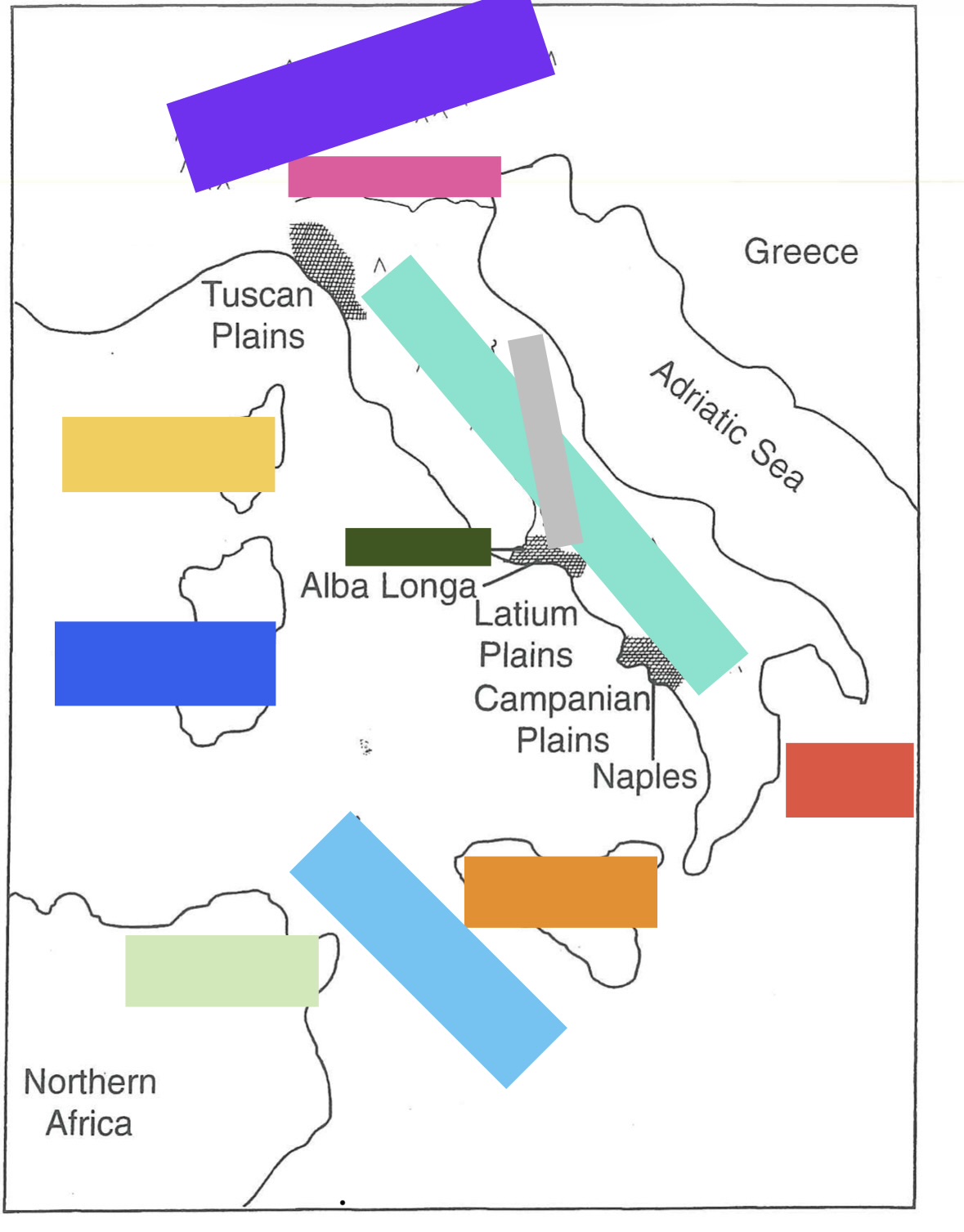
Light green?
Carthage