BIOCH 200 Unit 4 - Protein Function (Terms)
 Call Kai
 Learn
Learn Practice Test
 Spaced Repetition
 Match
Match Flashcards
 Knowt Play
1/25

There's no tags or description
Looks like no tags are added yet.
Name | Mastery | Learn | Test | Matching | Spaced | Call with Kai |
|---|
No analytics yet
Send a link to your students to track their progress
26 Terms
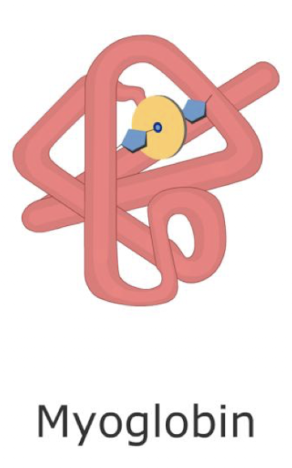
Myoglobin
A monomer cytosolic protein found in muscles that folds into one domain, functioning to transport and store O2 within tissue
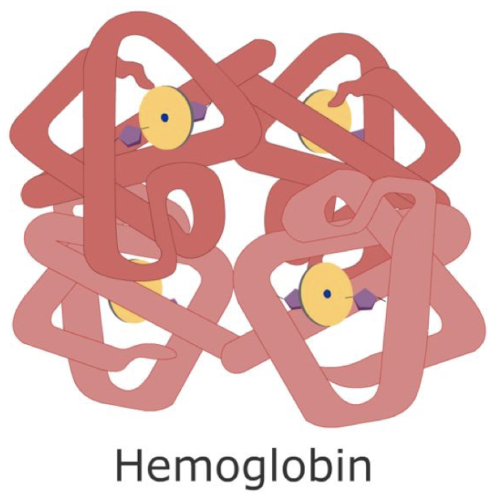
Hemoglobin
A heterotetramer cytosolic protein found in red blood cells comprised of 4 subunits each with one domain, functioning to transport O2 from lungs to tissues
Red Blood Cells
Cells that travel in the blood responsible for binding to O2 in the lungs and transporting it to be released in the tissues
Ligand
Small molecules that reversibly bind to proteins through noncovalent interactions
Kd
The midpoint of a ligand binding curve which represents a concentration of half binded half not binded ligand and protein
Heme
An ampipathic prosthetic group found on proteins that require binding or carrying of oxygen
HisF8
The proximal histidine residue in myoglobin that is closer to the Fe2+ ion, found as the 8th residue on the F helix of the protein that is responsible for holding the porphyrin ring of heme in place to myoglobin
HisE7
The distal histidine residue in myoglobin that is farther from the Fe2+ ion, found as the 7th residue on the E helix of the protein that is responsible for assisting O2 binding to heme’s 6 coordinate location through H-bond stabilization
Apoprotein
A protein that requires a prosthetic group to carry out its function that is missing its prosthetic group
Holoprotein
A protein that requires a prosthetic group to carry out its function that is carrying its prosthetic group
Globin
The apoprotein of myoglobin, missing the heme prosthetic group
Conservative Substitution
An amino acid substitution that has minor effects on the overall protein’s structure and function
Critical Substitution
An amino acid substitution that changes the overall protein’s structure and may change function depending on its location
Cooperative Binding Affinity
A binding relationship in which the ligand affinity to a protein will change as more ligand binds to the protein
Tense (T) State Hemoglobin
The low affinity conformation of hemoglobin with a large central cavity, present in the deoxy form of hemoglobin when O2 binding is low
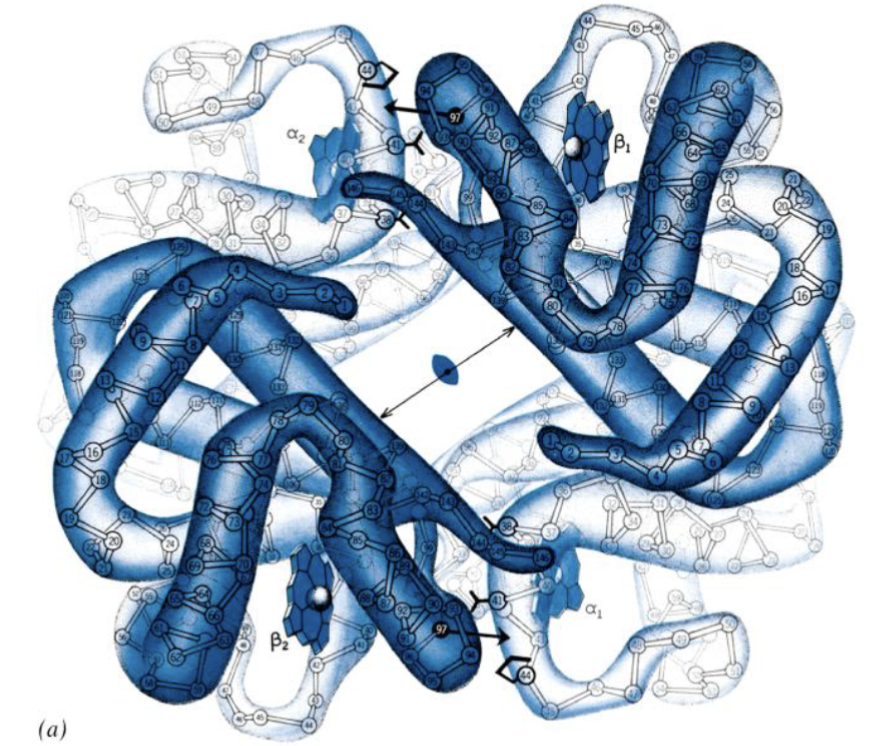
Relaxed (R) State Hemoglobin
The high affinity conformation of hemoglobin with a small central cavity, present in the oxy form of hemoglobin when O2 binding is high
Allostery
A relationship in which the binding of a ligand at one site of a protein affects the binding of ligands at other sites on the same protein
Effectors
Compounds which, upon binding, alter affinity at other binding sites
Homoallostery
A relationship in which the binding of an effector affects further binding of the same compound, typically as ligands increasing their own affinity to a protein
Heteroallostery
A relationship in which the binding of an effector affects further binding of a different compound
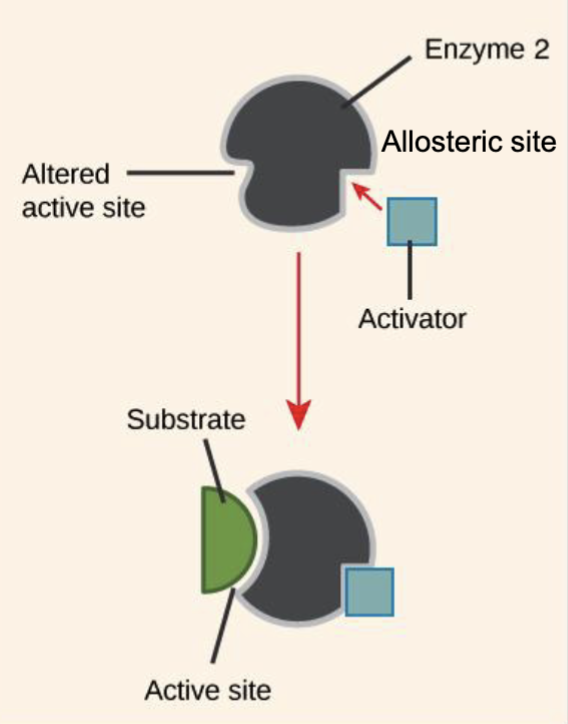
Activator
An effector that increases the binding affinity of a ligand in a heteroallosteric relationship
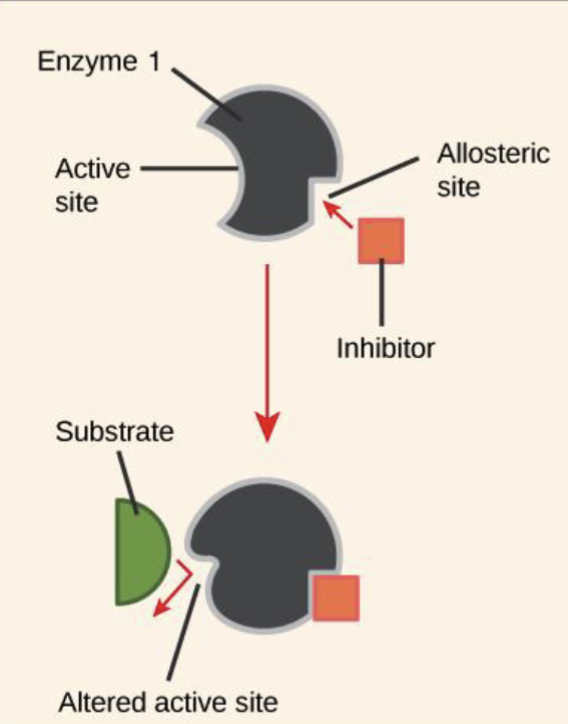
Inhibitor
An effector that decreases the binding affinity of a ligand in a heteroallosteric relationship
Allosteric Inhibition
The use of an inhibitor to alter an active site so that it decreases binding affinity to a different substrate
Allosteric Activation
The use of an activator to alter an active site so that it increases binding affinity to a different substrate
Positive Cooperativity
A cooperative binding relationship in which the ligand affinity to a protein will increase as more ligand binds to the protein
2,3-bisphosphoglycerate (BPG)
A negative heteroallosteric inhibitor for oxygen binding to hemoglobin that is essential in the stabilization of the T state in hemoglobin