Ch 20 - Blood Vessels and Circulation
 Call Kai
 Learn
Learn Practice Test
 Spaced Repetition
 Match
Match Flashcards
 Knowt Play
1/85

There's no tags or description
Looks like no tags are added yet.
Name | Mastery | Learn | Test | Matching | Spaced | Call with Kai |
|---|
No analytics yet
Send a link to your students to track their progress
86 Terms
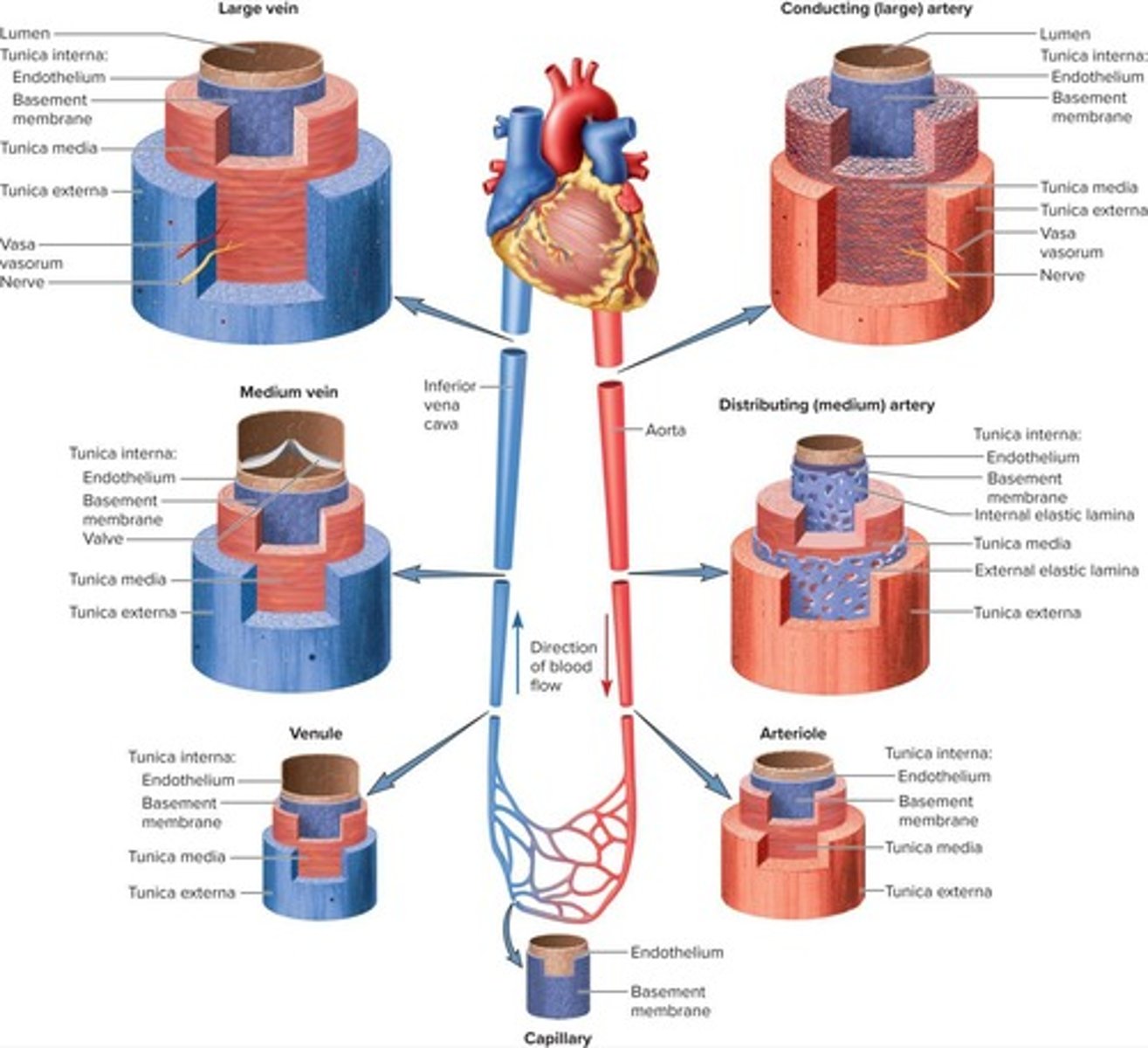
Tunica intima
Innermost layer of blood vessel walls, composed of endothelium, which is simple squamous epithelium that repels blood cells and platelets.
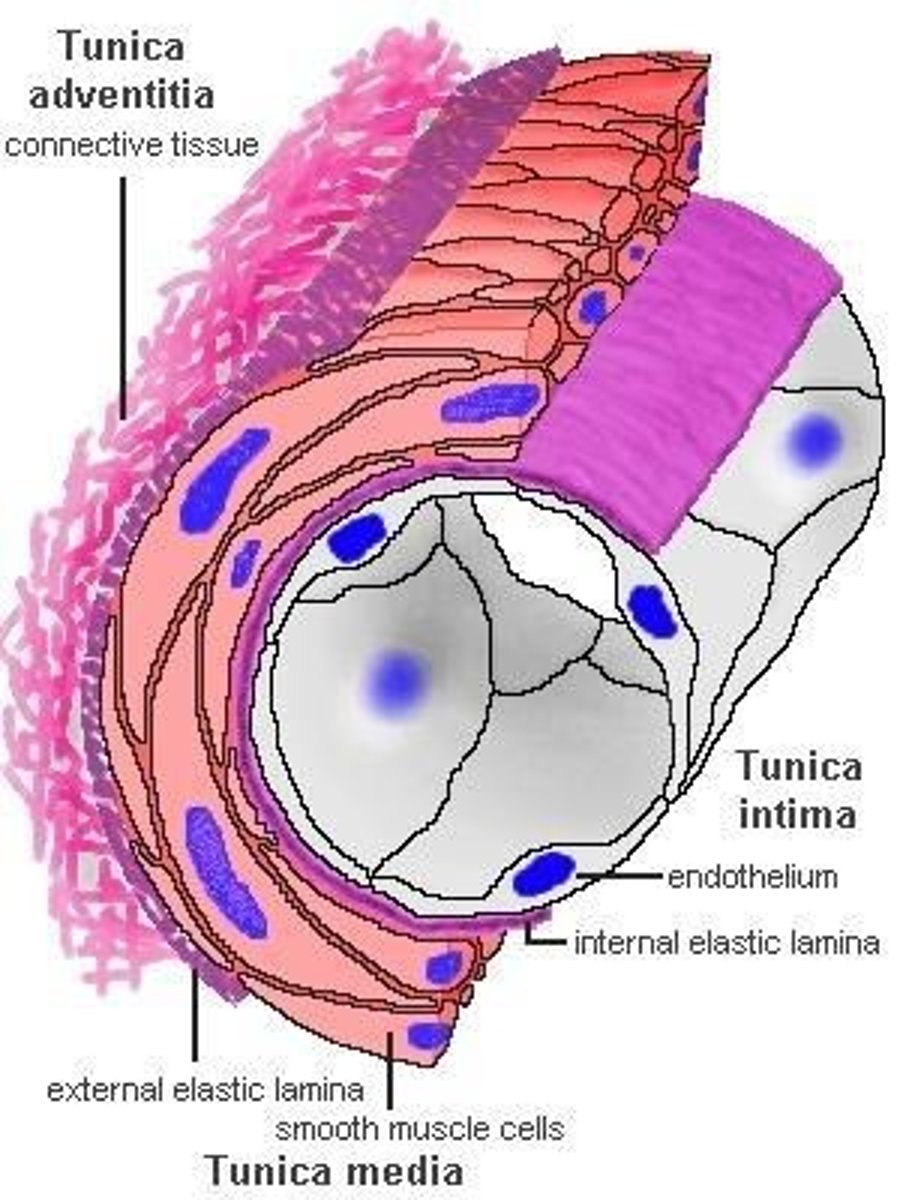
Tunica media
Middle layer of blood vessel walls, consisting of smooth muscle, collagen, and elastic tissue.
Tunica adventitia
Outermost layer of blood vessel walls, made of loose connective tissue that anchors vessels to surrounding structures.
Vasa vasorum
Small vessels that supply blood to the outer half of the wall in larger blood vessels.
Elastic arteries
Large conducting arteries such as the pulmonary trunk, aorta, common carotid, and subclavian, characterized by a tunica media with many elastic fibers.
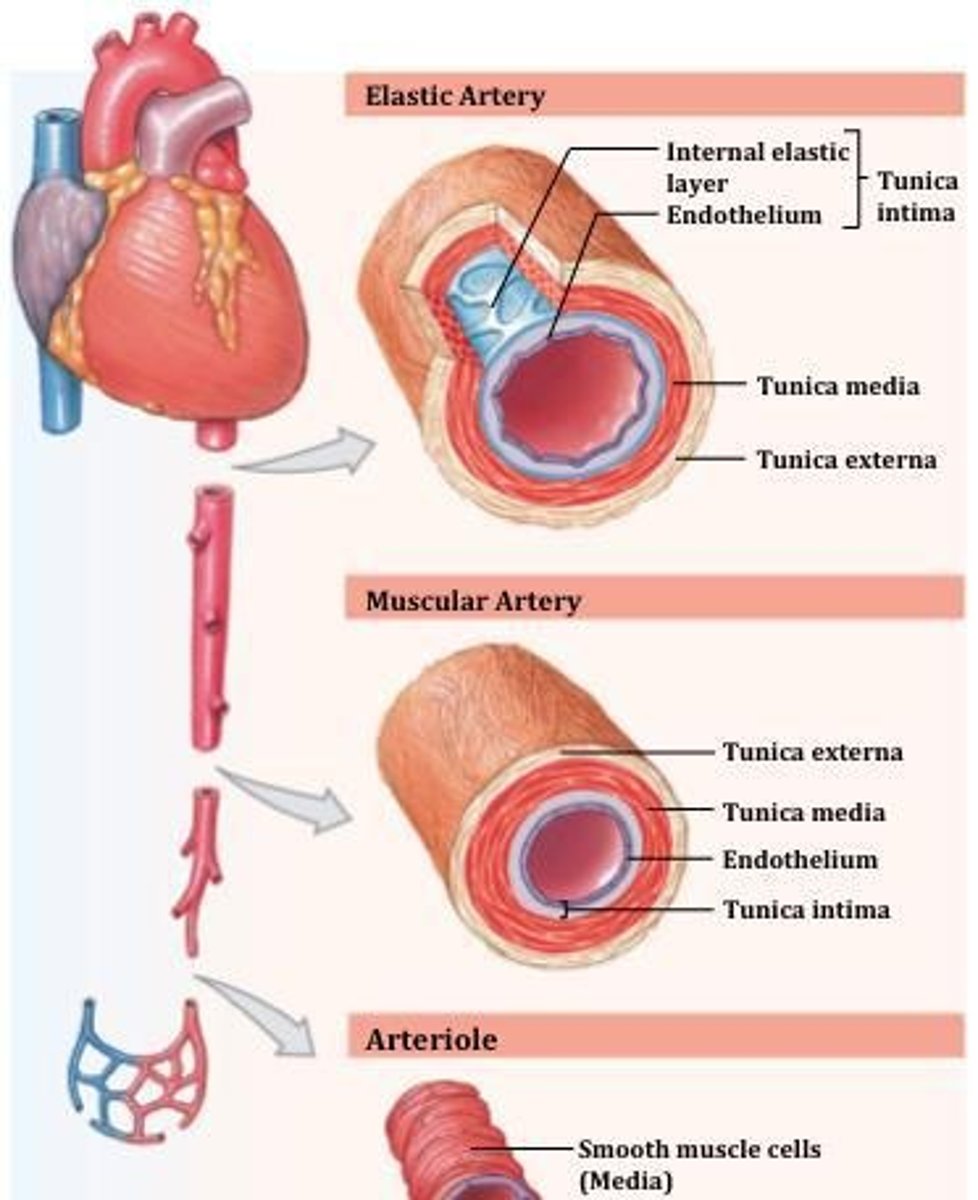
Muscular arteries
Medium-sized distribution arteries that go to specific organs, such as the brachial, femoral, and renal arteries.
Resistance arteries
Small arteries with thick tunica media and very little tunica externa, including arterioles which control blood flow to various organs.
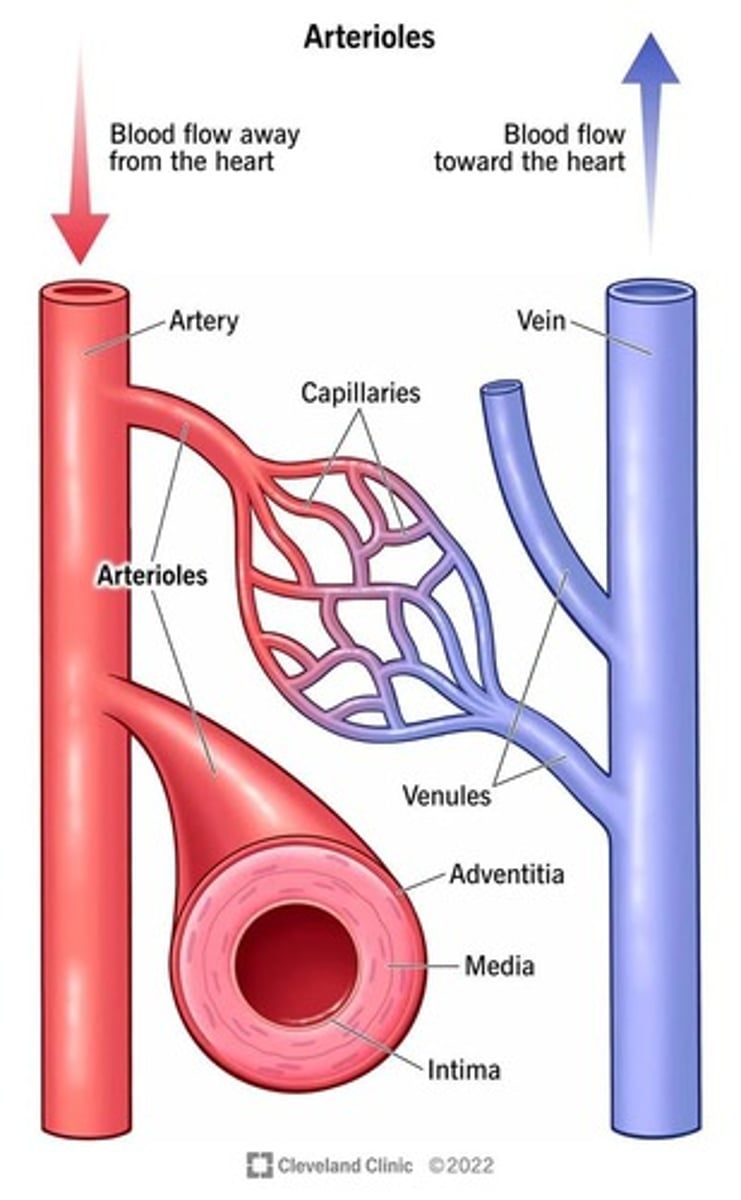
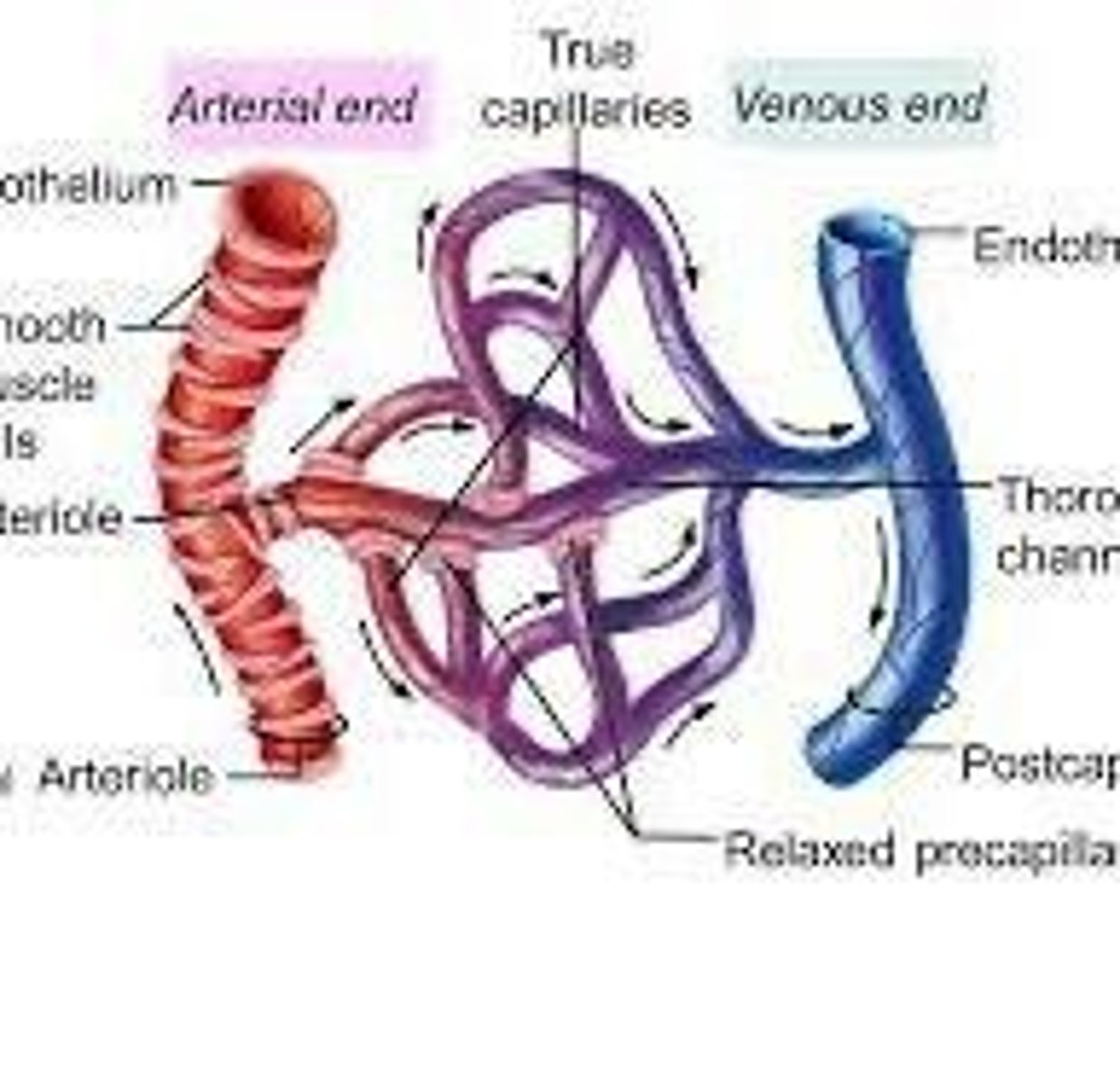
Capillaries
Blood vessels where all exchange functions of the cardiovascular system occur, composed of endothelium and basal lamina.
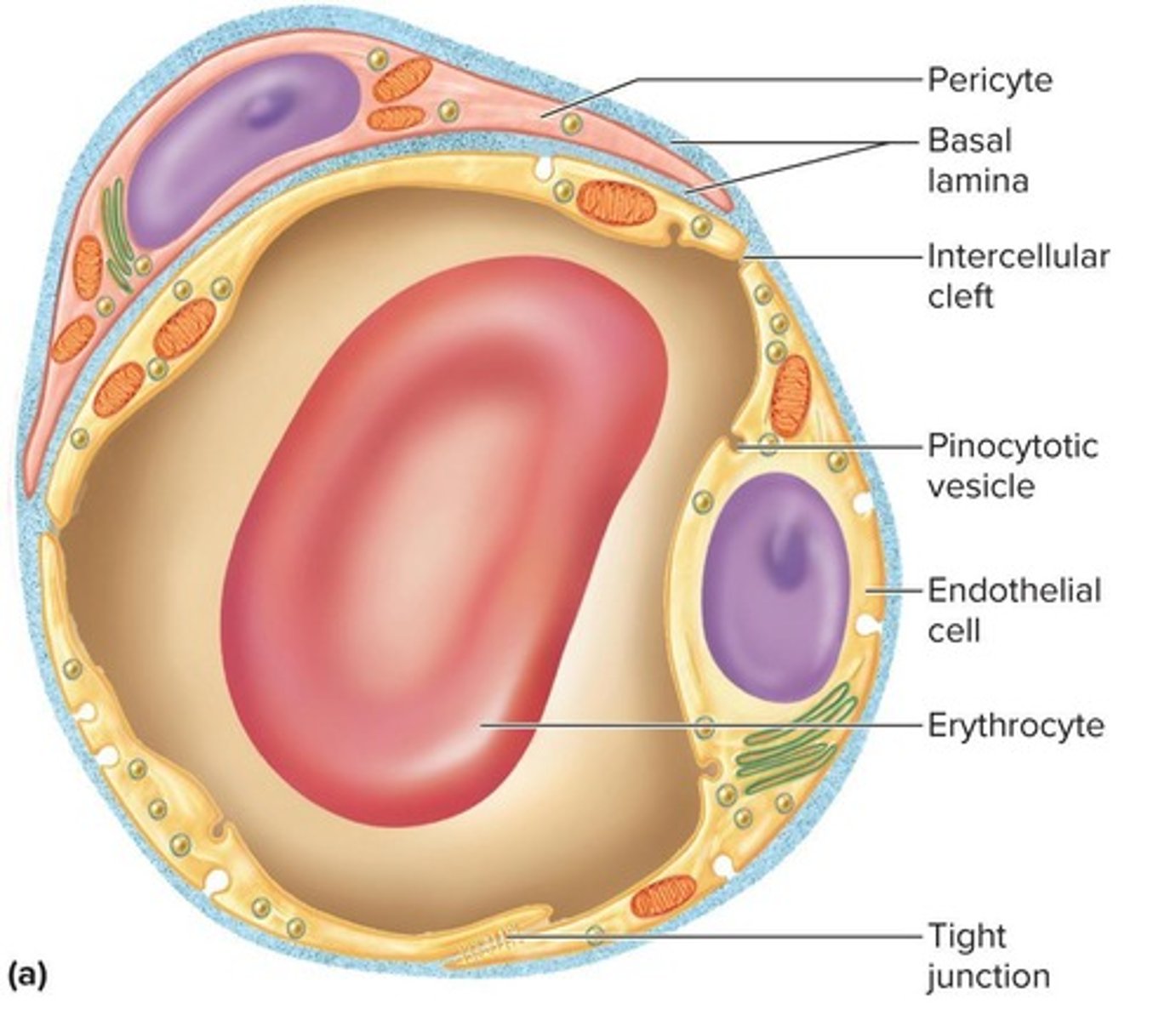
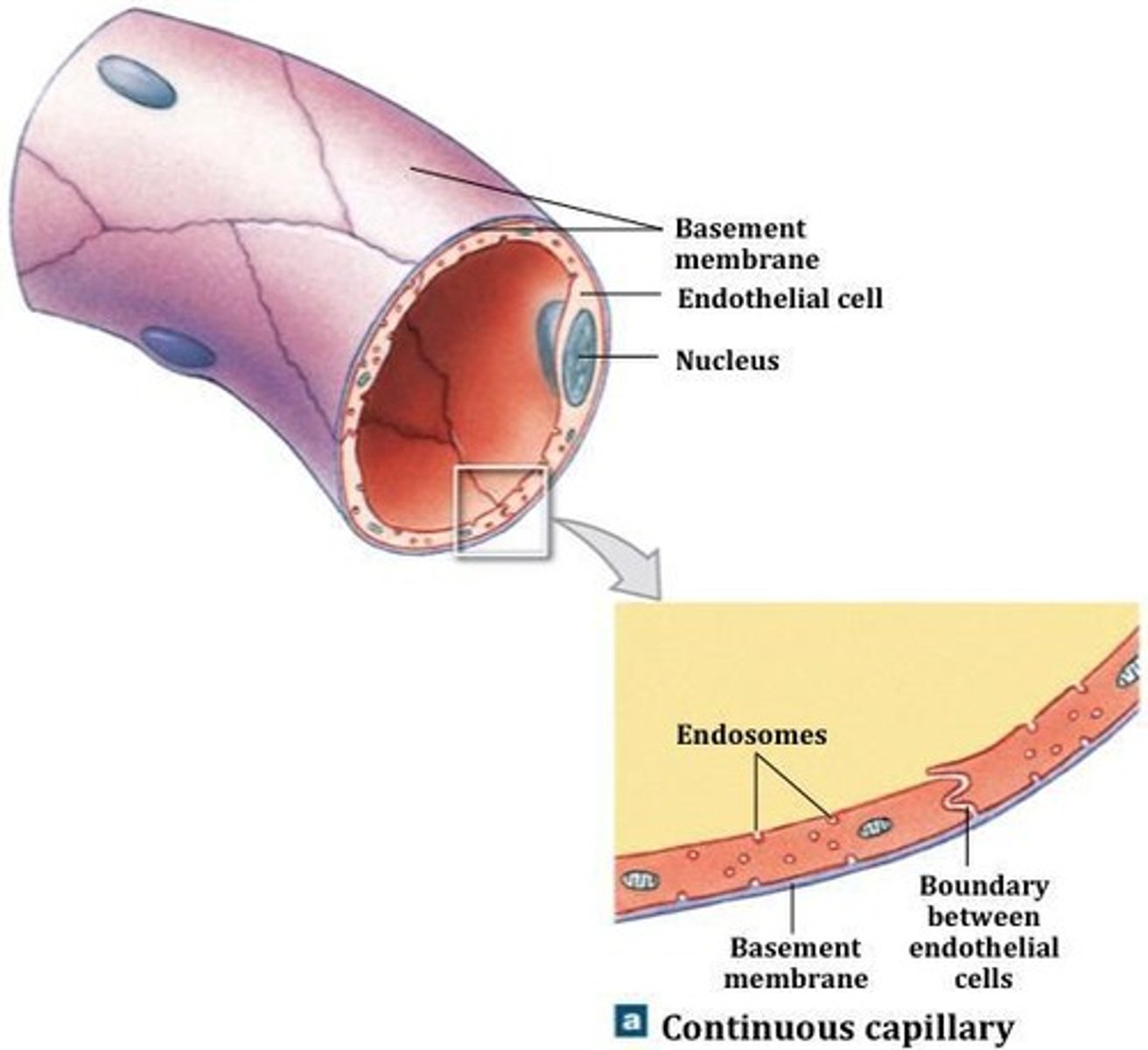
Continuous capillaries
Capillaries with complete endothelial lining found in all tissues except epithelia, cartilage, lens, cornea, tendons, and ligaments.
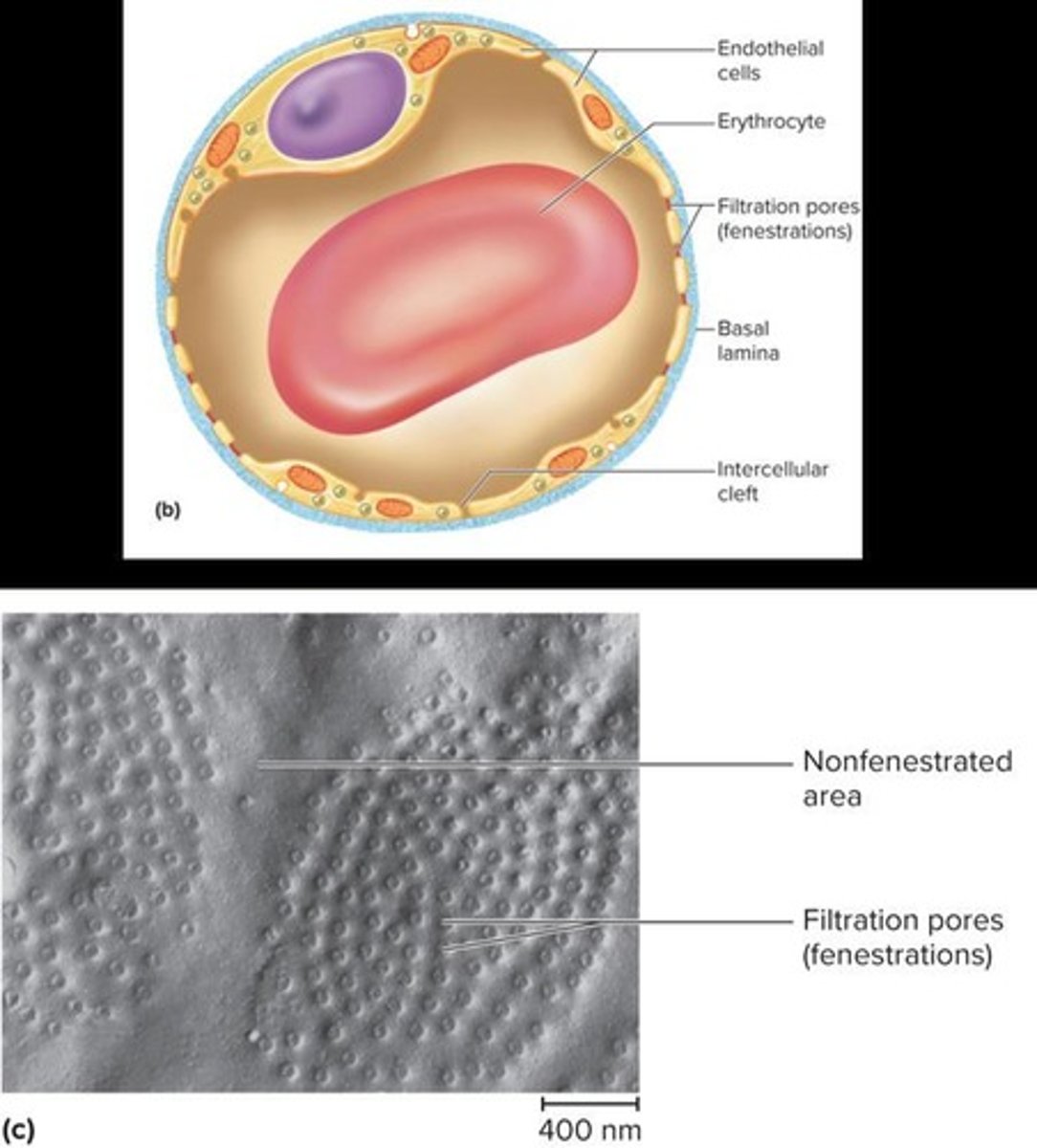
Fenestrated capillaries
Capillaries with filtration pores that permit rapid exchange of water and are found in organs like the kidneys and intestines.
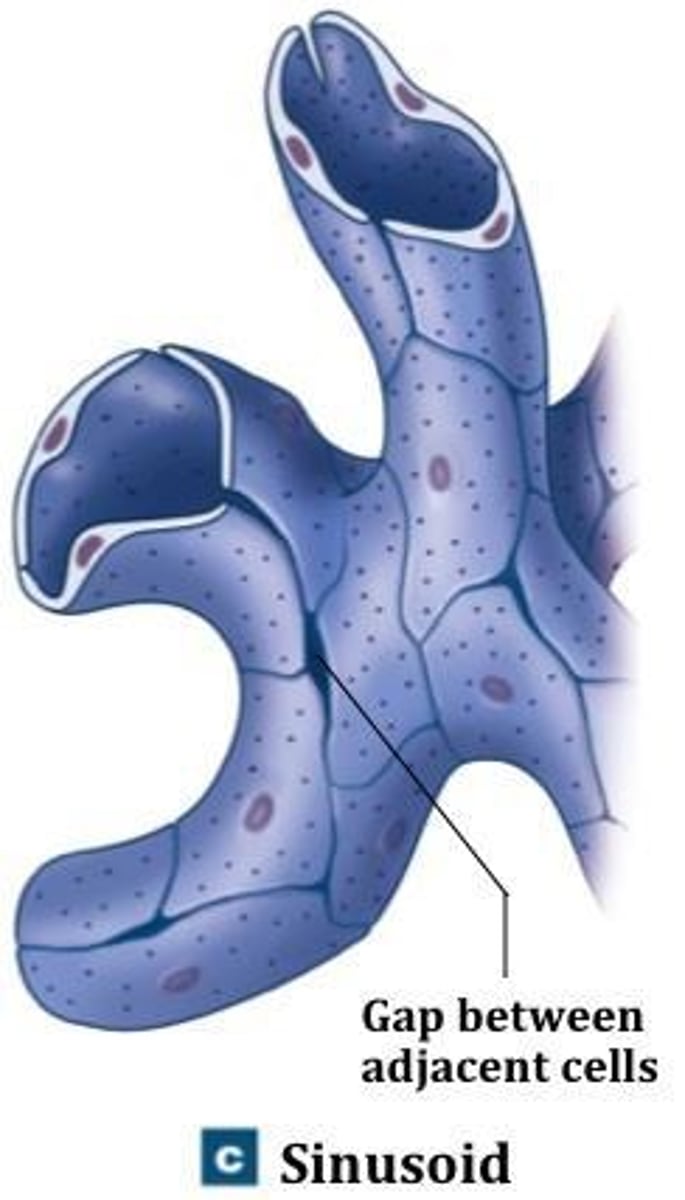
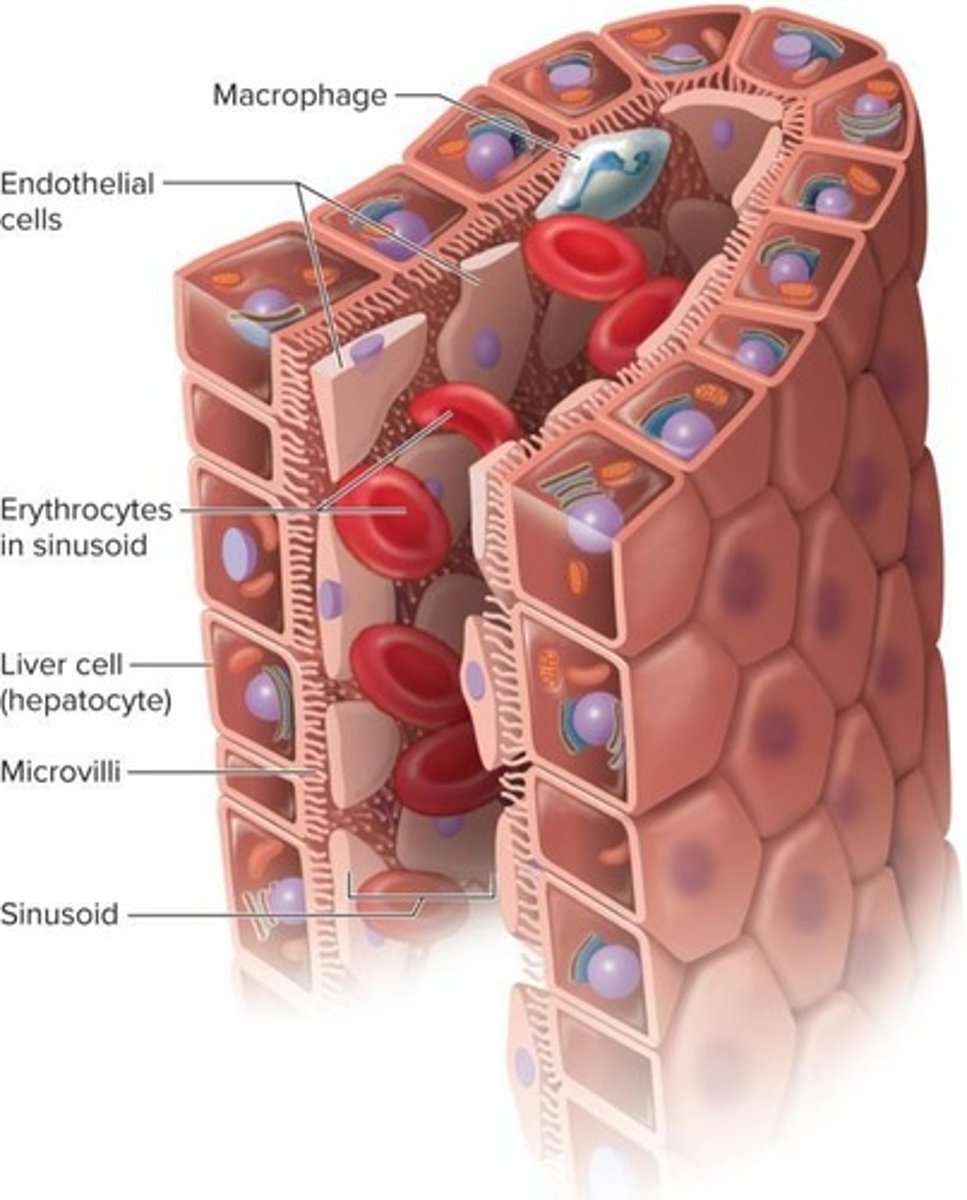
Sinusoids
Capillaries with wide gaps between endothelial cells, allowing free exchange of water and large plasma proteins, found in the liver and spleen.
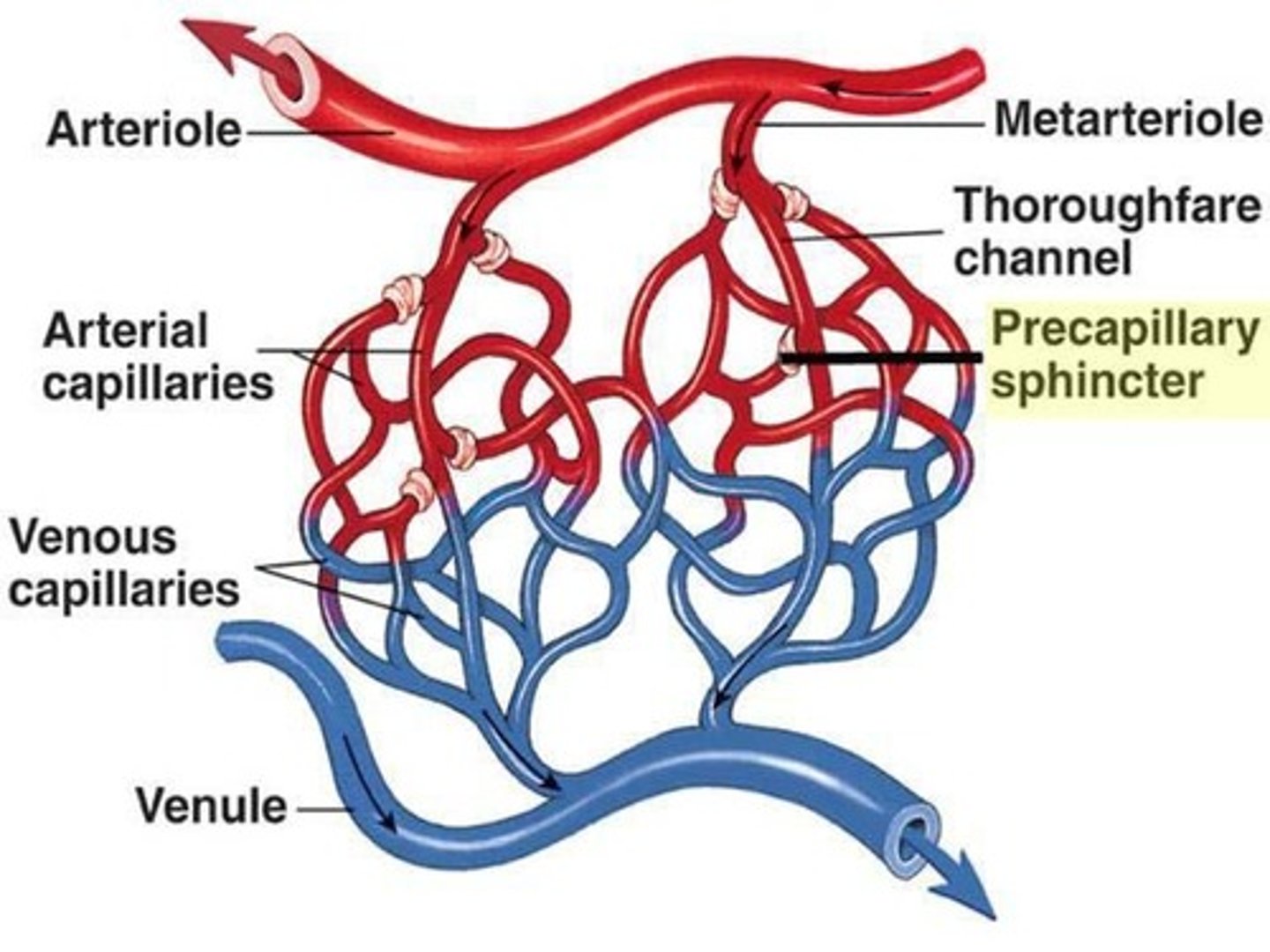
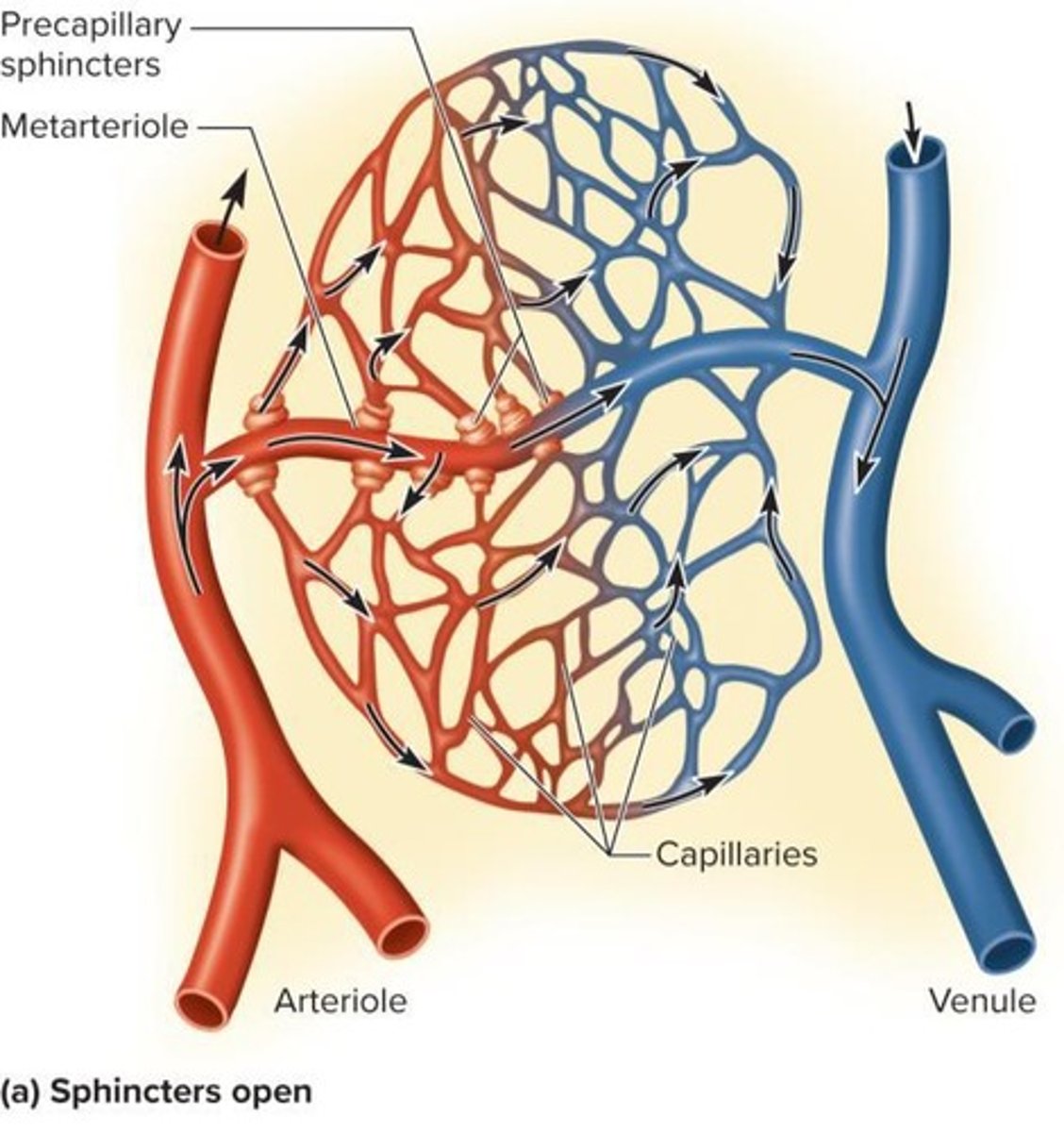
Precapillary sphincter
Muscle that guards the entrance to each capillary, controlling blood flow in pulses.
Veins
Capacitance vessels that hold a high capacity of blood, characterized by thin walls and a steady blood flow.
Postcapillary venules
Smallest veins that consist of tunica interna with few fibroblasts and are more porous than capillaries.
Muscular venules
Venules that receive blood from postcapillary venules and have one or two layers of smooth muscle in their tunica media.
Medium veins
Veins up to 10 mm in diameter with thin tunica media and thick tunica externa, forming venous valves.
Large veins
Veins with a diameter greater than 10 mm, characterized by smooth muscle in all three tunics and a thick tunica externa.
Venous sinuses
Modified veins with especially thin walls and large lumens, not capable of vasoconstriction.
Portal system
A circulatory route where blood flows through two consecutive capillary networks before returning to the heart.
Anastomosis
Convergence between two vessels other than capillaries, including arteriovenous and venous anastomoses.
Flow
Amount of blood flowing through an organ, tissue, or blood vessel at a given time, measured in L/min.
Perfusion
Flow per given volume or mass of tissue in a given time, measured in L/100g/min.
Blood pressure
Force blood exerts against a vessel wall, measured at the brachial artery using a sphygmomanometer.
Systolic pressure
Peak arterial blood pressure taken during ventricular contraction.
Diastolic pressure
Minimum arterial blood pressure taken during ventricular relaxation between heartbeats.
Pulse pressure
Difference between systolic and diastolic pressure, calculated as SBP - DBP.
Mean arterial pressure (MAP)
Calculated as diastolic pressure plus one-third of pulse pressure, representing average blood pressure.
Peripheral resistance
Opposition to blood flow encountered in vessels away from the heart, influenced by blood viscosity, vessel length, and radius.
Angiotensin II
A potent vasoconstrictor that raises blood pressure, requiring angiotensin-converting enzyme for its synthesis.
Aldosterone
Hormone that promotes sodium retention, leading to increased blood volume and pressure.
Natriuretic peptides
Hormones secreted by the heart that increase sodium excretion and reduce blood volume and pressure.
Antidiuretic hormone (ADH)
Hormone that promotes water retention and raises blood pressure, acting as a vasoconstrictor at high concentrations.
Epinephrine and norepinephrine
Hormones that stimulate vasoconstriction and raise blood pressure by binding to alpha-adrenergic receptors.
Capillary exchange
The process of moving materials across capillary walls through diffusion, filtration, and reabsorption.
Water, ions, and small molecules
Diffuse between adjacent endothelial cells or through fenestrated capillaries.
Ions (Na+, K+, Ca2+, Cl−)
Diffuse through channels in plasma membranes.
Large, water-soluble compounds
Pass through fenestrated capillaries.
Lipids and lipid-soluble materials
Diffuse through endothelial plasma membranes.
Plasma proteins
Cross endothelial lining in sinusoids.
Filtration
Driven by hydrostatic pressure; water and small solutes are forced through capillary wall, leaving larger solutes in bloodstream.
Total blood flow to the brain
Fluctuates less than that of any other organ (700 mL/min); seconds of deprivation causes loss of consciousness, four to five minutes causes irreversible brain damage.
Pulmonary arteries pressure
Only 25/10 mm Hg.
Blood flow in lungs
Slower, allowing more time for gas exchange.
Unique response to hypoxia in lungs
Pulmonary arteries constrict in diseased area, redirecting flow to better ventilated regions.
Opposite response to hypoxia in systemic arteries
Systemic arteries dilate in response to hypoxia to increase tissue perfusion.
Pulmonary circuit
Includes the pulmonary trunk ascending from the right ventricle, pulmonary arteries leading to capillary beds around alveoli, and blood draining through pulmonary veins back to the heart.
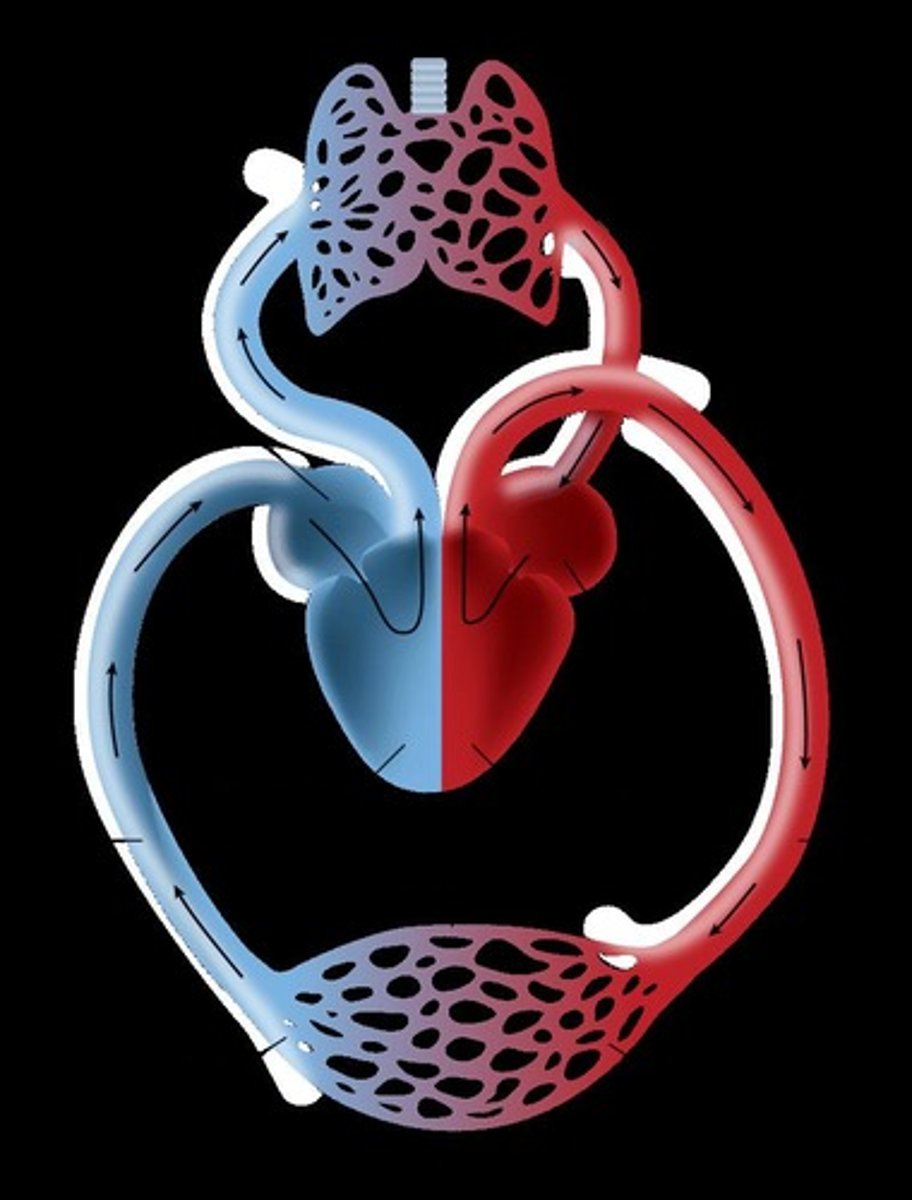
Ascending aorta
Branches off to supply the heart.
Right and left coronary arteries
Branch off the ascending aorta to supply the heart.
Aortic arch
Gives off three major arteries.
Brachiocephalic trunk
Splits into right common carotid artery supplying the right side of the head and right subclavian artery supplying the right shoulder and upper limb.
Left common carotid artery
Supplies the left side of the head.
Left subclavian artery
Supplies the left shoulder and upper limb.
Descending aorta
Passes downward.
Thoracic aorta
Called the thoracic aorta above diaphragm.
Abdominal aorta
Called the abdominal aorta below diaphragm.
Common carotid arteries
Right and left common carotid arteries branch off the brachiocephalic trunk and aorta, respectively.
External carotid artery
Gives rise to vessels that supply the neck and face.
Internal carotid artery
Supplies the orbits and 80% of cerebrum.
Dural venous sinuses
Blood-filled spaces between layers of dura mater that serve as large, thin-walled, modified veins.
Internal thoracic artery
Branches from subclavian and is often used in bypass.
Subclavian vein
Prominent vein carrying blood from shoulder region to heart.
Superior vena cava (SVC)
Prominent vein carrying blood from shoulder region to heart.
Brachial artery
Passes along humerus, branching just distal to elbow.
Radial artery
Where pulse is taken.
Ulnar artery
Artery in the upper limb.
Femoral vein
Sometimes used in bypass.
Ascites
Abnormal abdominal distention due to accumulation of serous fluid in peritoneal cavity.
Air embolism
Injury to the dural sinuses or jugular veins; just 0.5 mL of air in a coronary artery can cause cardiac arrest.
Transient ischemic attacks (TIA)
Brief episodes of cerebral ischemia caused by spasms of diseased cerebral arteries.
Edema
Accumulation of excess fluid in a tissue.
Shock: hypovolemic
Loss of blood volume due to hemorrhage, diarrhea, vomiting, or burns.
Shock: vascular
Normal blood volume with extreme vessel dilation.
Septic shock
Bacterial toxins trigger vasodilation and increased capillary permeability.
Coarctation
Narrowing of the aorta.
Marfan's syndrome
A genetic defect of connective tissue that can lead to aortic aneurysm.
Phlebitis
Inflammation of veins, often caused by blood clot (thrombophlebitis) or IV insertion.
Hematoma
Bruise.
Hemangioma
Noncancerous tumors of tangled blood vessels and fibrous tissue.
Arteriovenous fistula
Abnormal connections between vessels.
Petechiae
Pinpoint hemorrhages in the skin.
Varicose veins
Valves in veins no longer work.
Hemorrhoids
Varicose veins in the anal area.
Orthostatic hypotension
Temporary low blood pressure and dizziness when rising.
Aneurysm
Balloon-like bulge in an artery, commonly found in the brain or abdominal aorta.
Atherosclerosis
Fatty deposits (plaques) that develop in the inner walls of arteries, clogging the passages through which blood can flow.
CABG
Coronary Artery Bypass Graft surgery.