12. Respiration in Plants
 Call Kai
 Learn
Learn Practice Test
 Spaced Repetition
 Match
Match Flashcards
 Knowt Play
1/150

Earn XP
Description and Tags
Very conceptual chapter, please read NCERT once and understand concepts thoroughly, i haven't included flashcards for the amphibolic pathway section because it's just explanations, so read that. This is for revision of all the things you need to remember. Suitable for IAT, NEST, NEET, etc. Question mode: flashcards only. Answer mode: Answer with definition. Good luck on exams!
Name | Mastery | Learn | Test | Matching | Spaced | Call with Kai | Chat |
|---|
No analytics yet
Send a link to your students to track their progress
151 Terms
What is breathing?
Exchange of gases inside an organism
What is respiration?
The breaking of the C-C bonds of complex compounds through oxidation within the cells, leading to release of considerable amount of energy is called respiration.
What is the energy currency in living organisms?
ATP (adenosine triphosphate)
Which parts of a plant can carry out photosynthesis?
cells which contain chloroplasts
Why are mitochondria regarded as the powerhouse of a cell?
Mitochondria are where the cell produces the majority of its ATP, which is energy currency
Why is there no gaseous transport system in plants? (2 points)
Because each plant part takes care of its own gas-exchange needs thanks to the air cavities present between cells.
Plants do not present great demands for gas exchange. Roots, stems and leaves respire at rates far lower than animals do.
Why is there a food transport system in plants?
Because not all parts of the plant can synthesise their own food, unlike gaseous exchange
The breaking of the C-C bonds of complex compounds through oxidation within the cells, leading to release of considerable amount of energy is called respiration.
In what form is this energy stored?
In the form of bond energy in ATP
Provide 4 examples of respiratory substrates.
carbohydrates
proteins
fats
organic acids
Which part of the cell does glycolysis take place in?
the cytoplasm
Which part of the cell does Krebs’ cycle take place in?
The matrix of a mitochondrion
Which part of the cell does oxidative phosphorylation take place in?
The inner membrane of a mitochondrion
The energy released by oxidation in respiration can be used directly.
True or false?
False, it is used to synthesize ATP, which is broken down whenever energy needs to be utilized.
What organs do plants use for gaseous exchange?
stomata and lenticels
For gaseous exchange in plants, the distance that gases must diffuse even in large, bulky plants is not great.
This is obviously true for leaves, how is it true for thick woody stems and roots?
In stems, the ‘living’ cells are organised in thin layers inside and beneath the bark. They also have openings called lenticels. The cells in the interior are dead and provide only mechanical support. Thus, most cells of a plant have at least a part of their surface in contact with air. This is also facilitated by the loose packing of parenchyma cells in leaves, stems and roots, which provide an interconnected network of air spaces.
What are the products of the complete combustion of glucose?

The strategy that the plant cell uses is to catabolise the glucose molecule in such a way that not all the liberated energy goes out as heat.
What are the methods the plant cell uses to achieve this?
The key is to oxidise glucose not in one step but in several small steps enabling some steps to be just large enough such that the energy released can be coupled to ATP synthesis.
[directly from NCERT]
The first living cells on earth were aerobic or anaerobic?
anaerobic
What is glycolysis?
partial oxidation of one molecule of glucose to 2 molecules of pyruvic acid.
Which respiration pathways are present in anaerobes?
glycolysis only
The scheme of glycolysis was given by _____________, _____________, and _________, and is often referred to as the EMP pathway based on their names.
The scheme of glycolysis was given by Gustav Embden, Otto Meyerhof, and J. Parnas, and is often referred to as the EMP pathway based on their names.
Which sort of cells is the glycolysis pathway present in?
all cells (aerobic and anaerobic)
What is the end product of photosynthesis?
sucrose
In glycolysis, glucose undergoes partial oxidation to form two molecules of pyruvic acid.
Where does this glucose come from in plants?
In plants, this glucose is derived from sucrose, or from storage carbohydrates.
Why is sucrose also known as an invert sugar?
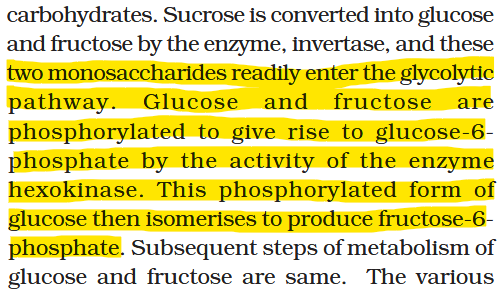
Sucrose is converted into glucose and fructose by the enzyme, invertase.
Which two monosaccharides can enter the glycolytic pathway.
Glucose and fructose
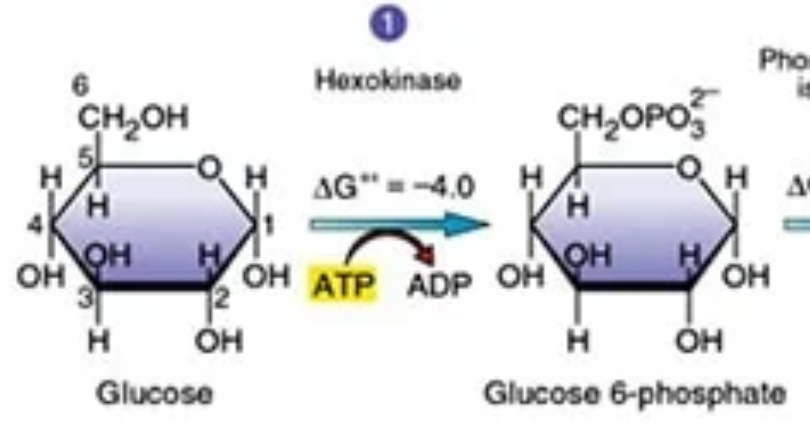
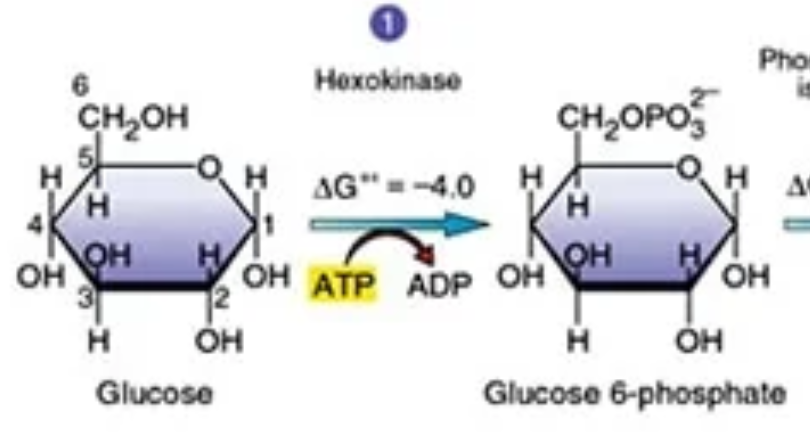
What is the first step of glycolysis involving glucose?
Glucose is converted to glucose-6-phosphate by enzyme hexokinase, 1ATP molecule is converted to ADP.
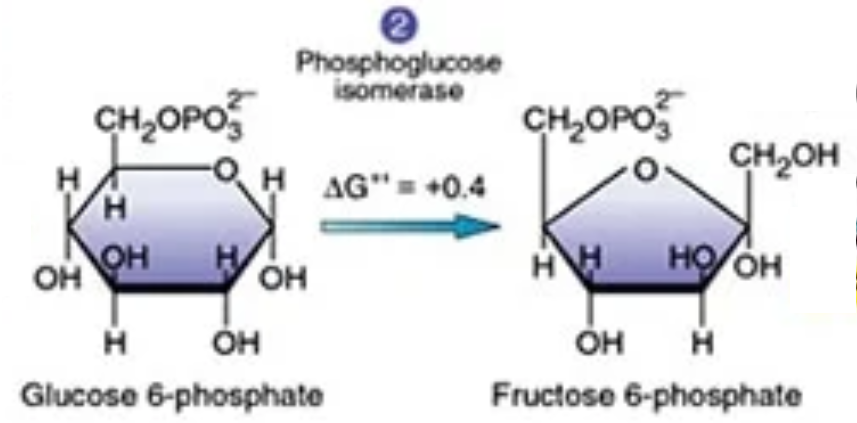
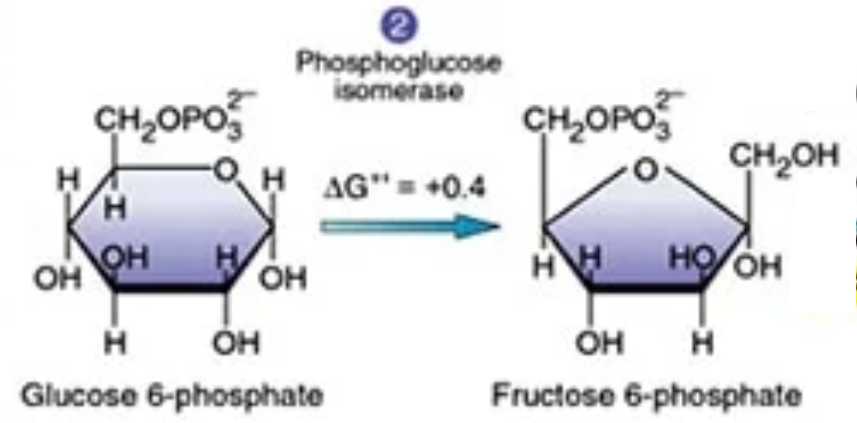
What is the second step of glycolysis?
glucose-6-phosphate is converted into fructose-6-phosphate by enzyme phosphoglucose isomerase
What is the third step of glycolysis?
fructose-6-phosphate is converted into fructose-1,6-bisphosphate by the enzyme phosphofructokinase, 1ATP molecule is converted into ADP.
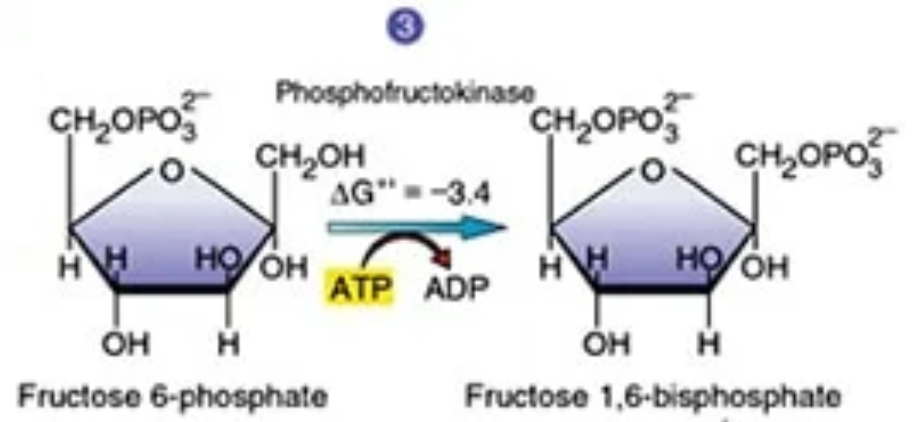
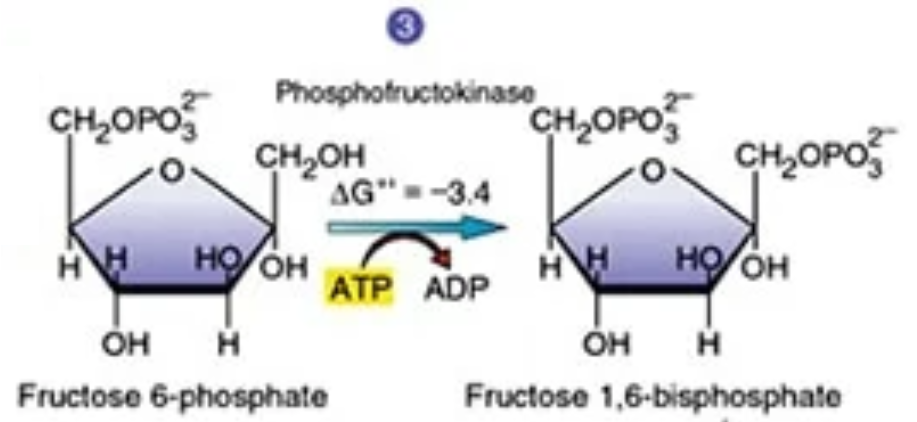
What is the fourth and fifth step of glycolysis?
fructose-1,6-bisphosphate is converted into two triose phosphates (isomers) by enzyme aldolase:
glyceraldehyde-3-phosphate (GADP) or 3-phosphoglyceraldehyde (PGAL)
dihydroxy acetone phosphate (DHAP)
DHAP is then converted into GADP by enzyme triose phosphate isomerase
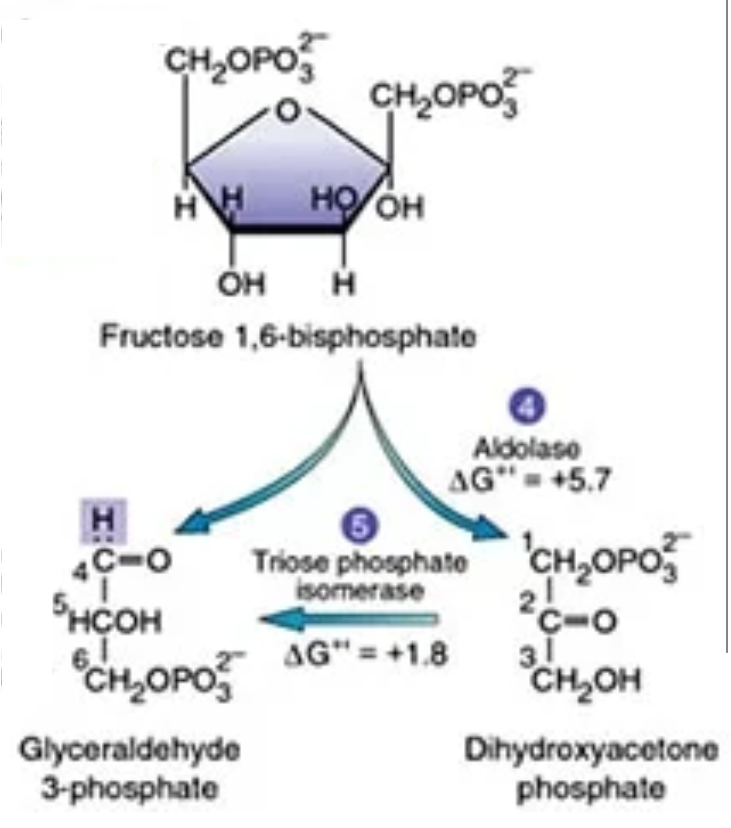
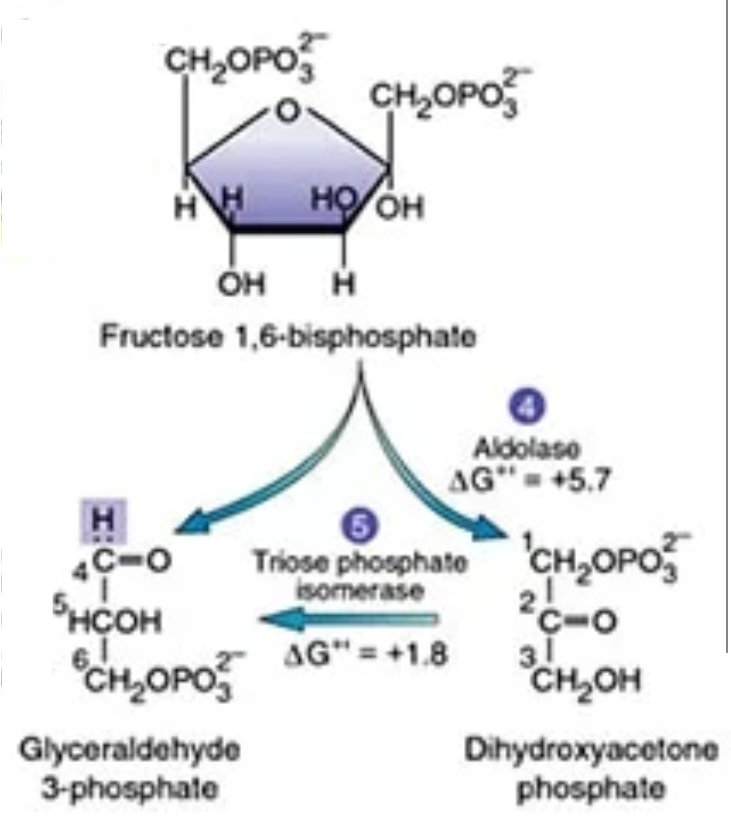
What is the sixth step of glycolysis?
The triose phosphates GADP and DHAP are converted into two molecules of 1,3-bisphosphoglyceric acid, or two molecules of triose bisphosphate, by the enzyme glyceraldehyde phosphate dehydrogenase.
Two NAD+ molecules are converted into two NADH + H+ molecules.
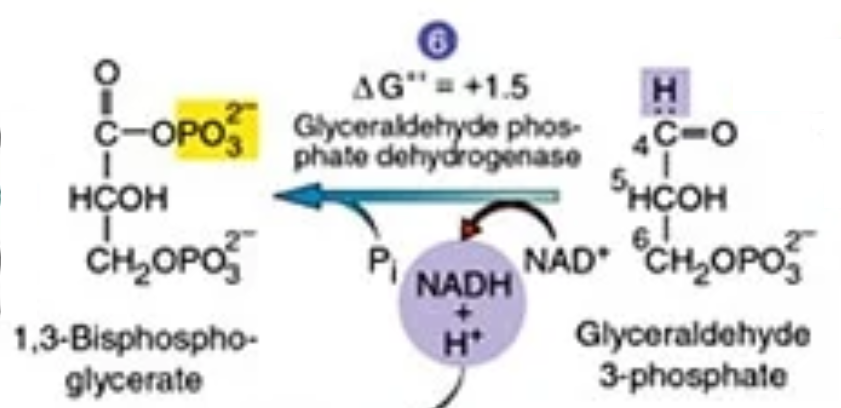
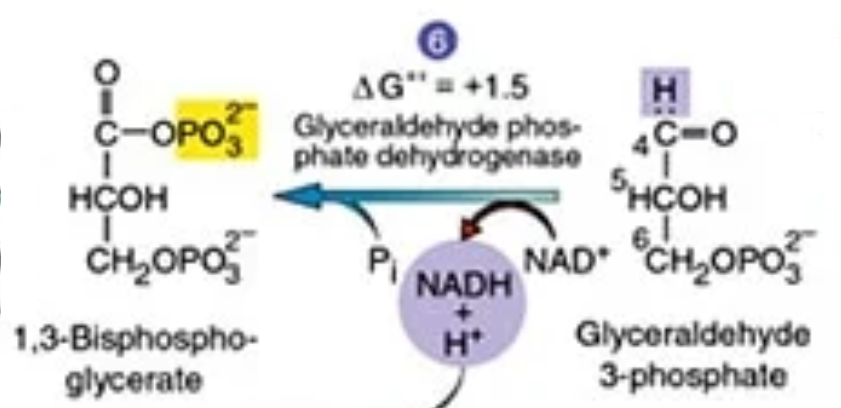
What is the seventh step of glycolysis?
the two triose bisphosphate molecules are converted into two molecules of 3-phosphoglyceric acid (3PGA), or two molecules of triose phosphates, by the enzyme phosphoglycerate kinase.
1ADP molecule is converted to ATP.
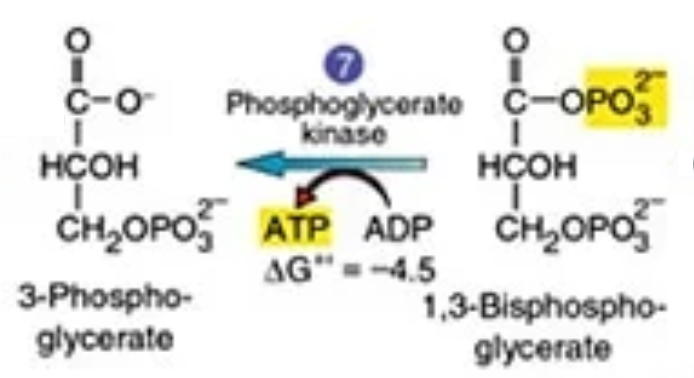
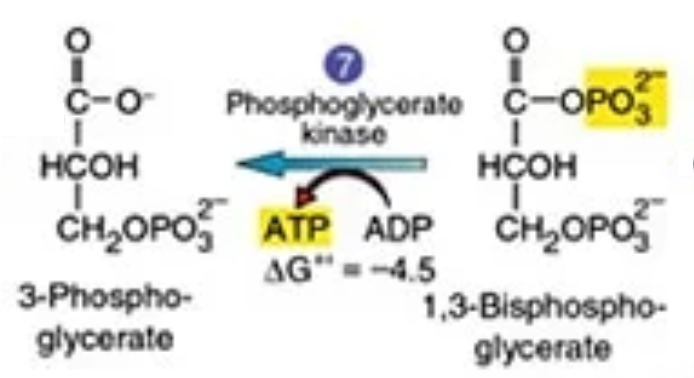
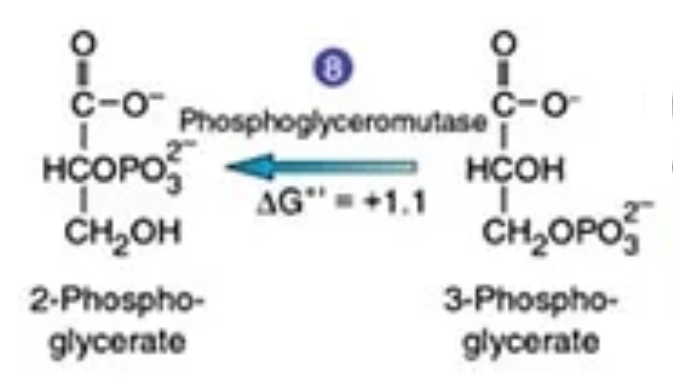
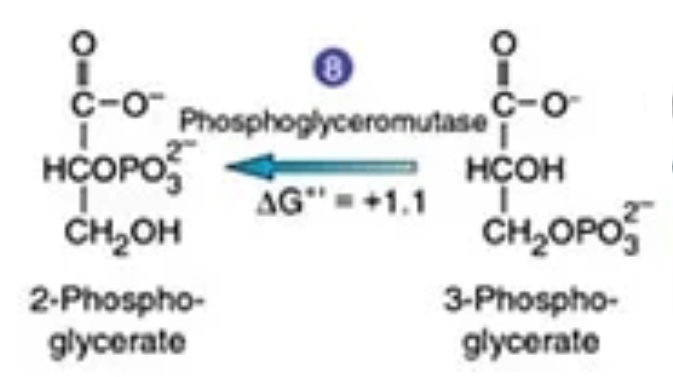
What is the 8th step of glycolysis?
the two molecules of triose phosphates are converted into two molecules of 2-phosphoglyceric acid, or two molecules of 2-phosphoglycerate, by enzyme phosphoglyceromutase.
(3PGA → 2PGA)
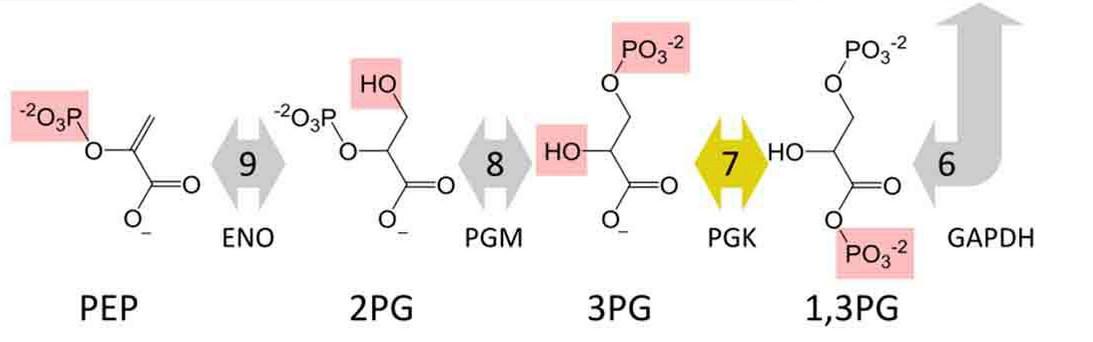
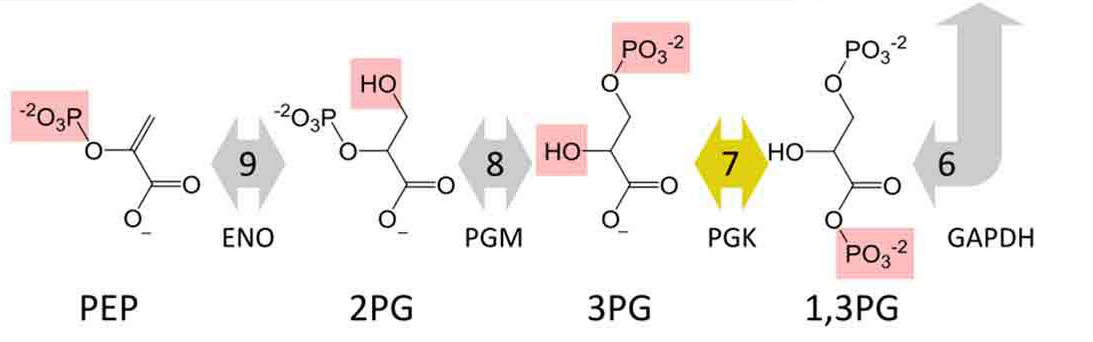
What is the 9th step of glycolysis?
the two molecules of 2-phosphoglycerate (2PGA) are converted into two molecules of phosphoenolpyruvate (PEP) by the enzyme enolase.
One water molecule is removed in this process.
What is the last step of glycolysis?
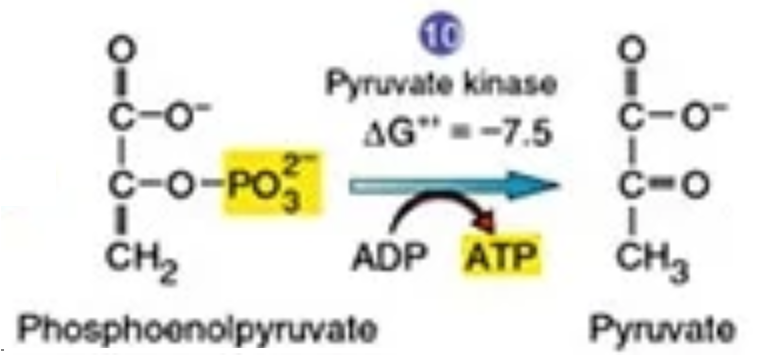
two molecules of PEP are converted into two molecules of pyruvic acid by the enzyme pyruvate kinase.
1ADP is converted into ATP.
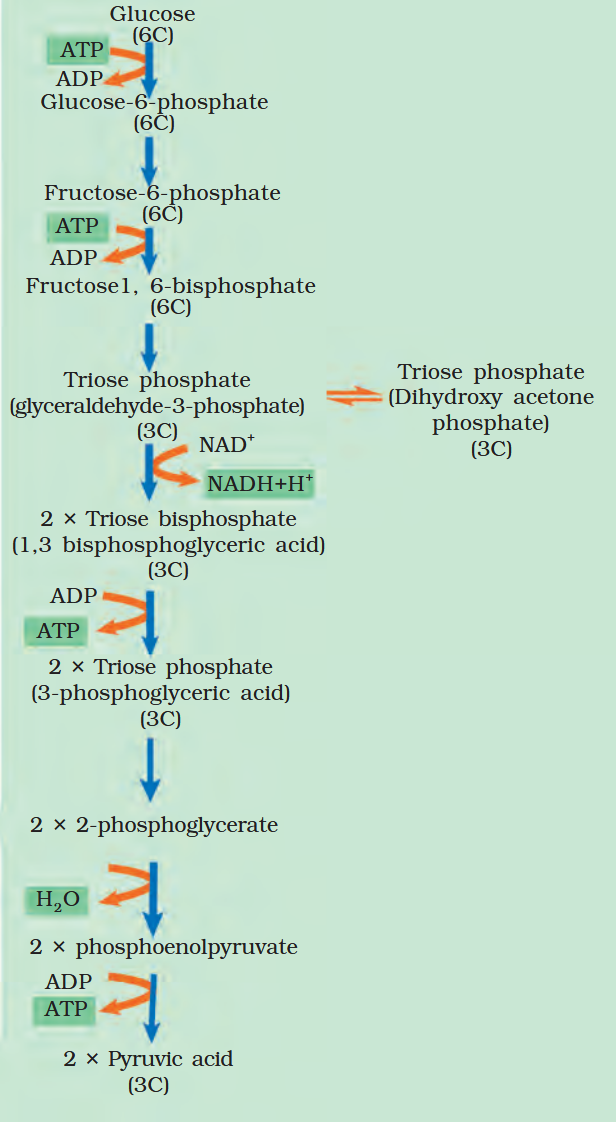
Depict a diagramatic representation of the 10 steps of glycolysis.
At which point do glucose molecules enter the glycolysis pathway?
The first step
At which point do fructose molecules enter the glycolysis pathway?
The third step (first it is phosphorylized by fructokinase / hexokinase then it directly enters before the third glycolysis reaction)
How many molecules of ATP are utilized in glycolysis?
2
How many molecules of ATP are produced in glycolysis?
4
What is the net ATP molecules output after only glycolysis?
2
What are the products and byproducts (balanced) after glycolysis of 1 molecule of glucose?
C6H12O6+2ATP+4ADP+2NAD+→2(pyruvic acid)+4ATP+2ADP+2H2O+2NADH+H+
or
C6H12O6+2ADP+2NAD+→2(pyruvic acid)+2ATP+2H2O+2NADH+H+
In glycolysis, ATP is utilized in which two places?
ATP is utilised at two steps: first in the conversion of glucose into glucose 6-phosphate and second in the conversion of fructose 6-phosphate to fructose 1, 6-bisphosphate.
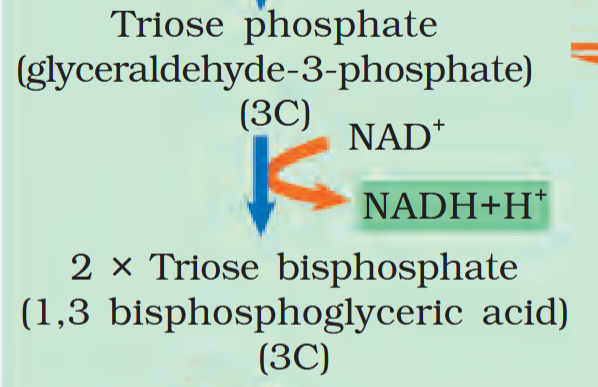
in this step of glycolysis, NAD+ acquires 2 hydrogen atoms from where?
Two redox-equivalents are removed (in the form of two hydrogen atoms) from PGAL and transferred to a molecule of NAD+.
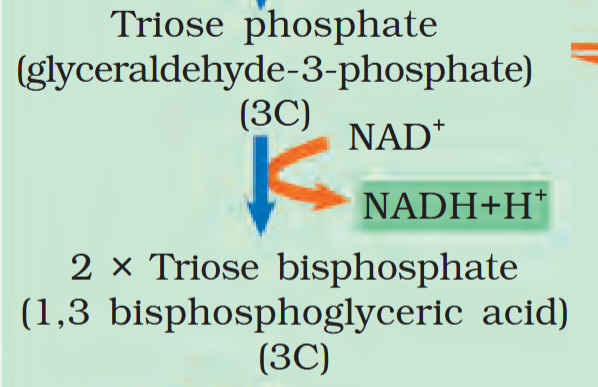
In this step of glycolysis, PGAL is oxidised and with ______________________ to get converted into BPGA.
In this step of glycolysis, PGAL is oxidised and with inorganic phosphate to get converted into BPGA.
What is the key product of glycolysis?
Pyruvic acid
There are three major ways in which different cells handle pyruvic acid produced by glycolysis. What are these?
Lactic acid fermentation
Alcoholic fermentation
Aerobic respiration
There are three major ways in which different cells handle pyruvic acid produced by glycolysis.
Under which conditions does alcoholic fermentation take place?
In many prokaryotes and unicellular eukaryotes, in anaerobic conditions.
After glycolysis, if the cell is to perform aerobic respiration, which pathway occurs?
Krebs’ cycle
In fermentation ___________ oxidation of glucose occurs
(complete / incomplete)
incomplete
What are the end products of alcoholic fermentation?
Ethanol and CO2
What are the end products of lactic acid fermentation?
lactic acid
Which two enzymes catalyze alcoholic fermentation?
pyruvic acid decarboxylase
alcohol dehydrogenase
There are three major ways in which different cells handle pyruvic acid produced by glycolysis.
Under which conditions does lactic acid fermentation take place?
in some anaerobic bacteria and in animal muscles during exercise / increased physical activity
What are the byproducts in both alcoholic and lactic acid fermentation?
NAD+
(from NADH + H+)
ATP synthesis occurs in both Krebs’ cycle and fermentation. True or false?
False, no ATP synthesis occurs during fermentation
What is the reducing agent in fermentation (anaerobic respiration pathway)?
NADH + H+
What is the enzyme that catalyses lactic acid fermentation?
lactate dehydrogenase
In both lactic acid fermentation and alcoholic fermentation, less than _______% of the energy in glucose is released
7
What is the net number of ATP molecules that is synthesised when one molecule of glucose is fermented to alcohol or lactic acid?
4
Yeasts poison themselves to death when the concentration of alcohol through alcoholic fermentation reaches about _________%.
Yeasts poison themselves to death when the concentration of alcohol through alcoholic fermentation reaches about 13%.
Yeasts poison themselves to death when the concentration of alcohol through alcoholic fermentation reaches about 13%.
How then do we create beverages with a higher concentration of alcohol?
distillation
Catabolism is an _________ reaction
(exothermic / endothermic)
exothermic
Anabolism is an __________ reaction
(exothermic / endothermic)
endothermic
For aerobic respiration to take place within the mitochondria, the final product of glycolysis (pyruvate) is transported from the ___________ into the _____________.
For aerobic respiration to take place within the mitochondria, the final product of glycolysis (pyruvate) is transported from the cytoplasm into the mitochondria.
What are the two crucial events in aerobic respiration?
The complete oxidation of pyruvate by the stepwise removal of all the hydrogen atoms, leaving three molecules of CO2.
The passing on of the electrons removed as part of the hydrogen atoms to molecular O2 with simultaneous synthesis of ATP
Depict the oxidative decarboxylation reaction catalyzed by pyruvate dehydrogenase in aerobic respiration.

What sort of biomolecule is NAD+?
coenzyme
How many molecules of NADH are produced per molecule of glucose in oxidative decarboxylation?
2
Oxidative decarboxylation of aerobic respiration takes place in which part of the cell?
mitochondrial matrix
What happens after oxidative decarboxylation in aerobic respiration?
The acetyl CoA produced then enters the Krebs’ cycle.
What is the TCA cycle?
Krebs’ cycle / tricarboxylic acid cycle
What is the first step of the TCA cycle?
The TCA cycle starts with the condensation of acetyl group of Acetyl CoA (produced through oxidative decarboxylation of pyruvic acid) with oxaloacetic acid (OAA) and water to yield citric acid.
The TCA cycle starts with the condensation of acetyl group of Acetyl CoA (produced through oxidative decarboxylation of pyruvic acid) with oxaloacetic acid (OAA) and water to yield citric acid.
Which enzyme catalyses this reaction?
citrate synthase
The TCA cycle starts with the condensation of acetyl group of Acetyl CoA (produced through oxidative decarboxylation of pyruvic acid) with oxaloacetic acid (OAA) and water to yield citric acid.
What is the byproduct of this reaction?
CoA (coenzyme A)
The TCA cycle starts with the condensation of acetyl group of Acetyl CoA (produced through oxidative decarboxylation of pyruvic acid) with oxaloacetic acid (OAA) and water to yield citric acid.
What happens directly after this?
Citrate is then isomerised to isocitrate
The TCA cycle starts with the condensation of acetyl group of Acetyl CoA (produced through oxidative decarboxylation of pyruvic acid) with oxaloacetic acid (OAA) and water to yield citric acid.
Citrate is then isomerised to isocitrate.
What happens after this?
It is followed by two successive steps of decarboxylation.
(isocitrate → α-ketoglutaric acid → succinyl-CoA)
The TCA cycle starts with the condensation of acetyl group of Acetyl CoA (produced through oxidative decarboxylation of pyruvic acid) with oxaloacetic acid (OAA) and water to yield citric acid.
Citrate is then isomerised to isocitrate.
Explain the two steps of decarboxylation that take place after this.
isocitrate is converted to α-ketoglutaric acid, converting one NAD+ to NADH + H+ with it. one CO2 molecule is released.
α-ketoglutaric acid is converted to succinyl-CoA, converting one NAD+ to NADH + H+ with it. One CO2 molecule is released.
The TCA cycle starts with the condensation of acetyl group of Acetyl CoA (produced through oxidative decarboxylation of pyruvic acid) with oxaloacetic acid (OAA) and water to yield citric acid.
Citrate is then isomerised to isocitrate. Isocitrate then undergoes two steps of decarboxylation after this.
What happens after this?
Succinyl-CoA is converted to succinic acid.
During the conversion of succinyl-CoA to succinic acid a molecule of GTP is synthesised from GDP + an inorganic phosphate.
The TCA cycle starts with the condensation of acetyl group of Acetyl CoA (produced through oxidative decarboxylation of pyruvic acid) with oxaloacetic acid (OAA) and water to yield citric acid.
Citrate is then isomerised to isocitrate. Isocitrate then undergoes two steps of decarboxylation after this, eventually leading to the formation of succinate. What happens after this?
Succinate is oxidised through multiple steps (succinate → fumarate → malate → oxaloacetate) to reach oxaloacetic acid, thus completing the cycle.
When GDP is converted to GTP during the process of Krebs’ cycle, what is the fate of the GTP?
This is a substrate level phosphorylation. In a coupled reaction GTP is converted to GDP with the simultaneous synthesis of ATP from ADP.
During Krebs’ cycle, when succinate is being oxidised through multiple steps to obtain oxaloacetate, what other byproducts are synthesized?
There is one point where NAD+ is reduced to NADH + H+ and one point where FAD+ is reduced to FADH2.
NADH is produced when succinate is converted to fumarate.
FADH2 is produced when malate is converted to oxaloacetate.
Depict oxidative decarboxylation + Krebs’ cycle in equation format.

At which stage of Krebs’ cycle is water utilized?
The TCA cycle starts with the condensation of acetyl group with oxaloacetic acid (OAA) and water to yield citric acid.
What are the two requirements for the Krebs’ cycle to be a cycle?
oxaloacetic acid is regenerated
In addition it also requires regeneration of NAD+ and FAD+ from NADH and FADH2 respectively
What are the five complexes present in the Electron Transport System in the inner membrane of cellular mitochondria?
NADH dehydrogenase
Succinate dehydrogenase
Cytochrome bc1
Cytochrome c oxidase
ATP synthase
What is the purpose of the Electron Transport System as part of cellular respiration?
To release and utilise the energy stored in NADH+H+ and FADH2.
The purpose of the Electron Transport System as part of cellular respiration is to release and utilise the energy stored in NADH+H+ and FADH2.
How is this accomplished generally?
This is accomplished when they are oxidised through the electron transport system and the electrons are passed on to O2 resulting in the formation of H2O.
In ETS, NADH+H+ and FADH2 are oxidised through the electron transport system and the electrons are passed on to O2 resulting in the formation of H2O.
Why are the electrons passed onto O2?
The presence of oxygen is vital, since it drives the whole process by removing hydrogen from the system. Oxygen acts as the final hydrogen acceptor.
What is ETS?
The metabolic pathway through which the electron passes from one carrier to another when extracting energy from NADH+H+ and FADH2, is called the electron transport system.
Electrons from NADH produced in the mitochondrial matrix during citric acid cycle are oxidised by which enzyme / ETC complex?
NADH dehydrogenase
Electrons from NADH produced in the mitochondrial matrix during citric acid cycle are oxidised by NADH dehydrogenase, after which what happens?
The electrons are then transferred to ubiquinone located within the inner membrane.
Which electron carriers are present inside complex I of ETS?
FMN, FeS
Ubiquinone (part of ETS) receives reducing equivalents via which two compounds?
NADH and FADH2
In ETS, uibiquinone is reduced by NADH and FADH2 to form what?
Ubiquinol
In ETS, uibiquinone is reduced by NADH and FADH2 to form ubiquinol. What happens to this ubiquinol?
The reduced ubiquinone (ubiquinol) is then oxidised with the transfer of electrons to cytochrome c via cytochrome bc1 complex (complex III).
What is cytochrome c? What is its purpose?
Cytochrome c is a small protein attached to the outer surface of the inner membrane and acts as a mobile carrier for transfer of electrons between complex III and IV.
What is the purpose of complex III (part of ETS)?
It receives electrons from ubiquinol and transfers it to cytochrome c.
Which electron acceptors are present in cytochrome bc1?
cytochrome b
FeS
cytochrome c1
Which electron acceptors are present in complex II (of ETS)?
FeS