Human Heart, Circulatory System, and Respiratory Anatomy: Key Terms and Structures
 Call Kai
 Learn
Learn Practice Test
 Spaced Repetition
 Match
Match Flashcards
 Knowt Play
1/53

There's no tags or description
Looks like no tags are added yet.
Name | Mastery | Learn | Test | Matching | Spaced | Call with Kai |
|---|
No analytics yet
Send a link to your students to track their progress
54 Terms
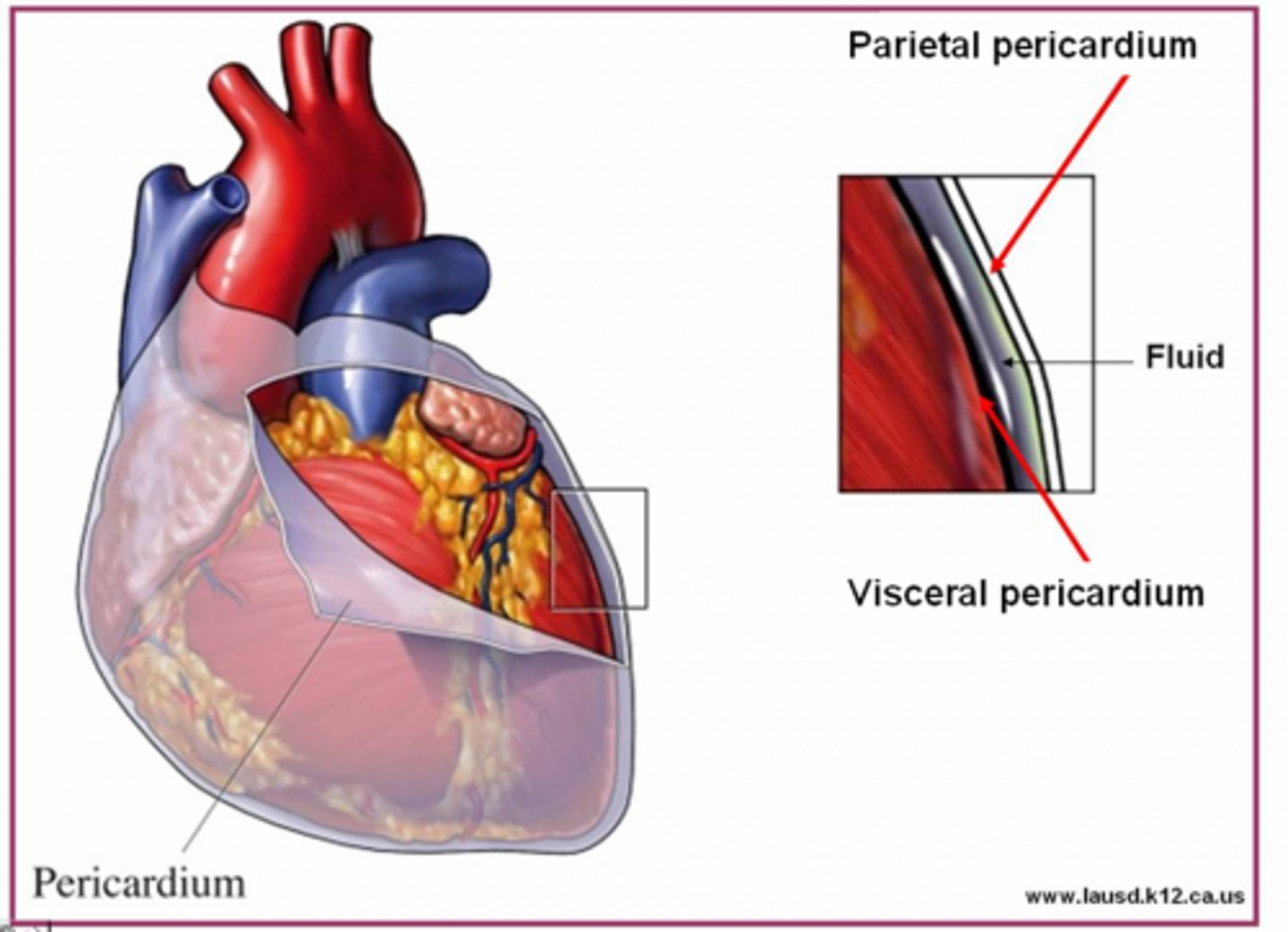
Pericardium
The fibrous sac surrounding the heart that provides protection and anchors it within the thoracic cavity.
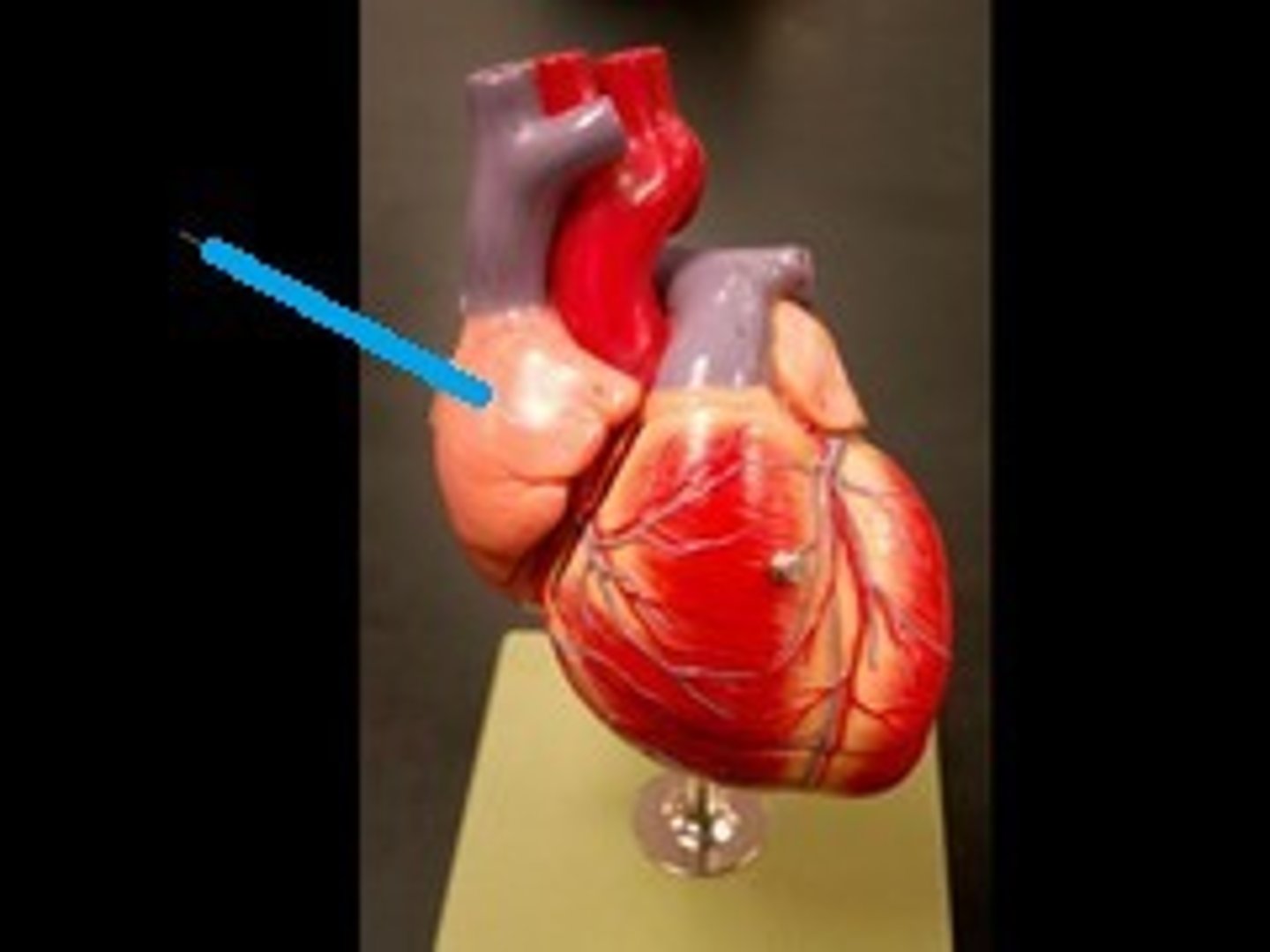
Right atrium
The chamber of the heart that receives deoxygenated blood from the body through the superior and inferior vena cavae.
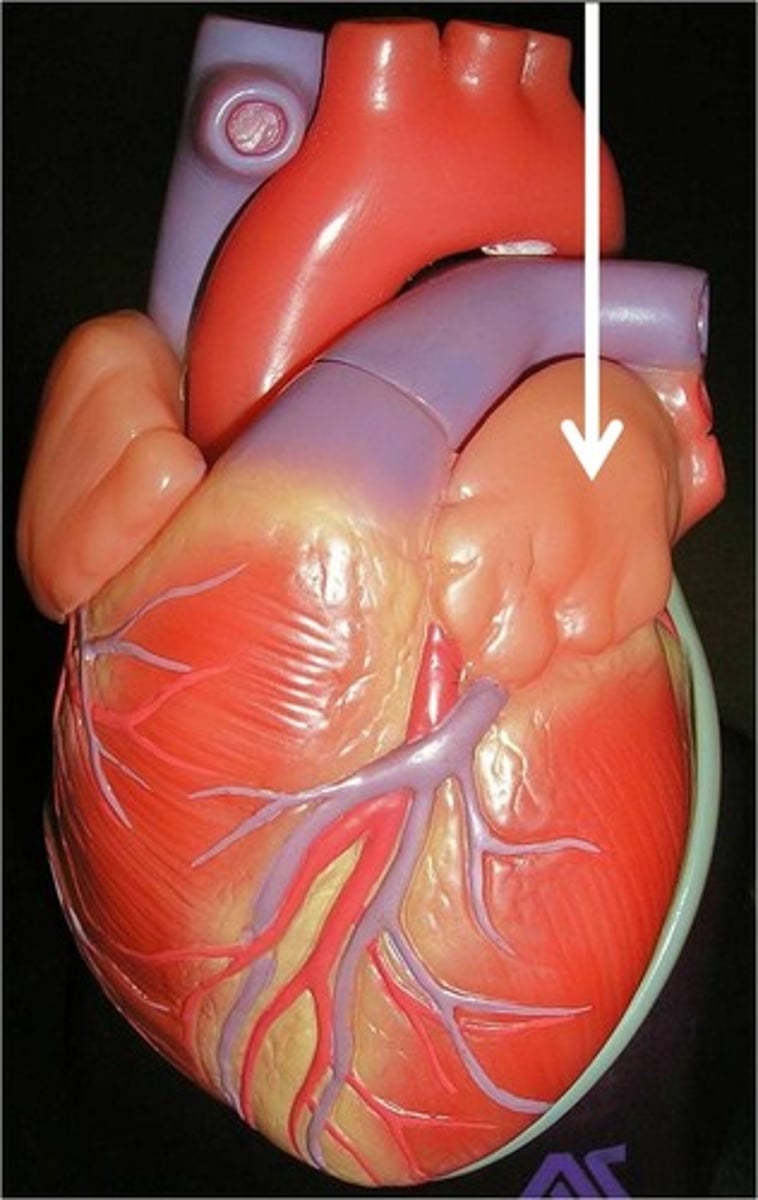
Left atrium
The chamber of the heart that receives oxygenated blood from the lungs via the pulmonary veins.
Right ventricle
The chamber of the heart that pumps deoxygenated blood to the lungs through the pulmonary trunk.
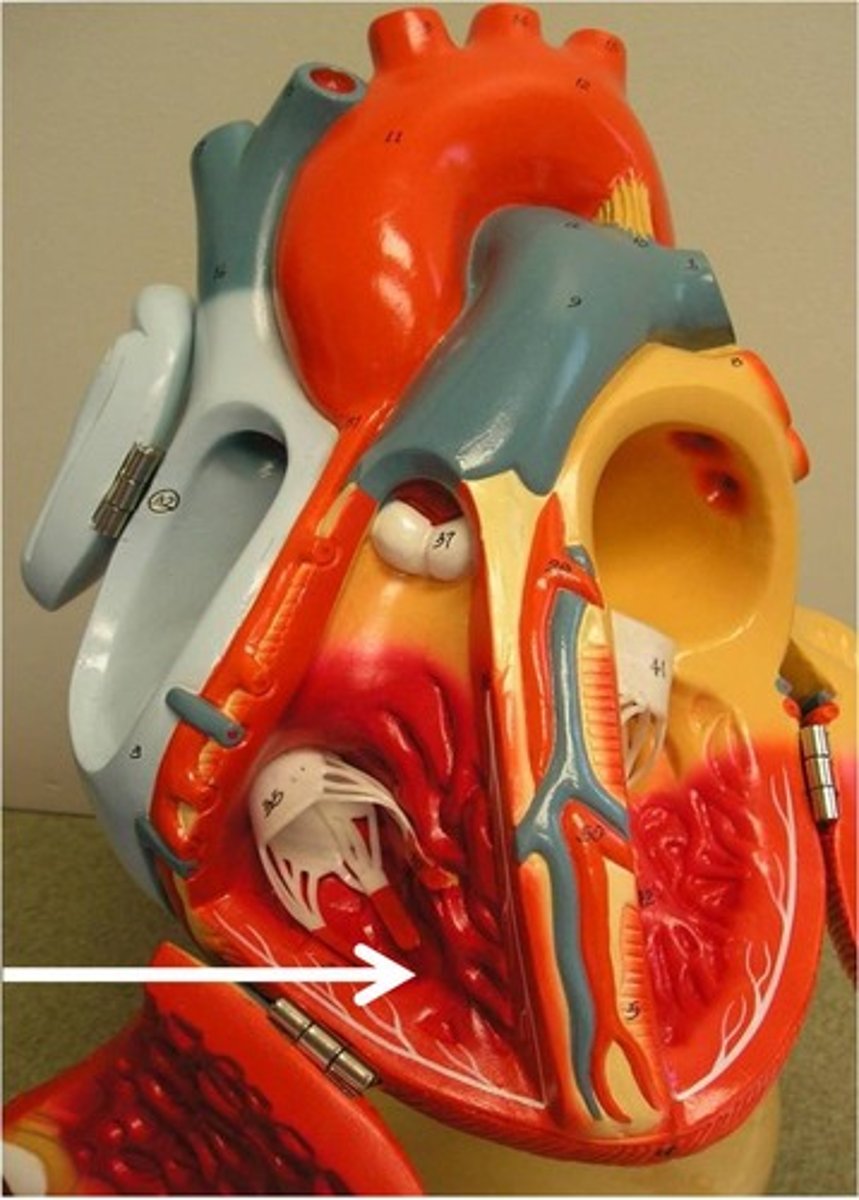
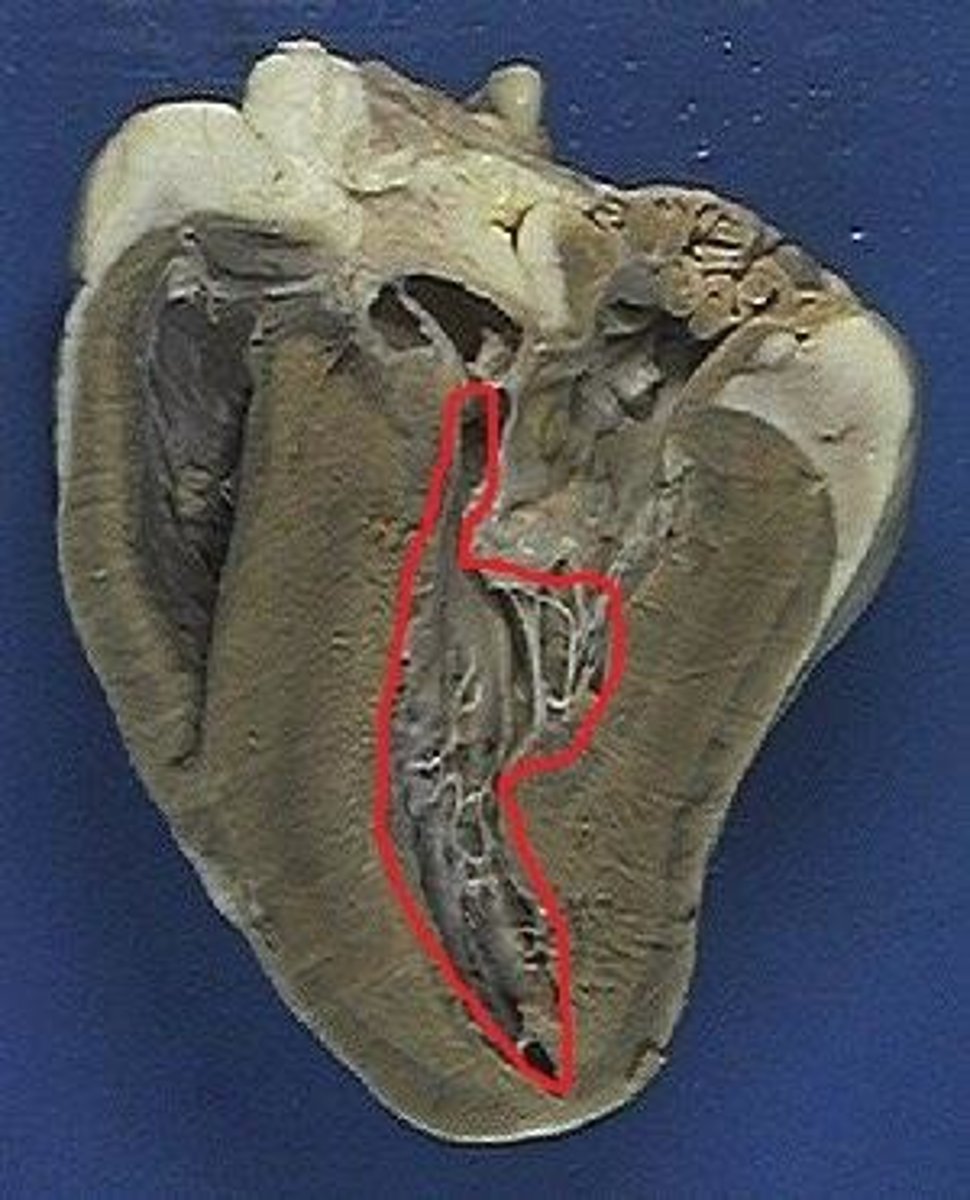
Left ventricle
The chamber of the heart that pumps oxygenated blood to the rest of the body through the aorta.
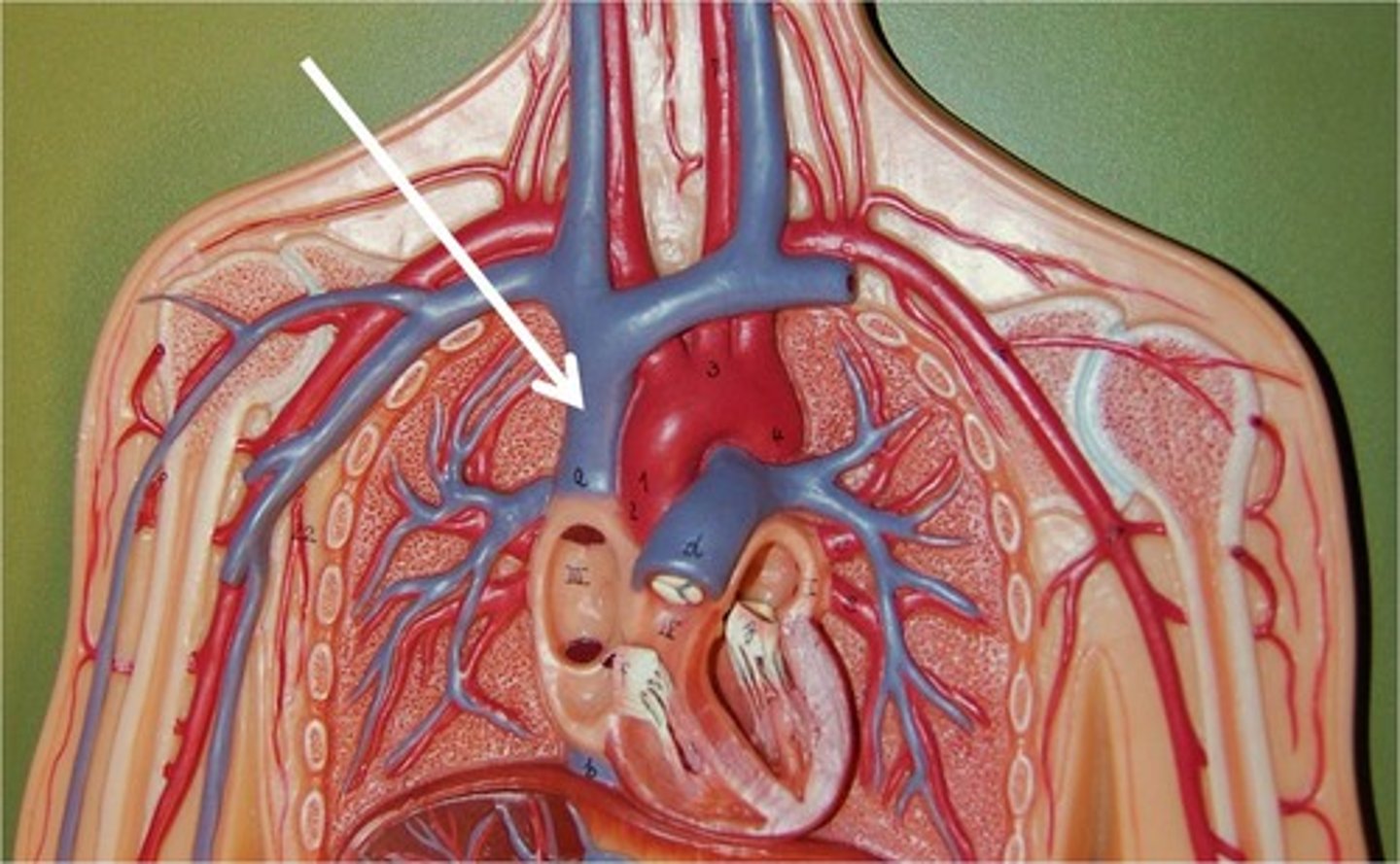
Superior vena cava
A large vein that carries deoxygenated blood from the upper body to the right atrium.
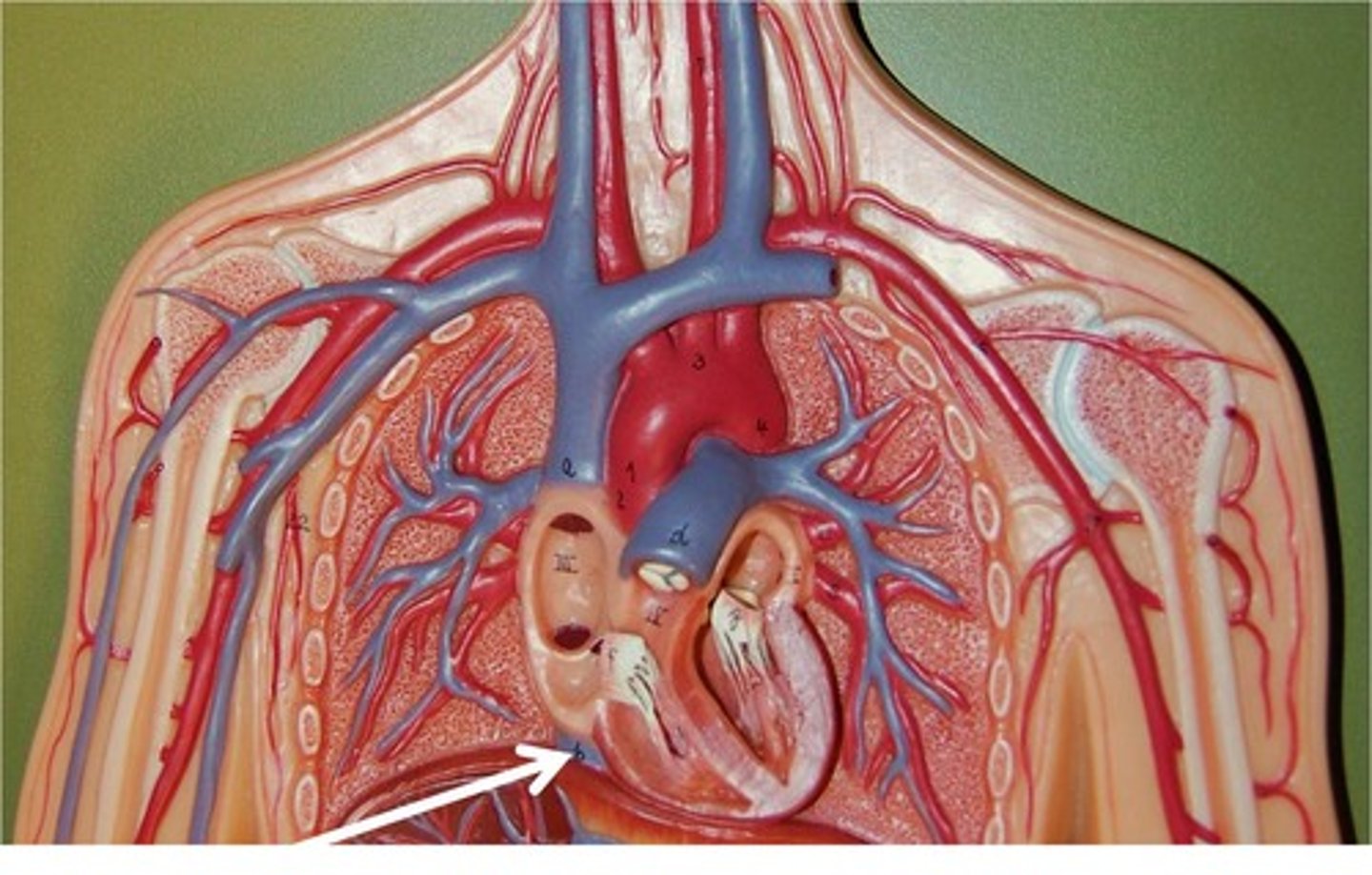
Inferior vena cava
A large vein that carries deoxygenated blood from the lower body to the right atrium.
Pulmonary trunk
The vessel that carries deoxygenated blood from the right ventricle to the lungs.
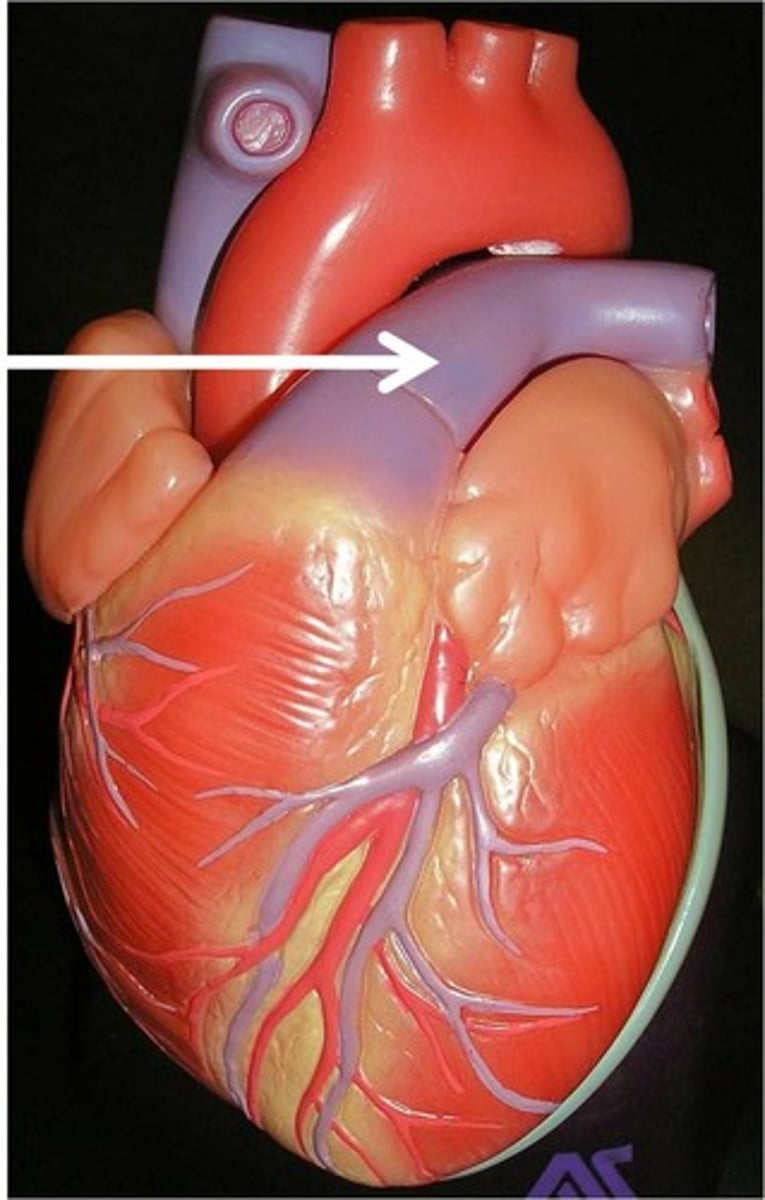
Pulmonary arteries
The arteries that carry deoxygenated blood from the pulmonary trunk to the lungs.
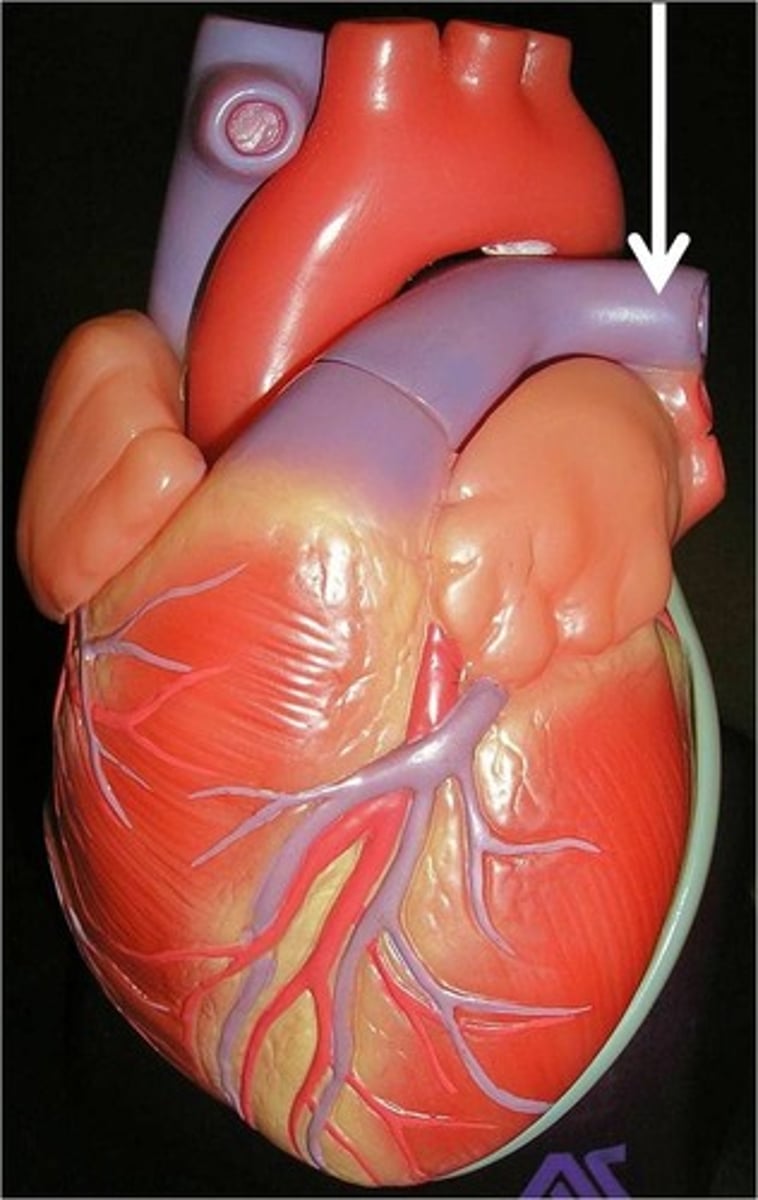
Pulmonary veins
The veins that carry oxygenated blood from the lungs to the left atrium.
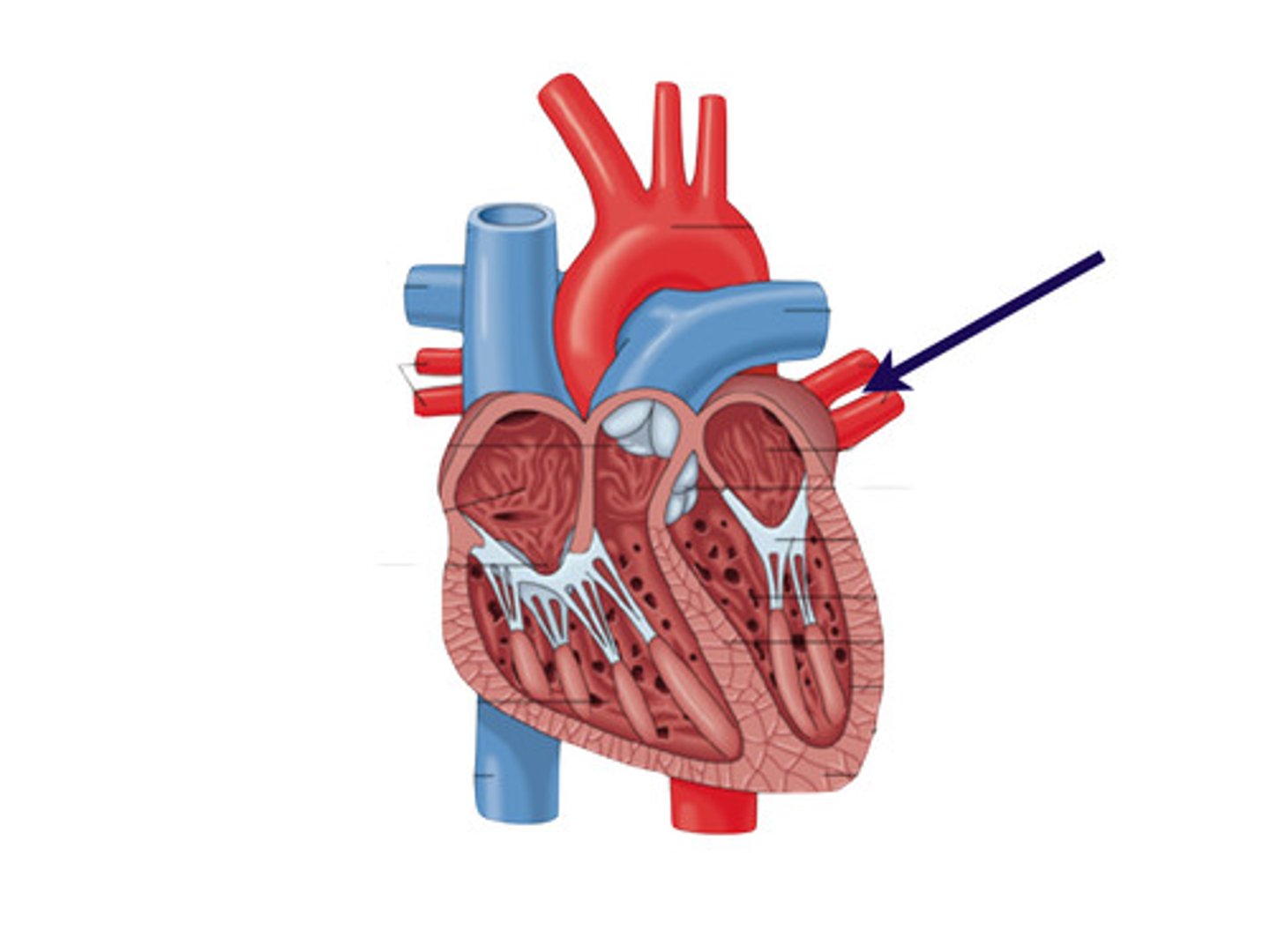
Ascending aorta
The portion of the aorta that rises from the left ventricle and carries oxygenated blood to the body.
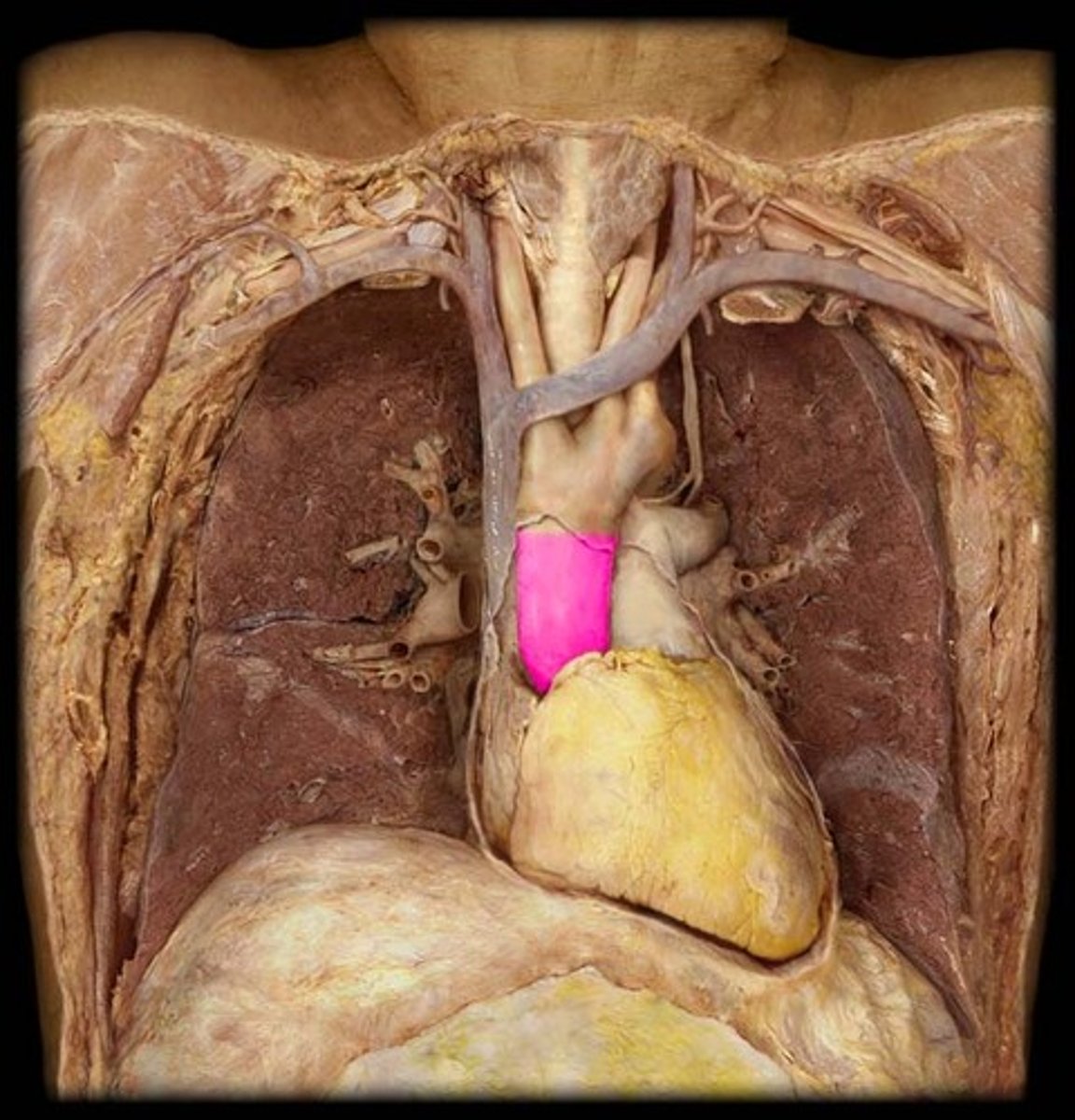
Aortic arch
The curved portion of the aorta that connects the ascending aorta to the descending aorta.
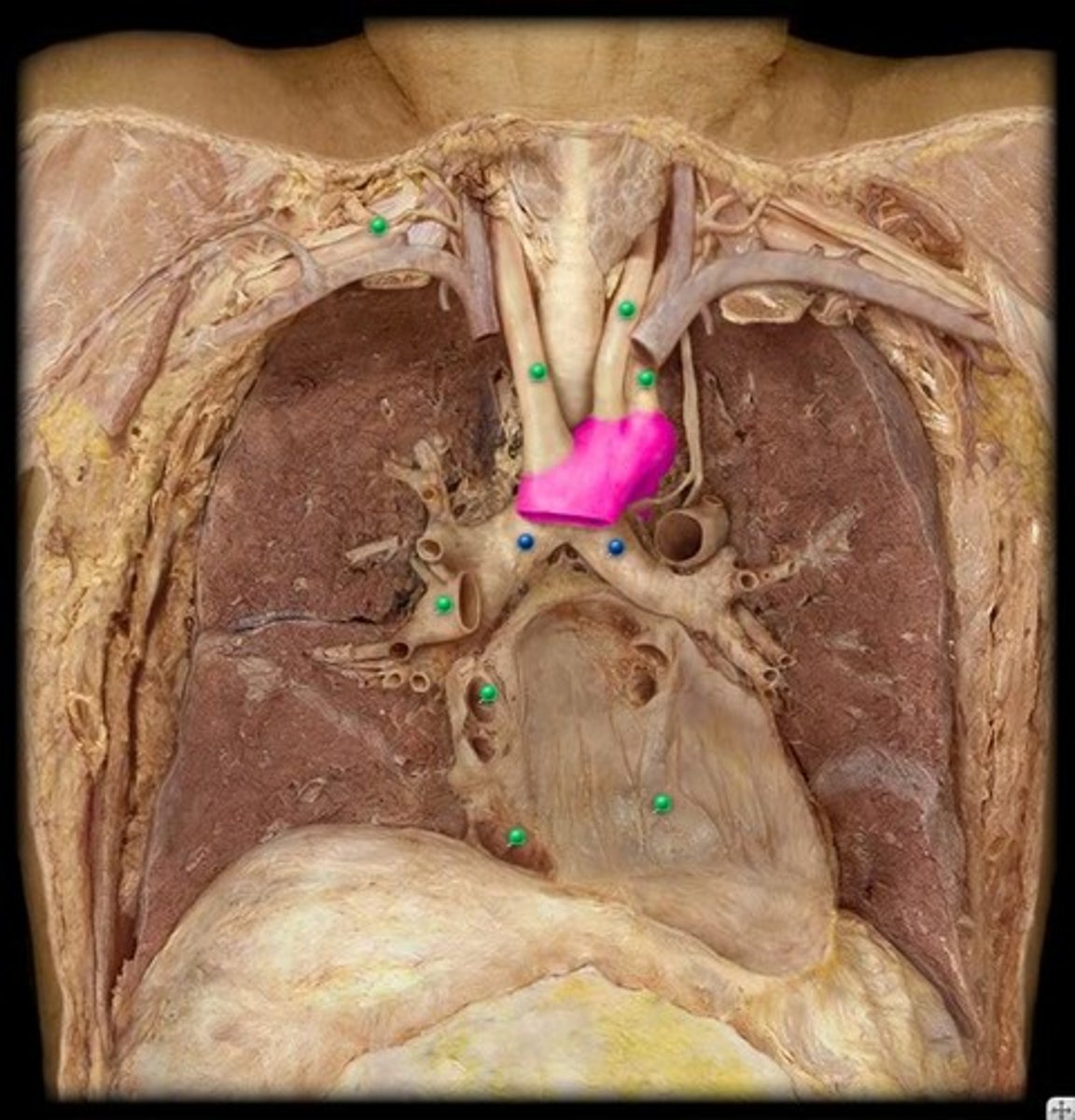
Descending aorta
The part of the aorta that carries oxygenated blood down through the thorax and abdomen.
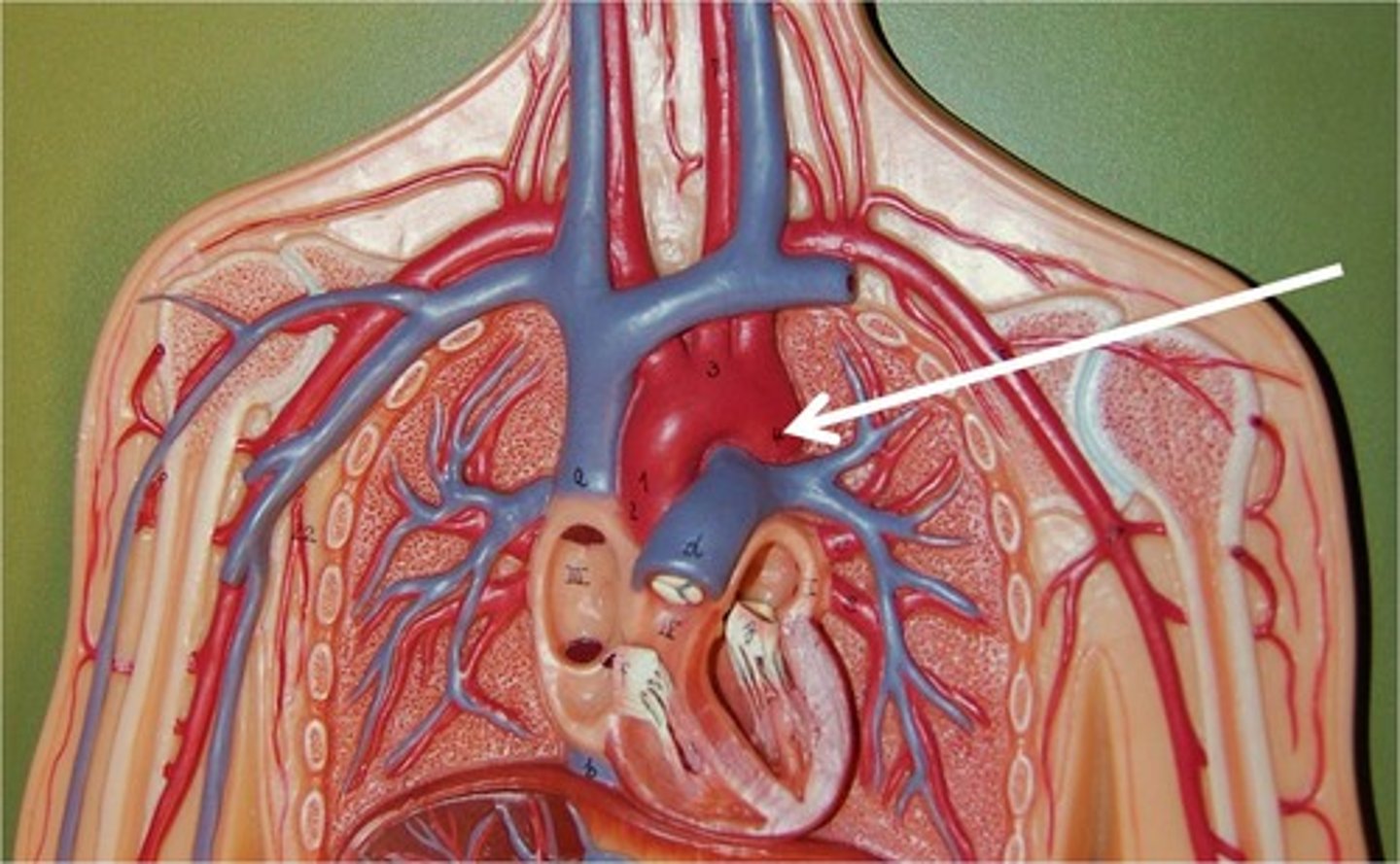
Thoracic aorta
The portion of the descending aorta located in the thorax.
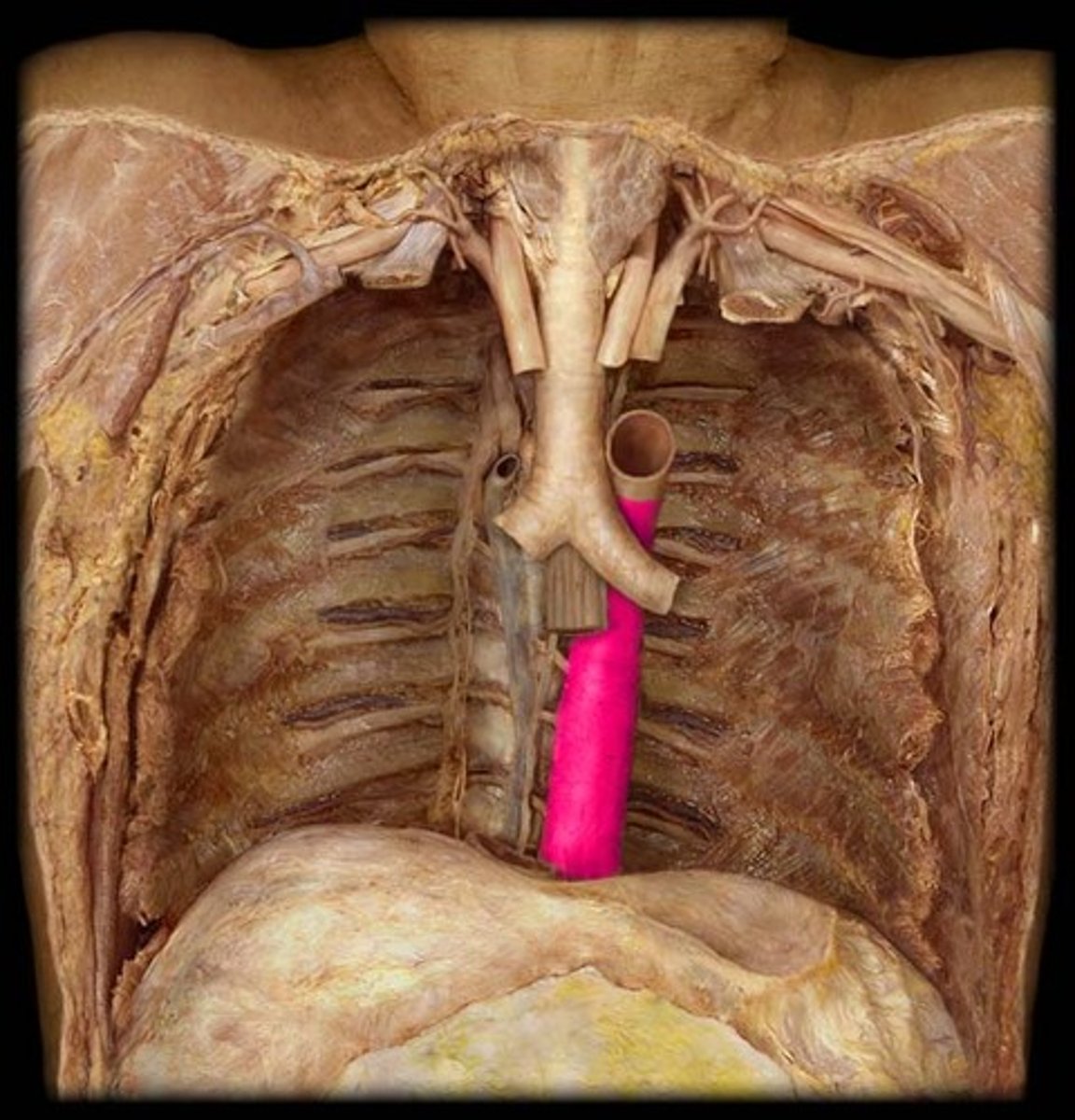
Abdominal aorta
The portion of the descending aorta located in the abdomen.
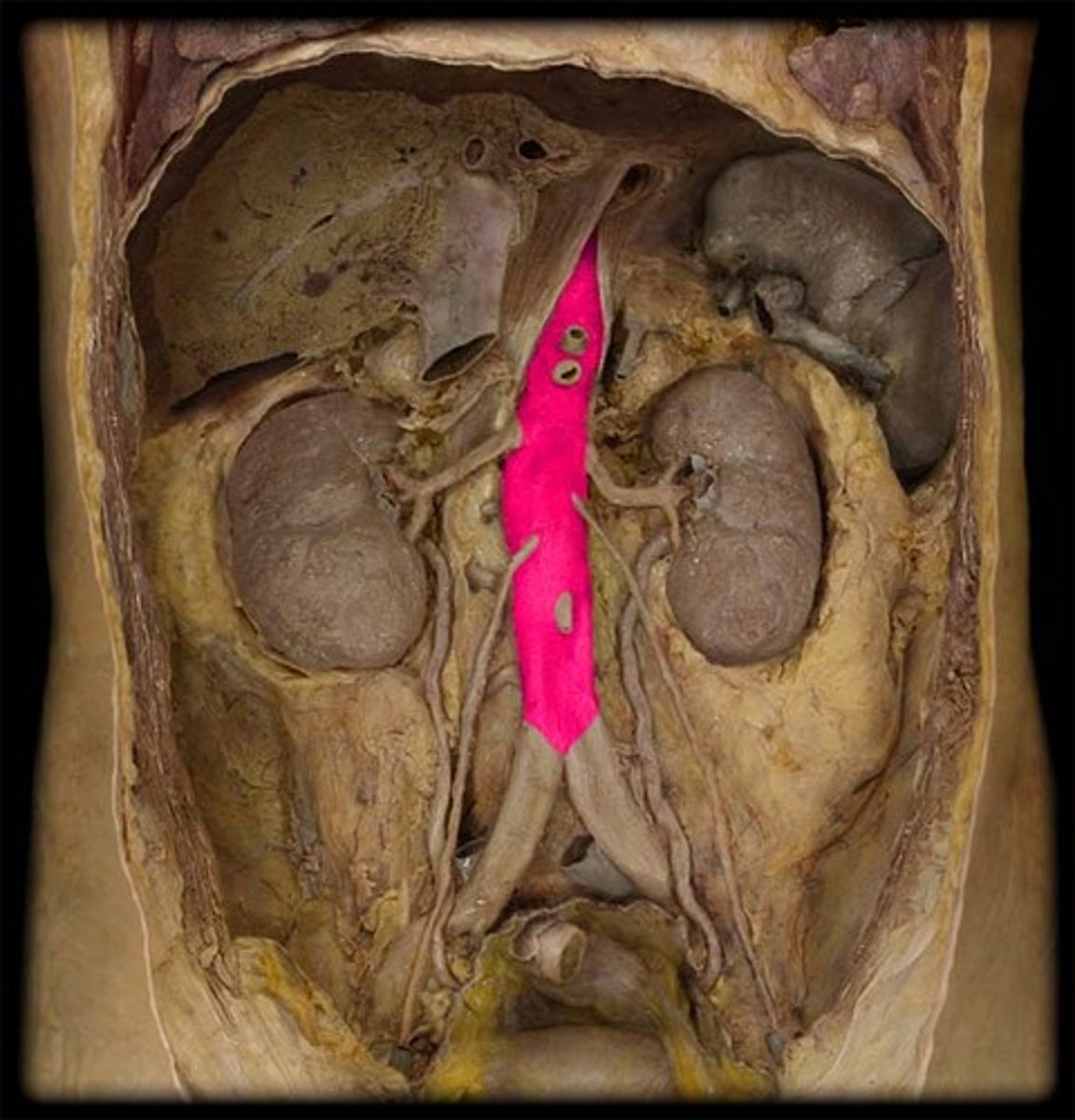
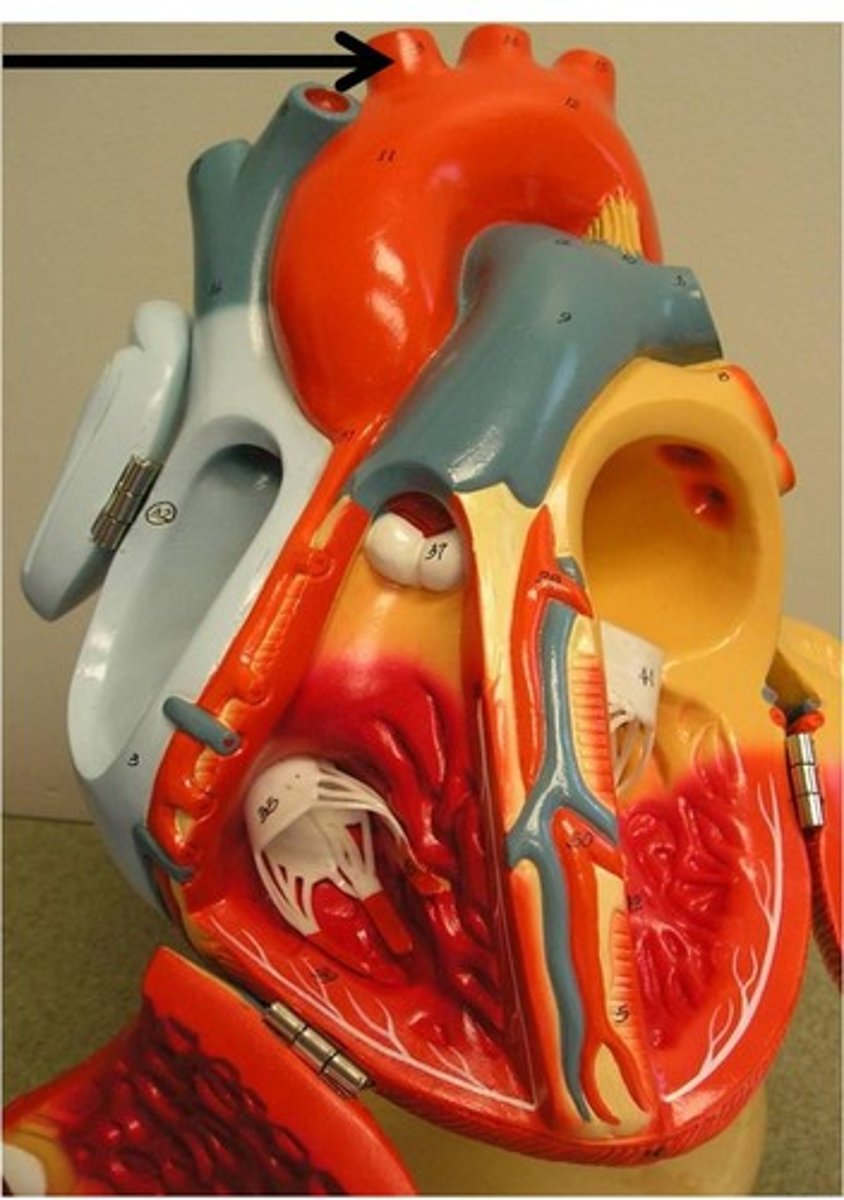
Brachiocephalic trunk
The first major branch of the aorta that supplies blood to the right arm and the head and neck.
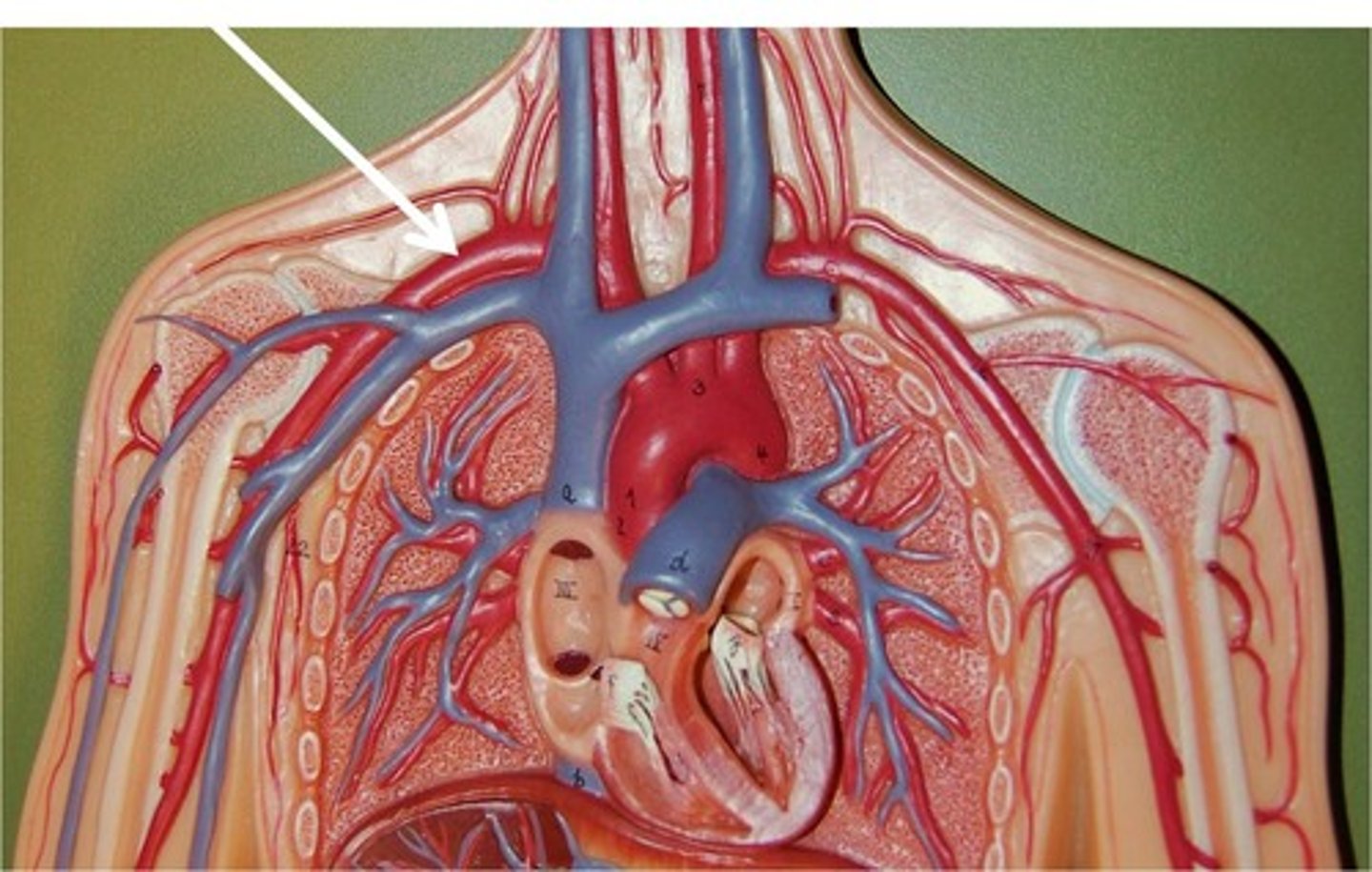
Right subclavian artery
An artery that supplies blood to the right arm.
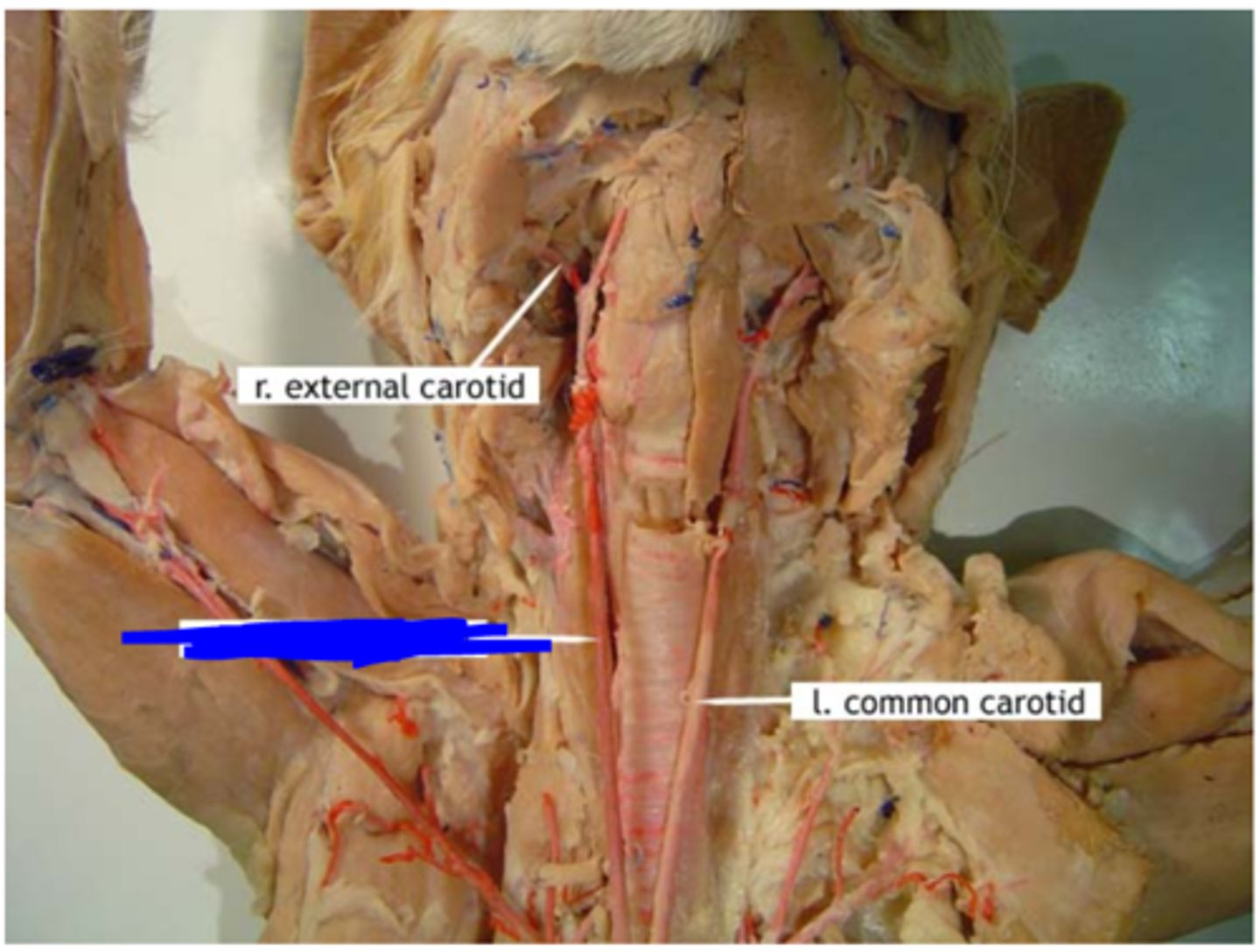
Right common carotid artery
An artery that supplies blood to the right side of the head and neck.
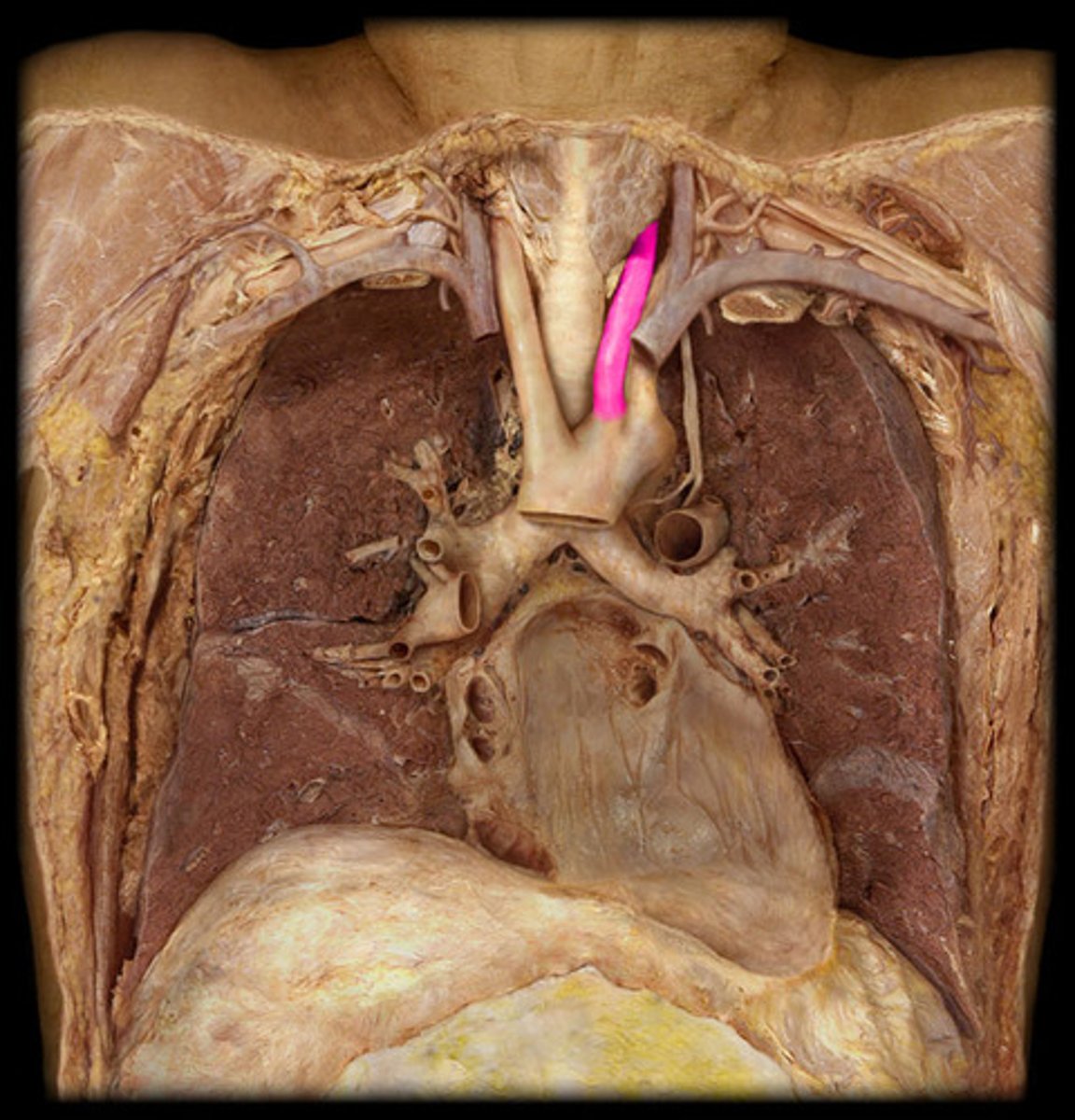
Left common carotid artery
An artery that supplies blood to the left side of the head and neck.
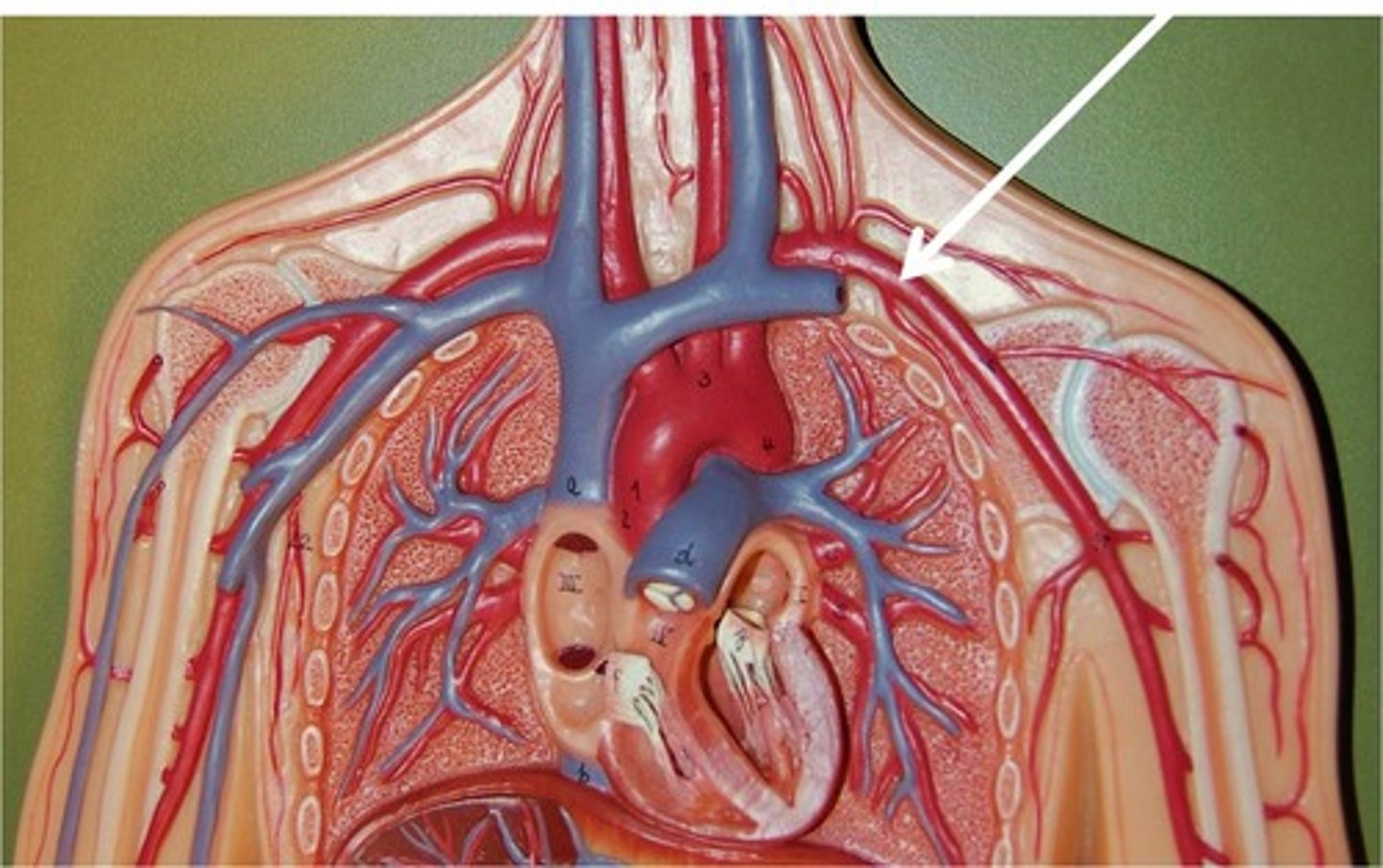
Left subclavian artery
An artery that supplies blood to the left arm.
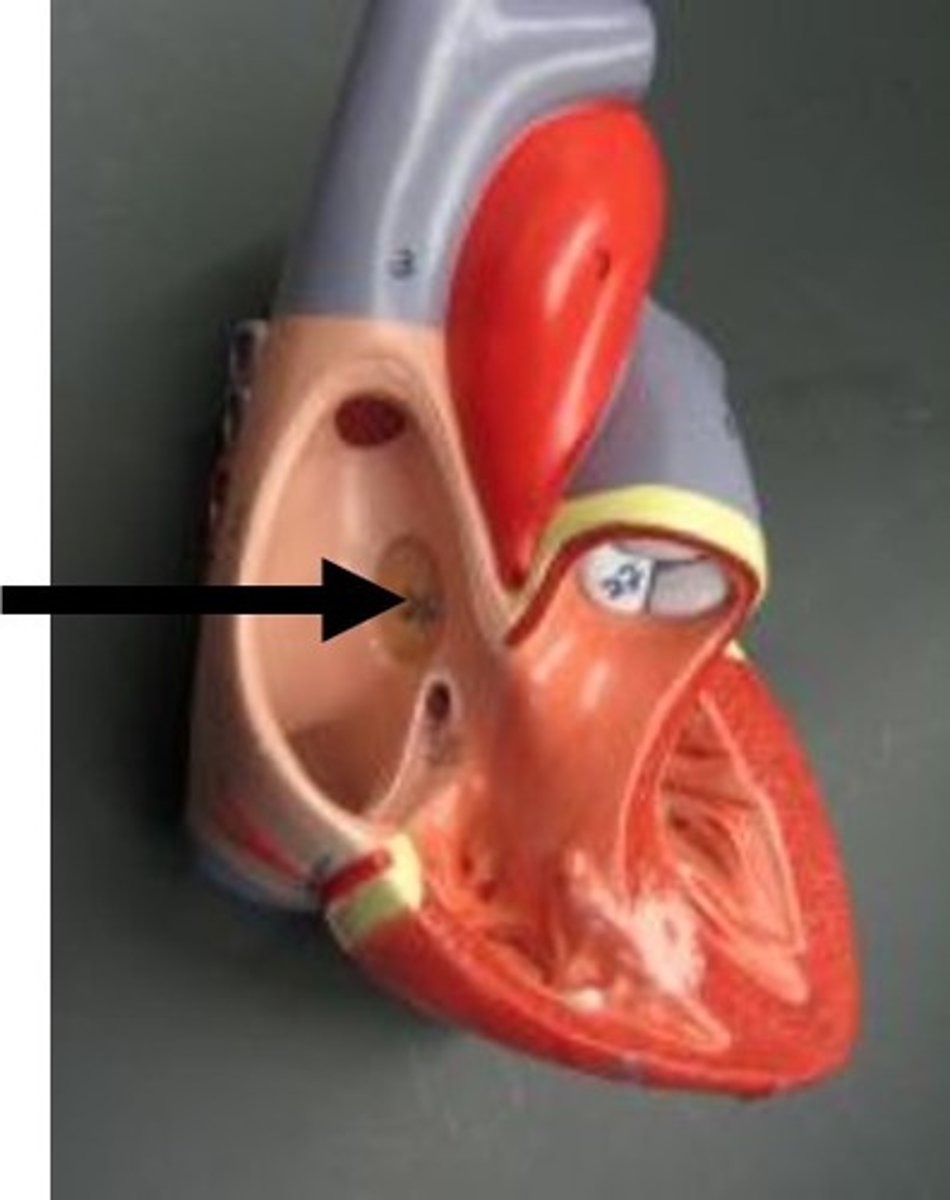
Fossa ovale
A depression in the interatrial septum of the heart, representing the remnant of the foramen ovale.
Pectinate muscles
Muscle ridges found in the atrial walls of the heart.
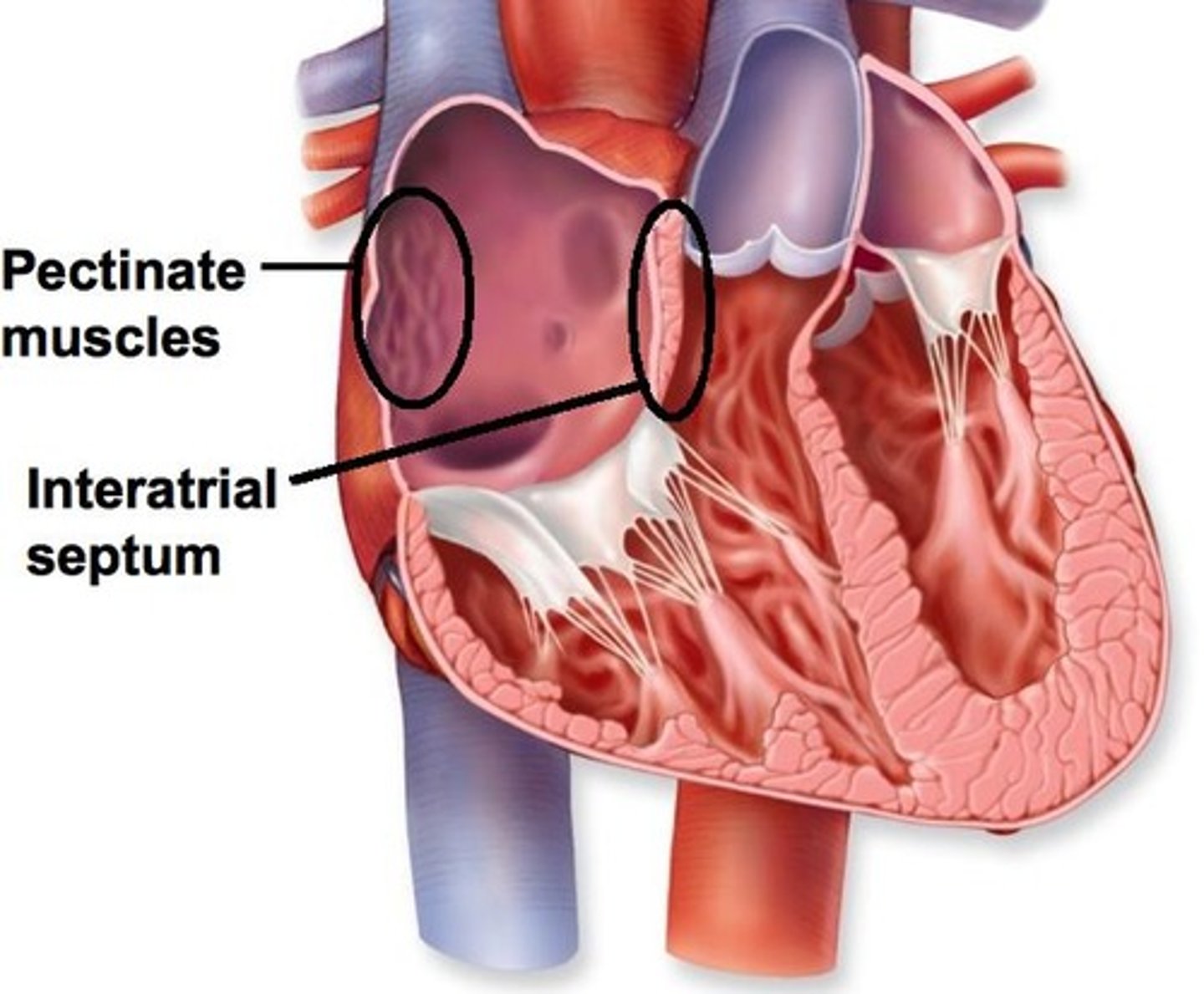
Interatrial septum
The wall that separates the right and left atria of the heart.
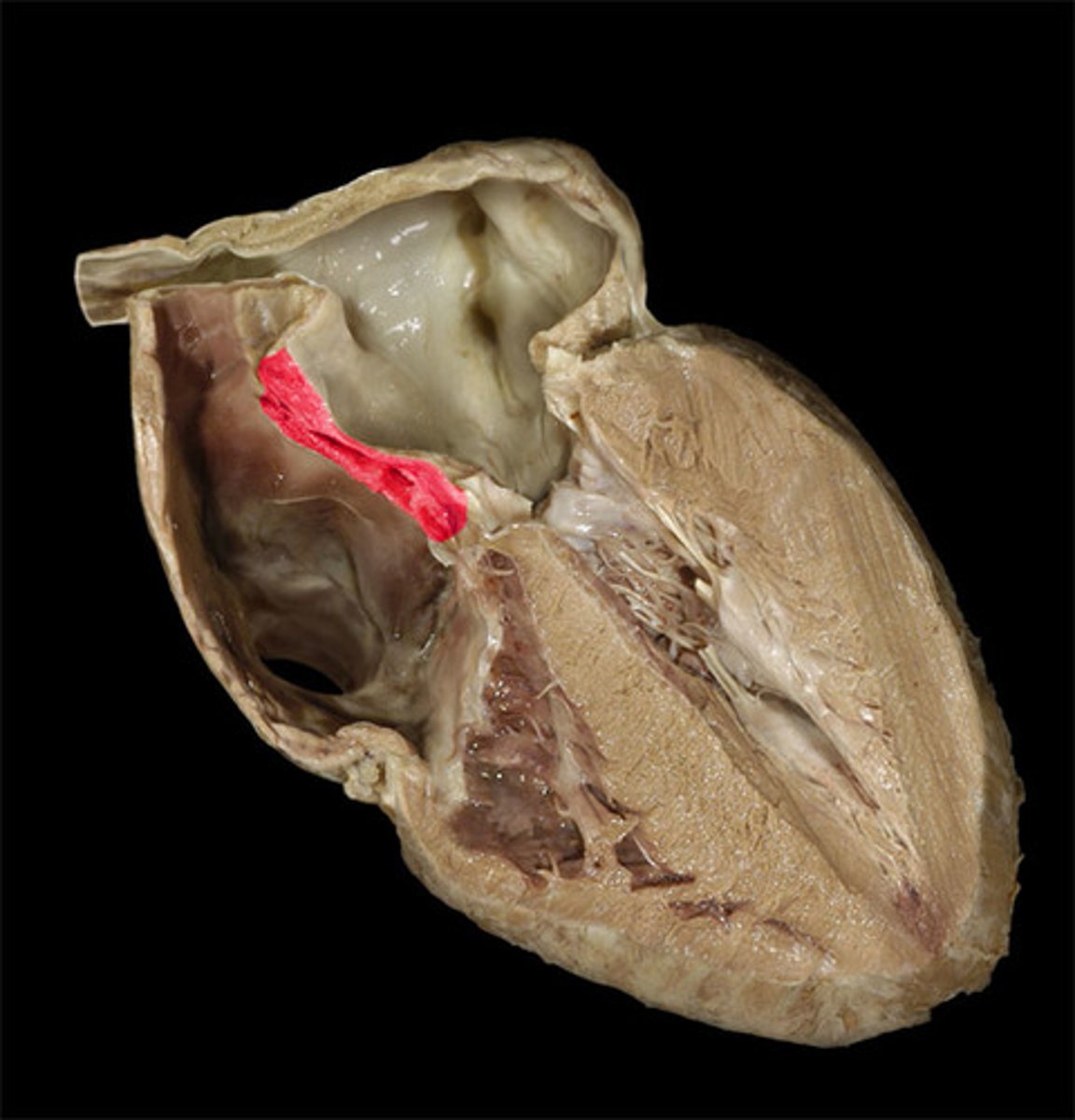
Interventricular septum
The wall that separates the right and left ventricles of the heart.
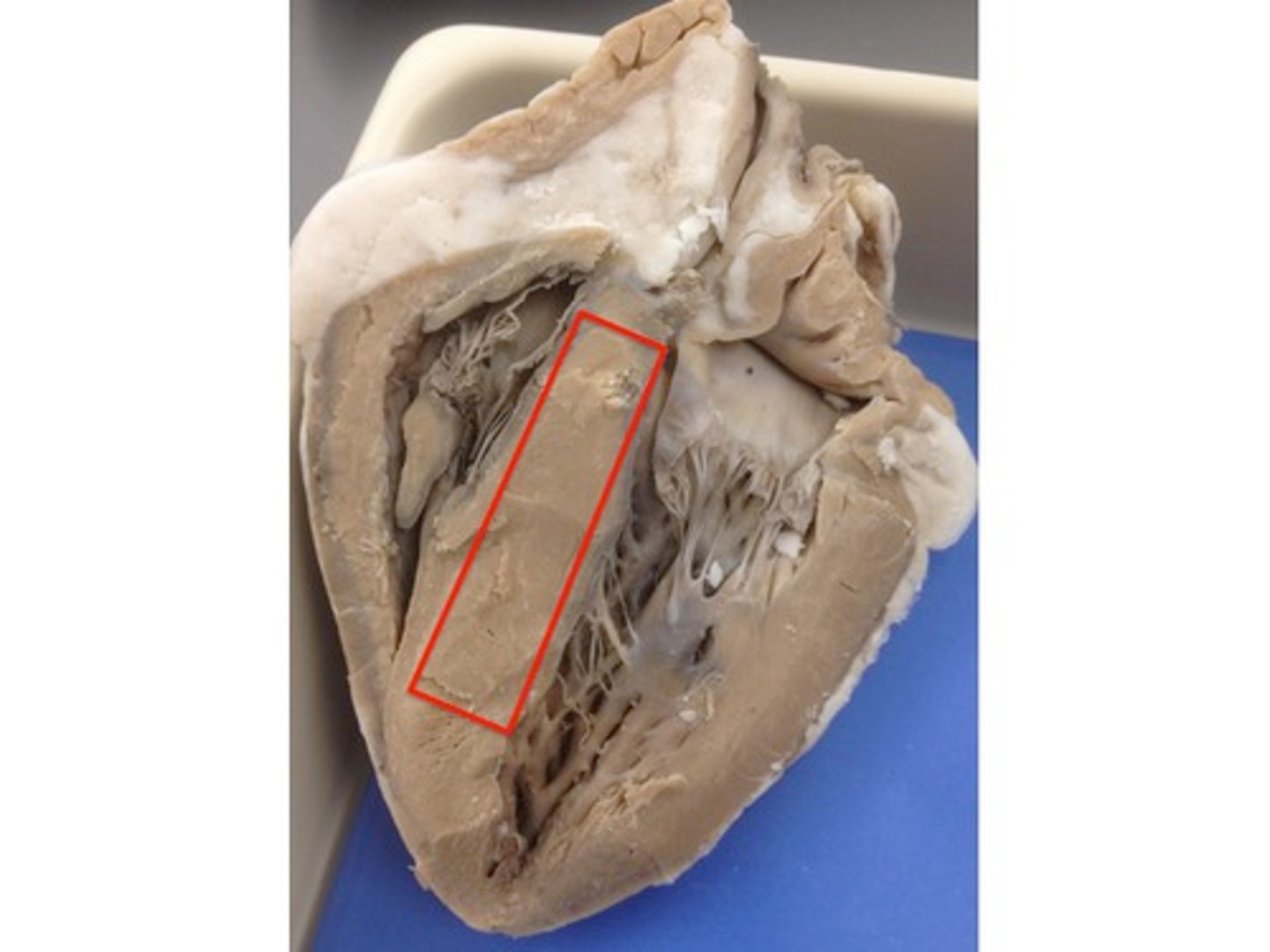
Right AV valve (tricuspid)
The valve located between the right atrium and right ventricle, preventing backflow of blood.
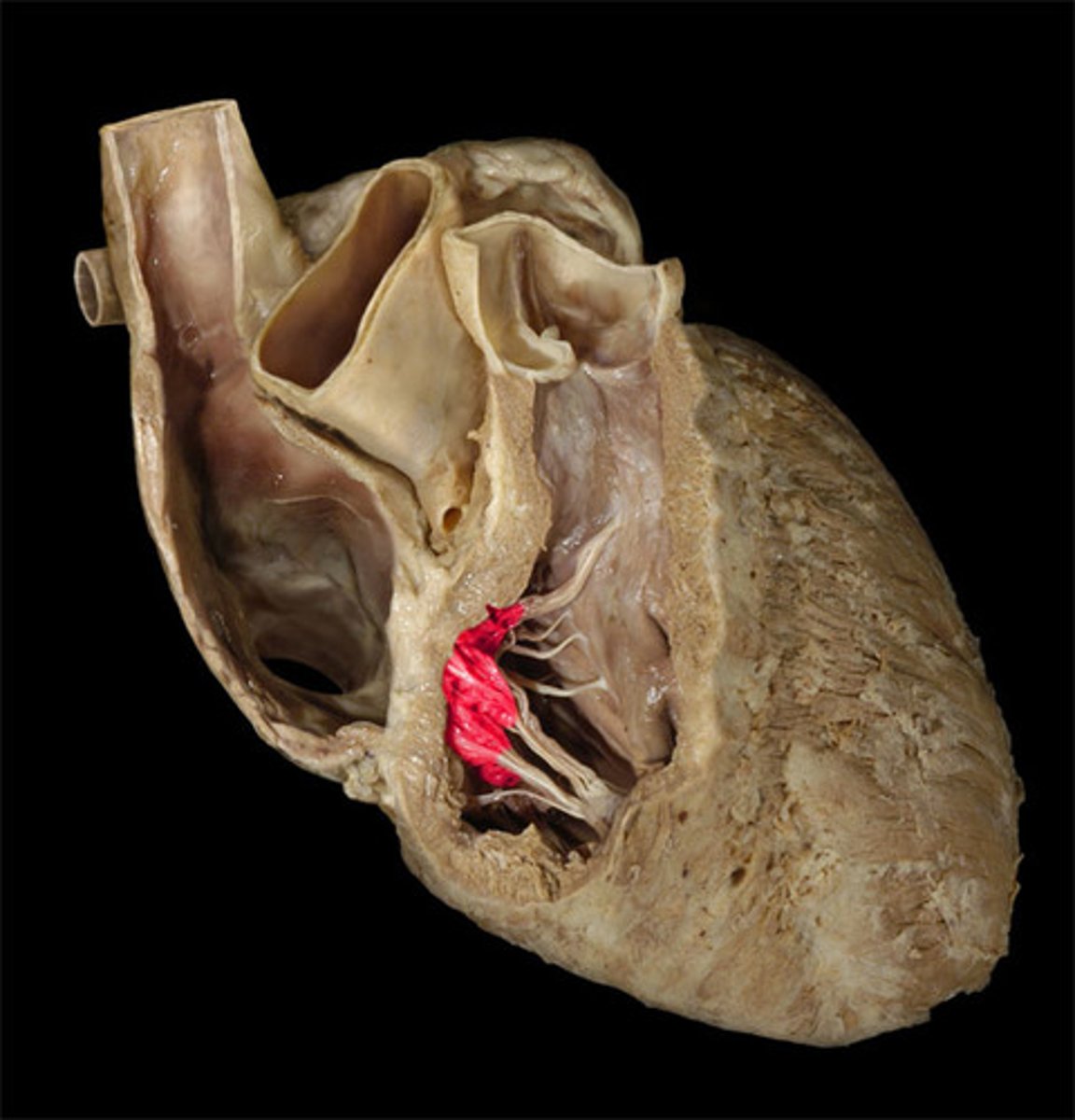
Left AV valve (bicuspid or mitral)
The valve located between the left atrium and left ventricle, preventing backflow of blood.
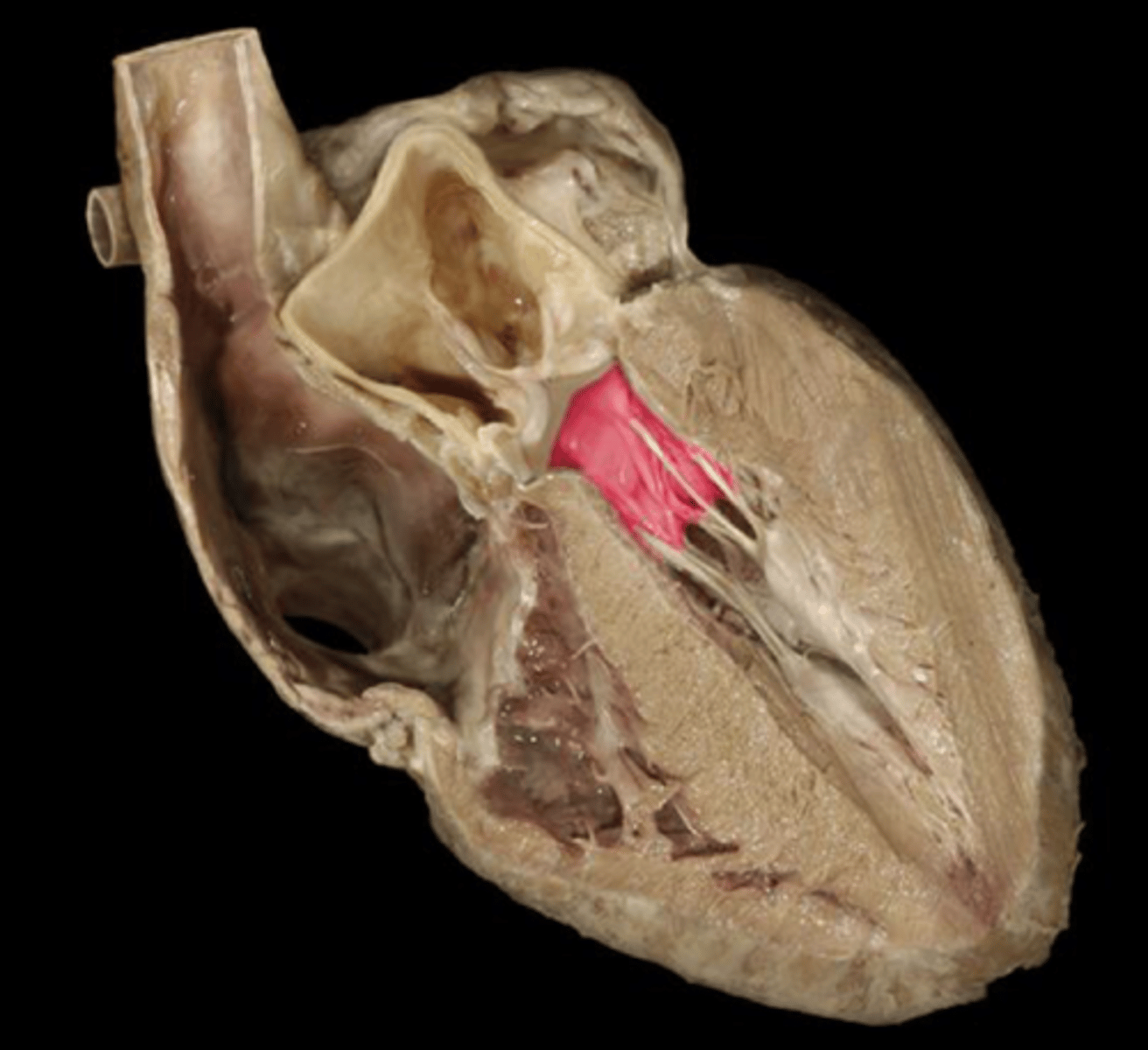
Chordae tendineae
Tendinous cords that connect the papillary muscles to the atrioventricular valves in the heart.
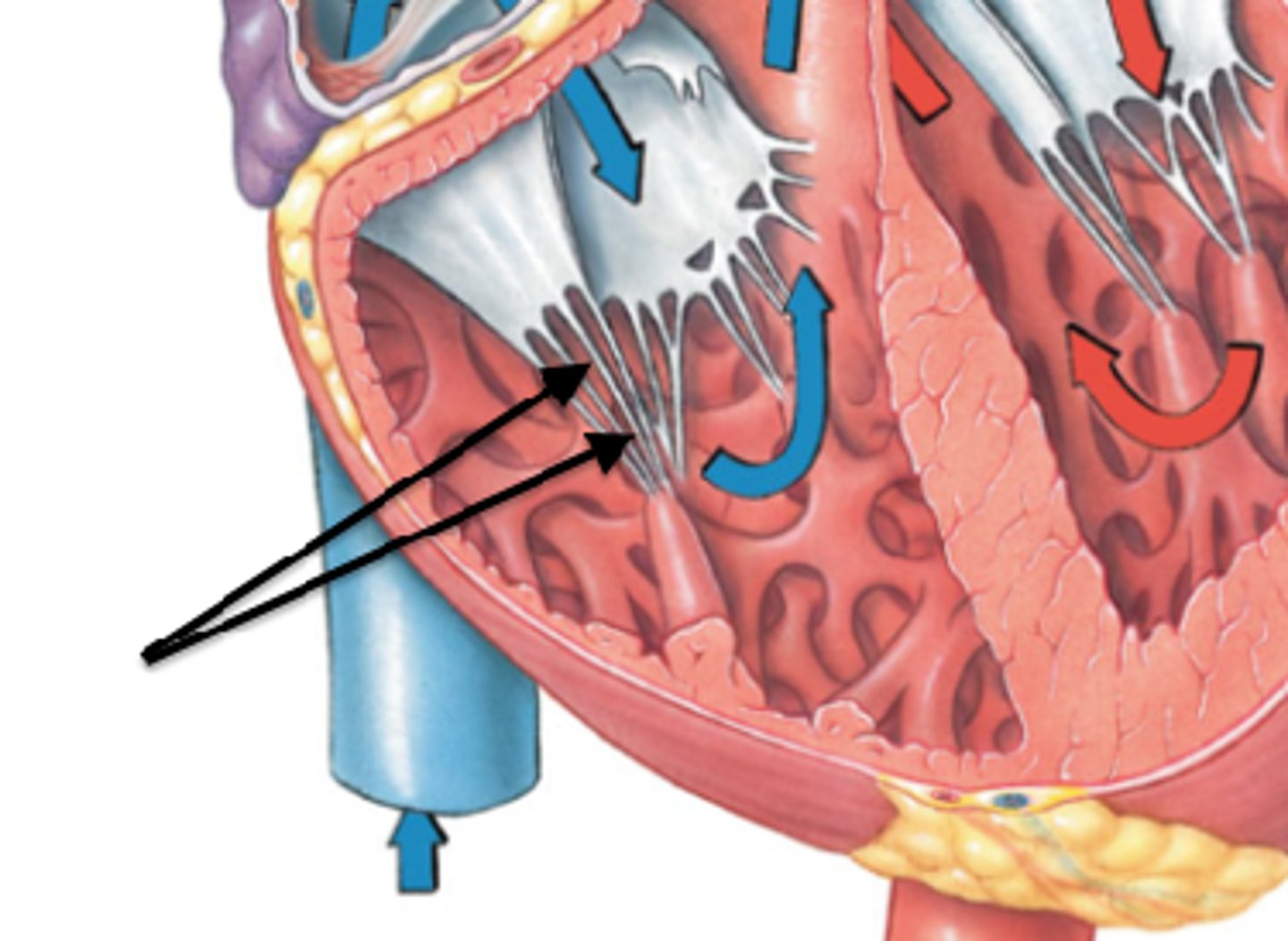
Papillary muscles
Muscles located in the ventricles of the heart that anchor the chordae tendineae.
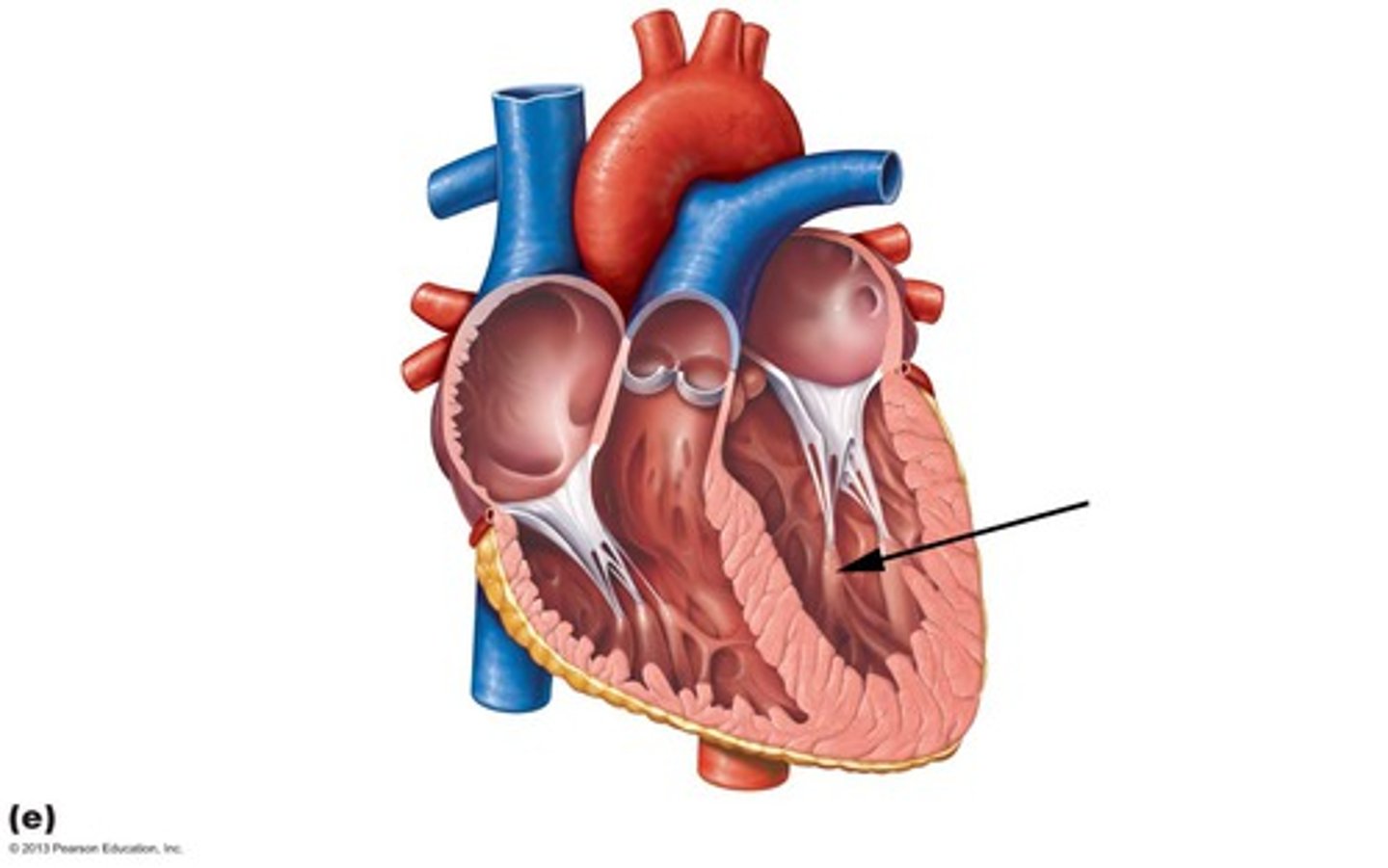
Pulmonary valve (semilunar)
The valve that controls blood flow from the right ventricle into the pulmonary trunk.
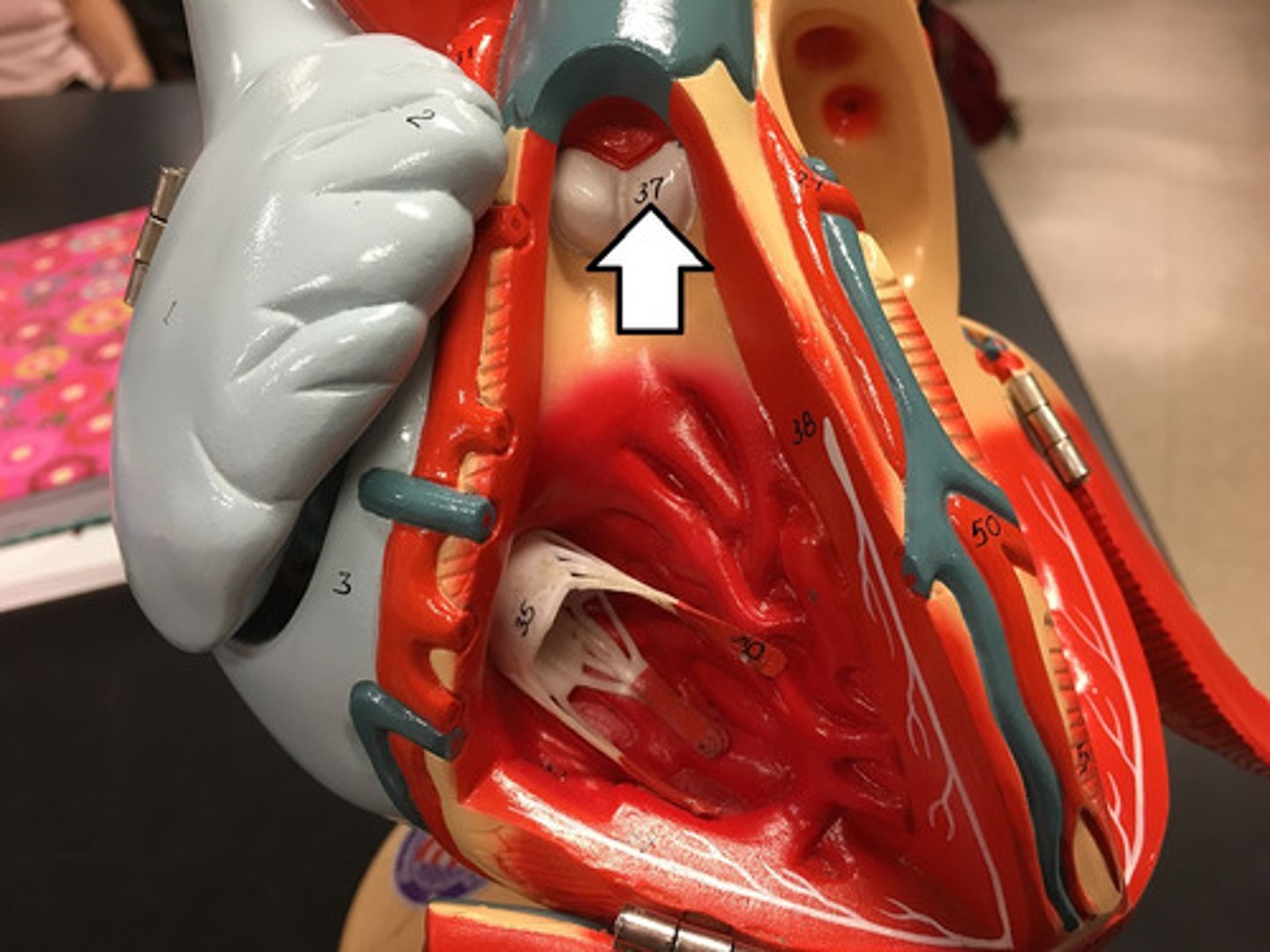
Aortic valve (semilunar)
The valve that controls blood flow from the left ventricle into the aorta.
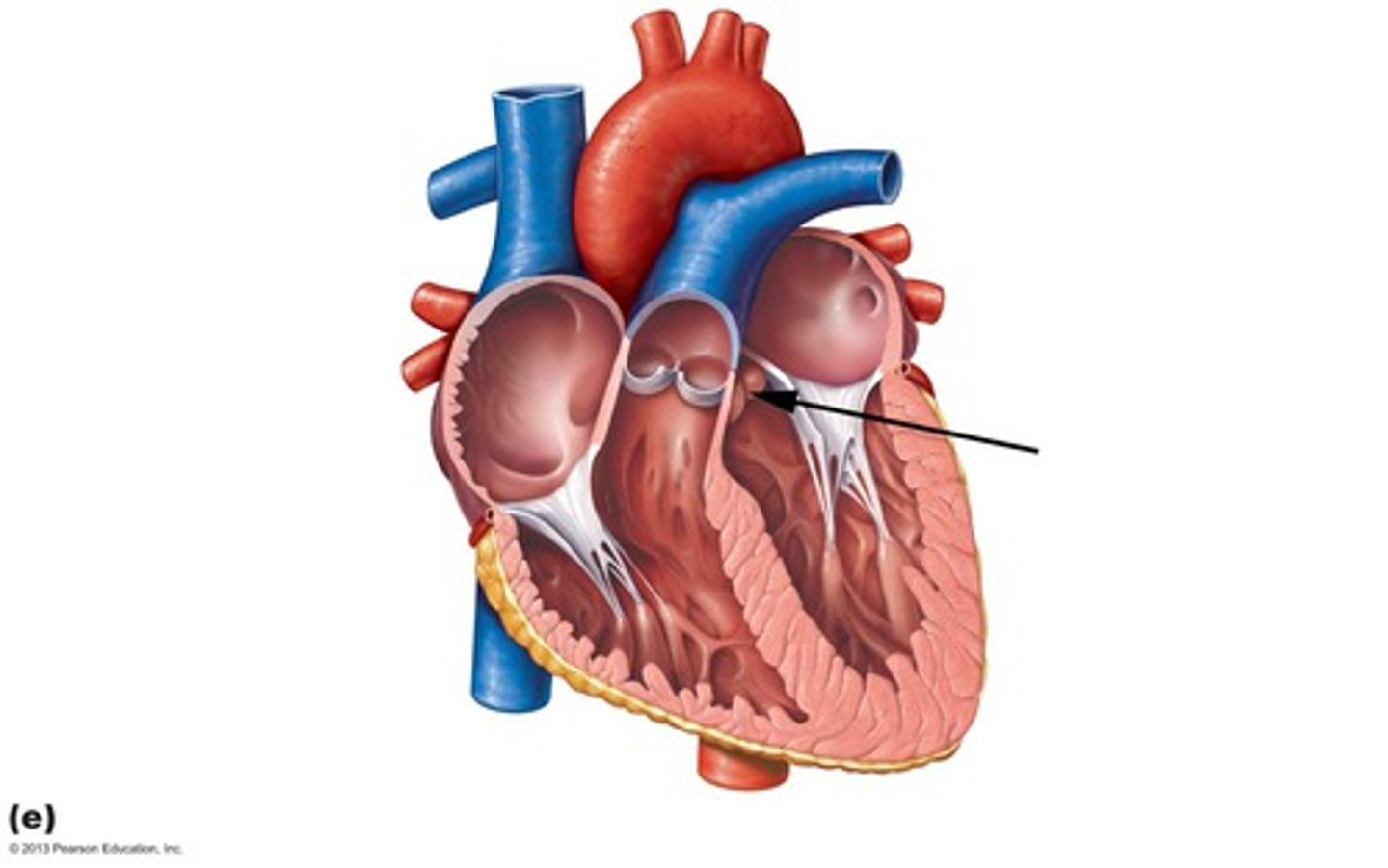
Nasal conchae
Bony structures in the nasal cavity that help to filter and humidify air.
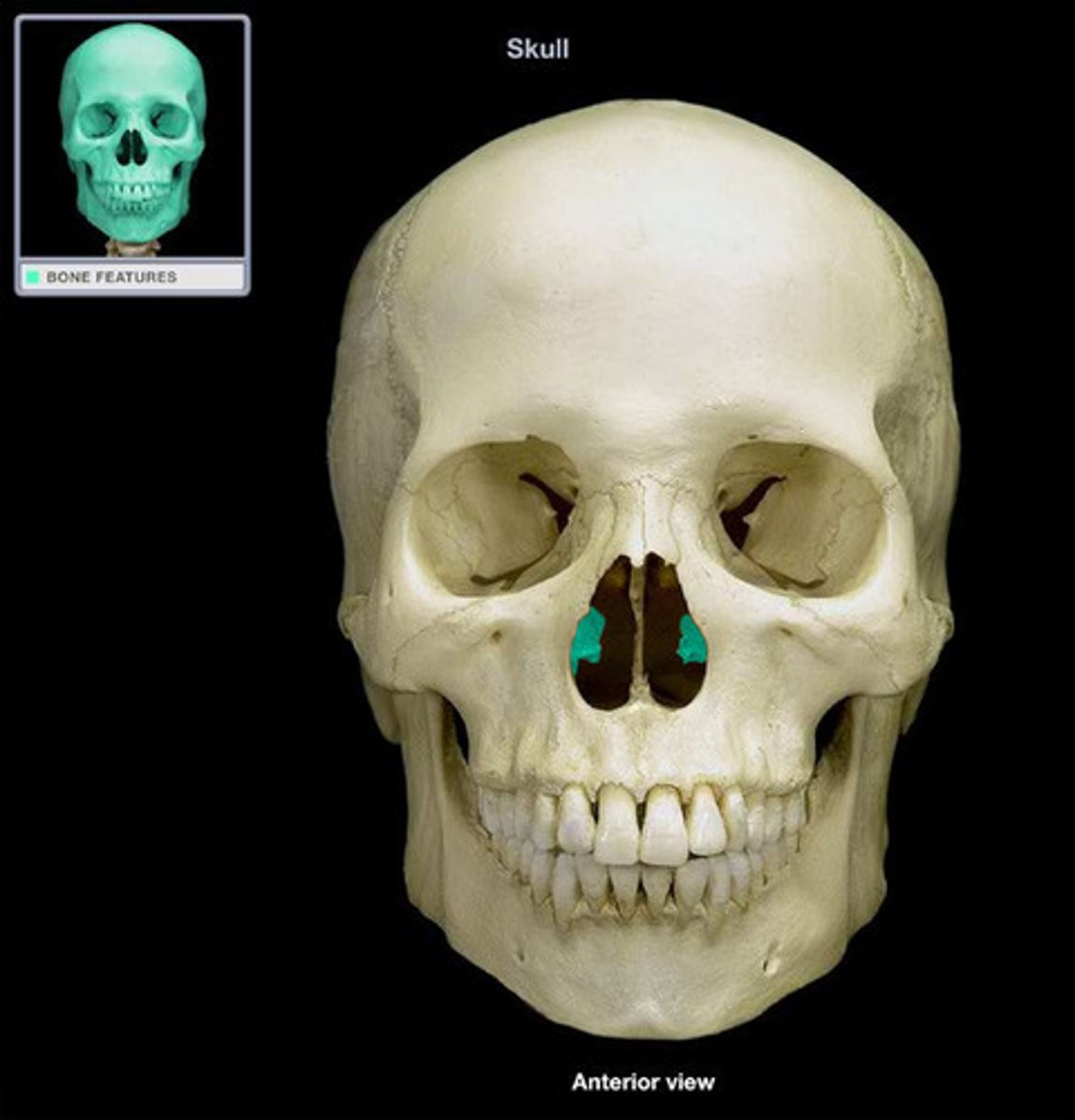
Nasopharynx
The upper part of the pharynx located behind the nose.
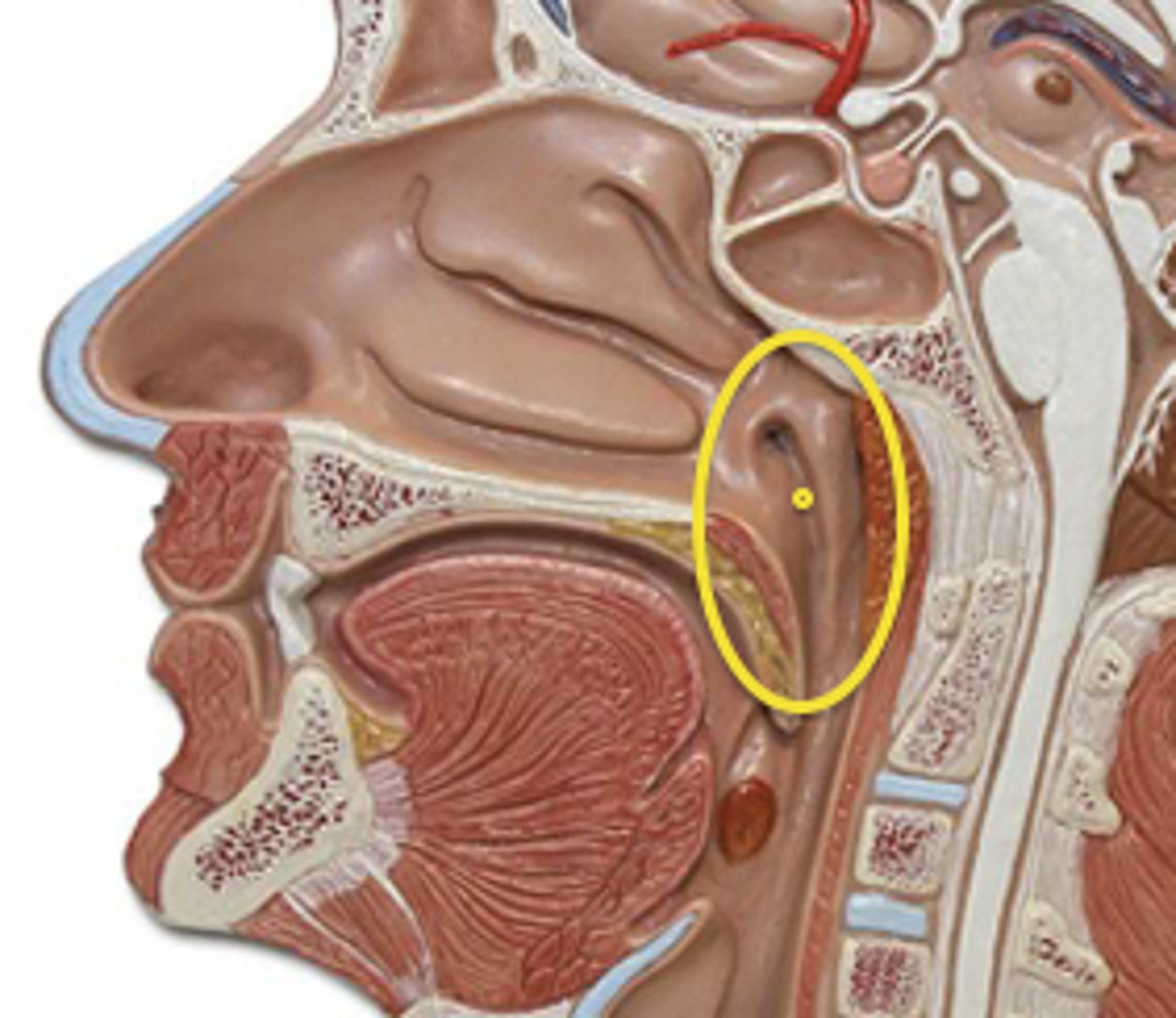
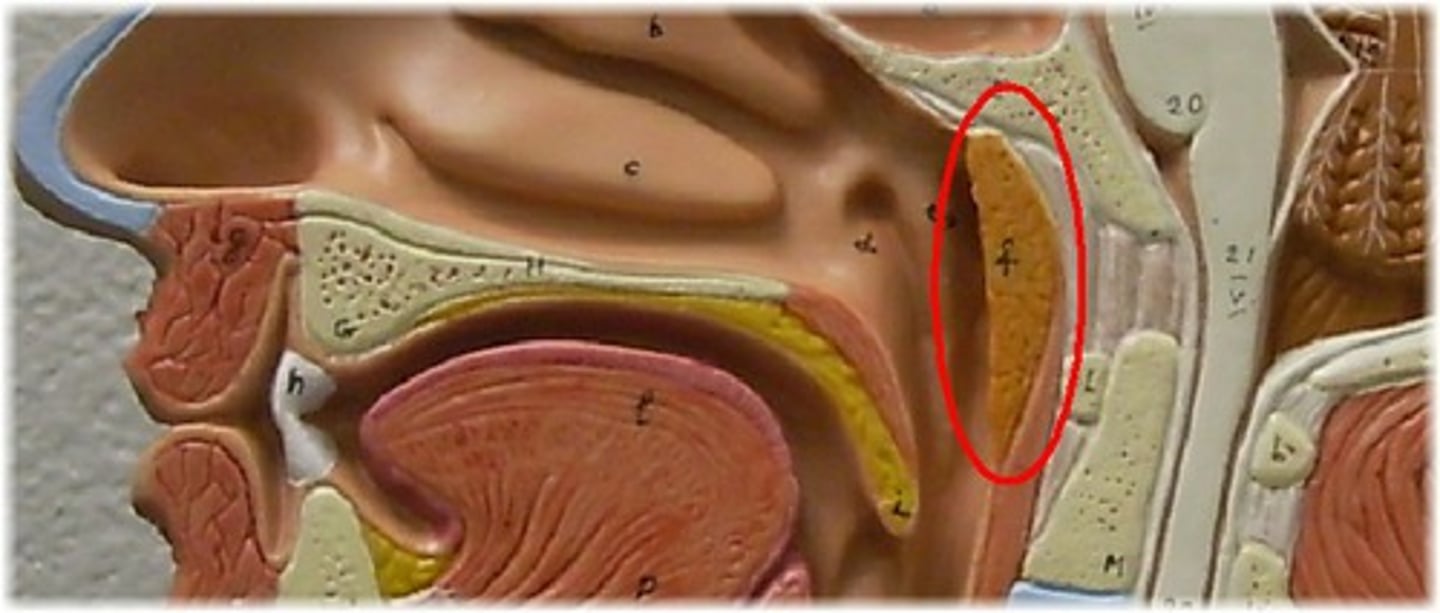
Pharyngeal tonsil (adenoids)
Lymphoid tissue located in the nasopharynx that helps fight infections.
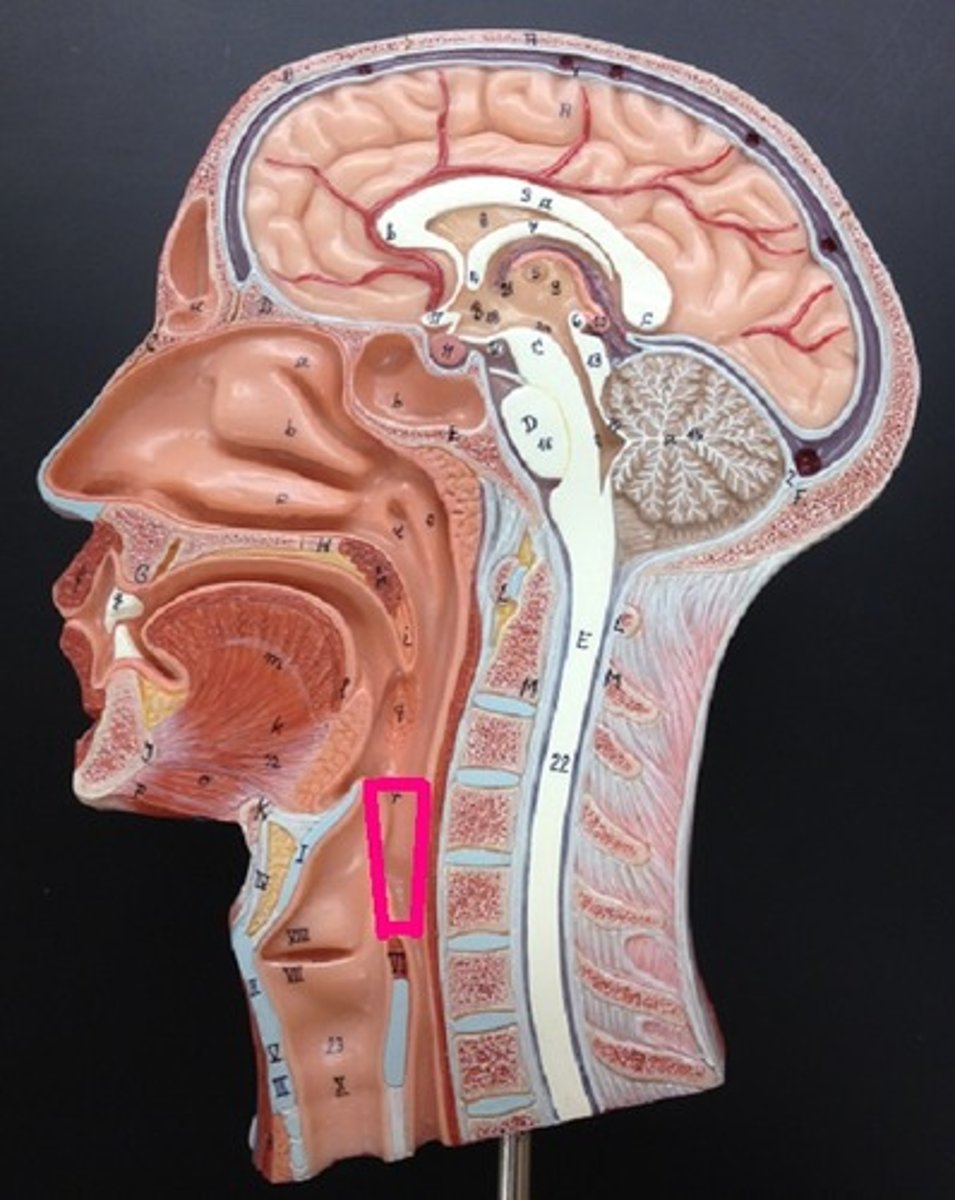
Laryngeal pharynx
The part of the pharynx located behind the larynx.
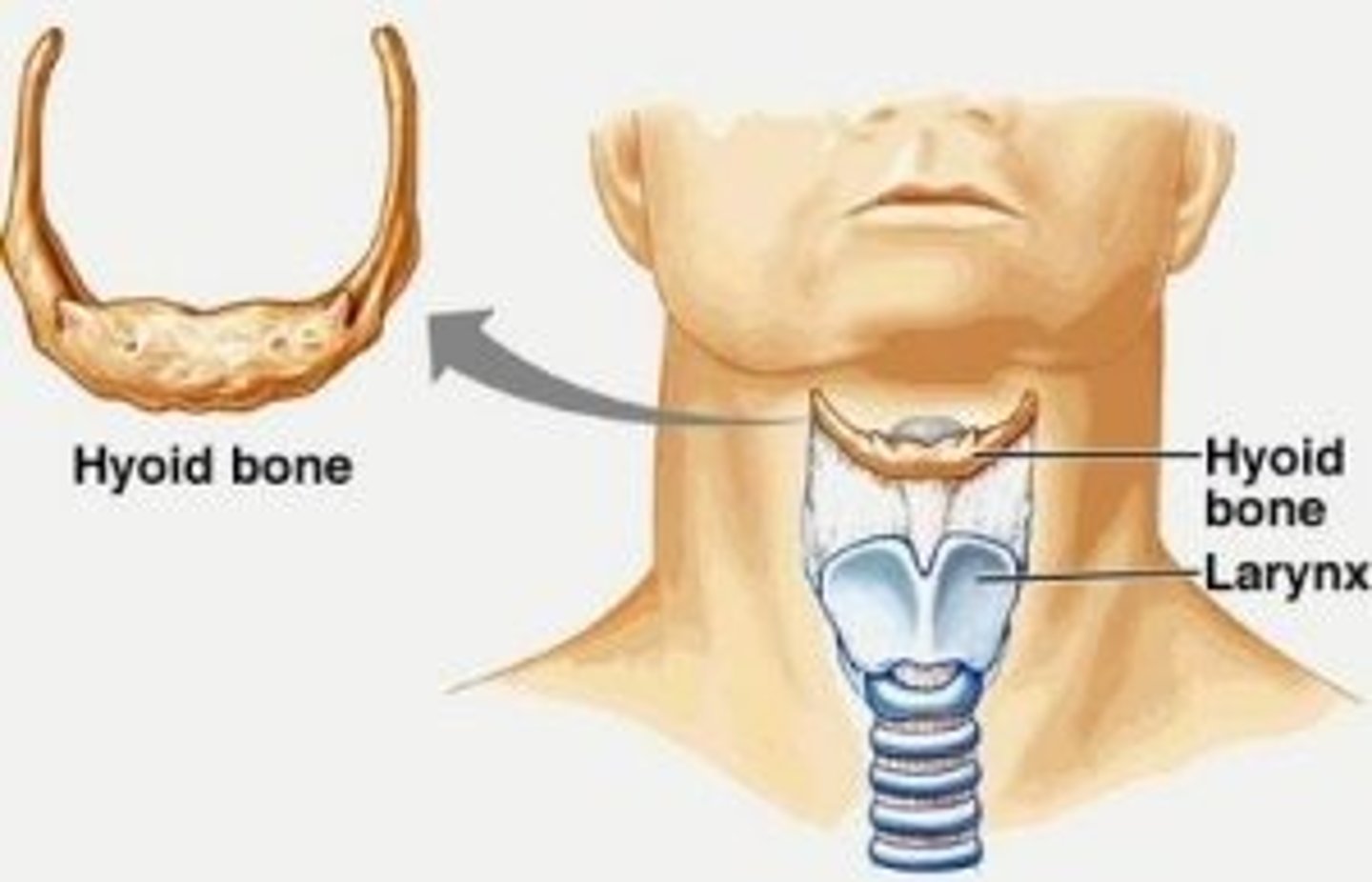
Hyoid bone
A U-shaped bone in the neck that supports the tongue.
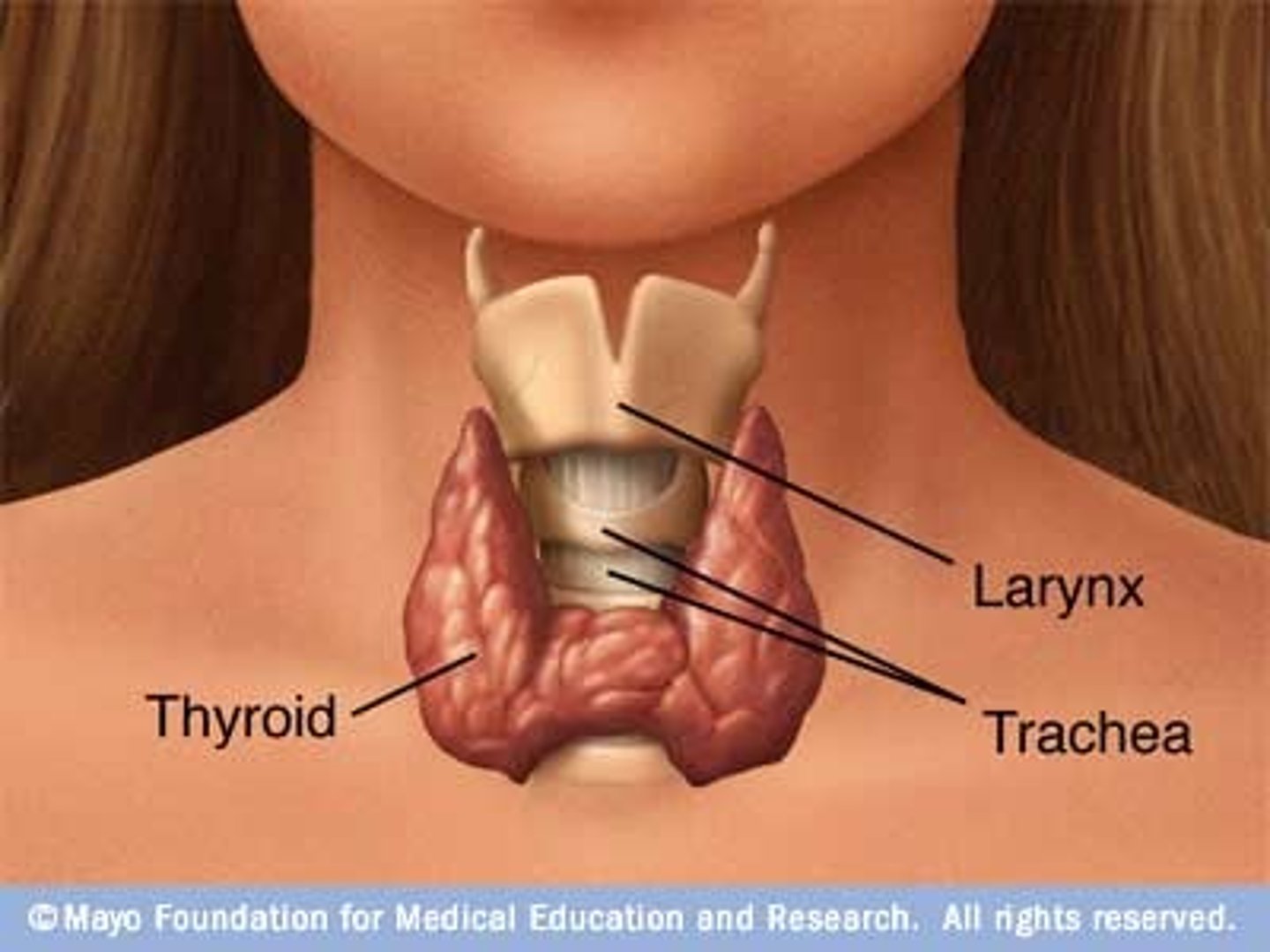
Thyroid gland
An endocrine gland located in the neck that produces hormones regulating metabolism.
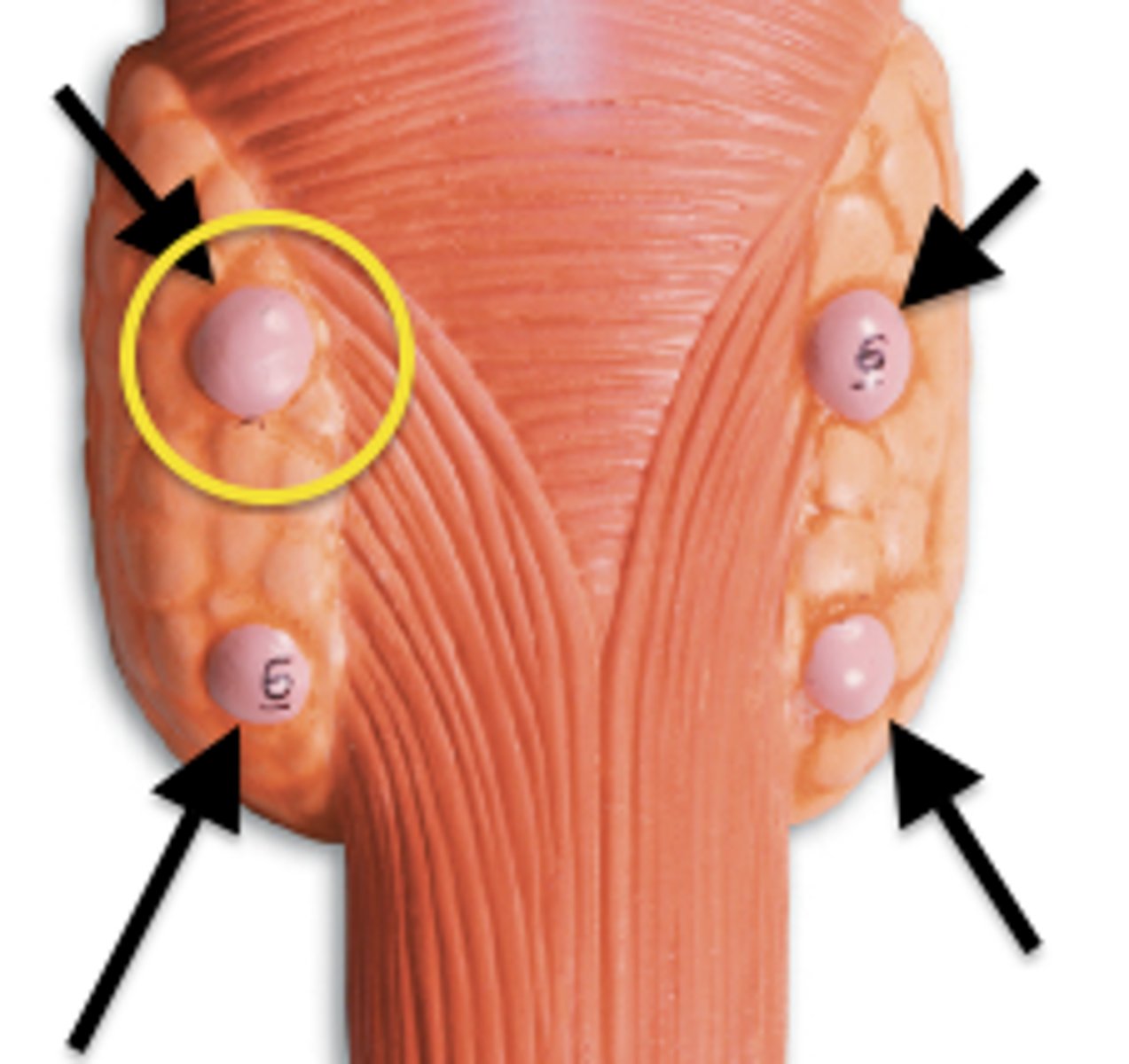
Parathyroid gland
Glands located behind the thyroid that regulate calcium levels in the blood.
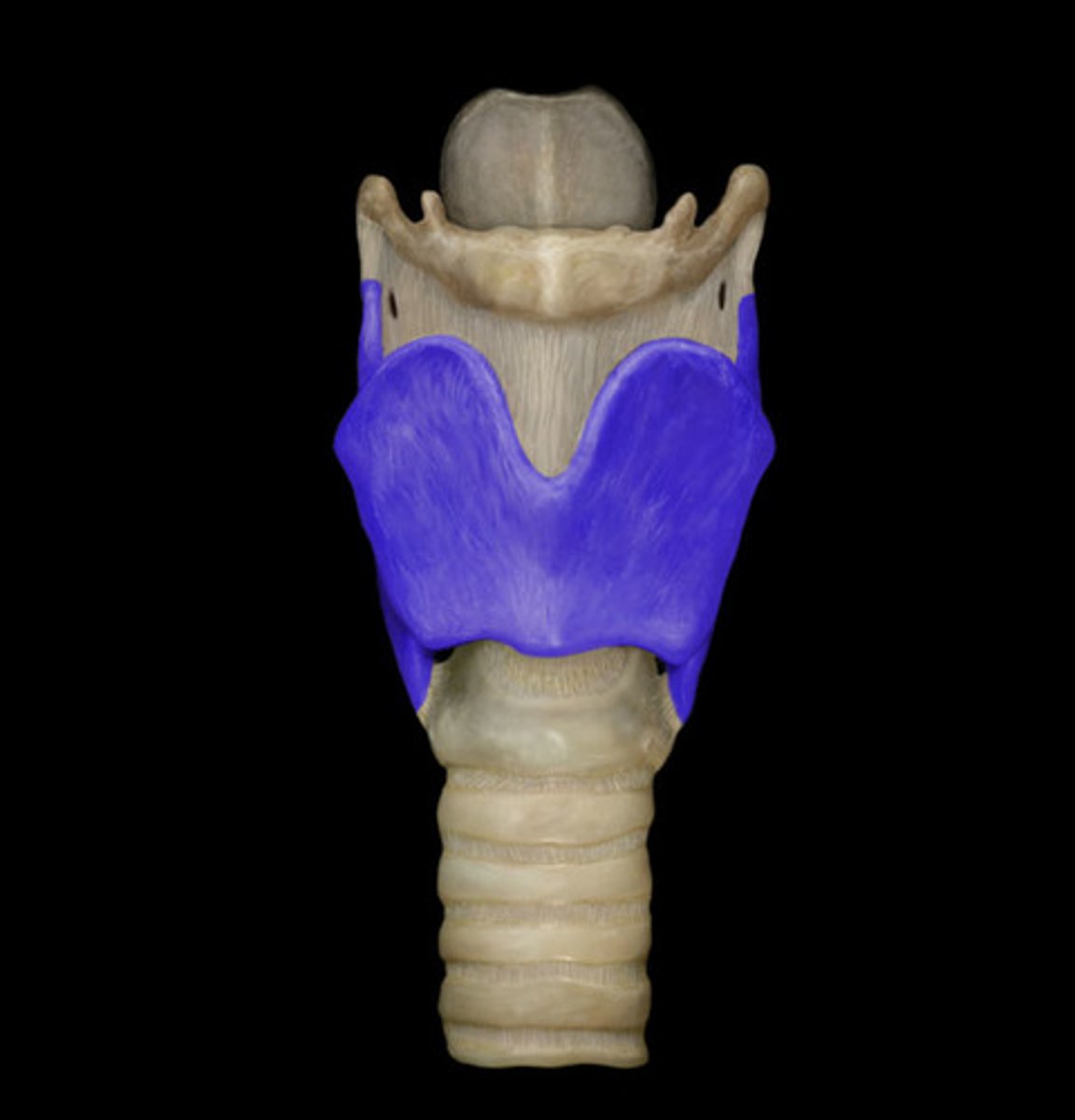
Thyroid cartilage
The largest cartilage of the larynx, commonly known as the Adam's apple.
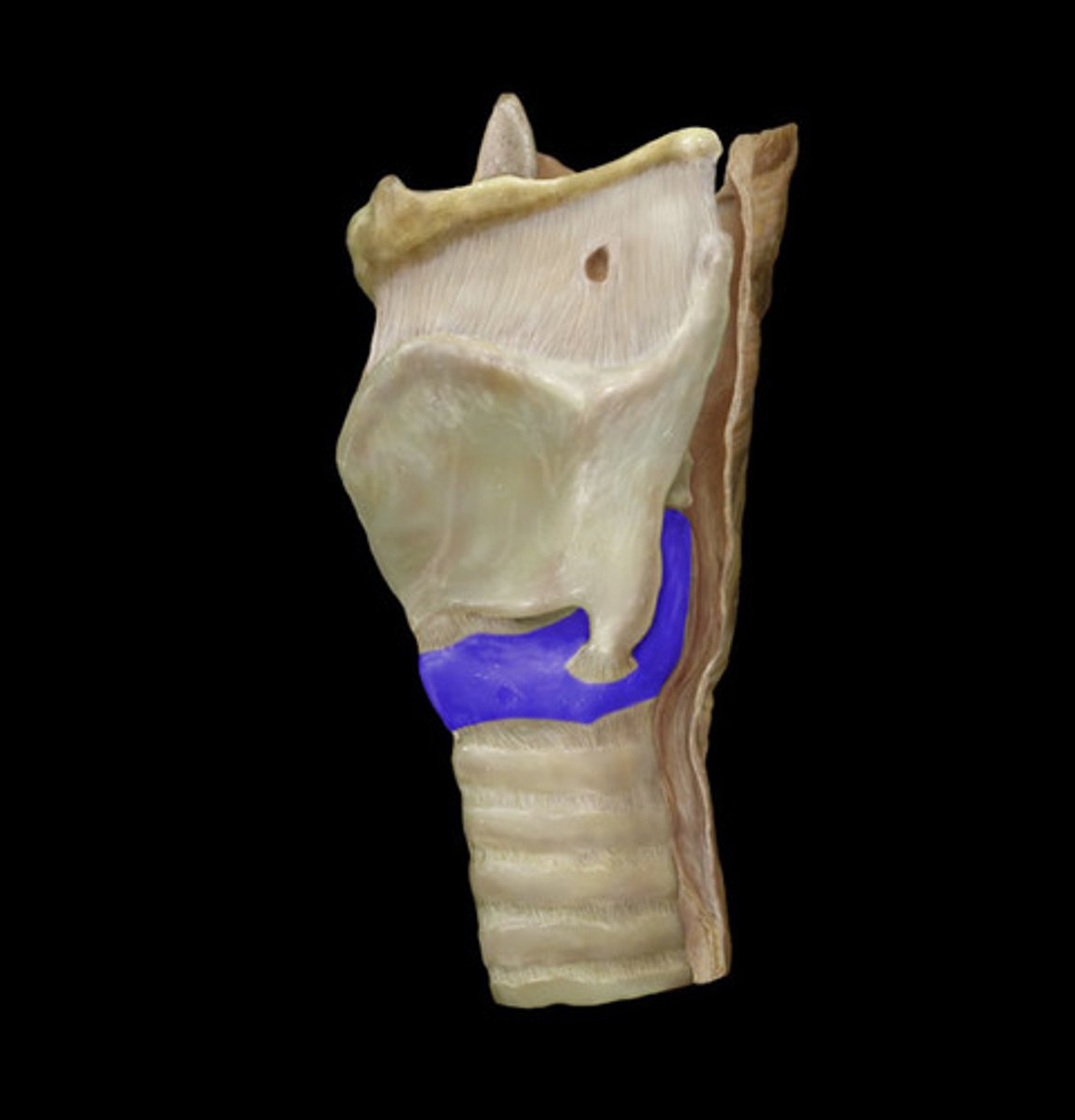
Cricoid cartilage
A ring-shaped cartilage located below the thyroid cartilage in the larynx.
Cricothyroid ligament
A ligament that connects the thyroid and cricoid cartilages in the larynx.
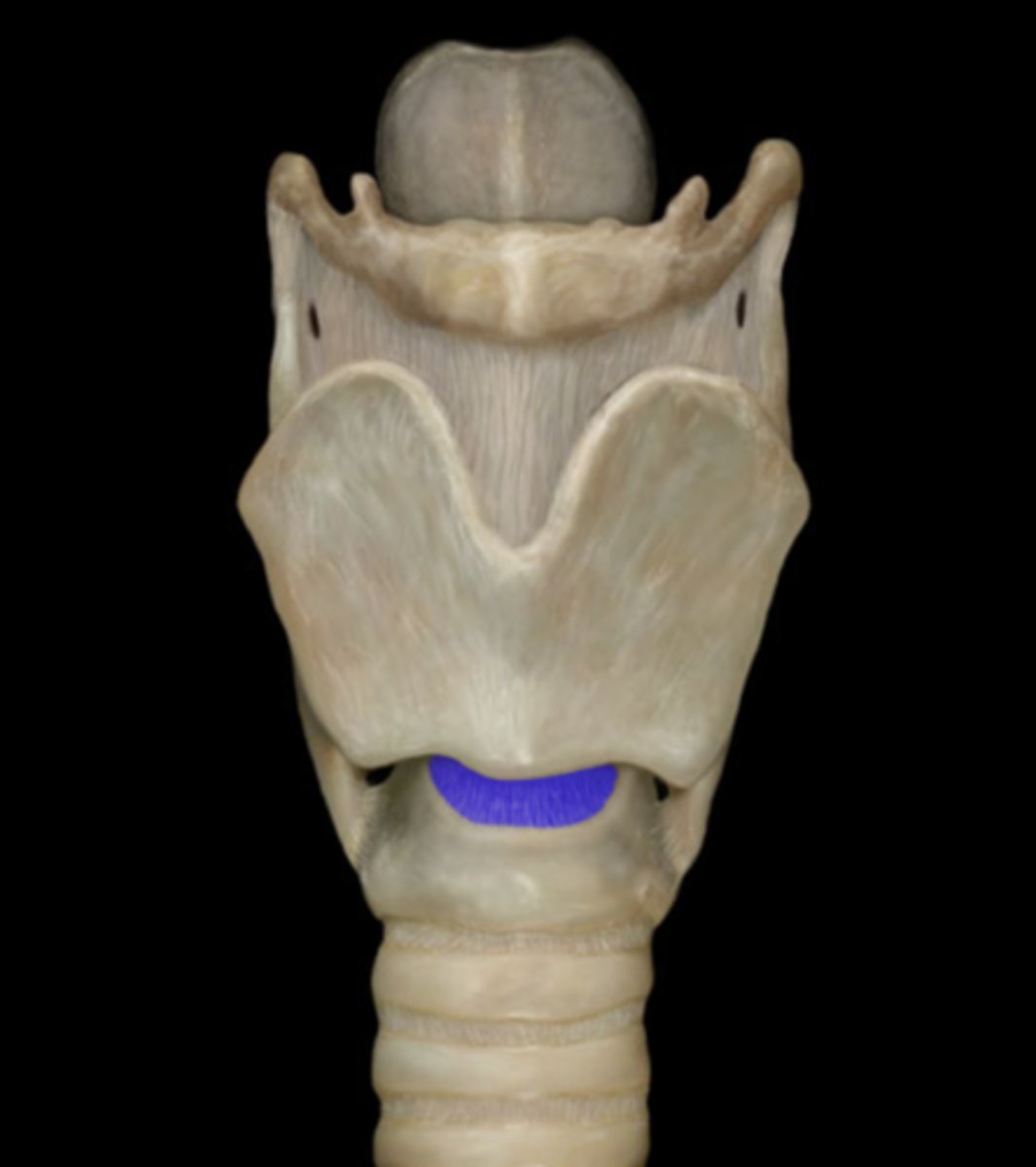
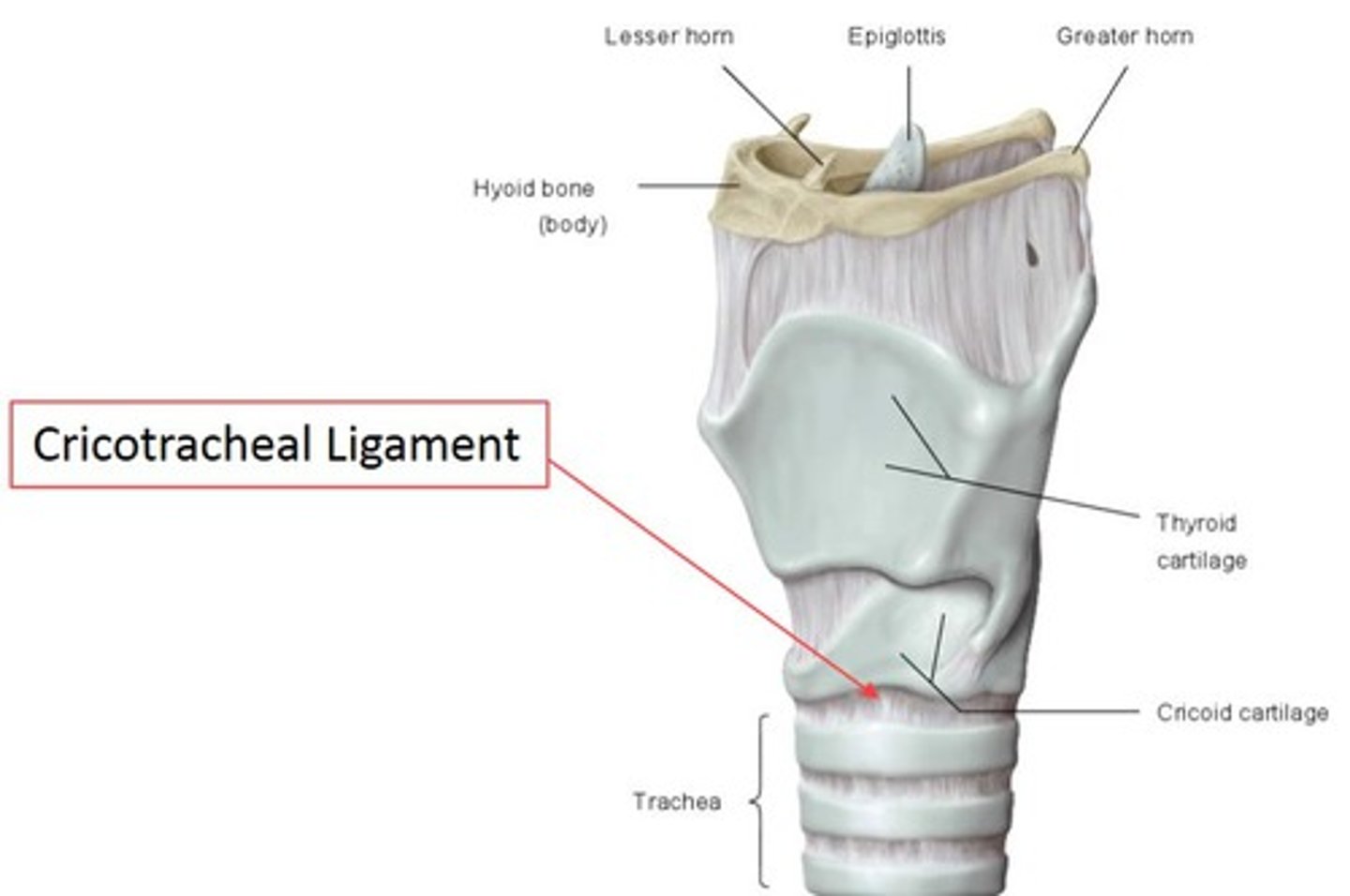
Cricotracheal ligament
A ligament that connects the cricoid cartilage to the trachea.
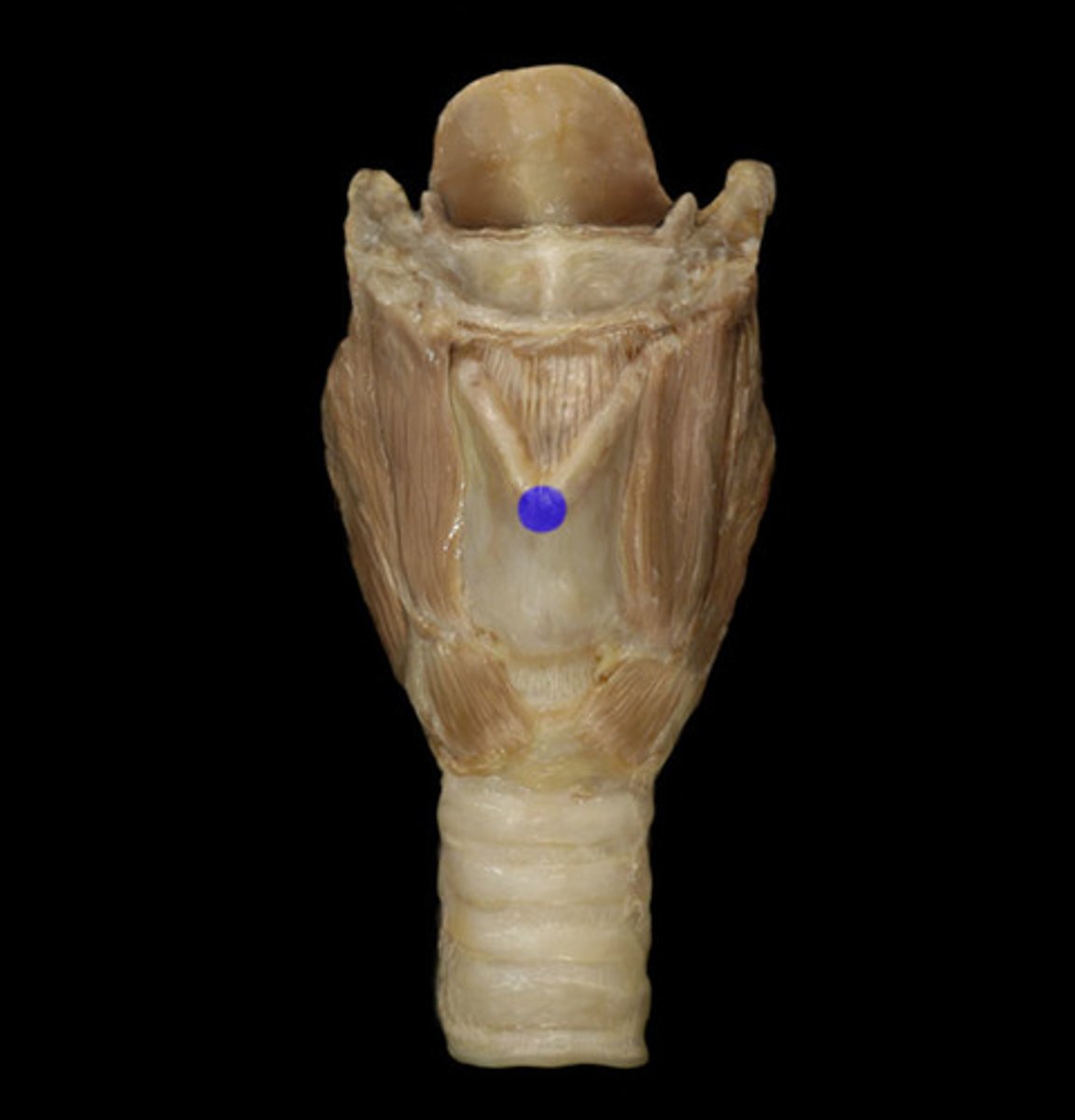
Laryngeal prominence
The protrusion formed by the thyroid cartilage in the larynx.
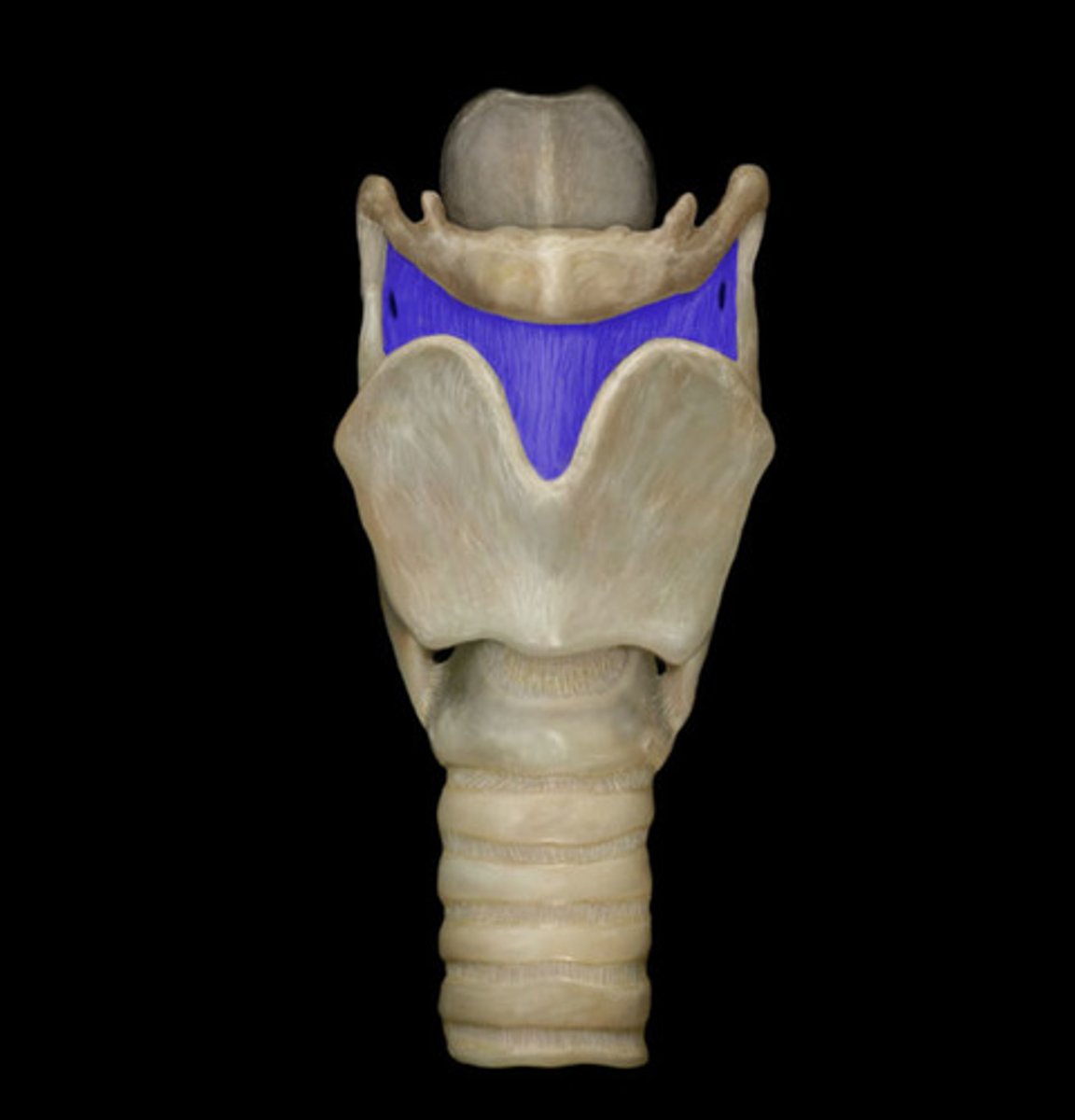
Thyrohyoid membrane
A membrane that connects the thyroid cartilage to the hyoid bone.
Epiglottis
A flap of cartilage that covers the trachea during swallowing to prevent food from entering the airway.
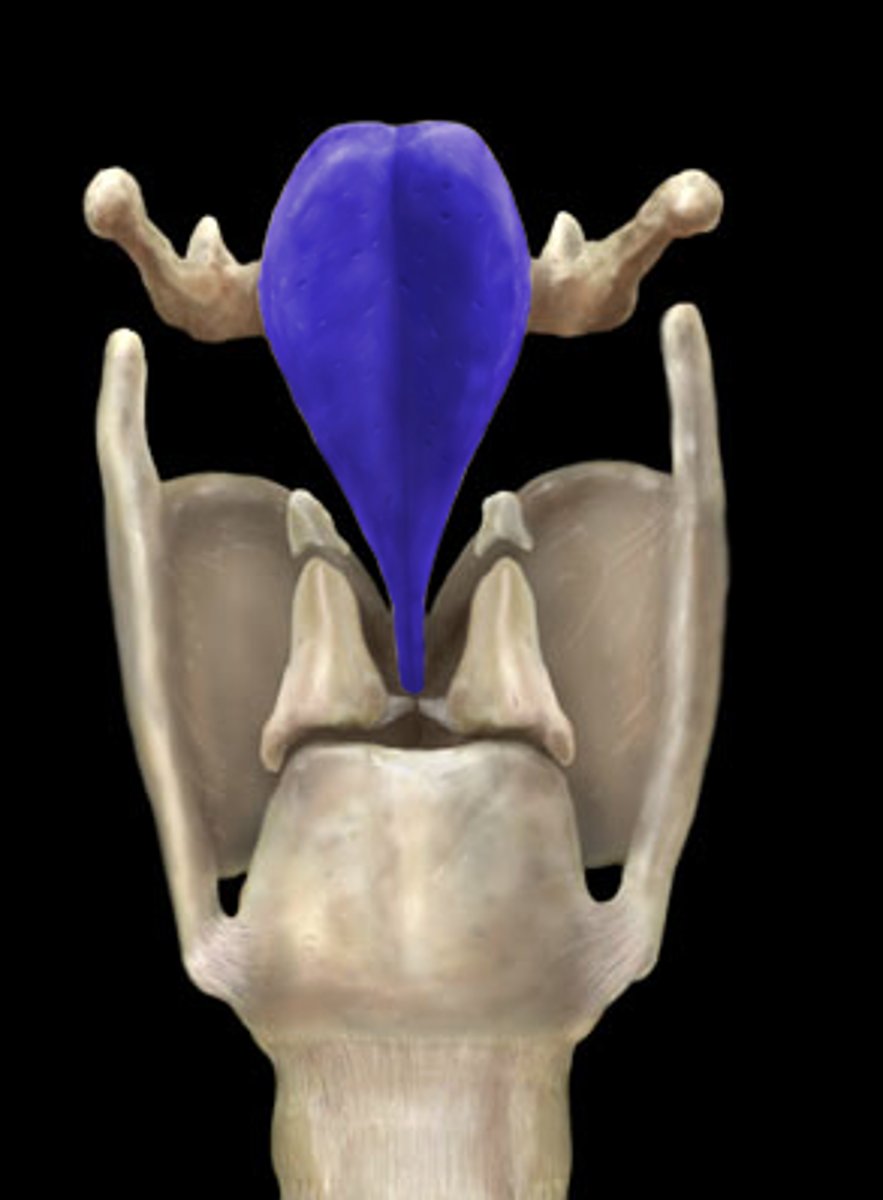
Ventricular folds (false vocal cords)
Folds of tissue in the larynx that do not produce sound but help protect the vocal cords.
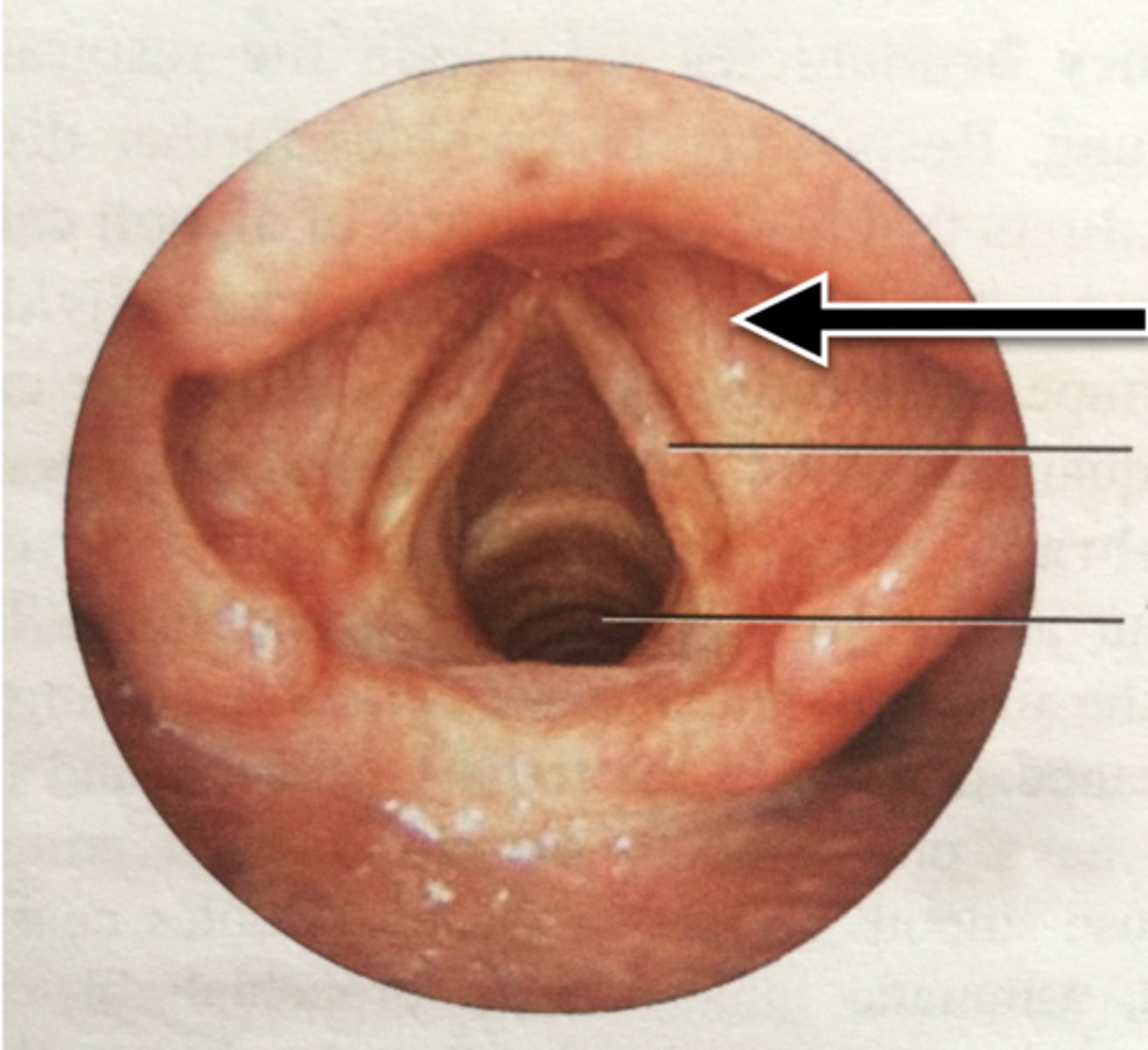
Vocal folds (true vocal cords)
Folds of tissue in the larynx that vibrate to produce sound.
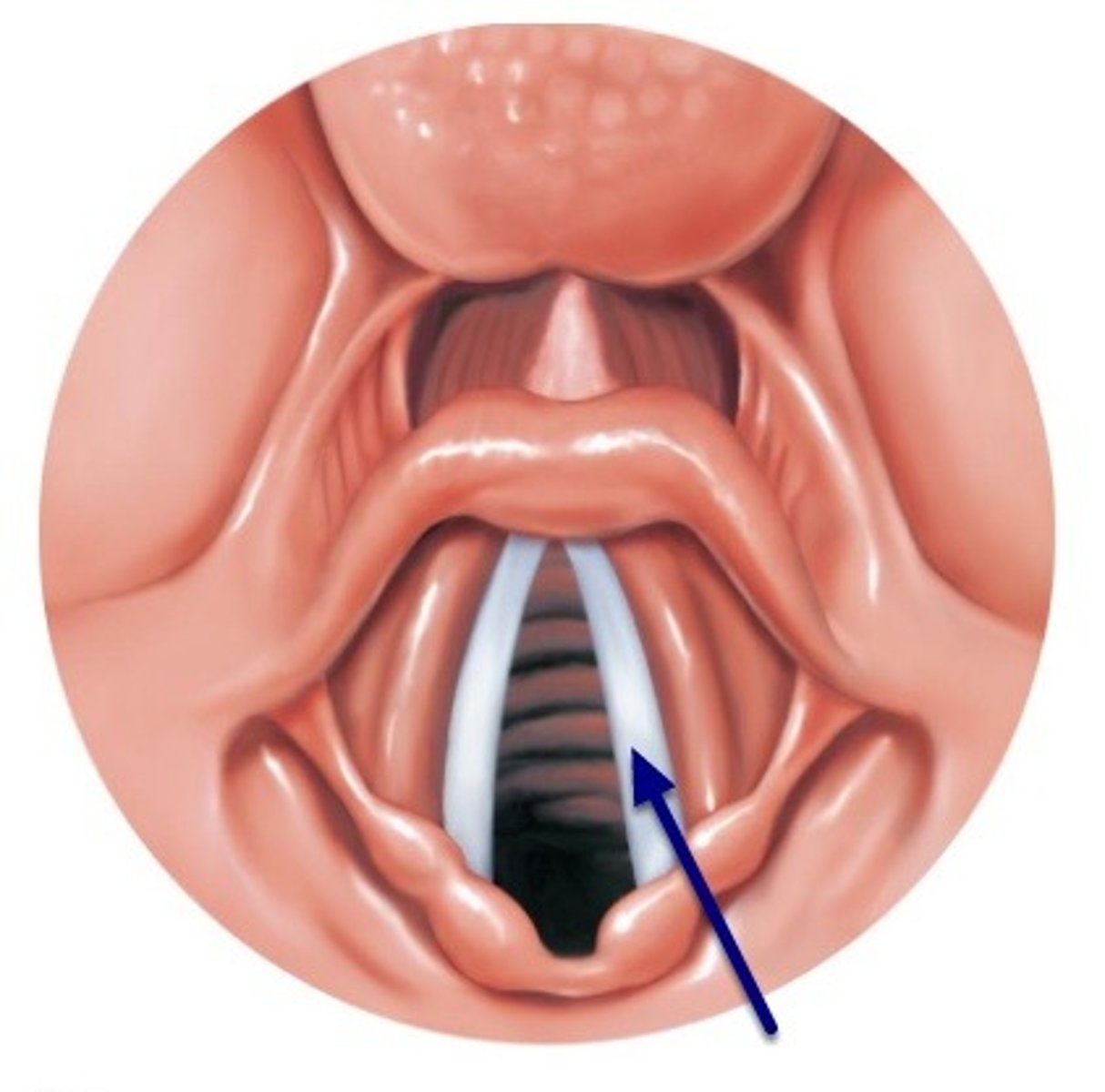
Trachea
The windpipe that connects the larynx to the bronchi, allowing air to pass to and from the lungs.
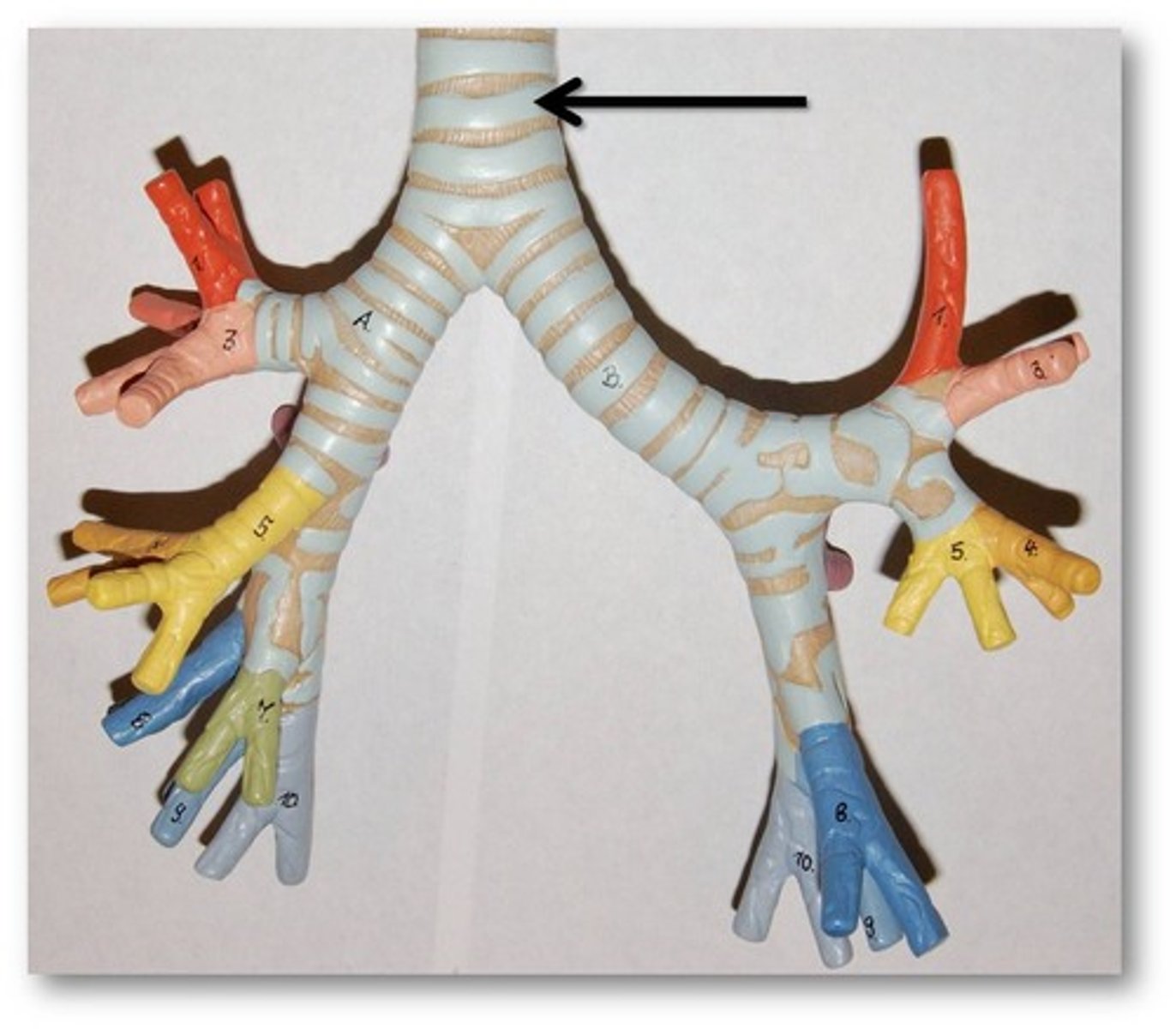
Main bronchi
The two primary branches of the trachea that lead to each lung.
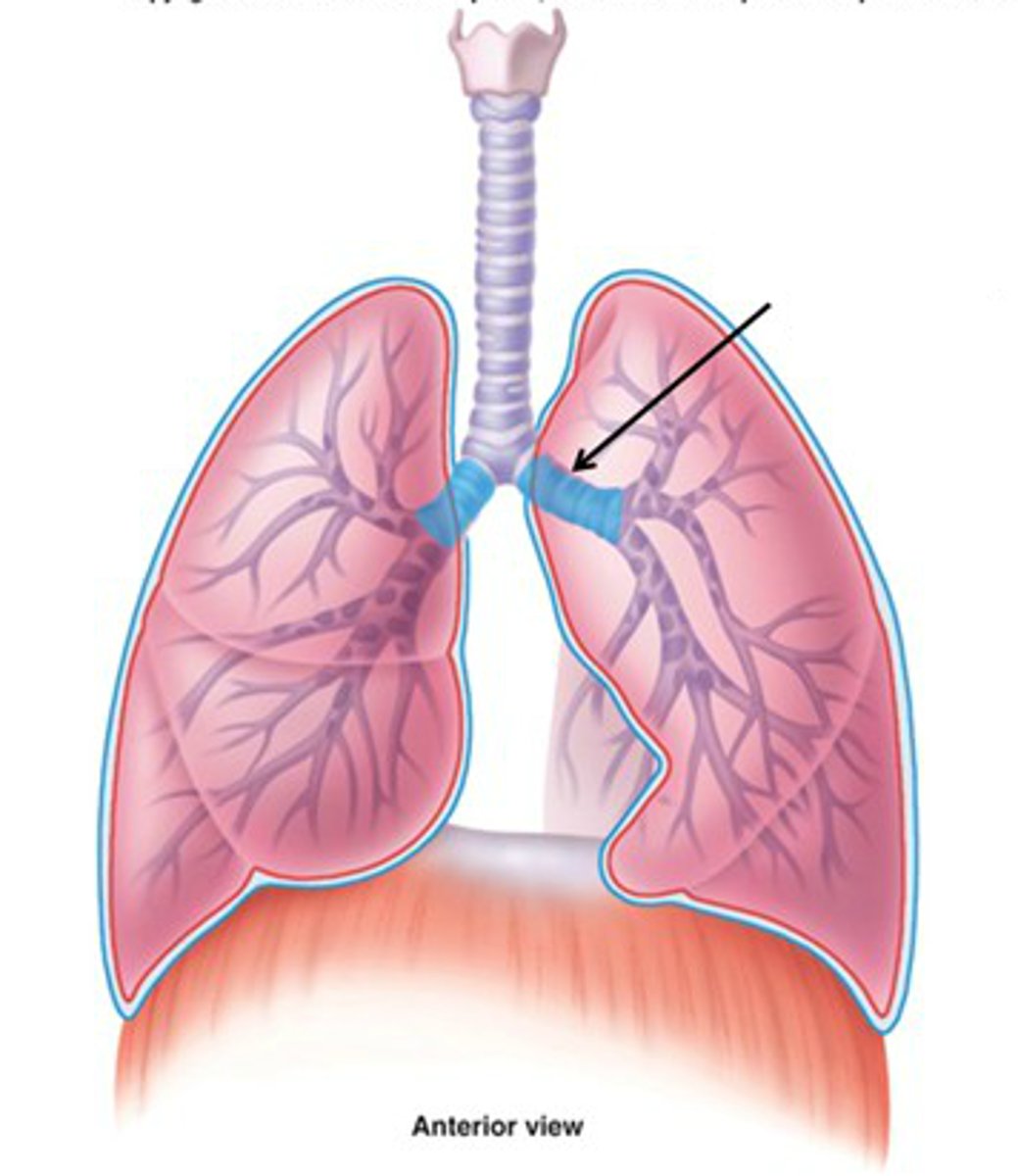
Lobar bronchi
The branches of the main bronchi that enter each lobe of the lungs.
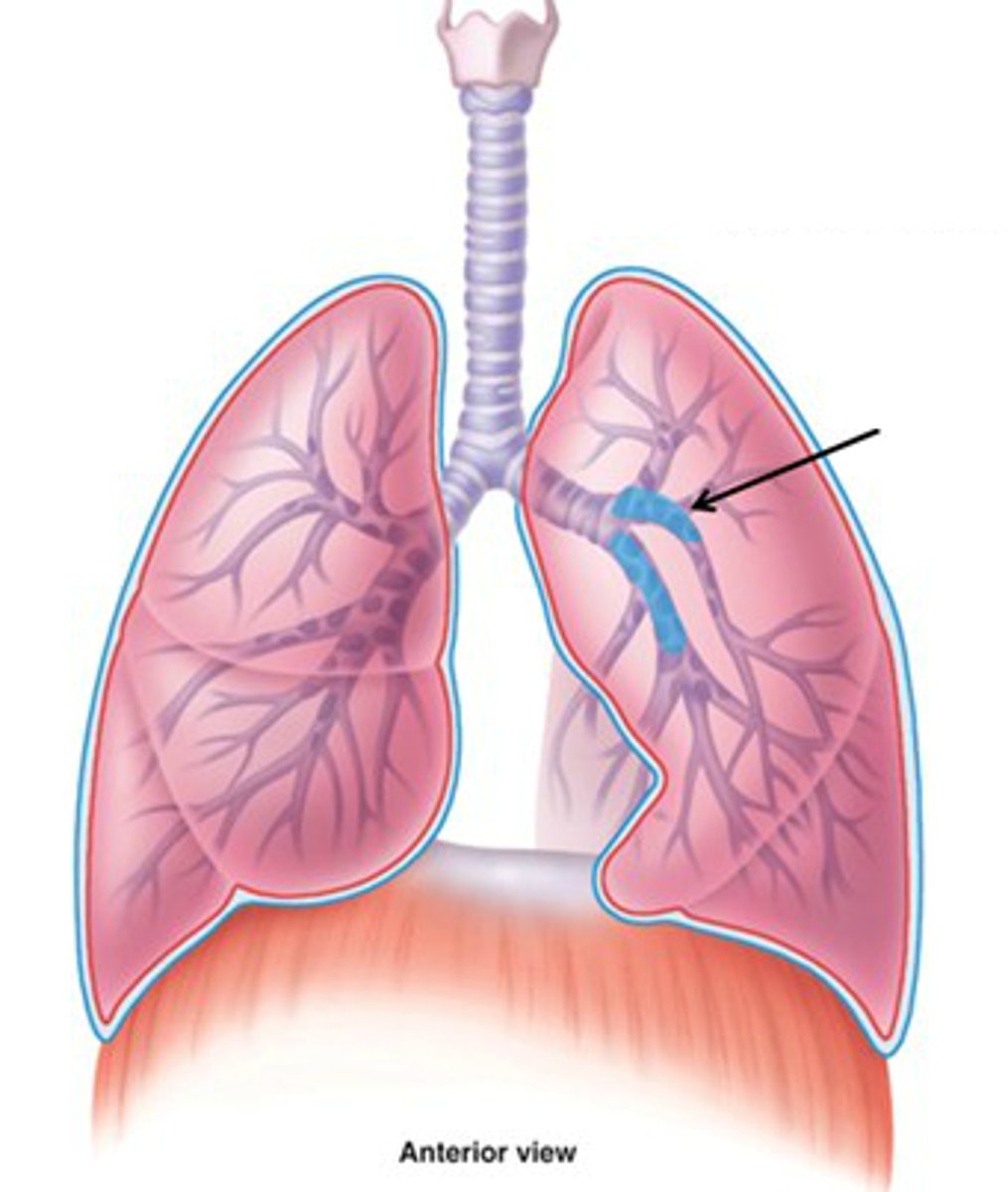
Segmental bronchi
The branches of the lobar bronchi that supply air to specific segments of the lungs.
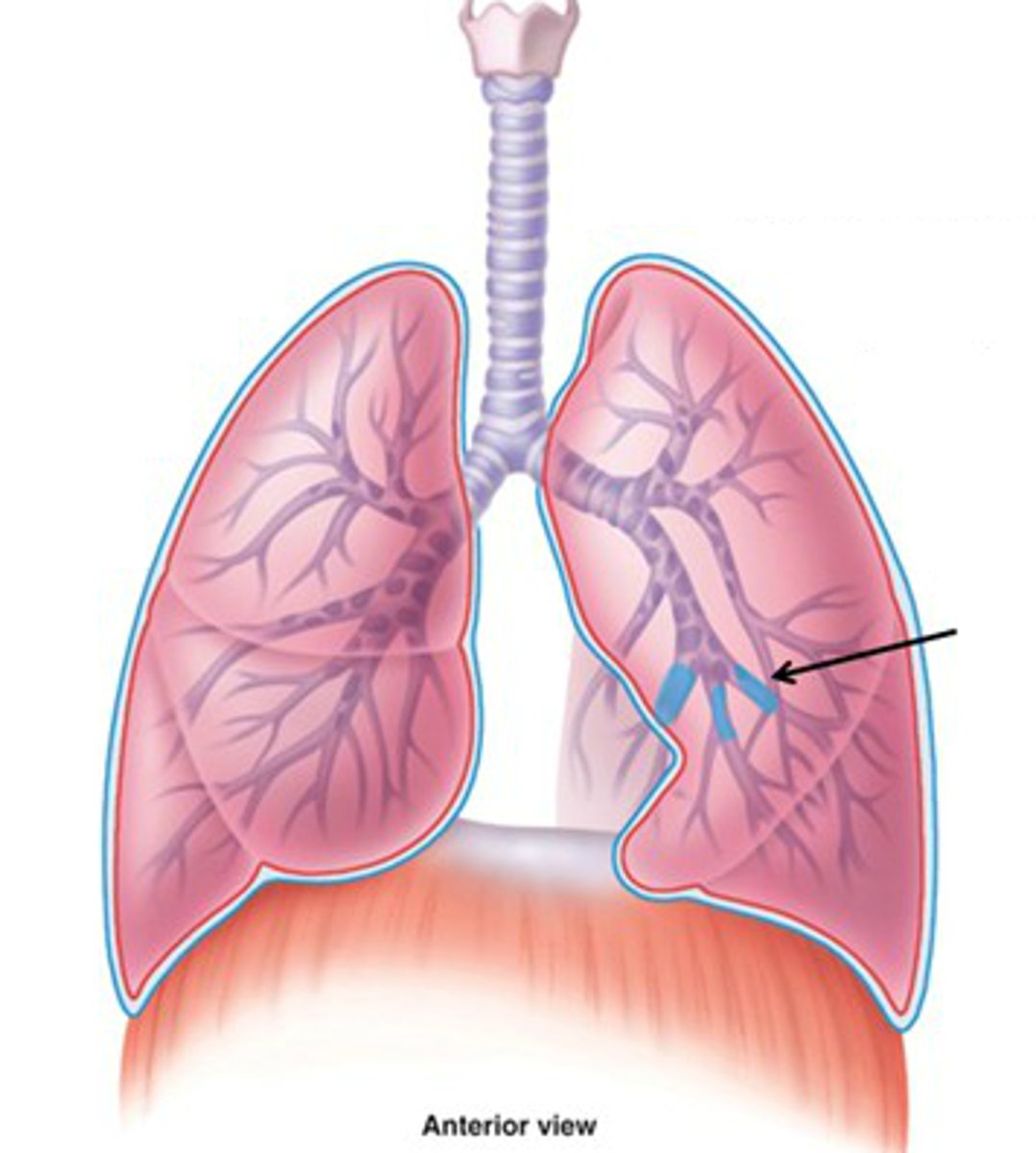
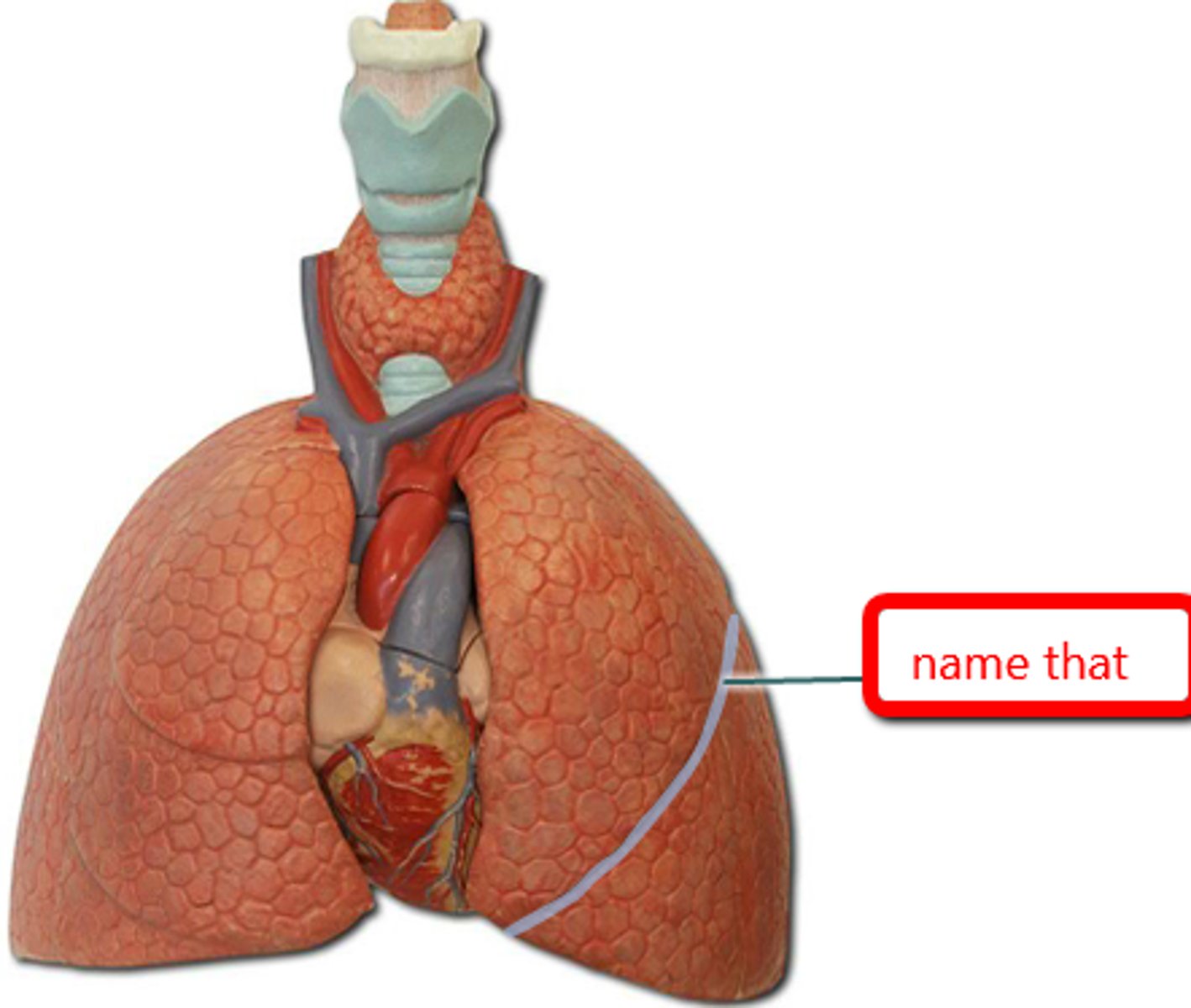
Left lung
The lung that has two lobes (superior and inferior) and is smaller than the right lung.
Right lung
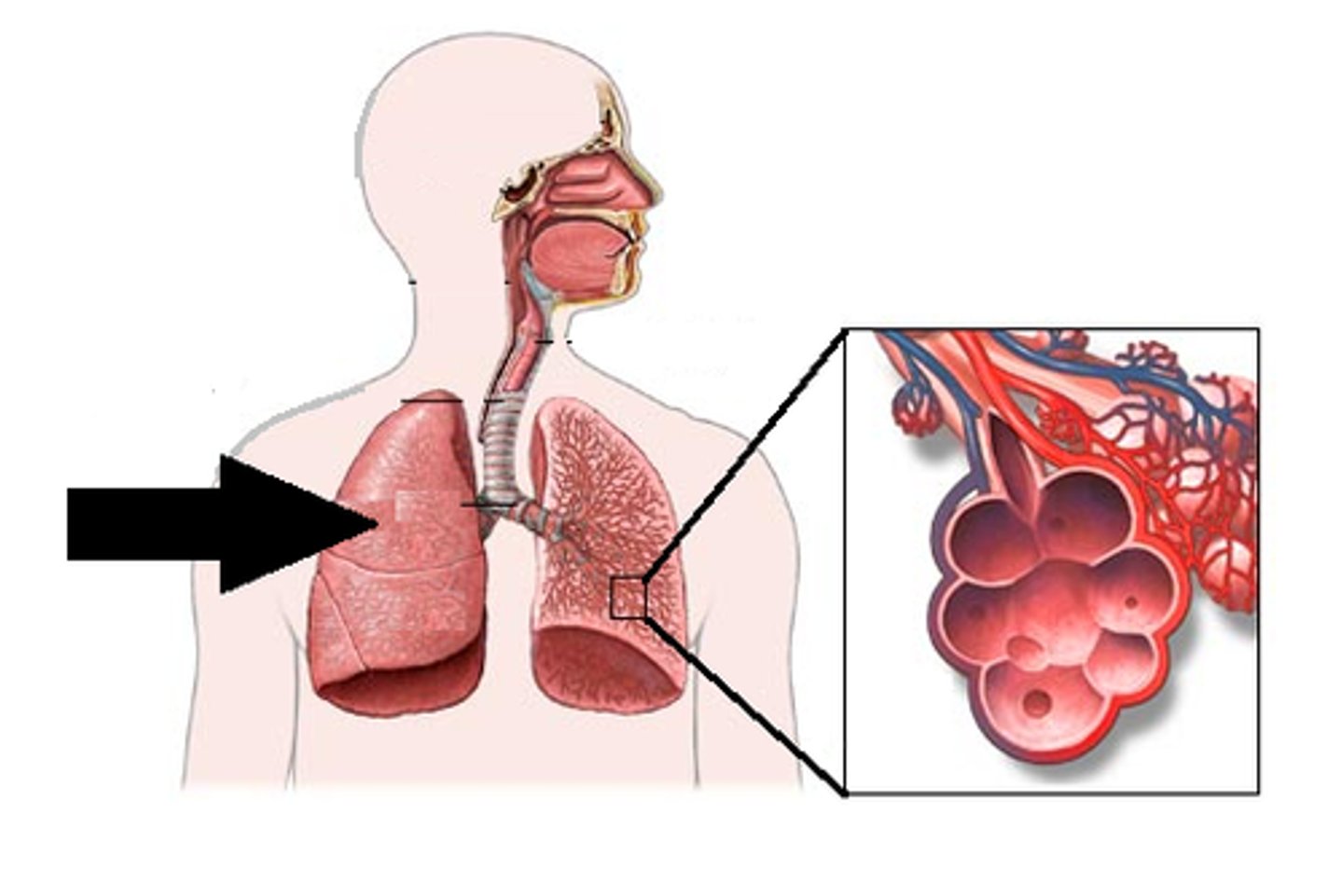
The lung that has three lobes (superior, middle, and inferior).
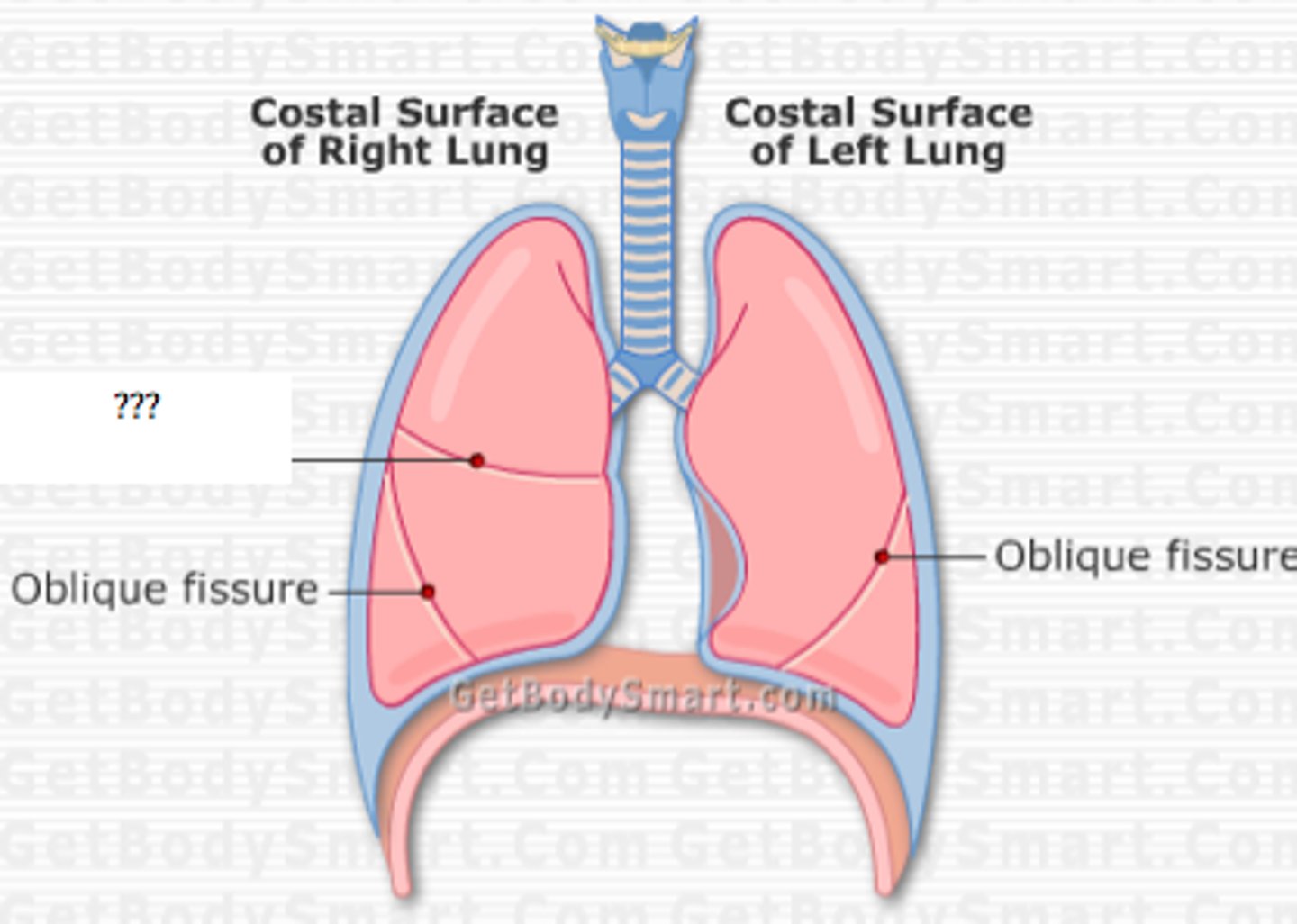
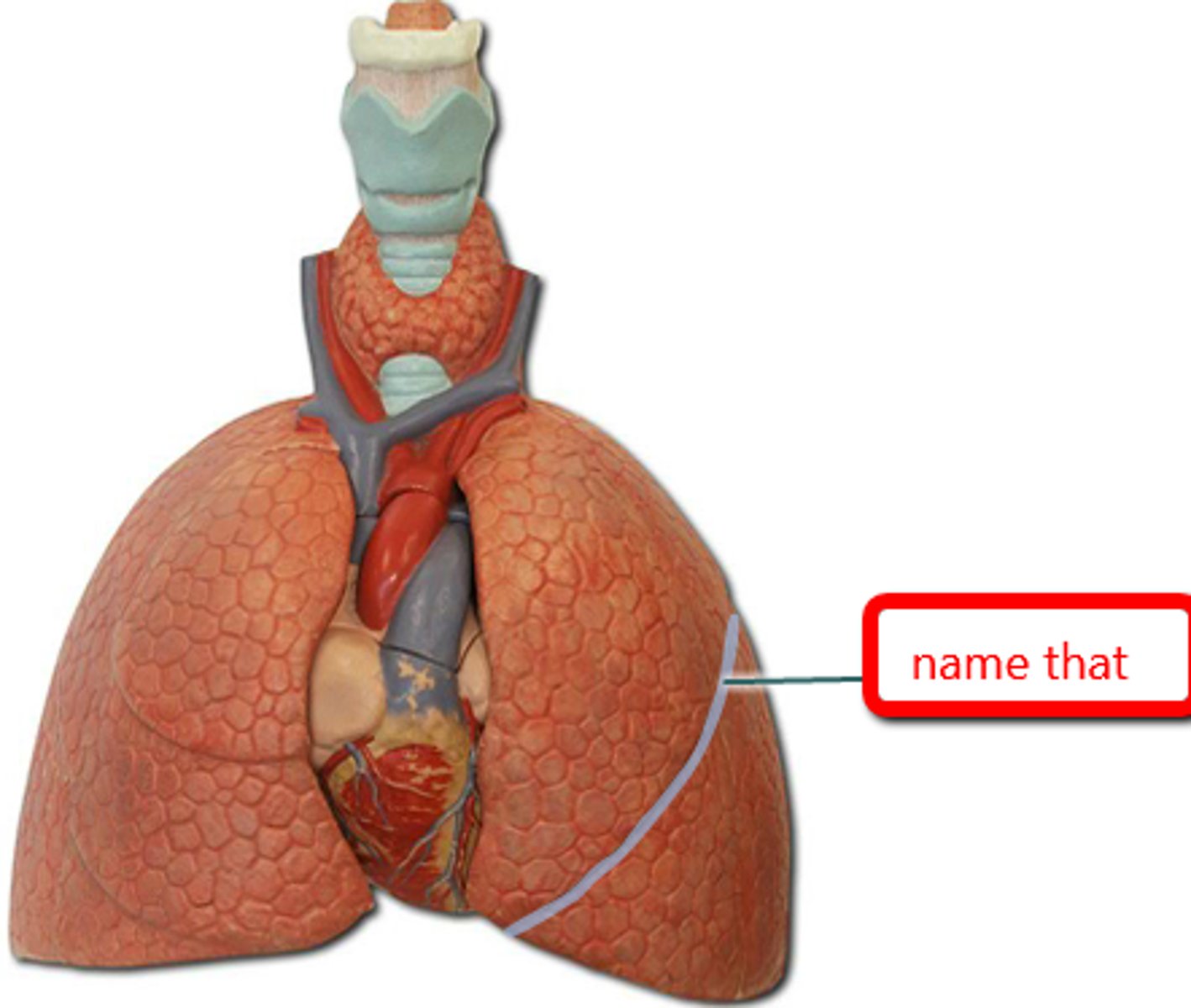
Oblique fissure
The fissure that separates the lobes of the lungs, present in both left and right lungs.
Horizontal fissure
The fissure that separates the middle lobe from the upper lobe of the right lung.