Ukrainian Art History
 Call Kai
 Learn
Learn Practice Test
 Spaced Repetition
 Match
Match Flashcards
 Knowt Play
1/19

There's no tags or description
Looks like no tags are added yet.
Name | Mastery | Learn | Test | Matching | Spaced | Call with Kai |
|---|
No analytics yet
Send a link to your students to track their progress
20 Terms
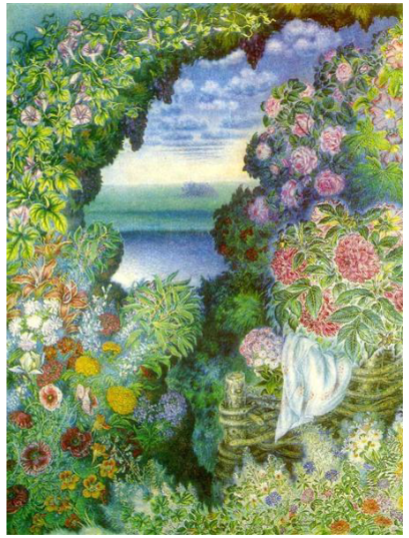
Artist: Kateryna Bilokur
Title: Collective Farm Field
Date: 1948-49
Meaning/Relevance: A "quiet" negotiation of Soviet mandates; while the title suggests Socialist Realist labor, the work is an individualistic, obsessive floral landscape without people or machines
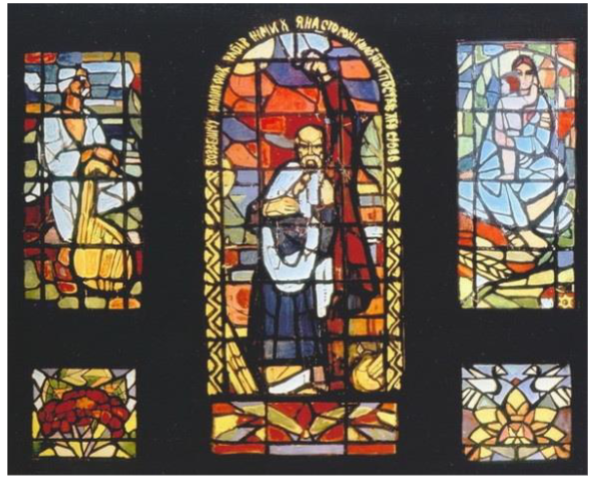
Artist: Alla Horska, Opanas Zalyvakha, Liudmyla Semykina
Title: Shevchenko, Mother (sketch for stained-glass)
Date: 1964
Meaning/Relevance: A core "Sixtiers" work; it defied Soviet ideology by depicting the national poet Shevchenko as a grim, defiant figure rather than a Soviet hero. The original was destroyed by authorities
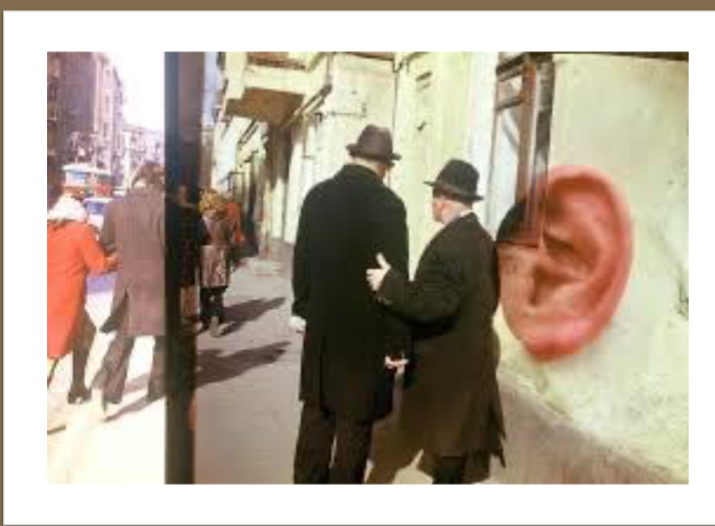
Artist: Boris Mikhailov
Title: From the series Yesterday’s Sandwich
Date: 1960s-70s
Meaning/Relevance: Uses "sandwiched" color slides to visualize the dual reality of Soviet life—the public ideological face vs. the private, mundane, or surreal reality.
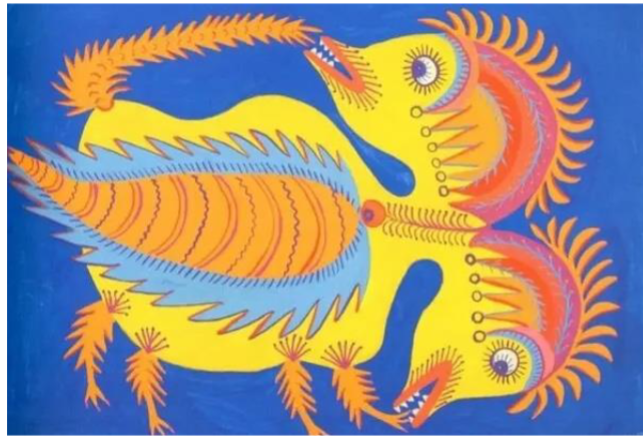
Artist: Maria Primachenko
Title: Two-headed Chicken
Date: 1977
Meaning/Relevance: Naive art style using mythological "beasts" to process contemporary anxieties, such as the nuclear threat and political pressure during the late Soviet period
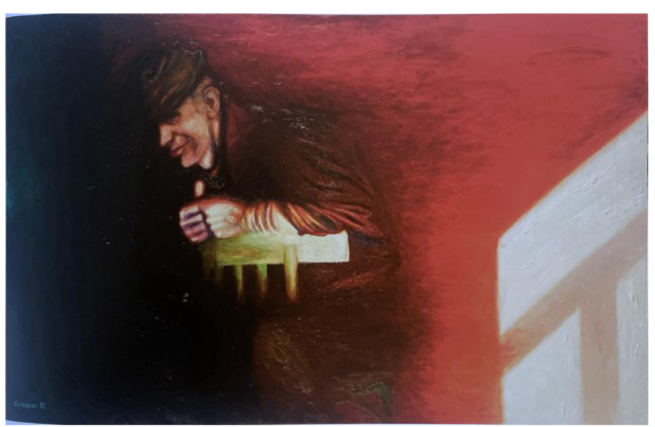
Artist: Tiberyi Silvashi
Title: Guest
Date: 1982
Meaning/Relevance: Part of the "metaphysical" move in late Soviet art, focusing on color, light, and silence as a retreat from the noise of state propaganda.
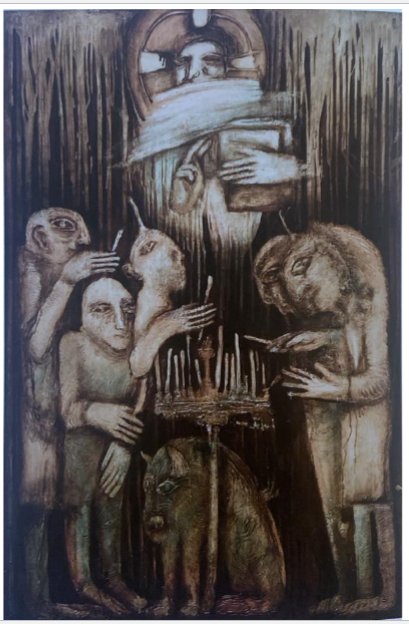
Artist: Valeria Troubina
Title: Bowing
Date: 1985
Meaning/Relevance: Represents the early New Wave and the beginning of Perestroika, signaling a shift toward expressive, psychological figuration.
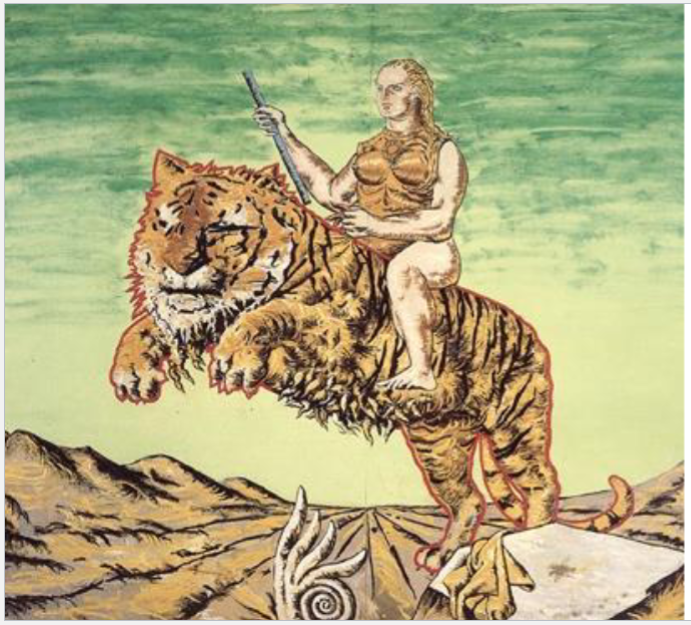
Artist: Arsen Savadov and Heorhii Senchenko
Title: The Sorrow of Cleopatra
Date: 1987
Meaning/Relevance: The landmark work of the Ukrainian New Wave; uses postmodern irony and massive scale to "dismantle" the Socialist Realist paradigm.
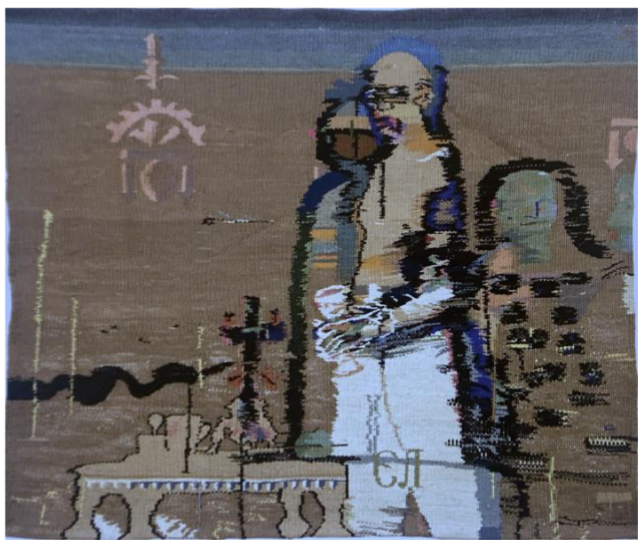
Artist: Marina Skugareva
Title: Portrait of Anatoly Stepanenko
Date: 1988
Meaning/Relevance: New Wave portraiture featuring embroidery; it mixes "low" folk craft with "high" painting to challenge traditional artistic hierarchies.
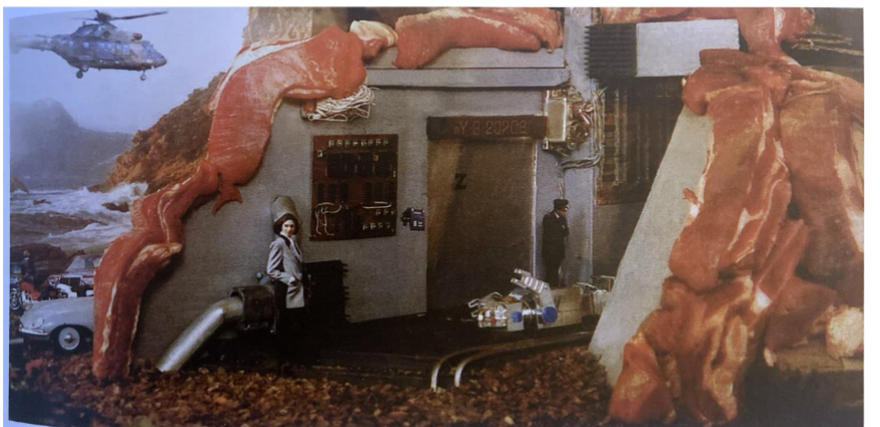
Artist: Vasiliy Tsagolov
Title: I Like my Job Very Much
Date: 1992
Meaning/Relevance: A violent, ironic commentary on the "Wild 90s" and the collapse of social order following the end of the Soviet Union.
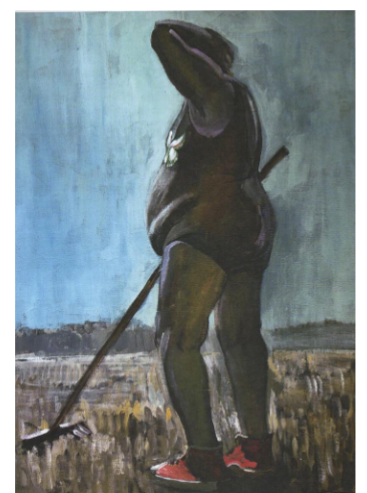
Artist: Lesia Khomenko
Title: Dacha Madonna
Date: 2004
Meaning/Relevance: Reinterprets the classical Madonna within the mundane setting of a Ukrainian summer cottage; created during the Orange Revolution.

Artist: Zhanna Kadyrova
Title: Ice in the Bathroom (close-up)
Date: 2007
Meaning/Relevance: Uses heavy, industrial materials (tiles/concrete) to represent fluid, fragile forms, exploring the materiality of the domestic sphere.
Card 12
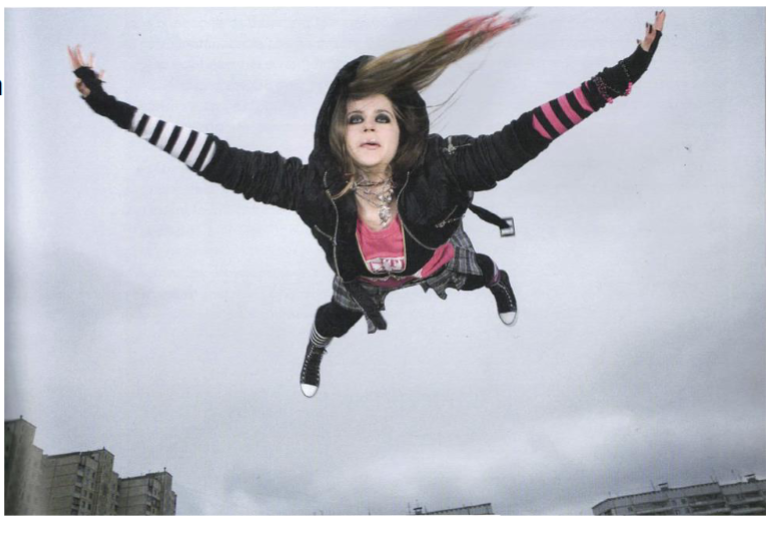
Artist: The Soska Group
Title: Dreamers
Date: 2008
Meaning/Relevance: Photographs of youth wearing masks of political leaders, reflecting a generation's search for identity in a post-revolutionary landscape
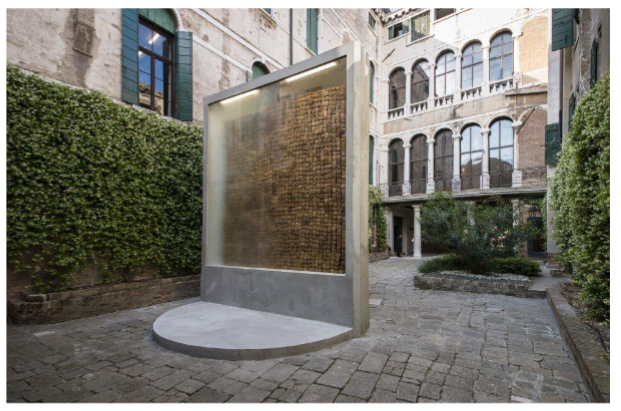
Artist: Nikita [Mykyta] Kadan
Title: Babooshka (Social Security Mausoleum)
Date: 2013
Meaning/Relevance: An installation of bread in concrete that decays over time, symbolizing the failure and "mausoleum-like" state of Soviet-era social welfare for the elderly.
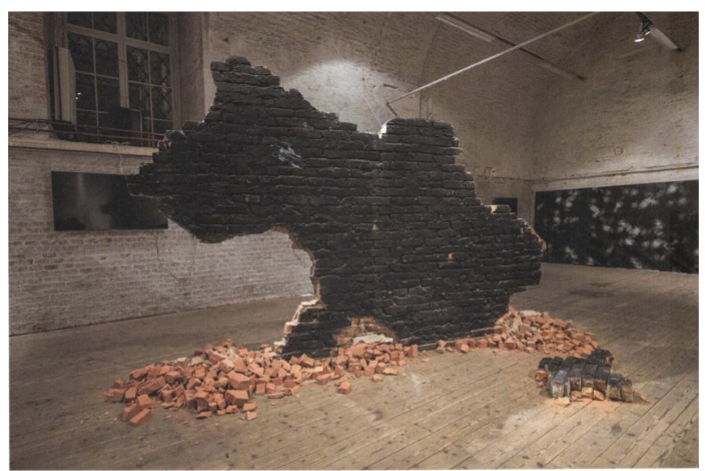
Artist: Zhanna Kadyrova
Title: Untitled
Date: 2014
Meaning/Relevance: Created in the wake of the Maidan revolution and the start of the war; uses building rubble to represent the physical and political fragmentation of the nation.
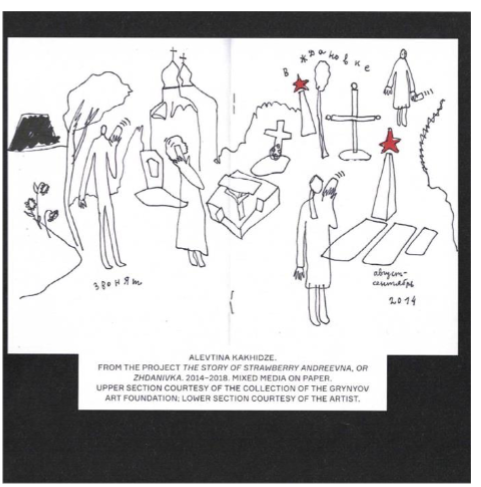
Artist: Alevtina Kakhidze
Title: from The Story of Strawberry Andreevna, or Zhdanivka
Date: 2014-18
Meaning/Relevance: A personal documentary of the artist's mother in an occupied territory, using "Aesopian" humor to discuss the hardships of war.
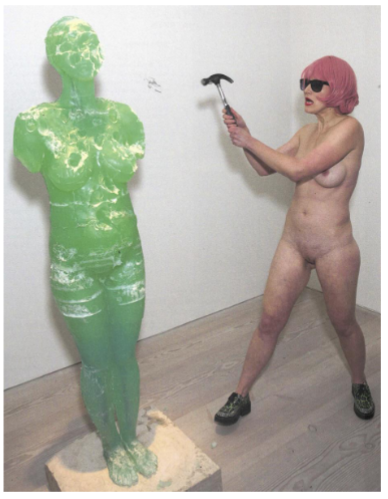
Artist: Maria Kulikovska
Title: Happy Birthday
Date: 2015
Meaning/Relevance: A performance piece dedicated to her mother in occupied Crimea; it uses the artist's own body (cast in soap) to discuss displacement and territorial loss.
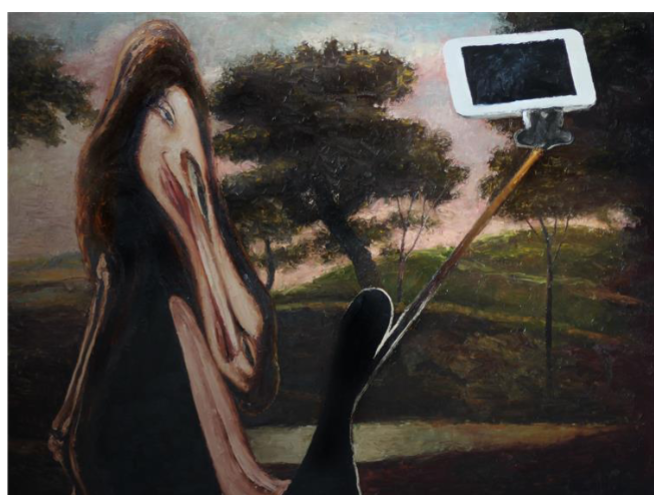
Artist: Oleksandr Rojtburd
Title: The Last Selfie
Date: 2017
Meaning/Relevance: An ironic commentary on digital narcissism and mortality in a time of persistent national conflict.
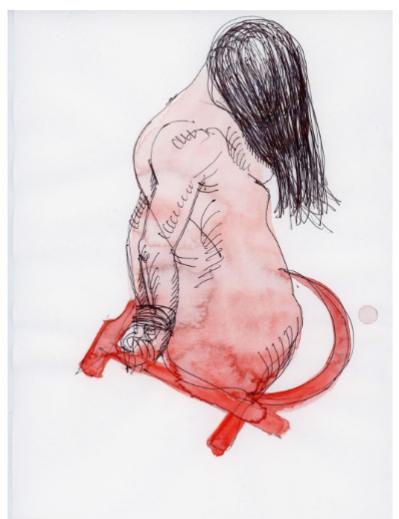
Artist: Vlada Ralko
Title: Lviv Diaries
Date: begun Feb. 2022
Meaning/Relevance: Visceral drawings documenting the trauma of the full-scale invasion; focuses on the "Ukrainian apocalypse" through fragmented, red/pink bodies
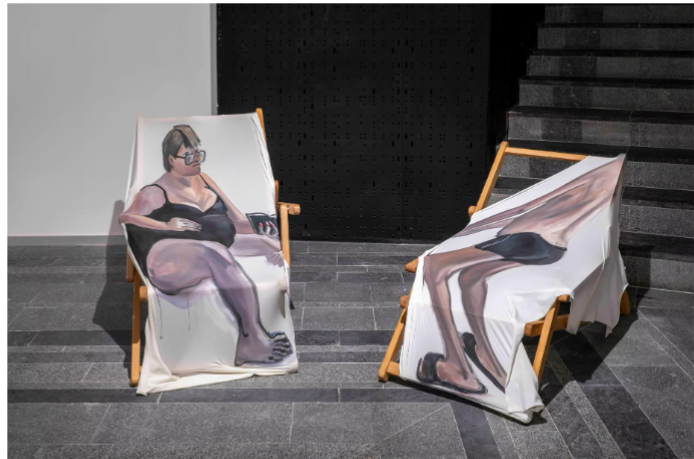
Artist: Lesia Khomenko
Title: from the series Imaginary Distance
Date: 2025
Meaning/Relevance: Explores the tech-mediated view of war (drones/screens), visualizing the soldier as both a distant data point and a human figure.
Essay Question 2: How have Ukrainian artists negotiated Soviet totalitarianism and mandates to conform to official ideology in their work since the 1950s? What were some consequences to non-conformism? Support with a discussion of 4 art works.
Thesis: Artists negotiated totalitarianism by using folk traditions as a shield, adopting Aesopian irony, or creating underground "apartment" art to bypass censorship, though many faced works' destruction or physical persecution.
Work 1: Horska, Shevchenko, Mother (1964): Defied the "heroic" Soviet Shevchenko. Consequence: The window was smashed by the state; Horska was murdered in 1970.
Work 2: Bilokur, Collective Farm Field (1948-49): Reclaimed individualistic folk art; avoided people/machines to stay out of Socialist Realist "labor" narratives.
Work 3: Mikhailov, Yesterday's Sandwich (1960s-70s): Visualized the dual "layered" life of Soviet citizens. Consequence: Remained underground "apartment art" to avoid censorship.
Work 4: Savadov & Senchenko, The Sorrow of Cleopatra (1987): Used postmodern irony to dismantle the Socialist paradigm during Perestroika