Chapter 15-Interest Rates and Monetary Policy
 Call Kai
 Learn
Learn Practice Test
 Spaced Repetition
 Match
Match Flashcards
 Knowt Play
1/23

There's no tags or description
Looks like no tags are added yet.
Name | Mastery | Learn | Test | Matching | Spaced | Call with Kai |
|---|
No analytics yet
Send a link to your students to track their progress
24 Terms
Monetary Policy
a set of actions to control a nation’s money supply and achieve economic goals. “Money” is like any other good, i.e., commodities.
There is a market for “money”
We demand “money” to use/spend it; the Fed supplies “money” according to economic conditions
Does “money” have a price?
Determined by the money supply and money demand
What is the price of “money”?
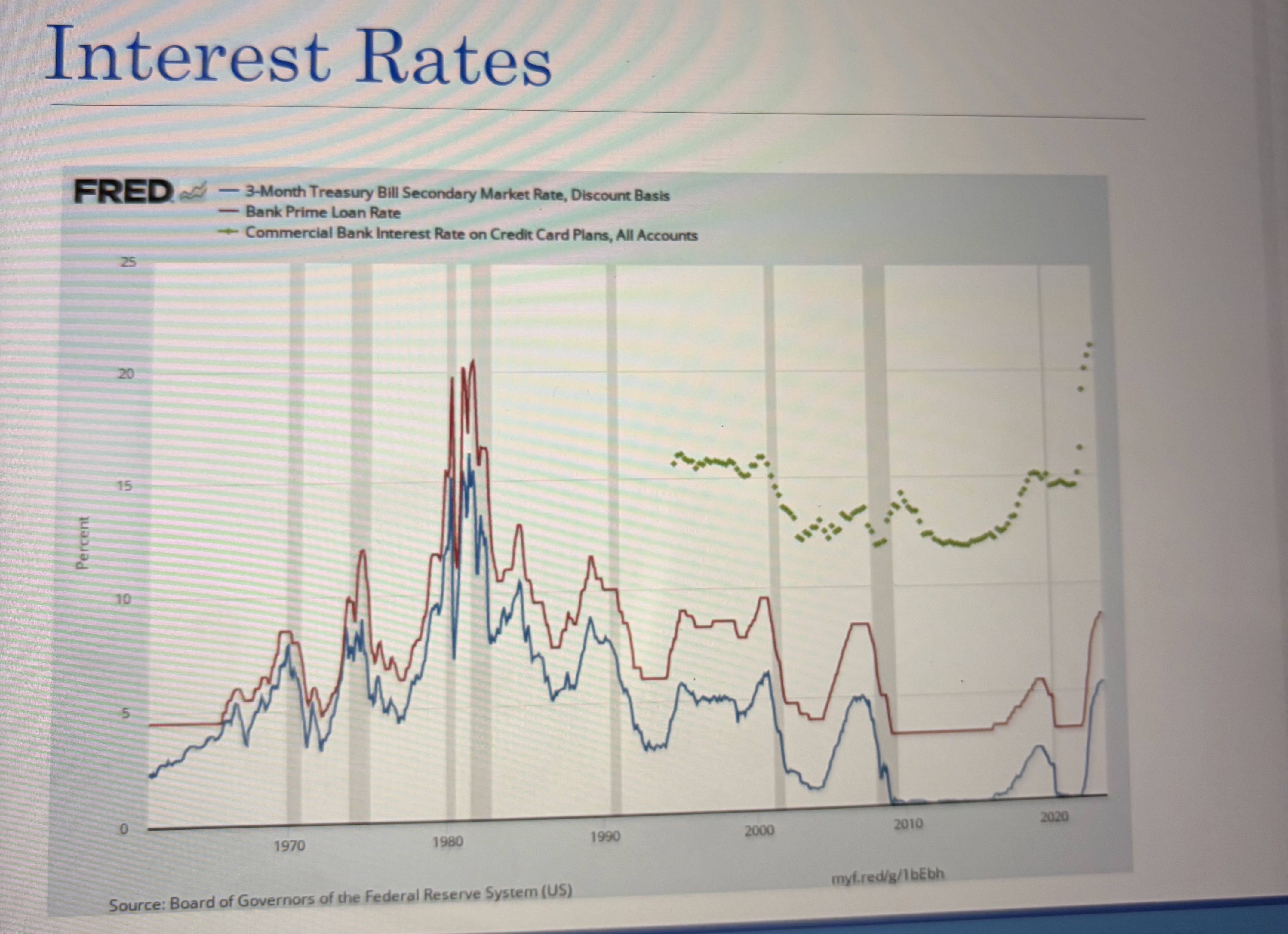
Using/ holding “money” has an opportunity cost, the price of “money” is the interest rate. Many different interest rates (the risk factor), speak as if only one interest rate
Interest Rates
Demand for Money: Why do we demand/ hold money?
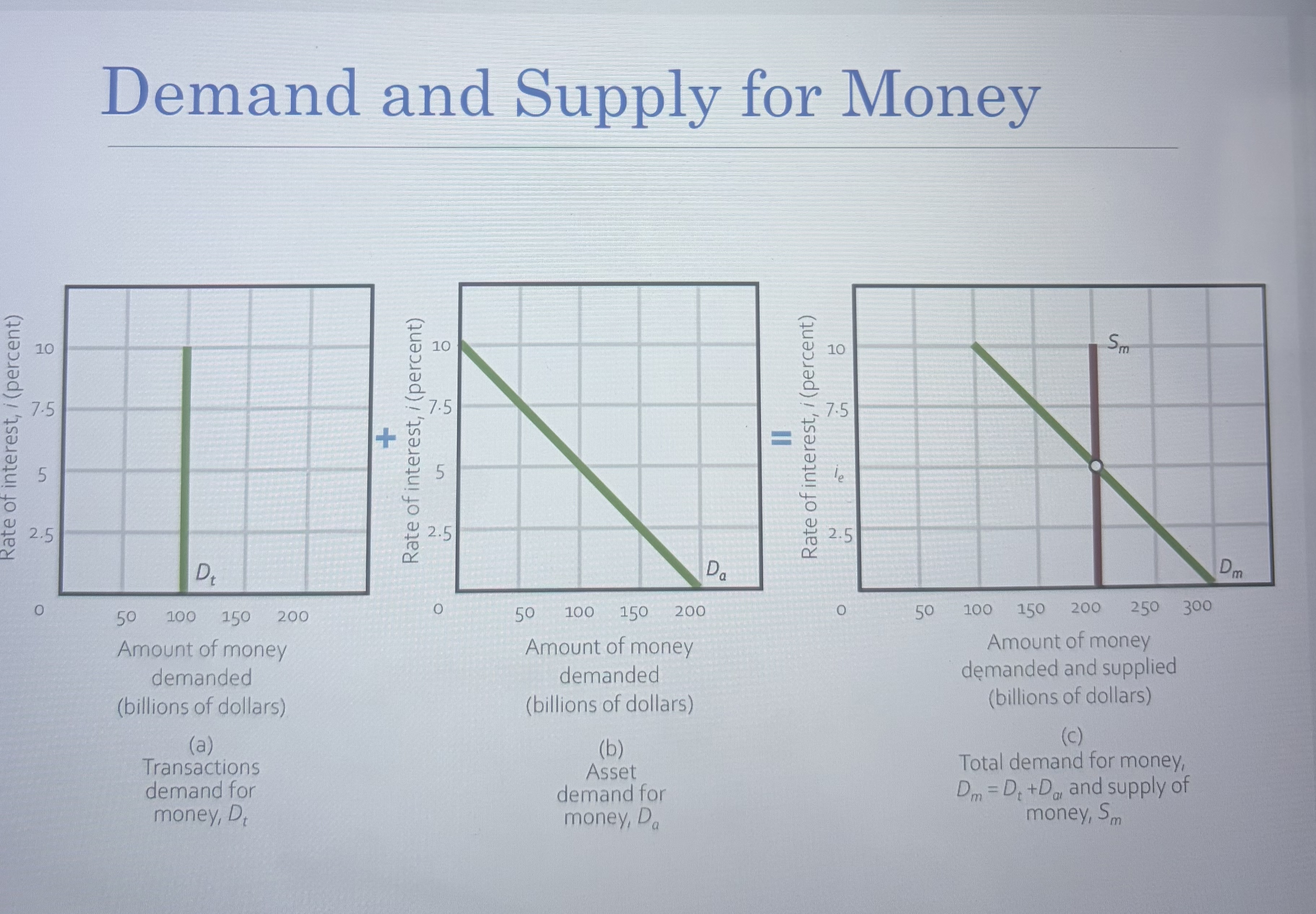
Transactions demand, dt vs. Asset Demand, Da
Transactions demand, Dt
Dt- Determined by nominal GDP, independent of the interest rate. It depends on economic activity, i. e., nominal GDP, independent of the interest rate
Asset Demand, Da":
Money as a store of value, varies inversely with the interest rate.
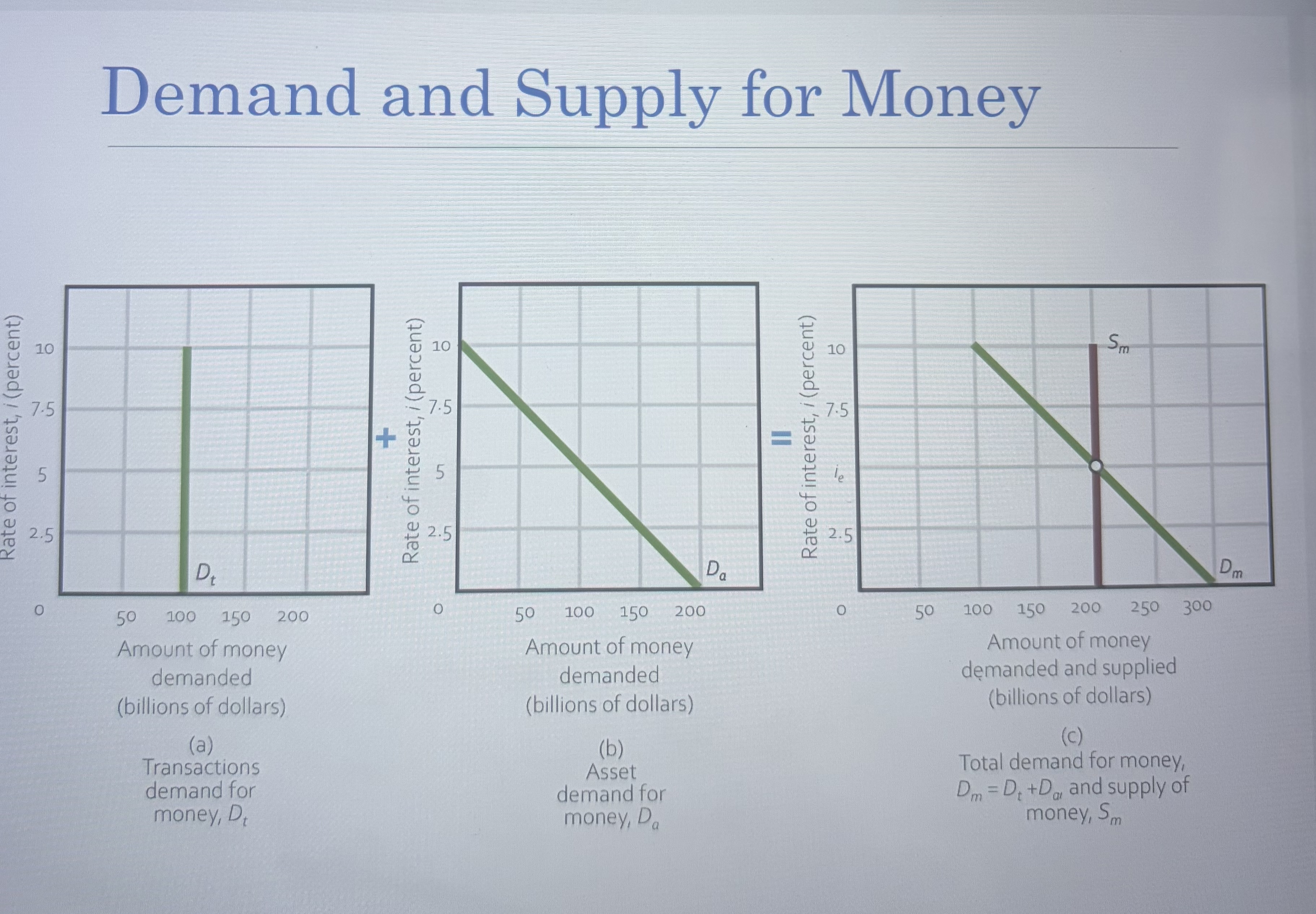
Total demand for money, Dm
Dt+Da=Dm
Demand and Supply for money
Interest Rates: Equilibrium of the Money Market
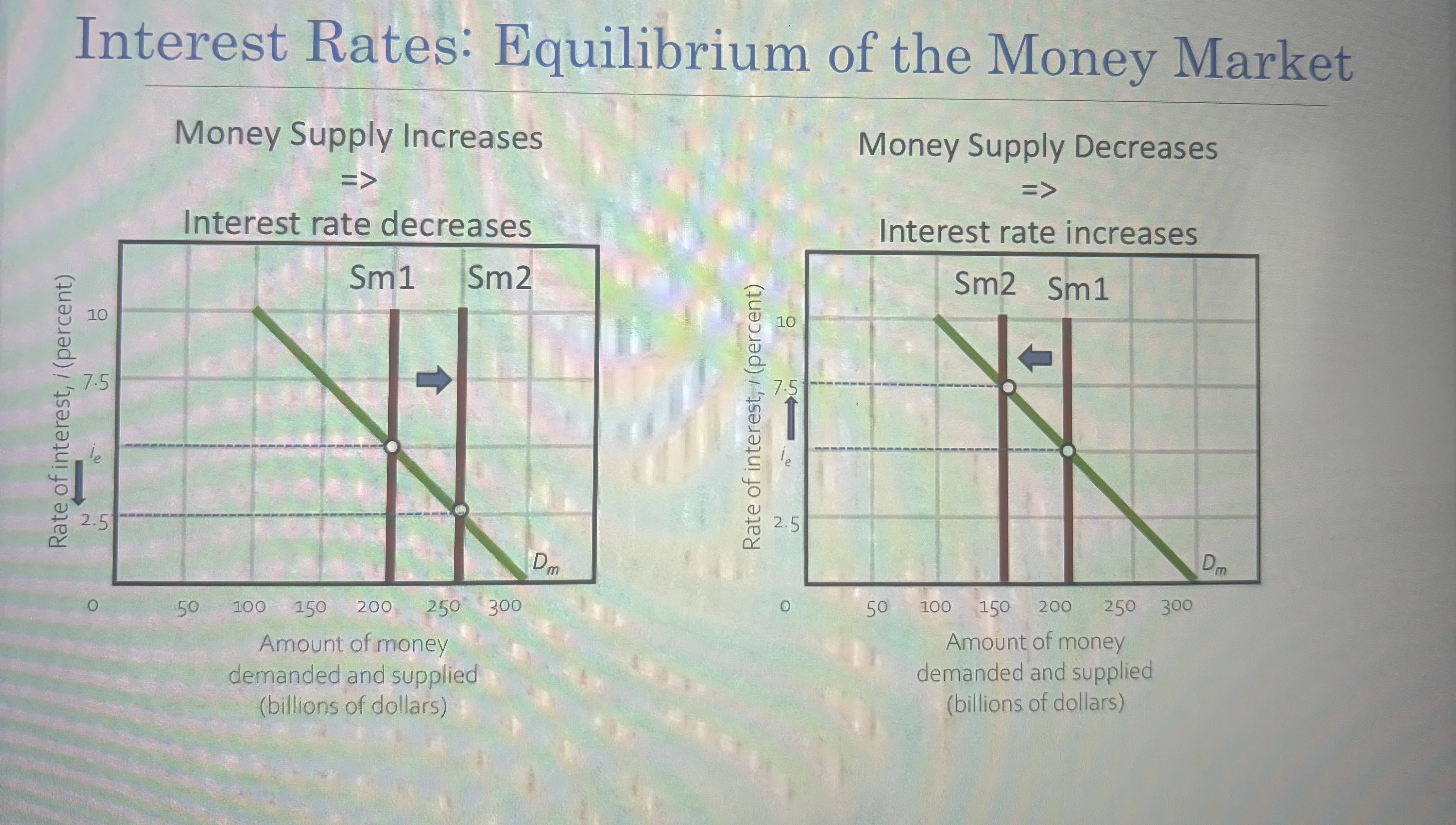
Tools of Monetary Policy-How the Fed could shift/ change money supply? With “Tools”
Open-market operations and discount rates, term auction facility, interest on reserves, federal funds rate
Open-Market Operations
Buying and Selling of government securities(or bonds), to.from commercial banks and the general public
The discount rate
the rate the fed charges the banks over loans, the fed as lender of last resort, short-term loans
Term Auction Facility
Introduced in Dec 2007, banks bid for the right to borrow reserves
Interest on Reserves
Since 2008, the Fed pays interest on excess reserves to commercial banks
The Feds Dual Mandate: Congress ordered the Fed to pursue two objectives:
Full Employment in the labor force 2.Stable prices
Federal Funds Rate
Rate charged by banks on overnight loans, the Fed targets this rate by manipulating the supply of reserves that are offered in the market
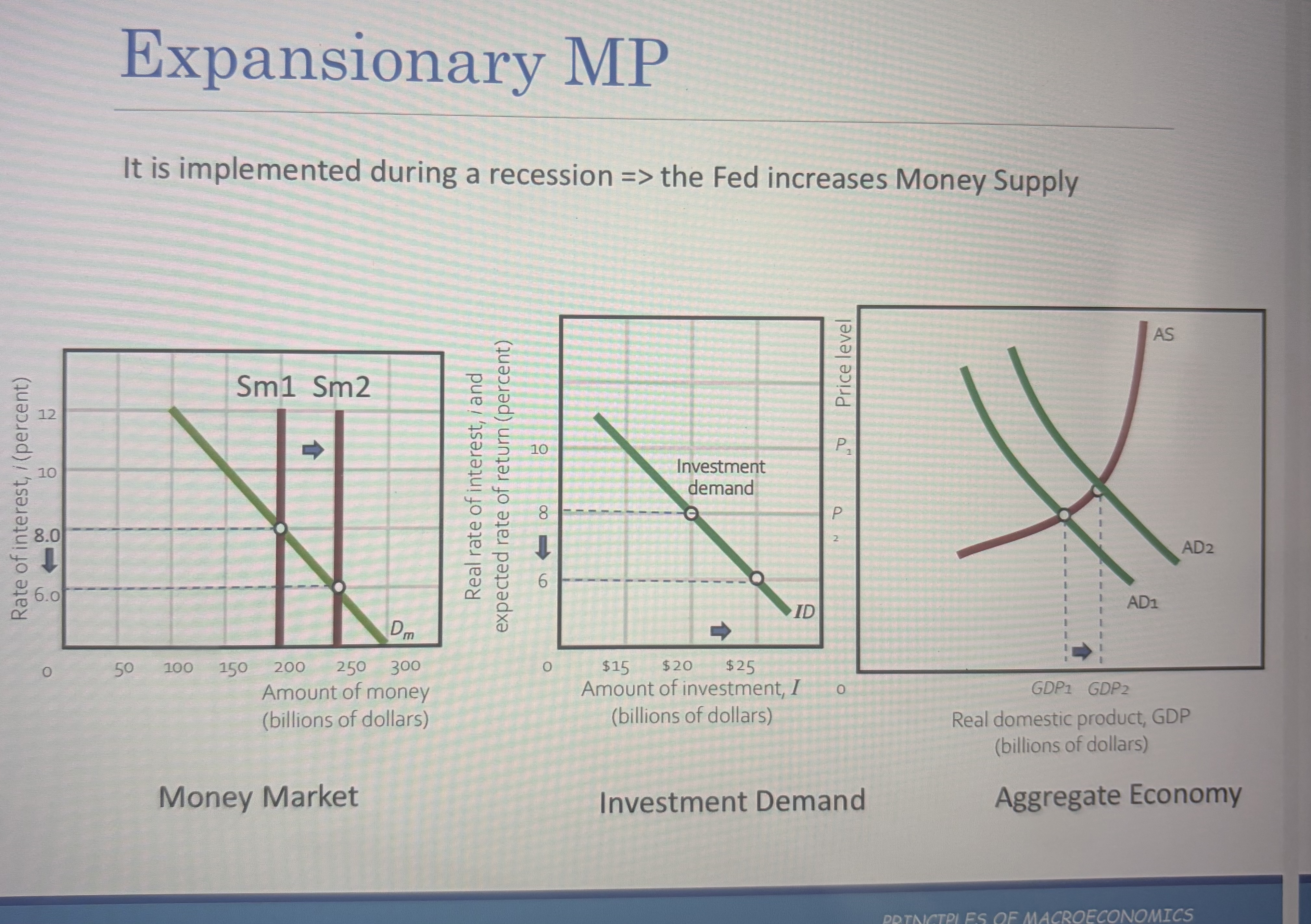
Expansionary MP
It is implemented during a recession => the Fed increases Money Supply
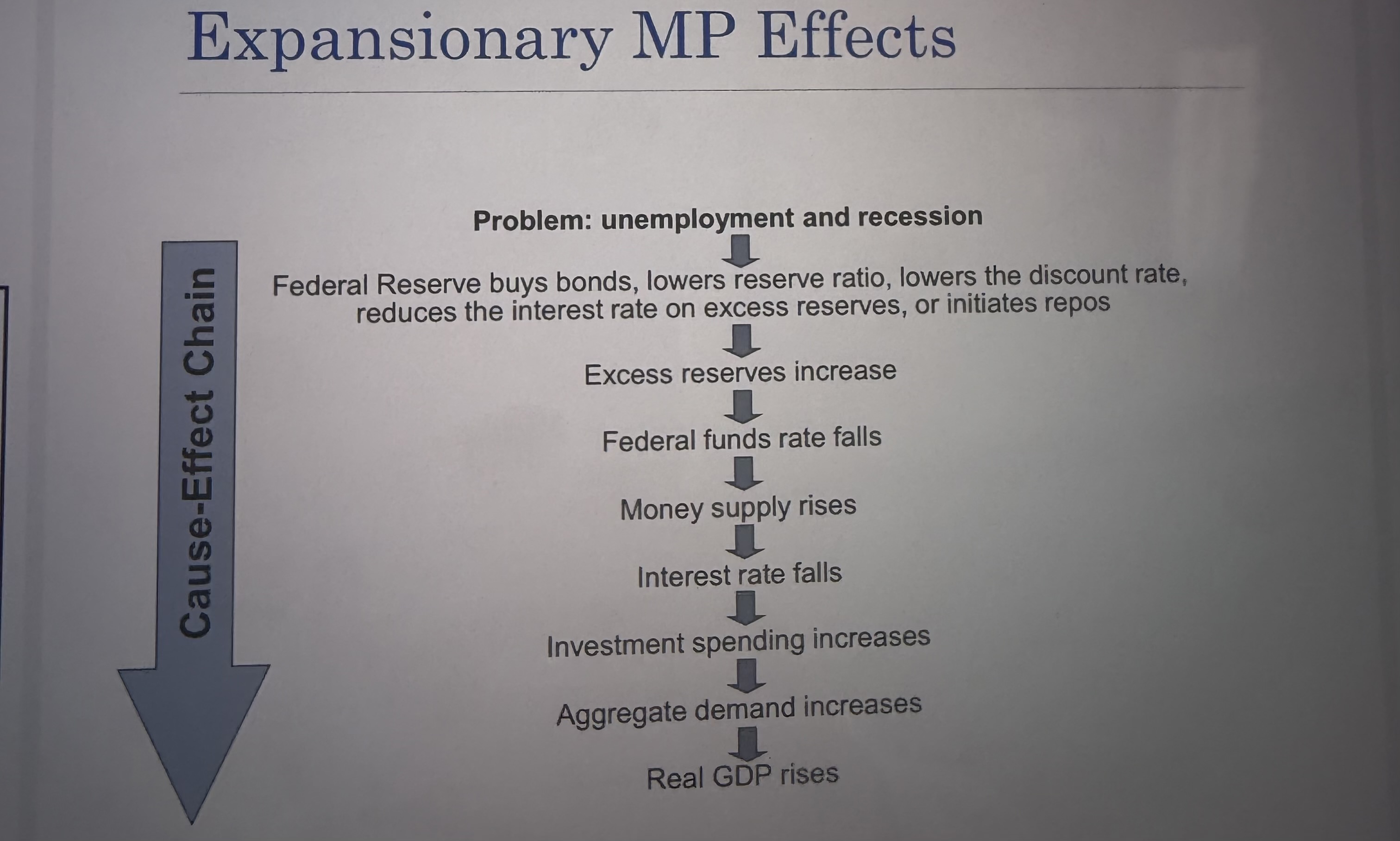
Expansionary MP Effects: Cause-Effect Chain
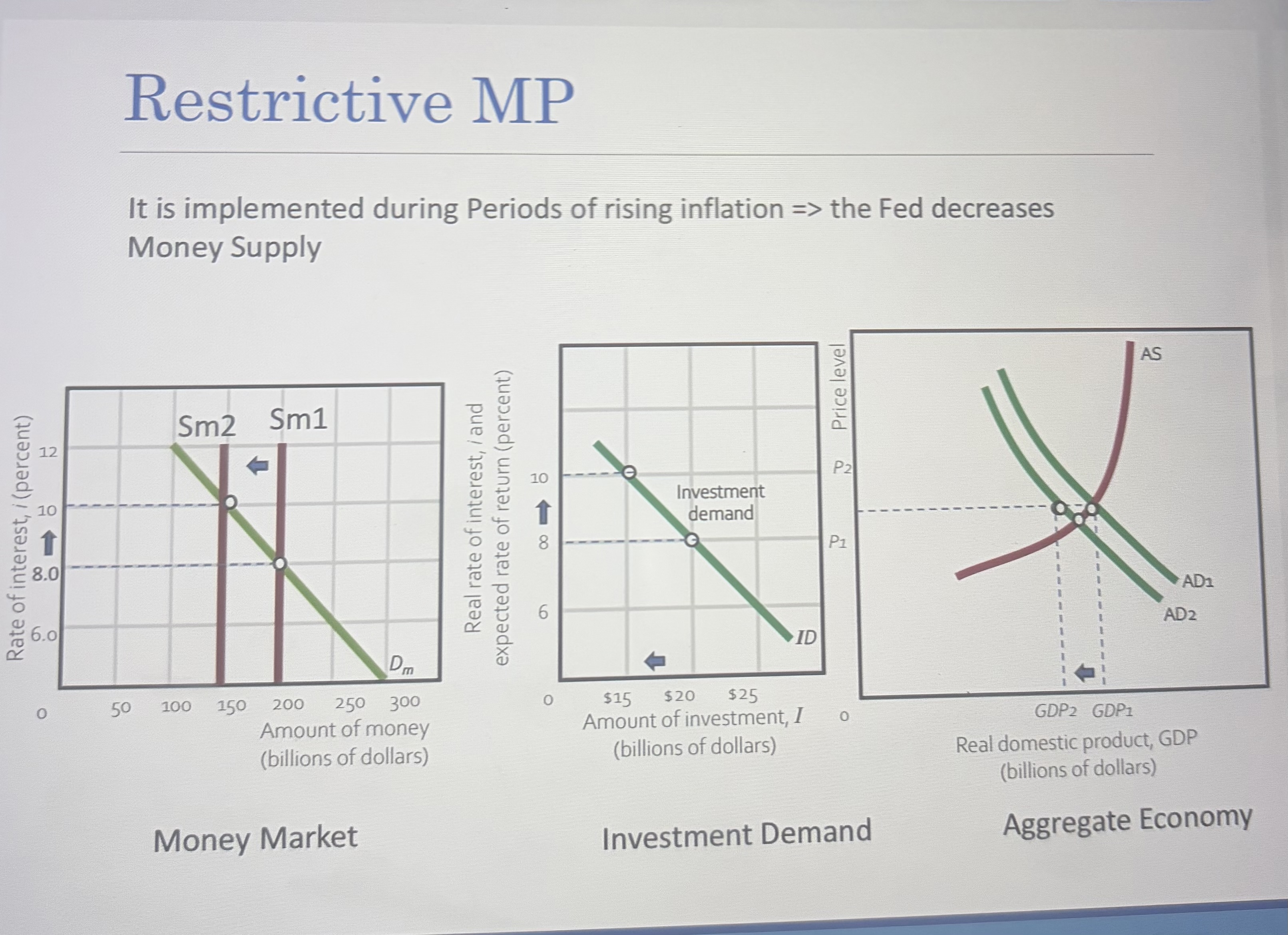
Restrictive MP
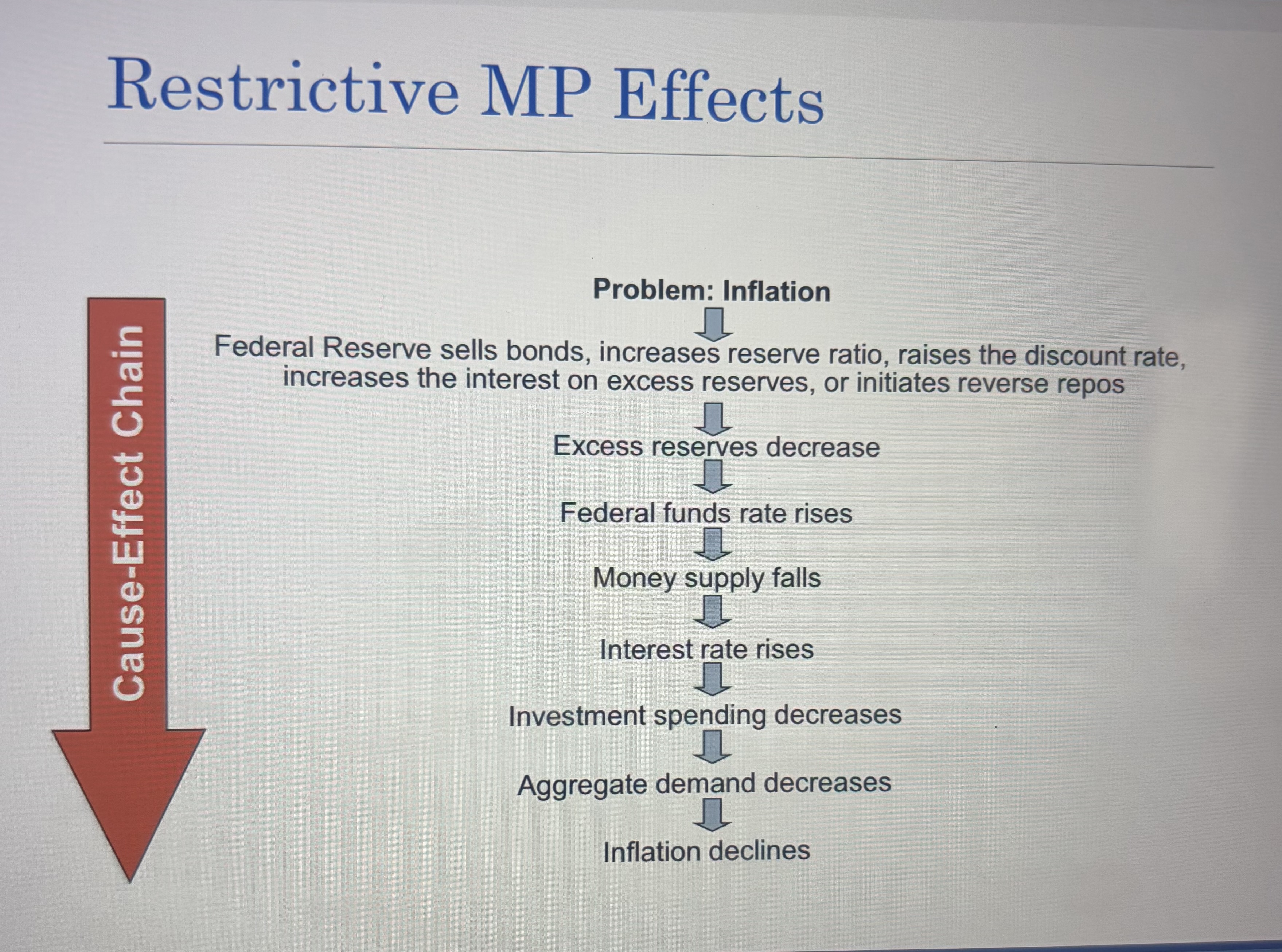
Restrictive MP Effects
Cause-Effect Chain
Advantages of Monetary Policy over fiscal policy:
Speed and flexibility, Isolation from political pressure, Monetary policy is more subtle than fiscal policy
Problems and Complications of Monetary Policy
Recognition and operational, cyclical asymmetry, MP is more effective in dealing with inflation than helping with a recession, liquitity trap(even though the fed may create excess reserves, that does not mean the banks will loan the money out